Article archive

Attendance at DOMOTEX 2018 at all-time high

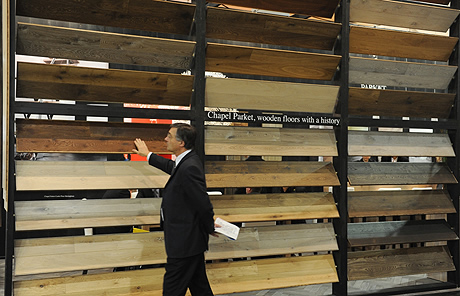
DOMOTEX held in Hannover, Germany, between 12th and 15th January claims to be the world's leading trade fair for floor coverings. It was host to 1,615 exhibitors this year, an all-time record, with the largest exhibitor nations other than Germany being Turkey, India, Belgium, China, Netherlands, Iran, Italy, Egypt and the USA.

There were 45,000 visitors to the show, another record and up from around 40,000 last year.

Nearly 30,000 visitors came from outside Germany, of which around 60% were from other European countries, 25% from Asia and 11% from the Americas. This year there was a significant increase in attendance from the United States and South and Central America.

The majority of DOMOTEX visitors were buyers from specialist retailers and wholesalers as well as architects and interior designers and workers from the skilled trades.

A significant increase in attendance was particularly evident among home furnishing and furniture stores, architects, interior designers, contract floorers and skilled tradesmen.

The trade background to DOMOTEX 2018 is shown in Chart 1. This highlights that the recent trends towards a narrowing in the EU trade deficit in wood flooring and a rise in internal EU trade levelled off in 2017. Both these trends were indicative of a rise in the relative competitiveness of domestic European flooring manufacturers compared to external suppliers and were partly driven by the relative weakness of European currencies.

Recent strengthening of European currencies against the US dollar has helped boost the competitiveness of external suppliers of flooring to the EU market, but so far this has only slowed their decline in share and not led to any significant improvement in sales.

EU imports from China, by far the largest external supplier accounting for around 60% of total imports, were 16.0 million sq.m in the 12 months to end November 2016, compared to 16.2 million sq.m a year earlier and over 21 million sq.m in 2012.
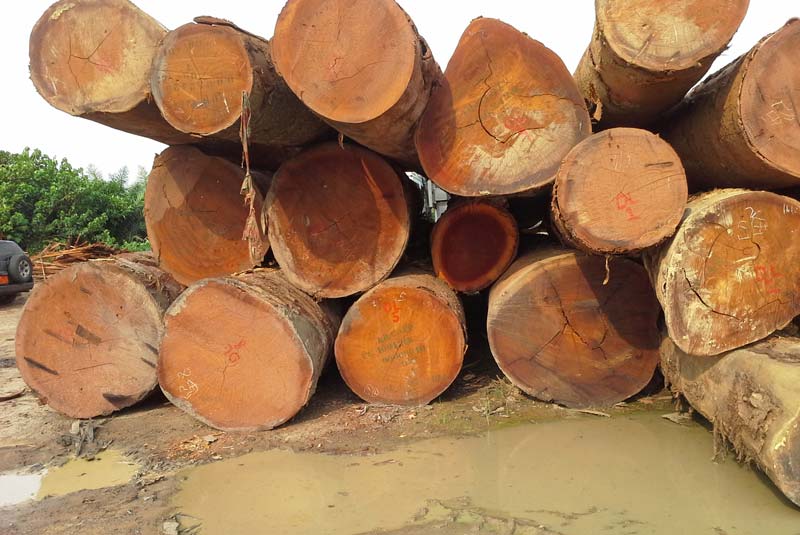
Cameroon raises log export duties

A considerable surge in log prices has been recently noticed in Central/West Africa. This is the result of producers trying to pass on a new 15% increase in export duties on logs imposed by the government of Cameroon.
The move by Central/West African producers to raise asking prices by the full 15% export duty is perhaps optimistic. Only over the coming weeks will a clear picture emerge of how buyers are responding. The increased prices, say producers, applies to all markets.
Previous discussions had been on an export quota system similar to that adopted by the Republic of Congo but there were concerns in Cameroon that this could lead to a reduction in revenues from the forestry sector which are significant.
So far there has been little effect on sawnwood FOB prices with most producers in the region proposing prices which are only slightly above levels before the log export tax. Sawnwood traders in Central/West Africa appear to be waiting to see the response in the log market but eventually higher log prices will have a ripple effect on sawnwood prices.

10 market predictions for the global wood industry in 2018

In 2018, the US lumber producers will supply most of the 1.5bbf production gap in British Columbia, while the Canadian and European capital would possibly flow into US forest products assets at higher rates than in the previous year.

For 2018, Forest2Markets analysts forecast the following:

1. Pulp market will continue to race forward.

With China’s moratorium on Mixed Paper imports (as a feedstock), many pulp mills in China are converting to virgin pulp at a time when market demand is increasing. Two million tons of pulp production will come on line in late 2018, and the trend won’t abate until then. Pulp prices will remain at record levels, incenting capacity expansions and likely acquisitions/disposition of working pulp assets.

2. US South sawtimber markets will remain flat.

Damage from Hurricanes Harvey and Irma in the US South added new demand for sawtimber to (slowly) strengthening housing starts numbers and a tight housing market, which drive pine sawtimber harvests. Even with 1 billion board feet (BBF) of new production coming on line, sawtimber growth will still exceed demand in every market. Expect volume to pick up, but not price.

3. Canadian and European capital will continue to flow into US forest products assets and timberland at rates we haven’t seen in years.

Canadian companies are primarily interested in solid-wood markets as lumber production declines by 1.5 BBF in British Columbia (BC). Expect more interest in greenfield operations as existing assets look overpriced. European companies are more interested in timberland and pulp assets, and the US still has the largest area of investable timberland in the world. European investor discount rates are low and capital patient—perfect for timberland investment. The world is short of virgin softwood fiber; the US has no shortage, so US pulp assets are garnering attention.

4. Bioenergy segment will remain stagnant.

As the Trump Administration continues to halt and/or slow roll renewable energy programs, including loan guarantees and RFS-related incentives, development of the US bioenergy segment (including wood pellets and biofuels) will be minimal. Investment in this segment could recede as a result. The bright spot is the biochemical market, which is creating new products developed from wood that are truly astounding. However, these products will take years to commercialize and change the market in any significant way.

5. The US dollar (USD) will weaken.

The USD will weaken and provide further buoyancy to the export pulp/paper and solid wood markets. Efforts to “de-dollarize” global trade continue and could weigh on the USD’s longer-term value, but any near-term changes will be incremental. The USD will depreciate on trend in 2018, with the Canadian dollar ranging between C$1.306 and C$1.223, and between €0.902 and €0.809 for the EUR.

6. Brazilian forest sector will fully rebound.

As consumer spending and GDP improve—along with a “more stable” government—Brazil’s forest industry will recover. Inherent competitive advantages are leading a number of international companies to actively investigate new investment opportunities in the Brazilian pulp market. Expect new pulp expansion announcements in the first half of the year.

7. BC will lose about 1.5 BBF of lumber production.

Most of this production gap will be filled by US producers, and a lion’s share in the US south.  We expect imports from Scandinavia and central Europe to take a back seat because of the EU’s own economic recovery, coupled with the high cost of production and weaker US dollar. This dynamic will incent new greenfield sawmills and capacity expansions in the US South.

8. Millennials are coming around to homeownership.

With the expansion of the stock market, which has added $7 trillion in value, low unemployment finally adding to wage growth and expanding GDP, long-term purchases (such as homes) are beginning to carry less risk. Expect buyers (and even low risk millennials) to react. But don’t expect an immediate surge in housing starts. Remodeling will still be the shining star of demand and will expand at a torrid pace, but housing starts for 2018 will total 1.26 million units.

9. CLT will find some footing in the South.

With new projects already springing up in the Pacific Northwest, expect a couple of new announcements for greenfield builds in the US South. CLT is still the warm blanket of demand where hope springs eternal. Expect announcements this year, builds in 2019 or 2020 and then the market developing between 2021-2025.

10. US GDP will scare 4% at least one quarter in 2018.

It remains to be seen how business and consumer behavior will adjust in the wake of the US tax code changes. We really won’t know until 2Q2018. However, the signs that the business community is reacting favorably to just about everything the Trump Administration is doing is very clear. Despite the Administration’s low approval rating, consumer, business and investment spending continues to rise—as does consumer confidence. Assuming that more than half of consumers don’t approve of the Administration itself (based on many popular polls), their spending behavior, however, indicates that they have confidence in the Administration’s handling of the economy. We believe that, on balance, GDP will range between 2.1 and 3.5+%, averaging 2.4% in 2018.

Source: Forest2Markets

Lack of deal with Canada makes the US to turn its eyes to European softwood lumber

The US has imported 67% more softwood lumber from the European Union countries in 2017, as compared to 2016, as the Canadian softwood imports were pushed down by the countervailing duties.

The imports amounted to 2,792,605 m3 during the mentioned period, with the Netherlands being the top exporter (1,484,486 m3, up by 32%). Germany exported 247% more softwood lumber to the US, reaching a volume of 627,143 m3, while Sweden sent 55% more shipments, to 354,159 m3.

Thus, as the Canadian companies, which used to send most of the softwood lumber to the US, will now have pay duties, a reason why the imports from the European Union countries have become more attractive.

For the moment, Canada can't officially challenge the US tariffs until after final decisions are made about the level of duties to be imposed some time this fall.

Canada and the US are trying to negotiate a new softwood trade deal to replace one that expired in 2015, but thus far have been unable to come up with a plan acceptable to the US Lumber Coalition.

Until further resolution for the issue, the US searches for new softwood lumber markets to fulfill the industry's demand.

Softwood lumber exported to USA from... (in cbm )

Exporting Country 2016 2017 Change in %
EUROPEAN UNION 1,672,583 2,792,605 67 %
Netherlands
1,121,182 1,484,486 32 %
Germany
180,757 627,143 247 %
Sweden
228,553 354,159 55 %
Romania
50,543 105,917 110 %
Austria
45,653 96,143 111 %
OTHERS 45,895 124,757 172 %
TOTAL 1,672,583 2,792,605 67 %

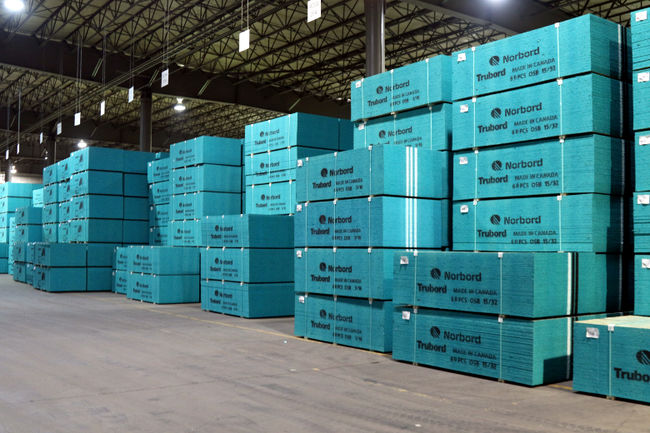
Norbord announced records earnings for 2017, due to strong wood-based panels market

Nordbord has released financial results for full year 2017, with record earning for its business worldwide.

The company also achieved record production at nine of its 15 mills, while the Inverness OSB expansion project was also completed.

Peter Wijnbergen, Norbord's president and CEO, described 2017 as an outstanding year, with record adjusted earnings before interest, tax, depreciation and amortisation (EBITDA) of US$672m. Also, the demand from the company's core markets is still strong for 2018.

US housing starts continued to improve, led by stronger growth in the single-family segment, driving increased North American OSB demand and prices,” he said. “Our European business had another solid year due to record sales volumes and improved prices for all our panel products across our key markets. Meanwhile, our European business is poised for improved earnings next year as OSB substitution for plywood drives accelerated demand growth in our core UK and German markets.

In Europe, shipments increased 5% over the prior year, with its mills running at 99% of capacity in 2017. In local currency terms, full-year average panel prices improved 11% from 2016.

Finnish Versowood invests in two Valutec kilns

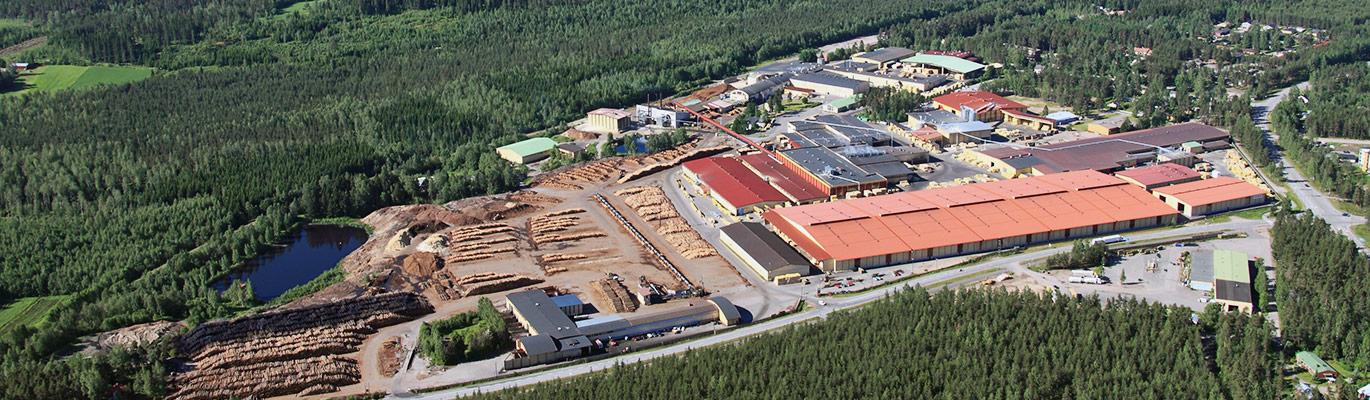
Versowood, Finland’s largest privately-owned sawmill group, ordered two Valutec OTC kilns for its sawmill in Vierumäki. 

We have long planned to increase our annual production from 1,300,000 cubic meters (551,000 MBF) to 1,500,000 cubic meters (636,000 MBF), but have had a bottleneck in the lumber drying. The investment allows us to eliminate this,” says Ville Kopra, CEO and partner of Versowood.

The new continuous kilns will primarily be used to dry boards and slats for Versowood’s own glue-laminated factory. This is why Versowood placed a lot of importance on finding a supplier who could guarantee a high level, even drying quality, with low levels of standard deviation.

The continuous kilns, which are made of stainless steel, will be equipped with pressure frames for minimal deformation of the top lumber layers, Valutec's air/air heat recovery system and Valmatic’s control system. Alongside the installation of the kilns, Versowood is also installing a Valmatic control system to six existing OTC kilns.

We already have Valmatic controls installed in the majority of our kilns in the Vierumäki, Riihimäki and Otava sawmills. It is without a doubt the best control system for lumber drying available on the market today, and it feels good to have the same system across the majority of our lumber kilns,” says Ville Kopra.

Versowood is a Finnish family-owned sawmill group, with 11 facilities in Finland and one in Estonia. They produce sawn timber, further refined wood products, glue-laminated products, wooden posts, wooden packaging and various wood-based energy products. The group employs a total of around 750 people and has an annual turnover of around €400 million.

Large Japanese companies turn to wood pellets to clean-up coal power

Companies in Japan are currently developing some biofuels which can be burned together with coal, as to cut the emissions of carbon dioxide. This might help the power plants lower the emissions without buying new equipment.

Idemitsu Kosan, an oil distributor in Japan, has recently developed a new type of pellet fuel made from compressed wood waste carbonized at a low temperature that can be burned in coal-fired plants. Plant-based biomass can be considered a carbon-neutral fuel, since burning it just releases the CO2 previously absorbed by the plants, Nikkei Asian Review reported.

At the moment, the biomass used in some coal-fired power plants can mostly make up only approximately 5% of the burned fuel, due to the fact that wood fiber pressure the boilers. But Idemitsu has found a solution for this problem and its new fuel reduces the fiber amount, letting it comprise as much as 30% of the fuel mix.

The company plans to produce the pellets in Thailand, which has an abundance of wood waste, and start marketing them to Japanese power companies in fiscal 2018. Idemitsu aims to sell 20,000 tons of the fuel in the first year, worth hundreds of millions of yen. The pellets likely will initially cost three times as much as coal, though the price will drop once mass production begins. Overseas sales will be considered as well, Nikkei Asian Review reported.

Nippon Steel & Sumikin Engineering, a subsidiary of Nippon Steel & Sumitomo Metal, has also created an equipment that can process plant waste at Southeast Asian palm plantations into biofuel. It employs steel-rolling technology to squeeze impurities out of plant matter, creating a solid fuel that -- like Idemitsu's pellets -- can replace up to 30% of coal at a thermal power plant.

Thus, during the fiscal 2018, the company want to begin selling the equipment to major plantation operators in Indonesia and Malaysia, with an eye toward exporting the fuel produced to Japan. It expects to sell at least 2 billion yen ($18.3 million) worth of the equipment next fiscal year.

The Paris Agreement on climate change has accelerated the shift from CO2-spewing fossil fuels to renewable energy. But fossil fuels will likely remain in demand for some time in emerging countries with large coal reserves. This will likely spur efforts to reduce CO2 emissions from existing fossil-fuel power plants in order to tackle climate change without stifling economic growth.

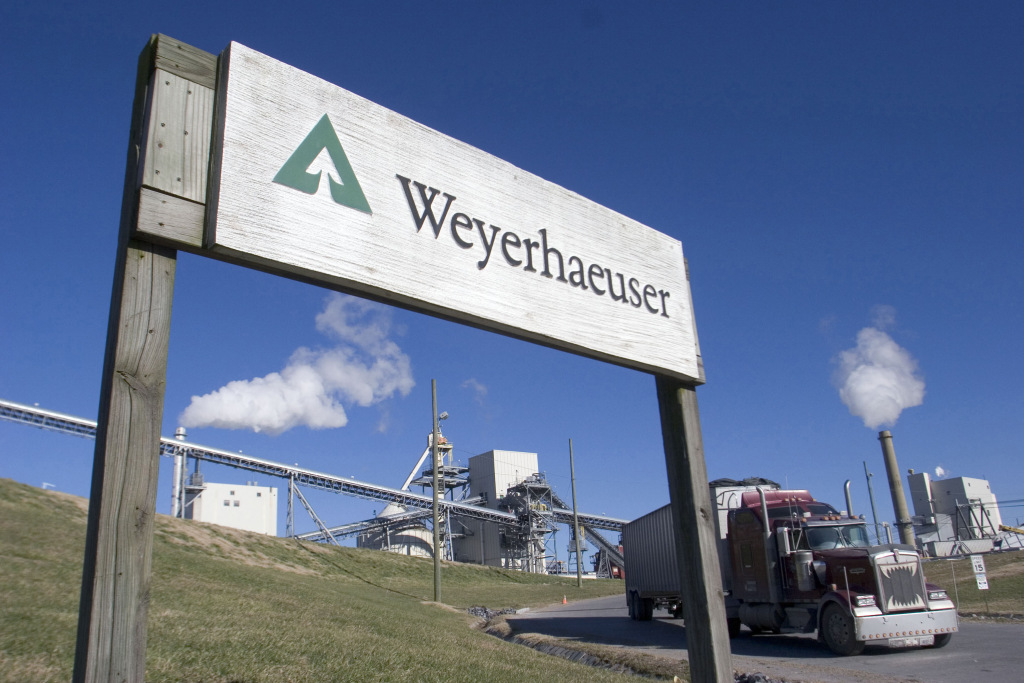
Weyerhaeuser reports fourth quarter and FY2017 results

Weyerhaeuser reported fourth quarter net earnings of $271 million on net sales of $1.8 billion. This compares with net earnings from continuing operations of $62 million on net sales of $1.6 billion for the same period last year.

For the full year 2017, Weyerhaeuser reported net earnings of $582 million on net sales of $7.2 billion. This compares with net earnings from continuing operations of $415 million on net sales of $6.4 billion for the same period last year.

"2017 was a year of strong financial and operational performance for Weyerhaeuser. We increased Adjusted EBITDA by over 30 percent to $2.1 billion, generated over $1 billion of EBITDA from Wood Products, achieved all targets for operational excellence, merger cost synergies and overhead cost reduction, and raised our dividend," said Doyle R. Simons, president and chief executive officer.

Wood products division

4Q 2017 Performance - Average sales realizations for all products increased compared with the third quarter. Sales volumes declined due to seasonality and weather-related transportation disruptions. Canadian and Western log costs increased, and raw material costs for oriented strand board and engineered wood products were also higher.

Fourth quarter net pre-tax special charges of $41 million include $50 million for product remediation and a $9 million net benefit primarily from an adjustment to the periods covered and rates associated with the softwood lumber countervailing and antidumping duties.

1Q 2018 Outlook - Weyerhaeuser anticipates first quarter earnings before special items and Adjusted EBITDA from the Wood Products segment will be comparable to the fourth quarter. The company expects higher sales volumes, improved operating rates, and slightly higher lumber sales realizations, offset by lower average sales realizations for oriented strand board.

Timberlands division

4Q 2017 Performance - In the West, fee harvest volumes increased and average realizations for domestic and export logs improved compared with the third quarter. In the South, fee harvest increased due to seasonally higher volumes and favorable weather, and average sales realizations were comparable to the prior quarter.

Fourth quarter includes a $99 million gain on the previously announced sale of 100,000 acres of Southern timberlands.

The company redeemed its ownership interest in the Twin Creeks Timber, LLC joint venture in October 2017. Fourth quarter results include no earnings contribution from operation of the joint venture.

1Q 2018 Outlook - Weyerhaeuser expects first quarter earnings before special items and Adjusted EBITDA to be comparable to the fourth quarter. In the West, the company anticipates improved average log sales realizations, partially offset by modestly lower fee harvest volumes. In the South, the company expects seasonally lower fee harvest volumes, comparable realizations, and higher trucking costs.

US duties on Chinese plywood benefit other suppliers

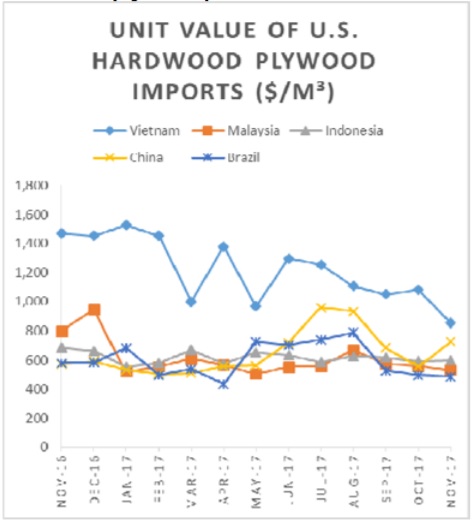
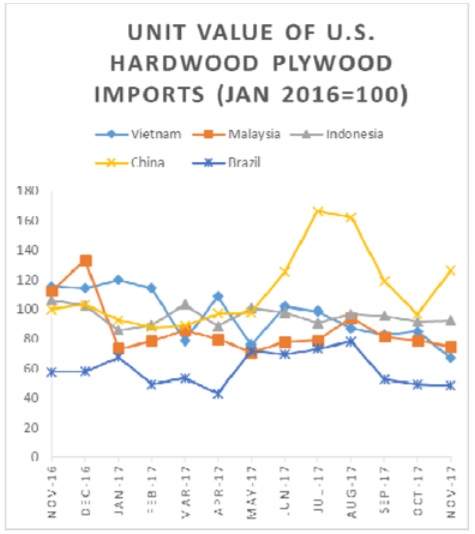
US hardwood plywood imports grew strongly in October before declining again in November. Not surprisingly imports from China were significantly down because of the US antidumping and countervailing duties on plywood from China. Year-to-date plywood imports from China were 24% lower than in November 2016.

All other major plywood suppliers shipped more to the US year-to-date compared to the same time last year. Despite the increase in imports from Indonesia, Malaysia, Ecuador and others, the total volume of US hardwood plywood imports was 5% lower year-to-date than in November last year.

We remind you that back in November 2017 the U.S. Commerce Department made final determinations that hardwood plywood from China was being subsidized and dumped in U.S. markets. It set an anti-dumping duty of 183.6 percent and anti-subsidy duties ranging up to 194.9 percent. The United States imported around $1.12 billion of the products from China in 2016.

The US Commerce Department "determined that exporters from China sold hardwood plywood products in the United States at 183.36 per cent less than fair value," a statement said.

Also, China has been providing subsidies to producers ranging from 22.3 per cent to 195 per cent, and, thus, the Commerce Department said it would impose tariffs at corresponding rates.

Laminate flooring losing share to non-wood alternatives

Much of the competitive pressure on real-wood flooring comes from the laminate flooring industry, which is large with sales figures dwarfing those of the parquet industry. However, this sector is also now losing share in Europe to a range of non-wood flooring solutions such as luxury vinyl tiles, porcelain tiles, and products made of recycled materials and other renewables like bamboo and cork.

According to data released by the Association European Producers of Laminate Flooring, Continue reading "Laminate flooring losing share to non-wood alternatives"

Kastamonu increased production of wood-based panels at Alabuga plant in Russia by 30% in 2017

Turkish Kastamonu increased its output in 2017 at the Alabuga plant in Russia. Production of wood-based panels and laminate went up by 30%, as compared to 2016.

The increase came once with the launch of the second stage of production of MDF boards in 2016. Now, the production capacity exceeds  1 million m³ of MDF boards and 35 million m² of laminate per year.

"The good quality of the products, the successful location of the plant, the balanced pricing policy have brought these results," said Ali Kylich, CEO of Kastamonu in Russia. "Today, the company's products have gained strong positions not only in the Russian market: more than 40% are exported to dozens of European countries and Asia. We plan to further strengthen our positions in the domestic and foreign markets and to increase the output by another 13% in 2018."

The total investment of Kastamonu in the construction of two stages of the plant was € 400 million (€ 270 million - the first stage, € 130 million - the second stage). According to this indicator, the company is the second resident of the SEZ Alabuga, by the total volume of investments, and the largest Turkish investor in Tatarstan. More than 800 new jobs were created directly in production, and more than 2500 in related and service industries.

Value of Russian sawn timber exports up by 25% during January-November 2017

The sawn timber exports from Russia went up both in value and volume terms during the first 11 months of 2017.

According to data from the Russian Federal Customs Office, the country exported 16.59 million tonnes of sawn timber in the mentioned period, 11.46% than in the same period of 2016.

Also, during January-November 2017, the value of the sawn timber exported from Russia came up to $3.656 billion, 25.35% more than in the same period last year.

On the other hand, the log exports decreased by 3.13% during January-November 2017, to 17.65 million m3 (2016: 18.23 million m3), while their total value reached $1.327 billion, that is 8.9% more than during the respective period of 2016.

Setra to invest in new component plant in Sweden

Setra plans to invest in a component plant in Långshyttan, Sweden. This investment aims to meet customers' increased demand for components for doors and windows, especially in the Scandinavian area.

The company has already signed an agreement to acquire an industrial property in Långshyttan, which will be free to start construction in the Q1/2018.

"We see great demand for a more refined range of products. The investment enables us to increase our long-term competitiveness and offer products to the Scandinavian window and door industry," says Hannele Arvonen, CEO at Setra.

Setra's property is located near Setra's plant in Långshyttan, where the company has its grating production. The investment thus provides opportunities for creating a wood industry center in Långshyttan. The raw material for the new component plant will be taken from Setra's pine mill in Bergslagen and is optimal for this type of industry. The production volume will be 45,000 m3 of finished components.

The production at the facility is set to start during the second half of 2018.

Current trends in Japanese and South Korean wood pellet demand

Biomass demand in Japan is primarily driven by three policy components: The Feed in Tariff (FiT) support scheme for renewable energy, coal thermal plant efficiency standards, and carbon emissions targets.

As FutureMetrics reports, the FiT offers independent power producers (IPPs) a set price for renewable energy over an extended contract period – 20 years for biomass energy. Currently, under the FiT, electricity generated from “general wood,” which includes pellets, imported woodchips, and palm kernel shell (PKS), receives a subsidy of 21 ¥/kWh, down from 24 ¥/kWh prior to Sept. 30, 2017. However, the scores of biomass IPPs that have received the higher FiT are locked in at that rate (about $0.214/kWh at current exchange rates).

Japan’s Ministry of Economy Trade and Industry (METI) has produced a so-called “Best Energy Mix” for 2030. In that plan, biomass power accounts for 4.1 per cent of Japan’s total electricity production in 2030. This is equivalent to over 26 million metric tonnes of pellets (if all the biomass were wood pellets).

In 2016, METI released a paper describing best available technology (BAT) efficiency standards for thermal plants. The paper develops minimum efficiency standards for power generators. As of 2016, only about one-third of Japan’s coal generation comes from plants that meet the BAT efficiency standard. One way to comply with the new efficiency standard is to co-fire wood pellets.

Plant efficiency is normally calculated by dividing energy output by energy input. So, for example, if power station uses 100 MWh of energy input to produce 35 MWh, that plant is operating at 35 per cent efficiency.

METI has allowed energy input from biomass co-firing to be deducted from the input. If the same plant described above co-fires 15 MWh of wood pellets, the plant’s efficiency under the new calculation would be 35 MWh / (100 MWh – 15 MWh) = 41.2 per cent, which is above the efficiency standard threshold. FutureMetrics has calculated the tonnage of wood pellets that will be required by Japanese power plants to bring the lower efficiency plants in to compliance in the recently released Japanese Biomass Outlook report by FutureMetrics. The report contains detailed data on the expected demand for wood pellets, palm kernel shell, and wood chips in Japan and the policies that are driving that demand.

Analysts forecast that the pellet demand by the smaller independent power producers (IPPs) is about 4.7 million tonnes per year by 2025. This is based on analysis of about 140 IPPs that are detailed in the Japanese Biomass Outlook, according to Future Metrics.

Total potential demand in Japan from utility power plants and from IPPs could exceed 12 million tonnes per year by 2025.

South Korea
Demand for industrial wood pellets in S. Korea has grown rapidly in recent years, a trend that could continue over the next several years. In 2017 S. Korean pellet imports were about 2.25 million metric tonnes.

S. Korea is guiding the power generation industry with a Renewable Portfolio Standard (RPS). The RPS program requires the 13 largest power companies (with installed power capacity larger than 500 MW) to steadily increase their renewable energy mix from two per cent in 2012 to 10 per cent by 2024.

For power companies to meet their RPS targets they can: (1) Invest in renewable energy installations themselves and receive renewable energy certificates or RECs based on the MWhs generated from renewable sources, or (2) purchase RECs in the RPS marketplace to meet their obligation.

If the power company fails to accumulate the required number of RECs based on the RPS mandate, they pay a fine. The penalty is equal to 150 per cent of the average market price of the RECs for that year for each REC they are deficient.

REC prices in S. Korea have been very high in recent years. FutureMetrics analysis shows that at current REC prices, S. Korean utilities can significantly increase the profitability of generating electricity by co-firing pellets.

As Future Metrics reportrd, the market price for RECs can vary significantly, unlike the guaranteed FiT in Japan; this creates a difficult problem for the market. Most pellet producers and project lenders/investors will not commit to the capital expense of a new pellet plant without a long-term offtake agreement. To date, S. Korean utilities have not engaged in long-term offtake agreements. Demand growth has spurred rapid growth in production capacity in Vietnam to satisfy S. Korean tenders. But that demand is already pushing the limits of Vietnam’s capacity to produce low cost pellets, which are mainly produced from residuals from the wooden furniture industry. It is difficult to conceive of how pellet production capacity can keep up with the expected growth in the S. Korean demand without long-term agreements. Yet, with the risk of falling REC prices, S. Korean utilities cannot engage in long-term agreements.

Based on data from announced co-firing and full-firing projects, S. Korean demand is expected to reach about nine million tonnes per year by 2024 if REC prices remain high enough to compensate for the expected higher cost of pellets as competition in the region increases. The pellet market into S. Korea is already tightening. Pellet prices in Vietnam have risen from around $95 to $133 per tonne (FOB Vietnam) in the last six months.

UPM reports record high performance for plywood division in 2017

Finnish UPM released its annual results for 2017, with a record high performance from its plywood business.

The production facilities for UPM's plywood division located in Estonia, Russia and Finland recorded higher volumes and sales prices, with delivery volumes up to 811,000 m3, from 764,000 m3 in 2016. The division’s sales were EUR 484 million in 2017, up from EUR 444 million in 2016, with operating profit of EUR 62 million (2016: EUR 58 million). All of UPM's divisions registered an overall pre-tax profit EUR 1.186 billion and sales of EUR 10 billion.

UPM said the market environment was favorable in Europe during 2017, with spruce plywood demand growth driven by increased activity in the building and construction industry. Demand in birch plywood-related industrial applications such as vehicle floors and LNG carrier insulation material was also good.

Its timber business is part of UPM’s Biorefining division, which also includes pulp and biofuels businesses.

For 2017, the sawn timber demand was “good” and market prices increased in the Q4.

Lumber prices in the US increased, due to strong sales growth

Trading in framing lumber in the US eased during last week, but not enough to slow the upward momentum of many framing lumber species. Gains were especially sharp in the West, and Douglas Fir and Fir&Larch in particular.
Sharp double-digit increases pushed many prices further into record territory. Meanwhile, trading heated up in Southern Pine, and producers easily garnered higher prices, which were still far more competitive compared to other species.
Another week of robust gains pushed the Random Lengths Framing Lumber Composite Price to $481, still shy of its record of $510 set in late 1993.

Week
Feb 2
Week
Jan 26
Year Ago
2017
Random Lengths Framing Lumber Composite Price* $481 $471 $366
KD Western S-P-F #2&Btr 2x4 R/L Mill Price 510 510 338
KD Eastern S-P-F #1&2 2x4 R/L, delivered Great Lakes 594 589 412
Green Douglas Fir Std&Btr 2x4 R/L (Portland) 560 545 350
Southern Pine (Westside) #2 2x4 R/L 524 508 436
KD Coast Hem-Fir #2&Btr 2x4 R/L 535 525 367
Ponderosa Pine (Inland) #2&Btr 1x12 R/L 735 735 585
* Weighted average of 15 key items

 
Random Lengths Panel Market Report
Structural panel prices jumped amid a widespread scramble for coverage. After a quiet start to the week, mill sales of OSB picked up appreciably on Wednesday, and reported prices posted double-digit increases in all regions.
Constricted supplies of Southern Pine plywood in all zones were evident throughout the distribution pipeline and fueled price increases, as steady demand went unabated. A sluggish start in western Fir plywood turned busy by Wednesday. Solid trading featured spurts of heavy activity.

(f.o.b. mill prices) Week
Feb 2
Week
Jan 26
Year Ago
2017
Random Lengths Structural Panel Composite Price* $493 $474 $371
Southern (west-east) 15/32-inch 3-ply rated sheathing plywood 500-540 485-525 365-380
Southern (west-east) 15/32-inch 4-ply rated sheathing plywood 505-545 490-530 365-380
Western 1/2-inch 4-ply rated sheathing plywood 531 518 386
North Central 7/16-inch Oriented Strand Board 355 340 270
*Weighted average of 11 key items

US furniture market outlook positive

Imports of wooden furniture were up 4% in November. Except for Canada and India, most countries increased furniture exports to the US. Malaysia was the strongest performer in November.

Wooden kitchen furniture imports grew the most in November, followed by upholstered and non-upholstered seating and bedroom furniture. Wooden office furniture imports declined.

The US furniture industry reported growth in December, according the Institute for Supply Management, while wood product manufacturing declined. Retail sales by furniture stores increased 8% from October to November according to US Census data. When home furnishings are included, retail sales grew 5% during the previous twelve months compared to the year earlier.

The latest Smith Leonard survey of US residential furniture manufacturers and distributors reports the following growth figures for October 2017: New furniture orders increased 8% compared to October 2016. Furniture shipments were up 5% year-to-date from October last year.

Roundwood prices in Estonia significantly up in December 2017

Roundwood prices in Estonia mostly went up during December 2017, with the price for pine sawlogs going up the most, as compared to the same period last year and to November 2017.
The prices for sawlogs in December got up to a 10% increase, as compared to the previous month. Aspen logs prices went up by 9.74%, to EUR 35,48/m3, while pine logs prices increased by 9.45%, to EUR 74,33/m3.
All other softwood logs assortments registered increases between 5% to 8%, when compared to November 2017, while the prices for most pulpwood assortments went down with spruce pulpwood going down the most, by 3%, to EUR 26,60/m3.

Roundwood prices EUR/m3 December 2016 November 2017 December 2017 Change% Dec 16 to Dec 17 Change% Nov to Dec 17
Pines sawlogs 65,29 67,91 74,33 13,85% 9,45%
Pine d<18cm 51,58 54,12 57,60 11,67% 6,43%
Spruce sawlogs 63,54 68,59 72,27 13,74% 5,37%
Spruce d<18cm 49,39 53,32 57,69 16,81% 8,20%
Birch veneer 105,22 113,88 112,94 7,34% -0,83%
Birch sawlogs 59,86 62,52 61,69 3,06% -1,33%
Aspen sawlogs 31,53 32,33 35,48 12,53% 9,74%
Pine pulpwood 24,38 26,38 26,95 10,54% 2,16%
Spruce pulpwood 23,96 27,44 26,60 11,02% -3,06%
Birch pulpwood 23,79 26,75 26,33 10,68% -1,57%
Aspen pulpwood  19,48 19,15 18,94 -2,77% -1,10%
Firewood 18,36 20,13 20,70 12,75% 2,83%

German raw particleboard production down in the Q3/2017

The German raw particleboard manufacturing has decreased a bit during the Q3/2017, after it has already went down during the Q2 of the same year.

The total output of raw particleboard products decreased by 0.8%, to 1.001m m3., while the production of particleboard destined for sale saw a bigger decline of 1.7% to 704,509 m3, Destatis reports.

At the same time, melamine-faced particleboard production went up by 4.0%, to 610,759 m3 in the Q3/2017. This value was in-between the levels recorded in the Q1/2017 - 646,634 m3 and the Q2 - 607,757 m3, while the laminate element manufacturing was up by 5.5% at 87,992 m3.

For the first quarters of 2017, the German raw particleboard production went 0.6% up, as compared to the same period of 2016. For the same period, melamine-faced particleboard manufacturing was up by 4.1%, while laminate element manufacturing dropped by 0.7%.

Outgoing Resolute Forest Products CEO pleads for Canada to resist in the softwood lumber trade battle

Resolute Forest Products Inc. CEO urges the Canadian government not to give up in the lengthy battle with the United States.

Richard Garneau is also retiring from the company's lead role and stated that Resolute Forest Products believes in free trade

We believe in having strong principles and never capitulate, even though you believe that (if) there is someone a lot bigger and stronger you have to defend your principles,” he added.

Garneau, 70, has been the strong voice of eastern Canadian lumber, pulp and paper producers. His comments came as weak fourth-quarter results sent the Montreal-based company’s shares tumbling. They closed down nearly 29 per cent to $10.01 in Thursday trading on the Toronto Stock Exchange, as reported by the Financial Post.

Despite the threats of doom and gloom from import duties, the industry has thrived by passing on them on to consumers through higher lumber prices. Garneau expects that once U.S. housing starts slow, lumber demand will come down and cause some pain to Canadian producers.

We have to wait and see the impact, but I think history always repeats itself. It seems that the people forget what happened when you take the wrong decision.”

The leadership change was announced as Resolute disappointed despite swinging to a profit of $13 million or 14 cents per diluted share. That compared with a loss of $45 million or 50 cents per share a year ago. Sales for the three months ended Dec. 31 totalled $898 million, up from $889 million a year ago.

Excluding special items, the company said it earned $14 million or 15 cents per share for the quarter, compared with a loss, excluding special items of $7 million or eight cents per share in the fourth quarter of 2016. Hamir Patel of CIBC World Markets said analysts expected 62 cents per share in adjusted profits, Financial Post reported.

For the full year, Resolute reported a loss of $84 million or 93 cents per diluted share, compared with a loss of $81 million or 90 cents per diluted share in 2016. Sales totalled $3.51 billion, down from $3.55 billion.

Excluding special items, Resolute said it earned $12 million or 13 cents per share last year compared with a loss of $12 million or 13 cents per share in 2016.

Newsletter

Subscribe to our digital newsletter for your daily digest of essential news, views and analysis from the international wood industry delivered directly to your inbox.


0