
Article archive

IKEA bought 25,000 acres of forest in Alabama

IKEA Group has recently bought its first forest property in the US. The surface of the property is covering approximately 25,000 acres in Lowndes County, Alabama.

The investment in forestry is part of a broader strategy to invest in the sustainable production of resources that IKEA Group consumes directly, such as energy, or indirectly through its products (wood raw material, recycled materials, etc.). IKEA Group also owns more than 250,000 acres of forest land in Europe, located in Romania and the Baltic States.

"As a responsible forest owner, we are interested in identifying and applying sustainable management methods that will allow us to preserve and even increase the quality of the forest over time," says Krister Mattsson, Head of Financial Asset Management, IKEA Group. "Entering the US market is a milestone for our investments in forests, and we believe we will learn a lot here while implementing our long-term approach to forest management and applying for the Forest Stewardship Council (FSC) certification."

IKEA Group is committed to having a positive impact on people and the planet and has allocated over EUR 3 billion for resource and energy independent investments. Those investments support the long-term supply of sustainable materials by investing in forestry, as well as in companies that are active in recycling, renewable energy development and biomaterial developments. At the end of FY17*, IKEA Group owned 416 wind turbines around the world, including 104 in the U.S., which produce about 900 million kWh of renewable energy per year.

This new acquisition is in addition to several other significant investments IKEA Group has recently made in the U.S., where they currently operate 47 stores and seven distribution centers. In 2017, the company opened four new stores (Columbus, OHFishers, INJacksonville, FL and Grand Prairie, TX) and one new distribution and customer fulfilment center (Baytown, TX). IKEA Group also acquired San-Francisco-based TaskRabbit, an innovative on-demand services platform company, to provide IKEA customers with additional ways to access flexible and affordable service solutions. Additionally, the company made minority investments in XL Hybrids and AeroFarms, who share the brand's ongoing commitment to supporting sustainable resources.

For its forest management in the U.S., IKEA Group has partnered with Campbell Global, a leader in sustainable timberland and natural resource investment, to oversee and operate the property.

"We are proud to be working with IKEA to promote our shared values," said John Gilleland, CEO and Chairman of Campbell Global. "Responsible stewardship is the cornerstone of our culture. We are committed to managing sustainable, working forests to foster optimal forest health and provide direct benefits to local communities."


 

Brazil to host the largest dynamic forestry fair in the world

More than 220 companies are confirmed exhibitors at Expoforest 2018. The fourth edition of the fair takes place in April, in a 200-hectare eucalyptus forest in the Ribeirão Preto area.

The Brazilian forestry market is one of the few segments that do not directly reflect the country’s economic situation. Even with the threat of recession and political scandals abounding, the forestry sector exported over USD 7.7 billion in 2017 alone – and that is only counting pulp, paper and plywood. This figure represents an 11% growth from the previous year.

With excellent soil and climate conditions, Brazil arises as a key player in the global scenario of forestry production. This is largely thanks to two foreign species – pine and eucalyptus – which have adapted extremely well to the country’s conditions. Brazil’s territory covers 8,516,000 km² (or 2.104 billion acres). According to Ibá (the Brazilian Tree Industry), the country’s most representative forestry association, only 7.84 million hectares (19.373 million acres) are occupied by planted forests – a mere 0.92% of the country’s land. Pine and eucalyptus species represent the majority of planted trees – over 90%. Conifers (pine) represent 20% of planted areas, whereas eucalyptus forests account for 71%.

The rapid growth of eucalyptus and pine species in Brazilian lands is the most important factor motivating these planted areas, as well as research and investments in these species. In 2016, Brazil led the global forestry productivity ranking, averaging 35.7 m3/hectare per year for planted eucalyptus forests; and 30.5 m3/hectare per year for planted pine forests, according to the most relevant companies in the sector. On average, the eucalyptus production cycle is 7 years long, and 15 years for pine.

Expoforest
In order to present present this promising market to investors worldwide, as well as showcase what Brazilian silviculture does best and attract new technologies from the world’s most important timber producing countries, the Expoforest – Brazilian Forestry Fair was created. The fourth edition of the world’s largest dynamic forestry fair in 2018 takes place from April 11th to 13th, in Santa Rita do Passa Quatro, a town within the greater Ribeirão Preto area in the state of São Paulo, Brazil. The event will be held in 200-hectare cloned eucalyptus forest belonging to International Paper.

Taking place every four years, Expoforest is a key part of the global calendar for the most important forestry events in the world.

We believe Expoforest 2018 will once again prove to be a great opportunity to gather the world’s entire timber production chain and demonstrate once and for all the sheer strengths of the forestry sector in Brazil and in the world,” says Jorge R. Malinovski, president director of Malinovski, the company behind Expoforest.

At the moment, still a few months away from the event itself, 226 companies are already confirmed exhibitors for the fair, and they are getting ready to present their new product launches, technologies and trends covering the entire timber production cycle. According to Malinovski, over 30,000 visitors – from Brazil and other countries with long-standing tradition in forestry – are expected during the three days of the event.

Expoforest is a part of Forestry Demo Fairs (FDF), a specialized board responsible for ensuring quality and safety in the world’s largest dynamic forestry fair. In this group, Expoforest stands alongside Asturforesta (Spain), EKO-LAS (Poland), Elmia Wood (Sweden), Euroforest (France), FinnMETKO (Finland) and KWF-Tagung (Germany).

Global wood pellet market outlook in 2018

Over the last 10 years, global pellet markets have increased a lot, due to the strong demand from the industrial sector.

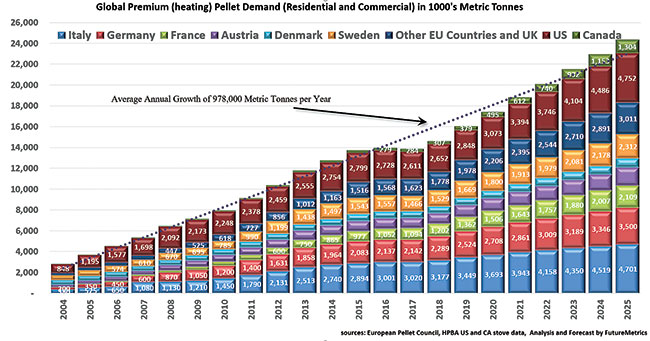
The pellet heating markets have been challenged in recent years by low alternative heating fuel costs (oil and gas prices) and warmer than average winters in North America and Europe, according to FutureMetrics (chart 1).

Also, analysts explain that a combination of higher oil prices and de-carbonization policies will return demand growth to trend in the 2020s. For the last several years, the industrial wood pellet sector was as large as the heating pellet sector, and is expected to become significantly larger over the next decade.

The industrial wood pellet market is mainly driven by renewable generation policies and carbon emissions mitigation, as long as the industrial wood pellets are a low carbon renewable fuel that easily substitutes for coal in large utility power stations.

Pellets can be substituted for coal in two ways, either a full conversion or co-firing. For a full conversion, an entire unit at a coal station is converted from using coal to using wood pellets. This requires modifications to the fuel handling, feed systems, and burners. Co-firing is the combustion of wood pellets along with coal. At lower co-firing ratios, minimal modifications to existing pulverized coal facilities are required. In fact, at lower blends (under about seven per cent) of wood pellets, almost no modification is required, FutureMetrics explains.

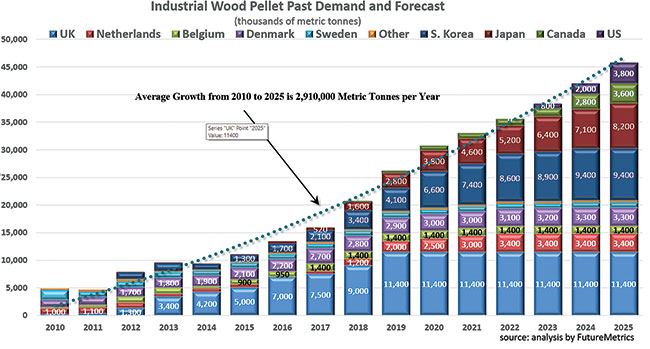
Chart 2 shows the historical actual demand and FutureMetrics’ demand forecast for industrial wood pellet markets. Aggregate demand in 2017 is estimated at 15.9 million metric tonnes.

As shown in Chart 2, demand in the U.K. and EU is expected to plateau by 2020. However, major growth is expected in Japan and South Korea in the 2020s. We also expect Canada and U.S. to have some pulverized coal power plants using industrial wood pellets by 2025.

Pellet demand

New large utility co-firing and conversion projects in Japan, the EU and U.K., and South Korea, and many smaller independent power plant projects in Japan, are forecast to add about 24 million tonnes per year to current demand by 2025. Most of the expected growth is from Japan, and South Korea.

FutureMetrics maintains a detailed project-specific database on all the projects that are expected to be consuming wood pellets. Most of the supply of pellets for planned new demand in the EU and U.K. has already been arranged with major existing producers. However, the Japanese and S. Korean markets offer opportunity for new capacity that is, for the most part, not in the pipeline as of today.

EU imports of wood pellets from US close to 5 million tons in 2017

US wood pellets exports to Europe have risen by 10% during 2017, as compared to 2016, but the increase was at a slower pace as compared to the previous years.

The countries inside the European Union imported 10% more wood pellets from the US during the mentioned period, as compared to the corresponding time of 2016.

The UK is still the top importer for US wood pellets and its imports increased by 8% during January-December 2017, rising to 4 million tonnes.

At the same time, Belgium's wood pellets imports from the US amounted to 577,320 tonnes, 12% more than in the previous year, while Denmark's imports reached 245,639 tonnes, 160% more than in 2016.

Wood pellets imported from USA by... (in tons )

Importing Country 2016 2017 Change in %
EUROPEAN UNION 4,512,544 4,967,971 10 %
United Kingdom
3,789,984 4,091,595 8 %
Belgium
515,482 577,320 12 %
Denmark
94,395 245,639 160 %
Italy
17,425 40,147 130 %
France
72,987 10,126 -86 %
OTHERS 22,271 3,144 -86 %
TOTAL 4,512,544 4,967,971 10 %

Mood of optimism pervades European trade shows

The European trade show season is now well underway, starting in Germany during January with the Domotex flooring show in Hanover and the IMM furniture show in Cologne. The shows provide good insights into European wood market prospects in the year ahead.

There was mood of optimism at both shows this year, with each reporting a significant rise in visitor numbers and exhibitors, in line with the general improvement in economic performance across the continent.

However, the shows once again highlighted the challenges both for tropical manufacturers in relation to other wood manufacturers, and for wood generally compared to nonwood materials in the European furniture and interiors sector.

DOMOTEX 2018 showed that the European flooring sector continues to be a diminishing market for tropical wood suppliers and product manufacturers.

The IMM show was more positive for tropical suppliers, highlighting that some furniture manufacturers in the tropics are successfully implementing innovative market development strategies in Europe, building on traditional skills and craft traditions, as well as lower labour costs and environmental initiatives like FLEGT licensing.

Attendance at DOMOTEX 2018 at all-time high

DOMOTEX held in Hannover, Germany, between 12th and 15th January claims to be the world's leading trade fair for floor coverings.

It was host to 1,615 exhibitors this year, an all-time record, with the largest exhibitor nations other than Germany being Turkey, India, Belgium, China, Netherlands, Iran, Italy, Egypt and the USA.

There were 45,000 visitors to the show, another record and up from around 40,000 last year. 19 ITTO TTM Report: 22:2, 16 – 31 January 2018

Nearly 30,000 visitors came from outside Germany, of which around 60% were from other European countries, 25% from Asia and 11% from the Americas. This year there was a significant increase in attendance from the United States and South and Central America.

The majority of DOMOTEX visitors were buyers from specialist retailers and wholesalers as well as architects and interior designers and workers from the skilled trades.

A significant increase in attendance was particularly evident among home furnishing and furniture stores, architects, interior designers, contract floorers and skilled tradesmen.

Russia to gradually increase log export duties in order to promote domestic wood proccessing

The Russian government announced a new ministerial ordinance regarding log exports from the Far East regions. It states that if any company, which achieved a certain amount of wood processing, wishes to export logs, 6.5% export duty rate is applied. Then the duty will be increased step by step and the rate will be 80% after 2021, which practically prohibits log exports. Continue reading "Russia to gradually increase log export duties in order to promote domestic wood proccessing"

Tarkett announces EUR 70 million investment in LVT production capacity

Tarkett announced it will invest EUR 70 million during the next three years, for expanding its luxury vinyl tiles (LVT) production capacity in North America and Europe.

The flooring and sports surface solutions producer will also enhance a more efficient and sustainable manufacturing.

In the United States, close to 50 million euros ($60 million) will be invested over a three-year period to increase production capacity at two manufacturing facilities based in Florence (Alabama). This expansion addresses significant demand growth for Tarkett’s vinyl modular flooring. Additionally, Tarkett will build a new distribution center in Florence. These operations are expected to create 50 new jobs.

In Europe, more than 20 million euros will be invested over the next three years in the manufacturing facilities, mainly in Luxemburg and Poland.

Structural panel production in North America went down in the Q4/2017

Structural panel production in North America decreased by 1.7% during the Q4/2017, as compared to the previous quarter.

As the Engineered Wood Association reported, structural panel production was up 4.2%, as compared to the Q4/2016. Also, the OSB production increased 0.3% in the fourth quarter compared to the third quarter. Compared to the fourth quarter of 2016, North American OSB production was up 5.4%.

Total OSB production for 2017 was 22.69 billion square feet, an increase of 3.9% from 2016. Plywood production in North America fell 5.8% in the fourth quarter relative to the third quarter of 2017. Compared to the fourth quarter of 2016, North American plywood production was up 1.8%.

Total plywood production for 2017 was 11.02 bsf, up 2.4% from 2016. Compared to the third quarter of 2017, North American glulam production declined 10.3% in the fourth quarter.

I-joist production fell 11%, and LVL output was down 6.9%. On a year-ago quarter basis, glulam production was up 5.4%, I-joist production increased 4.7%, and LVL production rose 16%.

Myanmar government orders cut in teak production, while banning private timber operations

Myanmar's government ordered the teak production to be reduced by 40% in the 2017-2018 fiscal year. Also, it put a ban on private timber operations, as to control the loss of forest cover.

The Naypyitaw Forestry Department made the announcement and it will also oversee the production of only 15,000 tons of teak and 350,000 tons of hardwood from forests across the country.

According to Irrawaddy, the state-owned Myanma Timber Enterprise has a quota to cut down 19,200 teak trees and 592,330 timber trees annually, but this fiscal year it will harvest only 10,620 teak trees and 193,412 other timber trees.

We no longer grant permits to private loggers. Only Myanma Timber Enterprise is producing timber and teak now,” U Aung Chein, director of the Forestry Department, said.

The government has imposed a 10-year ban on the logging of teak and timber covering the entire Bago Mountain Range, the major source of Myanmar’s world-famous strain of teak, from 2017 to 2027. At present, forest covers 29.31 percent of the Bago Mountain Range, according to the Bago Region Forestry Department, Irrawaddy reported.

Moreover, the Forestry Department of Myanmar announced that over 350,000 acres of forest will be established from 2017 to 2027, in order to compensate for deforestation. This afforestation project also includes establishing government-owned and privately owned forests, community forests, as well as conservation initiatives.

While afforesting, the government should also engage in conservation. It should have specific plans to prevent illegal logging,” U Tin Aye, secretary of the Myanmar Forest Association, said.

Between 2010-2015, Myanmar experienced a loss of 1.34 million acres of forest, being the third-worst deforestation in the world. In April 2013, the U Thein Sein government banned the export of raw timber in order to limit deforestation.

As Irrawaddy reported, the export value of timber and forestry products averaged over $500 million annually before the 2013 ban on raw timber production. Still in the 2013-14 fiscal year, the export value reached nearly $1 billion. In the following fiscal year, the export value dropped to only $93 million, while in the 2015-16 fiscal year it was $212.9 million in, and in the 2016-17 fiscal year $247 million.

At the moment, forests still cover 47% of the country.

US prices for Canadian softwood lumber imports jump to record highs

The prices for softwood lumber imports from Canada to the US have skyrocketed 30% since Hurricane Harvey hit last summer and mostly as a result of the tariffs imposed by the U.S. Commerce Department.
This was the highest week-end futures price we have on record, dating back to January 1995,” said David Logan, director of NAHB’s tax and trade policy analysis. “There was a short reprieve for price increases following the hurricane, but prices have risen sharply this month.”
In recent months, OSB prices have declined gradually but this decline stopped at the end of January, when the prices increased by 6%.
The near-term outlook appears uncertain, as softwood lumber negotiations seem to be at a stalemate. Canada has filed a complaint with the World Trade Organization as well as the NAFTA arbitration panel, accusing the U.S. of violating international trade rules, as reported by Builder Online.
Using history as a guide, the most likely path forward is a lengthy litigation process during which lumber prices remain high,” Logan said. “Futures prices for 2018 delivery have increased substantially in recent weeks, suggesting that financial markets believe negotiations will be prolonged.

Raute receives order of EUR 23 million from Metsä Wood for its LVL mill

Raute Corporation received from Metsä Wood, the Wood Products Business Area of Metsä Group, orders totaling EUR 23 million.

The orders consist of machinery and equipment to be delivered for the expansion of Metsä Wood’s LVL mill in Punkaharju. The deal includes peeling, drying, LVL lay-up, pre-pressing and pressing lines, and also services related to the installation and commissioning. The installation and commissioning of the production processes for the expansion of the LVL mill in Punkarhaju will start in the beginning of 2019.

The cooperation between Raute and Metsä Wood has continued for a long period. The production processes in Metsä Wood's plywood and LVL mills have mostly been implemented by machinery and equipment delivered by Raute.

Raute will publish its net sales and financial performance information for 2017 and outlook for 2018 in the financial statement release on February 15, 2018. This transaction is not included in the December 31, 2017 order book.

Canada starts case at WTO, unless offered a trade deal; US threatens to seize Canadian goods with Chinese softwood imports

Canada has filed a wide-ranging complaint to the World Trade Organization, explaining how the US applies the punitive tarrifs. The US was annoyed by the act and called it a massive attack on the American system of international trade.

US trade czar Robert Lighthizer announced that if Canada wins this case, this could lead to a flood of Chinese imports into the U.S. and actually squeeze out Canadian goods, The Canadian Press informs.

Chrystia Freeland, Canada's foreign affairs minister, says the case is directly tied to softwood lumber, where the U.S. imposed duties, and that the solution is to sit down and negotiate a lumber deal..

A big challenge in reaching a softwood deal is that it's not entirely up to the governments of Canada and the U.S. As part of any deal, the American lumber industry would need to sign off on the right to sue Canada again for punitive duties — and there's no indication that's happening.

Belarus plans to organize 3 wood pellet joint ventures with companies in the EU

Belarus wants to organize three joint ventures with European companies, as to manufacture wood pellets together.

"We have resumed the negotiations with representatives of European companies over setting up joint ventures to make pellets. We are planning to reach some results by the end of the year,” Mikhail Amelyanovich, Belarus' Forestry Minister, said.

At the moment, there have been talks with a Slovak company to establish such joint venture in Vitebsk Oblast.

Starting January 1st 2015, Belarus has banned the exports of unprocessed wood, so the logs deliveries to Europe have stopped ever since. The decision was made by the Belarusian president, Aleksandr Lukashenko, as to raise the volumes of wood processed within the country.

As a result, softwood lumber exports from Belarus to the European Union countries have went up by 41% in 2017.

Wood-based panels exports from Guangdong dropped sharply in 2017

Chinese plywood exports from manufacturers in Guangdong Province fell in the first 11 months of 2017 with the largest drop seen in exports to the US, the largest market for Guangdong based companies.

Plywood exports from Guangdong to the US, South Korea, the UK, and Saudi Arabia fell 15%, 21%, 12% and 26% respectively. However, plywood exports to Japan rose 6% and trade with Hong Kong rose to 172,200 cubic metres, representing a large part of exports from Guangdong.

MDF exports from makers in Guangdong Province rose 11% to 119,600 cubic metres in the first 11 months of last year. MDF exports to traditional markets such as to the US, Canada, South Korea and Iran fell.

In the case of particleboard, exporters in Guangdong Province are tapping new markets such as Nigeria (180,000 cu.m), Vietnam (147,100 cu.m), India (49, 500 cu.m) and United Arab Emirates (130,000 cu.m).

Central/West Africa: Weaker demand in EU markets keeps logs prices low

Central and West African producers are expressing confidence that the current price stability and steady order volumes for African species will continue for at least the first quarter of 2018. No price changes were recorded, even if the trade was quiet.
Exporters believe that the European demand for West African timber will continue at the same pace as in 2017 as there appears no incentives for change in consumers’ preference for pale colored timber.
The market for tropical timbers continues to suffers from constant negative publicity and the increasingly stringent application of the EUTR in European importer countries.
The current opinion of producers is to wait and see but with a strong expectation that stability will prevail while Asian and Middle East markets begin to develop more strongly.
Impact of Chinese New Year holidays on trade will be minimal
The Chinese Spring Festival in mid-February will of course dampen purchases but this will have more impact on production and trade on SE. Asian producers. West and Central African exporters are unlikely to feel any significant change in the pace of business.
Hopes rise for resolution of Kevazingo issue The industry in Gabon is hoping the recently appointed Minister for Forests will make early decisions on the future trade in kevazingo, a species in high demand but which has been dogged by accusations of illegal activity over the past year and for which exports are now banned. The timber industry in Gabon employs almost 30% of the working population and disruptions to production has an immediate impact on employment.
Reports are emerging of over felling by some concession holders in Cameroon, Republic of Congo and Gabon and the authorities in those countries have introduced tough new measures and tightened monitoring.
Expanded investment by Chinese is anticipated
The Chinese government’s new initiative, Belt and Road appears to be aimed at encouraging Chinese businesses to invest higher up the supply chain in overseas countries supplying raw materials.
This is not new to the tropical timber trade which in African countries has seen a large percentage of new investments in recent years made by businesses based in China.
Log Export Prices

West Africa logs, FOB € per m³
Asian market
LM
B
BC/C
Acajou/ Khaya/N’Gollon
220
220
160
Ayous/Obéché/Wawa
245
240
190
Azobe & Ekki
235
235
160
Belli
250
250
Bibolo/Dibétou
180
170
Bilinga
230
230
-
Iroko 335
300
265
Okoume (60% CI, 40% CE, 20% CS) (China only) 245 240 190
Moabi 330 300 235
Movingui 210
200
160
Niove
175
160
Okan
235
215
Padouk
300
275
210
Sapele 300 260 220
Sipo/Utile
290
270
200
Tali 330 320


Sawnwood Export Prices

West Africa sawnwood, FOB
€ per m³
Ayous FAS GMS 425
Bilinga FAS GMS 530
Okoumé FAS GMS
430
Merchantable 320
Std/Btr GMS 350
Sipo FAS GMS
540
FAS fixed sizes 560
FAS scantlings 560
Padouk FAS GMS 880
FAS scantlings 1020
Strips 645
Sapele FAS Spanish sizes 505
FAS scantlings 510
Iroko FAS GMS 630
Scantlings 710
Strips
410
Khaya FAS GMS
450
FAS fixed
470
Maobi FAS GMS
620
Scantlings
630
Movingui FAS GMS
430

Source: ITTO

Swedish sawmills to expand production

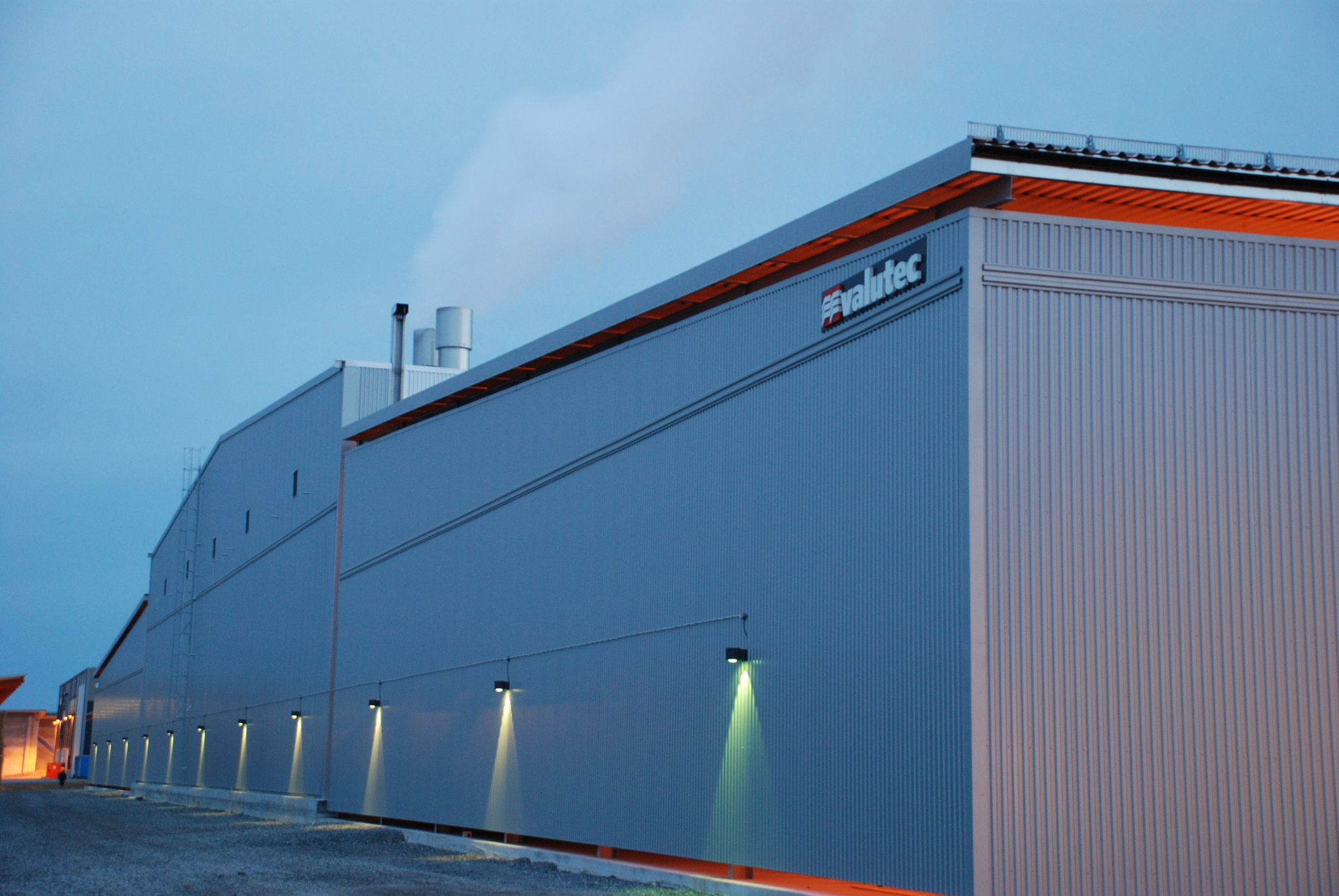
Valutec is set to deliver three major TC continuous kilns to Västerbotten county in the norhern parts of Sweden in 2018.

These are Martinsons, who invested in one TC continuous kiln and five batch kilns in Bygdsiljum, and Norra Skogsägarna who invested in TC continuous kilns for their sawmills in Kåge and Sävar. Both companies made investments as a key part of comprehensive increases in production.

I’m proud of us [Valutec] supplying facilities that not only increase their production capacity but also help to further optimize their production,” says Robert Larsson, CEO of Valutec.

Martinsons is first up, and will put its new TC continuous kiln, which primarily will be used to dry side boards, into operation after the summer. In addition to this, the company is investing in five batch kilns, which will be used both for planks and boards. The investments are one part of the production increase in Bygdsiljum, which as a first stage means an increase from 300,000 cubic meters (127,000 MBF) to 415,000 cubic meters (176,000 MBF) annually.

Norra Skogsägarna’s new TC continuous kiln in Kåge will be ready in January 2019, and the one in Sävar is to be put into operation in October 2018.  In Kåge, the capacity has almost doubled in eight years, from around 130,000 cubic meters (55,000 MBF) to 240,000 cubic meters (102,000 MBF). This includes previous investments in batch kilns from Valutec. Drying capacity has peaked, which has lead to the investment in a new TC continuous kiln.

This gives us high capacity per SEK, and as we saw both pine and spruce, we also need to ensure significant flexibility. Purely from a design perspective, we’re also very happy with Valutec's kilns. The batch kilns from 2011 are dependable and look almost new after six years’ operation. Which clearly bodes well,” says Johan Oja, Technical Manager at Norra Skogsägarna.

UK softwood lumber imports from Europe not yet impacted by Brexit

UK's softwood lumber imports from the European Union countries haven't been yet affected by Brexit, as shown in the results for full year 2017.

During January-December 2017, the imports reached 5,484 million m3 of softwood lumber, from 5,469 million m3 in the same period of 2016.

While Sweden's shipments to the UK grew by 14%, to 2,877 million m3 in the mentioned period, Latvia and Finland sent -6% and -5%, respectively, less softwood lumber. Also, exports from Ireland to the UK went up by 17%, to 385,569 m3, while Germany sent -26% less softwood lumber.

Origin Jan - Dec 2016 Jan - Dec 2017 Change in %
EUROPEAN UNION 5,469,124 5,484,955 0 %
Sweden
2,518,745 2,877,866 14 %
Latvia
917,140 862,282 -6 %
Finland
776,752 738,066 -5 %
Ireland
330,676 385,569 17 %
Germany
373,710 278,152 -26 %
OTHERS 552,101 343,020 -38 %

Valutec to deliver two more continuous kilns to Central Europe

Austria's Hasslacher Norica Timber and Germany's Robeta Holzindustrie have chosen Valutec to deliver two continuous lumber kilns.

With these two kilns, Valutec would have sold 21 progressive kilns to Europe in 2017 with a total drying capacity of around 1,500,000 cubic meters (640 000 MBF).

Continuous kiln technology is still relatively unknown in Central Europe, but in recent years the technology has made a breakthrough. The increased demand for Valutec’s continuous kilns is the result of a combination of a focused effort on Valutec’s part and in increased demand for high-quality drying processes from sawmills in Central Europe.

"The increased use of glue-laminated and cross-laminated lumber has led the sawmills of today to have a completely different quality approach and to see a value in drying side-sawn boards. It creates additional opportunities for our continuous kiln technology, which meets sawmill requirements for high capacity and quality,” says Robert Larsson, CEO Valutec.

Hasslacher is a family-owned sawmill group with seven plants in three countries. In 2016, the Hasslacher plant in Sachsenburg, Carinthia, which is one of Europe's most modern glue-lamination facilities, invested in two OTC kilns from Valutec. Hasslacher has now chosen to invest in an additional Valutec kiln to the same plant.

"When a customer chooses to invest in an identical installation, it’s a great confirmation that they're very satisfied with our product and our previous delivery," says Robert Larsson.

Robeta Holzindustrie is a privately owned German sawmill which processes around 300,000 cubic meters (130 000 MBF) per year. The OTC kiln will be the sawmill's first continuous kiln. It has a capacity of around 50,000 cubic meters (21 000 MBF) per year and will be used to dry pine in thinner dimensions down to a moisture content of 18 percent.

"Robeta seas great value in the continuance kiln's low energy consumption and its logistical advantages compared to a traditional batch kiln," says Robert Larsson.

The progressive kilns, which are made of stainless steel, will be equipped with pressure frames for minimal deformation of the top lumber layers. The kiln is equipped with Valutec’s heat recovery system and delivery also includes the Valmatic control system. The installations will be delivered and assembled during the winter for commissioning during the spring of 2018.

Sweden forests with 120 million m3 more hardwoods than 25 years ago

Hardwood volumes in Southern Sweden have went up by approximately 3 million m3 per year, since 1993, making it 120 million more hardwoods in Götaland now than 25 years ago. 

The forest regeneration now has more hardwood and pine than ever before, which will create a more varied forest structure. With the introduction of production forestry in the 1940s, the proportion of spruce increased, and by the mid-1990s, more than every second tree in Götaland was a spruce.

25 years later, the proportion of spruce in southern Swedish forests has fallen in relation to hardwood, while the proportion of pine has remained virtually unchanged.

The most recent National Forest Inventory shows that spruce has fallen from 53 to about 48 percent of the growing stock, while the proportion of hardwood has risen from about 18 to 23%.

This trend means that we now have about 120 million more hardwoods in southern Swedish forests compared with 1993. However, this does not mean that the amount of pine wood has fallen, because the growth rate of pine forests has gradually increased.

The shift towards more hardwood in the forests owned by Södra’s members is a combination of systematic nature conservation interventions and a management strategy, whereby spruce is not allowed to grow too old because of the major financial risk it poses,” said Göran Örlander, forestry strategist at Södra.

Another national inventory, the Swedish Forest Agency’s reforestation assessment, shows that a higher percentage of the dominant species in the regeneration stands consists of hardwood, but also pine.

The hardwoods have regenerated almost 100 percent naturally and in the most recent inventory, they accounted for about 25 percent of the dominant tree species compared with 18 percent in 2000. The reason for this increase has not been studied in any detail, but it’s probably due to a more positive view of hardwood trees among forest owners,” said Göran Örlander.

Following a period with a lower proportion of pine in regeneration stands, partly due to high browsing pressure from wildlife, the percentage of pine seedlings in Götaland has increased over the past six-seven years. The conscious strategy of forest companies to significantly increase the proportion of planted pine – and to promote pine in general – is playing a key role in this positive trend. If we continue to manage our new forests responsibly and find a healthy wildlife balance, we can also look forward to a rich variation of tree species in southern Swedish forests in the future,” said Göran Örlander.

Wooden products exports from Vietnam to top $9 billion this year

Vietnam's forestry products exports are forecast to reach $9 billion this year. The value of wood and wooden products might account for $8.5-8.7 billion.

Nguyễn Quốc Khanh, chairman of the Handicraft and Wood Industry Association of HCM City, said that exports of wooden and other forestry products rose by 10.2 per cent last year to a record $8 billion, a figure targeted only in 2020.

As reported by Vietnam News, exports of wood and wooden products increased by 12.3% a year for the past seven years, and are forecast to rise even faster in the next three years, he added during a celebration in HCM City, on the occasion of the forestry products exported value reaching the $8 billion mark in 2017. Also, Khanh listed the opportunities for the sector until 2020, saying the future is bright.

China, the largest wooden products supplier in the world, now faces a lawsuit in the US for dumping furniture, reducing the competitiveness of its products, by imposing export taxes on wooden products. Germany and Italy, other main furniture products, have cut production due to higher costs, while Malaysia and some other ASEAN members have development strategies but lack the workforce required.

Global demand for furniture remains high, and though Việt Nam is strong in that area its exports are insignificant, which means there is considerable scope for Vietnamese firms to increase their market share, Vietnam News reported.

Minister of Agriculture and Rural Development Nguyễn Xuân Cường hailed the sector’s achievements, saying: “Reaching $8 billion in exports is a very important landmark for the forestry sector. It would have opportunities to expand its market share in the global market since there is an increase in demand. But consumers have increasingly higher demands and furniture producers need to improve quality, designs and features to add value to their products. Việt Nam’s 100 million population makes it a promising market too.

Thus, private businesses have to invest more in technology and management as to raise productivity and sustain the quality of their products. Also, they would have to diversify the timber sources as to avoid the risk of high prices while saying no to illegal sources.

The US has cut corporate income tax to support local furniture producers, and Vietnamese firms should avoid export of products that US firms are producing, Cường added.

Nguyễn Liên, general director of Lâm Việt Joint Stock Company, said the market for wooden products is good now with many international buyers shifting from China to Việt Nam. “I think the export target of $9-10 billion is easy to achieve.” His company had earned $21 million from furniture exports last year, and it is expected to increase by 20-25 per cent to $25-27 million this year. “Businesses have prepared well to capitalise on market opportunities,” he added.

Wood and wooden products rank sixth in the list of the country’s largest export items, while Vietnam is the largest exporter of those products among ASEAN member nations, second largest in Asia and fifth in the world.

Fourteen outstanding wood processing and forestry products export firms were honored for their business achievements at the celebration.

Newsletter

Subscribe to our digital newsletter for your daily digest of essential news, views and analysis from the international wood industry delivered directly to your inbox.


0