Article archive

US lumber prices pick up after weeks of decline

Additional and significant curtailments announced in British Columbia jolted the framing lumber market out of a five-week losing streak. While dramatic price volatility was limited to Western S-P-F, the impact bled into other species, with mills firming quotes and raising prices moderately in late trading.

Aggressive increases by B.C. mills resulted in some $60-80 shifts in sales levels from the previous week to where mills quoted Thursday. Led by Western S-P-F, the Random Lengths Framing Lumber Composite gained $7.

This Week
Jun 14
Last Week
Jun 7
Year Ago
2018
Random Lengths Framing Lumber Composite Price* $326 $319 $571
KD Western S-P-F #2&Btr 2x4 R/L Mill Price 360 297 615
KD Eastern S-P-F #1&2 2x4 R/L, delivered Great Lakes 402 385 712
Green Douglas Fir Std&Btr 2x4 R/L (Portland) 303 300 575
Southern Pine (Westside) #2 2x4 R/L 318 331 588
KD Coast Hem-Fir #2&Btr 2x4 R/L 353 347 640
Ponderosa Pine (Inland) #2&Btr 1x12 R/L 860 860 770
* Weighted average of 15 key items

Random Lengths Panel Market Report

Trends were mixed in structural panel trading. The announcements this week that two OSB plants were going to be curtailed indefinitely in Western Canada stirred buyers and reversed the downward trend in that market. Southern Pine plywood sales were slow to develop at previously reported prices, and many mills opened to counters to secure orders. As in prior weeks, most western Fir plywood producers tried to sell truckloads of sheathing with minimal concessions and push carload volumes with deeper discounts. The week got off to a slow start in Canadian plywood markets. Activity picked up Wednesday afternoon.

(f.o.b. mill prices) This Week
Jun 14
Last Week
Jun 7
Year Ago
2018
Random Lengths Structural Panel Composite Price* $333 $341 $573
Southern (west-east) 15/32-inch 3-ply rated sheathing plywood 345-385 355-395 550-582
Southern (west-east) 15/32-inch 4-ply rated sheathing plywood 350-390 360-400 555-593
Western 1/2-inch 4-ply rated sheathing plywood 352 354 571
North Central 7/16-inch Oriented Strand Board 175 180 445
*Weighted average of 11 key items


Sonae-Arauco to cease laminate operations in Horn, Germany

GHP Glunz Holzwerkstoffproduktions - GmbH (“GHP”) intends to cease all operations at its Horn Bad Meinberg site in Germany by the end of 2020. GHP is a subsidiary of Sonae Arauco, the joint venture between Sonae Indústria and Arauco, and has 106 employees. GHP’s main businesses are the production and sales of laminates, the production of worktops and the operation of a powerplant.

According with the agreement entered into with Arauco in relation to Sonae Arauco, the Laminates and worktops business are the responsibility of Sonae Indústria. GHP’s powerplant together with the laminates and worktops operations, are the last remaining industrial activities on this large site in Horn whose main activities were closed down in 2014.

As stand alone operations and with old and inefficient equipment, the laminates activities at the Horn site are not viable. These activities have operated at very low levels of capacity utilization and suffered from a high fixed cost structure making them uncompetitive in what is today a very competitive market environment for laminates and worktops businesses in Europe as a whole.

The intention to cease these activities has resulted from the consequential poor financial performance of the laminates and worktops operations that have generated negative EBITDA and cash flow over recent years, leaving them with no reasonable prospects for a material recovery in their financial profitability in the medium term.

The commencement of formal discussions with the Works Council for the laminates activities in the Horn site is an isolated decision and does not involve the remaining Sonae Indústria laminates business, whose main manufacturing site is in Maia, Portugal.

Sweden: Collapse in softwood lumber exports to China compensated with booming deliveries to Egypt

Sweden increased softwood lumber exports to Egypt by 68.2% y-o-y in first quarter 2019 to 365.6 thousand m3, export value jumped 46.2% to $62.9 million.

Exports to China declined 34.5% to 163.4 thousand m3 with export value was down 40.0% to $34.5 million.

Softwood lumber exports to Netherland from Sweden dropped 18.8% to 218.1 thousand m3 with export value decreased 18.4% to $61.4 million, according to data provided by Statistics Sweden. Exports from Sweden to UK expanded 1.95% to 680.3 thousand m3, export value was up 10.6% to $194.7 million.

In first three months of 2019, total softwood lumber exports from Sweden slid 3.66% to 3.1 million m3 with export value dropped 6.12% to $806.2 million.

Boise Cascade to expand plywood plant in South Carolina

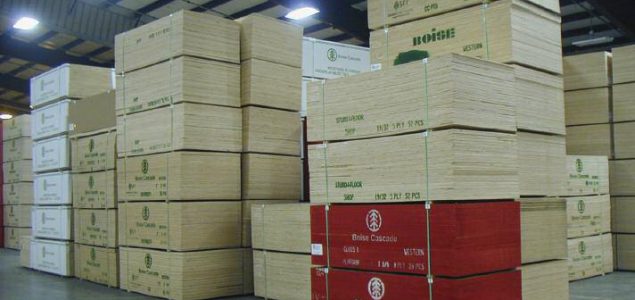
Boise Cascade Company will expand its existing operations in Chester County, South Carolina. The engineered wood products and plywood maker and building products distributor is investing an additional $17.5 million in the facility in a series of upgrade projects.

“South Carolina is strategically located to reach our East Coast and southern markets,” said Executive Vice President Mike Brown. “With the state’s strong manufacturing base, we’ve been fortunate to draw a skilled workforce from Chester and the surrounding communities, and we’re always looking for talented people to join our team.”

In 2013, Boise Cascade acquired Chester Wood Products, a softwood plywood facility. Boise Cascade has continued to upgrade its existing Chester County operations located at 1445 Lancaster Highway in Chester, SC, in response to growing customer demand.

“Boise Cascade’s latest expansion in South Carolina continues to prove that there is no better place to be doing business,” said Gov. Henry McMaster. “We look forward to seeing the positive impact that this new $17.5 million investment will have in Chester County.”

In 2015, the company invested $23.5 million in a series of improvements to the facility, resulting in more efficient production capabilities and dozens of additional jobs. In total, the Boise, ID-based company now has more than 295 full-time employees at its Chester County location.

“The fact that Boise Cascade has decided to expand its Chester County operations speaks to South Carolina’s pro-business environment,” added South Carolina Department of Commerce Secretary Bobby Hitt. “I look forward to watching Boise Cascade thrive here for many years to come.”

Norbord to permanently close OSB mill in BC due to supply pressure and beetle epidemic

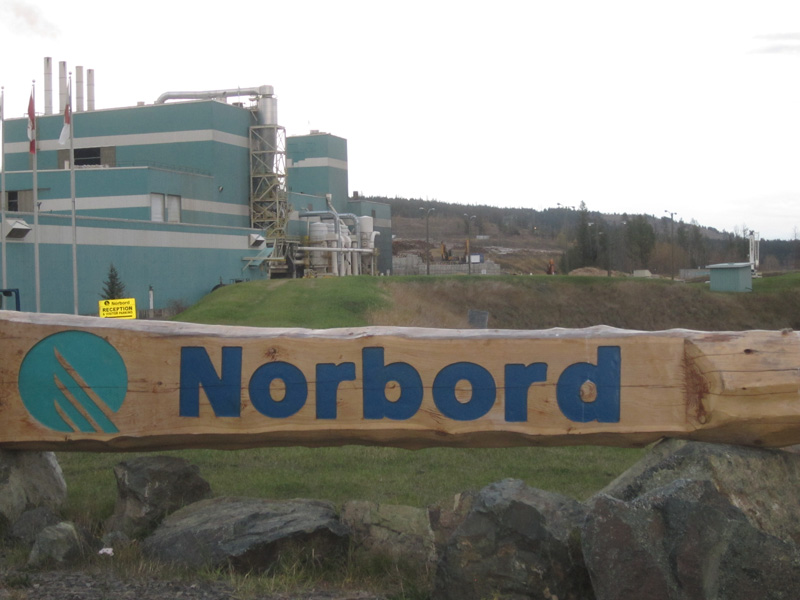
Norbord Inc. has announced its intention to indefinitely curtail production at its oriented strand board (OSB) mill in 100 Mile House, British Columbia starting in August 2019.

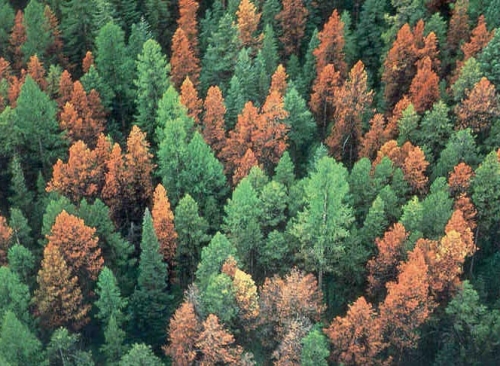
The Cariboo region in which the company’s 100 Mile House mill is located has been under mounting wood supply pressure for the past decade as a result of the mountain pine beetle epidemic. This challenge has been more recently exacerbated by the significant wildfires that the province of British Columbia experienced in the summers of both 2017 and 2018. The resulting wood supply shortage and high wood prices do not support the economic operation of the mill at this time.

Norbord will continue to supply its current customers and meet expected future customer demand with production from its 11 other operating North American OSB mills, including High Level and Grande Prairie, Alta.

“This is a difficult decision in response to extraordinary circumstances,” said Peter Wijnbergen, Norbord’s President and CEO. “We have a first-rate team in 100 Mile House and this curtailment is in no way a reflection on our employees, their commitment to our customers and suppliers, or the local community.”

The 100 Mile House mill has a stated annual production capacity of 440 million square feet (3/8-inch basis). Approximately 160 employees will be impacted by this curtailment.

UPM’s sawmills are running at full speed

UPM Timber welcomed Aki Temmes, 41, to the position of Senior Vice President of Business in late April. He transferred to the position of head of UPM Timber from the position of Vice President of Business Control at UPM Biorefining. Aki has worked at UPM for over 16 years; in addition to Biorefining, he has worked in the Paper Business, UPM Timber and Wood Sourcing.

'I am excited to return to UPM Timber after being away for about six years. A lot of good work has been done at Timber under the supervision of my predecessors, and the business operations have improved significantly over the past few years,' Aki says.

Strong demand in the sawn timber market

The new Senior Vice President of Business at UPM Timber, Aki Temmes, estimates that the demand for sawn timber remains at a healthy level, even though the peak of the economic cycle might have been reached last year.

'We made good deals and the volumes moved very well in the first quarter of 2019.'

In Finland, UPM Timber consists of four sawmills with a total capacity of over 1.5 million cubic metres. UPM Kaukas sawmill is the largest, producing over 500,000 cubic metres of sawn timber per year.

A lot of UPM Timber's production is sold domestically in Finland. 'After Finland come China, Japan and the UK,' Temmes explains.

Even though the sawn timber trade was brisk during the beginning of the year, there are uncertainties in the global economy that could also weaken the outlook for sawmills. The principal concerns are related to the trade war between China and the United States, and the effects of Brexit.

'Since we cannot affect the global market, we must do our best in business. We have a clear strategy, high-performance sawmills and professional sales - all the necessary components for successful business. We intend to be a reliable partner to our customers in the future, too,' promises Temmes.

In 2012, UPM decided to stop the further processing of sawn timber and to concentrate on sawing alone. Since this decision, the sawmills have been running at full speed.

'Since then, we have operated the sawmills based on the full-run strategy. There have been no market-related limitations on production. This sets us apart from most of our competitors,' says Temmes.

He states that industrial operations such as the sawmill industry are most efficient when the facilities are in full use.

'All wood that arrives at our sawmills is carefully used for production. Not even a single stick is wasted. Sawn timber generates value: wood chips, sawdust and other by-products are used for pulp, paper and energy production,' Temmes clarifies.

UPM sells most of its sawn timber to industrial customers in the furniture, construction and packaging sectors, or to customers for various further processing procedures.

'The range of customers and end-uses for our product is extensive. UPM Timber aims to establish and maintain international long-term partnerships. From the standpoint of future challenges, we are a great partner with a solid foundation, and we concentrate on our core capability: producing sawn timber for the right end-use applications at the right time,' says Temmes.

All UPM sawn timber is certified according to the FSC or PEFC certification schemes. 'Customer and market preferences vary, and we can use both certificates flexibly.'

Temmes believes that the future of sawn timber is bright

'Our product is amazing. Sawn timber binds carbon throughout its lifecycle, which can last for hundreds of years. It is produced in a responsible and environmentally friendly way and it meets all the sustainability requirements.'

Aki Temmes emphasises that the quality of the end-product is based on the production expertise, good forestry and close collaboration with forest owners.

'We naturally aim to be able to provide our customers with added value and bring peace of mind and flexibility to their operations. We will succeed in providing sustainably produced Finnish sawn timber at a consistently high standard, as well as excellent service,' Temmes concludes.

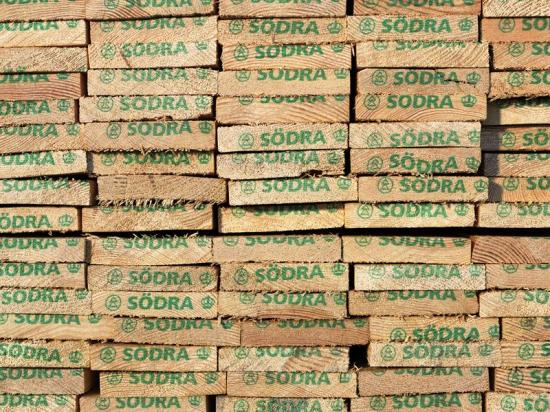
Södra expands drying capabillity in Sweden to address bottleneck and prepare for new CLT facility

Södra chose Heinola to supply new Progressive kilns for the sawmill in Värö, Sweden. Heinola will deliver two 2-zone automatic HTC-type Progressive kilns with a total drying capacity of 60,000 m3/year to Södras sawmill in Värö.

The progressive kilns can dry 23 mm, 33 mm and 43 mm pine and spruce down to 12 % final moisture content, and are equipped with Heat Recovery Unit, pressure frames, high-pressure hot water spraying system HPHW, energy measurement per kiln and the very user-friendly Heinola Control System. The kilns will be suitable for the future addition of two more progressive kilns. The two progressive kilns will be delivered turnkey alongside existing continuous kilns, and the drying plant will be put into production in June 2020.

“The drying kilns are currently a bottleneck in sawmill production at Värö and, with the investment in two new kilns, we are ensuring the conditions to be able to utilise our entire production potential, while also taking the future into account,” says Mill Manager Marcus Åsgärde from Södra Wood Värö. The drying kilns will initially be used in existing production, but when the new factory for cross-laminated timber is ready at Värö, the kilns will be used to dry timber down to 12 %.

“We compared several suppliers, but eventually we choosed Heinola because they offered a customised drying plant with a focus on our conditions and requirements. In the procurement process, Heinola has been very responsive regarding what we actually want, and dialogue throughout the process has been very good,” says Mill Manager Marcus Åsgärde from Södra Wood Värö.

“We are currently Finland’s largest supplier of drying kilns, and with this order, new channels are opening in the Swedish market for Heinola drying kilns,” says CEO Jan Räsänen from Heinola Sawmill Machinery Inc. “Safety features and the user-friendly control system play a very important role in these progressive kilns. Heinola’s success in Sweden is the result of a long-term and targeted investment.

Södra was founded in 1938 and is Sweden’s largest forest owner association, with nearly 52,000 forest owners as members. Södra operates modern, responsible forestry and industries where the raw material is processed. Turnover in 2018 was SEK 24 billion and the number of employees was 3,100. Through value-added relationships and long-term actions, Södra is showing the way for the next generation of forestry.

Heinola Sawmill Machinery Inc. plans, manufactures and markets technology for sawmills and the energy wood chips production. The company has a turnover of approx. 25 million Euros and has 77 employees. The company is owned by a listed Lifco AB, of which the Swedish company Carl Bennet AB is the chief shareholder.

Canadian softwood lumber production falls 8.6% in Q1/2019, driven by 14.7% decline in BC’s output

Sawmills in Canada produced 6.382 bbf in the first three months, down 8.6% from 6.985 bbf a year earlier. Output in British Columbia plunged 14.7% to 2.684 bbf in the three-month period from 3.145 bbf a year earlier, while sawmills east of the Rockies contributed 3.698 bbf, down 3.7% from 3.839 bbf.

In March, Canadian production was 2.299 bbf, a 5.1% decline from 2.423 bbf in March 2018, but up 18.9% from 1.933 bbf in February 2019.

Sawmills in British Columbia contributed 958 million board ft. (mmbf) to production volume in March, a year-over-year drop of 11.8% from 1.086 bbf in March 2018, but up 19.4% from February’s output of 803 mmbf.

Sawmills east of the Rockies produced 1.340 bbf in March, up 0.3% from 1.337 bbf in March 2018, and an 18.6% increase from the previous month’s output of 1.130 bbf.

Apparent Canadian softwood lumber consumption dropped by 9.4% in the first three months of 2019 to 2.213 bbf from 2.442 bbf a year earlier. In March, apparent Canadian consumption was 657 mmbf, down 12.2% from 749 mmbf in March 2018, and 1.7% lower than output in February 2019 of 669 mmbf.

US sawmills produce 8.634 bbf of softwood lumber in first three months of 2019

U.S. sawmills produced 8.634 billion board ft. (bbf) of softwood lumber in the first three months of 2019, a gain of 0.4% from 8.603 bbf a year earlier, the Western Wood Products Assn. (WWPA) reported in its latest Lumber Track report.

Sawmills in the western U.S. contributed 3.533 bbf to the three-month total, down 3.5% from 3.663 bbf in the first three months of 2018, while Southern sawmills accounted for 4.694 bbf – up 3.5% from 4.535 bbf last year.

In March alone, output from U.S. sawmills was 2.798 bbf, a 5.0% decline from 2.944 bbf in March 2018, but up 3.9% from the 2.693 bbf produced in February 2019.

Western sawmills contributed 1.173 bbf to production in March, down 6.6% from 1.256 bbf in March 2018, but up 7.3% from 1.093 bbf in February 2019.

Southern sawmills produced 1.493 bbf in March, down 3.7% from 1.550 bbf in the previous year, but up 1.4% from output in February 2019 of 1.473 bbf.

Apparent U.S. softwood lumber consumption was 11.540 bbf in the first three months of 2019, a decline of 0.1% from 11.546 bbf in the same period last year. Consumption in March alone was 3.950 bbf, a year-over-year drop of 2.1% from 4.034 bbf, but up 12.0% from 3.528 bbf in the previous month.

Rising opportunities for Russian wood pellets in Asia

Wood pellet production in Russia has been steadily increasing in the past years. The North-West Region accounts for most of the production but the recent major increases in the production capacity are in Siberia and the Far-East Russia. Domestic markets for wood pellets in Russia are very marginal, and almost all production is exported. While Russia’s wood pellet production is relatively young, it accounts for a six percent share of world wood pellet exports. Russia ranks 8th in the world for total wood pellet production, with three percent of total world wood pellet production.

According to FAOSTAT, production of wood pellets in Russia is forecast to increase significantly by 5 MMT by 2020, and by 8 MMT by 2025. Continue reading "Rising opportunities for Russian wood pellets in Asia"

Falling orders for the Italian woodworking machinery in Q1/2019

According to the Acimall (Italian Woodworking Machinery and Tools Manufacturers' Association) Studies Office, the first quarter 2019 showed an overall reduction of orders, which can be considered "inevitable" after the booming growth of 2017 and further expansion last year.

According to the Acimall survey, the industry showed in the first three months of 2019 an 11 percent reduction of orders compared to the same period of the previous year. Orders from abroad decreased by 10.2 percent, while domestic demand dropped by 14.5 percent.

The book of orders is at 3.7 months, while prices have been growing by 0.5 percent since the beginning of 2019. Revenue figures are recording an opposite trend to orders, with a 10.3 percent increase.

The quality survey for the period under scrutiny reveals that 7 percent of the interviews indicate a positive production trend, 60 percent a stationary trend and 33 percent a slowdown.

Unfortunately, the forecast survey shows an enduring mood of distrust among industry players, both on the domestic and on the international side, whereby such mood is favored by all key macroeconomic variables that suggest that the minor positive rebound of industrial production in February-March was mostly due to stocks replenishment. This adds to GDP growth forecasts at 0.2 percent, which is not enough to feed confidence.

The forecast survey results are clear: for the domestic market, only 7 percent expect growth, 60 percent indicate stability and 33 percent fear shrinking business (the negative balance is minus 26). More optimism on the export side: according to 13 percent of the sample, foreign orders will increase in the next quarter, while they will remain stable for 60 percent and 27 percent expect a reduction (negative balance -14).

France: Prices for oak logs start to fall after years of sharp rise

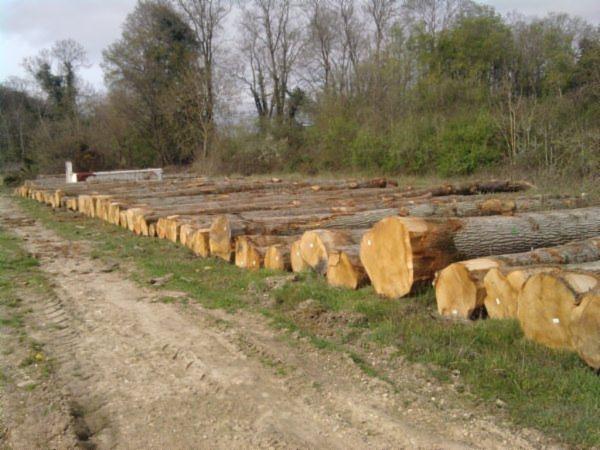
There are significant changes in the French oak market. This can be noticed by examining the results (see table below) of the last spring auctions in France. Indeed, for the first time since 2012, the prices for oak logs are down. The news is not really a surprise, as the sharp rise in oak prices which has extended for over 6 years, had to cease one day or the other. 

Over recent years the rise has been impressive, some professionals even mentioned the risk of overheating if the prices would have continued to increase in 2019. In fact, in the interval of half a decade, the tariffs of oak have more than doubled.

Logs of 1.5 m3 diameter in the French region of Saone Valley sold standing around at 65 euros / m3 in 2012, were traded at 150 euros / m3 in the autumn of 2018. Over the last period 2015-2018, the prices of these same logs jumped by 50%, more than 15% increase each year! Continue reading "France: Prices for oak logs start to fall after years of sharp rise"

More curtailments in BC announced by Canfor and Western Forest Products

Canadian Canfor Corporation announced it will be curtailing operations at all British Columbia sawmills, except WynnWood. The majority of mills will be curtailed for two weeks or the equivalent, with extended curtailments of four weeks at Houston and Plateau, and six weeks at Mackenzie. The curtailments are scheduled to run from June 17 through July 26.

The curtailments are due to very poor lumber markets and the high cost of fibre, which are making the operating conditions in BC uneconomic.

The curtailments will reduce Canfor’s production output by approximately 200 million board feet. Following the previously announced closure of Vavenby in July, Canfor will have 12 sawmills in Canada, with total annual capacity of approximately 3.55 billion board feet.

Also, Western Forest Products Inc. announced temporary production curtailments at three of its sawmills to align production volumes to match current customer demand.

Western will curtail its Duke Point sawmill for two weeks and its Saltair sawmill for one week in June. The company will also reduce operating levels from 120 hours per week to 80 hours per week at its Chemainus sawmill.

“The temporary production curtailments are necessary due to challenging market conditions,” said Don Demens, Western’s President and CEO. “The challenge of weak markets is compounded by the disproportionate impacts of softwood lumber duties on high value products, including Western Red Cedar.”

The curtailment is expected to reduce production by approximately 15 million board feet. Western has an annual lumber capacity in excess of 1.1 billion board feet.

Vietnam to block Chinese relabeled timber products to beat U.S. tariffs

Vietnam has said it would crackdown on goods of Chinese origin illegally relabeled “Made in Vietnam” by exporters seeking to avoid US President Donald Trump’s tariffs on Chinese imports.

The General Department of Vietnam Customs has found scores of such cases amid ongoing US-China trade tensions, it said in a statement posted to a government website on Sunday, 09 June.

“The faking of origin and the illegal transhipment of goods happens most often in the sectors of textiles, seafood, agricultural products, tiles, honey, steel and iron, aluminium and timber products,” the department said.

Some importers had been illegally repacking goods from China in “Made in Vietnam” packaging and then applying for a Vietnamese certificate of origin with which to export to the US, Europe and Japan, it said.

In one such example, which was uncovered by US Customs and Border Protection, a Vietnam-based manufacturer of timber products was found to have been importing Chinese timber which it had relabeled and exported to the US.

Vietnam’s customs department is developing a process to better identify and impose penalties on businesses that carry out such contraventions, the statement said.

Vietnam has emerged as one of the largest beneficiaries of the trade dispute between Beijing and Washington, as some businesses are shifting their supply chains away from China to avoid tariffs.

An analysis of trade data by Japan’s Nomura Holdings Inc earlier this month showed that Vietnam had easily benefited more than other countries.

The Southeast Asian country relies heavily on China for materials and equipment for its manufacturing sector.

Meanwhile, the US is Vietnam’s largest export market.

The Vietnamese government has created a steering committee in response to the trade war, Vietnamese Minister of Foreign Affairs Pham Binh Minh said in a speech to the Vietnamese National Assembly last week.

Current dynamics and challenges of the Russian wood industry

The Russian wood product industry is one of the world’s most dynamic ones thanks to its increasing domestic processing of roundwood and production of higher value-added products oriented towards exports. The Russian wood product industry produces sawnwood and different wood-based panels. In 2018, these valued almost USD 10 billion, over 1/3 of the total Russian forest industry output. European part of Russia is the leader in wood-based panels production, while Siberia is the largest producer of sawnwood.
The key factor in Russia’s wood industry competitiveness is the low cost of raw material. Russia has one of the lowest log costs among the main competing suppliers. For the last couple of years, the soft log cost has been between USD 40-50 per m3. For example, this is about 25% of the price level in China. Part of the favourable development when compared to the main competing countries, is caused by the low value of the Rubble. In local currency, however, the prices have increased considerably, and are continuing to climb. Labour cost is also low, and the wood product sector is still heavily labour intensive in Russia, still among the most intensive among the main competing countries. Continue reading "Current dynamics and challenges of the Russian wood industry"

Record logging of 26 million m3 in the Czech Republic as a result of the bark beetle calamity

In 2018, logging in the Czech Republic increased to 25.7 million m3 . That is the highest value in the history of the country. The unscheduled wood resulted from calamities alone accounted for 23 million m3 and is far higher than the total of 2017, as the Statistical Office of the Czech Republic reported.

The main reason for this is the dry weather and the resulting bark beetle epidemics. With 87.2%, spruce is by far the most affected. This is followed by pine with 4.4% and beech with 2.5%.

The most affected regions were Vysočina in the central south of the country with 3.8 million m3, South Bohemia with 3.4 million m3, Olomouc in the northeast with also 3.4 million m3 and Moravsko Slezký in the east with 3.0 million m3.

Timber harvesting Czech Republic 2016-2018

Year

Total harvested 
1.000 fm oR

Softwood 
1,000 m3

Hardwood 
1,000 m3

Wood resulted from calamities 
1,000 m3

2018 25 689 24 213 1 476 23 013
2017 19 387 17 735 1 652 11,743
2016 17,617 15,924 1 693 9 399


21,000 ha were artificially reforested. This is 6.4% more than in 2017. The proportion of softwood trees in the planting area increased significantly with 44.7% - a tribute to the beetle disaster. The most commonly planted trees are spruce (36.8%), beech (22.4%) and oak (14.1%).

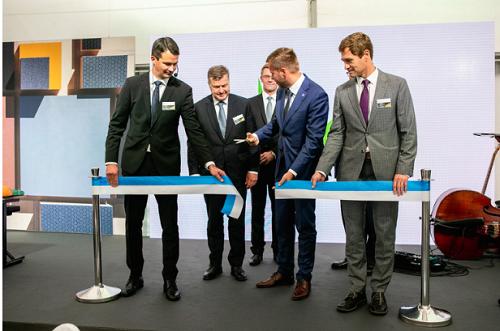
Metsä Wood inaugurates new Kerto LVL line in Finland

Metsä Wood, the Wood Products Industry of Metsä Group, inaugurated the new Kerto® LVL line in Punkaharju, Finland. The decision on the investment of 65,000 cubic metre Kerto LVL line was made in December 2017.

“Metsä Group’s aim is to create profitable growth by processing Finnish wood. Sustainability guides all our actions – we want to increase the amount of carbon stored in forests and its products, and that is why our biggest investments in recent years have been addressed to increase the production capacity of mechanical forest industry. The new line at Punkaharju is a great example of that,” stated Ilkka Hämälä, President and CEO, in his opening speech.

The production capacity of Punkaharju’s new Kerto LVL line is 65,000 cubic metres and the value of the investment is Euro 52 million. The growing production increases the use of spruce logs by 160,000 cubic metres per year. The new line is expected to reach full production capacity within two years from the start up.

Metsä Wood is one of the leading European producers of engineered wood products. Metsä Wood is part of Metsä Group.

Sawlog prices fell throughout the world in the 1Q/19

The global flow of softwood logs from countries with a surplus of wood raw material to regions with tight, or costly log supply, and higher consumption of forest products continued to expand for the third consecutive year in 2018.
Sawlog prices fell throughout the world in the 1Q/19 due to either plentiful supply or reduced demand for lumber, depending on region. The Global Sawlog Price Index (GSPI) fell 1.8% to the lowest level noted since the 2Q/17.
The Euro-denominated European Sawlog Price Index (ESPI) was €81.08/m3 in the 1Q/19, a 3.1% drop from the 4Q/18 - the lowest level seen since 2010. The ESPI Price Index is composed of average sawlog prices in nine of the largest log-consuming countries in Europe. The Index tracks prices from the 1Q/95 to the current quarter and is published in the WRQ.
Global Pulpwood Prices
The Softwood Fiber Price Index (SFPI) inched up 0.5% in the 1Q/19. This was the third consecutive quarterly increase and the highest this index has seen since late 2014. Of the regions covered by the index, Russia, New Zealand and the US South contributed the most to this rise.
Most regions worldwide saw hardwood fiber prices move higher in the 1Q/19 because of a tighter supply of pulplogs. The Hardwood Fiber Price Index (HFPI) was up 2.5% from the 4Q/18 to the 1Q/19.
Global Pulp Markets
Shipments of pulp during the first three months of 2019 were down 4.1% from the same period in 2018. Uncharacteristically, Latin America was the region that reduced shipments the most.
In 2018 and early 2019, Northern Bleach Softwood Kraft Pulp (NBSK) prices fell more dramatically than those for Bleach Hardwood Kraft Pulp (BHK), shrinking the discrepancy bringing the two benchmark grades. These two indices are now the closest in price they have been in 12 months.
Global Lumber Markets
In 2018, global trade of softwood lumber reached the second highest level ever recorded.
The free fall of lumber prices in the US came to a halt in early 2019, and prices might have hit a low for this cycle in January.
Softwood lumber exports from Canada were down 6% year-over year in 2018, with the biggest decline being in shipments to China.
For the first time in five years, Swedish exports of softwood lumber fell year-overyear in 2018. The biggest declines were in exports to Asia and the MENA region, while shipments to the European market remained practically unchanged.
Despite much uncertainty in the near future for the Chinese economy, lumber imports rose unexpectedly in the 1Q/19 by as much as 14%.
Russia increased exports of softwood lumber by 7% from 2017 to 2018. This was the sixth consecutive year that exports have increased from the previous year.
Global Biomass Markets
Pellet exports from North America surged in the 4Q/18 to reach an all-time-high of almost 2.6 million tons - a continuation of an upward trend that began early 2017.
The United Kingdom continues to be the largest importer of wood pellets in the world. In 2018, the country was the destination for 36% of globally traded pellets.

Myanmar to allow plantation teak exports

The Myanmar government will again allow the exportation of raw teak and timber from state and privately-owned plantations, Ministry of Natural Resources and Environmental Conservation deputy permanent secretary U Kyaw Zaw said, but a ban on raw teak and timber from natural forests will remain in place.

U Kyaw Zaw said the decision was finalized on May 31.

“Only timber from private and state-owned plantations will be allowed for export. We have already adopted proper verification procedures, because government leaders are very concerned that timber from natural forests could be mistakenly allowed for export,” he told The Irrawaddy.

Teak exports are still subject to an approval process through the ministry, which will grant or deny permission on a case-by-case basis in response to requests from companies, he said.

“In meetings, [timber producers] asked for the re-allowance of raw timber logs because there is a price gap between domestic and foreign markets,” he said.

Ultimately, U Kyaw Zaw said, the ministry decided to reallow teak exports in order to promote the private sector, create local job opportunities and promote forest conservation and afforestation.

In 2014, the U Thein Sein government banned the exportation of all raw timber in an attempt to limit deforestation. The current National League for Democracy (NLD) government also restricted logging beginning in 2016.

The Myanmar government allowed the establishment of private teak and timber plantations in 2006. Before that, teak production was under the sole control of the government.

“It is good to allow exports again, so that private timber growers can generate income,” said U Tin Aye, secretary of the Myanmar Forest Association.

In the last ten fiscal years, 300 private companies have been permitted to plant 251,173.97 acres of teak; as of March 2018, 143,278.26 acres had been planted. In the same period, 104,890.26 acres of hardwood had been planted, according to the Ministry of Natural Resources and Environmental Conservation.

In fiscal year 2017-18, the ministry’s Forest Department established 14,970 acres of timber and teak plantations.

According to a 2015 survey from the UN Food and Agriculture Organization, Myanmar has seen the world’s third worst case of deforestation, with losses of at least 1.34 million acres of forest between 2010 and 2015.

More than 143,000 tons of trafficked timber have been seized by the government since the current administration took office, in 2016, according to the Forest Department. Timber from Myanmar is mainly smuggled to China.

The Forest Department auctions off about 80 percent of the timber it seizes.

France: Lumber prices for Q1/2019

The following price list is a collection of prices for lumber and wood products in France for the first quarter of 2019.
FRANCE LUMBER PRICES for the 1st quarter 2019

Prices 2019-Q1 Prices2018-Q1 € Prices2018-Q4€ Prices2019-Q1€ Index Change 2019-Q1/2018-Q4 Change 2019 Q1-2018-Q1
OAK Lumber                                                                       Index base 100 : Oct 2006 S20
UNEDGED LOGS  - QBA - Logs, joinery, (KD), length 3 m +
Diameter 40 to 49cm (thickness 34mm)    m3 1205 1194 1194 137,9 0,0% -0,9%
Diameter 50cm et + (thickness 50mm)    m3 1342 1 349 1 414 145,7 4,8% 5,3%
LOGS  - QB1 - High-value joinery work, 6 months open air drying, length 3 m +
Diameter 40 to 49cm (thickness 27/34mm)    m3 930 942 942 134,7 0,0% 1,3%
Diameter 50 to 80cm (thickness 54mm)      m3 1024 1063 1080 139,7 1,6% 5,5%
SELECTED LOGS  - QSA/QS1-  (KD)
Thickness 27 to 54mm - length 2m +
Bare 18cm (tolerance 10cm +)     m3 956 964 965 144,7 0,2% 1,0%
SELECTED LOGS  - QS2 - 6 months open air drying
Thickness 27 to 54mm - length 2m +
Bare 18cm (tolerance 10cm +)     m3 722 707 701 155,1 -0,9% -2,9%
STRIPS (80x27) OR EDGED (100x27) QF1a - 3 months AD
Length 30 to 50cm     m3 752 768 757 129,2 -1,5% 0,6%
Length 60 to 90cm     m3 999 1031 992 143,3 -3,8% -0,7%
Length 1m + m3 1124 1095 1116 141,1 1,9% -0,7%
STRIPS (80x27) OR EDGED (100x27) QF1b  - 3 months open air drying
Length 1,50m +    m3 742 782 789 127,0 0,9% 6,3%
EDGED QF2- Thickness 27 mm - length 1,50 m +
Width 100 to 150mm     m3 823 913 848 142,0 -7,2% 3,0%
Width 160mm +     m3 1010 1114 1088 178,6 -2,4% 7,7%
EDGED QF2/QF3 X – Thickness 27 mm, length 1,50 m +, 3 months AD
Width 160mm +     m3 720 792 802 158,4 1,2% 11,4%
EDGED BEAMS QP1 - Standard beams (fresh)
Camber to max. two edges, red core and sap tolerance
Measure 15x15 - length 4 to 5m     m3 579 575 572 140,6 -0,4% -1,2%
Measure 25x25 - length 4 to 5m     m3 659 661 718 157,4 8,5% 8,9%
SPRUCE Lumber (fresh)                                                        Index base 100 : July 1990 S30
Quality 0 - Edged, in all widths
Thickness 27mm     m3 300 293 286 101,9 -2,2% -4,6%
Quality 1 - Edged, in all widths
Boards 2 to 5,50m - thickness 27mm     m3 278 263 263 119,0 -0,2% -5,3%
Quality 2
Scantlings
75x225 or 63x160 - length 3 to 5m     m3
195 199 199 170,3 0,3% 2,3%
Beams 63x75 or 50x75 - length 3 to 4,50m     m3 205 206 207 111,1 0,2% 0,8%
Mouldings 27x27 - length 2 to 5m m3 239 243 242 118,7 -0,4% 1,4%
Quality 3 - Boards edged timber all width
Unedged beams
Thickness 18/27mm     m3
150 158 160 115,4 1,6% 6,8%
Quality 4
Scantlings     m3 149 151 148 108,8 -2,2% -0,5%
Boards any widths    Thickness 27mm     m3 144 149 147 117,9 -1,1% 2,0%
Value added for extra-lengths 5 to 8 m 10 11 10 - -3,9% 4,1%
€/m
MARITIME PINE Lumber (fresh)                                            Index base 100 : July 1990 S50
Quality 0A - edged, in all widths, lengths 2 to 2,70m
3/4 Sidings     Thickness 27/32mm    m3 347 351 358 118,3 2,2% 3,3%
Quality 0 - edged, in all widths, lengths 2 to 2,70m
Thickness 27mm     m3 257 267 277 134,0 3,8% 7,9%
Thickness 32mm     m3 270 280 282 133,0 0,7% 4,4%
Quality 1 - edged, in all widths, lengths 2 to 2,70m
Thickness 27mm     m3 202 213 219 140,5 2,9% 8,5%
Thickness 32mm     m3 240 247 249 150,0 0,8% 3,8%
Quality 2
Scantlings - length 3 to 5m m3 240 235 230 138,7 -2,0% -4,0%
Quality 3 - Boards thickness 27 mm - all widths
length 2 to 5m m3 158 170 169 137,1 -0,8% 6,9%
Beams     m3 150 163 163 128,1 -0,1% 8,1%
Quality 4
Boards 27mm     m3 115 130 132 140,8 1,8% 15,2%
PINE Lumber(fresh)                                                              Index base 100 : July 1990 S40
Quality 0A
Logs All thicknesss     m3 353 345 344 131,3 -0,2% -2,5%
Quality OB
Logs All thicknesss     m3 290 288 286 124,3 -0,7% -1,4%
Quality OA
Edged Thickness 18, 27mm +, Width 100mm + m3 304 301 302 101,7 0,3% -0,7%
Quality 0
Edged Thickness 18, 27mm +, Width 100mm +   m3 300 361 350 146,4 -3,0% 16,7%
Quality 1
Edged
Thickness 18, 27mm +, Width 100mm + m3
259 231 230 116,2 -0,4% -11,2%
Quality 2
Scantlings 63x163 or 175, 65x175 or 180, 75x165, 80x230 Length 3 to 5m     m3 215 215 200 116,4 -6,8% -6,8%
Beams : 76x76, 80x80 Length 3 to 5m m3 226 223 213 119,4 -4,8% -6,0%
Wood frame construction and glulam Price for drying and planning not included, length 2 to 4m m3 233 231 218 109,0 -5,6% -6,4%
Quality 3
Boards - Thickness 27 mm - length up to 3 m All widths     m3 136 145 138 105,4 -4,5% 1,2%
Scantlings : 65x165 or 80x230 m3 165 166 165 115,4 -0,6% 0,0%
Quality 4
Boards 27mm     m3 138 135 138 112,2 2,1% 0,0%
Scantlings     m3 145 150 150 116,3 0,1% 3,4%
BEECH Lumber                                                                    Index base 100 : July 1990 S70
Logs (3 months drying)
Thickness 27/54mm , diameter 40cm +, length 3m + Quality FB1     m3 310 328 331 114,0 0,9% 6,6%
Quality FB2     m3 215 214 216 99,7 1,3% 0,7%
POPLAR Lumber                                                                  Index base 100 : July 1990 S80
Edged
Thickness : 18, 22, 27mm, length : 1 to 2,67m (10% de 1 to 1,33m), Width : 10 to 25cm (average 17/18cm)
Grade 1 (choice and wood quality) open air drying m3 319 310 305 133,8 -1,6% -4,2%
Grade 2 (bedding quality) open air drying     m3 266 267 260 113,5 -2,6% -2,3%
Grade 3 (packaging-pallets quality) fresh m3 170 175 192 134,1 9,3% 13,0%
DOUGLAS FIR Lumber (fresh)                                                Index base 100 : Jan. 2005 S60
Grade 1 - Edged - length 3 to 5m
42 or 52x150 to 230 m3 269 264 293 155,7 10,7% 8,7%
Grade 2 - Scantlings - length 3 to 5m
63x150 or 63x175     m3 217 213 216 132,6 1,4% -0,2%
63 or 75x200 to 225 m3 231 222 223 133,0 0,4% -3,2%
63 or 75x250 to 300 m3 253 252 251 130,9 -0,4% -0,6%
Value added for extra-lengths 5 to 8 m 14 14 13 - -2,2% -5,2%
€/m
PALLET LUMBER (fresh)                                                        Index base 100 : Jan. 2005
All hard- and softwood species - all quality grades
Boards in fixed width – solid wood Frame timber – longitudinally sawn All thicknesss 18/27mm     m3 130,6 -1,2% 2,6%
except for maritime pine     m3 - 0,1% 2,2%

Chinese tariffs to impact US forest supply chain

The US trade and tariff war with China that has been reignited in recent weeks is directly impacting American log and wood products exporters, timberland owners and other members of the global wood fiber supply chain. 

The US has imposed a new round of 25 percent tariffs on $250 billion in Chinese imports and is threatening to tax another $300 billion in imports in the future. China has responded by imposing retaliatory tariffs on $60 billion worth of US products.

A number of US wood raw materials, as well as wood and paper products will be affected by China’s punitive tariffs.

This development comes on the heels of a separate round of tariffs that took effect in 2018. Continue reading "Chinese tariffs to impact US forest supply chain"

Newsletter

Subscribe to our digital newsletter for your daily digest of essential news, views and analysis from the international wood industry delivered directly to your inbox.


0