Article archive

Canada has filed appeal against WTO’s April ruling in softwood lumber dispute with US

Canada has appealed against a World Trade Organization (WTO) panel ruling in a case it lost in April that would allow the United States to use "zeroing" to calculate anti-dumping tariffs on lumber, a WTO official said last week.

Foreign Minister Chrystia Freeland had already announced that Ottawa would appeal, saying U.S. duties on Canadian softwood lumber are "unfair and unwarranted".

The WTO ruling approved a long-outlawed U.S. trade policy when a panel said Washington's use of "zeroing" to calculate anti-dumping tariffs was permissible in the lumber case brought in 2017.

Zeroing calculates tariffs based on whether the domestic price of a product exceeds its U.S. import price after it is adjusted for transportation and handling costs.
China: Green plywood solution developed to reduce formaldehyde pollution

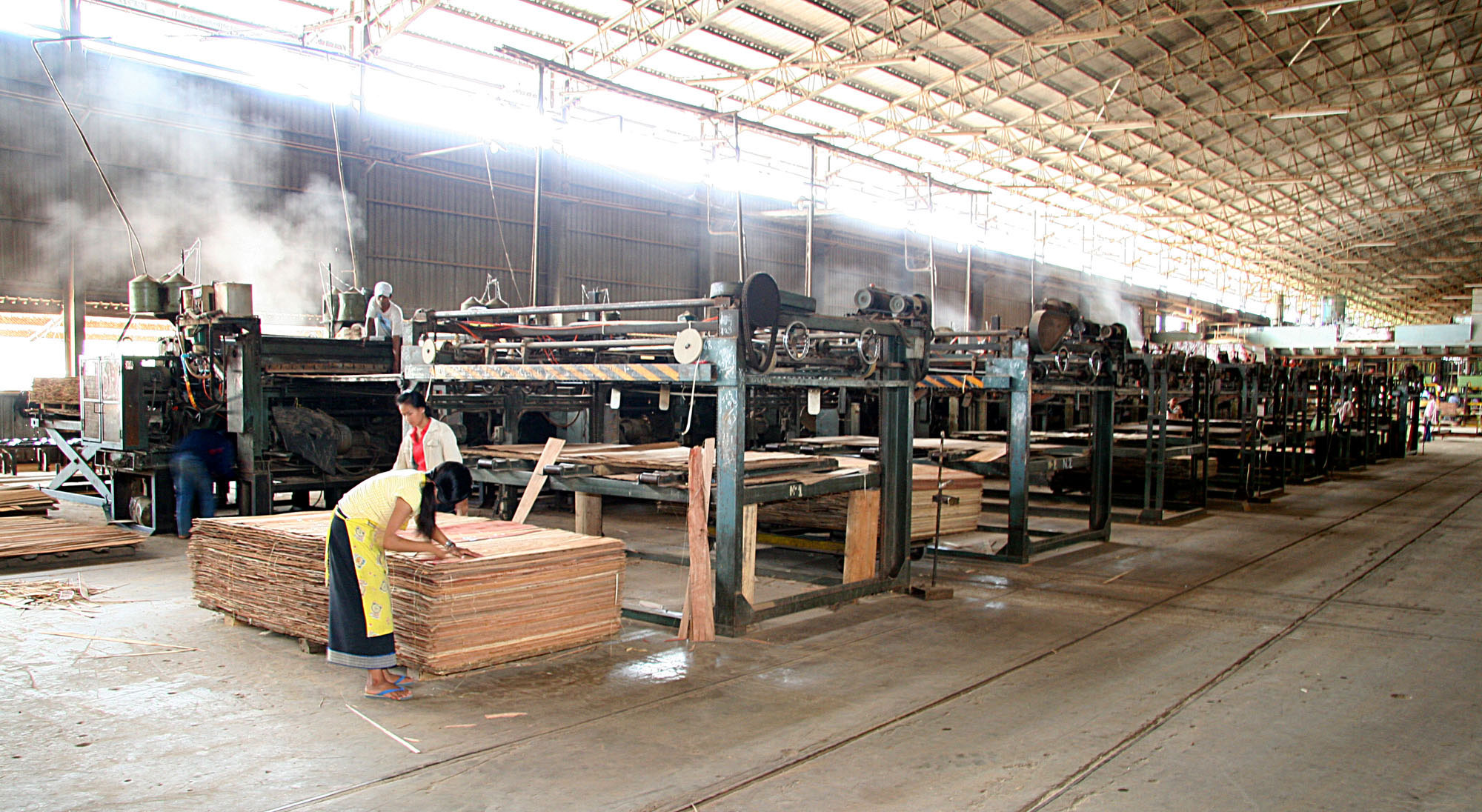
A "non-added formaldehyde" polyurethane adhesive plywood continuous press automatic production line solution has been developed in China as the country puts increasing stress on green production.

The solution boasts zero formaldehyde additives during plywood production by gluing the wood with certain kind of polyurethane, and is expected to improve the production capacity of green plywood products with automation, according to global specialty chemicals producer Huntsman Corporation, which co-developed the solution with Chinese partners including China Forest Industry Design and Planning Institute.

China is the world's largest plywood producer. The country's 5,300 manufacturers in the industry produced 179 million cubic meters of plywood last year, accounting for over 50 percent of the world's total, according to Shi Feng, secretary of the China National Forest Products Industry Association.

About one-third of the total plywood are used in furniture in China, which bears much influence on consumer health, according to Liu Xuehong, Business Manager of Composite Wood Panel in APAC with Huntsman.

China is the second largest market for Huntsman, as a growing community of consumers are willing to pay more for greener products, Liu said, adding that sales of zero-aldehyde-additive in China outpaces that in the European and U.S. markets.

The chemical giant has been investing heavily in China since its entry in the market in 1992, with a total investment worth about 15 billion yuan.

Falling plywood exports worries Brazilian producers

Exports of Brazilian plywood to the United States increased by more than 30 percent between 2017 and 2018. The export market had been growing since 2011, when Brazil began to progressively increase its plywood exports—the US being the primary destination.

While January/February 2019 plywood export volumes from Brazil reached values even higher than the monthly average during 2018, the volume dropped by 31 percent in March and April—a sudden correction that has concerned Brazilian producers. What’s behind this drastic and immediate reduction? Is it just a temporary "bump" amid the rise in global trade disputes, or will 2019 usher in a reversal of the growth trend the segment has experienced over the last 8 years?

The primary driver of this reduction in demand is the tepid US housing/construction market. While US housing starts inched up in April, the metric had a rough start in 1Q2019; housing starts fell by 8.7 percent in February (the lowest point in the previous 18 months). In anticipation of a 2019 building boom, US plywood inventories rose rapidly in Q1 to meet the expected demands of major construction materials stores. However, the construction season was delayed as a result of unfavorable weather conditions throughout the US—especially in the South—which created a surplus of available stock in the market.

The slow pace of construction during Q1 did not impact domestic US plywood producers despite several facility closures in recent years. However, the drop-off in demand has caused imports to plummet, affecting the entire production and export supply chain of plywood in Brazil.


Outlook

While the current situation is of concern to Brazil’s plywood industry, the US building season is really just beginning to ramp up after Q1 delays. As weather conditions improve and trade tensions (hopefully) subside, demand for plywood is expected to return to recent historical levels by the end of the Q3.

US lumber prices continue to fall in June

Despite a growing list of mill curtailments, prices of framing lumber sagged under the weight of production. Demand strengthened marginally in some markets, but weather continued to stifle activity in others. Flooding in the Midwest and drenching storms moving through Texas and the Gulf Coast sapped consumption in those regions.

While some key Western S-P-F prices posted modest gains, many other framing lumber prices continued to falter. The Random Lengths Framing Lumber Composite Price fell $6, to $319.

 Week
Jun 7
Last Week
May 31
Year Ago
2018
Random Lengths Framing Lumber Composite Price* $319 $325 $582
KD Western S-P-F #2&Btr 2x4 R/L Mill Price 297 286 647
KD Eastern S-P-F #1&2 2x4 R/L, delivered Great Lakes 385 387 725
Green Douglas Fir Std&Btr 2x4 R/L (Portland) 300 310 600
Southern Pine (Westside) #2 2x4 R/L 331 347 599
KD Coast Hem-Fir #2&Btr 2x4 R/L 347 355 660
Ponderosa Pine (Inland) #2&Btr 1x12 R/L 860 860 770
* Weighted average of 15 key items

Random Lengths Panel Market Report

Structural panel supplies outpaced demand, and prices faded as a result. Prices of OSB continued to erode, with downward pressure most severe in the South. Trading in Southern Pine plywood was muted amid a continued lack of buyer urgency and plentiful supplies. Recent trends in western Fir plywood persisted. Producers scrapped for every dollar, but opened to modest discounts to sell truckloads. After a strong end to the prior week, largely due to a wildfire threat in northern Alberta, Canadian plywood sales subsided.

(f.o.b. mill prices) Week
Jun 7
Last Week
May 31
Year Ago
2018
Random Lengths Structural Panel Composite Price* $341 $348 $573
Southern (west-east) 15/32-inch 3-ply rated sheathing plywood 355-395 360-395 550-582
Southern (west-east) 15/32-inch 4-ply rated sheathing plywood 360-400 365-400 555-595
Western 1/2-inch 4-ply rated sheathing plywood 354 355 570
North Central 7/16-inch Oriented Strand Board 180 190 445
*Weighted average of 11 key items

EBRD to loan EUR 116 million for Kronospan’s new OSB plant in Ukraine

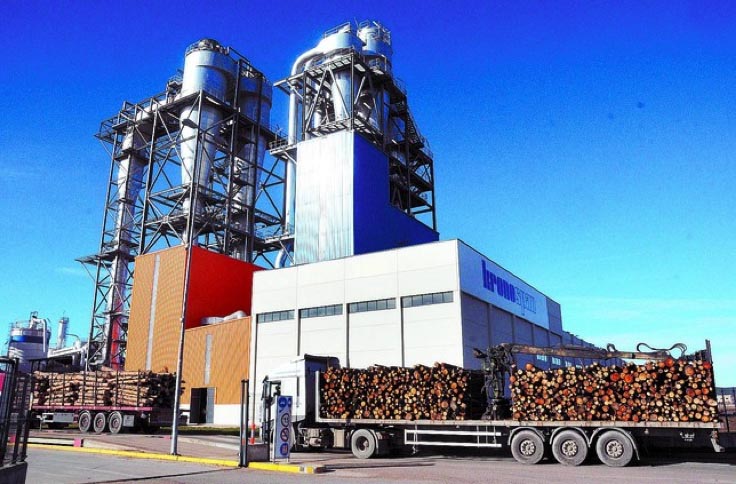
The European Bank for Reconstruction and Development (EBRD) organizes a syndicated loan of EUR116 million for Kronospan UA (Novovolynsk, Volyn region), which is part of Kronospan Group, for the construction of a new plant, according to a bank press release.

Kronospan will build a new OSB plant on the existing Kronospan particleboard plant in Novovolynsk in northwestern Ukraine, 10 km from the Polish border. The plant will have a production capacity of 280,000 tons of OSB boards annually. As part of the OSB plant, Kronospan UA is investing in a direct heated dryer, a multi-daylight press, a 45 MW biomass boiler and a system for the discharge and purification of surface water.

"The EBRD will be the lender of the record for the amount of EUR116 million, while EUR50 million out of the total will be syndicated to commercial banks Raiffeisen Bank International AG and Raiffeisenlandesbank Oberösterreich under an A/B loan structure," the report says.

"The funds will finance investments in new production facilities in compliance with relevant EU standards and regulations. The company plans to expand its production in Ukraine with the construction of a new facility in Novovolynsk, western Ukraine," it reads.

"Specialized energy efficient equipment, including a 45 MW biomass boiler energy plant, a new transformer unit and a new precipitator filter will provide an alternative power supply solution, cut energy losses and help reduce dust emissions. High value-added products manufactured at these facilities are expected to lead to oriented strand board (OSB) imports substitution and more exports from Ukraine to the EU single market and other countries," according to the document.

Kronospan was created in Austria in 1897. Currently it is the leading European manufacturer of wood-based sheet materials, operating in 21 countries. Total sales exceed EUR2.7 billion per year.

How many BC sawmills have taken downtime so far?

Hardly a week goes by that we’re not hearing of new sawmill curtailments or closures in B.C.  For those wondering about the extent of the situation, here’s a list of the mills that have been affected thus far this year:

Permanent closures:

  • Canfor sawmill in Vavenby, B.C.
  • Tolko Quest Wood sawmill in Quesnel, B.C.

Downtime:

  • West Fraser Quesnel, Williams Lake, Smithers and Fraser Lake: one week in June.
  • West Fraser Chetwynd: three weeks in first quarter and one week in June.
  • West Fraser Chasm and 100 Mile House: three weeks in first quarter, and two weeks in May.
  • Tolko’s Armstrong and Soda Creek: two weeks in May/June.
  • Teal Jones Surrey mills: Four weeks since January.
  • Interfor’s three B.C. Interior mills: unspecified time in May and June.
  • Conifex Fort St. James: Three weeks in February and four weeks in May.
  • Conifex Mackenzie mill: Three weeks in May.
  • Western Forest Products’ Alberni Pacific Division Sawmill: Closed for a month beginning March 18.
  • Canfor Houston and Mackenzie sawmills: One week in first quarter.
  • Canfor’s B.C. dimension mills: unspecified dates beginning April 29.

Shift/hours reduction

  • Tolko Kelowna sawmill
  • Aspen Planers sawmill
  • Canfor B.C. sawmills in first quarter

Finland: Roundwood prices shifting downwards in April, but higher yoy

The prices for roundwood in Finland have increased significantly during April 2019, as compared to the same period last year. However, as compared to the previous month (March 2019), the prices have shifted downwards on all assortments. 
Pine sawlogs could be bought in April 2019 for EUR 61.65/m3, 3.71%more than in April 2018, but -1.56% less as compared to March 2019. The price for spruce went up by 3.72% yoy, to EUR 64.10/m3, but declined -1.18% on a monthly comparison.
As compared to April 2018, the prices for pulpwood increased at a much faster rate as the ones for sawlogs, but as well dropped as compared to March 2019. Thus, the price for pine pulpwood increased yoy by +11.78%, to EUR 32.05/m3, but decreased -1.18% over March 2019. Spruce and birch could be bought for EUR 35.36/m3 and EUR 32.64/m3, which is 12.46% and 11.43% more than in April 2018.
Finnish roundwood prices expected to rise by about 10% this year
Increasing demand due to good economic prospects and recent investments will boost the use of roundwood this year in Finland, a Pellervo Economic Institute (PTT) research revealed.
The roundwood trade in Finland was affected by the difficult winter harvesting conditions in early 2018, with private stands suitable for summer harvesting traded earlier than planned. Owing to the heated situation in early 2018, the volume of standing sales is expected to show robust overall growth this year, although the trend is expected to level off at the end of the year. Trade volume in thinning stands will pick up from last year. This year’s increase in roundwood inventories is expected to keep the growth of roundwood trade in check in 2019. Trade in pine logs and pine pulpwood will grow slightly more than in other tree species, PTT reported.
The brisk trade, due to the difficult harvesting conditions and higher demand of roundwood early in the year, will push up the nominal annual average prices of wood markedly from the average annual price last year. The growing demand for pine products in the sawn goods export market has raised the price of pine logs but not enough to close the gap to spruce logs. The annual weighted average price of pine logs will rise about 9 percent from last year and that of spruce logs about 10 percent, says PTT.
The annual average price of pine and spruce pulpwood will also rise 8–10 percent this year,
Next year prices will be affected by growing inflation, which will increase the annual average prices that would otherwise develop more modestly. Due to removals and the rise in roundwood prices, gross stumpage earnings from private forests will increase by almost 16 percent from last year, reaching 2.2 billion euros. Next year earnings from private forests will continue to rise a few percent.

Roadside roundwood prices in Finland (EUR/m3) April 2018 March 2019 April 2019 Change in % April 2018/April 2019 Change in % March 2019/April 2019
Pine logs 59.44 62.63 61.65 +3.71% -1.56%
Spruce logs 61.8 64.74 64.1 +3.72% -1.18%
Birch logs 49.62 51.2 50.58 +3.95% -1.20%
Pine pulpwood 28.76 32.77 32.05 +11.78% -2.19%
Spruce pulpwood 31.44 35.57 35.36 +12.46% -0.59%
Birch pulpwood 29.29 33.38 32.64 +11.43% -2.21%
Small-sized logs, pine 38.3 41.11 39.48 +3.08% -3.96%
Small-sized logs, spruce 38.65 41.61 40.23 +7.65% -3.31%

US DoC must take another look at its tariff calculation of hardwood plywood imported from China

The U.S. Department of Commerce must take another look at its tariff calculation of hardwood plywood imported from China, the U.S. Court of International Trade ruled Monday, finding that the department failed to show how a Chinese exporter had provided misleading information for its log volume.

CIT Judge Jennifer Choe-Groves found that Commerce's November 2017 decision to hand Linyi Chengen Import and Export Co. a final anti-dumping rate of 183.36% was "arbitrary and capricious" because Commerce had improperly ignored record evidence when it found that Linyi Chengen provided inaccurate data about its log consumption during the department's investigation of the imported wood.

Linyi Chengen had told the CIT that Commerce's final decision had improperly contradicted the department's earlier report verifying the exporter's information, but Commerce had fired back, arguing that any "variance" between the two merely indicated that the department had weighed the evidence.

Siding with Linyi Chengen, Judge Choe-Groves sent the case back to Commerce, noting that the department did not explain why it was unable to cross-check the exporter's log consumption with independent sources. Both log delivery sheets from suppliers and copies of invoices to suppliers were supposedly provided, but were inexplicably deemed insufficient, according to the decision.

"Commerce's final determination critiques multiple aspects of Linyi Chengen's calculations of its log supply, but fails to explain how the record, particularly the verification report and related exhibits, supports Commerce's conclusion that Linyi Chengen's log consumption calculations were unreliable," the judge wrote.

Judge Choe-Groves said she would not yet rule on whether it was appropriate for Commerce to use a methodology that valued veneers instead of logs, which Linyi Chengen had argued strayed from the department's regular practice, and concluded that the department must first reconsider its findings with regard to the exporter's log reporting.

The judge added that she was reserving her decision as to whether the department erred in using Romania as a surrogate country to determine the value for beech veneer for similar reasons.

Commerce launched the anti-dumping probe in December 2016 after the Coalition for Fair Trade of Hardwood Plywood requested one. Linyi Chengen and another company, Shandong Dongfang Bayley Wood Co. Ltd., were then selected by the department for individual examination of their imports from April 2016 to September 2016, according to the decision.

While Linyi Chengen was initially handed a zero dumping rate, Commerce in its final decision had given the exporter a final margin of 185.46%, which was also applied to the separate rate companies, which applies to other plywood exporters from China. Bayley received a rate of 183.35% based on available adverse information, the CIT said.

The two mandatory respondents, along with a host of companies that were eligible for a separate rate from the China-wide margin, had separately contested duties. The challenges were combined last May, according to the decision.

Judge Choe-Groves on Monday instructed Commerce to adjust the separate rate companies' final rates based on Linyi Chengen's revised margin. The judge said that Commerce was correct to apply adverse facts available in determining the rate for Bayley, however, in light of its failure to cooperate with the department during the investigation.

China: Prices of main wood commodities in April 2019

This index contains the April 2019 updated prices of logs and lumber from the two major timber distribution markets in China: Guangzhou Yuzhu Timber and Shanghai Furen Timber Market.
 
Price information in Guangzhou Yuzhu Timber Market
Exchange rate: 1Euro=7.45 CNY

Imported sawn timber        
Species Grades Prices range (Euro/m3) Price range (RMB/m3)   Against April 2018 April 2019 price
Origin Min Max Min Max Trend Range
North America Cherry FAS-2" 1208.05 1476.51 9000 11000 9000/11000
FAS-1" 1140.94 1342.28 8500 10000 8500/10000
White Ash A 778.52 939.60 5800 7000 5800/7000
Black Walnut FAS-2" 2013.42 2416.11 15000 18000 15000/18000
FAS-1" 1610.74 1946.31 12000 14500 12000/145000
AB(1"-2") 939.60 1073.83 7000 8000 7000/8000
Hard Maple FAS 1208.05 1342.28 9000 10000 9000/10000
Soft Maple FAS 1073.83 1140.94 8000 8500 8000/8500
White Oak FAS 1006.71 1744.97 7500 13000 7500/13000
Red Oak FAS 872.48 1114.09 6500 8300 6000/8000
SPF B 268.46 281.88 2000 2100 2000/2100
Pine Finland A 348.99 389.26 2600 2900 2600/2900
Africa Makore A (imported with original packing) 939.60 7000 7000
Zingana A 1342.28 1677.85 10000 12500 9500/12500
Awora A 805.37 899.33 6000 6700 5000/5500
Mezali (big) A 1610.74 2013.42 12000 15000 12000/15000
Keruing (Africa) A 604.03 765.10 4500 5700 4500/5700
Sapelli A(imported with original packing) 845.64 872.48 6300 6500 7000/7500
Okume A 483.22 563.76 3600 4200 4300/4700
Ebiara A 738.26 805.37 5500 6000 6500/6900
Bubinga A 2013.42 2147.65 15000 16000 16500/18000
Acajou A (imported with original packing) 845.64 872.48 6300 6500 7000/7500
Adouk d'afric A 805.37 872.48 6000 6500 6000/6300
Samba A 644.30 711.41 4800 5300 4500/5200
Europe European Maple A 1208.05 1275.17 9000 9500 9000/9500
Beech Super class 697.99 5200 5200
Southeast Asia Nyatoh No knot 483.22 563.76 3600 4200 4200/4400
Pontianak wood Assorted 1275.17 1409.40 9500 10500 9500/10500
Merbau Super class 872.48 1006.71 6500 7500 8500/9000
Lauan Super class 604.03 630.87 4500 4700 4300/4500
Camphorwood Super class 671.14 805.37 5000 6000 5000/6000
Camphorwood A 604.03 671.14 4500 5000 4500/5000
Ramin No knot 805.37 885.91 6000 6600 6000/6600
Yunnan/Myanmar Golden Teak Super class 912.75 966.44 6800 7200 5800/6000
Red Cherry Super class 805.37 845.64 6000 6300 5800/6000
Toon Super class 510.07 536.91 3800 4000 4000/4300
Teak Super class 1879.19 2684.56 14000 20000 14000/20000
Keruing Super class 550.34 577.18 4100 4300 4400/4600

Price information in Shanghai Furen Timber Market
Exchange rate: 1Euro=7.78 CNY

Imported sawntimber
 
Standard name Local name Specification Grade Origin Prices range (Euro/m3)   Price range (RMB/m3)   Against April 2018 April 2019 price
Min Max Min Max Trend Range
Okume Okume A(KD) Africa 429.53 563.76 3200 4200 3400/4200
Ebiara Ebiara A(KD) 939.60 1140.94 7000 8500 7000/8500
Sapeli Sapeli A(KD) 644.30 872.48 4800 6500 4800/6500
Zingana Zingana A(KD) 738.26 1140.94 5500 8500 5500/8500
Bubinga Bubinga A(High mountains) 1879.19 2147.65 14000 16000 14000/16000
Bubinga Bubinga A(Zambia) 1208.05 1342.28 9000 10000 9000/10000
African Mahogany African Mahogany A 604.03 1006.71 4500 7500 4500/7500
Makore Makore A 1006.71 1275.17 7500 9500 7500/9500
Ayous Wawa Wawa FAS 483.22 577.18 3600 4300 3600/4300
Ayous FAS 536.91 604.03 4000 4500 4000/4500
Beli Beli A(KD) 536.91 711.41 4000 5300 4000/5300
Oak Red oak 2" FAS N.America 1046.98 1181.21 7800 8800 7800/8800
1" FAS 697.99 912.75 5200 6800 5400/6800
2" 1 com 671.14 872.48 5000 6500 5000/6500
1" 1 com 536.91 657.72 4000 4900 4000/4900
White oak 2" FAS 1315.44 1610.74 9800 12000 9800/12000
1" FAS 939.60 1181.21 7000 8800 7000/8800
2" 1 com 912.75 1073.83 6800 8000 6800/8000
1" 1 com 604.03 805.37 4500 6000 4500/6000
White Ash White Ash 2" FAS 939.60 1100.67 7000 8200 7000/8200
1" FAS 805.37 939.60 6000 7000 6000/7000
2" 1 com 738.26 818.79 5500 6100 5500/6100
1" 1 com 630.87 684.56 4700 5100 4700/5100
Hard Maple Hard maple 2" FAS 939.60 1140.94 7000 8500 7000/8500
1" FAS 912.75 1046.98 6800 7800 6800/7800
Soft Maple Soft Maple 1" 1 com 805.37 872.48 6000 6500 6000/6500
Cherry Cherry 2" FAS 1046.98 1275.17 7800 9500 7800/9500
1" FAS 872.48 1073.83 6500 8000 6500/8000
Black Walnut Black Walnut 2" FAS 1946.31 2281.88 14500 17000 14500/17000
1" FAS 1476.51 1771.81 11000 13200 11000/13200
Red Alder Red Alder JB 322.15 429.53 2400 3200 2400/3200
CUS 523.49 577.18 3900 4300 3900/4300
SUP 644.30 697.99 4800 5200 4800/5200
Yellow Poplar Yellow Poplar 1" FAS 536.91 577.18 4000 4300 4000/4300
2" FAS 563.76 644.30 4200 4800 4200/4800
Yellow Meranti Yellow Meranti A Southeast Asia 483.22 523.49 3600 3900 3600/3900
Red Meranti Red Meranti A 510.07 550.34 3800 4100 3800/4100
Champaka Golden teak Assorted Yunnan/Mynmar 939.60 1140.94 7000 8500 7000/8500
Merbau Merbau 2" Assorted Indonesia 939.60 1275.17 7000 9500 7000/9500
Beech Beech AA Europe 550.34 630.87 4100 4700 4100/4700
heartwood 469.80 536.91 3500 4000 3500/4000
Ash Ash A Russia 697.99 872.48 5200 6500 5200/6500
Elmwood Elmwood A 604.03 805.37 4500 6000 4500/6000
Myanmar Teak Wooden door timber Myanmar 4228.19 4832.21 31500 36000 31500/36000
Decorative wood moulding timber 2416.11 2550.34 18000 19000 18000/19000
staircase timber 2389.26 2657.72 17800 19800 17800/19800
Kitchen cabinet timber 1812.08 2147.65 13500 16000 13500/16000
Outdoor furniture timber 1543.62 1744.97 11500 13000 11500/13000


Brazil’s wood products exports drop sharply in April 2019

In April 2019, the Brazilian exports of wood-based products (except pulp and paper) declined 19% in value compared to April 2018, from US$286.6 million to US$232.9 million.

The value of April 2019 pine sawnwood exports dropped 10.5% compared to April 2018, from US$48.8 million to US$43.7 million. In terms of volume, exports fell 9% over the same period.

Exports volumes of Brazilian tropical sawnwood also fell (-8%) in April from 46,200 cu.m in April 2018 to 42,500 cu.m in April 2019. There was an even sharper decline in export values which dropped 14% from US$20.2 million to US$17.3 million in April this year.

The negative trend in exports continued with plywood. Brazil's pine plywood exports fell 41% in value in April 2019 in comparison with April 2018, from US$68.3 million to US$40.0 million. However price for plywood held up better as export earnings dropped only 27% over the same period, from 198,500 cu.m to 145,000 cu.m.

Brazilian tropical plywood exports are now very small and in April there was a drop in the value and volume of exports from 13,900 cu.m (US$6.1 million) in April 2018 to 7,500 cu.m (US$ 2.8 million) in April 2019.

Wooden furniture exports also took a hit in April with earnings falling from US$45.3 million in April 2018 to US$42.8 million in April 2019.

Canadian lumber industry struggles with trade disputes and climate change

The Canadian softwood lumber industry has to handle two of the biggest challenges in its history: the trade disputes and climate change. As a result of this struggle, companies in British Columbia have already cut back shifts and closed sawmills, due to a lack of log supplies and lower prices. 

The high log costs in B.C., caused by a lack of logs supply due to the bark beetle infestations and wildfire seasons, resulted in record high lumber prices, which plunged in the fall of 2018. This caused temporary mill shutdowns, with more to come in the next period, if the prices don't recover.

Interfor announced it would cut back on operations for June, joining in the temporary curtailments already rolled out by Canfor and West Fraser. Also, Tolko closed its mill in Quesnel, once with a shift at its Kelowna mill

Continue reading "Canadian lumber industry struggles with trade disputes and climate change"

Current trends in the Russian wood-based panel market

Russian wood-based panels consumption raised to historic records of 12.9 million m3 (12% year-on-year increase) during 2018. The consumption growth was influenced by an increase in the share of particleboard and OSB.

According to What Wood reports, the rise in the consumption of wood-based panels in the domestic market can be partially explained by the positive trends in the furniture industry. In 2018, the furniture production in Russia grew by 6% in value terms, and amounted to $2,89 million, or by 2.7% if adjusted for inflation.

Moreover, the estimates of the Association of Furniture and Woodworking Enterprises of Russia for the growth of the furniture market in 2018 are even more optimistic: +30% year-on-year, amounting to $7,31 million. The growth was affected by an increase in the number of mortgage loans granted and a low interest rate, low consumer prices due to slight inflation expecting the VAT rate increase, growing customer demand for furnished housing, and the prohibition on public procurement of furniture produced outside the Customs Union of the EAEU.

Yet, the wood construction industry is on decline for the 3rd year in a row, by an average of 3.5 million m2 per year. By the end of 2018, the new housing supply totaled 75.3 million m2 (-4.1% year-on-year).

The housing per capita figure is growing, but its level is still lower than in developed countries. The low housing per capita index in Russia provides an opportunity for further growth in the construction industry. In Q1 2019, the volume of housing commissioning decreased: -5.6% totaling 14.8 million m2. The decrease was noticed in the North-West (-37.4%), Siberian (18.6%) and Ural (13.8%) Federal Districts, the others are showing a steady growth. The maximum increase in housing construction was recorded in the Far East (+27%) and Central (by 8.4%) Federal Districts, What Wood reported.

Plywood market 2018-2019

In 2018, the plywood industry was again in the focus of the Russian forest sector attention.

Rumors about the introduction of export quotas by the Russian Government for the birch veneering wood, which is essential for the country’s domestic market,” have been going round for the past two years. Finally, in July 2018 Russian, Prime Minister Dmitry Medvedev signed a decree according to which 908 exporters received the quota of 567 thousand m3 for the period from January to June 2019.

Birch plywood is a niche and narrow product on a global scale. Global consumption of birch plywood is consumed annually 5-6 million m3 or about 3-5% of the total world production. Russia is the world leader in the production of birch plywood, which is primarily explained by the raw materials dominance of Russia, where the regions of extensive birch growing are located. Russia occupies 64% of the global market for birch plywood.

From the 3rd quarter In 2018, there was a negative trend in the plywood sales markets, which began as a result of the excess of demand over supply and the strength of the global trend of lower prices for forest products. The study outlines the factors that influenced the decline in prices, and the search for “growth points” in difficult economic conditions.

MDF/HDF market in 2018-2019

According to What Wood, in 2018 the dynamics of the global economy weakened against the background of the marked slowdown in growth in both developed and emerging market economies and in developing countries. The loss of dynamism was particularly noticeable in the manufacturing industry amid signs of a slowdown in global investment and trade. The furniture sector, flooring continues to be under pressure, especially in Russia due to the weakening consumer demand.

In April 2019, Pavlovsky DOK LLC was launched. Altailes began plant construction at the end of 2016. The volume of investments amounted  6 billion RUB. The plant will produce MDF/HDF with a thickness of 2.5 to 40 mm in a volume up to 250 thousand m3/y. The production of laminated MDF / HDF is considered as the second stage. Probably the company will cover the panels demand in the regions of Siberia, some of the products will be sold to China, the CIS.

OSB market in 2018-2019

In fact, the Russian OSB market in 2018-early 2019 even turned out to be more eventful than expected, and became significant for the development of the Russian panel industry: Kronospan OSB (Bashkortostan, Ufa) completed the project of OSB plant, and the company Talion Arbor (STOD) reached the design production volume and filled to capacity of 100%. Two large-scale projects with a capacity of more than 1.1 million m3 of OSB per year were announced.

Particleboard market in 2018-2019

Particleboard production in 2018 reached the record volume +15% compared to last year. Such increase was ensured by Kronospan Bashkortostan, Swiss Krono, Tomlesdrev. Capacity utilization in 2018 was 84% (in 2017, 76%). In the case of the implementation of all announced investment projects domestic capacity may increase by 1.3 million m3.

West Fraser to curtail production at five sawmills

West Fraser announced temporary production curtailments during which all mill activities will be curtailed for one week in June at five British Columbia sawmills: Chetwynd, Quesnel, Williams Lake, Smithers and Fraser Lake.

The decision to implement this temporary reduction is due to sustained weak pricing in global lumber markets and high log costs.

Lumber production is anticipated to be reduced by approximately 30 million board feet. Over the previous six months including this most recent announcement, West Fraser has implemented temporary and permanent capacity curtailments of approximately 125 million and 300 million board feet respectively.

Kronospan plans a new plant in Russia’s Far East

Kronospan plans to produce wood boards on the the territory of advanced development of Primorye, located in Far East Russia, between the Sea of Japan to the east and northeastern China to the west. It is the most southerly of the Russian Far Eastern territories.

According to Ardasher Kurbansho, General Director of Kronospan LLC: “Primorye has a great export potential: the Republic of Korea, Taiwan, China are nearby. The project will be more competitive if it is produced and sold from the Far East. The emergence of production in the Far Eastern Federal district will ensure our strong presence in the global market.”

The head of the subsidiary of the Austrian holding stressed that the production will not use business wood, and raw materials for the production of chipboard, MDF and OSB will use  slab, chips, sawdust and pruning.

The site for production, as the most suitable in terms of logistics, can be either the territory of advanced development “Nadezhdinskaya” or “Mikhailovsky”.

About Kronospan:

The company is a leading global producer and distributor of wood-based panels, including Particleboard (PB), Medium density fibreboard (MDF), Laminate flooring, oriented strand board (OSB), as well as other products like UF, MUF and MF resins for wood-based panels and also other associated value added products, such as melamine-faced panels, worktops, wall panels, window sills, lacquered HDF, compact boards, high pressure laminates (HPL) and others. Kronospan manufactures wood-based panels at more than 40 sites employing over 14,000 people.

Canfor to permanently close Vavenby sawmill; sells cutting rights to Interfor

Canadian Canfor Corporation announced today it will be closing its Vavenby sawmill in British Columbia this July following an orderly wind down. Canfor has reached an agreement to sell the forest tenure associated with the Vavenby sawmill to Interfor for a price of $60 million.

The sale of the forest tenure is subject to customary closing conditions including the consent of the Minister of Forests. Closing is expected to occur in the third quarter of 2019.

“Due to the current and long-term log supply constraints we face in the Vavenby region, along with the high cost of fibre, we have made the very difficult decision to permanently close the sawmill and sell the associated forest tenure to Interfor. The ongoing depressed lumber markets have expedited this decision,” said Don Kayne, President and CEO, Canfor.

“Today’s decision is not a reflection on our employees, our contractors or the local communities of Vavenby and Clearwater who have all contributed significantly to the operation of our mill,” added Kayne. “We deeply regret the significant impact to our employees, contractors and the communities, and will be working to support them through this difficult time.”

“The BC forest industry has recognized for several years that sawmill capacity must be reduced as the annual allowable cut decreases following the end of the Mountain Pine Beetle epidemic,” said Kayne. The Vavenby sawmill has an annual production capacity of approximately 250 million board feet. Following the closure of Vavenby, Canfor will have 12 sawmills in Canada, with total annual capacity of approximately 3.55 billion board feet.

Summary purchase agreement terms

Interfor will acquire two replaceable licenses with annual cutting rights of approximately 349,000 cubic meters, an interest in a non-replaceable forest licence and other related forestry assets in the BC Interior that were previously associated with Canfor’s Vavenby sawmill.

Cash purchase price of $60 million, with Interfor to finance the acquisition from its available cash balance and/or borrowings under its existing bank credit facility.

The transaction is subject to various consents, including that by the Province of British Columbia. Interfor and Canfor have notified the Province of the pending transaction and will begin the process of addressing the various approval considerations. The transaction is expected to close in the third quarter of 2019.

SCA buys 10,000 hectares of forest land in Estonia for EUR 39 million

SCA acquired 93% of the shares in Forestum Group AB, a Swedish company which owns forest and land assets in Estonia, totalling approximately 10,000 hectares.

The purchase price is SEK 420 million (Euro 39 million) on a debt-free basis.

“We have the intention to grow as a forest owner in the Baltics”, says Jonas Mårtensson, President Forest. “The Baltic states are a natural part of our raw material supply base and we have been present in the market for a long time as a buyer of timber. Having our own forest resource strengthens our operations in the region.”

Forestum has an Estonian subsidiary which owns 10,300 hectares of land on the islands of Dagö and Ösel. 8,800 hectares of this land is forest land with a standing volume of 1,300,000 cubic metres.

The core of SCA's business is the forest, Europe's largest private forest holding.

Chinese companies seeking alternatives to US timbers

At present, Chinese companies have been able to absorb the increased tariff levels on imported US timber raw materials but if these are raised further then their businesses will be at risk. To avoid this Chinese companies have started to look for alternative raw material sources and substitutes for US logs and sawnwood.

According to China Customs data imports from the US were mainly softwood logs such as douglas fir, spruce and fir but close examination shows there is no real price advantage over other sources. This is leading importers to look at douglas fir from Canada and more softwoods from New Zealand as well as spruce and fir from Russia.

China’s imports of douglas fir from the US, Canada and New Zealand were 98,000, 480, 000 and 380,000 cubic metres in 2017 respectively. The average price for douglas fir from the US was the highest at US$186 per cubic metre, from Canada US$172 per cubic metre and from New Zealand US$138 per cubic metre.

China imports spruce and fir are mainly from Russia, US and Canada and amounted to 3,080,000, 790,000 and 780,000 cubic metres in 2017 respectively. Smaller volumes came from Estonia, France and Denmark. The average price for imported spruce and fir from the US was US$184 per cubic metre, from Canada US$161 per cubic metre, and from Russia US$124 per cubic metre.

China also imports sawn hardwood from the US such as oak (1.32 million cubic metres), other US hardwoods (570,000 cubic metres), ash (340,000 cubic metres) and cherry (190,000 cubic metres).

Analysts suggest that most of sawn hardwood from the US can be replaced by sawn hardwood from Canada, Russia and European member states.

EU tropical wood trade strong in the first quarter of 2019

The EU’s trade in tropical wood products was more buoyant in the first quarter this year compared to the same period in 2018.

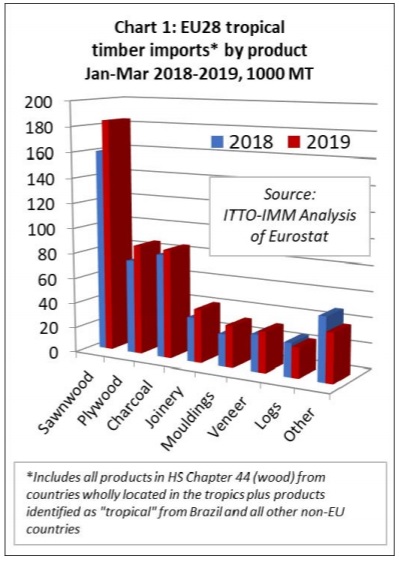
Total imports of all wood products (classified in HS Chapter 44) from tropical countries in the first quarter of 2019 were 525,000 MT, 9% more than the same period in 2018. Import value increased 17% to €561 million.

This is surprising given that the wider economic situation in the EU is not particularly promising this year, the European Commission having recently downgraded GDP growth projections to only 1.4% for the whole of the EU in 2019 in response to signs of deteriorating economic conditions.

To some extent the rise in EU tropical wood imports so far in 2019 is only a reflection of just how poor the market was last year when imports for several commodities barely exceeded the record lows of the 2008-2009 financial crises. Nevertheless, it is encouraging that the rise in EU imports so far this year has been consistent across nearly all tropical wood product groups (Chart 1).

The latest upturn in imports is also quite well distributed across the EU with imports of tropical wood products higher during the first quarter in all the leading EU markets except Germany.

In the first quarter of 2019 compared to the same period in 2018, total imports of tropical wood products increased in Belgium (+5% to 102,500 MT), the UK (+23% to 91,000 MT), Netherlands (+16% to 72,000 MT), France (+4% to 60,000 MT), Italy (+13% to 44000 MT), Spain (+36% to 26,600 MT), Portugal (+70% to 19,400 MT) and Greece (+23% to 18,700 MT).

In contrast, total imports of tropical wood products in Germany declined 9% to 42,400 MT in the first quarter of 2019. This decline is partly driven by increasing reliance on indirect imports of tropical wood products from other EU countries by German distributors.

Stora Enso finalises the restructuring of Bergvik Skog’s forests holdings

The shareholders of Bergvik Skog AB, a Swedish forest holding company, have finalised the previously announced restructuring of its ownership. Stora Enso’s forest holdings in Sweden will increase to 1.4 million hectares, of which 1.15 million hectares is productive forest land.

Prior to the transaction, Stora Enso’s indirect share of Bergvik Skog’s productive forest land was 936 thousand hectares.

“I am very pleased that we have successfully finalised the restructuring of Bergvik Skog with the other shareholders. This transaction is a natural next step for us, as we strongly believe in the bioeconomy and want to secure our competitive raw material supply for the long term. The direct ownership gives us better opportunities to further develop sustainable forest management, thus strengthening our competitiveness,” says Stora Enso’s CEO Karl-Henrik Sundström.

As part of the transaction, Stora Enso acquires Bergvik Skog Plantor AB nursery and three wind turbine projects. This will further strengthen the Group’s comprehensive offering to forest owners in Sweden and is in line with its commitment to sustainable forestry.

The financial impact of the restructuring for Stora Enso will be as follows:

• Bergvik Skog was previously reported as an equity accounted investment. Upon completion of the restructuring, Stora Enso’s Swedish forest assets are placed in a fully owned subsidiary and consolidated line by line in Stora Enso’s results in segment Other from 1 June 2019 onwards.
• The transaction results in an increase of approximately EUR 1.0 billion in Stora Enso’s interest-bearing net debt and the net debt to EBITDA ratio will increase by approximately 0.5x once all the transaction steps have been finalised by the end of 2019.
• The net debt to EBITDA ratio was 1.7x at the end of the first quarter of 2019. The ratio will exceed the strategic target level of 2.0x temporarily during the second half of 2019 before all the steps of the transaction have been finalised.
• Capital employed increased by approximately EUR 1.0 billion, resulting in a decrease in the operational return on capital employed (ROCE) of approximately 1 percentage point.

Canfor completes first phase acquisition of Elliott Sawmilling

Canfor Corporation announced that it has completed the first phase purchase of 49% of Elliott Sawmilling Co. Inc announced on November 9, 2018.

According to the announcement, the balance will be acquired in one year.

Elliott Sawmilling has a production capacity in excess of 210 million board feet and the sawmill consists of both large and small log lines.

The purchase price of US$110 million represents a 4.3 times EBITDA multiple based on Elliott’s twelve months trailing EBITDA. The transaction will be completed in two phases with 49% being acquired on closing and 51% being acquired one year later.

Elliott has a production capacity in excess of 210 million board feet and the sawmill consists of both large and small log lines.

Nash Elliott will continue as the General Manager after the transaction is completed. The purchase of Elliott will further expand Canfor‘s production capacity to meet the growing demand of its customers.

Newsletter

Subscribe to our digital newsletter for your daily digest of essential news, views and analysis from the international wood industry delivered directly to your inbox.


0