

France, Austria and Norway will host the world's tallest wooden buildings and will make Europe the leading place for the timber construction movement. Continue reading "Europe-the world’s leader for the timber construction movement"
Article archive
EOS re-electes Sampsa Auvinen as president

The EOS General Assembly unanimously elected on 21 June 2017 its President and Board Members for the mandate 2017-2019. Mr Sampsa Auvinen, CEO of the Norvik Timber Industries has been re-elected as President of EOS for his second mandate.
Mr Ernest Schilliger - Schilliger Holz (CH) and Mr Joël Lefebvre - Groupe Lefebvre (FR), are both re-confirmed as Vice-Presidents respectively for Softwood and for Hardwood. Mr Herbert Jöbstl - Stora Enso Wood Products (AT), Mr Constantin Arion - Forestfalt S.A. (RO), Mr Carsten Doehring - Ilim Timber Germany (DE) Mr Mikael Eliasson - Skogsindustrierna (SE), Mr Kai Merivuori - Sahateollisuus ry (FI), Marc Sève - Monnet-Sève SA (FR) and Mr Thomas Siat – Siat Braun (FR) are elected EOS Board Members. Mr Hans Michael Offner - Johann Offner Holzindustrie GmbH (AT) is the Honorary President of EOS.
The sawn softwood production across European Countries is rising at a moderate but steady pace, with grown driven mainly by buoyant export markets, particularly Asia. Sawn hardwood production is overall stable in spite of raw material availability challenges, particularly in large producer Countries.
Latvian Kurekss to increase capacity with a new drying kiln

Kurekss invests into a new TC continuous kiln at its production site in Latvia. The company placed an order with Valutec for the stainless steel made kiln with six zones and a capacity of over 50,000 cubic metres for mixed dimensions. Continue reading "Latvian Kurekss to increase capacity with a new drying kiln"
Russian timber industry seeks expansion of partnership with China
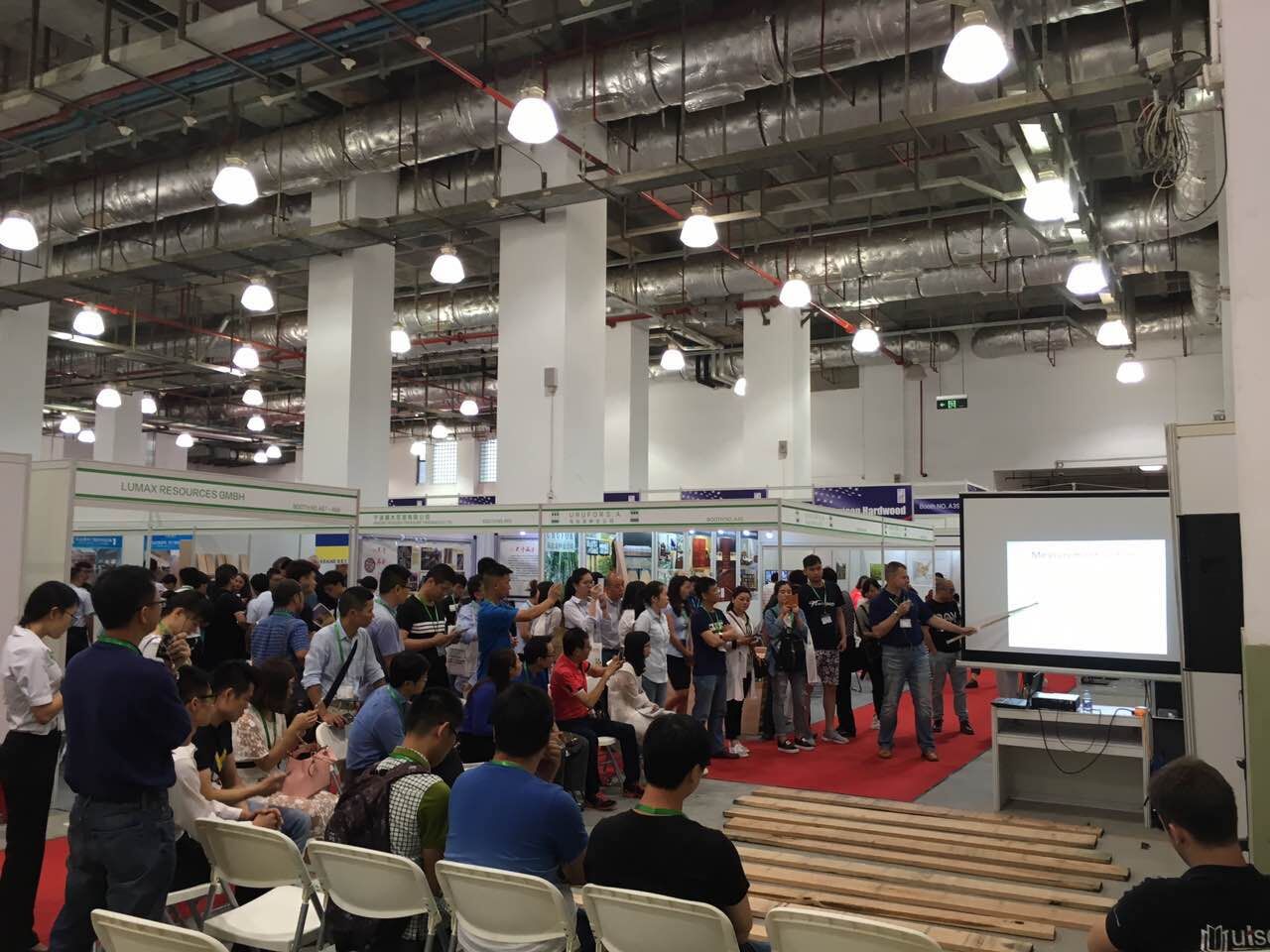
China is hosting SYLVA WOOD 2017 - the international exhibition, a landmark event for the global timber processing industry.
The timber industry complex of Russia was represented by a group stand "Russian Timber Industry". Ten leading companies of the industry were able to demonstrate their products to foreign partners and potential investors.
"China is our reliable trading partner. In recent years the development of Russian-Chinese cooperation has shown positive dynamics. So the volume of trade turnover has increased with the output of the timber industry complex. We count on the expanding of mutually beneficial partnership," said Viktor Yevtukhov, State Secretary, Deputy Minister of Industry and Trade of the Russian Federation.
Recently, export supplies of Russian products of added-value wood processing to China have increased: the volume of plywood supplies almost doubled, and the supply of chipboards began.
A number of large projects involving Chinese companies are being implemented in the Russian Federation: a pulp mill is being built in the Zabaikalye Territory, sawmills and pellets' projects are being implemented in the Jewish Autonomous Region, the Irkutsk Region, and the Khabarovsk Territory.
"Russia is a reliable partner, providing state guarantees for investments. Today, investors receive long-term lease of forest plots on preferential terms. The state subsidizes the creation of new manufactures," - said Viktor Yevtukhov.
Prospects for further growth for forestry enterprises are predetermined by the high demand for wooden housing in many countries of the world, as well as increasing demand of paper products and pulp. The exchange rate and governmental support allow us to maintain low prices for the products of the Russian timber industry with a high quality and make them competitive.
Having participated in SYLVA WOOD 2017, Russian companies gained the opportunity to expand mutually beneficial cooperation with Chinese partners. Participants of the Russian stand of the timber industry complex at the SYLVA WOOD 2017 exhibition were companies representing such types of woodworking as LVL lumber production and OSB boards, plywood, finishing wall and flooring materials, furniture components and other products of added-value wood processing.
Austria: Price of wood pellets picks up in June

After two consecutive months of price decline, the price of ENplusA1 pellets in Austria increased slightly in June.
The current average price is 225.5 EUR/tonne; +0.2% from May and +1.4% as compared to June 2016.
Austrian wood pellets presently offer a price advantage of +41.6% as opposed to extra light heating oil and +79.1% as opposed to natural gas.
Wood pellets in bags cost in June an average of 3.90 € per 15 kg sack (when ordered by the pallet), +2.5% higher compared to the previous year and -0.2% lower from the previous month.
China still in a serious lack of timber resources that can be satisfied only through imports

The timber industry in China is closely related to building materials, furniture and other industries, where wood is the main raw material. However, China's forest area of 174.99 million hm2 represents a total coverage area of 18.21%; forest reserves reach 12.456 billion m3, of which timber reserves account for 44% or 5.51 billion m3. A per capita calculation shows that China is still a country in a serious lack of timber.
The per capita forest area is 22%, ranking the world's 134th. China's import demand has been equivalent to 10% of the global total, while timber cutting's relatively slow growth rate will mean a substantial increase in demand.
The continuous development of the Chinese economy, the continuous improvement of the Chinese people consumption ability, the process of urbanization, the continuous improvement of infrastructure, has led the timber market to an unprecedented development. However, due to the low forest coverage rate in China, in order to protect the forest resources and maintain the ecological balance, in recent years, many forest areas have been banned from commercial logging, especially in the northeastern and Xiaoxing'anling forest areas. Under these circumstances, it is difficult to meet market demand, in order to solve the huge need for timber in China.
In 2016, pine softwood lumber imports reached 21.07 million m3. As compared with the previous year's 17.46 million m3, there is a growth of 3.6 million, or 20.6%. Imports of pine from Russia rose 38% and accounted for half of the total imports (11.6 million m3). Imports from Canada dropped slightly to 5.22 million. Imports from Finland rose by more than 50%, up to 950,000, firmly becoming China's third largest source of sawn timber.
In view of the rapid increase in timber imports in China, a number of ports have been inaugurated or some other ports have concentrated their business on timber imports.
The Chinese timber market has a lot of things to improve: first, to better deal with the existing forest resources; to improve timber resource utilization, the reduce the process of waste of raw materials to minimum and to use the less resources to produce more products; to better pay attention to the ecological system and to improve the forest protection.
Wood pellet imports to both South Korea and Japan close to record highs

Over the past few years, South Korea has become the largest pellet importer in Asia, ahead of Japan, and the third largest in the world, and South Korean demand is expected to continue to increase in the coming years. Vietnam has been the major supplier of pellets to Asia, accounting for about 65% of the total import volume in late 2016 and early 2017.
Wood pellet imports to Asia reached an all-time-high in the 4Q/16 when Japan and South Korea together imported 630,000 tons of pellets. Although import volumes were down slightly in the 1Q/17, they were still over 40% higher than in the 1Q/16, as reported in the latest issue of the Wood Resource Quarterly (WRQ).
South Korea is by far the main destination for pellets in Asia, and in 2016, the country was the world’s third largest importer of pellets, trailing only the United Kingdom and Denmark. Although import volumes to Japan have tripled from 2014 to 2016, the usage of pellets is still at a relatively low level (see WRQ for detailed trade data).
Consumption of pellets in Japan and South Korea has increased quite rapidly the past four years because of new government requirements which favor reducing carbon emissions and increasing the usage of renewable energy. The recent trend in pellet usage is likely to continue in the future and is driven both by incentives (subsidies) and regulations (renewable energy portfolio standards). With an urgent need to replace nuclear energy and generous feed-in-tariffs, it is expected that Japan will increase importation of wood pellets quite substantially over the next five years.
Vietnam has been the major supplier of pellets to the Asian market for the past three years, accounting for almost two-thirds of the shipments to Japan and South Korea in 2016. Canada was an early supplier to the Asian market, but its market share dropped from 22% in 2014 to 14% in 2016. However, in the 1Q/17, Canada increased shipments to Asia to the second the highest quarterly level on record and the market share was up to 21%.
Import prices for pellets to South Korea fell dramatically from early 2014 to the summer of 2016. The two-year long price decline ended in the 3Q/16, when prices slowly started to recover. The import prices continued their upward trend during the first four months of 2017 with Malaysian pellets increasing the most.
Roundwood prices in Estonia declined during May 2017

In May 2017, the roundwood prices in Estonia have descended. By March, there was an upward trend, but this has reversed in April and intensified in May. Continue reading "Roundwood prices in Estonia declined during May 2017"
Georgia-Pacific plans to invest $400 million at its Palatka mill in Florida

Georgia-Pacific announced that its Palatka, Florida, mill has been selected as the location for the company’s previously announced investment of more than $400 million in its GP Consumer (retail) tissue and towel business.
The investment supports continued growth for key customers’ premium private label towel products.
Investments to the Palatka mill include building a new paper machine using through-air-dried (TAD) technology, as well as adding associated converting equipment and infrastructure. Engineering and related work is beginning immediately, and startup of the upgraded operation is scheduled for 2019.
Approximately 80 jobs will be created to operate the new papermaking complex, in addition to the mill’s 850 current employees. An average of 160 construction and contract-related workers are expected to be onsite at the mill every day during the project, with a potential peak of 700 contract workers per day at the height of construction.
The Palatka mill currently operates two kraft paper machines, three paper machines manufacturing paper for bath tissue and paper towels, and a number of converting operations producing finished paper products.
The improvements will allow Georgia-Pacific’s current and potential customers to grow their premium private label towel brands, as well as expand the company’s Brawny® premium paper towel brand.
In Florida, Georgia-Pacific operates three facilities and employs nearly 1,600 people with total annual compensation and benefits of more than $143 million.
US imposes additional tariffs on Canadian lumber imports

The US Department of Commerce has added 6.87% in preliminary average anti-dumping tariffs for Canadian softwood lumber imports. Now, the softwood lumber industry in Canada faces average duties of about 27%. Continue reading "US imposes additional tariffs on Canadian lumber imports"
Weinig scores EUR 47 million at this year’s Ligna

According to the figures presented at the recent Ligna trade fair press conference, the Weinig Group announced extremely positive growth at the end of the 2016 financial year. Order inflow rose by 16% compared with 2015 and this gratifying trend has continued into 2017.
The world's leading trade fair for the wood sector, Ligna in Hanover, drew to a close on 26 May. With an order inflow of 47 million euros, the Weinig Group was one of the winners from the event. Under the motto “Think Weinig”, the machines and systems for solid wood and panel processing producer presented a new trade fair concept, sharing a 4,000 m2 stand with group company and panel specialists Holz-Her for the first time. Customers and interested parties from 90 countries filled the trade fair stand on all five days of the event. New customers accounted for 8% of visitors.
Orders to the end of April 2017 showed 17% growth while revenues rose by as much as 21%. With the excellent LIGNA sales of 47 million euros, the Weinig Group is very confident of achieving the order inflow total of 471 million euros, a 12% improvement compared to last year. The group’s consolidated sales revenue is expected to rise by 14% to €430m in 2017 financial year.
In view of the recent positive figures, the Supervisory Board passed a series of forward-looking measures and an investment budget of more than 30 million euros. Plans include a new administrative building and showroom at the Holz-Her site in Nürtingen, Germany at a cost of 10 million euros. There was also a focus on growing the group’s personnel, with plans to increase the number of employees to 2,100. The personnel at Tauberbischofsheim, Germany alone is expected to grow by 6% to a total of 900 employees.
Malaysia: Original furniture designs could generate higher returns
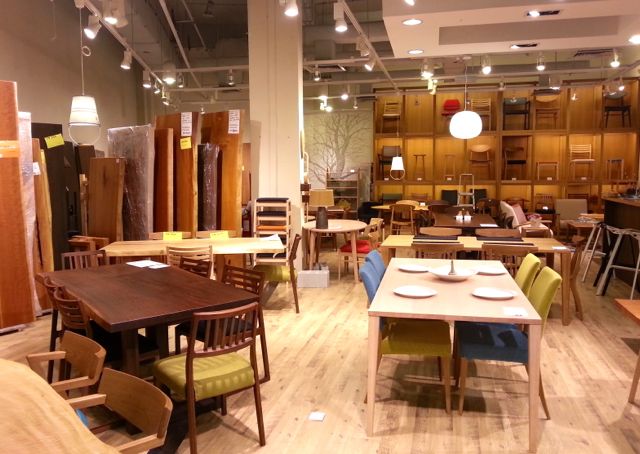
According to statistics from the Malaysia Timber Industry Board (MTIB), exports of major wood products in 2016 were worth RM 22,109 million. Out of that amount, rattan furniture exports were RM41.9 million while wooden furniture exports amounted to RM 7,562 million.
Since wooden furniture contributed just over 34% of total wood product exports in 2016 it is no surprise that the government and timber sector agencies pay considerable attention to this sub-sector of the economy.
The MTIB is encouraging the Malaysian furniture industry to venture into more Original Design Manufacturing (ODM) as opposed to focusing mainly on production and export of furniture parts based on designs from overseas manufacturers. The MTIB stresses that dependence on parts exports, while generating high sales volumes the profit margins are very small.
Recently the MTIB organised a Professional Designers Programme (PDP) as a sub-project of its Furniture Design Development Project. In collaboration with the Malaysian Furniture Promotion Council (MFPC), MTIB aimed to take research in furniture design to the next level through the development of design with professional designers and Malaysian furniture manufacturers.
Malaysian companies are not accustomed to employing the services of designers as they rely on buyers to provide designs but now they are beginning to appreciate professional designers and are recognising the added value of original designs which boost product value and price.
The new designers programme is introducing manufacturers to the concept of in-house design so it may become part of their business culture. Participating companies are learning how to work with an external designer – how to create a design brief and how to setup a royalty agreement to compensate designers. This process is very new and ground breaking for most furniture makers in Malaysia.
Siempelkamp to supply fiberboard production plant in the US

CalAg LLC commissioned Siempelkamp with the supply of a production plant for fiberboard made of rice straw.
CalAg LCC is investing more than $315 million for the new location in Willows, California. This order requests Siempelkamp’s complete range of services. From a single source Siempelkamp will plan, build, supply, install, and startup the entire machine technology for the Willows location amounting to an order value of Euro 75 million.
The order includes the complete preparation technology for rice straw bales with bale twine remover and shredder by Pallmann, a 100 % daughter company of Siempelkamp, as well as a cleaning system for the straw to remove coarse materials and dust.
Pallmann also supplies two refiners for the fiberizing of the rice straw. These refiners are equipped with horizontal digesters, a design typical for annual plants, to prevent material bridging. The cleaning system for separating silicate components from the fibers is a design specially developed by Siempelkamp and designed to process rice straw.
The natural gas fiber dryer designed for a material throughput of up to 32 metric tons/h bone-dry is supplied by Siempelkamp’s subsidiary Büttner.
The core component of the future production plant for rice straw fiberboards will be a 9th Generation ContiRoll ® press with its numerous innovations including, for example, the highly efficient drive motor ContiRoll Ecodrive.
With the new Siempelkamp plant, CalAg will produce 200,000 cubic metres of fiberboards annually following the startup of the plant scheduled for the end of 2018.
Russia: Top 10 wood pellet producers and production facilities in 2016
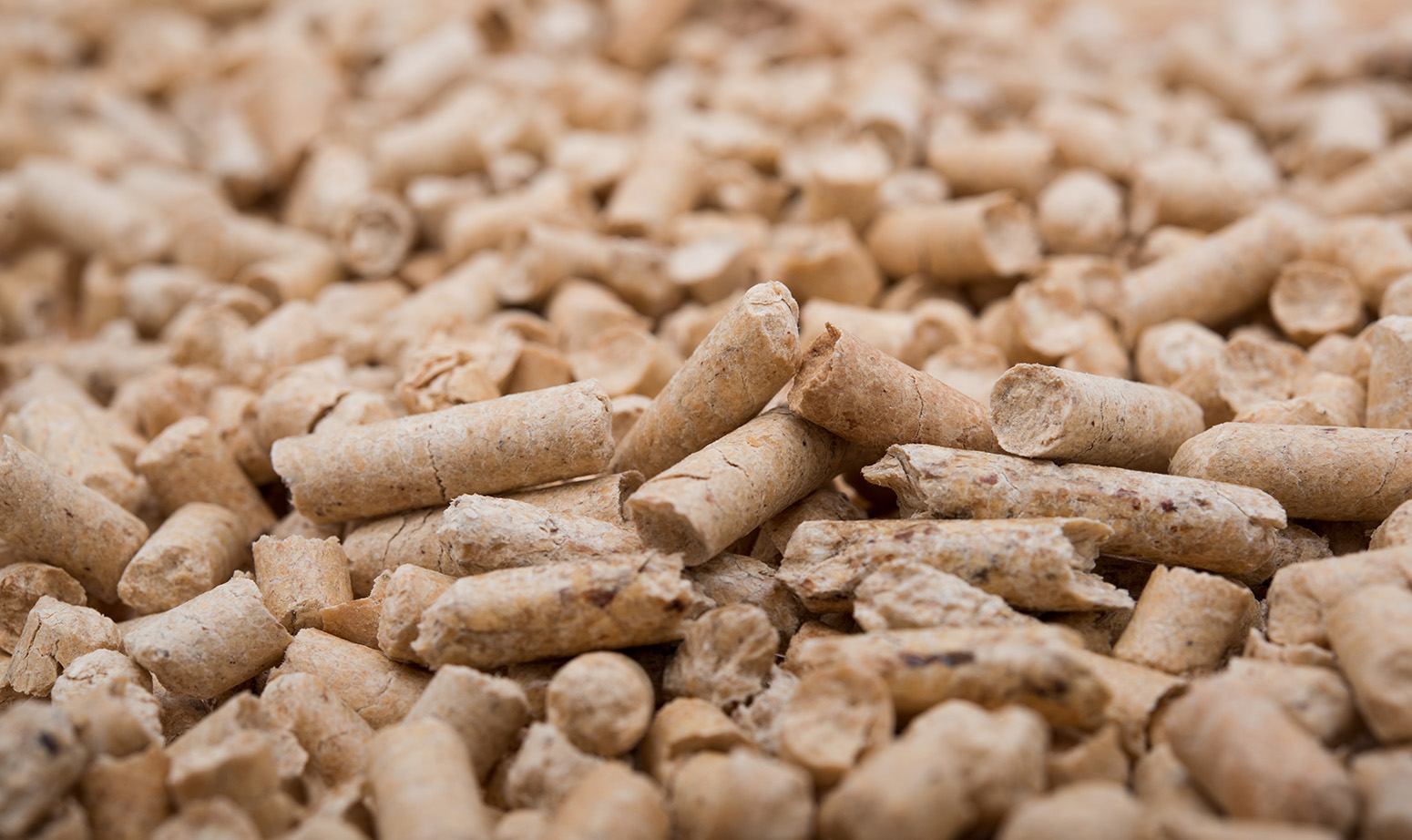
About 65 percent of total Russian production of wood pellets is manufactured by 12 processing facilities. There are about 20 wood pellet facilities in Russia with production capacity from 30,000 to 70,000 MT that have had stable operations since 2010. They produce 50 percent of all wood pellets in Russia.
However, analysts project a trend away from large facilities with an increasing number of facilities with smaller capacity, up to 20,000 MT.
However, the share in overall pellet production from the smaller facilities accounts for only 14 percent.
Given the current economic situation, the number of smaller-capacity facilities is forecast to increase because they have more mobility in sourcing raw materials and can easily market their production locally.
In addition, recent government initiatives to support exporters and call for improving ecology and environments are likely to stimulate producers of forestry processing industries to construction wood pellet production facilities.
The top-10 producers of wood pellets in Russia in 2016 include:
- “Vyborg Forestry Industrial Corporation Ltd.” (Vyborg Limited) was the leading production facility until 2016. Its total annual production capacity was reported at 400,000 MT. However, sources report that due to several legal claims regarding tax issues and change in the management of the facility resulted in to significant slowing down and eventually halting production of wood pellets by mid CY 2017. Reportedly, its production in 2016 shrank to 40,000 MT. Market experts believe that the facility will go bankrupt and/or diversify into other production. The potential shut down of “Vyborg Forestry Industrial Corporation Ltd.“ did not affect exports since there are a number of new production facilities that started operation in 2016 in the North Western Federal District, including Arkhangelsk, Kostroma and Novgorod provinces. Their production volumes were able to offset slowing down of the leading facility.
- “SP Arkaim Ltd.” in Khabarovsk province. The facility was built in 2011 to utilize wood waste from sawn timber and laminated panel production facilities in the area. Total annual capacity is reported at 130,000 MT.
- JSC “LDK-3” in Arkhangelsk province has been in operation since 2014. In 2016, the facility increased its annual production and almost reached its projected capacity of 100,000 MT. The company owns its pier, so most production is exported by sea to EU countries.
- JSC “Lesozavod-25 (part of the State Corporation “Titan”). The plant sources low cost raw material from timber processing facilities of the Titan group, translocating pellets through its own port. The second facility of “Lesozavod-25” has been in operation since 2013. Sources report the projected annual capacity as 100,000 MT. Annual log inputs for both production facilities are estimated at more than 1 million cubic meters.
- The forestry company “NovoYeniseyevskiy” in Krasnoyarsk province has been in operation since 2010. Its annual capacity is 50,000 MT, however, in 2015 the company built a new production line for pressed fuel to utilize waste. The annual capacity is 80,000 MT.
- “Mir Granul Ltd” is located in Leningrad province and started operations in 2004. The annual production capacity is 45,000 MT. 7. “DOK Yenisey” is located in Krasnoyarsk province. The facility increased its production from 6.3 thousand MT in 2010 to 45,000 MT in 2014.
- “North Western Holding Ltd.” is one of the largest wood pellet producers in Leningrad province. Its annual production is 50,000 MT which is mostly shipped to EU and Asian markets.
- “SvedWood Tikhvin” Ltd. is part of the “Svedwood” industrial group founded by IKEA in 1991. The facility has been in operation since 2002, an annual production estimated at 55,000 MT.
- “RusForest Magistralniy Ltd.” is a part of the leading Swedish forestry production and operation company. Its annual wood pellet production capacity is estimated at 30,000 MT.
Russia: Leading Wood Pellet Production Facilities in 2016:
| Name of the Facility | Province | Annual Production, 1,000 MT | |
| 1. | Vyborgskay Forestry Industrial Corporation | Leningrad province | 50 |
| 2. | “SP Arkaim” | Khabarovsk province | 130 |
| 3. | JSC LDK-3 | Arkhangelsk province | 95 |
| 4. | NovoYeniseyskiy | Krasnoyarsk province | 80 |
| 5. | Mir Granul | Leningrad province | 45 |
| 6. | JSC “Lesozavod-25” | Arkhangelsk | 90 |
| 7. | DOK Yenisey | Krasnoyarsk | 45 |
| 8. | Svedwood Tekhvin | Leningrad | 55 |
| 9. | RusForest Magistralniy | Irkutsk province | 30 |
| 10. | Biogran | Republic of Karelia | 30 |
| 11. | Setnovov | Novgorod province | 25 |
| 12. | STOD | Tver province | 20 |
| Total | 695 |
European parquet market steadily improving

After a long period of a challenging market situation for the European parquet producers, the positive indicators of the recent past are now being confirmed and the market is steadily improving.
The consolidated data provided by the FEP (European Federation of the Parquet Industry) member companies and affiliated national associations confirm the January forecast issued at the DOMOTEX fair in Hannover, and point to a growth of the global European market by 1,7% in 2016. As in the past, the results show some variation from country to country.
Compared to 2015, the overall consumption figures in 2016 show an increase by 1,7%. The production in FEP territory consolidates its growth by 2,5% and exceeds significantly the 65 million square meter threshold. The European production outside FEP countries is at an estimated 14,8 million square meters. As far as production is concerned, the strategic choices made by several producers to relocate their production in European countries outside the FEP territory was once again observed.
The total production in FEP territory rose by 2,53% to a volume of 65.603.120 m². Taking into account the total production in Europe (FEP countries + EU outside FEP), this implies that production in 2016 rose by 2,32% and exceeded 80,4 million m². The 2016 total parquet production per type remains similar to the picture already presented from 2010 onwards, whereby multilayer comes in first with 80% (compared to 79% in 2015), being followed by solid (including lamparquet) with 18% (compared to 19%) and mosaic at 2% of the total cake. In absolute production figures by country, Poland maintains its top position at 20,08%. Sweden consolidates its second place on the podium with almost 17%. It is followed by Austria at 14,02%, while Germany comes in as fourth. Consumption in the FEP area rose by 1,7% to reach 77.014.520 m² compared to 75.768.490 m2 the year before.
Consumption in the FEP area improved by 1,7%, to a level of 77.014.520 m². In terms of consumption per country, this is a status quo compared to 2015. Germany consolidates its first position with 23,65% and is followed by France at 10,63%. Sweden completes the podium with 9,94%. The Nordic Cluster at 8,48% takes the fourth seat. Italy with 8,18% takes back its fifth position from Switzerland (8,05%) and is ex aequo with Austria (8,18%). As regards the per capita parquet consumption, Sweden has taken the first seat (0,77 m2) at the expense of Switzerland (0,74 m²), which is followed by Austria (0.73 m2). In the total FEP area, the consumption per inhabitant remains stable at 0,19 m² in 2016.
The usage of wood species in 2016 as shown on the above graph indicates that oak is advancing further and reaches 80,8% compared to 77,7% in 2015. Tropical wood species use decreased slightly to 4,1%. Ash and beech remain the two other most commonly chosen species with 5,7% and 2,5% (compared to 3,8% in 2015) respectively.
Outlook for 2017 & 2018
After several years of a subdued market situation, the trend turned positive in 2016. The results after the first quarter of the current year point towards a confirmation and a consolidation of the growth in most of the countries where FEP members are present. It is also worth noting the positive developments observed in all Nordic countries.
As the economic picture at European level is improving and the construction sector is clearly seizing the opportunities provided by this encouraging development, the captains of the parquet industry consider that parquet should also be able to profit from these improvements. As opposed to the brightening market picture, the growing shortage of oak as primary raw material source remains a major concern and has to be stressed once again.
The parquet industry representatives also point to the general uncertainties about the political changes worldwide, which could also have an impact on the European parquet sector. Despite the harsh competition from flooring alternatives especially those with a wood look surface, FEP trusts that end consumers will be increasingly convinced by the inherent advantages of European Real Wood parquet products, their quality, trustworthiness, sustainable aspect and the fact that Real Wood floors are bringing nature straight into their homes thereby contributing to the mitigation of climate change.
Improving competitive environment for US wood flooring manufacturers
Imported wood flooring (engineered and solid) lost US market share in 2016 and the underlying reasons present an opportunity for US flooring manufacturers. US manufacturers accounted for 67% of total wood flooring sales in 2016, and 56% of total square foot sales.
This is up from 67% and 52%, respectively, in 2015. US production increased by an estimated 9% in 2016, while imports declined by almost 5%. The decline was in both solid and engineered wood flooring.
While the decline in imports is relatively small, compared to annual imports growth rates in the previous eight years, US wood flooring may increase its market share if US manufacturers invest in new production capacity.
Several factors contributed to the slowdown in wood flooring imports, according to the Hardwood Floors magazine.
The main factor is probably rising prices of imported wood flooring, while US flooring prices declined. At the same time imported wood flooring had to comply with the Lacey Act requirements, which made many US distributors and retailers turn to domestic sources.
China lost US market share when the US imposed antidumping duties and countervailing duties on engineered wood flooring, but Vietnam, Cambodia and other countries in Asia made up for the decline in imports from China.
In 2007, average flooring import prices were only slightly below US-made products. In 2015 the gap was more than 50%, according to Hardwood Floors. Moreover Asian suppliers were able to provide more species and colours.
Between 2007 and 2015 wood flooring imports grew at more than 20% annually.
In 2016 import prices increased by an average 9.6% but prices of Chinese engineered wood flooring grew by over 13%. US-made flooring prices declined 8.2% in 2016.
China increasingly imports hardwood from the US to manufacture flooring and other wood products to export back to the US market, thereby ensuring legal sourcing from US forests. Higher US sawnwood prices and rising Chinese labour cost contributed to the higher than average growth in Chinese-made flooring prices.
Despite these relatively favourable circumstances for US flooring manufacturers, imports are unlikely to decline significantly unless US manufacturers invest in new stateof-the-art wood flooring production capacities.
In the last five years US wood flooring manufacturers have increased capital spending by only 20%, which is less than half of other flooring covering industries and a moderate amount given the growth in the US housing and remodeling markets.
The market outlook for imported wood flooring remains positive if suppliers control costs and make it easy for US importer to comply with the Lacey Act.
Scanbio invests in wood pellet capacity expansion in Sweden

Scandbio AB plans to invest SEK 1 million (EUR 102,400) in capacity expansion at its Norberg wood pellet mill in Sweden. Continue reading "Scanbio invests in wood pellet capacity expansion in Sweden"
Finnish forest industry investments increased by 22% in 2016
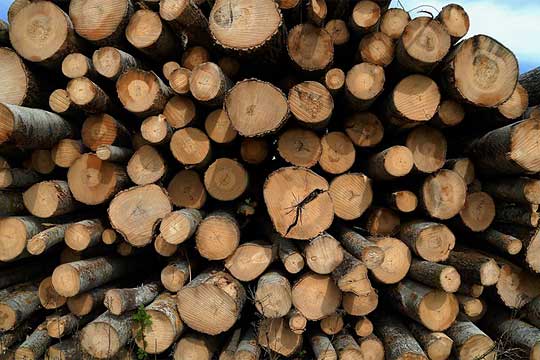
Investments of Finnish forest industry increased by 22 percent last year, reaching the amount of EUR 948 million. Continue reading "Finnish forest industry investments increased by 22% in 2016"
India: plywood, laminates and veneer companies stay strong, especially with the GST boost

The share price of plywood, laminates and decorative veneer companies in India has gained traction, despite a sluggish growth in the real estate sector. Continue reading "India: plywood, laminates and veneer companies stay strong, especially with the GST boost"
Lumber prices in the US hold stable during last week
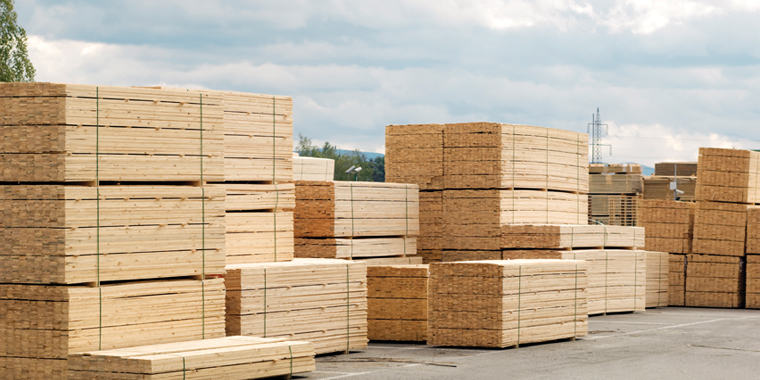
Framing lumber markets were mixed during last week in the US. There was a strengthening trend in western and Canadian species contrasting with a continued softening in Southern Pine. Continue reading "Lumber prices in the US hold stable during last week"

