
Article archive

Germany: Boom in wood pellets production

During the first nine months of 2017, almost 1.65 million tonnes of wood pellets have been produced in Germany.

According to the Deutsche Energieholz- und Pellet-Verband e.V. (DEPV), the production volume grew by 18.7%, as compared to the previous year's period.

From January to September 2017, a total of 1.645 million t pellets were produced in Germany and 255,000 tonnes or 18.7% more than in the same period of 2016. The forecast made by DEPV regarding the full year 2017 production is of 2.3 million tonnes.

In Germany about 6-7 million tonnes of sawn products, including pellets, are available each year. The wood pellets are almost exclusively used for heat generation and are distributed nationwide in approx. 450,000 heaters and ovens.

Wood pellet production in Germany 3rd quarter 2017
Production quantity

Wood pellets


573.000 t

Quality class
ENplus A1 99,8 %
ENplus A2 0,0 %
Industrial pellets 0,2 %
Commercial form
Loose Ware 77,9 %
Sack 22,1 %
Raw materials/Wood species
Softwood 99,7 %
Hardwood 0,3 %
Raw materials/Wood sorting
Wood residues 97,6 %
Roundwood 2,4 %
Market
National 91,0 %
International 9,0 %

International Hardwood Conference next month in Venice

Hosted by Italy's Fedecomlegno Federation in association with the ETTF and European Organisation of Sawmillers, an International Hardwood Conference will take place 15 to 17 November and it expects delegates from 20 countries worldwide.

The core theme will be maximising the hardwood resource, both in terms of sustainable yield and realising its potential in new applications.

Expert speakers will provide market trend analysis. “It’s no longer enough for a hardwood conference to talk just about logs, sawn goods volume and prices,” said Fedecomlegno Director Stefano Dezzutto.

“Today you must address market tendencies, legality, sustainability and other environmental aspects, international standards, innovative technology and new applications. Our goal is a line-up of qualified speakers addressing a range of themes to envelop the whole hardwood supply chain. The fact we have registrations worldwide is an encouraging signal we’ve got it right.”

The IHC takes place in Venice's Hilton Molina Stucky hotel and the Gala Dinner will be in the historic Palazzo Zeno.

European softwood lumber production on the rise; prices down

There was a steady increase (+2.9%) in Europe’s softwood lumber production last year, driven by growing consumption and stronger overseas demand. Output has expanded steadily since 2012, reaching 107.8 million m3 (45.7 billion bf net; ~73 billion bf nominal) in 2016, with nearly every major producing country showing growth.
Finland contributed the most to the increase in Europe’s production last year (+0.8 million m3), followed by Turkey (+0.7 million m3), Germany (+0.7 million m3) and Austria (+0.5 million m3). All of these countries enjoyed strong demand from export markets. With its consumption on the rise, Turkey has become a major producer of softwood lumber in the subregion; its production grew by 14% in 2016 to reach 5.8 million m3.
Romania was the only significant European producer to show a major drop (0.5 million m3; -10.9%) in softwood lumber production in 2016. Production declined marginally (-1%) in Sweden, but it remains the second-largest producer in Europe.
Softwood lumber production is highly concentrated in the European subregion, with Finland, Germany and Sweden accounting for 47%.
There were no major capacity changes in the European sawmill industry in 2016, or in 2017 to date, although some smaller mills closed in the Nordic countries due to profitability issues. Investments are focusing on replacements or increasing capacity in existing sawmills, as opposed to greenfield ventures.
European Prices
The declining price trend for European softwood lumber persisted in the Middle East in 2016. The price for Finnish spruce (C&F — “cost & freight”) in Europe was down by 7% (in euros per m3) compared to 2015, and the price of pine in the Middle East fell by 8%. Spruce prices recovered in Europe in the first half of 2017, but pine’s negative trend in the Middle East continued. The low price of pine is affecting the profitability of mills, especially in Nordic countries.
The pricing trend in Japan for European softwood lumber was slightly negative in the local currency (yen) in 2016, but was favourable for European exporters due to the euro’s continued weakening against the yen. Free-on-board (FOB truck Japanese port) prices (in euros per m3) increased by 7%. Japanese prices started to fluctuate in December amid a weakening of the yen against the euro and a rise in prices in the local currency.
In U.S.-dollar terms, prices in most major global markets rose in 2016, continuing a positive cycle that began in late 2015. Overall, market demand was favourable in all major markets except the Middle East and North Africa (where governments in countries such as Egypt and Algeria have dealt with financing issues on behalf of importers).

Drax to sell wood pellet business

Energy giant Drax has agreed the sale of one of its subsidiaries, a wood pellet distributor, for £2m to an AIM-listed energy company.

Billington Bioenergy (BBE), a distributor of wood pellets in the UK heating market, has been acquired by Aggregated Micro Power Holdings (AMPH).

AMPH is an AIM-listed energy company specialising in the sale of wood fuels and the development of distributed energy assets, including biomass boilers and battery storage.

Billingtons supplies circa 40,000 tonnes of premium wood pellet to commercial customers per annum, has four depots, a head office in Liverpool and employs 34 staff.

The deal is worth £2m, comprised of £1.6m worth of shares in AMPH and £400,000 in cash.

Through its shareholding in AMPH, Drax will retain an interest in the UK heating market, while gaining exposure to the development of small-scale distributed energy assets.

Richard Burrell, chief executive of Aggregated Micro Power Holdings, said: "We are delighted that Drax has become a long term investor in AMP and we look forward to working with Drax on a range of development projects which should help to expand our assets under management in the distributed energy space.

"Billingtons has built a strong and well-regarded business in the wood pellet market in England over the last ten years and is an excellent fit with Forest Fuels."

Dorothy Thompson, chief executive of Drax Group, said: "We are pleased with the sale of BBE and our investment in AMPH.

"With their leadership in the UK wood pellet heating market, we believe they are the right partner to take forward and grow BBE, whilst supporting the UK's transition to a low carbon economy."

"We look forward to working with AMPH."

EU hardwood logs exports to China increase almost 10 times this year

During January-July 2017, the European Union countries have significantly increased their hardwood exports to China. Overall, the exports grew by 744% in the mentioned period, as compared to last year.

Belgium was the country to exports most of the hardwood and the volumes amounted to 6,11 million m3, increasing by 3,525%. Also, France sent 5,174 million m3 of hardwood to China, which is 739% more than in January-July 2016.

The total volume of hardwood exports to China amounted to 12 million m3 in January-July 2017.

TOP 10 Exporting Countries

Hardwood: Logs exported to China from... (in cbm )

Exporting Country 2016 2017 Change in %
EUROPEAN Union
1,425,363 12,032,638 744 %
Belgium
168,753 6,116,504 3,525 %
France
616,726 5,174,119 739 %
Germany
306,841 326,065 6 %
Latvia
157,622 118,352 -25 %
Denmark
44,978 115,148 156 %
Others
130,443 182,450 40 %
OTHER European Countries
261 2,756 956 %
Croatia
261 2,756 956 %
TOTAL 1,425,624 12,035,394 744 %

Oak log exports

Oak log exports to China grew by 1,685% in January-July 2017, with the exports coming from Belgium reaching first place (4,97 million m3). France came in second place and exported 4.41 million m3, increasing the volumes by 1,052%, as compared to last year.

The overall oak logs exports reached a volume of 9,52 million m3, as compared to only 533,507 m3 during January-July 2017.

TOP 10 Exporting Countries

- Oak logs exported to China from... (in cbm )

Exporting Country 2016 2017 Change in %
EUROPEAN Union
533,409 9,520,793 1,685 %
Belgium
84,006 4,971,954 5,819 %
France
383,370 4,417,`828 1,052 %
Denmark
6,667 48,501 627 %
Germany
41,934 42,012 0 %
Slovenia
4,654 11,813 154 %
Others
12,778 28,685 124 %
OTHER European Countries
98 787 703 %
Croatia
98 787 703 %
TOTAL 533,507 9,521,580 1,685 %

Beech logs exports

The exports of beech logs from the European Union countries to China amounted to 933,488 m3, during January-July 2017, 122% more than last year. Belgium exported most of the beech logs, increasing the volumes by 745% in the mentioned period, to 512,749 m3.

TOP 10 Exporting Countries

- Beech logs exported to China from... (in cbm )

Exporting Country 2016 2017 Change in %
EUROPEAN Union
420,122 932,954 122 %
Belgium
60,646 512,749 745 %
Germany
260,432 276,960 6 %
Denmark
35,535 61,141 72 %
France
39,113 45,039 15 %
Czech Republic
8,166 12,212 50 %
Others
16,230 24,853 53 %
OTHER European Countries
163 534 228 %
Croatia
163 534 228 %
TOTAL 420,285 933,488 122 %

TOP 10 Exporting Countries

- Other Hardwood Logs exported to China from... (in cbm )

Exporting Country 2016 2017 Change in %
EUROPEAN Union
471,832 1,402,602 197 %
France
194,243 711,184 266 %
Belgium
24,101 625,347 2,495 %
Romania
12,569 24,327 94 %
Estonia
44,707 9,812 -78 %
Latvia
157,622 7,149 -95 %
Others
38,590 24,783 -36 %
OTHER European Countries
- 1,435 %
Croatia
- 1,435 %
TOTAL 471,832 1,404,037 198 %

Setra invests SEK 300 million in Hasselfors sawmill

Setra is investing in a new trim saw with integrated planing machine at its mill in Hasselfors. The investment is expected to deliver major efficiency gains and help to strengthen Setra’s position in the global construction market.

Setra’s Board has decided to invest in a new trim saw with integrated planing machine at Hasselfors sawmill. The new investment, amounting to SEK 300 million, is expected to deliver major efficiency gains and forms an integral part of Setra’s strategy to increase the proportion of finished products in response to the growing demand in the global construction market.

This investment will allow us to boost our competitiveness and sharpen up our offer to customers in Sweden, the rest of Europe and, not least, markets outside Europe. The investment will also mean greater flexibility and better service for existing and new customers alike,” says Olle Berg, Market Director at Setra.

With the new facility in place, the mill in Hasselfors is expected to produce 320,000 m3 of wood products. Planed products will make up around two thirds of overall production.

This is a major step in our Hasselfors mill’s continued development. The new trim saw and planing machine will enable us to significantly improve the efficiency of our current operation,” explains Jonas Fintling, Mill Manager at Setra Hasselfors.

Setra is one of Sweden’s largest wood products companies. They process raw material from responsibly managed forests and offer climate-friendly products and solutions for building and living in a global market. The company has approximately 800 employees and annual sales of approximately SEK 4 billion.

Stora Enso invests EUR 94 million in renewable materials

Stora Enso will invest EUR 94 million to grow in renewable materials and to increase competitiveness in consumer board and biomaterials.

EUR 52 million will be invested to increase the dissolving pulp production capacity at Enocell Mill and EUR 42 million to enhance the availability of the chemi-thermomechanical pulp (CTMP) at Imatra Mills. Both mills are located in Finland.

"We continue to drive our transformation to a renewable materials growth company. While investing in our Finnish mills, we expect the competitiveness of Finland's export industry to be ensured and further improved globally," says Karl-Henrik Sundström, CEO of Stora Enso.

Enocell Mill, part of the Biomaterials division, will be converted to focus entirely on production of dissolving pulp. The softwood pulp production will be gradually discontinued after the investment. The mill will have a total capacity of 430 000 tonnes dissolving pulp annually, whereof 185 000 tonnes hardwood and 245 000 tonnes softwood dissolving pulp. The investment is scheduled to be completed during the second half of 2019. It is expected to exceed the Biomaterials division's profitability target, operational return on operating capital (ROOC) of 15%, and to have a positive impact on sales.

Dissolving pulp is used as a raw material replacing cotton and fossil-based materials, such as polyester. The dissolving pulp product segment is growing above the industrial average. The growth is driven by increased demand for non-woven applications, and viscose-type fabrics in the textile industry.

"We aim to improve our pulp mix to differentiate and secure competitiveness in the long term. At our Nordic pulp mills, this means focusing on special grades, such as fluff and dissolving pulp. The investment also supports Enocell Mill to become an integrated biorefinery plant for new bio-based chemicals," says Markus Mannström, head of Stora Enso's Biomaterials division.

The investment at Imatra Mills, part of the Consumer Board division, includes a new CTMP drying and re-pulping plant as well as extension of the pulp warehouse. This aims to enhance the availability of CTMP and to drive the commercialisation of micro-fibrillated cellulose (MFC). Due to its high strength and 100% renewable raw materials, MFC is designed to outperform fossil-based materials, such as plastics, in a variety of applications. The project is scheduled to be completed in the first half of 2019. The investment is expected to exceed the Consumer Board division's profitability target, operational return on operating capital (ROOC) of 20%, and to have a marginal impact on sales.


UPM boosts production capacity at Chudovo plywood mill in Russia

Following growth investments in Finland and Estonia over the past few years, UPM expands its Chudovo plywood mill in Russia by investing EUR 50 million.

The project will increase the mill's production capacity by 45,000 to 155,000 m3 while also broadening the mill's product portfolio. In addition to the production capacity growth, a new bio heat boiler will be built at the mill site.

"The expansion of the Chudovo mill is an important step in executing our strategy. Our goal is to further strengthen our leading position in priority end-use segments. New competitive birch plywood capacity improves our ability to respond to growing demand in our key markets, while delivering industry-leading quality and reliability," says Mika Sillanpää, Executive Vice President of UPM Plywood.

The expansion project consists of new plywood production lines including all machinery needed for veneer and plywood manufacturing. The expansion will be realised using mainly existing facilities, infrastructure and resources. More than 40% of the subcontracting related to the investment will be sourced locally. The expansion is estimated to create roughly 100 new jobs both directly at the mill and indirectly, for example, in wood procurement and logistics.

The new 19 MW bio heat boiler will decrease the consumption of fossil fuels at the mill. Most of the heat energy for the mill will be generated by using biological by-products from plywood production such as bark, chips and dust.

The project is estimated to be completed by the end of 2019. During the expansion production at the mill will continue normally.

Japanese Sumitomo acquires 48% share in B.C. wood-pellet producer

A wood pellet manufacturing plant from Prince George (2nd largest in Canada), has recently sold 48% stake in the company, to a Japanese conglomerate.

A statement from the B.C. Ministry of Jobs, Trade and Technology said 48% of Pacific BioEnergy, which employs about 55 people and manufactures 550,000 tonnes of wood pellets a year as fuel for industrial uses, has been acquired by Tokyo-based Sumitomo Corp. The cost of the transaction was not released, Business in Vancouver reported.

Officials in the province stated that the sale was a “major investment” by Japan in B.C.’s wood pellet industry, while statistics show the province exported $319 million in wood pellets globally in 2016.

Katsunori Takamitsu, Sumitomo’s general manager of biomass said in a statement that the pellets are seen as a clean, reliable fuel that will “provide a high-quality and consistent supply” to Japan’s utilities sector for power generation. The Japanese company has been importing from B.C. since 2008, and Takamitsu said the investment allows for Pacific BioEnergy to grow further in Japan, according to BIV.

British Columbia officials also expressed hope that the investment will mean Pacific’s wood pellets would see an increase access to markets throughout Asia through Sumitomo’s worldwide network.

US hardwood exports to China market set new record

A strong performance for the US hardwood markets in Mainland China and Vietnam resulted in a 25.6% exports increase during the Q2 of 2017 (yoy). This growth sets a new second quarter record as compared to the same period last year.

The South-East Asia & Greater China markets reached $1.19 billion, which accounted for 60.3% of all global exports. Greater China market grew by 28.7%, to over $1 billion. Sea markets continued to have a solid growth at 9.3% (YoY) to $166 million in the first half year of 2017.

The global exports value of US hardwood reached $1.98 billion, up 10.5% (YoY). Vietnam and Malaysia were the only two markets that achieved a solid growth, at 14.9% (YoY) and 11.7% (YoY) to $120 million (YoY) and $15 million respectively.

They also lifted up the overall Sea performance, which increased by 9.3% in the first half year of 2017 versus same period of time in 2016. The remaining markets in the Sea region, Indonesia, Thailand, Philippines and Singapore declined from 6.2% to 42.3%.

Malaysian plywood prices on an upward trend

Due to a strong demand for tropical plywood products, Japanese companies are paying more money for these wood products, including those from Malaysia.
As The Star reported, the Japanese market has reported tight supply of south sea (tropical) plywood as shipments of ordered plywood from Malaysia and Indonesia have been largely delayed by log supply shortage in these countries, according to the Japan Lumber Reports (JLR).
Delay of shipments is about three to four months now, and port inventories are down in Japan while the demand continues to be strong,” revealed International Tropical Timber Organisation (ITTO) report in its latest issue.
According to JLR, even after the rainy season was over, the weather had not improved in producing regions of Malaysia and Indonesia which hampers hauling of harvested logs to coast where the plywood mills are located. The JLR anticipates delayed shipments from Malaysia and Indonesia would continue as log production regions in these countries would be in rainy season again after late October. Reduced supply volume and higher export prices will continue, The Star reported.
As to produce thin plywood and floor base plywood it's very important to assure the log quality, but the mills are not able to have enough quality logs, a thing which leads to delayed production of ordered volume.
Because of supply shortage, the export prices (from the plywood manufacturers) are climbing. Indonesian 2.4mm thin plywood (second class/F4 star are US$800-US$820 per cu m C&F (cost and freight),” it added. The JLR did not, however, state the latest export price of similar products from Malaysia.
But according to Ta Ann Holdings, leading Malaysian plywood manufacturer and exporter, the prices of its plywood products had gone up by US$25 per cu m in first half-2017.
With higher demand, we anticipate the price uptrend to continue,” said Sibu-based Ta Ann in a review of the timber market when reporting the company’s results for the first six months.
Quoting figures from the Japan Finance Ministry, the JLR said over the past 12 months (to August 2017), shippers in Malaysia, mainly Sarawak, have provided the largest volume of plywood to Japan, followed closely by Indonesia and China. The trio accounted for most of Japan’s imported plywood.
According to the report, during the first eight months, Japan raised its plywood imports from Malaysia to some 780,700 cu m against 717,200 cu m in the corresponding period 2016 or an increase of nearly 9%.
The JLR said with supply shortage of imported plywood, demand of thin plywood had been shifting to other materials, such as medium density fibreboard, adding that the move seems to accelerate.
Floor base plywood demand has been shifting to domestic softwood plywood.Demand for softwood plywood is brisk mainly by large precutting plants. August softwood plywood production was high at 254,700 cu m, 10.8% more than August last year.
“It is a fact that domestic plywood is now more than imported plywood in Japan but imported plywood is absolutely a necessary product for Japan. But in the coming years, the (Japanese) market would not accept any product without traceability of forest certificate.”
The JLR said in Indonesia and Malaysia, harvest of natural growth timber has been reduced by various restrictions while production of planted timber or tree plantation is increasing.
In Indonesia, 40% of total harvest is now planted timber and in Sarawak, share of planted timber in total harvest will be more than 50% in five years.”
Sarawak’s log production in first half-2017 was about 3.75 million cu m, out of which 2.94 million cu m were naturally grown timber and 808,000 cu m were planted timber or 21% of total harvest. According to the JLR, Sarawak’s harvest of planted timber would be 1.6 million cu m this year, which is 300,000 cu m more than 2016, The Start reported.
Plywood manufacturers and dealers from Indonesia, Malaysia and Japan recently met in Jarkata to exchange market information and trend of plywood market. The most recent issues are restriction of log harvest and demand structure.
Ta Ann said it had strategically revised its plywood production to process more products with higher plantation and certified wood components “as we are stepping up harvesting of our plantation logs and utilisation of imported PEFC (world largest forest certification organisation) certified eucalyptus veneer (for the production of plywood)”.

Södra increases softwood prices

The strategic investments in Södra’s mills have now led to higher fibre consumption, as demand for softwood pulpwood is growing.
Södra is therefore raising the price of softwood pulpwood to SEK 320/mᶾ sub. The price of the small-diameter and softwood block range will also be raised by SEK 25/mᶾ sub.
The high demand for both sawlogs and softwood/hardwood pulpwood is gratifying for forest owners. The price increases will create excellent conditions for increasing the level of thinning in members’ forests,” said Olof Hansson, Acting President of the Södra Skog business area.
Markets for sawn timber remain favourable, and therefore demand for pine and spruce logs. Södra has therefore decided to incorporate the existing contracting premium of SEK 25/mᶾ sub into the basic price.
The new prices will apply for contracts signed as of 23 October.

European lumber consumption shows positive outlook

A generally good outlook for the three UNECE subregions (Europe, Russia and North America), in combination with favourable markets in Asia and improving results in North Africa and the Middle East, points to positive developments ahead in the global softwood lumber business.

These are some of the take-away messages from the Sawn Softwood Chapter of the UNECE/FAO Forest Products Annual Review 2016–17.

In fact, for the first time since about 2004–05, all regions are showing gains in consumption, with almost all producing and exporting countries reporting growth. While there are many factors at play here, this is largely the result of favourable global economic trends and improving markets worldwide following the U.S. housing collapse and global financial crisis.

The recovery in North America has been ongoing since 2009, and softwood lumber consumption increased by 8% in 2016. Softwood lumber consumption rose in Europe by 2.8%, while in the CIS countries (including Russia) it was up by 0.9%.

Relative to the volatility of 2015, currency exchange rates were stable last year and for the first half of 2017. As for softwood lumber production, in 2016 it grew by 4.7% in North America, 2.9% in Europe, and 6.7% in the CIS subregion.

Europe Consumption

The European market performed well in 2016 despite a negative forecast at the beginning of the year. Apparent consumption rose by 2.8% to 94.2 million m3 (40 billion bf net; ~55 billion bf nominal), with most countries reporting growth. Only a few countries experienced decreases, and most of those anticipate growth in 2017.

One of the highlights of 2016 was France’s increase in consumption following years of decline. Consumption picked up by 1.8% (although the level was still some 1 million m3 below the volume consumed in 2012). Signs are also encouraging in Southern Europe, with both Spain (+5.5%) and Italy (+2.2%) increasing consumption. Also showing strong performance were the northern European countries of Estonia (+3.0%), Finland (+3.1%) and Norway (+2.4%).

The most remarkable developments in European softwood lumber consumption in 2016 were seen in Austria (+7.4%), Turkey (+10.1%) and the U.K. (+4.5%); collectively, these three countries added 1.4 million m3 to total European softwood lumber consumption. Consumption growth slowed in Germany to 1.0%, but the incremental demand growth there was still sizeable (+0.2 million m3).

A slowdown in softwood lumber consumption occurred in some European countries, e.g., Denmark (-24%), Slovakia (-21%), Switzerland (-2.1%) and Sweden (-5.7%), with everyone except Slovakia reporting declining consumption for the second year in a row. Nonetheless, Sweden still consumed considerably more softwood lumber in 2016 than in 2012.

Germany remains the largest consumer of softwood lumber in Europe at 18.7 million m3 in 2016, 20% of the total consumption in the European subregion. The U.K. was a clear #2 at 9.6 million m3 (10% of total consumption in the subregion), ahead of France at 7.6 million m3. Austria took fifth spot from Sweden, just behind Turkey (#4). Interestingly, the five largest consumers of softwood lumber in Europe account for 52% of total consumption in the subregion. On a per capita basis, Estonia, Austria, Finland, Norway and Latvia (listed in descending order) report the highest consumption of softwood lumber.


Vietnam becomes potential market for Swedish wood

The Swedish wood industry considers that Vietnam’s wood processing industry is a potential market for its eco-friendly, competitive and sustainable materials.

Sweden will be a potential source of additional materials for Vietnam, with the import value currently increasing,” said Huynh Van Hanh, vice chairman of the HCM City Handicraft and Wood Industry Association (HAWA).

This was discussed during a seminar held in the city’s District 7 this week, as part of the 12th Vietnam International Woodworking Industry Fair at the Saigon Exhibition and Convention Centre (SECC) from October 18-21, where about 50 Swedish sawmills suppliers and many Vietnamese wood producers participated.

As reported by Vietnam Net, Pereric Hogberg, Sweden’s Ambassador to Vietnam, said that Sweden’s sustainable forest management maintained a balance between economic wood production and respect for wildlife, outdoor recreation, employment and local interests.

I am very impressed by Vietnam’s fast-growing wood processing industry, and there is a large potential for Swedish wood suppliers to supply high quality and sustainable raw materials to Vietnamese manufacturers,” she said.

Sweden is the world’s third largest exporter of sawn wood and exports 13 million of total 18 million cubic metres of sawn and planed timber. Japan and China are the biggest markets for the Swedish sawmill industry.

Vietnam is the fifth largest exporter of wood worldwide, the second largest in Asia, and the largest in Southeast Asia. Its key export markets are the US, China, Japan and the EU. Vietnam’s furniture industry is growing steadily, resulting in increased demand for materials, according to Vietnam Net.

Vietnam’s exports were estimated at 7 billion USD last year and are expected to increase to 10 billion USD by 2020. Last year, about 1.7 billion USD of wood materials were imported for production needs.

US tropical sawnwood now account for 30% of total sawn hardwood imports

US imports of temperate and tropical sawn hardwood grew slightly in August to 72,278 cu.m., but the value of imports declined. Tropical sawnwood imports accounted for 21,381 cu.m. or 30% of total sawn hardwood imports in August.

Tropical imports increased 14% from July, while the value of tropical sawnwood imported was almost unchanged at US$21.7 million. Year-to-date tropical imports were up 5% compared to August 2016.

The month-over-month increase was mainly in imports of balsa, keruing, jatoba and acajou d’Afrique. Balsa imports grew 24% to 6,252 cu.m. in August. Keruing imports were 2,234 cu.m., up 19% from July.

Imports of ipe sawnwood were slightly down in August (2,412 cu.m.), but at US$5.1 million ipe was still the leading species imported by value.

Malaysian exports to the US increased by one third in August. The US imported from Malaysia in August 2,073 cu.m. of keruing worth US$1.7 million. Meranti and teak imports from Malaysia were also up in August.

Canadian meranti imports up in August

The value of Canadian imports of tropical sawnwood increased in August, but year-to-date imports remain lower than in August last year. The value of tropical imports was USUS$1.5 million, up 9% from July.

Imports of most species declined in August with the exception of red meranti. Red meranti imports doubled from July to USUS$58,266, but year-to-date meranti imports are lower than in August 2016.

Virola, imbuia and balsa imports (combined) accounted for the majority of imports in August at USUS$461,189, up 61% year-to-date from the same time last year. Almost all virola, imbuia and balsa sawnwood was imported via the US.

Sapelli sawnwood imports were worth USUS$337,755 in August, down 2% from July, but sapelli imports from Cameroon grew in August to USUS$191,888.

Potlatch to buy rival Deltic Timber for stock, combine lumber capacity

Potlatch Corporation and Deltic Timber Corporation today announced that they have entered into a definitive agreement to combine in an all-stock transaction and create a leading domestic timberland owner and top-tier lumber manufacturer. The combined company will be named PotlatchDeltic Corporation and its shares will trade on the Nasdaq Stock Market under the ticker PCH.

Based on the closing stock prices of Potlatch and Deltic on October 20, 2017, the combined company is expected to have a pro forma equity market capitalization of approximately $3.3 billion and a total enterprise value of more than $4.0 billion, including approximately $700 million in net debt. Following completion of the transaction, the combined company will have more than 1,500 employees serving over 200 customers through operations across its extensive timberland and lumber manufacturing portfolio.

Under the terms of the agreement, which has been unanimously approved by the Boards of Directors of both companies, Deltic stockholders will receive 1.80 common shares of Potlatch stock for each common share of Deltic that they own. Following the close of the transaction, Potlatch stockholders will own approximately 65% of the combined company, and Deltic stockholders will own approximately 35% on a fully diluted basis.

The agreement also provides for Deltic to convert to a REIT structure, effective at the closing date of the transaction, ensuring the combined company achieves the most efficient tax structure. As part of the REIT conversion process, Deltic’s accumulated earnings and profits, which are estimated to be approximately $250 million, will be distributed to stockholders of the combined company through a dividend consisting of 80% stock and 20% cash by the end of 2018.

The combination brings together two leading timberland owners and lumber manufacturers. Together, the combined company will have a highly productive and diverse timberland portfolio of approximately 2 million acres, with approximately 1.1 million acres in the U.S. South, 600,000 acres in Idaho, and 150,000 acres in Minnesota. In addition, upon completion of the transaction, the company will operate eight wood products manufacturing facilities, including six lumber manufacturing facilities, one medium density fiberboard facility and one industrial plywood mill. In total, the combined company will have lumber capacity of 1.2 billion board feet, making it one of the leading producers in the U.S. Furthermore, the company’s lumber capacity will be heavily weighted towards high-margin southern yellow pine lumber, with over half of the company’s capacity being produced at its three southern mills. The transaction also combines two highly complementary and successful real estate businesses.

Japan: CLT demand to quadruple this year; production and demand expected to boom by 2020

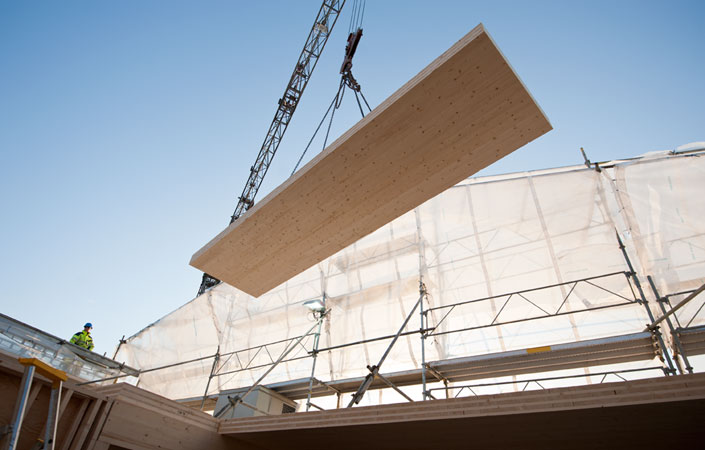
A meeting organized by the Japanese Government was recently held in order to promote use of CLT. It has been reported that consumption of CLT in 2017 would be about 20,000 cubic meters, four times more than in 2016.

However, the gap between production capacity (of around 60,000 cubic meters) and consumption is huge, so a further promotion for the use of CLT is necessary.

In 2016, the use of CLT was of only 5,000 m3 and the production was of 50,000 m3: so the demand was only one tenth of the production.

To promote the use of CLT, the central and local governments will give a subsidy so the majority of CLT construction will be based on the subsidy. The government plans to increase the production of CLT to 100,000 cbms by 2020 so further demand promotion is immediate an issue.

In 2017, the total building construction made of CLT is 112, which exceeds total CLT construction of 93 in the past. Thus, the development of CLT usage is at a high pace, but not enough to catch up the production.

Since there are many buildings built with subsidies, most of the CLT building are public halls and community centers done by the local governments. Others are office, public housing, companies’ dormitory, stores and warehouses. According to the government’s road map to stimulate use of CLT, each local government has to build at least one CLT building by 2018.

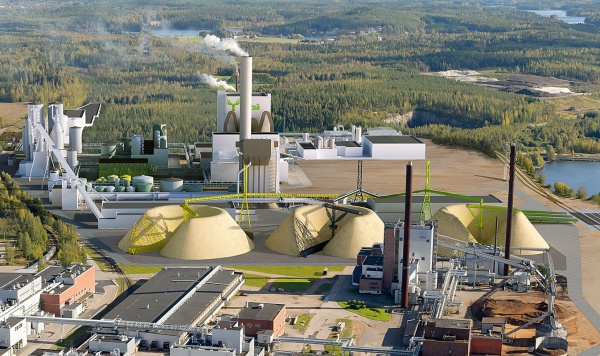
Metsä Group inaugurates giant Äänekoski pulp mill

Metsä Group celebrated the inauguration of its next-generation bioproduct mill in Äänekoski, Finland, on 18 October 2017. With a cost of Euro 1.2 billion, the mill is the largest investment in the history of the Finnish forest industry.

President and CEO of Metsä Group Kari Jordan said: “All in all, Metsä Group is investing around Euro 2 billion between 2015 and 2017. Of this, around 85% is investments in Finland. The bioproduct mill has nationwide effects. It will increase Finland’s annual exports by Euro 0.5 billion, in addition to creating around 1,500 new jobs throughout the direct value chain and having an effect on wood supply across the country. As Finland is celebrating 100 years of independence, Metsä Group is honoured to be participating in building a stronger economy for the country.”

The construction of the bioproduct mill began in April 2015, and the mill started up in mid-August 2017 – exactly on schedule and on budget. The mill’s production has increased as planned, in line with the start-up curve.

Pulp production at Äänekoski is increasing to 1.3 million tonnes from roughly 0.5 million tonnes. The bioproduct mill is a significant project in terms of Metsä Group’s competitiveness. It is expected to achieve its nominal capacity in mid-2018, which will make Metsä Group the world’s largest producer of softwood market pulp.

France: French competition authority fines leading flooring producers with €302 million over price fixing accusations

The French competition authority (The Autorité) has imposed sanctions totalling €302 million on the three leading manufacturers of PVC and linoleum floor covering, as a penalty for price fixing among other pratices.

Acting on information submitted by the Directorate General for Competition Policy, Consumer Affairs and Fraud Control (DGCCRF), the Autorité started proceedings ex-officio and, in 2013, conducted dawn raids in the floor coverings industry. The Autorité published a decision sanctioning the three leading PVC and linoleum floor coverings manufacturers in France, Forbo, Gerflor and Tarkett, together with the relevant trade union, the SFEC (Syndicat Français des Enducteurs Calandreurs et Fabricants de Revêtements de Sols et Murs).

The Autorité revealed three practices implemented by these manufacturers:

- a wide-ranging anti-competitive agreement between the three main manufacturers of PVC floor coverings in France, covering numerous aspects of sales policy, including prices, with the aim of drastically reducing or eliminating competition in the production and marketing of PVC and linoleum floor coverings, and stabilising the respective situations of Forbo, Gerflor and Tarkett ;

- exchanges, under the aegis of the SFEC, of specific confidential information relating to their activities, enabling sales policies to be adjusted accordingly;

- the signing of a non-competition agreement, entered into with the consent of the SFEC, concerning communication relating to the environmental performance of their products.

Forbo, Gerflor and Tarkett, together with the trade association, also produced and signed a charter barring each company from advertising the individual environmental performance of its products. Manufacturers were permitted only to communicate  on the environmental performance of their product through  joint data sheets produced by the trade association. According to the terms of the charter, the effect of this agreement was to eliminate "competitive marketing practices based on environmental characteristics" and "avoid unnecessary controversy relating to particular products and adopt a consistent marketing approach" in order to prevent "reckless green marketing. "

These practices, which began during the 1990's, ceased only in the wake of the raids conducted in 2013, the authority stresses.

Consequently, the Autorité has imposed the following fines:

Organisation or company Penalty amount
Tarkett 165 000 000 €
Forbo 75 000 000 €
Gerflor  62 000 000 €
SFEC 300 000 €
Total 302 300 000 €

Newsletter

Subscribe to our digital newsletter for your daily digest of essential news, views and analysis from the international wood industry delivered directly to your inbox.


0