Article archive

LIGNA Conference coming to Guangzhou, China

The LIGNA Conference is moving to Guangzhou to be held on 4 and 5 December in the run-up to the China Shunde International Woodworking Machinery Fair (Lunjiao), Foshan.

The conference rides on the success of 2016’s conference and will, this year, cover "Integrated Woodworking – Customised Solutions", one of the key themes of the next LIGNA.

"The China Shunde Woodworking Machinery Fair is one of China's leading wood-industry trade shows, so pairing it with the LIGNA Conference is an ideal way to facilitate productive dialogue between machinery manufacturers and users," explained Christian Pfeiffer, Global Director LIGNA and Woodworking Events at Deutsche Messe.

The China Shunde International Woodworking Machinery Fair premiered in 1998 and has been a permanent fixture of China's tradeshow landscape ever since. The last edition attracted some 50,000 visitors.

There will be lectures on integration, digitisation and automation, presentations of applications and examples of current best practice. In addition, technology providers will be able to present their products, applications and solutions using tabletop displays. Alongside the lectures, there will be opportunities for networking.

Organisers have already secured the support of several big-name manufacturers, including Biesse, HOMAG Group, Leuco Ledermann, SCM Group, Siempelkamp, Wemhöner Surface Technologies, Michael Weinig and the University of Applied Sciences Rosenheim.

The conference is organised in partnership with Deutsche Messe’s Chinese subsidiary Hannover Milano Fairs Shanghai Ltd and with support from CNFMA (China National Forestry Machinery Association) and the Foshan Shunde Lunjiao Woodworking Machinery Association.

China is home to the world's biggest woodworking and furniture manufacturing industry. Figures published by the German Woodworking Machinery Manufacturers' Association show that exports of woodworking machinery to China have increased markedly as Chinese manufacturers invest in new equipment to keep pace with the booming local real estate market. These positive factors play into the hands of European machinery manufacturers: Exports from Germany, for instance, increased from EUR165.3 Mn to EUR288.3 Mn from 2016 to 2017. Italy, Austria and Switzerland likewise increased their exports to China over this period.
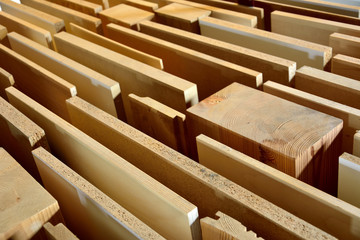
Global market of wood-based panels softened its growth

In 2016, the wood-based panels market grew to 408M cubic meters. After a slight reduction from 2008 to 2009, the market grew steadily through to 2016, however, the pace of growth decelerated over the last three years. In wholesale prices, the market accounted to $162B.

In value terms, the market showed a more pronounced dynamics – it contracted by 15% in 2009 and then recovered over the next two years with further upward trend. However, in 2015, the market dropped slightly and retained this level in the next year.
Plywood (155M cubic meters), particle board and OSB (119M cubic meters) and MDF/HDF (97M cubic meters) were the most consumed product categories, together making up 91% of global consumption in 2016. Consumption of veneer sheets (4%), hardboard (3%) and other fibreboard (2%) held small shares in the market.

The wood-based panels market is to reach 467M cubic meters by 2025

The shifting of potential market opportunities from developed countries to developing ones has been one of the main global trends in the wood based panel market over the last few years. While the economically mature markets of the U.S., Canada, and Western Europe are expected to have a modest pace of housing starts, the fastest growing Asian countries such as China, India, Indonesia, Vietnam are expected to continue growth due to rising urbanization and disposable incomes. The other emerging economies, such as Russia, Brazil, and Eastern Europe appear to have potential of growth, but it is restrained by lack of investments and the shrinking of consumer spending due to an economy slowdown.
The world economy is expected to experience fundamental changes, supported by decreasing oil prices, the slowdown of Chinese economy, and the deceleration of the world trade. However, the demand from downstream industries in largest consumer countries is forecast to remain positive, backed up by wide product use, increasing regional integration, and positive conditions for wood-based panel manufacturing. The Asia-Pacific region will remain a key growing market. Despite the slowing pace of construction in China, the expansion of China's economy continues to be significant, similarly to other rapidly-growing countries in the region (including Indonesia and Malaysia). The U.S. is also an important market, with a steady expansion in construction, combined with the stable levels of employment and the rising incomes, leading to an increasing demand for wood-based panels. In general, the global wood-based panel market is expected to continue to grow by +1.5 annually in the medium term which will lead the market size to 467M cubic meters by the end of 2025.

Wood-based panels output grew by 45% from the outset level

Production of wood-based panels reached 410M cubic meters in 2016, with an upward trend over the last seven years. This resulted into an increase of +45% from the outset level. In 2010, global wood-based panels overcame the pre-recession production level of 2007. In value terms, the production flattened at $161B in 2016 after a 7% drop recorded in the previous year; prior to that it increased robustly from 2010-2014.

China was a major producer of wood-based panels

China was the key world wood-based panels producing country with an output of about 204M thousand cubic meters in 2016, which accounted approx. for a half of total global output. The other major producers were the U.S. (8%), Russia (4%), Canada (3%), Germany (3%), Brazil (3%), Poland (2%) and Turkey (2%).
In China, production levels increased by +10.4% annually from 2007 to 2016, largely attributed to favorable economic conditions and growth of construction market. The other major producing countries showed mixed dynamics of wood-based panels output in physical terms. In 2007-2016 annual growth rates were especially high in Turkey (+6.5%) and Russia (+4.1%). Germany (-3.7%), Canada (-2.1%) and the U.S. (-1.1%) were major producing countries with an annual decline of wood-based panels output.

Approx. 21% of wood-based panels consumption is imported

Wood-based panels is a widely traded commodity. The share of imports in global consumption stood at 21% in 2016. Despite the fact that the share of imports decreased noticably by 7 percentage points over the last nine years, the market is still highly dependent on imports. High trade intensity is determined mainly by the substantial distances between the main centers of wood-based panels manufacturing countries and key consuming countries.

Particle board, plywood and MDF together made the vast majority of world exports

Particle board and OSB (29.9M cubic meters) and plywood (29.5M cubic meters) constituted the largest product categories in terms of exports, each comprising 34% of the total exports in 2016. Exports of these products recorded a slight growth in volumes from 2007-2016: the average annual growth rates stood at +0.8% and +1.0%, respectively. MDF/HDF lagged somewhat behind, accounting for a 19% share of total exports and expanding with a CAGR of +1.8% over the same period.

China and Canada are the leading suppliers of wood-based panels to global market

In 2016, the volume of global wood-based panels exports totalled 87.5M cubic meters, expanding robustly from the bottom point of 2009. In 2013, exports recovered from a slump caused by global financial crisis of 2008-2009 and then continued to increase gradually. In value terms, it fluctuated near $34B from 2011 to 2016.
China (14.8M cubic meters in 2016) and Canada (8.4M cubic meters) were the main global suppliers of wood-based panels with a combined share of 27% of global exports. Germany, with the share of 7%, Malaysia (6%), Russia (6%), Thailand (5%) and France (4%) were the other major exporters. From 2007 to 2016, Russia (+9.4% per year) emerged as the fastest growing supplier among the major exporters, followed by Thailand (+4.9% per year) and China (+3.3% per year). Meanwhile, exports from Canada reduced by -1.5% per year over the same period.

The U.S. continues to lead the globe in terms of imports of wood-based panels

The volume of global imports totalled 85.2M thousand cubic meters in 2016. In terms of dynamics, imports were generally in line with exports: these trade flows globally complement each other. In value terms, the total imports stood at $34.9B in 2016, this figure remained relatively stable over the last four years.
In 2016, the U.S. (12.9M cubic meters), Germany (5.6M cubic meters), Japan (4.2M cubic meters), China (3.5M cubic meters), Canada (3.4M cubic meters), the UK (3.4M cubic meters) and Italy (2.7M cubic meters) were the leading destinations of wood-based panels imports, together making up 42% of the global imports. Among the major importing countries China (+1.3% per year) gained the highest annual growth rates from 2007 to 2016. Despite a rapid acceleration in 2014-2016, the U.S. imports of wood-based panels still need to grow a bit more to regain its outset level. By contrast, Japan and the UK recorded a slight decrease with regard to imports, which contracted by -2.0% per year and -1.1% per year, respectively, from 2007-2016. In the other countries, imports remained relatively stable throughout the analyzed period.

Martco starts production at 750,000 m3/yr OSB plant in Corrigan, Texas

Martco’s new OSB plant in Corrigan, Texas, has been completed. On April 24, at 10:18 a.m., the 14 openings were loaded for the first time and the first 14 boards were produced concurrently.

In addition to the 12x26 ft multi-opening press, Dieffenbacher also delivered the 4-head forming station and the Flexoplan® forming line. Together with a press line in Oakdale, Louisiana, commissioned in 2006, Martco now operates two OSB multi-opening plants from Dieffenbacher. The new plant in Texas is designed to produce 750,000 m3 OSB per year.

Corrigan OSB, L.L.C. will complement Martco L.L.C.’s existing wood products manufacturing plants in Oakdale, La. (OSB); Chopin, La. (plywood); and Mexia, Ala. (lumber and timbers).

Based in Alexandria, La., Martco L.L.C.’s existing manufacturing facilities employ 1,100. All of Martco L.L.C.’s wood products are available Forest Stewardship Council (FSC) certified

Affordability and supply affect the US housing market

Multi-family housing construction drove the growth in housing starts in March, according to the latest data release by the U.S. Census Bureau and the U.S. Department of Housing and Urban Development.

Total starts were 11% higher than in March 2017, at a seasonally adjusted annual rate. Single-family starts fell in March but the number of permits for new houses is high and indicates future growth.

Existing-home sales grew for the second consecutive month in March. While demand for homes is up in the current economic environment, low supply and rising home prices hold back many would-be buyers, according to the National Association of Realtors. Moulding and trim market

Engineered wood and plastic moulding and trim are expected to gain market share in the U.S. over the next four years, but wood will remain the main material. Demand for wood moulding and trim is projected to increase 3.7% annually to US$5.5 billion in 2022, according to a new Freedonia market study (Moulding and Trim in the US by Material, Product, Market and Region, 7th Edition).

Wood will account for more than half of all moulding and trim sales in 2022, despite having the slowest growth rate of all materials. Engineered wood and plastic will grow at a faster rate because of cost and durability considerations.

New home construction and renovation, especially in single-family houses, as well as non-residential construction (office and institutional) will drive the growth in moulding demand. T he main market for wood is in residential construction and renovation, while commercial construction uses mostly metal. Office and institutional buildings use a range of materials for moulding and trim, including wood and engineered wood.

Pinnacle Renewable Holdings to export wood pellets to Japan

On May 2, Pinnacle Renewable Holdings Inc. released first quarter 2018 financial results, reporting it generated record first quarter revenue and announcing it has entered into new off-take contracts with customers in Japan.

During an investor call, Robert McCurdy, chief executive officer of Pinnacle, discussed three contracts Pinnacle entered into during the quarter with customers in Japan. The first is an off-take contract with Ube for 70,000 metric tons per year of industrial wood pellets, with deliveries scheduled to begin in late 2019. The second is a long-term, take-or-pay contract that was signed on April 23 with Tsusho Corp., a group member of Toyota. Under the Tsusho contract, Pinnacle will supply 30,000 metric tons per year of industrial wood pellets beginning in late 2021 for use in a Japanese power generation plant. Also on April 23, Pinnacle entered into a long-term, take-or-pay contract with Sumitomo Corp. for the supply of 75,000 metric tons per year of industrial wood pellets beginning in late 2022 for use in a thermal power generation plant in Japan that is being converted to run on biomass.

Leroy Reitsma, president and CEO of Pinnacle, briefly discussed progress being made at the company’s two new pellet plants. He said Pinnacle began initial production of wood pellets at its 400,000-metric-ton-per-year Entwistle plant on March 8. He indicated the first unit train shipment of wood pellets left Entwistle last week. Pinnacle also commenced construction on the 125,000-metric-ton-per-year Smithers plant on March 12. That project is 70 percent owned by Pinnacle and 30 percent owned by West Fraser Timber Co. Ltd.

Reitsma noted Pinnacle expects to continue to increase its production capacity through a variety of means, including improvement programs at existing facilities, expanded production capacity at existing plants, the development of new greenfield and brownfield production facilities, and potential acquisitions.

Pinnacle reported revenue of $71 million for the first quarter, up 4.7 percent when compared to the same period of last year. Adjusted gross margin was $14.9 million, or 21 percent of revenue, compared to $14.6 million, or 21.5 percent of revenue, during the first quarter of 2017. Net loss and comprehensive loss was $12.8 million, compared to $300,000 during the first quarter of last year. Adjusted EBITDA was $12 million, compared to $12.2 million during the same period of last year.

China to reduce tax on imported logs and to halt wood waste imports

According to a joint press release from the Ministry of Ecology and Environment, the Ministry of Commerce, the State Development and Reform Commission and The General Administration of Customs, the rules on wood waste imports will be changed.

An official notice ‘Adjustment of the Imported Waste Management Catalog’ has been released detailing which solid waste can no longer be imported As of 31 December 2018 banned waste include 32 kinds of solid waste such as scrap hardware, scrap automobile parts, smelting slag and waste plastic. A further group of products including wood residues will be banned as of 31 December 2019.

In July 2017 China laid out plans to gradually reduce the types and quantities of solid waste imported. The government aims to strengthen the criteria for solid residues and garbage to eliminate the entry of "foreign waste" into the country.

In the next step, the Ministry of Ecology and Environment, together with relevant departments, will ensure that the reform measures are effective and prohibit the entry of foreign waste.

Reduction in tax on imported logs

According to a recent statement from the State Taxation Administration, the value added tax on imported goods range between 11-17%, this will be adjusted down to a range of 10-16% The value added tax on imported logs will be reduced to 10% from 11% as of 1 May 2018.

Austria: Price of wood pellets falls in April

The prices for ENplus A1 certified wood pellets in Austria have dropped in April, due to seasonal reasons. 
The average price for pellets (order quantity 6 t) is currently 236.68 EUR/tonne.  This is 1.8% less than in March, but 3.2% more than in April 2017.
The pellet price index PPI 06 fell from 135.69 points in March to 133.21 in April.
While prices in Western Austria (Tyrol and Vorarlberg) have remained almost stable at 252.6 EUR/tonne compared to March, they have fallen significantly in the rest of the country to 234.22 EUR/t in the north and 235.1 EUR/t in the south.
Pellets in bags cost an average of € 4.05 per 15 kg bag when ordering a pallet or 26.99 cents / kg, 0.6% less than in March, but 2.2% more than in the same month last year.
Large commercial quantities (17t) cost € 203.87 / t excluding VAT in April. That is 1.4% less than in March but 3.6% higher than in April last year.

Barlinek plans to enter the US market

The Polish parquet manufacturer Barlinek apparently wants to expand into the USA. As reported by company circles, the company intends to open a sales office on the US East Coast in the near future.

Tests on the US market would therefore have shown a high acceptance of the Barlinek products with regard to the types of wood, the material thickness and because of the label "Made in Europe". The US market is more accustomed to average qualities, so that the Barlinek products would rather be located in the upper class.

Given the potential impact of the US customs dispute with China and high demand in the US construction and interior design markets, the company expects a successful market entry.

If we consider the possible repercussions of the tariff war with China and the strong demand on the US construction market, the Polish company should get comforting sales results.

Universal Forest Products buys four companies

Universal Forest Products recently acquired four companies with a combined $50 million in annual sales.

Matt Missad, CEO of Grand Rapids-based Universal Forest Products Inc., or UFPI, announced the four acquisitions in the company's first-quarter earnings call with shareholders.

Missad said UFPI is focused primarily on unit sales growth, but the deals are also expected to enhance its bottom line, which he said has been affected by recent “weather-related shutdowns” and the rising price of lumber.

We will continue to implement cost-saving initiatives as we integrate our recent acquisitions,” he said.

Terms of all four deals were not disclosed.

Great Northern Lumber

On Jan. 15, UFPI acquired Blue Island, Illinois-based Great Northern Lumber, a manufacturer of lumber and panel goods with a heavy focus on concrete forming and industrial products.

UFPI said the purchase will allow it to grow its “business and presence” in the Chicago area.

Spinner Wood Products

On Jan. 23, UFPI acquired Naches, Washington-based Spinner Wood Products, a manufacturer of wood bins and industrial products, such as pallets.

Its assets and business are being folded into UFP Washington, a UFPI subsidiary, and its real estate will eventually be sold.

UFPI said the move will “create efficiencies and broaden the customer and product base” for UFP Washington.

Expert Packaging

In early April, UFPI acquired Deer Park, Australia-based Expert Packaging, an industrial packaging manufacturer.

The acquisition expands UFPI’s footprint and customer base in Australia.

Fontana Wood Products

Also in early April, UFPI purchased the assets, equipment and machinery of Fontana Wood Products’ Clayton Supply facility in Fontana, California.

The facility manufactures components primarily for the manufactured housing industry. UFPI will move the acquired assets to its affiliate, UFP Riverside, in Riverside, California.

Prior '18 acquisition

The Business Journal reported in March UFPI signed an agreement to acquire certain assets of North American Container Corp., an industrial packaging manufacturer based in Georgia with sales of about $71 million in 2017.

That deal is expected to close June 1. Terms of the deal were not disclosed.

Financials

UFPI posted first-quarter net sales of $993.8 million, up from $846.1 million in the first quarter of 2017, a record increase of 17 percent.

The first three months of 2018 represented the 11th consecutive quarter in which the company reported record net sales and net earnings.

Universal Forest

Founded in 1955, Universal Forest Products is a holding company that provides capital, management and administrative resources to subsidiaries that supply wood, wood composite and other products to retail, construction and industrial markets.

Its affiliates are located throughout North America, Australia, Europe and Asia.

The company had 2017 net sales of $3.94 billion.

China: Expanding national forest reserves to fuel massive rise in timber imports

According to the State Forestry and Grassland Administration plans have been prepared for an expansion through planting and rehabilitation of National Forest Reserves.

This plan calls for enlarging the forest reserves by 7 million hectares by 2020 and aims to have 20 million hectares of national reserve forests by 2035. This should yield an increase of 200 million cubic metres of stock and an annual average increase of 63 million cubic metres of precious native tree species.

The national reserve forest will be multi-functional integrating of planting and cultivating industrial raw material, native tree species, precious tree species and large diameter timber. How will China satisfy its hunger for wood?

The easiest will be to import. China already increased timber imports massively: in 2016, China imported 51.19 million cubic meters of logs and 25.74 million cubic meters of lumber, an increase over the year 2000 of 2.8 and 6 times respectively. Imports of logs and sawn timber have the equivalent of 93.4% of China's domestic production. Chinese imports of logs&lumber account for more than one-third of the world trade, so there is a huge international pressure.

Moreover, export bans are expanding worldwide. For now, there are restrictions on 246 wood species in the world, and 86 countries and regions have imposed partial or total bans on export of logs. This is another cause for the scarcity of wood, which can become a threat to China's wood needs.

The Chinese total wood consumption reaches at the moment 539 million cubic meters of wood, nearly four times more than in 2000. The full cessation of comercial logging in natural forests would mean that timber production will be directly reduced by nearly 47.37 million cubic meters.

By 2020, taking into account the full stop of commercial logging in natural forests, population growth, urbanization and other factors, the gap might reach 300 million cubic meters of wood.

Plantation timber might be a solution

To offset the effects of the ban, China planned 14 million hectares of strategic timber reserves. In early 2013, China launched a forest reserve pilot program in seven provinces in the southern part of the country. With this move, in five to eight years, China might increase timber supply by 95 million cubic meters. Of these, one third will be covered by eucalyptus plantations, which have now reached an annual production of 30 million cubic meters. Up to now, the Chinese government plans to spend a total of 1.736 billion yuan to expand the strategic timber reserves.

However, by 2020, it is estimated that over 40 percent of China's wood demand will still have to be met by imports.

Forestry companies in Canada see great increase as share prices soar awaiting the lumber supercycle

The major forestry companies in Canada are experiencing important growth as their share prices increase, despite the trade dispute with the US and the shipments delays. This stock rally that began in 2017 has been welcomed in a sector which endured many economic downturns.

It’s a cyclical industry, and cycles come and go,” business magnate Jim Pattison, who owns nearly half of Canfor Corp. and more than 10 per cent of West Fraser Timber Co. Ltd., said. “The key is to take advantage of the cycles when the time comes.”

You go through a mill, and it’s a lot different [than] when you used to go through. New technology has moved in,” he added.

As reported by The Globe and Mail, analysts say forestry firms have invested heavily in new technology to become more efficient at sawmills, including the use of sensors and lasers to make the most of each log. The difference this time in the commodity cycle is that lumber in particular might be in the early stages of an extended rally.
Raymond James Ltd. analyst Daryl Swetlishoff said lumber producers are poised to enjoy what he calls a “supercycle” − a multiyear boom in which producers enjoy both high softwood prices and strong output at their mills. Also, since the beginning of 2017, the share prices for West Fraser Timber and Canfor have nearly doubled.

Swetlishoff added that the sector might experience some robust demand, tight supply and strong prices. “More recently, lumber prices have hit all-time highs as elements of the supercycle thesis have come to pass,” he said.

On the demand side, fears of reduced lumber orders from the U.S. due to the cross-border softwood dispute have proven to be overblown. In 2017, the U.S. Department of Commerce imposed final countervailing and anti-dumping tariffs averaging 20.23 per cent against most Canadian lumber producers., The Globe and Mail reported.

The lumber producers in Canada are currently passing the extra costs from the softwood duties to the US home builders.

“Railcar availability continued to be an issue for some mills but improvements in trucking availability were noted,” said RBC Dominion Securities Inc. analyst Paul Quinn, adding that transportation problems have hindered deliveries of wood products this year.

Don Kayne, Canfor’s chief executive officer, acknowledges the challenges with logistics bottlenecks. In the long term, he sees supply and demand being favourable for the lumber business, especially for B.C.-based producers such as Canfor that are able to export to Asia.

Without question, there is increasing demand for our products around the world, especially since 2016,” Mr. Kayne said in an interview, noting brisk orders from Japan, China and South Korea. “In North America, it has been slow growth but steady growth.

He added that the  institutional investors have sensed the optimism in the forestry sector. “There’s an increasing positive sentiment for our industry. Over the last 10 years, most Canadian companies have invested significantly in their operations to improve their competitiveness on a global scale. That’s helped a lot."

Resolute Forest Products Ltd. CEO Yves Laflamme, who replaced the retired Richard Garneau in February, said it boils down to operating more efficiently than a decade ago. “We’re pretty optimistic about wood. We have invested to do better with the same log, the same wood,” he said.

Canfor, West Fraser and Interfor Corp. have benefited from their U.S. lumber operations, while Resolute has pulp and paper mills south of the border. Interfor’s stock price has surged almost 80 per cent since the start of 2017, closing at $24.78 on Friday. But it hasn’t been a steady climb up for all Canadian forestry firms. Resolute has been on a roller coaster, including a ride down in February, when the Montreal-based company missed fourth-quarter profit expectations and also got hurt by lingering investor concerns about a shortage of truck drivers. Nevertheless, Resolute shares have risen 78 per cent since the start of 2017, closing at $12.73 on Friday, according to the Globe and Mail.

Resolute produces newsprint, but Canfor, West Fraser and Interfor do not. The U.S. Commerce Department hit Resolute with countervailing duties of 4.42 per cent against the company’s Canadian newsprint in January, but did not impose an anti-dumping tariff.

Resolute, Canfor Pulp Products Inc. and Domtar Corp. have announced price increases for pulp in North America, affecting northern bleached softwood kraft markets. “The strength of pulp markets in 2017 has continued in 2018 as producers continue to push prices higher,” Mr. Quinn said.

Japan’s lumber imports went up by 12.8% in Q1/2018

The average price for imported lumber in Japan increased 12.8% YoY, to $380 per m3 in Q1 2018. Moreover, the Japanese imports of lumber slipped 3.6% to 1.51 million m3, while the import value grew 8.7% to $573 million.

According to Japan Customs data, Canada, the biggest lumber exporter to Japan, has decreased supply by 6.0% to 426.4 thousand m3 for $170.8 million. The average price for Canadian lumber in Japan gained 17.1% to $400 per m3.

The Canadian's share in Japanese lumber imports dropped by 0.7 pp to 28.3%. Russia, the second-largest supplier, has exported to Japan 224.9 thousand m3 of lumber (+0.1%) for $79.2 million with average price of $352 (+2.2%) per m3, country’s share increased by 0.6 pp to 14.9%.

The average prices for lumber from Finland and Sweden have increased by 20.8% and 23.3% to $323 and $327, respectively. The lumber imports from Finland fell 5.5% to 246.8 thousand m3 with import value of $79.6 million, and imports from Sweden increased 2.0% to 212.6 thousand m3.

The lumber imports from Chile to Japan jumped 43.0% to 97.3 thousand m3 with average price of $279 (+4.1%) per m3. The lumber supply from U.S. decreased 2.6% to 57.9 thousand m3 with average price of $653 (+3.5%) per m3.

Timber industry in the UK faces “£1 Billion Pound Brexit Bill” if it walks out from EU Customs Union

The UK timber industry faces a potential “£1 Billion Pound Brexit Bill” if Britain leaves the EU Customs Union causing considerable problems for SMEs which makes up a majority of the sector.

Once the UK leaves the EU and its VAT area, VAT on EU imports will have to be paid up-front,” said Timber Trade Federation Managing Director David Hopkins. “Some 90 per cent of timber used in construction is imported from Europe, which British timber supplies are insufficient to replace.”

The TTF released a statement on Friday—what it calls ‘The Timber Tax Bombshell’—to highlight the potential delays, and greater costs for storing timber at ports and in administering customs checks and documentation.

The problems funnel down through the supply chain, including construction.

Builders’ merchants, and their builder customers, responsible for fulfilling government housing targets, rely on Just-In-Time deliveries of timber to premises and sites. Currently timber entering the UK from the EU clears ports immediately with no need for customs checks,” Hopkins stressed. “Over 60 per cent of the timber used in the UK comes from Europe.

The Federation is asking Government to ensure timber imports are able to clear customers in the same manner as present, with no delays or up-front costs likely to penalise SMEs, or to impact Britain’s housing supply chains.

The Government must also preserve the existing VAT payments system for imports from the EU, or put in place a new system which maintains the same benefits,” Hopkins added.

The timber sector currently employs around 200,000 people across the UK in manufacturing, distribution and construction. Every Parliamentary constituency benefits from jobs stemming from or connected to the timber industry.

Timber prices in the construction supply chain to small builders have already risen by eight per cent in the last 12 months, according to the Federation of Master Builders. The TTF reports this is due mainly to the currency depreciation since the Brexit vote, and competitive global markets for construction timber pressurising supplies into the UK.

Oceanwood buys whole capital of Norske Skog AS

Oceanwood has entered into a sale and purchase agreement to buy the entire issued share capital of Norske Skog AS.

Following a four-month competitive auction process, in which more than 100 prospective bidders were approached, Oceanwood emerged as the winning bidder by offering the highest value in cash for the shares and the intercompany loans.

The acquisition is subject to Oceanwood obtaining the relevant antitrust and other regulatory approvals in the countries concerned, including Australia and New Zealand, which is currently anticipated to take between four and six months to obtain.

Sven Ombudstvedt, the chairman of the board of Norske Skog AS, says: “This is one of the most important milestones for the Norske Skog Group in recent years. It concludes almost two years of relentless efforts and engagement to address the Norske Skog Group’s excessively levered capital structure. Oceanwood’s decision to acquire a majority position in the secured bond and subsequently the decision to initiate a sales process proved to be the key to resolving the stalemate that was threatening the future of the operating business.”

Oceanwood is an independent investment management firm founded in 2006.

Lumber market in the US driven by increased demand; prices boomed

The framing lumber in the US was mainly driven by an increased seasonal demand during last week. This made the prices go up in all species, with many setting all-time highs. 
The Random Lengths Framing Lumber Composite Price hit a new high of $525, rushing past its previous record of $513 set in early March. Buyers urgently sought coverage, but were frustrated by long mill order files and transportation problems. Railcar shortages remained particularly acute in Western Canada, followed by Eastern Canada.

Week
May 4
Week
Apr 27
Year Ago
2017
Random Lengths Framing Lumber Composite Price* $525 $506 $429
KD Western S-P-F #2&Btr 2x4 R/L Mill Price 598 565 403
KD Eastern S-P-F #1&2 2x4 R/L, delivered Great Lakes 654 640 485
Green Douglas Fir Std&Btr 2x4 R/L (Portland) 543 530 395
Southern Pine (Westside) #2 2x4 R/L 570 560 480
KD Coast Hem-Fir #2&Btr 2x4 R/L 590 570 425
Ponderosa Pine (Inland) #2&Btr 1x12 R/L 755 755 675
* Weighted average of 15 key items

Random Lengths Panel Market Report
Structural panel trading was more active, and prices posted modest gains. Sales of OSB picked up late in the week, although not all regions participated.
In the South, activity gained momentum as the week progressed. In Southern Pine plywood, warmer weather and an overall positive tone in commodity markets spurred another round of steady trading. Mills extended order files into late May.
Western Fir plywood trading was steady and a notch above the previous week's activity, as sales picked up Wednesday.

(f.o.b. mill prices) Week
May 4
Week
Apr 27
Year Ago
2017
Random Lengths Structural Panel Composite Price* $536 $532 $424
Southern (west-east) 15/32-inch 3-ply rated sheathing plywood 520-560 510-550 385-410
Southern (west-east) 15/32-inch 4-ply rated sheathing plywood 525-565 515-555 390-415
Western 1/2-inch 4-ply rated sheathing plywood 527 520 429
North Central 7/16-inch Oriented Strand Board 410 405 333
*Weighted average of 11 key items

Market role of EUTR and FLEGT licensing

A key question for the long-term future of the EU trade in tropical timber products is the impact of the EU Timber Regulation (EUTR).

This is particularly true of suppliers in those tropical countries, like Indonesia, that have a Voluntary Partnership Agreement (VPA) with the EU and are seeking an assurance that FLEGT licensed timber will benefit in the market from the “green lane” offered by EUTR.

FLEGT licensed and CITES certificated timber products are the only products recognised by EUTR as requiring no further checks by EU importers to ensure their legal status.

For those suppliers of tropical timber products that are not FLEGT licensed, there are key issues surrounding the types of information that the EU importers will accept as assurance that there is a negligible risk of illegal harvest.

These issues have been highlighted in recent weeks by the prosecution of one UK importer for a failure to comply with EUTR in relation to sawnwood imported from Cameroon. The prosecution was solely focused on the company’s due diligence systems relating to its purchases of FSC-certified ayous from Cameroon in January 2017.

Although the prosecution acknowledged that none of the material imported was from an illegal source, the company was found guilty of failing to adequately check the legality of the timber when placing it on the market.

The company was fined £4000 in the second successful EUTR prosecution in the UK. The first was last year when a designer furniture retailer was fined £5000 for importing a sideboard from India without carrying out the required due diligence assessment.

Commenting on the latest prosecution, a representative of the British Woodworking Federation said: “Companies bringing timber products in directly from outside the EU need to have their own due diligence system in place even for one-off transactions and cannot rely on suppliers to carry this out on their behalf.

“This must include information about the supply of timber products, an evaluation of the risk of placing illegally harvested timber and timber products on the market and necessary steps to mitigate this risk; for example additional information and third party verification”.

“Simply bringing in FSC, PEFC or similar Chain of Custody certified timber is not enough to satisfy the due diligence requirements for these importers, although FLEGT licenced timber would suffice.”

In practice, given the extra due diligence steps required to import even FSC certified timber into the EU market, EUTR should offer significant market advantages to tropical suppliers of FLEGT licensed timber.

At present that applies only to Indonesia, which has licensed timber for the EU market since November 2016. The latest data from the FLEGT Independent Market Monitor, hosted by ITTO, suggests that this market advantage may be filtering through into a rise in EU trade with Indonesia for product groups like plywood and decking that have been an immediate focus of EUTR enforcement activity.

There has been quite a sharp increase in EU imports of Indonesian plywood since November 2016, lending support to anecdotal reports of EU plywood importers being encouraged to stock more Indonesian product due to licensing. EU imports of decking products from Indonesia were sliding in the first half of 2017 but recovered in the second half of the year.

However, it would be a mistake to attempt to attribute these trends to a single cause, even one so significant as a regulation applicable to every company placing timber on the market in the EU. An increase in trade can be expected in a year when the EU economy began to grow more strongly after a long period of slow growth following the European debt crises.

It’s also apparent that the rise in trade with Indonesia during 2017 was not universal across product groups. EU imports of wood furniture from Indonesia were flat during the year, while imports of Indonesian flooring and glulam declined.

The combination of EUTR and FLEGT licensing offer an immediate opportunity for Indonesian suppliers to retake share in those sectors – like decking and plywood - where Indonesian products are familiar to EU importers and already favoured for their strong technical performance, but where demand has been dampened by concerns over the legality of wood supply.

However, in isolation, FLEGT licensing is less likely to generate immediate benefits in those high value sectors like furniture and joinery where the specific technical and environmental features of Indonesian wood products have been less significant barriers to competitiveness than wider issues such as labour costs, red tape, logistics, processing efficiency, innovation, and marketing.

In these sectors, increasing share may well be achieved if FLEGT licensing is combined with market development initiatives to improve the international competitiveness of Indonesian wood manufacturers across a wider range of issues, although this is likely to take time.

US EPA declares biomass energy carbon neutral

The federal Environmental Protection Agency (EPA) has declared biomass from managed forests as carbon neutral when burned for energy production.

The agency noted that the decision was not based on scientific evidence or recommendations by the independent Scientific Advisory Board, who was tasked in 2011 to establish a factor for carbon emissions from the entire life cycle of biomass feedstocks for electricity generation.

Forest industry groups such as the American Wood Council have welcomed the announcement. At the same time the effect on biomass energy use in the U.S. is unclear because many states have their own policies on biomass use for renewable energy.

Environmental groups have criticized the declaration given the Science Advisory Board’s finding that not all wood biomass is carbon neutral. The National Resources Defense Council noted that the EPA and the federal government lack jurisdiction over the regrowth of most U.S. forests and therefore cannot guarantee that the biomass grows back.

German sawmills are lacking hardwood, due to booming log exports to China

German sawmills are currently lacking hardwood. The reason is the increasing export of logs to China.

In 2017, according to Eurostat, the exports of logs to China amounted to around 456,000 m3, with an upward trend. In January and February 2018, exports of beech logs to China increased by a further 20% to 95,000 cubic meters compared to the same period of the previous year.

Even more dramatic is the development of oak logs exports, that alarmed the DeSH. The export quota almost tripled between January / February 2017 and January / February 2018 (+173%) from 6,800 to 18,500 cubic meters. So far, the oak has hardly played a role in the exports, since demand and prices in the country were high anyway.

While sawmills in France have been pushing barricades for years against the export of logs and the resulting shortage of domestic plants, in Germany it has been quiet so far.

But now the DeSH notes an obvious imbalance in the hardwood lumber supply: "The demand for hardwood, doesn't correspond with the speed of extraction of raw materials. The supply situation, combined with the bad weather conditions and resulting problems in the timber harvest puts domestic sawmills into difficulty," says DeSH CEO Lars Schmidt.

Without adequate supply of raw materials, it would be difficult to further develop the use of hardwood for domestic purposes. It was generally agreed with the forest owners in joint meetings that the regional principle should have priority in the value added to wood.

The effects of Far East exports are felt particularly in Belgium, Germany and France. In the past decade, 350 hardwood sawmills had to close, 90 of them in Germany.

Meanwhile, the EU Commission is alarmed. At the end of 2017, the European Sawmills' Association EOS announced in a letter the principles of resource efficiency and circular economy enshrined in EU law. Support had come from Patrizio Pesci, Member of the European Economic and Social Committee. He complains about the different customs and tax regulations for round and sawn timber. Processed wood, and thus the domestic added value, is thereby disadvantaged. Concrete measures have been missing so far.

Schmidt sees a momentous bad development in the local forestry and timber industry: "It is ecologically and economically questionable if we miss the opportunity to process our raw materials in our own country."

Newsletter

Subscribe to our digital newsletter for your daily digest of essential news, views and analysis from the international wood industry delivered directly to your inbox.


0