Article archive

Resolute Forest Products to invest nearly 13 million in La Doré wood products facilities in Canada

Resolute Forest Products Inc. announced major investments totaling $12,956,700 in its La Doré wood products facilities, located in the Lac-Saint-Jean region of Quebec

The investments will be used to integrate new technologies into the manufacturing processes in order to sustain the facilities' continuously enhanced performance in an ever-changing competitive environment. Also through these investments, energy efficiency will be improved as operational processes are modernized.

"This is a significant investment for the future of our La Doré facilities," said Yves Laflamme, president and chief executive officer. "We can count on innovation, regional solidarity and the pride our people have in their work to overcome the challenges facing our industry."

Resolute employs close to 250 people at the La Doré sawmill, planer mill and finger-jointing facility, and more than 2,000 in the Saguenay–Lac-Saint-Jean region.

"We will rebuild the infeed section of the sawmill and add multiple programmable logic controllers, allowing the potential of each log to be better identified, used appropriately and optimally cut," explained Gilbert Demers, division vice president, Wood Products – Sawmills and Engineering. "We are also initiating the launch of a new lumber packaging system in the planer mill, using prototypes developed by manufacturers from the region. Finally, we are completing the project by adding two new electric boilers in order to generate the quantity of steam required for drying."
MeisterWerke takes over 100% shares of Hain Natur-Böden

MeisterWerke Schulte GmbH, leading provider of hard floor coverings from Meiste in the Sauerland, Germany, has taken over the family-run Hain Natur-Böden company – the specialist in untreated wooden floors from Rott am Inn.

Guido Schulte, majority shareholder of MeisterWerke in his third generation said that, “With this investment we are pursuing our strategy to sustainably incorporate ‘made in Germany’ innovation and quality in a changing market. We have great respect for the entrepreneurial achievement of the Hain family – and we are linked together through our values.

This is confirmed by Susanne Hain, Managing partner of Hain Industrieprodukte Vertriebs GmbH, also in her third generation. “As a traditional family-run company, belonging to another strong family-run company in the industry ensures our options for the future, our expertise and our self-image – and that is surely the best way to fulfil our responsibility towards our employees, location and partners in the market.”

The two companies will continue to be run independently, and the locations will continue to survive. This way MeisterWerke will continue to develop its position as a proficient specialist company operating as a full-range trader and manufacturer under the successful Meister brand.

As Ludger Schindler, MeisterWerke Managing Director alongside Guido and Johannes Schulte, pointed out, “the most recent example of this is our new design flooring platform. It shows once more how we set the trends with our range – the same way as we have been doing in our market for over 80 years."

The company currently employs 675 people at its Meiste location, supplies 70 countries all over the world and provides mouldings, panels and accessories in addition to floorings.

Hain Natur-Böden concentrates on its successful range of parquet floorings. As a factory for untreated wooden floors with 100 different surface variations alone, it provides consistently sustainable production – from its own sawmill to the finished planks – and ensures premium quality in intricate processes. This justifies the trust from customers from residential and commercial areas all across Europe.

The ultramodern production facilities at the Rott am Inn location and in Slovakia, with 200 employees between them, enables the company to tackle individual market demands in a very flexible way.

Susanne Hain, who remains there as managing director, said that “We are, and shall remain, the same reliable partner for our customers and suppliers that we have been for almost 30 years.”

MeisterWerke sees synergies in this cooperation above all in the parquet flooring area. As Guido Schulte put it, “Hain has developed an incomparable expertise above all through its integrated production process. That guarantees the success of the company itself, but it can also bring a valuable transfer of know-how for MeisterWerke. The company from Meiste also sees opportunities in the joint sourcing of raw materials and covering layer finishing. By the same token, Hain can benefit from the extensive experience of MeisterWerke in the digitisation of processes and markets."

Guido Schulte went on to say that “Our market will be changing a great deal in the next few years. So digitisation, internationalisation and alignment towards new customer groups will need the backing of a long-standing company culture, capable employees and sustainable structures. Now we can continue to develop this solid basis together.

Finnish domestic roundwood consumption reaches record level in 2017

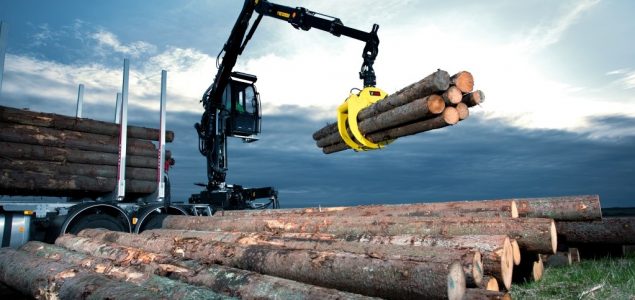
The amount of roundwood consumed in the manufacture of forest industry products increased in 2017 for the fifth year in succession, being the highest in ten years. Forest industries processed more domestic roundwood than ever before, while the consumption of imported roundwood continued to decrease.

The domestic content of roundwood consumed by the forest industries in 2017 was the highest in nearly 40 years. Of different industries, the highest amount of roundwood was consumed in the chemical pulp industry.

In 2017, the forest industries’ roundwood consumption totalled almost 70 million cubic metres, which was three per cent more than a year earlier. The consumption of roundwood was at its highest in 2006, when it amounted to 76 million cubic metres. The consumption of forest industry by-products, mainly sawmill chips and dust, in the manufacture of forest industry products amounted to nearly ten million cubic metres, says Esa Ylitalo, Senior Statistician from the Natural Resources Institute Finland (Luke).

Domestic content at its peak

The forest industries processed 62 million cubic metres of domestic roundwood. This amount was three million cubic metres or six per cent more than in the previous year and more than ever before. Instead, the consumption of imported roundwood continued to decrease, dropping by 12 per cent from the year before to less than eight million cubic metres. According to Ylitalo, the domestic content of roundwood consumed by forest industries –90 per cent of the total consumption – was the highest in nearly 40 years.

Most roundwood consumed by the chemical pulp industry

The consumption of roundwood increased from the previous year in all forest industry branches and in all assortments. The chemical pulp industry consumed the highest amount of roundwood, nearly 33 million cubic metres. This was the highest amount recorded in the history of the industry. The total consumption in the sawmilling industry increased to 26 million cubic metres. The most important roundwood assortments were pine pulpwood at 17 million cubic metres, followed by spruce logs at 14 million cubic metres.

The highest increase in Central Finland

One fifth of roundwood, or 14 million cubic metres, were consumed in the region of South Karelia. It was followed by the region of Kymenlaakso with its consumption of more than seven million cubic metres. In Central Finland, the consumption of roundwood increased to more than six million cubic metres, showing an increase of one fifth or one million cubic metres from the year before, Ylitalo says.

New Zealand log exports recover after Chinese New Year

The export log market in New Zealand picked up after the slowdown ahead of the Chinese New Year period. Thus, traders forecast a good outlook for 2018.

As reported in the latest AgriHQ forestry market report, the country's log export volumes in February were 1.6 percent ahead of the three- month average and 18 percent up on the same time last year as weaker exports to India and South Korea were offset by strong exports to Japan and China. Lumber exports also picked up, with February export volumes up 25 percent on the same time last year, driven by strength in China and the US.

The log trade into China, which is the largest log market for New Zealand, reduced during February. The imports were down 32 percent on the three-month average and 14 percent below the same time last year because of disruption due to Chinese New Year celebrations.

The same thing happened for lumber imports, which were down 18 percent on the same time in 2017 and 34 percent below the three-month average.

Still, New Zealand's softwood log exports have picked back up following a slowing of the market prior to the Chinese New Year, AgriHQ analyst Reece Brick said in his April report under the heading '2018 log exports off to a good start'.

"Import levels witnessed in February hold very little credence for coming months. It is forecast for log and lumber inputs to remain strong or to increase further on past years," Brick said. "If the past month is any indication then 2018 should be another good year for the export log trade. Any post-Chinese New Year jitters have essentially disappeared as the port-level log offtake has risen to the level required to keep the market sturdy."

Brick noted buyers in China are becoming more selective about their logs based on the fairly large volume of logs still on port, with the AgriHQ Log Price Survey showing lower value logs held at levels near to a month ago while better quality logs trended upwards.

He said higher shipping rates and a higher local currency were weighing on the export log market through March and early April, although he noted these appeared to be short-term issues and overall the export log market remains in a "healthy position".

"Each of the main export markets are still showing positive levels of interest which has log traders optimistic that the highs of the past 12 months or so can be repeated again throughout 2018."

Brick said competition with the export log market was still driving contract negotiations in New Zealand's domestic market and holding the market solid across the board.

"Mills hoping for a reduction in log prices look like they’ll be out of luck for at least the next few months," he said. "Domestic log demand remains solid, more so on pruned logs than unpruned, while overseas markets are continuing to absorb any product coming out of NZ with relative ease."

US lumber prices on the rise at the end of April

Framing lumber trading in the US rapidly increased during last week, while producers reacted with a firmer stance and higher quotes.
Spring weather breaking out across the continent was a major factor. Buyers in the northern tier states and Canadian provinces showed more urgency to get in line for supplies that, if not tight, were quoted with longer-than-usual shipping times.
Solid gains in prices pushed the Random Lengths Framing Lumber Composite Price up to $506.

Week
Apr 27
Week
Apr 20
Year Ago
2017
Random Lengths Framing Lumber Composite Price* $506 $498 $435
KD Western S-P-F #2&Btr 2x4 R/L Mill Price 565 556 404
KD Eastern S-P-F #1&2 2x4 R/L, delivered Great Lakes 640 630 490
Green Douglas Fir Std&Btr 2x4 R/L (Portland) 530 530 395
Southern Pine (Westside) #2 2x4 R/L 560 554 495
KD Coast Hem-Fir #2&Btr 2x4 R/L 570 560 425
Ponderosa Pine (Inland) #2&Btr 1x12 R/L 755 755 665
* Weighted average of 15 key items

Random Lengths Panel Market Report
A modest pickup in structural panel sales was confined primarily to plywood. Price trends in OSB showed little change, with most regions holding to last week’s levels. Small adjustments in both directions were reported in selected areas.
Southern Pine plywood sales were steady. Buyers grew more eager to secure coverage once mills established order files into mid-May. Some western Fir plywood traders reported steady sales, but others reported an uptick on Wednesday that carried through the rest of the week.

(f.o.b. mill prices) Week
Apr 27
Week
Apr 20
Year Ago
2017
Random Lengths Structural Panel Composite Price* $532 $529 $426
Southern (west-east) 15/32-inch 3-ply rated sheathing plywood 510-550 500-545 387-410
Southern (west-east) 15/32-inch 4-ply rated sheathing plywood 515-555 505-550 392-415
Western 1/2-inch 4-ply rated sheathing plywood 520 520 441
North Central 7/16-inch Oriented Strand Board 405 405 333
*Weighted average of 11 key items


Biggest lumber companies in North America increased production in 2017

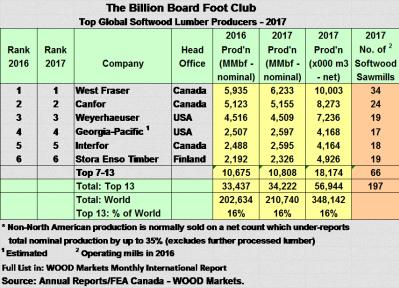
The annual Wood Markets’ “Billion Board Foot Club” list of top global lumber companies showed further gains in production by 10 of the 13 companies making the list in 2017 (as compared to 2016 output).

Three companies recorded output declines despite robust U.S. – as well as export – market demand (this was due mainly to timber supply issues in the B.C. Interior, the U.S. West and Chile).

The largest North American firms increased their output, mainly because of mill capex programs or shifting at existing operations.There was only one major sawmill company acquisition in 2017: West Fraser’s purchase of Gilman. The average rise in production was only 2.3% for the 13 companies on the list — a slower pace than in the last three years.

The list is based on companies with reported softwood lumber production exceeding one billion board feet (bf) on a nominal basis (or, for mills outside North America, more than ~2.3 million m3). Eleven of the companies that made the list since 2005 did so again in 2017. The breakdown is as follows:

Eleven North American companies (six headquartered in Canada and five in the U.S.);
One European company; and
One South American company.

The total output of these 13 firms was 34.2 billion bf nominal (57 million m3 net) in 2017, an increase of 1.3 billion bf from 2016’s 33.4 billion bf (+2.3%). This compares to total global lumber production growth of about 4% (+3.4 billion bf net) over the same period. In 2016, the global market share of the largest 13 sawmilling companies remained at 16% (where it’s been since 2012).

Four of the top ten largest firms are based in B.C. (West Fraser, Canfor, Interfor and Tolko), with the first three holding substantial sawmilling assets in the U.S. Collectively, these three companies own 45 sawmills in the U.S. (versus 31 in Canada). The other company with sawmills in both the U.S. and Canada is Weyerhaeuser (3 mills in Canada and 16 in the U.S.).

These four companies have a total of 18.5 billion bf of production at 95 mills, with 34 in Canada and 61 in the U.S.Despite a dramatic increase in U.S. prices in the fourth quarter of 2017, Canadian mills decreased their shipments to the U.S. by 4.9%; exports to all other markets fell as well.

Despite duties of 20% commencing in late December 2017, U.S. lumber prices soared as a result of supply-chain constraints that slowed shipments.West Fraser remained the largest global softwood lumber producer for the tenth year in a row. The company operated a total of 7 SPF mills in B.C. (34% of company capacity), 6 SPF mills in Alberta (23%), and 21 SYP mills in the U.S. South (43% of capacity).

Total lumber output for the year was 6.23 billion bf, a gain of 5.0% from 2016. Its 34 sawmills have 7.2 billion bf of capacity (4.1 billion bf in SPF and 3.1 billion bf in SYP).Canfor stayed at #2 with 5.16 billion bf of output. Production was only slightly higher (+0.6%) in 2017 as the company integrated and modernized three 2015 acquisitions made in the U.S. South.

Canfor operated 24 sawmills with a total capacity of 5.5 billion bf, with its 11 mills in the U.S. South comprising 27% of total output for the year. It has 13 SPF lumber mills in Western Canada (12 in B.C. and 1 in Alberta) that make up 73% of production. A rising proportion of Canfor’s lumber production is comprised of specialty products.

Weyerhaeuser remained in third spot in 2017 with 4.51 billion bf of output, almost even with 2016 (-0.2% from 4.52 billion bf). Weyerhaeuser operates 16 sawmills in the U.S. (11 in the South; 5 in the Northwest) and 3 in Western Canada. Its total lumber capacity is 5.0 billion bf, and it achieved the highest average lumber output per mill (237 million bf) of all the firms on the list.U.S.-based Georgia-Pacific, a private company, remained at #4 with output of ~2.6 billion bf (+3.6%) at 17 sawmills (15 in the U.S. South).

Vancouver-based Interfor was at #5 and almost tied for fourth spot. It produced almost 2.6 billion bf in 2017, an increase of 4.3% from 2016. It operates 9 sawmills in the U.S. South and 4 in the U.S. Pacific Northwest, with 5 in B.C. (Coast and Interior regions). Interfor’s total mill count is 18, with lumber capacity of 3.0 billion bf (64% in the U.S.; 44% in the South). In 2017, Interfor’s U.S.-based mills represented 66% of overall company production.

On a board foot basis, Stora Enso remained at #6 spot with 2.33 billion bf “nominal” in sawnwood deliveries from 19 mills in nine European countries (+7.2%). As we’ve noted before, Stora Enso is actually the fourth-largest lumber producer when lumber is more correctly counted on a “net” basis (it shipped 4.9 million m3 on a net basis).Of note, several companies — Weyerhaeuser, Canfor, Georgia-Pacific, Interfor and Tolko — have announced expansions or new sawmill projects to be implemented over the next few years, so the big companies will continue to get bigger.

As we indicate each year, most non-North American mills produce lumber that is sold on the actual (or net) size of lumber produced; their North American counterparts sell lumber on a nominal basis (e.g., 2×4 is actually 1.5” x 3.5”). As a result, if the rankings are viewed on a cubic-metre, net-size basis, non-North American mills have higher output in terms of solid wood — a more accurate basis on which to make comparisons (e.g., on a net-cubic-metre basis, Stora Enso is technically #4, not #6).


Increased lumber prices in the US offsets the duties on Canadian softwood

The American lumber consumers are starting to feel the effects of the import duties on Canadian softwood. The strong demand for wood and the record market prices that have taken place one after the US imposed the tariffs on Canadian softwood lumber still hasn't affected the Canadian producers.
In 2017, Canadian lumber producers handed over more than $200 million to the U.S. government to cover duties of about 20 per cent of the value of all exports and with no sign a deal will be struck to end the dispute any time soon, hundreds of millions more will be deposited in 2018 as well, iPolitics reported.
Given the fact that the US housing starts were higher than they have been in a decade last year, the prices for many lumber products have amounted to record highs, which have offset the duties. Yet, as Derek Nighbor, president of the Forest Products Association of Canada, said, the strong demand from the US doesn't mean any layoffs or mill closures directly related to softwood in 2017, even if the last softwood dispute included 20,000 US forestry workers to be laid off, along with 400 sawmills being closed.
As iPolitics reported, the government’s $867-million aid package to help the industry through the dispute hasn’t been tapped into much because the companies haven’t needed the help. The federal government’s negotiations on softwood have been very quiet, partly overshadowed by the larger talks on the North American Free Trade Agreement and partly because the industry faces more urgent concerns like pests, forest fires and rail car shortages.

Weyerhaeuser reaches $269 million net sales in Q1/2018

Weyerhaeuser reported Q1 2018 net earnings of $269 million (+71.3% YoY) on net sales of $1.87 billion (+10.2%).  Adjusted EBITDA for the first quarter was $544 million compared with $454 million for the first quarter of last year and $551 million for the fourth quarter of 2017.

"I am extremely pleased with our first quarter performance, as we fully capitalized on strong lumber, OSB and Western log markets to drive outstanding results, including the highest first quarter Wood Products EBITDA on record. This includes exceptional work by our teams to mitigate the effect of ongoing freight service disruptions," said Doyle R. Simons, president and chief executive officer.

"Looking forward, we are relentlessly focused on capturing the full benefit of improving housing starts and favorable market dynamics to drive value for shareholders."

According to the company, in the West, domestic and export log sales realizations improved compared with the fourth quarter, and forestry costs declined seasonally. In the South, seasonally lower fee harvest volumes were offset by slightly higher average sales realizations, lower unit logging costs and reduced forestry expense.

Company’s sales volumes increased across most wood product lines compared with the fourth quarter due to seasonally higher demand, and operating rates improved. Higher average sales realizations for lumber and engineered wood products were partially offset by lower average sales realizations for oriented strand board and increased Western log costs.

First quarter Adjusted EBITDA in Wood Products segment includes charges of $5 million for countervailing and anti-dumping duties on Canadian softwood lumber.

Graanul Invest will rebuild lines for wood pellet production in Latvia

SIA Graanul Invest has concluded an agreement No. 4.1.1.0/17/A/029 with the Central Finance and Contracting Agency of Latvia and the Ministry of Economics of the Republic of Latvia on the realization of the project “Rebuilding wood pellet production lines in SIA Graanul Invest.”

According to the announcement, the aim of the project is to rebuild existing wood pellet production lines to reduce energy consumption in the production process and ensure production capacity increase.

Result of the project will be reduction of energy consumption in the production process and increase of production capacity, consumption of electricity will be reduced by 20.08% per ton of pellets and the total energy savings of 4 559 MWh per year.

The total amount of Cohesion Fund financing is EUR 600,600.00.

Earlier, Graanul Mets acquired forestry company Karo Mets in Estonia.

Graanul Invest is active in the fields of forestry, development of bioenergy and production of renewable energy. It is the biggest producer of wood pellets in Europe, which operates  11 large and modern pellet factories, two sales organisations, four combined heat and power plants (CHP plants) and three companies engaged in forest management and harvesting. AS Graanul Invest employs 501 persons.

European Parliament supports CO2 cuts as to fulfill Paris climate targets

CO2 emitted by transport, farming, buildings and waste must be cut by 30% across the EU; CO2 emitted and absorbed by forestry and land use must balance out, by 2030.

These are the aims of two draft EU laws adopted on Tuesday.

EU targets are to be turned into binding national targets for sectors which are not covered by the current EU Emissions Trading Scheme, i.e. agriculture, transport, building and waste, which together account for about 60% of the EU’s greenhouse gas emissions.

These cuts will contribute to meeting the EU’s overall collective pledge, under the Paris Agreement on climate change, to deliver a 40% cut in greenhouse gas emissions in all sectors, from 1990 levels.

We have done our best to agree an ambitious European climate action regulation, despite the attempt of many EU governments to undermine ambition” said lead MEP Gerben-Jan Gerbrandy (ALDE, NL). “Thanks to pressure from the Parliament, we have succeeded in lowering the allowed carbon budget with the emissions of about four million cars. European governments will have to do more, and they will have to do it earlier. Delaying climate action is no longer possible, this regulation requires all governments to speed up green investments to tackle emissions from agriculture, transport, waste and buildings.” he said.

Forestry as a tool to counter climate change

Parliament also adopted a separate law, aiming to cut greenhouse gas emissions from land-use and forestry and boost the level of emissions absorbed by forests as a way to tackle climate change. Currently, EU forests absorb the equivalent of nearly 10% of total EU greenhouse gas emissions each year.

The proposed law would lay down rules under which EU countries have to ensure that deforestation is balanced by planting new trees, and sets measures to develop the sector in order to boost CO2 absorption by forests, croplands and grasslands. MEPs bolstered these provisions by adding that from 2030, member states should boost CO2 absorption to exceed emissions, in line with the EU’s long-term objectives and the Paris Agreement.

LULUCF is about the positive contribution of agriculture and forestry to combating climate change” said rapporteur Norbert Lins (EPP, DE). “Parliament has worked to strike a balance between flexibility and comparable accounting rules for the 28 Member States. I am convinced that we have succeeded in strengthening the bioeconomy - wood for house building, furniture and bioenergy (...) With this legislation we are sending out a signal: we want our forests in Europe to continue to be managed sustainably. We want to continue to maintain strong forestry in Europe.” he said.

Next steps

The legislation on effort sharing was adopted with 343 votes to 172 and 170 abstentions, while the text on LULUCF was adopted with 574 votes to 79 and 32 abstentions. Both texts need Council´s formal approval before entering into force.

Norwegian sawmils invest heavily in expanding lumber production

Three Norwegian sawmils have chosen to invest in lumber kilns from Valutec for a total order value of more than SEK 40 million. Kjeldstad and Gran Tre are investing in batch kilns and Bergene Holm is investing in three continuous kilns with a total capacity of 120,000 cubic meters (50,800 MBF) annually.

Valutec was chosen as the supplier based on a combination of good references, technical solutions, a good project organization and a short build time,” said Bergene Holm and Johan Mörland director of the division in Nidarå in connection with the announcement of the deal.

The investment is the second step in an investment program that previously included a new lumber intake and saw line. The new continuous kilns will be built in the latter part of 2018 and commissioned in the first quarter of 2019.

Gran Tre KS, more than 80 km (50 miles) north of Oslo, is also in the middle of a strong growth phase after merging with the larger group Gausdal Bruvoll at the beginning of the year. Gran Tre is planning on increasing its production by 50 percent and therefore chose to invest in two forklift-fed batch kilns.

Today, we have three batch kilns and undercapacity. In connection with this investment, we will increase our drying capacity by almost 100 percent and will instead have overcapacity. The drying should not be a bottleneck,” says Finn Hoel, CEO of Gran Tre.

In total, the sawmill’s capacity will increase from today’s 60,000 cubic meters (25,400 MBF) of lumber per year to around 90,000 cubic meters (38,100 MBF). Gran Tre chose Valutec’s complete solution, as well as the advantages of using Valutec’s control system Valmatics.

We want to get a better and smarter control system where we can optimize based on more parameters. It’s very important to have control of the drying processes; it’s the trickiest process we have. Branches, fibers and all of the input moisture ratios mean that no two boards are alike and that’s the challenge,” says Finn Hoel and adds that commissioning will take place at the end of the year.

Kjeldstad’s investment involves a batch kiln for the mill in Stören.

We see many long-term investments in Norway, Sweden and Finland. There are good reasons to believe in a trend where wood can continue taking market shares from other materials,” says Jon Lindberg, Sales Manager at Valutec.

Overview of the Russian wood based products market

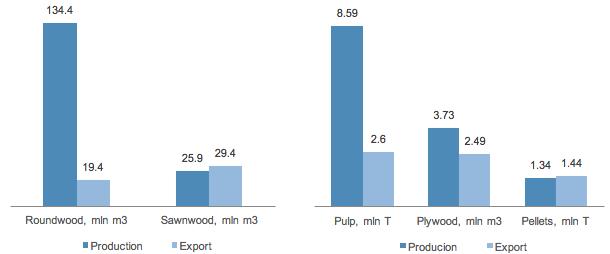
The main wood based products in Russia have met a growing demand once with more favorable export markets in 2017. 

As shown in the 'Russian Forest Based Industries in 2017' report, the turn of the Russian economy from a recession to growth (GDP grew by 1.5%) led to a revival of demand for products aimed at the domestic market.In 2017, Russia sharply increased the import of woodworking machines (+ 60.7%) after a decline in 2016 by 15.6%.

This may indicate that the wood processing companies have adapted to the current exchange rate of the national currency. Investments in fixed assets in the production of paper and paper products increased by 33.3%, and in wood processing (excluding furniture production) - by 5.5%.

The process of changing the structure of exports from raw materials to wood processing products continues: in 2017, log exports from Russia decreased by 1.6% with an increase in lumber exports by 10.1%. The largest external consumer of Russian forest products is China. In 2017 the share of the country in the Russian exports of logs was 66%, in the exports of lumber - 55%, in the supply of pulp - 58%.

Overproduction in the Russian MDF market has led to an increase in exports of these products in 2017 by 36.1% compared to 2016 and almost 2-fold relative to the level in 2014.

Growth (+34.1%) of production of pellets in Russia in 2017 in the coming years will continue at a rapid pace, as both Russian and foreign companies are planning to launch new production facilities.

The increased attention of the state to the development of the forest based industries in 2017 and the beginning of a number of incentive measures for the development of wooden housing construction can contribute to the growth of demand for lumber in domestic market in the perspective of 3-5 years.

The development of Internet commerce in Russia weakly stimulates demand for cardboard packaging inside the country. The manufacturers of cardboard packaging in China win from the growth of Russian Internet trade. China accounts for 90% of goods purchased by Russians on the Internet.

Expanded sales of EU tropical wooden furniture but market share drops

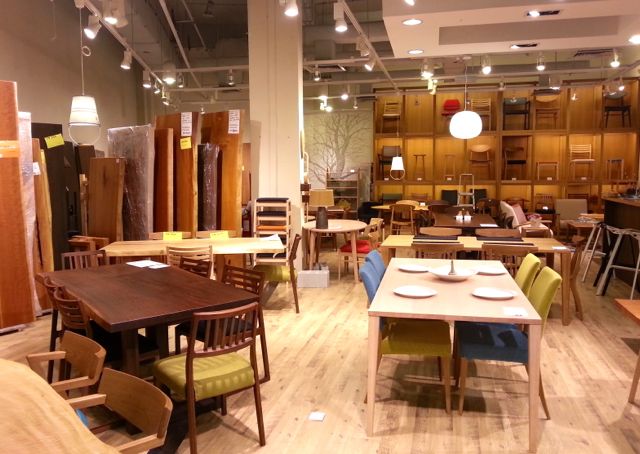
There was plenty of tropical wood furniture to be found at the first two big European furniture exhibitions of 2018 – the IMM interiors fair in Cologne, Germany (IMMCologne), and the January Furniture Show at the NEC in Birmingham, UK (JFS-Birmingham).

At the German and UK shows, plantation teak and mahogany furniture made a particularly strong showing, while other prominent tropical species included acacia, mango, munggur/suar (Albizia saman, also called Rain Tree).

At both events, there seemed to be a fashion too for recycled tropical timber products, with tables and storage units made from a range of species recovered from old doors, flooring, decking and even boats. Indian companies seemed to be particularly favoured, with their style currently in fashion, said exhibitors.

“Originally these recycled pieces looked recycled, with a deliberately rustic finish,” said one UK designer-importer. “But now, manufacturers, under our guidance, are working the wood more and going for more sophisticated, polished styles.”

In fact, furniture from tropical countries has been performing reasonably well in the European market for the last four years.

There was a slight dip in EU imports in 2016, which some attributed to the impact on wider consumer confidence caused by the UK’s vote to leave the EU, although others said it was small enough (under 3%), to have been ‘normal trade fluctuation’. But business picked up again last year as EU imports rebounded 7% to euro1.75 billion.

China: Prices of imported sawn timber in January 2018

This index contains the most update prices of logs and lumbers from the Guangdong Yuzhu Timber Market:
Price information in  Guangzhou Yuzhu Timber Marke7(source: China Timber Information Magazine)
 

1.Sawntimber
Species Grades Prices range (Euro/m3) Price range (RMB/m3) Against December 2017 January price
Origin Min Max Min Max Variation Range
North America Cherry FAS-2" 1236.26 1510.99 9000 11000 same 9000/11000
FAS-1" 1167.58 1373.63 8500 10000 same 8500/10000
White Ash A 796.70 961.54 5800 7000 same 5800/7000
Black Walnut FAS-2" 2060.44 2472.53 15000 18000 same 15000/18000
FAS-1" 1648.35 1991.76 12000 14500 same 12000/145000
AB(1"-2" 961.54 1098.90 7000 8000 same 7000/8000
Hard Maple FAS 1236.26 1373.63 9000 10000 same 9000/10000
Soft Maple FAS 1098.90 1167.58 8000 8500 same 8000/8500
White Oak FAS 1030.22 1785.71 7500 13000 same 7500/13000
Red Oak FAS 892.86 1140.11 6500 8300 same 6500/8300
SPF B 274.73 288.46 2000 2100 same 2000/2100
Pine Finland A 357.14 398.35 2600 2900 same 2600/2900
Africa Makore A (imported with original packing) 892.86 6500 Down 7000
Zingana A 1373.63 1717.03 10000 12500 same 10000/12500
Awora A 851.65 934.07 6200 6800 same 6200/6800
Mezali (big) A 1648.35 2060.44 12000 15000 same 12000/15000
Keruing (Africa) A 549.45 618.13 4000 4500 Down 4500/5700
Sapelli A(imported with original packing) 824.18 865.38 6000 6300 same 6000/6300
Okume A 535.71 576.92 3900 4200 same 3900/4200
Ebiara A 755.49 824.18 5500 6000 same 5500/6000
Bubinga A 1991.76 2197.80 14500 16000 Up 14500/15000
Acajou A (imported with original packing) 865.38 892.86 6300 6500 same 6300/6500
Adouk d'afric A 851.65 892.86 6200 6500 same 6200/6500
Samba A 673.08 728.02 4900 5300 same 4900/5300
Europe European Maple A 1236.26 1304.95 9000 9500 same 9000/9500
Beech Super class 714.29 5200 same 5200
Southeast Asia Nyatoh No knot 480.77 521.98 3500 3800 same 3500/3800
Pontianak wood Assorted 1304.95 1442.31 9500 10500 same 9500/10500
Merbau Super class 1030.22 1208.79 7500 8800 Up 7500/8500
Lauan Super class 618.13 645.60 4500 4700 same 4500/4700
Camphorwood Super class 686.81 824.18 5000 6000 same 5000/6000
Camphorwood A 618.13 686.81 4500 5000 same 4500/5000
Ramin No knot 824.18 906.59 6000 6600 same 6000/6600
Yunnan/Myanmar Golden Teak Super class 892.86 934.07 6500 6800 Down 6800/7200
Red Cherry Super class 824.18 865.38 6000 6300 same 6000/6300
Toon Super class 521.98 549.45 3800 4000 same 4000/4300
Teak Super class 1923.08 2747.25 14000 20000 same 14000/20000
Keruing Super class 563.19 590.66 4100 4300 same 4100/4300

Indian plywood manufacturers raise prices to test market reaction

Indian plywood manufacturers are reporting that prices for peeler logs are trending higher as are chemical prices.
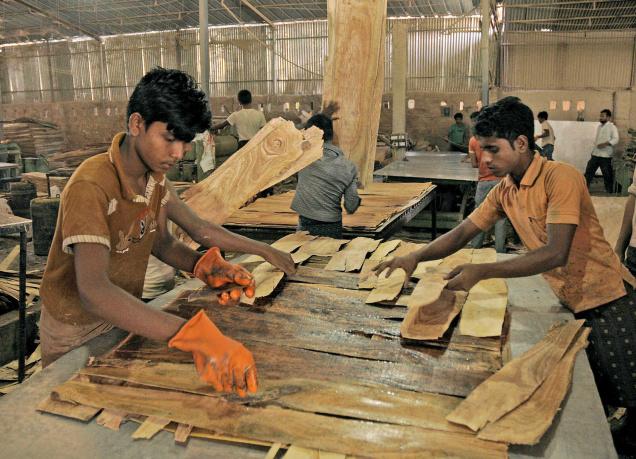
Adding to the pressure to increase plywood prices are rising labour charges. To compound the difficulties faced by manufacturers, transport costs are also going up due to the higher cost of fuel.
These developments have prompted Indian plywood manufacturers to be looking to raise prices by 10%. With immediate effect prices have been raised by about 5% to test market reaction.
The key to securing prices to off-set rising costs will be improved demand in the real estate sector. Analysts say “with the beginning of the financial year and a more disciplined structure in the realty sector, plywood producers are expecting an improvement in demand”.
Current prices are shown below:
Domestic ex-warehouse prices for locally
manufactured WBP plywood

Plywood, Rs per sq.ft
Ex-warehouse. (MR Quality)
4 mm 54.00
6 mm 72.50
9 mm 92.00
12 mm 113.00
15 mm 151.00
18 mm 157.50

Domestic ex-warehouse prices for locally manufactured MR plywood

Locally Manufactured
Plywood “Commercial
Grade”
Rs per sq.ft
Rubberwood Hardwood
4mm Rs.27.50 Rs.40.00
6mm Rs.41.00 Rs.52.00
8mm Rs.52.00 Rs.63.00
12mm Rs.63.00 Rs.75.00
15mm Rs.76.00 Rs.91.00
19mm RS.87.00 Rs.103.00
5mm Flexible ply Rs.54.00

Source: ITTO

BioPower Corporation to acquire former Rentech Atitokan wood pellet plant

BioPower Sustainable Energy Corporation (BioPower) has announced the acquisition of the assets of the former Rentech pellet plant in Atikokan, Ontario.

According to a statement, the agreement was made in December 2017, with BioPower’s acquisition of Rentech’s assets completed in January 2018.

Rentech Atikokan manufactures commercial grade wood pellets for the Ontario Power Generation (OPG) station near Atikokan. BioPower is a subsidiary of Ontario headquartered True North Timber.

“The acquisition of the Rentech Atikokan plant assets complements our existing presence in sustainable woodland operations and represents a strategic opportunity to extend into new emerging markets,” said BioPower CEO, Mark Guillemette.

“We have a strong management team that is committed to producing clean, innovative and sustainable energy solutions for customers in North America and around the world. Our immediate focus is on new business development to achieve the plant’s 110,000 metric tonnes production capacity.”

BioPower will sell commercial pellets, as well as residential heating pellets. 25 local jobs have been maintained following the acquisition.

Russia: ULK Group to increase capacity at sawmill in Archangelsk by 400.000 m3

ULK Group will receive 8 pcs of high capacity HFB 2-zone progressive kilns at its sawmill located in the Archangelsk area in Russia. According to the announcement, four out if eight kilns supplied by Heinola Sawmill Machinery will be used for drying sideboards and four for planks.

The total annual capacity of the equipment is approx. 400.000 m3 when drying spruce and pine timber to the final moisture of 11 %. The drying kiln building is made of wide stainless steel elements. The channels are equipped with pressure frames and the newest HEINOLA Eco drying kiln control system. Transfer of the timber loads is done automatically with rail tracks and 8.2 m wide wagons. There can be two 4.1 m wide loads side by side and three one on the other.

ULK plans to invest around RUB 12 billion (around USD 200 million) till 2020. Currently, the group executes a new investment projects for processing of a thin softwood with production capacity of 700 thousand m3. After the project completion, the total processing capacity at both sawmills of ULK will account for 1.3 million m3 per year.

About ULK Group:

The company unites enterprises harvesting, shipping and processing of lumber as well as wood residuals processing.

GreenPly starts production at new MDF plant in India

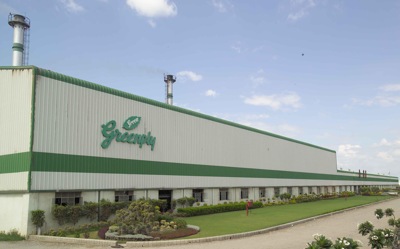
GreenPly Industries produced the first board at its new MDF plant in Chittoor District, Andhra Pradesh, India on April 1, 2018.

On its new line, Greenply produces 1,400 m³ of high-quality MDF per day. As raw material, mainly fast-growing woods such as eucalyptus will be used.

According to the announcement, the 56 meters long production line has the Dieffenbacher CPS at the core. It is the longest continuous press in Asia.

In the quarter ended on December 31, 2017 GreenPly Industries increased EBITDA margin to 16%.

Earlier GreenPly Industries considered de-merge of Greenpanel Industries in India.

About GreenPly Industries:

The company is a leading Indian producer of plywood and MDF. Its market share accounts for almost 30% of the organized plywood and 30% of the MDF market in India. GIL has four state–of-the-art manufacturing facilities for Plywood and one facility for MDF spread across the country producing world class interior products for the domestic and global markets. It is also present in more than 300 cities across 21 Indian states serviced through a well-entrenched distribution network of 1,620 distributors and 10,000 retailers and 48 branches pan-India.

Embracing technological change boosts EU furniture sector productivity

Increasingly advanced computer-controlled and automated manufacturing has also benefited European producers, boosting their productivity, cutting overheads and reducing the relative labour cost advantages of competitors, such as those in Asia.

“The increasing migration of European furniture sales online additionally favours a local manufacturing base,” said a German designer/producer. “It is better placed to meet the short lead times demanded by today’s EU internet retailers and consumers.”

Whether it also benefits domestic EU producers that sell in-fashion timber furniture species in the EU market such as oak is more debatable. There’s no doubting oak’s overwhelming dominance of the sector – in the latest development underlining this, it is reported that one of the Europe’s biggest retailer/producer brands is currently looking to sign up a supplier of up to 140,000 cu.m this year.

But while European manufacturers may be close to sources of European oak supply, there are few limits placed on oak log export outside the EU. This is despite efforts by manufacturers in France, in particular, to lobby their government to curb log exports, notably to China.

It’s also notable that EU furniture producers import large quantities of US white oak and that Asian producers also have ready access to this material. In fact, a number of companies at the IMM-Cologne and JFS-Birmingham exhibitions were showcasing EU-designed ranges manufactured in US white oak by joint venture or subcontractor partners in South East Asia, notably Vietnam.

Germany: Prices for wood products on a stable trend

In February, the German producer price index for wood products has registered a high degree of stagnation as compared to January. However, compared to February 2017, most of the prices rose sharply.
Spruce lumber, roof battens and raw particle boards are significantly more expensive over January. All other wood products have registered stable prices or even recorded declines. The latter applies also for timber and pellets.
Compared with the same month last year almost all prices increased. The exceptions are beech blocks and HDF panels which are below last year's level. Energy wood assortments, roof battens and boards (width over 16 cm) and KVH have registered the highest increases. With 104 points, KVH, however, is priced much worse off than softwood lumber products that range between 110 and 120.

Germany's Producer Price Index Commercial Products
(2000=100)
Feb.
2017
Jan.
2018
Feb.
2018
Change
Feb. '17
to Feb.'18
Spruce and Fir lumber (Picea abies Karst.) 108.0 113.3 114.1 5,65%
Lumber according to DIN 4074/S10 112.4 117.3 116.8 3,91%
Finger-jointed squares and beams (KVH) 98.2 104.4 104.4 6,31%
Boards, width over 16 cm 112.5 119.2 119.7 6,40%
Boards, width from 8 to 16 cm, size from 15 to 24 mm 109.8 111.1 111.1 1,18%
Roof battens according to DIN 4074/S10 108.1 114.4 116.6 7,86%
Reserve squared timber, A/B, 10X10 - 12X12 109.0 113.8 113.8 4,40%
Softwood, size>6mm, planed, sanded, finger-jointed 108.1 112.6 112.5 4,07%
Wood chips from softwood 108.0 115.7 115.7 7,13%
Pellets and Briquets, compressed 123.2 137.8 135.6 10,06%
Hardwood lumber 105.7 107.0 107.0 1,23%
Beech blocks, A/B, size 50-60 mm, length 3m, damped 104.8 102.3 102.3 -2,39%
Beech frames, size 26-32 mm, length  3m, undamped 105.8 107.5 107.5 1,61%
Particle boards, raw or sanded 106.4 106.6 108.4 1,88%
Particle boards, laminated with decor 114.4 114.8 114.8 0,35%
HDF panels, size > 800 kg/m³, raw/sanded 112.1 110.7 110.6 -1,34%
Laminate floorings, density > 800 kg/m³ 109.5 109.9 109.7 0,18%

Newsletter

Subscribe to our digital newsletter for your daily digest of essential news, views and analysis from the international wood industry delivered directly to your inbox.


0