
Article archive

China is planning a giant new SEZ around Beijing

China is planning a new special economic zone (SEZ) that will effectively extend the sprawling metropolis of Beijing, transforming the area around the Chinese capital into a “mega-region” that could also see Tianjin and Hebei province come under its sphere of influence.

The 100sq km Xiong’an New Area has been earmarked for a green and low-carbon city with small townships built around it, according to a circular issued by the government.

In the future, it could also be a launch pad for high-tech industries manufacturing 5G communications, bio-medical science, artificial intelligence and Fintech, according to state-owned Chinese media Xinhua News Agency.

The zone is expected to eventually expand to 2,000sq km, nearly three times the size of New York City.

Xiong’an is also home to one of China’s largest wetlands, which the government said it would protect.

Riga will be the host for the 66th International Softwood Conference

The 66th International Softwood Conference will be held on 10-12 October 2018 in the largest city in the Baltics – Riga, Latvia.

The event is hosted by the Latvian Timber Traders & Producers Association, the European Timber Trade Federation (ETTF) and the European Organization of the Sawmill Industry (EOS).

As per tradition, the conference will open with a cocktail reception, followed by the conference the next morning at the Radisson Blu Latvija. This year, there will also be opportunities to visit sawmills before the conference officially commences.

The conference will provide market analysis from the perspective of international speakers. The presentations will be focused on facts and figures showing softwood production as well as consumption in the most relevant timber markets such as USA, UK, Canada, North Africa and Egypt, Russia, France, Japan and China.

The event will include insights from the Confederation of European forest owners on resources with participation of PEFC and FSC certification system representatives.

Veneer production potential in Gabon

Gabon is the 6th largest producer of tropical veneer. Its production of 270,000 cubic metes in 2016 represented 6% of global tropical veneer production according to the International Tropical Timber Organization.

150,000 cubic metres of veneer is currently produced in Gabon outside Gabon’s Special Economic Zone according to Dr. Bernard Cassagne, CEO of the FRM Group which recently undertook a study of veneer production in Gabon.

He says, with the expected increase in its industrial capacity, Gabon would be able to produce around 500,000 cubic metres of veneer annually or nearly 1.7 times its current production thus becoming the second largest exporter of tropical veneer after Vietnam.

Species under sustainable development for veneer production in Gabon

Approximately one million cubic metres of logs will be required annually to achieve the potential and Cassagne says there are adequate logs resources of the main species for this level of veneer production.

The report from the FRM Group saya “if Gabon continues its industrialisation, new markets emerge and infrastructure improves then the harvests of species such as okoumé, ilomba, ahmad, aiélé and faro could reach 2 to 3 million of cubic metres annually.

Log Export Prices

West Africa logs, FOB € per m³
Asian market
LM
B
BC/C
Acajou/ Khaya/N’Gollon
260
255
170
Ayous/Obéché/Wawa
270
260
180
Azobe & Ekki
270
270
180
Belli
295
295
Bibolo/Dibétou
195
175
Bilinga
265
265
-
Iroko 370
350
270
Okoume (60% CI, 40% CE, 20% CS) (China only) 250 250 190
Moabi 355 345 275
Movingui 230
230
170
Niove
175
160
Okan
240
240
Padouk
335
275
210
Sapele 310 300 245
Sipo/Utile
335
315
245
Tali 380 370


Sawnwood Export Prices

West Africa sawnwood, FOB
€ per m³
Ayous FAS GMS 425
Bilinga FAS GMS 530
Okoumé FAS GMS
430
Merchantable 320
Std/Btr GMS 350
Sipo FAS GMS
540
FAS fixed sizes 560
FAS scantlings 560
Padouk FAS GMS 880
FAS scantlings 1020
Strips 645
Sapele FAS Spanish sizes 505
FAS scantlings 510
Iroko FAS GMS 630
Scantlings 710
Strips
410
Khaya FAS GMS
450
FAS fixed
470
Maobi FAS GMS
620
Scantlings
630
Movingui FAS GMS
430

Source: ITTO

Swedish sawmills should tackle global falling demand for pine lumber with more niche products

Swedish sawmills and wood-processing companies are operating at high activity levels due to a high demand on the global market. In 2017, total global production of wood products increased to a record high of 335 million cubic metres.
Johan Freij, President of Danske Bank Forestry & Farming, explained to Swedish media that the high demand is largely driven by the Chinese market. World record in timber production also shows an increasingly strong economic climate around the world, and it is mainly Chinese imports that drive production increases.
Swedish sawmills confirm that all forestry markets are performing well and thus, successive price increases can be achieved. This has given the set for higher prices in timber in most parts of the country, which also increases the production for Swedish forest owners.
Meanwhile, demand for pinewood has been greatly reduced by the decrease in construction in southern European countries. This has only been partly offset by increased exports to countries in northern Africa.
Freij further says that sawmills should try to offset the low pine wood demand by focusing more on niche products such as cross-laminated wood.
Just over a year ago there was a huge shift in the average price for spruce in Sweden, and this spring the difference in price in southern Sweden between spruce and pine timber was of 113 SEK (EUR 11.56), or 24%, to the advantage of spruce. The pine crisis is now impacting on the price of timber and forest owners.

Decline in US wooden furniture imports

US wooden furniture imports declined in February to under US$1.6 billion, but year-to-date imports remain higher than in February last year.

The month-on-month decline was mainly in imports from China and Vietnam, but imports from most other suppliers (except Canada) were also down. Non-upholstered seating imports were unchanged from January, but imports of all other types of wooden furniture posted declined.

Furniture and home furnishing retails sales rise first quarter

The furniture and wood products manufacturing industries reported growth in March, according the Institute for Supply Management’s survey (Manufacturing ISM Report On Business).

New furniture orders in January were up 2% over orders in January 2017, according to the Smith Leonard survey of U.S. residential furniture manufacturers and distributors. Furniture shipments in January were unchanged from the same time last year.

Retail sales at furniture and home furnishing stores picked up in March, according to the U.S. Census release of preliminary estimates. In the first quarter of 2018, furniture and home furnishing retail sales were 4.8% higher than in the first quarter last year.

Year-to-date cabinetry sales through February 2018 were down 0.6% according to participating manufacturers the Kitchen Cabinet Manufacturers Association’s monthly Trend of Business Survey. For the year 2017, U.S. cabinet manufacturers reported a 3% increase in sales.

Austria: Softwood lumber prices recover in April

In April, softwood lumber prices in Austria rose again after a slight decrease in March. The 1-2 EUR/cbm declines in March were recouped substantially.
Except edged and rough boards, all assortments have become more expensive by about 1 EUR/cbm. Rough boards' price has stagnated over the previous month, while edged boards are cheaper by 1-2 EUR/cbm.
As compared with April 2017, all softwood assortments are more expensive. Particularly, prices for edged boards and large-sized boards have increased the most. Both registered a price surge of around 5 EUR / cbm.

Softwood Lumber Spruce/Fir Apr. '17 Mar. '18 Apr. '18 Change Apr. '17 to '18
€ / cbm EXW
Edged Boards, 0-IIIa, 23 mm + 229-243 235-248 234-246 +5 / +3
Rough boards in fixed dimensions, 18-22 mm 227-239 230-240 230-240 +3 / +1
Squared timber, standard dimensions, I/II, 4-6 m 208-218 209-218 211-219 +3 / +1
Reserve squared timber, II/III 151-160 154-160 155-161 +4 / +1
Boards, III-IV, 8-16 cm, 4-6 m 144-150 147-154 146-153 +2 / +3
Boards, III-IV, 8-16 cm, just 4 m 146-152 149-155 150-156 +4 / +4
Boards, III/IV, 23 mm, 4-6 m 147-153 149-155 150-156 +3 / +3
Boards, III/IV, 28 mm +, 3-6 m 152-159 156-164 157-165 +5 / +6

Impact of EUTR on EU trade in tropical timber products

A key question for the long-term future of the EU trade in tropical timber products is the impact of the EU Timber Regulation (EUTR).

This is particularly true of suppliers in those tropical countries, like Indonesia, that have a Voluntary Partnership Agreement (VPA) with the EU and are seeking an assurance that FLEGT licensed timber will benefit in the market from the “green lane” offered by EUTR.

FLEGT licensed and CITES certificated timber products are the only products recognised by EUTR as requiring no further checks by EU importers to ensure their legal status.

For those suppliers of tropical timber products that are not FLEGT licensed, there are key issues surrounding the types of information that the EU importers will accept as assurance that there is a negligible risk of illegal harvest.

These issues have been highlighted in recent weeks by the prosecution of one UK importer for a failure to comply with EUTR in relation to sawnwood imported from Cameroon. The prosecution was solely focused on the company’s due diligence systems relating to its purchases of FSC-certified ayous from Cameroon in January 2017.

Although the prosecution acknowledged that none of the material imported was from an illegal source, the company was found guilty of failing to adequately check the legality of the timber when placing it on the market.

The company was fined £4000 in the second successful EUTR prosecution in the UK. The first was last year when a designer furniture retailer was fined £5000 for importing a sideboard from India without carrying out the required due diligence assessment.

Commenting on the latest prosecution, a representative of the British Woodworking Federation said: “Companies bringing timber products in directly from outside the EU need to have their own due diligence system in place even for one-off transactions and cannot rely on suppliers to carry this out on their behalf.

“This must include information about the supply of timber products, an evaluation of the risk of placing illegally harvested timber and timber products on the market and necessary steps to mitigate this risk; for example additional information and third party verification”.

“Simply bringing in FSC, PEFC or similar Chain of Custody certified timber is not enough to satisfy the due diligence requirements for these importers, although FLEGT licenced timber would suffice.”

In practice, given the extra due diligence steps required to import even FSC certified timber into the EU market,

EUTR should offer significant market advantages to tropical suppliers of FLEGT licensed timber.

At present that applies only to Indonesia, which has licensed timber for the EU market since November 2016.

The latest data from the FLEGT Independent Market Monitor, hosted by ITTO, suggests that this market advantage may be filtering through into a rise in EU trade with Indonesia for product groups like plywood and decking that have been an immediate focus of EUTR enforcement activity.

There has been quite a sharp increase in EU imports of Indonesian plywood since November 2016, lending support to anecdotal reports of EU plywood importers being encouraged to stock more Indonesian product due to licensing. EU imports of decking products from Indonesia were sliding in the first half of 2017 but recovered in the second half of the year.

However, it would be a mistake to attempt to attribute these trends to a single cause, even one so significant as a regulation applicable to every company placing timber on the market in the EU. An increase in trade can be expected in a year when the EU economy began to grow more strongly after a long period of slow growth following the European debt crises.

It’s also apparent that the rise in trade with Indonesia during 2017 was not universal across product groups. EU imports of wood furniture from Indonesia were flat during the year, while imports of Indonesian flooring and glulam declined.

The combination of EUTR and FLEGT licensing offer an immediate opportunity for Indonesian suppliers to retake share in those sectors – like decking and plywood - where Indonesian products are familiar to EU importers and already favoured for their strong technical performance, but where demand has been dampened by concerns over the legality of wood supply.

However, in isolation, FLEGT licensing is less likely to generate immediate benefits in those high value sectors like furniture and joinery where the specific technical and environmental features of Indonesian wood products have been less significant barriers to competitiveness than wider issues such as labour costs, red tape, logistics, processing efficiency, innovation, and marketing.

In these sectors, increasing share may well be achieved if FLEGT licensing is combined with market development initiatives to improve the international competitiveness of Indonesian wood manufacturers across a wider range of issues, although this is likely to take time.

Matsumoto Lumber to invest in a new sawline in Japan

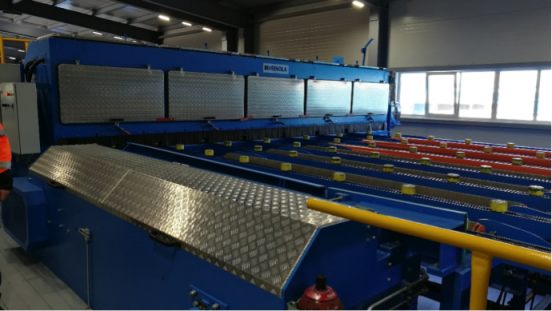
Matsumoto Lumber ordered a full-profiling Scala 250 sawline from Heinola Sawmill Machinery for its new sawmill in Japan. The new sawmill will saw two log lengths: 3.1 and 4.1 m with top diameters of 150 – 350 mm.

The sawline is a full-profiling line, equipped with the HEINOLA automation system and the Siemens PLC control. There are two HEINOLA chipper canters and four HEINOLA profiling units. The profiling units cut 1+1 or 2+2 side boards from a log or a cant by using skew edging. The actual primary and secondary breakdown are carried out with HEINOLA saw units which utilize the new HEINOLA Syncro Cutting System. In this solution both shafts of the double arbor saw are installed on top of one another in the same line. This enables active curve sawing and better yield of always a somewhat curve log.

The machinery from Heinola to Japan will be delivered in the early summer, and the installation and commissioning will happen during the next autumn.

Heinola Sawmill Machinery Inc. is the only supplier in Finland concentrating on development of high-quality drying kiln technology.

Prices for Indian teak, sawnwood and plywood imports in April 2018

The price list for teak, sawnwood and plywood between 16-30 April, 2018.
Plantation teak prices

US$ per cu.m C&F
Angola logs 389-574
Belize logs 350-400
Benin logs 290-714
Benin sawn 530-872
Brazil logs 344-540
Brazil squares 333-556
Cameroon logs 405-616
Colombia logs 478-743
Congo D. R. logs 450-761
Costa Rica logs 357-780
Côte d'Ivoire logs 289-756
Ecuador squares 333-454
El-Salvador logs 320-732
Ghana logs 294-452
Guatemala logs 324-646
Guyana logs 300-450
Kenya logs 515-876
Laos logs 300-605
Liberia logs 265-460
Malaysian logs 225-516
Mexican logs 295-808
Nicaragua logs 402-505
Panama logs 335-475
PNG logs 443-575
Sudan logs 358-556
Tanzania, teak, sawn 307-613
Thailand logs 511-700
Togo logs 334-590
Trinidad and Tobago logs 603-753
Uganda logs 411-623
Uganda Teak sawn 680-900

Continue reading "Prices for Indian teak, sawnwood and plywood imports in April 2018"

Germany: Price trends for wood products in March 2018

Producer prices for wood products in Germany show only small movements in March. According to data provided by the German Federal Statistical Office (Destatis), no change was recorded for seven of the seventeen index values when compared to the previous month. And even where prices show some change, they are usually below 1%. The most significant change was for narrow boards. The index value increased by 1.7% as compared to February.
A little more dynamic and mixed are the developments over the same month of last year, which show a slight downward trend. The softwood lumber assortments registered a minor price fall. The strongest decrease was registered for square stock timber, particleboard and KVH. The highest increase was recorded for roof battens (+1,36%).
By far, the sharpest downtrend from the previous year can be noticed for pellets and briquettes. The index is lower by more than 8% as compared to March 2017. On contrast, a slight upward movement was recorded for hardwood assortments, especially for roof battens

German producer Price Index Commercial Products 
(2000=100)
March 2017 February
2018
March 2018 Change March 2017/2018
Nadelh.,Dicke>6mm,gehob.,geschliff.,keilverz. (m3) 111.1 110 110 -0,99%
Spruce and Fir lumber (Picea abies Karst.) 112.8 112.9 112.7 -0,08%
Lumber according to DIN 4074/S10 116.3 116.3 116.9 0,52%
Boards, width over 16 cm 120.9 120.6 120.6 0,25%
Boards, width from 8 to 16 cm, size from 15 to 24 mm 109.8 106.4 108.2 -1,45%
Roof battens according to DIN 4074/S10 115.3 118 116.9 1,36%
Square stock timber, A/B, 10X10 - 12X12 116 111.1 111.6 -3,79%
Finger-jointed squares and beams (KVH) 99.6 97.9 97.5 -2,10%
Hardwood lumber 110.5 111.9 111.9 1,26%
Beech blocks, A/B, size 50-60 mm, length 3m, damped 106.5 106.9 106.9 0,38%
Beech frames, size 26-32 mm, length  3m, undamped 110.9 112.4 112.4 1,35%
Wood chips from softwood 101.3 99.8 99.5 -1,77%
Particle boards, raw or sanded 116.3 110.1 109.1 -4,47%
Particle boards, laminated with decor 115.2 115.2 115.2 0,00%
HDF panels, size > 800 kg/m³, raw/sanded 114.6 113.7 113.7 -0,78%
Laminate floorings, density > 800 kg/m³ 109.4 110.1 110.3 0,82%
Pellets and Briquets, compressed 118.9 109.7 109 -8,32%


Brazilian wood-based products exports well above last year’s levels

In March 2018, Brazilian exports of wood-based products (except pulp and paper) increased 19% in value compared to March 2017, from US$226.6 million to US$270.4 million.

The value of pine sawnwood exports increased 13% between March 2017 (US$39.2 million) and March 2018 (US$44.3 million) while in terms of volume there was an almost 9% increase from 193,400 cu.m to 210,600 cu.m.

Tropical sawnwood exports also increased in March rising 10% from 34,600 cu.m in March 2017 to 38,100 cu.m in March 2018. The value of March tropical sawnwood exports increased 14% from US$15.3 million to US$17.5 million year on year.

There was a sharp rise in the value of year on year pine plywood exports in March (+49%) in value in March. Exports increased from US$43 million to US$64 million year on year. The 22% increase in the volume of pine plywood exports underlines the steady rise in prices.

Exports increased from 159,300 cu.m to 194,600 cu.m year on year.

Brazil’s tropical plywood, exports are modest but in March export volumes and values rose; from 13,900 cu.m (US$5.4 million) in March 2017 to 16,600 cu.m (US$7.1 million) in March 2018.

An almost 6% increase in the value of wooden furniture exports was recorded in March this year. Exports rose from US$42 million in March 2017 to US$ 44 million in March this year.

Export of panels grows

According to Indústria Brasileira de Árvores (Ibá), wood panel exports in the first two months of 2018 totalled 192,000 cu.m, an almost 10% increase compared to the same period last year.

Markets in Latin America accounted for more than half of the volume exported in January and February, up 14% over the first two months of 2017. The second largest market for Brazilian wood panels was the US at US$11 million (up 38%).

In the first two months of this year the domestic market for wood panels expanded over 6% to 1.1 million cubic metres.

Asian demand for wood pellets booming in 2017

Asia’s demand for biomass is growing rapidly. Wood pellet imports into South Korea and Japan have grown exponentially in the past few years. In 2017 South Korea imported 2.4 million tons (Mt) of wood pellets, 20 times more than was imported in 2012. Japan is currently a smaller market, but its growth has also been impressive. Japan imported over 500,000 tons in 2017, a seven-fold increase from 2012. PKS consumption has risen at a similar rate, to 1.5 Mt in 2017.

South Korea’s biomass demand is supported by the Renewable Portfolio Standard, which aims to achieve a 10 percent renewable electricity share by 2024. Continue reading "Asian demand for wood pellets booming in 2017"

Exports of logs from Russia slapped with export duties

Logs exiting Russia’s Far East have been slapped with a 6.5 per cent export duty since last December. The progressive tax rate will climb to 40 per cent in 2019, 60 per cent in 2020 and up to 80 per cent by 2021. Continue reading "Exports of logs from Russia slapped with export duties"

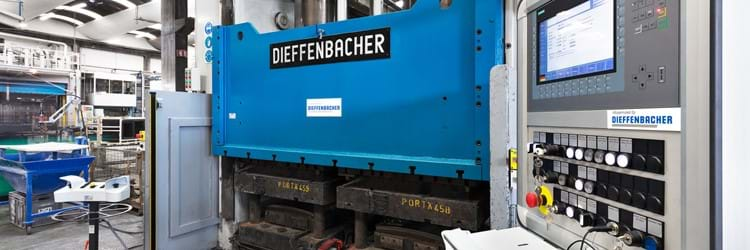
Dieffenbacher improves earnings in 2017 and expects good order intake in 2018

Machinery and plant manufacturer Dieffenbacher GmbH (Eppingen, Germany) closed the 2017 financial year with equity ratio 31%, the company announced. Dieffenbacher plans to increase equity ratio to 35% by 2020.

According to the family-owned company, the three Business Units of Wood, Composites and Recycling are enjoying full order books. Based on the successful start to 2018, Dieffenbacher expects a further increase in overall performance for the complete financial year.

In the first four months of 2018, the Wood Business Unit received 10 new plant orders, four of which were awarded to Dieffenbacher's Shanghai Wood-Based Panel Machinery (Dieffenbacher SWPM) site and six to its German headquarters. Two of these orders are for OSB plants, enabling Dieffenbacher to further expand its leading position in this product. The company now has 19 OSB references with continuous presses, eight of which have a press length of over 50 m.

Two additional orders were received in early 2018 for the processing of alternative raw materials. Two plants for the production of particleboard from rice straw were sold in China.

For Dieffenbacher, these were orders number five and six for plants of this type. Having already supplied 100 continuous wood-based panel plants to China in conjunction with Dieffenbacher SWPM, Dieffenbacher is the clear market leader in the world's most populous country.

In the category of individual machines, the CPS+ continuous press and the knife ring flakers of Dieffenbacher's Bielefeld-based subsidiary B. Maier Zerkleinerungstechnik GmbH stand out. Since the beginning of the year, Maier has received 20 orders for knife ring flakers, with some of those orders including FlowOptimizer. Dieffenbacher has sold five new CPS+ presses in 2018.

In total, 20 units were sold in three years after the introduction at Ligna 2015. As the gold standard for efficient continuous press systems, the CPS+ has exceeded both customers’ and internal expectations.

In the wood recycling sector, the latest order is from Nolte Holzwerkstoffe GmbH & Co. KG in Germersheim. A state-of-the-art Dieffenbacher waste wood processing plant is to be built there by mid-2019. A plant with a very similar processing concept began operating at Pfleiderer in Neumarkt in January. New and further developments in the areas of foreign objects’ detection and screening enable these recycling systems to achieve purity levels of over 99%.

The Composites Business Unit has also further expanded its leading position in the market for turnkey production lines for glass and carbon fiber-reinforced lightweight components. Positive experiences with Dieffenbacher's solutions for the automotive industry have also prompted satisfied customers to place follow-up orders. Since the beginning of 2018, Dieffenbacher has received eight orders for presses with pressing forces of 2,000 to 3,000 tonnes. Four of these will include complete line automation and, thanks to smart networking, meet all Industry 4.0 requirements.

Metsä to upgrade spruce sawmill in Finland

Heinola Sawmill Machinery is to supply Iisveden Metsä Oy with a green sorting and stick-stacking line. The new line will be installed next to the current sorting line, at which point the current line will begin serving as a dry sorting line.

The capacity of the new line is approximately 150,000 m3 of green lumber a year.

The sorting line will include features such as automated camera-based sorting equipment, equipment to allow for stepless cutting functions, a sorting conveyor of push-chain type will be installed to sort the materials into 20 vertical bins. The stick-stacking line is equipped with an additional hoist and an automated stick distribution system containing 12 stick cassettes, as well as a stick storage system located between the dry sorting line and the stick-stacking line.

HEINOLA’s own products will be complemented in the line by several devices from the product range of its sister company, Hekotek. The electrification and automation of the line, as well the dust removal system and the chip conveyor from chipper to chip silo are just some of the solutions made possible with Hekotek products.

Engineering of the line is already under way, the installations will take place this autumn and early winter. Production on the line will begin in early 2019.

EUTR not “effective, proportionate and dissuasive”, says ClientEarth

The potential value of FLEGT licensing is partly dependent on the extent to which EUTR is being implemented consistently across the EU. This is a question considered in a new report issued by ClientEarth, a UK based NGO specialising in analysis of environmental law.

In the report, ClientEarth provide their assessment of whether the enforcement regimes, which under EUTR are required to be implemented by the individual EU member countries, are “effective, proportionate and dissuasive” according to the law.

The report highlights that although the EUTR was first introduced in March 2013, some EU member countries delayed introduction of a national enforcement regime for some time after that date, although nearly all had done so by the end of 2016.

ClientEarth show that penalties for EUTR infringements vary widely across the EU. Certain Member States (such as Austria, Poland, Romania and Bulgaria) have chosen a penalty regime relying mainly on administrative penalties; others (such as Denmark and the Netherlands) rely mainly on criminal penalties for key EUTR obligations. Some Member States (such as Belgium, Finland, France, Germany and Italy) have adopted a combination of the two systems.

EUTR penalties include notices of remedial actions, seizure of timber, suspensions of authorisations to trade, fines and imprisonment. ClientEarth conclude that competent authorities and Member State courts have been more actively enforcing the EUTR since 2016 compared to the years 2013 to 2015 when almost no penalties had been imposed.

ClientEarth summarise all the EUTR actions that have been reported publicly to date referencing the two UK cases mentioned earlier together with two cases in the Netherlands, two cases in Sweden, and one in Germany.

In the Netherlands, a fine of €1,800 per cubic metre of timber was imposed on a company for a failure to gather information tracing back the entire supply chain of imported sawn timber deemed to be risky from Cameroon.

In another case, a preventive measure was ordered against two Dutch importers of Burmese teak, imposing a fine of €20,000 per cubic metre for each teak shipment placed on the market in breach of the EUTR.

In Sweden, the cases so far have all involved prosecutions for a failure to undertake appropriate due diligence in imports of Myanmar teak.

One company was fined SEK 17,000 (approximately €1,700), another the much larger amount of SEK 800,000 (approximately €79,500) due to a failure to implement measures stipulated in an earlier injunction.

In addition to these cases which led to fines, in 2017 several other Swedish companies were prohibited under EUTR from importing any products containing Burmese teak.

In Germany, an administrative court confirmed in 2017 a decision by the competent authority taken in 2013 to confiscate timber imported from the DR Congo due to irregular documentation. The timber will be auctioned and the money from the auction allocated to the federal budget.

While these few cases have been brought in a limited number of Member States, according to ClientEarth, 'soft' approaches involving no punitive action and a mainly educative purpose still seem to be the preferred enforcement option in many Member States. Such measures include advice letters and warnings, as well as injunctions and notices of remedial action without noncompliance penalties.

Based on this analysis of the cases brought date, the text of laws introduced at national level, publicly available information on regulatory checks and sanctions regimes, and interviews with several competent authorities, ClientEarth conclude that “EUTR penalties rarely seem enforced to the 'effective, proportionate and dissuasive' legal standard, even in Member States where a positive trend in EUTR enforcement is noticeable.”

Comment on ClientEarth assessment of EUTR

The ClientEarth study has limitations. The conclusions are based on a technical analysis of sanctions regimes - considering, for example, whether the costs of sanctions are likely to significantly exceed the costs of implementing EUTR due diligence measures and therefore to provide an effective deterrent.

There is no actual appraisal of whether the national differences in sanctions regimes is leading to significant failures in enforcement or other negative impacts, such as diversion of illicit trade through countries with weaker enforcement regimes.

It is notable that in none of the cases cited was it ever proved that the wood was from an illegal source - there is no obligation under EUTR on the EU authorities to provide such proof - the prosecutions were all due to the failure on the part of the importer to demonstrate compliance to the due diligence steps required in EUTR.

The fact that these prosecutions were brought and led to significant sanctions, even without evidence of illegality at source, suggests that the law has teeth and places a significant lever to encourage more far-reaching due diligence measures in the hands of the EU authorities.

It’s the kind of regulatory power that needs to be used wisely to avoid unintended consequences, such as the  creation of technical barriers to trade, feeding of protectionist instincts and discrimination against smaller operators.

ClientEarth acknowledge that their conclusions are based on inadequate information, noting that there is relatively little publicly available information about the number of penalties that have been applied since the EUTR has been in force. The EC has already indicated an intent to improve transparency on this issue and much more information is expected to be available later in the year.

ClientEarth is also critical of what it refers to as ‘soft’ approaches, arguing that they do not provide an effective deterrent to timber products from placing timber at risk of being illegal on the EU market.

This is one interpretation, but in practice EUTR is a complex and innovative law for which most national authorities have had to acquire new knowledge and skills, often from the private operators they are required to regulate, many of which were implementing responsible procurement policies for years even before EUTR was introduced.

Regulating the purchasing decisions throughout 28 Member States of a fragmented industry with nearly half a million enterprises, one in five of all manufacturing enterprises in the region, is unprecedented. In the early years of implementing EUTR, there has been some confusion and ambiguity over the exact measures required by individual operators to demonstrate conformance.

Communicating to timber operators, often small traders with only limited access to legal advice, that they cannot accept either FSC certificates or government documents at face value as evidence of a “non-negligible risk of illegal harvest” takes time and effort.

It is challenging to explain to operators that it is their responsibility to identify which products are “nonnegligible risk”, particularly when the EC and other regulators cannot advise on the relative risks associated with different supply countries and product groups. In such a situation it would be unjust to rush to prosecution – and runs the risk of discrediting the legislation, particularly amongst those operators being regulated.

The success of the EUTR to date has been built to a significant extent on the active support of the private sector within the EU. This support would quickly evaporate if a perception arose that it was just being used as a rod to beat the industry.

A lengthy period of “soft” regulation seems most appropriate, at least until such time as guidelines and supporting information sources have been properly developed and communicated and the authorities are sufficiently competent to accurately interpret and enforce the law. However, there may be a distinction between certain member states using “soft” measures as part of a concerted effort to evolve an effective, efficient and equitable regulatory program, and others that may be hiding behind these measures to avoid more meaningful, and potentially costly, action.

If the latter attitude is widespread it could have the negative consequences mentioned by ClientEarth; an unequal playing field for trade in the EU, undermining the efforts of those operators that are conscientiously implementing due diligence procedures, undermining demand for FLEGT licensed timber, and encouraging diversion of illicit trade through less regulated countries.

So far, the information gathered by ClientEarth is not sufficient to judge the effectiveness of EUTR and their conclusion that the law does not provide a reliable deterrent to trading illegally harvested wood seems premature.

A clearer picture will emerge only when the EU publishes more comprehensive information on the regulatory measures and sanctions introduced at national level in the EU and with more detailed analysis of actual trade flow trends and the compliance steps being taken by operators across the EU.

German slowdown dampens European wood flooring demand

An insight into the current status of the EU wood flooring market and the wider economic situation in individual EU countries is provided by the report of the meeting in April of the Board of Directors of the European Federation of the Parquet Industry (FEP).

According to the report, compared to the same period last year, provisional results for the first quarter of 2018 point to a continuation of the moderately positive European parquet consumption trends observed in 2017 with the exception of Germany which is reporting a significant decrease.

The report notes that new build projects are the main driver of the market for wood flooring in Europe, although renovation is creates significant additional activity.

It also notes that despite the long and wet winter in Europe, the availability of raw material is not a critical issue for the time being. This implies some easing of the supply problems that have emerged in recent years owing to the sectors very heavy reliance on oak which now accounts for around 80% of production.

The report includes a rapid-fire appraisal of the market situation in each of the countries represented by the FEP membership:

Austria: parquet sales continued to increase by 2% in the first quarter 2018 compared to the same period last year. Belgium: parquet sales are estimated to have 3% during the first three months of 2018.

Baltic States: Baltic countries’ markets showed a slightly positive trend in the first quarter 2018.

Denmark: The Danish parquet market remains flat overall, a decrease in the retail market is compensated by rising demand from building contracts and projects.

Finland: parquet sales increased by 1% in the first quarter, mainly driven by moderate growth in large projects while the residential market is stable.

France: parquet sales are gradually recovering, rising an estimated 2% in the first quarter of 2018.

Germany: parquet sales are estimated to have fallen 5% in the first quarter of 2018 compared to the same period in 2017.

This decrease reflects the subdued residential market, a lack of installation professionals, intense competition from “wood look” floor coverings, and diminishing store space allocated for hardwood flooring by DIY retailers. Italy: parquet sales increased 2% in the first quarter of 2018 and continue to benefit from more positive economic developments in the country. Netherlands: parquet sales increased by an estimated 3% during the first quarter 2018 in line with improving economic conditions in the country. Norway: the market was flat with some signs of slight improvement (less than 1% growth) during the first months of 2018. Spain: despite the turbulent political situation, the Spanish market expanded slowly by between 1% and 2% in the first quarter of 2018. Sweden: parquet consumption increased 2% in the first quarter. Declining retail sales were offset by increased demand from building projects. Sweden is currently the most dynamic market in Scandinavia. Switzerland: parquet consumption remains flat but at a high level with numerous large on-going renovation projects.

German slowdown dampens European wood flooring demand

An insight into the current status of the EU wood flooring market and the wider economic situation in individual EU countries is provided by the report of the meeting in April of the Board of Directors of the European Federation of the Parquet Industry (FEP).

According to the report, compared to the same period last year, provisional results for the first quarter of 2018 point to a continuation of the moderately positive European parquet consumption trends observed in 2017 with the exception of Germany which is reporting a significant decrease.

The report notes that new build projects are the main driver of the market for wood flooring in Europe, although renovation is creates significant additional activity.

It also notes that despite the long and wet winter in Europe, the availability of raw material is not a critical issue for the time being. This implies some easing of the supply problems that have emerged in recent years owing to the sectors very heavy reliance on oak which now accounts for around 80% of production.

The report includes a rapid-fire appraisal of the market situation in each of the countries represented by the FEP membership:

Austria: parquet sales continued to increase by 2% in the first quarter 2018 compared to the same period last year. Belgium: parquet sales are estimated to have 3% during the first three months of 2018.

Baltic States: Baltic countries’ markets showed a slightly positive trend in the first quarter 2018.

Denmark: The Danish parquet market remains flat overall, a decrease in the retail market is compensated by rising demand from building contracts and projects.

Finland: parquet sales increased by 1% in the first quarter, mainly driven by moderate growth in large projects while the residential market is stable.

France: parquet sales are gradually recovering, rising an estimated 2% in the first quarter of 2018.

Germany: parquet sales are estimated to have fallen 5% in the first quarter of 2018 compared to the same period in 2017.

This decrease reflects the subdued residential market, a lack of installation professionals, intense competition from “wood look” floor coverings, and diminishing store space allocated for hardwood flooring by DIY retailers. Italy: parquet sales increased 2% in the first quarter of 2018 and continue to benefit from more positive economic developments in the country. Netherlands: parquet sales increased by an estimated 3% during the first quarter 2018 in line with improving economic conditions in the country. Norway: the market was flat with some signs of slight improvement (less than 1% growth) during the first months of 2018. Spain: despite the turbulent political situation, the Spanish market expanded slowly by between 1% and 2% in the first quarter of 2018. Sweden: parquet consumption increased 2% in the first quarter. Declining retail sales were offset by increased demand from building projects. Sweden is currently the most dynamic market in Scandinavia. Switzerland: parquet consumption remains flat but at a high level with numerous large on-going renovation projects.

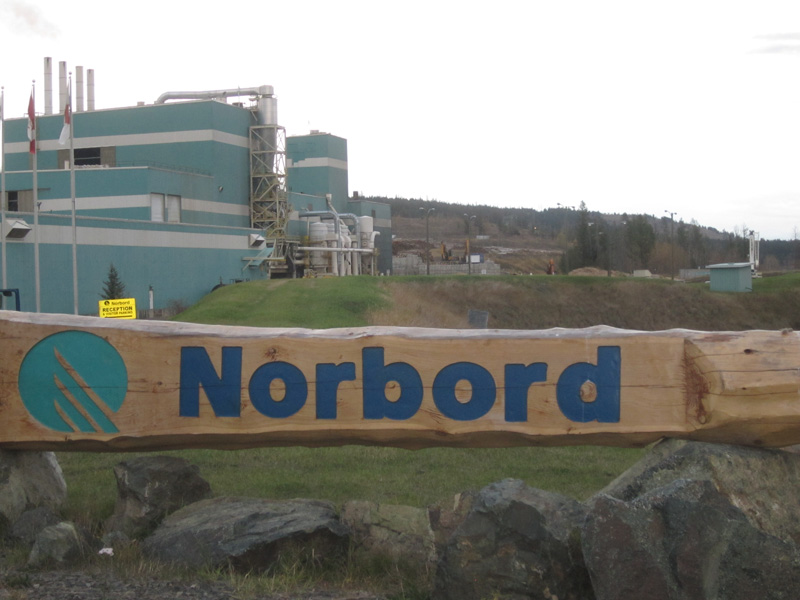
Strong European and N. American OSB demand brings great performance for Norbord’s Q1/2018

With strong OSB demand in both North America and Europe, Norbord continues to deliver robust results in the first three months of 2018 (1Q-2018).

Sales reached USD 576 million in the 1Q-2018 an increase of 23.3% compared to USD 467 million in the 1Q-2017.

Norbord reported Adjusted EBITDA of USD 170 million for the first quarter of 2018 versus USD 103 million in the first quarter of 2017. The improvement is primarily due to higher North American oriented strand board (OSB) prices and shipment volumes, as well as higher European panel prices.

Norbord recorded a profit of USD 95 million in the first quarter of 2018 versus USD 49 million in the first quarter of 2017, an improvement of 93.9%.

In North America, demand from US housing continues to improve. Year-to-date US housing starts were up 8% versus the same period in 2017, with single-family starts (which use approximately three times more OSB than multi-family) increasing by 7%.

In Europe, Norbord’s core panel markets continued to strengthen in the first quarter of 2018, with robust OSB demand growth in both the UK and Germany. In local currency terms, average panel prices were up 25% versus the same quarter last year.

LIGNA Conference coming to Guangzhou, China

The LIGNA Conference is moving to Guangzhou to be held on 4 and 5 December in the run-up to the China Shunde International Woodworking Machinery Fair (Lunjiao), Foshan.

The conference rides on the success of 2016’s conference and will, this year, cover "Integrated Woodworking – Customised Solutions", one of the key themes of the next LIGNA.

"The China Shunde Woodworking Machinery Fair is one of China's leading wood-industry trade shows, so pairing it with the LIGNA Conference is an ideal way to facilitate productive dialogue between machinery manufacturers and users," explained Christian Pfeiffer, Global Director LIGNA and Woodworking Events at Deutsche Messe.

The China Shunde International Woodworking Machinery Fair premiered in 1998 and has been a permanent fixture of China's tradeshow landscape ever since. The last edition attracted some 50,000 visitors.

There will be lectures on integration, digitisation and automation, presentations of applications and examples of current best practice. In addition, technology providers will be able to present their products, applications and solutions using tabletop displays. Alongside the lectures, there will be opportunities for networking.

Organisers have already secured the support of several big-name manufacturers, including Biesse, HOMAG Group, Leuco Ledermann, SCM Group, Siempelkamp, Wemhöner Surface Technologies, Michael Weinig and the University of Applied Sciences Rosenheim.

The conference is organised in partnership with Deutsche Messe’s Chinese subsidiary Hannover Milano Fairs Shanghai Ltd and with support from CNFMA (China National Forestry Machinery Association) and the Foshan Shunde Lunjiao Woodworking Machinery Association.

China is home to the world's biggest woodworking and furniture manufacturing industry. Figures published by the German Woodworking Machinery Manufacturers' Association show that exports of woodworking machinery to China have increased markedly as Chinese manufacturers invest in new equipment to keep pace with the booming local real estate market. These positive factors play into the hands of European machinery manufacturers: Exports from Germany, for instance, increased from EUR165.3 Mn to EUR288.3 Mn from 2016 to 2017. Italy, Austria and Switzerland likewise increased their exports to China over this period.

Newsletter

Subscribe to our digital newsletter for your daily digest of essential news, views and analysis from the international wood industry delivered directly to your inbox.


0