
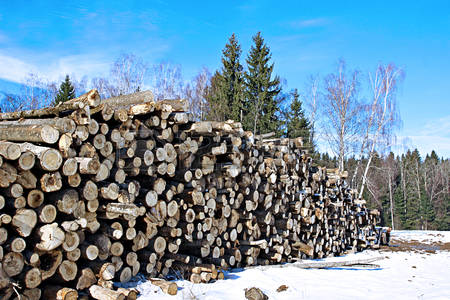
Export duties on three species (larch, spruce and fir) in Far East Russia has been raised by 15 points to 40% since January 2019. Continue reading "Russia increases duties on exports of logs to 40%"
Article archive
SCA inaugurates its new giant pulp mill in Sweden
Sweden's King Carl XVI Gustaf inaugurated SCA’s pulp mill Östrand in Timrå. The expansion of the mill is one of Sweden’s largest industrial investments ever.
SCA has invested SEK 8 billion ($889 million) in expanding the mill and to double its capacity to 900,000 tonnes of bleached softwood kraft pulp, making Östrand the largest mill of its kind in the world. The investment enables SCA to be world class in terms of product quality and environmental performance.
“A lot of Sweden’s prosperity has been built by forests and the forest industry’s products”, said the Swedish King Carl XVI Gustaf at the inauguration. “But the forest has not only shaoped Sweden’s history. It also provides the raw material of our future in the shape of green electricity and biofuels.”
The two biggest suppliers to the project have been Valmet who supplied the fibre line with a number of components, including the world’s largest softwood pulp digester, and Andritz who, among other projects, undertook a unique expansion of the recovery boiler. The project has been partly financed by the European Investment Bank.
New additive protects wood-based materials from fire

Together with BRUAG Fire Protection AG, the Swiss Federal Laboratories for Materials Science and Technology (Empa) specialists have developed a new flame retardant for wood and wood-based materials. The colourless additive, which can be easily mixed with coatings and cellulose materials, opens up new applications for wood processing companies.
Fire protection requirements are increasing worldwide - especially in public buildings and vehicle construction. This development means that more and more otherwise suitable materials such as wood can no longer be used in many buildings or means of transport and must be substituted by other products. The aim of the CTI funded research project was therefore to develop a flame retardant that increases the fire resistance of such materials without impairing the positive properties of the materials.
Colourless, non-toxic additive
The new flame retardant called AFA (Anti-Flame-Additive) meets these requirements: It is colorless and can be mixed with water-based paints or UV protective coatings and can be used not only as a coating but also as an additive in wood-based panels. In addition, it is free of bromine and boron and contains no halogenated organic compounds. It produces no toxic vapors and develops its flame-retardant effect at concentrations as low as ten percent.
AFA is based on the substance EDA-bis-TEPT developed by Empa, a flame retardant from the class of organophosphonates. It combines phosphorus and nitrogen moieties in a single molecule, which has flame-retardant effects on cellulose. The newly developed additive has already demonstrated its effectiveness in internal tests and has been protected by a patent application since 2018. Application tests are currently being carried out, for example the addition of AFA to various commercially available building materials and paint systems is being tested.
Approval procedure underway
Initial tests with major wood-based panel manufacturers have been very positive. The same applies to the world's third largest manufacturer of HPL (High Pressure Laminates). After the AFA has been introduced into the cellulose during production, flaming of the material is reliably prevented. In a further step, AFA will undergo the fire protection and approval tests required for approval.
Empa's research partner in this project is Bruag Fire Protection AG, a sister company of Bruag AG based in Güttingen, TG. As a producer of smooth and perforated weather-resistant facade panels and balcony balustrades as well as decorative elements such as room dividers, stair railings or acoustic solutions for interiors, which are mainly based on wood-based materials. The internationally active Bruag AG is directly affected by stricter fire protection guidelines.
About EMPA
The Swiss Federal Laboratories for Materials Science and Technology (Empa, German acronym for Eidgenössische Materialprüfungs- und Forschungsanstalt) is an interdisciplinary Swiss research institute for applied materials sciences and technology. As part of the Swiss Federal Institutes of Technology Domain, it is an institution of the Swiss federation. For most of the period since its foundation in 1880, it concentrated on classical materials testing. Since the late 1980s it has developed into a modern research and development institute.
Record year for Western Forest Products, despite paying $43 million in softwood lumber duties

Despite paying up more than $43 million in softwood lumber duties, Western Forest Products managed to realize a profit of nearly $70 million in 2018. According to financial statements, the company managed to deal with several issues in 2018, and set a record in terms of revenue to realize a net profit of $69.2 million, down from the $74 million in 2017.
Last year, as a result of strong prices for its specialty products (the company’s average lumber price was up six per cent compared to 2017), Western realized a record $1.197 billion in revenue, up from the $1.14 billion recorded in 2017.
Chief executive Don Demens said the company’s refined marketing strategy led to higher prices for its lumber products, which helped overcome “the impacts of operating headwinds in 2018 that included a difficult coastal fire season, U.S. export duties, higher stumpage, and volatile commodity markets.”
“We’ve made significant progress in advancing our strategy over the last year, from upgrading our foundational systems, to a mutually beneficial partnership with Huu-ay-aht First Nations, and the acquisition of two U.S assets,” Demens said.
Over the last year Western bought Columbia Vista’s mill in Vancouver, Washington, for $30.5 million and paid $9 million for Hampton Lumber Mills' processing and distribution centre in Arlington, Washington.
The Columbia Vista mill lets Western expand its Douglas fir specialty product offerings mainly for the Japanese market. The Hampton mill is focused on the U.S. The advantage to having U.S. production facilities is the lumber produced there is not subject to softwood lumber duties if sold in the U.S. market.
That could play well for the company down the line after a 2018 that saw it spend $43 million in countervailing and anti-dumping export duties.
“We believe the U.S. softwood lumber duties are unwarranted. However, we have not seen any movement to a negotiated settlement,” said Demens. “To protect our business, Western has submitted a NAFTA challenge contesting the U.S. government’s decision to treat cedar products the same as commodity lumber. Our goal is to have western red cedar exempt.”
Western has paid $65 million in tariffs since the duties were imposed. A ruling on the NAFTA challenge is not expected until late this year. Western has long argued it has been unfairly caught in the dispute as the duties paid are determined on the value of lumber exported and its U.S. shipments are predominantly high-value, appearance grade cedar and not the lower-priced spruce, pine and fir that is at the heart of the dispute between Canada and the U.S.
Demens said the cost of selling into the U.S. has not stopped Western from investing in operations. “We have offset some of the impacts of the duties by leveraging our recent mill capital investments, like our timber deck at the Chemainus sawmill, to increase the production of high-value products,” he said.
Lithuania: Sawlog prices more expensive at the beginning of the year

As compared to December 2018, all prices for roundwood in Lithuania have increased in Lithuania in the first month of 2019. The price increase varies by between EUR 2 and more than EUR 5,5/per cubic meter.
The highest rise was registered in spruce sawlogs price (EUR +6,67/cbm) and pine sawlogs, which are more expensive by EUR 5,50/cbm than the previous month.
Year-on-year, in January, almost all prices for roundwood in Lithuania are higher. Pine and spruce sawlogs are more expensive by 9,5% and 14%, meanwhile pine and spruce pulpwood prices have increased by more than 20%. Only alder sawlogs and birch pulpwood prices have declined as compared to the same month of 2013.
Roadside prices of roundwood in state forests of Lithuania EUR/m³ under bark |
January 2018 | December 2018 | January 2019 | Change Jan./2018 to Jan./2019 |
| SAWLOGS | ||||
| Pine | 60,82 | 61,11 | 66,61 | 9,51% |
| Spruce | 63,14 | 65,45 | 72,12 | 14,2% |
| Birch | 65,74 | 61,40 | 65,16 | 0,88% |
| Alder | 54,16 | 49,81 | 51,26 | -5,35% |
| Small-sized softwood | 49,24 | 48,08 | 52,71 | 7,04% |
| PULPWOOD | ||||
| Pine | 25,78 | 28,96 | 31,86 | 23,5% |
| Spruce | 26,65 | 30,41 | 33,02 | 23,9% |
| Birch | 32,44 | 27,51 | 29,83 | -8,04% |
New Zealand wood on a high demand as China shuns US exports; export prices near records
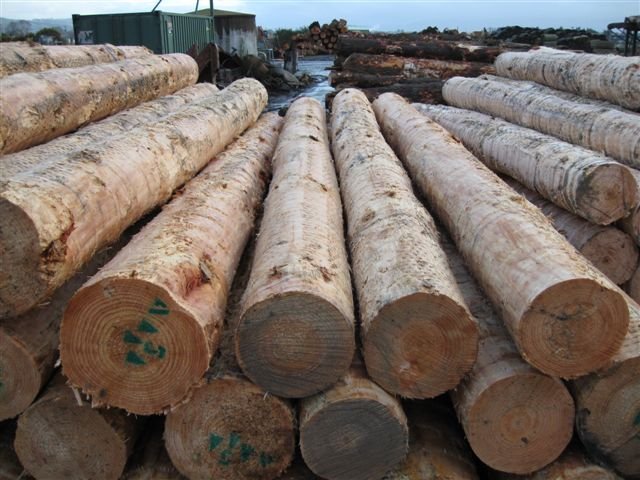
Forestry prices in New Zealand — one of the world’s largest timber exporters — are near record highs, thanks largely to strong Chinese demand for pine logs. A-grade logs for export were recently selling for $NZ140 ($134) a tonne, up around 14 per cent from September, according to market data provider AgriHQ.
In contrast, US futures contracts for lumber — or planks of timber — fell sharply in the second half of last year. Continue reading "New Zealand wood on a high demand as China shuns US exports; export prices near records"
Germany: Record wood pellets production in 2018

The energy turnaround in the heating market is still not progressing in Germany, as the only moderate increase in renewable energy in 2018 shows. Not even pellet furnaces (stoves and central heating systems) were not installed in the extent hoped for by the industry, reports the German Energy Wood and Pellet Association (DEPV) in its annual report. Sales of 33,000 pellet boilers only exceeded the previous year's result by just under 3 percent. Nonetheless, the energy source of wood pellets is experiencing increasing demand in Germany. With more than 2.4 million tons (t) in 2018, more wood pellets were produced in this country than ever before - and this on the basis of a broad, domestic supply of residual wood from the sawmills. 2.13 million tons of this were consumed in about 460,000 domestic pellet furnaces, and the surplus was exported. Continue reading "Germany: Record wood pellets production in 2018"
Ghana: January prices for exported wood products

Prices for Ghana's exported wood products are the following between 16-31 January 2019: Continue reading "Ghana: January prices for exported wood products"
Södra achieves record-high result in 2018
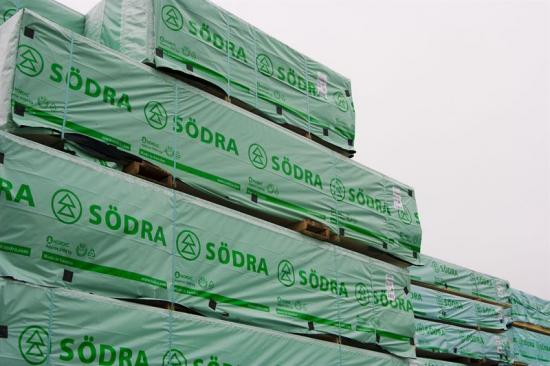
Södra’s consolidated net sales for full-year 2018 rose 18 percent to SEK 24,230 million (2018: 20,518), attributable to a favourable global economy, high demand and higher prices for paper pulp and sawn timber products. Operating profit for the year totalled SEK 4,508 million (2018: 1,917). The operating margin was 19 percent (2018: 9).
2018 was characterised by high and stable demand for Södra’s products, the company reported. Price levels for both market pulp and sawn timber products remained at a favourable level and contributed to the result.
“The 2018 result is the best in Södra’s history. We were able to meet the strong demand for our products due to extensive investments of approximately SEK 11 billion in our pulp mills and sawmills, and new innovations over the past four years. We also completed efficiency improvements and restructured our operations. Södra has thus strengthened its competitiveness,” says Lars Idermark, President and CEO.
Consolidated net sales for the fourth quarter rose 12 percent to SEK 6,062 million, with year-on-year operating profit of SEK 974 million (2018: 530). The operating margin improved to 16 percent (2018: 10).
“Growth in the fourth quarter was also strong, but uncertainty increased with some signs of a slowing global economy and turbulence in financial markets,” said Lars Idermark.
In the fourth quarter, Södra acquired Bergviks Skog’s forest holding in Latvia for EUR 324 million. The Board decided to invest SEK 100 million in research related to forest growth and productivity.
“Access to fibre is crucial for our industry and the strategic role of forests has increased. We are also seeing a growing demand for forest products as the bioeconomy evolves,” says Lars Idermark.
| Quarter | Full-year | ||||||
| 2018 | 2017 | 2018 | 2017 | ||||
| Okt-Dec | Okt-Dec | % | Jan-Dec | Jan-Dec | % | ||
| Net sales, SEK million | 6,062 | 5,413 | 12 | 24,230 | 20,518 | 18 | |
| Operating profit before depreciation, amortisation and impairment, SEK million |
1,264 | 835 | 51 | 5,654 | 3,009 | 88 | |
| Operating profit, SEK million | 974 | 530 | 84 | 4,508 | 1,917 | 135 | |
| Profit before tax, SEK million | 935 | 503 | 86 | 4,431 | 1,830 | 142 | |
| Operating margin, % | 16 | 10 | 19 | 9 | |||
| Return on capital employed, % | - | - | 24 | 12 | |||
| Equity ratio, %* | - | - | 59 | 56 | |||
*These key indicators are not calculated quarterly.
Stora Enso to implement a EUR 120 million cost-cutting programme as market uncertainty rises
Stora Enso is implementing a cost-cutting programme of Euro 120 million targeting reductions in variable and fixed costs, as market uncertainty increases. Stora Enso estimates that some effects will be visible already during 2019 with full impact by the end of 2020.
As part of the programme, Stora Enso is planning to close paper machine 6 at Imatra Mills in Finland and to start co-determination negotiations at the mill related to this plan. With annual production capacity of 90,000 tonnes, PM6 is a small machine that has reached its end-of-life.
The planned closure would result in a reduction of maximum 80 FTEs (full-time equivalents) and reorganisation of some tasks. The plan is to continue production until the maintenance break during 3Q or until the end of 2019, with an ability to deliver the committed volumes. The planned closure would cost approximately Euro 4 million related to asset write-off and costs of the co-determination process. The amount would be recorded as an item affecting comparability (IAC).
Stora Enso is also planning to take performance improvement measures at the Ala sawmill in Sweden and the Imavere sawmill in Estonia. The plan includes actions to increase productivity and reduce costs. The planned actions would result in a reduction of maximum 35 FTEs and required co-determination negotiations related to this plan have been initiated.
European softwood logs exports to China see a fivefold increase
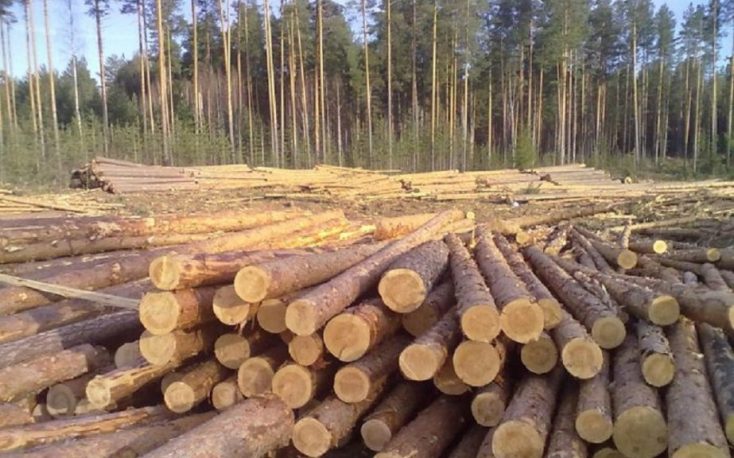
The total European softwood logs deliveries to China have went significantly up during January-November 2018, due to a boost in exports from France and Poland.
According to the latest Eurostat figures, during the mentioned period, EU's softwood logs exports to China increased by 362%, to 2,710,686 million m3, from 586,290 m3, exported during January-November 2017.
Most of the logs came from France, whose exports to China reached 1,128,610 million m3, from 70,163 in January-November 2017 (1,509% y-o-y increase). Also, Poland and Germany increased their exports to 917,403 m3 and 162,098 m3, respectively.
EU softwood logs exported to China from... (in cbm )
| Exporting Country | Jan. - Nov. 2017 | Jan. - Nov. 2018 | Change in % | ||
| EUROPEAN UNION | 586,290 | 2,710,686 | 362 % | ||
|
70,163 | 1,128,610 | 1,509 % | ||
|
27,590 | 917,403 | 3,225 % | ||
|
750 | 162,098 | 21,513 % | ||
|
32,727 | 136,842 | 318 % | ||
|
130,479 | 104,776 | -20 % | ||
| OTHERS | 324,581 | 260,957 | -20 % | ||
| TOTAL | 586,290 | 2,710,686 | 362 % |
The statistics are based on the numbers published by Eurostat. The product Softwood logs consists of following HS Codes: 44032.
Rising softwood log stocks across China
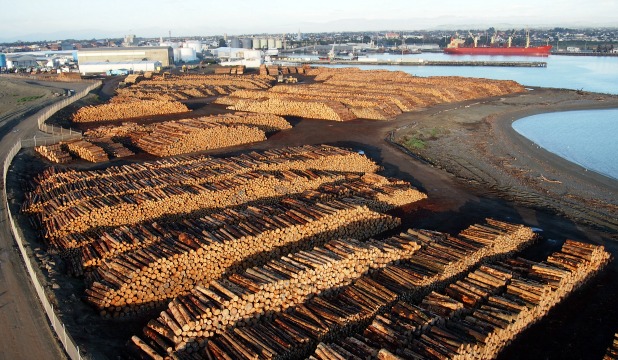
Total softwood log stocks across China have increased slightly and are now approximately 3.1-3.3 million m3. Inventory levels increased from last month mainly as a result of increased arrival volumes from the US caused by delays in berthing in the Yangtze Delta ports due to bad weather last month.
According to interest.co.nz, increasing volumes of European spruce arriving by containers are competing strongly with New Zealand's radiata pine. Demand will obviously reduce over the Chinese Lunar New Year as the country celebrates the Year of the Pig and demand will pick up again as workers return to work. Exporters are not concerned about any rise in softwood inventory levels over this period. Log stocks are lower this year than they were before last year’s lunar new year holiday period. Indeed, softwood log stocks peaked over 5M m3 last April with no market issues.
Adding to the overall reduction in log supply from the US, the government in the British Columbia region has announced plans to curb any export of logs. Currently logs are required to be processed domestically by law, but there are exceptions where it can be shown no fair domestic prices have been offered. New laws planned would make it harder to export logs in a bid to encourage more domestic processing. Increased log export fees could be introduced as early as the northern hemisphere summer.
Latest prices for exports of Brazilian logs, sawnwood and plywood

Latest prices for Brazilian logs, sawnwood and plywood as of 16-31 January, 2019. Continue reading "Latest prices for exports of Brazilian logs, sawnwood and plywood"
Finland: Lumber production rises in 2018
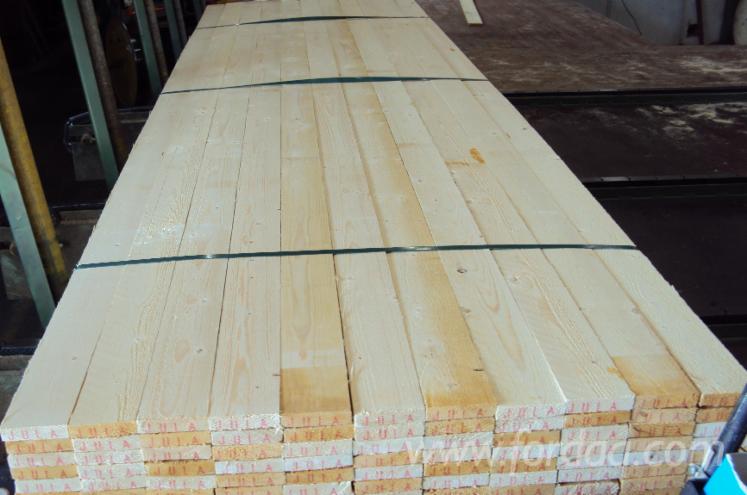
Production volumes of the Finnish sawmills in the fourth quarter of 2018 fell slightly as compared to the same period of 2017. However, annual production of lumber increased, reaching 11.8 million cubic meters. Plywood production, on the other hand, fell by 0.9 per cent year-on-year.
Overall, production volumes in the Finnish forest industry rose high in 2018. According to statistics collected by the Finnish Forest Industries Federation, pulp production was broken by an annual record and only the production volume of plywood fell slightly from the previous year.
Finland's pulp production was 8.152 million tonnes throughout the year, compared with a record high of 7.956 million tonnes in 2006. An increase of 5.8% year-on-year was recorded for pulp production throughout the year, and continued to grow in the fourth quarter of October.
Pulp production is an essential basic process for the production of traditional paper and board products, but also for the production of new, innovative products. The chemical pulp can now also be used, for example, in clothing, composites and filters.
“Although global growth now seems to be slightly declining, we are self-sufficient in allowing the forest industry to continue to flourish. With our own efforts, we in Finland do not want to weaken the international competitiveness of the industry, says Timo Jaatinen, Managing Director of the Finnish Forest Industries Federation.
Last year there was also a rise in cardboard production, which rose to 3.8 million tonnes. Paper production continued to grow, albeit only by 1.1 per cent year-on-year.
| 2018 million m3 | 2017 million m3 | Change in % | ||
| Lumber | million m3 | 11.8 | 11.7 | 0.9% |
| Plywood | million m3 | 1.2 | 1.2 | -0.9% |
| Pulp | million t | 8.2 | 7.7 | 5.8% |
| Paper | million t | 6.7 | 6.7 | 1.1% |
| Cardboard | million t | 3.8 | 3.6 | 5.4% |
The Russian forestry sector reports growth in production in 2018
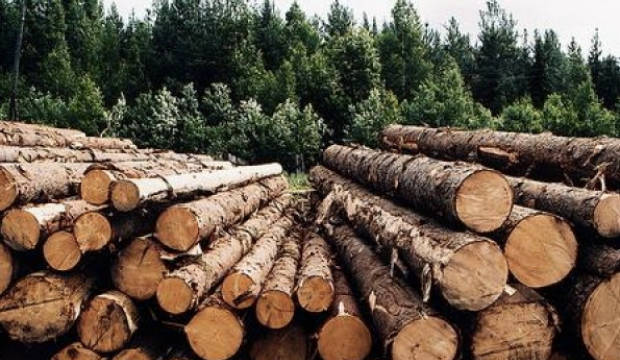
The Federal State Statistics Service (Rosstat) published the first final data on the volumes of timber production in 2018.
According to WhatWood, Rosstat covers the largest percentage of producers in such sectors as plywood, particleboard, wood pulp, paper and cardboard. The share of enterprises that regularly report to Rosstat on these types of products is 85-100% of the total production in the country. The smallest percentage of surveyed enterprises is in the harvesting and sawing fields.
According to the results of 2018, Rosstat demonstrated an increase in the production of particleboard and OSB by 15.8% y-o-y up to 9.77 million conv. m3. Plywood production grew by 7.7% y-o-y, up to 4.01 million m3.
Pulp production increased by 0.1% y-o-y up to 8.58 million tons. Paper and paperboard production increased by 6.2% y-o-y, up to 9.04 million m3, as WhatWood reported.
Preliminary estimates of the Ministry of Natural Resources of Russia in terms of timber harvesting in 2018 amounted to 228 million m3, which is 8% more than in 2017. The reasons for the growth were favourable weather conditions - a stable winter and a relatively dry autumn. The growth of harvesting volumes was possible first of all thanks to the share of which falls 80% of the total forest harvesting in Russia: in 2018, they harvested 184 million m3 of wood.
Canadian lumber giants face huge forestry sector crisis

Last week, Canfor Corp. announced that it temporarily curtailed operations at three of its sawmills in British Columbia, because of the market conditions. On January 14th, West Fraser Timber Co. Ltd. also announced further cuts in its operations.
According to BNN Bloomberg, this curtailments are the logical response to the high log costs and the low lumber prices.
Kevin Mason, managing director at ERA Forest Products Research, explained that “West Fraser has always been viewed as the – if not one of the – lowest-cost producers out there and yet, here they’re [reducing production hours]. Canfor’s taking an ounce curtailment and additional extended curtailments. We’re definitely seeing the fact that even traditionally low-cost-producers are realizing that the current situation is untenable and they’ve got to take production offline.”
Moreover, Interfor Corp. and Resolute Forest Products Inc. also reduced production in the fall of 2018, citing market conditions.
Lumber prices in North America have regained some ground, touching US$418 per 1,000 board feet as of 10:10 a.m. ET on Friday after briefly dipping below US$300 on Oct. 25. The swing was dramatic, with the commodity hitting a 2018 high of US$659 on May 14, BNN Bloomberg reported.
Other factors which caused the operations' curtailment include the mountain pine beetle, slowing U.S. housing demand and high log costs. Many British Columbia companies have started to invest in the Southern US, as to balance their dependence on local Canadian supply. Now, the Canadian businesses almost own a third of production in southern US states as they seek alternate sources.
“We are seeing capacity move out of the western part of North America, both western Canada and the western United States into the U.S. south, simply because of log supply and production economics. What I see is that there’s going to have to be some more capacity declines in places like British Columbia where log supply is constrained, and I see those players who have gone into the U.S. south – diversified geographically – probably doing better going down the road” Robert Hagler, principal at Forest Edge, said.
Shares of Canfor, Interfor and West Fraser have all gained ground in 2019, while Resolute shares are down three per cent from their final 2018 close. However, an industry leader also sees the U.S. push as a hedge against U.S. President Donald Trump’s softwood lumber duties, which have remained in place since April 2017, BNN Bloomberg reported.
“Some companies have invested in the U.S., which is more of a hedge on the trade file, actually, more than anything,” Susan Yurkovich, CEO of the B.C. Council of Forest Industries, said. “The constraints that we’ve had in place would be a 35-year fight around softwood lumber,” she added. “That’s certainly been one of the factors that has led people to purchase or acquire production in the U.S., and they’re doing that.”
Yurkovich also explained that one of the keys to future success for B.C.’s producers is to lessen their dependence on trade with the U.S.
“We have made huge in-roads into China. We have about 25 per cent of our product going there. We see lots more opportunity in China and while China’s economy is slowing, as well, it’s slowing on a massive base. So if they have even five per cent growth on that massive base there’s lots of opportunity,” she said.
India: Current prices for wood products

Latest prices for Indian teak, plywood and sawnwood - 16-31 January 2019
Plantation teak prices
| US$ per cu.m C&F | |
| Angola logs | 389-574 |
| Belize logs | 350-400 |
| Benin logs | 290-714 |
| Benin sawn | 530-872 |
| Brazil logs | 344-540 |
| Brazil squares | 333-556 |
| Cameroon logs | 405-616 |
| Colombia logs | 478-743 |
| Congo D. R. logs | 450-761 |
| Costa Rica logs | 357-780 |
| Côte d'Ivoire logs | 289-756 |
| Ecuador squares | 333-454 |
| El-Salvador logs | 320-732 |
| Ghana logs | 294-452 |
| Guatemala logs | 324-646 |
| Guyana logs | 300-450 |
| Kenya logs | 515-876 |
| Laos logs | 300-605 |
| Liberia logs | 265-460 |
| Malaysian logs | 225-516 |
| Mexican logs | 295-808 |
| Nicaragua logs | 402-505 |
| Panama logs | 335-475 |
| PNG logs | 443-575 |
| Sudan logs | 358-556 |
| Tanzania, teak, sawn | 307-613 |
| Thailand logs | 511-700 |
| Togo logs | 334-590 |
| Trinidad and Tobago logs | 603-753 |
| Uganda logs | 411-623 |
| Uganda Teak sawn | 680-900 |
Price range depends mainly on length and cross section
Prices for locally sawn imported hardwoods
Prices for imported hardwood sawnwood remain unchanged from a month earlier but will eventually come under the same downward pressure as anticipated in the teak market.
| Sawnwood, (Ex-mill) (AD) | Rs. per ft3 |
|
Merbau
|
4000-4200 |
|
Balau
|
2500-2700 |
|
Resak
|
1750-1950 |
|
Kapur
|
2200-2400 |
|
Kempas
|
1550-1750 |
|
Red Meranti
|
1450-1550 |
|
Radiata pine AD
|
850-950 |
|
Whitewood
|
850-950 |
Price range depends mainly on length and cross section
Myanmar teak prices
Traders report that demand for imported sawn teak from Myanmar is flat. The weak housing market and the high prices for imported Myanmar teak have combined to weaken interest in top quality sawnwood.
| Sawnwood (Ex-mill) | Rs. per ft3 |
| Myanmar Teak (AD) | |
|
Export Grade F.E.Q.
|
14000-20000 |
|
Plantation Teak A grade
|
9000-10000 |
|
Plantation Teak B grade
|
7000-8000 |
|
Plantation Teak FAS grade6
|
4000-6000 |
Price variations depend mainly on length and cross section.
Prices for imported sawnwood
| Sawnwood, (Ex-warehouse) (KD) | Rs per ft3 |
| Beech | 1650-1800 |
| Sycamore | 1800-2000 |
| Red oak | 1900-2000 |
| White Oak | 2500-2600 |
| American Walnut | 5000-5500 |
| Hemlock AB grade | 1500-1600 |
| Western Red Cedar | 2000-2200 |
| Douglas Fir | 1800-2000 |
Price variations depend mainly on length and cross section.
Prices for WBP marine grade manufactured by domestic mills
| Plywood, | Rs per sq.ft |
| Ex-warehouse. (MR Quality) | |
| 4 mm | 63 |
| 6 mm | 84 |
| 9 mm | 105 |
| 12 mm | 130 |
| 15 mm | 175 |
| 18 mm | 183 |
Domestic ex-warehouse prices for locally manufactured MR plywood
| Locally Manufactured Plywood “Commercial Grade” |
Rs per sq.ft | |
| Rubberwood | Hardwood | |
| 4mm | Rs.31.5 | Rs.46 |
| 6mm | Rs.47 | Rs.60 |
| 8mm | Rs.60 | Rs.73.5 |
| 12mm | Rs.73.5 | Rs.86 |
| 15mm | Rs.87 | Rs.105 |
| 19mm | RS.101 | Rs.120 |
| 5mm Flexible ply | Rs.63 | |
Source: ITTO
China: Prices for main wood products in January 2019

Prices in the Guangdong Yuzhu Timber Market
Exchange rate: 1 Euro= 7,65 CNY (January 3rd, 2019)
Date: January 30rd, 2019
| 1. Logs | ||||||||
| Origin | Species | Diameter |
Prices range
(Euro/m3) |
Prices range
(RMB/m3) |
Jan. Price |
Change from Dec. | ||
|
Min
|
Max
|
Min
|
Max
|
Range | Trend | |||
| Malaysia, Indonesia | Merbau | d>100cm | 697.05 | 723.86 | 5200 | 5400 | 5200/5400 | ► |
| 80<99cm | 576.41 | 603.22 | 4300 | 4500 | 4300/4500 | ► | ||
| d<79cm | 469.17 | 509.38 | 3500 | 3800 | 3500/3800 | ► | ||
| Balau | d>100cm | 710.46 | 737.27 | 5300 | 5500 | 5300/5500 | ► | |
| 80<99cm | 616.62 | 643.43 | 4600 | 4800 | 4600/4800 | ► | ||
| 60<d<79cm | 576.41 | 603.22 | 4300 | 4500 | 4300/4500 | ► | ||
| d<60cm | 509.38 | 563.00 | 3800 | 4200 | 4200/4300 | ▼ | ||
| Kapur | d>80cm | 375.34 | 402.14 | 2800 | 3000 | 2800/3000 | ► | |
| d<79cm | 348.53 | 361.93 | 2600 | 2700 | 2600/2700 | ► | ||
| Ulin | Assorted | 871.31 | 6500 | 6500 | ► | |||
| Lauan | d>60cm | 268.10 | 294.91 | 2000 | 2200 | 2000/2200 | ► | |
| 50<60cm | 241.29 | 268.10 | 1800 | 2000 | 1800/2000 | ► | ||
| Mengaris | d>60cm | 268.10 | 281.50 | 2000 | 2100 | 2000/2100 | ► | |
| 50<d<60cm | 227.88 | 254.69 | 1700 | 1900 | 1700/1900 | ► | ||
| Northeastern China,Russia | Ash | d>35cm | 576.41 | 589.81 | 4300 | 4400 | 4300/4400 | ► |
| Basswood | d>36cm | 482.57 | 509.38 | 3600 | 3800 | 3600/3800 | ► | |
| Elm | d=36cm | 375.34 | 482.57 | 2800 | 3600 | 2800/3600 | ► | |
| Chinese walnut | d=36cm | 375.34 | 563.00 | 2800 | 4200 | 2800/4200 | ► | |
| Chinese oak | d>36cm | 563.00 | 734.27 | 4200 | 5500 | 4000/5500 | ► | |
| Mongolian scotch pine | d>36cm | 254.69 | 294.91 | 1900 | 2200 | 1900/2200 | ► | |
| Larch | d>36cm | 207.77 | 241.29 | 1550 | 1800 | 1550/1800 | ▼ | |
| Maple | d>36cm | 361.93 | 408.85 | 2700 | 3050 | 2700/3050 | ► | |
| Poplar | d>36cm | 221.18 | 261.39 | 1650 | 1950 | 1650/1950 | ► | |
|
Africa
|
Big Wenge | Assorted | 643.43 | 871.31 | 4800 | 6500 | 5000/6500 | ▼ |
| Okume | Assorted | 294.91 | 335.12 | 2200 | 2500 | 2200/2500 | ► | |
| Okan | Assorted | 455.76 | 522.79 | 3400 | 3900 | 3400/3900 | ► | |
| African blackwood | Assorted | 1139.41 | 1340.48 | 8500 | 10000 | 8500/10000 | ► | |
| Adoukdeafric | d>80cm | 509.38 | 522.79 | 3800 | 3900 | 3800/3900 | ► | |
| d<79cm | 469.17 | 495.98 | 3500 | 3700 | 3500/3700 | ► | ||
| Umbila | d=60cm | 630.03 | 4700 | 4800 | 4700/4800 | ▼ | ||
| Ambila | Assorted | 455.76 | 697.05 | 3400 | 5200 | 3400/5500 | ▼ | |
| Kevozingo | d>80cm | 1742.63 | 2010.72 | 13000 | 15000 | 13000/15000 | ► | |
| Ekki | d>100cm | 522.79 | 536.19 | 3900 | 4000 | 4000/4100 | ▼ | |
| d=50-99cm | 388.74 | 402.14 | 2900 | 3000 | 2900/3000 | ► | ||
| Monzo | d=40cm | 831.10 | 911.53 | 6200 | 6800 | 6200/6800 | ► | |
| Myanmar | Teak | 30<d<60cm | 1139.41 | 1608.58 | 8500 | 12000 | 8500/12000 | ► |
| France | Red oak | d>30cm | 335.12 | 348.53 | 2500 | 2600 | 2500/2600 | ► |
| S.America | Purple Heart | d>60cm | 455.76 | 495.98 | 3400 | 3700 | 3400/3700 | ► |
| 50<d<60cm | 402.14 | 455.76 | 3000 | 3400 | 3000/3400 | ► | ||
| Barataballi | d>60cm | 308.31 | 2300 | 2300 | ► | |||
| Wamara | d>40cm | 469.17 | 536.19 | 3500 | 4000 | 3700/4100 | ▼ | |
| Ipe | d>40cm | 442.36 | 509.38 | 3300 | 3800 | 3600/4000 | ▼ | |
| Green heart | d>40cm | 308.31 | 328.42 | 2300 | 2450 | 2300/2450 | ► | |
| Fava-Amargosa | d>100cm | 348.53 | 442.36 | 2600 | 3300 | 2600/3300 | ► | |
| Palosanto | d>30cm | 1099.20 | 1179.62 | 8200 | 8800 | 8200/8800 | ► | |
| King wood | Assorted(unit:ton) | 4289.54 | 6032.17 | 32000 | 45000 | 36000/45000 | ▼ | |
| 2. Sawntimber | ||||||||
| Places | Product name |
Grades | Prices range (Euro/m3) |
Prices range (RMB/m3) |
Jan. Price |
Change from Dec. |
||
| Min | Max | Min | Max | Range | Trend | |||
| North America | Cherry | FAS-2" | 1206.43 | 1474.53 | 9000 | 11000 | 9000/11000 | ► |
| FAS-1" | 1072.39 | 1206.43 | 8000 | 9000 | 8000/9000 | ► | ||
| White Ash | A | 804.29 | 938.34 | 6000 | 7000 | 6000/7000 | ► | |
| Black Walnut | FAS-2" | 1876.68 | 2278.82 | 14000 | 17000 | 14000/17000 | ► | |
| FAS-1" | 1340.48 | 1742.63 | 10000 | 13000 | 10000/13000 | ► | ||
| AB(1-2") | 1005.36 | 1139.41 | 7500 | 8500 | 7500/8500 | ► | ||
| Hard Maple | A | 1206.43 | 1340.48 | 9000 | 10000 | 9000/10000 | ► | |
| Soft Maple | A | 1005.36 | 1072.39 | 7500 | 8000 | 7500/8000 | ► | |
| White Oak | A | 1206.43 | 1742.63 | 9000 | 13000 | 9000/13000 | ► | |
| Red Oak | A | 938.34 | 1206.43 | 7000 | 9000 | 7000/9000 | ► | |
| White Kageki | A | 1072.39 | 1206.43 | 8000 | 9000 | 8000/9000 | ► | |
| Pine Finaland | A | 375.34 | 2800 | 2800 | ► | |||
| Africa | Makore | A (imported with original packing) | 1005.36 | 7500 | 7500 | ► | ||
| Zingana | A | 1474.53 | 1742.63 | 11000 | 13000 | 11000/13000 | ► | |
| Awora | A | 844.50 | 938.34 | 6300 | 7000 | 6300/7000 | ► | |
| Mezali (big) | A | 1742.63 | 2010.72 | 13000 | 15000 | 13000/15000 | ► | |
| Mezali (small) | A | 1608.58 | 1742.63 | 12000 | 13000 | 12000/13000 | ► | |
| African Walnut | A | 1273.46 | 1340.48 | 9500 | 10000 | 9500/10000 | ► | |
| Sapelli | A (imported with original packing) | 1045.58 | 1139.41 | 7800 | 8500 | 7800/8500 | ► | |
| Okume | A | 603.22 | 670.24 | 4500 | 5000 | 4500/5000 | ► | |
| Ebiara | A | 844.50 | 911.53 | 6300 | 6800 | 7000/7500 | ▼ | |
| Bubinga | A | 2278.82 | 2546.92 | 17000 | 19000 | 17000/19000 | ► | |
| Acajou | A (imported with original packing) | 1045.58 | 1139.41 | 7800 | 8500 | 7500/8000 | ▲ | |
| Adouk d'afric | A | 777.48 | 844.50 | 5800 | 6300 | 6000/6500 | ▼ | |
| Samba | A | 670.24 | 710.46 | 5000 | 5300 | 5000/5300 | ► | |
| Teak | A | 1286.86 | 9600 | 9600 | ► | |||
| Europe | European Maple | A | 1340.48 | 1407.51 | 10000 | 10500 | 10000/10500 | ► |
| Beech | Super Class | 710.46 | 5300 | 5300 | ► | |||
| Southeast Asia | Nyatoh | No knot | 536.19 | 589.81 | 4000 | 4400 | 4000/4400 | ► |
| Pontianak wood | Super Class | 1206.43 | 1340.48 | 9000 | 10000 | 9000/10000 | ► | |
| Merbau | Super class | 1139.41 | 1233.24 | 8500 | 9200 | 8500/9200 | ► | |
| Lauan | Super class | 616.62 | 643.43 | 4600 | 4800 | 4600/4800 | ► | |
| Camphorwood | Super class | 670.24 | 737.27 | 5000 | 5500 | 5000/5500 | ► | |
| Camphorwood | A | 603.22 | 656.84 | 4500 | 4900 | 4500/4900 | ► | |
| Ebony | Super class | 2412.87 | 18000 | 18000 | ► | |||
| Ramin | No knot | 804.29 | 884.72 | 6000 | 6600 | 6000/6600 | ► | |
Price information in Shanghai Furen Timber Market - January 2019
Exchange rate: 1 Euro=7,46 CNY (January 30rd, 2019)
Date: January 30rd, 2019
| 1. Imported sawntimber | ||||||||||
| Standard name | Local name | Grade | Spec./ Grades |
Origin | Prices range (Euro/m3) |
Price range (RMB/m3) | Jan. Price |
Change from Dec. | ||
|
Min
|
Max
|
Min
|
Max
|
Range | Trend | |||||
| Okume | Okume | All spcifications | A | Africa | 589.81 | 643.43 | 4400 | 4800 | 4400/4800 | ▼ |
| Ebiara | Ebiara | All spcifications | A | 965.15 | 1072.39 | 7200 | 8000 | 7200/8000 | ► | |
| Sapeli | Sapeli | All spcifications | A | 965.15 | 1152.82 | 7200 | 8600 | 7200/8600 | ► | |
| Zingana | Zingana | All spcifications | A | 1206.43 | 1474.53 | 9000 | 11000 | 9000/11000 | ► | |
| Bubinga | Bubinga | A (high mountains) | A | Africa | 2010.72 | 2252.01 | 15000 | 16800 | 15000/16800 | ► |
| A (Zambia) | 1273.46 | 1340.48 | 9500 | 10000 | 9500/10000 | ► | ||||
| African Mahogany | African Mahogany | All spcifications | A | Africa | 804.29 | 1005.36 | 6000 | 7500 | 6000/7500 | ► |
| Makore | Makore | All spcifications | A | 1139.41 | 1246.65 | 8500 | 9300 | 8500/9300 | ► | |
| Ayous Wawa | Wawa | A | 495.98 | 549.60 | 3700 | 4100 | 3700/4100 | ► | ||
| Ayous | A | 589.81 | 643.43 | 4400 | 4800 | 4400/4800 | ▲ | |||
| Beli | Beli | All spcifications | A | 938.34 | 991.96 | 7000 | 7400 | 7000/7400 | ► | |
| Oak | Red oak | 2" | FAS | North America | 1072.39 | 1152.82 | 8000 | 8600 | 7800/8600 | ▲ |
| 1" | FAS | 871.31 | 1005.36 | 6500 | 7500 | 6200/7000 | ▲ | |||
| 2" | 1 com | 777.48 | 871.31 | 5800 | 6500 | 5000/5600 | ▲ | |||
| 1" | 1 com | 670.24 | 777.48 | 5000 | 5800 | 6000/6500 | ▼ | |||
| White oak | 2" | FAS | 1273.46 | 1474.53 | 9500 | 11000 | 7500/8500 | ▲ | ||
| 1" | FAS | 938.34 | 1045.58 | 7000 | 7800 | 7000/7800 | ► | |||
| 2" | 1 com | 737.27 | 938.34 | 5500 | 7000 | 6500/7000 | ▼ | |||
| 1" | 1 com | 723.86 | 871.31 | 5400 | 6500 | 5800/6500 | ▼ | |||
| White Ash | White Ash | 2" | FAS | 1005.36 | 1139.41 | 7500 | 8500 | 6500/7500 | ▲ | |
| 1" | FAS | 777.48 | 911.53 | 5800 | 6800 | 5500/6000 | ▲ | |||
| 2" | 1 com | 737.27 | 817.69 | 5500 | 6100 | 5500/6100 | ► | |||
| 1" | 1 com | 630.03 | 683.65 | 4700 | 5100 | 4700/5100 | ► | |||
| Hard Maple | Hard Maple | 2" | FAS | 1273.46 | 1407.51 | 9500 | 10500 | 9500/10500 | ► | |
| 1" | FAS | 965.15 | 1045.58 | 7200 | 7800 | 7200/7800 | ► | |||
| Soft Maple | Soft Maple | 1" | 1 com | 831.10 | 871.31 | 6200 | 6500 | 6200/6500 | ► | |
| Cherry | Cherry | 2" | FAS | 1206.43 | 1407.51 | 9000 | 10500 | 9000/10500 | ► | |
| 1" | 871.31 | 1045.58 | 6500 | 7800 | 6500/7800 | ▼ | ||||
| Black Walnut | Black Walnut | 2" | FAS | 2010.72 | 2278.82 | 15000 | 17000 | 15000/17000 | ► | |
| 1" | 1474.53 | 1876.68 | 11000 | 14000 | 11000/14000 | ► | ||||
| Red Alder | Red Alder | JB | 375.34 | 388.74 | 2800 | 2900 | 2800/2900 | ► | ||
| CUS | 522.79 | 549.60 | 3900 | 4100 | 3900/4100 | ► | ||||
| SUP | 670.24 | 697.05 | 5000 | 5200 | 5000/5200 | ► | ||||
| Yellow Poplar | Yellow Poplar | 1" | FAS | 536.19 | 563.00 | 4000 | 4200 | 4000/4200 | ► | |
| 2" | FAS | 616.62 | 643.43 | 4600 | 4800 | 4600/4800 | ► | |||
| Yellow Meranti | Yellow Meranti | All specifications | A | Southeast Asia | 482.57 | 522.79 | 3600 | 3900 | 3600/3900 | ▼ |
| Red Meranti | Red Meranti | All specifications | A | 509.38 | 549.60 | 3800 | 4100 | 3800/4100 | ► | |
| Champaka | Golden teak | All specifications | Assorted | Yunnan/ Mynmar |
871.31 | 1005.36 | 6500 | 7500 | 6500/7500 | ► |
| Merbau | Merbau | 2" | Assorted | Indonesia | 1005.36 | 1273.46 | 7500 | 9500 | 7600/9500 | ▼ |
| Beech | Beech | AA | Europe | 576.41 | 630.03 | 4300 | 4700 | 4300/4700 | ► | |
| heartwood | 509.38 | 563.00 | 3800 | 4200 | 3800/4200 | ► | ||||
| Ash | Ash | All specifications | A | Russia | 670.24 | 898.12 | 5000 | 6700 | 5000/6700 | ► |
| Elmwood | Elmwood | A | 603.22 | 764.08 | 4500 | 5700 | 4500/5500 | ▲ | ||
EU requested consultations with Ukraine over wood export ban

The EU has formally requested consultations with Ukraine under the EU-Ukraine Association Agreement on Ukraine's export ban on unprocessed wood, according to a report posted on the website of the European Commission.
"The EU considers that the longstanding trade restriction by Ukraine is in violation of key trade provisions of the EU-Ukraine Association Agreement, which prohibit any form of export restrictions," the statement said.
The European Commission notes that while the EU strongly supports legitimate measures taken by states to preserve forests and to combat illegal logging, the EU has repeatedly stated that Ukraine's export ban cannot be considered an appropriate or effective measure for that purpose and has repeatedly offered cooperation in the area of forest preservation and management.
"Consultations under the EU-Ukraine Association Agreement are the first step in a dispute settlement. The EU hopes that the matter can be successfully resolved during these bilateral consultations," the statement reads.
The moratorium on timber exports has been in force in Ukraine since 2015.
New Zealand: Export prices for logs rising due to higher prices in China and lower ocean freight costs
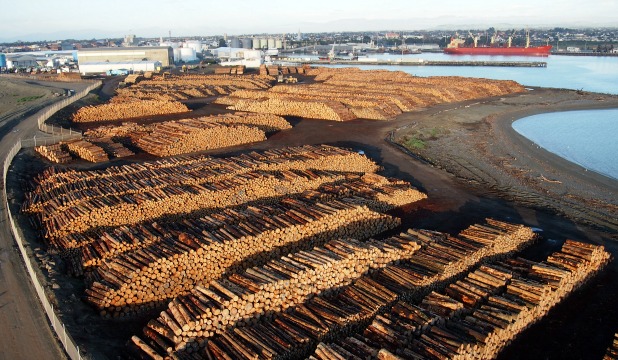
At wharf gate (AWG) prices for logs delivered to ports around New Zealand increased on average 12-13 NZD per JASm3 over the last two months. This is due to a combination of increases in the CFR sale prices in China and a reduction in ocean freight costs. A grade logs from New Zealand now sell for up to 142 USD per JASm3 in China and 155 USD per JASm3 in India.
The domestic market for logs has had a very stable start to 2019 with no significant changes in log prices. Demand for sawn timber is ahead of this time last year. The only constraint to log supply is the production capacity in New Zealand.
Due to the increases in AWG sale prices over January and February the PF Olsen Log Price Index increased $8 to $137 for February. The index is currently $9 above the two-year average, $11 above the three-year average, and $20 higher than the five-year average.
Prices for domestic log sales in Quarter 1, 2019 are relatively unchanged from Quarter 4, 2018. Demand is strong as mills replenish stock after the Christmas holidays. Log supply has been strong with excellent weather around the country.
Sales into Asia have been patchy through the Chinese Lunar New Year, and demand is expected to increase later in February.
At wharf gate (AWG) prices for logs delivered to ports around New Zealand increased on average 8 NZD and 5-6 NZD per JASm3 in January and February respectively. The price increases were across all grades. Some log exporters were able to increase prices more than other log exporters due to short term shipping advantages. New Zealand's log exporters are generally positive with their outlook for March AWG prices.

