

The support of electricity generated from solid biomass is the most important stimulation for the development of the biomass power plant market. Whereas biomass subsidisation schemes have recently also experienced positive amendments in Europe, Asian countries are currently reducing this kind of support for the first time. Continue reading "Biomass subsidies: New schemes in Europe, first declines in Asia"
Article archive
China: Yekalon starts production at its 300,000 m3/yr MDF/HDF plant

Yekalon has produced the first board at its a new MDF/HDF production line in China. According to the announcement, the completion of the plant is in its final stages and in accordance with the timetable.
The installation of the plant started in April 2018. After becoming fully operational, the plant will produce 300,000 m3 of MDF/HDF annually.
The line supplied by Siempelkamp is designed for the high-speed production of thin boards and includes a 9’ x 33.8 m Con-tiRoll® Generation 8 press.
The scope of the technology provider also includes a flash tube dryer, a fiber sifter, the resin dosing system with Ecoresinator, a mat compactor and a mat preheating system. Also Siempelkamp provided the finishing line with a multi-diagonal saw, a cooling and stacking line as well as an automated high-stack storage system. The production management will be administered with Siempelkamp’s process control technology Prod-IQ® as a full package.
Switzerland: Slight increase in wood pellets prices this month
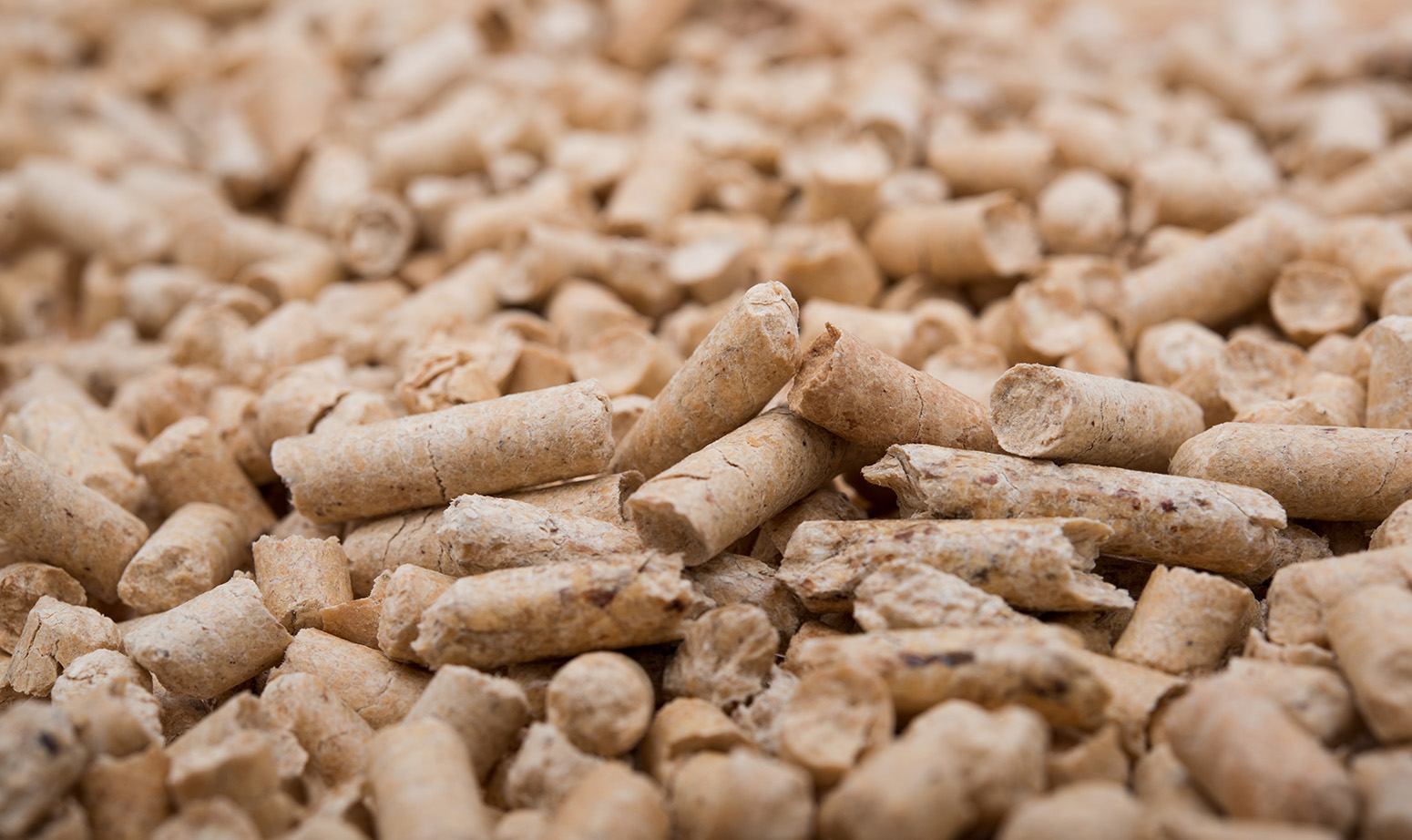
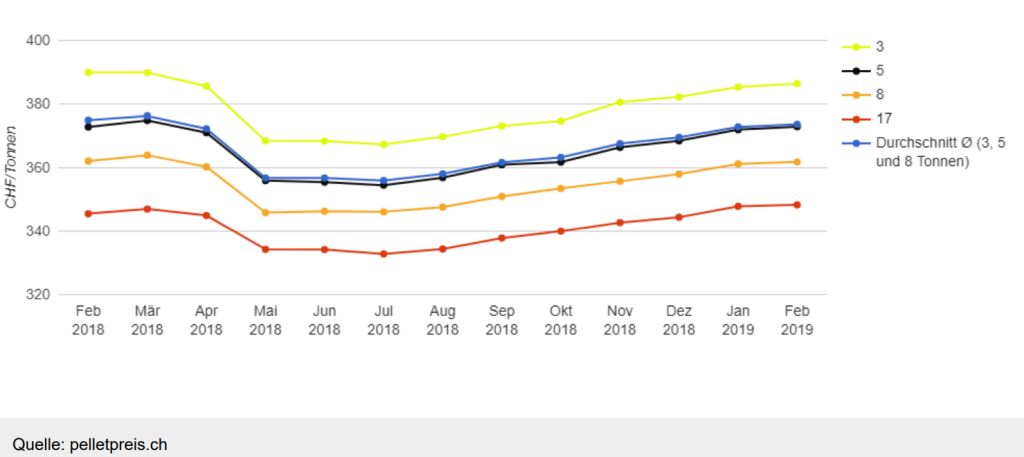 In February 2019, the prices for wood pellets only increased slightly in Switzerland. The average price for pellets of quality ENplus A1, bulk goods, is 373,70 CHF / t. That's just 0.2% more than in January. Compared with the same month of the previous year, the average price fell by 0.3%.
Depending on the delivery quantity (3-8 t), the price ranges between around 362 (8t) and 386 CHF / t (3t).
Larger quantities of commercial pellets cost on average 348.34 CHF / t. This is just 0.46 CHF or 0.1% more than in January and 0.8% more than in the same month last year.
Ligna: The future of the woodworking and timber processing industries at this year’s event

This May over 1,500 companies will be gathering in Hannover, Germany, to showcase the future of the woodworking and timber processing industries.
Whether it’s about digitization, automation, IoT platforms or collaborative systems, Ligna is where innovations are shown for the first time – and on an unrivalled scale. 130,000 square meters (nearly 1.4 million square feet) is the total net display area that will be occupied by exhibition stands featuring the latest woodworking and timber processing plant, machinery and tools.
“From 27 to 31 May 2019, exhibitors from over 50 countries will gather here at the Hannover Exhibition Center to showcase state-of-the-art processing solutions, applications and concepts for the entire forestry & wood industry. The presence of all the world’s leading technology providers will make Hannover the global hotspot for the wood-based industries during those five days. No other fair compares in terms of international appeal”, asserted Dr. Andreas Gruchow, Managing Board member at Deutsche Messe, during the Ligna Preview press conference on 5 February in Hannover, adding: “Once again in 2019, Ligna will serve as the industry’s showcase of choice for unveiling their innovations, with a great many exhibitors even timing their development cycles to coincide with the show’s staging every two years.”
Visitors can expect to see innovations across all display categories, from forestry technology, furniture and window manufacturing, through to tooling systems and surface technology. They will also see live demonstrations of fully functional furniture production plants, learn about IoT platforms for Industry 4.0 plants and the latest R&D projects, and be able to participate at networking events throughout the show. Dr. Andreas Gruchow: “One of the big challenges is the ever greater trend to product individualization – a trend that is putting pressure on manufacturers to deliver customized products at least as quickly, profitably and efficiently as with series production. It’s these sorts of challenges for which Ligna exhibitors will be presenting solutions.”
Ligna 2019 has three focus themes: “Integrated Woodworking – Customized Solutions”, “Smart Surface Technology” and “Access to Resources and Technology”. The latter is also the keynote theme of the Wood Industry Summit.
The prefabricated house industry in Germany is reaching new records
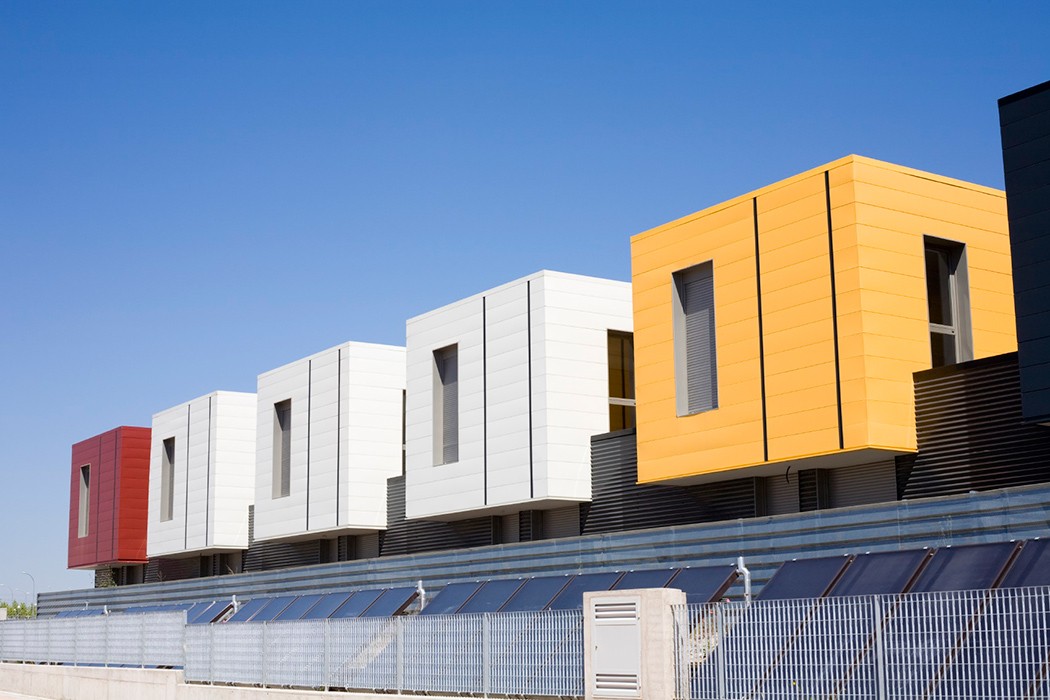
In Germany, the prefabricated house market is booming. The sales volume increased by 7.2% last year. This is not due to the general boom in the construction industry alone, but also due to the increasing market share of prefabricated housing solutions in residential construction. The proportion is now 20.4% and is thus higher than ever, as a new study by Interconnection Consulting shows.
The construction of new one- and two-family houses in Germany in 2018 is at a record level. It is expected that the prefabricated house industry will follow the general construction industry for the next few years, resulting in a stable quota of prefabricated houses between 20.0% and 21.0%. However, despite favorable housing loans and positive development in the labor market, the strongest wave of investors who prefer investing in concrete rather than material assets, seems to be already over, Neva Rukonic, author of the study observes.
Average prices are rising slightly
With the general upturn in the construction industry and rising average prices, the turnover of the prefabricated house sector is increasing by 8.3%. The high demand for turnkey or prefabricated houses as well as energy-efficient buildings, which have become standard in the prefabricated house industry, continues to fuel this price trend. In 2018, the price increased by 1.0% compared to the previous year. In the next few years, a further price increase of about 1.0 to 2.5% is expected.
Terraced houses are losing ground
Paved and turnkey homes are developing much better in 2018 than prefabricated homes. The proportion of ready-to-use houses remained stable at 38.7%. Turnkey houses reached a share of 36.0% in 2018. Only around a quarter of all buildings (25.3%) will be handed over to be upgraded – and the trend is falling. The rising number of building permits in recent years is also reflected in the German prefabricated house market. Two-family houses and multi-storey residential units have performed significantly better than terraced houses. The high demand for individuality means that terraced houses only achieved a below-average growth of 4.7% last year. Overall, however, single-family homes dominate with a market share of 83.2% and disproportionate growth.
Growing market concentration
The market concentration of the top 10 players continued to increase in 2018, reaching 37.1%. A dominant position in the German prefabricated house market is occupied by the group Deutsche Fertighaus Holding, which again achieved a market share growth of 5.8% with its brands “Mass”, “Okal” and “Allkauf”. The fourth brand – the massive house sales line “Ice Stone House” – was discontinued in 2017 after two stagnant years.
Interfor boosts lumber shipments to China due to Chinese tariffs on US products

Interfor Corp. says the company has markedly increased lumber shipments from Canada to China as a result of tariffs imposed on its U.S. production.
Barton Bender, vice-president of sales, told a conference call with financial analysts, that Interfor has tried to keep overall lumber shipments to the country constant after China retaliated to U.S. tariffs with its own import tax of up to 25 per cent on some goods.
Bender says it has increased exports from Canada to China despite shipping costs that are roughly 50 per cent higher than from the Southern U.S.
Interfor, along with other Canadian forestry companies, have invested in U.S. lumber production in recent years as they faced log supply issues in B.C. and softwood tariffs on exports to the U.S.
The industry has been on a rollercoaster of prices in the past year as they spiked to record highs last summer before plummeting in the fourth quarter in part over U.S. housing market concerns.
Interfor says 2018 was the company best financial year in its history, despite a fourth-quarter loss of $13.2 million or 19 cents per share.
Swiss Krono to expand in USA with a new MDF and laminate flooring lines
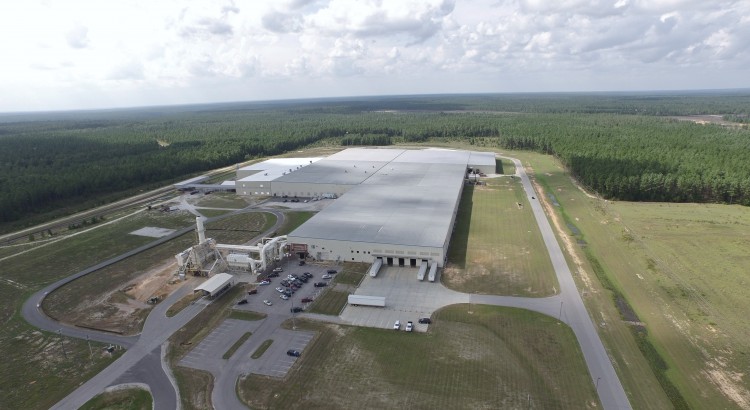
Swiss Krono Group, one of the world’s leading manufacturers of wood-based materials, continues to invest in rural its US plant in Barnwell, South Carolina. The Swiss-based company is building a 250,000-square-foot expansion on its existing Barnwell manufacturing facility, with help from the New Markets Tax Credit (NMTC) program.
The expansion includes the construction of a new medium-density fiberboard (MDF) manufacturing line, ancillary wood yard, energy plant and waste treatment facilities, as well as the installation of a fourth laminate flooring line. Continue reading "Swiss Krono to expand in USA with a new MDF and laminate flooring lines"
US lumber prices continue the upward trend in February
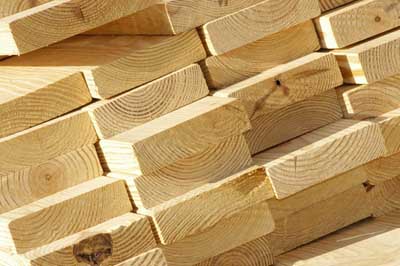
The trading pace in US framing lumber eased from the previous week’s action, but early momentum carried prices higher. Digestion of previous orders was one factor. Uncertainties regarding 2019 demand, the extent of transportation issues, and limitations from winter weather also contributed to renewed hints of caution. The weight of these issues factored into the about-face in an upward futures trend. Continue reading "US lumber prices continue the upward trend in February"
Exports of processed plantation timbers rising in Brazil

Export data for Brazilian wood products show that over the past five years there has been a steady increase in export volumes driven mainly by exports of processed pine plantation timbers. Pine plywood exports were a record 2,272,067 cubic metres in 2018.
Brazil's exports of pine veneer rose to 165,582 cubic metres in 2018 from 103,013 cubic metres in 2017 and pine sawnwood exports were 12% higher in 2018 compared to a year earlier.
The Brazilian plantation sector is optimistic about the resumption of growth in the domestic and international markets but has identified measures necessary to restore Brazil´s competitiveness. These include: improving infrastructure and logistics; improving legal security; adjusting environmental licensing to best practices and reviewing of the taxation system to ensure competitiveness.
Against the background of expanding markets for plantation products exports of tropical wood products have been steadily declining. Tropical plywood exports were only 61,016 cubic metres in 2018, about the same as in the previous year. Exports of tropical veneer in 2018 followed a similar trend with just 13,424 cubic metres being exported, the same as in the previous year.
Brazil's ropical sawnwood exports increased slightly in 2018 rising to 556,441 cubic metres, an18% increase compared to 2017.
German Steico to start production of prefabricated components for the Polish market
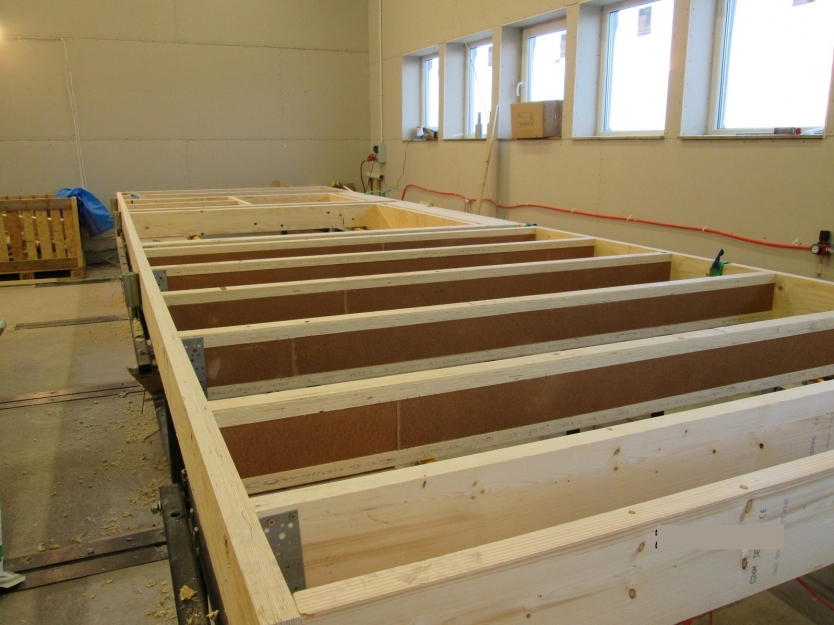
In the course of the year 2019, the German building products and components manufacturer Steico SE wants to start in Feldkirchen, Germany the production of prefabricated elements for the Polish market.
Steico has bought a used production line for this purpose. At the Czarnków location in Poland, the components LVL, I-Joists and wood fiber insulation materials produced by Steico are assembled into finished walls and ceiling elements. The laminated veneer lumber (LVL) is supplied by Czarna Woda.
According to Steico, the reason for this is the low number of timber construction companies in Poland, which already requires a high degree of prefabrication at the factory. In Poland, a state-owned timber construction project is also planned. That promoted the decision to produce the elements.
The order of magnitude in which element production is to take place is not yet clear, but is "significant".
Steady rise in Russian lumber exports during 2018

In 2018, the Russian lumber exports went up in value and volume terms. During the mentioned period, the country exported 19.232 million tonnes of lumber, 6.7% more than in 2017, while the total value of these exports amounted to $4.503 billion, up by 14.2%.
Also, the Russian logs exports went down in volume terms, but increased in value terms. For full 2018, the logs exports went down by 2.1% y-o-y, to 19.033 million m3, while their total value came up to $1.488 billion, 1.3% more than in 2017.
The plywood exports from Russia went up during full year 2018, in volume and in value terms. Thus, the plywood export volume rose to 2.683 million m3, 8.7% more than in 2017, while the value of the exported products amounted to $1.355 billion, 22.9% growth y-o-y.
According to the statistics published by the Russian Federal Customs Office, the Russian plywood average export price came up to about $505/m3.
Södra to invest in a new wood pellet plant in Sweden
Södra has invested in a new pellet factory at its sawmill in Långasjö, Sweden. The investment totals SEK 20 million ($2.2 million) and will increase total pellet production by 10,000 tonnes.
“Wood pellets are a product of the future and an obvious alternative in the transition to sustainable energy solutions. Swedish small and mid-sized industrial enterprises are investing in pellets,” said Fredrik Tärneberg, Head of Sales, Energy Products, Södra.
To satisfy the demand for pellets, Södra commenced construction of a pellet factory last spring, which was completed at year-end. Following a period of adjustment and calibration, the very first pellets delivery will take place in the week beginning 11 February.
Demand is primarily from Swedish industry, which is replacing oil with pellets. Pellets produce heat like oil and are a direct substitute for oil. Another new application, and the new “trend” among horse owners, is to use pellets as bedding for horse boxes.
“Our pellets are made from 100% spruce without additives, which makes them ideal to use as bedding. We have also noted an increase in pellets stoves,” said Fredrik Tärneberg.
Pfeifer Group to start producing CLT this year
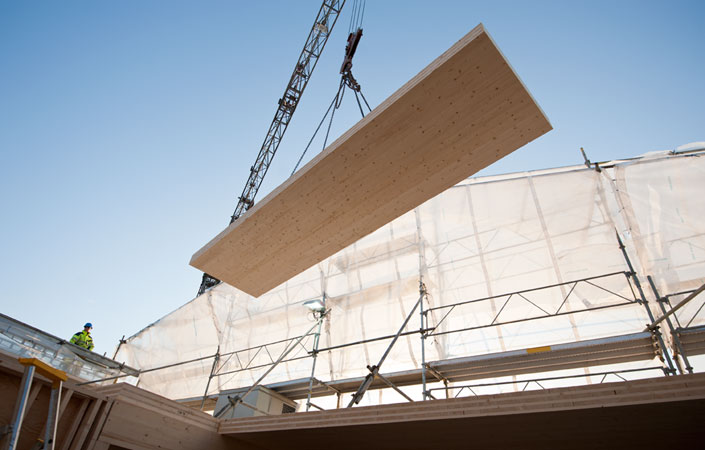
The Pfeifer Group is currently investing a good 25 million euros in the conversion and expansion of its traditional location in Schlitz, Germany. From mid-2019, the wood processing company from Tyrol / Austria will start producing Cross Laminated Timber (CLT) in the former formwork panels and trusses. In the first expansion phase, 55 new jobs will be created; while in the final construction phase, there will be 100 jobs.
Pfeifer plans to reach an annual capacity of 100,000 m³ of finished CLT in full operation in 2021 on a plant area of 6 hectares. The start-up and optimization phase will start in the middle of 2019, and the completion phase I with 50,000 m³ of finished CLT / year in the fourth quarter of 2019. This corresponds to a timber use of approx. 65,000 m³. The converted and newly built storage, production and order picking halls are already in place, the installation of the machinery is well advanced. Similarly, the entire water and sewage network and the power supply was renewed or expanded. A first commissioning is scheduled for August 2019, according to Pfeifer's plant manager Roland Ritter.
The central supplier for the CLT plant is the nearby Pfeifer sawmill Lauterbach. The further processing of the sawn timber deepens the added value. In Schlitz, a large part of the infrastructure already existed, which greatly reduces the investment and running costs. The plant is also centrally located in Germany, Europe's most important market, and not far from the core and boom markets such as the UK and Scandinavia.
The UN provides update on the EUTR

The UN Environment World Conservation Monitoring Centre (UNEP-WCMC) has published its latest briefing note on the implementation of the European Union Timber Regulation (EUTR), which covers the period November to December 2018.
The briefing opens with an update on Ukraine. It highlights the steps taken by the country to address illegalities in the forestry sector, as well as allegations against the Government and private companies of illegal logging.
It then summarises recent EUTR enforcement actions and related activities in Denmark, Germany, Portugal and the United Kingdom. It also describes the release of a new tool to identify timber from Asia used in paper and fibreboards.
On illegal logging and timber trade, the briefing highlights a report by Global Witness on logging in the Solomon Islands, and claims by Timberleaks that a large flooring retailer in the United States is still buying from scandal-hit Brazilian firm.
Among legislation and policy updates, the briefing reports on the FLEGT/EUTR Expert Group meeting, which took place in Brussels, Belgium, on 7 December 2018. The Expert Group discussed updates on EUTR implementation, including substantiated concerns received by some EU Member States on timber from Brazil and Myanmar/Burma.
It also reports on the signing by Vietnam and the EU of their Voluntary Partnership Agreement (VPA) in October 2018, and the initialling by Guyana and the EU of their VPA in November 2018.
The briefing note was compiled by UNEP-WCMC as a consultant of the European Commission in close cooperation with the Member States Competent Authorities.
To view or download the full briefing note please visit: UNEP-WCMC briefing note
European softwood lumber exports to the USA kept on growing in 2018

European softwood lumber exports to the USA continued to rise in 2018, although the pace of growth was significantly lower as compared to the previous year. Thus, from January to November 2018, European shipments to the US increased by 27 % (up to 3.6 million cubic meters). In January-November 2017, softwood lumber deliveries from Europe to the US were up by 77% as compared to the same period of 2016.
In January-November 2018, US's main source for European softwood was the Netherlands with 1,66 million m3 and a share of 51 percent of the overall American imports from Europe. Germany came second with 787 thousand m3 and a 52% increase yoy. Significant growth rates were registered in U.S. imports from Austria (+204%) and Romania.
Even if the US has only a minor share of all EU softwood lumber exports, the prospects are encouraging: the low domestic demand in recent years determined the European sawmills to search for other worldwide markets. This fact, combined with the encouraging housing recovery in the US and the quest for additional supplies of lumber, due to the softwood lumber trade dispute with Canada are strong reasons to believe that this upward trend will continue.
EU softwood lumber exported to USA from... (in cbm )
| Exporting Country | January-November 2017 | January-November 2018 | Change in % | |||
|
2,574,050 | 3,263,420 | 27 % | |||
|
1,485,179 | 1,668,087 | 12 % | |||
|
518,854 | 787,954 | 52 % | |||
|
316,218 | 312,510 | -1 % | |||
|
80,125 | 243,529 | 204 % | |||
|
78,850 | 142,660 | 81 % | |||
|
94,824 | 108,680 | 15 % | |||
| TOTAL | 2,574,050 | 3,263,420 | 27 % |
Brexit impact on the European hardwood trade

The 29th March, the date scheduled for the UK’s departure from the EU, is now fast approaching. But there is considerable uncertainty over the exact form Brexit will take on that date, or even if it will happen at all. Continue reading "Brexit impact on the European hardwood trade"
Canfor curtails production at three other mills in BC

Canadian lumber giant Canfor has again curtailed production at three of its British Columbia mills.
Citing log supply constraints, log costs, and current market conditions, Canfor will restrict production at its Vanenby plant for six weeks beginning February 11. Its Houston and Mackenzie production will be curtailed for one week. These curtailments will reduce the company's production output by around 40 million board feet.
This is in addition to the approximately 150 million board feet of production capacity that was curtailed by Canfor in Q4 2018 and early Q1 2019, as previously announced.
Other Canadian lumber leaders have curtailed production. West Fraser and Conifex both restricted production, citing high log costs, log supply constraints, falling lumber prices, and U.S. import tariffs as factors.
Canfor has 13 sawmills in Canada, with total annual capacity of approximately 3.8 billion board feet.
Finland: Pulp industry shows record results
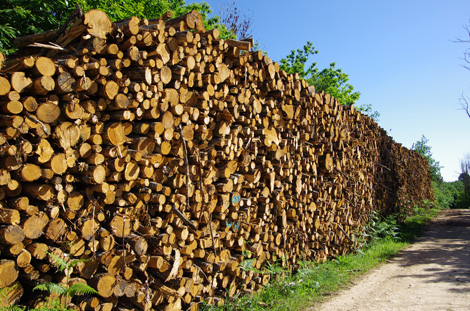
Global mega-trends are expected to provide Finland's thriving pulp production sector with a buffer against future recessions. The pulp industry has been thriving for the past decade. Prices, production volumes and exports have all shown a steady rise.
The contrast with the previous decade is striking. Between 1999 and 2008 the pulp market seesawed up and down. During that period, production in Finland showed three clear rises and falls, according to a report by YLE.
The deepest plunge was 2009 when a global recession dragged the sector down. Preliminary figures and growth estimates indicate that last year's output matched the record level of 8 million tons set in 2006.
In 2017 Finland produced 7.7 million tons of pulp.
Transitioning away from paper
The back story on this decade of steady growth is that less pulp is going to the paper industry, a sector that is traditionally sensitive to economic fluctuations.
"Nowadays, pulp is increasingly used in consumer packaging, industrial packaging and also in new products in the bio-based economy, none of which are so susceptible to big variations in the economy," says Stora Enso CFO Seppo Parvi.
Stora Enso has made a strong move away from paper.
"In 2006, 70 percent of Stora Enso's volume of business was still [coming] from paper operations. Now that figure is only 30 percent," Parvi points out.
Most recently, last Friday, Stora Enso announced that it will be shutting down yet another paper machine, this one in Imatra.
Megatrends support demand
Nowadays, pulp is also increasingly being used to produce tissue, cardboard and packing materials. Demand for these products is being boosted by global megatrends.
"These kinds of megatrends are, for example, population growth and the rise of the middle class in Asia, as well as expanding online sales which increase demand for packaging," explains Maarit Lindström, chief economist at Finnish Forest Industries.
Biodegradable pulp-based shoes by Finnish designer Saara Kinnunen. Image: Saara Kinnunen Replacing plastic packaging with fibre-based materials is also a growth factor for pulp. According to Finnish Forest Industries, the Pöyry consulting firm estimates that the market for pulp-based textiles and hygiene products, as well as fibre-based packaging will be worth 96 billion euros by 2030.
Increasingly stable
Maarit Lindström stresses that there will continue to be fluctuations in the pulp production sector. However, the ups and downs will be less acute than when pulp was still primarily a raw material for the paper industry.
It may take time, though, before investors are convinced that the pulp sector has moved into a new, more stable business environment.
Antti Viljakainen, an analysis for the Helsinki investment consultancy Inderes says that this new business model for forest industry companies will have to ride out a clear recession before it is possible to say if they are better buffered against economic fluctuations.
Today, investors continue to view them as being vulnerable to developments in international markets.
"When you look how much share prices have come down from the summer's peak, you see that investors still consider the forest industry as a cyclical sector," Antti Viljakainen adds.
Source: YLE
Sharp rise in Brazilian exports of wood-based products

In November 2018, Brazilian exports of wood-based products (except pulp and paper) increased 24% in value compared to November 2017, from US$243.2 million to US$301.1 million. This performance extended into December 2018 when exports of wood-based products (except pulp and paper) increased 5.2% in value compared to December 2017.
November Brazilian pine sawnwood export values increased 28% year on year and export volumes expanded almost 25% over the same period, from 213,700 cu.m to 266,700 cu.m.
The growth in both export values and volumes extended into December when export values increased 9% year on year and export volumes grew almost 10% over the same period from 201,000 cu.m to 220,600 cu.m.
The positive market developments continued with tropical sawnwood exports the volumes of which increased 32% in November 2018 while export values rose almost 20% from US$19.2 million in November 2017 to US$ 23.0 million in 2018. In December there was an even sharper growth in export volumes (+23%) from 42,700 cu.m in December 2017 to 52,500 cu.m in December 2018 at the same time export values in December also rose 8%.
Brazil's November 2018 pine plywood exports increased around 8% in value year on year from US$ 55.0 million to US$59.3 million but export volume growth was lower at around 5% from 180,100 cu.m to 188,800 cu.m. There was a further modest increase (1.5%) in pine plywood export values in December and export volumes grew faster at around 8% from 177,800 cu.m to 192,300 cu.m.
The positive developments in demand did not spill over to tropical plywood where, in November, export volumes fell 26.0% year on year 15,400 cu.m in November 2017 to 11,400 cu.m in November 2018. The value of November exports was also down around the same level (22%) from US$6.2 million in November 2017 to US$4.8 million in November 2018.
There were further declines in the value and volume of tropical plywood export in December 2018 compared to a year earlier.
Export values for Brazilian wooden furniture rose from US$41.2 million in November 2017 to US$49.0 million in November 2018 an almost 19% rise. This upward trend continued into December 2018 where export values rose from US$43.9 million in December 2017 to US$50.5 million in December 2018, a 15% rise.
Romania: Higher standing timber prices revealed by recent auctions
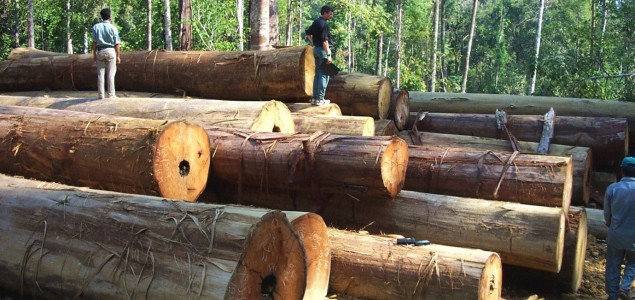
In January, a new round of auctions for standing timber was held by the Romanian Forestry Agency (Romsilva), after the disappointing first auction held in December, where the national bidding ratio was 46%. The auctions are organized for Romsilva's -Romania's main forest land owner- planned harvest for 2019.
At the first auction held in December, the buyers accused the too high starting prices at the auction - with an increase from 182 lei / m3 (38.37 Euro) at the auction organized for 2018, up to 190 lei / m3 (38.37 Euro) at the auction organized for the 2019 harvest. The auction price increase comes in the context of the generalized decrease prices in the Romanian wood market, low demand for both industrial wood and firewood. Continue reading "Romania: Higher standing timber prices revealed by recent auctions"

