
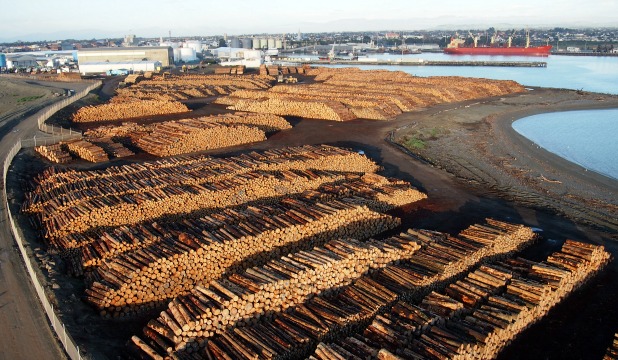
At Wharf Gate (AWG) prices for logs delivered to ports around New Zealand decreased on average 7 NZD per JASm3 in April. This decrease in AWG prices is due to a combination of increased shipping costs and uncertainty in the China log market.
While the demand for logs is at record levels, there is an imbalance between log and domestic wholesale prices. There are log vessels enroute to China from New Zealand without confirmed Letters of Credit (LCs) and Chinese log buyers are using this opportunity to try and negotiate log prices down.
The New Zealand domestic market for logs has continued the very stable start to 2019. On average, NZ's mills report sawn timber sales up about 5% on last year. Increases in consents for new dwellings continue to be dominated by the North Island cities, with consent numbers in the South Island down on this time last year.
Due to the drop in the AWG log prices the PF Olsen Log Price Index for April decreased $3 to $131. The index is currently $2 above the two-year average, $5 above the three-year average, and $13 higher than the five-year average.
Prices for NZ's domestic log sales in April as the start of quarter 2 are mostly unchanged from quarter 1. Prices for pruned logs have remained flat despite decreases in export prices with supply and demand well balanced in most regions. Some mills in the CNI have reported an oversupply of pruned logs. There has been some modest increases in structural log prices in some regions.
The Australian market is reported as tough with demand off the boil. The weakening of the NZD against the AUD means NZ mills can lower price if required to remain competitive and still retain margin.
There is a lot of sawn timber inventory in China. In Taicang for instance there is 1.7 million m3 of Canadian SPF (spruce, pine, fir) as well as the usual other species from other countries. The price of Canadian SPF has fallen more than 30 USD in the past three months. NZ mills indicate they are targeting a slight increase in price for radiata sawn timber in the China market.
Article archive
Uncertainty in China log market lowers prices for New Zealand’s logs exports

At Wharf Gate (AWG) prices for logs delivered to ports around New Zealand decreased on average 7 NZD per JASm3 in April. This decrease in AWG prices is due to a combination of increased shipping costs and uncertainty in the China log market.
While the demand for logs is at record levels, there is an imbalance between log and domestic wholesale prices. There are log vessels enroute to China from New Zealand without confirmed Letters of Credit (LCs) and Chinese log buyers are using this opportunity to try and negotiate log prices down.
The New Zealand domestic market for logs has continued the very stable start to 2019. On average, NZ's mills report sawn timber sales up about 5% on last year. Increases in consents for new dwellings continue to be dominated by the North Island cities, with consent numbers in the South Island down on this time last year.
Due to the drop in the AWG log prices the PF Olsen Log Price Index for April decreased $3 to $131. The index is currently $2 above the two-year average, $5 above the three-year average, and $13 higher than the five-year average.
Prices for NZ's domestic log sales in April as the start of quarter 2 are mostly unchanged from quarter 1. Prices for pruned logs have remained flat despite decreases in export prices with supply and demand well balanced in most regions. Some mills in the CNI have reported an oversupply of pruned logs. There has been some modest increases in structural log prices in some regions.
The Australian market is reported as tough with demand off the boil. The weakening of the NZD against the AUD means NZ mills can lower price if required to remain competitive and still retain margin.
There is a lot of sawn timber inventory in China. In Taicang for instance there is 1.7 million m3 of Canadian SPF (spruce, pine, fir) as well as the usual other species from other countries. The price of Canadian SPF has fallen more than 30 USD in the past three months. NZ mills indicate they are targeting a slight increase in price for radiata sawn timber in the China market.
WTO partially rules in favor of Canada in the softwood lumber dispute with US

The World Trade Organization partially sided with Canada Tuesday in a dispute over US anti-dumping duties on lumber imports, but Washington noted that the ruling approved a controversial method for calculating tariffs.
Canadian softwood lumber has been a source of conflict in US-Canadian trade for more than three decades. Continue reading "WTO partially rules in favor of Canada in the softwood lumber dispute with US"
Challenging market for wood furniture external suppliers to the EU

Prospects for non-EU wood furniture suppliers selling into the EU are mixed. All suppliers face an uphill struggle to compete with EU domestic manufacturers.
Added to this challenge this year is the economic uncertainty inside the EU and the prospects for further weakening of European currencies against the US dollar. Gains are being made by some external suppliers, but nearly all are in countries neighbouring the EU. Only one tropical wood furniture supplier, India, is currently making ground in the EU market.
 After a brief upturn in 2017, EU wood furniture imports from China, by far the largest external supplier, fell 3% to €3.09 billion in 2018. China’s competitiveness in the EU wood furniture market has been impeded as prices have risen on the back of growing domestic demand and new laws for pollution control pollution in China.
In 2018, EU imports of wood furniture continued to rise from other temperate countries, mainly bordering the EU. EU imports from these countries increased 9% to €1.49 billion in 2018, building on a 28% gain recorded the previous year. The biggest gains in 2018 were made by Ukraine, Belarus, Russia, USA, Bosnia, and Turkey.
After a slow start to the year, EU imports of wood furniture from tropical countries picked up pace a little in the second half, and were €1.78 billion overall for 2018, up 2% compared to the previous year.
The main South East Asian supply countries have all followed a similar trajectory in the EU wood  furniture market in the last two years. A rise in EU imports in 2017 was followed by a decline in 2018.
After increasing 1% to €728 million in 2017, EU imports from Viet Nam fell 0.5% to €724 million in 2018. Imports from Indonesia increased 4% to €311 million in 2017 but fell back 2% to €304 million in 2018. Imports from Malaysia increased 10% to €203 million in 2017 and were 2% down at €199 million last year.
In contrast, EU wood furniture imports from India continued to rise, up 18% to €239 million in 2018 after a 12% increase to €202 million in 2017. Imports from Brazil were €113 million in 2018, matching the 2017 level.
 There were also shifts in the destinations for wood furniture imported into the EU from tropical countries in 2018. Imports in the UK, the largest market, were €687 million last year, 1% more than in 2017. There were also rising imports in France (+9% to €264 million) and Netherlands (+9% to €198 million).
However, these gains in 2018 were offset by falling imports of tropical wood furniture in Germany (-6% to €220 million), Belgium (-2% to €72 million), Spain (-4% to €67 million), and Italy (-1% to €50 million).
Boom in Russian softwood lumber train deliveries to China supported by the Belt & Road Initiative

According to trade data sourced from China Customs, China imported 36.8 million cubic metres of lumber in 2018, a slight decline of 1.6 percent from 2017. Of total lumber imports, softwood lumber accounted for 24.9 million cubic metres, a slight decrease of one percent compared to 2017.
However, Russian softwood lumber exports to China were a whopping 15.65 million cubic metres in 2018, an increase of 10 percent compared with 2017. This is more than double the exports in 2014 and now represents a 63% share of the China market. Clearly, China’s “Belt & Road Initiative” (BRI) was partly responsible for the increase in softwood lumber volumes from Russia to China.
The Belt & Road Initiative is a massive program that includes many large-scale infrastructure projects with other countries. Proposed by Chinese President Xi Jinping in 2013, the main purpose was to shift overproduction to inland regions, taking advantage of China’s lower labor costs and capacity. At the same time, it’s designed to improve the supply chains of key suppliers and to crucial export markets, improving the competitiveness of Chinese goods and raw materials. Continue reading "Boom in Russian softwood lumber train deliveries to China supported by the Belt & Road Initiative"
UPM’s plywood production expansion in Russia on schedule

The UPM Chudovo plywood mill expansion investment, which started in late 2017, is proceeding on schedule to the production trial run phase. The first deliveries from the new production line are currently on the way to customers in Europe and Africa. The official inauguration will be in early September 2019.
The investment will expand the product portfolio of the UPM Chudovo mill in Russia. One new product in Chudovo, the WISA-Birch LG, has already been produced on the new production line. LG, or Long Grained, refers to the direction of the surface grain, which is positioned parallel to the long edge of the plywood panel. In traditional WISA-Birch plywood, the graining runs in the cross-panel direction. Both are used either as structural plywood in building or as visual interior elements such as walls, floors, ceilings or cabinets.
In addition to these WISA-Birch plywood products, the UPM Chudovo mill also produces coated WISA plywood for the transport industry and concrete forming, as well as uncoated birch plywood for insulating elements of LNG tankers.
The total value of the UPM Chudovo mill expansion investment is about Euro 50 million. The project consists of new plywood production lines, including all machinery needed for veneer and plywood manufacturing. A new bio heat boiler has also been built at the site. The mill's annual production capacity will increase by 45,000 up to 155,000 cubic meters per year and it is estimated that around 100 new jobs will be created - both directly at the mill and indirectly, in wood procurement and logistics, for example.
UPM Chudovo mill is one of the nine UPM Plywood mills. It employs directly approximately 630 people and the annual capacity is about 155,000 cubic metres of birch plywood.
Higher worldwide costs for wood chips and pulplogs

Wood fiber costs ranged between 45% and 70% of the cash costs for the production of pulp around the world in the 4Q/18. The costs for wood chips and pulplogs were generally higher worldwide in 2018 than in 2017 with both the Softwood Fiber Price Index (SFPI) and the Hardwood Fiber Price Index (HFPI) reaching their highest levels in four years. From the 4Q/16 to the 4Q/18, the SFPI and the HFPI increased by 6.4% and 4.6%, respectively.
Over the past two years, softwood fiber prices were up over 20% in the US Northwest, Western Canada, the Nordic countries and Germany, according to the Wood Resource Quarterly (WRQ). The only regions where fiber costs have fallen since the 4Q/16 were Eastern Canada and Brazil. In Eastern Canada, fiber costs have declined primarily because of an oversupply of wood chips and in Brazil due to a weakening Brazilian Real. In Ontario and Quebec, growing lumber production has created ample supplies of residual chips while demand for wood fiber has stagnated. As a consequence, wood chip prices have fallen by almost 50% in six years and some sawmills are struggling to find buyers for all their chip volumes.
During the past two years, the costs for hardwood pulplogs have gone up in 15 of the 16 countries tracked by the WRQ. Pulpmills in some of the major hardwood pulp-producing regions, including China, Finland, Indonesia and Spain, have seen their fiber costs go up between 10-30% from the 4Q/16 to the 4Q/18.
Import prices for hardwood chips to China have gone up steadily from late 2017 to early 2019, predominantly because of increased prices for wood chips which have been sourced from the higher-cost countries of Australia and Chile. In late 2018 and early 2019, import prices for hardwood chips to China and Japan were practically the same. This is unlike in the previous decade when prices for overseas chips delivered to Japan were between $20- 70/odmt higher than for those shipped to China.
Latest prices for Brazilian logs, sawnwood and plywood

Latest prices for Brazilian logs, sawnwood and plywood as of 16-31 March, 2019. Continue reading "Latest prices for Brazilian logs, sawnwood and plywood"
Roundwood prices in Latvia rise sharply
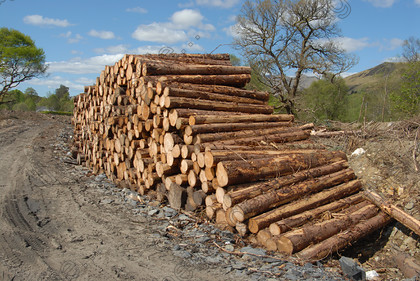
In the 2nd half of 2018, compared to the 1st half of 2018, the average purchase prices of softwood logs in Latvia increased, while that of hardwood logs fell. The highest rise was recorded in the prices of pine logs in diameter under 14 cm and asp sawlogs in diameter 18–24 cm, while the most notable decline was observed in the prices of birch sawlogs in diameter over 24 cm.
Compared to the 1st half, in the 2nd half of 2018 the sharpest rise in softwood logs sector was registered in prices of pine sawlogs in diameter under 14 cm (on average of 10 % or 5 EUR/m3), spruce sawlogs in diameter over 26 cm (5 % or 4 EUR/m3), and spruce sawlogs in diameter under 14 cm (5 % or 3 EUR/m3). Smaller increase was recorded in prices of pine sawlogs in diameter over 26 cm, pine sawlogs in diameter 18–26 cm, spruce sawlogs in diameter 14–18 cm, and spruce logs in diameter 18–26 cm. No changes were registered in the average purchase prices of pine sawlogs in diameter 14–18 cm (72 EUR/m3). Continue reading "Roundwood prices in Latvia rise sharply"
China reduced VAT on roundwood and lumber

VAT on some commodities and services has been reduced in order to stimulate the economy and support processing within the country. The measure was applied starting April 01, 2019.
VAT on roundwood has been reduced from 11% to 10%, for lumber- from 16% to 13%.
It is expected that this measure will spur woodworking enterprises to increase purchases and produce finished products, consequently, revive the market.
Logs and lumber imports overview
Lumber imports to China fell for two consecutive quarters to reach 5.9 million m3 in the 4Q/18. This matches the pattern from previous years of declining import volumes in the third and fourth quarters of the year. Total imports for 2018 were down 2.3% from 2017 but still the second highest volume on record.
Continued uncertainty about the future of the Chinese economy, decade-low GDP growth in the 4Q/18, and reduced investments in housing and construction have all been factors that have led to slowing demand for lumber in late 2018. Import volumes in January 2019 were up by almost 20% from January 2018, but it is still too early to say if that is just a short-term jump.
China had another record year of softwood log imports in 2018, when over 40 million m3 of logs landed at Chinese ports. This was the third consecutive year of year over-year- increases, with 2018 volumes being up 37% from 2015. Although import volumes fell slightly from the 3Q/18 to the 4Q/18, the December numbers were the second highest monthly imports on record.
Canadian OSB exports doubled over the last 5 years
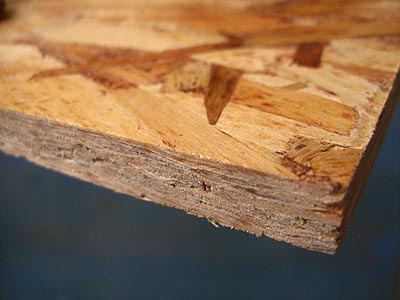
In 2018 Canadian OSB exports increased even more significantly than in previous years. A volume of 7.65 million m³ was exported during last year, corresponding to an increase of 29%. The export value only rose by 13% to CAD 2.25 billion however, which reflects the price decreases on the North American OSB markets in the second half of 2018.
The significant increase in volume means the upward trend in Canadian exports further intensified; the export value virtually doubled compared to 2013. At that time the Canadian OSB industry had exported 3.89 million m³. In 2014 the exported volume amounted to 4.40 million m³ (+13%). For 2015 a volume of 4.79 million m³ (+9%) was recorded and for 2016 5.43 million m³ (+14%). In 2017 the export volume had increased by 9%.
The majority of Canadian OSB exports are delivered to the USA. In 2018 deliveries to the USA, increased 32% to 7.26 million m³, improving at a slightly more significant rate than total exports. The export value rose by almost 14% to CAD 2.12 billion. In 2015 the USA had imported 4.47 million m³ of OSB from Canada, and 5.06 million m³ in 2016.
Japan, at a volume of 191,960m³ - which is virtually the same as the preceding year - maintained its position as the second largest export market for Canadian OSB. The export value nevertheless rose by 14% to 66.9 million euros. In 2015 a volume of 159,653m³ was exported to Japan, and 180,304m³ in 2016.
Germany leads Europe in wood pellet production
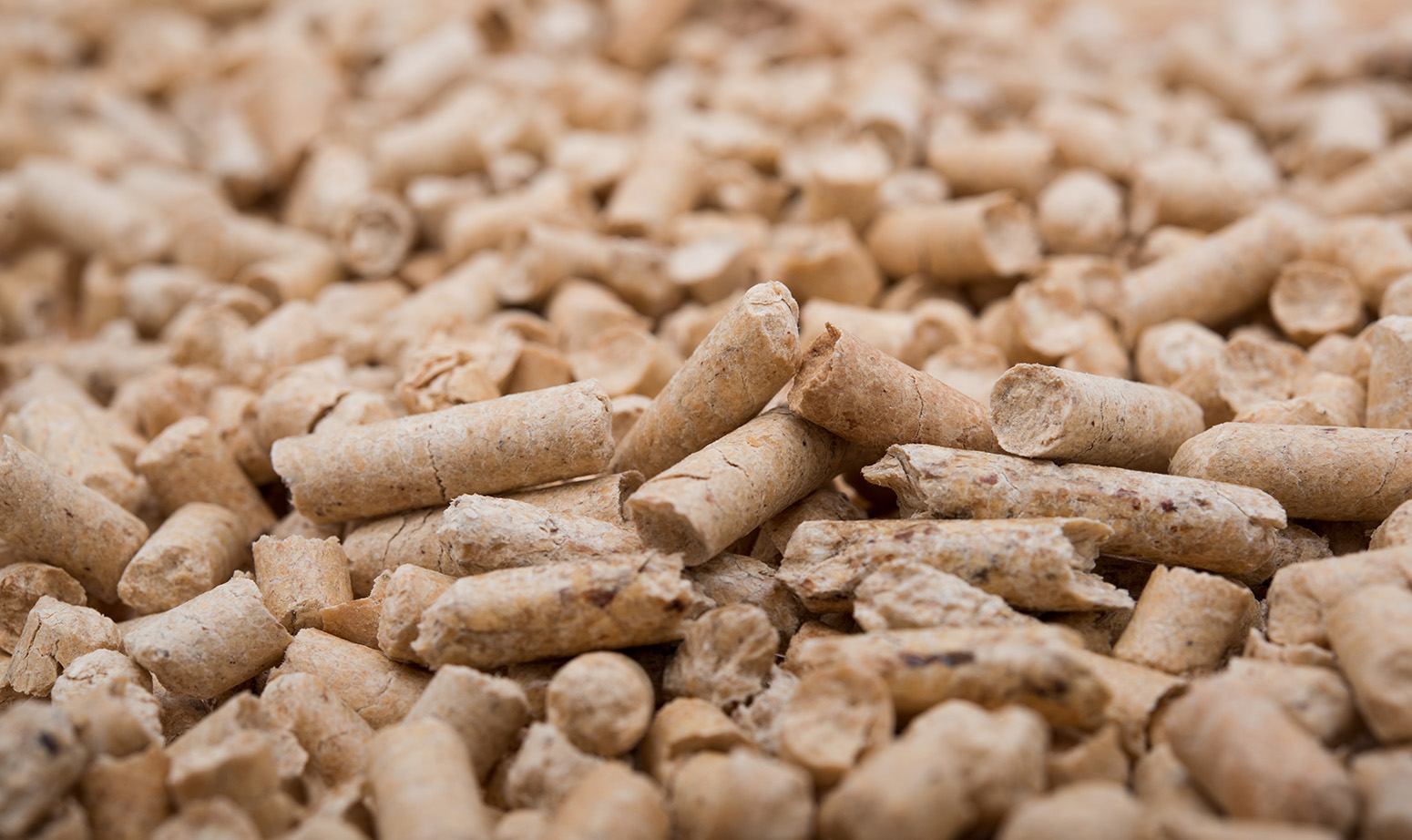
In 2018, Germany confirmed its leading position in Europe as a producer of wood pellets. This is followed by Sweden and Russia.
"With very high wood stocks and residual wood quantities in the sawmills, Germany is an excellent location for pellet production. Unfortunately, the energy transition in the heating market is not progressing well, so that not all domestic pellets are used in this country to replace fossil fuels and to save CO2 with regional added value, "emphasizes Martin Bentele, Managing Director of the German Energy Wood and Pellet Association (DEPV). This leads regularly to a foreign trade surplus, the 2018 at approx. 10 percent of domestic production was.
Record production in German pellet plants
Germany has excellent pellet production conditions based on large numbers of sawdust. Germany produced 2.4 million tons (t) of wood pellets in 2018. This is followed by Sweden (1.8 million tonnes), Russia (1.7 million tonnes), Latvia (1.6 million tonnes) and France (1.5 million tonnes). Worldwide, more pellets are produced only in the USA and Canada. But the center of the international market is Europe, where more than 20 million tonnes of the world's approx. 35 million t of wood pellets are produced.
Unlike production, Germany is not ahead in pellet consumption in Europe. Only about three quarters of domestically produced pellets (1.803 million tons) were used in Germany - from the wood-burning stove to process heat generation in large plants. Wood pellets are used in a very broad spectrum, namely in modern, efficient and low-emission domestic combustion technology. In Europe, the United Kingdom (7.1 million tonnes) uses the most pellets, but as a coal substitute in power plants (co-firing). In terms of heat production, Italy (3.2 million tonnes) and Denmark (2.5 million tonnes) are ahead of Germany.
Germany is self-sufficient
The foreign trade surplus of pellets in Germany in 2018 was approx. 225,000 t and therefore approx. 10 percent of the production volume. Compared to 2017, it increased by approx. 160,000 t. "With this amount of domestic pellets exported in 2018, it would have been possible to replace fossil fuels in Germany and save 350,000 tonnes of CO2," explains Bentele. From DEPV's point of view, a correct turnaround in the heating market in Germany will only come about if there is a fair and market-based assessment of the energy sources according to their CO2 balance.
Over 600,000 t of pellets were exported from Germany in 2018. The main beneficiaries in 2018 were Italy (215,000 t), Austria (118,000 t), France (75,000 t), Denmark (69,000 t) and Switzerland (36,000 t). In contrast, only 390,000 t of pellets were imported, mainly from neighboring Poland (115,000 t), Belgium (75,000 t), Denmark (70,000), the Netherlands (30,000 t), Luxembourg (21,000 t) and Austria (16,000 t).
Booming Vietnamese economy as Chinese companies flee out of China to avoid trade war
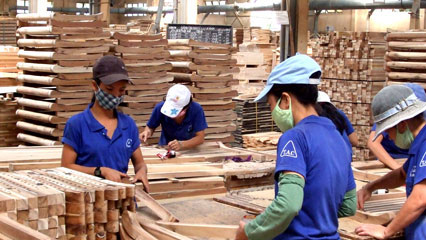
The U.S. trade war with Beijing continues to boost the Vietnamese economy as companies dodge tariffs by relocating production here from mainland China, fueling a sharp increase in exports to America.
Vietnam's real gross domestic product climbed 6.79 per cent on the year during the first three months of 2019, the government said Friday. The country enjoyed its second strongest first-quarter growth in the past decade, surpassed only by the 7.45 per cent rate in 2018.
Though January-March growth slowed from the 7.31 per cent rate in the previous quarter through December, that period capped a full year when the economy grew by 7.08 per cent, the largest annual expansion since the global economic crisis hit in 2008.
Exports to the U.S., the country's largest trading partner, jumped 26 per cent on the year in the first quarter. Apparel performed particularly well as textile companies move operating sites to Vietnam from China, echoing a trend in other industries. Exports to China dropped by seven per cent amid the northern neighbour’s economic slowdown.
Read more on the US-China trade war (for registered members):
- Vietnam expected to surpass China as largest supplier of wooden products to the US
- Chinese wood products companies shift to Vietnam
- Global softwood lumber trade impacted by slowing demand in China and dropping US prices
- Consequences of the US China trade war on the wood products markets
LIGNA 2019: Primary wood industry out in force

The LIGNA show in Hannover, Germany, is back again from 27 to 31 May this year with another roundup of products, machinery, solutions and ideas for the entire wood industry. Advanced technologies, digitization, integration and automation are key trends in woodworking and wood processing – and hence keynote themes at LIGNA. LIGNA is the only platform that showcases technology and solutions for forestry and primary and secondary wood production. It attracts key players from across the entire wood industry.
The primary industry comprises forestry, sawmilling, wood-based panel production, wood energy and pulp and paper. It is the first link in the wood value chain and is therefore a core part of LIGNA. The primary-industry section of the show is clustered in halls 25, 26 and 27, on the open-air site and in the outdoor pavilions beneath the EXPO canopy. It features numerous exhibitions of new products and solutions, not to mention a wealth of presentations, lectures and networking events – all knitted together under the overarching banner of automation and digitization.
The secondary-industry section of LIGNA is dedicated to products, machinery, equipment and tools for wood processing, woodworking and furniture manufacturing. The stand operated by wood processing machinery specialist Michael Weinig AG in Hall 27 is a case in point – a show of expertise in digitalized plant technology. Visitors to the stand will be able to witness a sophisticated production line – comprising eight interlinked modules, complete with advanced robotics and scanner technology – live in action. The stand will run daily demonstrations that showcase the entire production process, from raw material to finished product.
 Wood Industry Summit
This year's Wood Industry Summit runs under the banner of "Access to Resources and Technology", one of LIGNA's focus themes. Located in Hall 26, it consists of a group pavilion dedicated to forestry and the wider primary wood industry and a forum featuring presentations by big-name international experts. Among much else, its focus is on digitization of the forestry and wood industry, ways of optimizing the entire forest-wood-logistics value chain – from standing trees through to final processing in the factory – as well as on protecting forests from biotic and abiotic damage, and on climate and environmentally friendly harvesting processes.
The exhibitor lineup at the Wood Industry Summit includes Aerovit A/S, Denmark, which will be showcasing its automatic soot blower for boilers and heat exchangers; Germany's Center of Excellence for Forestry and Wood (KIWUH), which is currently investigating the challenge of securing softwood timber supplies in the age of climate change; GKD - GEBR. KUFFERATH AG, Germany, one of the world's leading manufacturers of metal and plastic wire mesh solutions and transparent media facades; GMV Aerospace and Defense, S.A.U., Spain; Kirov Region Export Promotion Center, Russia; S.T.I.F., France; STROJPLAST Semic d.o.o, Slovenia, which will be presenting its fully automated packaging lines for shrink-wrapping wood briquettes; and Ponsse, Finland, one of the world's leading manufacturer of forestry machinery.
On Thursday, 30 May, the German Sawmilling and Timber Industry Association (DeSH) will be running a three-hour forum program (2:00 p.m. – 5:00 p.m.) at the Wood Industry Summit titled "Future Workshop: Presentation of Start-ups – A Project under the Charter for Wood 2.0". Mathias Haas (DER TRENDBEOBACHTER) will moderate the forum and also give a keynote address. The full forum program is available online at www.ligna.de/en/wis .
KWF Business Pavilion P33– Tomorrow's forestry technology today
The German Forestry Council (KFW) is running another season of its long-standing special presentation on forestry technology . Held in Pavilion 33 beneath the iconic EXPO canopy, the unique, technology-centric forestry industry meeting hub is organized by KWF with input from the German Association of Forestry Contractors (AFL) and the Lower Saxony Forestry Service (as represented by the Lower Saxony School of Forestry – NFBz). It is aimed at forestry companies and looks at key forestry issues and challenges, such as "Forestry & Wood Industry 4.0", battery technology, remote-controlled felling-wedge technology and forestry data flow chains. In addition, there will be a demonstration site beneath the EXPO canopy that will feature displays of new log measurement methods and a series of demonstrations themed "Natural Disasters in the Forest – Forest First-aid and Survival". DOLL Fahrzeugbau GmbH will also be part of the action, demonstrating a new line-up of timber transport vehicles that feature variable-height swivel-mounted cabs. The entire KWF program (German-only) is available at www.kwf-online.de.
Pavilion 32 – Lower Saxony forestry and wood industry
As always, the forestry and wood industries of the German state of Lower Saxony will have a big presence at LIGNA – in Pavilion 32 beneath the EXPO canopy. The showcase there will feature the Lower Saxony Forestry Service, along with Bruno Reimann GmbH & Co. KG and publishers DRW-Verlag. There will also be a group display for companies and institutions from Lower Saxony. Among the display participants will be the Lower Saxony Forest Owners' Association (Waldbesitzerverband Niedersachsen); PEFC Germany (Programme for the Endorsement of Forest Certification); agriculture-sector publishers Deutscher Landwirtschaftsverlag (dlv); the German Forest Owner's Working Group (AGDW); the Lower Saxony Agricultural Association (LWK Niedersachsen), the Lower Saxony Renewable Raw Materials Network (3N) and Braunschweig University of Technology (TU Braunschweig).
NRW Forestry & Wood Cluster – NRW MAKING MORE OUT OF WOOD
In the North Rhine-Westphalia (NRW) forestry and wood industry pavilion (P35) beneath the EXPO canopy, the state's Center of Excellence for Forestry 4.0 will be running a program dedicated to " Industry 4.0 for the Forestry and Wood Industry ". As part of this program, the competence center is partnering with the NRW State Forest Administration (Landesbetrieb Wald und Holz NRW) to present an initial prototype of a Smart Forest Lab. The lab will enable visitors to assess the potential of Industry 4.0 technologies for various forestry value chains and gain an understanding of the many aspects of technical implementation involved. The exhibits will show how digitally connected forestry assets and on-site, real-time availability of all relevant data can support and streamline work in the forestry and timber industry.
As well as developing technology, the Center of Excellence program has a strong focus on helping people in their work. For example, by wearing a Microsoft HoloLens, forestry workers engaged in motor-manual tree felling can receive useful information about their surroundings and hazard warnings from the forestry machines they are operating. They can also use augmented reality to measure logs on-site in the forest and take current price and product-range information into account when cutting.
Outdoor demonstration site for forestry technology
As in past years, the 2019 edition of LIGNA will have a demonstration area on the open-air site , where the latest forestry machines and technology developments will be shown in action – all under careful expert moderation. The demonstration site is organized in partnership with the German Forestry Council (KWF) and will be located in the middle of the German Logging Championship area. It will feature moderated technology demonstrations on each day of the show. Highlights include a debarking head that can be fitted to harvester machines, enabling them to debark logs on-site. There will also be presentations of mobile sawmills and large-scale timber harvesting and wood logistics machines.
Firewood Production Line: From Tree to Fuel
The special " Firewood Production Line " showcase is all about energy from wood. It explores the many and varied uses of wood as a renewable energy source. On the open-air site in front of the EXPO canopy, the Lower Saxony Agricultural Association (LWK Niedersachsen) will present an entire chipwood production line at a showcase titled "From Tree to Fuel". The showcase will illustrate the various technical processes involved in transforming solid wood into a useable fuel. Highlights will include solutions designed to ensure compliance with Germany's stringent clean-air regulations. The Lower Saxony Agricultural Association and several other institutions, including the Lower Saxony Renewable Raw Materials Network (3N), will be offering visitors manufacturer-independent information and advice on all matters relating to wood energy.
German Logging Championship
The 14th German Logging Championship will be held on the open-air site at LIGNA from 28 to 30 May 2019. It is a joint production between Deutsche Messe AG and the German Woodsmen's Championships Association (VWMD). This year, some 100 contestants will be putting their endurance, handling skills and precision to the test in five disciplines: tree felling, chain fitting, combined cut bucking, precision bucking and delimbing. They will perform their amazing feats of chainsaw handling skill under the watchful eye of expert judges, who will score them on safety, accuracy and speed.
Forest Owners' Day
LIGNA is hosting the all-new Forest Owner's Day on Wednesday, 29 May 2019. The all-day event is an opportunity for Germany's forest owners to showcase their commitment to sustainability, innovation and responsible forest management. The event is co-organized by the German Forest Owner's Working Group (AGDW) and the Lower Saxony Forest Owners' Association (Waldbesitzerverband Niedersachsen) and includes a tour of LIGNA, a "Knowledge Café" and a Forestry Benefit Evening. The tour will take new and budding forest owners to the displays of five forestry-industry companies with a strong commitment to new technologies and innovative ideas. The idea is to give the participants the opportunity to pick up new ideas and inspiration to help them into and along their chosen career paths. In the Knowledge Café, experts will discuss current industry issues and challenges, such as the effects of climate change on forests and the use of climate-resistant tree species, ways of making forestry companies and cooperatives more attractive to skilled workers, digitization of the forestry industry and the use of new technologies (drones, aerial photography, tree inventory mapping, etc.), and the hazards and risks associated with pest infestation and the use of pesticides. The participating experts include Professor Ute Seeling, managing director of the German Forestry Council (KWF); Professor Frank Setzer of Erfurt University of Applied Sciences; Jens Dittrich, LogBuch GmbH; AGDW's head of Forestry, Karsten Spinne; and AGDW climate expert Dr. Guido Schwichtenberg.
Forestry Benefit Evening The evening of 29 May has been set aside for the traditional Forestry Benefit Evening – an opportunity for dialogue among forestry-industry multipliers and experts from Germany and abroad. This year's evening will run under the motto "Forestry Industry – Shaping the future". The motto was chosen in recognition of the current situation with windthrow and bark beetle infestation and the need for reforestation. The opening address will be given by Barbara Otte-Kinast, the German state of Lower Saxony's Minister for Food, Agriculture and Consumer Protection. The Forestry Benefit Evening is staged jointly by Deutsche Messe and KWF. The benefit evening traditionally also hosts the award ceremony for the Hans-Jürgen-Narjes Prize. The prize is offered by Qualifizierungsfonds Forstwirtschaft e. V. and carries 2,500 euros of prize money. Its purpose is to formally recognize and encourage outstanding commitment to and/or provision of training and professional development for employees in the forestry services and contracting sector.
LIGNA Forestry Get-together
The LIGNA Forestry Get-together premiered successfully in 2017 as LIGNA's central hub for forestry-industry networking and dialogue and is back again in 2019. Organized by the German Association of Forestry Contractors (AFL), it will be staged directly in front of Pavilion 33, under the EXPO canopy, and is aimed at industry professionals seeking to learn about the latest in forestry technology and network with their peers.
13th Lower Saxony Crane Driving Championships and 4th Women's Crane Driving Cup Among the more spectacular events on the open-air site are the Lower Saxony Crane Driving Championships and the Women's Crane Driving Cup . Held on the Thursday of LIGNA, they offer a thrilling mix of big-machine mastery, sport and entertainment. Both events are organized by the German Association of Forestry Contractors (AFL), with support from Deutsche Messe.
Tree planting
Every LIGNA show features a formal tree-planting ceremony. This year, on Friday 31 May, the LIGNA Exhibitor Advisory Committee and the show's organizers – the German Woodworking Machinery Manufacturers (VDMA Holzbearbeitungsmaschinen) and Deutsche Messe – will jointly plant the "2019 Tree of the Year". This year's Tree of the Year is the European white elm (Ulmus laevis), and the sapling planted at the ceremony is sponsored by the German Nursery Association.
SCA completes acquisition of Latvian Forestry Company

SCA has acquired Latvian Forest Company’s forest and land assets in Latvia, in total 10 000 hectares for the price of SEK 260 million (€ 26,2 million).
Latvian Forest Company owns and runs a number of forest holdings in Latvia. The assets comprise 7 600 hectares of productive forest land, 2 000 hectares of farmland and 800 hectares of other land. The standing timber volume amounts to one million cubic metres.
Some of the other land assets are also suitable for conversion to forestry.
“We have been in the Baltic states for a long time as a buyer of timber”, says Jonas Mårtensson, President Forest.”The Baltic states are a natural part of the base for our raw material supply and our operations there are strengthened by a forest asset of our own. We may well consider more acquisitions of forest land in the Baltics.”
SCA acquired the subsidiaries of Latvian Forest Company that own the actual forest and land resources. The acquisition was closed on April 8 2019.
2018 prices of softwood logs rose in Sweden and Estonia; Central European spruce oversupply dropped prices
In Sweden, softwood logs prices rose moderately throughout 2018. The nominal average price of spruce logs rose by eight per cent compared to 2017, with the corresponding figure for pine subsidies being seven per cent. In the fourth quarter of 2018, the price level of conifers was at its highest since 2011.
There are many reasons behind this: good profitability of the Swedish sawmill industry and strong demand for logs, new investments in the pulp industry and tightening competition for pulpwood and weather conditions. Continue reading "2018 prices of softwood logs rose in Sweden and Estonia; Central European spruce oversupply dropped prices"
China: 25 new particleboard plants put into operation in 2018 with 4 mil. m3 added capacity

The production capacity of China's fiberboard and particleboard is constantly changing. Some new production lines are put into construction. Some old production lines are demolished, closed, stopped or resold. Some production lines are upgraded and upgraded to expand production capacity. Some production enterprises have changed their names.
In 2018, 11 fiberboard production lines were completed and put into operation nationwide, with an added production capacity of 1.995 million cubic meters per year, including 9 continuous flat pressing production lines with a total production capacity of 1.815 million cubic meters per year, accounting for 91% of the country's new production capacity. Continue reading "China: 25 new particleboard plants put into operation in 2018 with 4 mil. m3 added capacity"
Brazil: Wood products exports on the rise in February

In February 2019, the Brazilian exports of wood-based products (except pulp and paper) increased 3.2% in value compared to February 2018, from US$244.2 million to US$252.1 million.
The value of pine sawnwood exports increased just over 14% between February 2018 (US$38.8 million) and February 2019 (US$44.3 million). At the same time export volumes rose by almost 15% over the same period, from 186,200 cu.m to 213,700 cu.m.
Brazil’s tropical sawnwood exports rose almost 28% from 31,100 cu.m in February 2018 to 39,700 cu.m in February 2019 but the value of exports only rose 13% from US$14.2 million to US$16.1 million, over the same period.
In contrast, pine plywood exports declined 6.3% in value in February 2019 compared to February 2018, from US$57.1 million to US$53.5 million but there was an increase in export volumes from 175,200 cu.m to 195,600 cu.m in the same period.
Brazil’s exports of tropical plywood remain small and in February export volumes dropped from 12,700 cu.m (US$5.2 million) in February 2018 to 10,800 cu.m (US$4.0 million) in February 2019.
On a brighter note, exports of wooden furniture in February increased from US$38.8 million in February 2018 to US$40.4 million in February 2019.
Berlin aims to become timber construction center

Berlin wants to become timber construction center: DeSH welcomes decision in the House of Representatives
On March 21, 2019, members of the Berlin State Parliament unanimously supported the promotion of urban timber construction. The German sawmill and timber industry federation registered association (DeSH) sees itself confirmed in its commitment and will actively contribute to the development of a planned timber construction cluster.
The building sector is responsible for 30 percent of the total greenhouse gas emissions in Germany and thus represents a decisive set point in the fight against climate change. After Baden-Württemberg, the state of Berlin decided with the application "Sustainability on the building: Berlin builds with wood", As part of the Berlin Energy and Climate Protection Program (BEK), wood as a construction material will henceforth be used to a much greater extent and will contribute to climate protection and resource efficiency as a carbon dioxide storage system.
Key to climate protection and housing
DeSH General Manager Lars Schmidt expressly welcomes the signal from the capital: "Climate protection and housing are the central tasks of the future in our country." Building with wood can be the key to both. " Germany currently lacks one million apartments. A recent study by the Technical University of Darmstadt and the Pestel Institute, one of whose initiators included the DeSH, shows that the problem could be solved by increasing and re-compacting. "Wood offers outstanding technical, resource-efficient and climate-friendly solutions both in existing buildings and in new buildings, so wood can quickly create high-quality living space," explains Schmidt. This is attested in Berlin already realized multi-storey wooden buildings.
Berlin is to become a timber construction center
As the largest builder of the city-state, the Berlin Senate should lead the way in the future and increasingly use wood in state-owned buildings such as schools, kindergartens and residential buildings. Support programs, such as those in Baden-Württemberg, Hamburg and Munich, should also create incentives for private developers. In order to concentrate know-how on the ground, MEPs demand more support for forestry, craft, industry and science in the Berlin-Brandenburg area. The decision was also an appeal to woodworking companies to build additional sites and production capacity in the region. A timber construction cluster should develop and bundle the competencies along the value chain over the long term.
Wood industry already active in the capital
"The initiatives in Berlin and Baden-Württemberg show the right path," says Schmidt. Without the use of the renewable raw material wood, the climate goals of the federal and state governments can not be achieved. By using wood, CO2 emissions in the construction industry alone could be cut by 31 million tonnes a year. "Building with wood means active climate protection that every client can do, and we're happy to continue to support Berlin's policy in spreading this message and developing a cluster," said Schmidt. The exhibition "Building with Timber - Paths to the Future" initiated by the DeSH, which was shown in the Martin-Gropius-Bau in 2016/2017, as well as the newly established timber construction network Berlin, make it clear that
Law could anchor use of wood nationwide
The DeSH hopes after the impetus in the countries to impulse effect: still unscheduled building regulations and Bauplanungsrichtliche specifications inhibit the timber industry in some regions. By modern fire protection concepts, however, the construction and operation of wooden buildings is unproblematic. The Berlin building code was adjusted accordingly in the spring of 2018. The association now considers it necessary to anchor the use of renewable raw materials in state building projects nationwide in the planned Building Energy Act (GEG). "In the face of the alarming World Climate Report 2018, the federal government and some countries are now asked to tackle the necessary changes in the building sector consistently," concludes Schmidt
Swedish Setra confident that wood products trade with the UK will continue after Brexit

Wood products company Setra evaluated potential impacts of BREXIT on the company’s operations.
Olle Berg, Director of Market & Business Development at Setra stated:
“Roughly 200,000–250,000 homes are built every year in the UK, and that need isn’t about to disappear with Brexit. If the UK economy sees a decline as a result of Brexit, which some analysts are suggesting, it could have a negative impact on new construction. In such a situation, however, a growing home improvement sector could compensate to some extent.
“There’s no doubt we will eventually enter into new agreements. We all want to continue trading with one another. But the question is how we will get there. Is there sufficient administrative capacity on the UK side to manage this during the transition period? And what’s the situation in Sweden?
“It’s basically impossible to prepare for something when you don’t really know how it’s going to be. But of course we’re going to make sure that our stock levels in the UK are high in March, and that we are well prepared with extra administrative resources should they be needed. The UK needs our sawn wood products and I’m confident that trade will continue, although it may be a little more complicated in purely administrative terms. We have well-established relationships and I know that everyone involved will do their best to ensure everything goes as smoothly as possible.“
About Setra Group:
The company is one of Sweden’s largest wood products companies and a leading player in Europe. The Group has approximately 800 employees and annual sales of SEK 4 billion. Setra Group includes a total of nine sawmills, three processing units and two modular building factories. It exports its products to Europe, North Africa, the Middle East and Japan, which account for almost 60% of sales.

