Article archive

Pfleiderer Group increases output capacities at Grajewo production plant

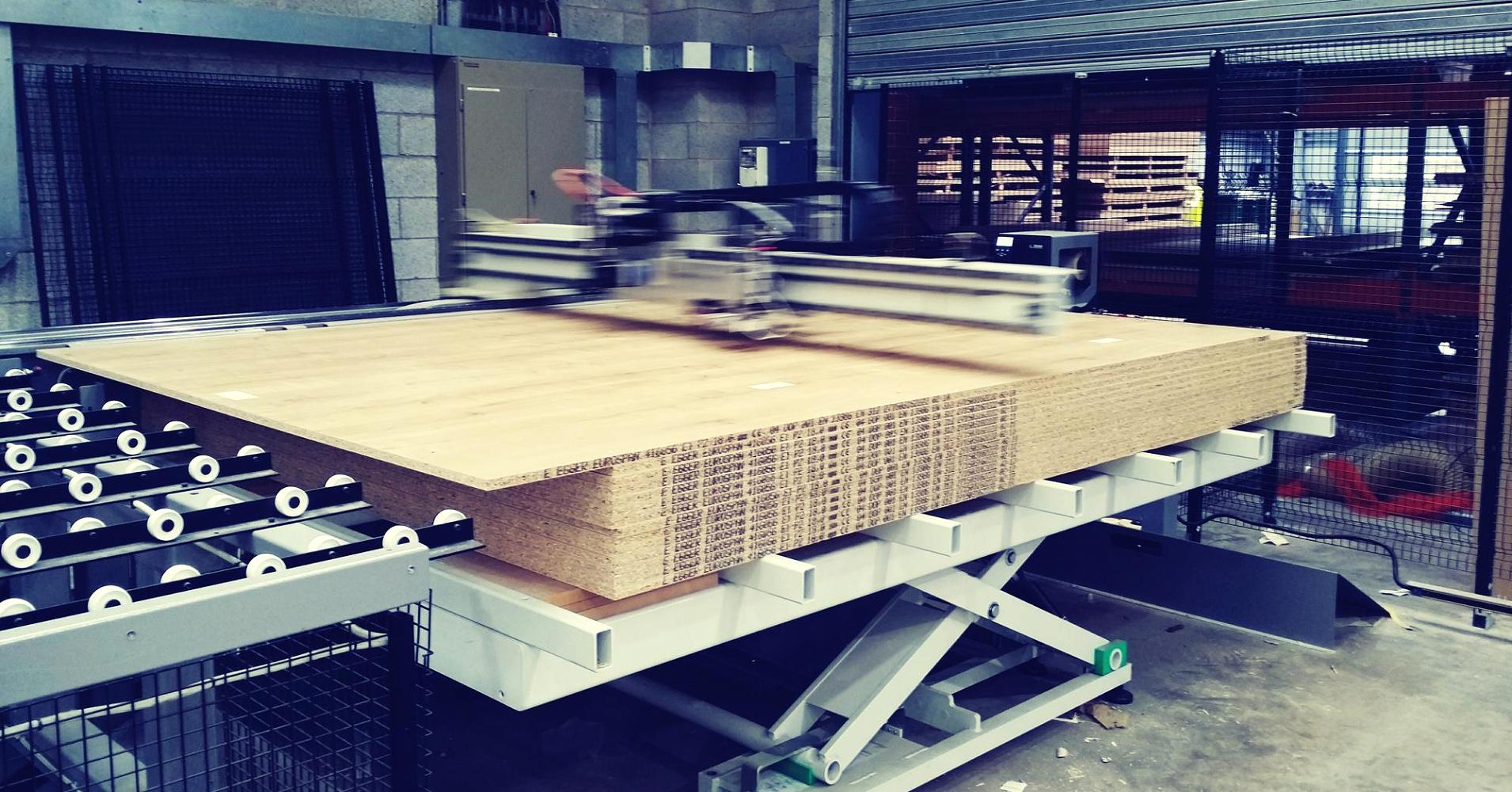
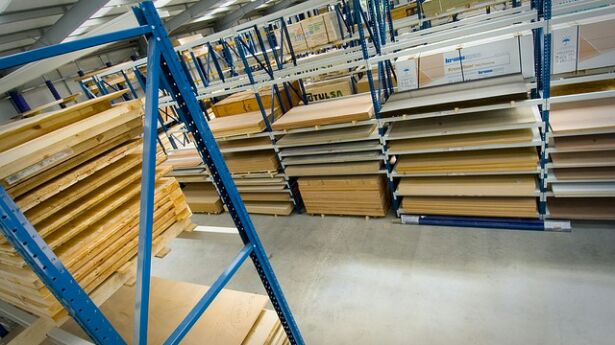
In July Pfleiderer Group launched a new melamine faced chipboard (MFC) production line at its Grajewo production plant. The new investment, worth EUR 8.5 million, will allow, among others, to increase output of large-format boards as well as improve service and shorten delivery time to customers in North-Eastern Poland and neighbouring countries.

The new production line, named KT11, will allow to produce an additional 15 million m2 of MFC, which may even mean doubling the output of that product in Grajewo. Melamine-faced boards are widely used in the furniture and interior design industries.

Zbigniew Prokopowicz, the head of Pfleiderer Group’s Supervisory Board and interim CEO, commented: “The new KT11 line of presses in Grajewo fits the strategy of Pfleiderer Group, which focuses on high-value-added products. Thanks to the investment we will increase the capacity and efficiency of MFC production and improve the customers’ service in North-Eastern Poland and in neighbouring countries. Pfleiderer Group will thus increase its competitiveness. We estimate that the launch of the new line of presses will ultimately improve our EBITDA take by more than EUR 3 million per annum.”

The new investment will enable Pfleiderer to increase flexibility in terms of formats, decors and structures of MFC boards offered to customers in North-Eastern Poland, Lithuania and the Kaliningrad Oblast.

Grzegorz Kulesza, Managing Director at Pfleiderer Polska, said: “The new line for laminating raw chipboards and MDF boards will be producing two basic formats: 5600x2100mm and 2800x2100mm, i.e. the most desired formats on the market. Additionally, thanks to the introduction of asymmetric cutting, we will be able to provide our customers with other formats, for instance 4200x2100mm or 3600x2100mm. KT11 is a very fast press, with a maximum efficiency of 240 cycles per hour. It allows for synchronous laminating as well as double edging, which improves the aesthetics of the product. The new installation will support efficient production of a wide variety of decors and structures, which are produced in Grajewo.”

Following the launch of the new line the KT3 press will be phased out. It was used to produce laminated chipboards and MDF in smaller formats, which are losing popularity on the market.
Estonian Palmako AS launches new glulam production line

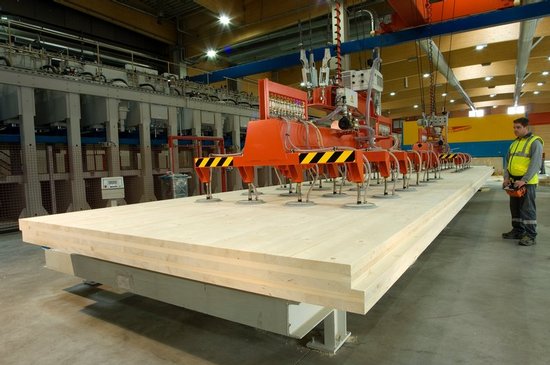
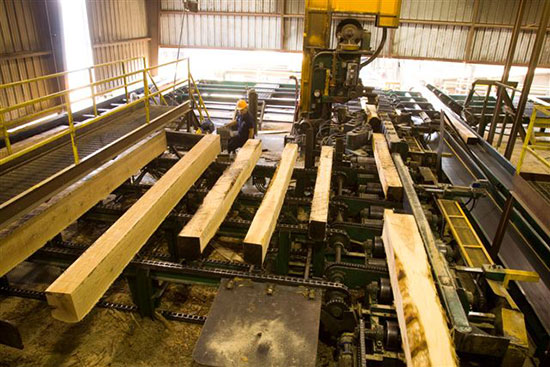
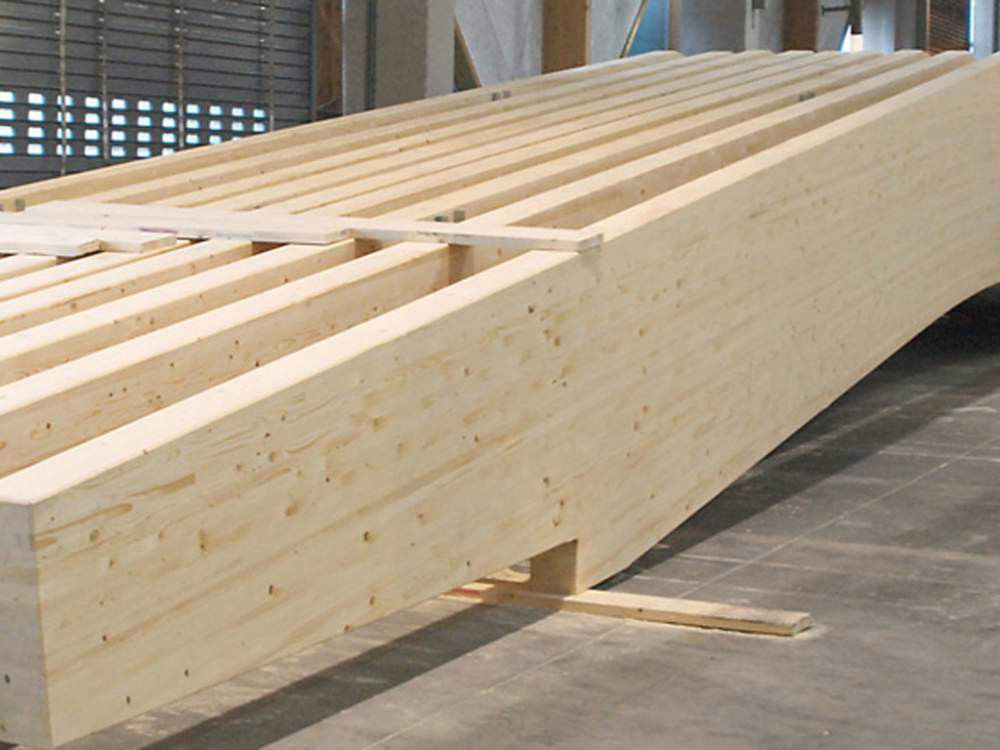
Estonian laminated timber specialist Palmako AS has launched a new glulam production line. The new line enables the production of glulam beams up to 18 meters long and up to 1280 mm high. Continue reading "Estonian Palmako AS launches new glulam production line"

Vietnam’s forestry exports up 18.6% in January-August 2019

Vietnam’s forestry exports in the January-August period reached US$7.08 billion, up 18.6% over the same period of 2018, with timber and timber products bringing in US$6.66 billion.

Key destinations for Vietnamese forestry products stayed the same, including the US, Japan, the EU, China and the Republic of Korea, whose combined imports accounted for 80% of Vietnam’s total shipments.

Exports to the US were primarily interior wood products, construction wood and plywood, while Japan mainly imported wood chips, interior wood products, construction wood and plywood.

In the first eight months of 2019, Vietnam also imported US$1.673 billion worth of timber and timber products, up 14% year on year.

Vietnamese wood imports mainly came from China, the US, Cambodia, Thailand, Malaysia, Chile, Germany, Brazil, New Zealand and France.

According to the General Department of Forestry, Vietnam harvested 13 million cubic metres of wood in the January-August period, up 5.4% from a year earlier. The figure for August alone was 1.68 million cubic metres.

List of timber products affected by China’s new retaliatory tariffs

The U.S.- China trade war tensions heightens once more as Beijing announced a new round of retaliatory tariffs on about $75 billion worth of U.S. goods.

The tariffs of 5% or 10% on US imports will start on 1 Sep, according to a statement posted by China’s Finance Ministry. Some products will be also subject to tariffs with effect from 15 December.

The new tariffs will target 5,078 products Continue reading "List of timber products affected by China’s new retaliatory tariffs"

Plywood markets in Europe facing multiple pressures

Some European importers say the deterioration in market conditions started from the beginning of the year. Others said that their first three to four months sales were satisfactory, but subsequently turned down. All agreed that by the end of July business was flat. One described it as ‘dead as a dodo’.

“The orders are still coming in, but it’s much more piecemeal,” said one company. “Customers aren’t committing to large volumes, it’s hand to mouth and just in time. Everyone is very wary of building stocks in the current climate.”

Contributing to market problems, the larger European stockholding importers are reported to have bought heavily towards the close of 2018, due to over confidence about market growth and in order to buy within the plywood quota. So they held very large inventories as demand started to contract. They are said now to be attempting to work through the excess and in the meantime have curtailed purchasing further. Continue reading "Plywood markets in Europe facing multiple pressures"

Czechia: Half a million hectares of forests threatened by the bark beetle infestation

Approximately 500,000 hectares of forest in the Czech Republic are potentially threatened by bark beetle infestation, according to the Ministry of Agriculture (see map, red areas). Continue reading "Czechia: Half a million hectares of forests threatened by the bark beetle infestation"

Ban on Russian timber exports to China would be inappropriate, says Minister of Industry and Trade

A complete ban on the sale of Russian timber exports to China looks inappropriate, since illegal logging is an internal problem of the country, said the Head of the Russian Ministry of Industry and Trade Denis Manturov.

Manturov was responding to comments made by Dmitry Kobylkin, Russia's minister of natural resources and environment, that Russia could ban timber exports to China unless Beijing takes action to help mitigate the effects of illegal logging, RIA Novosti reported.

While understanding Kobylkin’s concern, he noted that China is a major trade and economic partner of Russia and if Moscow hopes to increase turnover, quarrelling with Beijing unless absolutely necessary does not make sense.

According to him, Russia, as a WTO member may not impose a ban on the export of forest for one country. In the case of such a decision, China will be able to introduce counter-sanctions.

Russian authorities attributed some of the widespread wildfires across Siberia in recent weeks to arsonists trying to cover up on illegal logging activities.

Dmitry Kobylkin, Russia's minister of natural resources and environment, complaint about “China's unsatisfactory attitude towards the problem” in an interview with the daily Vedomosti newspaper and warned that Russia could ban timber exports to China.

US investment group takes over Pfleiderer

On 21 August, the EU Commission approved the acquisition of a majority stake in Pfleiderer Group SA by US financial investor Strategic Value Partners, LLC (SVP) of Wilmington, Delaware.

SVP therefore takes over 23,519,515 shares. The takeover bid was made on July 11 by Volantis Bidco BV, a subsidiary of SVP based in Amsterdam, for PLN 25.17 per share.

With the takeover of shares by Volantis Bidco, SVP indirectly holds 34,237,630 shares in Pfleiderer and thus a majority share of 52.92%.

Latest trade tariffs in US-China trade war into effect as of September 1

The Trump administration’s latest tariffs on China came into effect on Sunday (Sept 1), targeting for the first time Chinese consumer goods.

The previously announced additional 15 per cent tariffs on US$112 billion worth of goods imported from China are, according to experts, likely to raise prices for U.S. consumers in the medium term.

Some timber products will be affected by this current round of tariffs.

At the same time, Chinese tariffs amount to US$75 billion on U.S. goods also came into force.

Beijing started imposing a 5 per cent tariff on U.S. crude oil from Sunday, the first time U.S. oil has been targeted since the world's two largest economies launched the trade war more than a year ago.

A further 15 per cent US tariffs on US$160 billion of Chinese goods will take effect on Dec 15, further affecting consumer goods such as smartphones, laptops, and clothing.

The tranche, which had originally been set to also come into effect on Sunday, was delayed by President Donald Trump to avoid impacting Christmas sales.

From December onwards, however, nearly all Chinese imports to the United States - totalling around US$540 billion – will be subject to tariffs.

Half a billion euros state aid to help Germany’s forests

The ministry of agriculture in Germany is now planning to offer 500 million euros state aid for the clearing of bark beetle infested areas as well as for reforestation and forest conversion.

Approximately half a billion euros could flow into German forests over the next four years, as part of emergency aid to save the forests.

This was announced on Thursday (20 August) by Agriculture Minister Julia Klöckner of the Christian Democratic Union (CDU) after a meeting with representatives of the forestry industry, forest owners and nature conservation associations.

“Anyone walking through Germany’s forests today will see something dramatic,” said Klöckner.

Since last year, 110,000 hectares of forest have died, which is about the size of 150,000 football pitches. This is because extreme heat and storms are hitting the forests, as part of climate change’s first devastating impacts.

This is also alarming politicians, who have planned a forest summit for 25 September and are now eager to develop a forest strategy. Until then, it should also be determined how much emergency aid will be made available by the ministry of agriculture.

For the next four years, around €640 million from the federal energy and climate fund will be used to save forests damaged by the heat, according to Klöckner.

So far, the ministry has supported forestry policy with around €30 million a year, with an additional €10 million per year being allocated from 2020 onwards.

Besides, around €25 million will flow into research and sustainability, the ministry states.

However, even these funds are not sufficient, according to forestry representatives. The German Forestry Council estimates that at least €2 billion will be needed over the next ten years to cover the costs of repairing forest damage and replanting trees.

The council, which was also sitting at the negotiating table, is pushing for federal aid to go towards the removal of dead and damaged wood. In many tree trunks, bark beetles are nesting, destroying entire spruce stands and moving towards healthy trees.

According to the agriculture ministry estimates, the forest clean-up effort will involve extreme measures. More than 30 million cubic metres of deadwood caused solely by drought and storms, needs to be removed.

Deadwood will have to be replaced by deciduous trees, which are more resistant to the changing climate than the drier coniferous forests.

Reforestation with mixed trees has been going on for decades and is progressing well. Moreover, around one billion trees are available in tree nurseries, according to Klöckner.

$50 million CLT plant to open in Ontario

Building upon the success of its existing Cross Laminated Timber (CLT) plant and related engineering team in Quebec, mass timber manufacturer Element5 will open a second, much larger facility in St. Thomas, Ont. in December of 2020.

The new 125,000 sq. ft., $50M facility will house a technologically advanced, fully automated CLT and glulam production line, produce up to 45,000 cubic metres of CLT and glulam annually, and employ 50 full-time staff. It is expected that an additional 240 new jobs in related manufacturing, sawmill, transportation and logging sectors will be result from the operation of this new facility.

According to Element5 Founder, Patrick Chouinard, the company is “perfectly situated to help change the way in which buildings are being constructed for the better and in doing so, make a positive contribution to the environment and future generations.”

The Ontario Ministry of Natural Resources and Forestry recently announced their support of Element5’s new plant in the form of a grant of just under $5 million.

Element5, which has offices in Montreal and Toronto, was founded in 2015 and opened its first CLT plant in Ripon, Quebec in 2017. The company specializes in the design, fabrication and assembly of contemporary timber structures. It works with solid wood, the world’s most flexible and only renewable building resource.

New Zealand logging contractors in trouble after price collapse in China

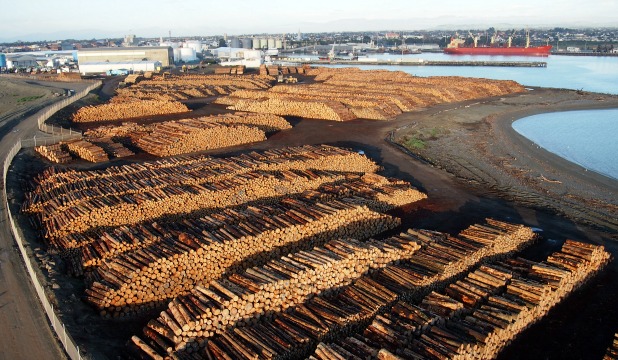
Logging contractors in New Zealand are letting staff go or are working on reduced hours after the sudden fall in log prices earlier this year, and some are having trouble meeting their loan repayments on capital equipment. 
The association, which has 200 members who are responsible for about 75 per cent of the annual harvest, said the sudden fall had caught many unawares. Many forest owners have put their harvest on hold in the hope that prices will soon recover.
Chief executive Prue Younger said about 20% of the association's membership had made workers redundant, were working on reduced hours, or were struggling to make capital repayments on their equipment. About 3,000 people are employed by the association's members, which tend to be the bigger contractors.
The sector is used to market downturns, as there have been three over the last 20 years, but Younger said this one shows a more rapid drop than those before.
New Zealand log prices in China have improved a little after slumping earlier in the year on the back of reduced demand. "A" grade logs last traded at US$112 per JAS metre after last month hitting a low of US$105/metre.

EU plywood market faces a ‘perfect storm’

As the year has progressed, the European plywood sector has become increasingly depressed. That’s the consensus among a number of leading importers and distributors. In the words of one company, the market faced a ‘perfect storm of negative factors’.

There has been a steady draining away of end-user and consumer confidence, buying, as a result, has become increasingly piecemeal, with forward ordering evaporating and prices have fallen across the board, in the case of certain products up to 40%.

Many European buyers are heavily stocked and bad debt is reported on the rise. Reflecting dwindling demand, supply is plentiful and orders available on relatively short lead times.

However, with manufacturers now trimming output in the face of deteriorating market conditions and plant closures and production line mothballing anticipated, importer nervousness about prepaying for orders has increased.

“We expected some market adjustment after having a robust three years of business from 2016 to 2018, with global plywood output hitting a record 161 million cu.m in 2017 and Chinese production reaching 117 million cu.m,” said one continental European importer. “But we didn’t think it would be as difficult as this. Continue reading "EU plywood market faces a ‘perfect storm’"

Estonia: Sharp drop in sawlog prices

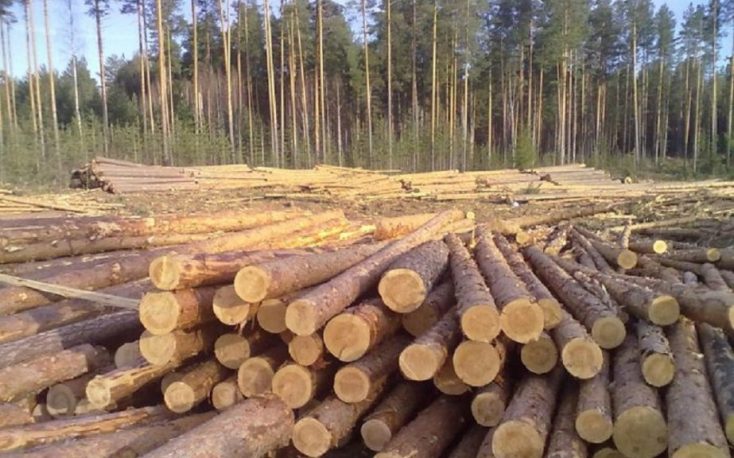
In Estonia prices for roundwood continued to decline in July. Only pine sawlogs and hardwood could grow in comparison to June. Pine sawlogs have price of EUR 75/m3, while spruce sawlogs are priced at EUR 61.40/m3. Continue reading "Estonia: Sharp drop in sawlog prices"

Great Southern Wood Preserving to open sawmill in Alabama

Since 8 July, 2019 logs are delivered in the new sawmill Abbeville Fiber in Henry County in Southeast Alabama.

Now the sawmill that belongs to Great Southern Wood Preserving, Incorporated was officially opened as local newspapers report.

For the first the mill receives 40-45 truck loads of Southern Yellow Pine logs per day. Within 12-15 month this number is to rise to 80-90 truck loads per day, that are milled.

Sole customer of the sawmill is Great Southern Wood Preserving, Incorporated. The company produces products of impregnated pine wood, which are marketed under the brand name Yellawood.

Norbord to reduce production to low OSB demand in US

Norbord Inc. announced that effective September 5th, Line 1 of its two-line oriented strand board (OSB) mill in Cordele, Georgia will operate on a reduced 10/4 schedule until further notice due to continued poor market conditions. Continue reading "Norbord to reduce production to low OSB demand in US"

Dropping sawlog prices in Sweden

Sawlog prices in Sweden decreased by 2.8% during the second quarter compared to the first quarter of 2019. At the same time, pulpwood prices were relatively unchanged.
Sawlog prices turned down during the first quarter of the year after having increased all of 2018. That decrease continued during the second quarter. The price decreased in the Northern region by 4.3% and 2.4% both in the Central and South regions.
The pulpwood price is relatively unchanged for the first time since the third quarter of 2017. Since then, the price has increased every quarter. The only region with a small change of price level is the Central region with an increase of 0.5% during the second quarter of 2019.
In comparison to the second quarter of 2018 prices increased in the whole country for both pulpwood and sawlogs. Pulpwood prices increased by 11.0% and sawlog prices by 3.4%.
Pulpwood prices increased the most in the Northern region by 15.4%, then with 11.8% and 11.1% in the Central and South regions.
Sawlog prices had the highest increase in the Southern region by 6.6%. In the Central and Northern regions sawlog prices increased by 3.2% respective by 0.5%.
The statistics are based on delivery prices. That means that the forest owner himself, with or without the help of employees or contractors, delivers the wood to the roadside, where the purchaser picks it up. Delivery prices account for some 9 percent of the total sold quantity.

German forest industry aims for pact to mitigate climate damage

A comprehensive "pact for the forest" is needed to get the damage caused by drought and bark beetles under control, the German Forestry Council (DFWR) and the Association of German Forest Owners (AGDW) said in a statement on Wednesday.

"The effects of climate change have led to a crisis in the forests," the two organizations said.

Around 2.3 billion euros (2.55 billion U.S. dollars) were needed as "immediate aid" for the rapid clearance of damaged trees and reforestation, they stated.

"Quick and unbureaucratic help is now needed to cope with the severe damage, reforest the bare areas and make the forests climate fit," said the statement.

Climate change had "contributed significantly to this drama," said AGDW President Hans-Georg von der Marwitz.

"The forests are climate protectors, oxygen producers, recreation areas and habitats for many animal species in equal measure," he said, adding "their rescue is therefore a task for society as a whole."

DFWR President Georg Schirmbeck said all tree species had been affected by the damage.

The drought had dried up around 110,000 hectares of German forests, while around 70 million cubic meters of wood were damaged in 2018 and 2019, Schirmbeck noted.

Germany would require a "huge quantity of trees" to replace the damaged ones but these also had to be grown first, he said.

On Tuesday morning, the German Armed Forces began final preparations for their deployment in Saxony to fight bark beetles in the state's forests, the German press agency (dpa) reported.

Around 50 soldiers would be helping the foresters over the next few weeks, according to the state commandos of Saxony.

"In Saxony's forests, a catastrophe is taking place," said the state's Minister for the Environment, Thomas Schmidt.

Schmidt has recently asked German Defense Minister Annegret Kramp-Karrenbauer for support in processing and removing wood damaged by bark beetles in Saxony's forests.

"The damaged wood must be transported out of the forest as quickly as possible in order to contain the further spread of bark beetles," Schmidt noted.

Since October 2017, Saxony has recorded 5.2 million cubic meters of damaged wood in its forests due to storms, snow breakage and insects, he noted.

Germany's forests are "a decisive CO2 sink, our most important allies in climate protection," said German Minister for Agriculture Julia Kloeckner.

On Thursday, Kloeckner is scheduled to meet with German forestry associations to discuss crisis management and further steps to prepare the forests for climate change.

The meeting would also be part of the preparation for a national forest summit on Sept. 25 that she initiated.

Europe sends massive amounts of softwood logs and lumber to China

Due to a massive boost of exports from Germany, total European softwood logs and softwood lumber deliveries to China expanded by 256% and 33% respectively in the first half of 2019.

According to the latest Eurostat figures, in January-June 2019, EU's softwood logs exports to China increased more than 3 times over the same period of 2018. Continue reading "Europe sends massive amounts of softwood logs and lumber to China"

Canfor to curtail an additional 75 million board feet of production capacity in BC

Canfor Corporation announced additional operating curtailments which will reduce production capacity by 75 million board feet between September 3rd and the end of the year.

Continue reading "Canfor to curtail an additional 75 million board feet of production capacity in BC"

Newsletter

Subscribe to our digital newsletter for your daily digest of essential news, views and analysis from the international wood industry delivered directly to your inbox.


0