Article archive

Tolko to curtail BC lumber mill indefinitely; citing high log costs and poor market conditions

Tolko Industries announced that, due to continued high log costs and poor North American market conditions, it will curtail its Kelowna operations for an indeterminate period.

“This decision was not easy for us to make,” says Vice President of Solid Wood Troy Connolly. “We are very disappointed to be in a position where we have to curtail the mill, particularly given the reasons for this extension are beyond our control. However, with lumber market prices at sustained low levels and high log costs in B.C., the mill cannot be cost-competitive.”

Connolly says that while Tolko would prefer to keep our locations in constant operation, the company must manage the business responsibly to ensure future sustainability.

Connolly said employees were informed of the decision earlier today and their managers are available to assist them with any questions they may have.

“On days like these, our hearts are heavy as we think of our colleagues and friends at Kelowna,” he says. “It’s hard to know they are suffering today because of reasons that are beyond our control. We know our people in Kelowna have done everything in their power to make the mill successful. They have gone above and beyond. Sadly, this has nothing to do with them or their efforts. We simply cannot operate in current conditions.”

Pino Pucci, Vice President, Tolko Marketing and Sales, assured customers that Tolko’s Marketing and Sales team “will continue to support our customers and do our best to minimize any impacts. Our customers are understanding of current market conditions and aware of our ongoing commitment to serve them.”

Global plywood industry hit by US-China trade war and slowdown of Chinese economy

The global plywood industry is currently affected by the US-China trade war and the slowdown of China's economy. In 2018, its market size was estimated at $73.9B, surging by 2.6% against the previous year. This figure reflects the total revenues of producers and importers (excluding logistics costs, retail marketing costs, and retailers' margins, which will be included in the final consumer price).

Over the period under review, plywood consumption continues to indicate a buoyant increase. The most prominent rate of growth was recorded in 2014 with an increase of 34% y-o-y. Over the period under review, the global plywood market reached its peak figure level at $93.9B in 2015; however, from 2016 to 2018, consumption remained at a lower figure.

Consumption By Country

China (101M cubic meters) remains the largest plywood consuming country worldwide, accounting for 64% of total consumption. Moreover, plywood consumption in China exceeded the figures recorded by the world's second-largest consumer, the U.S. (16M cubic meters), sixfold. The third position in this ranking was occupied by Japan (6.2M cubic meters), with a 3.9% share.

In China, plywood consumption increased at an average annual rate of +9.7% over the period from 2007-2018. In the other countries, the average annual rates were as follows: the U.S. (-0.4% per year) and Japan (+4.5% per year).

In value terms, China ($45.8B) led the market, alone. The second position in the ranking was occupied by the U.S. ($7.3B). It was followed by Japan. Continue reading "Global plywood industry hit by US-China trade war and slowdown of Chinese economy"

Russian top forestry group executive: Ban on timber exports to China useless

Mikhail Shamorin, president of the Segezha Group, one of Russia's largest forestry industrial enterprises, said that the complete ban on Russian timber exports to China is not conducive to the development of Russian forestry, but illegal timber exports must be stopped.

And some Russian lawmakers said that Russia does not advocate the prohibition of legal exports, but to prohibit illegal exports. In the future, Russia will strive to increase the export of processed wood products, and for this purpose will establish new enterprises, in which Chinese companies can also participate.

It is understood that Russia is the country with the largest timber reserves in the world. The data shows that Russia has an area of ​​809 million hectares of forest and a storage capacity of 85 billion cubic meters.

As the world's largest timber importer, China's timber production accounts for more than 30% of the Chinese market. According to Shamolin, there are many opportunities to make money in Russia. If China can participate in the construction of joint ventures, it will benefit both companies.

In fact, the economic and trade cooperation between China and Russia has shown a trend of deepening since this year. It is reported that in June this year, China and Russia signed a cooperation agreement worth 20 billion US dollars in various fields.

At the end of July, China Runda Timber Company also invested 17 million yuan to build a timber processing plant in Ussurisk, Russia. And officially completed and put into production.

UPM completes plywood expansion in Russia

The expansion of UPM Chudovo plywood mill, started in the autumn of 2017, was inaugurated. The expansion has increased the mill's production capacity to 155,000 m3 per year.

The new bio boiler plant, in turn, enhances the mill's material efficiency and reduces fossil fuel consumption. The investments total to approximately Euro 50 million.

“The two-year investment project has expanded UPM Chudovo mill production capacity and the product portfolio, which increases the value we can generate for our customers in our key industries in construction, transport equipment industry and LNG shipbuilding,” says Mika Sillanpää, Executive Vice President of UPM Plywood. “Not forgetting the advancements we will achieve in mill’s environmental performance, such as wood efficiency and carbon emissions”.

The expansion consists of new plywood production lines, including all machinery needed for veneer and plywood manufacturing. A new 19 MW bio heat boiler has also been built at the site. The mill's annual production capacity will increase by 45,000 up to 155,000 cubic meters per year and it is estimated that around 100 new jobs are created — both directly at the mill and indirectly, in wood procurement and logistics, for example.

The investment also expands the product portfolio of the UPM Chudovo mill with two new products: WISA-BirchLG, Long Grained panels, and WISA-Form BirchMBT, with new Moisture Barrier Technology (MBT) to better control face veneer moisture movement in concrete formwork panels.

“The successful and timely realization of the investment project at the Chudovo mill was possible due to highly professional and motivated project and mill teams as well as over 350 subcontractor employees. They were able to run the mill in a normal operational mode and take care of the construction and installation of new equipment at the same time. We are also proud of the safety culture during the project, as there were no lost-time accidents,“ thanks Mika Kekki, Vice-President, Production and Operations, UPM Plywood.

US softwood price movements remain flat

The first full back-to-work / school week for September 2019 did not bode well for North American construction framing softwood lumber prices.
While wholesaler prices of many wood home building materials stayed flat, and there were two panel mill and one sawmill curtailment announcement, overall demand was not encouraging for an improving market before winter sets in.
Continue reading "US softwood price movements remain flat"

International Hardwood Conference 2019 takes place in Berlin

Hardwoods become more and more important especially in Germany. To secure the source of wood in the coming years facing climate change they are suitable for remodelling the woods by planting and turning them into mixed populations.

In the long run there will be more hardwood available because of that and the saw mills will find themselves in a challenging situation, to produce economically based on the changed circumstances. There for Germany is a very fitting location for the coming International Hardwood Conference.

The European Organization of the Sawmill Industry (EOS), the European Timber Trade Federation (ETTF) and the German Association of Sawing and Wood Industry (DeSH) invite the whole industry to Berlin, on November 20-21. Among discussions attending the upcoming challenges the participants will – as always – also exchange views on international focus topics like LCA’s , EPD and CE marking or the situation in the European parquet industry.

The conference is taking place annually to offer an opportunity for information exchange and networking to hardwood producers, processors and traders.

The IHC 2019 will take place in the Hotel Amano Grand Central, Berlin. The popular congress hotel is located next to the main station and you can reach it from the Tegel Airport in about 20 minutes.

Drop in U.S. lumber production; Canadian output hit hard

U.S. sawmills in the first six months of 2019 produced 17.602 billion board ft. (bbf) of softwood lumber, down 1.1% from output in the same period last year of 17.797 bbf.

Western U.S. sawmills accounted for 7.215 bbf of the six-month total, a decline of 2.4% from 7.393 bbf a year earlier, while output at southern U.S. sawmills slipped 0.1% to 9.560 bbf from 9.566 bbf.

Output from other regions in the first half of 2019 was down by 1.2% year-over-year to 828 million board ft. (mmbf) from 838 mmbf.

In the month of June, production by U.S. sawmills dropped 5.6% year-over-year to 2.822 bbf from 2.990 bbf, and was down 5.4% compared with the prior month’s 2.981 bbf.

Western U.S. sawmills in the month of June contributed 1.148 bbf, a drop of 6.6% from 1.229 bbf a year ago, and down 7.4% from May’s 1.239 bbf.

Southern U.S. sawmills in June accounted for 1.541 bbf of production volume, a 4.9% decline from 1.620 bbf last year, and down 3.8% from 1.602 bbf in the previous month.

Apparent U.S. softwood lumber consumption in the first six months of 2019 was 24.426 bbf, up 0.3% from 24.358 bbf in the same period a year ago. In the month of June, consumption was 4.008 bbf, down 5.1% from 4.225 bbf in June 2018, and 8.7% below output in May 2019 of 4.388 bbf.

Canadian softwood lumber production/consumption

In the first half of 2019, Canadian sawmills produced 12.849 bbf of softwood lumber, a drop of 9.5% from 14.191 bbf in the same period last year. Of that total, British Columbia producers contributed 5.324 bbf, a 17.7% year-over-year drop from 6.472 bbf. Sawmills east of the Rockies accounted for 7.525 bbf – down 2.5% from 7.719 bbf in the first six months of 2018.

Canadian production volumes in the month of June were 2.020 bbf, a year-over-year decline of 12.0% from 2.295 bbf in June 2018, and down 9.8% month-over-month from 2.240 bbf in May.

In the month of June, British Columbia’s softwood lumber sawmills contributed 821 mmbf, a year-over-year drop of 23.7% from 1.076 bbf, and down 10.4% compared with May’s output of 916 mmbf.

Sawmills east of the Rockies in June produced 1.200 bbf, down 1.6% from 1.219 bbf in June 2018, and down 9.4% from May’s volume of 1.324 bbf.

Apparent Canadian softwood lumber consumption in the first six months fell 15.0% to 4.257 bbf from 5.006 bbf in the same period of 2018. In the month of June, Canadian consumption was 724 mmbf, down 3.6% from 751 mmbf a year earlier, and down 3.2% from 747 mmbf in May 2019.

U.S. and Canada utilization/inventories

U.S. production as a percentage of practical capacity averaged 83% in the first six months of 2019, down from 86% in the first half of 2018, while Canada’s average fell to 81% from 90%.

U.S. inventories climbed 1.1% in the first six months to 3.043 bbf from 3.011 bbf a year ago, while Canadian inventories dropped by 5.1% to 3.261 bbf from 3.436 bbf.

West Fraser to reduce lumber production capacity in B.C. up to 25%

West Fraser announced it will introduce variable operating schedules at five of its British Columbia sawmills that will result in an estimated decrease of production in the range of 15-25% of current B.C. lumber production.

The operating schedules at these sawmills will vary and be adjusted from time to time depending on then market conditions. The potential effect of the revised operating schedules could be an aggregate reduction by up to an estimated 100 million board feet through to the end of the year.

West Fraser also announced that it would curtail B.C. plywood production for two weeks reducing output by approximately 9 Msf. The variable operating schedules for sawmill operations and the curtailment of plywood operations in B.C. are expected to commence September 16, 2019. These production reductions and curtailments are a result of sustained weak markets, pricing in wood product markets and high log costs. West Fraser anticipates continuing the variable operating schedules at its B.C. sawmills until market and economic conditions support a return to full production.

West Fraser has previously implemented temporary and permanent capacity curtailments of approximately 125 million and 614 million board feet respectively in 2018 and 2019.

West Fraser is a diversified wood products company producing lumber, LVL, MDF, plywood, pulp, newsprint, wood chips, other residuals and energy with facilities in western Canada and the southern United States.

Bergs Timber aims to more than double production at Mörlunda sawmill

Bergs Timber applied for an increased production permit for the sawmill in Mörlunda, Sweden. Bergs Timber started sawmill production in Mörlunda 100 years ago. The sawmill has developed over the years.

For one period of time, it consisted of three saw lines and several production lines for planing of different products. In 2012 and 2013, major changes were made with staff reductions. At the same time, an investment was made which made it possible to focus on small log sawing. The conversion to small log sawing and planing has been successful and the Mörlunda plant has had a good financial development.

The production volume has gradually increased and has now reached the limit of the current production permit of 130,000 cubic meters per year. To enable continued development and expansion, a new production permit of 300,000 cubic meters per year will be applied for, as Bergs Timber reports.

“Today we have an efficient and profitable plant in Mörlunda which, with the help of dedicated and talented employees, has reached the limit for our production permit. We are looking forward to the future and to enable a continued development of the business, we are now seeking a new production permit of 300,000 cubic meters per year,” said a company spokesman.

Södra Group lowers prices for softwood logs; citing high supply of logs and economic slowdown

The Swedish Södra Group lowers its purchase prices for roundwood. The company cited reasons for a high supply of logs as well as persistent signs of an economic slowdown affecting finished goods markets. In addition, the market price for spruce sycamore wood is generally decreasing. Continue reading "Södra Group lowers prices for softwood logs; citing high supply of logs and economic slowdown"

Trends in global pellet prices and trade

The global wood pellets market revenue amounted to $5,359.9B in 2018, rising by 6.8% against the previous year. This figure reflects the total revenues of producers and importers (excluding logistics costs, retail marketing costs, and retailers' margins, which will be included in the final consumer price). Over the period under review, the total market indicated remarkable growth from 2007 to 2018: its value increased at an average annual rate of +9.1% over the last eleven year period.
The trend pattern, however, indicated some noticeable fluctuations being recorded throughout the analyzed period. Based on 2018 figures, the wood pellets consumption increased by +18.7% against 2016 indices. The growth pace was the most rapid in 2013 when the market value increased by 22% y-o-y. Over the period under review, the global wood pellets market attained its peak figure level in 2018 and is expected to retain its growth in the immediate term.

Production 2018

In 2018, the amount of wood pellets produced worldwide amounted to 33M tonnes, going up by 9.3% against the previous year. Overall, wood pellets production continues to indicate remarkable growth. The growth pace was the most rapid in 2013 with an increase of 17% y-o-y. Global wood pellets production peaked in 2018 and is expected to retain its growth in the near future.
In value terms, wood pellets production amounted to $5,221.5B in 2018 estimated in export prices. In general, the total output indicated prominent growth from 2007 to 2018: its value increased at an average annual rate of +9.1% over the last eleven years. The trend pattern, however, indicated some noticeable fluctuations being recorded throughout the analyzed period. Based on 2018 figures, the wood pellets production increased by +18.9% against 2016 indices. The most prominent rate of growth was recorded in 2013 when the output figure increased by 22% against the previous year. Global wood pellets production peaked in 2018 and is expected to retain its growth in the near future.

Exports 2018

Global exports totaled 21K tonnes in 2018, increasing by 8.1% against the previous year. In general, wood pellets exports continue to indicate remarkable growth. The growth pace was the most rapid in 2013 when exports increased by 26% y-o-y. Global exports peaked in 2018 and are likely to see steady growth in the immediate term.
In value terms, wood pellets exports totaled $2.9B in 2018. Overall, the total exports indicated a strong expansion from 2007 to 2018: its value increased at an average annual rate of +8.9% over the last eleven years. The trend pattern, however, indicated some noticeable fluctuations being recorded throughout the analyzed period. Based on 2018 figures, the wood pellets exports increased by +17.6% against 2016 indices. The pace of growth appeared the most rapid in 2013 with an increase of 36% year-to-year. Global exports peaked in 2018 and are expected to retain its growth in the near future.

Exports by Country

In 2018, the U.S. (5.7K tonnes) was the largest exporter of wood pellets, comprising 27% of total exports. It was distantly followed by Canada (2.4K tonnes), Viet Nam (1.8K tonnes), Latvia (1.8K tonnes), Russia (1.6K tonnes) and Estonia (1.3K tonnes), together comprising a 43% share of total exports. The following exporters - Austria (724 tonnes), Portugal (471 tonnes), Malaysia (466 tonnes), Lithuania (438 tonnes), Germany (397 tonnes) and Denmark (392 tonnes) - together made up 14% of total exports.
Exports from the U.S. increased at an average annual rate of +15.1% from 2007 to 2018. At the same time, Viet Nam (+54.1%), Denmark (+29.1%), Malaysia (+19.0%), Russia (+14.6%), Estonia (+13.6%), Latvia (+12.4%), Canada (+9.7%), Lithuania (+8.5%) and Austria (+7.2%) displayed positive paces of growth. Moreover, Viet Nam emerged as the fastest growing exporter in the world, with a CAGR of +54.1% from 2007-2018. By contrast, Portugal (-3.4%) and Germany (-11.9%) illustrated a downward trend over the same period. While the share of the U.S. (+21 p.p.), Viet Nam (+8.6 p.p.), Canada (+7.2 p.p.), Latvia (+6.2 p.p.), Russia (+6 p.p.), Estonia (+4.7 p.p.), Malaysia (+1.9 p.p.), Austria (+1.8 p.p.) and Denmark (+1.7 p.p.) increased significantly in terms of the global exports from 2007-2018, the share of Germany (-5.7 p.p.) displayed negative dynamics. The shares of the other countries remained relatively stable throughout the analyzed period.
In value terms, the U.S. ($662M) remains the largest wood pellets supplier worldwide, comprising 23% of global exports. The second position in the ranking was occupied by Canada ($330M), with a 12% share of global exports. It was followed by Latvia, with a 7.9% share.
From 2007 to 2018, the average annual rate of growth in terms of value in the U.S. stood at +8.6%. The remaining exporting countries recorded the following average annual rates of exports growth: Canada (+8.0% per year) and Latvia (+7.4% per year).

Export Prices by Country

The average wood pellets export price stood at $135 per kg in 2018, declining by -4% against the previous year. In general, the wood pellets export price continues to indicate a noticeable slump. The most prominent rate of growth was recorded in 2013 when the average export price increased by 8.3% against the previous year. Over the period under review, the average export prices for wood pellets attained their peak figure at $203 per kg in 2007; however, from 2008 to 2018, export prices remained at a lower figure.
There were significant differences in the average export prices amongst the major exporting countries. In 2018, the country with the highest export price was Germany ($277 per kg), while Viet Nam ($77 per kg) was amongst the lowest.
From 2007 to 2018, the most notable rate of growth in terms of export prices was attained by Malaysia, while the other global leaders experienced more modest paces of growth.

Imports 2018

In 2018, the amount of wood pellets imported worldwide stood at 20K tonnes, jumping by 6.1% against the previous year. Over the period under review, wood pellets imports continue to indicate remarkable growth. The pace of growth was the most pronounced in 2013 when imports increased by 37% year-to-year. Global imports peaked in 2018 and are expected to retain its growth in the immediate term.
In value terms, wood pellets imports stood at $3.2B in 2018. In general, wood pellets imports continue to indicate a remarkable increase. The pace of growth was the most pronounced in 2013 with an increase of 39% against the previous year. Over the period under review, global wood pellets imports reached their maximum in 2018 and are expected to retain its growth in the immediate term.

Imports by Country

In 2018, the UK (7K tonnes) was the main importer of wood pellets, comprising 35% of total imports. Denmark (3.4K tonnes) occupied the second position in the ranking, followed by South Korea (2.8K tonnes), Italy (1.9K tonnes) and Belgium (1.1K tonnes). All these countries together occupied near 47% share of total imports. Japan (513 tonnes) and Austria (436 tonnes) followed a long way behind the leaders.
From 2007 to 2018, average annual rates of growth with regard to wood pellets imports into the UK stood at +16.4%. At the same time, South Korea (+42.8%), Japan (+27.9%), Denmark (+8.9%), Italy (+8.4%), Austria (+8.2%) and Belgium (+2.4%) displayed positive paces of growth. Moreover, South Korea emerged as the fastest growing importer in the world, with a CAGR of +42.8% from 2007-2018. The UK (+29 p.p.), South Korea (+14 p.p.), Denmark (+10 p.p.), Italy (+5.7 p.p.) and Japan (+2.4 p.p.) significantly strengthened its position in terms of the global imports, while the shares of the other countries remained relatively stable throughout the analyzed period.
In value terms, the UK ($1.3B) constitutes the largest market for imported wood pellets worldwide, comprising 40% of global imports. The second position in the ranking was occupied by Denmark ($463M), with a 15% share of global imports. It was followed by Italy, with a 12% share.
From 2007 to 2018, the average annual rate of growth in terms of value in the UK amounted to +15.2%. In the other countries, the average annual rates were as follows: Denmark (+4.7% per year) and Italy (+5.2% per year).

Import Prices by Country

In 2018, the average wood pellets import price amounted to $160 per kg, lowering by -3.8% against the previous year. Overall, the wood pellets import price continues to indicate a measured reduction. The growth pace was the most rapid in 2014 when the average import price increased by 2.8% against the previous year. In that year, the average import prices for wood pellets attained their peak level of $202 per kg. From 2015 to 2018, the growth in terms of the average import prices for wood pellets failed to regain its momentum.
Import prices varied noticeably by the country of destination; the country with the highest import price was Italy ($196 per kg), while South Korea ($97 per kg) was amongst the lowest.
From 2007 to 2018, the most notable rate of growth in terms of import prices was attained by the UK, while the other global leaders experienced a decline in the import price figures.

German wood industry slips into negative territory, after five years of steady growth

After five years of continuous growth, the German wood industry had to cope with a slight decline in sales in the first half of 2019 for the first time. 

"From January to June, the sales value was around € 18 billion, down 1.5% on the previous year. Against the background of the perceptible slowdown in economic growth in Germany and the increasing deterioration in the external economic conditions, we are also assuming a negative result for the full 2019 year, "said Jan Kurth, managing director of the Federation of the German Timber Industry (HDH). Continue reading "German wood industry slips into negative territory, after five years of steady growth"

Sweden: Wood infested by the bark beetle double as compared to last year

Damage to spruce forest is extensive following the spruce bark beetle outbreak over the past 12 months.

The results of a new inventory of land owned by members show that 2.5 million m³ is infested in Continue reading "Sweden: Wood infested by the bark beetle double as compared to last year"

Falling sawlog prices across the world

The Global Sawlog Price Index (GSPI) fell for the fifth consecutive quarter in the 2Q/19, reaching a two-year low. Log prices were down on all continents, with the biggest declines occurring in Europe.
In the 2Q/19, the European Sawlog Price Index (ESPI) fell to a nine-year low, reports the WRQ. In Euro terms, average sawlog prices in Austria and Germany have fallen almost 20% over the past two years, thus improving the competitiveness of the two countries sawmilling industry.
US softwood log shipments to China have fallen by $124 million in value since the trade war started May 2018.
Global Pulpwood Prices Continue reading "Falling sawlog prices across the world"

US plywood producers want to stop certification for Brazilian wood; claim plywood exports are defective

Ten plywood producers in the United States have filed for a court order to stop the certification of Brazilian lumber mills, claiming that their imports aren’t suitable with the U.S. durability standards for structures and hurricane resistance.

According to law.com, the complaint was filed on Thursday, 5th of September, at the U.S. District Court for the Southern District of Florida, and assigned to U.S. District Judge Roy Altman in Fort Lauderdale. The same source mentions that this lawsuit claims $150 million in damages and characterizes Brazilian plywood exports as defective due to a “massive quality control failure” obscuring a high risk of failure.

Moreover, the complaint brings about a price war which started back in September 2017 and has left many U.S. producers operating at a loss since then.

The U.S. plywood producers go against two certifying agencies that authorized 35 Brazilian plywood plants as meeting the structural grade requirements for plywood panels, NAHBNow reports. Nevertheless, the building codes adopted all around the U.S. require that the structural grade plywood panels incorporated into the roofs, floors and walls of residential and commercial buildings in the United States meet the PS 1-09 structural standards.

An accreditation agency stamp of the PS 1-09 standard has to be put on each panel identifying the production mill, as mentioned in the lawsuit. Yet, during tests conducted by the American Plywood Association in 2018 and commissioned by the Plaintiffs in 2019, the plywood shipped by 35 Brazilian plants failed to meet standards 75% to 100% of the time.

As law.com reports, the Engineered Wood Association got hold of stamped Brazilian panels coming from nine mills and tested them. In June 2018, the association issued a product advisory which stated that all of the panels failed bending stiffness strength and maximum deflection requirements.

Moreover, co-defendant International Accreditation Service Inc., a California nonprofit that serves as the accrediting agency for the two companies, employs “shockingly weak certification procedures” that depend on Brazilian mills, government officials and subcontracted inspectors to verify performance standards, the complaint said.

“The difference between the quality of the fiber going into the plywood in the U.S. compared to that of Brazil is apples to oranges,” Tyler Freres, vice president of Freres Lumber Co., a coalition members in Oregon, said in a news release.

The lawsuit is about the use of plywood in roofs, floors and walls during strong storms or hurricanes. If Dorian hit Florida “with the force of winds that it had, a 4 or 5, there would be extremely high risk the storm shutters using this plywood would not have performed,” Michael Haglund of Haglund Kelley explained.

Also, the U.S. producers claim that the PS 1-09 compliant structural grade plywood can’t be consistently or reliably made out of the extraordinarily fast-growing plantation species in southern Brazil, NAHBNow reported.

The 35 Brazilian plywood plants are operating in the states of Parana and Santa Catarina. According to data from law.com, Brazilian plywood has a 15% market share in the U.S., as long as in Florida, the market penetration is well above 50%. The complaint also showed that 20% of the Brazilian imports in 2018 came through Florida, primarily Fort Lauderdale, and the top U.S. destinations for Brazilian plywood are Florida, New York and Puerto Rico.

The name of the case is U.S. Structural Plywood Integrity Coalition, et al. v. PFS Corporation, a Wisconsin corporation, dba PFS-TECO, Timber Products Inspection, and International Accreditation Service, Inc., United District Court for the Southern District of Florida Fort Lauderdale Division (Sept. 5, 2019).

NAFTA rules in favour of Canada in lumber dispute with U.S.

Canada has won a victory over the U.S. in the two country's long running trade dispute over softwood lumber.

A joint North American Free Trade Agreement (NAFTA) panel has given the United States three months to rethink its tariffs on imports of Canadian softwood lumber. Continue reading "NAFTA rules in favour of Canada in lumber dispute with U.S."

Vietnam suspects China in recent plywood export surge

Vietnam suspects that a surge in plywood exports to the U.S. is actually coming from Chinese firms looking to avoid trade war tariffs.

Continue reading "Vietnam suspects China in recent plywood export surge"

Canada: Recent trends in wholesale and retail softwood lumber prices

Canadian retail prices for framing lumber rose 34% in 2018 compared to 2016 driven by a confluence of factors in the commodity markets.
This increase contributed to the higher construction costs for new residential buildings observed in 2018 across many regions. Canadian wholesalers and retailers of lumber largely passed on cost pressures originating from commodity markets to consumers.
Retail prices for lumber reached multiyear highs in 2018
The average selling price for framing lumber (2-inch x 4-inch x 8-ft dimension) was up 34% in 2018 compared to 2016. This was due to rising purchase prices which increased 32% during the same time. Retailers largely passed on cost pressures from wholesalers and producers to consumers. From 2013 to 2015, relatively stable selling prices were recorded averaging $3.1 per unit. Continue reading "Canada: Recent trends in wholesale and retail softwood lumber prices"

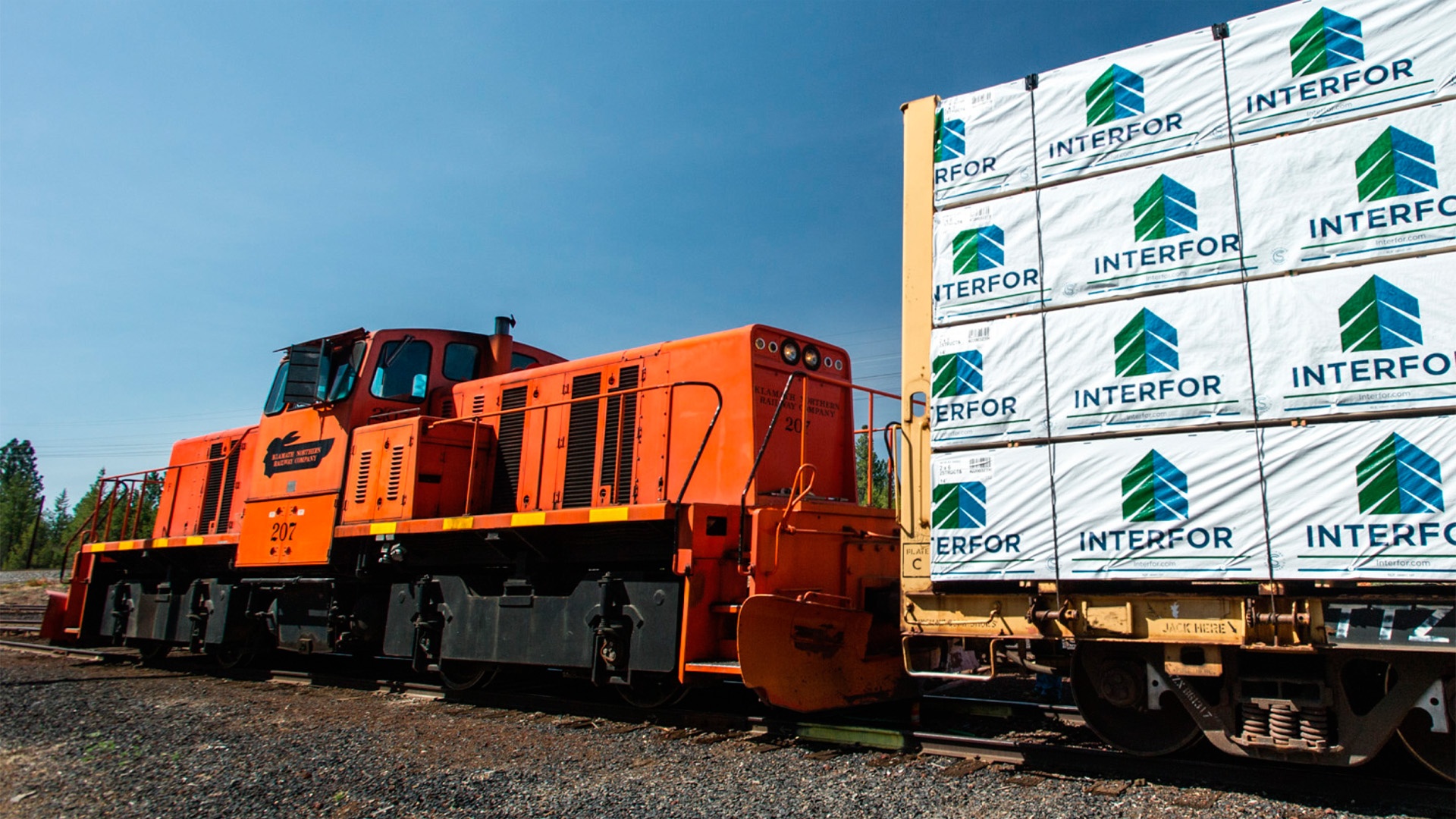
Interfor to permanently close Hammond sawmill in Maple Ridge, British Columbia

Interfor Corp. plans to permanently close its Hammond sawmill in Maple Ridge, B.C., affecting more than 100 workers.

The Vancouver-based company says the closure is part of a reorganization of its forestry and woodlands operations amid tight supplies of logs for processing.

It says the shutdown will be complete by the end of 2019, after the mill’s remaining log and lumber inventories have been processed and shipped.

Interfor chief executive Duncan Davies says the company, which has 18 mills across North America, will seek jobs for the affected workers at its other operations or at outside mills.

Interfor is still awaiting a provincial decision on its $60-million offer to acquire Canfor Corp’s Interior cutting rights after that company closed its Vavenby sawmill in July.

When the planned deal for the cutting rights was announced, Interfor said the additional supply would “solidify” its Adams Lake operation east of Kamloops, B.C.

None of the timber was earmarked for Interfor’s coastal mills but a company statement issued Tuesday said the Hammond closure could create opportunities to increase supply for its other Metro Vancouver sawmill, located in Delta.

“The Coastal B.C. forest industry has faced significant log supply challenges over the past two decades and manufacturing capacity needs to be brought into line with available log supply,” Davies said in the statement.

Closure of its Maple Ridge sawmill would result in “repatriation of working capital tied up at Hammond,” while “monetization” is planned for the prime Fraser River-front property, the company said.

The Hammond mill mainly processes Western red cedar and has a two-shift capacity, but Interfor said it has been operating with a single shift for several years due to log supply constraints and other issues.

In August, United Steelworkers Local 2009 members at Hammond and at Interfor’s Acorn mill in Delta voted 97 per cent in favour of strike action.

The permanent closure of the Hammond mill is the latest upheaval for the B.C. forest industry, which has seen nearly two dozen mill closures, short-term shutdowns and hundreds of layoffs through the Interior over the summer.

A lack of supply and volatile markets were blamed in those cases, while Davies said cedar producers such as the Hammond mill have been “disproportionately impacted by duties on shipments into the United States as a result of the softwood lumber dispute.”

Swiss Krono produced the first MDF board in the plant in Barnwel, USA

On August 24, 2019, Swiss Krono produced the first MDF board in the new MDF HDF plant in Barnwell, South Carolina, USA. 

The plant will serve the growing flooring, MDF and HDF markets in the US. With the new plant, one can finally grow profitably in the US market, explains plant manager Erik Christensen.

The plant has an annual capacity of 280,000 m3, mainly floor support panels. The investment was $ 230 million. Swiss Krono ordered the plant from Siempelkamp in 2016.

Newsletter

Subscribe to our digital newsletter for your daily digest of essential news, views and analysis from the international wood industry delivered directly to your inbox.


0