Article archive

Global plywood industry is in the process of transformation and upgrading

Given China's economic slowdown and tight supply of wood fiber, Asian production and consumption growth cannot continue to grow at the current rate. North American supplies are roughly matched to demand. However, both situations inevitably change. So what is the future of the industry in these two regions and the rest of the world? What will be the future update?

Consumers have long believed that plywood is a unique product because its strength and appearance properties are not easily replicated. Balancing supply and consumption in North America and continuing to increase sales elsewhere will depend on many factors. The general economic situation, including the relative strength of the US dollar, will remain the main factor. Continue reading "Global plywood industry is in the process of transformation and upgrading"
Wood fiber costs declined for many North American pulpmills during H1/2019

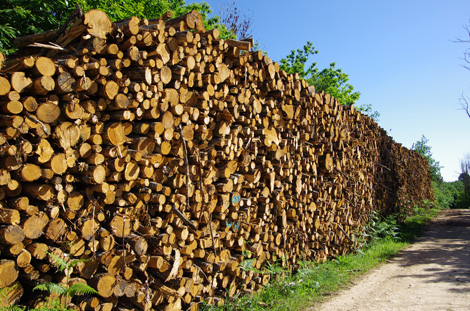
Wood fiber costs fell in most regions of North America during the first six months of 2019, with the biggest declines in Western Canada and the US Northwest. Prices for pulplogs and wood chips in the US South bucked the trend, with softwood fiber moving up to its highest levels in three years and hardwood fiber prices hitting an all-time-high.
US South
Wet weather conditions in the US South continued to restrain harvesting in the 2Q/19. However, pulpmill maintenance outages and falling pulp and paper product prices led to softening demand for wood fiber this quarter. The result was an easing in softwood pulplog prices from the 1Q/19. Even though hardwood pulplog pricing remained flat, the region was slowly reducing its reliance on long-distance haul supply sources, as well as finishing harvesting operations in timber stands that were purchased when rates were higher than in the 2Q/19. Continue reading "Wood fiber costs declined for many North American pulpmills during H1/2019"

FSC to initiate dialog to end disassociation of Vietnam Rubber Group

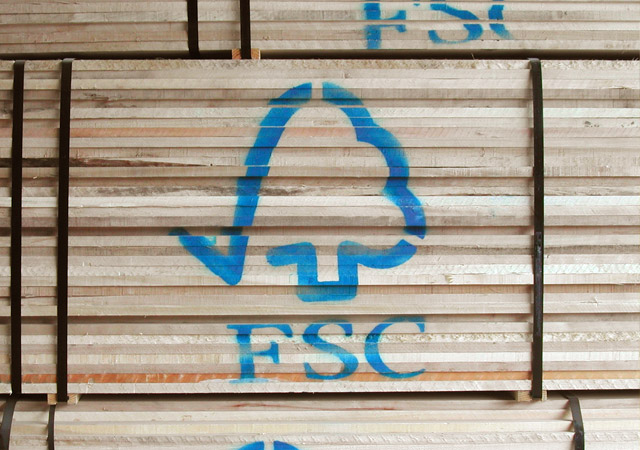
FSC has agreed to enter a formal dialogue with the Vietnam Rubber Group (VRG) on the process of beginning a plan – called a roadmap - to end disassociation. In 2015, FSC disassociated from VRG after a complaint against the company and subsequent investigation revealed VRG had violated FSC’s Policy for Association.

VRG has since approached FSC to end its disassociation, expressing its commitment to completely comply with the FSC Policy for Association as well as intent to correct and mitigate past harm. FSC is now assessing VRG to determine its readiness for entering a Roadmap process.

The evaluation will be based on multiple factors, including but not limited to the following indicators:

VRG demonstrates a top management commitment towards complying with the FSC Policy for Association for the purpose of becoming re-associated with FSC.

VRG has adopted relevant values (policies, protocols, codes of conduct, etc.) whereby previous business practices are to be abandoned and (more) responsible actions are to be adopted and implemented.

VRG has commenced with credible steps towards implementation of new policies in a transparent manner involving relevant stakeholders.

Should the assessment reveal that VRG has met the criteria to enter a Roadmap process, VRG and FSC will then proceed towards an extensive stakeholder engagement process. When announcing the VRG disassociation, FSC specified minimum conditions for VRG to meet before being eligible towards FSC considering lifting the disassociation. In addition to these conditions, further requirements will be formalized through this public and transparent stakeholder engagement process where remedy for past violations of the Policy for Association will be evaluated and identified.

This process will inform the final specifications of the roadmap for potential ending of the disassociation. FSC will only consider the re-entry of VRG into the FSC scheme after successful and verified completion of a predetermined threshold of adherence with the roadmap.

During the process, VRG remains disassociated from FSC.

Arauco expands in North America with the acquisition of US MDF producer

Arauco announced that it has signed an agreement to acquire Prime-Line Inc., a privately held U.S. manufacturer of medium density fiberboard (MDF) molding and millwork products.

The acquisition strengthens Arauco’s presence in the North American molding industry with an integrated solution that enhances its ability to provide customers with value-added products. The transaction is expected to be completed September 3, 2019.

Prime-Line started in Malvern, Arkansas, in 1996. In 2014, the company expanded with a new, state-of-the-art plant on a site adjacent to Arauco’s MDF plant in Malvern. The 100,000-square-foot facility includes three fully automated molding lines with an installed annual capacity of 135,000 m3. Arauco has been a long-time partner of Prime-Line and has been their primary supplier of MDF panel for many years.

“We are excited to have Prime-Line join the Arauco team,” said Pablo Franzini, President - Arauco North America. “This acquisition further executes on our commitment to create higher value for our customers through product diversification, expanded services and supply chain efficiencies. We are confident this will make us a better supplier to our North American partners and help them grow their business.”

“The shared vision for superior customer service and the proximity of Prime-Line to our Malvern MDF operations create many synergies between our two companies,” said Russ Jordan, Vice President of Sales & Marketing, Arauco North America. “This new capability complements our South American millwork operations and allows us to expand our service model to customers across North America.”

Arauco will continue to operate the business under the Prime-Line name and will work alongside Prime-Line’s team to facilitate a smooth transition for customers and employees at the Arkansas facility.

August prices for Brazilian logs, sawnwood and plywood

Latest prices for Brazilian logs, sawnwood and plywood as of 1-15 August 2019.

Brazilian logs, mill yard, domestic US$ per m3
Ipê 205⇑
Jatoba 114⇑
Massaranduba 109⇑
Muiracatiara 109⇑
Angelim Vermelho 107⇑
Mixed redwood and white wood 90⇑
Source: STCP Data Bank

Continue reading "August prices for Brazilian logs, sawnwood and plywood"

Interfor CEO to step down at the end of the year

Forestry company Interfor Corp. says chief executive Duncan Davies will step down at the end of the year and be replaced by Ian Fillinger, the company’s chief operating officer.

Davies will also step down as a director of the company, but has agreed to remain in an advisory capacity through the end of next year.

He joined Interfor in June 1998 and was appointed president in December of that year and chief executive in February 2000.

Fillinger, 51, has been with Interfor since March 2005.

He was appointed senior vice-president and head of operations in December 2015 and to his current position in February 2018.

Fillinger is expected to join the company’s board after he becomes chief executive.

New tariffs against US wood products exports to China

U.S. hardwood lumber, logs and veneer exports are among the products impacted in a new round of tariffs announced last Friday by the Chinese government. The tariffs will be implemented in two phases, beginning Sept.1 and Dec. 15. 

New and additional tariffs of 5% and 10% on being levied. Continue reading "New tariffs against US wood products exports to China"

China: August prices for imported logs and sawnwood

The report below contains the latest prices of logs and sawnwood from main timber markets in China, between 1-15 August 2019.

1 Yuan=0.13 EUR
1 Yuan=0.14 US$
Guangzhou Yuzhu International Timber Market

Logs yuan/cu.m.
Merbau Dia. 100 cm+ 4-6000
Bangkirai Dia. 100 cm+ 3200-4200
Kapur Dia. 80 cm+ 2700-3000
Ulin All grades 6500
Lauan Dia. 60 cm+ -
Kempas Dia. 60 cm+ 2000-3000
Teak Dia. 30-60 cm+ 8500-8600


Logs yuan/cu.m.
Greenheart Dia. 40 cm+ 2300-2400
Purpleheart Dia. 60 cm+ 3000-4500
Pau Rosa Dia. 60 cm+ 2800-3000
Ipe Dia. 40 cm+ 3200-3400
Yuan per tonne
Cocobolo All grades 40-70000

 
Sawnwood

Sawnwood yuan/cu.m
Makore Grade A 9800-11800
Zebrano Grade A 9500-12500
Walnut Grade A 9500-15000
Sapelli Grade A 5000-7500
Okoume Grade A 3700-4700
Padauk Grade A 15000-18000
Mahogany Grade A 6500-7500


Sawnwood yuan/cu.m
Ulin All grade 9000-10000
Merbau Special grade 7500-9500
Lauan Special grade 4300-4700
Kapur Special grade 5000-6000
Teak Special grade 14000-22000


Sawnwood yuan/cu.m
Maple Grade A 9000-9500
Beech no knot 9000-9500
Ash no knot 5600-6300
Basswood no knot 2800-3300
Oak no knot 5300-5700
Scots pine no knot 2100


Sawnwood yuan/cu.m
Cherry Fas 2 inch 9000-10000
Black walnut Fas 2 inch 15000-18000
Maple Fas 8200-10000
White Oak Fas 7500-13000
Red Oak Fas 6500-8300
Finnish pine Grade A 2600-2900

Zhangjiagang Timber Market Wholesale Prices

Logs, all grades  yuan/tonne
Sapelli 3000-4000
Kevazingo 8000-32000
Padouk de africa 2400-3100
Okoume 1400-1800
Okan 2400-2800
Dibetou 2200-2500
Afrormosia 5500-6500
Wenge 4700-5500
Zingana 3400-4800
Acajou de Africa 3000-3500
Ovengkol 3100-3600
Pao rosa 5900-6600


Logs, all grades  yuan/tonne
Merbau 3500-5800
Lauan 1800-2020
Kapur 2020-2500
Keruing 1700-2200
Geronggang 1600
Kauri 1700-1850


Logs, all grades  yuan/tonne
Amoora 1900-2080
Calophyllum 2150-2350
Red Ganarium 1300-1400

(Source: ITTO)

CEO Karl-Henrik Sundström to leave Stora Enso in 2020

Karl-Henrik Sundström has informed Stora Enso’s Board of Directors today that he is leaving the position of CEO. The Board has initiated the search process for a successor.

Karl-Henrik Sundström will continue in his current role for the time being and will leave Stora Enso during the first quarter of 2020. The exact date will be communicated once a successor is in place.

“Under Karl-Henrik Sundström’s leadership and vision, Stora Enso has accelerated the transformation into the bioeconomy. He has played a crucial role in developing Stora Enso into the renewable materials company, successfully driving towards sustainable profitable growth. Under Karl-Henrik’s tenure, Stora Enso has become a global leader in sustainability. The company’s leading innovation agenda reflects that sustainable solutions can replace fossil-based materials and contribute to combatting global warming,” says Jorma Eloranta, Chair of the Board.

Karl-Henrik Sundström joined Stora Enso in 2012 as CFO and took on the role as divisional head of the Paper and Wood Products businesses in 2013. He assumed the role of CEO of Stora Enso in August 2014.

Finland: Roundwood price overview in July 2019

As usual, the roundwood trade in Finland slowed down in July. Roundwood purchases included in the statistics amounted to 1.7 million cubic metres from non-industrial private forests. The volume went down two fifths from the previous month and was 9% smaller to the previous year.

The price for pine logs was EUR 56.4 per cubic metre, and the price for spruce logs was EUR 59.3 per cubic metre in standing sales of non-industrial private forests. The price of pine logs remained on the same level as in the previous month and spruce logs went down 1%.
The stumpage prices of pulpwood decreased at least by two per cent. The average price for pine pulpwood was EUR 17.9, while the price for spruce pulpwood was EUR 19.6 and the price for birch pulpwood was EUR 17.0.
Pulpwood assortments accounted for nearly four fifths of the total roundwood trade by delivery sales. The roadside price for pine pulpwood was EUR 32.5, for spruce pulpwood EUR 35.0 and for birch pulpwood EUR 33.9 per cubic metre. These prices, contrary to stumpage prices, rose respectively 4%, 3% and 5% from the previous month.

Latest prices for Indian imported wood products

Latest prices for Indian teak, plywood and sawnwood - 1-15 August 2019
Plantation teak prices
Optimism among teak importers was dented recently as the rupee slipped by around 4% against the dollar driving up import costs. Against this background, and with no decision on easing the advance payment conditions under the Goods and Services tax rules, C&F prices are stuck at the same level as a month ago. Continue reading "Latest prices for Indian imported wood products"

Softwood logs prices continue to fall in Sweden

In the second quarter of 2019, according to the Swedish statistics, softwood logs prices in Sweden continued to fall, although price increases were made by forest owners and industry from April / May. 

After having already been on average 3% lower than in the previous year in the first three months of the year, average prices determined by the Swedish Forest Agency (Skogsstyrelsen) for the second quarter show a further decline of around 3.9% to around 472.8 skr / m³. The national average price for spruce logs was 4,2% lower than in the previous year at 491 skr / m³, while the value for pine logs dropped by 2,7% to 446 skr.
In addition to Södra and Mellansko, in the middle of the second quarter, Bergs Timberund Vida also raised their supply and purchase prices for coniferous wood by around 25-30 skr / m³.

Rising MDF prices in China

Recently, the increasing intensity of environmental supervision has caused wood-based panel manufacturers in Shandong and Hebei to fall into a state of suspension. The production capacity of wood-based panels has been seriously affected. In addition, the recent timber purchases are difficult due to weather, and the production costs of the panels continued to rise and prices began to rise.

Taking Linyi in Shandong as an example, the price of MDF has recently increased by 1-2 yuan/sheet. Some merchants said that in addition to the lack of capacity, the costs have risen. The low inventory of midstream dealers is also one of the important reasons for the rise in the price of MDF.
Due to the poor market conditions of the MDF market this year, the merchants are have reduced stocks, but the recent rise in the price of MDF has stimulated the enthusiasm of the downstream market to increase the volume of goods, and the volume of MDF shipments has increased significantly.
In the case of less demand, the price of MDF naturally climbed.
At present, the price of 1220×2440×9mm MDF in Linyi, Shandong Province is 47 yuan/sheet.

Arauco to cease particleboard operations in St. Stephens, Canada

Arauco North America has informed employees that particleboard operations will end in St. Stephen, Canada by the end of 2019.

Continue reading "Arauco to cease particleboard operations in St. Stephens, Canada"

New Zealand log prices in China start to recover

New Zealand log prices in China have improved after slumping earlier in the year, restoring a little confidence to the sector. "A" grade logs last traded at US$112 per JAS metre after last month hitting a low of US$105/metre.

Continue reading "New Zealand log prices in China start to recover"

Wood starts to gradually replace concrete, as wooden skycrapers spread across the world

For more than a century, countries have raced to build the world’s tallest buildings with concrete and steel. Now, a quiet contest in constructing tall wooden buildings, from Amsterdam to Tokyo, underlines growing environmental concerns over concrete.

With rapid advances in engineered wood, and authorities relaxing building codes, wooden structures are sprouting across Europe, Canada, the United States, and in the Asia Pacific region.

At 73 metres (240 ft), Amsterdam’s Haut building is said to be the world’s tallest wooden residential tower.

Vancouver plans a 40-storey building it says will be the world’s tallest, a title also claimed by Sumitomo Forestry’s 350-metre skyscraper in Tokyo.

“The interest is definitely being driven by environmental concerns – the amount of damage we’re doing with concrete is unbelievable,” said John Hardy, a sustainability expert in Bali, Indonesia.

“Bamboo and wood are carbon sequestering materials. So, the other advantage of building with them is that you will look better to your children and grandchildren,” he said.

Construction of office towers, bridges, airports and highways is booming in developing nations across the world.

The manufacture of steel, concrete and brick accounts for about 16 per cent of global fossil-fuel consumption – and up to 30 per cent when transport and assembly of the materials is considered, according to the Yale School of Forestry & Environmental Studies.

Concrete is also blamed for rampant sand mining, which has damaged the environment and hurt livelihoods in Southeast Asia.

In addition, an abundance of concrete has worsened urban flooding, and made cities hotter, environmentalists say.

In contrast, wood requires fewer fossil fuels to transport and assemble, and also effectively stores large amounts of carbon – trapped as the trees grew – for years, helping curb emissions, said Andy Buchanan, professor of timber design at the University of Canterbury in New Zealand.

More attractive

Each cubic metre of timber used in construction stores a carbon equivalent of over 900 kilogrammes of CO2 emissions, meaning a reduction of 135 kg-360 kg of CO2 emissions per square metre of floor area, said Buchanan. Continue reading "Wood starts to gradually replace concrete, as wooden skycrapers spread across the world"

Kazahstan partially bans exports of timber

A temporary prohibition on the export of timber has entered into force in Kazakhstan,Trendreports with reference to the press office of State Revenue Committee of Kazakhstan.

'The prohibition on the export of certain types of timber from Kazakhstan is approved for six months and has entered into force on August 18, 2019,' the report said.

In accordance to the information, the prohibition is not applied in the cases of export from countries of European Union to other countries via the territory of Kazakhstan. The ban also is not applied in the cases of timber export from countries of Eurasian Economic Union to other countries via the territory of Kazakhstan.

The Eurasian Economic Union (EAEU) is an economic union of states located in central and northern Asia and Eastern Europe.

Forestry summer slowdown affects pellet producers in North America

Follow-through from unstoppable demand for solid wood products at the end of 2017 lead to robust lumber sales through last year, with prices rising accordingly. At sawmills across Canada and the U.S., hungry sawblades consumed robust amounts of logs, providing good volumes of chips and sawdust as feedstock for wood pellet producers. By the end of 2018 shocked customers decided to hold off any extra lumber purchases until absolutely necessary, in the hopes that prices would drop.

Continue reading "Forestry summer slowdown affects pellet producers in North America"

New import rules for US hardwood logs in EU

The new EU implementing directive 2019/523 of 21 March 2019 (available on request) concerns the protection measures against the introduction into the Community of organisms harmful to plants or plant products and against the spread in the Community.

The pests "Gesmithia soft Kolarik, Freeland, Utely & Tisserat" and its carrier "Pityophthorus juglandis Balckman" have infested several US states by raising a 6-year moratorium on export unless the logs are treated (check below) .

From September 1st, therefore, the US logs will suffer strong increases for the aforementioned mandatory treatments if they come from infested states, described as follows:

States with survey data that show no parasites Continue reading "New import rules for US hardwood logs in EU"

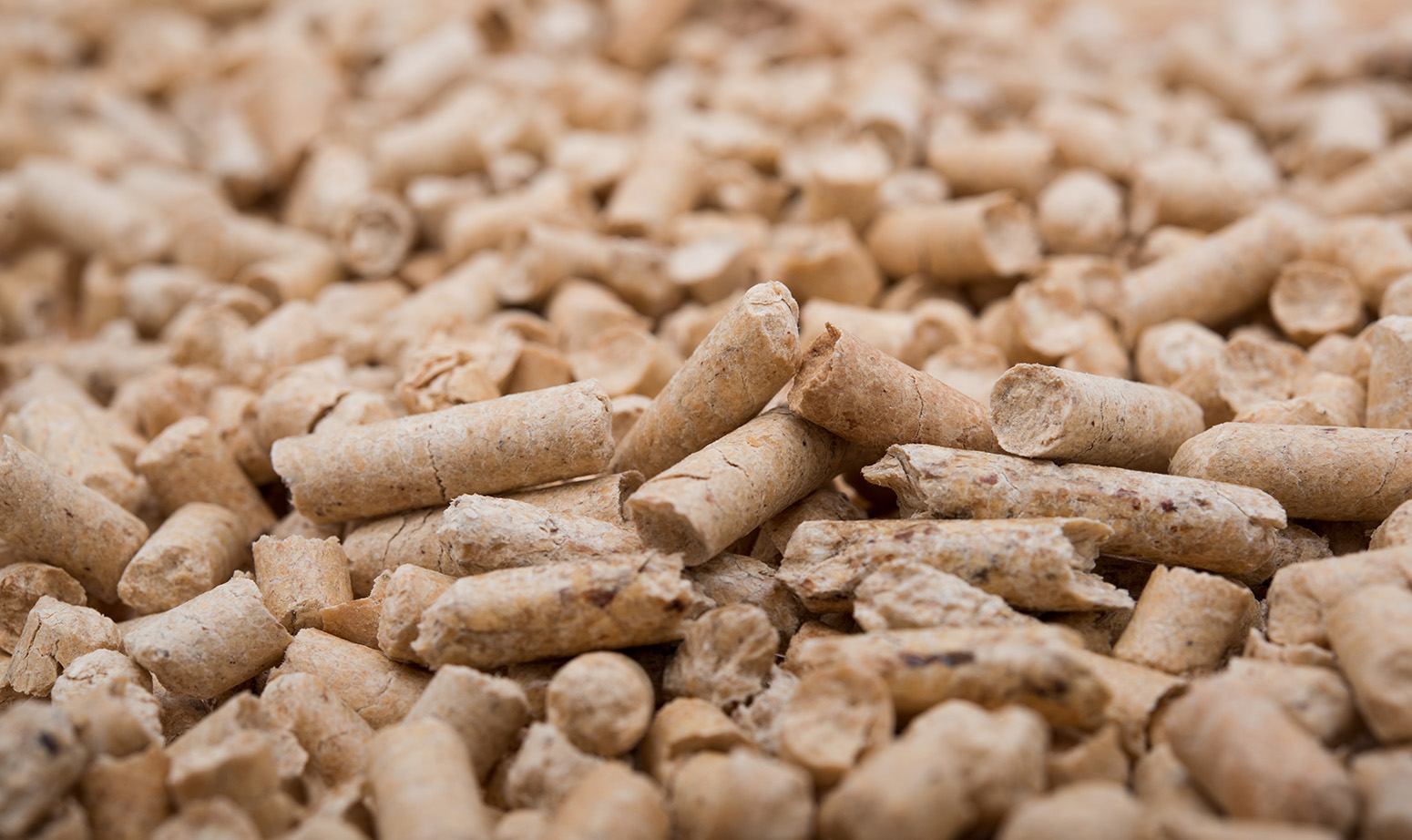
Vietnam gains market shares in Japanese wood pellet imports

Pellet imports to Japan from Vietnam jumped 219.6% y-o-y in first half of 2019 to 420.9 thousand tons with import value soared 226.1% to $70.8 million. Share of Vietnam in Japan pellet imports expanded 28.6 pp to 56.1%.

Pellet imports to Japan from Canada declined 19.4% to 266.8 thousand tons with import value dropped 20.3% to $50.2 million, according to Customs and Tariff Bureau of Japan Share of Canada in Japan pellet imports fell 33.6 pp to 35.6%.

Total pellet imports to Japan expanded 56.7% to 750.3 thousand tons, import value increased 52.6% to $133.8 million.

Japan's consumption of wood pellets continues to increase significantly in the wake of the Fukushima Daiichi nuclear disaster in 2011, as its government has targeted a “best energy mix” of roughly 4 GW of biomass-fired capacity by 2030. By then, Japanese demand for wood pellets will be upwards of 15 million tons per year—a staggering 3,000% increase from its consumption of roughly 500,000 tons in 2017.

Newsletter

Subscribe to our digital newsletter for your daily digest of essential news, views and analysis from the international wood industry delivered directly to your inbox.


0