Article archive

Value of Swiss wood pellets drops this month

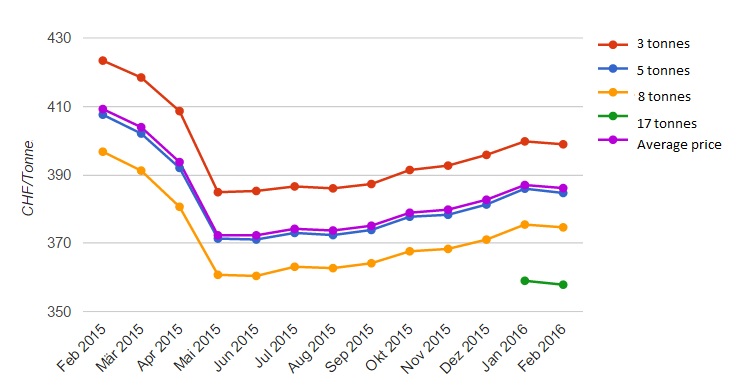
In February 2016, the price for Swiss wood pellets dropped slightly, mostly due to weather reasons, such as the current mild winter. The average retail price of wood pellets in Switzerland stood at 386.1 CHF/ per tonne (around EUR 351.39/t) in February, compared to 387 CHF/ per tonne (around EUR 353/t) in January. The February price is 22 CHF/t lower than the same month of 2015, when the price was 409.2/t.
Depending on the purchase quantity, the pellet price in February varies by between: 398.9 CHF/t for 3 tonnes purchases to 357.87 CHF/t for 17 tonnes purchases.
Price of Swiss pellets (Graph+Table)
Switzerland_pellet_price

Price of wood pellets in Switzerland (CHF/tonne) February 2015 January 2016 February 2016
3 tonnes purchase quantity 423.36 399.75 398.9
5 tonnes purchase quantity 407.55 385.93 384.67
8 tonnes purchase quantity 396.73 375.44 374.63
Average price 409.20 359.01 386.10

 
[gravityform id="1" title="true" description="true"]
 
[gravityform id="2" title="true" description="true"]
 

UPM completes installation of new log sorting line at Seikku sawmill

UPM's new high capacity log sorting line in Seikku sawmill in Pori (Finland) is now in full operation. The new investment improves the overall production efficiency of the sawmill significantly because the previous bottle neck is completely renewed, the company said in a press release.
With the new investment all logs can be sorted into quality and size straight from the truck. This improves sawing efficiency by lengthening batches and minimizing downtime. According to UPM, the investment also enhances the internal logistics and processes of the sawmill by moving the log sorting line closer to the saw infeed. Seikku sawmill's log sorting process is the first in Finland with control log table and butt-end reducer both already installed in line, as the company stated.
Investment project was completed in the planned timeframe and log sorting on the new line started in August, after the summer maintenance break. The majority of the investment was supplied by Finnish Nordautomation.
Seikku sawmill produces whitewood sawn timber from certified Nordic spruce. The annual production capacity of Seikku sawmill is 390 000 m3 of sawn timber. More than two thirds of the production volume is exported. Currently 80 employees are directly employed by UPM Seikku sawmill and in total 120 people are working in the sawmill area.

Sonae-Arauco giant joint-venture expects approval by EC

Arauco and Sonae have registered on February 2 the establisment of the joint-venture announced in November 2015. The joint-venture is currently under review and expects approval by the EU Commission. The decision is expected on March 8.
The new venture will be named Sonae-Arauco, S.A. and is expected to be finalized in the first half of 2016, if approved.
In order to form the joint-venture, Arauco subscribed for 50% of Sonae's Tafisa, for a $150 million investment. Tafisa owns 10 panel mills that are distributed in Spain, Portugal, Germany and South Africa. Combined, these production facilities employ 3,000 people and produce a total of 4.2 million cubic metres of panels.
Tafisa has estimated annual sales of $900 million- produces and sells OSB, MDF, and PB panels, as well as sawn timber. Arauco will operate two panel mills and one saw mill in Spain; two panel mills and one resin facility in Portugal; four panel mills in Germany and two in South Africa. Sonae-Arauco’s production capacity will be about 460,000 m3 of OSB, 1.45 million m3 of MDF, 2.27 million cubic metres of particleboard and 100,000 cubic metres of sawn timber.
This investment will rank Arauco as the second producer in the wood panel global ranking, with an annual production of 9 million m3, which includes 50% of Tafisa’s production.

European tropical logs imports rising firmly in 2015

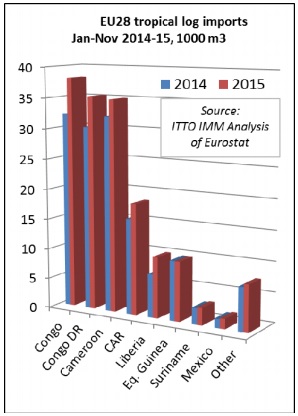
EUtropicallogsimportsEuropean imports of tropical logs gained ground in the first eleven months of last year, rising 14% to 158,954 cu.m . According to a ITTO report, imports were almost exclusively sourced from African countries although Suriname is now established as a small but consistent supplier of logs to the EU, particularly of denser and FSC-certified wood for sea defence works and similar heavy-duty applications.
EU imports of tropical logs increased sharply from Congo (up 18% to 38,136 cu.m), Democratic Republic of the Congo (up 17% to 35,277 cu.m), Cameroon (up 9% to 34,936 cu.m), and Central African Republic (up 16% to 18,471 cu.m). There was also a resumption in log imports from Liberia, which jumped 41% to 10,094 cu.m in the first 11 months of last year.
Much of the growth in EU imports of tropical logs was concentrated in Belgium and Portugal, the second and third most important EU importers after France, which at 63,943 cu.m only imported 1% more than in 2014. Belgium imported 28,979 cu.m between January and November 2015, more than twice as much as the year before (+122.6%).
Portugal shows a similar trend: at 28,226 cu.m the country imported 57.9% more than in 2014. And Italy, too, boosted its import volume by 49% to 15,583 cu.m .
 
[gravityform id="1" title="true" description="true"]
 
[gravityform id="2" title="true" description="true"]

Peru: Wood product exports hit by falling demand in China

Data from the Association of Exporters (ADEX) shows that up to November 2015, Peru's average wood products export prices were down almost 9.5% year on year from US$154 to US$139 per cu.m FOB.
As ITTO reports, products which featured prominently in November exports were profiled softwoods for strips and friezes which accounted for around 32% of all wood product exports.
November exports of profiled timbers fell almost 4% compared to November 2014. Other wood products of significance were sawnwood but exports fell by over 38% mainly because of a decline in purchases by importers in China.
Despite the weakening demand in China it remains the main market for Peru’s wood products accounting for about 37% of all wood product exports. A market that holds promise is Mexico. Compared to November 2014 there was a 7% increase in exports to Mexico in November 2015.
Peru's sawnwood exports up to the end of November 2015 were worth US$45.54 million, a year on year drop of around 24% but for Mexico exports rose by almost 22% compared to the same period in 2014.
Exports of semi-manufactured products were worth US$64 million for the eleven months to November 2105 with most destined for China which accounted for around 70% of all exports of semi-manufactured wood products. But demand in Denmark has bene sustained and expanded 35% year on year.
Peru’s exports of veneer and plywood dropped to US$15 million as of November, a decline of 5% year on year. The main export markets for veneer and plywood were Mexico and the United States but imports of veneer and plywood by Mexico were down almost 2.5%.
Peruvian exports of furniture and parts for the year ending November 2015 dropped 17% to US$5.96 million. The US accounted for 58% of all Peru’s furniture exports followed by Italy at 15%.
 
[gravityform id="1" title="true" description="true"]
 
[gravityform id="2" title="true" description="true"]
 

Metsä Group sales above the 5 billion mark in 2015

Metsä Group reported increased sales in 2015, reaching a total amount of EUR 5,016 million, compared to EUR 4,970 in 2014, according to the press release of the company. Excluding the non-recurring items, the operation results reached EUR 537 million, increasing from EUR 418 million in 2014. With the non-recurring items, the sales totaled EUR 542 million. Moreover, from the EUR 764 million of cash flow from operations, Metsä Group increased to EUR 964 million.
Sales for the 4Q 2015 decreased from EUR 1,248 million in 2014 to EUR 1,205, while the operating results excluding non-recurring items was EUR 123 million, compared to the EUR 117 million of the same period last year. The cash flow from operations for the 4Q reached a total amount of EUR 338 million, descending from the same period of 2014, when it reached EUR 390 million.
The increase of the operating results was due to the strong pulp delivery volumes, while the paperboard deliveries decreased slightly on a seasonal basis.
Also, the changes in outcome were favoured by Metsä Board’s installation of the new paperboard machine at the Husum mill in Sweden and the construction of Metsä Fibre's bioproduct mill in Äänekoski, that progressed according to plan. Moreover, the group sold the share capital of Metsä Wood's French timber upgrading company, Metsä Wood France SAS, to Mutares AG in October 2015.
Further on, Metsä Board announced it would expand its range of paperboard for food service packaging by investing EUR 38 million in extrusion coating at the Husum mill in Sweden.
The group expects the operating result excluding non-recurring items in the first quarter of 2016 to be approximately on the same level as in the fourth quarter of 2015.

“Metsä Group’s business operations developed favourably in 2015. Our sales grew, and operating result excluding non-recurring items was markedly better than in 2014. Our cash flow was at a good level and balance sheet strenghtened. We benefitted from exchange rate changes to some extent, but our stronger performance was based above all on our long-term work to improve efficiency and profitability,” said Kari Jordan, president and CEO of Metsä Group.

Outlook
According to Metsä, wood demand will focus on felling sites to be harvested when the ground is unfrozen and, in terms of energy wood, on crown wood. The sales of forest management services are expected to grow.
Metsä Wood’s sales are expected to be on a similar level as previous year’s first quarter. In the first quarter, the sawn timber market balance is expected to improve for spruce sawn timber. For pine sawn timber, oversupply is expected to continue due to weak demand in the EMEA sales region. Shutdowns are possible in birch plywood production, depending on the market situation. Demand for other wood products is expected to continue stable.
The global economic uncertainty and changes in the currency market will impact Metsä Fibre's operating environment. Nevertheless, global demand for pulp has remained stable, and there are no signs of material changes in the market situation.
Metsä Board's paperboard deliveries are in January–March expected to grow from the last quarter of 2015. The new paperboard production line at Husum, still in the start-up phase, will have the effect of decreasing the average price of folding boxboard. The company estimates that the required quality targets will be reached by the third quarter of 2016 according to the original plan.
In the tissue and cooking paper markets, demand is expected to continue stable in all market areas. Demand for tissue paper will increase in eastern Central Europe, in particular, and demand for cooking papers will grow in Asia.
Metsä Group’s operating result excluding non-recurring items is in the first quarter of 2016 expected to be approximately on the same level as in the fourth quarter of 2015.
 
[gravityform id="1" title="true" description="true"]
 
[gravityform id="2" title="true" description="true"]

IKEA loses trademark fight to an Indonesian furniture company

IKEA’s trademark was legally registered for a little known rattan furniture company in Indonesia. The Indonesian company registered its name in 2013, even if IKEA applied for the right to the brand in Indonesia back in 2010, according to International Business Times (IBT).
Because the Swedish furniture company didn’t actively use the trademark in Indonesia for 3 consecutive years, the law allows it to be deleted. Thus, the rights for the trade mark were given to Ratania Khatulistiwa.
As ITB reported, the Supreme Court of Indonesia published the ruling last week. It seems that this ruling was made back in May 2015, but neither IKEA nor the public knew anything about this.

"The decision rendered by the Supreme Court in Indonesia in May 2015 was notified to our local, Indonesia lawyers yesterday [4 February]. We have therefore not yet had the opportunity to analyse the decision. The company however said that it has taken measures to allow it to continue using the IKEA trademark,” reported Inter IKEA Systems BV, a Dutch company that manages IKEA's international franchises.

Still, the ruling doesn’t interfere with IKEA’s operations in Indonesia because it owns the exclusive rights for the term covering other classes.
The original IKEA got its name from the initials of the founder, 17-year-old Ingvar Kamprad, the farm where he grew up, Elmtaryd, and Agunnaryd, his hometown in Smaland. At the same time, the Indonesian company says that their name stands for Intan Khatulistiwa Esa Abadi, which refers to palm rattan (which is used to make furniture).
However, the Indonesian Supreme Court did recognize IKEA first coming from Sweden and one of the three judges ruled in favour of Ikea noted the size difference between the two companies.
 
[gravityform id="1" title="true" description="true"]
 
[gravityform id="2" title="true" description="true"]


Calls for wood biomass to be removed from EU Renewable Energy Directive

More than 110 environmental groups across the globe have signed a declaration demanding that bioenergy be excluded from the EU's next Renewable Energy Directive (RED). This is stated in a press release issued by biologicaldiversity.org. The RED will be renewed in 2020 and the EU’s consultations on the issue finished on the 10th of February, expecting a decision by the end of the year.
Following the Paris agreement signed in December 2015, the RED will be responsible for meeting EU’s carbon emissions reductions targets. The EU already has two-thirds of energy classed as renewable, that include bioenergy, making it account for playing a major part in EU’s renewable energy strategy.

"Burning wood for energy increases carbon pollution in the atmosphere for decades to centuries, published science shows. Indeed, so-called "biomass" is even more carbon-intensive than coal when measured at the smokestack. The EU, however, currently treats wood energy as "carbon neutral" despite contrary scientific evidence,” said Dogwood Alliance, the US wood protection group.

They added that this point of view damages the forests. The major impact on the forests and the communities of the Southern US will be seen by the increasing demand for European wood pellets globally, especially from the US, as Adam Macon from Dogwood Alliance explained.

"We've joined with over 110 other groups to send a strong signal to the EU and the US Environmental Protection Agency (EPA) that they must change their mind on bioenergy or risk doing far more harm than good. It's clear that support for bioenergy in the EU is directly impacting forests internationally and the people that depend on them, as well as incentivizing even greater carbon emissions,” Macon added.

The same group stated that EPA is being pushed to classify biomass energy as a "carbon neutral" method of complying with the Clean Power Plan's carbon pollution standards for power plants, by the forest products industry and several states in the US.
The Senate adopted an amendment to a bipartisan energy bill that could force EPA and other agencies to ignore biomass carbon pollution despite the science.

Kevin Bundy, senior attorney and climate legal director at the Center for Biological Diversity, said that "the science is clear that large-scale burning of wood to generate electricity will make the climate crisis worse, so it shouldn't be used in Europe or the US."

Bundy also added that the EU now has to mend its anti-science mistake as o avoid a repetition of it.
 
[gravityform id="1" title="true" description="true"]
 
[gravityform id="2" title="true" description="true"]
 

Russia: Softwood lumber prices drop by 22%

Softwood lumber sales from Russia to foreign markets went up by 5%, to 22.4 million m3 in 2015. Still, the average value decreased by $753 million, at a total amount of $2.7 billion and registered a general decrease of 22% in dollar terms, according to WhatWood.
The same statistics show that China increased the deliveries by 18%, reaching a total amount of 9.8 million m3, but the import value decreased by 8% to $973 million. Meanwhile, Russia reached a 50% share in the Chinese imported lumber market. Uzbekistan, the second largest market for Russia, decreased their deliveries by 14%, reaching to 2.4 million m3, while the total import value was $210 million (-49%).
Egypt, the third largest importer of Russian lumber, imported over 200,000 m3 every month, reaching a historical peak in the summer of 2015, as What Wood reported. Nevertheless, September to December period declined the volumes by 12% monthly. Thus, the total annual volume increased 33% to 1.9 million m3 and the value of imports fell to $310 million (3.6%).
The timber industry analytic agency, What Wood, explained that this decreased comes in line with the global trend of price drops for all basic commodities. Moreover, the decrease in export prices was also affected by the strengthening of the US dollar, rising supply while the global demand declined.
 
[gravityform id="1" title="true" description="true"]
 
[gravityform id="2" title="true" description="true"]
 

New record high for North American wood pellet exports

North American overseas pellet exports rose for the second consecutive quarter to reach a new record high in the 3Q/15 with the US South shipping 77% of the volume. The wood pellet industry keeps investing in new production capacity in the US South because of higher pellet demand in the United Kingdom. In the 3Q/15, 77% of North America’s pellet exports were from the southeastern US.
North American overseas pellet exports increased for the second consecutive quarter in the 3Q/15, rising 15 percent from the previous quarter to reach a new record high of just over 1.6 million tons, according to the North American Wood Fiber Review (NAWFR). The US South continues to be in expansion mode with additional capacity being added during the fall of 2015.
Newly operating pellet plants in the US Gulf Coast region made their presence felt in the 3Q/15 with their first shipments to Europe. German Pellets in Louisiana, Drax Biomass’s two new plants in Louisiana and Mississippi, and Zilkha Biomass Energy in Alabama all continued their ramp-up of operations. Primarily due to these new facilities, exports from the Gulf ports rose by 54 percent from the previous quarter to reach over 550,000 tons in the 3Q/15.
The quarterly shipments of pellets from Canada remained practically unchanged during the first three quarters of 2015. While shipments to Europe fell in the 3Q/15, representing a six percent reduction from the previous quarter, a large rebound in shipments to Asia more than made up for the reduced European shipments. Canadian exports to Japan and South Korea climbed in the 3Q/15, almost doubling 2Q/15 volumes. However, the 3Q/15 volume still represented just one third the volume shipped to Asian destinations in the record-high 3Q/14, as reported in the NAWFR.
The United Kingdom remains the primary destination for North American pellet exports, and in the early 3Q/15 the government announced plans to reduce various subsidies for green energy from a variety of sources. Policy developments in both the UK and the Netherlands underscore the still unsettled details around biomass utilization in Europe despite the continent’s commitment to green energy.
The Drax biomass plants in the UK remain by far the largest user of North American pellets. Future industrial pellet demand in the UK was also bolstered in the 3Q/15 with the announcement that a coal-burning power station in Northumberland will close at the end of 2015 only to be converted to a pellet-burning plant operating by the end of 2017, dependent on final government approvals.

Proteak launches 280,000 m3/yr MDF plant in Mexico

Proteak announces the operations’ startup of its MDF plant in Huimanguillo, Tabasco, under the brand Tecnotabla. With state-of-the-art technology, this plant is the first of its kind in Mexico and will use certified wood from the company’s own 100% sustainable plantations.

Panel production will increase gradually to reach the plant’s annual capacity of 280 thousand m3. The MDF produced by Proteak will not only be sold in the domestic market, but in the international one, as well.

“This plant represents the most important forestry-industrial project in the country’s history and evidences that the forestry sector can be sustainable and profitable at the same time, to the benefit of many Mexican families”, declared Héctor Bonilla, Founder of Proteak and President of the Board.

Proteak is the largest forestry-industrial company in Mexico and Central America. With over 20,000 hectares of forestry plantations, it exports to over 15 destinations in America, Europe and Asia. Proteak developed Mexico’s largest forestry-industrial project. The company operates under the international standards of the Forest Stewardship Council® (FSC®).

[gravityform id="1" title="true" description="true"]

[gravityform id="2" title="true" description="true"]

EGGER launched new flooring system at Domotex 2016

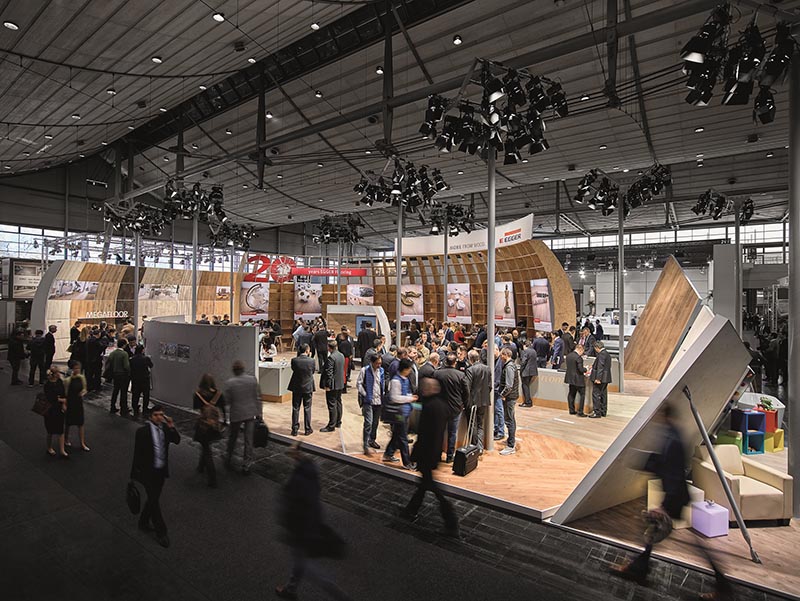
The Austrian wood-based materials manufacturer EGGER has taken Domotex trade fair as an occasion to celebrate the 20th anniversary of EGGER flooring and to present a new flooring system to the range: EGGER DESIGN+, Notifix informs.
The new EGGER DESIGN+ FLOORING system is an extremely resilient but natural and 100% PVC- and plastics-free design floor with a SelfRepair property. With the new flooring system EGGER has managed to combine wood-based floors with the properties of plastic based design floors.


The floor's top layer consists of elastic, harmless to health, odorless and low-emission TPU (thermoplastic polyurethane). The core of EGGER's new design floor consists of a double sealed, high-density, wood-based coreboard: the Ultra Wood Fiber Board (UWF).
A unique memory function makes EGGER DESIGN+ Flooring stand out when compared to other design floors: due to the so-called SelfRepair effect, the molecules displaced by surface deformation "remember" and return to their initial position. The floor looks new again. EGGER DESIGN+ FLOORING is recommended where a floor must be able to stand a lot of wear.
 
[gravityform id="1" title="true" description="true"]
 
[gravityform id="2" title="true" description="true"]

Greater focus on bamboo in India

A recent meeting of Indian senior ministers heard that the domestic market for bamboo is estimated to be worth around US$10 billion annually and this is set to grow generating enormous job opportunities along the production chain plantation development to manufacturing. Production of ethanol derived from bamboo for bio-diesel offers other opportunities for investment, ITTO reported.

The Indian government is planning schemes to encourage farmers to establish bamboo plantations along national highways and the Road Transport and Highways Ministry has unveiled a plan for ‘greening’ extending along 100,000 km. of national highways.

K. Bhattacharya, the head of the National Green Highway project said the world market for bamboo products has been estimated at around US$360 billion with China and Vietnam being the main suppliers. He said India’s exports are no higher than those of the Philippines but could be much higher.

The government is resolved to increase production of bamboo to augment wood supplies for housing, furniture, panel products packaging etc. The Indian Plywood Industries Research and Technical Institute (IPIRTI ) has begun work developing technologies for production of bamboo products.

IPIRTI has already invested several years of research in development of cost effective, eco-friendly technologies for manufacture of several bamboo based products such as bamboo mat board, veneer composites, corrugated sheets and flooring, including high density flooring that can be used in containers. At present laminated bamboo lumber is being imported and is finding applications in the transport sector especially Indian Railways.


[gravityform id="1" title="true" description="true"]


[gravityform id="2" title="true" description="true"]
German Pellets goes bankrupt

German Pellets has filed for insolvency on the 10th of February at the regional court of Amtsgericht Schwerin, Germany. The bankruptcy follows the financial difficulties of the last period, including the bankruptcy of subsidiary Kago or Firestixx.
Now, the company wants to obtain a creditor as to continue to run its activities by a self-administered insolvency.
One of the reasons for which the Wismar’s wood pellet producer got to this situation is the decline of oil costs, which brought the wood pellets price tag way below pressure. In addition, the incomes have lowered due to the weather conditions (the last two years’ warm winters) and the acquisition of Kago, the furnace producer, in 2010, which turned out to be a bad investment.
Before the bankruptcy was announced, a meeting of the creditors had been canceled, a thing that led to the rates of all three bonds to be traded below 10%. Thus, the bondholders, along with the profit participation creditors, have lost their repayment claim and expect at least a quota in the insolvency proceedings.
 
[gravityform id="1" title="true" description="true"]
 
[gravityform id="2" title="true" description="true"]


EU illegal timber policy seems to be ineffective

EU’s timber regulation (EUTR) hasn’t been effective in preventing the illegal timber trade, according to the Guardian. Even if the law requires it, six EU countries still haven’t carried out checks on importers. Moreover, nine other EU countries didn’t take action against illegal timber dealers or haven’t been imposed penalties.
The European Commission review sent to the Guardian shows that there are only a few private sector companies that have monitoring groups to track the source of their timber. Nevertheless, there are numerous ways to exempt many types of timber import from investigation.

This EU law represents a landmark against illegal logging, "but almost three years after its introduction, we haven’t seen a single prosecution in Europe. If EU member states are serious about cracking down on the drivers of illegal logging, they need to start abiding by their own laws – by seizing illicit timber and prosecuting the companies that import it,” said Alexandra Pardal, a spokeswoman for the campaign group Global Witness.

Global Witness has showed evidence for illegal timber exported from the Democratic Republic of Congo and Central African Republic to Europe, but the EU authorities haven’t taken any action. Moreover, an Interpol investigation is being required by Greenpeace, for a boat locked in a dock in Bilbao now that supposedly is full of illegal timber.
According to Interpol statistics, approximately $100 billion per year are lost in the illegal logging industry.

“There is no solid evidence to show that the due diligence system obligation so far has been effective in preventing illegally harvested timber and that operators across the EU have consistently implemented their due diligence requirements to date,” the EU Commission review states.

The law implies that only the first timber seller to the European market has to verify the legality of the product, making it difficult for the authorities to check the timber on its way.
A recent study released by the European Court of Auditors said that the EU law had been poorly designed, badly managed and largely ineffective, according to the Guardian, mostly because the government authorities don’t have the necessary resources to carry out the measures as they should.
The worst part of this issue is that nearly 20% of the greenhouse gas emissions are being caused by the illegal logging.
 
[gravityform id="1" title="true" description="true"]
 
[gravityform id="2" title="true" description="true"]


EU tropical sawn wood imports rise-but are still at pre-crisis levels

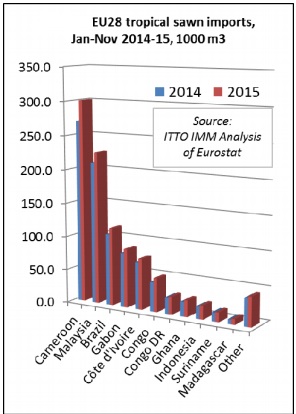
EU imports of tropical sawn wood in the first 11 months of 2015 were 992,000 cu.m, 9% more than the same period the previous year. It’s therefore almost certain that EU imports for the full year will exceed 1 million cu.m for the first time since 2012, ITTO reported.

While an encouraging landmark, this is still well down on levels prevailing before the crises when annual imports exceeded 2 million per year.

Cameroon, from which the EU imported 300,800 cu.m in the first eleven months of last year, an increase by 11%, cemented its leading position as the EU’s most important supplier of tropical sawn wood.

The four next largest suppliers all registered lower growth rates than Cameroon: imports increased by 7% from Malaysia to 225,700 cu.m, by 9% from Brazil to 115,700 cu.m, by 8% from Gabon to 87,200 cu.m, and by 8% from Ivory Coast to 75,800 cu.m.

However there was an above average in imports from several smaller suppliers including Congo (+15% to 50,200 cu.m.), Ghana (+14% to 24,700 cu.m) and Indonesia (+12% to 20,400 cu.m ).

Consistent growth in tropical sawn imports across the EU

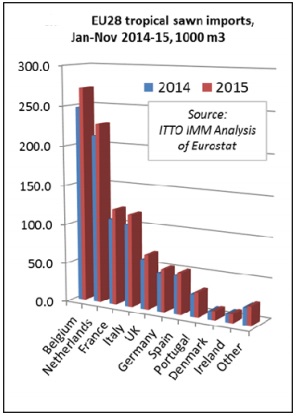
All the largest EU markets imported more tropical sawn wood in the first eleven months of 2015 compared to the previous year. Growth rates were quite evenly spread, ranging between +7% and +12% (Chart 5).

Belgium was the largest single importer of tropical sawn wood in 2015, with volume rising 10% in the first 11 months of the year to 271,000 cu.m . Much of this volume is destined for neighbouring EU countries rather than consumed in Belgium.

Imports into the Netherlands were also on the rise last year, up 7% to 227,400 cu.m. This is a reflection both of increased domestic construction activity in the Netherlands and of the country’s important role as an entry-point for hardwoods distributed throughout the continent.

There was 12% growth in imports by France and Italy, to 122,300 cu.m and 117,400 cu.m respectively, particularly encouraging as these countries have been very slow to recover from the market downturn.

Meanwhile the positive trend in imports by the UK and Germany continued, with a 10% increase in each case to 69,400 cu.m and 53,900 cu.m respectively. Imports into Spain and Portugal, too, experienced healthy growth rates: Spain’s imports rose by 9% to 52,800 cu.m and Portugal’s by 10% to 31,300 cu.m .


[gravityform id="1" title="true" description="true"]


[gravityform id="2" title="true" description="true"]


Log trade in the Baltics falls on lower Finnish and Swedish demand

After reaching a record high in 2014, log trade in the Baltic Sea fell by 10% in 2015. Most of the decline was that of softwood pulplogs, while trade of sawlogs actually increased to reach its highest level since 2007, according to the Wood Resource Quarterly. Russia has been surpassed by the Baltic States as the major softwood log supply region.
The forest industry in the Baltic Sea region has for many decades imported large volumes of wood raw-material from their neighboring countries as a complement to their typically less costly local wood sources. For example, pulp mills in Finland and Sweden imported approximately 18% and 15%, respectively, of their wood fiber needs in 2014.
The log market in the Baltic Sea is one of the most active markets in the world with softwood log trade accounting for over 20% of global trade, and shipments of hardwood logs reaching almost 29% of world trade of temperate hardwoods in 2015. Finland and Sweden are the major importing countries, but forest companies in Germany and Poland have also been importing substantial log volumes over the past five years.
In 2014, total log trade to the Nordic countries reached a six-year high of 14.3 million m3 after five years of consecutive increases. In 2015, total shipments fell over 10% mainly because of lower demand for softwood pulplogs, according to the Wood Resource Quarterly (WRQ). Trade of softwood sawlogs on the other hand, reached its highest level since 2007 last year when 1.6 million m3 was imported primarily to sawmills in Sweden.
The major log trade flows in Northern Europe the past few years have been:

  • Norway to Sweden (softwood)
  • Latvia to Sweden (softwood and hardwood)
  • Russia to Finland (softwood and hardwood)
  • Estonia to Sweden (hardwood)

Ten years ago, Russia exported about 7.5 million m3 of softwood logs to the Nordic countries but after the introduction of the country’s log export duties, shipments plunged, and over the past three years, volumes have been just over one million m3 annually.
With the fall of Russian log exports, log exporters in the Baltic States stepped in and the region became the major log supplier of logs to sawmills and pulp mills in the Nordic countries and Germany. However, over the past four years, shipments of softwood logs have been in steady decline from 3.1 million m3 in 2011 to only approximately 1.3 million m3 in 2015, as reported in the WRQ.
It is interesting to note that during the same period, exports of hardwood logs from the Baltic States have fallen almost 30%, while Russia has become a more aggressive player as the weak Ruble has made Russian logs more competitive.
 
[gravityform id="1" title="true" description="true"]
 
[gravityform id="2" title="true" description="true"]

Brazil: Wood products exports at highest level since 2008

Despite an uninspiring year, Brazil’s 2015 exports of wood products matched that of 2007. In the case of pine plywood, exports were over 1.5 million cu.m, or 14% more than in 2014.
Exports of wood products such as particleboard, MDF and OSB, traditionally uncompetitive at the international level, increased significantly as manufacturers were forced to turn to export markets in the face of weak domestic consumption.
A measure of success was achieved with exports especially to the US as the housing market is recovering. Demand in the US was behind the rise in pine sawnwood exports while the gains in plywood exports were driven mainly by rising demand in Europe.
Although wood products export volumes are rising and further gains are projected the competitiveness of Brazilian companies is being affected by record inflation which continues to push up internal costs.
December export performance
Brazil’s December 2015 exports of wood-based products (except pulp and paper) fell 12.4% in value compared to December 2014, from US$263.1 million to US$230.6 million.
Pine sawnwood export values increased 27% in December rising from US$ 21.4 million in 2014 to US$ 27.2 million in Decmber 2015. In terms of volume, December exports increased 46% year on year over (90,800 cu.m to 132,300 cu.m.
On the other hand, tropical sawnwood exports fell 34% in volume, from 38,000 cu.m in December 2014 to 25,100 cu.m in December 2015. The decline was more pronounced in terms of value where year on year December exports fell 47% from US$ 22.5 million to US$ 12 million.
The growth in value of pine plywood exports could not match the success of pine sawnwood and declined 12% in value in December 2015 compared to December 2014 (from US$43.8 million to US$38.4 million). But, the volume of pine plywood exports increased 25.5% underlining the weakness in plywood demand at the end of last year.
In contrast to the trends in pine plywood exports, tropical plywood exports increased significantly in volume and in value, from 6,300 cu.m (US$ 3.4 million) in December 2014 to 135,800 cu.m (US$43.5 million) in December 2015.
The much hoped for recovery in demand from Argentina has not yet been achieved and as a result wooden furniture exports fell from US$ 41.5 million in December 2014 to US$ 37.3 million in December 2015, a 10% drop.
 
[gravityform id="1" title="true" description="true"]
 
[gravityform id="2" title="true" description="true"]

DOMOTEX 2016-A successful event for the flooring industry

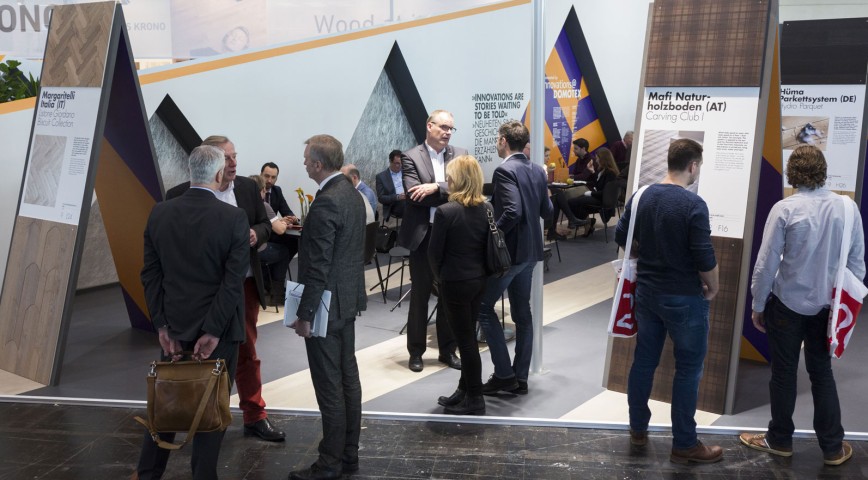
With 1,441 exhibitors from 59 countries and 45,000 trade visitors from more than 100 nations, DOMOTEX delivered fresh momentum for the international floor coverings industry, serving as a powerful driver of sales, trends and innovations.

"Whatever aspect you choose to look at – exhibitor lineup, visitor turnout, international coverage, the ratio of decision-makers present – exhibitors and visitors all attest to the event’s top performance, underscoring its ever greater appeal for the sector," remarked Dr. Jochen Köckler, the Deutsche Messe Managing Board member in charge of DOMOTEX, on the last day of the show.

Visitors from around the world found all the latest trends and innovations on display in 12 different exhibition halls, setting the stage for lively deal-making, order-placing and fruitful dialogue with business associates. Out of a total of some 27,500 visitors from abroad, around 50 percent came from EU countries, with another 25 percent coming from Asia and eight percent from the Americas. There was a notable increase in attendance from Asia, which went up by 29 percent.


High caliber of visitors
Exhibitors were delighted with the high level of competence and decision-making authority among the show’s attendees, with more than 72 percent of them being top managers who play a role in their companies’ purchasing decisions. The majority of visitors at this year’s DOMOTEX were retail and wholesale buyers (13,500 and 11,400, respectively). The fair also attracted architects, interior designers and contractors (3,700), as well as 9,400 skilled tradespeople.
Pacesetter for innovations
DOMOTEX impressively confirmed the floor covering industry’s dynamic power and innovative spirit.

"In each and every segment – carpets, parquet and laminate flooring, designer floors, machine-woven carpets and hand-made rugs – the international floor coverings industry sported a stunning and highly innovative array of patterns, materials, shapes and colors, thus ideally positioning itself for the coming season," observed Köckler.

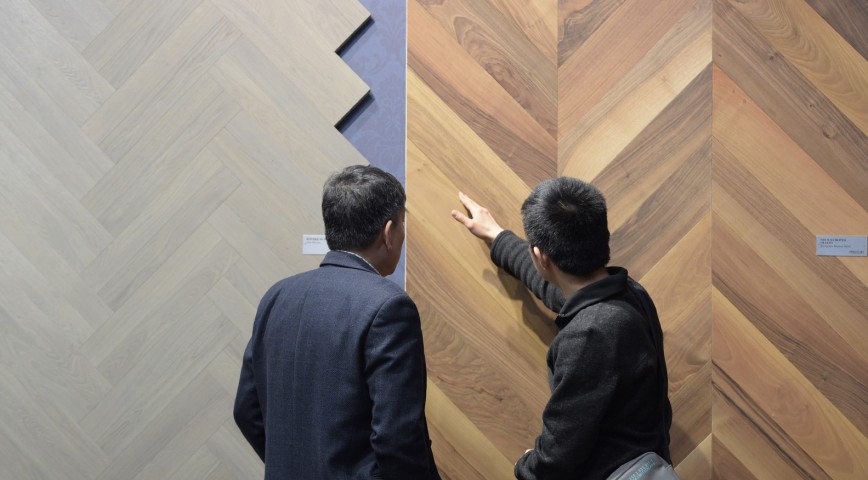
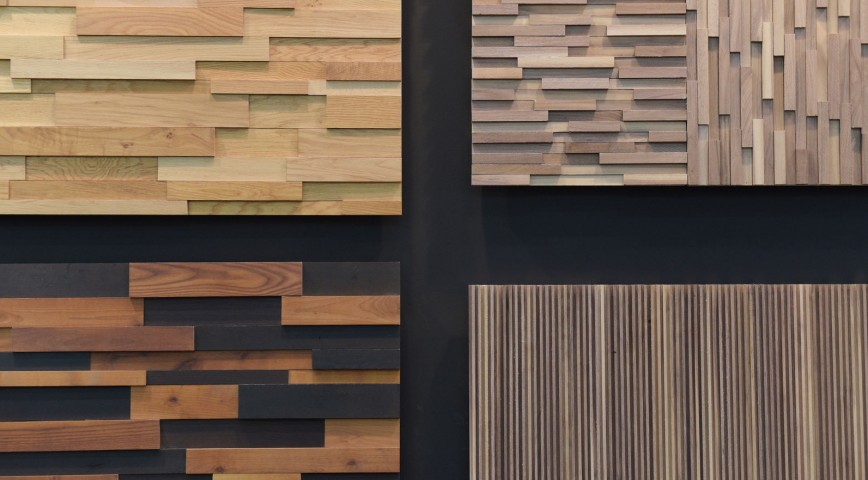
A natural look is in demand for wood flooring. Shapes and textures can be mixed and matched to create a wide range of looks. The event also showcased innovative systems for quick and easy floor laying. The demand for sustainably manufactured products is also on the rise.
The Innovations@DOMOTEX showcase put a big spotlight on highly innovative floor coverings. The three Innovations@DOMOTEX areas proved highly popular among the show’s visitors, drawing special attention to 84 selected innovations in the categories textile and resilient floor coverings, parquet and laminate flooring and contemporary hand-made rugs. This made it easy for trade visitors to get a concise look at the sector’s hottest innovations, thus providing valuable orientation for the year ahead.
Another visitor magnet at DOMOTEX was the third edition of the Wood Flooring Summit. Targeted at the international parquet and laminate flooring sector, this special event was staged in Hall 9, where visitors were introduced to all the current trends, developments and new materials for parquet, laminate, cork, bamboo and outdoor floor coverings.
Meanwhile, Hall 7 was the "El Dorado" for parquet and laminate floor layers, interior decorators and painters. The "Skilled Trades Hub" featured a comprehensive exhibition and presentation program dedicated to real-world solutions for practitioners.
The next DOMOTEX is scheduled for 14 to 17 January 2017.
 
[gravityform id="1" title="true" description="true"]
 
[gravityform id="2" title="true" description="true"]

Metsä: Vilpulla and Svir sawmills reported record production in 2015

Metsä's Vilpulla and Svir sawmills have set new production records in 2015. The new annual production record for Vilppula sawmill with a single production line is 452,200 m3 (+34,000 m3 as compared to the previous year). The Vilppula sawmill also significantly improved its utilisation rate during the year, according to a Metsä Wood press release.
The new annual production record for the Metsä Svir sawmill is 251,500 m3 (+8,000 m3 as compared to 2014).

“We are using new measuring and imaging technology to control machines and equipment in all phases of the process. Even though there is a lot of new technology, employees’ strong capabilities and commitment are key. We are continuously developing our operations by improving our day-to-day operations. Both production records are prime examples of how daily operational improvement significantly improves production and economic efficiency,” says Harri Haapaniemi, VP, Production, Timber and Upgrades.

Metsä's Vilppula sawmill is located in the town of Mänttä-Vilppula, Finland. The sawmill has five weekday weekly production and it has about 100 employees. In addition to internal processing, major customers of Metsä Wood sawmill include companies manufacturing upgraded sawn timber products, the furniture industry and distributors.
Metsä Svir sawmill is located in Russia and is a wholly-owned subsidiary of Metsä Fibre. Metsä Wood is managing production processes and is Metsä Svir’s main marketing and sales channel to the markets. In addition to Europe, Metsä Svir is shipping high quality sawn timber to Japan, China and Middle East.
 
[gravityform id="1" title="true" description="true"]
 
[gravityform id="2" title="true" description="true"]
Newsletter

Subscribe to our digital newsletter for your daily digest of essential news, views and analysis from the international wood industry delivered directly to your inbox.


0