
Article archive

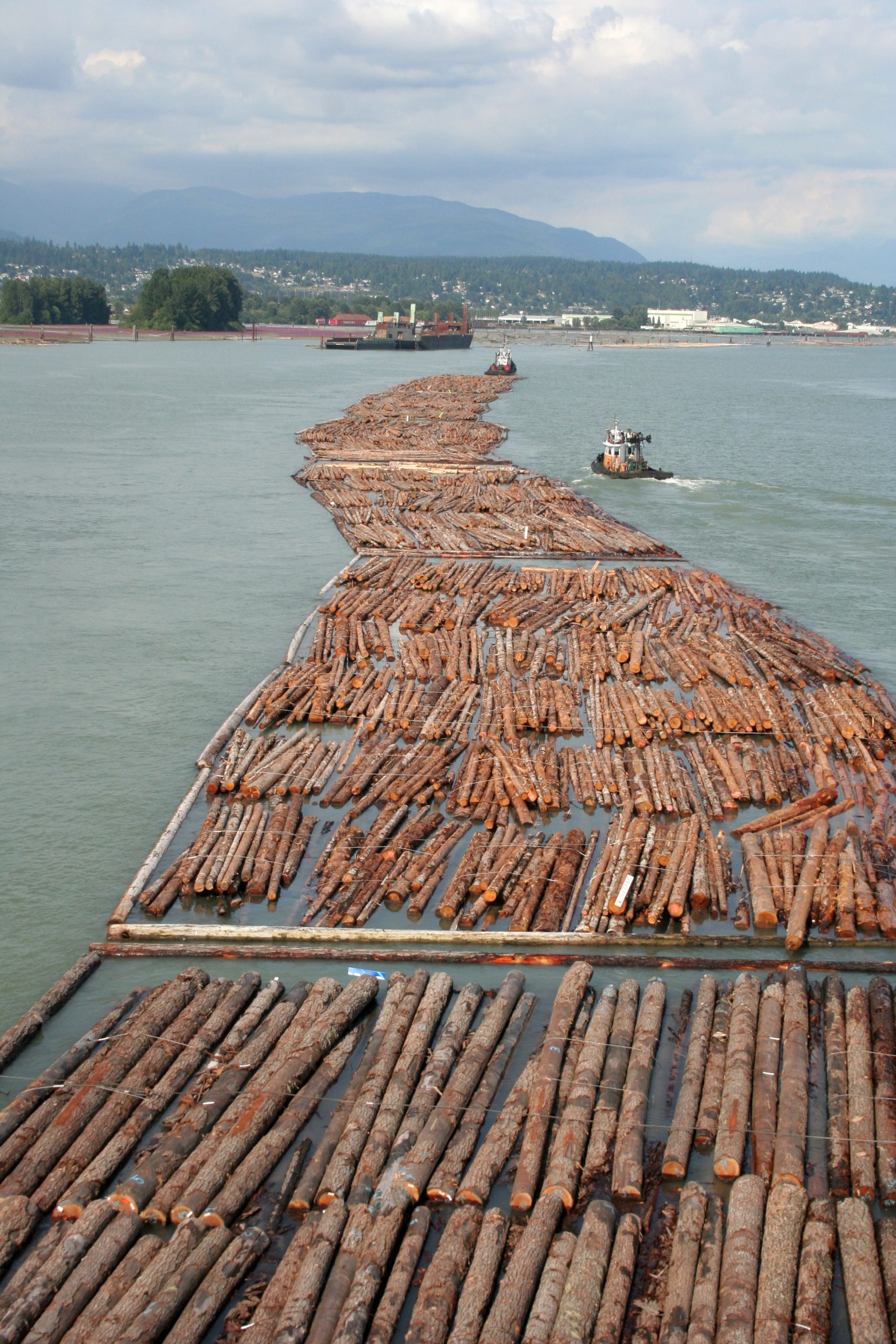
Canada looking for new markets for low grade sawn softwood

The decline in Canada’s sawnwood exports to China has sent sawmills looking for alternative export markets. Possible candidates to make up for the weak market outlook in China are South Korea, Japan, India and possibly other Asian markets according to the business magazine ‘Business in Vancouver’.

Canadian sawmills are looking to diversify to other markets despite strengthening US demand and a lower Canadian timber supply. The Softwood Lumber Agreement between Canada the the US expired last October and it is unclear whether it will be renewed under similar terms this year.

It is possible that the US industry will challenge the terms because of the weak Canadian dollar. The introduction of some form of protectionist measure is a possibility in any new agreement especially if Canadian mills expand their market share in the US.


[gravityform id="1" title="true" description="true"]


[gravityform id="2" title="true" description="true"]

Japan: Demand projection of imported wood products in 2016

The Timber Supply and Demand Conference of Japan, which is formed by five groups of imported wood products, came up with the projection of demand for 2016, as ITTO reports.
According to the projection, there will not be any significant change on both Japanese import of logs and lumber.
Japan's housing starts are expected to exceed over 2015 then they will decline again in 2017, so imports of wood products are likely to decline again in 2017.
Total Japanese demand for imported logs and lumber is expected at 9,608,000 cbms, almost the same as 2015. New housing starts in 2016 are estimated about 940,000 units as opposed to 910- 920,000 units in 2015, about 2-3 % increase. Rush-in demand before the consumption tax increase to 10% starting April of 2017 seems to be insignificant.
Noticeable change is import of North American logs, which is estimated to increase by 2.6%. It decreased by 15% in 2015 from 2014, which was too much so this seems to be the reason for the recovery. Shifting to domestic species and production curtailment by plywood mills in 2015 was responsible for this decrease.
 
[gravityform id="1" title="true" description="true"]
 
[gravityform id="2" title="true" description="true"]

Australia allows eight storyes timber buildings

Forest and Wood Products Australia (FWPA) will help the local industry allow timber construction in taller structures. This comes after a two-year consultation and research process made by FWPA. The project shows that construction costs will decrease by 15% and new material options will create great opportunities for developers, architects, engineers and designers, according to a FWPA press release.
The newest change will be to introduce engineered timber, which had been previously excluded from the traditional palette of materials used in the construction of for mid-rise urban developments. Starting the 1st of May 2016, the National Construction Code (NCC) will allow timber buildings of up to 8 storyes.
Ric Sinclair, the managing director of FWPA, said that the local residents will benefit from the changes brought to the code. Also, the property buyers and the domestic building industry will be provided new opportunities. Representatives of the timber, insurance industries, regulatory bodies, domestic building and fire and emergency authorities have helped develop the project.

 “This initiative will bring Australia up to pace with much of the rest of the world – so that the building property industry can take advantage of the environmental and cost benefits of domestic timber construction. Wood can offer quicker build times, with less noise and disruption for neighbours. It can also offer innovative design approaches. A look at international trends shows the global sector is embracing both traditional wood and modern engineered wood products in an increasingly broad range of structural and decorative applications,” Sinclair added.

The Green, an apartment complex built by Frasers Property Australia (formerly Australand), in Parkville, was constructed using traditional timber frame and the developers said that average build costs per apartment were 25 per cent less than in a conventional apartment construction. Thus, 15% savings are forecasted for the new timber buildings.
The Australian economy will also benefit from this project, as net benefits of around $103 million are forecasted. The new solution covers both traditional timber framing and innovative massive timber systems – such as cross laminated timber (CLT) and Glulam – and comprises the use of appropriate layers of fire resistant materials and sprinkler systems.
 
[gravityform id="1" title="true" description="true"]
 
[gravityform id="2" title="true" description="true"]


Pellet production faces slight increase in Germany

Germany’s pellet market had a difficult year because of the heavy prices decrease on the oil market, according to the DEPV (German Energy Wood and Wood Pellet Association). Also, due to this decrease, only 16,000 boilers and furnaces were put into service and about 2 million tonnes of pellet products were manufactured.
Andreas Lingner, DEPV Chairman, stated that this represents an important commitment for the energy transition in the heating market.
The renewable heating market has faced a difficult year in 2015 and instead of the 40.000 pellet boilers and stoves forecasted, only 32.500 pellet boilers and stoves were sold nationwide. This represented a 10% decrease compared to 2014, when only 38.500 pellet boilers and stoves were sold.
Since April 2015 the market incentive program for renewable energies (MAP) has invested higher funding rates, which were increased by 20% in January 2016 by APEE (action program of energy efficiency). An improved demand in boiler sales is expected in 2016, continuing the increase that began in autumn 2015.

"Good funding conditions alone are not enough if they are not known. The federal government must make people realize that they rewarded climate policy foresight. Consumers who do not succumb to the lure of short-term price of oil, but decide to use the pellet for climate protection will be rewarded, in addition to high CO2 savings with rich investment subsidies, " said Lingner.

According to DEPV statistics, 2016 began with a sale of 20,000 and 18,000 boilers and wood pellet stoves.
Wood pellets production and trade in Germany
Because of 2015 being the warmest year recorded in Germany, only 2 million tonnes of pellets were produced. This represents a slight decrease from 2014, when Germany produced 2.1 million tonnes of pellets. The consumption rose to 1.86 million tonnes nationwide due to the fact that pellets are a proper source of energy for Germany, as Lingner explained.
Despite last year's production decline, Germany is the third worldwide wood pellet producer, after the US and Canada, and for years a top exporter. It supplies more than 90% raw material for pellet production, given the high wood demand from sustainable forest management. In addition, almost 99% of the pellets produced in Germany are certified ENplus.
DEPV predicts a small increase in pellet production, rising to 2.2 million tonnes in 2016.

Wood pellet production in Germany in 2015
 
Volume of production 1.998.187 tonnes
Quality class
EN A1/A2 99%
En B/ Industrial pellets 1%
Commercial form
Loseware 81%
Sacks 19%
Raw materials - species
Softwood 93%
Hardwood 7%
Raw materials – wooden articles
Wood residues 92%
Logs 8%


Pellet production in Germany
Forecast
Annex 2014 Inventory 2014 Annex 2015 Inventory 2015 Annex 2016 Inventory 2016
Furnaces 16.500 116.500 16.500 133.000 18.000 151.000
Boiler < 50 kW(including boiler furnaces) 18.500 231.000 15.000 246.000 19.000 265.000
Boiler > 50 kW 1.500 10.500 1.000 11.500 1.000 12.500
Sum 36.500 358.000 32.500 390.500 38.000 428.500

 
[gravityform id="1" title="true" description="true"]
 
[gravityform id="2" title="true" description="true"]

UPM's Q4 reports 2% sale increase in 2015

UPM’s 4Q sales grew 2% in 2015, compared to 2014. The company’s press release showed that in 2015 sales reached Euro 2,574 million, compared to the Euro 2,531 million gains in 2014. Sales increased especially in UPM Biorefining and UPM Raflatac, but decreased in the other business areas. Also, the 4Q EBITDA increased from the Euro 334 million (13.2% of sales) in 2014 to Euro 363 million (14.1% of sales) in 2015.
The operating profit increased by 8.5% of sales, to Euro 220 million, including net charges of Euro 5 million. Also, the 4Q profit reached Euro 193 million and earnings per share were Euro 0.36.
Total sales reached Euro 10,138 million, 3% higher than Euro 9,868 million in 2014, increasing mostly in UPM Biorefining, UPM Raflatac and UPM Paper Asia and decreased in UPM Paper ENA and UPM Energy. Regarding the UPM Plywood, sales went on at the same level.
FY 2015 EBITDA’s operating profit summed up Euro 1,142 million, 11.3% of sales and the profit for 2015 reached Euro 916 million with Euro 1.72 earnings per share. The EBITDA increased to Euro 1,350 million (13.3% of sales) in 2015, from Euro 1,306 million (13.2% of sales), compared to 2014.

"UPM finished 2015 on a strong note. 4Q was the best of the year thanks to solid business performance. The profit improvement programme exceeded its target and the growth projects started to deliver earnings. EBITDA reached a higher level than in five years and our strong cash flow drove net debt to a new record-low level,” said Jussi Pesonen, President and CEO.

Pesonen added that the UPM Kymi pulp mill expansion reached an important level of pulp production in December, while UPM Changshu's speciality paper machine had the same start.

“UPM Biorefining and UPM Raflatac were the highlights of the quarter both in terms of own profitability actions and good timing in growth projects. UPM Energy and UPM Plywood showed solid performances. UPM Paper ENA had its best quarter of 2015 thanks to continuous profit improvement actions,” he added.

UPM Biorefining, UPM Energy, UPM Raflatac, UPM Paper Asia, UPM Paper Europe and North America and UPM Plywood are the areas where UPM is trying to build a sustainable future.
 
[gravityform id="1" title="true" description="true"]
 
[gravityform id="2" title="true" description="true"]


UPM’s Q4 reports 2% sale increase in 2015

UPM’s 4Q sales grew 2% in 2015, compared to 2014. The company’s press release showed that in 2015 sales reached Euro 2,574 million, compared to the Euro 2,531 million gains in 2014. Sales increased especially in UPM Biorefining and UPM Raflatac, but decreased in the other business areas. Also, the 4Q EBITDA increased from the Euro 334 million (13.2% of sales) in 2014 to Euro 363 million (14.1% of sales) in 2015.

The operating profit increased by 8.5% of sales, to Euro 220 million, including net charges of Euro 5 million. Also, the 4Q profit reached Euro 193 million and earnings per share were Euro 0.36.

Total sales reached Euro 10,138 million, 3% higher than Euro 9,868 million in 2014, increasing mostly in UPM Biorefining, UPM Raflatac and UPM Paper Asia and decreased in UPM Paper ENA and UPM Energy. Regarding the UPM Plywood, sales went on at the same level.

FY 2015 EBITDA’s operating profit summed up Euro 1,142 million, 11.3% of sales and the profit for 2015 reached Euro 916 million with Euro 1.72 earnings per share. The EBITDA increased to Euro 1,350 million (13.3% of sales) in 2015, from Euro 1,306 million (13.2% of sales), compared to 2014.

"UPM finished 2015 on a strong note. 4Q was the best of the year thanks to solid business performance. The profit improvement programme exceeded its target and the growth projects started to deliver earnings. EBITDA reached a higher level than in five years and our strong cash flow drove net debt to a new record-low level,” said Jussi Pesonen, President and CEO.

Pesonen added that the UPM Kymi pulp mill expansion reached an important level of pulp production in December, while UPM Changshu's speciality paper machine had the same start.

“UPM Biorefining and UPM Raflatac were the highlights of the quarter both in terms of own profitability actions and good timing in growth projects. UPM Energy and UPM Plywood showed solid performances. UPM Paper ENA had its best quarter of 2015 thanks to continuous profit improvement actions,” he added.

UPM Biorefining, UPM Energy, UPM Raflatac, UPM Paper Asia, UPM Paper Europe and North America and UPM Plywood are the areas where UPM is trying to build a sustainable future.


[gravityform id="1" title="true" description="true"]


[gravityform id="2" title="true" description="true"]


Brazilian Coalition proposes improved transparency to tackle illegal logging

Low impact and verified legal harvesting of Brazilian native forests can strengthen the tropical timber market and through this provide opportunities for landowners and forest communities, ITTO reported.
The Brazilian Coalition for Climate, Forestry and Agriculture has proposed that the area of forest under SFM in Brazil should be expanded tenfold from the current level to reach 30 million hectares (around 7% of the Amazon forest) by 2030.
The main challenge to convert this proposal into reality is the elimination of illegal activities in the supply chain.
The Brazilian Coalition has proposed measures such improved transparency in the forest management plan approval process and points out that strengthening the tropical forest economy depends on traceability across harvesting, transport and processing as consumers are increasingly requiring evidence of the origin of wood products.
The Coalition has said traceability should be considered as a condition for public procurement.

West Africa: Log&sawnwood prices expected to be stable in Q1

West Africa log and sawnwood prices remained unchanged through late December and into the first half of January. Producers in the region expect little, if any, change in price structures during the first quarter of the year, ITTO reported.
Chinese New Year is early this year beginning 8 February and, while it is unlikely that trade levels can drop any lower, there will be the usual absence of buyers in the market.
Analysts are of the opinion that, with Chinese New Year just around the corner, buyers for the Chinese market have no incentive to resume purchases ahead of the celebrations and long vacation.
Perhaps the best prospects for a resumption of buying for the Chinese market will be in the second quarter but so much depends on importers and merchants in China being able to move their current high stocks. However, there is little sign of growth in China’s real estate sector which weakened significantly in late 2015.
West African producers are hoping that the modest but steady expansion of demand in Europe will continue in 2016 as this has underpinned price stability, even through the volumes being purchased are not large in terms of EU total hardwood consumption.
New log export restrictions welcomed by domestic millers
Cameroon sawnwood exports performed particularly well in 2015 and new log export restrictions are aimed at reserving premium species for domestic processing. This is a relief to sawmillers who are complaining of a tight log supply for the most favoured export timbers.
High levels of logging by ‘informal sector’ in Gabon
Reports from Gabon suggest some officials are still being investigated over illegal exports of kevazingo/bubinga and now some concession holders have expressed concern over the high levels of logging in the ‘informal sector’ which will be difficult for the forest authorities to control.
Log Export Prices

West Africa logs, FOB € per m³
Asian market
LM
B
BC/C
Acajou/ Khaya/N'Gollon
230
230
160
Ayous/Obéché/Wawa
260
260
180
Azobe & Ekki
230
230
160
Belli
250
250
-
Bibolo/Dibétou
150
145
Iroko 330
290
260
Okoume (60% CI, 40% CE, 20% CS) (China only) 200 200 160
Moabi 335 305 225
Movingui 210
210
160
Niove
160
160
-
Okan
250
250
-
Padouk
310
285
225
Sapele 305 305 220
Sipo/Utile
345
340
265
Tali 320 320
-

Sawnwood Export Prices

West Africa sawnwood, FOB
€ per m³
Ayous FAS GMS 410
Bilinga FAS GMS 500
Okoumé FAS GMS
350
Merchantable 225
Std/Btr GMS 270
Sipo FAS GMS
610
FAS fixed sizes 610
FAS scantlings 640
Padouk FAS GMS 1010
FAS scantlings 1000
Strips 680
Sapele FAS Spanish sizes 610
FAS scantlings 620
Iroko FAS GMS 610
Scantlings 690
Strips
440
Khaya FAS GMS
450
FAS fixed
460
Maobi FAS GMS
610
Scantlings
630
Movingui FAS GMS
420

West Africa: Log&sawnwood prices expected to be stable in Q1

West Africa log and sawnwood prices remained unchanged through late December and into the first half of January. Producers in the region expect little, if any, change in price structures during the first quarter of the year, ITTO reported.

Chinese New Year is early this year beginning 8 February and, while it is unlikely that trade levels can drop any lower, there will be the usual absence of buyers in the market.

Analysts are of the opinion that, with Chinese New Year just around the corner, buyers for the Chinese market have no incentive to resume purchases ahead of the celebrations and long vacation.

Perhaps the best prospects for a resumption of buying for the Chinese market will be in the second quarter but so much depends on importers and merchants in China being able to move their current high stocks. However, there is little sign of growth in China’s real estate sector which weakened significantly in late 2015.

West African producers are hoping that the modest but steady expansion of demand in Europe will continue in 2016 as this has underpinned price stability, even through the volumes being purchased are not large in terms of EU total hardwood consumption.

New log export restrictions welcomed by domestic millers

Cameroon sawnwood exports performed particularly well in 2015 and new log export restrictions are aimed at reserving premium species for domestic processing. This is a relief to sawmillers who are complaining of a tight log supply for the most favoured export timbers.

High levels of logging by ‘informal sector’ in Gabon

Reports from Gabon suggest some officials are still being investigated over illegal exports of kevazingo/bubinga and now some concession holders have expressed concern over the high levels of logging in the ‘informal sector’ which will be difficult for the forest authorities to control.

Log Export Prices

West Africa logs, FOB € per m³
Asian market
LM
B
BC/C
Acajou/ Khaya/N'Gollon
230
230
160
Ayous/Obéché/Wawa
260
260
180
Azobe & Ekki
230
230
160
Belli
250
250
-
Bibolo/Dibétou
150
145
Iroko 330
290
260
Okoume (60% CI, 40% CE, 20% CS) (China only) 200 200 160
Moabi 335 305 225
Movingui 210
210
160
Niove
160
160
-
Okan
250
250
-
Padouk
310
285
225
Sapele 305 305 220
Sipo/Utile
345
340
265
Tali 320 320
-

Sawnwood Export Prices

West Africa sawnwood, FOB
€ per m³
Ayous FAS GMS 410
Bilinga FAS GMS 500
Okoumé FAS GMS
350
Merchantable 225
Std/Btr GMS 270
Sipo FAS GMS
610
FAS fixed sizes 610
FAS scantlings 640
Padouk FAS GMS 1010
FAS scantlings 1000
Strips 680
Sapele FAS Spanish sizes 610
FAS scantlings 620
Iroko FAS GMS 610
Scantlings 690
Strips
440
Khaya FAS GMS
450
FAS fixed
460
Maobi FAS GMS
610
Scantlings
630
Movingui FAS GMS
420

Tembec ceases operations at sawmill in Quebec

As of February 8, 2016, Tembec will suspend operations at its Senneterre sawmill for an indefinite period due to the persistent weakness in the North American softwood lumber market and the high cost of wood supply in the Abitibi-Témiscamingue region. This represents 148 direct jobs at Tembec.
"The suspension of operations is related to the current low-selling prices of stud lumber, combined with the high cost of wood supply. While this is difficult for our employees, contractors and the communities affected, this decision is necessary to minimize losses," said James Lopez, Tembec's President and CEO.
"We continue to carefully assess the evolution of market conditions and to work with the Government of Québec to find solutions to the high cost of fiber," Lopez added.
Tembec’s Senneterre sawmill produces softwood (spruce, pine and fir) lumber and wood chips. The sawmill produces stud lumber, used mainly in construction.

Vietnam comes in fourth place in global wood exports

Vietnam is the fourth largest exporter of wood and wooden products in the world, according to reports by the Handicraft and Wood Industry Association of Ho Chi Minh City. China, Germany and Italy are the first three main exporters.
Despite the predicted $7 billion gain in sales, Vietnam reached $6.9 million in sales from wood and wooden products, with a 10.7% increase compared to 2014, as reported by SGGP.
The wooden products sales summed up $4.3 billion, a year on year increase of 7.8 percent and China, Japan and the US were the main importers of wood and wooden products from Vietnam.
This year, the sales are expected to increase by 8-10%, to $7.2-7.3 billion.
 
[gravityform id="1" title="true" description="true"]
 
[gravityform id="2" title="true" description="true"]

IKEA boosts the South Korean furniture market

Since IKEA entered the retail sector in South Korea in 2015, the furniture market got explosive sales. Thus, as Yonhap, the South Korean news agency reported, it started a competition with local retailers, according to La Prensa.
Statistics Korea released a report saying that the sales in retail furniture increased by 7% since 2014, with $4.15 billion earings, recording the biggest growth in the last ten years. IKEA entered the South Korean market in January 2015 in Seoul.
Kim Kwang-seop, an official at Statistics Korea, said that "the rising interest in home interior items has boosted demand for new furniture, driving up sales of furniture makers.”
This would have been a threat to local retailers, but in fact it started a great competition, being a boom for the industry, as Yonhap reported. The top five retailers in home furnishing, including Hanssem, Hyundai Livart and Enex had an increase of 20% in sales in 2015. IKEA earned $308 million from nearly 6.7 million visitors. By 2020, the Swedish furniture retailer plans to open five more stores.
 
[gravityform id="1" title="true" description="true"]
 
[gravityform id="2" title="true" description="true"]



China is now the largest export market for Australian Eucalyptus wood chips

Australia has increased exportation of Eucalyptus chips by 58% in three years to reach a record-high in 2015, according to the Wood Resource Quarterly. Shipments to pulp mills in China have gone up substantially and the costs for chips landed in this growing market have increased the past two years to practically equal those of chip costs delivered to Japan.

Eucalyptus chip export volumes from Australia were up 15% in 2015 year-over-year to reach a record-high of 5.2 million tons, valued at almost one billion Australian dollars. Shipments have increased for three consecutive years and were in 2015 about 58% higher than they were in 2012.

The major development in wood chip trade during past few years has been the increase in exports of hardwood chips to China. Back in 2010, chip shipments to China only accounted for about 13% of the total export volume from Australia. In 2015, however, more than half of the chip exports were destined for China and the country has surpassed Japan as the major destination for Australian Eucalyptus chips, as reported in the Wood Resource Quarterly (WRQ).

In the past Japan was the major consumer of hardwood chips from Australia, accounting for 80% of the export volume as late as 2010. Over the past five years, export volumes have fallen from about 3.6 million tons in 2010 to an estimated 1.9 million tons in 2015.

Australia has not only increased shipments the past few years, climbing from being the world’s fourth largest exporter of hardwood chips in 2012 to trail only Vietnam in 2015 in terms of total exports. About a third of the world’s traded hardwood chips are currently originating from Eucalyptus plantation forests in Australia. Other major chip-supplying countries include Vietnam, Chile, Thailand, South Africa, Indonesia and Brazil.

Another noteworthy development is how the costs for Australian chips delivered to pulp mills in China and Japan have changed over the past few years. During much of the period from 2011 to 2013, the price discrepancy for chips landed in China were about US$50/odmt lower than chips delivered to Japan.

However, since early 2014 the delivered costs converged between the major consuming countries of Australian hardwood fiber, and they have remained practically the same since then only changing marginally in 2015.


[gravityform id="1" title="true" description="true"]


[gravityform id="2" title="true" description="true"]
Canada: Trans-Pacific Partnership to help the wood industry

Canada’s wood products producers are on the way of signing the Trans-Pacific Partnership backed up by the Trudeau government. The agreement would be made between Canada, Australia, Japan and other Asian countries. The next step is to debate the TPP in the House of Commons. Christia Freeland, International Trade Minister, said that this would be the next technical step, according to Merritt Herald.
Paul Lansbergen, acting president of the Forest Products Association of Canada, said that the government should think about the diversification of the economy when it comes to rough times, especially oil and gas.

“All in all we think this is a pretty good agreement. A lot of our industry is in rural Canada, and I think it’s important for the government to recognize the importance of the well-paying jobs that we provide. And when our economy is having some rough times, particularly oil and gas, really the government should be thinking about how our economy is diversified,” Lansbergen said.

In an interview from Vancouver, Lansbergen said that the TPP eliminates the tariffs against Canada forest products. Moreover, it also has plans to settle disputes and exclude blocking imports due to concerns about insects or other contaminants, as reported by Merritt Herald. Some of the partners involved in the agreement have very little products imports from Canada due to the prohibitive tariffs.
The TPP would thus eliminate de tariffs implied by Vietnam (31%), Malaysia (40%) or Brunei (20%). Japan, which imports a lot of lumber from B.C., has tariffs up to 10% on forestry or products like oriented strandboard and engineered wood.
 
[gravityform id="1" title="true" description="true"]
 
 
[gravityform id="2" title="true" description="true"]


The European parquet market back to progress

After a year in which the consumption figures of the European Parquet Industry contracted by more than 6%, the first estimates for 2015 paint a more optimistic picture. Indeed, FEP’s (European Federation of the Parquet Industry) preliminary forecast for the year which just ended indicates a stabilisation in parquet sales across Europe, with an upward tendency during the last months.

This projection is based on information received from member country representatives present at the recent Board meeting held at the DOMOTEX fair in Hannover. The slight global European market growth of 0.5% should be seen as a first prognosis subject to variations, in anticipation of the complete data to be communicated at FEP’s annual General Assembly next June in Thun, Switzerland.

As was witnessed in the past few years, the results show some variation from country to country but, for the first time since long, the Southern European markets, including Spain, seem to be gaining in momentum. From a regional perspective, the good news comes mainly from the Swedish and Hungarian markets both showing a sound growth. The Netherlands, Belgium, Poland and to a lesser extent France are also performing well while the important German, Austrian and Swiss parquet markets remain stable at a high level.

As far as specific parquet products are concerned, wooden planks continue to attract customers. The gap between large planks and 3-strip parquet products is slowly but surely closing. Competition from other flooring solutions is still fierce. This is especially the case with LVT’s, which are gaining market shares, also in the residential market.

Generally speaking, the captains of the parquet industry point to increased prices of raw materials due to shortages in the market. The fact that it is becoming increasingly difficult for consumers to differentiate parquet from competitive flooring alternatives with a wood look surface, is also a growing source of concern for parquet producers. Nonetheless, they are convinced that parquet has a really bright future as it remains the only real product versus wood look-a-like products made from vinyl or ceramics. Parquet is a natural high-quality product, made of a true sustainable and renewable raw material: wood.

Latvia: 7 logging companies accused of operating a cartel

Seven logging companies were fined by the Competition Council (CC) in Latvia. The companies were operating a cartel in acquisitions organized by Latvijas valsts mezi, the state forestry company, as the CC told LETA.  The reason for which the companies were fined was that they offered information on commercial secret to one and the same person, eliminating real competition, according to The Baltic Course.
ADV Forestry, Andrenkalni, Clean Forest, IK White Water House, Ramuss, LatKada, and SIA LMV Mezsaimnieciba are the seven companies that registered this information in a procurement of forest planting and agro-technical thinning of a restored forest area. CC received an application from Latvijas valsts mezi and they started to investigate the situation. The alleged cartel members refused to admit any relation to the issue and blamed the trust agreement through which all companies were controlled by one person.
Latvian CC said that family ties between employees or owners are not a valid argument for creating coordinated tenders, thus they don’t recognize them as a one market participant. Finally, CC decided to fine the cartel participants too, for not providing information and impeding investigation.
ADV Forestry belongs to Daiga Dzalba and gained EUR 464,844 in sales, making a EUR 4,793 profit in 2014. Andrenkalni belongs to Iveta Priekune and made EUR 9,528 profit and EUR 742,854 gains from sales in 2014. Aldis Urtins owns Clean Forest, which made EUR 2,700 profit in 2014 and EUR 96,927 from sales. Moreover, Ramuss belongs to Rihards Burkevics and the company gained EUR 127,337 from sales, making a EUR 86 in profit in 2013.
Kaspars Abolins owns LatKada, that registered  EUR 343,382 turnover and losses at 3,881 in 2014. LMV Mezsaimnieciba belongs to Liga Meiere. The company posted EUR 20,111 in turnover and EUR 3,596 in profit in 2014. Water House, a company that belongs to Inese Urtina didn’t submit any statements yet, according to reports provided by The Baltic Course.
 
[gravityform id="1" title="true" description="true"]
 
[gravityform id="2" title="true" description="true"]


Lumber Liquidators fined $13.2 million for importing illegal wood from China

Lumber Liquidators was fined under the Lacey Act because they imported illegal wood and submitted false declaration. The Virgina-based company has to pay $13.2 million, as decided under the Lacey Act, that is a conservation law that makes it a crime to import plants and animals taken in violation of state and foreign law, as EIA reports stated.
The company now has to implement a strict environmental compliance plan, as it was put under a 5-year probation. The Department of Justice (DOJ) and U.S. Fish & Wildlife Service discovered after two years of investigation, that the flooring retailer smuggled illegal wood from the forests of the Russian Far East. Lumber Liquidators were found guilty in October 2015 and fined today for one criminal felony of entry of goods by means of false statements and four misdemeanor counts of violating the Lacey Act.
The forests of the Russian Far East are the habitat of the last Siberian tigers in the world.
The company imported the stolen wood to China and they also sourced illegal timber from Bruma.
EIA investigators disguised in timber buyers as to expose the illegal timber and published the whole story in a 2013 report, titled “Liquidating the Forests”. They tracked down the wood through China to a company that confessed the illegal logging.
Alexander von Bismarck, EIA Executive Director, said that “this historic criminal sentence against a major U.S. company in relation to the Lacey Act is setting an important precedent: Illegal wood is no longer tolerated in the United States. U.S. consumers need to be protected from unknowingly supporting organized crime and the destruction of the world’s last virgin forests.”
Now, Lumber Liquidators have to pay $7.8 million in criminal fines, $1.23 million Community Service payments, $969,175 in forfeited proceeds, and more than $3.15 million in cash through a related civil forfeiture, according to EIA reports. Besides the fines, the flooring retailer has to put in place the mandatory environmental compliance plan, which implies to transform its sourcing practices and to have all their wood imports verified.
[gravityform id="1" title="false" description="true"]


Japan’s wood pellet imports up 140%

Japan's wood pellet imports reached 232,000t last year, up by 140% from 97,000t in 2014, data from Japan's economy, trade and industry ministry showed.
According to Argus Media, the growing biomass market in Japan is driven by an increase in the number of power plants using woody biomass, including wood pellets, wood chips and waste wood, to generate heat and electricity.
Around 18 dedicated biomass plants with a combined capacity of 282MW became operational in 2015, burning a range of woody biomass fuels. And large power producers have increasingly looked towards co-firing coal with biomass, says Argus.
Pellet consumption has grown rapidly since the government's feed-in-tariff (FIT) scheme was expanded to include biomass and other renewables in July 2012. Japan has diversified its power mix since the suspension of the country's nuclear generation following the Fukushima disaster in 2011. And it has set ambitious emissions reduction targets. Under the FIT scheme, generators receive ¥17-32/kWh (14¢-27¢/kWh) depending on the wood source they use.
Canada remains Japan's biggest source of imports, supplying 146,000t last year, up by 61% from 91,000t in 2014, and accounting for 63% of total wood pellet imports. Canadian producers have become increasingly active in the growing Japanese market as they struggle to compete in South Korea with cheaper Vietnamese supply.
According to Argus Media, Japanese buyers have stricter criteria for pellet sustainability and quality than their South Korean counterparts, and are concerned with reliability of supply. Japan's willingness to sign long-term contracts makes it a more attractive market for producers that are able to guarantee supply quality and stability, a benefit to Canadian exporters.
China accounted for 25% of Japan's pellet imports in 2015, supplying 58,000t. China had not shipped wood pellets to Japan since a 5,000t cargo in September 2013. Utility Soma Kyodo Power began receiving 5,000t/month from China in February for co-firing in its 2,000MW Shinchi coal-fired power plant in Fukushima.
Vietnam accounted for 12% of Japan's wood pellet imports, or 27,500t in 2015, up from just 2,000t a year earlier. Although Vietnamese pellets are very price competitive, Japanese buyers require forest management certificates for imports, which not all Vietnamese producers can provide.
Rising Japanese demand for wood pellets and other woody biomass is also expected in the coming years. A further 585MW of dedicated biomass-fired generation capacity should come on line in 2016-17.
Source: Argus Media

Setra reports lower operating profit due to uncertain markets

Setra reports an operating profit of SEK 47 million (2014: SEK 201 million) for the full year 2015. Operating profit includes discontinuation costs of SEK 19 million. Net sales totalled SEK. 4,218 million (2014: 4,194). Cash flow from operating activities amounted to SEK 274 million (2014: 112).

“The market for wood products continued to be characterised by uncertainty in the fourth quarter. A continued imbalance between supply and demand for wood products led to price reductions in our main markets. As a result of the current market situation, particularly in North Africa, we decided to introduce production cutbacks in the fourth quarter. These had a negative impact on our earnings but meant that we continue to have good control over our stocks and our cash flow. We assess the market situation going forward as highly uncertain,” says Hannele Arvonen, President and CEO of Setra.

“We continue to focus on our internal efficiency improvement programmes in order strengthen our competitiveness. As part of these efforts we made technology investments in the sawmills in Färila, Malå and Rolfs during the year. We have a strong cash flow due to positive earnings and a good balance between delivery and production volumes,” says Arvonen.
During the year a decision was made on investments in a new sawmill infeed system and drying capacity at Kastet sawmill. In order to strengthen long-term competitiveness, work on further development of the processing business has started. At the processing unit in Skutskär investment in strength grading and cutting to exact lengths will take place in the spring in order to strengthen the total offering to the building materials trade and industry. In order to optimise capacity utilisation at existing processing units, Setra has decided to close the planing mill in Valbo during 2016 and relocate these operations to the Group’s other units. The processing concept at the integrated sawmill Rolfs will be specialised.
Cash flow from operating activities in 2015 amounted to SEK 274 million (2014: SEK 112 million) which, combined with positive earnings, means that Setra’s financial position has strengthened.
Setra is one of Sweden’s largest wood products companies. Setra processes raw material from responsibly managed forests and offer climate-friendly products and solutions for building and living in a global market. The Group has approximately 900 employees and annual sales of SEK 4.2 billion. Exports to Europe, North Africa, the Middle East and Asia account for about 60% of sales.

Norbord to double OSB capacity in Scotland

Norbord's BoD has approved a $135 million (£95 million) investment to modernize and expand its OSB mill in Inverness, Scotland, nearly doubling its capacity to 720 million square feet (MMsf) (3/8-inch basis) (640,000 cubic metres).
The project will involve the installation of modern continuous press technology on a new production line to replace two smaller, dated multi-opening presses.
It will build upon the mill’s access to the competitive wood fibre basket in western Europe and the existing infrastructure at the Inverness site.
Investment returns will be driven by lower manufacturing costs and the flexibility to produce a broader selection of panel products to serve the European marketplace.
Demand for OSB in Norbord’s key western European markets has been growing at a cumulative average rate of 9% over the past four years, driven by accelerating substitution away from higher cost, imported plywood.
The company’s European mills are running at full capacity, and with direct road, rail and port access at Inverness, the 325 MMsf of incremental capacity from the project will position Norbord to meet this growing demand and continue to efficiently serve its customers across the UK and on the European continent.
The government of Scotland is investing up to €15 million (£12 million) in the project through a development grant from the Highlands & Islands Enterprise.
Norbord expects the new line to come online in the second half of 2017, with no disruption to existing production capacity in the interim.

Newsletter

Subscribe to our digital newsletter for your daily digest of essential news, views and analysis from the international wood industry delivered directly to your inbox.


0