

The UK’s decision to leave the EU – so-called “Brexit” - by a narrow majority of 52% to 48% in a referendum on 23 June is already being felt in currency markets and stock exchanges around the world. The short term economic effects are already evident – a slowdown in growth, certainly in the UK which might even dip back into recession, and also in the wider EU economy, as ITTO reported.
The UK plays an important role in the EU. Whether it is the share in total population, total GDP or FDI, Britain ranks in the top three countries and Brexit has significant implications for the whole continent. The UK is also the EU’s largest importer of timber from tropical countries by a significant margin.
The political impact of the referendum result has been profound in the UK, leading to the immediate resignation of the UK Prime Minister while both the party of government and official opposition has descended into turmoil and a rancorous debate over what should come next.
The survival of the UK as a political entity is itself threatened as the nationalist First Minister of Scotland, which voted overwhelmingly to remain in the EU, is now seeking a new referendum on leaving the UK so that an independent Scotland may be free to remain as part of the EU.
Divisions have emerged within the EU between those Member States and EU institutions that believe the UK should initiate the so-called “Article 50” procedures (set out in the EU’s 2007 Lisbon Treaty) for withdrawal within a matter of days to avoid prolonging uncertainty, and those prepared to give the UK breathing space to allow a newly appointed government to work through the implications and plan for an orderly departure.
Speculation about when, or if, the UK will leave the EU
There is still speculation that the UK may never actually leave the EU. An on-line petition has been signed by more than 2.5 million people calling for a re-run of the referendum on grounds that less than 60% voted to leave and turnout was less than 75%.
The legal basis for this petition is dubious since the terms agreed for the referendum in advance were that the decision required a simple majority of those voting and not a super-majority of the voting population as a whole.
A more convincing legal argument is that, as the UK is constituted as a parliamentary democracy, MPs must still vote to implement the referendum result which, from a legal perspective, is only “advisory”. A majority of MPs may yet vote against the parliamentary motion to repeal the 1972 European Communities Act, by which it voted to take the UK into the EU, and thereby prevent the UK leaving.
At this stage, the latter scenario seems unlikely. It would be highly divisive and likely to create even deeper political conflict and prolong the uncertainty. The statements issued so far by both the UK government and jointly by the leaders of the EU Member States, assume that the UK will now act on the referendum result and leave the EU within the two-year timeframe required once the Article 50 procedure is initiated - a move now widely expected sometime between September and November this year.
It is possible the situation will change – negotiations with the EU might prove too difficult, or the economy might slide to such an extent, or the divisions between the various constituent parts of the UK become so great - that British MPs vote to try to halt the process at some stage.
In that event of course, it’s unlikely that the rest of the EU would be sympathetic to back-tracking, and the UK’s political and financial position would almost certainly be weakened within the trading block.
Article archive
US wood flooring imports on downward trend

After two consecutive months of growth, US wood flooring imports declined in April from the previous month. Hardwood flooring imports dropped 5% to US$2.5 million. Imports of assembled flooring panels were US$10.2 million, down 2% from March. Continue reading "US wood flooring imports on downward trend"
Unilin wins pantent case against Innovations 4 Flooring
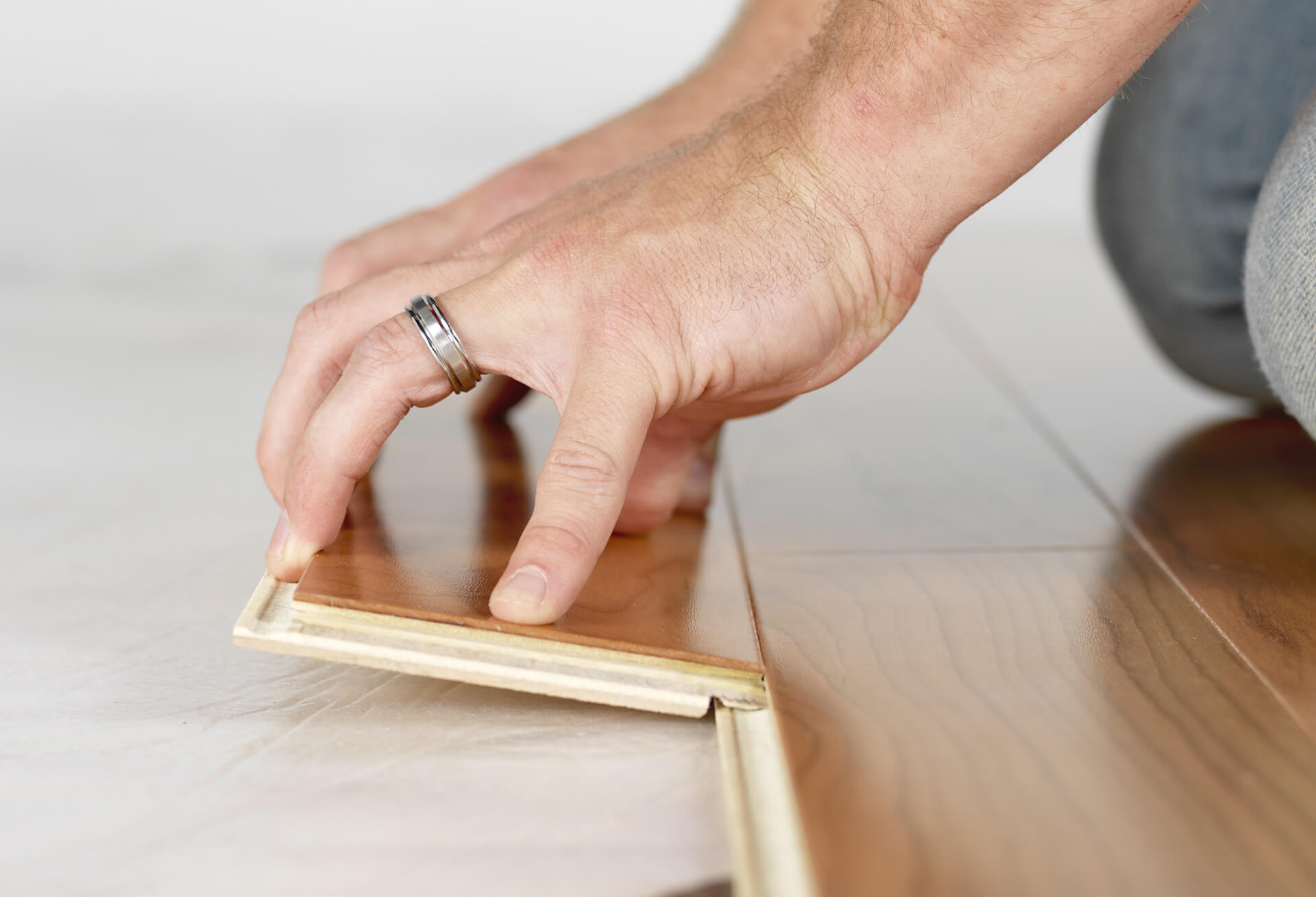
On 15 June 2016, the Opposition Division of the European Patent Office (EPO) confirmed the validity of Unilin's European Patent EP 2 077 358, after having considered all the arguments presented by Patentwerk, the external Dutch patent firm of Innovations 4 Flooring (I4F), against the patent.
This European patent, granted by the EPO on 10 July 2013, protects a.o., flooring panels which can be connected with other flooring panels by rotating in the long sides (the so-called "angling" movement) and vertically joining the short sides (the so-called "fold-down" movement). Similar Unilin patent protection exists in North-America and other parts of the world.
"We assume that I4F believes that their own locking solution falls within the scope of this particular European patent, and that this led to the attempt to invalidate the patent through an opposition procedure", stated Bart Van der Stockt of Unilin. "Unilin has a strong patent portfolio protecting various locking systems, including fold-down systems."
The decision by the Opposition Division is open for appeal.
The decision follows an earlier judgement in favor of Unilin in the Unilin-I4F dispute by the Court of The Hague in the Netherlands. In that case the Court also denied I4F's arguments. I4F did not appeal the Dutch decision.
German furniture market recovers well due to positive housing developments

The German furniture market accelerated its growth last year. In 2015, sales of the sector increased by 1.5 % to 25.9 billion Euros. In previous years, the growth rate was around one percent. One reason for this positive development was the increase in residential construction. This year, according to a study by Interconnection Consulting (IC), peak growth will be achieved (+1.7% in value). In the following years, however, the growth will continue at a lower rate.
Continue reading "German furniture market recovers well due to positive housing developments"
New Zealand: Export log prices reach five-month low

The export log prices in New Zealand decrease in June on stronger currency and higher shipping costs. Thus, the prices slid to a five-month low in June as returns were hurt by a stronger local currency and an increase in shipping costs.
Continue reading "New Zealand: Export log prices reach five-month low"
Canada: Wood pellet industry could triple with slash piles

The wood pellet industry in British Columbia is making an effort to obtain slash piles before they are burned. Almost 5 million tonnes of slash piles were burned in 2015. Half of this amount could have been used for pellets.
“Right now in the province, we’re only producing a little over 1.5 million tons of wood pellets. If we could use all of that (slash pile) material that’s being burned, we could grow our industry three times,” said Executive Director of the Wood Pellet Association of Canada, Gordon Murray. Continue reading "Canada: Wood pellet industry could triple with slash piles"
Metsä Group moves its Finnish sawmills to Metsä Fibre

Metsä Group’s Finnish sawmills will become part of the Group’s pulp industry Metsä Fibre in a group internal transaction. Until now, the sawmills have been part of the Group’s wood products industry Metsä Wood apart from the Svir sawmill in Russia which has already been part of Metsä Fibre. The transfer is expected to take place by the end of 2016.
As Metsä said in a press release, the transfer is done to fully utilize the industrial synergies between pulp production and sawmilling. Use of wood raw material and logistics costs can be optimized even better than so far in a combined entity, the company said.
The transaction does not impact Metsä Group’s annual sales, operating result excluding non-recurring items or balance sheet ratios.
The transfer does not impact the amount of employees. Sawmills’ employees will move to Metsä Fibre’s payroll. Metsä Wood will act as Metsä Fibre’s sawn timber sales channel in the future.
Sawmills included in the transaction are Vilppula, Lappeenranta, Renko, Merikarvia, Kyrö and Eskola. Their combined annual sawn timber production is approximately 1,6 million cubic meters.
UK sanctions traders of Cameroonian timber under EUTR

The UK Authorities charged with enforcing the EU timber regulations (EUTR), have taken action against 14 UK importers sourcing timber from Cameroon linked to illegal logging.
This news was presented at a Chatham House meeting in London on Thursday June 16, following comparable action by the Netherlands in early March, demonstrating that timber from Cameroon is coming under increasing scrutiny in international markets.
“Cameroon’s authorities must examine this new set of sanctions and start investigating the companies in question as a first step to tackle the illegality and corruption in the timber sector. Furthermore, Cameroon must also ensure that the Voluntary Partnership Agreement co-signed with the EU is fully implemented to stop illegal logging and strengthen forest governance in Cameroon,” says Eric Ini, Forest Campaigner for Greenpeace Africa. Continue reading "UK sanctions traders of Cameroonian timber under EUTR"
IKEA started logging in its own forests in Romania
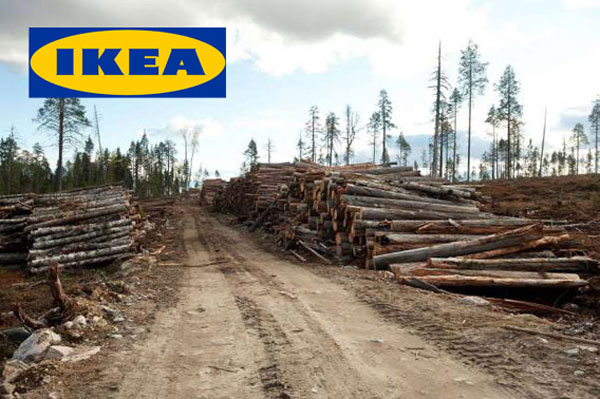
IKEA has cut 55,000 m3 of wood in Romania, since the acquisition of the 33,600 hectares of forest in the country, from Harvard University, back in July 2015.
This is less than a half of the wood quantity that the Romanian law allows to be exploited during one year. Continue reading "IKEA started logging in its own forests in Romania"
Obama-Trudeau meeting brings no progress to the softwood lumber dispute

On the 29th of June, during the meeting between US President Barack Obama and Canada’s Prime Minister Justin Trudeau, the two countries set up some efforts in the negotiations regarding the softwood lumber trade.
Yet, in the long-running dispute, there are still great differences, which might be solved by the end of the standstill period ending in October 2016. According to the statement released after the meeting at the "Three Amigos" summit in Ottawa, the “discussions have been challenging but productive”.
Continue reading "Obama-Trudeau meeting brings no progress to the softwood lumber dispute"
Central/West Africa: Sawn okoume coming back into fashion

Central/West African producers report that trading conditions in the second quarter were quiet but satisfactory. Looking ahead to the end of the first half year it is unlikely there will be any significant changes in current prices.
While it will be some time before sufficient trade statistics become available to assess the reliability of the increase in demand from China and other major importer countries it is apparent that buyers for the Chinese market are currently more active than they were during the first quarter with an emphasis on sawnwood.
Buyers for China are now more selective and taking a narrow range species. Over recent weeks there has been an upswing in purchases on sawn okoume for the Chinese market in addition to the steady but subdued demand for logs.
Will KD requirement apply to all species?
There is still no official announcement from government in Gabon on their proposal that all export sawnwood should be kiln dried.
Millers and exporters in Gabon have pointed out that kiln drying is not a market requirement for species such as azobe and okan when used for applications such as sea defense works.
In related news, the structure and aims of the proposed Gabon Timber Marketing Board are still under discussion and there is no news on when the Board could be constituted.
In the Republic of Congo it was rumoured that the previous Minister of Forests was considering a policy for mandatory further processing of some or all export sawnwood but the new minister has not alluded to this idea so far. Exports from the Republic of Congo were hard hit during the downturn in Chinese demand for logs last year which prompted consideration of diversifying timber exports.
Malaysia edges competition in Middle East markets
Middle East business continues unchanged although the present emphasis appears orientated to purchases from Malaysia rather than from African suppliers.
Analysts report there is firm buying of panel products in Middle East markets and this has attracted strong competition amongst panel suppliers in Thailand, China and Malaysia. Reports suggest that Malaysian shippers of panels have a competitive edge in Middle East markets.
Log Export Prices
| West Africa logs, FOB | € per m³ | ||
| Asian market |
LM
|
B
|
BC/C
|
| Acajou/ Khaya/N’Gollon |
230
|
230
|
160 |
| Ayous/Obéché/Wawa |
260
|
260
|
180
|
| Azobe & Ekki |
230
|
230
|
160
|
| Belli |
250
|
250
|
–
|
| Bibolo/Dibétou |
150
|
145
|
|
| Iroko | 330 |
290
|
260
|
| Okoume (60% CI, 40% CE, 20% CS) (China only) | 200 | 200 | 160 |
| Moabi | 335 | 305 | 225 |
| Movingui | 210 |
210
|
160
|
| Niove |
160
|
160
|
–
|
| Okan |
250
|
250 |
–
|
| Padouk |
310
|
285 |
225
|
| Sapele | 315 | 305 | 220 |
| Sipo/Utile |
345
|
340 |
265
|
| Tali | 320 | 320 |
–
|
Sawnwood Export Prices
| West Africa sawnwood, FOB |
€ per m³
|
|
| Ayous | FAS GMS | 410 |
| Bilinga | FAS GMS | 500 |
| Okoumé | FAS GMS |
350
|
| Merchantable | 225 | |
| Std/Btr GMS | 270 | |
| Sipo | FAS GMS |
610
|
| FAS fixed sizes | 610 | |
| FAS scantlings | 640 | |
| Padouk | FAS GMS | 930 |
| FAS scantlings | 1020 | |
| Strips | 680 | |
| Sapele | FAS Spanish sizes | 610 |
| FAS scantlings | 620 | |
| Iroko | FAS GMS | 630 |
| Scantlings | 700 | |
| Strips |
440
|
|
| Khaya | FAS GMS |
450
|
| FAS fixed |
460
|
|
| Maobi | FAS GMS |
610
|
| Scantlings |
630
|
|
| Movingui | FAS GMS |
420
|
Source: ITTO
Södra to divest Södra Wood Rottne
Södra is to divest Södra Wood Rottne in Rottne to Ess-Enn Timber in Skruv. Trade union negotiations are being initiated regarding the transfer of the operation. The transfer is scheduled to take place on 1 September. Södra Wood Rottne produces glued boards in pine and spruce and has 15 employees.
“Rottne is a small operation that we consider would be better driven by another owner as we have limited synergies. However, we will continue to offer the product in our range, although we will no longer produce it ourselves,” says Jörgen Lindquist, President of the Södra Wood business area.
The buyer is Ess-Enn Timber AB, formed in 1981, which is one of the leading producers of glued boards in Scandinavia, with an annual capacity of 18,000 cubic metres. The company has its existing production in Skruv, where planing operations are also conducted. The company has sales of about SEK 100 million and 40 employees.
“We are confident about this acquisition, which will give us economies of scale, longer production series and thus more cost-efficient production. With increased volumes, we will achieve savings effects in administration, purchasing and sales. A cost-efficient operation is a necessity in facing up to the competition from the Baltic states and Poland. We will investigate in an unbiased manner how to operate the business in Rottne moving forward and the way in which it will be integrated with the operation in Skruv,” says Göran Johansson, Chairman of the Board of Ess-Enn Timber AB.
Södra is implementing structural changes in its sawmill and planing operations to strengthen the company’s long-term competitiveness.
Cedar Creek acquired Lake States Lumber

Cedar Creek has expanded its footprint in Minnesota and Wisconsin with the acquisition of Lake States Lumber. Lake States Lumber has five locations in Wisconsin and Minnesota, adding to Cedar Creek's existing 31 locations across 37 states.
D. Wayne Trousdale, CEO of Cedar Creek, said, “Our acquisition of the outstanding Lake States organization provides Cedar Creek immediate entry into the important Upper Midwest market. Our two companies are a great fit both culturally and operationally”.
Keith Laugen, CEO of Lake States Lumber, commented, “Connecting with a strong, growing building material distributor provides a solid future for all the employees of LSL while providing even more great products to our customers.”
Cedar Creek is a leading wholesale building material distribution company with thirtyone locations covering thirty-seven states across the U.S. In May of 2010, it was recapitalized by Boston-based Charlesbank Capital Partners with the goal of providing flexible capital for the company to grow beyond its current trade areas.
Building materials companies in China open giant cluster in India

Companies that manufacture home decorative, interior products and building materials in China plan to open a manufacturing cluster in Andhra Pradesh as to fully access the Indian market.
The Andhra Pradesh government will facilitate an industrial park and a logistics park of 10,000 acres just for the units set up by the Chinese companies, according to Business Standard.
In the next 4 to 5 years, there will be approximately $6 billion invested in the industrial park and the logistics park, as the companies proposed. There has been signed an MOU by the AP government officials and China Association of Small and Medium Enterprises and China Small and Medium Investment Group Limited, Beijing, for the establishment of the international industrial park and a logistics park.
The Chinese companies have been blocked from fully accessing the Indian market because of the anti-dumping and logistics costs, even if the Indian market is full of cheaper Chinese products ranging from ceramic tiles to sanitary ware products, as reported by the Business Standard.
Thus, the building materials industrial park will occupy a 20 square kilometers and it will produce building products such as low-carbon products or energy saving products. Another 20 square kilometers area will be used for creating a logistics park for the distribution and logistics of these products.
According to Business Standard, the park will manufacture structured materials made of wood, bamboo, stone, cement, concrete, bricks, tiles, ceramics, glass, engineering plastics and composite materials among other things. Also, decoration materials like coatings, paint, cladding materials, veneering, ceramic tiles in all colors and glass with special effects will be made here.
The products will be supplied to local markets and to exports markets too. Officials expect the city of Amaravati and the near cities to start demand on the products. At the moment, Gurajat has a big cluster of ceramic and home interior products makers who deliver the products to the Indian markets.
In the first phase, the government expects a $2.5 billion investment in the manufacturing and logistics parks involving the building material products. The remaining money will be invested in the second and third phase.
French group aims wood panel industry with resin made from rapeseed

Avril, the French oilseed group, announced that it will invest EUR 72 million through a joint venture in the production of a resin ingredient made from rapeseed. This would help the panel industry make savings on the traditional chemicals.
Israeli start-up Biopolymer Technologies and state investment bank BPI France will form the joint venture with Avril, named Evertree, which has long fought to find new markets for oilseed crops, according to Business Standard.
A pilot is planned for launch this year, after several tests with wood panel firms would be done. After that, the plan is to progressively build industrial capacity with the aim of producing around 50,000 tonnes per year of the bio-sourced chemical by 2020-2022.
As reported by Business Standard, the innovation uses rapeseed meal - a protein-rich biomass produced when oil is extracted from rapeseed - to create an additive that reduces by 20-30 percent the amount of resin needed in wood panels, executives said at a press presentation.
The new product would have a cost advantage to the other green chemicals made for replacing the petrochemicals, which represents 50-60% of the cost of making wood panels.
"If green chemicals only represent 1 percent of the chemical sector today, it's because they face a petrochemical industry that has developed ultra-competitive products,” said Avril's Deputy Director General Michel Boucly.
Moreover, the rapeseed ingredient would reduce the use of formaldehyde, a traditional resin component that has been classified as a cancer risk, for wood panels manufacturers and especially furniture makers.
Avril group has annual sales of approximately EUR 6 billion, through biodiesel production, in which they use rapeseed oil. Evertree expects to a 2-7 euros price per kilo on its new product, which would make a potential turnover of around 200 million euros at full capacity.
Stora Enso seeks expansion of CLT production capacity
UK's Brexit brings uncertainty for Canadian biomass producers

Thursday UK’s Brexit vote to leave the EU made Canada’s British Columbia a more expensive place to get the wood-pellet biofuels that BC’s biggest buyer needs.
The pound decreased by 7% against the Canadian dollar in currency trading Friday on international markets. This makes new sales tougher to negotiate, as said by Gordon Murray, executive director of the Continue reading "UK's Brexit brings uncertainty for Canadian biomass producers"
UK’s Brexit brings uncertainty for Canadian biomass producers
Thursday UK’s Brexit vote to leave the EU made Canada’s British Columbia a more expensive place to get the wood-pellet biofuels that BC’s biggest buyer needs.
The pound decreased by 7% against the Canadian dollar in currency trading Friday on international markets. This makes new sales tougher to negotiate, as said by Gordon Murray, executive director of the Continue reading "UK’s Brexit brings uncertainty for Canadian biomass producers"
US lumber prices slipped $1 last week
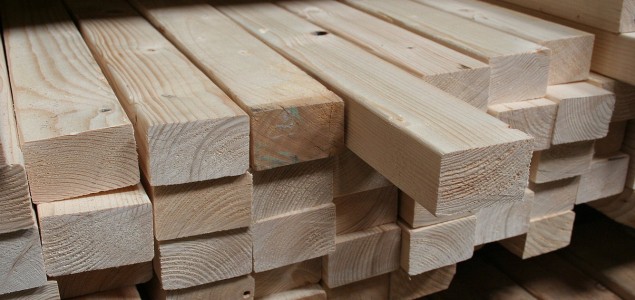
Last week, US framing lumber prices were the ones to encounter a soft fall, while buyers kept a low profile. Traders have worked to keep the inventories, despite the holidays in the US and Canada. The demand and consumption decreased in the Southwest and Southeast due to the summer conditions and the Random Lengths Framing Lumber Composite Price slipped $1. Continue reading "US lumber prices slipped $1 last week"
Stora Enso, UPM and Metsä claims of roundwood purchases below market prices dismissed

The District Court in Helsinki has rejected the Metsähallitus’ claim for damages against Stora Enso Oyj, Metsäliitto Cooperative and UPM-Kymmene Oyj.
Metsähallitus claimed that the three companies were Continue reading "Stora Enso, UPM and Metsä claims of roundwood purchases below market prices dismissed"

