

Global softwood lumber trade reached an all-time high in 2015 when 118 million m3 was traded internationally. This year has started out with even higher volumes being traded around the world; the 1Q/16 shipments were approximately 20% higher than in the first quarter of 2015. All countries on the “top-10 import list” increased their lumber importation during the first few months this year with the biggest changes in import volumes being in the US, China and Egypt.
North America
There was mostly upbeat news about the US lumber market in the first few months of 2016; housing starts in March were the highest for that month since 2007, lumber consumption in early 2016 was 14% higher than the same period in 2015, lumber imports in January-April were up 42% as compared to early 2015, and lumber prices in May reached their highest levels in over a year. Despite increased domestic wood demand, lumber production on the US West coast actually fell about four percent during the first four months this year.
Canadian production was sharply higher during the first three months of 2016 as compared to the same period in 2015, with an increase of 19% in the Eastern provinces and eight percent in British Columbia.
Northern Europe
The Nordic countries increased lumber export volumes in both 2014 and 2015 and the trend continued in early 2016 with shipments during the first two months being up nine percent for Sweden and 14% for Finland.
With the continued weak demand for lumber in Europe, Asian and African markets have received larger volumes of Nordic lumber so far this year as compared to early 2015. Although the US has increased total importation of lumber by as much as 44% during the first quarter this year, Sweden has only shipped six percent more than in the 1Q/15 and Finnish sawmills have not sent any lumber at all.
China
Importation of lumber to China from the two largest supplying countries, Russia and Canada, were 33% and 4% higher respectively, during the first four months of 2016 as compared to the same period in 2015. Shipments of predominantly pine from Russia have gone up substantially the past year with deliveries in April this year 1.1 million m3 as compared to 820,000 m3 in April 2015. Despite the significant depreciation of the Rouble during 2015 and 2016, Canadian lumber prices have actually fallen faster than Russian lumber prices in US dollar terms.
Japan
Housing starts of 2x4 houses in Japan were up 3% in the 1Q/16 as compared to the same quarter in 2015. Increased lumber demand has been met both by higher production at the country’s sawmills and by increased importation. In the 1Q/16, import volumes increased by 12% year-over-year with particularly Finland, Sweden and Austria shipping more lumber this year.
Russia
Lumber exports from Russia have fallen for two consecutive quarters, with the 1Q/16 shipments being almost 10% lower than in the 3Q/15, but six percent higher than in the 1Q/15. Most of the recent decline has been in shipments to the CIS countries, including Uzbekistan, Azerbaijan and Tajikistan, but trade with Egypt and some European countries were also down. Export prices have fallen quite substantially in dollar terms the past two years at the same time as values in Rouble terms were close to record high levels in the 1Q/16.
Article archive
European parquet market on the road to recovery

Confirming the January forecast of the FEP (European Federation of the Parquet Industry) issued at the start of the DOMOTEX fair in Hannover, the consolidated data provided by member companies and affiliated national associations indicates that the global European market experienced a slight growth of 0.5% in 2015. Though the results show some variation from country to country.
Compared to 2014, the overall consumption figures in 2015 point to an increase by 0,48%. As far as production is concerned, the trend already witnessed in the previous years, namely the strategic choices made by several producing companies to relocate their production in European countries outside the FEP territory, was once again confirmed and reinforced. The production in FEP territory upturned by 2,61% to almost 64 millions square meters, while the European production outside FEP countries is at an estimated 14,6 millions square meters. Continue reading "European parquet market on the road to recovery"
UK's softwood lumber imports rise in Q1/2016

During the Q1 2016, the British softwood lumber imports increased by 2%, compared to the same period of 2015. According to the latest figures provided by Eurostat, the total volume of imports surpassed the 1,441,958 cbm from Q1 2015 and reached a total volume of 1,477,798 cbm in Q1 2016.
Imports from the European countries, which represent more than 90% of all UK softwood lumber purchases, grew by 5% as compared to January-March 2015. Imports from Sweden grew by 3%, reaching 643,378 cbm, compared to the 626,267 cbm imported during the first quarter of 2015. Also, UK's imports from Latvia increased by 3%, while imports from Finland decreased by -7%.
Though with lower volumes, UK imports of Polish softwood lumber registered the highest increase, of 54% up to 86,660 cbm, as compared to the 56,340 cbm imported during the Q1 2015.
Continue reading "UK's softwood lumber imports rise in Q1/2016"
UK’s softwood lumber imports rise in Q1/2016
During the Q1 2016, the British softwood lumber imports increased by 2%, compared to the same period of 2015. According to the latest figures provided by Eurostat, the total volume of imports surpassed the 1,441,958 cbm from Q1 2015 and reached a total volume of 1,477,798 cbm in Q1 2016.
Imports from the European countries, which represent more than 90% of all UK softwood lumber purchases, grew by 5% as compared to January-March 2015. Imports from Sweden grew by 3%, reaching 643,378 cbm, compared to the 626,267 cbm imported during the first quarter of 2015. Also, UK's imports from Latvia increased by 3%, while imports from Finland decreased by -7%.
Though with lower volumes, UK imports of Polish softwood lumber registered the highest increase, of 54% up to 86,660 cbm, as compared to the 56,340 cbm imported during the Q1 2015.
Continue reading "UK’s softwood lumber imports rise in Q1/2016"
Weyerhaeuser to close lumber and plywood mills in Columbia Falls

Weyerhaeuser Company announced on June 22nd that it will permanently shut down its operations at the lumber and plywood mills in Columbia Falls, Montana, somewhere in August or September.
The company will be left with 3 other mills in Montana: a lumber mill in Kalispell, a plywood mill in Kalispell, and a medium-density fiberboard mill in Columbia Falls. Continue reading "Weyerhaeuser to close lumber and plywood mills in Columbia Falls"
FSC certificate for Schweighofer suspended
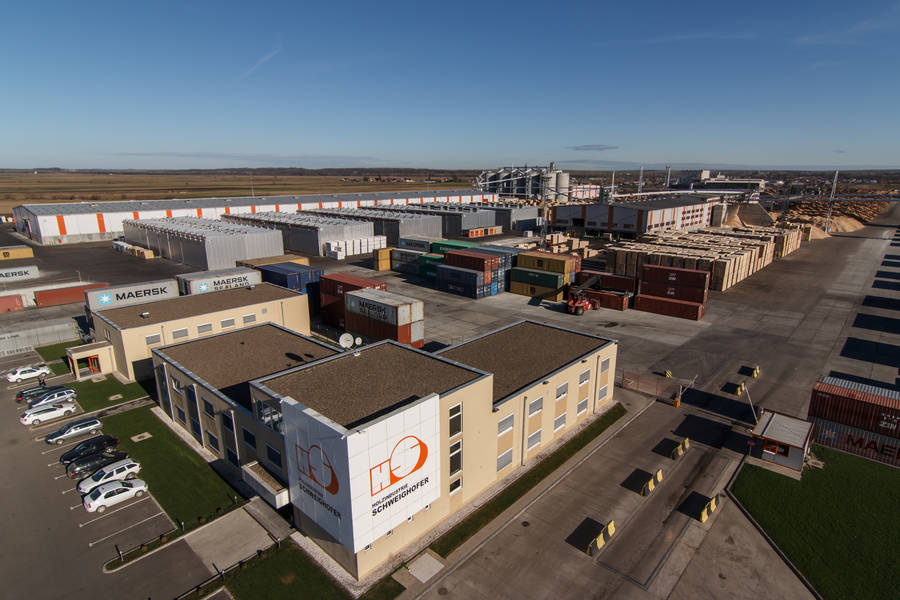
Holzindustrie Schweighofer’s FSC multi-site certificate has been temporarily suspended by the certification body Quality Austria. Currently a fresh on-site inspection is being prepared in co-operation with FSC and Quality Austria.
Holzindustrie Schweighofer said in a press release that it invites NGOs, FSC and its accreditation body ASI, as well as other stakeholder groups to co-operate in this audit, Continue reading "FSC certificate for Schweighofer suspended"
Germany: Sawn beech lumber exports drop on lower Chinese and Polish demand

During the Q1 of 2016, Germany’s sawn beech lumber exports decreased by 2%, compared to the same period of 2015. Exports to China decreased the most (-18% or by 6,500 m3 ), followed by Poland and Belgium. Overall, the exports to the EU decreased by -10%, reaching 35,671 m3 compared to 39,783 m3 in Q1/ 2015. Also, German sawn beech exports to the Asian countries decreased from 45,923 in Q1 2015 amounting 42,020 cbm in the Q1 2016 (or by -8%).
Germany’s sawn beech lumber exports to Vietnam registered the highest surge, increasing by 110%, compared to the previous year’s quarter.
Exports to the United Arab Emirates amounted to Continue reading "Germany: Sawn beech lumber exports drop on lower Chinese and Polish demand"
Huge biomass CHP plant inaugurated in Sweden

Fortum Värme, jointly owned by Fortum and the City of Stockholm, last month inaugurated its new biomass-fired combined heat and power plant (CHP) in Värtan, Stockholm. When the plant starts commercial production in the autumn, it will use forest residues and wood waste to produce district heat for nearly 200,000 households. Daily consumption of wood chips will be approximately 12,000 cubic meters. Continue reading "Huge biomass CHP plant inaugurated in Sweden"
Study: European Nordic wood producers and the forest certification system issues
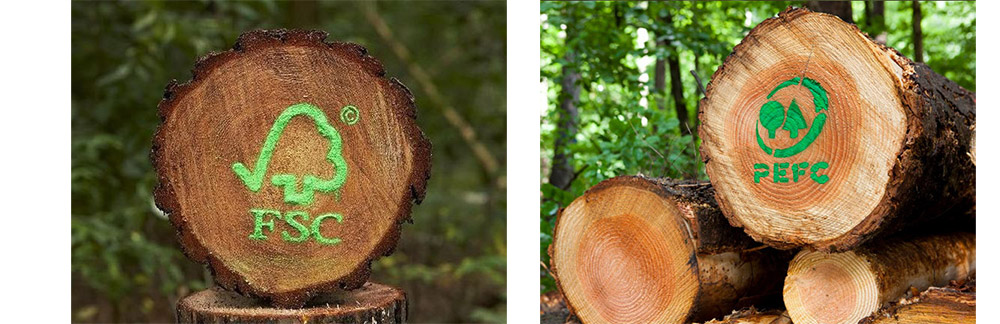
The efficiency of environmental communication should be built throughout business practices. Wood is a renewable raw material, and thus the environmental performance of wood product companies has the potential to give them a competitive edge. The efficient communication of their environmental performance in marketing campaigns could help them create new business.
Natural Resources Institute Finland (Luke) has Continue reading "Study: European Nordic wood producers and the forest certification system issues"
Europe: Veneer mills affected by oak shortage supply

2015 was another challenging year for the European veneer sector. Throughout 2015 and continuing into 2016, European veneer mills were suffering from shortages of veneer grade oak logs.
This was particularly the case for manufacturers of massproduced veneers for veneered panels and furniture.
Various factors contributed including intense competition in oak log procurement from barrel manufacturers and buyers in Asia and the relative weakness of the euro in 2015 which encouraged more focus on European oak, increasing the costs of imported logs while also making European oak more attractive to mills outside Europe.
Another significant development in 2015 was passage of a law in Ukraine on 9 April 2015 which imposed an export ban on unprocessed timber for 10 years effective from 1 November 2015 for all species (with the exception of pine banned from 1 January 2017).
While the law only became effective later in the year, it seems to have had an immediate impact to reduce EU imports of hardwood logs, particularly oak, from Ukraine.
EU imports of Ukrainian oak logs were only 29,000 cu.m in 2015, down from 82,000 cu.m the previous year and figures closer to 200,000 cu.m prior to the economic crises.
While there was pressure on European oak supplies in 2015, the same cannot be said for other European hardwood species. Under-utilisation of beech remains a significant problem in Europe, while markets for other more specialised species have come under intense pressure from substitute materials. For example, large furniture manufacturers will only use ash veneers if they remain cost-competitive compared to artificial heavily structured surfaces.
EU exports of veneer have also came under pressure, declining 4% from 155,000 cu.m in 2014 to 149,000 cu.m in 2015, particularly due to a downturn in sales to Turkey, Morocco, Russia, and China. Recent market reports suggest this trend has continued into 2016
Estonia: Roundwood prices drop sharply in April
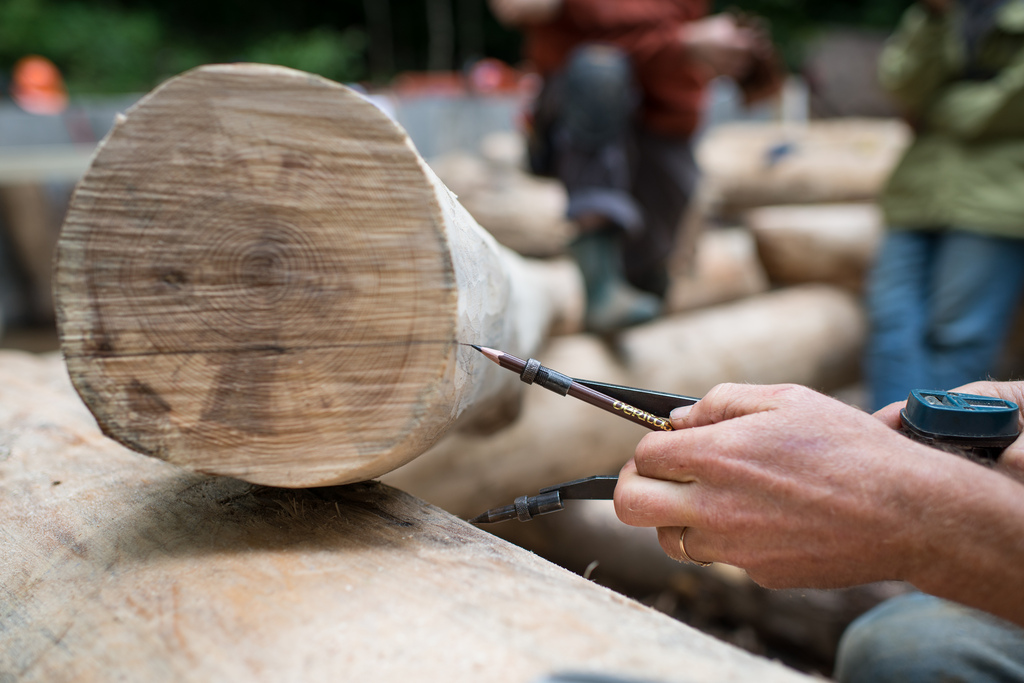
Roundwood prices in Estonia decreased during April 2016. Moreover, the industrial wood was the sector that decreased the most.
Softwood sawlogs are 2-5% cheaper compared to March, but the overall prices have declined by 6.7%. Birch plywood price has decreased by 3%, while birch sawlogs maintained the price level. Aspen sawlogs’ price has fallen by 9% compared to the previous year and fell by 1.6% compared to the previous month.
Also, the pulpwood price is on a downward trend. Continue reading "Estonia: Roundwood prices drop sharply in April"
EOS meeting conclusion: The European sawmill industry is the foundation of bioeconomy

“In an evolving green economy the European Sawmill Industry plays a key role and it can be defined as the backbone of the bio-economy. Indeed residues from sawmill processes can be converted into a broad range of wood-based products including bio-composite materials, bio-plastics, textiles and carbon-neutral biofuels. Simultaneously, the production of saw-logs, and the correlated use of by products and residues, complies with the resource efficiency principle, guarantees the highest profitability for forest owners and assures the raw materials needed for developing the bio-economy”.
This is the take-home message of the EOS General Assembly held on 16 June in Brasov and co-hosted by EOS Member, ASFOR, the Romanian Forestry Association and by the EOS Associated Member, Mr Gerald Schweighofer, who opened the doors of his highly technological sawmill plant in Reci to the EOS Members and to the EOS special guests: Elsham Timber, the Polish Economic Chamber of the Wood Industry, Möhringer and Mr Otto Zvagins from Ikea.

The EOS Members unanimously recognized that “the know-how, in using raw wood resources and residue streams built up by the wood-processing industries, represents an essential role in the bioeconomy”. To address global challenges such as climate change, a growing population and resource scarcity, Europe must find pathways to produce goods, food and energy by using renewable organic materials more widely. In this sense, the promotion of timber construction is anchored in the bioeconomy concept. Continue reading "EOS meeting conclusion: The European sawmill industry is the foundation of bioeconomy"
Södra to close Ramkvilla and Torsås sawmills; softwood capacity reduced by 200,000 m3

Södra is implementing structural changes in its sawmill and planing operations to strengthen the company’s long-term competitiveness. Trade union negotiations have been initiated prior to closure of the softwood sawmills at Ramkvilla and Torsås. At the same time, major strategic investments are being planned for the remaining sawmills. The hardwood sawmill at Djursdala is currently undergoing a divestment process.
“We believe in our sawmills because they are important for our members and the profitability of their forest estates. For this reason, we are now investing in the future and making extensive structural changes to improve profitability. We will also be looking at possibilities for increased timber housing construction, where we already have a solid foundation with our now well-managed and profitable subsidiary Trivselhus,” says Lars Idermark, President and CEO of Södra. Continue reading "Södra to close Ramkvilla and Torsås sawmills; softwood capacity reduced by 200,000 m3"
Italian softwood imports go down by 1% in 2015

The Italian softwood imports decreased by 1% in 2015 due to the fact that Austria, the lead supplier for Italy, had a 3% decrease in imports, which was yet offset by Finland, France and Latvia’s upturn in imports.
The import share of the non-EU suppliers was under 12%, with the biggest imports coming from Bosnia and Belarus. Russia’s imports decreased during 2015. Continue reading "Italian softwood imports go down by 1% in 2015"
US housing starts drop slightly in May

The US housing starts dropped during May 2016 because the multi-family housing units declined. Yet, the buildings permits gains give some positive signals ffor the second the second quarter.
As reported by US Commerce Department, the groundbreaking fell by 0.3% to an adjusted annual pace of 1.16 million units. The starts in April reached a 1.17 million-unit pace. Starts for single-family homes, which are watched closely because they signal more commitment to homeownership and provide more of an economic boost, rose 0.3% to a 764,000 pace, a three-month high.
Building permits increased by 0.7% to a 1.14 million-unit rate in May. Single-family homes building permits decreased by 2% in May, to a 726,000-unit rate and the multi-family building permits grew by 5.9%, reaching 412,000-unit pace.
Yet, the US housing starts are recovering after February’s drop of 17%.
John Deere construction and forestry sales drop sharply
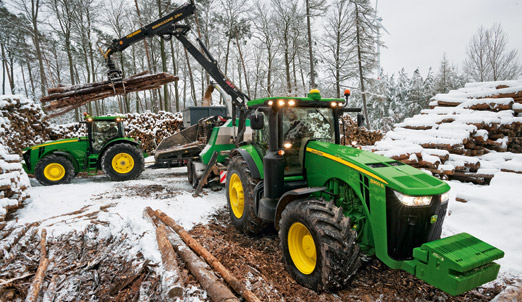
John Deere's worldwide net sales and revenues decreased 4 percent, to $7.875 billion, for the second quarter and declined 8 percent, to $13.400 billion, for six months of the company's fiscal year. Net sales of the equipment operations were $7.107 billion for the quarter and $11.876 billion for the first six months, compared with $7.399 billion and $13.004 billion for the periods last year.
John Deere's second-quarter performance reflected the continuing impact of the downturn in the global farm economy and further weakness in the construction equipment sector, said Samuel R. Allen, chairman and chief executive officer.
Continue reading "John Deere construction and forestry sales drop sharply"
Ukrainian EPAL pallets counterfeiters caught
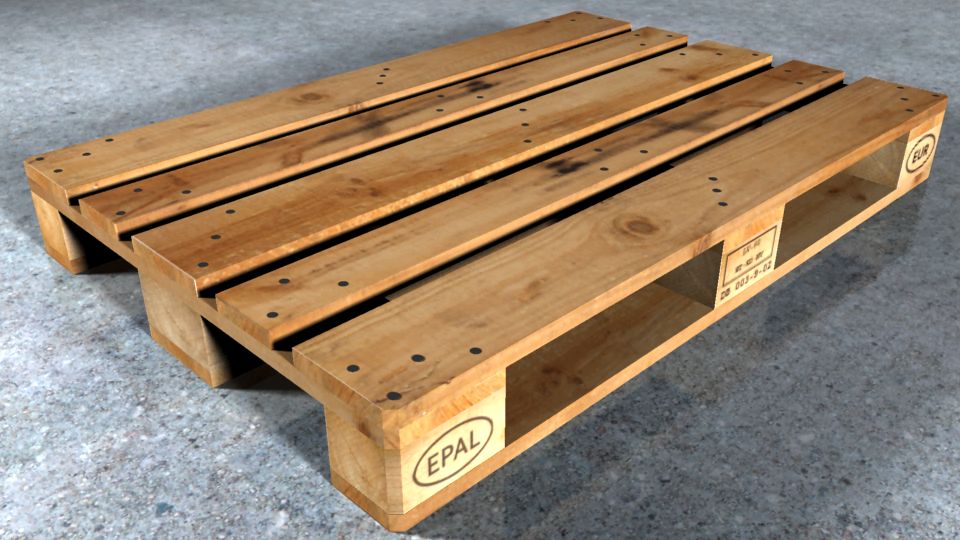
The European Pallet Association has made a major breakthrough in the battle against counterfeiters of EPAL Euro pallets. Thanks to the extensive teamwork of the EPAL representation in Ukraine and the independent inspection company Bureau Veritas, it has been possible to identify a producer of illegal EPAL pallets. In a joint campaign with the local police force, Bureau Veritas and Ukrainian lawyers, EPAL located and seized large quantities of counterfeit EPAL Euro pallets, as well as counterfeit branding plates.
Continue reading "Ukrainian EPAL pallets counterfeiters caught"
British Woodworking Federation has recently joined CTI

The Confederation of Timber Industries (CTI) has announced that the British Woodworking Federation (BWF) has joined the organisation.
The BWF joins the Timber Trade Federation, the Structural Timber Association and the Builders Merchant Federation as major timber trade associations in CTI network.
Welcoming the move, CTI Chairman Peter Hindle MBE said: “This is excellent news and strengthens our network even further. It will add a much needed element to our supply chain representation, amplify our political voice and provide critical insights into key workstreams, particularly education and training. I’d very much like to welcome them on board.”
The CTI has commissioned three reports into areas critical for the development of the timber supply chain: on education and skills, sustainability, and growth and value. Each report contains recommendations to develop each theme within the supply chain. The reports will be published in Autumn 2016, followed by a Parliamentary Conference in October 2016 to discuss the findings with policy makers.
David Hopkins, Managing Director of the Timber Trade Federation, commented: “The inclusion of BWF into the CTI fold makes this now a truly representative body and is critical for the evolution of the organisation. It will allow us not only greater firepower at a political level, but also greater synergies and closer working practice over pan-supply chain issues such as health and safety, education and training, and sustainability. Watch this space, it’s going to be a good time to be in timber.”
About Confederation of Timber Industries (CTI)
The Confederation of Timber Industry (CTI) is an umbrella organisation, representing the UK's Timber supply chain from Forest to end of life recycling. Launched in June 2015, the CTI now has around 75 supporters across the whole Timber Industry.
The SWISS KRONO Group to invest $230 million in expanding laminate flooring capacity in USA
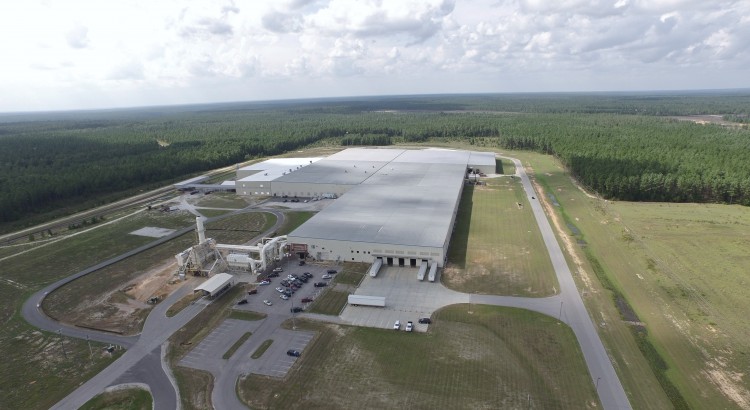
Over the next two years, the SWISS KRONO Group will be investing 230 million U.S. dollars in its American plant in Barnwell, South Carolina.
KRONOTEX USA, a company of the SWISS KRONO Group, is expanding its capacity for producing laminate flooring by implementing another system for manufacturing high-density fibreboard (HDF) boards to serve as the core material of laminate flooring.
Continue reading "The SWISS KRONO Group to invest $230 million in expanding laminate flooring capacity in USA"
Swedish softwood lumber exports grow on higher demand from Egypt and China
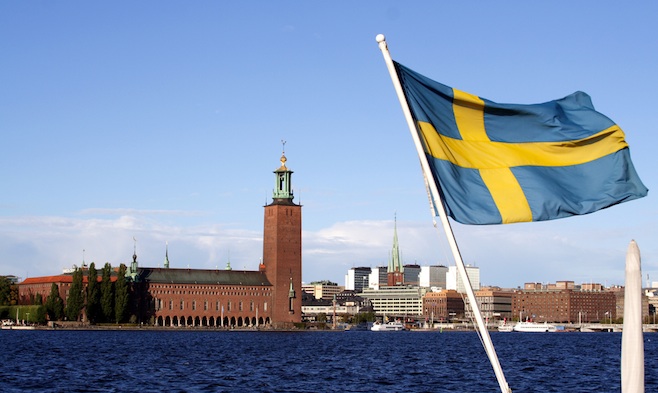
In the first three months of 2016, Sweden has exported about 3,237 million cbm of sawn and planed softwood lumber. This represents a 4% increase over the same period of 2015. Main export markets for the Swedish lumber were the United Kingdom and Egypt, followed by Germany and the Netherlands. In particular, exports to Egypt increased by 41% over January-March 2015, up to a volume of 336,660 cbm.
Overall, the increase in Swedish exports was supported by larger deliveries to Egypt, China and France. But even to Denmark, Germany and Japan considerably more was exported. Continue reading "Swedish softwood lumber exports grow on higher demand from Egypt and China"

