

Swedish sawmills and wood-processing companies are operating at high activity levels due to a high demand on the global market. In 2016, total global production of wood products increased to a record high of 335 million cubic metres. Continue reading "Swedish sawmills should tackle falling demand for pine lumber by diversifying into niche products"
Article archive
Brexit – an opportunity for tropical country exporters of wooden furniture

Overall, it seems that the U.K.’s departure from the EU might provide some new opportunities for suppliers of wooden furniture in tropical countries. However, it would be wrong to overstate the potential.
A “hard Brexit”, although a distinct possibility, is not certain and there are powerful commercial voices on both sides still lobbying hard for the U.K. to remain a part of the single market.
Even if the U.K. leaves the EU single market, the U.K. domestic furniture industry and large European manufacturers like IKEA, are already developing strategies to steer off what they perceive to be a renewed challenge from competitors outside the EU.
If new opportunities are to emerge for tropical wooden furniture suppliers in the U.K. post-Brexit, they will need to work closely with the large retailing chains – both the high-street stores and e-retailers – that already have global supply chains and will be most willing to make savings and offer lower prices by expanding procurement in tropical countries.
There may also be opportunities at the lower-volume, high end of the market for good quality designer products from the tropics, if these can be shown to be supported by a strong social and environmental narrative. However, that requires significant investment in both design and marketing.
The installation of biomass stoves in Spain, record growth in 2016

Although the installation of biomass equipment for thermal use and biomass stoves and boilers set a record in terms of number of units installed and grew to over 1000 MW, it did not reach 1300 MW installed power in 2015.
Generally speaking, according to the Spanish Biomass Observatory, the annual installed capacity with technical biomass equipment is down 23% on 2015, although it remains constant at 1020.6 MW. The number of units installed in 2016 stands at 38,851, 18% up on the figure for 2015.
This shows that Spanish society is still in need of much more information. The biomass sector is gradually colonising the heating sector in Spain, but at a slower pace than predicted a few years ago. Overall, the Biomass Observatory indicates that, at the beginning of this year there were 198,887 high-performance biomass units operating in Spain, totalling an installed capacity of 8297.6 MW.
This upward trend is not only the case in Spain but across Europe, where 16% of heating now uses biomass. This is a proven fact: the use of biomass for energy boosts the internal and local economy, revitalizes rural areas, enables better forest management and creates stable, local employment in our regions. It helps reduce dependence on imported fossil fuels, provides technological leadership, reduces the cost to end consumers and offers an efficient, cheaper alternative to any other fuel. Indeed, we need to be aware of the current importance of biomass: it already accounts for 0.34% of Spain's GDP, i.e. 3.7 billion euros.
The energy generated with biomass in Spain means we no longer have to import the equivalent of more than 10 million barrels of oil, reducing greenhouse gas emissions caused by fossil fuels such as diesel or natural gas.
2016 sets a new record in the sale of pellet stoves while fewer biomass boilers are being installed.
According to figures released by Spain's Biomass Observatory, 35,815 pellet stoves were installed in Spain last year, 22% more than the previous year. According to the figures, many brands exceed 1000 units and several of them sell over 5000 units per year. The marketing trend has veered towards the DIY-department-store channel and continues to rise with units that have less and less power but more and more technology: the average power of stoves sold in 2016 was 11.3 kW.
The installation of boilers of below 50 kW was down 16% on 2015 figures. According to the figures, high-end and import sales were lower and the average installed power was 34.4 kW.
The installation of biomass boilers of 50 kW or more, i.e. industrial and collective installations, fell by 15% in number and represent the group of biomass installations with the greatest reduction in installed power. The main causes include a number of events that have discouraged changing efficient boilers, i.e. months of political instability, low heating diesel prices at the beginning of the year and a relatively mild winter with lower thermal requirements. Now, well into the first half of 2017, we are observing a change in the trend mainly because heating diesel prices last winter rose by more than 50% in comparison with the previous year.
Chinese delegation announces interest in the timber sector of the State of Amazonas
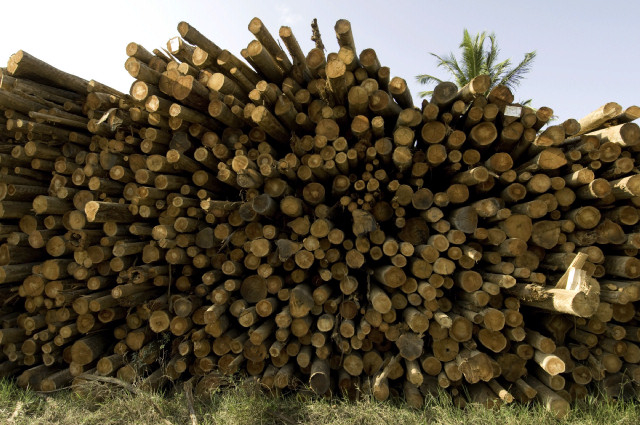
China is interested in opportunities for investment in Brazil’s timber sector. Continue reading "Chinese delegation announces interest in the timber sector of the State of Amazonas"
Can CLT help earthquake-proof buildings?
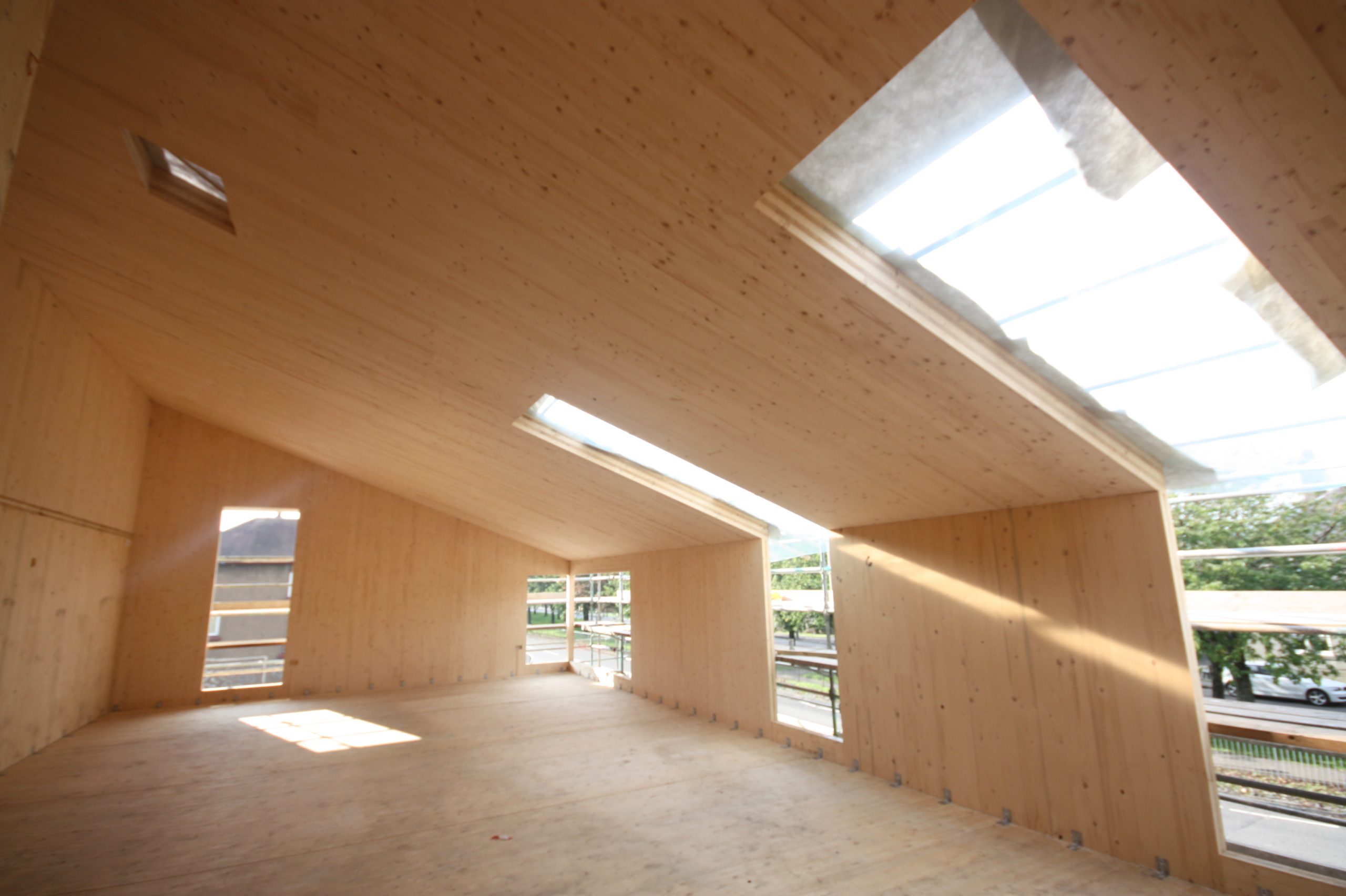
Research scientists from Washington State University (WSU) were recently given a US$1.5 million grant from the National Science Foundation to look at how builders in earthquake-prone areas can use sustainable timber in high-rise buildings, according to WSU.
Part of the grant will go into simulating a real earthquake in a laboratory, where the researchers will be able to test their 10-storey tall, wooden building designs made of cross-laminated timber (CLT). A recent arrival in the building industry, CLT consists of heavy timber structural material made from layers of lumber glued together to create solid and thick wooden panels.
Promoters of CLT have stated on more than one occasion that the material is capable of providing the same fire-resistance and strength concrete and steel offer buildings, and has fired the enthusiasm of architects and environmentalists, who believe it to be a far greener way of housing the booming global population.
Because it lowers the carbon dioxide emissions in construction and is able to capture carbon, CLT has gained a large following around the world; projects include a 100-storey tower in London, in the United Kingdom (UK), a 40-storey high-rise in Stockholm, Sweden, and a residential compound in Vancouver, Canada. In the University of British Columbia (UBC), Canada, an 18-storey student dormitory made of CLT is almost completed.
Professor of the Department of Civil and Environmental Engineering in WSU, Daniel Dolan, and his colleagues, are exploring how CLT can be used in a building to weather earthquakes. They are examining both structural, load-bearing components, much like beams and walls, along with non-structural components.
“We want to create a building design that will have little damage in earthquakes and still be habitable. This will allow communities to recover faster,” Dolan explained. “For many Americans, a house is the biggest investment they will have in their lives and we’re trying to protect it.”
The Swedish wood industry increases investment activity in 2017
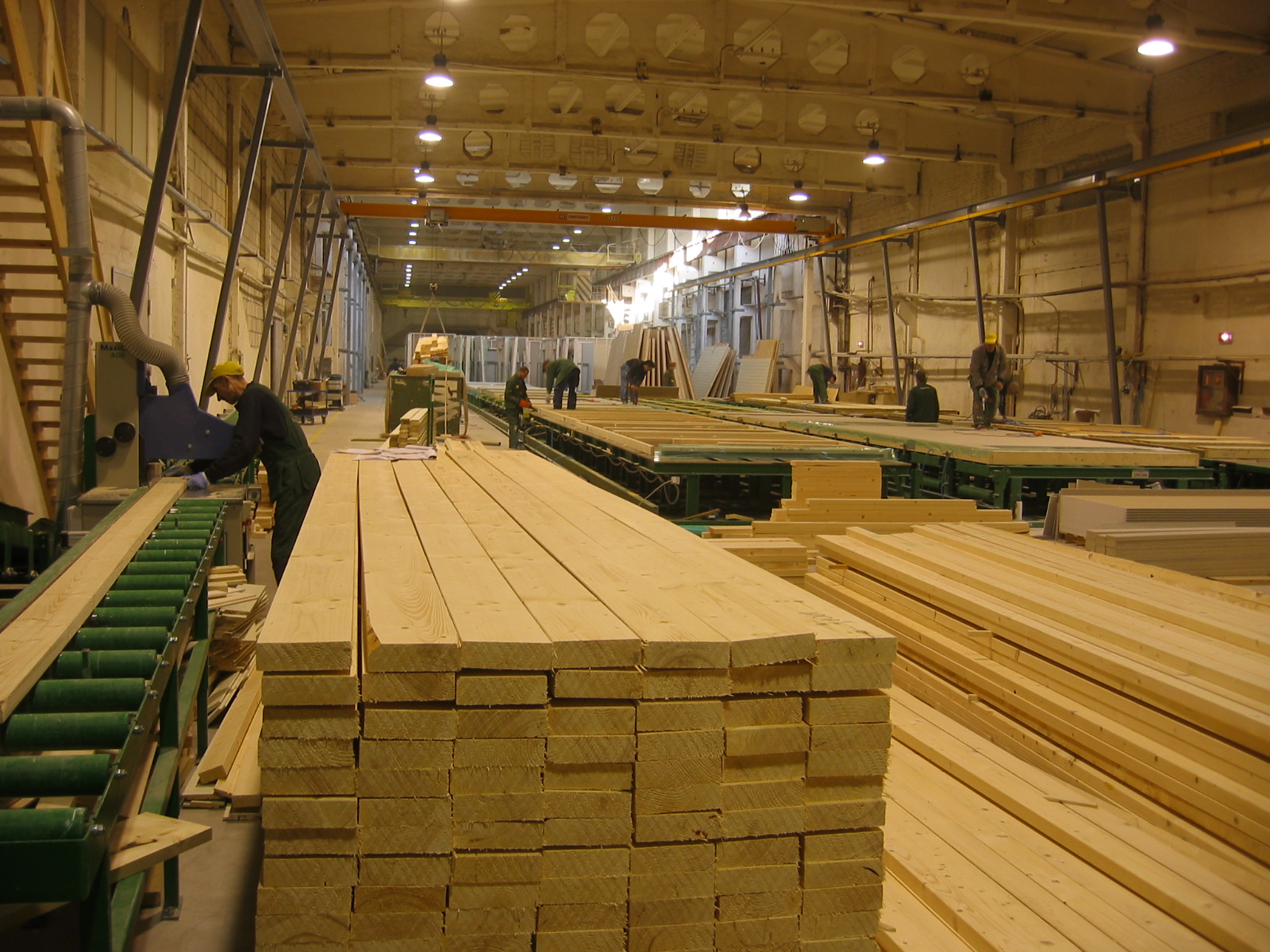
The Swedish wood processing industry revealed more favorable market conditions, which could be be reflected in increased investments during 2017. Continue reading "The Swedish wood industry increases investment activity in 2017"
Italian sawmill industry leader, Primultini, introduces new products during LIGNA 2017

LIGNA 2017 drew to a close on Friday, 26 May, having delivered big in terms of innovations and global appeal, with a significant upswing in the number of exhibitors and visitors from abroad and new impetus for the wave of digitalization currently redefining the industry. Continue reading "Italian sawmill industry leader, Primultini, introduces new products during LIGNA 2017"
Russia started shipping OSB to North America

The OSB imports to Russia increased by 76% (YoY) to 68,000 m3, during the 1st quarter of 2017. This is the highest level during the last 3 years: 1st quarter of 2014, Russia imported 102,000 m3. Continue reading "Russia started shipping OSB to North America"
India: 60 million homes building plan will require huge volumes of wood products

The Indian government’s plan to build around 60 million homes for the Indians between 2018 and 2024 could generate business worth over US$1 trillion. Continue reading "India: 60 million homes building plan will require huge volumes of wood products"
US: Canadian lumber tariffs impacting Southern Yellow Pine prices

With the recently-announced tariffs on Canadian softwood lumber imports into the US, a lot of unanswered questions are floating around the market: How will the tariffs affect supply in the US? Will manufacturers ramp up production to meet seasonal demand? Will sustained high prices dampen US housing starts during peak building months? Will added costs discourage potential first-time home buyers?
Continue reading "US: Canadian lumber tariffs impacting Southern Yellow Pine prices"
Valutec to deliver continuous kiln to Swedish Vida
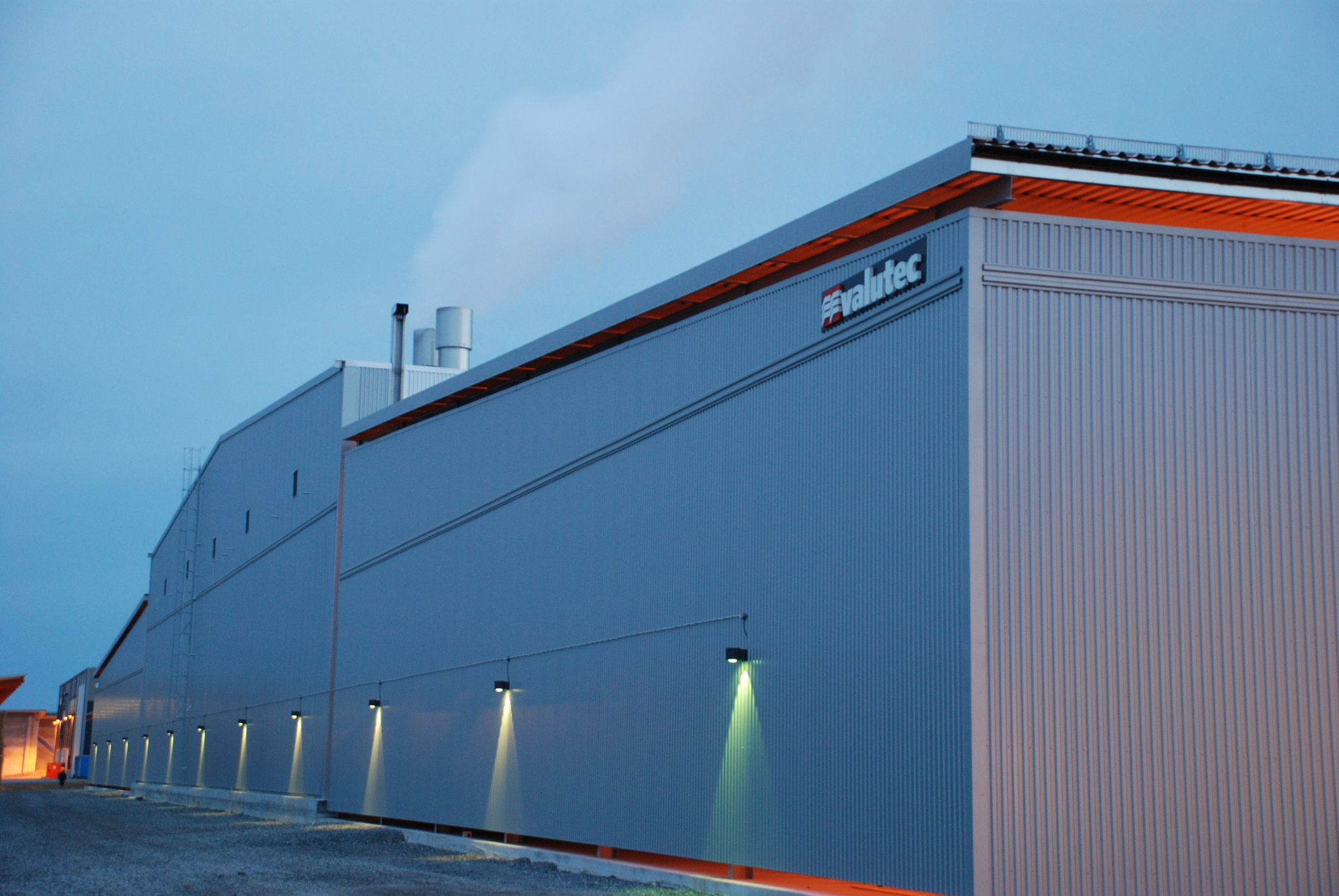
Vida Alvesta has chosen to invest in a continuous kiln from Valutec. The investment will increase the drying capacity at Vida Alvesta from around 175,000 cubic metres to 225,000 cubic metres and will help to even out production and facilitate stock management.
The continuous kiln will be delivered and installed in the autumn and put into operation in November. Vida Alvesta already has ten batch kilns and one continuous kiln from Valutec.
The plant to be delivered is a 2-zone FB continuous kiln, which means that drying takes place in two separate zones. The first zone provides quicker humidifying, which reduces the risk of dry cracks at the input end. The second zone acts as an equalisation zone and reduces moisture distribution. The continuous kiln is equipped with Valutec’s Valmatics control system and will solely be used for drying spruce down to a moisture ratio of 18%.
Vida is Sweden’s largest privately-owned sawmill group with around 950 employees at 18 production facilities, nine of which are sawmills. Production mainly focuses on construction lumber for a number of different markets.
Long-term implications of Brexit for EU wooden furniture market

Looking to the future, the UK’s decision to withdraw from the EU, an event scheduled to take place by 2019, has particularly important implications for long-term growth in EU demand for wooden furniture from tropical countries, although the precise effects are still far from clear.
The UK’s decision is particularly significant for the wooden furniture trade because the UK is not only one of the largest consuming markets in the EU, but is relatively highly dependent on imports.
As much as 45% of all wooden furniture purchased in the UK in 2016 was imported, more than in any other large European consuming market including Italy (8%), Spain (26%) and Germany (40%). A relatively high proportion of the wooden furniture imported into the UK is from countries outside the EU.
The UK accounted for more 34% of all wooden furniture, and 40% of tropical wooden furniture, imported by the EU from outside the region in 2016.
The immediate impact of the Brexit vote was to increase the rate of depreciation of the British pound on foreign exchange markets. The pound fell 15% against the US dollar and 10% against the euro in the immediate aftermath of the vote, and the value has remained at the lower level ever since.
The effects of the Brexit vote and weak pound have taken time to filter through into the British furniture market place. The British Retail Consortium (BRC) reported no discernible impact on retail spending and shop prices in the second half of 2016.
However, the higher prices for imported goods combined with uncertainty about long-term economic effects of Brexit now appear to be discouraging consumer spending. According to a study from Deloitte LLP, U.K. consumer confidence weakened in the first quarter of 2017 and households were the most pessimistic about their finances in more than two years.
Longer-term, U.K. market prospects for wooden furniture exporters in tropical countries will be significantly impacted by the outcome of negotiations on the terms of the withdrawal from the EU.
China: Output from redwood enterprises falls

It is estimated that there were 15,000 Chinese redwood enterprises in 2016 with annual output value of RMB90 billion. However in 2016 the value of output fell 10% from the previous year.
The Chinese redwood industry is mainly centered on Beijing, Shanghai, Hebei, Shandong, Jiangsu, Zhejiang, Fujian, Yunnan, Guangdong, Guangxi and Jiangxi provinces.
Although prices for ‘redwoods’ are high there is little interest in commercial plantations as growth rates are very slow and rotations very long. The vast majority of China’s ‘redwood’ is imported but the trade in ‘redwoods’ has declined in recent years.
In China’s national standard of ‘redwood’ (GB18107- 2000) 5 genera, 8 categories and 33 species are recorded. Five species are distributed in China namely the native scented rosewood, black rosewood and kamagony and two species, Siamese senna and Bupadauk which have been introduced.
The distribution of ‘redwoods’ in China:
- Scented rosewood (Dalbergia odorifera T. Chen) Hainan
- Black rosewood (Dalbergia fusca pierre) Yunnan
- Kamagony (Diospyros philippensis Gurke) Taiwan P.o.C
- Siamese senna (Cassia siamea Lam.) Yuannan, Guangdong
- Burmacoast padauk (Pterocarpus indicus Willd) Guangdong, Guangxi, Hainan and Yunnan
Scented rosewood is endemic to China’s Hainan province and is categorised as a national protected plant. It is mainly distributed in the west, southwest and south of Hainan province. Currently the introduction and cultivation of scented rosewood is going ahead in Hainan, Guangdong and Guangxi provinces.
Large-scale cultivation of scented rosewood in Hainan province has developed rapidly.
Black rosewood is also a protected plant and is mainly distributed in Xishuanbanna and Simao in Yunnan province there are also reports of scattered occurrence in Luchuan county and Yuanjiang county of Yunnan province. Kamagony is mainly distributed in Taiwan P.o.C.
Siamese senna and Burmacoast padauk has been introduced and cultivated in Yunnan, Guangdong, Guangxi, Hainan, Fujian and in Taiwan P.o.C..
Weyerhaeuser to sell timberlands and operations in Uruguay

Weyerhaeuser, one of the world's largest private owners of timberlands, has agreed to sell its timberlands and related manufacturing operations in Uruguay for $402 million. Continue reading "Weyerhaeuser to sell timberlands and operations in Uruguay"
Stable softwood lumber prices in Austria
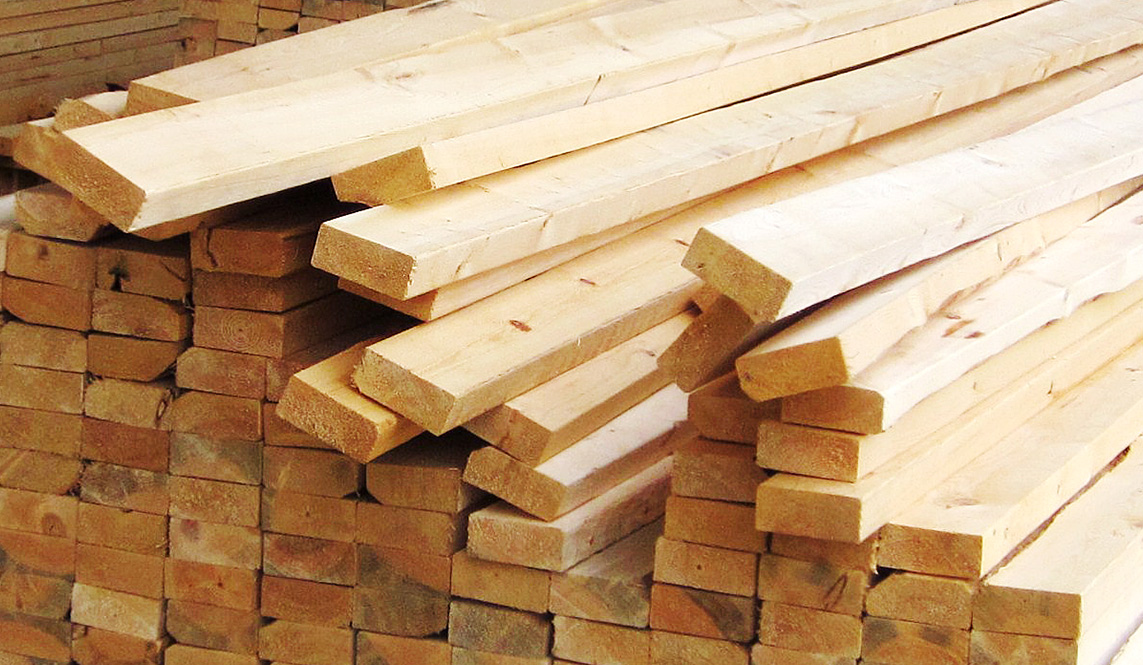
In May, the prices of softwood lumber in Austria are largely stable as compared to April. The prices either are identical or slightly vary over April values. There is no discernible trend up or down.
Year-on-year, however, a significant price increase can still be noticed. This mostly applies to large-sized boards and reserve squared timber, class II-III. Squared timber (Class I-II) is only minimally more expensive than last year.
| Softwood Lumber Spruce/Fir | May 2016 | April 2017 | May 2017 | Change May 2016 to 2017 € / cbm EXW |
| Edged Boards, 0-IIIa, 23 mm + | 229-242 | 234-246 | 233-245 | +4 / +3 |
| Rough boards in fixed dimensions, 18-22 mm | 228-239 | 230-240 | 230-240 | +2 / +1 |
| Squared timber, standard dimensions, I/II, 4-6 m | 209-218 | 211-219 | 210-218 | +1 / - |
| Reserve squared timber, II/III | 151-160 | 155-161 | 156-162 | +5 / +2 |
| Boards, III-IV, 8-16 cm, 4-6 m | 145-151 | 146-153 | 147-153 | +2 / +2 |
| Boards, III-IV, 8-16 cm, just 4 m | 146-152 | 150-156 | 149-156 | +3 / +4 |
| Boards, III/IV, 23 mm, 4-6 m | 147-153 | 150-156 | 150-156 | +3 / +3 |
| Boards, III/IV, 28 mm +, 3-6 m | 153-159 | 157-165 | 157-165 | +4 / +6 |
Ilim Group to invest 53 billion rubles in a woodworking complex in Irkutsk region
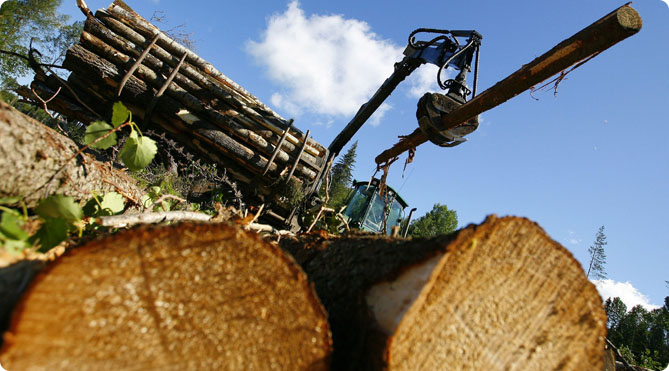
The Irkutsk region administration has agreed with the Ilim group about investments into the region of more than EUR 831 million (53 billion rubles), which will go for expansion of the woodworking capacity of the company. Continue reading "Ilim Group to invest 53 billion rubles in a woodworking complex in Irkutsk region"
LIGNA 2017: The sawmill industry reaches higher speed with innovative technologies

The sawmill industry is more and more interested in self-optimization technology and higher speed, as it was the trend during one of the most famous wood trade fairs, LIGNA 2017. The fair took place between 27-31 May in Hannover, Germany. Continue reading "LIGNA 2017: The sawmill industry reaches higher speed with innovative technologies"
Brazil: Exports of wood products up 16% in April

In April 2017 Brazilian exports of wood products (except pulp and paper) increased 16% in value compared to April 2016, from US$190.5 million to US$221.0 million.
The value of pine sawnwood exports increased 37% between April 2016 (US$28.0 million) and April 2017 (US$38.3 million). In volume terms, exports increased 25% over the same period, from 149,800 cu.m to 187,700 cu.m.
However, tropical sawnwood exports dropped just over 11% from 35,000 cu.m in April 2016 to 31,000 cu.m in April 2017. The value of exports also declined by the same percentage from US$16.0 million to US$14.2 million, over the same period.
Pine plywood exports increased almost 22% in value in April 2017 compared to April 2016, from US$33.4 million to US$40.6 million. It was encouraging to see that the corresponding increase in export volumes was 13% over the same period, from 129,800 cu.m to 146,800 cu.m.
There was positive news on tropical plywood exports which increased significantly in volume and in value, from 12,600 cu.m (US$4.8 million) in April 2016 to 13,900 cu.m (US$5.4 million) in April 2017.
The good news continued with wooden furniture export values rising from US$35.2 million in April 2016 to US$38.2 million in April 2017 (+ 8.5%).
EU wooden furniture imports from SE Asian suppliers on a downward trend
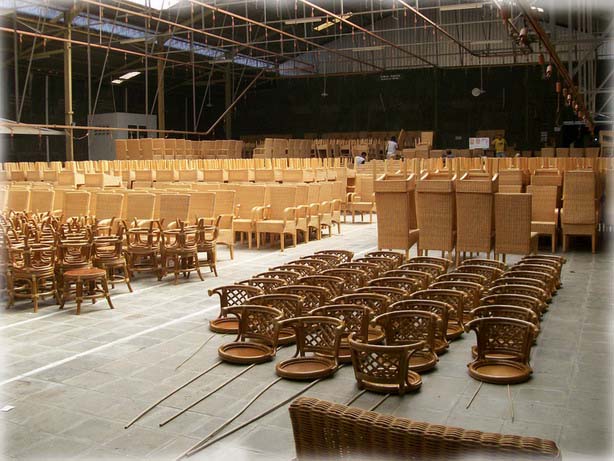
The EU import value of wooden furniture declined from most of the largest tropical suppliers in 2016. Import value was down 2% from Vietnam to Euro 716 million, 6% from Indonesia to Euro 299 million, 5% from Malaysia to Euro 183 million, 18% from Thailand to Euro 63 million and 3% from Brazil to Euro 118 million.
However, India bucked the trend and increased sales in the EU by 10% in 2016, to Euro 179 million (see chart).
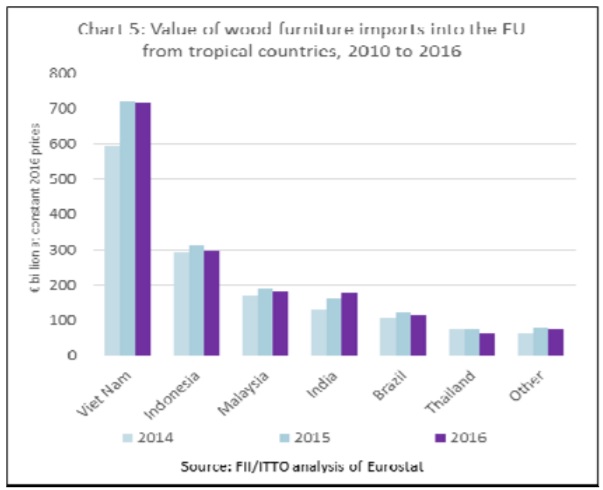 The total share of tropical countries in EU wooden furniture import value remained level at between 28% and 29% in the last four years. However, during this time the share of Vietnam increased at the expense of other South East Asian countries, and also to some extent at the expense of China, although the latter is still dominant.
Other temperate supplying countries outside the EU – including Turkey, Serbia, Ukraine and Belarus – have also been increasing share at the expense of China and tropical countries other than Vietnam.
Meanwhile, unlike in North America, the EU’s domestic manufacturers are maintaining their domination of the European wooden furniture market.
In 2016, domestic manufacturers accounted for around 87% for the total value of wooden furniture supplied into the EU market, the same proportion as the previous year and little changed, in fact, since 2007.
There are many reasons for the continuing dominance of domestic manufacturers. An obvious short term factor is weakening of European currencies in the last 2 years – particularly the UK pound - against the dollar and Chinese yuan.
More enduring factors include: the relative high degree of fragmentation in the European retailing sector – which greatly complicates market access for overseas suppliers; the underlying strength of European furniture manufacturers and their brands in terms of innovation and design; the obstacles to overseas suppliers complying with European technical and environmental standards; and the expansion of furniture manufacturing in Eastern Europe, a location which combines ready access to raw materials and to the internal EU market.
Although labour costs are quite high in Europe relative to China and South East Asia, furniture manufacturers in the EU are making a virtue of their shorter supply chains which not only reduce transport costs but also allow products to be delivered and, if necessary, returned more rapidly.
Russia shows interest in Swedish wood for its construction industry

Russia’s major architectural fair ARCH Moscow turned to Sweden, even though the East European country has substantial access to forest raw material, making it an important player in the forest industry.
Continue reading "Russia shows interest in Swedish wood for its construction industry"

