

Even if Russia is the leader in timber resources, the country stays behind as a global market player both in value and the quality of its timber products. Continue reading "Large volume but low quality- an overview of the current state of the Russian timber industry"
Article archive
Ghana: Exports of wood products on the rise

According to the Ghana Forestry Commission, Timber Industry Development Division (TIDD) for 2016 Ghana earned almost Euro 225 mil. from close to 397,000 cu.m of wood products, a significant improvement on 2015 exports.
Sawnwood, plywood, veneer, boules and kindling accounted for most of the 2016 exports earning close to Euro 208 mil. from a volume of 353,000 cubic metres.
In terms of the direction of trade, Asian markets accounted for around 73% of the volume of exports in 2016 with the top markets being China and India. These two markets favaoured rosewood, papao/apa, teak, wawa, koto/kyere, potrodum and gmelina. European imports from Ghana amounted to approx. Euro 26 million or 12% of all 2016 exports.
The growing importance of Asian markets can be judged from the graphic below showing the percentage change in the volume of shipments to various markets for 2015 and 2016 shipments.
Good 2017 starts for Ghana's exports
Ghana’s timber and wood product exports in January 2017 amounted to 30,758 cubic metres, a 5.76% year-on-year increase when compared to the January 2016.
During the period under review, air dried sawnwood, mouldings and peeled veneer exports grew sharply with the value of exports increasing by 26%, 17% and 5% respectively.
The leading export products in January were air-dried sawnwood (22,346 cu.m), kiln dried sawnwood (3,334 cu.m), plywood for regional markets (1,934 cu.m), roundwood billets (1,029 cu.m) and processed mouldings (717 cu.m).
Rosewood topped the list of wood species accounting for 44% of the total exported volume along with teak (18%), wawa (9%), papao/apa (9%) and ceiba (6%).
Asian markets were the largest importer of Ghana’s wood products in January 2017 accounting for 78% of all exports (China; 54%, India; 21% and Vietnam; 3%) The high volume of rosewood exports reflects the recent lifting of the export ban by the Forestry Commission.
Central/West Africa: Overall timber demand in international markets is rising
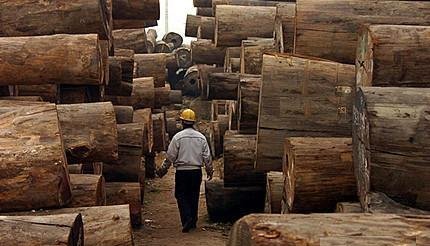
Central/West African producers report that demand remains stable and that buyers for the Chinese market are more active now than two months ago. There is a perception that, particularly for the Chinese market, demand is steadily firming.
European buyers have also been active and there has been an increase in shipments to Europe ahead of the traditional July and August vacation period.
Among the wide range of species being shipped there is firm demand for okoume, bomanga and okan.
Growing interest in large sawn baulk
Analysts report that over the past few months there has been a notable trend toward purchases of so-called large ‘slabs’. Buyers are looking to purchase sawn baulks 10cm to 20cm thick and 100cm to 195cm wide especially of kevazingo which is subject to CITES regulations.
Bulk size (thicknesses of 10cm to 20cm) merchantable grade belli and dabema are in demand and prices for these dimensions are firming.
Suggestions that Sapele stocks are high
Producers in Cameroon report an increase in shipments of logs for the Chinese market. As the dock strike at Douala Port has ended shipments are being handled without delay. News from the region is that stocks of sawn sapele are high with production from the Republic of Congo waiting for shipment out of Douala port.
Crackdown on loggers straying into protected areas
Reports coming out of Gabon mention a crackdown by authorities on alleged illegal logging in the Eastern Region. The indications are that some loggers have strayed into National Park areas and are removing even undersized trees.
This infringement was discovered by a special unit of the National Parks Agency assisted by the Forest Authority during an inspection of one of Gabon’s eleven well protected National Parks.
Gabon forest code
In the previous issue it was stated that the private sector in Gabon was being further consulted on the proposed revised forest code. However, Françoise van de Ven, the Secretary General of the Gabonese Forest Industries Syndicate (UFIGA) pointed out that discussions with industry have been concluded.
She writes “the (draft) forestry code has been revised by all parties, i.e. forest administration/civil society and private sector, which was a first in Gabon and everybody is very happy with it. The law is (currently) under examination by the Constitutional Council.”
She continues, pointing out that negotiations are underway with FAO to secure funding so that the same group that revised the forestry code will be able to continue and assist with implementation.
Log Export Prices
| West Africa logs, FOB | € per m³ | ||
| Asian market |
LM
|
B
|
BC/C
|
| Acajou/ Khaya/N’Gollon |
245
|
240
|
160 |
| Ayous/Obéché/Wawa |
240
|
240
|
190
|
| Azobe & Ekki |
230
|
230
|
160
|
| Belli |
250
|
250
|
–
|
| Bibolo/Dibétou |
180
|
170
|
|
| Bilinga |
230
|
230
|
- |
| Iroko | 325 |
300
|
265
|
| Okoume (60% CI, 40% CE, 20% CS) (China only) | 245 | 240 | 185 |
| Moabi | 330 | 300 | 235 |
| Movingui | 210 |
210
|
160
|
| Niove |
175
|
160
|
–
|
| Okan |
230
|
205 |
–
|
| Padouk |
300
|
280 |
230
|
| Sapele | 290 | 280 | 220 |
| Sipo/Utile |
310
|
290 |
255
|
| Tali | 330 | 320 |
–
|
Sawnwood Export Prices
| West Africa sawnwood, FOB |
€ per m³
|
|
| Ayous | FAS GMS | 430 |
| Bilinga | FAS GMS | 530 |
| Okoumé | FAS GMS |
420↑
|
| Merchantable | 300 | |
| Std/Btr GMS | 345 | |
| Sipo | FAS GMS |
540↑
|
| FAS fixed sizes | 555 | |
| FAS scantlings | 560 | |
| Padouk | FAS GMS | 850 |
| FAS scantlings | 980 | |
| Strips | 645 | |
| Sapele | FAS Spanish sizes | 505 |
| FAS scantlings | 510 | |
| Iroko | FAS GMS | 625 |
| Scantlings | 710 | |
| Strips |
410
|
|
| Khaya | FAS GMS |
450
|
| FAS fixed |
470
|
|
| Maobi | FAS GMS |
620
|
| Scantlings |
630
|
|
| Movingui | FAS GMS |
430
|
Elmia Wood 2017 met a large audience in the forest
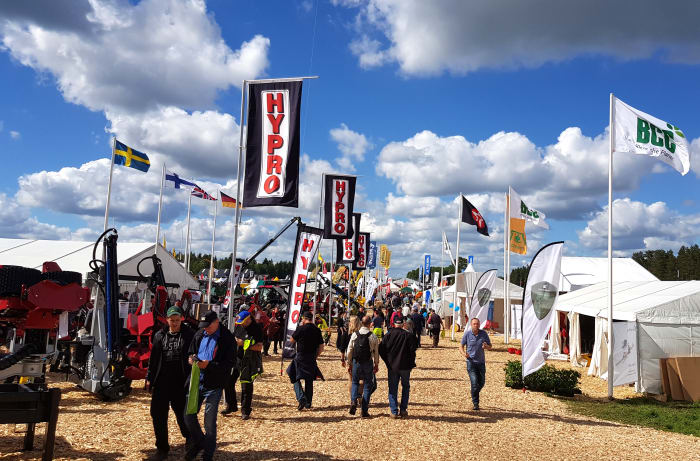
The world’s largest forestry fair was bigger than ever this year both in terms of area and number of exhibitors. Many visitors were drawn to Elmia Wood to see new forestry products and services and to learn about new high-tech solutions and expertise in the forest south of Jönköping, Sweden. Continue reading "Elmia Wood 2017 met a large audience in the forest"
Latest trends in Japan’s furniture imports

The value of Japan’s wooden office, kitchen and bedroom furniture imports during the first quarter of 2016 and 2017 are shown in the table below. Continue reading "Latest trends in Japan’s furniture imports"
India: Greenply set to triple capacity in the next 12 months; looks for export markets
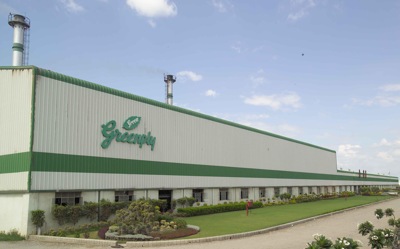
Greenply Industries Ltd. is currently exploring export markets, as part of the company's plan to triple its capacity in the next 12 months.
“The company has a market share of 36 percent in the domestic market. The existing medium density fibre board capacity of the company is 1.80 lakh cubic meters and the new unit (in Andhra Pradesh) will have a capacity of 3.60 lakh cubic meters, so we are tripling capacity,” company’s Chief Financial Officer V Venkatramani said.
According to Bloomberg, India’s largest plywood manufacturer will be spending Rs 730 crore for the new plant, including Rs 190 crore that it raised as debt for the capital expansion. The company has already invested Rs 400 crore as on March 31, and looks to invest nearly Rs 270 crore in the current financial year and the balance Rs 50 crore in the next financial year.
Expansion in Gabon
Greenply started the production at the unit in Gabon in June 2017 and the unit will add 35,000 cubic meters to the company’s capacity and at peak production, will add Rs 100-110 crore to the topline of the company.
The consolidated net revenue of Greenply for the financial year that ended in March amounted to Rs 1,660 crore, while net profit stood at Rs 125.4 crore. The company had to face a lot of pressure from the domestic market, where volumes were lower as a result of demonetization in the second half of the last financial year.
The first quarter of the current financial year has also seen some softness in volume as channel partners are reducing stocks ahead of July 1 deadline for the Goods and Services Tax (GST) regime. The company also faces challenge from the domestic market, where it is yet to see pick up in the real estate market. Volumes for FY18 would be around 5-7 percent and realisations are expected to recover after a 3.5 percent price hike which the company undertook on June 1, Bloomberg reported.
The Indian government has brought wood under GST and imposed a 18% excise duty on normal shaped wood as compared to it being exempted earlier. This would increase the tax outgo for the company. The company will look at passing on the impact of the GST to the customers.
US lumber prices in week 05-09 June

The interest in buying framing lumber in the US grew during last week, while the prices ended the week on an firmer footing. Continue reading "US lumber prices in week 05-09 June"
KG List to acquire Almo Hardwood in Sweden
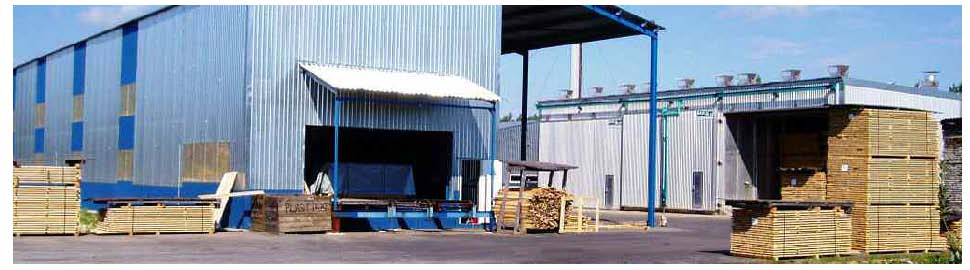
Almo Hardwood based in Österbymo, Östergötland County, Sweden is going to be sold to KG List in Norrhult, Småland. Continue reading "KG List to acquire Almo Hardwood in Sweden"
US wooden furniture imports from China down

The value of US wooden furniture imports declined for the second consecutive month in March to US$1.24 billion. Year-to-date imports were still 7% higher than in March 2016.
As in February, the month-on-month decline was mainly in imports from China (-17%) and Vietnam (-15%). Yearto-date imports from Vietnam however, were 15% higher than in March last year.
Wooden furniture imports from most other countries increased in March. Imports from Mexico grew 16% to 79.4 billion.
Furniture imports from Indonesia were US$60.7 million, up 29% from February. Much of the March decline in wooden furniture imports was in kitchen furniture. Imports of most other types of wooden furniture changed little from February.
Kronospan completes construction of new lamination line in Romania
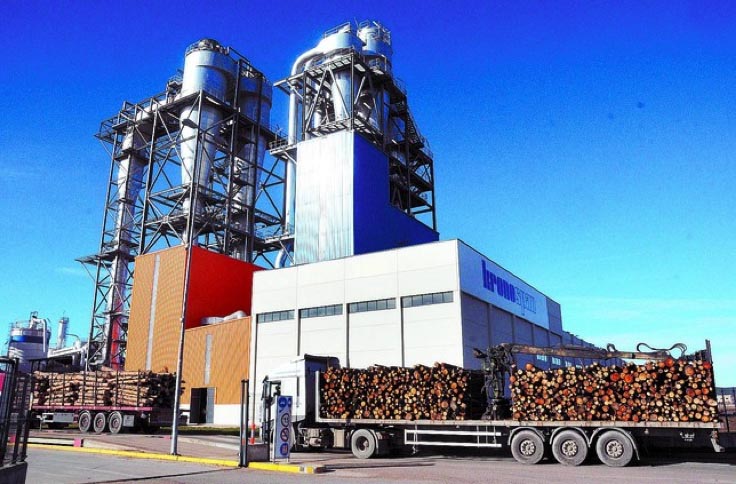
Kronospan Romania has recently completed an EUR 10 million investment in a new fully automated lamination line. Continue reading "Kronospan completes construction of new lamination line in Romania"
China: Rise in wood furniture exports from Huizhou City
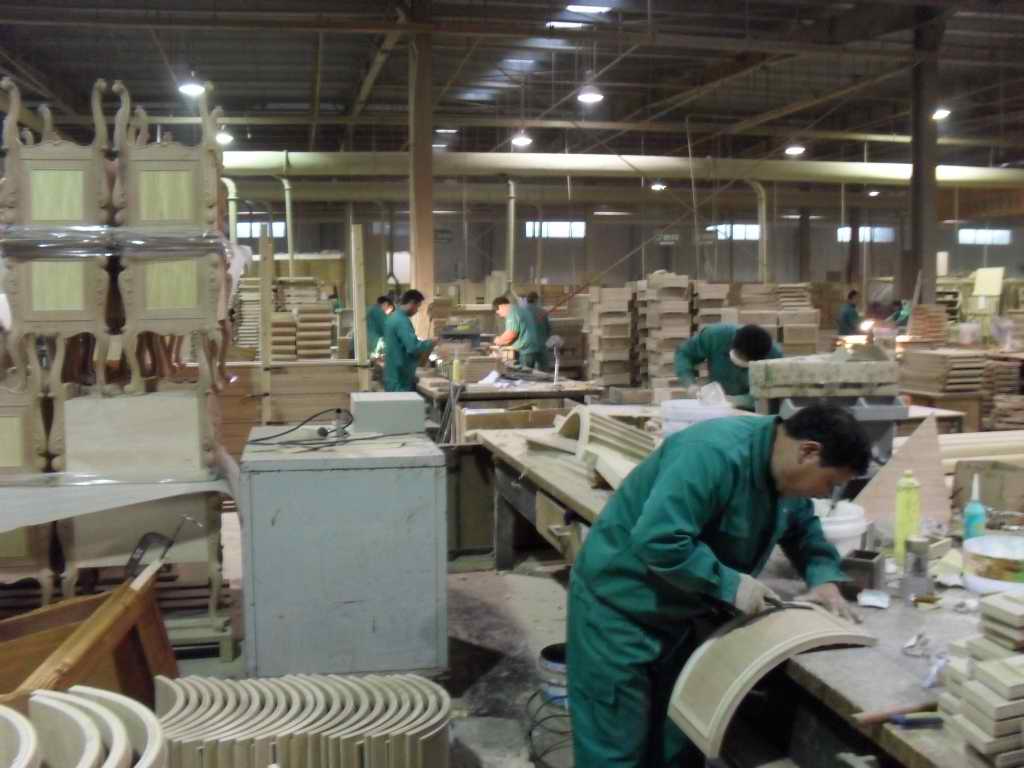
According to Entry-Exit Inspection and Quarantine Bureau, furniture exports from Huizhou City in Guangdong province rose 17% to US$133 million in 2016.
Wooden furniture exports from Huizhou City have increased every year for the past 7 years. There are about 180 wooden furniture enterprises in Huizhou City. The main products are wooden tables and chairs, wood frames for sofas, wooden kitchenware and wooden crafts. The main markets are the USA, European Union, Japan, Australia, UAE and Malaysia.
As trade expands under China’s ‘Belt and Road’ strategy, Huizhou wooden furniture makers have diversified exports reaching out to, for example, Cameroon, Mongolia, Kuwait and Qatar.
Furniture exports to Southeast Asia, the Middle East and Africa continued to increase. According to the available statistics, the export value of wooden furniture manufactured in Huizhou City in 2016 almost doubled to US$580 million between 2010 to 2016.
Overview of the global forest industry in Q1/2017
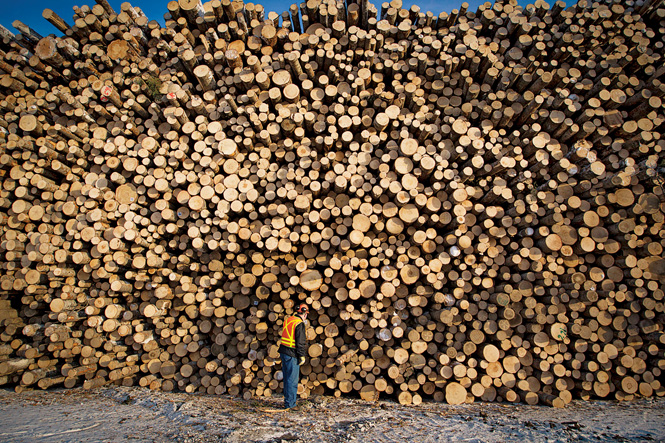
The Global Sawlog Price Index (GSPI) was up 0.3% quarter-over-quarter in the 1Q/17. This was only the second time in almost three years that the GSPI increased quarter-over-quarter.
Over the past year, sawlog prices have generally gone up in Latin America, Oceania and North America, while they have declined in Europe. In the 1Q/17, the European Sawlog Price Index (ESPI-€) was €83.12/m3, which was practically unchanged from the previous quarter. Since the record high in the 1Q/14, the ESPI-€ has fallen by 8.3% with the biggest declines seen in Central and Northern Europe.
Global Pulpwood Prices
The Global Softwood Fiber Price Index (SFPI) fell 0.7% quarter-over-quarter in the 1Q/17, which was down 3.0% from the 1Q/16. The SPFI has been in decline for almost five years and is currently at its lowest level since the 3Q/04. In real terms, the SFPI in the 1Q/17 was at its lowest level since WRQ initiated the index 30 years ago in 1988. The biggest recent declines in softwood fiber costs for the pulp sector have occurred in Eastern Canada, Finland, France and Germany.
Hardwood wood fiber prices have generally moved up worldwide in the 1Q/17, with the Global Hardwood Fiber Price Index (HFPI) increasing one percent qo-q to $86.99/odmt in the 1Q/17. Prices rose the most in Australia, Brazil, Russia and the western US.
Global Pulp Markets
Demand for chemical market pulp was up by over six percent during the first three months of 2017 as compared to the same quarter in 2016. Chinese demand was up the most, 22%, while Western Europe was the only region where consumption was down in early 2017.
Prices for most pulp grades have increased in early 2017 because of a combination of tight supply and continued strong demand.
The BHKP price has gone up the most this year, having increased almost $90/ton to $740/ton in just four months, while the price rise of NBSK has been a more modest $30/ton from January to April.
Global Lumber Markets
Globally traded softwood lumber reached an all-time high in 2016. WRI estimates that 118 million m3 of lumber was traded last year, or 10 percent more than in 2015. Imports to the US account for about one-third of globally traded lumber and have almost doubled in five years. China accounted for about 17% of import volumes in 2016.
Lumber production in North America in 2016 was up six percent from the previous year, reaching its highest level since 2007. The biggest rises in production were in the US South and Eastern Canada, while the increases in western Canada and the western US were more modest. This trend continued during the first two months of the year with production on the continent being 1.5% higher than in the same period in 2016.
Domestic lumber prices in both Finland and Sweden continue to be close to their lowest levels in ten years in US dollar terms.
Prices for imported softwood lumber to China have been in a steady upward trend during 2016 and 2017 with the average import price in March 2017 being 13% higher than 18 months earlier.
Global Biomass Markets
Wood pellet imports to Asia reached an all-time-high in the 4Q/16 when Japan and South Korea together imported 630,000 tons of pellets. Although import volumes were down slightly in the 1Q/17, they were still 43% higher than in the 1Q/16.
Over the past ten years, there has been a clear shift in fiber-sourcing for pellet manufacturers in the US South from logs to residues.
IKEA to start selling its products on commercial websites like Amazon or Alibaba
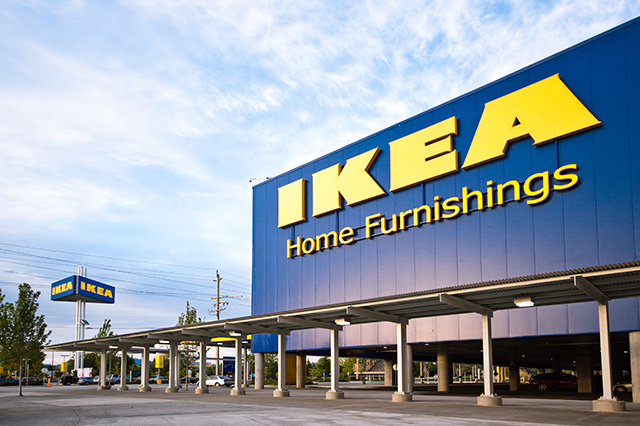
IKEA's next step to flourish its furniture business is to try and selling its products on websites other than its own, like Amazon or Alibaba. Continue reading "IKEA to start selling its products on commercial websites like Amazon or Alibaba"
US lumber imports from Canada drop sharply in Q1/2017
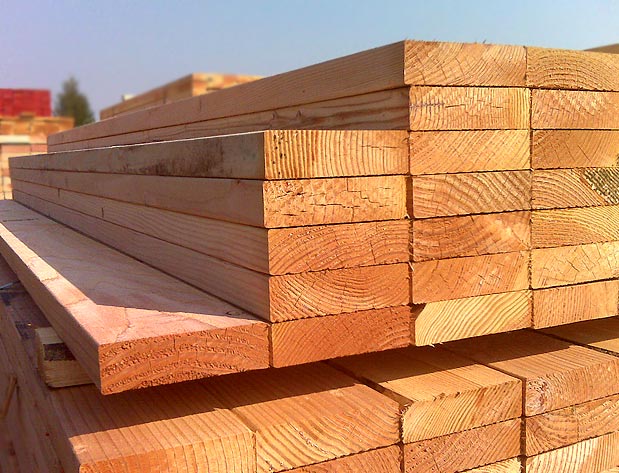
The US imported 8.456m m³ of softwood lumber from Canada, which amounts to a 16% reduction against last year’s volume in the first quarter. Continue reading "US lumber imports from Canada drop sharply in Q1/2017"
US sawnwood imports rebound

US sawn hardwood imports rebounded in March following a 24% drop in February. March imports of sawn hardwood were 75,114 cu.m., up 41% from the previous month.
The volume share of tropical sawnwood in total hardwood imports declined in March compared previous months, but tropical species accounted for over half of the value of imports.
Tropical sawnwood imports increased 24% in March to 19,978 cu.m. and year-to-date imports were also up from the same time in 2016.The value of imports grew 36% from February. Ipe sawnwood imports were 2,780 cu.m. in March, up 14% year-to-date from March 2016.
Ipe imports from Brazil were valued US$5.8 million, in addition to small import volumes from Guyana and Spain. Balsa sawnwood imports from Ecuador recovered in March. Balsa imports were 7,352 cu.m., a 76% increase in year-to-date imports compared to the same time last year.
Imports of sapelli sawnwood were down from February, but year-to-date imports increased 11% from March 2016. Cameroon exported 922 cu.m. of sapelli sawnwood to the US in March, followed by Congo/Brazzaville with 604 cu.m.
Hardwood imports from Malaysia were down compared to the same time last year due low imports in January, but in March imports grew to 1,631 cu.m. Keruing sawnwood accounted for the majority of Malaysian shipments in March (1,218 cu.m.).
Imports from Indonesia were 1,145 cu.m. in March and year-to-date imports grew 21% from the same time in 2016.
Soft or hard Brexit-implications for the UK and European furniture market

In the event of a so-called “soft Brexit” in which the U.K. remains a part of the EU single market, there may not be a significant change in the current trading environment.
However, this will require both parties to compromise on what, at present, are polarised positions on difficult political issues such as the size of the U.K.’s on-going contribution to the EU budget and the free movement of labour within the single market.
If there is a so-called “hard Brexit” in which the UK fails to reach agreement with the rest of the EU and withdraws or is ejected from the single market – an event which could occur in 2019 – there is very likely to be severe economic fallout in the UK and, to some extent, other EU countries.
Unlike the Brexit vote – which didn’t actually lead to any change in the terms of the trading relationship – the U.K.’s withdrawal from the single market would have immediate and very profound effects.
It would impact on investment decisions, consumer spending and confidence, and on immigration and the level of access to, and the price of, labour. The UK’s preeminent position in the EU in several large service sectors - such as finance and pharmaceuticals – would come under threat with far-reaching implications for the long-term health of the national economy.
A “hard Brexit” would also lead to immediate imposition of tariffs on goods from the EU that previously entered the country tax free. There would be very profound economic dislocation in those sectors that have progressed furthest to integrate supply chains between the EU and UK, such as car manufacturing, electrical goods and chemicals.
There would also be far-reaching effects on those sectors – such building materials and children’s toys – where technical and safety standards have been harmonised across the EU.
In these sectors, if the U.K. leaves the single market without, at minimum, mutual recognition with EU conformity assessment bodies, trade would be severely curtailed until the required agreements are put in place. Given the number and complexity of sectors involved, that would take some time.
It should be said that the wooden furniture importing sector in the UK is relatively less exposed to this form of dislocation compared to other industries. EU import tariffs are already zero on all wooden furniture with the exception of components and kitchen furniture which are subject to 2.7% tariff.
The furniture sector is also a so-called “non-harmonised sector” in EU trade law. This means goods are not subject to common EU rules and instead come under national rules. The sector is regulated through the so-called “mutual recognition principle” which states that a Member State must allow a product lawfully produced and marketed in another Member State into its own market.
This is true even if the importing Member State’s local rules impose more stringent (or different) requirements to which the product does not conform.
The importing Member State can disregard this principle only under strictly defined circumstances, such as where public health, the environment or consumer safety are at risk, and where the measures taken can be shown to be proportionate.
In the U.K., there are national requirements for fire safety in furniture which are mandatory for all products placed on the market, irrespective of whether from the EU or outside the EU. Imported furniture must be accompanied by documented proof of compliance and with the required permanent labels attached.
What this means in practice is that the U.K.’s withdrawal from the single market may not significantly alter the terms of trade for wooden furniture imported into the country – since there is already a fairly level playing field between U.K. imports from inside and outside the EU.
Nevertheless, the U.K.’s departure from the free market would mean, at minimum, restrictions on the current free movement of EU goods into the country. A customs clearance process would be imposed for goods coming into the UK from the EU, and vice versa. Each furniture product would need a customer code and be subject to scrutiny by customs at the border.
This adds a layer of trading complexity and increases the potential for delayed shipments, a critical issue in the furniture sector.
The large furniture retailers in the U.K. that already import a lot of product from outside the EU are geared up for this and may benefit from the U.K. leaving the single market.
In contrast, smaller U.K. retailers, and others that are heavily dependent on imports from the EU, might be at a competitive disadvantage. Large pan-European retailers like Kingfisher and IKEA that operate a centralised sourcing strategy and have gone a considerable way to integrate their distribution networks and harmonise sales activities across the continent would have to alter their business model in the U.K.
IKEA, which currently sources the majority of its wooden furniture from mainland Europe, is sufficiently concerned about the prospect of the U.K. leaving the single market that it recently announced its’ intention to manufacture more furniture in the U.K.
According to IKEA, this will help fend-off Brexit-led price rises and competition from outside the EU. The company has stated that it aims to double market share in the UK irrespective of the outcome of Brexit negotiations.
Average prices for standing timber in Belgium, spring-summer 2017

List of prices for standing timber set by National Federation of Forestry Experts A.S.B.L.
Preliminary remarks.
The arrows next to each price range indicate the price evolution against the prices set in the previous period of time. Continue reading "Average prices for standing timber in Belgium, spring-summer 2017"
Pfeifer Group to build CLT plant in Lauterbach, Germany
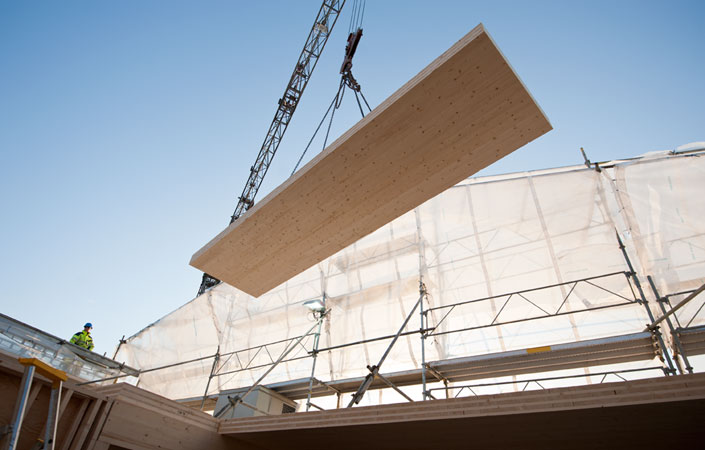
The German sawmilling group Pfeifer will invest EUR 30 million in a new CLT plant at its German location, Lauterbach. Continue reading "Pfeifer Group to build CLT plant in Lauterbach, Germany"
Germany: Wood products price index in May 2017
Since the beginning of the year German sawyers have complained about the cheap price of sawmill residues. Now the price decline is reflected in the German producer price index.
Thus in May the index posted a decline by 9% for wood chips, both compared to May 2016 as well as compared to April. Also wood pellets are 3% cheaper over the same month of last year and 5.3% compared to April.
Otherwise, the German producer price index shows a slight upward trend. In general, timber assortments are slightly more expensive than April. Only narrow boards' price has decreased.
In the wood-based materials segment, a minimum upward trend is also evident, with the exception of raw boards. Hardwood lumber also goes slightly uphill, while beech blocks are stagnant.
Year on year, the uptrend is still intact with some exceptions like chips, pellets, narrow boards and beech blocks. Significant increases compared to May 2016 were registered for wide and raw boards but also for battens.
| Producer Price Index Commercial Products (2000=100) |
May 2016 |
April 2017 |
May 2017 |
Change May '16 to '17 |
| Spruce and Fir lumber (Picea abies Karst.) | 112.0 | 115.0 | 115.7 | 3,30% |
| Lumber according to DIN 4074/S10 | 115.4 | 117.1 | 117.7 | 1,90% |
| Finger-jointed squares and beams (KVH) | 101.9 | 103.6 | 104.4 | 2,45% |
| Boards, width over 16 cm | 115.6 | 121.6 | 122.9 | 6,31% |
| Boards, width from 8 to 16 cm, size from 15 to 24 mm | 114.9 | 111.5 | 111.1 | -3,31% |
| Roof battens according to DIN 4074/S10 | 112.7 | 118.3 | 119.4 | 5,94% |
| Reserve squared timber, A/B, 10X10 - 12X12 | 111.1 | 114.1 | 114.1 | 2,70% |
| Softwood, size>6mm, planed, sanded, finger-jointed | 110.5 | 112.3 | 112.6 | 1,90% |
| Wood chips from softwood | 109.2 | 109.3 | 99.5 | -8,88% |
| Pellets and Briquets, compressed | 123.1 | 125.9 | 119.2 | -3,17% |
| Hardwood lumber | 106.7 | 107.3 | 108.9 |
2,06% |
| Beech blocks, A/B, size 50-60 mm, length 3m, damped | 104.8 | 102.3 | 102.3 | -2,39% |
| Beech frames, size 26-32 mm, length 3m, undamped | 106.9 | 107.8 | 109.3 | 2,53% |
| Particle boards, raw or sanded | 103.7 | 111.4 | 110.7 | 6,75% |
| Particle boards, laminated with decor | 114.4 | 114.8 | 114.8 | 0,35% |
| HDF panels, size > 800 kg/m³, raw/sanded | 111.8 | 111.6 | 112.5 | 0,63% |
| Laminate floorings, density > 800 kg/m³ | 109.6 | 109.8 | 109.7 | 0,09% |
Goldman Sachs to build biomass power plants worth €326 million in Japan

The Goldman Sachs Group plans to expand its business into Japan's biomass industry, through Japan Renewable Energy, a solar power company established by Goldman Sachs. Continue reading "Goldman Sachs to build biomass power plants worth €326 million in Japan"

