
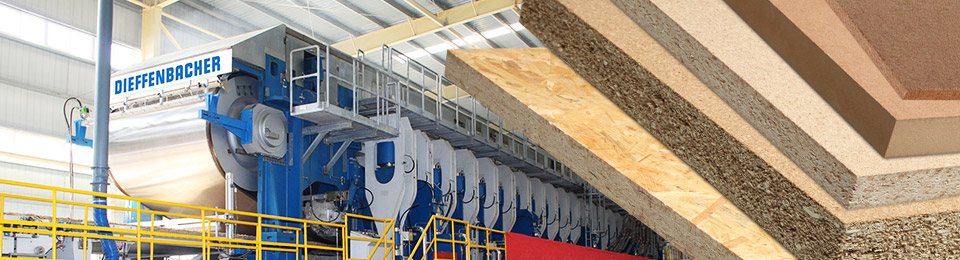
On the second day of Ligna 2017, Vietnam-based Thien Lam Dat JSC and Dieffenbacher sealed the deal for a complete MDF plant in Bac Giang, about 50 km east of Hanoi. Continue reading "Dieffenbacher delivers MDF plant to Vietnam"
Article archive
Wood-based panel production capacity in North America up by 3%
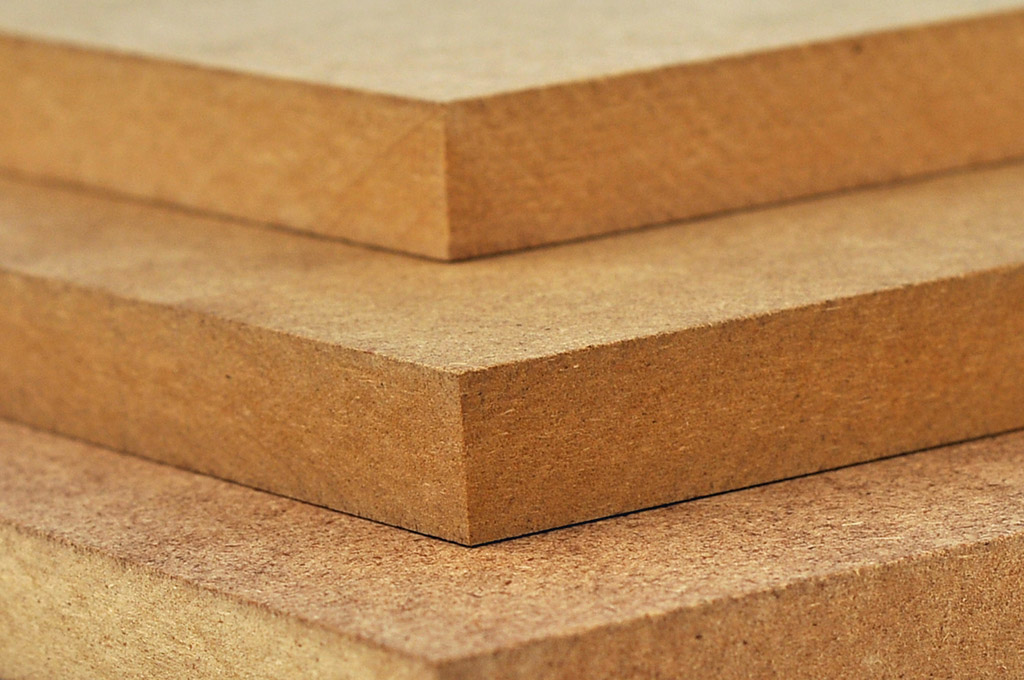
During January 2017, the production capacity of particleboard, medium density fiberboard, hardboard and engineered wood siding and trim plants in North America increased by 3.32%, as compared to the same month of 2016. Continue reading "Wood-based panel production capacity in North America up by 3%"
Plywood manufacturers in Malayasia seek for higher export cost and freight prices
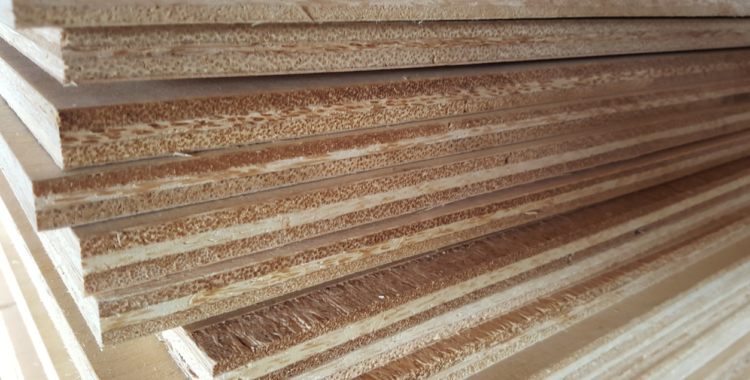
Plywood manufacturers in Malaysia have recently pleaded for higher export cost and freight (C&F) prices for their products shipment to Japan. Continue reading "Plywood manufacturers in Malayasia seek for higher export cost and freight prices"
US withdrawal from the Paris Agreement might have serious consequences for US wood pellet industry supplies to Europe

US President Donald Trump has announced that it will withdraw the US from the Paris Climate Accord. This might affect the US industrial wood pellet industry, the European biomass power utilities, and even the Canadian wood pellet industry to a very serious extent. Continue reading "US withdrawal from the Paris Agreement might have serious consequences for US wood pellet industry supplies to Europe"
US lumber prices drop at the beginning of June

The beginning of June 2017 recorded a slow start for sales of framing lumber, mainly due to the US holiday. Yet, many traders noted a pickup later in the week. Continue reading "US lumber prices drop at the beginning of June"
China: First imported timber port in West China

A signing ceremony was recently held to launch the RMB30 bllion western timber trade centre in Banan District, Chongqing City.
Chongqing is situated between the Qinghai-Tibet Plateau and the plain at the middle and lower reaches of the Yangtze River.
It has been reported that wood consumption by manufacturers in Chongqing City has grown steadily for several years. Timber consumption by wood processing enterprises in the western provinces account for around 40% of total consumption. It is anticipated that timber consumption in the western provinces could reach 20 million cubic metres by 2020.
The establishment of a new timber import port and distribution centre for imported wood products will attract wood processing enterprises from the coastal regions. It is expected that timber industry clusters will be created in the future.
Mounting competition in EU wooden furniture sector

Demand for wooden furniture in the EU is rising slowly but the signs are not very positive for external suppliers into the region, particularly from the tropics.
Although the official Eurostat annual production data has yet to be published, a review of Eurostat indices and trade data suggests that EU consumption of wooden furniture was around Euro 36.1 billion in 2016, a gain of 1% compared to 2015.
During 2016, consumption was quite stable in the largest markets including Germany, the UK, Italy and France compared to the previous year, but consumption increased slightly in Spain, Poland, Sweden and the Netherlands Continue reading "Mounting competition in EU wooden furniture sector"
Biesse: Record orders of EUR 45 million at this year’s Ligna
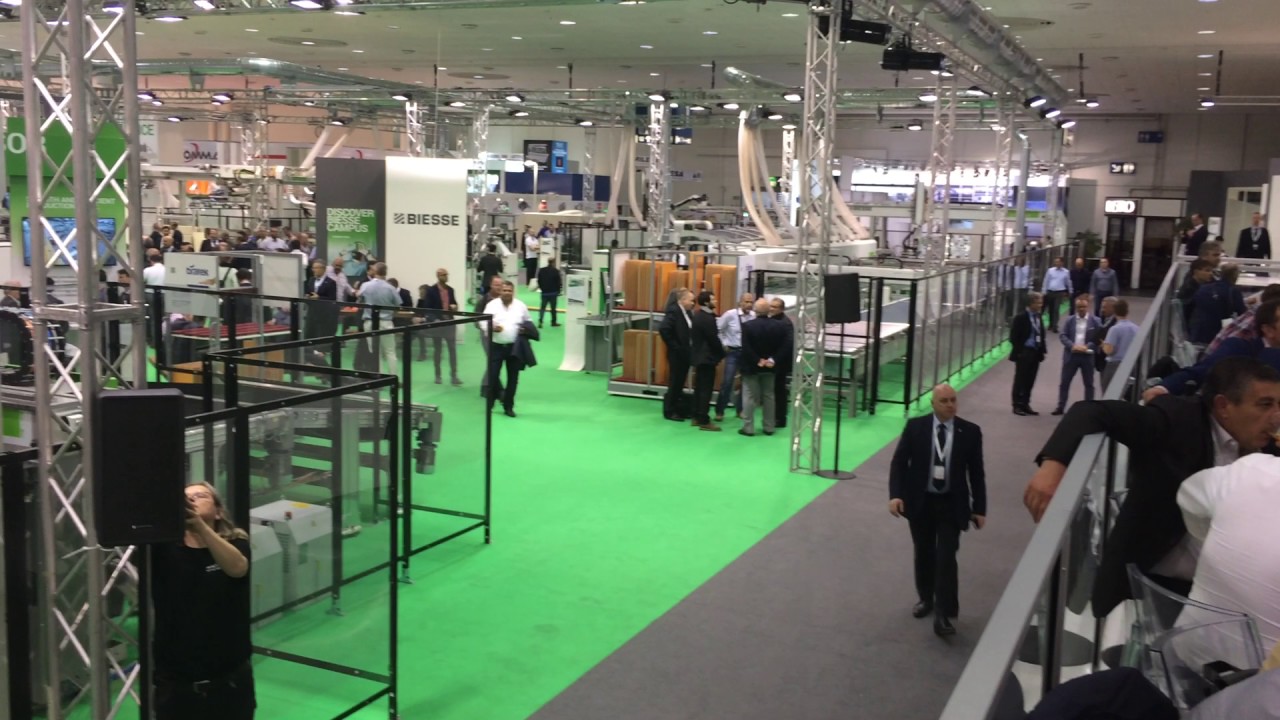
The 2017 edition of the Ligna trade show in Hanover was a the best ever for Biesse. The great number of visitors from all over the world who came to the over 5,000 square meter stand and the positive feedback received from customers, partners and the press were a significant and gratifying response.
"We were particularly proud of the innovations Biesse presented at this edition" stated Federico Broccoli, Division Director Wood/Sales & Branch Division Director. "The layout of our stand was entirely based on the 4.0 concept," Broccoli continued, "with interconnected technologies that offer customers the significant benefit of reducing production times and creating efficiency. We like to refer to these solutions as IoB - Internet of Biesse".
The interest garnered by the Machines Knowledge Center, a new platform developed in collaboration with Accenture that guarantees a series of features and services for obtaining more value from the machines, and by the renewed bSuite, a software suite made in Biesse that makes the most advanced technology accessible to anyone, are a testament to how strongly customers need products and services that can revolutionise traditional production areas.
Over the 5-day trade show a full 4,500 visitors from all around the world visited the Biesse stand, generating 45 million euros worth of incoming orders, 35% of which are 4.0 lines. Never before had the company achieved such figures at any trade show.
"We thank you all for this great success, all our employees and partners who contributed to creating the stand and, especially, all our customers, who have demonstrated that the bond between us extends beyond the quality of our technology and speaks to the great trust placed in the professionalism and reliability that the Biesse brand represents," Federico Broccoli stated in closing.
Canada launches CAD$867M package to protect softwood lumber industry from impact of US duties
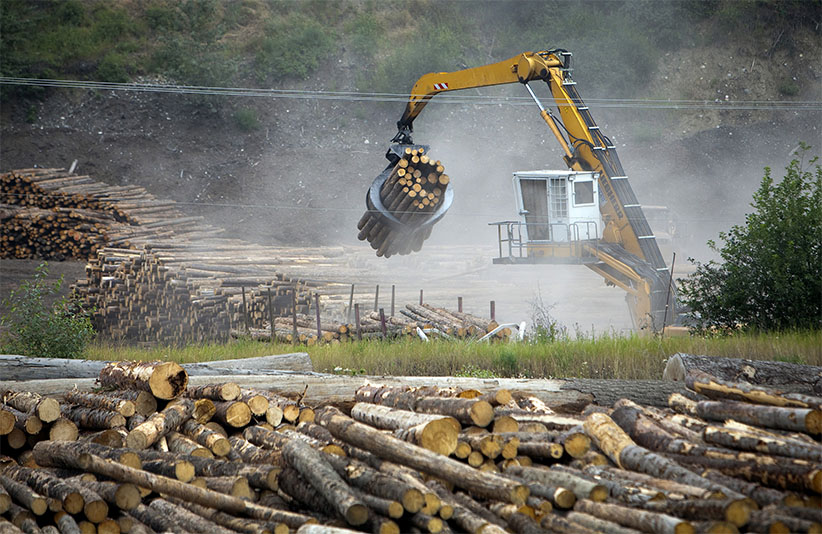
This week Jim Carr, Canada’s Minister of Natural Resources, Chrystia Freeland, Minister of Foreign Affairs, and the François-Philippe Champagne, Minister of International Trade, announced CAD$867 million in measures to support forest industry workers and communities affected by U.S. measures targeting softwood lumber.
This includes federal loans and loan guarantees to complement provincial efforts for viable Canadian companies. Export Development Canada (EDC) will make commercial financing and risk management solutions — including loans and loan guarantees — valued at up to $500 million available to assist viable forestry companies. The Business Development Bank of Canada (BDC) will make $105 million in commercial financing available to help eligible forestry companies in the short and medium term. Funding for further loan guarantees may be considered by the Government in the future to address changing market conditions.
The Government’s support also includes investments to diversify forest products and markets, to increase the industry’s resilience to these unfair trade actions and promote its long-term health.
Additional measures announced include more than CAD$260 million in new funding to:
- support efforts to expand overseas markets and promote the diversification of Canadian wood products beyond those targeted by U.S. duties on softwood lumber;
- help Indigenous communities and organizations improve the performance of their forest sector initiatives;
- provide a temporary extension of the maximum period for Work-Sharing agreements from 38 to 76 weeks in order to reduce layoffs; and
- expand supports to help affected workers upgrade their skills and transition to new opportunities.
Canadian ministers have recently travelled to the U.K., continental Europe and Asia, including China, to promote these measures and Minister Carr will travel to China with a delegation of Canadian forest industry representatives in early June to build on that success.
Latvijas Finieris: Record sales of birch plywood

Moelven merges sawmills in Central Sweden

Norwegian Moelven Industrier will merge the Central Swedish sawmills Moelven Notnäs and Moelven Ransbysågen into a single company. Continue reading "Moelven merges sawmills in Central Sweden"
Rumours of Canfor-West Fraser mega-merger spreading

The current activities at West Fraser Timber Co. Ltd. revealing that British Columbian billionaire Jim Pattison owns a significant minority stake in the company, lead to rumors that West Fraser might merge with rival Canfor Corporation. Continue reading "Rumours of Canfor-West Fraser mega-merger spreading"
Canadian sawmill industry expected to contract sharply in 2017 and 2018
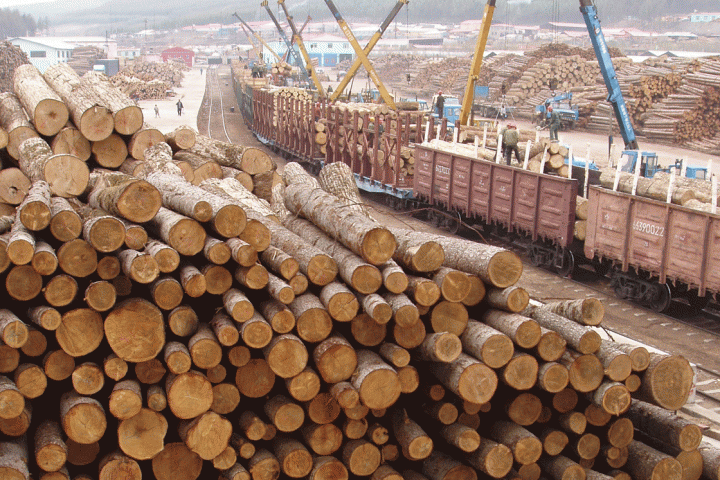
Following its strongest showing in three years, production growth in Canada’s wood products industry is expected to moderate significantly in 2017 due to the incoming U.S. trade restrictions on Canadian softwood lumber, according to The Conference Board of Canada’s Canadian Industrial Outlook: Canada’s Wood Products Manufacturing Industry.
Canada’s wood products manufacturers will see pre-tax profits shrink from $1.8 billion in 2016 to $1.4 billion this year and $1.1 billion in 2018, as the United States issues duties averaging 30 per cent on Canada’s softwood lumber.
“The Canadian wood products industry’s financial performance is forecast to deteriorate in the years ahead as import duties cut into shipments to the U.S. and act as a drag on industry growth,” said Michael Burt, Director, Industrial Trends, The Conference Board of Canada. “Revenues that would previously flow into the pockets of Canadian lumber producers will now be diverted to U.S. Customs and Border Protection in the form of cash deposits. While Canadian producers will not bear the total cost of the new duties, revenues will be impacted and revenue growth is not projected to keep pace with cost increases in the near term.”
Highlights
- Wood products manufacturers can expect to see pre-tax profits drop to $1.4 billion this year and $1.1 billion in 2018.
- Softwood lumber duties will cause production within the industry’s sawmills segment to contract in 2017.
- Non-lumber production will help the industry manage GDP growth of 0.3 per cent this year.
- Wood products manufacturers will continue to depend on the upturn in the U.S. housing market to drive production growth.
The sawmills segment, the largest contributor to the industry’s production, is forecast to see exports contract in 2017, as U.S. lumber duties result in less profitable production being scaled back. Substantial employment losses are also anticipated in this segment, with a net loss of 1,100 workers forecast for the segment in 2017.
It is only due to a healthy outlook for non-lumber production (e.g., veneer, plywood, and other millwork) that the industry will expand, as GDP manages growth of 0.3 per cent this year and 1.8 per cent in 2018.
Recent increases in lumber prices support the notion that Canadian producers will be able to pass along a portion of the cost to consumers. Lumber prices are now 20 per cent higher compared to one year ago, as markets have begun to price in the effects of lumber duties. In addition, current market conditions suggest that upward pressure on lumber prices could continue as demand conditions south of the border improve and drive production growth.
Fortunately, U.S. housing starts are expected to grow from 1.2 million in 2016 to 1.7 million by 2018. In comparison, housing starts in Canada are expected to fall from 199,000 starts to 190,000 starts over the same period. And, while U.S. lumber duties will undoubtedly drive producers to explore other export markets, the ability to target these markets competitively will remain a challenge for many producers, particularly those with long-established logistical ties to the U.S. market.
“Although the U.S. remains the dominant destination for Canadian wood products exports, the new trade restrictions could encourage a further pivot toward Asian markets, particularly China where growing demand for wood products recently pushed imports of logs and lumber by this fibre-poor country to their highest level on record,” said Burt.
US softwood lumber prices reach highest level since 2004
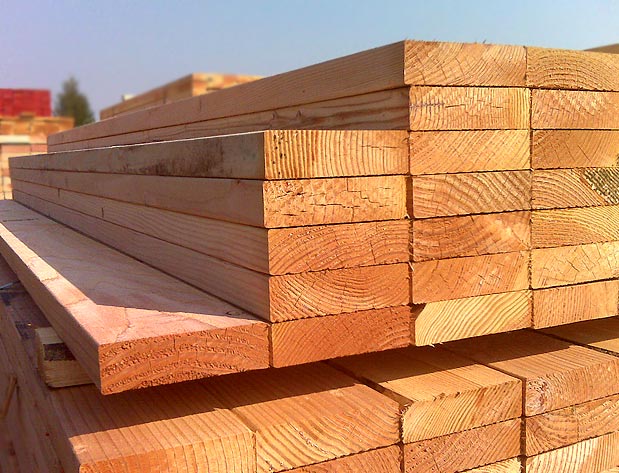
US softwood lumber prices have hit their highest levels since September 2004, having jumped 13.4 per cent year-over-year in April, and climbed 10.4 per cent between January 2017 and April 2017. Continue reading "US softwood lumber prices reach highest level since 2004"
Brazil: Latest prices for logs, sawnwood and plywood

Latest prices for Brazilian logs, sawnwood and plywood prices 1-15 May 2017. Continue reading "Brazil: Latest prices for logs, sawnwood and plywood"
Indian prices for teak, plywood and sawnwood at the beginning of May

The price list for teak, sawnwood and plywood between 1-15 May, 2017. Continue reading "Indian prices for teak, plywood and sawnwood at the beginning of May"
Schweighofer to delist two wood suppliers in Romania
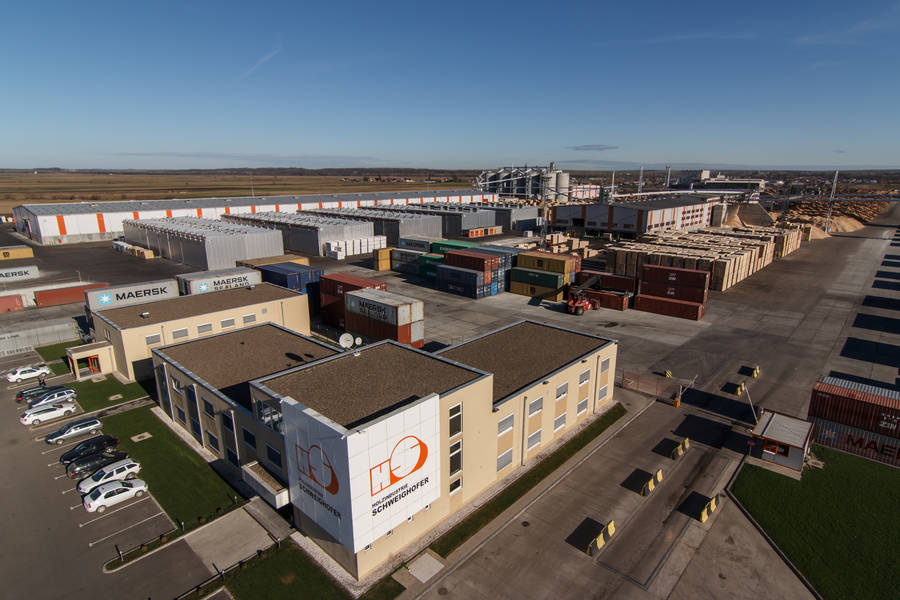
Holzindustrie Schweighofer (HS) informed about desisting of two companies from its supply chain.
According to the announcement, the company’s dedicated compliance team analyzed 33 cases of possible irregularities in wood supplies reported by media between November 2016 and April 2017 and found 2 companies clearly braking HS’ criteria.
HS does not harvest trees itself. To ensure that only logs destined for harvesting reach the company’s mills, it requires its transporters to participate in the GPS tracking system “Timflow”.
Dan Bănacu, General Manager of Holzindustrie Schweighofer Romania, commented: “In mid-January 2017 we publicly presented a comprehensive action plan for a sustainable timber industry in Romania. One of its key measures is to immediately investigate all possible irregularities that might affect our supply chain, also those that come to our attention via media reports, and to draw the consequences. Following this principle, we have taken the decision to delist two suppliers that did not comply with HS’ standards.”
The Schweighofer Group owns 14,666 hectares of forest in Romania in the areas around Hunedoara, Gorj, Valcea, Prahova, Buzau, Vrancea, Neamt and Suceava.
Homag reports 31% higher order intake
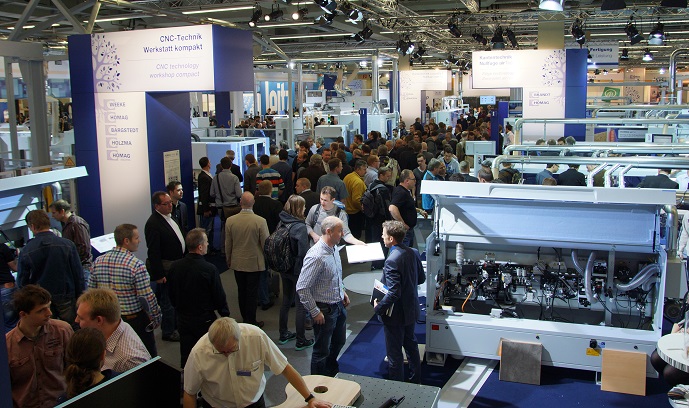
In the first quarter of 2017, the Homag Group's order intake climbed 31 percent to EUR 401 million (1Q-2016: EUR 306 million) and sales revenue increased 14 percent to EUR 296 million (1Q-2016: EUR 260 million).
The operating EBIT climbed to EUR 23.2 million (1Q-2016: EUR 16.5 million). As of March 31, 2017, the Homag Group had 6,083 employees (1Q-2016: 5,946).
"We had an extraordinarily good first quarter," CEO Pekka Paasivaara emphasizes. "In all major regions, particularly in North America, Europe and China, we were able to increase our order intake substantially."
Pekka Paasivaara also looks to the remainder of the fiscal year with optimism, and anticipates further impulses from the industry's leading trade fair Ligna, which ended on May 26, 2017 in Hanover. "We are confident that our innovations are going to resonate extremely well with customers there. In addition, we are presenting tapio a powerful IoT-platform for the wood processing sector at LIGNA. This signals our entry to the second stage of Industry 4.0. And we are not stopping there: our aim is to lead the entire market into the digital future. Due to the growing individualization, the complexity in the production process and the corresponding data volumes of our customers are constantly increasing. Therefore, they want to work with the HOMAG Group as a partner, because we can master this complexity and deliver everything from a single source."
Strong demand for timber construction market; Södra’s sales rise
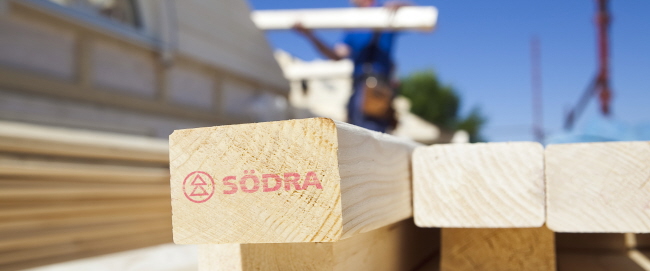
The demand for timber remains strong in the Swedish construction market. Södra’s sales to the Swedish building trade have risen for the third consecutive year. Continue reading "Strong demand for timber construction market; Södra’s sales rise"
This year's Interzum was the best in history

Interzum ended on 19 May 2017 with record results. A total of approximately 69,000 visitors from 152 countries attended the world's largest trade fair for furniture production and interior construction between 16 and 19 May 2017.
"It was the best Interzum ever yet," said Katharina C. Hamma, Chief Operating Officer of Koelnmesse GmbH. "With this year's Interzum, we offered the industry a unique event. Interzum has reached a new level with the rises in visitor figures, the growth in exhibitor numbers and the increase in floor space combined with measures to enhance the event's quality," said Ms. Hamma. Some 1,732 exhibitors (2015: 1,537) from 60 countries presented their innovations at Interzum 2017. Foreign exhibitors accounted for 79 per cent of the total.
Interzum's international reach is not only increasing amongst exhibitors. The trade fair also attracted growing numbers of international visitors. The proportion of foreign visitors rose to around 74 per cent (2015: 71 per cent). Overall, more than 51,000 visitors came from outside Germany. Within Europe, increases in visitor figures were recorded in particular from the Netherlands (up 26 per cent), Spain (up 25 per cent), Italy (up 20 per cent) and Eastern Europe (up 46 per cent). Visitor numbers from Poland and the United Kingdom also rose. Considerable increases were seen in visitors from Asia (up 53 per cent), the Middle East (up 25 per cent), Africa (up 17 per cent), Australia/Oceania (up 31 per cent), North America (up 26 per cent) and India (up 41 per cent).
This year Interzum addressed some very exciting themes and ideas for trade visitors. It demonstrated that outstanding innovations in furniture production and interior construction are constantly being developed. New materials, technologies and design approaches were just some of the key areas that the trade fair focused on. The products on display ranged from fittings, surfaces and decors to textiles, glass and lighting all the way through to innovative materials.
The wide-ranging special events at the trade fair examined global trends such as sustainability, digitalization and mobility.
The next Interzum will take place from 21 - 24 May 2019 in Cologne, Germany.

