Article archive

Global softwood sawmills register strong earnings

The US South was the highest margin sawmill region in North America – a place it has held since 2008 – as well as the top global earner again in 2016 and for the second quarter of 2017.

All regions covered in the global sawmilling industry in 2016 and in 2017 showed good results; the average global earnings (EBITDA) at “average” sawmills actually dipped slightly from US$21/m3 (US$34/Mbf – nominal) in 2014 to US$18/m3 (US$29/Mbf) in 2016 but improved to US$24/m3 (US$39/Mbf) by 2017-Q2.

For best or “top-quartile” mills, and depending on the region, earnings results were typically about double that of “average” sawmills in each country. The fortunes of most regions improved significantly in 2017-Q2 from higher global lumber prices. The North American economy has been stable, boosting lumber demand and prices and the European economy improved in 2016 and especially in 2017 as many mills (and countries) had their best results in five years, Wood Markets' report shows.

Out of 32 countries and/or regions surveyed, “average” U.S. South mills had highest earnings results in 2016 with a 25% EBITDA and “top-quartile” mills earnings were off the scale.

As has been the case since 2008,” explained Russ Taylor, Managing Director of FEA-Canada and the principal author of the report, “the major operating advantage for U.S. South mills continues to be the region’s low log-cost structure. With a surplus of timber and not enough sawmills operating in the aftermath of the housing market collapse, delivered log prices remain among the lowest in the world with margins being the highest in the world.

“Average” mills in the U.S. West Coast had earnings that below those in Western Canada in 2016, mainly due to tight log supplies and strong log export markets in Asia. EBITDA earnings at “average” mills in Canada were strong, partly as a result improving prices and no U.S. import duties in place for all of 2016. Canada’s earnings as a whole were above average on a global scale and also ahead of Europe and Russia (mills with logs at cost) but lagged the U.S. weighted average The Canadian average earnings comprised a wide range of regional results, with higher earnings in the west versus half of those seen in the east.

The Southern Hemisphere regions surveyed (Australia, New Zealand, Chile, Brazil and South Africa) achieved global average EBITDA earnings of 6% at “average” sawmills, lower than in 2014. Three Southern Hemisphere countries achieved earnings results below the region’s average, Brazil and South Africa were above the average.

European regions finally had improving markets starting in 2016, and especially in 2017. Overall EBITDA earnings for “average” European sawmills results moved higher from a small gain in 2014 to US$7/m3 (US$11/Mbf) in 2016 and higher in 2017-Q2. “Average” mills in Sweden and the Czech Republic achieved some of the highest earnings in Europe in 2016 partly from favourable log and operating costs. In the global survey, only Finland in 2016 and Finland and Siberia (with logs at market price) in 2017-Q2 recorded losses at “average” mills.

Following the devaluation of the ruble, Russia had some of the best earnings in the world in 2014 but these slipped in 2016 and further in 2017-Q2. Russian mills that had to purchase logs on the open market achieved much reduced earnings, mainly due to rising log prices.

The introduction of import duties in 2017 on Canadian lumber to the U.S. significantly reduced sawmill margins and has stimulated large increases of lumber exports to the U.S. from Europe, Russia and the Southern Hemisphere.

What is most interesting,” commented Russell Taylor, “is that net margin achieved by mills in Sweden (delivered to the U.S. Gulf region) is now higher than all calculated margins from Canadian top-quartile mills. With import duties on Canadian lumber, top-quartile sawmills in Sweden now have the lowest delivered lumber costs aside from the various U.S. regions.” The massive spike in U.S. imports of lumber from Sweden and Germany is, thus, no coincidence.

New Zealand: Foresters benefit from high log prices

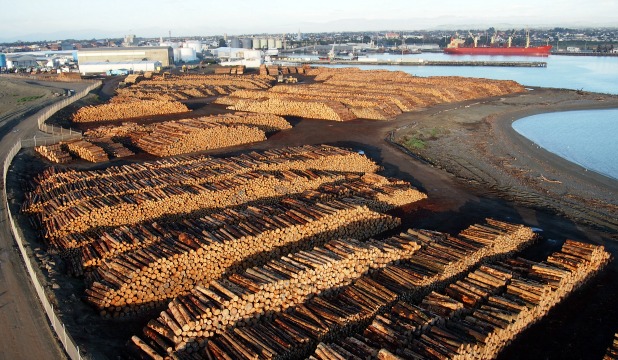
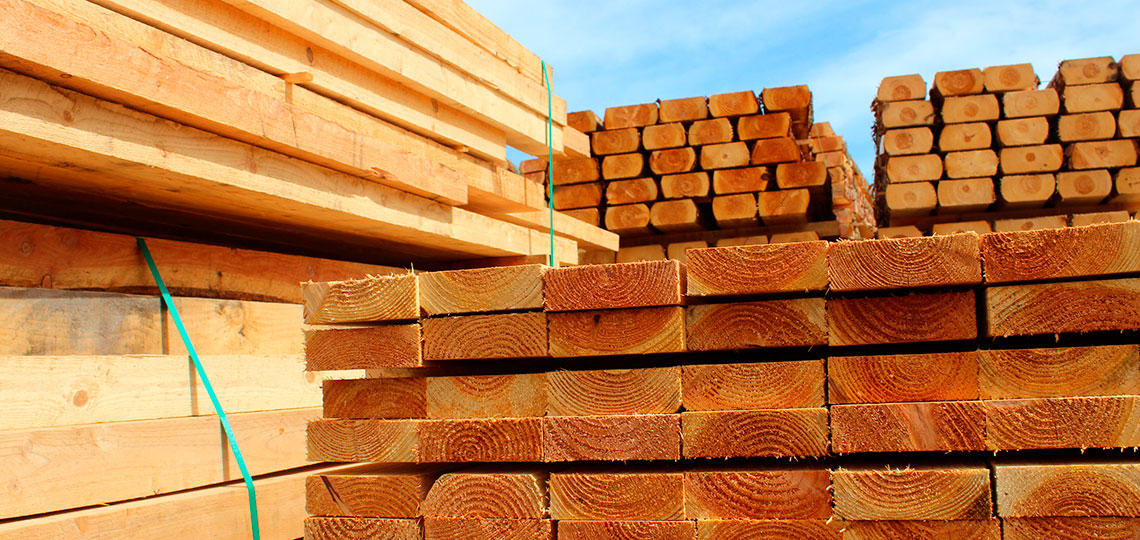
Increased demand for New Zealand logs coming from China leads the foresters to take advantage of the strong log prices. Apparently, the soil dried out and foresters may now get machinery on to land.
"China is the driver for these strong selling prices. And leading to that are good prices in China for New Zealand logs, good shipping rates and a lower exchange rate," Canterbury forestry consultant Allan Laurie said.
Laurie added that a key indicator was the price for A-grade logs, which were 30 centimetres or more at the small end. "The price for them is currently US$140 an export cubic metre. That's a good price and it is then translated to New Zealand dollars on an 'at wharf gate' basis," he explained, adding that domestic consumption was also very strong.
Stuff.co reported that about 85% of the logs volume harvested in New Zealand plantation forests were radiata pine.
"While the main centres of Auckland and Christchurch are off an apparent boil in terms of new house starts, other second tier cities are experiencing significant increases," said Laurie, adding that pine set the price for douglas fir, while other species harvested included cypress and eucalyptus. Also, the demand from India, which is now only 1.7 million cubic metres a year, was expected to grow to about three million cubic metres by 2020.
China's demand has reached 800,000 cubic metres each month and log supplies to China from New Zealand, Australia, the Pacific Northwest and Russia had been in step with consumption and that had resulted in a stable inventory.
The Chinese gross domestic product grew by 6.9 per cer cent for the second quarter, while the domestic prices for timber in China had made a turnaround and New Zealand log supply was dominant for softwood, mainly pine. This is what drives the high log prices in New Zealand.
Also, because of India's major economic reforms, along with the GST at 18%, the market has subdued. But India sees New Zealand as an important supplier for the future.
As Stuff.co reported, the local and Chinese export demand was helping New Zealand's larger forest owners and farm foresters take advantage of the good log prices to harvest what they could. Labour shortages, port congestion and persistent rain in winter and early spring had raised doubts that log production would ramp up.
 

Stable lumber market in the US through the end of November

The framing lumber market in the US reported mixed activity during last week, when the random lengths framing lumber composite price was stable at $438.
Buyers of Canadian S-P-F pulled back, with traders taking note of the large discount in futures to cash. While some Western S-P-F producers rode lengthy order files, others opened to counters on key items, including #2&Btr 2x4.
Meanwhile, activity in Southern Pine was steady, with upward pressure on prices of the narrows. Buyers sought coverage with SYP in lieu of higher-cost S-P-F. Southern Pine MSR sustained its recent strength.

Week
Nov 22
Week
Nov 17
Year Ago
2016
Random Lengths Framing Lumber Composite Price* $438 $438 $349
KD Western S-P-F #2&Btr 2x4 R/L Mill Price 489 494 310
KD Eastern S-P-F #1&2 2x4 R/L, delivered Great Lakes 555 561 395
Green Douglas Fir Std&Btr 2x4 R/L (Portland) 458 455 330
Southern Pine (Westside) #2 2x4 R/L 438 428 431
KD Coast Hem-Fir #2&Btr 2x4 R/L 490 490 332
Ponderosa Pine (Inland) #2&Btr 1x12 R/L 730 730 625
* Weighted average of 15 key items

Random Lengths Panel Market Report
Structural panel prices fell unevenly amid quiet sales. Prices of OSB finished lower, but the rate of descent eased in some markets.
This trend was most apparent in the West, where deep cuts were no longer available from mills. Downward price pressure persisted in Southern Pine sheathing. Distributors and dealers replenished inventories sparingly.
Mill quotes were widely mixed. Western Fir plywood sales slowed compared to late last week. Some traders noted momentum carried over early, while others found the pace quiet from the outset.

(f.o.b. mill prices) Week
Nov 22
Week
Nov 17
Year Ago
2016
Random Lengths Structural Panel Composite Price* $451 $466 $363
Southern (west-east) 15/32-inch 3-ply rated sheathing plywood 415-485 435-495 348-380
Southern (west-east) 15/32-inch 4-ply rated sheathing plywood 420-490 440-500 350-385
Western 1/2-inch 4-ply rated sheathing plywood 447 452 345
North Central 7/16-inch Oriented Strand Board 355 380 282
*Weighted average of 11 key items

German parquet production has declined during 1H/2017

The German parquet manufacturers recorded a decline in production during the first half of 2017.

According to the Federal Statistical Office, the production volume of the German parquet industry fell by 7.2% from January to June 2017, as compared to the same period of the previous year, down to 3.86 million square meters.

The multi-layer parquet, in particular, contributed to the negative overall result, with a minus of 7.6%, to 3.58 million square meters. The production volumes of strip parquet and mosaic parquet also fell by 4.8% to 115,000 square meters or by 0.1% to 171,000 square meters. The production value of the German parquet industry fell slightly in the same period by minus 3.4% to 100 million euros.

Michael Schmid,  Chairman of the German Parquet Industry Association (VDP), sees a reason for this minus in the undoubtedly high popularity of reproductive products among the end users: "It should look like wood, feel like wood, but it does not necessarily have to be wood - this is unfortunately the sad reality for many consumers".

Considering this reason, the industry has to continue to pursue educational work, as 'parquet' may only be a wooden floor with a real wood wear layer of at least 2.5 millimeters.

The economic environment of the parquet industry is likely to develop less positively in the current year than in previous years. After a significant increase last year, the number of building permits in Germany fell by 6.3% from January to August 2017.

This development affected both new construction, with a decrease of 3.7% but also the modernization segment with a fall of 21.7%. At the moment, positive impulses are registered in the construction of multi-family houses. The construction of commercial property as an important driver for the development of the parquet industry is also currently sending negative impulses - the number of approved new buildings has decreased slightly by 4.2% and the number of modernization measures by 1.6%.

Holzindustrie Schweighofer might build a sawmill in Belarus

Holzindustrie Schweighofer might start the construction of a wood processing plant in Grodno Oblast, Belarus.

The Free Economic Zone Grodnoinvest has recently signed a protocol of intent with Austria's SPB Industrieinvest GmbH and the agreement is designed to boost the investment activity in the free economic zone, Belarus News reports.

The company will consider the possibility of registering as a resident company of the FEZ Grodnoinvest in 2018 to set up a wood processing plant in Grodno Oblast,” the FEZ administration said.

The site of the construction is still unknown, but the plant will cover the full processing cycle and produce all kinds of lumber and related goods. The products will primarily be bound for export.

SPB Industrieinvest GmbH represents the interests of the Austrian wood processing company Schweighofer, which has more than 350 years of experience. Schweighofer operates six wood processing plants across Europe, with a total output of over 4 million cubic meters of wood a year.

Poland receives final warning over logging in the Białowieża Forest

The European Court of Justice has warned Poland that if the country doesn't immediately cease its active forest management operations in the Białowieża Forest, it will face penalties of at least €100,000 per day.

Back in 2007, the Natura 2000 Puszcza Białowieska site was designated by the EU Commission as a site of ‘Community importance’ due to the presence of natural habitats
and the habitats of certain animal and bird species. That site is also a special protection area for
birds under the Birds Directive.

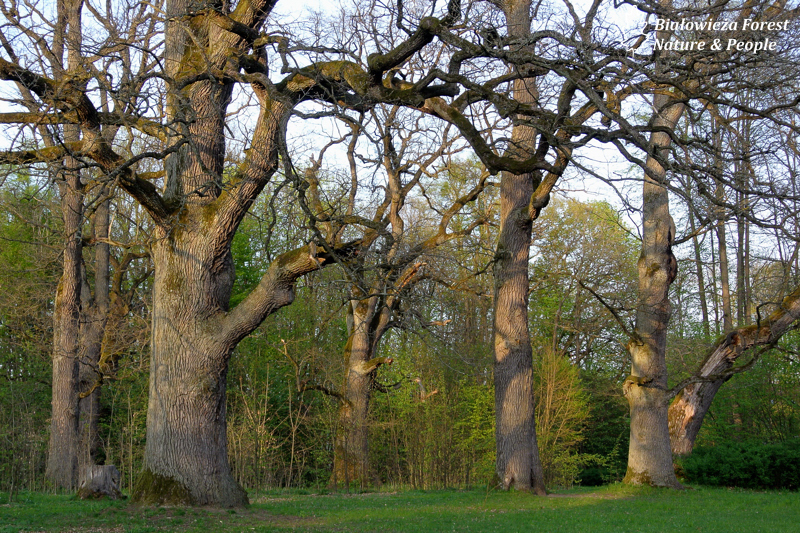
Moreover, the Białowieża Forest is one of the best preserved natural forests in Europe, characterized by large quantities of dead wood and ancient trees, some of which are centuries old.

In 2016, as a response to an outbreak of Spruce Bark Beetle, the Polish Minister for the Environment
authorized an increase in logging in the Forest District of Białowieża. Thus, 34 000 hectares of dead trees and trees affected by the beetle infestation, were removed from the total surface area of 63 147 hectares. Only that the Commission, on 20 July 2017, brought an action against Poland for failure to fulfill its obligations under the Habitats Directive and the Birds Directive because of the negative impact on the maintenance of favourable conservation conditions for natural habitats

On Monday, 20th of November, it ruled that the ban should stand until a final ruling on the substance of the case is delivered, which is expected at some point next year. However, it added that active forest management operations that are strictly necessary and proportionate in order to ensure public safety should be allowed to continue.

Poland also has to send the commission details of all measures that it has adopted in order to comply with the order within 15 days.

Now, the Commission argues that, subsequent to Poland being notified of the order of the Vice-President of the Court of 27 July 2017 requiring that certain operations be temporarily suspended, those operations have continued, in breach of the interim measures imposed.

Poland’s environmental ministry did not immediately respond to a request for comment sent after working hours in Warsaw.

Now, the ECJ is expected to rule on the substance of the case next year. The decision on interim measures does not prejudice the outcome of the main proceedings.

Quick overview of this year’s International Hardwood Conference

Venice hosted the most important hardwood lumber conference in the world, on the 16th of November. More than 150 people from the industry participated and discussed about the production, trade and current market trends of hardwoods.

Federlegno Arredo's staff took care of the event's organization. Its team was represented by Dr. Calderon Calcaterra, Chairman of the Fedecomlegno Group and CEO of Legnonord, supported by the main sponsor Florian Legno and Elvio Florian, who made the honors.

Sampsa Auvinen, President of the European Organisation of the Sawmill Industry (EOS) and Norvik's CEO, together with Andreas von Möller, Director of ETTF and Jacob Jürgensen, opened the event together with Dr. Calcaterra.

Rupert Oliver, a consultant for Forest Industries Intelligence, has brought to the audience's attention the trends of imports-exports in the world, pointing out that since 2004, Europe has gone from being a region of hardwood imports to a region of balance between imports and exports.

Market trends on sawn, planed, plywood and semi-finished wood products have brought interesting data on China's role in the world's economy. Europe is self-sufficient in hardwood needs but it is forced to settle market shares in the world's hardwood trade with other nations such as China, countries of Southeast Asia and the USA.

Nicolae Tucunel, together with Andreas von Möller examined the European trade flows of production and consumption under the economic and political aspects of each European country: Europe, despite the much lower consumption than in 2007, is growing steady but finds "an obstacle exports to Asia that are now unsustainable for Romania, France, Germany, Croatia and other countries that want to restrict exports of logs."

Michael Snow, AHEC Director in the United States, said that the US doesn't fall behind when it comes to domestic industrial production of sawnwood, which has started to produce more timber for packaging since the domestic consumption has collapsed, even though the construction rate is rising.

Building houses in the US is now insignificant for wood trading, as the true reference is the trade balance with the level of exports as a "price driver". Above all, the US is now dependent on China's market, which alone has surpassed the rest of the world in imports from the US. China is the biggest nation worldwide and is experiencing a gigantic consumption phase, as compared to the rest of the world.

Pierre Marie Desclos, a highly appreciated consultant in Italy and the world, has shown a social and demographic vision that is illuminating and at the same time disturbing: over the last 50 years, the world population has grown 100% and in 2050 it will reach 9 billions, with a reduction in forest resources and an entry into the world market of the growing African population and mass production nations such as India.

David Venables of AHEC has exposed his remarkable architecture experiences with the works of "Smile" and "Endless Stair".

The closure of the event was made by Italian Maurizio Riva, which enchanted with his passion for wood furniture and attention to detail.

Titan Group completes USD 3.5 million investment in Russia

Group of companies “Titan” informed that Dmitrievsky LPH, located in the Ustyansk area, Arkhangelsk region of Russia, had invested into modernization more than RUB 210 million in 2014-2017 (around USD 3.5 million at current rate).

According to the announcement, the subsidiary of “Titan” completely replaced logging, forwarding and road machinery and upgraded wood dispatch point.

Titan Group’s companies harvest over two and a half million cubic meters of round timber per year. Together with Dmitrievsky LPH, the Harvesting business includes eight logging companies of the Titan Group: Pinezhyeles, Ust-Pokshenga LPH, Karpogoryles, Velsk LPP, Shalakushales, Syamzha LPH, White Sea Timber Floating Company.

Earlier Titan Group approved its investment program in Russia.

Titan is a diversified holding, which unites around 20 companies, located in Arkhangelsk and other regions of Russia. It is mostly focused on wood production and processing. Titan is a general contractor for timber supplies to Arkhangelsk Pulp and Paper Mill.

Wood pellets production and demand grows in Asia; prices are rising

Increases in Vietnam’s wood pellet spot prices accelerated during the third quarter of 2017, boosted by strengthening Japanese and South Korean utility demand, against a backdrop of tightening supply.
The supply-demand balance is expected to remain tight in the final quarter of the year and beyond, with South Korea’s total wood pellet demand expected to exceed 3mn t/yr in 2018, well up from 1.72mn t in 2016, according to forecasts from market participants, Argus Media reported.
Supply concerns helped to lift the fob Vietnam wood pellet price. The price hit a new 2017 high of $112.90/t fob Vietnam at the end of October, compared with $95.83/t at the start of this year.
Vietnamese wood pellets continued to dominate South Korea’s imports in July-September with a 63pc share, or 475,600t, of total imports of 753,867t. During the first three quarters of this year, South Korea recorded total wood pellet imports of 1.79mn ton. Imports so far this year have already surpassed full-year 2016 imports of 1.72mn t and are projected to reach around 2.2mn-2.3mn t, according to traders’ estimates.
According to Argus Media, Japan imported much less wood pellets, but the level is increasing. Japan imported 28,400t of wood pellets from Vietnam in the third quarter this year, or over 25pc of aggregate imports, while Canada remained Japan’s biggest supplier at 76,039t. But Japan’s third-quarter imports from Vietnam were almost 75pc higher on the preceding quarter and 3pc up on the year.
Japan logged total wood pellet imports of 313,704t in January-September. Traders estimate that Japan’s total 2017 imports will reach around 500,000t, up from 346,788t in 2016.
Vietnam has the largest wood pellet production capacity in Asia and can produce up to around 1.3mn-1.4mn t/yr. But factory operating capacity is hugely dependent on raw material availability, which is influenced by seasonal weather conditions.

Japan’s sawnwood exports grew by 60% this year

Japan's lumber exports have significantly increased during the last two years. For the first eight months of this year, the exported volume amounted to 84,370 cbms, 62.4% more than the same period last year. The total volume of 2017 is predicted to reach 100,000 cbms.

This represents a very important growth, as the total lumber exports volumes in 2008 and 2009 amounted to 40,000 m3 and 60,000 m3 in 2010 and 2015. In 2016, as the Chinese economy slowed down, the log exports also slowed down, but the lumber export held a steady growth.

China is the leading buyer of lumber, which is used as lamina for laminated lumber and interior finishing, along with sheathing for housing. The average price is 34,000 yen per m3, which is not high, but makes steady business.

Another important move can be noticed in the lumber exports to the US. This year, the export volumes reached 7,338m3, four times higher than last year. The average price is nearly 50,000 yen per m3.

Lumber exports for Taiwan P.o.C and Vietnam was also 30- 40% more than 2016, while the lumber exports to the Philippines has been very large. Log export volumes for the mentioned destinations for the first eight months was 677,582 m3.

Sawmills in the US Northwest struggle to build log inventories for the winter season

Sawmills and pulpmills in the US Northwest have been struggling to build log inventories for the winter season because of the unusually long fire season this year.

Increased competition for small-diameter logs in the four states of the US Pacific Northwest has resulted in a higher share of logs being consumed by sawmills, thus leaving many pulpmills with low log inventory levels going into the 4Q/17, reports the North American Wood Fiber Review.

Overshadowed by BC’s unprecedented wildfire season, the US states of Washington, Oregon, Idaho, and Montana also experienced a significant and disruptive wildfire year.

By early September, almost two million acres of forest and rangeland had burned in the US Northwest. Harvest operations across the four states have been hampered by restrictions on operating hours, disruptions in transportation, and loggers diverted to fighting wildfires.

In Montana, several sawmills had to close operations intermittently in the 3Q/17 due to the proximity of wildfires. Full harvest operations resumed after late September rains, though whether there was sufficient time to replenish sawlog and pulplog inventories before winter conditions set in remains the key question for many log procurement managers this fall.

Unlike BC and its large provincially-owned commercial timber base, the loss of burnt timber on US federal forests has had little impact on the availability of timber with the exception being Montana, where regular timber sales from federal lands have proven crucial to selected sawmills. In general, however, the US Forest Service timber sale program provides minimal sawlog or pulplog volumes to the forest industry in Western US.

With lower harvest levels in the Northwest due to wildfire-risk constraints, local sawmills expanded their procurement into small-diameter chip-n-saw grades and higher quality pulplogs that typically would be used by the region’s pulpmills. This less valuable log source, resulting in lower lumber yields, has still been profitable for many sawmills thanks to the high prices for softwood lumber during 2017.

The increased competition for small-diameter logs has resulted in a dwindling supply of traditional pulplogs normally available for pulpmills and independent chipping operators, with pulplog inventories in August reaching their lowest level since the 2Q/14.

The low level of pulplogs in the region’s pulp industry this late in the season is a major concern among wood fiber managers in the US Northwest as they seek to build adequate inventory levels of logs for the winter season when residual chip supply from the lumber industry typically declines.

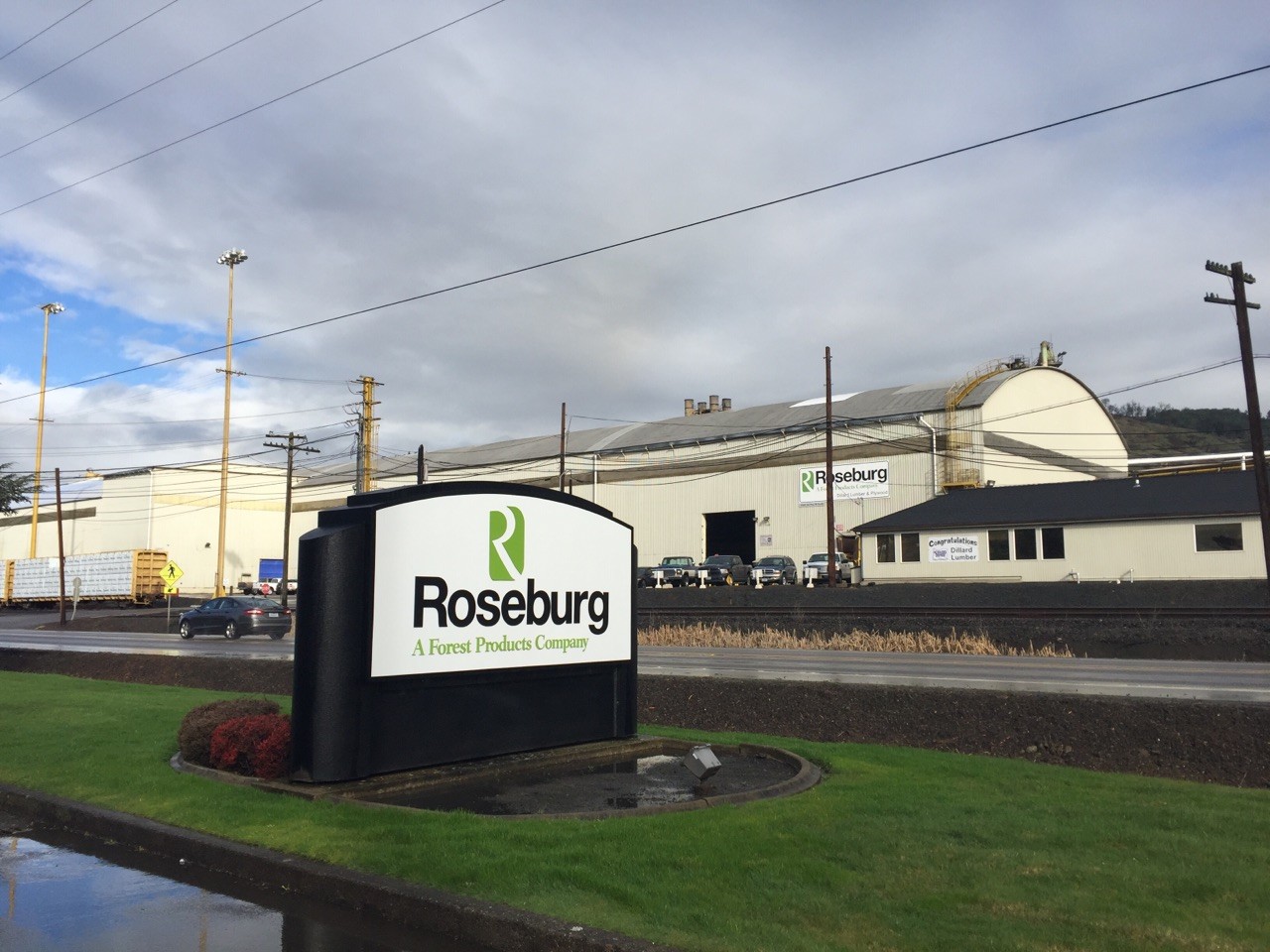
Roseburg announces sale of its timberlands in California

Roseburg Resources Co. has announced an agreement to sell its California timberlands to a timberland investment vehicle managed by New Forests.

The transaction includes 170,000 acres in northern California, United States (U.S.), largely located in the Siskiyou and Shasta counties.

Roseburg’s California timberlands are investment-grade with a long history of professional management.

However, Roseburg Forest Products will retain ownership of its veneer facility located in Weed, California, U.S.

The sale of our California timberlands would not be possible without the contributions of our California resource team,” Scott Folk, Roseburg’s Senior Vice President of Resources, said. “Thanks to the team’s work, these lands will remain working forest timberlands under the new management of New Forests, a leading timberland investment organization focused on long-term growth.

Founded in 2005, New Forests manages more than 2 million acres of land and forests around the world, with assets under management of more than US$3 billion. Headquartered in Sydney, Australia, New Forests has offices in San Francisco, Singapore and New Zealand. The sale is expected to close in early 2018.

The sale of this property allows Roseburg to pursue strategic growth opportunities in regions with stable markets and strong demand for timber,” Roseburg CEO Grady Mulbery said. “This transaction is part of a larger effort to expand Roseburg’s national footprint, which now includes our engineered wood plant planned for Chester, South Carolina, and our recent purchase of timberland in Virginia and North Carolina, U.S.

UK: Currency devaluation and Brexit likely to negatively impact softwood imports in 2018

A slowdown in the softwood imports in the UK is forecast for 2018. Growth is expected to slump to just 0.5% in 2017-2018.

According to the Timber Trade Federation (TTF), in 2016-2017, growth in softwood imports grew by 3.7%, from 6,219,000m3 to 6,451,000m3, and annual growth in the sector has remained at a similar level since 2012.

The TTF added that the expected contraction was due to pricing issues caused by the depreciation in Sterling following last year’s referendum on the UK’s membership of the EU.

Timber was a vital component of the majority of projects, particularly housebuilding, residential development and home refurbishment and improvement because timber imports were a good indicator of growth in wider construction

If the timber market contracts, this will cause the rest of the construction industry to contract too, weakening its ability to respond to growing housing demand,” the reports said.

Logging ban in Chinese forests to boom demand for foreign logs

A ban on commercial logging natural forests in China will likely improve the country's demand for foreign logs. Even though the country will need to import more logs, it’s unclear how motivated Chinese buyers will be to compete with domestic sawmills, which are currently offering high prices.

The prohibition against commercial timber harvests in natural forests — as opposed to plantations — was enacted by China’s government to counter decades of over-cutting, contributing to a 5 percent drop in its log production in 2017.

China’s log production has fallen from more than 80 million cubic meters to less than 60 million cubic meters since 2013, and the logging ban in natural forests is expected to cause shortages for another three to five years.

There’s definitely increased demand from China. Whether U.S. suppliers want to fill that demand depends on their alternatives,” said Kent Wheiler, director of the Center for International Trade in Forest Products at the University of Washington.

Ever since excessive logging in the headwaters of the Yellow and Yangtze rivers was blamed for massive flooding during the 1990s, China’s government has moderated its harvest levels. The natural forest logging ban is the latest example of China’s growing concern about the environment, which the government has been working to improve to avoid upsetting the country’s populace, he said.

New Zealand controls the largest share of China’s market for imported logs at 36 percent, followed by Russia with 24 percent and the U.S. with 13 percent. Also, the strong U.S. dollar and healthy domestic timber market may prompt Chinese buyers to seek logs from Australia and New Zealand.

The log market in the US has greatly improved as demand for lumber has strengthened. Now, the price per thousand board feet of framing lumber now averages about $440, up from less than $200 during the depths of the financial crisis in 2009, according to the Random Lengths timber industry information service.

Even so, China’s demand for logs helps establish a price floor for US timber producers, since the country provides an export outlet even if the domestic market softens, said Paul Owen, president of Vanport International, which specializes in log exports.

US architects and designers lack knowledge on endangered species

Many US architects and designers have limited knowledge of endangered and threatened wood species and often do not know which alternative species or materials to use. Even if they do know that a species is endangered, 40% would still chose the wood if a client requested it.

These are the findings of a national survey of architects and designers that was commissioned by laminate manufacturer Wilsonart. The survey results were presented at an event for architects in New York.

The survey also found that almost none of the survey respondents could correctly identify most endangered wood species from a list provided but 70% agreed that using responsibly sourced wood is a priority.

Potential legal liabilities under Lacey Act are not well understood by architects and designers.

Producers and suppliers of tropical wood products have a significant opportunity and challenge to educate designers in the US about tropical species, sustainable tropical forest management and legal procurement.

The survey respondents were designers, architects and specifiers who work on a wide range of building projects, including residential, office and hospitality.

UK: Pressure mounts for imports of certified timber

The pressure on UK importers to purchase only certified material is mounting. Many of the UK’s largest timber distributors are signatories to the WWF Forest Campaign which commits them to sourcing 100% certified material by no later than 2020.

Significant changes are already underway in UK imports of temperate hardwoods. The recent decline in UK imports from the US, of which around 55% comprises oak, was initially currency driven. The slide in UK trade in American hardwood began immediately after the Brexit vote in June 2016 when the pound plunged in value against the dollar.

Since then, UK importers have grown accustomed to the greater uniformity and more appropriate moisture content of European oak (which is slightly higher and better suits UK ambient temperatures) compared to US oak and have been reluctant to switch back even as prices for European oak have risen. This is particularly true of thicker sizes of oak, a market which is now heavily dominated by the European variety.

The decline in UK sawn hardwood imports from the US this year is also partly due to deteriorating supply of American ash, now seriously impacted by the emerald ash borer infestation.

This is devastating ash stocks in the US and has also encouraged the EU to impose stringent phytosanitary controls on US ash imports. US suppliers are diverting most of the ash that is available to markets with less stringent phytosanitary rules, particularly China where there is strong demand for the stocks available.

On the other hand, UK imports of American tulipwood have been consistent, with strong demand for this species for lighter interior joinery and furniture applications.

Estonia is not traditionally known as a supplier of higher grade hardwood, and much UK import from the Baltic state comprises lower grade boreal species such as aspen and alder used for pallets and other industrial applications.

However, Estonia is also now heavily engaged in thermal modification of imported hardwoods, notably ash from other parts of Europe and the US, to supply a product which competes directly with tropical hardwood in external applications like decking, cladding and window frames.

The recent decline in UK imports from Estonia, while tropical imports have been robust, suggests that tropical hardwood continues to resist this market pressure from a potential substitute, at least in certain applications in the UK.

Slower UK imports of hardwoods from Italy are primarily due to Croatia’s ban on exports of oak logs and lumber over 25% moisture content. Italian companies were heavily engaged in the Croatian oak trade, purchasing logs and lumber for further processing in Italy for shipment to the rest of Europe.

However, in June 2017, the Croatian government implemented the two-year ban on unprocessed oak exports, ostensibly to stop spread of oak lace beetle – although some traders suspect a tactic to underpin greater investment in wood processing in Croatia.

Italian mills are now setting up plants in Croatia to secure supplies, but lack of kilning capacity is still causing bottlenecks. European oak prices have risen accordingly, with another 10% increase anticipated for the new cutting season.

Excellent period for the Italian woodworking technology

The Italian woodworking technology has registered very good results for the second quarter of 2017, along with significant growth rates in the orders recorded between April-June, closing the first half of the year with excellent rates.

The results of the periodical trend survey by Acimall’s Studies Office show that the orders recorded in the Q2/2017 were up by 31.9 percent compared to the same period of 2016 (previous
quarter growth was 22.2 percent).

As usual, the final figure results from the performance of foreign trade, with orders increasing by 34.8 percent in the quarter under scrutiny, and the trend of the Italian market, achieving a significant plus 18.7 percent after the negative result of minus 3.6 percent in January-March 2017.

This “resurrection” has been driven by the long-awaited official document about the introduction of hyper-mortgages by the Italian government within the framework of the “Industria 4.0” plan. Specific implementation guidelines were published in March and are now starting to arouse the interest of technology users;

As to the orders book, the survey by the Confindustria member association of wood and wood-based
materials machinery manufacturers indicates a period of 3 months, the same value as in the
two previous quarter, while price variation since January 1st is 1.1 percent (it was 0.9 on March
30).

The forecast survey is still characterized by moderate optimism: 50 percent of the interviewees
believe that foreign demand will expand further in the coming months (versus 44 percent in
January-March), while another 50 percent expect a stationary trend (56 percent in the previous
survey; the final balance is 50, versus 44 in the January-March 2017 period).

Optimism also pervades the domestic market: 13 percent of the sample predict growth (it was 17 percent in the first quarter), 81 percent expect substantial stability (78) and only 6 percent fear reduction, one percent more than in the previous quarter. The balance is plus 7, versus plus 1 in the final quarter 2016.

Lumber prices in the US slowed down during November

Framing lumber prices and sales in the US quietened last week after a period during which traders cited seasonal factors and tight supplies, along with a record run in prices.
Even so, many key framing lumber items posted modest increases, as mills maintained order files, some of which reached early and mid-December.
While cracks in a few items developed, the Random Lengths Framing Lumber Composite Price posted a $2 increase to finish the week at $438.

Week
Nov 17
Week
Nov 10
Year Ago
2016
Random Lengths Framing Lumber Composite Price* $438 $436 $346
KD Western S-P-F #2&Btr 2x4 R/L Mill Price 494 490 308
KD Eastern S-P-F #1&2 2x4 R/L, delivered Great Lakes 561 561 392
Green Douglas Fir Std&Btr 2x4 R/L (Portland) 455 455 323
Southern Pine (Westside) #2 2x4 R/L 428 416 428
KD Coast Hem-Fir #2&Btr 2x4 R/L 490 485 330
Ponderosa Pine (Inland) #2&Btr 1x12 R/L 730 725 625
* Weighted average of 15 key items

Random Lengths Panel Market Report
The downward spiral was unabated in structural panel prices. OSB prices continued to tumble in all producing regions, as the market looked for a level where producers could sell volume. Some mills reported activity picked up late in the week.
Orders for Southern Pine plywood trickled in as the week progressed, but overall steady sales were not enough to ease downward price pressure on rated sheathing. Western Fir plywood sales picked up from the middle of the week into Friday.
Buyers sensed a floor had been found, and stepped into rebuild inventories.

(f.o.b. mill prices) Week
Nov 17
Week
Nov 10
Year Ago
2016
Random Lengths Structural Panel Composite Price* $466 $486 $364
Southern (west-east) 15/32-inch 3-ply rated sheathing plywood 435-495 455-510 348-380
Southern (west-east) 15/32-inch 4-ply rated sheathing plywood 440-500 460-515 350-385
Western 1/2-inch 4-ply rated sheathing plywood 452 468 340
North Central 7/16-inch Oriented Strand Board 380 410 287
*Weighted average of 11 key items


Wood pellets price in Germany slightly grows during November

Wood pellets price in Germany has slightly increased during November 2017, due to the weather conditions. 
Thus, the price amounted to EUR 239.02/tonne, 1.0% more than in October and 3.8% more than in November 2016, as the German Energy Wood and Pellet Association e. V. (DEPV) reported.
Also, one kilogram of wood pellets costs 23.90 cents and one kilowatt hour (kWh) of heat from wood pellets costs 4.78 cents. The price advantage for fuel oil is currently 17.8%, compared to 19% for natural gas.
Regional rates: Southern Germany: EUR 237.95 / t, Central Germany: EUR 238.08 per tonne, North / East Germany: EUR 241.39 / t. Larger quantities (26 t) can be bought for the following prices: South: 223.68 EUR / t, Middle: 222.01 EUR / t, North / East: 223.24 EUR / t (all incl. VAT).
 

Canfor evaluates possibility of building a large sawmill in the US Southeast

Canfor is evaluating a 250 mmbf greenfield sawmill in the US Southeast region and also announced a new organic capital program of 350 mmbf. Together, the projects would increase Canfor’s US Southern yellow pine capacity by 600 mmbf or about 40%.

Canfor Corp. CEO Donald Kayne and other executives of the company discussed with investors on the 23rd of October, during the company’s Q3 earnings call.

Kayne said the company will decide on the greenfield sawmill at the end of January. Although it’s too soon to give specifics, the mill would be located in the US Southeast, would likely cost about US$100 million and could be operational in early 2019, he said.

The capital program and potential greenfield project are a shift from M&A because many of the M&A opportunities “are pretty expensive,” Kayne said. “So we're really focused hard on trying to maximize the production out of our own facilities.”

Cost increases on the M&A side made both greenfield and organic capital investments more attractive. An evaluation of its operations found three or four mills, as well as some facilities on the finishing end and the kiln side, that present “significant opportunity … to spend additional dollars,” he said.

So if we had to rank them now, it's probably organic, greenfield and then M&A probably a close third,” Kayne said.

The following is excerpted from the transcript of the call:

“Finally, we have announced a new organic capital program of 350 million board feet and are currently evaluating a greenfield construction project. Combined, these projects would increase our U.S. Southern Yellow Pine capacity by 600 million board feet or approximately 40%. We strongly believe in the long-term, positive fundamentals for fiber, people and markets in the U.S. South region and are excited about expanding our capacity there further.”

“Yes, for sure, it's something we've been working on for some time because we recognize there's been -- there's some opportunities there in the South to increase some of the spending on -- in terms of organic capital. But it really comes down to our allocation process, Paul. And we -- as you know, we've kept an eye on debt here significantly for the last several years, trying to get our balance sheet in good shape, which we think it is today. And that's presented through -- for a bunch of reasons, mostly due to -- where some of the other M&A activity that's out there, we think some of the opportunities of -- are pretty expensive. So we're really focused hard on trying to maximize the production out of our own facilities. As we've done an evaluation, so there's probably 3 or 4 mills that we think there's significant opportunity in the sawmill and in some cases in the finishing end, and also on the kiln side to spend additional dollars. So we've -- that's really how we're focused on that. And then, also eventually here, as we've mentioned in the press release talking about potentially for a greenfield project, which we'll be evaluating now and making a decision on at the end of January. But it really comes down to really looking hard at our priorities now that we have our balance sheet in good shape. And fortunately, this allows us to really take an increased look there at organic, which we think is probably one of the best opportunity that we have."

“Yes, for the most part. I mean, it's clearly -- they're still on the radar screen, Paul, on M&A because there's the odd opportunity out there. But frankly, we believe that between organic and then certainly with the cost increases on the M&A side, potentially, it's made the greenfield more attractive. So that's why we're putting a lot more effort into evaluating the greenfield side as well. So if we had to rank them now, it's probably organic, greenfield and then M&A probably a close third.”

“Yes, well, I think, overall, as is Southeast to be general because we haven't landed on a specific state yet or a city or anything like that at this point. But clearly, as we always have, and it goes for pretty much everything we do, we look at 2 things: number one is fiber, quality of the fiber and availability of the fiber and the competitiveness of the fiber on a long-term basis; and then also the other area is people, right? Those would be the 2 key factors. Leaving aside that we -- terms of distances to Tidewater because we think there -- down the road here, there's going to be more and more opportunities for export would be critical. Those have -- those are probably be the 3 -- probably the 3 key areas that we would -- assuming that we're in an area, which is Southeast is anyways, a very positive for lumber-consumption period. So I mean we're -- so we're not obviously concerned about customer base or any of those sorts of those things. But they are 3 things, fiber, people and access to Tidewater will be critical. Those 3.”

“So we're not -- we haven't announced anything around the capital spend yet. I mean, I guess a good guidance might be, though, the GP mill that you heard recently announced, and I think that was around $100 million, that's probably in the hunt, Hamir. And then in terms of timing, we expect to make a decision some time in Q1. And then if you -- assuming that's done in the end of Q1, it's probably 12 months after that we would expect that to be operational.”

Newsletter

Subscribe to our digital newsletter for your daily digest of essential news, views and analysis from the international wood industry delivered directly to your inbox.


0