

Structural log prices in New Zealand reach the highest level in 24 years, while A-grade export logs hit a new record.
Thus, the local sawmills started to compete with the export market as to secure the supply for the domestic construction market amid strong demand from China.
The price for structural S1 logs increased to $130 a tonne this month, from $128 a tonne last month, marking the highest level since 1993, according to AgriHQ's monthly survey of exporters, forest owners and saw millers.
Also, as Wood Week reported, the export log prices lifted between $2-to-$5 a tonne for the majority of grades, with the price for A-Grade logs touching $128 a tonne, up from $127 a tonne last month and the highest level since AgriHQ began collecting the data in 2008.
New Zealand is also facing very strong demand for logs from China. The country has enforced a ban on harvesting its own forests and also reduced the tariffs on imported logs to meet demand on its local market.
Thus, the softwood logs demand from China stays strong, lifting back to record levels in the latest data for September with Chinese imports of New Zealand logs currently tracking 10 percent ahead of last year.
"Those trading in the domestic log market are continuing to receiver near-record returns and there's nothing to signal that this situation will change anytime soon," said AgriHQ analyst Reece Brick. "Looking forward, all prospects will be determined by the direction the export log market takes."
Brick said wharf gate values climbed through October and early November and will likely hold high until the Chinese New Year period. Also known as the 'spring festival', the Chinese New Year falls on Feb. 16 next year, and the festival will last until March 2, about 15 days in total. As an official public holiday, Chinese people can get seven days' absence from work, from Feb. 15 to 21.
He noted the latest situation and outlook report released by the Ministry of Primary Industries continues to shed a positive light on forestry's prospects over the next two years.
"They predict strong Chinese interest in logs over the short-medium term, underpinned by its ban of commercial logging of natural forests, falling Russian log supplies, and a 2 percent reduction on its imported log tax."
Brick said "the only proper negative" when it comes to the export market is shipping rates, which are rising faster than log values. However, this was being masked by a weaker New Zealand dollar, he said.
"There is still a level of uncertainty as to whether shipping rates have reached their peak or have a little more upswing to come," Brick said.
Still, he said "in terms of market fundamentals it is all still quite positive."
Article archive
SICAM 2017: A successful event for the industry

Once more, SICAM did not fail to meet expectations this year, with more exhibitors and more visitors compared to the last edition. The leading players of the global furniture industry met up at Pordenone, confirming the positive trend that is continuing in the sector at international level.
The data on attendances collected by the organisers once the event had ended show an increase in exhibition spaces which led to a full sell-out of the trade fair’s capacity (32,000 square metres overall) at the halls of the Pordenone trade fair area. The 2017 edition boasted the broadest offer of components and accessories from all over the world. Pordenone saw the arrival of 7,765 companies from 99 foreign countries, as well as, naturally, from all over Italy, with an increase of over 5% compared to the record numbers noted at the previous edition.
The 2017 edition of SICAM saw the arrival of all leading international brands of the components and accessories sector, with their new products and innovations that will guide upcoming global product trends. Italy was confirmed as the most represented country, both with regards to offer (with approximately 72% of exhibiting enterprises) and demand (with 69% of visitors registered). The national system of semi-finished goods, components and accessories (which is worth almost 4.5 billion euro) is continuing its period of revival and grew another 2% on 2016. Sales abroad, which are worth 52% of the total, are also constantly on the rise and SICAM witnessed great eagerness in relations with the numerous foreign customers that arrived to Pordenone. In actual fact, visitors from abroad came to over 31% of professionals and companies, with a significant increase in attendance from Asian countries (25% of foreign visitors), including particularly attentive and numerous professionals from China, India and Iran.
The more industrially developed European countries (as always Germany, with the most attendances, followed by France and Spain which recorded the best increases in Italian exports to the continent in the first six months of this year) were in the top positions again this year with regard to visits registered. There was significant growth in operators from the more dynamic Eastern European markets, such as Russia (where Italy is confirmed as the number two supplier of furnishings, recording a 12% rise in exports in the first six months of 2017 and becoming the top partner in the high-range segment with a 9.14% share of the market), the Ukraine and Polonia (the fourth top country in the world for furniture exports).
In the meantime, the trade fair organising team has already begun promoting next year’s edition. The date is set for the tenth edition at Pordenone from Tuesday 16th to Friday 19th October 2018.
Mohawk Industries acquires largest flooring company in Australia and NZ

Mohawk Industries has agreed to acquire Godfrey Hirst Group, the leading flooring company in Australia and New Zealand. Mohawk presently operates a comprehensive warehouse and sales network in Australia and New Zealand to distribute the company's wood, laminate, LVT, vinyl and carpet products.
Godfrey Hirst is the most vertically integrated flooring operation in Australia and New Zealand, providing broadloom, modular carpet and hard surface products for both residential and commercial applications. Godfrey Hirst's sales were about US$334 million in their most recent fiscal year, which ended June 30, 2017. The transaction is expected to be completed during the first half of 2018, pending customary closing conditions and regulatory approvals. Mohawk anticipates that the transaction will be accretive to EPS in the first twelve months.
Established in 1865, Godfrey Hirst is a premier flooring manufacturer in Australia and New Zealand as well as the market leader in design and innovation. The company has been owned and operated by the McKendrick family for the last 50 years and will continue to be led by R.G. (Kim) McKendrick, the CEO and Chairman.
After decades of strong growth in Australia, Godfrey Hirst acquired Feltex, which was the leading carpet manufacturer in New Zealand in 2006. Today, Godfrey Hirst's state-of-the-art operations and distribution assets are the most vertically integrated in the region. The company produces premium carpets of wool, nylon, polypropylene and triexta to satisfy all channels and price points. Its products are sold under the well-known Godfrey Hirst, Feltex and Hycraft brands through specialty retailers, home centers, architects and designers. In recent years, Godfrey Hirst has expanded its product offering to provide a wide range of globally-sourced hard surface products, including LVT, wood and laminate.
Jeffrey S. Lorberbaum, Mohawk's chairman and chief executive officer, stated, "Mohawk's strategy in Australia and New Zealand has been to build a leading position in the flooring market. Godfrey Hirst's marketing, manufacturing and distribution leadership will complement our current hard surface distribution and strengthen our portfolio. We will leverage our global flooring resources and talent to support Godfrey Hirst's outstanding management and accelerate their growth strategies."
Dieffenbacher completes expansion of its production site in the Czech Republic
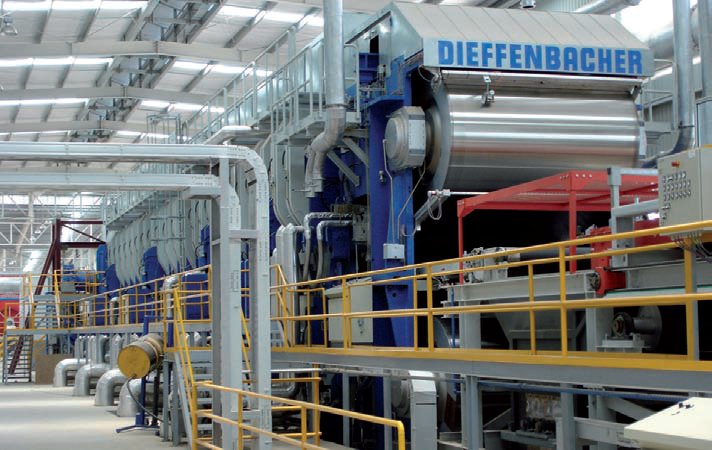
Dieffenbacher has increased the manufacturing capacities at its production site in Brno, Czech Republic.
In addition to the current production program, machines for wood chipping such as debarkers, chippers, among others are now being produced at the site.
“Thanks to the existing infrastructure and the qualifications of the staff, the Brno site is optimal. With this expansion we improve the level of value generation of the Dieffenbacher Group and optimize our ability to process orders quickly. We make use of the synergy effects that arise from cooperating within the Group. Furthermore, we are happy to increase the number of currently 100 jobs at the site in Brno to 120 by adding jobs in the areas of production planning, purchasing, construction and production,” says Dr. Miroslav Jopek, Managing Director of Dieffenbacher CZ.
The site expansion was completed in the third quarter and production has been successfully launched.
Canada opens WTO case against United States over softwood lumber duties
Canada formally requested World Trade Organization (WTO) consultations with the United States concerning the U.S. Department of Commerce’s recent final anti-dumping and countervailing duty determinations on imports of certain softwood lumber products from Canada.
A ministry statement said Canada would forcefully defend the lumber industry against the “unfair, unwarranted and deeply troubling” decision.
Earlier this month Canada launched a NAFTA trade challenge against duties affecting about $5.66 billion worth of U.S. lumber imports.
The Office of the U.S. Trade Representative is confident the Department of Commerce’s actions “fully comply” with WTO rules, said USTR spokeswoman Amelia Breinig, in a statement.
In any case, Canada’s decision to open a case with the WTO is premature, she said, since final duties are not yet in place, pending a decision by the U.S. International Trade Commission on whether imports of Canadian lumber have harmed U.S. producers.
That decision is expected in December.
The U.S. Commerce Department accuses Canada of unfairly subsidizing and dumping softwood lumber, which is commonly used in the construction of homes. Canada denies it is dumping the lumber.
The disagreement centers on the fees paid by Canadian lumber mills for timber cut largely from government-owned land. They are lower than fees paid on U.S. timber, which comes largely from private land.
Latvia: Wood products exports up by 5.7% in Q1-Q3

During the first nine months of this year Latvia exported EUR 1.648 billion worth of forestry products, up 5.7 percent against the same period last year, according to information released by the Latvian Agriculture Ministry.
Timber and timber products made up the bulk or 84.6 percent of total forestry product exports in the first nine months of 2017 (85.2 percent in the nine month period in 2016), accounting for EUR 1.394 billion and rising 4.9 percent year-on-year.
Timber exports in January-September this year included EUR 445.067 million worth of sawn timber, down 3.7 percent year-on-year. Firewood exports dropped 3.2 percent to EUR 206.728 million, and plywood exports declined 10.8 percent to EUR 146.755 million. Exports of woodchip plates increased 19.2 percent to EUR 138.74 million, and round-timber exports fell 6 percent to EUR 97.748 million.
Furniture exports grew 2.4 percent year-on-year to EUR 110.873 million in the first nine months of this year, and exports of paper, cardboard and their products rose 13.3 percent year-on-year to EUR 87.98 million.
In January-September this year Latvia supplied its forestry products mainly to the UK (17.1 percent), Estonia (10.7 percent) and Germany (10.2 percent). As compared to the first nine months of 2016, forestry industry exports to the UK dropped 6.7 percent to EUR 281.173 million, exports to Estonia increased 11.9 percent to EUR 176.134 million, and exports to Germany rose 8.7 percent to EUR 168.185 million.
In the first nine months of 2016, Latvia exported EUR 1.559 billion worth of forestry products.
The price of wood pellets in Austria on a seasonal upward trend

The average price of wood pellets in Austria has reached of 232.9 € per tonne of wood pellets or 4.75 Cent per kWh in November 2017.
As compared to the previous year, the price has gone up by +3.4%. As compared to September 2017, the price is +0.8% higher.
At the moment, in Austria, wood pellets in bags cost an average of € 3.97 per 15 kg bag (when ordered by the pallet). This represents an increase of +3.1% as compared to the same month of 2016 and +0.1% higher compared to the previous month.
Ordinarily the prices for wood pellets vary throughout the year with particularly favorable prices being offered in spring when local pellet producers advertise so-called „storage offers“. On average, the wood pellet prices during the special storage offers in the months of April and May are about 10% lower than prices in winter.
Review of China’s first half hardwood log & sawnwood imports

In the first half of 2017 China’s hardwood log imports totalled 8.38 million cubic metres.
The main imported hardwood log species were birch (1,041,100 cu.m, 12.4%), beech (676,000 cu.m, 8.1%), oak (554,800 cu.m, 6.6%), okoume (512,500 cu.m, 6.1%), North America hardwood (434,800 cu.m, 5.2%), redwood (419,800 cu.m, 5.0%), poplar (315,200 cu.m, 3.8%), eucalyptus (284,000 cu.m, 3.49%) and merbau (112,900 cu.m, 0.3%).
While the volumes of US hardwoods, okoume and redwood rose, imports of merbau fell.
Recent additions to the Customs code include birch (4403.9500 sectional dimension equal to or more than 15cm and 4403.9600 sectional dimension less than 15cm), poplar (4403.9700) and eucalyptus (4403.9800) which will make analysis more accuate.
Sawn hardwood species imports
In the first half of 2017 China’s sawn hardwood imports were 5.71 million cubic metres. The main sawn hardwood species imported were oak (740,900 cu.m, 13%), beech (312 500 cu.m, 5.5%), birch (285 200 cu.m, 5.0%), North America hardwoods (280,300 cu.m, 4.9%), white ash (251,000 cu.m, 4.4%).
The volumes of beech, North America hardwoods, oak and white ash rose 34%, 25%, 18% and 4% respectively. The Customs code for tropical redwood (4407.2940), birch (4407.9600) and poplar (4407.9700) sawnwood are newly added from 2017 so there are no comparative data.
Moody’s: High lumber prices in 2018 to outweigh cost of US duties, benefiting North American producers

Sustained high lumber prices in 2018 will cover the cost of final duties imposed by the US government on Canadian lumber imports, benefiting North American producers and timberland owners, Moody's Investors Service says in a new report.
"The continuation of tight lumber markets will allow the estimated $1.2 billion of duties to be collected in 2018 to be passed on to the US consumer via elevated lumber prices," says Ed Sustar, a Moody's Senior Vice President. "This is credit positive for our rated Canadian and US lumber producers, as high prices will outweigh the cost of the duty."
Moody's expects benchmark lumber prices, which have increased about 25% over the past year, to remain high due to rising demand fueled by a projected 6% increase in US housing starts and several hurricane repair and rebuilding efforts. This will be met with increased North American lumber production, with improved efficiency from recent capital investments.
Of the seven North American lumber producers and timberland owners Moody's rates, US companies Potlatch Corporation and Georgia-Pacific LLC will experience the greatest upside from stronger prices, as neither company operates mills in Canada and thus will not be required to pay duties, notes Sustar. Canadian lumber producers such as West Fraser Timber, Resolute Forest Products and Rayonier A.M. Products (which recently acquired Tembec Inc.) will also benefit, as duties will only be levied on lumber that ends up being shipped to the US, which is about half of their production.
Softwood lumber duties may eventually be revoked if the Canadian government's appeal of the duties is successful, and payments returned to Canadian producers if a new agreement is negotiated, says Moody's.
Sveza to acquire plywood plant in Russia

Sveza signed an agreement to acquire 100% of Tyumen Plywood Plant from its current owner Almira Karimova.
According to the announcement, Sveza has already requested approval of the transaction with the Federal Antimonopoly Service of Russia (the FAS Russia).
In case of the successful approval, the transaction will become a part of Sveza’s strategic plan for high growth potential asset portfolio expansion.
Tyumen Plywood Plant produces around 90,000 m3 of plywood per year. It plans to expand production to 120,000 m3 in the next years. The company is specialized in a large-format birch plywood.
About Sveza:
The group is one of the leading players in the woodworking market. It produces high-quality plywood of natural Russian birch and hold a global leadership in this area. It is reported to be the world’s largest producers of natural Russian birch plywood.
Stock levels of hardwood in UK are high

Due to the strong buying activity in the first half of the 2017, UK traders report that hardwood stock levels of unsold timber on the ground are now quite high. The September to November period is traditionally very busy for UK hardwood traders, as customers ramp up buying between summer vacations and the year-end, but business has slowed a bit this year.
There is no signs of crises in the UK market just yet, but many expect demand next year to fall short of the level in 2017. Economic prospects certainly seem to have cooled. The British Chambers of Commerce (BCC) says that the UK economy is now on a “low growth trajectory”. In its latest economic review, the BCC revised its growth forecast for 2018 UK downward, from 1.3% to 1.2%, and for 2019 from 1.5% to 1.4%.
The BCC says that the post EU referendum slide in the value of the pound had “done more harm than good” as the rising cost of imported raw materials had driven inflation, which was now expected to hit 3% by the year end, suppressing consumer spending.
Uncertainty over Brexit and the UK’s subsequent trade deal with the EU is cited as a key factor in the deceleration of the UK economy, with Commerzbank commenting that it was running at 0.5% slower growth than before the EU referendum.
UK construction had been on an upward curve, with housing starts in the year to June up 13% at 164,960. But the industry contracted in the second and third quarters of 2017 and forecasts for growth in 2018 have been downgraded to under 1%.
Various industry bodies are now urging the UK government to push for rapid conclusion of a transition deal with the EU on Brexit to help lift the economy.
In the meantime, the International Monetary Fund has revised down long-term and short-term UK growth forecasts in response to ‘negative effects’ from the Brexit vote starting to show. It now predicts the economy will expand 1.7% this year and 1.5% next.
China: Plywood production up by 7%
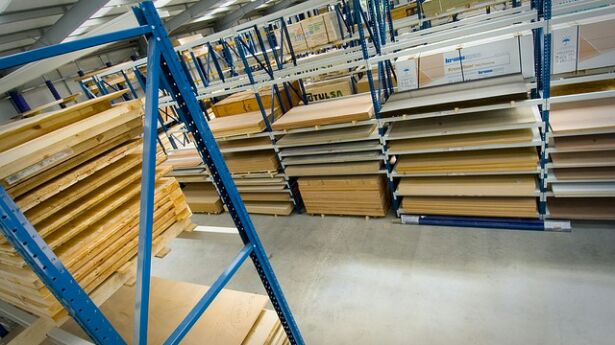
In 2016 plywood production rose 7% to 177.56 million cubic metres accounting for nearly 60% of total woodbased panel output and was valued at RMB367.5 billion.
Of the total, 163.82 million cubic metres were plain plywood, 7.34 million cubic metres were laminated or wood/bamboo composite plywood and 6.4 million cubic metres were bamboo.
The output from mills in Shandong province was the largest and rose 6% to 51.57 million cubic metres in 2016. The output in almost all provinces increased in 2016.
The output of Hebei, Fujian, Jiangsu and Hu’nan provinces grew dramatically by 38%, 35%, 23% and 16% respectively. However, the output of Guangdong Province alone fell 4% in 2016.
Plywood output by province 2016
Vol. % Change mil. cu.m 2015-16
- Shandong 51.57 6%
- Jiangsu 38.96 23%
- Guangxi 21.38 4%
- Anhui 16.34 10%
- He’nan 8.42 7%
- Hebei 8.12 38%
- Guangdong 6.69 -40%
- Fujian 5.66 35%
- Hu’nan 3.07 16%
Interfor to double lumber production at Monticello sawmill
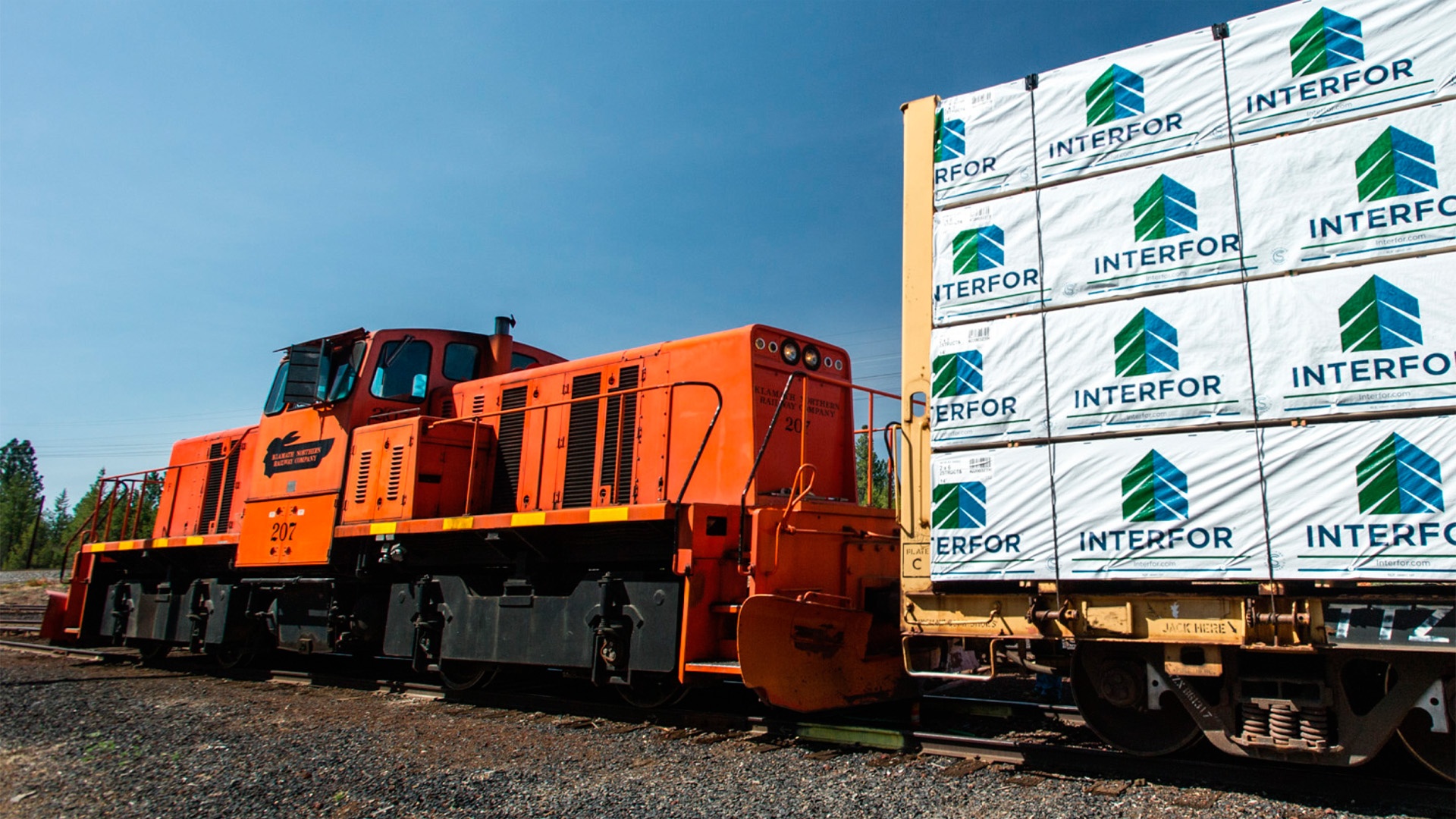
Interfor announced that it will invest $46 million to upgrade and modernize it’s sawmill in Monticello, Arkansas.
The project is scheduled to be completed in early 2019. The project includes the installation of new state-of-the-art machine centers in the sawmill as well as upgrades to the planer mill and one new continuous lumber drying kiln. Annual lumber production is expected to double, in addition to improving product quality, product mix and mill efficiency.
Ian Fillinger, Senior Vice President and Head of Operations of Interfor, said mill leadership, employee performance, the local timber supply and rising demand for lumber made the project at Monticello a high-priority. “Whenever a company makes an investment it represents a vote of confidence in the community, the state, and the workforce”, said Mike Preston, Executive Director of the Arkansas Economic Development Commission. “This $46M investment by Interfor shows just how committed they are to Monticello, we look forward to their continued growth and success in our state.”
“The City of Monticello and the state of Arkansas have been incredibly supportive of Interfor ever since we acquired the mill in 2015. We’re proud to be in Monticello, and we look forward to a long and successful future,” said Fillinger.
Greenpeace: Illegal timber from Amazon exported to countries in Europe, North America and Japan

An investigative report from Greenpeace released recently found that a logger accused of killing nine people in Brazil in April 2017, has continued to export timber to several countries in Europe, North America and Japan.
The report links 12 global firms to the logger in question. Greenpeace stresses that operators placing timber on the EU market should be able to prove that their product is legal and sustainable and be able to ensure that harvesting has respected third parties’ legal rights concerning forest use and tenure.
In the report, Greenpeace also calls on the EU Timber Regulation (EUTR) competent authorities to better ensure that operators within their jurisdictions comply with the EUTR, including having due diligence systems in place that go beyond official documentation from timber sourced in the Amazon. It also notes that the import of such timber could be in contravention with the US Lacey Act, that bans trafficking of wildlife including timber.
The report also comes as the European Court of Justice ruled on 20 November to fine Poland 100,000€ per day of non-compliance for allowing logging in the protected and UNESCO World heritage Bialoweza forest.
A few governments have reacted to the report, with the Belgian Minister of Energy, Environment and Sustainable Development, Marie Christine Marghem, notably mentioning that additional resources have been allocated to the unit dealing with imports of timber in recent months. Companies operating in Belgium can therefore expect increased inspections from the competent authority.
Italian furniture sector is more open to exports to countries outside Europe

The Italian furniture sector exports more and more to non European Countries, such as many other segments of the woodworking industries in various European countries.
One of the symbols of these growing interactions is the second edition of The Salone del Mobile Milano Shanghai (which can be loosely translated as Furniture Fair Milan Shanghai) which takes place in China in November 2017. 190 Italian enterprises showcase their products at the Fair, twice as much as in the previous year, EOS reports.
The increasing importance of non European markets is not limited to China: the sector is looking also at the MENA Area, and countries which were part of the former Soviet Union.
While there are many opportunities, the Italian furniture sector is a little hampered by structural problems : the segment is extremely fragmented and made up chiefly of small and medium enterprises, which in some cases do not have the resources to put in place exporting strategies to countries which are so distant both logistically and culturally.
According to EOS, notwithstanding these difficulties, exports in the first 7 months of the year to China grew by a remarkable 36% (compared with the January-July 2016) to €279 million. China is now the seventh largest market for the Italian furniture sector. France remains the largest exporting market (+3.6% to €1.337 million), followed by Germany (+1.4% to €945 million), the UK (+0.3% to €728 million), and the US (+6% to €685 million).
The sector reckons that it is important to have a medium-term strategy in these new export markets: patience is key and it is fundamental that, if possible, enterprises devote enough resources as many operators in the sector are adamant that European markets – in spite of the relatively good economic context over the last few months – are relatively saturated.
The positive demographic prospects of many Asian and African countries and the consequent need for housing to accommodate a growing population guarantee medium-term growth perspectives, which are, however, at times offset by locally tense geopolitical situations.
Notwithstanding this, FederlegnoArredo forecasts that largest exports’ growth in the next few years will take place in Asian countries such as South Korea, Indonesia and Vietnam, EOS reports.
A good strategy to penetrate these markets seems to be the establishment of a local platform such as Singapore or Hong Kong in order to better serve these countries. A local platform is also helpful when it comes to managing the expectations and demands of customers hailing from different cultures. In this sense, there must be a more and more intense focus not just on the product itself, but on how to best sell it to a set of customers very different from the traditional ones.
Falling EU imports of mixed hardwood plywood from China

After rising strongly in 2016, EU imports of hardwood plywood have been slowing this year. The decline in imports has been concentrated in mixed hardwood products from China. Imports of tropical hardwood plywood, both directly from tropics and from China, have been rising this year.
EU imports of hardwood plywood peaked at an annualised level of 2.80 million cu.m in November 2016, but this figure had fallen to 2.65 million cu.m by July 2017. During this period, imports of mixed hardwood plywood from China fell from an annualised level of 1.03 million cu.m to 862,000 cu.m.
This decline in imports was partly offset by a rise in annualised imports of tropical hardwood plywood from China from 124,000 cu.m in November 2016 to 181,000 cu.m in August 2017.
During the same period, direct imports of hardwood plywood from tropical countries also increased, from an annualised level of 356,000 cu.m in November 2016 to 393,000 cu.m in August 2017.
Between November 2016 and August 2017, there were significant gains in annualised imports from Indonesia (129,000 cu.m rising to 144,000 cu.m), and Brazil (19,970 cu.m rising to 23,000 cu.m). Imports also increased from a range of smaller supplying countries including Vietnam, Thailand, and Morocco.
During the same period, annualised imports were flat from Malaysia at 123,000 cu.m and declined from Gabon from 38,000 cu.m to 35,000 cu.m.
In terms of destination countries, imports of hardwood plywood in the UK were broadly flat at an annualised level of 860,000 cu.m in the 12 months prior to June 2017, but then slowed sharply to 810,000 cu.m during summer this year.
Imports in Germany, Belgium, and the Netherlands have fallen more gradually since the start of 2017, and have remained stable in Poland and France.
Regulatory factors appear to have had a significant impact on the EU hardwood plywood trade this year. EUTR has encouraged greater concentration of trade into a few larger suppliers with resources required to meet the due diligence requirements.
Indonesian plywood appears to have received a boost since issue of the first FLEGT licenses in November 2016 which allows import of Indonesian product without any further due diligence.
EUTR coupled with increased technical demands of the EU Construction Product Regulation has also increased the trade’s awareness of the importance of accurate identification of species content for any product placed on the EU market.
The apparent rise in imports of tropical hardwood plywood into the EU from China may be at least partly due to more accurate identification of the actual species content.
This trend may also be partly due to a greatly increased range of named species being specifically listed as “tropical non-coniferous” rather than “other nonconiferous” following an amendment to the Harmonised System (HS) of product codes used to compile trade data from January 2017.
Andritz to deliver biomass boiler to new Japan wood pellet plant

Austrian woodworking technology company Andritz has received an order from Mitsui Engineering & Shipbuilding Co. Ltd. Japan, to deliver a PowerFluid circulating fluidized bed boiler with flue gas cleaning system for a new biomass power plant to be built on the premises of the MES shipyard in Ichihara in the Chiba Prefecture, some 30 km to the east of Tokyo, Japan. Start-up is scheduled for the third quarter of 2020.
The Andritz scope of supply comprises the engineering work, delivery, erection work, and start-up of the fluidized bed boiler, including a flue gas cleaning system with high-dust SCR and auxiliary equipment.
The equipment and technologies supplied by Andritz are essential parts of a high-efficiency biomass power plant for supply of green energy to the national grid. The biomass power plant fired with palm kernel shells and wood pellets will generate around 50 MWel of power, thus approximately 100,000 households can be supplied with clean energy from renewable sources.
UK furniture retailer company fined for breach of EU Timber Regulation

Designer furniture retailer Lombok has become the first business to be fined for breaching regulations introduced in 2013 to prohibit the importing and sale of illegally harvested timber.
On 25 October 2017 at Westminster Magistrates Court, Angora 2011 Limited, trading as Lombok, was convicted and fined £5,000 plus costs after pleading guilty at the first hearing. The company failed to exercise the required due diligence when placing an artisan sideboard on the market, imported on 1 June 2016 from India in contravention of the EU Timber Regulation (EUTR).
A previous breach of EUTR had earlier been identified and led to a Notice of Remedial Action was served on Lombok on 28 April 2015.This was followed by a warning letter in October 2015, when the company failed to comply with the notice. On 20 October 2016, officers visited Lombok’s central London showroom and found the required due diligence checks had not been made for an artisan sideboard for sale that had been imported from India.
When convicting the company the district judge said these offences are “important”, addressing environmental and biodiversity concerns, and public confidence that companies do not endanger those. Companies are required to mitigate the risk of illegal logging, he added, but Lombok had failed to exercise due diligence when importing the artisan sideboard, with their previous failures an aggravating feature, though in mitigation they had reacted proactively. Taking into account their mitigation and credit for an early guilty plea, Lombok was fined £5,000, plus a victim surcharge of £170 and prosecution costs of £2,951. The total of £8,121 was ordered to be paid within 28 days.
Mike Kearney, Head of Enforcement at UK Competent Authority Regulatory Delivery said:
"The Government’s Regulatory Delivery team will take action against businesses that persistently, deliberately or recklessly fail to meet their legal obligations. Lombok had failed to change their practises in response to our advice and so, given the impact of illegal logging, a criminal prosecution was appropriate. I am pleased that Lombok is now improving its supply chain monitoring."
This prosecution was brought by the Insolvency Service Criminal Enforcement Team on behalf of Regulatory Delivery, which is part of the government Department for Business, Energy and Industrial Strategy (BEIS).
Irish state energy company plans US$ 60 million wood pellet plant in the US
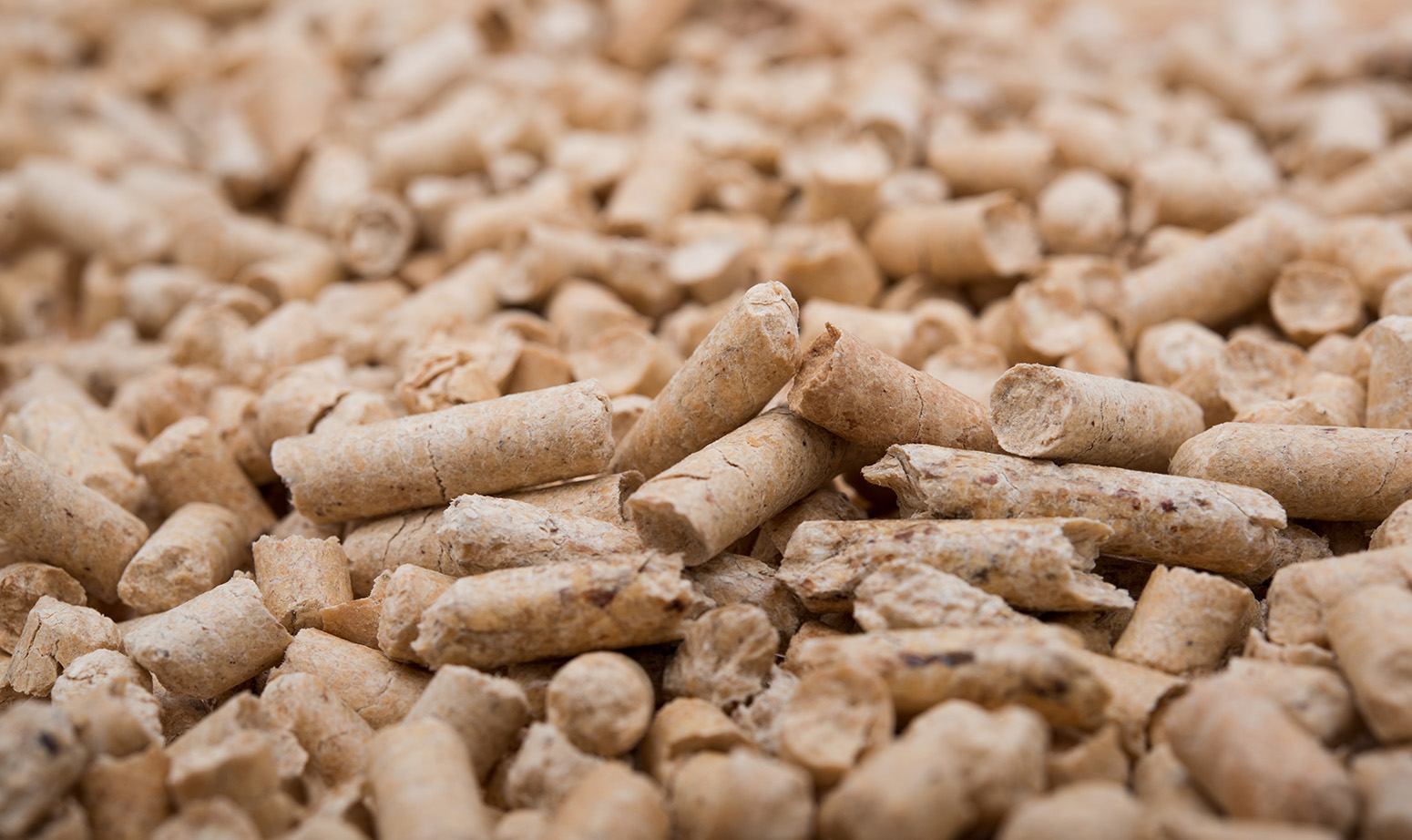
Bord na Móna is currently seeking approval from the Irish government to build a EUR 60 million wood pellet factory in the US.
The Irish state energy company announced last September that it wanted to spend EUR 60 million building a plant in Georgia that would turn willow trees into pellets to be exported to the Republic as fuel for electricity generators, The Irish Times reported.
Bord na Móna is most likely going to receive approval from the Minister of the Environment and will continue its work on the business case for potential investment in a wood pellet manufacturing plant in the US.
“This is in line with company strategy as our future requirement for biomass will be in excess of 1.5 million tonnes per annum. As soon as the business case is finalised, it will follow normal procedure and be submitted to the Minister for approval,” the company announced.
When it announced the Georgia plan, Bord na Móna explained that there was a shortage of biomass – wood and plants burned as fuel – in Ireland, forcing it to look abroad for supplies.
Patrick Madigan, head of the the company’s recently launched bioenergy division, said that it could take 12 months to finalise its plans in Georgia and a further year to build the factory on a 50-acre site.
The facility will produce 300,000 tonnes of pellets which Bord na Móna will use and supply to Irish customers. The State company will ship the material to Ireland – 30,000 tonnes at a time.
Steady increase for the US red oak exports

Log exports from the US during the first three quarters of 2017 were stable, at 1.563m m³, when compared to the same period last year.
Yet, the distribution of wood species changed. Red oak exports grew by 64%, to 451,981 m³, accounting for 29% of the total log exports from the US. Maple exports, for example, one of the species of wood in the reference period of 2016, decreased by 12%, to 292,741 m³ and their share of the total exports decreased accordingly to 19%.
Birch exports also declined, by 19%, to 111,927 m³, while those of ash went up, by 10%, to 191,013 m³. White oak exports grew by 20%, to 159,869 m³ and walnut was also up, by 28% to 134,139 m³.
China received most of US's hardwood logs exports and increased its imports by 19% to 867,838 m³. All the other important regions took in less logs from the US than they did in the previous years.
Thus, deliveries to North America decreased 16% to 468,050 m³. At 76,286 m³, 16% less than last year was delivered to the EU as well, while exports to Southeast Asia were reduced by 17% to 72,613 m³.

