Article archive

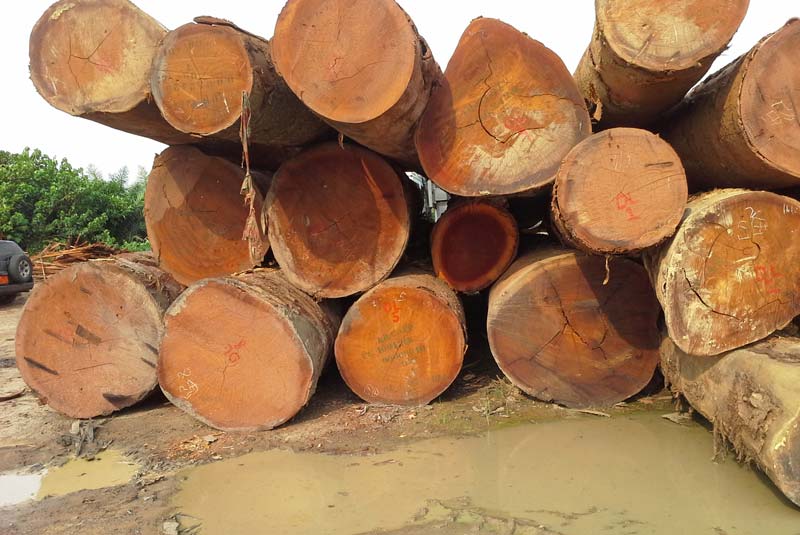
European Commission punishes Ukraine over roundwood export ban

The refusal of the European Commission to transfer to Kyiv a third tranche, under the assistance program, for EUR 600 million is expected to affect social targeted assistance, the salaries of public sector employees, the reform of the management system and obligations to service Ukraine's external debt.

The assistance program for EUR 1.8 million was approved by the European Commission in 2015. During this time, Kyiv received two tranches of EUR 600 million each, but was denied the last. The European Commission announced that this was due to the fact that Ukraine has not been able to fulfill a number of conditions, the most important of which is connected with the lifting of the ban on export of wood a moratorium on the supply of which was introduced almost immediately after the signing of the memorandum with the European Union.

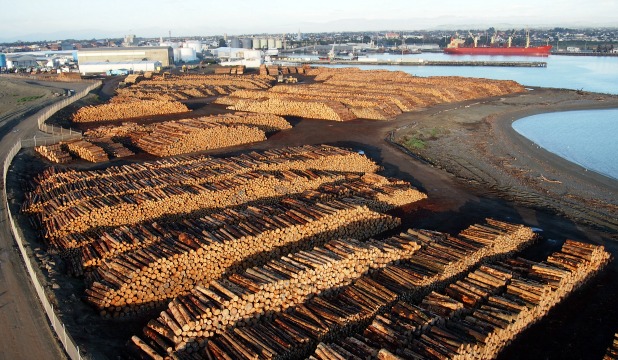
Ukraine has completely prohibited exports of any kind of roundwood from the country on January 1, 2017. According to the country’s legislation, till January 1, 2027 it is allowed to export only sawn (and further processed) wood.

The Verkhovna Rada (Ukrainian Parliament) passed the Ukrainian Law Nr. 325-VIII (09.04.2015) in November 2015, which temporarily prohibits (10 years) the exportation outside the customs territory of Ukraine of untreated wood from all tree species (except pine) as of November 1, 2015. The same would apply to pine as well, but later - starting from January 1, 2017.

The legislative draft in question stipulated a temporary ban for the following: unprocessed wood including raw wood, such as roundwood in the form of logs, poles etc. with moisture content exceeding 22% and sawn timber with the thickness exceeding 70 mm and moisture content more than 22%.

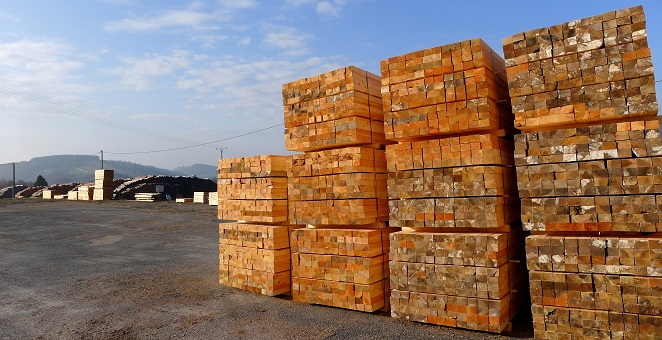
Lumber prices in the US dropped due to mixed trading

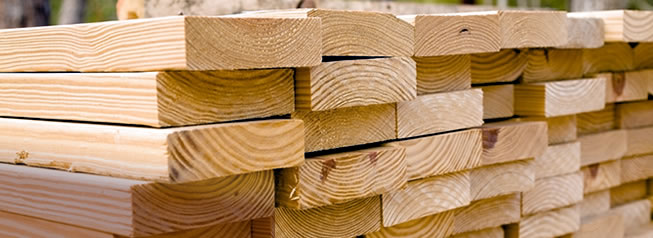
Framing lumber trading in the US was mixed during last week, but overall prices were weighted to weakness.
Green Fir was the primary exception, with demand outstripping supplies and keeping prices on a steady upward track. Trends in most dry framing species pointed downward. Canadian S-P-F prices fell off historical highs, as buyers kept a low profile, wary of downside risk.
Meanwhile, Southern Pine turned soft in 2x6&wdr, with 2x4 maintaining some of its recent strength on the westside as a substitute for Canadian S-P-F.

Week
Dec 8
Week
Dec 1
Year Ago
2016
Random Lengths Framing Lumber Composite Price* $434 $436 $359
KD Western S-P-F #2&Btr 2x4 R/L Mill Price 462 478 324
KD Eastern S-P-F #1&2 2x4 R/L, delivered Great Lakes 535 547 406
Green Douglas Fir Std&Btr 2x4 R/L (Portland) 465 460 342
Southern Pine (Westside) #2 2x4 R/L 457 448 437
KD Coast Hem-Fir #2&Btr 2x4 R/L 490 490 347
Ponderosa Pine (Inland) #2&Btr 1x12 R/L 730 730 620
* Weighted average of 15 key items

Random Lengths Panel Market Report
Structural panel sales and prices gained traction as the week progressed. OSB sales were stronger than expected for the time of year, as buyers stepped in for coverage after prices stabilized in most regions.
In Southern Pine plywood markets, prices of rated sheathing bounced off lows or flattened amid improved sales at midweek. Western Fir plywood sales were steady from Tuesday on. Mills held prices without needing to open to counters, a relief to many producers because of veneer and log costs.

(f.o.b. mill prices) Week
Dec 8
Week
Dec 1
Year Ago
2016
Random Lengths Structural Panel Composite Price* $427 $433 $366
Southern (west-east) 15/32-inch 3-ply rated sheathing plywood 410-470 405-470 348-380
Southern (west-east) 15/32-inch 4-ply rated sheathing plywood 415-475 410-475 348-385
Western 1/2-inch 4-ply rated sheathing plywood 442 442 360
North Central 7/16-inch Oriented Strand Board 300 315 282
*Weighted average of 11 key items

France: Lumber prices for the 3rd quarter of 2017

FRANCE LUMBER PRICES for the 3rd quarter 2017

Prices 2017-Q3 Prices2016-Q3 € Prices2017-Q2€ Prices2017-Q3€ Index Change 2017-Q3/2017-Q2 Change 2017 Q3-2016-Q3
OAK Lumber                                                                       Index base 100 : Oct 2006 S20
UNEDGED LOGS  - QBA - Logs, joinery, (KD), length 3 m +
Diameter 40 to 49cm (thickness 34mm)    m3 1105 1147 1 124 129,8 -2,1% 1,7%
Diameter 50cm et + (thickness 50mm)    m3 1228 1 252 1 263 130,2 0,9% 2,9%
LOGS  - QB1 - High-value joinery work, 6 months open air drying, length 3 m +
Diameter 40 to 49cm (thickness 27/34mm)    m3 833 867 875 125,2 1,0% 5,1%
Diameter 50 to 80cm (thickness 54mm)      m3 966 1017 997 129,0 -2,0% 3,2%
SELECTED LOGS  - QSA/QS1-  (KD)
Thickness 27 to 54mm - length 2m +
Bare 18cm (tolerance 10cm +)     m3 884 897 890 133,4 -0,8% 0,6%
SELECTED LOGS  - QS2 - 6 months open air drying
Thickness 27 to 54mm - length 2m +
Bare 18cm (tolerance 10cm +)     m3 623 638 642 142,1 0,7% 3,0%
STRIPS (80x27) OR EDGED (100x27) QF1a - 3 months AD
Length 30 to 50cm     m3 612 627 632 107,8 0,9% 3,3%
Length 60 to 90cm     m3 843 869 937 135,4 7,8% 11,2%
Length 1m + m3 988 1028 1049 132,6 2,1% 6,2%
STRIPS (80x27) OR EDGED (100x27) QF1b  - 3 months open air drying
Length 1,50m +    m3 707 721 728 117,2 1,0% 2,9%
EDGED QF2- Thickness 27 mm - length 1,50 m +
Width 100 to 150mm     m3 788 759 789 132,2 4,0% 0,1%
Width 160mm +     m3 888 855 915 150,3 7,0% 3,0%
EDGED QF2/QF3 X – Thickness 27 mm, length 1,50 m +, 3 months AD
Width 160mm +     m3 666 668 696 137,5 4,1% 4,5%
EDGED BEAMS QP1 - Standard beams (fresh)
Camber to max. two edges, red core and sap tolerance
Measure 15x15 - length 4 to 5m     m3 545 524 544 133,7 3,9% -0,2%
Measure 25x25 - length 4 to 5m     m3 586 571 574 125,9 0,6% -2,0%
SPRUCE Lumber (fresh)                                                        Index base 100 : July 1990 S30
Quality 0 - Edged, in all widths
Thickness 27mm     m3 304 291 293 104,4 0,8% -3,4%
Quality 1 - Edged, in all widths
Boards 2 to 5,50m - thickness 27mm     m3 253 246 252 113,8 2,2% -0,4%
Quality 2
Scantlings
75x225 or 63x160 - length 3 to 5m     m3
189 192 192 164,0 0,1% 1,6%
Beams 63x75 or 50x75 - length 3 to 4,50m     m3 199 200 201 108,0 0,5% 1,1%
Mouldings 27x27 - length 2 to 5m m3 226 229 230 112,8 0,6% 1,8%
Quality 3 - Boards edged timber all width
Unedged beams
Thickness 18/27mm     m3
142 143 144 103,7 0,9% 1,8%
Quality 4
Scantlings     m3 139 143 144 105,8 1,0% 3,9%
Boards any widths    Thickness 27mm     m3 125 131 132 105,4 0,4% 5,3%
Value added for extra-lengths 5 to 8 m 11 10 10 - -3,3% -6,4%
€/m
MARITIME PINE Lumber (fresh)                                            Index base 100 : July 1990 S50
Quality 0A - edged, in all widths, lengths 2 to 2,70m
3/4 Sidings     Thickness 27/32mm    m3 333 333 333 109,9 0,1% -0,1%
Quality 0 - edged, in all widths, lengths 2 to 2,70m
Thickness 27mm     m3 244 247 247 119,3 0,0% 1,2%
Thickness 32mm     m3 267 268 269 126,9 0,4% 0,7%
Quality 1 - edged, in all widths, lengths 2 to 2,70m
Thickness 27mm     m3 199 198 196 125,9 -0,8% -1,3%
Thickness 32mm     m3 241 245 245 147,6 0,0% 1,5%
Quality 2
Scantlings - length 3 to 5m m3 240 239 239 144,0 0,0% -0,4%
Quality 3 - Boards thickness 27 mm - all widths
length 2 to 5m m3 155 153 153 124,2 -0,1% -1,6%
Beams     m3 142 142 142 112,1 0,3% 0,2%
Quality 4
Boards 27mm     m3 119 118 116 123,5 -2,0% -2,3%
PINE Lumber(fresh)                                                              Index base 100 : July 1990 S40
Quality 0A
Logs All thicknesss     m3 320 330 332 126,7 0,7% 3,8%
Quality OB
Logs All thicknesss     m3 288 286 287 124,8 0,3% -0,3%
Quality OA
Edged Thickness 18, 27mm +, Width 100mm + m3 291 292 293 98,7 0,3% 0,7%
Quality 0
Edged Thickness 18, 27mm +, Width 100mm +   m3 292 295 296 123,8 0,3% 1,4%
Quality 1
Edged
Thickness 18, 27mm +, Width 100mm + m3
249 256 257 129,8 0,4% 3,1%
Quality 2
Scantlings 63x163 or 175, 65x175 or 180, 75x165, 80x230 Length 3 to 5m     m3 196 198 203 118,0 2,5% 3,7%
Beams : 76x76, 80x80 Length 3 to 5m m3 201 202 212 118,9 4,8% 5,2%
Wood frame construction and glulam Price for drying and planning not included, length 2 to 4m m3 217 219 219 109,5 0,0% 1,0%
Quality 3
Boards - Thickness 27 mm - length up to 3 m All widths     m3 128 126 128 97,7 1,7% 0,0%
Scantlings : 65x165 or 80x230 m3 151 146 157 109,7 7,4% 3,9%
Quality 4
Boards 27mm     m3 139 138 138 112,2 0,0% -0,7%
Scantlings     m3 149 145 145 112,4 0,0% -2,6%
BEECH Lumber                                                                    Index base 100 : July 1990 S70
Logs (3 months drying)
Thickness 27/54mm , diameter 40cm +, length 3m + Quality FB1     m3 310 300 301 103,7 0,4% -2,9%
Quality FB2     m3 210 208 207 95,5 -0,4% -1,2%
POPLAR Lumber                                                                  Index base 100 : July 1990 S80
Edged
Thickness : 18, 22, 27mm, length : 1 to 2,67m (10% de 1 to 1,33m), Width : 10 to 25cm (average 17/18cm)
Grade 1 (choice and wood quality) open air drying m3 298 299 299 131,1 -0,1% 0,3%
Grade 2 (bedding quality) open air drying     m3 216 265 264 115,3 -0,5% 22,2%
Grade 3 (packaging-pallets quality) fresh m3 159 166 161 112,6 -2,9% 1,5%
DOUGLAS FIR Lumber (fresh)                                                Index base 100 : Jan. 2005 S60
Grade 1 - Edged - length 3 to 5m
42 or 52x150 to 230 m3 257 256 253 134,4 -1,2% -1,7%
Grade 2 - Scantlings - length 3 to 5m
63x150 or 63x175     m3 203 210 211 129,6 0,9% 4,0%
63 or 75x200 to 225 m3 217 222 224 133,3 0,9% 3,2%
63 or 75x250 to 300 m3 247 250 251 130,8 0,6% 1,8%
Value added for extra-lengths 5 to 8 m 17 13 13 - -3,0% -23,0%
€/m
PALLET LUMBER (fresh)                                                        Index base 100 : Jan. 2005
All hard- and softwood species - all quality grades
Boards in fixed width – solid wood Frame timber – longitudinally sawn All thicknesss 18/27mm     m3 120,9 0,2% 2,6%
except for maritime pine     m3 - 0,1% 2,1%

Austrian softwood lumber prices characterized by stability

In October, the softwood lumber market in Austria is characterized by price stability. This applies on the one hand as compared to the previous month, to which no price change is noted. On the other hand, only marginal price differences can be noticed in comparison to October 2016, even though in August prices were well above the previous year's level.

Softwood Lumber Spruce/Fir Oct. '16 Sep. '17 Oct. '17 Change Oct. '16 to '17
€ / cbm EXW
Edged Boards, 0-IIIa, 23 mm + 231-243 232-242 232 - 242 + 1 / -1
Rough boards in fixed dimensions, 18-22 mm 229-239 229-240 229-240 - / +1
Squared timber, standard dimensions, I/II, 4-6 m 211-218 210-217 210-217 -1 / -1
Reserve squared timber, II/III 155-162 155-161 155-161 - / -1
Boards, III-IV, 8-16 cm, 4-6 m 147-154 147-154 147-154 - / -
Boards, III-IV, 8-16 cm, just 4 m 149-155 149-156 149-156 - / +1
Boards, III/IV, 23 mm, 4-6 m 150-155 149-157 149-157 -1 / +2
Boards, III/IV, 28 mm +, 3-6 m 156-164 157-165 157-165 +1 / +1

China: Strong reaction to anti-dumping penalties in the US

The US International Trade Commission has issued a final ruling in the China hardwood plywood case confirming that, in their view, US plywood manufacturers have been materially injured by low-priced and subsidised imports of Chinese-made hardwood plywood.

The 4-0 ITC vote on 1 December paves the way for the imposition of duties on hardwood plywood shipped from China.

Chinese authorities have expressed strong dissatisfaction with the US decision and consider this in violation of WTO obligations and commitments.

The US decision, say China, will seriously hinder Chinese plywood exports to the US and damage the interests of Chinese enterprises. In 2016, US imports of hardwood plywood products from China were valued at an estimated US$1.12 billion.

It has been reported that the China National Forest Products Industry Association has indicated they are considering legal action.

Africa expected to become a net wood importer

An interesting perspective on the global hardwood trade was provided at this year's International Hardwood Conference (IHC) by consultant Pierre Marie Desclos who suggested that population growth will accelerate regionalisation and sharpen the focus on raw material supply and logistics.

Mr. Desclos said that the hardwood resource in many tropical regions and some temperate countries is becoming depleted and that climate change may accelerate this trend. He also noted that, according to UN estimates, world population is projected to rise from 7.3 billion today to 9.7 billion by 2050, adding 80 million more inhabitants every year, with longer life expectancy and higher buying power.

Mr Desclos suggested this would likely result in a critical increase in hardwood demand and changing relationship between buyers and consumers.

Due to particularly rapid population growth, and limited productive forest resources, Mr. Desclos suggested that changes would be dramatic in Africa which would soon be transformed from a significant exporter into a net importer of wood products.

While population growth is expected to moderate in other regions, in Africa it is expected to accelerate. Mr. Desclos said that before the end of this century, one third of the world’s population will be in Africa.

In 2050, Nigeria will be the world’s third most populous nation, ahead of the US. African forests, which account for only 15% of the world’s total forest area, will need to focus on supplying domestic needs.

Russia: Top timber companies report 13% increased revenues

The 100 largest companies of the timber industry of Russia have provided 56% of the revenues of the entire forestry sector in 2016.

According to the conclusions given in the annual rating of TopWood 100 of the Russian Forestry Industry published by WhatWood, the revenues of the 100 largest timber industry companies of Russia for the year increased by 13.2% to 918.6 billion rubles. The remaining participants of the timber industry in the country are medium and small businesses with annual revenues up to 1.6 billion rubles.

The economy of Russia declined for two consecutive years: -3.7% (y / y) in 2015 and -0.2% (y / y) in 2016. After a severe shock experienced by Russian businesses and the entire economy in 2014, 2015 and 2016 again presented challenges to Russian timber industry workers.

The US dollar against the Russian ruble reached a historic peak of 82 rubles / dollar in January 2016. However, for the entire year 2016 the ruble strengthened, reaching an average level of 63 rubles / dollar by the end of the year and continued to decline in 2017. This variant of events was unpredictable and unexpected for timber producers, who were guided by higher export earnings when planning budgets for 2016.

According to WhatWood, increasing production volumes and selling them to foreign markets is an obvious and predictable trend in the Russian timber industry in recent years. The volume of sales of forest products for export grew by double-digit figures for two years: in 2015, the volume of plywood exports from Russia increased by 12.5%,  while in 2016 declined by 15.5%, MDF / HDF - by 113.3% and 35.6%, OSB - by 157.1% and 75.0%, chipboard - by 24.1% and 104.1%, sawn timber - by 6.9% and 10.7%, respectively.

In 2016, the timber industry helped the favorable situation in world markets: the weakening of the dollar to regional currencies and the high demand for wood products in China. The high rates of house building in the United States created prerequisites for stabilizing global competition, which contributed to higher prices for products. The index of industrial production in woodworking of Russia rebounded in 2016 by 35% (y / y),while  in 2015 there was a decrease of 35.7%.

It is obvious that the contribution of the forest sector to the Russian economy is growing. This is due to the opening of new enterprises and organic growth in existing industries. The situation in the sector is improving, showing a cut in the large forest business. The total net profit of the 100 largest timber companies in Russia has grown over the year by more than 2.5 times to 128 billion rubles.

Investments in the fixed capital of mechanical woodworking enterprises exceeded the similar indicator for the pulp and paper industry (this was twice in 11 years: in 2005 and 2011). In 2016 the greatest inflow of investments fell on the production of MDF / HDF (due to large investment projects implemented by the Austrian company Egger, the Russian "Russian laminate" in the Smolensk region, the Turkish company Kastamonu in Tatarstan) and for sawmilling (Ustyansky LPK, Titan "," Pomorskiy sawmill company "implement large investment projects for the production of sawn timber in the Arkhangelsk region with a total investment of more than 9 billion rubles).

Swiss wood pellets prices slightly increased in December

Swiss ENplus A1 quality wood pellets prices slightly increased in December 2017. However, the price increase didn't keep up with the levels from 2016.
Thus, the average price for 3-8 tonnes reached CHF 368.10/tonne, 0.4% more than in November, but 0.35% less than in December last year. This trend is similar for all shipments (3.5,8 tonnes). Also, the low prices are in accordance with the lower delivery volumes registered in the mentioned period.
The price for larger commercial use (17 tonnes) in December averaged at CHF 341.49/tonne. That's 0.7% more than in November and only 0.1% lower than in December 2016.

Schweighofer Group tied to illegal logging in Romanian National Park, EIA finds

In a recent field investigation in Romania, the Environmental Investigation Agency (EIA) found evidence of illegal logging in Romania’s second-largest national park linked to the Austrian timber giant Holzindustrie Schweighofer.

The Forest Stewardship Council (FSC) disassociated itself from Schweighofer in early 2017 due to "clear and convincing evidence" that the company had sourced illegal wood in Romania. The FSC's Expert Panel recommended that Schweighofer not be allowed back into the FSC until they could trace all their timber supplies from the forest stand to the company's mill gates.

Germany’s largest weekly, Der Spiegel, published EIA’s findings on Saturday.

The Forest Stewardship Council (FSC) is meeting this week in Bonn, Germany, to decide whether to start Schweighofer on the path to re-association. Romanian groups have circulated the news widely on social media, calling on the FSC to not let the company back until it makes real changes.

In response, Schweighofer stated that in August they had detected and suspended two suppliers who had delivered wood from a national park. However, the company made this announcement only after the publication of EIA’s report. The fact that the company only divulged this information after public pressure illustrates the lack of transparency that has plagued the company for many years.

Schweighofer claimed this wood, which entered into production in its Romanian sawmills, was legal because the supplier had valid paperwork. However, EIA’s 2015 report, Romanian media, and the Romanian government have documented how Schweighofer suppliers have systematically used fake paperwork to cover illegal deliveries.

Alexander von Bismarck, Executive Director of EIA, said, “The company took steps in the right direction, but still lacks the most basic ability to trace its wood back to the forest origins. Schweighofer needs to immediately track all its wood back to the specific concessions, for all their products.”

Despite over two years of international public scrutiny, significant gaps remain in Schweighofer’s international timber sourcing procedures. The company buys over a third of their Romanian wood from third-party log yards, the vast majority of which lack systems for keeping track of the logs’ origins. EIA's new report highlights how Schweighofer remains exposed to both illegal and unsustainable logging in Europe's most biodiverse forests.

The FSC’s Board of Directors will soon decide whether Schweighofer to allow the company to begin a path to re-association. This process cannot be started until Schweighofer can meet the FSC’s most basic requirement - to trace its wood back to the forest.

Steinhoff starts private investigation on accounting irregularities; CEO resigns

Markus Jooste, CEO of Steinhoff International, Europe’s second-largest furniture retailer by sales, has resigned on the 6th of December, with immediate effect, after the company had launched an investigation into accounting irregularities.

Further on, The Supervisory Board of the German company, in consultation with the statutory auditors of Steinhoff, has approached PWC to perform an independent investigation.

The Supervisory Board has immediately appointed its Chairman, Dr. Christo Wiese, as Executive Chairman (Delegated Supervisory Chairman) on an interim basis. In addition, Pieter Erasmus, the previous CEO of Pepkor Group, has agreed to join Dr. Wiese in an executive advisory capacity to assist with managing the group’s various retail interests around the world.

Last month, the South Africa-headquartered company did not tell investors about almost $1 billion in transactions with a related company despite laws that some experts believe require it to do so. Moreover, Steinhoff has been under investigation for accounting irregularities by the state prosecutor in Oldenburg, Germany since 2015.
The company has also postponed the deadline for publishing its audited 2017 consolidated financial statements for January 31st 2018, saying it would only do so “when it is in a position to do so”. Also, the report will determine whether any prior years’ financial statements will need to be restated.

Jooste has been the chief executive officer of Steinhoff since 1998, having joined the group in 1988, and is one of South Africa’s highest profile executives.

Romania: Timber market needs to boost competition

The Romanian Competition Council recently finalised its study on the primary timber market and has issued recommendations for sector development and boosting competition.

The Competition Council found that there are still significant discrepancies in the numbers reported by the various authorities (the National Statistics Institute, Eurostat and the National Forestry Inventory), for various key indicators such as forest area and average wood volume per hectare.

It also found that, despite a significant reduction in illegal tree cutting due to implemented wood tracking programs and increased penalties, illegal tree cutting remains a concern.

The Competition Council recommends:

  • immediate finalisation of the national forestry inventory, which is currently only in place for an insignificant portion of the forestry fund, making it difficult to identify all owners/administrators of forests, especially those failing to comply with applicable legislation;
  • modification of forestry legislation in Romania, allowing forests which do not comply with forestry-related regulations to be temporarily granted into administration (at the expense of the forest owner) to the National Company Romsilva ("Romsilva");
  • certain measures aiming to curb illegal tree cutting, such as social assistance to be granted in the form of fire wood; a taxation system that penalises non-compliance with forestry-related regulations; and, increased penalties for illegal tree cutting.

It was also found that certain amendments to forestry-related regulations have generated anti-competitive effects, deeming companies uncertified for forest exploitation works and natural individuals requiring fire wood ineligible to participate in tenders organised by administrators of public forests.

The Competition Council also recommended that Romsilva (which holds a dominant position on the timber market, administering approx. 49% of the national forestry fund) register the costs of primary raw matter (timber) and the costs of processing the same, at market price in its accounting. This should prevent Romsilva from subsidising its timber exploitation costs to the detriment of other timber processing operators who do not have access to timber at zero cost (as Romsilva does).

It is recalled that the competition authority has two on-going investigations concerning the possible agreements between the active companies on the wood trading market within tenders.

The investigation opened at the beginning of 2016 refers to market and supply sharing as well as to the awarding of wooden partitions at minimal price within tenders organized at national level.

The Competition Council carried ou at that date unannounced inspections to the headquarters of Holzindustrie Schweighofer SRL, Egger Romania SRL, Kronospan Romania SRL, Kronospan Sebeş SA, Silva Logistic Services SRL, Alredia SRL and Lacul Codrilor SRL.

As for the second investigation, the Competition Council suspects possible anticompetitive agreements beween the companies Forestar SA, Nico – Paul SRL and Saniral SRL for the acquisition of wood timber/products within the tenders and negotiations organized by the National Forest Administration - Romsilva.

Germany: Wood products prices with mixed price developments in September

The German wood products price index registered some mixed developments in September. Except lumber and reserve square timber, all sawn timber assortments lost ground compared to August. The sharpest decline was recorded in KVH price, which had declined both as compared to August, as well as compared to September 2016.
A positive price trend can be noticed in the hardwood area. In particular, hardwood lumber and beech frames were up considerably.
In wood materials, raw particle boards price increased slightly over August, and almost 15% against September 2016. The price of laminated particle boards also surged and managed to offset the August decline. Pellets again show an upward trend, however, chips still remain at a low level.

Germany's Producer Price Index Commercial Products
(2000=100)
Sep.
2016
Aug.
2017
Sep.
2017
Change
Sep. '16
to '17
Spruce and Fir lumber (Picea abies Karst.) 114.2 116.4 116.1 1,66%
Lumber according to DIN 4074/S10 117.5 116.6 117.2 -0,26%
Finger-jointed squares and beams (KVH) 107.6 104.4 103.1 -4,18%
Boards, width over 16 cm 116.1 122.6 122.0 5,08%
Boards, width from 8 to 16 cm, size from 15 to 24 mm 113.9 110.6 110.4 -3,07%
Roof battens according to DIN 4074/S10 115.2 121.7 121.4 5,38%
Reserve squared timber, A/B, 10X10 - 12X12 113.1 114.2 114.6 1,33%
Softwood, size>6mm, planed, sanded, finger-jointed 114.7 112.4 112.4 -2,01%
Wood chips from softwood 112.8 96.4 96.3 -14,63%
Pellets and Briquets, compressed 129.7 117.5 118.6 -8,56%
Hardwood lumber 106.6 108.9 110.1 3,28%
Beech blocks, A/B, size 50-60 mm, length 3m, damped 104.2 102.3 102.6 -1,54%
Beech frames, size 26-32 mm, length  3m, undamped 106.9 109.6 110.9 3,74%
Particle boards, raw or sanded 102.4 117.1 117.4 14,65%
Particle boards, laminated with decor 114.4 113.9 115.2 0,70%
HDF panels, size > 800 kg/m³, raw/sanded 111.3 112.1 111.9 0,54%
Laminate floorings, density > 800 kg/m³ 110.2 109.1 109.2 -0,91%

Central/West Africa: Good demand from Asia still not enough to rise logs and sawnwood prices

Central and West Africa buyers for the Chinese market continue to be active and producers report that the level of orders suggests there are no signs of a slowing in demand in this market. Also, business with Middle East importers is brisk, producers say.
However, despite the positive buying signs, there has been little opportunity for increases in FOB prices. Overall, trading conditions are steady, but demand in the EU remains subdued and there were only a few moderate price changes for logs and sawnwood during the first weeks of November.
At current levels of demand, producers will be able to maintain normal production, but say there seems little prospect of demand improving in the remaining weeks of this year.
Gabon task force acts on kevazingo felling
The authorities in Gabon have instituted firm action to halt the illegal logging of bubinga/kevazingo by informal, clandestine operators who scout remote areas in the country and, by night, fell kevazingo and transport logs, (again overnight) to small sawmills which produce boards that are then smuggled out of the country.
A Gabon government task force has been successful in locating and arresting a number of illegal loggers and raiding sawmills thought to be involved in processing kevazingo.
Milled plantation okoume disappointing
Several attempts have been made in Gabon to establish okoume plantations and news is circulating that recent milling trials on plantation okoume have yielded disappointing results. It is reported that sawnwood and veneer milled form plantation okoume lacks the signature reddishness of naturally grown trees of this popular species.
Some markets now easier to satisfy than EU
Producers say they are getting the impression that EU importers are becoming even more vigilant in ensuring that imports fully comply with the EUTR. This, and the hollowing out of the small importer/agent businesses who found meeting the strict requirements for due diligence to time consuming, costly and possibly risky for their businesses, is of concern
Analysts say that trade in markets with less stringent regulations are proving more attractive to producers and this may result in less pressure on African governments and their industries to advance negotiations on a VPA. The downside to this could be alienation of traditional buyers in EU markets and the potential undermining of this important market. Exporters have yet to be convinced that with the FLEGT licensing system in place they will see market opportunities improve.
Log Export Prices

West Africa logs, FOB € per m³
Asian market
LM
B
BC/C
Acajou/ Khaya/N’Gollon
220↑
220↑
160
Ayous/Obéché/Wawa
245
240
190
Azobe & Ekki
235↑
235↑
160
Belli
250
250
Bibolo/Dibétou
180
170
Bilinga
230
230
-
Iroko 325
300
265
Okoume (60% CI, 40% CE, 20% CS) (China only) 245 240 190
Moabi 330 300 235
Movingui 210
200
160
Niove
175
160
Okan
230
205
Padouk
300
275
210
Sapele 260 260 220
Sipo/Utile
290
270
200
Tali 330 320

 
Sawnwood Export Prices

West Africa sawnwood, FOB
€ per m³
Ayous FAS GMS 425
Bilinga FAS GMS 530
Okoumé FAS GMS
430
Merchantable 320
Std/Btr GMS 350
Sipo FAS GMS
540
FAS fixed sizes 560
FAS scantlings 560
Padouk FAS GMS 880
FAS scantlings 1000
Strips 645
Sapele FAS Spanish sizes 505
FAS scantlings 510
Iroko FAS GMS 630
Scantlings 710
Strips
410
Khaya FAS GMS
450
FAS fixed
470
Maobi FAS GMS
620
Scantlings
630
Movingui FAS GMS
430

Source: ITTO

Okoume veneers exports from Gabon gain a foothold in India

Okoume face veneer shipped to India from Gabon has gained a foothold on the Indian panel market and is gradually gaining acceptance. Analysts predict that the supply of okoume veneer from Gabon is set to rise.

In the past, plywood manufacturers in India could rely on imported raw materials from forest rich countries such Myanmar, Laos, Indonesia, Solomon Islands, Papua New Guinea and West/Central African countries. But now many of these countries have restricted log exports and even veneers in some cases.

Given some regulatory changes in the forestry sector by the Governments of Myanmar and Laos, the supply of face veneers to India is severely impacted, so Indian plywood manufacturers welcome the production and export of veneers from Gabon.

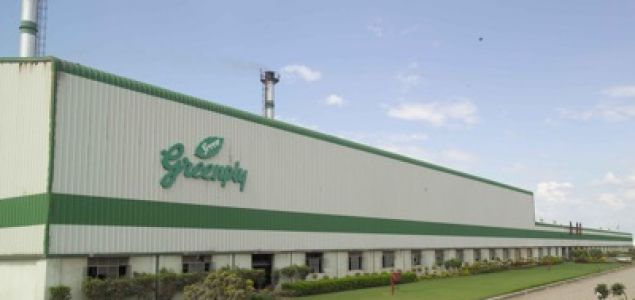
Recently, one of India’s leading plywood manufacturers, Greenply, began veneer production in Gabon, alongside the other Indian owned mills operating in the country’s Special economic Zone.

Source: ITTO

Canadian lumber exports to US drop in volume, but up in value, due to high prices

The softwood lumber exports from Canada to the US went down since the Trump administration applied new duties earlier this year. Yet, due to the record wood prices the Canadian industry isn't experiencing much from the trade fight.

For the moment, is very unlikely for a new softwood lumber agreement to be settled by the end of 2017. Despite this, the higher wood prices and the growing US builders demand is keeping the Canadian producers away from laying off staff, cut production or close down the mills.

"If we were not seeing the same kind of demand and the same kind of high prices we're seeing then we might be in an entirely different type of situation," said Joel Neuheimer, vice-president of international trade and transportation for the Forest Products Association of Canada.

Trade data from the United States Department of Agriculture shows the amount of Canadian softwood imported was down eight per cent for first nine months of 2017, compared with the same period in 2016. However the value of those imports went up very slightly — 0.15 per cent — because even though less wood was shipped, each piece of lumber was worth more, The Canadian Press informs.

Producers in British Columbia are yet to suffer the most, as the softwood exports to the US are down by 33%. Last summer's wildfires in the province had a big impact on the forestry industry, with softwood exports in July and August only about half what they were a year earlier.

Yet, the exports from Quebec actually went up 3%, while Ontario exported 11% more softwood lumber to the US, so far this year. The two provinces rely almost exclusively on the US markets for their wood, with 99% of Ontario shipments of softwood and 98% of Quebec's going to the United States.

In 2016, about 81 per cent of B.C. softwood was exported to the United States, while in 2017 that fell to 63 per cent. B.C. producers saw their exports to the rest of the world jump 67 per cent this year.
Between 2001 and 2006, when the last softwood lumber dispute took place, it's believed about 15,000 jobs disappeared in the softwood industry, reported the Canadian Press.

Canada and the U.S. continue to negotiate a new softwood trade agreement, but in the meantime the U.S. Lumber Coalition complaint stands that Canada unfairly subsidizes its producers with low stumpage fees for harvesting trees on government land and that Canadian producers are selling wood into the U.S. at lower prices than they sell it at home.

The complaints led to the current duties imposed by the U.S. Department of Commerce last spring and verified in November. Canadian producers paid about $500 million in deposits for the duties thus far, with more to come in 2018 if there is no settlement.

Canada is challenging the duties under both the North American Free Trade Agreement and at the World Trade Organization. The NAFTA dispute panel has to make a ruling by next fall. The WTO process could take years.

China’s forestry sector output value to amount to $1.1 trillion in 2017

China's forestry sector output value is likely to reach 7 trillion yuan (approx. $1.1 trillion) in 2017, due to the continued input.

As reported by Xinhua Net, China has seen the fastest growth of forestry resources worldwide, with an improving environment and higher forestry productivity, Zhang Jianlong, head of the State Forestry Administration, said at a conference in Beijing.

The development of the forestry sector has lifted 1.08 million people out of poverty in 2017, playing a bigger role in raising farmers' incomes, while the country has also raised ecological construction to an unprecedented level over the past five years, with afforestation one of its major projects.

In the future, China will continue to carry out afforestation projects and help to lift more families out of poverty, Xinhua Net reported.

By the end of 2015, the total area of China's forests stood at 3.12 billion mu (208 million hectares), and forest coverage was 21.66 percent.

India: Greenply forecasts significant growth in plywood in MDF production

Greenply Industries showed optimism about organized players gaining market share in plywood and medium density fibre (MDF) post GST, during a recent analyst meet.

The company expects margin pressure in MDF segment, while operating leverage will benefit the plywood segment.

Greenply believes that GST implementation will reduce the price gap between organized and un-organized manufacturers, thereby resulting in shift to organized branded plywood players. Also, increasing preference for branded products will support this shift.

In MDF, 3,60,000cbm facility in Chittoor, Andhra Pradesh is expected to be commercially operational before September/October 2018. The company expects its new capacity to achieve 45% utilization in FY19 and expects optimum utilization level by FY22. However, margin from the new unit initially will be 13-14%, while margin of the existing facility may reduce to 27% (~30% currently) due to increasing competition.

MDF demand in India is expected to grow at 15-20% CAGR to Rs3,000cr by 2021 (from Rs1,600cr in 2016) driven by shift from cheap plywood, increasing urbanization and growing preference for value added MDF products. Volume growth for the company in MDF segment is likely to be at 25% p.a., as it expects to gain market share from the economic plywood segment.

The company expects to increase market share in the plywood segment. It estimates volume growth of 12-15% p.a. going forward against tepid growth of just 4% CAGR in the past 3 years. Improved operating leverage is likely to lead to margin expansion in the plywood segment.

The company is also undertaking green-field expansion in Uttar Pradesh for plywood and allied products. This will increase the capacity by 40% to 45.9 mn sq. m. This expansion entails an investment of Rs120cr, out of which Rs80cr will be funded by debt and the rest through internal accruals.

Tallest timber building will be built in Norway

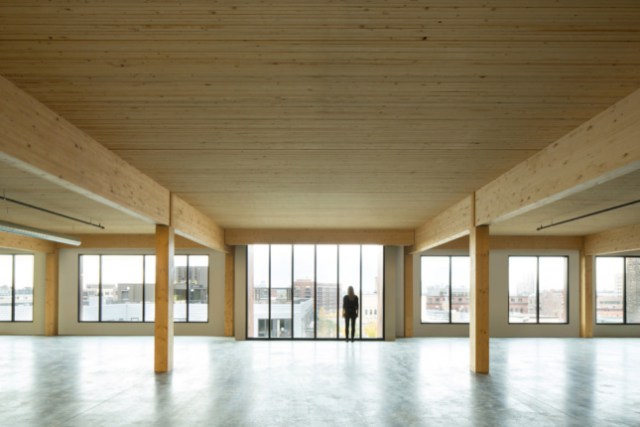
The world's tallest timber building is to be built in Norway. Mjøstårnet will be more than 80 metres tall and stand 30 metres higher than what is today considered the world’s tallest timber building. 

Mjøstårnet sets new standards for timber constructions. The building is the closest we come to a skyscraper in timber,” says investor and contracting client, Arthur Buchardt.

Mjøstårnet, named after its neighbour and Norway’s largest lake, Mjøsa. The record-breaking construction will sit on the edge of the north-eastern tip of the lake in the small town of Brumunddal, an hour and a half’s drive north of Oslo.

Spanning over 18 floors, the building will reach 80 metres high, and include apartments, an indoor swimming pool, hotel, offices, restaurant and communal areas. Construction is scheduled to be completed in December 2018. Moelven, a Mjøsa-local Scandinavian industrial group, will supply the timber constructions from local spruce forests required to construct the tower and the swimming pool area.

The assembly and construction of the Mjøstårnet is nothing short of world-class engineering, and will be managed without external scaffolding, despite the complexity of working at heights. We are primarily using cranes and supplementing with lifts as needed. We have reached 33 metres to date, meaning we have 48 metres to go,” says Buchardt.

Moelven industrier ASA is a Scandinavian industrial group that supplies products and associated services to the Scandinavian building market. The Group’s businesses employ over 3.600 persons and have a total annual turnover of some NOK 11 billion. The Group’s close to 52 business production units are organised into three divisjons: Timber, Wood and Building Systems.

Dutch company invests €45 million in an Estonian torrefied wood pellets plant

Momentum Capital, a Dutch investment firm, has made a conditional investment of €45 million in the development of an industrial scale torrefaction biocoal plant in Vägari, Estonia.

The Dutch company made the investment through its subsidiary, Baltania. According to Momentum, if all conditions of the investment are met, the construction of the biocoal plant will start in the second quarter of 2018.

The plant’s production will focus on torrefied biocoal pellets produced from sustainable woody biomass, Momentum Capital said.

The biocoal pellets can be used to partially or to fully replace fossil coal in electrical power or heat generation plants as a sustainable alternative without significant additional investment in plant conversion,” according to the company. “The energy density and grindability of renewable and sustainable biocoal pellets are similar to thermal steam coal and significantly higher than that of white wood pellets or wood chips. This also means that logistic costs per tonne transported are significantly lower. The main customer base will consist of utility companies in Nordic countries and Central Europe.”

The investment will be funded by Momentum Capital together with other investors and financial institutions. The European Union has approved a grant of €25 million for the torrefaction project, Momentum said, adding that the project will be carried out in cooperation with the Estonian ministry of the environment.

The Dutch investment firm also said the biocoal plant investment would have a positive impact on employment in surroundings of Vägari. “The biocoal plant will offer directly at least 30 jobs in production, added with many overhead support opportunities via third party local businesses to be selected. In addition, approximately 300 jobs will be created in harvesting and logistics, and more than 200 temporary jobs are to be created during construction of the biocoal plant.

Australian company to acquire one of New Zealand’s largest forestry business

Australian OneFortyOne Plantations (OFO) has signed an agreement to acquire one of New Zealand’s leading forestry businesses, Nelson Forests.

Nelson Forests is 100 per cent owned by investment funds advised by Global Forest Partners LP, a US-based timberland investment management organisation.

The acquisition will allow for the exchange of best practice forestry management between the Australian and New Zealand operations. Following the acquisition of Nelson Forests, OFO intends to pursue options to increase the scale of both the forest and domestic processing activities in the Nelson region.

Completion of the transaction is expected to over 2018, subject to approval from New Zealand’s Overseas Investment Office (OIO). Campbell Global, Gresham Partners and MinterEllisonRuddWatts were advisory partners to OFO on the transaction.

Nelson Forests is a vertically integrated plantation and mill business that operates in the Nelson/Marlborough region of New Zealand. The plantation is over 60,000 hectares in size and the region has a total annual log processing capacity of 1.4 million cubic metres.

OFO is a leader in the Australian forestry industry. It holds long-term harvesting rights to a softwood plantation estate in the Green Triangle region comprising over 80,000 hectares.

Newsletter

Subscribe to our digital newsletter for your daily digest of essential news, views and analysis from the international wood industry delivered directly to your inbox.


0