
Article archive

UK pledges to retain FLEGT commitment after Brexit

In relation to policy initiatives like FLEGT, the decline in the relative significance of the EU as an importer of timber products after Brexit will be mitigated by the commitment of the UK government and timber trade to continue to support the VPA process and EUTR.

Speaking at a meeting organized by the UK Confederation of Timber Industries in February, Therese Coffey, parliamentary under-secretary of state at the Department for Environment, Food and Rural Affairs (DEFRA), stated that: “When the UK leaves the EU, the Withdrawal Bill will make sure the whole body of European environmental law continues to have effect in UK law.

That [includes] two regulations that the UK timber sector played a great role in shaping: the European Union Timber Regulation and the Forest Law Environment Governance and Trade Regulation”.

She went on to state that: “We are committed to supporting sustainable and legal timber and forest industries and recognize the value of the EUTR and the EU FLEGT initiative in assuring this."

This was believed to be the first time that a UK minister had made a definitive statement of this kind and was welcomed by the audience of forestry and timber sector representatives and leading businesses.

“The UK timber sector was at the forefront in the development of the EUTR and the EU FLEGT initiative and the vast majority of our members support their retention post-Brexit,” said David Hopkins, UK TTF Managing Director, and Director of the CTI.

“The EUTR is a business friendly, flexible regulation to ensure goods are sourced responsibly, protecting the environment and business reputation. Abandoning the regulation [and support for the EU FLEGT initiative] now would cause unnecessary upheaval and market confusion.

I would like to thank the Minister for this commitment and giving us the certainty our sector needs.”
Austrian softwood lumber more expensive in January

In January, prices of softwood lumber in Austria have increased for almost all assortments as compared to December. However, if compared to January 2017, there are some mixed results. 
From December 2017 to January 2018, the price increase of 1 EUR/cbm is distributed uniformly.
Year-on-year, especially wide boards (3-6m length) have become more expensive. In other boards' assortments, the lower price limit has shifted down.
Also, the price of edged boards and reserve squared timber is higher. The price of rough boards and squared timber remained stable.

Softwood Lumber Spruce/Fir Jan. '17 Dec. '17 Jan. '18 Change Jan. '17 to '18
€ / cbm EXW
Edged Boards, 0-IIIa, 23 mm + 230-241 231-241 232-242 +2 / +1
Rough boards in fixed dimensions, 18-22 mm 230-240 228-239 229-240 -1 / -
Squared timber, standard dimensions, I/II, 4-6 m 210-217 208-216 210-217 - / -
Reserve squared timber, II/III 154-161 154-161 155-162 +1 / +1
Boards, III-IV, 8-16 cm, 4-6 m 147-154 146-154 147-155 - / +1
Boards, III-IV, 8-16 cm, just 4 m 149-155 147-155 148-157 -1 / +2
Boards, III/IV, 23 mm, 4-6 m 150-155 148-156 148-157 -2 / +2
Boards, III/IV, 28 mm +, 3-6 m 155-163 157-165 158-166 +3 / +3

Strong growth in US wooden furniture imports from Vietnam and India

The U.S. imported US$18.5 billion worth of wooden furniture in 2017, 11% more than in 2016. Imports from all key supplier countries increased. China accounted for 47% of all wooden furniture imports in 2017, followed by Vietnam with 20%. The strongest growth rate was in imports from Vietnam and India.

US imports of all types of furniture increased in 2017. The strongest growth was in imports of kitchen furniture, upholstered seating and office furniture.

Retail sales at furniture stores were almost unchanged in the last two months of 2017 according to US Census figures. The advance retail estimate for January 2018 indicates retail sales of furniture and home furnishings to be 5% higher than in January 2017.

The latest Smith Leonard survey of US residential furniture manufacturers and distributors reports the following growth figures for November 2017: New furniture orders increased 11% compared to November 2016. Furniture shipments were up 4% year-to-date from November last year.

Both the furniture industry and wood product manufacturing reported contraction in January, according the Institute for Supply Management. Most other US manufacturing industries reported growth during the period.

US kitchen cabinet manufacturers reported a 2.9% increase in sales in 2017, according to the Kitchen Cabinet Manufacturers Association’s monthly Trend of Business Survey. Participating cabinet manufacturers reported total sales of US$6.9 billion for 2017. Participants in the business survey represent about 70% of the U.S. cabinet market.

EU wood products exports at record level; imports continue recovery in 2017

In 2017, the EU exported wood products with a total value of Euro 21.8 billion, 5% more than in 2016 and overtaking the previous record level of Euro 20.51 billion in 2015.

The EU increased exports of a wide range of wood products last year, but there was particularly strong growth in sawnwood, logs, energy wood, and panels. The increased exports were mainly destined for North America, China and other Asian countries.

Last year, the rate of EU export growth exceeded the rate of import growth, resulting in an increase in the EU’s timber product trade surplus with the rest of the world, from Euro 2.97 billion in 2016 to Euro 3.62 billion in 2017.

Recovery in EU wood products imports on the way

The total value of EU imports of wood products was Euro 18.17 billion in 2017, 2.4% more than in 2016. This followed an increase of 1.3% to Euro 17.74 billion in 2016. In 2017 EU import value was at the highest level since 2008 just before the global financial crises.

Imports into the EU were boosted in 2017 by stronger economic growth. According to Eurostat, the EU economy grew at its fastest rate in 10 years in 2017, registering a 2.5% increase on the year before. That is the highest annual growth since 2007, when the economy expanded by 2.7%.

The bloc of 28 countries put in a strong performance in the final quarter of the year, growing 0.6%, mainly driven by good economic results from Germany, Spain and France. Good economic growth fed through into a rise in the value of the Euro last year, which strengthened against the U.S. dollar by around 15% during 2017.

For importers in the eurozone, this helped offset the general rise in global prices for timber products resulting from strong demand in other regions including China, North America and the Middle East.


Timber company in the UK fined under EUTR

UK's Hardwood Dimensions (Holdings) Ltd was fined  £4,000 for breaching regulations prohibiting the importing and sale of illegally harvested timber. The British timber operator failed to check the legality of a batch of timber from Cameroon when placing it on the market.

The fine marked the first enforcement action carried out by the Government’s new Office for Product Safety and Standards since its establishment earlier this year, TTJ Online reported.

The company breached the regulations requiring businesses trading in timber and timber products in the UK to ensure that their products originate from legal sources. Hardwood Dimensions pleaded guilty at the first hearing at the Manchester Magistrates Court.

The new Office for Product Safety and Standards strengthens the UK’s already tough product safety and enforcement rules and today’s decision by the court sends a powerful message to companies that they need to ensure any products they sell originate from legitimate sources,” said business minister Andrew Griffiths.

This conviction shows just how serious we are about compliance issues and how we will take rapid action when rules have been broken to protect consumers, businesses and the environment,” added Mike Kearney, head of enforcement at the Office for Product Safety and Standards.

Russia: Drop in softwood logs exports in China in 2017; hardwood deliveries up 23%

In 2017, China reduced the Russian roundwood imports by 0.8% and increased the purchases of hardwood by 23%.

Thus, the exports of softwood and hardwood logs from Russia to China reached 12.6 million m3, which represents a -0.8% year-on-year decrease, but the sales pattern changed significantly, WhatWood reports.

The export of softwood sawlog (pine, Siberian spruce, Siberian and Far East larch) from Russia went down by 7%, while the demand for cedar sawlog in China increased by 50%, to 166,000 m3. At the same time, the larch pulp logs sales went up by 12%, reaching 405,000 m3, while Siberian and Far East spruce pulp logs reached 522,000 m3, up by 7%, during the mentioned period. Continue reading "Russia: Drop in softwood logs exports in China in 2017; hardwood deliveries up 23%"

Roseburg plans to purchase Pembroke MDF facilities in Ontario, Canada

Oregon-based Roseburg Forest Products recently reached an agreement in principle with Pembroke MDF, Inc. to purchase Pembroke’s medium density fiberboard (MDF) and molding production facilities located in northeastern Ontario, Canada.

Upon final due diligence and Board of Director approval, the parties expect the sale to close by April 9, 2018.

The acquisition will be Roseburg’s first international purchase and will continue the company’s expansion throughout North America. Roseburg is currently building an engineered wood products plant in Chester, S.C., and recently acquired 158,000 acres of timberland in Virginia and North Carolina.

The Pembroke plant and its employees present untapped potential that can be used to better serve existing and future customers of our innovative and versatile MDF product line,” said Mark Avery, Roseburg Senior Vice President of Industrial Products and National Accounts.

Roseburg currently owns and operates an MDF plant in Medford, Ore., which produces the company’s Arreis®, Medite®, Medex®, Permacore® and Fibrlite® product lines.

European oak suppliers to gather in London in April

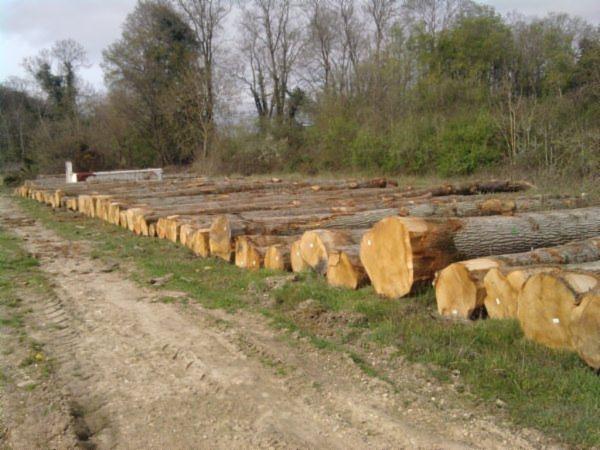
Europe’s oak suppliers will gather in London on April 18th to explore current market dynamics for the European oak market. Adopting a global perspective, the half day event will look at issues affecting oak supply, and whether European producers can continue to meet demand.

European Oak: Production, Consumption and Market Dynamics is organised by the UK Timber Trade Federation (TTF) and the European Organisation of the Sawmill Industry (EOS).

The event will be held at The Building Centre.  Speakers from key producer countries include Rafal Gruszcynski from the Polish Economic Chamber of the Wood Industry, Martin Kunst and Marijan Kavran from the ‘Croatian Wood Cluster’, Jean Bernard Bahier (Société RBD) and David Chavot (Société Margaritelli).

Oak is one of the world’s most popular species for the European design market. Its colour, texture and durability make it ideal for a huge range of applications in flooring, furniture and interior design.

Brexit to significantly impact EU timber trade balance

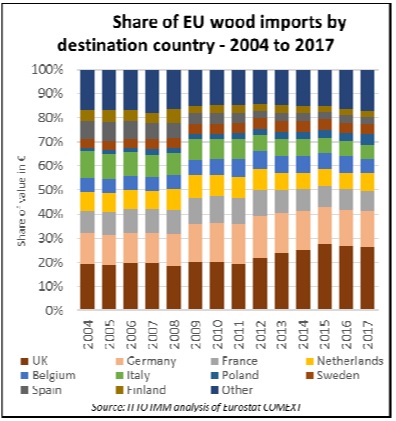
Looking to the future, the EU trade data highlights the extent to which Brexit will impact on the EU trade balance.

The UK is consistently the largest EU importer of timber products from outside the bloc, due partly to the country’s limited domestic forest resources, partly to the UK’s coastal position and traditional trade links with many countries in other parts of the world, and partly to the UK’s relatively concentrated timber distribution and retailing sectors which has been more accessible to external suppliers, particularly in China and Asia.

The UK’s share of total EU imports of timber products from outside the bloc increased sharply from 19% in 2011 to 28% in 2015. The UK’s share of total EU timber product imports declined slightly in 2016 and 2017, but only to a little under 27%.

During this time the UK was recovering from the financial crises, driving a strong increase in imports from outside the EU, particularly wood furniture and plywood from China, and wood furniture from Vietnam.

There was also a big increase in UK imports of wood pellets during this period, mainly from the U.S., driven by the UK’s climate change commitments which encouraged some large energy suppliers to switch from coal to biomass.

Without the UK, in terms of global trade, the EU becomes more relevant as an exporter, and less relevant as an importer of timber products. This is because the UK is not only a large importer of timber products from outside the EU, but also a large importer from other EU countries, and only a small exporter to all parts of the world.

In 2017, the value of the timber trade surplus of the EU excluding the UK was Euro 12.69 billion, more than three times the Euro 3.62 billion surplus with the UK included.

Last year the EU27 (i.e. excluding the UK) imported Euro 13.91 billion (compared to Euro 18.17 billion for the EU28) and exported Euro 26.60 billion (compared to 21.79 Euro for the EU28).

Rougier Group might sell its Cameroon business due to current difficult situation

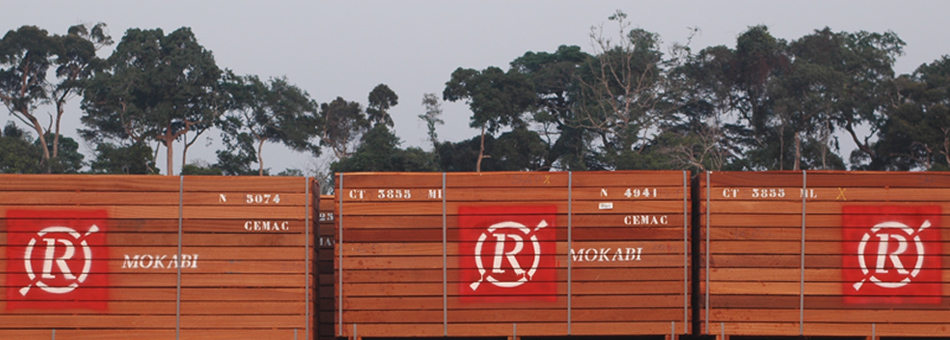
During a board meeting held on February 13, 2018, the Rougier group appointed a new managing director in the person of Francis Rougier. His mission will include implementing measures to cope with the difficult situation that the French firm currently experiences.

According to boursier, which disclosed the news, the newly appointed executive will also have to continue talks regarding the sale of the group’s Cameroonian subsidiary’s assets.  The latter’s employees are already “technically unemployed”.

Specialized in forest exploitation in Africa, the Rougier group saw its turnover slump by 7.5% in 2017. It said difficulties in Cameroon are mainly due to unpaid VAT loan arrears. Also, “the severe choking of Douala port greatly impairs operations of Cameroonian, Congolese and Central African subsidiaries”, the group added.

US lumber prices hit new record at the beginning of March

Trading in framing lumber in the US markets slowed down during last week, as did upward momentum in prices. Even so, prices in most species gained modestly and the Random Lengths Framing Lumber Composite Price finished at $512, a new record.
Gains came early in the week, with the composite holding at its midweek level and sales finishing with a quiet tone. Buyers held back, unwilling to pay record prices when shipments were several weeks out and mills were indicating shipments might be later still due to traffic issues.

Week
Mar 2
Week
Feb 23
Year Ago
2017
Random Lengths Framing Lumber Composite Price* $512 $509 $407
KD Western S-P-F #2&Btr 2x4 R/L Mill Price 542 540 369
KD Eastern S-P-F #1&2 2x4 R/L, delivered Great Lakes 625 619 444
Green Douglas Fir Std&Btr 2x4 R/L (Portland) 595 600 370
Southern Pine (Westside) #2 2x4 R/L 578 567 490
KD Coast Hem-Fir #2&Btr 2x4 R/L 560 560 400
Ponderosa Pine (Inland) #2&Btr 1x12 R/L 740 740 590
* Weighted average of 15 key items

Random Lengths Panel Market Report

Structural panel prices continued to gain ground despite a slower trading pace. Supply shortages of OSB lingered, as mill offerings for shipment in March were a rarity.

A number of mills remained off the market throughout the week. In Southern Pine plywood markets, substantial rainfall early in the week slowed rated sheathing sales, but prices remained firm to slightly higher.

Western Fir plywood trading quieted as buyers pulled back to digest recent purchases and await deliveries of previous orders.

(f.o.b. mill prices) Week
Mar 2
Week
Feb 23
Year Ago
2017
Random Lengths Structural Panel Composite Price* $540 $534 $407
Southern (west-east) 15/32-inch 3-ply rated sheathing plywood 530-575 530-575 400-415
Southern (west-east) 15/32-inch 4-ply rated sheathing plywood 535-580 535-580 400-417
Western 1/2-inch 4-ply rated sheathing plywood 550 549 413
North Central 7/16-inch Oriented Strand Board 405 395 305
*Weighted average of 11 key items


Tolko partenered with Hunt Forest Products to build sawmill in Louisiana

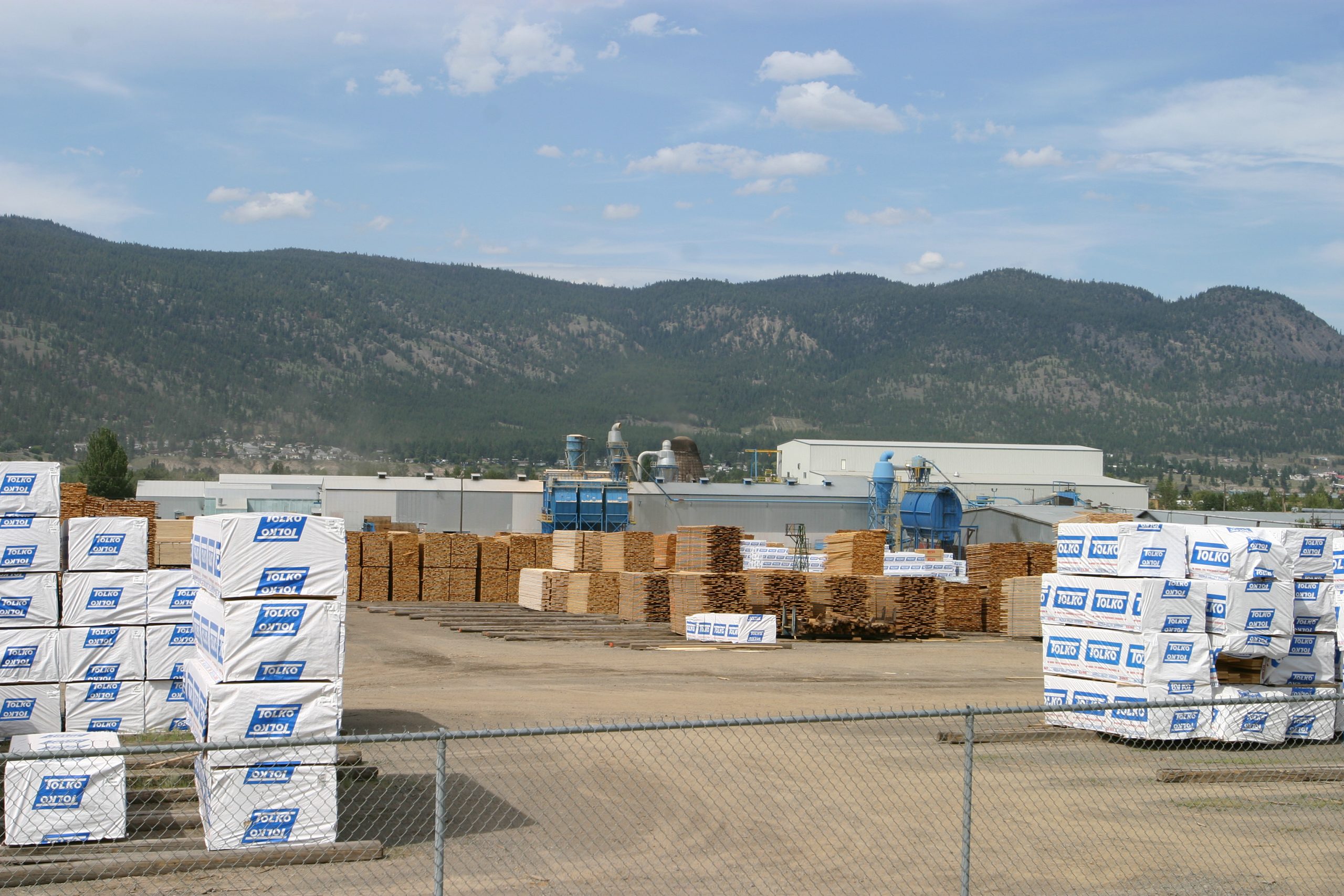
Tolko Industries has partnered with Louisiana-based Hunt Forest Products to build a state-of-the-art sawmill near Urania, Louisiana, US.

Construction of the approximately USD$115 million project is expected to commence in April and be completed by December 2018. It will employ approximately 110 people and will produce southern yellow pine lumber from timber harvested in the surrounding area. The LaSalle Lumber Company, the joint-venture company building and operating the new mill, is named after LaSalle Parish, the county in Louisiana where the mill will be built.

This is our first venture into the United States,” said Brad Thorlakson, Tolko president and CEO.

The scope of the project includes a 200 Million-board-foot facility that will consume approximately 850,000 tons of timber annually, three continuous dry kilns and a planer facility. Wood chips, sawdust, planer shavings and hog fuel will be contracted to Drax Biomass, which operates a 450,000-ton wood pellet facility adjacent to the sawmill.

We are excited to be bringing a high-tech sawmill, and the skilled jobs it will provide, to central Louisiana, and to provide a local outlet for the massive inventory of southern yellow pine that exists in this region,” said James D. Hunt, co-owner and vice chairman of the Board of Directors of Hunt Forest Products.

Tolko is a leading manufacturer of a wide range of forest products for customers around the world, including lumber, plywood, and veneer oriented strand board co-products, biomass power and a growing number of specialty wood products.

Hunt Forest Products L.L.C. is a full-service wood products company founded in 1978 with the purpose of providing quality products and superior service. They manufacture a variety of plywood, lumber, and other specialty wood products.

Rex Lumber plans to build $110 million softwood mill in Alabama

Rex Lumber Co. plans to build a $110 million state-of-the-art softwood lumber manufacturing facility in Pike County, Alabama, US, as it was announced on the 28th of February.

While the construction of the southern yellow pine lumber mill is scheduled to begin on March 15, the annual production at the facility is projected to be a minimum of 240 million board feet.

Rex Lumber’s new Alabama lumber manufacturing facility will not only bring high-quality jobs but will also create substantial economic benefits for the industry in the Pike County area,” Governor Ivey said. “We’re thrilled that the company selected Alabama for this project, and we’re committed to helping this new operation succeed and thrive for years to come.”

Rex Lumber now has three sawmills, two in the Florida Panhandle and one in Mississippi, which produce a total of 575 million board feet every year. For this third sawmill expansion, the company is still looking for various sites.

This new lumber manufacturing operation will create quality employment opportunities, a significant new timber market, and enhanced economic activity in the region,” said Greg Canfield, secretary of the Alabama Department of Commerce.

Sveza completes acquisition of Tyumen Plywood Plant in Russia

Sveza received approval from the Federal Antimonopoly Service of Russia (the FAS Russia) for the previously announced acquisition of Tyumen Plywood Plant from its current owner Almira Karimova. According to the announcement, the company  acquired 100% shares of the plant.

Tyumen Plywood Plant is one of the most modern wood processing companies in Russia – most of the production facilities were commissioned in 2008. It produces around 92 thousand m3 of plywood per year. The company is specialized in a large-format birch plywood.

Sveza plans to further expand production of Tyumen Plywood Plant  to 120,000 m3 in the next years.

Earlier Sveza introduced a new plywood for laser cutting applications.

The company is one of the leading players in the woodworking market. It produces high-quality plywood of natural Russian birch and hold a global leadership in this area. It is reported to be the world’s largest producers of natural Russian birch plywood.

Russian sawn softwood exports grew by 12% in 2017

The Russian sawn softwood exports reached record level in 2017, amounting to a volume of 27.9 million m3, which is 12.4% more than in the previous year. This represents the highest growth rate in the last 12 years.

As WhatWood reported, in 2005, the export sales increased by 17% (year-on-year) to 14.78 million m3. In the period from 2006-2016 sales grew by an average of 5.6% per year. The export growth was again ensured by China, which remained the largest consumer of Russian sawn softwood in 2017, increasing purchases by 20% (year-on-year) to 16.1 million m3.

China imported 58% of the total supply volume of Russian sawn softwood (4% year-on-year increase).

Russian sawn softwood accounts for more than half of the import supply market in China. China imported about 58% of sawn softwood from Russia, 19.5% from Canada, 6.7% from Finland. In 2017, supply from Canada decreased by 4.5%, from Finland increased by 81%.

Dubai WoodShow 2018 will host exhibitors from more than 100 countries

The Dubai International Wood and Woodworking Machinery Exhibition will be held in Dubai from March 12 to 14 at the Dubai World Trade Centre.

As Saudi Gazette reported, the exhibition, organized by the Strategic Marketing and Exhibitions, is the largest specialized platform for woodworking machinery, products and accessories. It brings together a large number of manufacturers, manufacturers, importers, suppliers and traders in the manufacture of furniture and wooden products.

Also, the Ministry of Economy of the UAE and a number of specialized bodies in the industry will support the exhibition, which will host more than 300 exhibitors from more than 100 countries from around the world such as Italy, Germany, China, Turkey, Russia, India, Canada and other countries.

The UAE wants to increase the investments volume in the sector which include wood in its composition, along with contracting and market capitalization of about $ 2.4 trillion.

Dawood Al Shezawi, Chief Executive Officer of Strategic Marketing and Exhibitions, said: “The exhibition is a unique event that offers a great opportunity for growing number of visitors, that last year exceeded 10,000 visitors from all over the Arab World and around the world to learn about the latest developments and technological technologies in the field of woodworking and machinery.

“The exhibition attracts more customers and visitors in its current 2018 cycle as a global platform for the assembly of furniture manufacturers, exporters and importers of wood and furniture manufacturing machines and wood products where they meet every year in one place to exchange experiences and market their products and reach target customers and expand their market share especially with the increasing demand for wood products with the special offers to their visitors.”

Concurrently running along with Dubai WoodShow, the Dubai International Furniture Accessories and Components (DIFAC) Exhibition, which brings together all wooden accessories manufacturers and provides state-of-the-art designs for its customers and visitors, will be held during the three-day event from 12 to 14 March, 2018, Saudi Gazette reported.

The exhibition is attended by a large number of professionals and officials of the relevant authorities in the wood industry, including the Ministry of Forestry and the Environment of the Republic of Cameroon, the President of the National Wood Company in Gabon, the European Wood Machinery Manufacturers Association, the American Wood Export Council, the Turkish Timber Manufacturers Association, the African International Tropical Timber Association.

Prices for wood pellets in Austria slightly changed in February

Wood pellets' average price n Austria has reached 240,1 € per tonne of wood pellets or 4.90 Cent per kWh in February 2018. 
The price increased by 0,7%, as compared to the same period last year, but decreased by -0,3%, as compared to January 2018.
The cost advantage for wood pellets in Austria is currently 49.9% for extra light heating oil and 63.5% for natural gas.
At the moment, in Austria, wood pellets in bags cost an average of € 4.06  per 15 kg bag (when ordered by the pallet). This represents an increase of +0.4% as compared to the same month of 2017 and is -0.4%, as compared to the previous month.

US hardwood import volumes down but values up in 2017

The volume of US imports of temperate and tropical sawnwood fell for the second year in a row in 2017. Annual imports of sawn hardwood fell 13% in 2017 from the previous year, but the value of imports was up.

While overall hardwood imports were down tropical sawnwood was not affected by the overall decline in 201,7 instead tropical imports increased 2% from 2016 to 239,738 cu.m.

The lower sawnwood import volumes may not be all bad news for wood product suppliers as this appears to be part of the continuing trend towards higher US imports of semi-finished and finished wood products, something tropical sanwood suppliers should take note of. Imports of most finished products such as flooring and furniture were significantly up in 2017.

The value of sawn hardwood imports was steady at US$252 million. The share of tropical sawnwood in the total value of US hardwood imports was 52% in 2017, unchanged from 2016.

The following species posted the largest volume gains in the US market in 2017: jatoba, balsa, sapelli and cedro. Imports of mahogany and keruing sawnwood declined from the previous year.

Canadian imports of tropical sawnwood mainly via US

Canadian imports of tropical sawnwood declined 3% in 2017 to US$19.8 million. The decline was largely in the “other” category.

Mahogany sawnwood imports more than doubled in 2017 to US$1.7 million. Imports of sapelli and the collective category of virola, imbuia and balsa also grew in 2017.

Imports through the US tripled in 2017, while direct imports from tropical countries declined for most species. Imports from the US accounted to one quarter of all Canadian tropical sawnwood imports in 2017.

Various factors push up US log prices

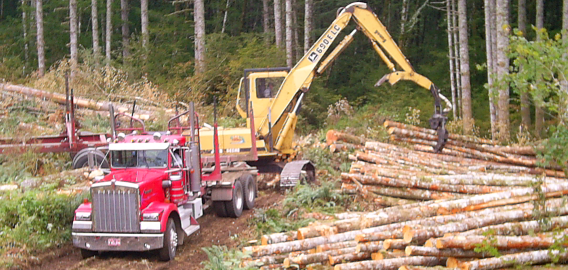
Prices for logs on the US West Coast have increased due to the natural disasters, housing construction, Asian competition and labor constraints.
According to the Daily Astorian, a confluence of factors is lifting Northwest log prices at a time when the US demand for lumber is only expected to grow. Natural disasters, from wildfires in the West to hurricanes in the South, have restrained the supply of logs from US forests.
Also, housing construction and remodeling have increased the domestic lumber consumption as Asian buyers continue to compete with sawmills for US logs and environmental laws that restrict logging on federal lands are unlikely to be relaxed while finding enough workers to harvest and process logs will only get tougher.
The Canadian timber industry, traditionally a major supplier, is unlikely to provide much relief: Timber harvests in British Columbia are declining due to damage from mountain pine beetles while a trade dispute is expected to further limit lumber shipments from that nation.
The big question for 2018 is if harvest levels should be accelerated, and if so, by how much?” said Mike Mackelwich, vice president of timberland operations for Pope Resources.
As the Daily Astorian reported, strong prices would indicate that forestland owners are in prime harvest time, but the number of standing trees in the Northwest isn’t infinite. In the region’s private coastal and inland forests, the harvest level is already reaching the sustainable yield and may exceed timber growth by 2020, said Rocky Goodnow, vice president of North American timber service at Forest Economic Advisors.
Prices for Douglas fir on the West Coast went up 23% from about $650 to more than $800 per 1,000 board feet, while the price of coastal hemlocks surged 20 percent from roughly $500 to $600 per 1,000 board feet in 2017.
It’s pointing to the tight supply conditions in the West,” Goodnow said.
Landowners are winning under current circumstances while the profit margins of sawmills are shrinking, said Tim Atkinson, vice president of sales for the Stimson Lumber Co. At a certain point, mills just have to throw their hands up and stop buying, he said. “You’re already seeing people balk at these situations.”
The demand for lumber from North American mills is projected to increase by about 2 billion board feet a year, reaching nearly 70 billion board feet in 2022, up from roughly 60 billion board feet in 2017, Goodnow said. Any attempt to escalate logging on public lands will likely be thwarted with lawsuits, he added.
With constricted supplies in the West, this demand is expected to have a big effect in the U.S. South, which is also likely to export more to Asian markets. “China is going to find the timber where it can,” Goodnow said. Moreover, trade is expected to affect incoming lumber supplies.
Late last year, the US decided that Canada was subsidizing its timber industry in violation of the Softwood Lumber Agreement, resulting in standard duties on lumber of more than 20 percent. Canada is expected to challenge this finding through the World Trade Organization, which may take three to five years to resolve, according to the Daily Astorian
The US is expected to “dig in” on its position at a time when the broader trade relationship with Canada is precarious due to negotiations over the North American Free Trade Agreement, or NAFTA, Atkinson said. Apart from the question of sheer timber supply, U.S. log and lumber production also challenged by labor availability.
We expect real constraints on the labor side,” said Goodnow.
One factor is the opioid abuse epidemic, which is influencing the decline in labor force participation, he said. “This is hitting the rural communities where the industry is located.”

Newsletter

Subscribe to our digital newsletter for your daily digest of essential news, views and analysis from the international wood industry delivered directly to your inbox.


0