Article archive

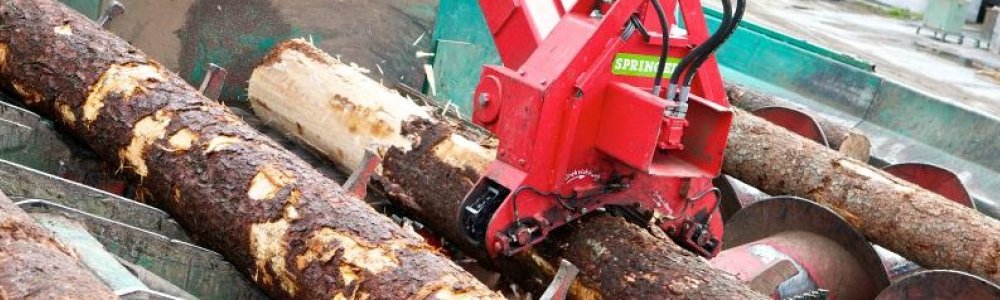
Austrian Springer Group bought majority share in FinScan

Austrian Springer Group has acquired the majority share in the finnish company FinScan. FinScan, located in Espoo near Helsinki, is a specialist for scanners and software for the automatized optimization of sawn timber in sawmills.

FinScan has installed more than 400 scanners in over 20 countries worldwide. The company produces scanning systems for sorting, damage detection and moisture measuring. Jyri Smagin stays CEO at FinScan.

Back in 2015 Springer acquired the Swedish scanner producer Woodeye. With the purchase of the Swedish lumber-scanner producer WoodEye, the company is expanding their product portfolio by camera-based image-processing systems for the wood industry.

Springer Group has been planning, developing and producing machinery and conveyor systems for the wood-processing industry since 1952.
 

Finnish roundwood trade registered great success for 2017, log prices up

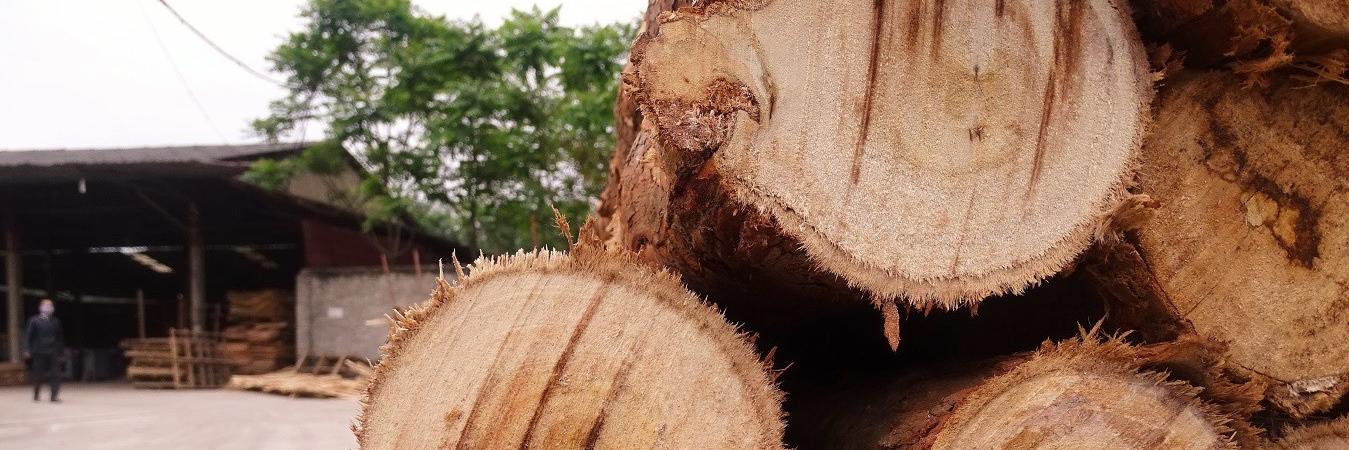
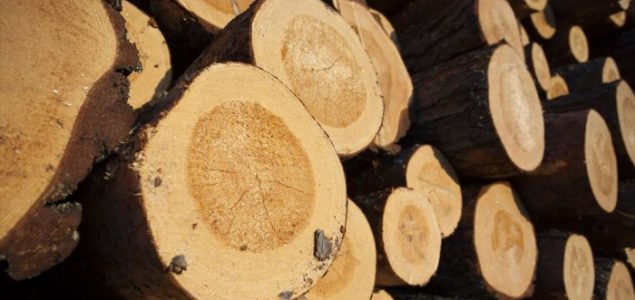
Roundwood trade from Finnish Forests registered a great success, due to the purchases of the forest industry from non-industrial private forests that totalled 43 million m3 in 2017, 5% more than in the previous year.
While half of the traded quantity was pulpwood, spruce logs and pine pulpwood were sold the most, with 11 million m3 each, according to the Natural Resources Institute Finland (Luke).
Total standing sales for Finnish roundwood amounted to 36.7 million m3 during the mentioned period, while their relative share in the total Finnish roundwood purchased by the forest industry increased over the previous year by three percentage points to 85%.
Almost half of the total roundwood volume was made up by logs in the standing sales. At the same time, the delivery sales, that amounted to 6.2 million m3 in 2017, were mostly made up of pulpwood, with logs representing only 27%.
The average stumpage price for pine logs was EUR 54.9 per m3, while the price for spruce logs reached EUR 57.8 per m3. Also, the price for pine pulpwood reached at EUR 15.9 per m3, while the price paid for spruce pulpwood was EUR 17.7 per m3.

The nominal prices of roundwood increased from 2016, but the real stumpage price level still decreased by 1%. Spruce logs were the most sold item in standing sales at 10.5 million m3, followed by pine pulpwood at 8.9 million m3.
During 2017, the average delivery price of pine pulpwood was EUR 27.7, that of spruce pulpwood was EUR 30.1 and that of birch pulpwood was EUR 28.0 per cubic metre. Like the stumpage prices, the real delivery prices also decreased from the previous year. Pine pulpwood was the most sold item in delivery sales at 2.4 million m3, followed by birch pulpwood at 1.3 million m3.
The stumpage price for logs harvested by regeneration felling was 2% and for pulpwood 12% higher than the average stumpage price. The price for logs harvested by thinning was 15% and for pulpwood 8% lower than the average stumpage price. Wood harvested in the course of a first thinning fetched 29% less than the average stumpage price.
86% of the logs purchased in standing sales and 49% of the pulpwood purchased in standing sales originated from regeneration felling stands.

EU tropical timber imports drop sharply in 2017

European timber businesses suggest a range of factors that may explain the apparent dichotomy between good underlying demand for hardwoods and the sharp fall in imports of tropical wood in 2017. Some are short-term trade trends, others longer-term international market structural changes.

According to some importers, one reason is adjustment after over optimistic buying in 2015 and 2016. Trade was further disrupted in 2017 by particularly heavy seasonal rains in both Africa and Asia.

Worsening congestion at the Cameroon port of Douala, due to supply bottlenecks following the rains, combined with lack of dredging resulting in reduced vessel load factors, added to problems in West Africa.

While also pointing out that a significant proportion of timber shipped into their country is en route to other European markets, Belgian importers also attributed the dramatic fluctuation in its imports from Cameroon from 2015/16 to 2017 to post-recession improvement in supplier mills’ capacity and efficiency.

Long lead times immediately after the international downturn, in some cases extending to two years, led to some Belgian importers increasing order volumes to secure sufficient stock.

However, as Cameroon mills improved performance, numerous orders were reported arriving in quick succession in 2016. That resulted in excess stocks in 2017 and further orders being reined back until these had been cleared.

The downturn in EU tropical imports is also attributed to international economic improvement and increase in demand elsewhere, with supply diverted to other such healthy markets as the US, Middle East and, most notably, Vietnam and China.

Rising demand in the latter is put down particularly to the continued rise of the country’s affluent middle class and consequent growth in domestic consumption of timber and wood products. While referring to temperate hardwood, this is most clearly illustrated in American Hardwood Export Council (AHEC) statistics for Chinese timber imports from the US.

As little as a decade ago, AHEC estimates that 85% of China’s US hardwood imports were re-exported as manufactured goods, with just 15% staying in China. Today that ratio is almost exactly reversed and the vast bulk is consumed in the Chinese market.

Central/West Africa: Buyers reject the higher asking prices for logs

Reports from Cameroon say that buyers for the Chinese market are not accepting the new and higher asking prices for logs.
Analysts say, taking into account that the Chinese New Year celebrations and vacations are now in full swing and the undermining of business confidence by volatility in stock markets, it is scarcely surprising that log importers are not in any mood to buy and certainly not at the new asking prices. In retrospect, the timing of the decision to raise export duties on logs was very unfortunate.
There has been little knock-on impact from the hike in log asking prices on prices for other products such as sawnwood and plywood. However, if and when log exporters manage to secure higher log prices then sawnwood and plywood prices will likely move up.
Demand for sawnwood is generally quiet and prices remain unchanged but business in the large dimension slabs is firm. It seems likely, say analysts, that this quiet phase in markets will remain for some time.
The early months of every new year are usually the slowest period, especially in western markets which would explain why producers are saying European buyers are not yet in the market for new orders, even for the usual ‘stock top- ups’.
Adding to the stock market gloom in EU markets has been the adverse winter weather in Europe and the uncertainties over the way in which the UK will exit the EU. This negative sentiment is likely to linger for some weeks to come.
Hopes for higher demand pinned on Middle East Middle East demand is holding firm and producers still expect a surge in rebuilding when a more peaceful situation is achieved in the region.
Decision on kevazingo sawnwood trade still pending Producers in Gabon say the kevazingo issue has not been resolved and there has been no decision on whether to limit sawnwood exports to only kiln dry stock. In the meantime, the forest authorities are battling to stem the flow of illegally harvested Kevazingo, a tough task where such a high value timber is concerned.
Log Export Prices

West Africa logs, FOB € per m³
Asian market
LM
B
BC/C
Acajou/ Khaya/N’Gollon
260
255
170
Ayous/Obéché/Wawa
270
260
180
Azobe & Ekki
270
270
180
Belli
295
295
Bibolo/Dibétou
195
175
Bilinga
265
265
-
Iroko 370
350
270
Okoume (60% CI, 40% CE, 20% CS) (China only) 250 250 190
Moabi 355 345 275
Movingui 230
230
170
Niove
175
160
Okan
240
240
Padouk
335
275
210
Sapele 310 300 245
Sipo/Utile
335
315
245
Tali 380 370

 
Sawnwood Export Prices

West Africa sawnwood, FOB
€ per m³
Ayous FAS GMS 425
Bilinga FAS GMS 530
Okoumé FAS GMS
430
Merchantable 320
Std/Btr GMS 350
Sipo FAS GMS
540
FAS fixed sizes 560
FAS scantlings 560
Padouk FAS GMS 880
FAS scantlings 1020
Strips 645
Sapele FAS Spanish sizes 505
FAS scantlings 510
Iroko FAS GMS 630
Scantlings 710
Strips
410
Khaya FAS GMS
450
FAS fixed
470
Maobi FAS GMS
620
Scantlings
630
Movingui FAS GMS
430

Source: ITTO

Finland’s sawmills target the Indian market

IndiaWood 2018 will receive several Finnish companies to the 10th edition of the show, through "Wood from Finland", a national promotion program for Finnish sawn timber managed by Business Finland and the Finnish Sawmills Association.

IndiaWood, one of the world’s leading exhibitions for the furniture manufacturing and the woodworking industry, is organized once every two years. It offers its audience a comprehensive overview of the prevailing technological innovations and the latest manufacturing trends in furniture manufacturing, woodworking technologies, tools, fittings, accessories and raw materials.

According to The Siasat Daily, India’s organised furniture industry is expected to grow 20 percent per annum over the next few years and is projected to cross USD 32 billion by 2019. The online home decor market in India is projected to grow at a CAGR of 50.42 percent in revenue over the period 2014-2019. The luxury furniture market is expected to garner USD 27.01 billion by 2020, registering a CAGR of 4.1 percent during the forecast period 2015-2020.

The Asian market is estimated to be the biggest consumer of furniture and India represents an important producer and consumer. The FDI enterprise under Make in India has already resulted in a 60% growth in inflows and it is this campaign of the government with the objective of high quality standard that is steadily attracting international capital and technological investment in India thus facilitating localized production.

This year, 12 high-end Finnish sawmills and wood processing companies have decided to participate at IndiaWood 2018 for the first time, foreseeing an enormous potential in the country.

The participating companies would include eminent names right from Versowood Oy, Keitele Timber Oy, Polkky Oy, JPJ-Wood Oy, Metsantuottajat Oy, Oy SWM-Wood Ltd, to AureskoskenJalostetehdas Oy, Kotkamills Wood Oy, VeljeksetVaara and will have representatives from senior management coming in and representing their companies.

With such promising business possibilities, it is an excellent opportunity for the Finnish companies to come forth and connect with their counterparts here in India to discuss mutually beneficial trade and what better platform for that than India Wood. We are excited and hopeful to get the right kind of direction to tap the Indian market, which has recorded a high consumption figure for wood in the past few years and is inclined towards a much higher growth in the coming times”, said HE Nina Vaskunlahti, Finnish Ambassador to India.

According to The Siasat Daily, as the fourth largest sawn softwood exporter in the world, Finland is known for its fine wood and is considered to be an ideal place in the world for tree growth. It belongs to the cold climatic belt in which subzero winters alternate with warm summers resulting in a low-resinous, evenly patterned Finnish wood which is class apart and is known world-wide for its superior quality.

Finnish wood is used in interiors as a surface material for walls, ceilings and floors, furniture, stairs, windows and doors, in features and decorations. Finnish sawn pine and spruce are used in European and Middle East markets to alarge extent and utilized in decoration of holiday houses in North Indian mountain regions in the same style which is also popular in Central European mountain regions.

Finnish softwood is well known for its excellent strength properties and visually attractive appearance, which have been well-accepted in emerging softwood markets, e.g. in China. A resource-efficient value chain from the sustainably managed forests to the end-users provide excellent raw material for various enduses. The 23 sawmill and woodworking companies in the Wood from Finland program have the annual sawing capacity of six million cubic metres. Most of these companies are members of the Finnish Sawmills Association. We are committed to studying new markets and customer requirements to better understand how to develop our products and services. Our aim is to maximize the value which our natural, recyclable and environmentally friendly material brings to our customers,” says Kai Merivuori, Managing Director, Finnish Sawmills Association.

The different colors, structures, types and the different interior products made of wood such as panels, veneers, plywood and glued laminated boards enable the use of wood in countless different ways. In recent years, alongside the traditional wood-based materials, many new wood-based products have evolved, which include pressure-treated and heat-treated timber.

The Wood from Finland booth E260 at IndiaWood will be inaugurated on 8th March by H.E Nina Vaskunlahti, Finnish Ambassador to India in presence of ReimaSutinen, Ministerial Advisor, Ministry of Economic Affairs of Finland, Kai Merivuori, Managing Director, Finnish Sawmills Association and Juha Peltomaki, Program Director, Wood from Finland.

Gällö Timber invests in log sorter upgrade at sawmill in Sweden

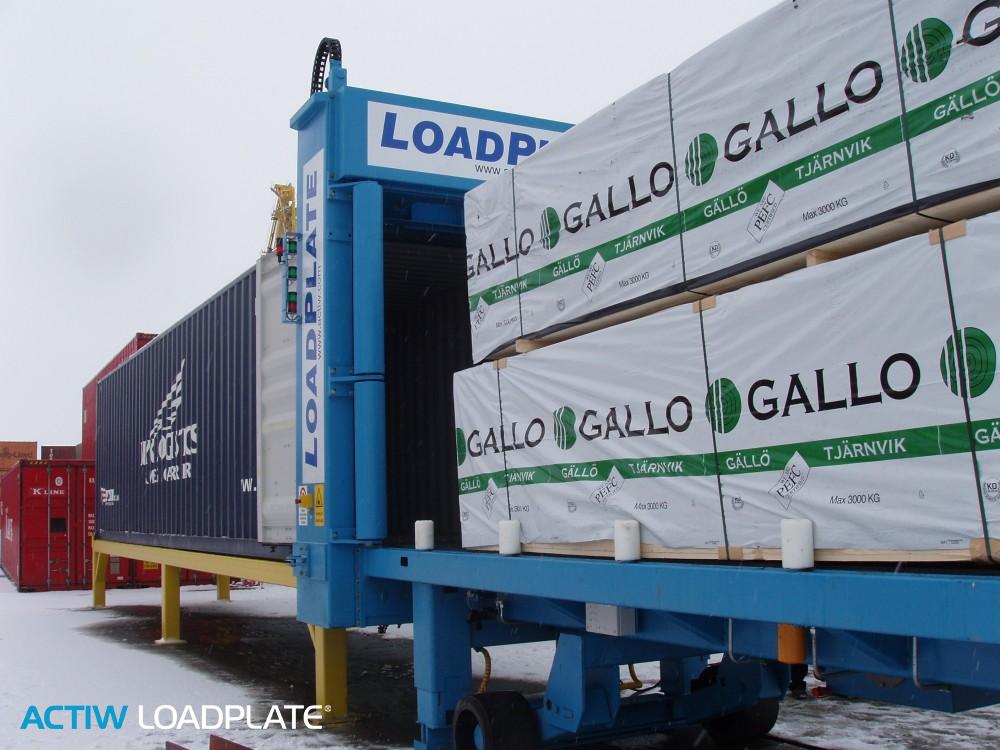
Gällö Timber upgrades the log sorter at its sawmill in Gällö, Sweden. The company placed a SEK 2 million oder with RemaSawco AB for a new 3D scanner, new sorting and measurement system, a new operator chair and controls and the latest generation of optimisation software for log sorters. 

Delivery and commissioning is scheduled for May 2018. 

Earlier, Gällö Timber introduced a new saw log assortment, Gällö Max.

Gällö Timber  is focused on sawntimber production. It is jointly owned by SCA and Persson Invest. Sweden is its the main market with approximately 50% of the delivery volume. The major foreign customers are located in Japan, the Netherlands, France and Germany.

Enviva signs 10-year contract to supply wood pellets to Japanese plant

Enviva Partners LP has released the company's Q4/2017 financial results on the 22nd of February and announced it has entered into a firm 10-year take-or-pay offtake contract with Marubeni Corp. to supply 100,000 metric tons per year of wood pellets to a new power plant in Japan, starting in 2022.

Net revenue for the quarter reached $161 million, up 27.3 percent when compared to fourth quarter of 2016. Included in net revenue were product sales of $156.1 million on a volume of 805,000 metric tons of wood pellets, compared to $121.2 million on a volume of 632,000 metric tons of wood pellets during the fourth quarter of 2016.

Gross margin for the fourth quarter reached $25.7 million, up from $19.2 million during the same quarter of the previous year. Adjusted gross margin per metric tons was $47.43 for the quarter, up from $42.95 during the fourth quarter of 2016. Net income for the quarter was $7.9 million, compared to a net loss of $9.6 million.

For the full year, Enviva reported net revenue of $543.2 million, up 17 percent from 2016. Included in net revenue were product sales of $522.3 million on a volume of 2.72 million metric tons of wood pellets, compared to $444.5 million on a volume of 2.35 million metric tons in 2016.

Gross margin for 2017 reached $78.8 million, up from $76.8 million during 2016. Adjusted gross margin per metric tons was $45.38, down from $45.55 in 2016. The company generated net income of $14.4 million in 2017, up from $13.5 million in 2016.

Enviva also released updated information on its contracting activities. Enviva Partners and Enviva JV Development Co. LLC, the sponsor’s new joint venture with affiliates of John Hancock, have converted the previously announced memorandum of understanding into long-term take-or-pay offtake contracts for the supply of 630,000 metric tons per year of wood pellets. The partnership and the second Hancock JV entered into contracts to supply 180,000 metric tons per year of wood pellets and 450,000 metric tons per year of wood pellets, respectively.

The partnership also entered into a long-term take-or-pay offtake contract with Marubeni Corp. to supply 100,000 metric tons per year of wood pellets to a new power plant in Japan. Under the contract, deliveries will be made for 10 years, starting in 2022.

Enviva also said the partnership recently entered into two additional agreements with ENGIE to sell 90,000 metric tons in 2018 and 585,000 metric tons in the aggregate from 2019 to 2023. In addition, the partnership has entered into an agreement with Orsted for the supply of 200,000 metric tons in the aggregate from late 2018 through mid-2021, incremental to the volumes under the existing off-take contract.

John Keppler, chairman and CEO of Enviva, provided an overview of recent developments in Europe and Asia that are driving increased demand for wood pellets. In Europe, he said the European Union recently voted to increase the share of renewable energy generation to 35 percent by 2030, up from an earlier goal of 20 percent by 2020.

Dispatchable and baseload biomass-fired generation and combined-heat-and-power have proven to be effective, lower-cost complements to intermittent sources of renewable power, Keppler said, which would make them valuable options as the mandates become stronger and more intermittent sources of renewable power are used.

Keppler noted Germany has announced plans to significantly reduce coal-fired generation in order to meet 2030 targets. In the U.K., Drax has announced plans to move forward with plans to convert a fourth unit from coal to biomass. Keppler also said that Enviva recently executed contracts to deliver several shipments of wood pellets to the operator of a district heating loop in Paris.

In Japan, Keppler said the government is targeting 6 to 7.5 gigawatts of biomass-fired capacity by 2030, which represents 15 to 20 million metric tons per year of pellet demand. He also said the Japanese government has already approved 13 gigawatts of biomass-fired generation from the 2017 feed-in tariff applications, well in excess of expectations.

Swedish pine may be the material of the future

Pine appears to be the material of the future and is a wood species that can be expressed in many ways thanks to modern surface treatments and new technology.

Swedish design studio Halleroed partnered with Swedish Wood to showcase pine’s applications at the Trend Exhibition at the Stockholm Furniture & Light Fair from February 6 – 10.

The Exhibition explores the themes of real, fake and craftsmanship. Pine logs were used to represent real materials, but they also symbolised the process of producing future materials for interior design.

It seemed obvious for us to have pine in the Trend Exhibition. Wood is a material we always like to use when creating our furniture and interiors. Pine is also an inspiring wood species to use when creating modern environments, plus it ages beautifully,” Christian Halleröd said.

Pine is versatile and has a surface easy to treat. It can be sanded and brushed to create different textures, stained or painted. They can lend a warm and modern feel to interiors. The latest technology and new surface treatments make Swedish pine panelling ideal for creating interiors with a wide array of looks and styles.

The fact that Christian Halleröd’s design team chose pine in the Trend Exhibition proves what a solid place this material has, not just in furniture production but more widely in modern interiors. The wooden wall panels that Materialbiblioteket has put on display are also fascinating products for future interior design,” commented Charlotte Dedye Apelgren, director of Interior and Design at Swedish Wood.

At the same time, pine comes from a natural, renewable resource. Swedish forests are well-managed, growing more trees than are harvested.

Canfor continues expansion in US with new sawmill

Canfor Corporation will continue the construction of a US$ 120 million worth sawmill in Washington, Ga., while the softwood lumber industry in Canada is still affected by the US punitive duties.

Yet, the company announced that the construction of the new 275-million board feet mill may not begin during the Q2/2018, as it was initially planned. Canfor said it has been advised by a contractor selected to build the mill of a “potential previous commitment that may prevent their construction of the facility.” The company said it was working to rectify the situation, Financial Post reported.

The new mill will use the latest technology and will be is strategically located near its existing operation in the state.

The announcement for Canfor's investment was reported after the company announced adjusted net income of $114.8 million or 89 cents per share for the last quarter, up from $37.7 million or 29 cents per share for the last quarter of 2016.

The lumber company said it hit record sales of $4.66 billion last year, translating to a full-year net income of $363.4 million compared with $136.8 million in 2016. Canfor added that following rulings by the U.S. Dept of Commerce last quarter, the company is subject to duties of 20.52 per cent, down from the original 27.98 per cent, according to Financial Post.

During the last quarter, the lumber demand from North America stayed strong, with the YS housing starts in line with a year earlier and Canadian housing starts up 16 per cent from 2016.

The company says North American lumber demand remained strong in the last quarter with U.S. housing starts in line with a year earlier and Canadian housing starts up 16 per cent from 2016.

Dieffenbacher forecasts 2018 to be record year for wood-based panel plants

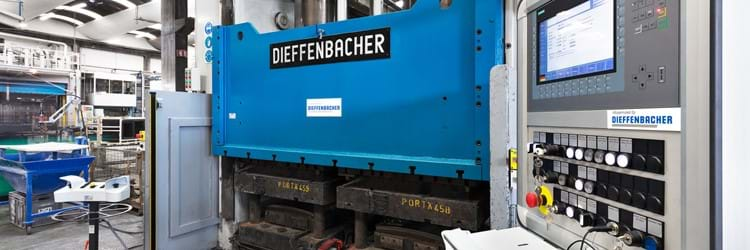
Dieffenbacher anticipates 2018 as one of its busiest and most significant years ever based on the completion of record-setting wood-based panel plants across the globe.

Among them, in the USA stands out the Arauco plant in Grayling, Michigan. Dieffenbacher’s supply will allow Arauco to produce in the largest particle board press in North America and one of the largest in the world. At 10 feet wide and 52.5 meters long, the CPS + will be the core of the complete particle board plant delivered by Dieffenbacher.

Also in the U.S. Roseburgwill begin assembling its new LVL plant in Chester, South Carolina. With a daily output of 800 m³, the CPS supplied by Dieffenbacher will be the world’s largest continuous LVL press as measured by production capacity.

While in India, more exactly in Chittoor, Andhra Pradesh, Greenplywill commission the longest continuous press in Asia. The 56-meter-long CPS to be supplied by Dieffenbacher is designed to produce 1,400 m³ of high-quality MDF per day.

Also in 2018, Dieffenbacher will supply the first continuous press to North Africa. The CPS+ is part of a complete MDF plant ordered by Bigstar subsidiary Panneaux d‘Algérie for its site in El Tarf, Algeria.

Additionally, the highlights include the first full year of operation for a 65 meter long CPS - the longest continuous press that Dieffenbacher has ever built - by Italian wood-based panel producer Fantoni. The company commissioned its new MDF plant in Osoppo, Italy in May 2017.

Upswing in EU timber consumption not benefitting tropical suppliers

Sawn hardwood distributors in Europe are reporting good levels of activity but this has yet to feed through into a significant rise in tropical sawn hardwood imports.

Against an improving economic backdrop, the EU’s sawn hardwood trade was reported stable to very good from 2016 through the first three quarters of 2017, with customers, notably joinery producers, reporting healthy order books.

A clear indication of long-term confidence in the European hardwood market derives from latest developments at Vandecasteele. The company is already one of Belgium and Europe’s biggest hardwood importers and international traders. Now it is expanding its stock holding capabilities by building a further four hectares of warehousing at its Aalbeke distribution hub. That will take total undercover storage to 16 hectares and the overall area of its site to 20 hectares.

In contrast to this positive picture, however, latest statistics (to November 2017) show tropical sawn hardwood imports declined sharply last year.

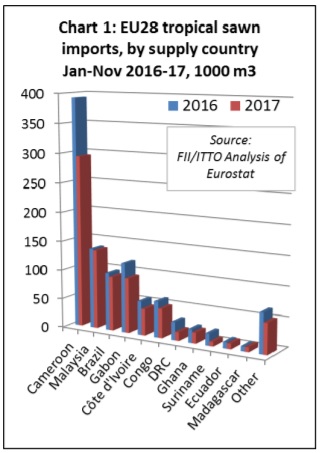
The EU imported 822,600 cu.m of tropical sawn hardwood between January and November 2017, 20% less than the same period in 2016.

In the eleven-month period, tropical sawn hardwood imports declined from all 10 of the top suppliers to the EU.

From Cameroon imports fell 21% to 293,800 cu.m, from Gabon 21% to 93,700 cu.m, from Brazil 6% to 92,500 cu.m, Congo 18% to 49,900 cu.m, Cote d’Ivoire 21% to 45,200 cu.m, Ghana 19% to 18,600 cu.m, Democratic Republic of Congo 51% to 15,000 cu.m and Ecuador 11% to 9,600 cu.m.

The best performance was by Malaysia and Madagascar, but EU imports were still down from both countries, albeit just 1% to 135,400 cu.m and 8,300 cu.m respectively.

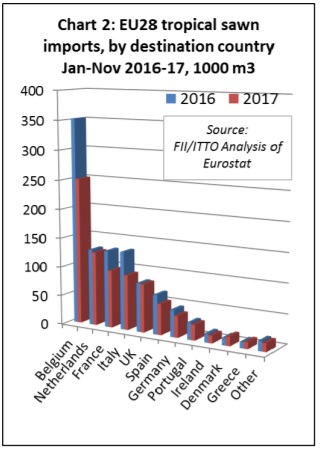
The decline in tropical sawn hardwood trade affected nearly all the main EU countries. Belgian imports were down 29%, at 251,000 cu.m, French 24% at 98,000 cu.m, Italian 30% at 93,400 cu.m, Spanish 21% at 53,200 cu.m, German 20% at 37,300 cu.m, Portuguese 9% at 26,600 cu.m, and Ireland 14% at 13,000 cu.m. UK imports were only down 1% at 81,900 cu.m while Denmark’s were up 24% at 15,700 cu.m and Greece’s 12% at 11,600 cu.m (Chart 2).

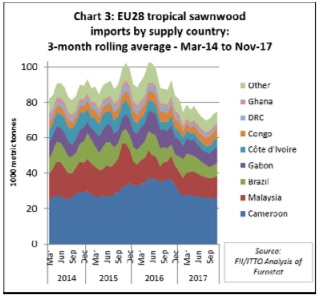
Closer analysis of the monthly data indicates that following a sharp dip in EU imports of tropical sawn hardwood in the middle of 2017, imports were rising slowly again between September and November 2017. However, it is too early to say whether this is just a seasonal trend or the start of a longer-term recovery. (Chart 3).

Particularly good EU demand for sapele

Looking at individual species and products, importers in several EU countries, report particularly good demand for sapele in 2017, with prices firming as a result. Iroko continued in especially tight supply, due at least partly, it is thought, to less coming out of the forest in current harvest cycles, and prices reflected that.

Some predict that framire/idigbo is gradually being replaced on the EU market due to mills’ inability to satisfy due diligence information requirements, although there are also now reports of suppliers improving their legality assurance.

Particularly tight supply and firm prices were also reported by a Belgian importer in afzelia/doussie, ayous, tali, padouk and azobe.

Malaysian meranti and Indonesian bangkirai availability declined towards the end of 2017, with prices in the last quarter up for the former by 9-12% and by 9-17% for the latter, according to a UK importer. Meranti lead times were also reported up to four to five months. Brazilian ipe supply is said to be increasingly short too.

European importers remain concerned about the supply of teak from Myanmar. This follows concerns about the reliability of legality assurances which triggered EUTR enforcement agencies in several countries into taking action against importers and demanding that teak be more effectively tracked to forest of origin in Myanmar.

The EU’s successful boat building industries, notably in Italy, Denmark and the UK raised particular anxieties over this and importers are now urging greater legality assurance collaboration between EU and Myanmar authorities.

For temperate species, white oak remains the EU leader among US varieties, although it is reported to be facing increasing competition from European oak. The supply of the latter has been an issue recently due to curbs on Croatian log and green lumber exports, ostensibly to stop spread of oak lace beetle.

However, Croatian kilning capacity is increasing, partly thanks to inward investment by Italian mills, and customers are still said to be showing increasing preference for the European species due to various factors, including specification, FSC certification and lead times.

US walnut, tulipwood and ash are all reported to be in generally good to strong demand, with maple and cherry faring better in some countries than others.

Market resistance to US red oak continues, but the Americans hope that its large-scale use in 2017 in the new European headquarters of financial data giant Bloomberg in London will give it a prime, prestige European showcase. The building includes 37,150 m2 of red oak flooring alone.

Efforts to introduce more lesser known tropical species to the EU were reported to be meeting some success, with movingui mentioned by several importers. Further processed and engineered hardwood products were also said to be gaining momentum, notably laminated and finger jointed joinery components. Gaining ground too is Eucalyptus grandis in both sawn and engineered form.

At the same time hardwood is also meeting increasing competition from substitutes. Modified timber, notably Accoya and Kebony brands, are reported to becoming ‘staples’ in certain markets and wood-plastic composites continue to gain in popularity, particularly for external applications, such as cladding, decking and outdoor furniture.

Georgia-Pacific to build $135 million softwood lumber production plant in Georgia

Georgia‐Pacific announced on the 20th of February that the company will build a new softwood lumber production facility in Warren County, Georgia, on property adjacent to its existing lumber mill.

Construction of the $135 million, 340,000‐square foot, technologically advanced plant is scheduled to begin in the summer of 2018 with an anticipated startup in spring 2019. Georgia‐Pacific’s existing lumber plant in Warren County will continue full operations until the new facility is completed.

We have enough property next to our existing mill in Warren County to build a larger facility equipped with the latest in lumber manufacturing technology,” said Fritz Mason, vice president and general manager, Georgia‐Pacific Lumber. “We have a great team at Warrenton and building a new state‐of‐the‐art facility on this site will make it competitive for years to come. The team has earned it.”

The new facility will be capable of over three times the output of the current facility. The existing facility has been operating since the early 1970s and technology in the lumber production business has changed significantly since that time.

Once in production, the new facility will receive approximately 185 truckloads of pine logs a day and produce approximately 350 million board‐feet of lumber per year.

Last year we announced a similar project in Talladega, Alabama that will begin production this summer. This new facility at Warrenton is the second of several we have in our current plan,” Mason said. “The demand for lumber continues to improve as the housing market recovers, so we continue to evaluate similar investments in several states across the country to serve our customers’ needs for lumber.

Electricity company in Finland opens new 92MW wood pellet plant

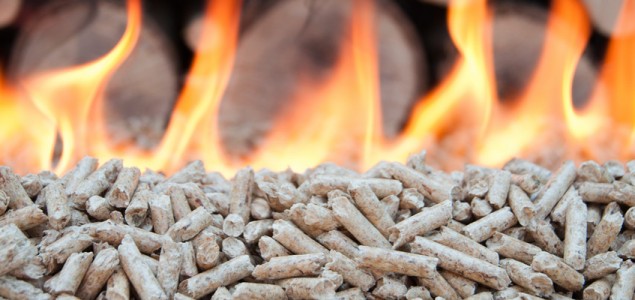
Finnish electricity company Helen, has opened a new 92MW biomass plant in Helsinki. The plant is the largest pellet-fired boiler in Finland and opened February 14th.

At full capacity, the plant is fueled with 21 tonnes of wood pellets per hour, generating heat for 25,000 one-bedroom apartments.

Helsinki is strongly committed to mitigating climate change. Carbon neutrality requires us to be a bold trailblazer and for all sectors to reduce their emissions. The Salmisaari pellet-fired heating plant inaugurated today is a perfect example of using renewable energy in the city's heat production,” said the Mayor of Helsinki, Jan Vapaavuori, at the opening of the plant.

[This] pellet-fired heating plant is a significant project to increase renewable energy in Helen’s energy production. Coal is being replaced by biofuels, but a climate-neutral future also needs other solutions,” said Helen CEO Pekka Manninen in a press release.

Helen has said that the company plans to build other bioenergy plants in Helsinki as the phase-out of the use of coal for power production takes place. The Hanasaari power plant, a large coal-fired facility in Helsinki, is due to be decommissioned in 2024. By the time this happens, Helen plants to have one to two plants operational. The company added that it aims to achieve carbon neutrality across its business by 2050.

Setra invests in new CLT factory in order to meet booming demand

Setra plans to invest in a CLT factory in Långshyttan, as to meet the high demand for CLT in the market, primarily in Sweden, Norway and the UK.

CLT stands for cross-laminated timber, which is a technology that grows strongly and is demanded for construction of everything, from multi-family houses to industrial properties.

CLT wood is a technique that is well suited for structures that require high bearing and strength, while also being fire resistant. It also has great environmental benefits because wood is a renewable material.

"New technology combined with the increased awareness that wood is part of the solution to climate problems, makes demand for CLT very high. The investment enables us to increase our long-term competitiveness through a well-developed offer to customers in the construction sector," says Hannele Arvonen, President and CEO of Setra Group.

Setra has purchased an industrial property in Långshyttan, where the company will build a component plant, whose production will commence in the fall of 2018.

"Demand for CLT is increasing. With the latest investments made by Setra for component and CLT production, we are given the opportunity to create a new wood industry center in Långshyttan, while further developing our existing lumber production," says Olle Berg, Market Director at Setra.

The raw material for the new CLT plant will be taken from Setra's own sawmill in Bergslagen and is optimal for this type of industry. The production volume for the plant will be 55,000 m3 in 2-shift.

The start of the CLT factory in Långshyttan is scheduled for the first half of 2020.

Wood pellets price in Germany higher due to cold weather

The colder temperatures have caused a price increase for wood pellets in Germany during February. The national average price has reached the value of EUR 253.03/tonne, 0.7% more than in the previous month and 0.1% less than in February 2016.
According to the German Energy Wood and Pellet Association e. V. (DEPV), in February, a kilogram of wood pellets costs 25.30 cents, while one kilowatt hour (kWh) of heat from wood pellets costs 5.06 cents. Also, the price advantage for fuel oil is currently 10%, compared to 15% for natural gas.
"Despite higher demand for pellets the price of pellets has increased very little", Martin Bentele, Managing Director of the industry association DEPV, explains. "We are at the same price level as in the previous year, which once again shows the lasting price stability of wood pellets."
Regional prices (for 6 tonnes purchases) in February: Central Germany: EUR 250.95 / t, Southern Germany: EUR 253.63 per tonne, Northern Germany: EUR 254.85/ t.
Larger quantities (26 t) could be bought for the following prices: South: 237.79 EUR / t, Middle: 232.66 EUR / t, North / East: 233.87 EUR / t (all incl. VAT).

Woodworking machinery industry in Italy shows great results for 2017

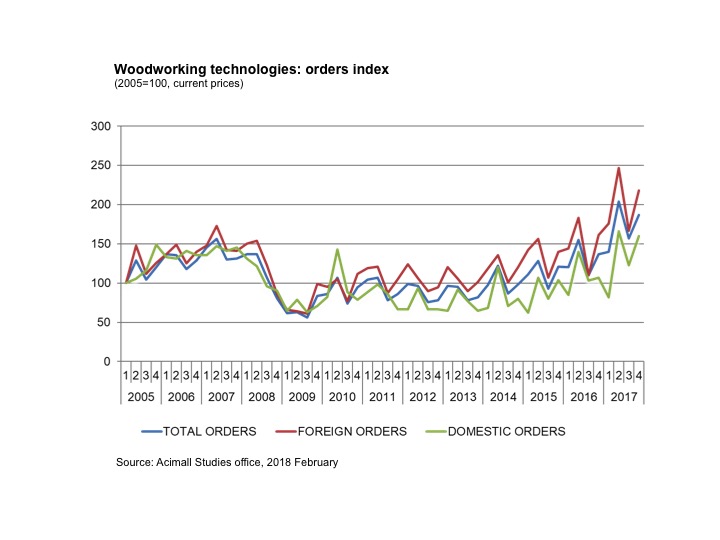
2017 was a good year for the industry Italian woodworking machinery manufacturers, according to Acimall's latest figures. The value of production reached EUR 2.29 billion, up 11.6% from the previous year.

Exports topped EUR 1.6 billion, a 7.1% increase compared to 2016. The top 10 export markets include the United States at number one, which accounted for EUR 165.5 million of total sales. Germany, Poland and France follow.

Imports also rose 10% year-on-year to EUR 199 million while domestic market growth continued on the back of government initiatives which drove investment up in the recent years.

Domestic buyers spent a total of EUR894 million in 2017 compared to EUR743 million in 2016. Acimall believes that domestic sales could cross the EUR1 billion mark this year, a new record since 2001’s EUR900 million.

4Q/2017 results

The industry closed 4Q/2017 with a 36.8% order increase compared to the same quarter in 2016. (Growth rate during the July-August term was 42.9% higher compared to the same period of the previous year.)

Robust sales were mostly driven by increased orders from abroad. The figures were up by 35.2 per cent (51.5% in Q3/2017). Demand from the Italian market achieved 49.5% growth over the October-December 2016 period. (It was just 19.7% in the second quarter.)

Italian users are clearly going through a period of greater confidence which, combined with state incentives, is generating strong demand, exceeding even the most optimistic expectations,” said Dario Corbetta, Acimall director.

Such results are not just satisfactory for technology vendors, but also anticipate increasing competition within the system.”

In the past few years, Italy’s the wood and furniture industry experienced a tough season, which saw all investments reduced to a minimum.

Corbetta added that upgrading machinery will enable Italy’s woodworking and furniture industry to leverage on technology and enterprise management systems to regain competitiveness.

Acimall members’ order books have mostly been filled up to 3.6 months (versus 3.4 in the previous quarter), the association noted—an indication of how 2018 will begin following a positive Q4/2017.

Prices as of January 1 show substantial stability, with a 1.1% increase, the same trend recorded during the July-September period.

Most association members surveyed said employment will remain more or less the same.

China: 18% decline in softwood log imports and 10% in hardwood log imports expected for the next 10 years

China's logs, lumber and woodchips imports have been ascending rapidly and reached very high values. Between 2012 and 2017, the country's imports of logs (both softwood and hardwood) went up by 42%.

At the same time, hardwood chips imports increased by 59%, while the imports of lumber rose by 81%, during the mentioned period.

According to WoodWeek, over the past 15-20 years, the excessive and often very wasteful surge in construction activity in China was made possible by lax lending standards, including the rise of the “shadow banking” sector, corruption between banks and local authorities, a lack of concern for environmental impacts or maintaining land for agricultural production, and a rapidly growing mountain of debt.

Chinese President Xi has been promoting policies to address these issues for several years, but RISI believes that the 19th National Congress sets the stage for him to make major reforms in the years ahead. This means that the out-of-control construction binge seen in China for the last decade is going to quickly come to an end.

Yet, over the next 10 years, RISI forecasts a 18% decline in softwood log imports and 10% in hardwood log imports in China. Most of this decline will be driven by the decreased demand and the competition coming from other markets. Also, the decline in tropical hardwood logs supply and the increase in demand for softwood log imports in India will lead to a drop in Chinese logs imports.

The demand in China is not driven only by construction activity. A signi cant share of logs and lumber are imported to make value-added products for export. And it has seemed like China’s exports of furniture, plywood, flooring, etc. have been doing nothing but increasing for more than a decade. But recently this picture has also changed. And the trend in exports hasn’t just slowed, it’s actually gone negative in a number of cases. Export values of plywood and flooring began shrinking in 2015, continued on their downward trend last year, when they were joined in retreat by wooden furniture and door and window exports, WoodWeek reports.

Moreover, the exports of paper and paperboard, which grew by 19% CAGR during 2000-2015, have stagnated over the past 2 years. This was due to increased labor rates in China, as well as various trade restrictions by importing countries.

Source: RISI

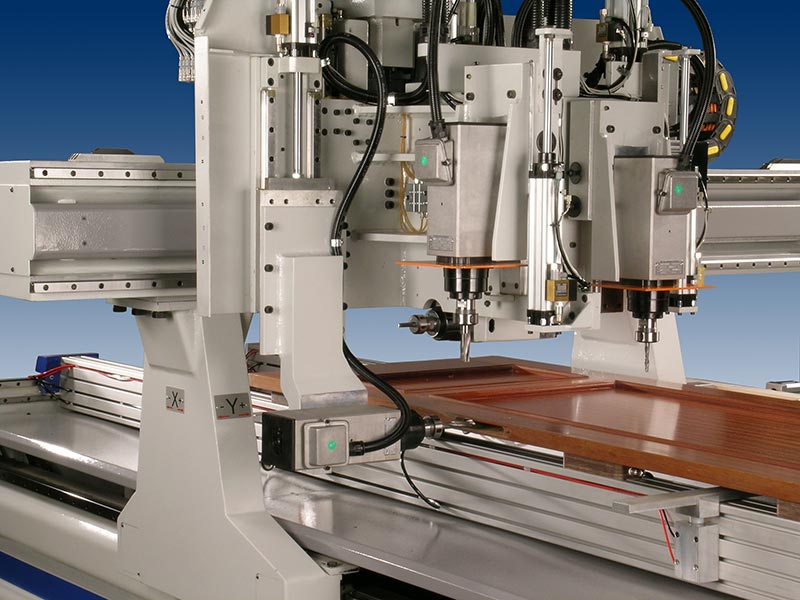
Chinese woodworking machinery company buys 75% of the Italian Masterwood

Guangzhou KDT Machinery Co. will buy 75 percent of Masterwood, a recognized Italian brand of machinery for wood processing, for EUR 16 million (USD 20 million) through its subsidiary in Hong Kong.

KDT MAC (Hong Kong) Ltd. signed a purchase and sale agreement with three individual shareholders of Masterwood S.p.A on February 10 to acquire 75 percent of total shares, announced the manufacturer of wood processing machinery based in Guangzhou.

KDT MAC will directly own 25.5 percent of Masterwood's interest and indirectly hold 49.5 percent of its interest by owning 100 percent of the capital in Muti 2 Srl, a company whose only asset is 49.5 percent of the shares of Masterwood.

With the acquisition KDT will improve its CNC processing technology. Masterwood enjoys great brand recognition in Europe, North and South America, which will help it develop its international market.

RACert and NEPCon to form the largest certification body in the world

NEPCon and RACert (the certification division of the Rainforest Alliance) have announced their intention to merge later this year. The transaction is subject to agreement on final terms, which the parties expect to finalise later this year.

The combined organisation, which will operate under the name of NEPCon, will continue to offer services that both NEPCon and RA-Cert have been delivering in forestry, agriculture, responsible sourcing, biomass, carbon footprinting, and tourism.

NEPCon and RA-Cert share similar values, including a commitment to credibility at the heart of our services. We already have closely aligned management structures, systems and working procedures, as well as long-standing trust across the two organisations,” said Peter Feilberg, executive director of NEPCon. “RA-Cert complements our existing capacities and geographical areas, and we are excited to have the RA-Cert team join NEPCon."

NEPCon and RACert have been working together for two decades. The RA-Cert/NEPCon union will have over 200 staff and a wide network of consultants working worldwide, delivering services on six continents. The union will create expanded reach and scale that will enable NEPCon to better drive impact and reach its mission, it said in a press release.

"The current RA-Cert and NEPCon geographies and services are complementary to each other, and together will drive greater reach and impact,” added Feilberg.

Rainforest Alliance CEO Han de Groot said, "The acquisition of the RA-Cert program by NEPCon is the right solution to maintain the credibility and independence of the RA-Cert certification and auditing services. We look forward to continuing to collaborate with NEPCon in a variety of areas in the future.”

Newsletter

Subscribe to our digital newsletter for your daily digest of essential news, views and analysis from the international wood industry delivered directly to your inbox.


0