
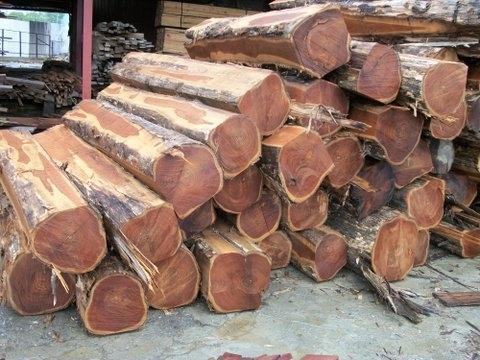
Prices for Ghana's exported wood products are the following between 1-15 October 2018. Continue reading "Ghana’s exported wood products prices in October"
Article archive
44 million m3 of wood infested by the bark beetle expected in Germany, Austria and the Czech Republic

According to estimates by different forestry organizations, in Germany, Austria and the Czech Republic, around 44 million cubic meters of wood infested by the bark beetle are estimated for this year.
Four million m3 of bark bettle wood is expected for the entire 2018 in Austria. The main area of damage lies in the northeast of the country, north of the Danube, in Oder and Lower Austria regions.
The extra effort required to combat beetles, the over-saturation of the market, falling timber prices and the costs of reforestation make life difficult for forest owners, says DI Felix Montecuccoli, President of the Land & Forst organization in Austria, summing up the difficult situation for the forest owners in the affected regions.
In 2017, 3.5 million solid bark beetle logs were recorded. That was the highest value since records began. For 2018, this record will be broken. "The fourth generation of bark beetles is already flying in certain parts of the country. We expect at least four million cubic feet of damaged wood this year from the bark beetle, " continued Montecuccoli.
The forest camps in bark-beetle areas are slow to develop, and the waiting time for the removal of the wood provided can often take several weeks. The result is devaluation of the wood by up to 50%.
According to the Federation of German Foresters in Germany by storms, beetles and forest fires around 30 million m3 of damaged wood occurred, about half being the result of the the bark beetle infestation.
According to a government statement by the Czech Minister of Agriculture, until recently the Czech Republic has reported up to 20 million cubic meters of beetle wood. The value has increased now to 25 million fm.
Small forest owners often have to harvest their entire forest area. The economic survival of many forest enterprises is endangered by additional expenses, price erosion and consequential costs due to the beetle calamity.
Now the bark beetles prepare for wintering under the bark or in the ground. Only a damp winter and spring can defuse the situation.
Rising wood pellets prices in Austria

The Austrian average retail price for wood pellets ENplus A1 quality (6t) is currently 23.97 cents/kg or 4.89 cents/kWh. This represents a 3.7% increase over October 2017 and a 1.4% increase over September 2018.
Wood pellets have a price advantage of 85% over extra light oil and 65.6% over natural gas, during October.
Bagged pellets cost an average of € 4.06 per 15 kg bag (when ordering a pallet) or 27.04 cents / kg. This is 2.2% more than last year and 0.7% more than last month.
Larger quantities of commercial pellets (17 t) can be bought for 215.12 EUR/t, which is 3.2% more than in October 2017.
Gabon: All concessions need to be FSC certified by 2022
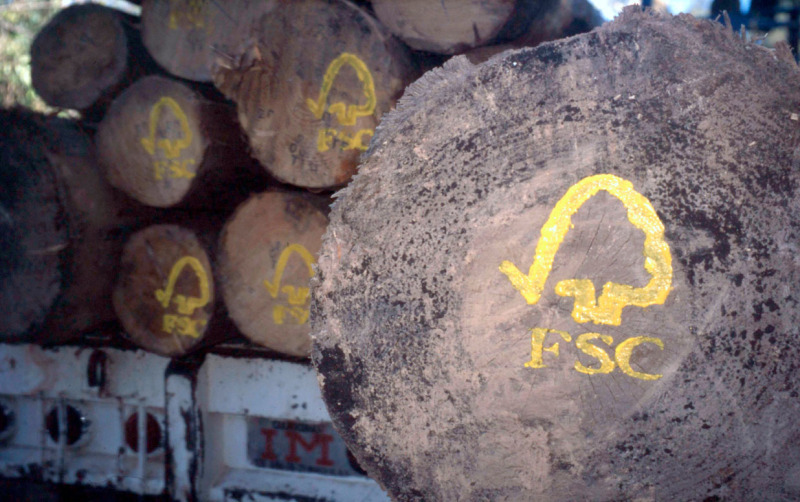
The President of Gabon has announced that by 2022 all forest concessions in Gabon will have to be certified by the Forest Stewardship Council (FSC).
This has caused considerable consternation in trade circles particularly as some companies are already certified but under the Programme for the Endorsement of Forest Certification (PEFC). The question yet to be answered is does this announcement truly reflect a policy shift by the government.
While there have been no statements from timber associations either in Gabon or in those countries with close trading links with Gabon, the statement by the President of Gabon has been welcomed by FSC (naturally) and by WWF.
A press release from FSC says “FSC appreciates this forward-looking decision by the government of Gabon.
Increasing the already important level of FSC certification in Gabon will serve as a catalyst to increase responsible forest management while stimulating external demand for responsibly sourced timber and forest products from Gabon. At the same time, FSC certification will benefit local communities and help protect Gabon’s unique wildlife and its natural resources.”
Marthe Mapangou, Director of WWF-Gabon, writes on the WWF website “The government’s decision to require FSC certification for all forest concessions is a positive step to protect Gabon’s forest ecosystems and to ensure benefits for local communities.”
An in-depth commentary on the announcement by the President of Gabon has been published by a Gabonese Non-Governmental Organization ‘Brainforest’ under the title ‘Analysis of the declaration of the Head of State concerning the withdrawal of permits to non-FSC certified companies by 2022’.
The focus of this analysis is, in the words of the author, Marc Ona Essangui, that “In a context of free competition, the State would be in its role by leaving to each forest concessionaire the possibility of freely choosing the system of certification which suits him.
Why favor the FSC system, to the detriment of PEFC or PAFC? Without becoming a critic of the FSC or defender of other repositories, it would be more just and equitable for the State to remain impartial by confining itself to a role of accompaniment and encouragement.
On the withdrawal of permits to non-certified companies: In the current state of national legislation, forest certification is not a legal requirement.”
Finnish sawn softwood exports to China suffer due to Chinese government environmental actions
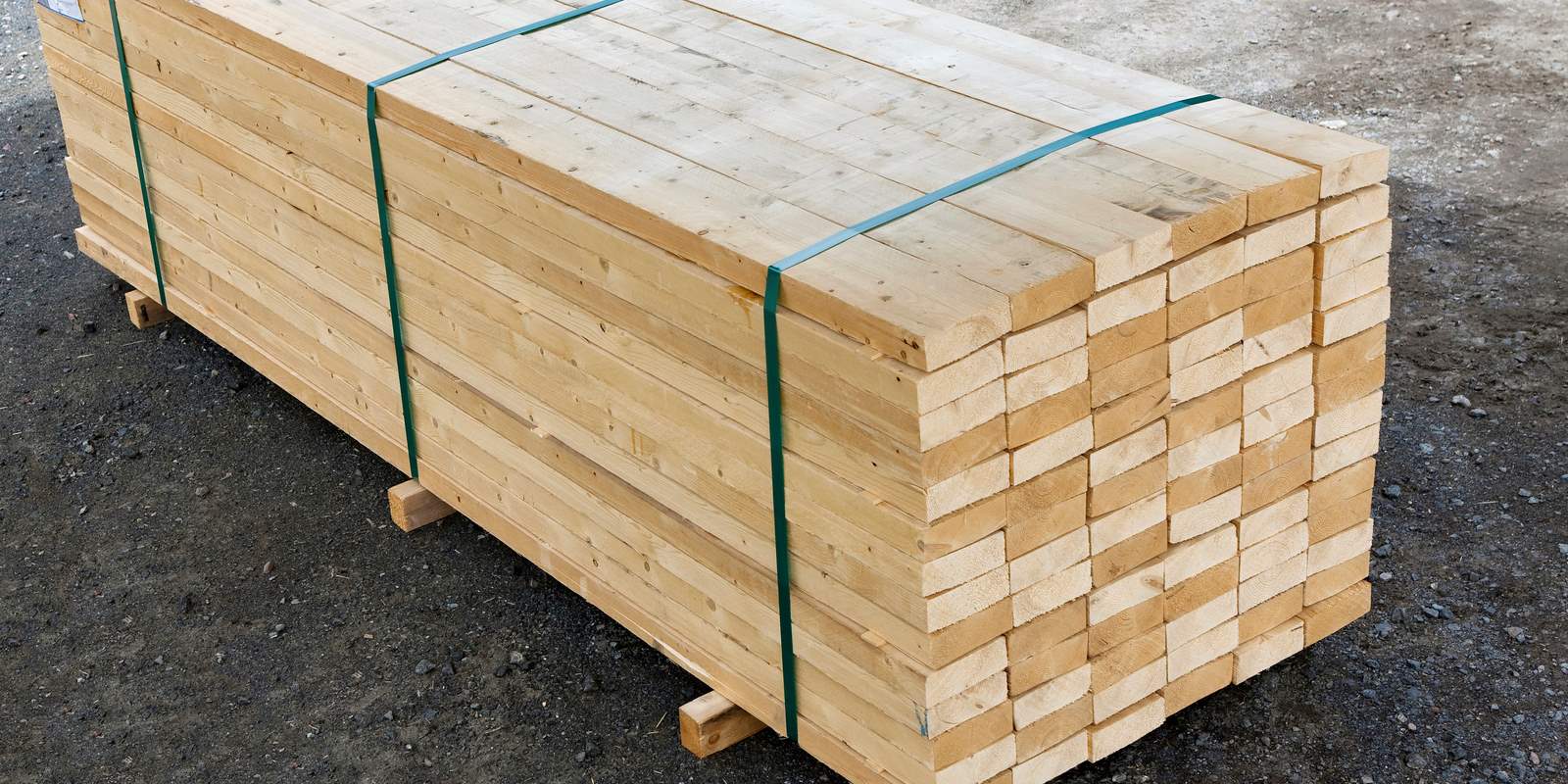
The Finnish production of sawn softwood reached 11,7 million m3 in 2017 and remained below forecasted figures. By the end of June 2018, production increased by 1% compared to last year and by the end of August 2%, respectively.
Estimate for 2018 is 12 mil m3. The production of redwood increased by 5% while white contracted by 1%. The stock level has remained clearly below year 2017.
Exports of sawn softwood has slightly decreased during the 1st half 2018 compared to 2017 due to strongly decreased exports to China. Finland exported 1,7 million m3 of timber to China in 2017, which made China, by far, the biggest export market. Exports to China has suffered from the Chinese government actions, which have forced many woodworking companies to close or move to new locations and industrial sites due to environmental or licence related reasons.
On the top of these actions, the exchange rates have been favorable to several competitors and especially the Russian supply in China has increased. However, brisk demand in other markets and the clear recovery of exports to North Africa, especially to Algeria and Egypt, have compensated the decrease in trade flows to China.
The domestic pulp chip market has developed positively thanks to increasing production and exports of market pulp.
Also the demand of dust and bark has after several years shown positive signs thanks to the increasing price of emission rights, which automatically (based on the subsidy mechanism) reduces the subsidies of competing renewable fuel, forest chips.
Thanks to the brisk export demand and improved residue market and stabile freight rates the profitability of the Finnish sawmill industry has improved during 2018. However, the results are still not at satisfactory level, despite the boom within the global timber industry. The increase in raw material cost has, once again, exceeded the increase in sawn timber price and profitability can be expected to decrease during the 2nd half of 2019.
US lumber prices impacted by recent developments

A number of important lumber-related developments have come out of North America over the last period.
The US-Mexico-Canada Agreement (USMCA)
The USMCA was recently inked, which does not mention softwood lumber specifically but does renew the very important Chapter 19 dispute resolution mechanism. With the negotiations of the USMCA now complete, this leaves open the possibility that the US and Canada may now focus on resolving the contentious trade disputes regarding softwood lumber. It is noteworthy that the Chapter 19 dispute resolution mechanism was left in place, which gives each country the right to challenge anti-dumping and countervailing duties in front of an expert international panel.
United Steelworkers Strike Notice
The United Steelworkers issued a strike notice to northern British Columbia sawmill operators. British Columbia’s (BC) Quesnel, Williams Lake, Lake City and other operations in Prince George, Houston, Burns Lake, Fort St. James, Mackenzie and Fort St. John. The union representing roughly 2,000 sawmill workers in Northern BC, including Quesnel and Williams Lake, recently issued a 72-hour strike notice.
The most recent development as of this writing is that BC sawmill workers have now been banned from working overtime hours, which can make it difficult for producers to quickly adjust to market conditions or the arrival of fresh logs to the mill.
Erratic US Housing Market
US homebuilding was up in August but existing home sales slowed as prices have soared out of reach for many buyers. The US housing market—already struggling with tight inventory and rising building costs—faces a fresh headwind as 30-year mortgage rates rise close to the 5 percent threshold for the first time in years. The rise in mortgage rates so far this year means a potential homebuyer would pay about US$35,000 more interest on a US$220,000 loan over 30 years. Home prices are also soaring in conjunction with mortgage rates.
A recent article in The Financial Times notes that “If you look at the 20-city Case-Shiller index of home prices as a whole, there would seem to be little cause for concern — it is just 2.4 percent above its 2006 peak. And yet, there is a huge divide between the winners and the losers. Ten cities have set new highs and their prices are 23 percent higher on average. The best performer, Denver, is a whopping 54 per cent above its pre-recession peak. Meanwhile, prices in 10 laggard cities are an average of 11 percent below their pre-recession peaks.”
In a strange twist, foreclosed homes in the US are appreciating faster than the typical US home, said Zillow. “Throughout the recovery, foreclosed homes have gained 74.5 percent in value, compared to about 46 percent for all homes. This means that homes that were foreclosed on during the housing crisis have made far greater gains in value than the typical U.S. home.”
It’s still too early to tell how the USMCA will impact the North American softwood lumber trade, and if the potential labor strike will impact near-term pricing. The erratic performance of the US housing market, skyrocketing prices and the widening gulf between the “winning and losing” metro areas, however, is worrisome for the long-term sustainability of a housing market that has slowly clawed its way out of a massive pit since 2008.
All of these factors appear to be combining to produce a level of uncertainty in the market. Prices for 2x4 dimensional lumber have dropped precipitously since hitting an all-time high in June; Douglas fir green 2x4s are down nearly 50%.
Source: F2Markets
Opportunities for hardwood in the European construction sector

The UNECE Committee on Forests and the Forest Industry (COFFI) released their Annual Market Review 2017-2018, together with several market statements by national governments in the UNECE region (which includes the sub-regions of Europe, North America and the CIS), in advance of their 76th session to be held in Vancouver on 5-9 November.
In the European construction sector, COFFI observe that the current rate of very slow growth is unlikely to pick up for some time. Despite a clear need for more housing to satisfy rising demand, the numbers of building permits and starts have trended downward in Europe in recent years, and the outlook for new residential starts is for a decline in the longer term.
On the other hand, residential remodelling is forecast to increase and to reinforce its position as the principal construction activity in Europe. In the euro-zone residential remodelling activity is forecast to increase from Euro 407.4 billion in 2018 to Euro 418.4 billion in 2020.
This, at least, is good news for hardwoods which tend to be more widely used to upgrade existing houses than in the new-build sector.
In addition to lacklustre forecasts in residential construction the type of structures built in this sector are changing, with a gradual shift away from separate houses in favour of flats and other higher density construction.
This is a result the aging of the population, declining household size, substantial reductions in state subsidies for housing, and rapid increases in land prices and construction costs.
Again, these changes may present opportunities for increased wood use, including hardwoods, in Europe. The desire to reduce construction costs and time on site is driving a slow rise in demand for modular wood-based construction systems using a variety of engineered wood products.
COFFI particularly highlights the rapid growth in European production and use of cross-laminated timber (CLT) which is particularly well suited for efficient and rapid high-density construction. COFFI observe that the share of CLT in European wood construction is still small, but interest and investment in the product is rising.
Drawing on a review of the strategic plans of European producers, COFFI Predict that European CLT production will more than double from 0.7 million cu.m in 2017 to 1.81 million cu.m in 2020
Of course, most of production of CLT and other engineered wood products comprises softwood, a situation which is unlikely to change. Compared to softwoods, hardwoods are much less readily available in large consistent volumes and grades at competitive prices.
However, there is potential to develop specialist grades of CLT using hardwoods for applications where high strength, durability or aesthetic character are needed.
For this reason, a major focus of American Hardwood Export Council (AHEC) promotion in Europe is to encourage use of hardwood for CLT manufacture.
Most recently AHEC sponsored “MultiPly”, a major demonstration project in collaboration with Waugh Thistleton Architects and Arup as part of London Design Festival, which “combines American tulipwood with innovative methods of modular construction to confront two of the current age’s biggest challenges – the pressing need for housing and the urgency to fight climate change.”
To date only a very small volume of hardwood CLT has been manufactured in the EU to supply high-end bespoke projects, notably a health centre completed in the UK in 2017 claiming to be the world’s first hardwood CLT building.
While at present only temperate hardwoods are being considered for use in CLT in the EU, some larger tropical suppliers have expressed interest in exploring the opportunities for tropical hardwood in this sector, given the high strength to weight ratio of many tropical species, and their durability (implying competitive advantages for tropical hardwoods in CLT elements exposed to the weather).
US lumber prices keep on falling in mid-October
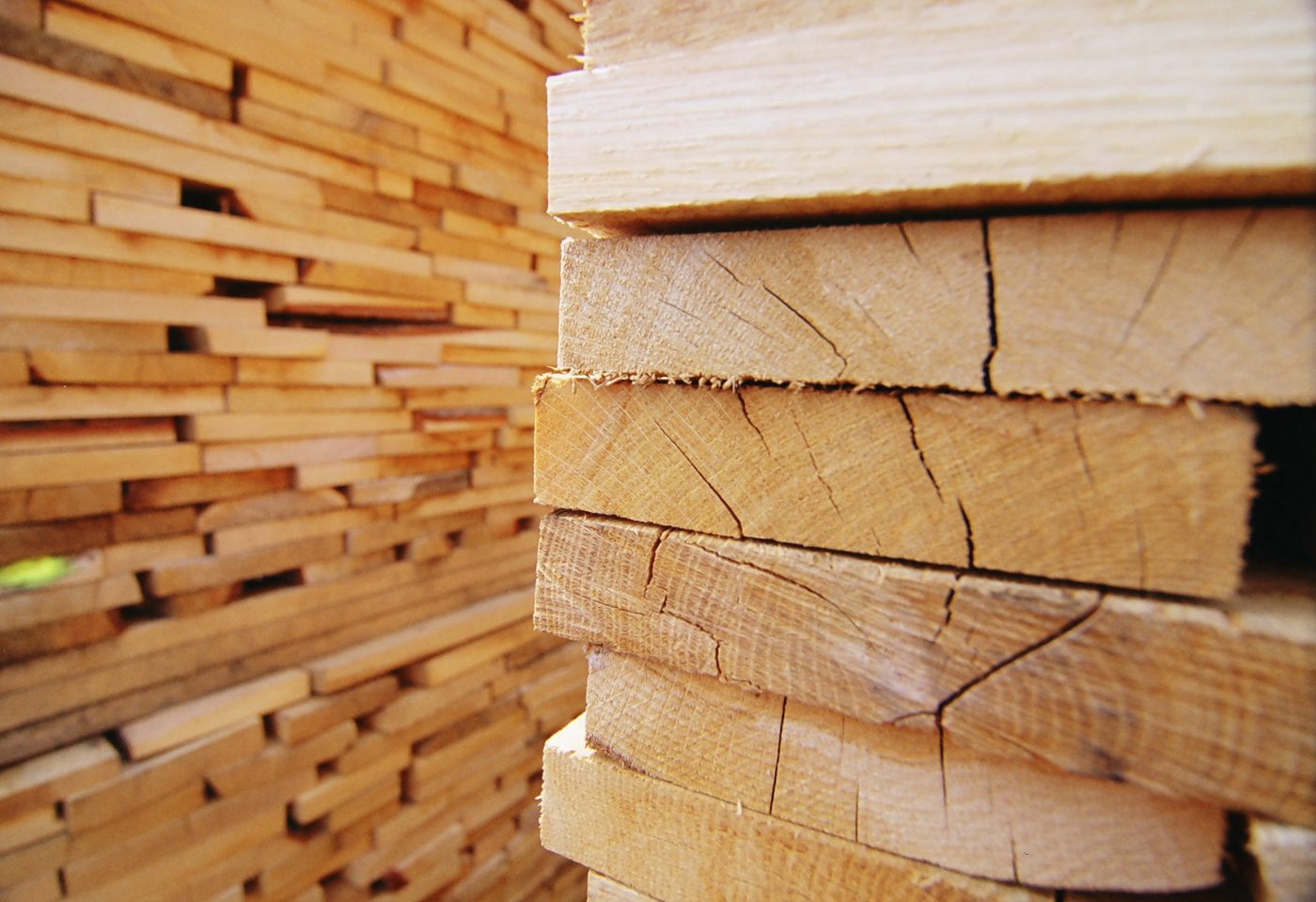
US traders noted a change in the tone of the framing lumber market, and even a sense that prices had found or were nearing a bottom.
However, that sentiment was stronger in the first half of the week than the latter. A few mill curtailments announced in the West and a picket line set up at a mill site in British Columbia caused traders to stir.
However, the B.C. mill picket turned out to be a one-day affair, no further production curtailments were announced, and Wednesday’s U.S. housing report threw cold water on warming demand.
| This Week Oct 19 |
Last Week Oct 12 |
Year Ago 2017 |
|
| Random Lengths Framing Lumber Composite Price* | $360 | $373 | $438 |
| KD Western S-P-F #2&Btr 2x4 R/L Mill Price | 319 | 332 | 449 |
| KD Eastern S-P-F #1&2 2x4 R/L, delivered Great Lakes | 408 | 422 | 553 |
| Green Douglas Fir Std&Btr 2x4 R/L (Portland) | 285 | 285 | 467 |
| Southern Pine (Westside) #2 2x4 R/L | 457 | 472 | 420 |
| KD Coast Hem-Fir #2&Btr 2x4 R/L | 325 | 335 | 470 |
| Ponderosa Pine (Inland) #2&Btr 1x12 R/L | 775 | 775 | 710 |
| * Weighted average of 15 key items | |||
Random Lengths Panel Market Report
Structural panel prices plunged as mills searched for trading levels to alleviate buildups. Prices of OSB finished the week lower, but strong sales in the second half of the week allowed producers to bounce quotes off their lows in some regions. Southern Pine plywood trading nearly reached a standstill amid languishing demand. Mills struggled to find levels to entice buyers off the sidelines. A lack of sales, and offerings stacking up at mills, forced western Fir plywood producers to probe for trading levels.
| (f.o.b. mill prices) | This Week Oct 19 |
Last Week Oct 12 |
Year Ago 2017 |
| Random Lengths Structural Panel Composite Price* | $406 | $429 | $535 |
| Southern (west-east) 15/32-inch 3-ply rated sheathing plywood | 395-440 | 425-465 | 505-528 |
| Southern (west-east) 15/32-inch 4-ply rated sheathing plywood | 400-445 | 430-470 | 510-530 |
| Western 1/2-inch 4-ply rated sheathing plywood | 390 | 420 | 513 |
| North Central 7/16-inch Oriented Strand Board | 265 | 290 | 455 |
| *Weighted average of 11 key items | |||
EU and Vietnam sign the VPA

On 19 October 2018, a voluntary partnership agreement (VPA) between the European Union and the Socialist Republic of Vietnam on forest law enforcement, governance and trade (FLEGT) was signed in Brussels in the margins of the EU-ASEM summit.
The aim of the agreement is to stop illegal logging and, through the FLEGT licensing scheme, to guarantee that timber imported into the EU from Vietnam is legally harvested. This is the second VPA that the EU has concluded with an Asian country after Indonesia and is particularly significant given the importance of Vietnam in the global timber market, being one of the main hubs for processing and re-export of timber.
The agreement establishes a Timber Legality Assurance system to monitor the timber supply chain and a FLEGT licensing scheme to ensure that only timber coming from legal logging can be exported to the EU market. The agreement also establishes a mechanism for dialogue and cooperation between the EU and Vietnam on the FLEGT licensing scheme, via a Joint Implementation Committee. Finally it establishes principles of stakeholder participation, social safeguards, accountability and transparency.
The VPA was signed by Sebastian Kurz, federal chancellor of the Republic of Austria, and Federica Mogherini, EU high representative for foreign affairs and security, on behalf of the EU and Nguyen Xuan Cuong, Minister for Agricultural and Rural Development of Vietnam.
Background and next steps
The Action Plan on Forest Law Enforcement, Governance and Trade (FLEGT) endorsed by the Council in 2003 proposes a set of measures, including support for timber-producing countries, multilateral collaboration to tackle trade in illegal timber, support for private-sector initiatives, and measures to discourage investment in activities that encourage illegal logging. The cornerstone of the Action Plan is the establishment of FLEGT partnerships between the EU and timber-producing countries, aimed at stopping illegal logging.
In 2005 the Council adopted Regulation (EC) No 2173/2005 on the establishment of a FLEGT licensing scheme for imports of timber into the European Community, a mechanism that enables verification of the legality of timber imported into the EU under the FLEGT partnerships.
Negotiations for this agreement started in 2010.
The VPA will enter into force after being ratified by both the EU and Vietnam and will be binding upon the parties.
Homag reorganizes production as to meet growing demand from the furniture industry
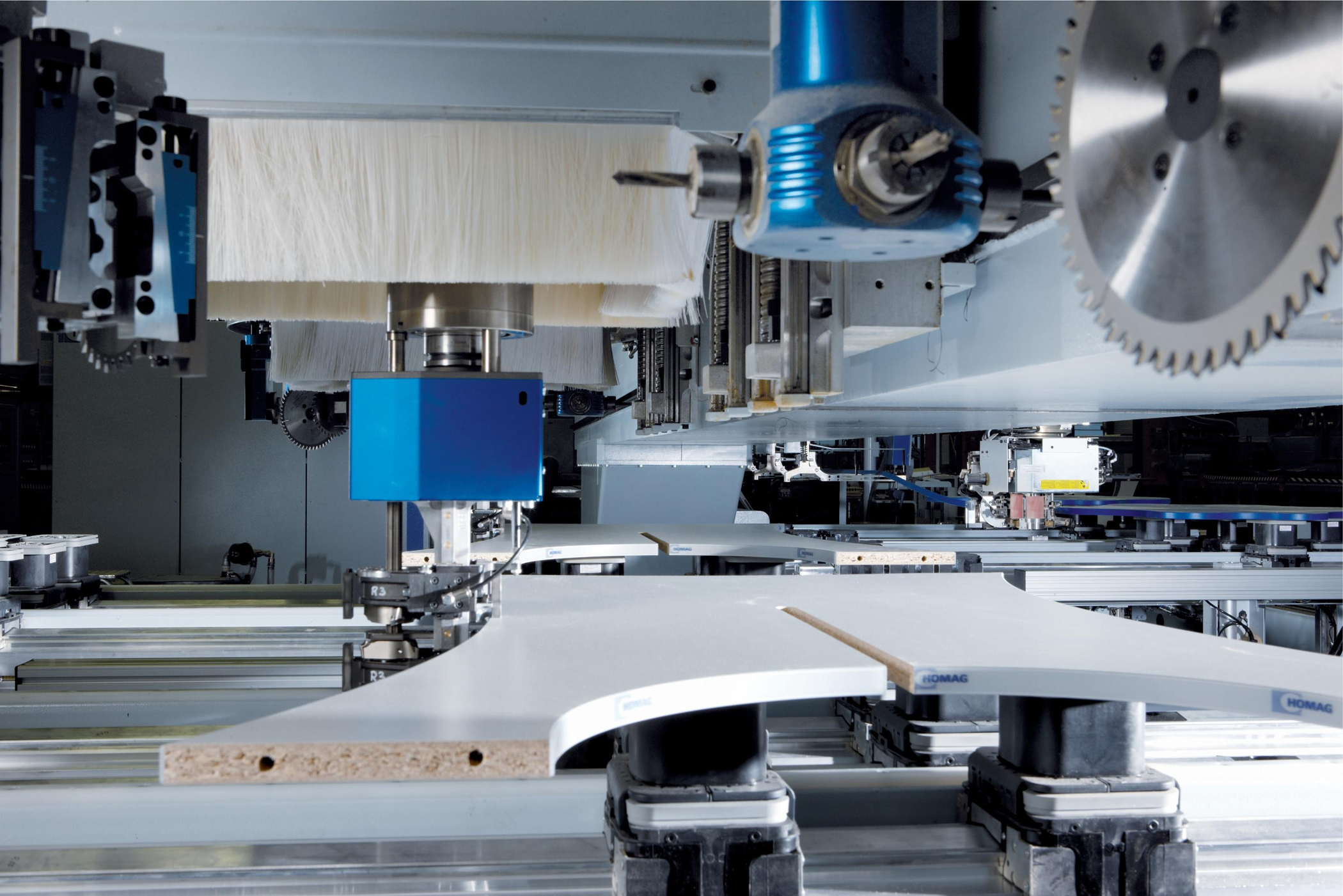
Homag is taking steps to continue its sales and earnings growth. The world market leader of woodworking machinery is fundamentally reorganizing its production at the Schopfloch site, thus responding to the increased volume of activity in systems business with complete production lines.
This measure is meant to solve production bottlenecks that have recently been affecting Homag’s growth.
For automated and digitally networked production lines, Homag has built up a strong position over the previous years. It also benefits from the high demand for systems for efficient, batch size 1 production of customized furniture. In 2019, Homag expects another rise in sales with a margin increase.
“Homag has made good progress with its optimization strategy. This is reflected in the substantial earnings improvements, which have been achieved continuously since 2014. The reorganization in Schopfloch is another important step in this direction”, says Ralf W. DieterCEO of Dürr AG, Homag’s holding company.
Homag also reported that sales and profits at the production sites are developing as planned and more growth is expected in the coming years. But the pace of growth will be more moderate, being recently affected by bottlenecks in production. Although the company anticipates another profit improvement in 2018, it is expected that EBIT will not reach the target set by more than € 10 million.
Swanson Group curtails production at two sawmills; citing deteriorating market conditions

Oregon's Swanson Group is implementing production curtailments with immediate effect, citing deteriorating market conditions.
The group's stud mill in Roseburg will curtail production by 30%, while its Glendale sawmill will reduce output by 20%, the report said.
Swanson Group Inc., along with its subsidiaries, is engaged in manufacturing, marketing, and selling forest products for residential and industrial applications. It offers various wood products, including Doug Fir dimension lumber products, structural plywood panels and specialty plywood products, veneer and residual products, and green and dry studs.
U.S. softwood lumber production on the rise; Canadian output drops

U.S. sawmills produced 20.678 billion board ft. (bbf) of softwood lumber in the first seven months of 2018, an increase of 5.2% from 19.656 bbf a year earlier.
According to the Western Wood Products Assn.’s latest Lumber Track report, Western U.S. sawmills accounted for 8.588 bbf of the seven-month total - up 7.1% from 8.021 bbf in the previous year, while sawmills in the southern U.S. contributed 11.115 bbf, a gain of 3.8% from 10.704 bbf a year earlier.
Production in July was 2.905 bbf, up 5.4% from 2.757 bbf in July 2017, but down 2.8% from 2.990 bbf in the previous month.
Sawmills in the West contributed 1.172 bbf to July’s production volume, a gain of 6.0% from 1.106 bbf last year, but down 4.9% from June 2018’s output of 1,233 bbf, WWPA reported. Sawmills in the South produced 1.597 bbf, a year-over-year increase of 5.0% from 1.521 bbf, but down 1.2% from 1.617 bbf in June 2018.
Apparent U.S. softwood lumber consumption in the seven-month period was 28,539 bbf, which was 2.9% higher than the volume for the same period last year of 27,726 bbf. In July alone, consumption was 4.152 bbf – up 8.6% from 3.824 bbf in July 2017, but 1.9% lower than the volume in June 2018 of 4.232 bbf.
Canadian softwood lumber production/consumption
Softwood lumber production in the first seven months by Canadian sawmills was 16.508 bbf, a year-over-year decline of 1.3% from 16.724 bbf.Sawmills in British Columbia contributed 7.461 bbf, down 3.4% from 7.727 bbf last year, while sawmills east of the Rockies produced 9.047 bbf – up 0.5% from 8.998 bbf.
In the month of July, Canada’s softwood production was 2.192 bbf, up 1.3% from last year’s 2.164 bbf, but 4.8% lower than the production volume in June 2018 of 2.302 bbf.
Production by sawmills in British Columbia accounted for 1.038 bbf of July’s volume - up 1.5% from 1.022 bbf in July 2017, but down 2.3% from 1.063 bbf in June 2018. Sawmills east of the Rockies produced 1.154 bbf in July, up 1.0% from 1.142 bbf in July last year, but down 6.9% from 1.239 bbf in June 2018.
Apparent Canadian softwood lumber consumption in the seven-month period was 6.612 bbf – up 6.7% from 5.776 bbf last year, while consumption in July was 837 million board ft. (mmbf) – down 4.3% from 875 mmbf a year earlier, but up from June 2018’s consumption of 793 mmbf by 5.5%.
Continuing stasis in EU sawn hardwood consumption expected
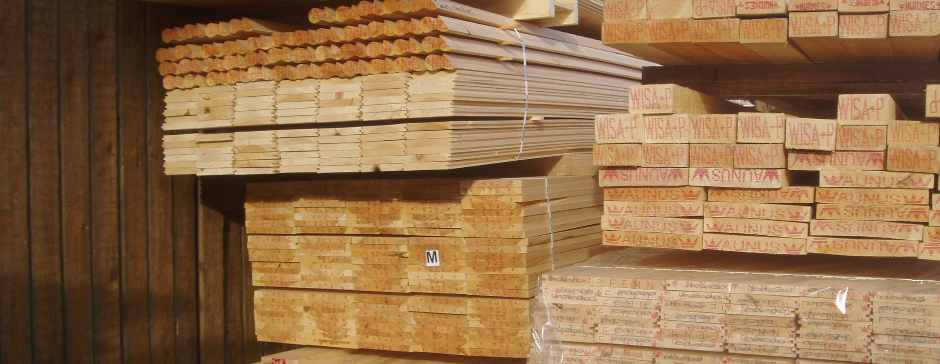
The UNECE Committee on Forests and the Forest Industry (COFFI) released their Annual Market Review 2017-2018, together with several market statements by national governments in the UNECE region (which includes the sub-regions of Europe, North America and the CIS), in advance of their 76th session to be held in Vancouver on 5-9 November.
COFFI report that total consumption of sawn hardwood in Europe fell by 3.8% in 2017, to 12.6 million cu.m, due primarily to a 6% fall in consumption in Turkey, the subregion’s largest national market for sawn hardwood. This was driven by falling domestic production which accounts for the large majority of wood supply in Turkey.
COFFI forecast no significant change in the overall market for sawn hardwood in Europe during 2018, with stasis in consumption (12.6 million cu.m), production (14.0 million cu.m), imports (5.0 million cu.m) and exports (6.3 million cu.m).
According to COFFI data, European apparent consumption of sawn tropical hardwood was flat at around 1.12 million cu.m per year between 2016 and 2018.
Consumption of tropical sawn hardwood was stable in most European countries, although a continuing fall in France was offset by a rise in the Netherlands.
As Europe’s tropical log imports have fallen to a negligible level, Europe’s demand for tropical sawnwood is now fed by direct imports from the tropics.
The key trend in European sawn hardwood markets highlighted by COFFI is the continuing strong preference for European oak, for which prices continued to increase in 2017 and the first half of 2018. According to COFFI, this rising trend is likely to continue.
European oak log prices are escalating partly because of increased overseas demand, particularly in China and Vietnam, coupled with log export bans in Croatia and Ukraine.
Domestic sawn hardwood production has increased in Croatia, a key supplier of good quality oak to the rest of Europe. Croatian production nearly doubled in the five years to 2017, to 1.4 million cu.m, and now accounts for 10% of European production. However, this has been insufficient to offset the shortfall in total European oak supply.
Due to supply shortages most European sawmills now require orders for oak to be placed well in advance and insist that their customers purchase lesser grades to secure the prime grades. Supplies of beech, on the other hand, are not so restricted and prices are more stable.
While overall sawn hardwood consumption in Europe has changed little in the last three years, COFFI highlight various trends in consumer sectors with significant potential to change the future direction of trade and utilisation of hardwood in Europe.
Value of Russian softwood lumber exports rises sharply
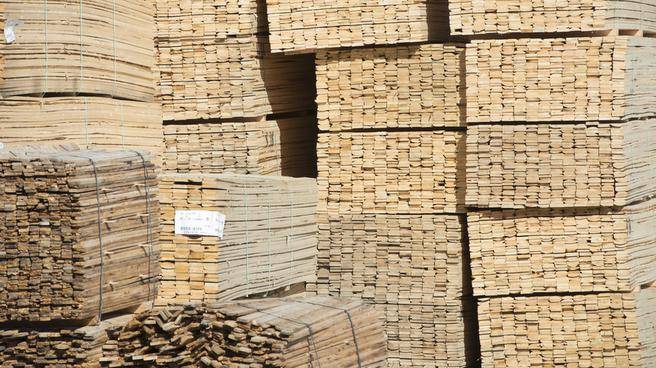
Russian softwood lumber exports increased sharply in the first eight months of the year, both in value and in volume terms.
According to the Russian Federal Customs Office, during the first eight months of the current year Russia exported 12.835 million tonnes of sawn timber.
That is 5.3% more than during the respective period of the last year. The total value of the exported Russian softwood lumber increased as well. In January-August it came up to $3.031 billion having gone up by 17.2%.
In their turn, Russian logs exports went down in volume terms, but increased in value terms. In January-August 2018, the Russian logs exports came up to 12.148 million m3, having gone down by 5.5% year-on-year.
The total value of the Russian logs exported in January-August 2018 came up to slightly over $1 billion, that is 3.1% more than during the respective period of 2017.
Japan’s imports of wood pellets up by 50%

The Japanese Forestry Agency announced the statistics for wood pellet supply in Japan for 2017.
Domestic production was 126,532 tonne, 5.3% more than in 2016, while imports of wood pellet increased considerably to 506,353 tonne, 46% higher as compared to the previous year. Domestic share of the total wood pellets supply is now down to 20%, while imports is up to 80%.
The main reason of this rise in supply is that the demand of fuel increased. Total wood pellet supply in 2017 was 632,885 tonne, 35.5% more than 2016. In 2013, the total was about 190,000 tonne and share of the imports was 43%. The imports managed to exceed internal production in 2015, while in 2017 their share increased to 80%
The main sources of imports are Canada and Vietnam. Others like Southern U.S.A., Malaysia, Thailand and Russia are expected to increase the supply to Japan in the upcoming years.
Domestic supply has increased for three years in a row. Fuel use reached 122,047 tonne, 7.4% more than in 2016. Use of pellets for heating didn't increase as much. The main increase was reported in the use of pellets in power generation plants as to replace coal.
Number of wood pellet manufacturers in Japan is 147, one less than in 2016.
Trends in the global MDF market
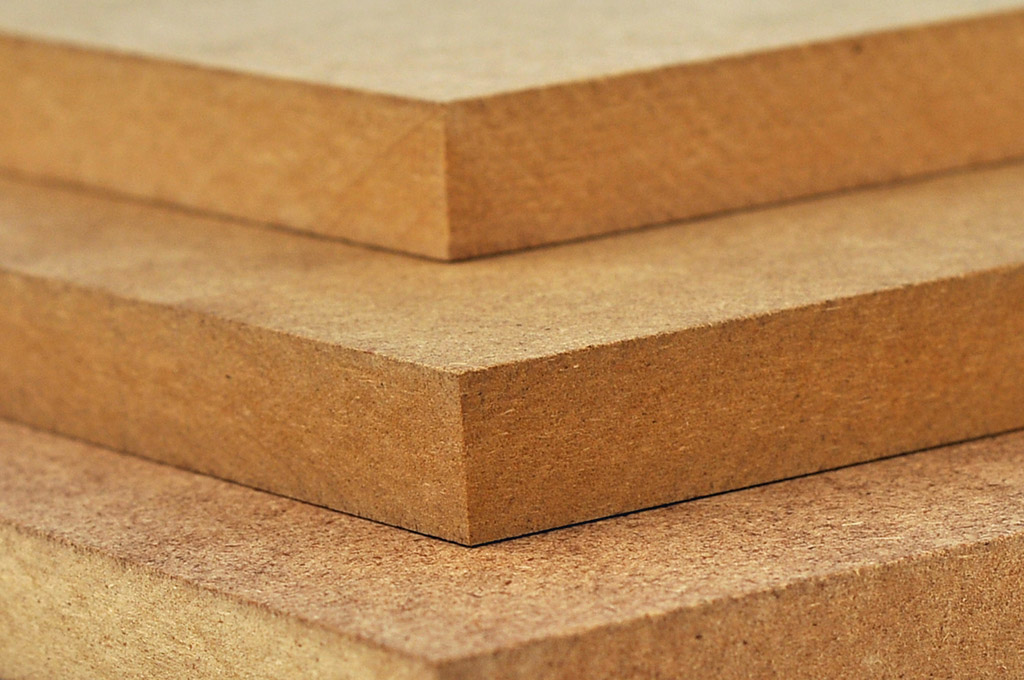
The global MDF market amounted to 99.6M cubic meters in 2017, posting solid gains over the last ten years. Market volume expanded by an average annual rate +5.6% over the period from 2007 to 2017.
In the past few years, consumption growth decelerated after the strong 2010-2014 growth, caused by world GDP decrease due to oil price drop and a set of structural changes in Chinese economy. In value terms, the market stood at $35.7B, which was approx. at the level of 2016.
The market recorded a robust upward trend from 2010 to 2014, until it turned downward, falling over the next three years on the backdrop of a decline of global MDF prices.
China accounts for more than a half of global MDF consumption
China (56.8M cubic meters) was the country with the highest volume of consumption in the world, solely accounting for approx. 57% of global consumption. The other countries lagged far behind: the U.S. (4.6M cubic meters), Turkey (4.1M cubic meters), Brazil (3.4M cubic meters), Poland (3.4M cubic meters), Russia (2.3M cubic meters), Iran (2.2M cubic meters) and South Korea (1.9M cubic meters); all these countries, together with China, comprised near 79% of global consumption. Continue reading "Trends in the global MDF market"
Kebony doubles modified wood production capacity with new plant

Modified wood cladding and decking manufacturer Kebony announced the opening of the company’s new factory in Flanders, Belgium.
“The opening of our second factory is a momentous occasion in Kebony’s history and will be vital to our continued growth for many years to come,” said Kebony CEO Bruno Van den Branden said. “We are delighted to be in a position where we can significantly increase our production capacity of environmentally friendly products, which will only serve to help us to continue positively influencing the sustainable construction industry worldwide.”
The Kebony technology modifies sustainably sourced softwoods by heating the wood with a bio-based liquid. By polymerizing the wood’s cell wall, the softwoods reportedly take on the attributes of tropical hardwood including high durability, hardness, and dimensional stability.
The company says it has experienced continued annual growth with international sales rising by an average of 30 percent year-over-year for the past seven years.
In order to meet the increased demand, the new factory has been opened to enable Kebony to double its current annual production capacity to more than 200,000 square feet of Kebony Clear wood. Kebony’s original factory in Norway will continue to specialize in the production of Kebony Character wood while maintaining its status as the company’s research and technology hub.
Construction of the facility was delivered within budget, with funding supplied by European investors. Plans for further investment would give Kebony the potential to quadruple its current production to nearly 900,000 square feet.
Boise Cascade to acquire Arling Lumber
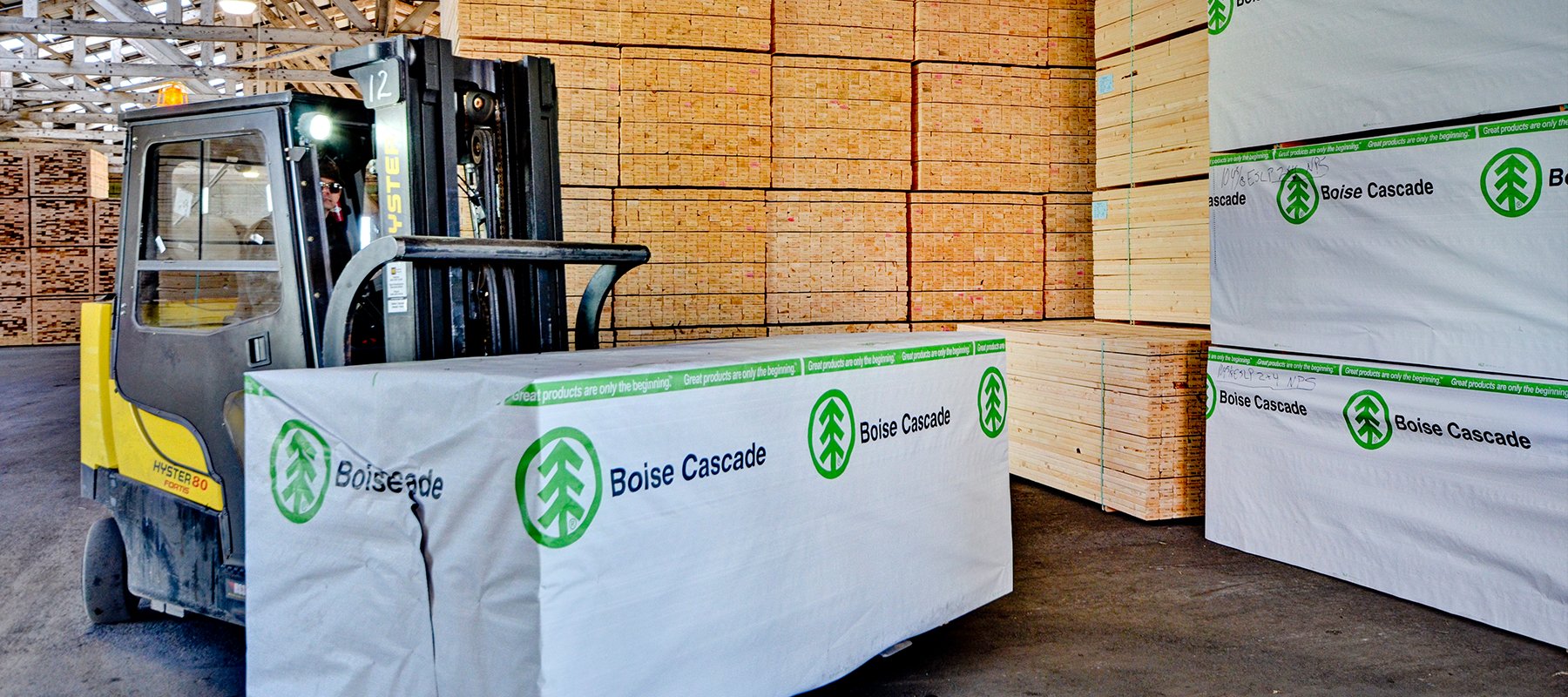
Boise Cascade Co. announced an agreement to acquire Arling Lumber, Inc., headquartered in Cincinnati, Ohio. Arling is a third generation, family-owned and operated wholesale distributor of lumber, plywood, OSB, and engineered wood products.
"Arling is an exceptional supplier of many forest products," said Nick Stokes, executive vice president, Boise Cascade. "With their experienced and knowledgeable team, they will be a great addition to our nationwide distribution network and will enhance our service capacity in the Ohio market."
"Boise Cascade has been a valued supplier to Arling Lumber for over 45 years," said P.J. Arling, president of Arling Lumber. "This is an ideal strategic and cultural fit that will allow the combined organization to grow and provide more value to our customers."
The acquisition is expected to be completed in the fourth quarter.
Boise, one of the largest producers of engineered wood and plywood in North America recently sold its lumbermill in Pilot Rock and La Grande, Oregon and its particleboard operations in Island City to Woodgrain Millwork.
Germany: Sharp rise in wood pellets' prices in October

In October, the price of wood pellets rose considerably in Germany. Wood pellets are more expensive by 3.7% as compared to September and 5.6% as compared to October 2017.
The price for a tonne of wood pellets currently stands at € 249.94. One kilogram of pellets costs 24.99 cents and one kilowatt hour (kWh) of heat from pellets costs 5.00 cents.
Due to the sharp rise in the price of heating oil, the price advantage of pellets over heating oil is currently 37.2 percent.
"Experienced pellet buyers usually fill their warehouses in the summer, when supply is high and prices are low," explains DEPV Managing Director Martin Bentele. "The hot temperatures have probably prevented many consumers from thinking of heating. In the first cooler nights, they now realize that they should better refuel before the heating season. That has fueled demand noticeably. "Due to the good raw material situation, the German pellet factories are working at full speed.
Regional prices
The price for wood pellets varies from region to region in October 2018: the cheapest pellets continue to be in central Germany. There a tonne of pellets costs 247.55 EUR / t. In northern and eastern Germany, the price per tonne is EUR 248.30 / t, while in southern Germany EUR 251.07 / t.
Larger quantities (26 t) were traded in October 2018 on the following terms: South: 235.33 EUR / t, Center: 229.66 EUR / t, North / East: 230.90 EUR / t (all incl. VAT).
Germany: Sharp rise in wood pellets’ prices in October

In October, the price of wood pellets rose considerably in Germany. Wood pellets are more expensive by 3.7% as compared to September and 5.6% as compared to October 2017.
The price for a tonne of wood pellets currently stands at € 249.94. One kilogram of pellets costs 24.99 cents and one kilowatt hour (kWh) of heat from pellets costs 5.00 cents.
Due to the sharp rise in the price of heating oil, the price advantage of pellets over heating oil is currently 37.2 percent.
"Experienced pellet buyers usually fill their warehouses in the summer, when supply is high and prices are low," explains DEPV Managing Director Martin Bentele. "The hot temperatures have probably prevented many consumers from thinking of heating. In the first cooler nights, they now realize that they should better refuel before the heating season. That has fueled demand noticeably. "Due to the good raw material situation, the German pellet factories are working at full speed.
Regional prices
The price for wood pellets varies from region to region in October 2018: the cheapest pellets continue to be in central Germany. There a tonne of pellets costs 247.55 EUR / t. In northern and eastern Germany, the price per tonne is EUR 248.30 / t, while in southern Germany EUR 251.07 / t.
Larger quantities (26 t) were traded in October 2018 on the following terms: South: 235.33 EUR / t, Center: 229.66 EUR / t, North / East: 230.90 EUR / t (all incl. VAT).

