Article archive

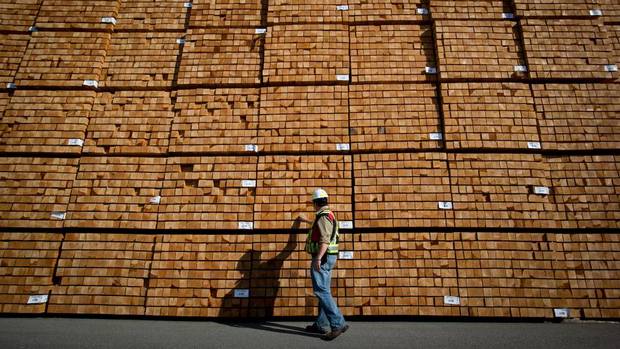
Tolko to curtail operations at Quest Wood sawmill citing high log costs and poor market conditions

Tolko Industries Limited has told their employees in Quesnel on October 13 that they will be curtailing operations at their Quest Wood lumber mill effective immediately.

The decision is based on high log costs and poor market conditions according to an email from Donna Pincott, Tolko's Manager of Communication.

This number does not take into consideration indirect employees like logging contractors, so the total number could be much higher.

"Maintenance will continue to operate beyond the production curtailment date to ensure the mill is ready to resume future operations," Pincott added, "We will monitor the situation to determine when we can resume operations."
EC reports steady progress in EUTR implementation

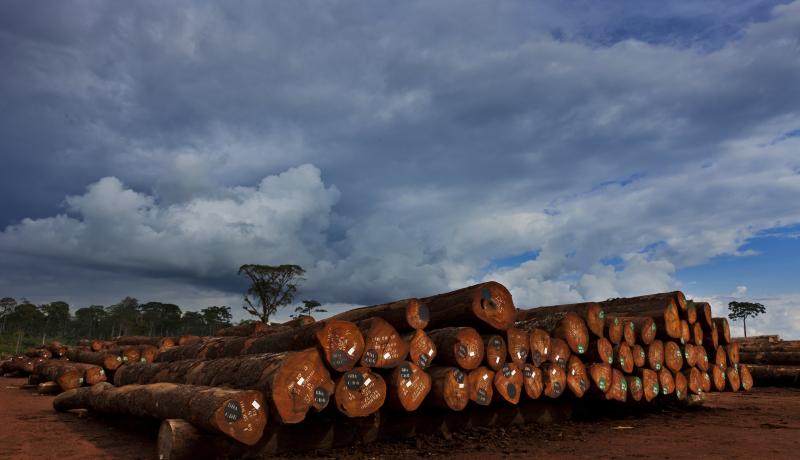
On 5th October, the European Commission (EC) formally adopted the EU Timber Regulation (EUTR) Report 2017, the second biennial report on implementation since the regulation came into law in March 2013.

The second report covers the period March 2015 to February 2017 and is based on the reports from the 28 EU Member States and Norway.

According to the EC, the report “reveals steady progress after four years of its application. Almost all countries comply with the formal requirements of the EUTR. Over the reporting period, the number of checks made and sanctions applied for violation of the EUTR have significantly increased”.

However, the EC also notes that “continuous efforts are needed to ensure a uniform and effective application of the EUTR across countries. Uneven implementation can have potential implications in terms of both the effectiveness of legislation and a level playing field for market operators.

Further effort should be made to ensure that the scope and quality of the checks carried out reflect a more consistent approach across the EU”.

The EC intends to “continue to cooperate with the Member States on supplementing EUTR guidance to achieve a uniform application and facilitate its implementation by the operators” and will also “help approximate enforcement approaches between competent authorities and continue to explore additional tools to improve the EUTR implementation in cooperation with the Member States and relevant stakeholders”.

ISC 2018: Buoyant construction in Europe supports sawmill industry’s solid financial performance

On the 11th and 12th October 2018 the 66th edition of the International Softwood Conference was held in Riga in the facilities of the hotel Radisson Blu Latvija. This year's conference was attended by over 200 participants – a record-high attendance – from all over the world and it was hosted by the Association of Latvian Timber Producers and Traders, and, as usual, by the European Organization of the Sawmill Industries (EOS) and the European Timber Trade Federation (ETTF). Continue reading "ISC 2018: Buoyant construction in Europe supports sawmill industry’s solid financial performance"

EU is ready to begin trade arbitration with Ukraine to lift timber exports ban

The European Union is ready to begin commercial arbitration with Ukraine to lift a moratorium on exports of round timber as the one violating the Ukraine-EU Association Agreement, Ukrainian Deputy Prime Minister for European and Euro-Atlantic Integration Ivanna Klympush-Tsintsadze has said. Continue reading "EU is ready to begin trade arbitration with Ukraine to lift timber exports ban"

Hyne Timber expands its glue laminated timber capacity in Queensland

Hyne Timber has announced a significant expansion to its Glue Laminated Timber (GLT) manufacturing capability in Maryborough, Queensland. Construction of the new plant is expected to commence within a matter of weeks.

The new state-of-the-art manufacturing plant will accompany the existing plant in Maryborough’s Industrial Estate which is now in its 40th year of production. Recruitment of a range of specialist roles will commence well ahead of plant commissioning, with more operational and specialist jobs created as production scales up.

The announcement also presents research and development opportunities for new, innovative products and solutions which wouldn’t have otherwise been commercially viable. A comprehensive research and development initiative is also underway with the support of research partner, the University of Queensland Centre for Future Timber Structures.

Hyne Timber will be releasing progress updates throughout the next few months as the new plant nears commissioning around mid-2019.

Hyne Timber is one of Australia’s largest producers of sawn timber products, a leader in preservative treatments and an iconic supplier to the Australian construction industry.

Brazilian lumber exports rise as to meet US demand

Brazilian lumber exports have followed a similar trend as exports from other countries over the last decade, which is to say they have slowly crept back up after tanking in the wake of 2008. The US housing market is the primary driver of global lumber flows, and the Great Recession of 2008 had a lingering, widespread effect on these flows, as well as the local markets where lumber is produced in volume. Continue reading "Brazilian lumber exports rise as to meet US demand"

Interfor cuts production by 20% in BC Interior due to dropping lumber prices

Interfor Corp. says it plans to cut production by about 20 percent across its sawmills in the B.C. Interior as it faces declining lumber prices and higher log costs.
The Vancouver-based company says the scale-back is a temporary measure planned for the fourth quarter.
It says the cuts will be achieved through reduced operating days and extended weekends and holiday breaks spread across its three mills in the Interior.
Lumber prices for Western softwood have plunged from over US$650 per thousand board feet in June to under US$400 as concerns mount about the U.S. housing market.
The drop in lumber prices has sent industry stock prices lower for a variety of Canadian players.
Interfor's share price closed down 54 cents or 3.16 per cent at $16.55 on the Toronto Stock Exchange for a 52-week low and well off the $27.27 high reached in June.

Amazon makes major investment in prefabricated housing

As Amazon announced their investment in a prefabricated housing start-up, factory-built homes may just become the next voice-controlled, super-efficient must-have in the future.

Cheaper and quicker to build than traditional housing, modular homes are viewed as a solution to housing shortage.

To top it off, Amazon seems keen to ensure the homes of the future are fully-compatible with the latest Alexa capabilities, allowing it to launch more than a dozen new smart devices powered by Alexa.

Plant Prefab, a prefabricated housing start-up, has captured £5.14million in its first-round funding from investors including Obvious Ventures and the Amazon Alexa Fund — a venture capital fund which supports companies using voice technology in their products.

“Voice has emerged as a delightful technology in the home, and there are now more than 20,000 Alexa-compatible smart home devices from 3,500 different brands,” said Alexa Fund director Paul Bernard.

“We’re thrilled to support [Plant Prefab] as they make sustainable, connected homes more accessible to customers and developers,” said Bernard.

Based in California, and just two years old, Plant Prefab introduced itself as a "home factory" using a secret building system which "reduces construction time by 50 per cent and cost by 10-25 per cent in major cities."

Built off-site and assembled in pieces with the support of a full-time workforce, Plant Prefab said their projects tend to be completed faster and at a lower cost than site-based projects which can be impacted by variables such as local labour shortages or sub-contractor premiums.

The company estimated factory costs to be around £100 (US$130) per square foot for a larger multi-home project from £153 (US$200) per square foot for their higher-end, steel-framed homes.

“In the housing-crunched major cities [...] it takes too much time to build a home from groundbreaking to occupancy, and labour shortages, construction delays and increased construction costs are exacerbating this trend even further - and making homes increasingly less affordable," said Plant Prefab Founder and CEO Steve Glenn.

More consumers are demanding homes that use less energy, water, and resources — and that minimise indoor air pollution, says Plant Prefab, while demand for building quickly, cost and time efficiently, and sustainably is growing.

Swedish pine showcases Scandinavian design at the London Design Fair

With its pink stained wood, the Swedish Design Pavilion attracted a great deal of attention at the London Design Fair. The wooden pavilion allowed industry organisation Swedish Wood to display the potential of pine, while also promoting contemporary Swedish design, as the pine structure created a showcase for Swedish design companies over the course of the fair in September.

With Swedish Wood’s participation in this year’s London Design Fair, pine was presented in a whole new light. The wooden pavilion, created by architect Karin Sundberg, was built in solid pine and stained a striking pink. The 27,000 or so interior designers, buyers, manufacturers and journalists who descend on the London Design Fair each year were given a surprising and colourful view of Scandinavian design this time around.

Karin Sundberg's aim for the Swedish Design Pavilion was to create an open arena, divided up in a grid system that lends flow and clarity to the space. All the exposed pine is stained a deep pink. The colour of the wood proved a real wow factor, making the pavilion stand out and providing a bold backdrop that let the exhibitors’ products shine.

“Pine is a wonderful material to work with. Not only is it versatile and sustainable, but it also gives a wonderfully natural feel. Wood is a material that we’re definitely going to see more of in future design and architecture. I’m so pleased that Swedish Wood was a partner on this project, as it supports progress in this area,” says the Malmö-based architect.

The Swedish pavilion at the London Design Fair, which was held on 20–23 September, was organised this year by Southern Sweden Creatives in partnership with Swedish Wood, Ateljé Lyktan and Form magazine. Thirteen design companies based in southern Sweden took part, including Swedish Ninja, Myltha by Lisa Hilland, Nola and Happy Ears.

“It’s important for Swedish Wood to attend design fairs, not least as a way to promote Sweden as a wood nation. But we also want to show what can be done with pine, a wood that opens up endless possibilities. The pink pavilion made a strong statement at the fair. Architect Karin Sundberg has pulled off a pine structure with a fascinating and innovative look,” says Charlotte Dedye Apelgren, who is Director of Interior and Design at Swedish Wood.

Prices for lumber in the US continue to go down

Framing lumber prices in the US continued to tumble, as supplies easily outpaced demand across North America.
Fear of downside risk kept most buyers on the sidelines, and the Random Lengths Framing Lumber Composite Price fell by double digits for the fifth consecutive week.
The composite price fell $16 to $373, its lowest level since February 2017. A limit-down move in the November futures contract Thursday, and back-to-back days of plunging prices on the stock market gave buyers additional reasons for caution.

Week
Oct 12
Week
Oct 5
Year Ago
2017
Random Lengths Framing Lumber Composite Price* $373 $389 $440
KD Western S-P-F #2&Btr 2x4 R/L Mill Price 332 342 443
KD Eastern S-P-F #1&2 2x4 R/L, delivered Great Lakes 422 445 550
Green Douglas Fir Std&Btr 2x4 R/L (Portland) 285 310 470
Southern Pine (Westside) #2 2x4 R/L 472 487 427
KD Coast Hem-Fir #2&Btr 2x4 R/L 335 355 467
Ponderosa Pine (Inland) #2&Btr 1x12 R/L 775 775 700
* Weighted average of 15 key items

Random Lengths Panel Market Report
Structural panel prices plunged by double digits despite Hurricane Michael slamming the Florida Panhandle. Traders lamented that a storm that strong, category 4, historically pulls buyers into the market seeking near-term coverage.
OSB sheathing prices fell $20-30 across North America. A number of buyers were still working down inventory purchased in preparation of Hurricane Florence last month. Subdued sales persisted in Southern Pine plywood despite the storm. Western Fir plywood trading remained slow, as recent trends persisted.

(f.o.b. mill prices) Week
Oct 12
Week
Oct 5
Year Ago
2017
Random Lengths Structural Panel Composite Price* $429 $448 $538
Southern (west-east) 15/32-inch 3-ply rated sheathing plywood 425-465 445-490 507-528
Southern (west-east) 15/32-inch 4-ply rated sheathing plywood 430-470 450-495 512-530
Western 1/2-inch 4-ply rated sheathing plywood 420 447 525
North Central 7/16-inch Oriented Strand Board 290 310 455
*Weighted average of 11 key items


Prices for wood pellets in Switzerland slightly rise during October

Prices for wood pellets slightly rose during October 2018, in Switzerland. Thus, the average price for ENplus A1 quality wood pellets reached to an average of 363.3 CHF/tonne, 0.4% more than in September 2018, but -0.6% less than in the same period last year.
Depending on the delivery quantity, 3-8 tons, the price varies between 353 and 375 CHF / t.
Larger quantities (17 tonnes) of commercial wood pellets cost 340.02 CHF / t. This is 0.7% more than in September and 0.5% more than in October 2017.
 

China alters plywood export codes as to avoid US tariffs

China increases its attempts to avoid the US tariffs on plywood imports. Thus, the identification codes which will be placed on every product imported to the US might be altered by some Chinese exporters, as to avoid the tariffs.

The 10-digit codes, of which there are around 19,000, identify products and provide a common language to bridge different markets.

As reported by Woodworking Network, an Oregon wood importer said that he was approached by a Chinese supplier asking if he would like to get some Chinese plywood free of tariffs. When asked how that would work, the caller said that the plywood would be stripped of its Chinese markings and that it would be shipped "under some other code."

There are also some websites, where the Chinese exporters exchange information about the tariff codes (Yishanghuiyou - Friends Through Commerce).

Also, there is a higher number of US Customs rulings on questionable export Chinese export classifications and it’s estimated that the US loses nearly $550 million in customs revenues every year due to tariff evasion.

The Decorative Hardwoods Association and the Coalition for Fair Trade of Hardwood Plywood both voiced evasion and antidumping concerns to the US Department of Commerce earlier this year, Woodworking Network reported.

Before the orders were issued, Chinese producers began to preemptively circumvent the anticipated orders by taking merchandise fully covered by the scope and making minor alterations in an attempt to remove products from the coverage of the scope to avoid duties," said Tim Brightbill of Wiley Rein, the law firm representing the Coalition. "Such blatant attempts to evade the orders are depriving the domestic industry of the full extent of the trade relief it deserves.”

The US Department of Commerce explained that various types of hardwood plywood that come from China are part of a group of products which are being sold at very low prices in the US, and that those specific products are the subject of antidumping and countervailing duties.

The Department's final scope specifically states that Chinese hardwood plywood used in kitchen cabinets would be subject to antidumping duties unless it is packaged for sale to a consumer end-user of the cabinet - with all components necessary to assemble the cabinet in a single, discreet package, as reported by Woodworking Network.

Soon after Commerce's ruling, Chinese producers began to ship plywood under four other codes, from 4412.39.10.00 through 4412.39.50.00. These are the codes apply for softwood-faced plywood, which has lower tariffs.

The ITC issued its final determination last November, activating significant tariffs - nearly 200 percent - on some on imports of Chinese hardwood, voting 4-0 that the domestic industry is materially injured, or threatened with material injury, by reason of these dumped and subsidized imports.

U.S. softwood lumber demand expected to reach all-time high by 2030

U.S. softwood lumber demand will grow at an annual rate of 2.3 per cent through 2030, which will be higher than the reports projection of real GDP. The demand scenario suggests that U.S. lumber consumption will reach an all-time high by 2030.

A detailed analysis of the future consumption of softwood lumber released by ForestEdge and Wood Resources International forecasts in each of the five end-use categories (residential housing, repair and remodeling, non-residential construction, material handling and other) reveals that the category “Non-Residential Construction” will grow at the fastest rate and will increase its share of the total softwood lumber usage from just over 11 per cent in 2016 to almost 14 per cent by 2030. Lumber consumed by the residential housing sector, including repair and remodeling, will continue to account for the almost 70 per cent of the end-use market.

At an estimated softwood lumber production cost of less than U.S.$200/m3 in 2016, the U.S. South is one of the lowest cost suppliers of softwood lumber to the U.S. market. This, combined with a significant “overhang” supply of softwood sawtimber as a result of the global financial crisis in 2008-09 and a mature plantation resource, is expected to continue to facilitate a major expansion of sawmill capacity in the region.

The Canadian lumber producers market share in the U.S. is expected to decline in the coming years, with the biggest reduction occurring between 2017 and 2025. The outlook for available log supply to the sawmilling sector will be different in the two major lumber-producing regions in Canada, with harvest levels falling substantially in British Columbia over the next ten years. Overseas supply of lumber to the U.S. is forecasted to increase both in volume and market share by 2025, followed by a decline until 2030. Based on the study’s lumber supply curve analysis, the major supplying regions are likely to include Brazil, Chile, Germany and the Nordic countries. In the study’s High Demand Scenario, which projects a very strong rebound in housing starts, R&R and non-residential construction, overseas supply will be crucial and reach a market share of over 10 per cent by 2030.

After nearly two decades of real price declines of sawlogs in North America and elsewhere, the combination of a rebounding U.S. softwood lumber demand, constraints on log supply and export production in Western Canada, and continued strong demand for softwood lumber from markets in Europe, Asia and the Middle East/North Africa (MENA) region, is expected to push conifer log prices higher in real U.S. dollar terms in many timberland investment regions by 2030.

Forecast: Finnish roundwood prices to rise by about 10% this year

Increasing demand due to good economic prospects and recent investments will boost the use of roundwood this year in Finland.
The use of imported roundwood increases, but not sufficiently to meet the increased demand. The volume of roundwood trade and removals increase more than the use of roundwood, leading to higher roundwood stock levels in forests. The growing demand is clearly reflected in rising annual average prices of roundwood. Gross stumpage earnings from private forests rises to a record 2.2 billion euros. The development of removals and trade will continue more modestly in 2019.
Roundwood use increases imports and removals
The increase in roundwood use by the forest industry this year is based particularly on the increase in pulp production, as Äänekoski bioproduct mill and the UPM Kymi plant step up their use of pulpwood. The use of imported roundwood and the volume of commercial roundwood removals rises, increasing roundwood inventories slightly. The volume of removals increases over ten million cubic metres more than the average in the 2010s, to about 67 million cubic metres. The use of roundwood is expected to increase slightly in 2019 as well.
Overheating in roundwood trade
The roundwood trade was affected by the difficult winter harvesting conditions in early 2018, with private stands suitable for summer harvesting traded earlier than planned. Owing to the heated situation in early 2018, the volume of standing sales is expected to show robust overall growth this year, although the trend is expected to level off at the end of the year. Trade volume in thinning stands will pick up from last year. This year’s increase in roundwood inventories is expected to keep the growth of roundwood trade in check in 2019. Trade in pine logs and pine pulpwood will grow slightly more than in other tree species.
Jump in roundwood prices
The brisk trade, due to the difficult harvesting conditions and higher demand of roundwood early in the year, will push up the nominal annual average prices of wood markedly from the average annual price last year. The growing demand for pine products in the sawn goods export market has raised the price of pine logs but not enough to close the gap to spruce logs. The annual weighted average price of pine logs will rise about 9 percent from last year and that of spruce logs about 10 percent.
The annual average price of pine and spruce pulpwood will also rise 8–10 percent this year.
Next year prices will be affected by growing inflation, which will increase the annual average prices that would otherwise develop more modestly. Due to removals and the rise in roundwood prices, gross stumpage earnings from private forests will increase by almost 16 percent from last year, reaching 2.2 billion euros. Next year earnings from private forests will continue to rise a few percent.
 

Spanish Garnica cofirms €80 million investment in a new plywood factory in France

Spains's Garnica confirmed its intention to build a new factory in Troyes, France. Work at the factory will begin in several stages, with construction beginning in the first half of 2019 and full operational status expected in 2020. It will require an initial investment of € 40 million, will create up to 100 direct jobs and will be focused on the production of poplar veneer sheets.

All stages of this project are expected to conclude between now and 2025 with a total final investment of € 80 million, an installation of 40,000 m2, up to 300 jobs at the new factory and an additional 500 indirect jobs in the surrounding rural area linked to the construction, cultivation of poplar trees and associated timber industry.

Christian Michel, CEO of the group, explained that, “we will build a benchmark factory, applying all the experienced gained by Garnica over more than 75 years of plywood production.” The availability of raw materials, labor, good infrastructure and communication links were the deciding factors in the selection of Troyes as the location, as well as its proximity to the company’s client base.

Garnica has decided to build this new factory in response to the need to guarantee its growth plans by positioning itself close to local poplar-focused plantations. The company is thus ensuring its ability to respond to an increasing demand for plywood from its clients and guarantee a supply of its main raw material, poplar trees, the tree most often used by the company to produce plywood. “It is a sustainable source of timber because it grows quickly and produces a panel that is highly regarded by our clients due to its suitability for numerous applications. It is also a tree that protects the environment by capturing CO2 from the atmosphere”, explained Pedro Garnica, President of the company.

Garnica already has another factory in France, located in Samazan (in the Aquitaine region) since 2010, which each year produces some 145,000 m3 of plywood, currently employs 155 people and occupies an area of 17,000 m2. Since this factory was built, Garnica has made numerous investments aimed at increasing production, improving processes and expanding raw material storage capacity.

With these new facilities and the recent acquisition of Maderas de Llodio, Garnica is laying the foundations for continued growth. With average annual growth of 14% in recent years, this new project underpins the company’s ambitious growth plan.

The company currently employs 1,100 people and owns a total of six production sites: five in Spain and one in France, to which will be added the new Troyes facilities. By the end of FY 2018, Garnica estimates a turnover of 250 million euros and a production capacity of 350,000 m3 of plywood panels.

Expansion in India and higher online sales boosts IKEA’s sales

Swedish furniture giant IKEA reported rising sales for the year to August, helped by a big push online and new store openings, including its first in India.

Total store turnover, comprising sales of both products and services, rose 1.3 per cent to €38.8 billion (US$44.5 billion) from €38.3 billion a year earlier, the company said in a statement.

Adjusted for currency impact, sales were up 4.5 per cent at its over 400 worldwide stores.

"It was an incredible year," Jesper Brodin, the new CEO of the Ingka Group which owns the bulk of Ikea stores, told reporters in Madrid at an event to promote its new city centre store in the Spanish capital timed to coincide with the release of the yearly results.

Best known for its low-cost flat-pack furniture and sprawling out-of-town stores, IKEA opened 19 new outlets around the globe, including its first in India and Latvia in August. It is now present in over 50 markets worldwide.

IKEA announced it will open its first store in the Ukraine in 2019, after a decade of negotiations, and on Tuesday the company said it plans to bring its products to South America for the first time with new openings "soon" in Chile, Colombia and Peru.

The company's results were also helped by rising online sales. IKEA's websites received 2.5 billion visits, an 8.7 per cent jump over its previous fiscal year.

IKEA recently begun opening smaller shops in city centres that have less stock as part of a major transformation that has also seen it move more resources to e-commerce and focus more on emerging markets.

As part of its push into online sales IKEA offers an augmented reality app which allows customers to place furniture virtually in their home.

Brodin said the opening of city centre shops was a response to changing lifestyles since fewer people own cars.

Ingka Group said in a separate statement that its full-year sales rose to €34.8 billion from €34.1 billion a year earlier.

Bankrupt Norske Skog acquired by Oceanwood

Investment funds managed by Oceanwood Capital Management Limited have now acquired 100% of the shares in Norske Skog AS following a lengthy process of regulatory approvals.

The net purchase price after adjustments was approximately EUR 236 million in cash. EUR 231 million is expected to be distributed to the holders of the EUR 290 million senior secured notes due 2019 (SSNs) and the lenders under the EUR 16 million liquidity facility (Liquidity Facility) shortly after closing, whilst the remaining balance will be held in an escrow account for a period of six months pending further potential price adjustments to be determined post- closing.

Following the completion of the transaction, Norske Skog AS and its subsidiaries will be released from their remaining obligations under the SSNs and the Liquidity Facility.

After completion of the transaction, the group will have gross interest-bearing third-party debt (i.e. excluding debt to companies controlled by the group’s new owner Oceanwood) of approximately NOK 600 million, related to investments such as the biogas facilities in Norway and France and factoring financing of the group’s trade receivables in France and Australia. As of 30 June 2018, the group’s cash amounted to approximately NOK 700 million.

The group’s gross operating earnings for the last twelve months ending September 2018 is estimated to be just above NOK 1,000 million.

Norske Skogindustrier AS was declared insolvent by the board of the parent company Norske Skog, at the end of 2017.

Newsletter

Subscribe to our digital newsletter for your daily digest of essential news, views and analysis from the international wood industry delivered directly to your inbox.


0