

SCA and Latvian Forest Company have signed a letter of intent for SCA to acquire 10 000 hectares of forest land in Latvia. Continue reading "SCA to acquire 10 000 hectares of forest land in Latvia"
Article archive
Georgia-Pacific to close lumber mill due high timber prices and drop in housing starts
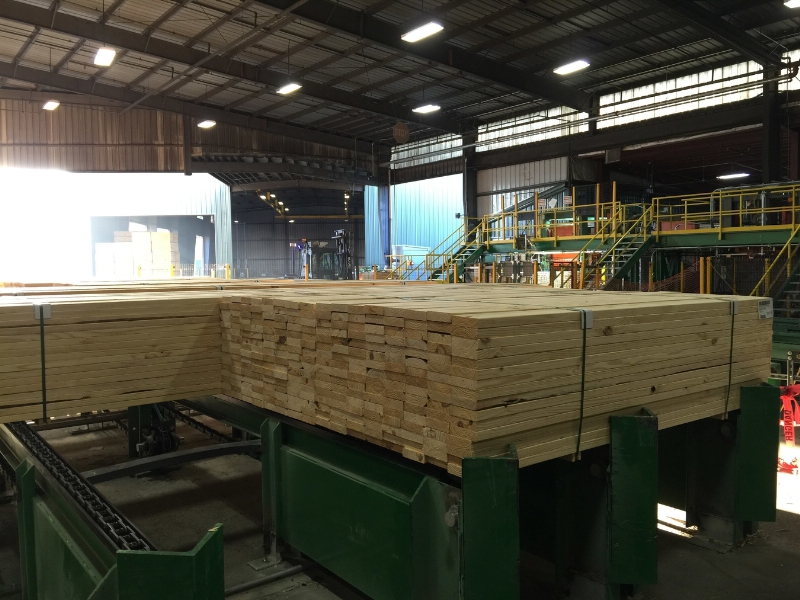
Georgia-Pacific will close Sterling Lumber mill in Brunswick, Georgia, with loss of 120 jobs, amid difficultly in getting timber at a competitive price, drop in housing starts.
An estimated 120 employees at the Georgia Pacific Sterling Sawmill no longer have jobs.
The workers were told on last week that the plant, in operation since 1982, will stop manufacturing operations immediately.
Rick Kimble, senior manager of communications for Georgia Pacific, said a team of company representatives went to the plant and met in person, first with plant management, followed by union leaders and then with employees to break the news.
Laid off employees will have an opportunity to transfer to other Georgia Pacific facilities across the nation if they are qualified for the open jobs, Kimble said.
The plant is being closed because of several factors, including the difficultly in getting timber at a competitive price. One of the problems is there is a shortage of workers qualified to work in the timber harvesting industry.
Another factor was housing starts are down, reducing the demand for wood and other Georgia Pacific facilities have expanded their capacity to manufacture the same timber products.
Norbord reports record earnings in 2018
Norbord Inc. reported Adjusted EBITDA of $724 million for the full-year 2018 compared to $672 million in 2017 on higher realized North American oriented strand board (OSB) prices and shipment volumes, as well as higher European panel prices. North American operations generated Adjusted EBITDA of $652 million compared to $638 million in the prior year and European operations delivered double Adjusted EBITDA of $86 million compared to $41 million in the prior year.
For the fourth quarter of 2018, Norbord recorded Adjusted EBITDA of $70 million versus $204 million in the fourth quarter of 2017 and $211 million in the third quarter of 2018. Adjusted EBITDA declined versus both comparative periods due to lower North American OSB prices and shipments.
“2018 was an excellent year for Norbord,” said Peter Wijnbergen, Norbord’s President and CEO. “Despite a disappointing fourth quarter, we delivered our best-ever Adjusted EBITDA of $724 million as North American OSB prices remained strong for much of the year and we shipped more product to meet increased demand. Our European business had an outstanding year, more than doubling their Adjusted EBITDA as robust demand growth in our key markets supported higher panel prices.”
“Norbord’s mills in both North America and Europe continued to perform well, with seven of our mills setting annual production records in 2018. The exceptional operating cash flow we generated last year allowed us to maintain a strong balance sheet, even as we reinvested more than $200 million in our mills and returned over $500 million in cash to our shareholders through a combination of dividends and share buybacks.”
“In Europe, our panel business is set for another great year as OSB demand in our key markets continues to increase and our Inverness, Scotland mill will achieve a step-change in production now that the new finishing end is complete. In North America, the pace of US housing growth decelerated in the second half of the year as homebuyers adjusted to higher home prices and mortgage interest rates. Combined with the usual seasonal slowdown, this negatively impacted our fourth quarter results and this weakness has carried over into January. The fundamentals underlying new home construction remain supportive, and we expect a pick-up in OSB demand as the spring building season approaches. With a strong balance sheet and a diversification strategy that is growing non-traditional end-uses for OSB to help cushion against volatility in housing demand, we believe Norbord is well positioned for 2019,” Wijnbergen said.
Norbord's North American OSB shipments for the fourth quarter were 5% lower than the third quarter due to seasonality of demand and timing of annual maintenance and other downtime. Shipments were 3% higher than the same quarter last year and 7% higher for the full year due to the Huguley, Alabama restart in the fourth quarter of 2017. Norbord’s specialty sales volume (including industrial applications and exports) continued to increase and represents more than 25% of the Company’s 7% higher North American OSB sales volume.
Norbord's annual production records were achieved at five of the Company’s North American OSB mills. For the full year, Norbord’s operating OSB mills produced at 95% of capacity compared to 96% in 2017 (excluding the curtailed Chambord, Quebec mill and the portion of 2017 that the Huguley, Alabama mill was curtailed). Norbord’s full-year North American OSB cash production costs per unit (before mill profit share) increased 4% versus 2017 due to higher raw material prices and higher maintenance-related costs.
In Europe, Norbord's shipments decreased by 2% versus the prior year due to changes in product mix. All European panel mills ran on full production schedules during the year, excluding maintenance and holiday shutdowns, producing at 88% of capacity in 2018 compared to 99% in 2017. Capacity utilization decreased due to the restatement of annual production capacity to reflect the new continuous press line at the Inverness, Scotland OSB mill that was substantially completed in the fourth quarter of 2017. Production from the expanded Inverness mill is expected to increase in 2019 now that the new finishing line installation is complete and commissioning is underway. Annual production records were achieved at two of the Company’s European mills.
Japan seeks to boost wood pellet imports from Canada
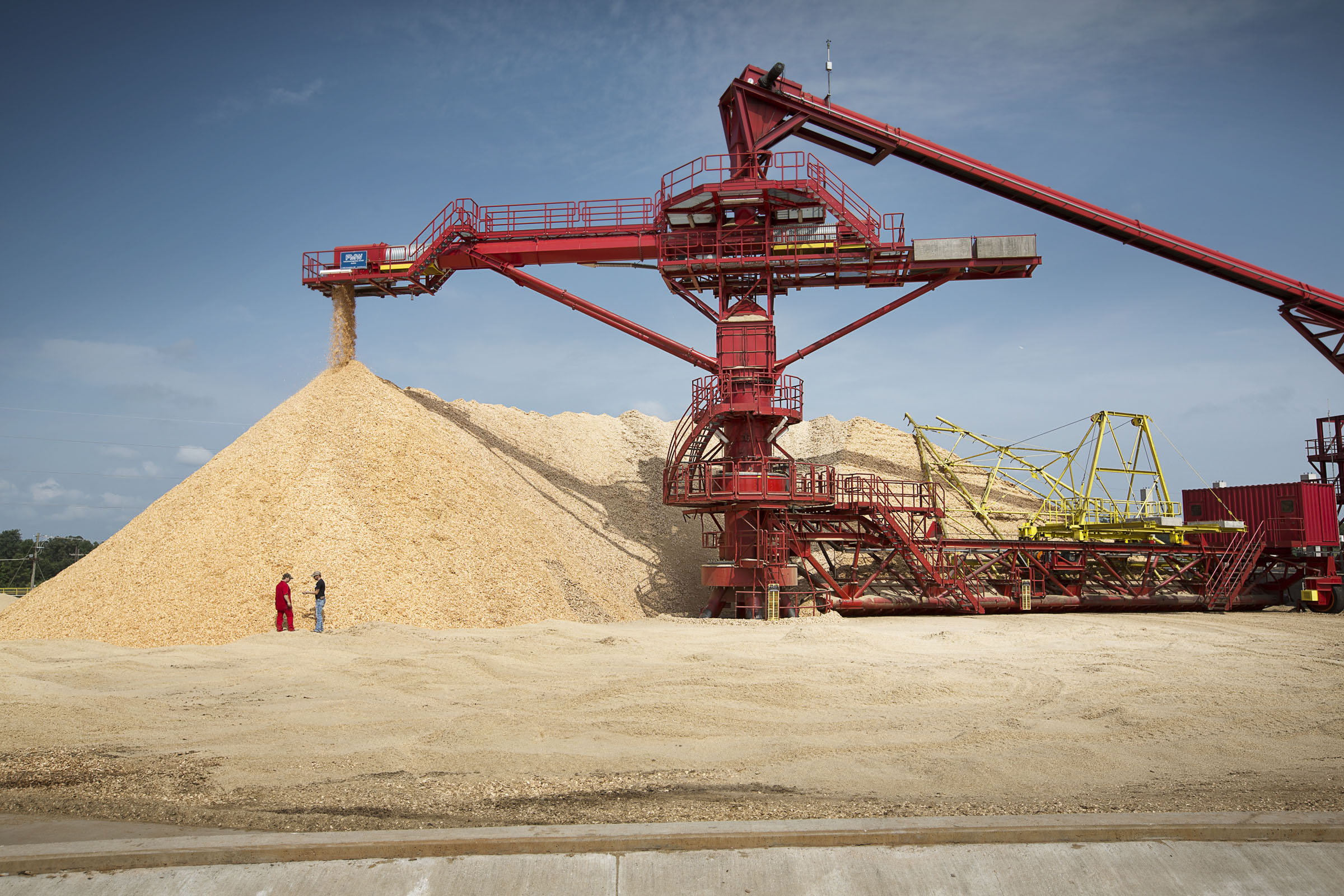
Japan is studying the potential for a seismic increase in wood pellet imports from western Canada – especially from British Columbia.
The Japanese Ministry of Economy, Trade and Industry (METI) has engaged the Japanese Coal Energy Center (JCOAL) to examine the business case for increasing wood pellet co-firing with coal from the current level of two per cent, up to 20 per cent, resulting in a potential annual demand of 30 million metric tonnes of wood pellets, worth some $6 billion a year. Japan prefers Canada as a supply source due to our country’s reputation for high quality, reliable supply and strong sustainability credentials.
In the course of their investigation, JCOAL representatives were examining:
- the expected impact on greenhouse gas and other noxious emissions
- the technical impacts on power plant combustion and performance
- Canadian raw material supply, forestry regulations, and sustainability
- the ability of the Canadian transportation network – roads, rail and ports – to handle the expected traffic increase
- willingness of Canadian companies to ramp up production
Over a four-day period from Jan. 28 to 31, the Wood Pellet Association of Canada (WPAC) hosted JCOAL representatives in Canada. The program included:
- visits to the University of British Columbia (UBC) where we met with professors and scientists from the faculties of forestry and engineering;
- a half-day seminar at the offices of the BC Ministry of Jobs, Trade and Technology (JTT) that included representatives of JTT, WPAC producer-members, terminal operators, CN Rail, Sumitomo, and UBC;
- a forest management presentation from Canfor and a tour of the company’s seedling nursery; and
- visits to pellet plants near Prince George.
Boise Cascade to sell North Carolina plywood mill
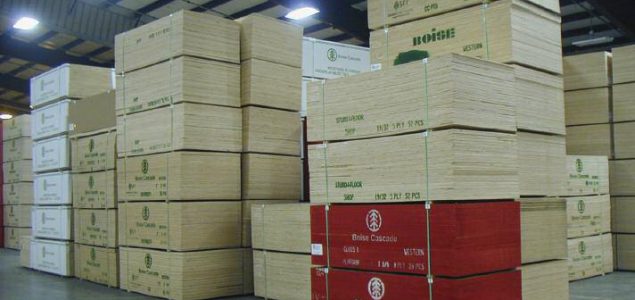
Boise Cascade Company has entered into an agreement with an affiliate of Southern Veneer Products (Southern Veneer) to sell its plywood operations in Moncure, NC. Founded in 1998, Southern Veneer, located in Fitzgerald, GA, is a privately-held manufacturer of high-quality plywood, veneer and wood by-products.
“Moncure primarily supplies hardwood plywood to the furniture panel sector. The acquisition of this facility more closely aligns with Southern Veneer’s business strategy. We believe this sale provides the best long-term option for continuing to serve the furniture market and sustain employment at the mill into the future,” said Mike Brown, executive vice president, Wood Products division.
Approximately 150 employees are employed by the facility.
The sale is contingent upon the results of the due diligence process, which is expected to be complete in the first quarter. Boise Cascade will record a pre-tax charge of approximately $25 million in the fourth quarter of 2018 as a result of writing down the carrying value of the Moncure facility and the associated inventories, as well as accruing anticipated expenses related to the sale to Southern.
In November, Boise Cascade shut down its laminated veneer production at its Roxboro, North Carolina facility, laying off 56. It sold its lumbermill in Pilot Rock and La Grande, Oregon and its particleboard operations in Island City to Woodgrain Millwork in September.
About Boise Cascade
Boise Cascade is one of the largest producers of engineered wood products and plywood in North America and a leading U.S. wholesale distributor of building products.
About Southern Veneer
Southern Veneer is a leading manufacturer of southern yellow pine plywood, veneer and wood by-products in the Southeastern United States.
Forest stakeholders call for a stronger EU Forest Strategy to reach United Nations and Paris Agreement goals

Last December, the Commission published a progress report on the implementation of the EU Forest Strategy, discussed by the European Parliament in January.
This report comes at a time when forests and the forestbased sector are recognised as essential players in responding to major societal and environmental challenges. In a round table organised on 4th February, the European forest-based sector conveyed a joint and clear message: an updated and stronger EU Forest Strategy is needed to ensure that in the coming decades forestrelated EU policies are better coordinated and endorse sustainable forest management and the multifunctional role of forests in a consistent way.
Forests and the forest-based sector are increasingly expected to deliver on recent and coming horizontal and sectoral EU policies (e.g: the Renewable Energy Directive; the updated EU Bioeconomy Strategy; the LULUCF Regulation; the future Common Agricultural Policy; Sustainable Investments). A coalition of forest and forest-based sector associations have brought together around 60 representatives from EU institutions, the Romanian Presidency of the Council, research and stakeholders to exchange views on the future of the EU Forest Strategy and to explore possible ways forward to strengthen sustainable forest management in EU forest-related policies.
In their “Call for an updated and stronger EU Forest Strategy“ the undersigned organisations pointed out the following EU policies addressing forests:
- The 2050 Climate Change Mitigation Strategy that aims to maximize the potential of carbon storage in forests while providing raw materials for renewable products used to substitute for non-renewable materials as well as for energy.
- The land use and forestry regulation for 2021-2030 which commits Member States, for the first time in EU law, to compensate land use and forestry sector emissions by CO2 removals within the sector.
- The European Commission proposal for a taxonomy of sustainable investments which recognizes the central importance of sustainable forest management for protecting ecosystems.
- The EU Renewable Energy Directive that sets out bioenergy sustainability criteria related to forest management and GHG emissions savings.
- The updated EU Bioeconomy Strategy that encourages the transition to a more biobased circular economy, bringing new opportunities for jobs and growth to rural areas.
- The future CAP which is the main instrument at EU level to finance measures that support SFM and investments for enhancing the sustainability and competitiveness of the forestry sector.
- The EU Biodiversity Strategy which aims to halt the loss of biodiversity and ecosystem services in the EU and which the Commission has recently started to evaluate.
- During the discussion, several stakeholders highlighted that the Commission progress report refrains from making concrete recommendations for the post 2020 period and reiterated their call for an updated and stronger EU Forest Strategy to provide consistency among EU policies.
Mr Ionel Popa, a representative of the Romanian Presidency, indicated that the Council is working on its conclusions on the progress report that will also cover the role of the EU Forest Strategy beyond 2020.
Ms Jytte Guteland, Member of the European Parliament, stated that “the EU Forest Strategy should help to develop common ideas on sustainable forest management in order to ensure consistency when working on EU policies dealing with forests”.
Mr Nils Torvalds, Member of the European Parliament commented: “Forestry can play a great role in achieving climate change objectives, but it can’t do this alone.”
Following European organisations undersigned the call to the Commission,the Parliament and the Council to propose an updated and stronger EU Forest Strategy before the end of 2019:
CEETTAR – European Organisation of Agricultural, Rural and Forestry Contractors
CEI-BOIS – European Confederation of the Woodworking Industries
CEJA – European Council of Young Farmers
CEPF – Confederation of European Forests Owners
CEPI – Confederation of European Paper Industries
COPA COGECA - European Farmers and European Agri-cooperatives
EFFAT – European Federation of Food, Agriculture and Tourism Trade Unions
ELO – European Landowners’ Organization
EUSTAFOR – European State Forest Association
FECOF - European Federation of organizations representing forest municipalities
UEF – Union of European Foresters
USSE – L’Union des Sylviculteurs du Sud de l’Europe
More US hardwood likely to be diverted to Europe

The on-going trade dispute between the US and China may lead to an increase in tariffs on US hardwood imports into China (which currently accounts of over 50% of all US hardwood exports) from the current 10% to 25% from March onwards.
The trade dispute combined with signs of slowing economic growth in China, has contributed to a sharp decline in the value of the Chinese renminbi against the US dollar. This coupled with a desire by traders to ensure shipments do not arrive in China either over the New Year holiday period or after the new higher tariffs become due on 1st March, led to a sharp fall in US hardwood exports to China in the last quarter of 2018.
Against this background, US hardwood importers are once again turning their attention to the opportunities presented by the European market. The full impact has yet to be felt, since heavy rain reduced US hardwood production last year and thereby helped underpin prices even as Chinese demand waned. Continue reading "More US hardwood likely to be diverted to Europe"
SCA Wood considers merger in France with ISB
SCA Wood France and the French company Innovation Solutions Bois, ISB, are considering a merger of its operations on wood processing and distribution of wood products in France. The potential merger would result in a large and resourceful supplier of wood products to the French building material sector.
"The French building materials sector develops over time in a positive direction and sharpens demands on the suppliers, regarding volume and product portfolio, as well as quality and service", says Jerry Larsson, President SCA Wood.
The company will provide more information during the first quarter of 2019, given that discussions with ISB develop in a positive direction.
SCA Wood France supplys more than 100 000 m3 of wood products to the French building materials trade. The products includes wood paneling, flooring, decking and construction timber. SCA Wood France has approximately 80 employees and sales of 40 M€.
Innovation Solutions Bois is France's largest supplier of wood products to the building materials trade. ISB has sales all over France and wood processing in five locations. ISB has approximately 470 employees and sales of more than 230 M€.
European wood flooring sales slow

Based on information obtained from its member companies and national associations, FEP – the European Federation of the Parquet Industry - estimates that overall European consumption of parquet flooring (i.e. with a real wood face) fell by around 2% in 2018.
This is a preliminary forecast based on best estimates provided by member country representatives at the recent FEP Board meeting held at the BAU fair in Munich and may be subject to change following analysis of complete market data to be published at FEP’s annual General Assembly, due to be held in June in Lisbon, Portugal.
FEP note that the fall in consumption in 2018 came after three years of moderate growth or stabilisation and despite a generally good start to the year.
FEP also highlight that there was some variation from country to country, with the market contraction occurring in Germany, Switzerland, the Nordic countries (Denmark, Finland and Norway), France and Belgium. In contrast, consumption improved in Austria, Italy and Poland during 2018, and was stable in Spain and Sweden.
The FEP Board of Directors fear the overall negative trend will continue in the first half of 2019, particularly highlighting the intense competition from “wood like” flooring solutions, especially Luxury Vinyl Tiles (LVT).
On the other hand, FEP welcomed the increasing recognition by the EU authorities of the positive contribution of wood products, including parquet, to fight climate change and to support the “circular economy” and sustainable development.
Sharp rise in US lumber prices
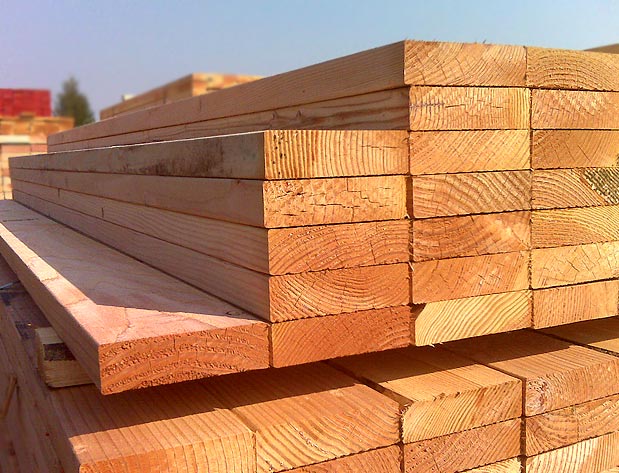
January closed with a bang as supply-side concerns ignited a rally that pushed many US framing lumber prices up sharply. Concerns were mostly focused on Western Canada, where producers have announced a number of temporary or permanent production curtailments amid tightened log supplies and higher costs. Continue reading "Sharp rise in US lumber prices"
Vietnam targets 10.5 billion USD in wood and forestry products in 2019
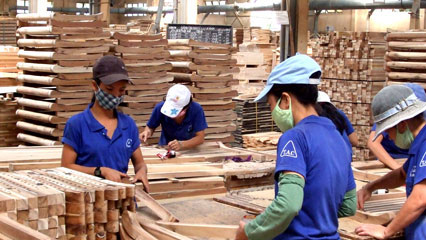
Vietnam's forestry product exports in January is estimated at 903 million USD, a rise of 11 percent over the same period in 2018, reported the Vietnam Administration of Forestry under the Ministry of Agriculture and Rural Development.
According to the administration, export revenue of wood and wooden products reaches 852 million USD, a rise of 10 percent year on year, while that of non-wood products is 51 million USD, up 20 percent over the same time of 2018. Continue reading "Vietnam targets 10.5 billion USD in wood and forestry products in 2019"
Conifex curtails another sawmill due to high log costs and tough lumber market conditions
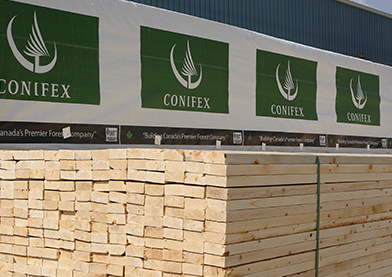
Conifex Timber Inc.announced that it is temporarily curtailing sawmill operations at its Fort St. James, British Columbia sawmill for three weeks commencing February 4, 2019, due primarily to continued high log costs and lumber market conditions.
The temporary curtailment, together with Conifex’s previously announced curtailment which commenced in January, will result in an estimated 28% reduction in Conifex’s B.C. lumber production for the first six months of this year.
About Conifex Timber Inc.
Conifex and its subsidiaries' primary business currently includes timber harvesting, reforestation, forest management, sawmilling logs into lumber and wood chips, and value added lumber finishing and distribution. Conifex's lumber products are sold in the United States, Chinese, Canadian and Japanese markets. Conifex has expanded its operations to include bioenergy production following the commencement of commercial operations of its power generation facility at Mackenzie, BC.
Western Forest Products completes acquisition of Columbia Vista
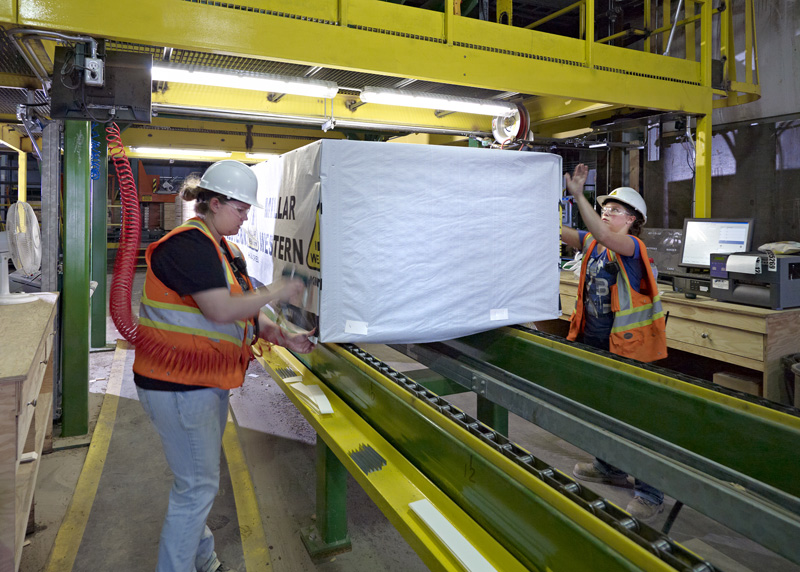
Western Forest Products Inc. completed the acquisition of certain assets of Columbia Vista Corporation and related entities located in Vancouver, Washington.
“This acquisition is consistent with our strategy of pursuing margin-focused business opportunities that complement our position in selected markets,” said Don Demens, Western’s President and CEO.
Columbia Vista is a lumber manufacturer that focuses production on Douglas Fir specialty products for the Japanese and U.S. markets. Columbia Vista operates a sawmill business in Washington State and has been in business for over 60 years. The operations employ approximately 90 employees and produced approximately 60 million board feet of lumber in 2017.
Western is an integrated forest products company, with operations and employees primarily on the coast of British Columbia and in Washington State, and is the largest coastal British Columbia timberlands operator and lumber producer.
Steady EU hardwood trade despite uncertain political situation
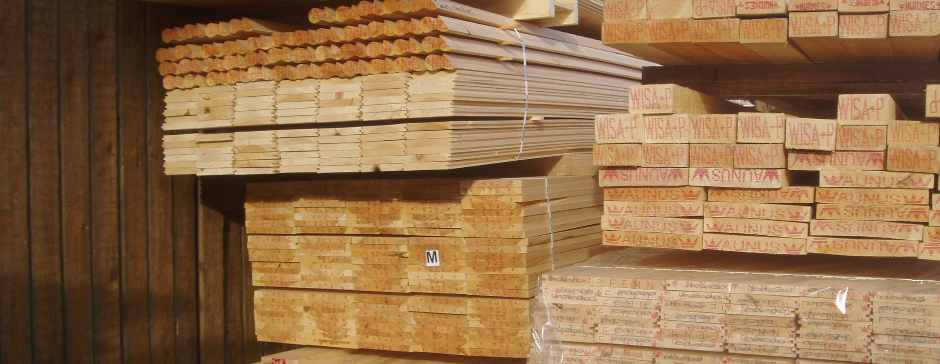
There are signs that the upturn in the eurozone economy in the last 2 years will be short-lived and growth is stagnating again. Meanwhile, the trade war between USA and China has stirred fears of a new global recession and EU countries are anxiously awaiting the outcome of Brexit negotiations with the UK. None of which is good for market stability. Continue reading "Steady EU hardwood trade despite uncertain political situation"
A look at the largest U.S. mass timber building
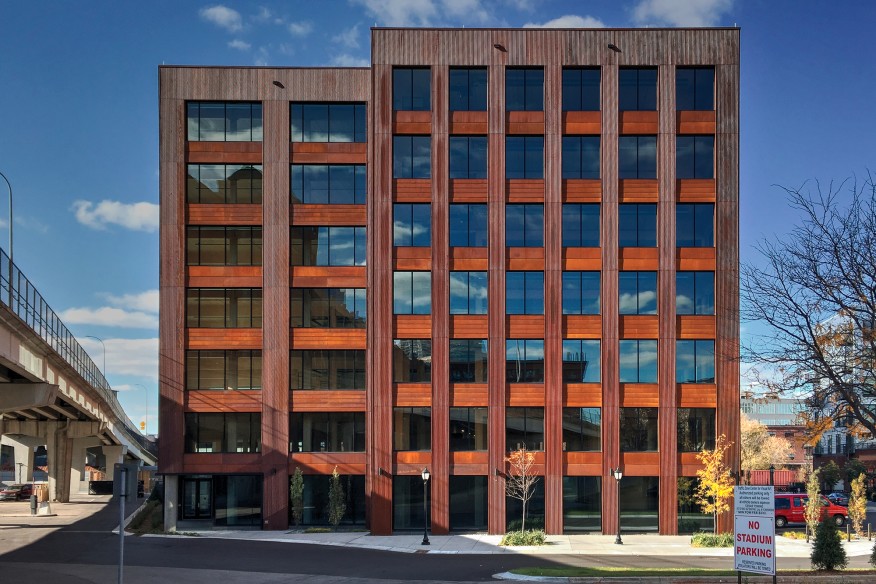
T3 Atlanta is the second T3 office building ("timber, transit, technology") for the developer Hines. The first T3 in Minneapolis was completed in 2016 and helped spark the mass timber “revolution” that is being seen around North America, and demonstrated that, through efficient design and construction, timber can be used competitively in large scale commercial office spaces.
The 7-storey T3 Atlanta project, at 205,000 sq ft timber area, will take over the previous T3 office building as the largest mass timber building in the US once built. The gravity system is comprised of DLT (dowel-laminated timber) floor and roof panels over a Glulam post and beam substructure. The lateral system consists of perimeter and internal steel brace frames, which StructureCraft is installing in sequence with the timber structure.
StructureCraft has just recently released some great drone footage of the upcoming T3 Atlanta office. Click the link above, or click here, to check it out! The 7-storey T3 Atlanta project, at 200,000 sq ft timber area, will take over the previous T3 office building as the largest mass timber building in the US once built. Learn more at structurecraft.com/projects/t3-atlanta.
The United States is considering reducing import duties on Chinese products

The United States is considering at least partial loosening of import duties on Chinese products to accelerate trade negotiations. Continue reading "The United States is considering reducing import duties on Chinese products"
Sweden: Large increase in roundwood prices in 2018
The increase of roundwood delivery prices in Sweden was larger in 2018 than it has been for several years. Both sawlog and pulpwood prices increased in the whole country during 2018, , according to new statistics from the Swedish Forest Agency.
Delivery purchase is a method which means that the forest owner himself, with or without the help of employees or contractors, delivers the work on the roadside.
Pulpwood prices rose by 13 percent compared to 2017, which is the largest increase since 2008. In the Northern region of the country the increase was 8 percent, Central and South regions both had price increases of 13 percent. Every quarter of the year showed prices increase in comparison to the same quarter in 2017.
During the fourth quarter 2018 the price of pulpwood in Sweden increased by 5 percent compared to the third quarter 2018. The Northern region had the highest increase, 8 percent, while the increase in the Central region was 6 percent and 3 percent in the Southern region.
Swedish sawlogs had a 7 percent delivery price increase during 2018 in comparison with 2017, which is the largest increase since 2010. The increase in the Northern region was 5 percent, 6 percent in the Central region and 7 percent in the Southern region.
The fourth quarter 2018 had sawlog prices increase by 1 percent compared to the third quarter. The increase was 2 percent in the Northern region, 1 percent in the Southern region and unchanged in the Central region.
Underpricing accussations for Metsä, Stora Enso and UPM dismissed
In 2011, Metsähallitus (a Finnish state enterprise, which administers state-owned land) filed a claim for damages against UPM, Metsä and Stora Enso. The claim relates to the decision of December 2009 in which the Finnish Market Court held that the defendants had breached competition rules in the Finnish roundwood market.
On 21 May 2018, Helsinki Court of Appeal rejected the damages claim of Metsähallitus and ordered Metsähallitus to pay compensation for legal expenses. Metsähallitus requested leave to appeal from the Supreme Court. The principal amount of Metsähallitus claim was in total Euro 61.8 million, of which Euro 3 million is based on agreements between UPM and Metsähallitus.
The Finnish Supreme Court announced this week that it did not grant Metsähallitus leave to appeal, as a result of which the judgment of the Court of Appeal remains final.
Back in June 2016, the same court rejected the Metsähallitus’ claim for damages against Stora Enso Oyj, Metsäliitto Cooperative and UPM-Kymmene Oyj. Metsähallitus claimed that the three companies were involved in a competition infringement found on the raw wood market competition by the Finnish Market Court in its decision on 3 December 2009. The claim stated that Metsähallitus suffered damages due to the restriction of competition.
As the court file specified and according to Metsähallitus, the companies had purchased roundwood from Metsähallitus below market prices during 1997–2005.
Arauco to acquire only two Masisa plants in Mexico, instead of three
An USD 160 million acquisition agreement of two industrial plants in Mexico was established by Arauco to Masisa, following the modification of the contract signed in December 2017. This changes the information reported by Arauco at the end of 2017, regarding the acquisition agreement for USD 245 million, through its subsidiaries Inversiones Arauco Internacional and AraucoMex.
With the modification, Masisa decided to maintain the ownership of an industrial plant located in Chihuahua, maintaining itself as an important player in the Mexican market.
The operation will be finalized after approval by the Mexican authorities. The deal will position Arauco as the second largest manufacturer of wood panels worldwide, with an estimated 10 million m3 of capacity per year.
The transaction is part of the divestment process of Masisa's industrial assets in Argentina, Brazil and Mexico, announced on July 17, 2017, whose purpose was to significantly lower its level of debt, allowing a significant improvement in the profitability of its business.
In this regard the corporate general manager of Masisa, Roberto Salas, stressed that “this process will allow Masisa to focus its commercial activity on higher value-added businesses in the Pacific region (Chile and Andean Countries, Mexico, United States, Canada, Central America and other export markets), maintaining its productive capacity to supply the region from Chile, Mexico and Venezuela.”
For his part, the Manager of Corporate and Commercial Affairs of Arauco, Charles Kimber, said about the operation, “we are very happy with this new acquisition, which is part of our internationalization plan, which seeks to position Arauco as a global company and a leader in the market. With this acquisition, we would be expanding our presence in the panel market in North America, where we see very positive signs of upward trend in this type of products focused on the furniture and home industry.”
In terms of production, the two industrial plants which will acquired by Arauco (instead of 3) together have three particleboard lines with an installed capacity of 339,000 m3 per year; a line of MDF boards with 220,000 m3 a year capacity and melamine coating lines with an installed capacity of 309,000 m3 per year, a chemical plant to process resins and impregnation lines.
Bergs Timber to boost capacity at Orrefors sawmill in Sweden
Bergs Timber installed a new edger at its mill in Orrefors, Sweden.
According to the announcement, the company has been working on the project to change the edge work on the saw line during the autumn 2018.
The mounting and commissioning went according to the schedule, the saw line including the edger was started January 3, 2019.
Besides getting a newer edging with higher availability, the change will also mean increased capacity and a better exchange of the side boards.
In 1H FY2017/18, Bergs Timber increased sales by 28%.
About Bergs Timber:
The company produces and sells sawn and further processed wood products. It operates its production facilities in Sweden, Estonia and Latvia. The Group also includes its own port and logistics operations in England. The annual production of sawn timber products amounts to approximately 920,000 m3. The Group has a turnover of approximately SEK 3,000 million and has approximately 1,000 employees.

