Article archive

West Fraser to curtail production at two sawmills in BC

West Fraser announced temporary production curtailments for a duration of approximately two weeks at two British Columbia sawmills: Chasm and 100 Mile House.

The decision to implement this temporary reduction is due to the continued challenges of weak pricing in global lumber markets, high log costs and constrained timber supplies.

SPF lumber production is anticipated to be reduced by approximately 20 million board feet, in addition to previously announced permanent and temporary curtailments.

West Fraser is a diversified wood products company producing lumber, LVL, MDF, plywood, pulp, newsprint, wood chips and energy with facilities in western Canada and the southern United States.

Massive Chinese investments in wood product plants in Russia’s Far East

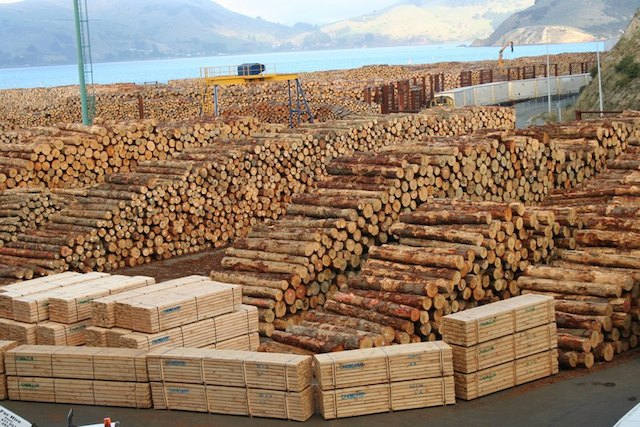
China Forestry Group Corporation (CFGC) will build mills in the Russian Far East to supply wood products for China.

The project is expected to consume around 3 million cubic metres of logs and export finished products to China. Russia’s Khabarovsk will be considered as one of the possible production bases.

The CFGC is a large scale wood processing enterprise set up by nine enterprises directly under the State Forestry Administration in 1996. The Group is supervised by the State-owned Assets Supervision and Administration Commission of the State Council (SASAC), its business covers the whole process from forest resources, exploitation and utilization.  The Group delivers tree seeds and seedling and has also entered the forest tourism sector.

Currently the Group has more than 150 international forestry enterprises and has cooperated with New Zealand, Russia, Canada and some South East Asian countries.

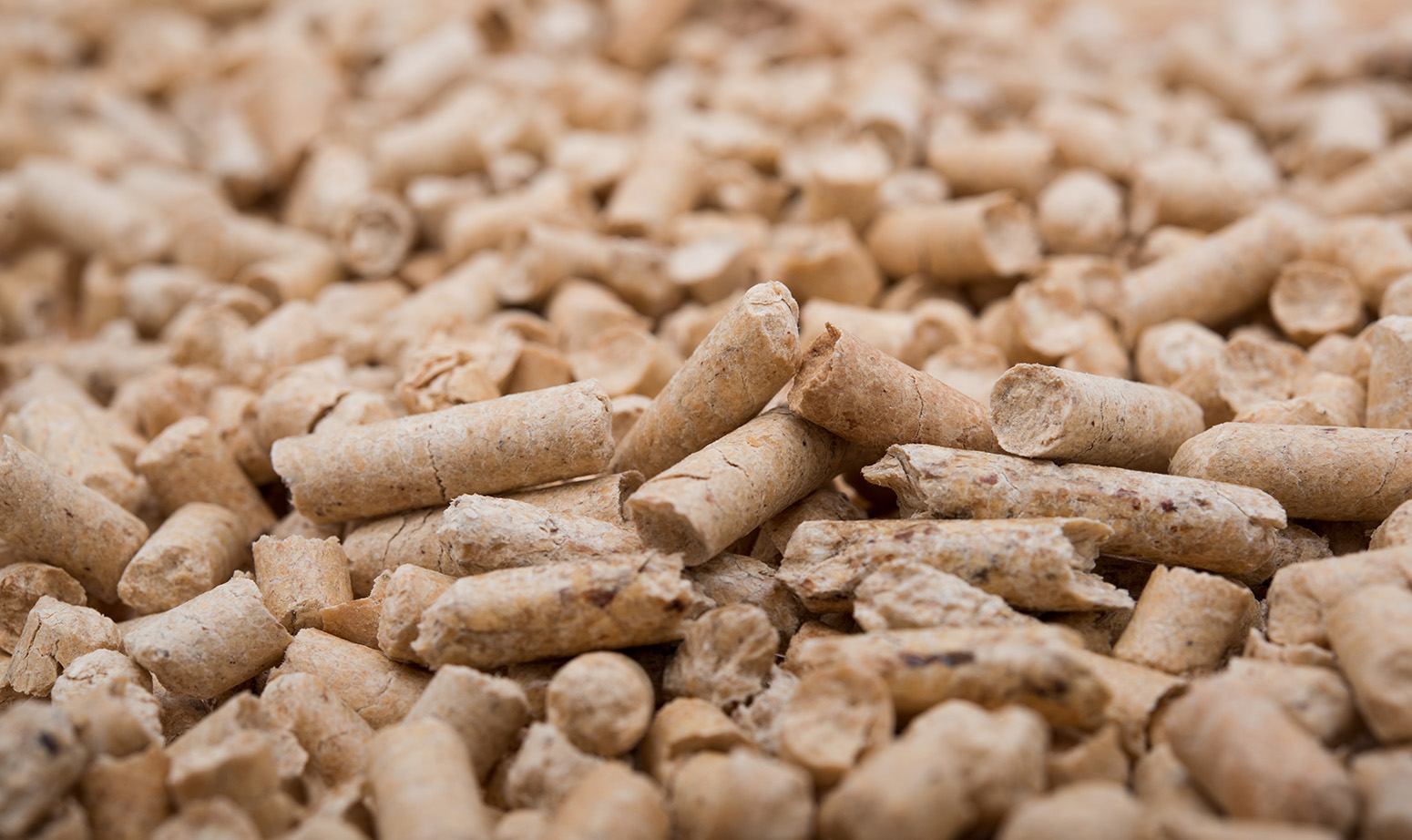
Wood pellet prices drop sharply in Germany

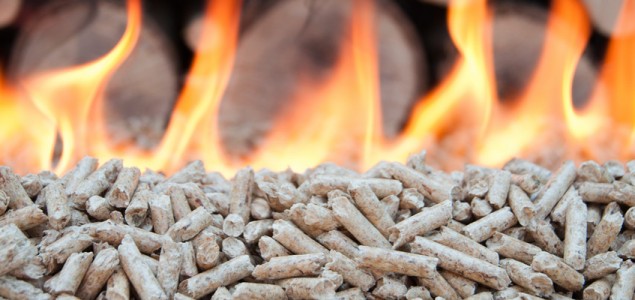
The price of wood pellets in Germany dropped by 4.1% in May compared to the previous month.
The average price per tonne is € 242.27 / t (6 t purchased), equivalent to 4.85 cents per kWh of heat. Heating oil costs 6.92 cents / kWh and natural gas 6.27 cents / kWh. The price advantage of pellets over fuel oil is 30.0% and over natural gas 22.7%.
Compared to the same month of the previous year (EUR 239.05 / t), the average price has increased by 1.3%.
Regional prices (purchase quantity: 6t)
The price for wood pellets in May 2019 varies regionally as follows:
Southern Germany: 237.71 EUR/t;
Central Germany: 243.70 EUR/t;
North and East Germany: 245.41 EUR/t.
Larger quantities (26 t)
South: 224.96 EUR / t; Central: 226.22 EUR/t; North/East: 236.39 EUR / t (all incl. VAT).

Italian Florian Group to build a wood pellet plant in Croatia

The European Bank for Reconstruction and Development (EBRD) is granting Italian wood processor Florian SpA a € 5 million loan to build a pellet plant at its Croatian subsidiary Lipovljani Lignum doo.

The bank also supports the company in efficiency control by establishing a Corporate Governance Action Plan (CGAP). The pellet plant is being built on the premises of the woodworker DIN Novoselec doo, again a subsidiary of Lipovljani Lignum doo. The Florian Group acquired DIN Novoselec doo at the end of 2016. The company produces parquet and oak solid wood furniture.

The total investment is estimated at 10 million euros. Of this, Florian Group finances half of its own funds, the other half is financed by the EBRD.

Florian pellets and firewood production started a few years ago but has already reached very high sales levels with the WOODY FIRE brand and also quality, thanks to the production network of the various beech sawmills of the group.

EU tropical timber imports rising since mid-2018

Total value of tropical wood imports into the EU increased slightly in 2018, although at a slower rate than imports from non-tropical countries tropical wood continued to lose share last year.

Closer analysis of monthly data to end February 2019 reveals a slightly more positive picture, showing that EU imports of tropical timber products began to rise more strongly, both in quantity and value terms, in the second half of 2018.

EU imports began to rise earlier, from the start of 2017, in dollar terms as the euro strengthened significantly against the US currency between December 2016 and February 2018 Continue reading "EU tropical timber imports rising since mid-2018"

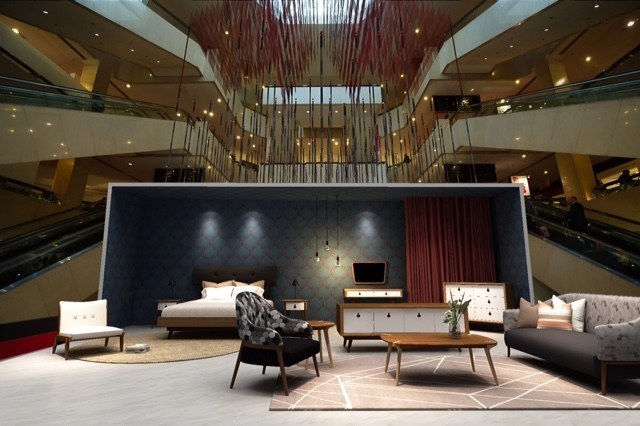
Malaysia: MIFF 2019 crosses billion dollar sales mark

Malaysian International Furniture Fair (MIFF), the industry’s largest marketplace in Southeast Asia, has topped the billion-dollar sales mark for the first time in its 25-year history.

Its organiser, United Business Media (M) Sdn Bhd (UBM Malaysia), said exhibitors at MIFF 2019 raked in US$1.01 billion (RM4.21 billion) in sales over the four days starting March 8, a three per cent increase from the previous high of US$984 million in 2018

The record performance was achieved a year after the trade show was expanded to 100,000 square metres across the Malaysia International Trade and Exhibition Centre and the Putra World Trade Centre with design as its cornerstone, it said in a statement today.

A total of 600 exhibitors from 14 countries — 346 Malaysian and 254 foreign companies —  showcased new products and collections under the theme “Design Connects People”.

UBM Malaysia said MIFF 2019 attracted 20,478 visitors, including 6,112 global buyers from 130 countries and regions, which was an increase of four per cent from last year.

Traffic was significantly higher from North America and the Far East while numbers remained stable from Southeast Asia, South Asia, Australasia, Europe, Africa and South America, it said.

“Celebrating our 25th anniversary with a milestone like this is certainly something that we are proud of. It is the best endorsement of MIFF by the markets, but what makes us most proud is that we continue to place our customers and their business priorities first even as we are on a strong growth path,” said MIFF general manager Karen Goi.

MIFF boasts the biggest export platform for Malaysian wood furniture and office furniture in Southeast Asia.

The next edition of the annual trade show would be from March 6-9, 2020, at the same two venues which had already drawn strong re-bookings from exhibitors satisfied by the continuing diversity of attendance and high-quality buyers this year, UBM Malaysia said.

Tropical wood loses market share in Germany

Insights into the reasons for Germany’s shift away imports of tropical wood, particularly direct imports, were provided by the IMM  FLEGT (Independent Market Monitor) Trade Consultation held in Berlin at the end of 2018. This consultation forms part of wider series of consultations being held during 2018 and 2019 in all the main European markets for tropical wood products to obtain feedback from the trade on the potential to develop markets for FLEGT licensed timber in the EU.

During the Berlin consultation, to help place FLEGT licensed timber in the correct market context, traders were asked to identify and rank the key factors driving market decline for tropical timber products in Germany in recent years.

The main drivers identified, in declining order of significance, were:

  • Substitution by temperate wood, composites and other materials (16 votes);
  • Environmental prejudice and uncoordinated marketing (9 votes);
  • Competition from China for material access and in markets for finished goods (9 votes); and
  • The challenges of conformance to the EU Timber Regulation (8 votes).

The first driver is indicated both by the trade flow data, which shows large increases in Germany’s trade in wood products other than tropical timber, and by other reports from traders.

These reports highlight, for example, that all solid wood products, but particularly tropical, are losing share to wood plastic composites in the market for decking and other exterior products.

This trend is so far-reaching in Germany that even thermally and other treated temperate wood products, which are making ground elsewhere in Europe, are losing share in Germany.

Similarly, the market for real-wood flooring in Germany has been struggling in recent times even as broader domestic consumption trends have been on the rise, an indication of the pressure being felt in this market from alternatives such as laminated flooring and luxury vinyl tiles.

The fourth driver of tropical wood’s decline, relating to EUTR, features more strongly in Germany than in other EU countries. It is also reflected in the trade data which shows the growing proportion of tropical wood imported indirectly into Germany via other EU countries.

This tends to confirm reports that an increasing proportion of tropical wood imports into the EU are now being channelled via larger importing companies close to the main European ports that are willing and able to devote more time and resources for a wide range of specialist services, including EUTR due diligence.

A feature of the Germany IMM trade consultation (interestingly also repeated in a more recent Dutch/Belgian IMM event held in Antwerp) is that while EUTR is identified by the importing sector as a significant of driver of decline in tropical wood trade, at the same time it is also seen as a potentially important part of long-term strategy to maintain and, potentially, rebuild market share.

Having rated drivers of market decline, German importers at the consultation were then asked to rate the potential of different market development strategies for tropical timber in the EU. One strategy was rejected outright by all participants; this proposed “deregulation”, the total abolition of requirements for EUTR and FLEGT licensing, based on the assumption that tropical timber imports may be boosted by reducing the regulatory burden.

Not only was the deregulatory approach rejected, but the strategy receiving by far the most votes was the exact opposite; “a regulatory approach involving increased supply of FLEGT-licensed tropical timber linked to consistent and effective enforcement of EUTR to remove illegal wood”.

Practically all participants in Berlin regarded the EUTR combined with FLEGT licensing as the right approach to improve credibility and reputation of the tropical timber trade in the EU. The process of consolidation in the sector and the concentration of import activities in the hands of a smaller number of expert importers was also generally seen as a positive development by participants.

The second most favoured strategy for rebuilding tropical wood’s market share in Germany was identified as “highlighting/promoting the environmental benefits of tropical timber and underpinning these scientifically through life-cycle analysis (LCA)”.

Here, traders were also calling for increased regulatory support through government procurement policies. Participants at the trade consultation also called for inclusion of FLEGT-licensed tropical timber in public procurement policies as evidence of both legality and sustainability.

While these strategies were seen as having potential to improve market conditions for tropical wood in the German market, trade consultation participants generally expected stagnation of the German and wider EU tropical timber market at the current low level, at least in the short to medium term.

New Zealand radiata pine will enter the Chinese market in large quantities in the next 3-5 years

The radiata pine plantations planted in New Zealand in the mid-to-late 1980s have now entered into a maturity phase. Consequently, in the next 3-5 years, New Zealand logs production will increase significantly, with an estimated annual production of 350 million cubic meters.
As China is the world's largest importer of logs, New Zealand's logs are expected to enter the Chinese market in large quantities in the next 3-5 years. This will inevitably compete with the Russian wood products that rely on the “Belt and Road” to vigorously explore the Chinese market.
Current trends in New Zealand's logs deliveries to China
At Wharf Gate (AWG) prices for logs delivered to ports around New Zealand decreased on average 7 NZD per JASm3 in April. This decrease in AWG prices is due to a combination of increased shipping costs and uncertainty in the China log market.
While the demand for logs is at record levels, there is an imbalance between log and domestic wholesale prices. There are log vessels enroute to China from New Zealand without confirmed Letters of Credit (LCs) and Chinese log buyers are using this opportunity to try and negotiate log prices down.
The New Zealand domestic market for logs has continued the very stable start to 2019. On average, NZ's mills report sawn timber sales up about 5% on last year. Increases in consents for new dwellings continue to be dominated by the North Island cities, with consent numbers in the South Island down on this time last year.
Due to the drop in the AWG log prices the PF Olsen Log Price Index for April decreased $3 to $131. The index is currently $2 above the two-year average, $5 above the three-year average, and $13 higher than the five-year average.

VIDEO: Sharp rise in Brazilian eucalyptus logs to China

Brazil is Latin America’s biggest economy, and one of its top exports is wood. But with rising concerns over deforestation, businesses are turning to sustainable alternatives. Chinese news chanel CGTN reports on the emergence of a new market for eucalyptus. 


China to impose tariffs of up to 25% on US products; See list of wood products affected

China said on Monday (May 13) it will impose higher tariffs on a range of US goods, striking back in its trade war with Washington.

Beijing will impose tariffs ranging from 5 percent to 25 percent on a total of 5,140 American products worth about US$60 billion. The tariffs will take effect on Jun 1, said China's finance ministry.

An additional tariff of 25 percent will be levied against 2,493 goods, the ministry said, and an additional tariff of 20 percent will be imposed on 1,078 products.

Beijing previously set additional rates of 5 percent and 10 percent on 5,207 US products worth US$60 billion in September, and warned at the time that it would counter any higher tariffs imposed by Washington on Chinese products.

Tariff of 25%
  • 44012200 Non-coniferous wood chips or wood pellets
  • 44014000 Sawdust, wood waste and debris, unbonded
  • 44029000 Other charcoal, whether or not agglomerated
  • 44031100 Softwood logs treated with preservatives
  • 44032110 Pinus koraiensis and Pinus sylvestris var. mongolica with cross-section dimensions of 15 cm and above
  • 44032130 Larch logs, with a cross-section of 15 cm or more
  • 44032400 Other fir and spruce logs, cross-sections up to 15 cm
  • 44039100 Beech (Oak) logs
  • 44039500 Birch logs with a cross-section of 15 cm or more
  • 44039700 Poplar logs
  • 44039800 Beech logs
  • 44039980 Other unlisted temperate non-coniferous logs
  • 44039990 Other logs other than coniferous wood, tropical wood treated by other methods
  • 44050000 Wood and wood flour
  • 44071110 Longitudinal, slit, planed or rotary cut pine and pine wood with a thickness of more than 6 mm
  • 44071120 Longitudinal sawing, slitting, planing or rotary cutting of radiata pine wood with a thickness of more than 6 mm
  • 44071200 Longitudinal, slit, planed or cut-cut fir and spruce for thickness over 6 mm
  • 44072910 Teak wood, longitudinally sawing, slitting, planing or cutting, whether or not planed, sanded or end-joined
  • Combined, thickness over 6 mm
  • 44072930 Bologna wood, longitudinally sawed, slitted, sliced ​​or cut, whether flattened, sanded or ended
  • Bonding, thickness over 6 mm
  • 44072990 Other tropical wood timber, by longitudinal sawing, slitting, slicing or cutting, whether or not planed,
  • Sanding or end jointing, thickness over 6 mm
  • 44079100 Oak ( oak) wood, longitudinally sawing, slitting, planing or cutting, whether or not planed, sanded
  • Or end joints, thickness greater than 6 mm
  • 44079200 Phytosanaceae (beech) wood, longitudinally sawed, slitted, sliced ​​or cut, whether or not
  • Flat, sanded or end joined, thickness over 6 mm
  • 44079600 Birch wood, longitudinally sawing, slitting, planing or cutting, whether or not planed, sanded or end-joined
  • Combined, thickness over 6 mm
  • 44079910 Other mahogany wood, by longitudinal sawing, slitting, slicing or cutting, whether or not planed, sanded or end
  • Jointed to a thickness of more than 6 mm, except for tropical mahogany sheets listed in subheading 4407.2940
  • 44081090 Other softwood veneers not exceeding 6 mm thick
  • 44083119 Other veneer veneer veneers not exceeding 6 mm in thickness
  • 44083919 Other veneer of tropical wood veneer of non-red liu Anmu, whether planed, sanded, spliced ​​or end
  • Joint joint, thickness not exceeding 6 mm
  • 44083990 Other veneer of tropical wood, not tiling, whether flattened, sanded, spliced ​​or
  • End joint, thickness not exceeding 6 mm
  • 44089021 Other temperate non-coniferous veneer veneers, whether planed, sanded, spliced ​​or end
  • Bonding, thickness not exceeding 6 mm
  • 44089091 Other temperate non-coniferous wood, whether planed, sanded, spliced ​​or joined, thick
  • Not more than 6 mm
  • 44092990 Other non-coniferous wood made of continuous shape on either side, end or side (including unfilled
  • Plank and slats for parquet flooring, regardless of whether any side or face is planed, sanded or ended
  • Joint
  • 44101100 Wooden particle board, whether or not bonded with resin or other organic binder
  • 44101200 Wood Oriented Strand Board (OSB), whether or not bonded with resin or other organic binders
  • 44101900 Other wooden similar panels (eg, waffle panels), whether or not resin or other organic binders
  • 44111211 Medium density wood fibreboard with a thickness not exceeding 5 mm, density exceeding 0.8 g per cubic centimeter, not Machined or covered medium density fiberboard
  • 44111319 Medium density wood fibreboard, more than 5 mm thick but not exceeding 9 mm, density exceeding cubic centimeters 0.8 g, mechanically or covered
  • 44111419 Medium density wood fibreboard with a thickness of more than 9 mm, density exceeding 0.8 g per cubic centimeter, machine; Machined or covered
  • 44111421 Medium-density wood fibreboard with a thickness of more than 9 mm radiated, with a density exceeding every cubic centimeter 0.5 g, but not more than 0.8 g per cubic centimeter
  • 44111429 Other medium-density wood fibre boards of more than 9 mm thickness, density exceeding 0.5 g per cubic centimeter, But not more than 0.8 grams per cubic centimeter
  • 44111499 Other medium density wood fibreboards of more than 9 mm thickness, machined or covered
  • 44119210 Other wood fibreboard, density exceeding 0.8 g per cubic centimeter, not machined or covered
  • 44119290 Other wood fibreboard, density exceeding 0.8 g per cubic centimeter, machined or covered
  • 44119390 Other wood fibreboards, density exceeding 0.5 g per cubic centimeter, but not exceeding 0.8 per cubic centimeter
  • 44119410 Other wood fibreboards, density exceeding 0.35 g per cubic centimeter, but not exceeding 0.5 per cubic centimeter
  • 44121019 Other bamboo plywood made of slab, not exceeding 6 mm thick
  • 44123100 At least one of the surface layers is tropical wood, each layer not exceeding 6 mm thick, only made of thin wood
  • Other plywood (except bamboo)
  • 44123300 The other at least one surface layer is the following non-coniferous wood: eucalyptus, ash, Cyclobalanopsis (beech wood), birch, cherry, chestnut, elm, elm, pecan, horse chestnut, elm, maple wood, eucalyptus (oak), sycamore, poplar, locust, gooseberry or walnut, each layer
  • Other plywood made of thin wood, not exceeding 6 mm in thickness (except bamboo)
  • 44123410 Other at least one surface layer is temperate non-coniferous wood (except for non-coniferous wood of subheading 4412.3300), each layer not exceeding 6 mm in thickness, only other plywood made of thin wood (except bamboo)
  • 44123490 Other at least one surface is non-coniferous not specified in subheadings 4412.3300 and 4412.3410; Wood, each layer not exceeding 6 mm thick, other plywood made of only thin wood (except bamboo)
  • 44123900 Other upper and lower layers are coniferous, each layer not exceeding 6 mm in thickness, only made of thin wood
  • Other plywood (except bamboo)
  • 44129410 At least one surface is non-coniferous wood core plywood, side slat core plywood and lath core Plywood
  • 44129910 At least one other wooden veneer with non-coniferous wood
  • 44129999 Other wooden multi-layer boards
  • 44130000 Fortified wood in blocks, plates, strips or profiles
  • 44151000 Wooden boxes, boxes, crates, drums and similar packaging containers, cable reels
  • 44152090 Other wooden pallets, box pallets and other wooden pallets or other wooden pallets
  • 44170090 Other wooden tools, tool holders, tool holders, brooms and brushes, and wooden handles
  • 44181090 Other wooden windows, French-style (floor) windows and wooden frames
  • 44182000 Wooden doors and their frames and sills
  • 44186000 Wooden columns and beams
  • 44187500 Other assembled multi-layer floors
  • 44189900 Other wood products for construction
  • 44201011 Woodcut figurines and other decorations
  • 44201090 Other wooden and bamboo figurines and other decorations
  • 44209090 Jewelry or knives wooden boxes and similar articles; non-floor wooden furniture
  • 44211000 wooden hangers
  • 44219110 Bamboo round sticks, round bars, ice fruit sticks, tabs and similar disposable products
  • 44219990 Other unlisted wood products

Tariff of 20%

  • 44011200 Non-coniferous wood firewood
  • 44012100 Softwood chips or wood pellets
  • 44031200 Non-coniferous logs treated with preservatives
  • 44032240 Douglas fir logs, section size below 15 cm
  • 44032290 Other pine logs, cross-sections up to 15 cm
  • 44032300 Fir and spruce logs, with a cross-section of 15 cm or more
  • 44032600 Other softwood logs, section size less than 15 cm
  • 44039960 North American hardwood hardwood logs
  • 44042000 Hinged wood of non-coniferous wood; rafters; roughened wooden stakes, wooden bars;
  • 44071130 Longitudinal sawing, slitting, planing or rotary cutting of Douglas fir wood with a thickness of more than 6 mm
  • 44071190 Other pine wood with longitudinal sawing, slitting, planing or cutting, thickness exceeding 6 mm
  • 44071900 Other coniferous wood, longitudinally sawing, slitting, planing or cutting, with a thickness exceeding 6 mm
  • 44079400 Cherry wood, longitudinally sawing, slitting, planing or cutting, whether or not planed, sanded or end-joined, Combined, thickness over 6 mm
  • 44079500 Ash wood, longitudinally sawing, slitting, planing or cutting, whether or not planed, sanded or end-joined, Combined, thickness over 6 mm
  • 44079980 Other temperate, non-coniferous, longitudinal sawing, slitting, slicing or cutting, whether or not planed, sanded or End joint, thickness over 6 mm
  • 44079990 Other wood, by longitudinal sawing, slitting, slicing or cutting, whether or not planed, sanded or end-joined, Thickness over 6 mm
  • 44081019 Other veneer veneer veneers not exceeding 6 mm thick
  • 44089011 Other non-coniferous, non-tropical wood veneer veneers made of multi-layer boards, such as plywood, whether or not Flat, sanding, splicing or end joining, thickness not exceeding 6 mm
  • 44089012 Veneer for temperate non-coniferous wooden veneers, whether planed, sanded, spliced ​​or end joined, thick, Not more than 6 mm
  • 44089099 Other wood, whether planed, sanded, spliced ​​or joined, not exceeding 6 mm in thickness
  • 44111219 Medium density wood fibreboard with a thickness not exceeding 5 mm, density exceeding 0.8 g per cubic centimeter, warp, Machined or covered medium density fiberboard
  • 44111229 Other medium-density wood fibre boards of not more than 5 mm in thickness, with a density exceeding 0.5 g per cubic centimeter, But not more than 0.8 grams per cubic centimeter
  • 44111311 Medium density wood fibreboard, more than 5 mm thick but not exceeding 9 mm, density exceeding cubic centimeters 0.8 g, not machined or covered
  • 44140010 Radiant pine frame, photo frame, picture frame and similar products
  • 44140090 Other wooden picture frames, photo frames, picture frames and the like
  • 44160090 Other wooden vats, buckets, pots and other wooden hoops and their parts including bucketboard
  • 44187900 Other assembled floors
  • 44199090 Other wooden tableware and kitchen utensils
  • 44219190 Other unlisted bamboo products.


Canadian lumber exports and prices to the US collapse in Q1/2019

The value of Canadian lumber exports to U.S. fell 20.4% to $1.03 billion y-o-y in first quarter. Average price for Canadian lumber in U.S. declined 18% to $146 per m3.

Total U.S. lumber imports in first quarter of 2019 decreased 3.18% to 7.95 million m3 with total value fell 17.1% to 1.37 billion. The average price of total lumber imports to U.S. declined 14.4% to $172 per m3.

Canadian sawmills produced 4.084 bbf in the first two months, a 10.5% decline from 4.562 bbf at the same time last year. Sawmills in British Columbia accounted for 1.726 bbf of the two-month total, down 16.2% from 2.059 bbf a year earlier, while sawmills east of the Rockies contributed 2.358 bbf, a drop of 5.8% from 2.503 bbf at the same time last year.

In February alone, Canadian production was 1.933 bbf, 11.2% lower than the 2.177 bbf produced in February 2018, and down 10.1% from the previous month’s output of 2.151 bbf.

Sawmills in British Columbia contributed 803 million board ft. (mmbf) to February’s output, a drop from last year’s 961 mmbf of 16.5%, and down 13.1% from production in January 2019 of 923 mmbf.

Sawmills east of the Rockies produced 1.130 bbf in February, down 7.0% from 1.216 bbf in February last year, and 7.9% lower than the 1.228 bbf produced in January 2019.

Apparent Canadian softwood lumber consumption fell 8.2% in the first two months to 1.555 bbf from 1.694 bbf in the previous year, while apparent consumption in February was 669 mmbf, down 17.2% from 808 mmbf in February 2018, and 24.5% lower than apparent consumption of 886 mmbf in January this year.

Germany produces more pellets than ever before

In the first quarter of 2019, so many wood pellets were produced in Germany as never before during this period in a single quarter. 

The production volume amounts to 650,000 tons. This is 3.5% more than in the previous quarter, the 4th quarter of 2018 and 11% or 65,000 tons more than in the same quarter of the previous year, the 1st quarter of 2018.

96.7% of the production was ENplus A1 quality pellets, 3.3% industrial grade - significantly higher than in the 4th quarter of 2018 (2.1%). The volume of industrial pellets thus increased from a good 13,000 tons to more than 21,000 tons within one quarter.

19% of the pellets were traded as bagged goods, 81% as loose goods. 96.9% of the pellets consist of softwood, 3.1% of hardwood. 93.9% of the pellets are made from sawdust. 12.4% of the quantity produced was exported.

Brazil: Wood-products export update

In March 2019, Brazilian exports of wood-based products (except pulp and paper) increased 3.4% in value compared to March 2018, from US$ 270.8 million to US$ 279.9 million.

The value of pine sawnwood exports increased 13.5% between March 2018 (US$44.6 million) and March 2019 (US$50.6 million). In terms of volume, exports increased 29% over the same period, from 211,700 cu.m to 273.9 cu.m.

Tropical sawnwood export volumes rose 24% from 38,100 cu.m in March 2018 to 47,400 cu.m in March 2019. The value of these exports increased 15% from US$17.5 million to US$20.1 million over the same period.

In contrast, the value of pine plywood exports dipped 12% in March 2019 in comparison with March 2018, from US$64.3 million to US$56.5 million but in volume trems there was a slight rise from 194,600 cu.m to 206,300 cu.m. Tropical plywood exports also declined in March from 16,600 cu.m (US$7.1 million) in March 2018 to 9,600 cu.m (US$ .6 million) in March 2019.

The growth in furniture exports slowed in March with the value rising to just US$45 million from the US$ 44 million in March 2018.

Austria: Lumber prices recover substantially in April

In April, softwood lumber prices in Austria rose again after a slight decrease in March. The 1-2 EUR/cbm declines in March were recouped substantially.
Except edged and rough boards, all assortments have become more expensive by about 1 EUR/cbm. Rough boards' price has stagnated over the previous month, while edged boards are cheaper by 1-2 EUR/cbm.
As compared with April 2018, all softwood assortments are more expensive. Particularly, prices for edged boards and large-sized boards have increased the most. Both registered a price surge of around 5 EUR / cbm.

Softwood Lumber Spruce/Fir Apr. '18 Mar. '19 Apr. '19 Change Apr. '18 to '19
€ / cbm EXW
Edged Boards, 0-IIIa, 23 mm + 229-243 235-248 234-246 +5 / +3
Rough boards in fixed dimensions, 18-22 mm 227-239 230-240 230-240 +3 / +1
Squared timber, standard dimensions, I/II, 4-6 m 208-218 209-218 211-219 +3 / +1
Reserve squared timber, II/III 151-160 154-160 155-161 +4 / +1
Boards, III-IV, 8-16 cm, 4-6 m 144-150 147-154 146-153 +2 / +3
Boards, III-IV, 8-16 cm, just 4 m 146-152 149-155 150-156 +4 / +4
Boards, III/IV, 23 mm, 4-6 m 147-153 149-155 150-156 +3 / +3
Boards, III/IV, 28 mm +, 3-6 m 152-159 156-164 157-165 +5 / +6

Sweden: Valbo Trä buys Setra’s operations in Skutskär

Valbo Trä will buy Setra's operations in Skutskär. The plant consists of two planing lines, an impregnation line, a painting line and a hatch nail line.

The company has 33 employees and today it produces about 115,000 m3 of wood products and delivers about 130,000 m3. The customer base from Setra Skutskär is to 85% the same customer segment as Valbo Trä sells to today.

“The deal gives us good integration benefits and synergy effects and is in line with the large investment we are currently doing in Valbo. It also strengthens our position as a supplier on the Swedish wood market, ”says Mikael Helmersson, CEO of Valbo Trä AB.

Valbo Trä AB was founded in 2011, with the merger of Edsbyns Hyvleri AB, Valbo Trävaru AB and Åshammars Hyvleri AB. The company's line of business includes operating sawmills and planing mills. Valbo Träs' total capacity is currently about 200,000 m3.

Trump, China trade war: list of wood products hit with new 25% tariff

As of Friday, the United States have increased tariffs on Chinese imports: from previously 10% to now 25%. Goods with a total value of US-$200 bn. are said to be affected. Around 200 wood products will subject to the increased tariffs. 

The US is the biggest buyer for Chinese wood product exports. Continue reading "Trump, China trade war: list of wood products hit with new 25% tariff"

Brazil prices for logs, sawnwood and plywood

Latest prices for Brazilian logs, sawnwood and plywood as of 16-30 April, 2019.

Brazilian logs, mill yard, domestic US$ per m3
Ipê 206⇓
Jatoba 115⇓
Massaranduba 111⇓
Muiracatiara 110⇓
Angelim Vermelho 109⇓
Mixed redwood and white wood 91⇓
Source: STCP Data Bank

Continue reading "Brazil prices for logs, sawnwood and plywood"

Disappointing trends in the Chinese wood-based panels market

In the near future, the Chinese wood-based panel market lacks bright spots, and the sales volume of various types of panels has remained low. Industry analysts point out that the continued downturn in the housing market and the lack of environmental protection supervision led to a weak wood-based panel market in China.

The particleboard market is in a downturn. According to industry insiders, due to the downturn in the property market and the restrictions in exports, the finished furniture and the whole house custom furniture market have been hit hard this year. The market demand for particleboard has been significantly reduced and especially in the current off-season the particleboard market is even more depressed. At present, the price of 1220×2440×12mm particleboard is 55-60 yuan/sheet.

The Chinese plywood is stable at a low level. Continue reading "Disappointing trends in the Chinese wood-based panels market"

Japan: Nippon Paper and Sojitz to establish a biomass-based power generation company

Nippon Paper Industries has agreed with Sojitz Corporation to jointly establish a power generation company Yufutsu Energy Center, LLC and conduct a power generation business with biomass mono-fuel combustion, utilizing the feed-in tariff (FIT) system for renewable energy.

According to the announcement, Yufutsu Energy Center plans to install power generation facilities using part of the premises of Hokkaido Mill (Yufutsu), Nippon Paper Industries (Tomakomai-shi, Hokkaido).

Hokkaido Mill (Yufutsu) will start construction work in March 2020 to commence operation by the end of FY2022. The fuel to be used will be fuel-grade woodchips and palm kernel shells (KPS) mainly procured from overseas as well as unused woody materials in Japan. Nippon Paper Industries will be entrusted with the operation and maintenance of the power generation facilities. The generated electricity will be sold to Hokkaido Electric Power Co., Inc.

In advancing the transformation of the business structure, Nippon Paper Industries is focusing on the energy business, utilizing the technology and know-how in power generation it has cultivated in its paper mills.

With this business, under the slogan of “shaping the future with trees,” Nippon Paper Industries will promote the use of wood biomass in the energy business field, which leads to reductions in CO2 emissions, and will expand the business while contributing to the stable supply of electricity and development of Hokkaido.

Russia: Titan Group to raise production at Sawmill 25

ZAO Sawmill 25 (part of the Titan Group of Companies) and Valutec have signed a contract for the supply of two new FB tunnels.

As part of the contract, a two-zone Valutec tunnel will be commissioned in June, which will enable ZAO Sawmill 25 to fulfill the plan to increase the annual volume of processed raw materials from 1,600,000 to 1,800,000 m 3 .

Drying chambers will be built at 2 production sites and will allow the sawmill to reach a record production level - processing 2 million m 3 of logs per year.

The total capacity of the new tunnels will be 100,000 m 3 of the side plate per year. They will be equipped with pressure frames to ensure the highest quality of drying and uniform distribution of moisture lumber.

The cameras will be managed using the Valmatics program, which allows you to fully automate the operation of the drying chambers and reduce personnel participation in the drying process.

Newsletter

Subscribe to our digital newsletter for your daily digest of essential news, views and analysis from the international wood industry delivered directly to your inbox.


0