
Article archive

Tolko to permanently close its Quest Wood sawmill

Canadian Tolko Industries Ltd. announced the permanent closure of its Quest Wood sawmill in Quesnel and a reduction from two shifts to one at its Kelowna sawmill.

“This is a difficult but necessary decision,” says Brad Thorlakson, President and CEO. “Quest Wood has been part of the Tolko family since 1981 and Kelowna since 2004 when we acquired Riverside Forest Products.”

“Unfortunately, we do not have enough economic fibre to keep all of our British Columbia mills running efficiently and productively. We knew that AAC reductions were coming in British Columbia due to the devastation caused by the Mountain Pine Beetle epidemic. The curtailments announced today are sooner than anticipated due to uneconomic log costs, weak lumber markets, and the catastrophic impacts of wildfires.”

“These decisions have been made after a long and detailed analysis and are necessary for the long-term prosperity of Tolko and are consistent with our commitment to sustainability,” says Thorlakson who concluded by saying that all remaining Tolko divisions would continue operating on their regular schedules.

The Quest Wood closure process will begin on Friday, August 2, 2019. Approximately150 employees are impacted. The reduction in shifting at the Kelowna mill is effective on July 12, 2019. Approximately 90 employees are impacted by the shifting reduction. These two decisions will remove 250 million board feet from Tolko’s production in B.C.
New Zealand and China sign forestry cooperation arrangement

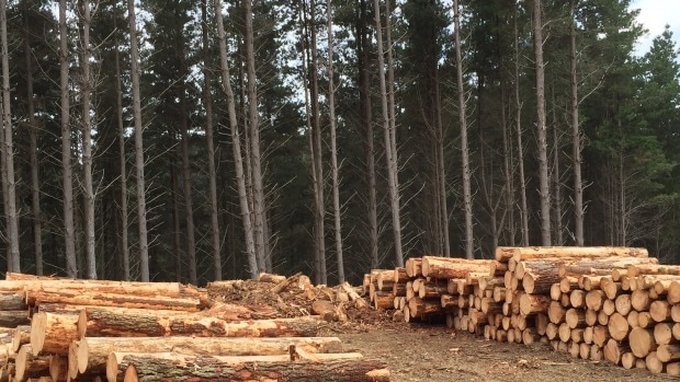
New Zealand and China signed an arrangement this week for future forestry cooperation and boosting bilateral trade.

The arrangement was signed today, May, 13, in Wellington by New Zealand's Forestry Minister Shane Jones and Mr Zhang Jianlong, the Administrator of China’s National Forestry and Grasslands Administration.

“The updated arrangement supports and strengthens links between government, industry and research institutes in New Zealand and China. It provides a framework to address matters such as sustainability, wood processing and utilisation, and trade and investment,” Shane Jones said.

“The forestry sector is an important and growing part of our bilateral trade with China, with export revenue topping $3.2 billion in the year ending 2018.

“Much of this growth has come from increased Chinese demand for New Zealand forestry products, supporting both continued high prices and record export volumes.

“A number of Chinese companies choose to use wood sourced from New Zealand for their manufacturing, and I’m keen to see how we can grow the relationship further, especially for our respective wood processing industries.

“With my Chinese counterpart, I have agreed that officials will cooperate to encourage increased trade, including in value-added wood products.

“I’m pleased to announce that we will hold talks in China later this year, which industry will be invited to, to promote government-to-government and industry-to-industry collaboration.

“Signing the updated arrangement is a testament to the huge amount of goodwill between our two countries, and marks a commitment to continue working together for mutual benefit.

“I see a multitude of opportunities for New Zealand and China to cooperate and support our forestry and wood processing industries, in a way that also supports environmental objectives.

“The wider One Billion Trees goal to plant at least one billion trees by 2028 is an ambitious one, and it will drive regional revitalisation, support Māori to realise the potential of their land, and deliver benefits to our people and our environment.

“Ensuring an end-to-end value chain for our logs and forest products, along with our relationships with trading partners, including China, are an important part of achieving these aspirations,” Shane Jones said.

US lumber prices declined last week

A muted trading pace prevailed across much of the US lumber market. Green Douglas Fir remained the primary exception, as the impact of two recent sawmill closures and seasonal weather in California combined to give that market its strongest trading pace of the year to date.
Sales of dry framing struggled to keep pace with production. But western mills tended to fare better than their counterparts in the South and Canada. The Random Lengths Framing Lumber Composite slipped.

Week
May 10
Last Week
May 3
Year Ago
2018
Random Lengths Framing Lumber Composite Price* $352 $353 $543
KD Western S-P-F #2&Btr 2x4 R/L Mill Price 329 329 619
KD Eastern S-P-F #1&2 2x4 R/L, delivered Great Lakes 409 413 676
Green Douglas Fir Std&Btr 2x4 R/L (Portland) 317 310 563
Southern Pine (Westside) #2 2x4 R/L 392 401 581
KD Coast Hem-Fir #2&Btr 2x4 R/L 360 357 615
Ponderosa Pine (Inland) #2&Btr 1x12 R/L 860 860 760
* Weighted average of 15 key items

Random Lengths Panel Market Report

Structural panel prices shifted mildly amid guarded trading. Price trends were a mixed bag in OSB. Prices grinded higher in most northern markets, despite slower sales. In the South, activity stalled in late trading as weather took a toll. A firmer tone emerged in Southern Pine plywood amid steadier sales that bolstered mill order files. Most western Fir plywood traders trudged through another week of lackluster sales. The West continued to absorb a large percentage of the week’s production. Canadian plywood sales picked up markedly at midweek.

(f.o.b. mill prices) Week
May 10
Last Week
May 3
Year Ago
2018
Random Lengths Structural Panel Composite Price* $353 $353 $545
Southern (west-east) 15/32-inch 3-ply rated sheathing plywood 360-395 360-395 530-570
Southern (west-east) 15/32-inch 4-ply rated sheathing plywood 365-400 365-400 535-575
Western 1/2-inch 4-ply rated sheathing plywood 356 355 538
North Central 7/16-inch Oriented Strand Board 190 185 415
*Weighted average of 11 key items


25% US tariffs on wide range of Chinese wood products enforced on 10th of May

President Donald Trump’s increased tariffs on $200 billion in Chinese imports took effect as of 12:01 Eastern time Friday, escalating tensions with Beijing.

The Trump administration raised the import taxes on those goods from 10% to 25%. China has threatened to retaliate if Trump proceeded with his threat to raise those tariffs.

The Trump team is intensifying its trade war with Beijing, which it claims reneged on commitments it had made in earlier trade talks. The tariff increase took effect even after negotiators for the two sides resumed talks Thursday in Washington.

The talks were due to resume Friday after wrapping up without any word on progress.

China had threatened to retaliate if President Donald Trump goes ahead with the tariff hikes, adding to the heated rhetoric from both sides that was shaking stock markets around the world.

The negotiators met Thursday evening. Then, after briefing Trump on the negotiations, top U.S. trade negotiator Robert Lighthizer and Treasury Secretary Steven Mnuchin had a working dinner with the leader of the Chinese delegation, Vice Premier Liu He. Talks are scheduled to resume Friday morning, the White House said.

According to industry sources, the Chinese side has not responded to this at present, but it is very likely that relevant measures will be taken in the future, such as charging huge tariffs on timber imports from the United States, which will cause a heavy blow to the domestic North American timber market.

The confidence of Chinese timber importers has been hit hard, and the willingness to purchase is very low at the moment

It is not ruled out that the possibility of purchasing North American materials will be reduced in the future. At present, the ashwood in Guangdong market is 2.15-3.05m long and 1-2 inches thick, and the FAS grade is 6800-7800 yuan/m3; the red rubber is 2.15-3.05m, the thickness is 1-2 inches, and the FAS grade is 6300-8300 yuan/ cubic meter.

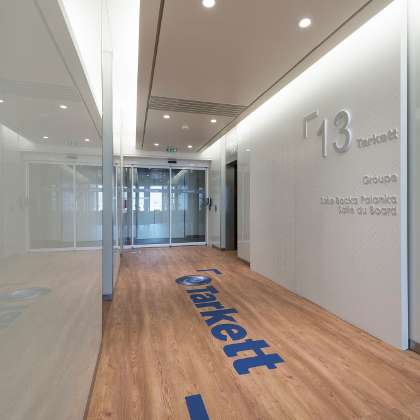
French flooring giant Tarkett moves all its production facilities from Canada to the US

 French Tarkett is transitioning all manufacturing activities from Waterloo, Ontario and Truro, Nova Scotia in Canada to manufacturing locations in the US, resulting in the closure of both the Waterloo plant, which produces flooring accessories, and the Truro plant, which produces commercial carpet rolls.

Accessories produced in Waterloo will be moved to the recently expanded Chagrin Falls, Ohio site. Products currently manufactured in Truro will be transferred to Dalton, Georgia, specifically the carpet facility acquired with the purchase of Lexmark in September 2018.

This consolidation will reduce Tarkett’s cost base in North America and generate the planned cost synergies anticipated from the Lexmark acquisition. As most of the products manufactured in Canada are shipped to the US market, this move will also significantly improve logistics.

The workforce of the Waterloo and Truro facilities, 70 and 240 employees respectively, will notably receive outplacement support to help them find new opportunities. Tarkett expects to complete the closure process before the end of the year.

Tarkett is a worldwide leader in innovative and sustainable flooring and sports surface solutions.

IKEA completes expansion of the largest furniture production complex in the world

IKEA Industry has completed the expansion of its factory in Zbąszynek, Poland. The site is now the largest furniture production complex in the world. The factory will manufacture IKEA furniture from the popular EKET series. The ceremonial opening, with the participation of employees, the board and the local community, took place on May 9, 2019.

IKEA Industry in Zbąszynek specializes in the production of furniture from cellular boards. The newly opened part of the plant produces furniture from the popular EKET series in six color variants: white, light and dark gray, as well as new in golden-brown, red and imitation oak stained in white. The maximum capacity of the hall is 125,000 pieces of furniture per week, doubled after the expansion. Currently, production in the factory has reached the level of 95% of production capacity. The EKET series furniture manufactured in the Polish factory is delivered to IKEA stores in 52 markets around the world.

IKEA Industry Zbąszynek

IKEA Industry Zbąszynek is the largest furniture production complex in the world. It is made up of factories in Zbąszynek, Zbąszyń and Babimost. The first plant was established in 1992 on the basis of local Furniture Cooperatives. Currently, over 600 kinds of IKEA furniture are made here, including EKET series storage furniture, LACK series tables and children's furniture from the STUVA series. The plant employs over 3,400 employees. 

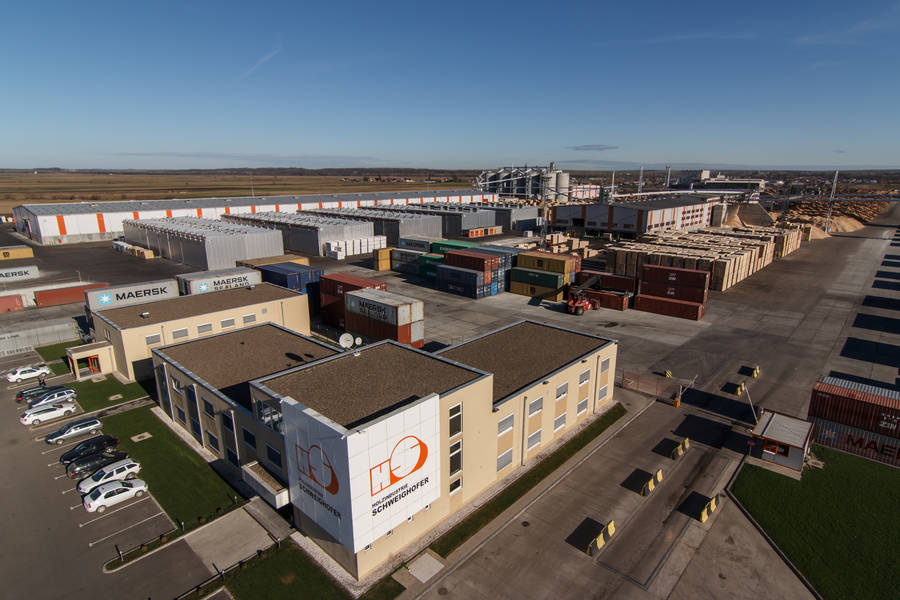
Holzindustrie Schweighofer completed EUTR inspection in Romania

Holzindustrie Schweighofer (HS), one of Europe’s leading timber processing companies, informed that the company passed in Romania 16th inspection in accordance with the EU Timber Regulation (EUTR) regulation on April 24, 2019.

According to the announcement, the result of this control, which took place in the Sebes sawmill was positive for the company. In the course of these EUTR inspections, the authorities verify whether companies are doing everything possible to prevent the sale of unlawfully harvested timber.

The aim was to ensure that only legally harvested timber is placed on the European Single Market.

Holzindustrie Schweighofer has three sawmills and two wood panel production plants in Romania.


Read more news regarding Holzindustrie Schweighofer (only for registered members):

  1. Romania: Cartel forming accusations over Schweighofer, Kronospan and Egger

  2. Holzindustrie Schweighofer plans to build a biomass plant in Germany

  3. New accusations for Holzindustrie Schweighofer of purchasing illegal wood in Romania

  4. Romanian authorities investigate Holzindustrie Schweighofer in organized illegal logging ring

  5. Romanian prosecutors investigate Holzindustrie Schweighofer’s headquarters

  6. Holzindustrie Schweighofer sells all its Romanian forest investment to Swedish GreenGold Group

  7. Schweighofer Group tied to illegal logging in Romanian National Park, EIA finds

  8. Holzindustrie Schweighofer might build a sawmill in Belarus

  9. Holzindustrie Schweighofer plans to boost capacity at Kodersdorf sawmill; EUR 30 million investment

EU and Vietnam ratify VPA on FLEGT

EU FLEGT informed that the EU and Vietnam had ratified a Voluntary Partnership Agreement (VPA) on Forest Law Enforcement, Governance and Trade, to address illegal logging and promote trade in legal timber products. The Agreement will take effect on June 1, 2019.

According to the announcement, implementation of the VPA will take several years, during which Vietnam will develop a timber legality assurance system to ensure that its timber and timber products come from legal sources and comply with relevant laws relating to importation, exportation, harvesting, processing and trade.

Implementation of the VPA is expected to entail introducing systems and procedures to assure that businesses in Vietnam only use domestic timber or import timber that has been harvested and traded in accordance with relevant legislation in the country of harvest. This will prevent illegally-harvested timber, and businesses trading it, from taking part in supply chains regulated by the timber legality assurance system.

An EU-Vietnam Joint Implementation Committee (JIC) will oversee how the provisions of the Agreement are put into practice, while a Multi-Stakeholder Core Group will provide a means for Vietnamese civil society groups, academics and business associations to be involved in VPA implementation and provide input to the JIC.

Once the VPA has been fully implemented, and a joint assessment by the EU and Vietnam confirms this, the parties will set a date from which Vietnam will issue FLEGT licences to its EU-bound exports of verified legal timber products.

FLEGT-licensed products will automatically meet the requirements of the EU Timber Regulation, which prohibits the placing of illegal timber on the EU market.

Until FLEGT licensing starts, imports into the EU from Vietnam will continue to be subject to the due diligence requirements of the EU Timber Regulation aimed at ensuring that the risk of placing illegal products on the Union market is negligible.

Germany: 30 million m3 of wood damaged by storms and the bark beetle expected this year

By April 2019, 13 million m3 of damaged wood has been reported in Germany so far, mostly due to storms or instects. 

This is the result of a survey of the German Federal Ministry of Agriculture (BMEL) in the federal states. According to state secretary Michael Stübgen, a similar amount of wood damage has to be expected as in the previous year.

In 2018, more than 30 million m3 of wood have been destroyed by storms and pest insects, especially bark beetles.

According to Stübgen, the ministry is aware of its responsibility for the German forests, and has taken measures to help ease the situation. Over a period of five years, a total of 25 million euros in federal funds are available for:

  • Measures to clean up existing sites and protect the soil
  • Various forest protection measures (inter alia monitoring, prevention and control of harmful organisms, installation of wood storage areas for the storage of damaged wood, measures for the prevention and control of forest fires)
  • Measures for reforestation, pre- and substructure as well as repair in stocks damaged by extreme weather events.
  • In order to better respond to damage in the future, the ministry has commissioned a continuous monitoring system on occurrence and development. The aim is to obtain as soon as possible reliable figures for the federal territory in order to react even faster in future calamities. In addition, the ministry has discussed further tax relief for the forest owners affected by these damage with the Ministry of Finance.

US$250mil sawmill to be build in Argentina

Argentina's Grupo Garabi and Belgium's Forestcape are to invest a joint US$250mil in the Argentinian province of Corrientes in constructing the country's largest saw-mill, its output intended for export.

The exact location will be Gobernador Virasoro with some US$80mil due to be spent in 2019. The sawmill will take shape alongside a biomass plant that is being built now.

Garabi - founded in 1976 in Corrientes - and Forestcape have given Juan Pablo Tripodi, president of the Agencia Argentina de Inversiones y Comercio Internacional (AAICI), details of the project set to employ 800 people as of 2024 if not before.

The sawmill will be able to process 500,000 m tons of wood per annum with the goal being to double that capacity over time, as explained by the CEO of Forestcape, Airy de Murga. His firm has spent a decade in South America already. Garabi administrates 18,400 ha of forestry.

Antwerp to host this year’s International Softwood Conference

Antwerp, on the crossroads of international trade and a major harbour for wood and wood products, will be the host city of the 2019 International Softwood Conference from 16 to 18 October.

Organised by the European Organisation of the Sawmill Industry, EOS, the European Timber Trade Federation, ETTF, and the softwood import section of Fedustria, the Belgian federation of the Textile, Wood and Furniture Industries, the conference will gather representatives of leading softwood producing and importing companies for two days of inspiring presentations and contacts.

In addition to the “technical” meetings, participants will be able to get to learn Antwerp better with a welcome reception and social conference dinner at famous landmarks such as the MAS (Museum aan de Stroom) and the Antwerp Zoo. All meetings will be held at the Radisson Blu Astrid Hotel.

Full details on the conference will soon become available via (ettf.info/isc2019). For queries contact isc2019@fedustria.be

Russian Segezha Group raised plywood prices in April

Birch plywood consumption in the world has grown at an average rate of 2-2.7%. At the end of 2018, prices declined, which was due to the retirement of the Turkish market from the birch plywood manufacturers portfolio, the launch of the Vyatka plywood mill of Segezha Group in Kirov, as well as an increase in production at current capacities.
In general, the volume of plywood production in 2018 in Russia increased from 3.7 million m 3 to 4.1 million m 3 per year.
In the first quarter of 2019, all Russian plywood enterprises operated at full capacity, helped by solving the problem of a shortage of raw materials, thanks to restrictions on the export of plywood logs.
As a result, the supply of manufacturers in the first quarter of this year exceeded the demand by more than 10%.
However, Segezha Group's entry into new markets, the onset of the construction season, and the active development of high-rise construction in Asia and the Middle East enabled the company to raise prices for a number of birch plywood positions in 4x8 and 5x10 formats already in April of this year.
European countries and Russia are still the largest plywood consumers in the world, their total share is about 75%. Russia is consistently among the top five countries producing and exporting plywood (inferior to China, Indonesia and Malaysia).

Pulpwood prices in North America on the rise in 1Q/19

Prices for pulplogs and wood chips moved up slightly in the US in the 1Q/19 while they were unchanged or slightly lower in Canada, as compared to the 4Q/18.
For several regions in North America, the year began with higher fiber prices due to harvesting slowdowns after some inclement weather. In the US South Central and Southeast regions, there was particular demand for hardwood fiber, which resulted in an uptick in prices. These were also the regions that saw the highest quarter-to-quarter (q-o-q) increases on the continent in the 1Q/19.
US South
Pulpmills along the Continue reading "Pulpwood prices in North America on the rise in 1Q/19"

US housing starts approach two-year low

U.S. homebuilding dropped to a near two-year low in March, pulled down by persistent weakness in the singlefamily housing segment, suggesting the housing market continued to struggle despite declining mortgage rates.

Some of the weakness in homebuilding likely reflected disruptions caused by massive flooding in the Midwest, with housing starts in the region declining to levels last seen in early 2015. The report bucked a recent tide of upbeat data that indicated the economy regained speed as the first quarter ended.

Housing starts fell 0.3% to a seasonally adjusted annual rate of 1.139 million units last month, the lowest level since May 2017.

Data for February was revised down to show homebuilding tumbling to a pace of 1.142 million units instead of the previously reported 1.162 million-unit rate.

Housing starts in the Midwest, which was devastated by floods during the month, dropped 17.6%.

Single-family homebuilding, which accounts for the largest share of the housing market, dropped 0.4% to a rate of 785,000 units in March, the lowest level since September 2016.

Single-family homebuilding in the Midwest tumbled 21.2% last month to the lowest level since February 2015. Single-family starts also fell in the populous South. But they rose in the Northeast and West.

Building permits fell 1.7% to a rate of 1.269 million units in March, the lowest in five months. Building permits have now declined for three straight months.

Permits for single-family housing dropped to a more than 1-1/2-year low in March.

In related news, existing-home sales declined in March, following February’s surge of sales, according to the National Association of Realtors. Each of the four major U.S. regions saw a drop-off in sales, with the Midwest enduring the largest decline last month.

Existing-home sales fell 4.9% from February to a seasonally adjusted annual rate of 5.21 million in March. Sales were down 5.4% from a year ago (5.51 million in March 2018).

March existing home sales fell 7.9% in the Midwest and were off 8.6% from a year ago. Existing-home sales decreased in the Northeast by 2.9%, trailing behind March 2018 sales by 1.5%. Sales fell by 3.4% in the South and are down 2.1% from last year. In the West, existing home sales fell by 6.0% and are 10.7% below a year ago.

Germany multiplies the export of softwood logs to China

According to Eurostat data, Germany exported a total of 3.78 million m3 of roundwood in 2018. This is 33% more than in the previous year with 2.84 million m3.

The main customer remains Austria at 2.03 million m3 (+ 20%), followed by Belgium with just under 455,000 m3 (+ 35%). In the EU as a whole, 3.24 million cubic meters of roundwood were exported (+ 21%). This makes the EU by far the largest consumer of coniferous wood from Germany.

Due to the large amount of calamity wood, however, exports to Asia and above all to China show the greatest dynamics. After Asia (excluding the Middle East), in the year 2018 a good 436,000 m3 of roundwood were exported. That's an increase of 776% (2017: ~ 49,800 m3).

By far the largest increase is recorded in exports to China. With a good 365,000 m3, the export volume there has increased more than a hundredfold (2017: 3,142 m3, + 11,521%). Far more was exported to South Korea at just under 49,500 m3 (+ 665%). By contrast, the export volume to India has fallen by 78% to almost 6,300 m3.

Softwood logs exported from Germany to... (in cbm )

Destination 2017 2018 Last year
EUROPEAN Union
2,679,250 3,239,319 21 %
Austria
1,690,340 2,025,015 20 %
Belgium
338,202 454,981 35 %
Czech Republic
156,950 170,057 8 %
France
89,834 111,125 24 %
Italy
112,971 101,679 -10 %
Others
290,953 376,462 29 %
OTHER European Countries
101,458 91,032 -10 %
Switzerland
101,405 90,182 -11 %
Norway
- 850 %
Turkey
53 - -100 %
NORTH Africa
- 16 %
Tunisia
- 16 %
NEAR and MIDDLE East
12,792 13,624 7 %
United Arab Emirates
12,792 13,189 3 %
Saudi Arabia
- 375 %
Israel
- 60 %
OTHER Asian countries
49,782 436,101 776 %
China
3,142 365,123 11,521 %
South Korea
6,471 49,490 665 %
India
28,462 6,270 -78 %
Japan
6,387 6,117 -4 %
Pakistan
917 3,876 323 %
Others
4,403 5,225 19 %
TOTAL 2,843,282 3,780,092 33 %

Sweden: The bark beetle could ruin 12.5 million m3 of wood this year

The European spruce bark beetle is threatening Sweden's forests more than the record wild fires that occurred last year. As summers become hotter and drier, the damage will likely grow.

A worst-case scenario from the Swedish Forest Agency estimates that it could ruin as much as 12.5 million cubic meters of wood this year, costing as much as 6 billion kronor ($625 million). That’s equivalent to more than 15 percent of annual logging. In its baseline scenario, it sees damage on par with last year’s 3 to 4 million cubic meters.

The woes related to climate change are piling up. Unusually mild winters are turning once icy grounds into thick mud capable of swallowing 25-ton logging vehicles. Hotter summers are increasing the risk of fires, which last year forced many companies to temporarily halt operations as the country was forced to call on help from across the European Union to battle out-of-control blazes.

“The value of wood deteriorates radically, from timber to fuel,” said Hans Kallsmyr, a damage coordinator at the Swedish Forest Agency.

The agency has now created a crisis task force together with the industry to combat the threat. Key is to identify, cut down and remove damaged trees as soon as the bug starts to swarm in the spring. Some companies are even using artificial intelligence, algorithms and satellite photos to track spruce beetle attacks.

LIGNA 2019: Gearing up for integrated woodworking

One of the big focus themes of LIGNA 2019, which runs from 27 to 31 May in Hannover, Germany, is “Integrated Woodworking Technologies – Customized Solutions”.

Visitors to this year’s show will see first-hand how the furniture industry, the woodworking trades and the primary wood industry, in particular, can leverage the benefits of the latest digital solutions to gear up for the challenges of the future. The lineup of solutions on show is extensive, including everything from 360-degree production control systems, smart CNC aggregates and digital embossing printers through to the latest CNC milling and Sawmill 4.0 technologies.

At the Weinig stand in Hall 27, visitors will be able to see a complex production line comprising eight integrated components in action. The stand will run daily demonstrations that showcase the entire production process, from raw material to finished product. The production line incorporates both robotics technology and Weinig scanners. All of the line’s components are controlled centrally via Weinig’s new single-operator Control Suite system. Under the careful watch of this system, semi-finished goods will be manufactured then further processed into various products at downstream stations at the Weinig stand. One of the stations involves making window parts using a Conturex CNC center.

With its B_CABINET Four software, Biesse (Hall 11, Stand B32) has developed a solution that can manage all stages of furniture production, from 3D design to monitoring the entire production flow. The software has a special interface where users can define and manage all processing stations and work steps required for each order. That includes everything, from cutting, milling, drilling and edge banding through to assembly and packaging. Each processing station receives a work order comprising the production sequence, additional information on aspects such as the parts to be processed or the entire project, as well as parts programs, work lists, cutting lists and PDF assembly instructions. The software features a dedicated interface for monitoring and controlling each processing phase right through to order dispatch. B_CABINET gives users complete control over each step of their processing operations and provides them with a real-time graphical overview of order status and fulfillment.

From its over 4,000 square meters’ booth (Hall 13 booth C 56), SCM will present its "Smart&Human Factory": a cutting-edge production model based on innovative, modular and easily configurable cells integrated with digital and automation systems and allowing for advanced man-machine interaction and 360-degree control over the entire production flow. This "user-friendly" wood panel processing automation system is designed to respond to the challenges of mass customization and Industry 4.0. The process aims at optimizing as much as possible panel cutting, edgebanding and drilling operations, so as to reduce waste, rejects and retooling requirements during product changeovers, to then reassemble orders back together at the end of the process and delaying customization until this stage.

Homag's showcase in Hall 14 at this year’s LIGNA is all about bringing digital production concepts to life. On over 5,000 square meters of display space, Homag will present a range of integrated, networked solutions comprising woodworking machines, cells, systems and software that can help operations of all sizes take the next steps towards a digitized future. The company will run live demonstrations of its new “networked cell” systems – from “Digital Entry” and the “Networked, Digital Workshop” through to “Networked, Individual Cells”. All of these systems are available in a range of output classes tailored to operations of all sizes, from small woodworking firms to industrial-scale furniture manufacturers. Each solution is fully modular, allowing users to configure their own tailor-made solutions. Homag’s “High Performance Furniture Processing” showcase is aimed at industrial-scale furniture manufacturers interested in new technologies and concepts for high-speed dimensioning and edge banding.

Technically demanding production processes require state-of-the-art software support. The F4®Solutions suite of programs developed by the Felder Group (Hall 13, Stand C68) offers solutions for furniture production and interior design, nesting optimization, window and door production, 3D free forms and stairs and staircase construction as well as smart post processors. Felder’s software can be seamlessly integrated into existing production lines and connects all the individual processing steps into a smart, fully integrated end-to-end process chain. Deployed individually or as a package, F4®Solutions requires no further investment in new, networkable machines or other high-tech plant. The software modules are easy to use, fully functional the moment they are installed and can be added to at any point in time. F4®Solutions opens the way to integrated production for smaller woodworking firms using standard machines.

For further information about the exhibitors and products at this year’s LIGNA, visit https://www.ligna.de/en/expo-program/exhibitors-products/ .

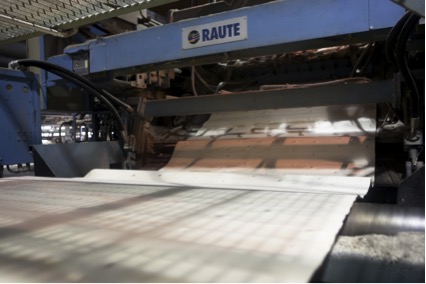
Raute receives €12m order from Plyterra in Russia

Finnish Raute Corporation has received orders worth over €12m from CJSC Plyterra in Russia.

The orders consist of veneer drying and patching lines and plywood lay-up and overlaying lines to be delivered to Plyterra’s birch plywood mill located in Umet, Zubovo-Polyanskiy region in Mordovia.

The ordered machinery and equipment will be delivered during the Q1, 2020 and production on the new lines will be started during summer 2020.

The equipment will be engineered and produced in Raute's production unit in Nastola and partly in the Kajaani unit, and also in the company’s partnership network.

The equipment now ordered from Raute is part of Plyterra’s investment programme through which the mill’s annual capacity will be increased up to 180,000m3.

Estonia: Roundwood prices significantly up in March 2019

Roundwood prices in Estonia have went significantly up in March 2019, as compared to the same period last year.
Thus, during March 2019, pine logs could be bought for EUR 78.94/m3, 1.63% more than in March 2018, while the price for spruce and birch went up by 0.74% and 8.04%, respectively. At the same time, pine and spruce logs d<18cm increased by 10.64% and 11.99%, respectively, to EUR 67.17/m3 and EUR 65.61/m3.
The pulpwood assortments prices soared by an average of 40%, except for aspen, which decreased by -8.44% in price, to EUR 21.46%. Otherwise, pine pulpwood could be bought for EUR 47.59/m3, 40.34% more than in March 2018, while spruce and birch pulpwood increased by 43.40% and 40.41% in price, respectively.

 Roundwood prices EUR/m3 Mar.'18 € / m3 Feb.'19 € / m3 Mar.'19 € / m3 Change% Mar. 2018/Mar.2019
Pine logs 77.67 78.05 78.94  +1.63%
Pine logs d<18cm 60.71 66.19 67.17  +10.64%
Spruce logs 77.46 77.42 78.04  +0.74%
Spruce logs d<18cm 60.04 65.12 65.61  +9.27%
Birch veneer logs 109.29 113.96 122.4  +11.99%
Birch logs 65.78 68.1 71.07  +8.04%
Aspen logs 42.77 41.31 42.43  -0.79%
Pine pulpwood 33.91 47.52 47.59  +40.34%
Spruce pulpwood 32.44 46.83 46.52  +43.40%
Birch pulpwood 33.18 46.76 46.59  +40.41%
Aspen pulpwood 23.44 22.29 21.46  -8.44%
Fuelwood 21.32 25.24 25.31  +18.71%

XLam to close New Zealand CLT plant

The CLT manufacturer XLam announced that it will close its New Zealand plant in Nelson. 

As the Australian daily The Fifth Estate reports, quoting company officials, XLam decided to close the plant as the operations were no longer considered commercially sustainable and that “a new business model” would “usher in a more commercially competitive and sustainable way for the company to supply CLT to the market.”

XLam said the move would allow more efficient servicing of demand for its product in New Zealand, The Fifth Estate says.

“As demand for off-site fabrication, mass timber construction and CLT continues to grow, so too does the XLam business, with a focus on improved customer solutions and increased manufacturing utilisation”, XLam's CEO Shane Robertson said, as quoted by The Fifth Estate.

“The existing highly manual, capacity-constrained operation in Nelson has been confirmed to be commercially unsustainable for future CLT manufacture,” he said.

It seems that XLam's future supply to New Zealand will be filled by the company's plant in Wodonga, Australia after the Nelson plant will be closed in the future months.

The company will establish a new warehousing and distribution operation in the Waikato region, and new offices at Nelson.

Newsletter

Subscribe to our digital newsletter for your daily digest of essential news, views and analysis from the international wood industry delivered directly to your inbox.


0