Article archive

Egger completes biomass plant in Romania

Egger, one of the leading players on the Romanian wood market, has recently finalized the construction of the largest biomass plant in Romania at the company's Rădăuți site, the Romanian newspaper Ziarul Financiarul (ZF) reported.

The capacity of the plant is 83 MW and will provide heat and energy for Egger's operations at Rădăuți. The raw material for this facility will come from the waste resulted from wood processing.

The Egger factory in Rădăuți is a strategic location for the Egger Group. The company has continued the development of the Rădăuți site with the construction of a biomass heating plant, therefore achieving a fully integrated unit of production, Mr. Ioan Banciu, an Egger representative, told to ZF.

Despite the significant capacity of the new facility, officials of the company stated that the energy resulted will be entirely used for the Rădăuți site.

The biomass plant has a capacity of 83 MW. Egger has invested EUR 35 million from own funds for this project. The investment started in September 2012 and was finalized in October last year.


Illegal timber shipment in France to be seized by Greenpeace

On the 8th of January, Greenpeace has symbolically seized an illegal import of timber logs coming from Congo, in the French port of Caen. Greenpeace claims to have full evidence to prove that the wood ''caught'' is illegal.
The importer, French company Peltier Bois, did not give any information about the type and amount of the wood, although it has assured that will start a private investigation to find out the exact origin. The contested timber comes from the Equator province of the Democratic Republic of Congo (DRC), and had an SCB stamp on it, of the company Sicobois, which has several licenses in the region. Greenpeace informed the French Ministry of Agriculture, but no action has been taken yet.
The environmental group criticizes the French Government for delaying the implementation of the EUTR in the national legislation. The law is currently under debate in the Parliament and, until its entering into force, the French authorities have their hands tied.

Austria: Pellet price goes up by 10% in December

PelletspriceAustria
In December 2013, the pellet price in Austria has increased by 10.3% over December 2012. The average price for pellets with six tons delivery volume was in December around €265,5/t or €5,42 Cent per Kwh. As compared to November, the price has remained the same.
Wood pellets in bags cost an average of €4.29 per 15 kg sack (when ordered by the pallet). This corresponds to a 7.7% rise over December 2012 and + 0.9% over the same month of 2012.

Tolko signs for the selling of its treating plant to Koppers Inc.

Tolko Industries Ltd. yesterday announced that it has signed an asset purchase agreement for the sale of its Ashcroft Treating Plant to Koppers Inc. The decision to sell follows a thorough review of Tolko’s product mix.

“Ashcroft has been a strong performer in our asset mix since 2004,” said Brad Thorlakson, president and CEO of Tolko.  “However, we have decided to focus our efforts on our wood products and paper operations moving forward.”

Ashcroft Treating produces railway ties, bridge timbers and crossing planks and employs approximately 28 people.  The acquisition is expected to close within 30 days.

Former CEO of Setra joins Holmen Timber

Håkan Lindh, the current CEO of Holmen Timber, has decided to leave the company and will be succeeded on 1 February by Johan Padel.

Johan Padel is 47 and his current position is at Siljan Wood Products AB, where he is CEO. Prior to this he was President and CEO of Setra Group, Divisional Manager of Moelven Timber, CEO of IKEA’s subsidiary Swedwood Latvia Ltd, and CEO of AssiDomän Hasselfors Trä AB. He also has several years’ experience from the marketing side of the sawn timber industry.

Europe increases demand for Russian birch plywood

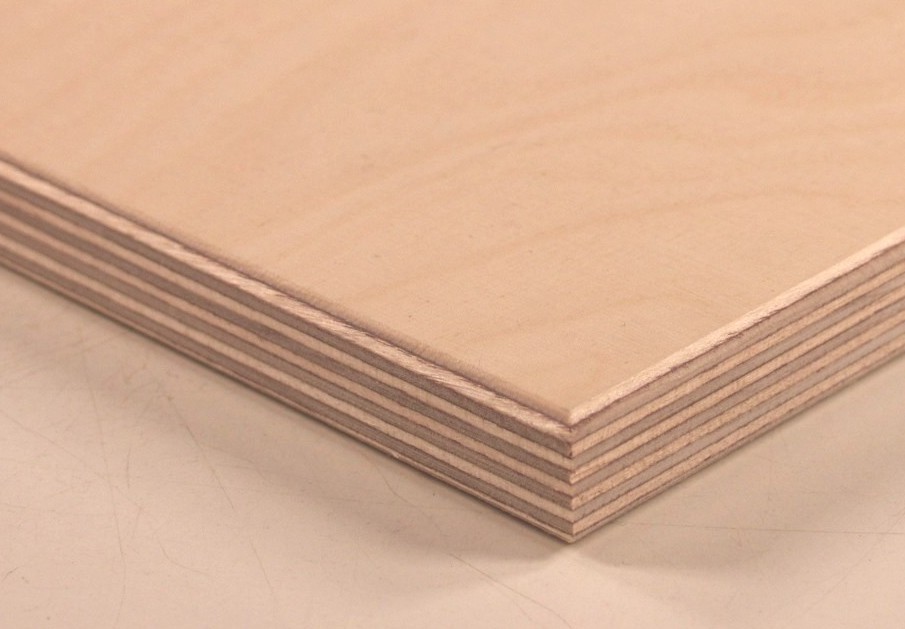
EU imports of Russian birch plywood have been higher during 2013 than in 2012. This is despite widespread reports of supply shortages due to limited log supply in Russia and rising demand in Russia‘s domestic market and in Turkey, Asia, and in the Middle East.

This in turn has led to long lead times on new orders and delays to existing orders. Delivery periods for rough plywood now extend up to 2-3 months. However availability of Russian film and mesh faced birch plywood is better and delivery times are shorter.

Russia's exclusion from the EU's GSP (Generalized System of Preference) on 1 January 2014 has encouraged some increased buying in the last quarter of 2013 in anticipation of the rise in import duties.

Pellet price in Switzerland goes up 5% in 2013

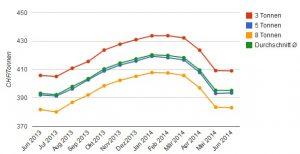
From January to December 2013, the average pellet price in Switzerland has increased by 4,79%. The year started with an average price of 398.2 CHF/tonne (approximately EUR 321); reached its lowest point in May at 390.6 CHF/tonne (≈ EUR 315) and remained stable during the summer season. From September the price continuously rose to a maximum of 417.3 CHF/tonne (≈ EUR 337) in December. 
If compared to 2012, the almost 5% price increase is quite considerable. The average Swiss pellet price in 2012 remained stable around the level of 393 CHF/tonne (January 2012: 393.2 CHF/tonne; December 2012: 393 CHF/tonne).
Pellet prices in Switzerland (January to December 2013)

Swisspelletprice
The above results are collected from the trade platform pelletpreis.ch.

The global outlook for the 2014 lumber market

The outlook for global lumber markets hinge on demand forces in the key consuming regions of the world. More specifically, it will be the lumber demand trends in the U.S., China and Western Europe that will shape global markets in 2014 and beyond. The following analysis by International Wood Markets Group (IWM) is derived from its consultants' extensive travels and market investigations.

While the supply dynamics are becoming more constrained in some areas, the ability for sawmill capacity to ramp up production is an all too familiar dynamic that continues to over-shadow the global lumber market. However, if global demand can achieve a 4% (or higher) gain in 2014, the outlook should be very good for lumber and sawnwood prices.

While there will be a definite tightening in supply side dynamics in Canada, U.S. output is expected to drive lumber production over the coming five-year period. However, it is the pace of U.S. housing starts that will set the tone for the lumber (and panel) markets in 2014. After a strong gain in new U.S. housing starts of 28.5% in 2012 (an increase of 175,000 over 2011), 2013 will end up with a more lackluster gain of only 18.5% (+145,000 units) or about 925,000 new housing starts. In 2013, the North American lumber supply chain became more balanced - starting in the second quarter 2013 - as production started to swamp overall demand. By fourth quarter 2013, a much better balance between supply and demand had developed, setting the stage for a good start to 2014. However, without strong gains in new residential housing starts increases of 20% of more (or 175,000 or more units), it is more likely to just be a "good" year overall, but still could feature some supply chain shocks during the year that could create price spikes both up and down. IWM is predicting a steady growth in housing starts in 2014, but less than the 20% that is needed to support a very strong market.

North American lumber production is expected to increase by almost 3 billion bf (+5.4%) in 2014 – an increase over 2013's estimated gain of 2.6 billion bf (+5.0%). The stud lumber segment is expected to see the most volatility when U.S. housing starts increase rapidly (i.e., more than 175,000 units per year) and/or as the supply chain tightens. Wood Markets showed in another report that North American stud lumber capacity has been essentially unchanged since 2009 as some mills have closed while others have restarted.

Canadian SPF represents over 50% of all stud lumber production but with Canada facing overall declines in its lumber output within about two years (declines in B.C. will not made up by the rest of Canada) future supply growth in SPF is unlikely. And there is almost no stud lumber production in southern yellow pine. As a result, studs could become a scarce commodity given the significant fibre supply constraints that will allow for only moderate production increases in Eastern Canada and essentially no net increases in Western Canada.

Parts of the U.S. West are facing a tightening log supply and this could further constrain stud lumber production, especially if China bids up the price of log exports from the coast region. Aside from the U.S. West, stud lumber mills are expected to be operating near full capacity in the next few years with limited incremental production available. This scenario will require increasing volumes of imported studs from Europe to meet some of the increased demand. However, to attract the necessary volumes of imported studs or further production in North America, higher and sustained lumber prices will be needed. Over the next five years, total North American stud demand is forecast to experience an annual compounded growth rate of almost 10% - much higher than dimension lumber. And the prospects of lumber "super-cycle" coupled with record high lumber prices are very possible by 2016 (perhaps as early as 2015 for studs).

China continues to be a key wildcard in global export markets as log and lumber imports continue to increase. This situation has been exasperated by the fall in total Russian log exports since 2007 (from 52 million m3 to 18 million m3) as the Russian industry has suffered from rising domestic logging and transportation costs despite a reduced log export tax that came into effect in September 2012. Erosion of the competitiveness of the Russian forest industry and its lack of cost control of log exports remains a critical issue that is discussed in considerable detail in Russia. To offset declining log exports, Russian sawn lumber production has increased by about 30% during the last ten years, while lumber exports have increased by over 50% (led by the growing presence of Chinese-owned sawmills in Eastern Russia).

Russian lumber exports to China alone have grown from about 500,000 m3 in 2002 to about 7 million m3 (4.4 billion bf – nominal count) in 2013. This has resulted in huge changes in China's imported log and lumber supply and has also created a number of winners and losers as global trade flows have been radically altered. Wood Markets outlines how China's new government has plans to open up China's economy that will include improved market access for foreign investors. The new plans also include steadily increasing urbanization as part of China's development strategy and that means further direct or related investments in the housing market. Although China's housing market sizzled for most of 2013, despite the government's attempts to rein it in, it looks like the market is stabilizing and avoiding a boom/bust scenario - that is good news for exporters of softwood logs and lumber.

China continues to influence global log prices as well as prices in many domestic log markets, especially where logs can be easily exported. China's ability to outbid sawmills for sawlogs along the U.S. west coast, as well as the B.C. coast and in New Zealand, has been strongly evidenced since 2010.

China has a huge and widening fibre supply gap but also has the world's lowest cost sawmills. Consequently, China can afford to pay some of the highest prices in the world for saw logs (and, at times, for softwood lumber). The analysis shows that with reduced Russian log supplies, China will remain a competitive threat to many domestic sawmills in countries that can export saw logs to China.

Source: WoodMarkets

Norske Skog sells Brazil shares, aims Europe

Norske Skog has agreed to sell the remaining 49% of the shares in Norske Skog Pisa in Brazil to Papeles Bio Bio SA (formerly Norske Skog Bio Bio) owned by Group BO / Pathfinder, a consortium of Chilean investors, Reuters reported. The transaction amounts US$ 37 million.

The closing of this transaction leaves Norske Skog with no paper production in South America.

Sven Ombudstvedt, President and CEO of Norske Skog said: ''We are pleased that we are selling the remaining stake in the Brazilian operations earlier than expected. For some time, we have stated that we aim to have our core business in Europe and Australasia. The sale is also part of our strategy to improve our liquidity''.

Back in June 2013, Norske Skog sold its 51% shares in Norske Skog Pisa to the same company for US$ 41.3 million.

DLH sells companies and operations

In December 2013, DLH's Board of Directors has decided to analyze the possibility of disposing of the company's business and operations.

Back then, DLH's officials stated that based on an in-depth analysis of various scenarios, the ''company’s shareholders will derive most value if an acceptable price for the individual business areas is obtained, and the head office disposed of''. Chairman Kurt Anker Nielsen said that although this is a very difficult decision, because the company has proud traditions, ''individual business units will have better opportunities to develop under different ownership''.

Since this announcement, a number of companies have expressed interest in DLH's assets and some of the shareholders have already increased their share in the company.

Therefore, this morning an extraordinary general meeting was held in Copenhagen where it was decided the following: ''The General Assembly adopted the Board of Directors' proposal to adopt the Group's new strategy which entails disposal of the Group's companies and operations''. No other information on this fact.

Dalhoff Larsen & Horneman A/S (DLH) is a Danish owned group and since 1908 trading in timber and timber products all over the world.

Resolute closes Fort Frances mill

Resolute Forest Products Inc. announced the permanent closure of its previously idled pulp and paper mill in Fort Frances, Ontario.

The company announced an extended period of market-related outage on its remaining paper machine in January. The kraft pulp mill and another paper machine have been idled since November of 2012.

Resolute is currently exploring opportunities to continue to operate the biomass boiler and electricity-producing steam turbine. The company is also progressing on three important investment initiatives underway in Northwestern Ontario: the construction of a new sawmill in Atikokan; the upgrade and restart of the idled Ignace sawmill; and the construction of a wood pellet plant at the Thunder Bay sawmill.

Pöyry lays off 200 employees in Finland

Pöyry announced in a press release issued today that the statutory employee negotiations started in November 2013 in the industry-related business units of the Regional Operations and the Industry Business Group in Finland have been completed. The initial plan was aimed at reducing capacity by approximately 200 people including temporary layoffs and permanent reductions.

Based on the negotiations the overall capacity of the company will be reduced by a maximum of the capacity of 200 people, including temporary layoffs and permanent reductions by a maximum of 25 people. Temporary layoffs until further notice commence in stages, beginning in January and depend on the prevailing market situation and workload.

Pöyry employs over 2000 people in Finland.

DOMOTEX 2014: Ideas for the global flooring industry

DOMOTEX, the world’s leading tradeshow for the floor coverings industry, next runs from 11 to 14 January in Hannover, Germany, where it will once again shine as the premier shop window for new trends and innovative lifestyle design. Some 1,400 companies from 60 nations will converge on the Hannover Exhibition Center to showcase their latest products and new collections. Year after year, DOMOTEX picks up on key trends and innovations and internationally sets the tone in flooring as in intrinsic element of interior design. And with its new Innovations@DOMOTEX showcase, the upcoming DOMOTEX will give superlative exposure to top product innovations and special designs, with a major pre-show PR campaign on top.

DOMOTEX has a one-of-a-kind lineup in store for its international trade audience,” said Dr. Jochen Köckler as the responsible Managing Board member at Deutsche Messe, the company which organizes and stages DOMOTEX. All the market leaders in each of the show’s product segments will be there. Our exhibitors and visitors are in for a highly innovative and very international showcase in January.

The whole world of flooring at one convenient location

The DOMOTEX show’s success as a touchstone of key trends lies in its comprehensive coverage. The event features each and every segment of the international floor coverings industry at one convenient time and place, providing a showcase that spans everything from textile and resilient floor coverings for the residential and contract furnishing sectors, to carpets, rugs and laminate flooring, to laying, care and application solutions. The resilient floor coverings display area in particular has gained in popularity over the years and in 2014 will feature a broad array of exciting designs and materials.

DOMOTEX is a global business platform which hosts and features the entire world of flooring markets. Its exhibitors can expect to encounter some 40,000 trade visitors from more than 80 countries. A good 61 percent of these visitors come from outside Germany, and 90 percent of them have a say in their organizations’ buying decisions. For visitors from the wholesale and retail flooring sectors, the skilled trades and the architecture and interior design professions, DOMOTEX 2014 will once again serve as a key stepping stone to new contacts and business growth.

Innovations@DOMOTEX: dedicated showcase for the latest highlights

Next year, DOMOTEX will be geared more strongly than ever towards current flooring industry trends with a new Innovations@DOMOTEX format designed to put exhibitors’ latest product innovations on center stage. The initiative includes a strong pre-show campaign to focus extra attention on current mega-trends even before the gates open on DOMOTEX. This is a plus for visitors, who can research key trends ahead of the fair and perfectly plan their agendas so they arrive fully informed, with a clear idea of where to go to find the products and solutions that interest them most.

Innovations@DOMOTEX will put the spotlight on selected product innovations in the Fitted Carpets, Resilient Floor Coverings, Parquet and Laminate Flooring and Modern Hand-made Carpets display categories. The product innovations that will feature under the Innovations@DOMOTEX banner were selected in mid-October by an expert jury headed by the noted German industrial designer Stefan Diez.

The initiative will be spearheaded by special display zones – the Innovations@DOMOTEX areas in halls 6, 9 and 17. The Innovations@DOMOTEX areas are being designed by the internationally acclaimed German architect Jürgen Mayer H. The idea is that visitors looking for ideas and inspiration will be able to head straight to these special areas for a condensed look at the hottest innovations. From there, they will be directed to the featured vendors’ exhibition stands where they can find out more about the products that have caught their attention. The Innovations@DOMOTEX areas will also feature a platform for expert dialogue plus a discussion program that will address a range of important floor-covering topics and issues. In addition, each area will offer refreshments and catering, thereby providing a convivial, relaxed setting for B2B networking and expert dialogue. All of these features mean that the Innovations@DOMOTEX areas will be one of the main highlights at DOMOTEX 2014.

Only at DOMOTEX can visitors explore and discover all the latest innovations with such convenience and ease,” explains Dr. Köckler. The latest design highlights, spectacular patterns and eye-popping materials – DOMOTEX is taking its trailblazing focus to a whole new level.

Deutsche Messe’s DOMOTEX promotion strategy is no less inventive. Selected exhibitor innovations from all product categories will feature prominently in all DOMOTEX promotion – before, during and after the fair. This includes a comprehensive pre-show visitor recruitment campaign. These initiatives will be flanked by an attractive Innovations@DOMOTEX Guide (in printed form) to help visitors to map out their DOMOTEX agendas well in advance. The information contained in the guide is of course also available on the DOMOTEX 2014 website.

Rallying point for international contract business

With its winning mix of lectures and presentations of innovative materials for the contract business, DOMOTEX is also a must for architects, interior designers, interior decorators and furnishing professionals on the lookout for fresh and creative ideas for their design palettes. The Innovations@DOMOTEX showcase will highlight current flooring trends and new product developments for the diverse range of application areas encompassed by the healthcare, catering, hospitality and education sectors. Thanks to the breadth and quality of the innovations on show, DOMOTEX is sure to put in a strong performance worthy of its status as a leading professional platform for the international contract furnishing sector.

Wood Flooring Summit 2014 heading for new heights

The Wood Flooring Summit will be another major visitor magnet at DOMOTEX 2014. Following its successful premiere in 2012, this special event will once again play host to the leading lights of the international parquet and laminate flooring sector. Located in Hall 9, it will feature a central exhibition area, a forum for presentations and panel discussions, plus a catered lounge area and after-work-party event for informal networking.

The Innovations@DOMOTEX area in Hall 9 will be an integral part of the Wood Flooring Summit. There, visitors can vote for their personal favorites among the parquet and wood flooring innovations on show, with the winners of the “Best Liked by DOMOTEX Visitors” prize receiving their awards during the fair in the presence of an international trade audience and representatives of the flooring and furnishings sector press. Also among the attractions at the Wood Flooring Summit will be a presentation by the influential trend researcher and futurist Matthias Horx from the Future Institute (Zukunftsinstitut) on 11 January. Horx will outline the Future Institute’s latest study, “The Future of Home Living – Central Trends Through to 2025.”

Next year’s DOMOTEX will also be devoting greater attention to outdoor living, with an extensive offering of innovative floor coverings for outdoor use on display in halls 8 and 9. All up, the fair’s tally of manufacturers of parquet and laminate flooring and outdoor flooring solutions is expected to top 200.

Skilled Trades Hub Hands-on expertise for flooring practitioners

In Hall 7, the Skilled Trades Hub will be playing its part in helping to keep parquet recliners, floor layers, painters, interior outfitters and their suppliers up to date with the latest laying and application techniques and tools. The Hall 7 lineup also includes the supporting Skilled Trades Forum with its focus on the latest real-world issues and challenges being faced by flooring practitioners. Among much else, visitors to the forum will learn correct laying techniques for innovative designer floor coverings and how to breathe new life into old floorboards. The forum will also feature a presentation on effective marketing for flooring tradespeople plus a special quiz in which visitors will get to demonstrate their knowledge to an expert quiz master.

Kronospan wants to buy two of Sonae’s plants in France

Sonae Indústria, SGPS, SA today announced in a press release that its indirect affiliate Isoroy SAS received an offer from Kronospan for the businesses and assets of the Auxerre and Le Creusot plants located in France, which includes the transfer of all the employees dedicated to those businesses.

As a result, Isoroy SAS began the process of informing and consulting its employee representatives in relation to such potential transaction, as well as the subsequent downsizing of the headquarters located in Antony, Paris.

The decision on this offer will only be taken after the completion of the information and consultation procedure on this potential transaction, the company stated.

Arauco’s Nueva Aldea mill restarts plywood production

The production of the first plywood panel marked the start-up of Arauco’s new Nueva Aldea plywood mill. The mill was rebuilt after it was completely destroyed by the fire that affected the area and, in particular, the company’s Nueva Aldea Industrial Forestry Complex, in January 2012.

This initiative required an investment of about $190 million. The new mill’s annual production capacity will be 350,000 cubic metres, its products are to be sold to the primary export markets and annual sales are estimated at $100 million.

Cristián Infante, Arauco’s COO, stated, We are very proud to re-inaugurate this mill and fulfill the commitment we acquired a few days after the fire. This mill represents an important source of employment and with its start-up we expect to continue leading the way in international markets, always taking the challenge to grow well.

The mill’s start-up and operation requires a work force of about 660 people, of which 350 are already hired, trained and working.

Europe grows demand for Malaysian plywood

Reports suggest that the last quarter of 2013 brings a slight upturn in demand of Malaysian plywood into the EU.

This is particularly true of the UK, Germany and Belgium. Demand in the Netherlands and France has remained slow. The short-term increase in demand has contributed to lengthening delivery times for Malaysian plywood into Europe, ITTO reported.

As for Chinese plywood, volatile container rates have led to significant variations in CIF prices for Malaysian plywood delivered to Europe in recent months. However FOB prices have remained quite stable.

Prices for Malaysian plywood are typically up to one third higher than prices for Chinese substitutes. However, there is rising interest from importers seeking products guaranteed to meet European technical performance standards.

Enforcement of the EU Construction Products Regulation (CPR) from 1 July 2013 means that CE-Marking demonstrating conformance to the EN13986 standard is now mandatory for all plywood used in structural applications in the EU. Importers have also been keen to beat the rise in import duties on Malaysian plywood following the change in GSP (Generalized System of Preference) status on 1 January 2014.

The Binderholz Group closes MDF plant in Austria

The Binderholz Group will have to shut down its operations at MDF Hallein GmbH & Co KG in Austria at the end of March, 2014, the company said in a press release.

“We regret very much having to close MDF Hallein GmbH & Co KG,” declares Hans Binder, owner and managing director of the Binderholz Group. “In recent years, the Binderholz Group as well as the managing directors and employees of MDF Hallein have done everything in their power to prevent the factory closure. In the end, however, the financial pressure in the timber materials industry was far too great and the competition from low-cost manufacturers was too strong. Most importantly, however, there is currently no sign of any future change in the highly tense market situation regarding MDF boards. As owners with a responsibility, the orderly shutting down of the plant is the only option we have to prevent more severe consequences for employees, customers and suppliers.”

MDF Hallein was founded by the Binderholz Group – headquartered in Fuegen, Tyrol – in 1999. The company ran into difficulties as a result of the global economic crisis and its consequences. Above all, MDF Hallein has had to contend with very high prices for industrial wood and chip wood. The prices of raw materials are at an all-time high, and continue to rise. These price increases could not be adequately applied on the market, because of a massive overcapacity. Furthermore, there is an increasing migration of the furniture and flooring industry from Western Europe to Eastern Europe and the Far East – which has caused major clients of MDF Hallein to disappear, the company argued in the press release.

Restructuring measures have already been implemented by the Binderholz Group and the financing bank in recent years. Despite these tremendous efforts, the company was not able to achieve a turnaround due to the continuously adverse economic climate.  “As an enterprise with a long history, Binderholz is aware of its social responsibility,” points out Hans Binder.

111 employees will be affected by the factory closure. Binderholz will – as far as possible – provide these with other work within the group. Where this is not the case, Binderholz will provide assistance in finding other jobs in the region.

The Binderholz Group was founded in the 1950s by Franz Binder senior. As a full-service supplier, Binderholz produces well- thought-out solutions from solid wood.

John Deere to improve fuel economy on Forestry Swing Machines

John Deere has officially released an updated pump/management system and fuel economy kit for existing models of Forestry Swing Machines, aimed to improve fuel economy.

When operating in high-power mode, these upgraded machines showed a marked improvement in fuel economy without loss in productivity, which translates to gains for the logger’s bottom line, the company stated in a press release.

”With fuel prices on the rise, running a fuel-efficient operation is now more important than ever for loggers,” said Dave McFarlane, product marketing manager, John Deere Construction & Forestry.

“The enhancements to our fleet of Swing Machines are a testament to John Deere’s dedicated focus to provide powerful equipment that gets the job done in the most efficient manner possible,” he added.

Swing Machine enhancements will be implemented on all models, including the 2154D, 2454D, 2954D and 3754D.

Ikea wants a 25% share on the German market

Ikea has ambitious growth plans for the EUR 30 billion German furniture market.

In Germany we have a present 13,5 percent market share. 25 percent are realistic, said Peter Betzel, Managing Director for Ikea Germany, to the German newspaper Handelsblatt.

Betzel, who has headed Ikea's business in Germany since 2011, estimates a period of 8 to 10 years for this growth, backed by the opening of additional stores.

At the present, Ikea has 46 stores in Germany. Betzel sees potential for an extra 20-25 new stores, plus an expansion of online trade. The current levels for internet sales are modest: in the fiscal year 2012/2013 (end of August), Ikea had a turnover of EUR 3.99 billion in Germany, of which only EUR 92 million from internet sales.

Thus Ikea plans to expand its online business: in one to two years, the range of products that customers are able to find in stores, will be available in the webshop. That would be around 7000 articles, more than twice as in the present.

Newsletter

Subscribe to our digital newsletter for your daily digest of essential news, views and analysis from the international wood industry delivered directly to your inbox.


0