

Sawlog prices were lower in the 3Q in most of the 20 regions that are the basis for the Global Sawlog Price Index (GSPI). The Index fell by 4.6% from the 2Q to $85.56/m3, with the biggest price reduction occurring in the Nordic countries and Eastern Europe. The decline came after three consecutive quarters of increases and the GSPI reaching a three-year high in the 2Q/14.
Global trade of softwood logs has picked up in 2014 and was about nine percent higher during the first nine months of the year compared to the same period in 2013.
Global Pulpwood Prices
Prices for hardwood fiber have trended downward for over three years. The global Hardwood Fiber Price Index (HFPI), which tracks prices for pulplogs and wood chips in 16 regions around the world, reached its lowest level since 2009 in the 3Q/14 when the HFPI fell to $96.76/odmt.
The biggest declines in prices from the 2Q/14 occurred in Sweden, Russia, Brazil and Australia mainly as the result of a stronger US dollar.
On the other hand, the Softwood Fiber Price Index (SFPI) has been fairly steady over the past two years, fluctuating between $98-100/odmt. The major changes in fiber prices in 2014 were those of sawmill residuals in Western US, Western Canada, Germany and Brazil.
Global Pulp Markets
The hardwood pulp (BHKP) market has been has been somewhat stronger than the softwood pulp (NBSK) market during the second half of 2014.
Hardwood pulp prices have been in steady decline for over a year but have flattened out the past few months. There are signs that the bottom in pricing might have been reached.
Global Lumber Markets
After lumber prices peaked in the late summer in North America, prices have trended downward during the fall and November prices were 5-15% below those in August. Despite the recent decline, the RL Lumber Price Index has been at a consistently high level this past year, with prices that have not been seen in over ten years.
Lumber prices in both Sweden and Finland have been trending upward since early 2012, and in the 3Q/14 were at their highest levels in 3 1/2 years.
Benefiting from a weakening currency, Russian lumber exporters have increased export volumes during the summer and fall this year with the 3Q/14 shipments reaching a record high.
The housing market in Japan has taken a hit this year when the country’s sales tax increased from 5% to 8%. Wooden housing starts were down 8.5% the first nine months this year.
China has increased the importation of softwood lumber by five percent during the first nine months of this year.
The average import prices for softwood lumber to China have trended upward for almost five years and were close to record highs in the 3Q.
Global Biomass Markets
Pellet shipments from the US and Canada to Europe have gone in opposite directions during the first
nine months of 2014, with the shipments from the US South being up almost 50%, while Canadian volumes declining 5% during the same period.
South Korea’s demand for pellets has increased substantially in 2014.During the first ten months, importation of wood pellets was five times higher than in 2013, reaching almost 1.5 million tons.
Pellet prices were lower in all the three major markets in Europe this fall compared to a year ago, and the expectations are for only modest price increases in the coming months.
Article archive
Rusforest to sell all Arkhangelsk assets
RusForest AB announced the sale of its Arkhangelsk assets in Northwest Russia for approximately $31 million, including the related debt. RusForest expects to receive a total of approximately $12 million in net cash from the transaction.
RusForest has executed a definitive sale and purchase agreement with several buyers, including ZAO Lesozavod 25, for the Arkhangelsk LDK-3 sawmill and related pellet mill, as well as for all of its forest leases and harvesting companies in the Arkhangelsk region for a total of approximately $31 million, including all outstanding debt. The Arkhangelsk sawmill has an annual capacity of 120,000 cubic meters of sawnwood, and the pellet mill has an annual capacity of 100,000 tons of pellets. The Arkhangelsk LDK-3 sawmill and the harvesting company, Severny Les, hold forest leases with 851,000 cubic meters of annual allowable cut (“AAC”)
The transaction is expected to close in the next week. The net cash received by RusForest after repayment of the sawmill’s debts is expected to be approximately $12 million. RusForest has already received a cash pre-payment of $5.7 million, and the remainder of the cash is expected to be received in four tranches within the next twelve months.
Last year, RusForest intended to grow the Arkhangelsk business segment due to the attractive port location. The company completed the pellet mill earlier this year as the first step in the Arkhangelsk investment program. RusForest says that the current sawmill in Arkhangelsk is outdated and requires significant investment to maintain profitability. The management of RusForest evaluated the possibility of building a new sawmill in Arkhangelsk, but, due to the ongoing crisis in Ukraine and the related sanctions against the Russian financial sector, RusForest concluded that it is not possible to finance the construction of a new sawmill at the LDK-3 site without significant shareholder dilution.
The company has therefore decided to divest the entire Arkhangelsk operation in order to focus on RusForest’s profitable operations in Eastern Siberia.
Estonia keeps roundwood prices stable in September
Prices for almost all roundwood assortments in Estonia are stable in September 2014 both as compared to August, as well as compared to September 2013. However, there are some exceptions: birch veneer gained a price increase of €3,50/cbm over the previous month, and birch logs are more expensive by €0,50. Prices for the other sawlog species haven't registered any price movements. Industrial roundwood is more expensive on average by half euro.
As compared to September, Estonian prices for roundwood recorded some discrepancies. Prices for sawlogs are stable (with minor increases or decreases). On contrast, pine and spruce pulpwood price surged by €5,34/cbm, and birch by €1,22/cbm
Sawlog and Pulpwood price evolution in Estonian State-Owned Forests (February 2013-September 2014). Free Alongside Forest Road EUR / cbm without VAT. (Check price for each assortment and each month)
Latvijas Finieris builds new veneer mill in Kurzeme

The joint-stock plywood maker Latvijas Finieris is planning to start construction of a new veneer production facility in Kurzeme province (Latvia), as the company's spokeswoman Jolanta Medne told the Nozare.lv business portal, cited by the Baltic Course.
Neither the projected investment amount, nor the location of the new facility have been disclosed yet.
"The designs for the facility in Kurzeme will be developed by the company UPB projekti, whose experience in architecture spans several decades," added Medne, quoted by the Baltic Course.
The spokeswoman also said that the new veneer facility in Kurzeme would be one of the projects included in the regional development investment plan of Latvijas Finieris. Construction of the new facility is to begin in the spring of 2015.
As reported, Latvijas Finieris posted EUR 102 million in turnover in the first six months of 2014, whereas the value of the company's exports was EUR 79 million, which is, respectively, 4% and 2% more than in the same period of 2013.
Latvijas Finieris turnover in 2013 was EUR 187.378 million, as compared to EUR 179.290 million in 2012. The company's profit increased from EUR 9.721 million in 2012 to EUR 11.107 million last year. The company employs 2,300 people.
Russia: Growth of softwood lumber exports, while prices fall

Russian softwood lumber exports in the first nine months of 2014 grew by 8% to 16.3 million m3, Whatwood reported. The highest surge was in deliveries to Egypt (+23% to 1.2 million m3), while to China they've increased by +11% to 6.2 million m3; to Europe – by +9% to 1.6 million m3. A significant decrease occured on the Japanese market, where an increase in the consumption tax in this country in April 2014 has led to a decline in construction activity. Thus, Russia's softwood lumber exports to Japan fell by -12% down to 629 thousand m3.
Whatwood notes that despite the relatively high growth of export volumes to key regions, prices fell significantly in some markets. For example, to Japan, a traditional market for Russian sawyers, prices for the three quarters of 2014 fell by 6-10%. Having started already in November 2013, the decline continued almost without interruption until September 2014. However, there is moderate optimism that the prices will somewhat stabilize in the fourth quarter of 2014 to early 2015, WhatWood analysts say.
China is increasing its imports of sawn timber from Russia steadily, but keeps prices at the minimum level (-1% for 9 months of 2014, year-on-year). On contrast, on the European market this year, varied dynamics was observed, with the average price being 8% higher than in the same period of 2013.
US: Lumber prices start to fall
In a very sluggish European context, softwood sawmills in the Euro zone (including British) would have liked to see in the US market a few glimmers of hope, just to pass a difficult winter ahead. Unfortunately, the latest figures are not so good, showing a falling US lumber market.
So far, everything was going well. For more than a year now, the various indices characterizing the price developments of boards were in a trend rather bullish. For example, the lumber composite price index (Framing Lumber Composite Price) increased by 15.3% from June to August 2014 (see Table 1). In fact, construction is split in the USA: +7.8% more housing starts over one year were built in October 2014 (to 1.009 million units), according to the US Census Bureau, (against 550 000 at the bottom of the crisis in 2009). US sawyers have benefited, at a time when a good volume of business also developed with China. "We again turn to full capacity," told us in late summer, one of the leaders of the Interfor sawmill in Molalla (Oregon).
But since the beginning of autumn, it seems that we are witnessing an overseas economic downturn. First, because sawyers have anticipated a rise in construction much stronger than it actually is. Then, because construction is now changing patterns in the US: wood frame houses leave more and more room for family or collective housing programs which consume less wood. Therefore, an excess of stocks is now set to reappear, leading to a very significant price fall since September 2014, averaged -12.5% for the benchmark composite index (see tables 1 and 2).
At the same time, Chinese demand has weakened in construction since September, and traders
pull down the prices of US lumber exported to Asia. "This trend is likely to continue until the Chinese New Year in February 2015 and US sawyers will produce less in order to maintain satisfactory price levels for them," an European expert analyzes.
Still positive are the currency fluctuations, especially for German and Austrian exporters: in 6 months the dollar rose from € 1.40 to € 1.24 today. This may also help the French market. But the European sawnwood exports to the USA (stable at 1 million m3) did not increase in 2014, so China might be a getaway. "Today, however, we are not experiencing a building euphoria in Asia anymore, and especially on the Chinese market weak demand keeps boards at a low price level," says an expert.
TABLE 1:
|
Framing Lumber Composite price Price in US$ per 1000 board feet, Fob |
||
|
Période |
Prix |
Évolution trimestrielle |
|
12/2013 |
399 | - |
|
03/2014 |
408 | +2,25% |
|
06/2014 |
360 | -11,8% |
|
08/2014 |
415 | +15,3 |
|
11/2014 |
363 | -12,5% |
Source : Random Lenghts
TABLE 2:
|
Lumber price evolution in US Price in US$ per 1000 board feet, Fob |
|||||
| Price |
Evolution |
||||
|
Types of lumber |
21/11/14 | 14/11/14 | 21/11/13 | Year-on-Year | Over one week |
|
Framing lumber composite price |
363 | 367 | 399 | -9% | -1,1% |
|
Random Length Dimension |
368 | 372 | 390 | -5,6% | -1,1% |
| Stud | 361 | 365 | 349 | +3,4% | -1,1% |
|
Coast Dry Random Coast |
352 | 356 | 385 | -8,6% | -1,1% |
|
2X4 2&Btr KD Western SPF |
330 | 334 | 382 | -13,6% | -1,2% |
|
2X4 Std&Btr Green Douglas |
305 | 300 | 340 | -10,3% | +1,7% |
|
2X4 KD SYP Western |
408 | 416 | 433 | -5,8% | -1,9% |
|
1X1 2-3 KD Ponderosa Pine |
510 | 520 | 555 | -8,1% | -1,9% |
Source : Random Lenghts
Turkey sends two major orders to Siempelkamp
In August and September 2014 the machine and plant builder Siempelkamp was once again able to record two important sales in the area of production plants for wood-based panels in Turkey. The customers Camsan Entegre and Starwood ordered ContiRoll® press lines with a combined length of more than 100 m.
MDF/HDF plant for Camsan Entegre
In August the Turkish company Camsan Entegre ordered an equipment package from Siempelkamp including a 7' x 48.7 m Generation 8 ContiRoll® which can be extended to a length of 55.3 m. For Camsan Entegre, the first MDF manufacturer in Turkey, this investment represents its second ContiRoll® plant for the Adapazari location. The existing 8' x 27.1 m Generation 6 ContiRoll® from 2003 is primarily used for HDF production. The unfinished boards are then processed into laminate flooring at the company's own plant. The new investment is aiming to increase the current 700 – 750 m³/day in HDF production by another 1,000 m³/day. The plant allows the production of 1,000 – 1,200 m³ of furniture panels.
Next to the press, which is equipped with pressure distribution plates, an additional row of cylinders, and frequency-controlled secondary heating technology, the scope of supply includes a 65 MW Büttner energy plant as well as a Büttner fiber dryer and the subsequent fiber sifting technology. The resin blending system as well as the Ecoresinator are also part of the order. After the existing plant was retrofitted with the Ecoresinator in 2013, resulting in resin savings of more than 10% for HDF production, the customer decided to buy the same technology for its new plant.
The scope of supply is completed with the downstream board handling including the cooling and stacking line, a high rack storage system and integrated sanding and cut-to-size technology. In the area of automation special emphasis is put on minimizing the energy con-sumption and on energy efficiency. That is why all main motors for the dryer, sifter and energy plant are equipped with frequency converters. As with the existing plant, the engineering of the new plant will be carried out by Siempelkamp's subsidiary Sicoplan in Belgium.
Starwood's package for the production of lightweight boards
Starwood, Siempelkamp's major Turkish customer from Inegöl, Bursa, ordered in September 2014 a 7' Generation 8 ContiRoll® which is identical in design to the Camsan press with one difference - it already features a length of 55.3 m. Starwood intends to primarily manufacture furniture panels on this press. An additional feature of the press is the so called lightweight board package which allows reduced densities of approx. 450 kg/m³ instead of the usual 700 – 750 kg/m³. The press is equipped with additional pull-back cylinders in the high-pressure and calibration zone, thus allowing optimal adjustment of the density profile and the thickness tolerance of the boards even without counter pressure of the fiber mat inside the press.
The "sister" plants are equipped with the same drying, separating and resin blending technology. The prototype of the Ecoresinator, which was tested and made market-ready in the first Starwood MDF plant in 2009, was a natural component of the new order for the customer. Both plants are earmarked for the subsequent installation of a ContiBooster® preheater as part of the forming and press line which will result in increased press outputs. Siempelkamp will also supply the complete board handling to Starwood all the way to the integrated sanding and cut-to-size lines. A special feature is the cooling and stacking line which is equipped with four star coolers for the cooling of books of two master panels. It allows extended cooling times for furniture boards of up to two hours. This results in the reduction of board storage until their final processing and saves warehouse capacity.
Additional orders from Starwood for existing Siempelkamp plants, which were negotiated and awarded around the same time, include an upgrade of the electrical components and the further optimization and automation of the entire intralogistics of the location. These projects have already entered the detailed planning and engineering phase. The financing for these plants is, as usual, handled by GIM Export Group in Göttingen, managed by Mr. Michael P. Krocker.
Finland: Metsä Group sells sawn timber upgrading business

Metsä Group's parent company Metsäliitto Cooperative agreed on 13 November 2014 on the sale of the fixed assets and real estate used by the Kaskinen upgrading unit and the remaining Metsä Wood sawn timber upgrading (impregnated wood) business in Finland to Aureskosken Jalostetehdas Oy.
In connection with this, the ThermoWood operations in Kaskinen will be further integrated into Metsä Wood’s timber business. Moreover, the buyer and seller have come to an agreement on commercial cooperation in the provision of sawn timber and energy. The seven employees of Kolho will transfer to the buyer as existing employees.
The sales are estimated to be completed by the end of 2014. The sales have no impact on Metsä Wood’s upgrading units in either France or the United Kingdom, the company said in a press release.
Recently, Metsä announced that the company's production of sawn timber might have to be restricted during the remainder of the year. The reason seems to be a weak trend in construction in the company's main markets in Europe which decreases demand for wood products.
Impilakhti sawmill in Russia to be expanded by Stora Enso
A delegation of the Stora Enso company recently held a work meeting with Oleg Gromov, first deputy head of Karelia region (Russia) for economic policies, the Russian Forestry Review reported. The issues covered by the parties included the supply of raw timber to Stora Enso sawmill in Impilakhti (Karelia) and the development of the plants activities.
Three member companies of Stora Enso are located in the Republic of Karelia: ООО Setlesoperating a 120,000 m3 sawmill in Impilakhti settlement since 2003, ОАО Olonetsles and ОАО Ladenso supplying it with raw materials.
During the meeting, the parties confirmed their readiness to continue mutually beneficial cooperation.
"We built good partnership relations with the Karelian Government," said Jari Suominen executive vice-president of StoraEnso BuildingandLiving."This helped us make the Impilakhti sawmill one of the most efficient enterprises of the concern for the last several years. We are planning to further develop and expand the plant. The plant has a long-term investment programme in place."
Members of the delegation told the Karelian government officials about the basic lines of development for the Impilakhti plant including further expansion of production facilities and investment into biofuel (wood pellets). Finnish party confirmed its intention to initiate multi-storey wood house building in the region. The pilot project may spread not only throughout Karelia, but also in other regions of the Russian Federation. For this purpose, building rules and regulations should be harmonized to allow building houses of above three stories to be built.
The parties agreed to hold a meeting on this issue at builders and expert level.
China's log production nearly doubles in 10 years
Up until 1998 the main focus of government policy was timber production in support of national economic development but 1998 saw catastrophic flooding blamed in part on deforestation so a new direction appeared in forest policy.
The experience over the past ten years has led analysts in China to conclude that „ecological‟ forestry and the forest industry are mutually reinforcing. The rapid development of the forest products industry has not undermined the development of sound environmental policies for forestry in China.
The result of China's six continuous forest inventories, expansion of forest plantations and improved management have had a positive impact and at the same time the forest products industry has grown. For example, the rise in demand for wood - based panels has stimulated investment in poplar and eucalyptus plantations.
China's log output from 2003 to 2013 (million cu.m)
| Year | Output mil. cu.m. | % Change |
| 2003 | 47.59 | |
| 2004 | 51.97 | 9% |
| 2005 | 55.6 | 7% |
| 2006 | 66.12 | 19% |
| 2007 | 69.77 | 5% |
| 2008 | 81.08 | 16% |
| 2009 | 70.68 | -13% |
| 2010 | 80.9 | 14% |
| 2011 | 81.46 | 0.7% |
| 2012 | 81.75 | 0.4% |
| 2013 | 84.38 | 3% |
Stimulated by the rapid development of forest products industry China's log output has been increasing over the past ten years, except for a decline of 13% in 2009, having expanded from 52 million cubic metres in 1983 to 84.3 million in 2013.
| Inventory period | Forest area (mil. ha) | Forest stocking volume Bil. cu.m. | Forest cover (%) |
| (1984-1988) | 125 | 9 | 13 |
| (1989-1993) | 134 | 10 | 14 |
| (1994-1998) | 159 | 11 | 16 |
| (1999-2003) | 175 | 12 | 18 |
| 2004-2008) | 195 | 14 | 20 |
| 2009-2013) | 208 | 15 | 22 |
Since the 3rd national inventory the forest area has increased to 208 million hectares, forest stock has grown to 6 billion cubic metres and forest cover has risen to 22%.
China’s log production nearly doubles in 10 years
Up until 1998 the main focus of government policy was timber production in support of national economic development but 1998 saw catastrophic flooding blamed in part on deforestation so a new direction appeared in forest policy.
The experience over the past ten years has led analysts in China to conclude that „ecological‟ forestry and the forest industry are mutually reinforcing. The rapid development of the forest products industry has not undermined the development of sound environmental policies for forestry in China.
The result of China's six continuous forest inventories, expansion of forest plantations and improved management have had a positive impact and at the same time the forest products industry has grown. For example, the rise in demand for wood - based panels has stimulated investment in poplar and eucalyptus plantations.
China's log output from 2003 to 2013 (million cu.m)
| Year | Output mil. cu.m. | % Change |
| 2003 | 47.59 | |
| 2004 | 51.97 | 9% |
| 2005 | 55.6 | 7% |
| 2006 | 66.12 | 19% |
| 2007 | 69.77 | 5% |
| 2008 | 81.08 | 16% |
| 2009 | 70.68 | -13% |
| 2010 | 80.9 | 14% |
| 2011 | 81.46 | 0.7% |
| 2012 | 81.75 | 0.4% |
| 2013 | 84.38 | 3% |
Stimulated by the rapid development of forest products industry China's log output has been increasing over the past ten years, except for a decline of 13% in 2009, having expanded from 52 million cubic metres in 1983 to 84.3 million in 2013.
| Inventory period | Forest area (mil. ha) | Forest stocking volume Bil. cu.m. | Forest cover (%) |
| (1984-1988) | 125 | 9 | 13 |
| (1989-1993) | 134 | 10 | 14 |
| (1994-1998) | 159 | 11 | 16 |
| (1999-2003) | 175 | 12 | 18 |
| 2004-2008) | 195 | 14 | 20 |
| 2009-2013) | 208 | 15 | 22 |
Since the 3rd national inventory the forest area has increased to 208 million hectares, forest stock has grown to 6 billion cubic metres and forest cover has risen to 22%.
Redwood market declines in China
According to timber traders in Dacheng County, Hebei China's redwood market is in crisis. Demand for redwood furniture has fallen sharply.
Chinese consumers now have little interest in redwood furniture because prices are too high, because of this traders find they cannot move stocks. In particular stocks of Myanmar padauk are very high.
Traders say that it will be difficult to revive demand in the short term and are facing huge losses on the high priced stocks.
Importers of redwood paid very high prices when demand was booming last year but now they cannot recover the costs and are stuck with high levels of capital tied up in timber that is difficult to sell.
Wood market sensitive to supply levels in China
With Q4 well underway all eyes remain on China where without doubt there is an economic slowdown ongoing, says an International Forest Industries recent report. Q3 ‘14 is expected by many economists to have achieved ~7.3% growth which indicates a definite slowing in the economy.
Premier Li Kequaing announced recently that 2014 GDP is unlikely to meet the official 7.5% target set at the start of the year. Historically these growth targets have been set in stone, and any failure to meet them has been considered unacceptable. Recent announcements suggest a softening of this stance which indicates that either the target itself is no longer considered attainable, or that structural reform comes as a priority to growth. GDP expectations for 2015 are now being forecast at 7.1% by leading economists.
The Chinese housing market remains in difficulty and all restrictions put in place to curb pricing over the last 18 months have all but been removed apart from a handful of tier 1 and 2 cites. The National Bureau of Statistics announced that property sales in the first 9 months of the year were down 10.8% YoY, the biggest drop in 3 years. There are now the first signs that prices are starting to level out, however commencement of new projects is not expected to recover until the housing price cycle bottoms and starts to recover. In combination with a weak economic background the outlook for the forest product sector in China remains sluggish until the real estate cycle turns, which is expected to be early to mid-2015.
Korea is coming under increased economic pressure with interest rate drops being pursued in an attempt to push along growth. Japan’s hopes of continued economic revival are becoming more distant as the reform efforts of Prime Minister Abe show signs of losing momentum. India remains the economic bright spot in the region with all rating agencies continuing to upgrade prospects of the economy as the new government rolls out reform and new cross border agreements.
In terms of getting a comparison to last year, Pacific Rim roundwood equivalent shipped volume for September was 7.261 M m3 which is ~5% down on the YTD monthly averages of 7.690 M m3. However when comparing the first 3 quarters of 2014 vs 2013, total volume this year is running at +10% which is a significant step up (69.217 M m3 vs 62.927 M m3).
Pacific Rim log volumes show marked volume reductions during Q3. September volumes at 3.349 M m3 were ~16% below YTD monthly volumes for 2014.
Across the supply points flat to softening CNF sale prices are being insulated by reduced freight rates and exchange rate adjustments which are, in some regions, allowing for improved FAWG returns.
Inventories in China have not fallen enough to allow recent imported prices to cement themselves on the domestic market, which is resulting in buyers being very cautious about prospects over the coming months. This is being exacerbated by continued issues in the banking sector which is seeing trade finance companies struggling to maintain credit limits with the main banks. The traditional practice over Chinese New Year of repaying outstanding loans is going to be problematic this year as many loans are ‘non performing’ with payments from construction companies through to sawmillers/wholesalers seeing significant delays while the real-estate/construction sector remains stagnant.
As a consequence the market is going to be very sensitive to supply levels over the balance of the year and into Q1 2015.
The freight market continues to look oversupplied in the wake of easing Chinese commodity demand across all sectors. The aggregate shipments from across the Pacific Rim is estimated at 76 ships leaving Pacific Rim log ports. This is down on 2014’s average of 96 vessels per month. This is a significant decrease with New Zealand and the US accounting for the majority of the logger demand fall off.
Pre-Christmas may see a small uptick in demand for vessels however given current conditions it is hard to see much change from the current trading environment.
Chinese demands in sawn beech lumber exports from Germany slow down
In August 2014, Germany's sawn beech lumber exports declined by 14 percent compared to the same month last year. A negative signal comes from China where for the first time this year, German shipments are lower against the levels of 2013. They've declined by almost 23% compared to August 2013. For the remaining months of this year, the Chinese economy and construction industry are expected to slowdown, thus very possible to influence China's wood imports.
From January to August 2014, German beech lumber deliveries increased by an overall 4% compared to the same period of 2013. Especially those to the US show a positive trend. In Europe there are some mixed results: exports to the Netherlands increased by 40% in volume, but those to Poland and Belgium, UK and France are still in red as in the previous months.
For the most important destinations, the following average prices can be calculated in July 2014: China €285/m³ (VIII/2013: €290/m³), US €409/m³ (382), Poland €265/m³ (273), India €262/m³ (265) and Mexico €374/m³ (346).
| German sawn beech lumber exports (Fagus spp.); lengthwise; Top 10 destinations | In volume (m3) | ||||
| August 2013 | August 2014 | Jan.-August 2013 | Jan.-August 2014 | Change in %; Jan.-August 2013 to 2014 | |
| China | 10,051 | 7,782 | 92,895 | 104,315 | +12% |
| United States | 4,290 | 3,991 | 31,029 | 38,259 | +23% |
| Poland | 2,936 | 1,957 | 31,472 | 24,961 | -21% |
| India | 1,171 | 1,310 | 12,637 | 15,738 | +25% |
| Mexico | 1,078 | 1,513 | 14,161 | 15,308 | +8% |
| Netherlands | 528 | 1,310 | 7,316 | 10,231 | +40% |
| Belgium | 1,268 | 1,136 | 10.360 | 9,407 | -9% |
| United Arab Emirates | 302 | 397 | 4,657 | 8,565 | +84% |
| United Kingdom | 1,033 | 608 | 10,007 | 8,412 | -16% |
| France | 527 | 234 | 9,432 | 8,286 | -12% |
| Others | 8,295 | 6,683 | 83,159 | 76,388 | -8% |
| TOTAL | 31,479 | 26,921 | 307,125 | 319,870 | +4% |
| German sawn beech lumber exports (Fagus spp.); lengthwise; Top 10 destinations | In value (EUR) | ||||
| August 2013 | August 2014 | Jan.-August 2013 | Jan.-August 2014 | Change in %; Jan.-August 2013 to 2014 | |
| China | 2,835,000 | 2,178,000 | 26,480,000 | 30,266,000 | +14% |
| United States | 1,719,000 | 1,523,000 | 12,704,000 | 14,647,000 | +15% |
| Poland | 821,000 | 522,000 | 8,343,000 | 6,807,000 | -23% |
| Mexico | 385,000 | 544,000 | 5,289,000 | 5,293,000 | 0% |
| France | 287,000 | 133,000 | 5,383,000 | 4,896,000 | -9% |
| United Kingdom | 540,000 | 281,000 | 5,187,000 | 4,260,000 | -18% |
| India | 325,000 | 365,000 | 3,312,000 | 4,117,000 | +24% |
| United Arab Emirates | 149,000 | 195,000 | 2,133,000 | 4,070,000 | +91% |
| Belgium | 268,000 | 376,000 | 2,918,000 | 2,894,000 | 0% |
| Netherlands | 129,000 | 286,000 | 1,821,000 | 2,409,000 | +32% |
| Others | 3,266,000 | 2,938,000 | 33,414,000 | 31,503,000 | -6% |
| Total | 10,832,000 | 9,262,000 | 106,984,000 | 111,162,000 | +4% |
| Average export prices of German sawn beech lumber | August 2013 | August 2014 | Change in % |
| China | €285 | €290 | +2% |
| United States | €409 | €382 | -7% |
| Poland | €265 | €273 | +3% |
| India | €262 | €265 | +1% |
| Mexico | €374 | €346 | -7% |
| Netherlands | €249 | €235 | -6% |
| Belgium | €282 | €308 | +9% |
| United Arab Emirates | €458 | €475 | +4% |
| France | €518 | €506 | -2% |
| United Kingdom | €571 | €591 | +4% |
| Others | €402 | €412 | +3% |
| Total | €348 | €348 | 0% |
DLH sells its hardwood business to A/S Global Timber
Dalhoff Larsen & Horneman A/S has on Monday sold its hardwood business to A/S Global Timber at a value of DKK 10 million (EUR 1.3 million). In 2013 the turnover of DLH's hardwood business amounted to DKK 29 million (EUR 3.9 million). The transfer includes stocks, customer and supplier commitments together with employees.
Back in October, DLH sold its Global Sales entities to the Austrian company Frischeis (JAF Group), including the company's activities in Hong Kong, China, Vietnam, Indonesia and the African units.
During this summer, DLH divested parts of its European business (Poland and Slovakia) and also the US trading business. The recent divestments come after a decision took by DLH's General Assembly back in January 2014 to dispose of all the Group's companies and operations.
Eastern Europe: Wooden furniture production rises
Wooden furniture production continued to rise in a number of Eastern European countries during 2013. Romania is the second largest manufacturer of wooden furniture in Eastern Europe after Poland. Wooden furniture production in the country increased 4% to €1.05 billion in 2014. Romanian exports of wooden furniture were €783 million in 2013, little changed from the previous year.
After a steep decline in 2012, domestic consumption of wooden furniture in Romania increased 10% to €382 million in 2013. However the Romanian furniture sector may face challenging times ahead. Romania's economy is weakening and there are reports of shortages of wood for furniture manufacture in the country.
Wooden furniture production in Lithuania increased 3% from €766 million in 2012 to €788 million, the vast majority of this being exported. The value of wooden furniture production in Lithuania has increased by around 65% in the last five years. Following recent investment, Lithuania is now the fifth largest supplier of products to the furniture giant IKEA.
Elsewhere in Eastern European during 2013, wooden furniture production increased 7% to €442 million in Slovakia and was stable in Czech Republic (€337 million), Estonia (€224 million), Hungary (€287 million), and Slovenia (€163 million).
Wooden furniture production in Croatia was €133 million in 2013, a 30% decline compared to the previous year.
Scotland: Metsä Wood stops Grangemouth sawmill's production
Metsä Wood will cease production at the company's Grangemouth plant in Scotland, according to Falkirk Herald. After 40 jobs were cut last year, another 20 employees will be laid off now, leaving a total staff of only 5 people. There will be no production of any wood or timber-related products at all now, says the the Falkirk Herald. This due to changes in Metsä's business operations and alleged financial difficulties after the company lost a major contract.
A Metsä Wood spokesman said: A rationalisation of the production facilities of Metsa Wood UK is likely to result in the cessation of manufacturing activities at its Grangemouth site. The site would continue to operate as a key distribution hub. This process is under review and employees likely to be affected by such a move are currently involved in a consultation process. The development is part of a strategic review of all the company’s operations within the UK which will maximise efficiency across all products and departments. The objective is to improve profitability and to further strengthen the company’s position for sustained growth in a challenging market place. The proposal is to cease all production at Grangemouth, whilst retaining a distribution hub which will be key to ongoing UK operations. Should the proposal go ahead it would result in the loss of approximately 20 to 22 job roles from Operations at the site.
Last week, Metsä already announced that the company's production of sawn timber might have to be restricted during the remainder of the year. The reason seems to be a weak trend in construction in the company's main markets in Europe which decreases demand for wood products.
Scotland: Metsä Wood stops Grangemouth sawmill’s production
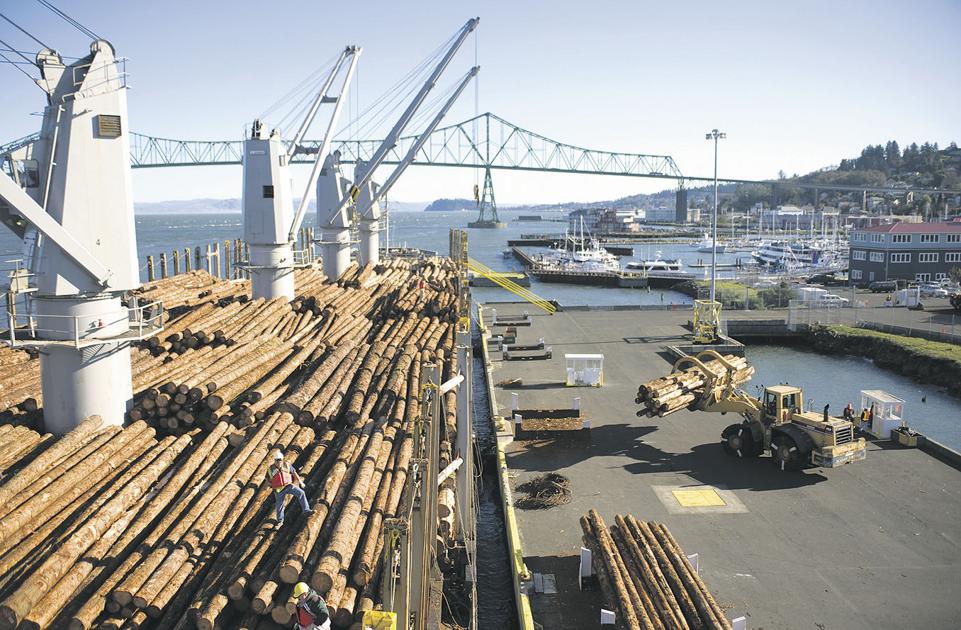
Metsä Wood will cease production at the company's Grangemouth plant in Scotland, according to Falkirk Herald. After 40 jobs were cut last year, another 20 employees will be laid off now, leaving a total staff of only 5 people. There will be no production of any wood or timber-related products at all now, says the the Falkirk Herald. This due to changes in Metsä's business operations and alleged financial difficulties after the company lost a major contract.
A Metsä Wood spokesman said: A rationalisation of the production facilities of Metsa Wood UK is likely to result in the cessation of manufacturing activities at its Grangemouth site. The site would continue to operate as a key distribution hub. This process is under review and employees likely to be affected by such a move are currently involved in a consultation process. The development is part of a strategic review of all the company’s operations within the UK which will maximise efficiency across all products and departments. The objective is to improve profitability and to further strengthen the company’s position for sustained growth in a challenging market place. The proposal is to cease all production at Grangemouth, whilst retaining a distribution hub which will be key to ongoing UK operations. Should the proposal go ahead it would result in the loss of approximately 20 to 22 job roles from Operations at the site.
Last week, Metsä already announced that the company's production of sawn timber might have to be restricted during the remainder of the year. The reason seems to be a weak trend in construction in the company's main markets in Europe which decreases demand for wood products.
Greenpeace tracks illegal timber shipment coming from Brazil's Amazon to Europe

On Thursday, in the waters outside of a Rotterdam port, Greenpeace activists claim to have been tracking illegally sourced timber arriving from the Brazilian Amazon. The activists, says Greenpeace, confronted a French flagged ship coming from a 'sawmill dealing illegal timber destined for European market'. Carrying banners that read, "Amazon Forest Crime" activists followed the ship as it entered the port to unload its cargo.
Greenpeace claims that its investigations show the ship is carrying containers with wood known as Ipe, to be unloaded and transported later to Belgium. Greenpeace says that containers are destined for the timber trading companies "Lemahieu" and "Omniplex". Greenpeace claims that this timber is sold to them by another company in Belgium, "Leary Forest Products", on behalf of Brazilian sawmill and exporter "Rainbow Trading".
Greenpeace says that Rainbow Trading is the same sawmill exposed just a few weeks ago for trading in illegally logged timber in the Amazon. Greenpeace research shows this is the third time in the past month that Rainbow Trading's timber is coming to Europe.
Greenpeace tracks illegal timber shipment coming from Brazil’s Amazon to Europe
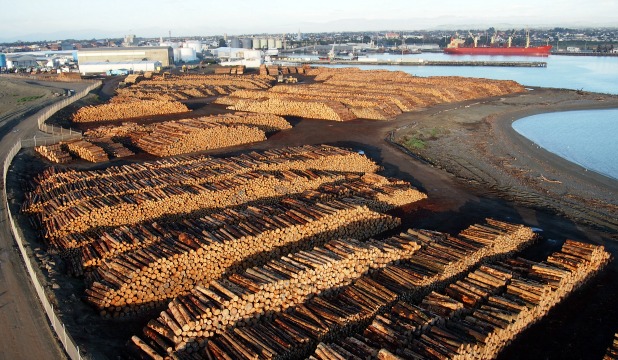
On Thursday, in the waters outside of a Rotterdam port, Greenpeace activists claim to have been tracking illegally sourced timber arriving from the Brazilian Amazon. The activists, says Greenpeace, confronted a French flagged ship coming from a 'sawmill dealing illegal timber destined for European market'. Carrying banners that read, "Amazon Forest Crime" activists followed the ship as it entered the port to unload its cargo.
Greenpeace claims that its investigations show the ship is carrying containers with wood known as Ipe, to be unloaded and transported later to Belgium. Greenpeace says that containers are destined for the timber trading companies "Lemahieu" and "Omniplex". Greenpeace claims that this timber is sold to them by another company in Belgium, "Leary Forest Products", on behalf of Brazilian sawmill and exporter "Rainbow Trading".
Greenpeace says that Rainbow Trading is the same sawmill exposed just a few weeks ago for trading in illegally logged timber in the Amazon. Greenpeace research shows this is the third time in the past month that Rainbow Trading's timber is coming to Europe.

