
Article archive

Metsä Wood cuts 48 jobs at LVL and plywood mills

Metsä Wood completed the statutory labour negotiations to implement a new target organisation model at all of its Kerto® LVL and plywood mills. As a result, Metsä will reduce personnel by 48 people. The personnel reductions will mainly be implemented during the first quarter of 2016, the company announced.

The negotiations started in November 2015 as part of the performance improvement programme announced in late 2014. The programme aims for further improvements in production in line with the company’s industrial efficiency strategy and for increased labour flexibility at its production units in Finland. Metsä Wood’s sawmills introduced the new target organisation model during 2015 and the new salary system on January 1, 2016.

As a result of the negotiations, altogether 48 people will leave the organisation. The personnel reductions will mainly be implemented during the first quarter of 2016.
Back in the summer of 2014, Metsä announced a reduction in LVL production at its Kerto mills, as a result of the prolonged and strong decline in the construction industry which continued in Finland and Europe. Therefore, demand for Kerto LVL has been weaker than expected, as Metsä announced in August 2014.
​Metsä Wood's Kerto is a laminated veneer lumber (LVL) product used in all types of construction projects, from new buildings to renovation and repair. Kerto is produced from 3 mm thick, rotary-peeled softwood veneers that are glued together to form a continuous sheet. The sheet is cut to length and sawn into beams, planks or panels in according to customer´s requirements. ​Metsä's Kerto products are CE marked and certified by VTT Technical Research Centre of Finland.
[gravityform id="1" title="true" description="true"]

The Recarbonisation Revolution: A multi-billion opportunity for the forest industry

A new Point of View by Pöyry calls for a recarbonisation revolution of global material flows, representing a multi-billion Euro business opportunity for the forest industry.

Moving just 1% of global business in packaging, plastics and fossil based material flows would equate to roughly 40 billion Euros in annual revenue for the sustainable economy, whilst also helping the world tackle climate change.
This special Point of View details the convergence of climate change and technological innovation in bio materials, such as lignin, sugar, nanocellulose and graphene. The transition from pure fossil based materials to biobased ones will lock carbon in the value chain in a sustainable loop. Given the size of the materials market, such as packaging and plastics, even small transitions to biobased composites will yield significant revenue for the forest industry and lock carbon in the materials cycle.
The report applies a modest 1% transition to some core markets:

  • Packaging: Moving 1% of the packaging market from fossil plastics to biopackaging equates to 6 billion Euros in turnover.
  • Plastics: Moving 1% from fossil plastics to bioplastics equates to about 3.5 billion Euros of new biobusiness.
  • Material Flow: Substitute 1% of the global volume of fossil fuels with biomass, and process that biomass further in the forest industry would equate to roughly 30 billion Euros of annual new biobusiness.

In the wake of climate change issues, new developments in technology and materials sciences have converged to make the 'recarbonisation revolution' necessary and possible.
While quantifying the exact benefits of bio-based solutions and recarbonisation is complicated, a renewable bio-based solution still beats a fossil-fuel-based one. The carbon in recarbonised flows is CO2-neutral as part of a closed loop as long as the loop functions well. For example, eliminating plastic bags globally would reduce the equivalent of the UK’s total annual CO2 emissions by 5%.

"Recarbonisation is already a global business with a turnover in the tens of billions of Euros and major players across the globe. There is room for many winners in the recarbonisation revolution as companies are only now organising the complex value chains," said Petri Vasara, head of Biofutures at Pöyry and author of the report.

Four material platforms stand out as examples of the possibilities of recarbonisation: lignin, sugar, nanocellulose and graphene. The first three are carbon-based and graphene is pure carbon. Together they have the potential to radically change the materials world. When lignin, sugar, nanocellulose and graphene are mixed with each other and/or other materials into biocomposites, there is a great deal of possibilities in materials production.
Read the full report here
[gravityform id="1" title="true" description="true"]

Chinese wood flooring producers implement Välinge's locking systems

Välinge has entered into a global non-exclusive license agreement with four Chinese companies. The agreement entitles the companies to use Välinge’s locking systems for both the long side and the short side of their flooring products.
The Chinese companies Huzhou Jie Chen Decorative Materials Co., Ltd., Zhejiang Jie Chen Wood Co., Ltd., Huzhou Chen Hang Wood Co., Ltd. and Huzhou Yitong Decorative Material Co., Ltd. are all owned by the same family.
After thorough evaluation of available options on the market, the companies decided to choose Välinge’s locking system for their products.
With the new license agreement in place, all the Huzhou located plants will start to produce flooring with Välinge’s 2G system on the long side and the 5G®-C system on the short side for fast and strong installation.

About the companies

Huzhou Jie Chen Decorative Materials is a manufacturer of high-end laminate flooring, with production plant in Huzhou.
Zhejiang Jie Chen Wood is a manufacturer of engineered wood flooring and HDF boards, with production plant in Huzhou.
Huzhou Chen Hang Wood is a manufacturer of engineered wood flooring, with production plant in Huzhou.
Huzhou Yitong Decorative Material is a manufacturer of WPC flooring (real wood veneer on a WPC core), with production plant in Huzhou.
 

[gravityform id="1" title="true" description="true"]
Chinese wood flooring producers implement Välinge’s locking systems

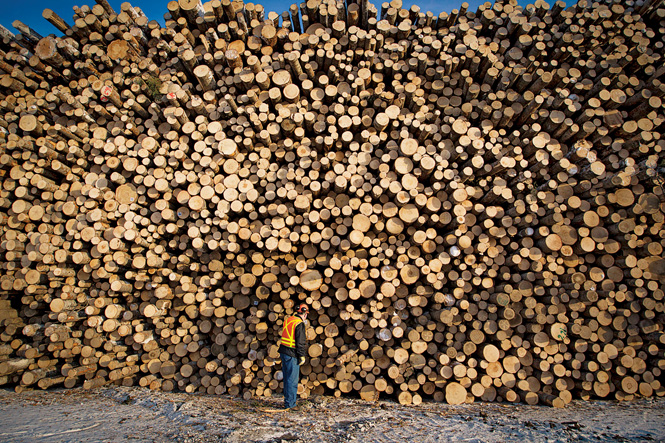
Välinge has entered into a global non-exclusive license agreement with four Chinese companies. The agreement entitles the companies to use Välinge’s locking systems for both the long side and the short side of their flooring products.

The Chinese companies Huzhou Jie Chen Decorative Materials Co., Ltd., Zhejiang Jie Chen Wood Co., Ltd., Huzhou Chen Hang Wood Co., Ltd. and Huzhou Yitong Decorative Material Co., Ltd. are all owned by the same family.

After thorough evaluation of available options on the market, the companies decided to choose Välinge’s locking system for their products.

With the new license agreement in place, all the Huzhou located plants will start to produce flooring with Välinge’s 2G system on the long side and the 5G®-C system on the short side for fast and strong installation.

About the companies

Huzhou Jie Chen Decorative Materials is a manufacturer of high-end laminate flooring, with production plant in Huzhou.

Zhejiang Jie Chen Wood is a manufacturer of engineered wood flooring and HDF boards, with production plant in Huzhou.

Huzhou Chen Hang Wood is a manufacturer of engineered wood flooring, with production plant in Huzhou.

Huzhou Yitong Decorative Material is a manufacturer of WPC flooring (real wood veneer on a WPC core), with production plant in Huzhou.


[gravityform id="1" title="true" description="true"]

Canadian forest industry outlook for 2016

The Trans-Pacific Partnership will be the main focus point for the Canadian forest industry in 2016. Since the Softwood Lumber Agreement has left a void which affects lumber producers from Canada regarding the potential anti-dumping duties in the US, the discussion on the TPP will have to resolve this issue too.
Although there is a decrease in wood demand in China, the production and export of BC lumber has a slightly better forecast in 2016.
China represented a hope for the lumber market used in construction, which had suffered a great loss in value after the American housing market began to drop in 2009. Still, BC had plenty of lumber since a beetle infestation killed almost half of the harvestable timber. Now, that extra lumber has almost been used up and the decrease in China’s economy is reducing the demand.

“It’s the first time I’ve come away and everybody we talked to was negative, not just for the three to six months period, but for all of next year. It won’t be improving next year, is what we are hearing,” Russ Taylor, president of International Wood Markets Group Inc. said, after visiting China approximately 25 times since 2000.

Taylor added that housing starts in China have decreased by 14%. This means that BC has to find other markets to sell its low value lumber.
“We are looking at continuing the work of diversifying our markets,” said Susan Yurkovich, CEO of the Council of Forest Industries. “TPP is helpful in that regard, and we’re looking at continuing to diversify into other markets – Asia, China, Korea, Japan, also a little bit of work [is] underway exploring the market in India,” she added.
Now, even if China’s economy slowed down, BC can profit from the development of the US market, which has begun to grow after 10 years of decay. Thus, the US housing market is expected to reach a 1.1 million new housing starts in 2016, an important increase from the one million reached in 2015. Still, the prices for lumber in the US are lower because the currencies in Canada or Sweden are lower compared with the US greenback.
Even if the housing market in the US will grow, this won’t mean that the Canadian sawmills in BC and Quebec will earn big money, since the production of harvestable lumber has decreased. This lower supply of timber will cause lower production of lumber, but also higher prices.
Taylor said that  “The U.S. housing market is still growing. In fact it’s going to be growing for the next five years. The question we keep asking is, ‘Where will the U.S. be getting its lumber?’ Because it’s not going to be from Canada. We’re forecasting lower exports to China and more exports to the U.S. market because of the fact we don’t have that low-value wood.”
Some reports say that the Canadian softwood lumber producers aren’t able to flood the US market with cheap wood anymore and so the softwood lumber agreement shouldn’t be of such significant importance. Still, Canadians mills will be lucky when selling lumber to the US, because they have a low Canadian dollar.
We are hopeful that we can find a new agreement with the U.S.,” Yurkovich said, “but if we don’t, we would also prepare for the litigation that might follow,”  she said regarding the issue that protectionist actions might happen and that the new Liberal government should work out an agreement with the US to prevent it.
 
[gravityform id="1" title="true" description="true"]


2016 could bring a new financial crisis, warns economist

The City of London’s most vocal “bear” has warned that the world is heading for a financial crisis as severe as the crash of 2008-09 that could prompt the collapse of the eurozone.

Albert Edwards, strategist at the bank Société Générale, said the west was about to be hit by a wave of deflation from emerging market economies and that central banks were unaware of the disaster about to hit them. His comments came as analysts at Royal Bank of Scotland urged investors to “sell everything ahead of an imminent stock market crash.

“Developments in the global economy will push the US back into recession,” Edwards told an investment conference in London. “The financial crisis will reawaken. It will be every bit as bad as in 2008-09 and it will turn very ugly indeed.”

Fears of a second serious financial crisis within a decade have been heightened by the turbulence in markets since the start of the year. Share prices have fallen rapidly and a slump in the cost of oil has left Brent crude trading at barely above $30 a barrel.

“Can it get any worse? Of course it can,” said Edwards, the most prominent of the stock market bears – the terms for analysts who think shares are overvalued and will fall in price. “Emerging market currencies are still in freefall.

FULL ARTICLE

[gravityform id="1" title="true" description="true"]

Sweden: Rörvik Timber closes two sawmills

Swedish company Rörvik Timber decided to close down its Sandsjöfors and Tvärskog sawmills, due to low business outcome and high prices for their products. This decision comes after the sawmills have had big losses for some years now and the measures taken to improve this issue haven’t brought any profit.
Around 43 people will be affected in Tvärskog, while another 38 people in Sandsjöfors will lose their jobs, as the negotiations with the trade unions are already taking place.

Per Rodert, managing director of Rörvik Timber states that "in southern Sweden there are many sawmills. In order to achieve a better balance between levels of production and availability of raw materials it will be necessary to resort to further restructuring. To achieve long-term competitiveness of sawmills, we must concentrate on fewer units.”

Rörvik Timber Group owns another five sawmills.
Meanwhile, the investment and the development of the Linghem sawmill are going on according to the established plans. The sawing line has already been installed and will be ready to function starting March 1, 2016.
Rörvik invested almost 25 million kronor by the end of 2015, to increase drying capacity and flexibility for sawing pine and spruce. Once the Sandsjöfors will be closed, Rörvik will have to handle its customers.
The Swedish market will have a positive outcome in 2016, according to the estimates made by Rörvik, but the sale of the Swedish sawmills in main markets from North Africa and the Middle East will still be very weak.
 
[gravityform id="1" title="true" description="true"]

EU: Overview of tropical wood flooring imports

Total EU imports of wood flooring from tropical countries were practically unchanged (+1% to 3.327 million sq.m) in the first nine months of 2015. However import trends varied widely between European countries. Most notably imports into France increased 32.9% to 760,784 sq..m, a gain offset by a 38.3% decline to 407,264 sq.m in imports by Belgium. According to ITTO, these trends are more likely due to alterations in distribution networks for wood flooring in north-western Europe than to any significant change in consumption levels.
Tropical_flooring_imports_EUThe European Federation of the Parquet Industry (FEP) reports that wood flooring sales in France were merely stable in the first nine months of this year; an increase in sales by around 3% in the first few months was followed by a satisfactory second and a weaker third quarter.
FEP also reports stable sales and consumption of wood flooring in Belgium in the first nine months of this year. UK imports of wood flooring from tropical countries increased 8.2% to 430,659 sq.m in the first nine months of 2015. This aligns with FEP estimates that overall wood flooring sales in the UK increased by around 5% in the first nine months of this year, ITTO reports.
Italian imports of wood flooring from tropical countries were stable at 330,829 sq.m in the first nine months of 2015, also in line with FEP estimates of stable overall wood flooring consumption in Italy.
Imports of wood flooring from tropical countries into Germany declined 12.2% to 323,661 sq.m in the first nine months of 2015. FEP reports that luxury vinyl tiles (LVT) remain a strong competitor to wood flooring assortments in this market. However, the total market for wood flooring in Germany appears to be performing better than the tropical wood segment. FEP records stable sales of all wood flooring in Germany in the first nine months of 2015. The German market continues to see a strong trend of using oak in both flooring and furniture.
In the Netherlands, recovery in the building sector is reflected in a 42.6% increase in imports (to 295,344 sq.m) of wood flooring from tropical countries in the first nine months of 2015. Unlike Germany, imports of wood flooring in the Netherlands from tropical countries increased more rapidly than overall demand. FEP records no more than a 2% increase in overall wood flooring sales in the Netherlands during the period. However FEP confirms that the Dutch housing market has “a better outlook than in the last seven years”.
Sweden (+66.4% to 255,746 sq.m) and Spain (+18.5% to 186,178m2) also registered significant increases in wood flooring imports from tropical countries in the first nine months of 2015, although from a very small base.
In contrast, imports declined sharply into Denmark (- 29.1% to 139,810 sq.m) and Poland (-51.5% to 50,486 sq.m), despite FEP reporting a slightly positive development in overall wood flooring sales in both countries during the same period.
 
[gravityform id="1" title="true" description="true"]

RWE sells UK-based Lynemouth power plant to Czech company

RWE Supply & Trading GmbH has reached an agreement on the sale of Lynemouth Power Limited (Lynemouth Power), which is operating Lynemouth power station, to EP UK Investments Limited (EP UK), a subsidiary of Energetický a prumyslový holding (EPH), a leading Central European energy group.
Lynemouth Power operates a 420 MW (gross capacity) coal fired station in the north east of the UK and has been working with contractors to design a technical solution for a full conversion of the power plant to run on biomass. Lynemouth Power received clearance from the European Commission on 1st December 2015 for its supporting Investment Contract (Contract for Difference) from the UK government.
Once the conversion is complete, the Lynemouth facility will have the capacity to generate 420 MW of electricity from wood pellets. The U.K. government intends to support the project in the form of a premium paid on top of the market price of the electricity generated, known as a Contract for Difference (CfD). The project will receive aid until 2027 and, according to U.K. estimates, will generate about 2.3 TWh of low-carbon electricity per year. The plant is due to use approximately 1.5 million metric tons of wood pellets per year, mainly sourced from the U.S., Canada and Europe.
On Dec. 22, the Lynemouth facility announced it had burnt its last coal.

“The ending of coal burn is undoubtedly a significant event in the stations 43 year history, Lynemouth has a tremendous workforce and we now look forward to an exciting future with the conversion to biomass generation,” said Vaun Campbell, managing director of the facility, in a statement released Dec. 22.

About EPH
EPH is a leading Central European energy group operating mainly in the Czech Republic, Slovakia, Germany, Italy, UK, Hungary and Poland. It is a vertically integrated energy utility covering the complete value chain in the energy sector. It includes 40 companies operating in coal extraction, electricity and heat production from conventional and renewable sources, electricity and heat distribution, electricity and gas trading and supply to end users.

Turkey's wood processing companies banned in Russia

After Turkey has brought down a Russian airplane last year in November, Russia issued last week a list of sanctions which will ban some Turkish companies to develop their activities in Russia. The Russian government says that the sanctions commenced on January 1.
According to RT, the Turkish companies will be forbidden to “construct bulidings, work in architecture and design” and they won’t be allowed to work in hotel and travel businesses in Russia. The ban also affects the companies that work in forestry and timber processing.
Still, the list of sanctions won’t be applied to contracts which were concluded before the regulation entered into force.
[gravityform id="1" title="true" description="true"]

Turkey’s wood processing companies banned in Russia

After Turkey has brought down a Russian airplane last year in November, Russia issued last week a list of sanctions which will ban some Turkish companies to develop their activities in Russia. The Russian government says that the sanctions commenced on January 1.

According to RT, the Turkish companies will be forbidden to “construct bulidings, work in architecture and design” and they won’t be allowed to work in hotel and travel businesses in Russia. The ban also affects the companies that work in forestry and timber processing.

Still, the list of sanctions won’t be applied to contracts which were concluded before the regulation entered into force.

[gravityform id="1" title="true" description="true"]

Infographic: No improvements in Austrian wood pellets price

The retail price for wood pellets in Austria has slightly lowered in December 2015, as compared to the same month of 2014. Wood pellets are now sold at a -6,6% lower value over December 2014. Thus, the average price for pellets with six tones delivery volume was 230,9 euros per tonne, which shows a price increase of 0,3% from November 2015.
Nevertheless, wood pellets in Austria are way cheaper than extra light heating oil, showing a price advantage of 24,8%, and even cheaper than natural gas, with 43,8% price advantage. Showing an increase of 0,5% since November 2014 and a decrease of -0,4% since December 2014, the price is 3.90€ for a 15 kg sack if ordered by the pallet.

Austriapellet
Create your own infographics

Austria's Binderholz Group acquires Vapo Timber in Finland

The Austrian Binderholz Group is acquiring 100% of shares in Vapo Timber Oy from Vapo Oy and thus also the two sawmills operated by the company in Lieksa and Nurmes at the start of January 2016. The two sites are located in the North Karelia region (Central Eastern Finland) and recently produced 400,000 m³ of dimension lumber per year with around 100 employees, all of whom have been taken over.
Binderholz is thus expanding the cutting capacity of its sawmills from the current 1.75 million to 2.55 million cubic metres per year. Apart from the volume of spruce and pine raw materials, major factors for the decision to purchase the two sawmills include the fact that they both have a good technical basis and there is also sufficient room for expansion with future investments, Binderholz stated.

Facts and figures on the sawmills Lieska Nurmes
Type of wood Spruce Pine
Cutting capacity (2-shift operation) in cubic metres 500,000 400,000
Drying capacity in m³ 250,000 200,000
Operating area in ha 100 28

 
Finnish Harvestia Oy guarantees the supply of timber, including logging and logging logistics. The company has an annual yield of 2.5 million cubic metres and supplies a pulp mill as well as the sawmills. The majority of the timber comes from Finland, with smaller volumes from Russia.
The purchase agreement was recently signed and is subject to approval by the relevant supervisory authorities. Both sides agreed to maintain confidentiality about the purchase price. The deal is expected to be closed during January.
As Binderholz states, the move is of great importance for the Austrian company, as it opens up new dimensions in terms of the quality of its machined products. At the same time, the deal enables the company to reach new milestones with regard to the addition of new high-quality products and also enter new markets. A considerable amount of dimension lumber is processed into solid edge-glued products at the company's Austrian and Bavarian sites.
Binderholz will also continue to practise its successful approach at these sites, particularly with regard to its range of dimensions, high-grade products, worldwide sales and distribution, and proximity to customers, coupled with the versatility it offers. Initially both sawmills will be technically improved followed by investment in processing and real net output ratio. Both sawmills will operate under the name Binderholz Nordic from the date of the corporate takeover onwards. The company will be organisationally integrated into the Binder Group and the management, and also its markets and products, will be restructured.
The turnover of the Binderholz Group will increase by around €100 million in 2016 as a result of the acquisition, totalling €500 million Group-wide.
The Group has a processing rate of 80%. Over 850,000 m³ of dimension lumber is processed into finished products. The Binderholz Group considers there to be excellent potential growth in the timber construction sector, which is becoming increasingly attractive.

Austria’s Binderholz Group acquires Vapo Timber in Finland

The Austrian Binderholz Group is acquiring 100% of shares in Vapo Timber Oy from Vapo Oy and thus also the two sawmills operated by the company in Lieksa and Nurmes at the start of January 2016. The two sites are located in the North Karelia region (Central Eastern Finland) and recently produced 400,000 m³ of dimension lumber per year with around 100 employees, all of whom have been taken over.

Binderholz is thus expanding the cutting capacity of its sawmills from the current 1.75 million to 2.55 million cubic metres per year. Apart from the volume of spruce and pine raw materials, major factors for the decision to purchase the two sawmills include the fact that they both have a good technical basis and there is also sufficient room for expansion with future investments, Binderholz stated.

Facts and figures on the sawmills Lieska Nurmes
Type of wood Spruce Pine
Cutting capacity (2-shift operation) in cubic metres 500,000 400,000
Drying capacity in m³ 250,000 200,000
Operating area in ha 100 28


Finnish Harvestia Oy guarantees the supply of timber, including logging and logging logistics. The company has an annual yield of 2.5 million cubic metres and supplies a pulp mill as well as the sawmills. The majority of the timber comes from Finland, with smaller volumes from Russia.

The purchase agreement was recently signed and is subject to approval by the relevant supervisory authorities. Both sides agreed to maintain confidentiality about the purchase price. The deal is expected to be closed during January.

As Binderholz states, the move is of great importance for the Austrian company, as it opens up new dimensions in terms of the quality of its machined products. At the same time, the deal enables the company to reach new milestones with regard to the addition of new high-quality products and also enter new markets. A considerable amount of dimension lumber is processed into solid edge-glued products at the company's Austrian and Bavarian sites.

Binderholz will also continue to practise its successful approach at these sites, particularly with regard to its range of dimensions, high-grade products, worldwide sales and distribution, and proximity to customers, coupled with the versatility it offers. Initially both sawmills will be technically improved followed by investment in processing and real net output ratio. Both sawmills will operate under the name Binderholz Nordic from the date of the corporate takeover onwards. The company will be organisationally integrated into the Binder Group and the management, and also its markets and products, will be restructured.

The turnover of the Binderholz Group will increase by around €100 million in 2016 as a result of the acquisition, totalling €500 million Group-wide.

The Group has a processing rate of 80%. Over 850,000 m³ of dimension lumber is processed into finished products. The Binderholz Group considers there to be excellent potential growth in the timber construction sector, which is becoming increasingly attractive.

Skanska to rebuild Östrand pulp mill for SCA

Skanska has signed an agreement with SCA to undertake a comprehensive refurbishment and extension of the pulp mill Östrand in Timrå, Sweden. The contract value is SEK 360 million (EUR 39.9 million).
The expansion includes new drying machine, operations center, and media paths while the rebuild and extension comprises of causticize, recovery boiler and turbine, and various ground works. The project is part of SCA's investments to double the capacity of the plant.
Construction is scheduled to begin in the 1Q 2016 and the project is expected to be completed in May 2018.
Skanska Sweden is one of Sweden’s largest construction companies, with operations in building and civil-engineering construction.
About SCA's Östrand mill
The Östrand pulp mill, in Timrå, produces 425,000 tons totally chlorine free (TCF) bleached kraft pulp. About half of the plant’s production is used for SCA’s own manufacturing of publication papers and hygiene products and the remaining volume is sold to external customers.
The plant also produces 95,000 tons chemical thermo-mechanical pulp for hygiene, packaging and other products.

Italian woodworking machinery industry up sharply in 2015

The Italian woodworking technology and wood-based materials industry keeps showing encouraging trends: preliminary figures for the current year speak for themselves, showing a fully positive sign for all major indexes, reported the Italian woodworking machinery and tools manufacturers’ association Acimall
The analysis carried out by the Studies office of the Confindustria-member association gathering the industry's leading companies provides a brighter picture than many were expecting. And compared to the recent past, satisfaction comes from the domestic market, a trend that might bring even more significant “surprises” in 2016.
Clear signs of growth for the Italian woodworking machinery industry
Production has increased to Euro 1,790 million, 7.2% more than Euro 1,669 million in 2014, when the industry had already achieved an excellent increase by 8.6% over 2013. The trend towards the restoration of pre-crisis levels (in 2008 the Italian industry turnover exceeded Euro 2 billion) is clear and consistent. Export remains the key strength of the Italian technology: in 2015 it has increased by 6.8% from 2014. Last year, growth had been slower, namely 5.7% compared to 2013.
Import – accounting for a bit less than 25% of total wood technology investments in Italy – amounted to Euro 152 million, equal to 22.5% compared to 124 million in 2014.
The trade balance has reached Euro 1,188 million (+5%), versus 1,131 in 2014 (+8.3% from 2013). Good trend also on the Italian domestic market, which exceeded Euro 450 million, up by 8.7% from 414 million in 2014, which had been growing by 18.2% compared to 2013. So, also the domestic market is showing a clearly positive trend, as further evidence of the effectiveness of government incentives to investments and a more positive “sentiment” of enterprises, which is encouraging new investments for the renovation or expansion of production assets.

“Although the general scenario is better than in the past, trying to predict the future in this international economic and political phase is hazardous”, said Dario Corbetta, underlining the traditional focus of the association’s Studies office on tangible figures.

“However, there are a few tangible elements that indicate a clear trend. Taking for granted that our companies will continue to be successful in several markets around the world where our technology is a synonym for excellence, during next year we mainly expect an increase in investments in the domestic market, “ said Mr. Corbetta.

Italian Woodworking Machinery Industry
Source: Acimall Studies Office, December 2015

“Two factors feed our optimism: first of all, a new measure by the Italian government will allow companies to apply a 140% depreciation of the value of purchased goods, whereby such depreciation will be evenly distributed across the entire life cycle. This measure will be complemented by the extension of the 50% “furniture bonus” for under-35 couples who buy new furniture, not necessarily related to home renovation. A similar incentive in 2014 –Corbetta concluded – generated furniture sales in excess of Euro 836 million, a level of demand that was a very powerful driver”.
Outlook
In 2016 Acimall’s Studies office is expecting an expansion of the Italian woodworking technology business by 5 to 10%, an encouraging outlook for an industry that currently includes 9 thousand employees and 270 companies, 180 of them associated to Acimall and accounting for 18% of global production. A significant contribution to such growth will come from the next Xylexpo, the biennial international exhibition of woodworking technology and furniture industry supplies, to be held from 24 to 28 May in the FieraMilano-Rho halls.

Global softwood lumber trade close to 9-year high

Despite occasional gloomy reports from the sawmilling industry around the world this year, global softwood lumber trade increased during the first nine months of 2015 as compared to the same period in 2014. It should also be noted that worldwide trade in 2015 will likely reach its highest level since 2006.
North America
Lumber production in North America has been trending upwards ever since the Global Financial Crises (GFC) in 2008 when the lumber market crashed. The biggest production increase during the first eight months of 2015 occurred in Eastern Canada where the region is on pace to reach the highest annual production level since 2007. Lumber prices in the US started to recover in October and November after hitting a 3 1/2 year low in the month of September.
Northern Europe
Both Finland and Sweden have exported more lumber during the first eight months this year than during the same period last year. Export prices, in US dollar terms, have fallen dramatically, making the Nordic lumber producers more competitive in markets trading lumber in US dollars. The Calejo Future Intelligence firm (www.calejo.se) predicts that the BMI Timber Index, an Index which forecasts lumber prices, will decline short-term, followed by an increasing price trend starting in the spring of 2016.
Russia
Softwood lumber exports from Russia fell slightly in the 3Q/15 as compared to the previous quarter, which had the highest quarterly lumber shipments ever recorded. This year is likely to be the third consecutive year with increasing export volumes, predominantly from the eastern provinces in the country. The average export price has fallen dramatically in US dollar terms since early 2014, while prices in Ruble terms have increased by over 20% during the same period.
Japan
During the first nine months of 2015, lumber importation to Japan was eight percent lower than during the same period in 2015. The biggest declines in shipments have been from Sweden, Finland, Chile and Romania. Both domestic and import prices for lumber have been very stable in Yen terms this fall.
China
Lumber import prices to China have fallen during 2014 and 2015, as have import prices. In October this year, average lumber import prices were 25% lower than their peak in September of last year. The biggest price declines have been for lumber imported from Europe, while the price fall for hemlock and Douglas-fir from the US has been quite moderate. It is interesting to note that the Swedish and Finnish sawmills, which are selling into the high-end market in China, have actually been increasing shipments to China the past year.

[gravityform id="1" title="true" description="true"]
Finland aims to double sawn timber shipments to China

Finnish sawmills are seeking for ways to increase their sales in international markets over the next three years. Supporting the internationalization of Finnish companies, Finpro launched a cooperation with the Finnish Sawmills Association regarding an export program, with the aim to double exports of Finnish sawn goods to China.
The name of the program is ''Wood from Finland'' and was funded by the Finnish Ministry of Employment and Economy as well as by part of the Finnish sawmill industry. Under the program, two local experts where already hired, that will help in finding market opportunities and the creation of first contacts. Currently, the Ministry is commited to fund the growth of the program with approximately EUR 700,000. By the end of 2017, the funding may reach EUR 1.3-1.4 million.
''China is a potential target because it is the world's largest furniture manufacturer and exporter. In addition, there is now a new program of the Chinese government, which focuses on the development of environmentally friendly construction, says program manager Jyrki Mantere.
Last year, Finland exported to China more than 400 000 cubic meters of sawn timber, and the number is projected to continue to grow rapidly. Overall, the objective of the program is to increase the export of Finnish sawn timber by 500,000 cubic meters in the coming years.

Indonesia: LVL made of rubber wood

Samko Timber Limited (Jakarta, Indonesia) has developed ‘Heveatec’, which is LVL made of planted rubber wood. Samko plans to market the product in Japan.
The rubber log is peeled by lathe to make 1.7 mm thick veneer, then low molecular phenol resin is impregnated and veneers are pressed with glue under high temperature to make LVL. The orthogonal sheet is inserted in the third layer to make better dimensional stability.
Since resin is impregnated to conducted vessel, it gives high durability and strong resistance to beetle damage. Basic sizes are thickness of 20,25,30 mm, width of 145 mm and length of 2,100, 3,200 and 4,200 mm.
The product is mainly used for exterior structures. Traditionally natural wood like Western red cedar, ipe, ulin and selanagan batu have been used for exterior structures.
Planted rubber trees are cut down after 25 to 30 years when trees no longer yield latex.
Cut down trees are normally used as fuel but using aged rubber trees for LVL is effective utilization.
There are two manufacturing plants in Indonesia of SGS at Jakarta, which manufactures plywood and LVL with 100% planted species like falcate and rubber wood and of PSUT at Jambi, which also manufactures plywood and LVL with rubber wood and MLH.
Production of both plants is 10,000 cbms a month each. Majority of the products are marketed in Indonesia. Total monthly production of ‘Heveatec’ is about 1,500 cbms. Markets are Australia, Taiwan, Malaysia and Japan. Samko is recruiting dealers in Japan to make nationwide network.

Välinge plans additional production capacity

Välinge Innovation has decided to add further capacity for development and production of its powder-based flooring concepts. The new investment includes additional 4,000 sqm to the current R&D center as well as a new production line.
Välinge Innovation’s flooring concepts with the surface technologies Nadura® and Woodura® combine high impact and wear resistance with new design possibilities. According to the company, the demand for these floors from partners around the world has steadily increased. As a result, Välinge has decided to invest in additional production capacity.
The new production line is scheduled to be ready during the first quarter of 2017 and will include equipment for wood surface treatment and also digital printing to maximize flexibility and to facilitate development of new products.
In addition to the new production capacity, Välinge Innovation’s parent company VFT is planning to build an 8,000 sqm facility. The new facility will be used as a warehouse for the company’s online sales and for production of specialized floorings.
The new investments are likely to generate approximately 50 new job opportunities within warehousing, production, development and sales.

Newsletter

Subscribe to our digital newsletter for your daily digest of essential news, views and analysis from the international wood industry delivered directly to your inbox.


0