

The Deep and Comprehensive Free Trade Area (DCFTA) will be applied by the European Union and Ukraine starting January 2016. The DCFTA should provide mutually opened markets for food and services both for the EU and Ukraine, as to create opportunities for businesses, investors, consumers and citizens, according to the European Organization of the Sawmill Industry (EOS).
At the moment, there is a logs export ban from Ukraine to the EU.
EU Trade Commissioner Mrs Malmström, the Minister of Foreign Affairs of Ukraine, Mr Klimkin and the Minister of Economic Development of the Russian Federation Mr Ulyukayev met on December 21 2015 and discussed about Russia’s affairs on the implementation of the DCFTA. Unfortunately, no political agreements have been reached to find a solution to Russia’s concerns about the the DCFTA between the EU and Ukraine.
Russia did not take further retaliatory measures and the EU Commission advised for further discussions after January 2016, as to manage to find solutions to all specific concerns raised by Russia. These concerns come after President Putin has suspended all Russia's obligations vis-à- vis Ukraine on December 16 2016, including the trade preferences under the Commonwealth of Independent States (CIS) FTA.
As the EOS states, this decree might represent a breach on the part of Russia of the Ministerial agreement from September 2014 on the implementation of Minsk provisions.
[gravityform id="1" title="true" description="true"]
Article archive
Most timber shipments from Peru to the US illegal, says EIA

The Environmental Investigation Agency (EIA) denounces the termination of Rolando Navarro as President of OSINFOR (Organismo de Supervisión de los Recursos Forestales y de Fauna Silvestre) because the Peruvian government wants to hide the illegal timber mafias in the country. The agency has an independent mandate to monitor the legal compliance of timber concessions in Peru
OSINFOR has recently suffered physical attacks on its offices and death threats to its employees.
Peruvian President Humala dismissed Rolando Navarro for having his name involved in a crackdown on illegal timber leaving Peru from Iquitos at the headwaters of the Amazon.
The timber sector in Peru is at least 80% illegal, a thing which affects the Peruvian commitments in international trade agreements.
Julia Urrunaga, EIA’s Peru Program Director said that “by sacking this highly valuable public officer, President Humala seems to be trying to send a message to all the other public servants to not attempt to stop the illegal logging mafia.”
The resolution firing Mr. Navarro occurs following a string of recent actions by OSINFOR, the Peruvian Revenue and Customs Agency (SUNAT), and environmental prosecutors to clamp down on illegal logging, including the seizure of large volumes of timber in the Dominican Republic on Tuesday, January 12.
A massive shipment of Peruvian timber to the United States in currently being held in the U.S. port of Houston. AIMAL (Asociación de Industriales Maderables y Afines de Loreto) and in the Peruvian Exporters Association, (ADEX) are linked to this illegal transport.
OSINFOR also has documents that another shipment to the US contains nearly 71% illegal timber, stolen from the Amazon.
Peru and the United States are bound by a bilateral free trade pact, and expected to sign the Trans Pacific Partnership agreement, which includes Pacific Rim nations, next month.
OSINFOR has fought illegal logging and worked with Peruvian agencies such as SUNAT, the environmental prosecutors (FEMA), the High Commissioner and international groups like Interpol.
The former Peruvian Prime Minister and Ambassador to the Organization of American States (OAS), Juan Jimenez, recently made a statement in Washington to the OAS Committee on Hemispheric Security, praising the efforts of OSINFOR and urging other countries across the Americas to aid in the fight against the illegal timber trade.
[gravityform id="1" title="true" description="true"]
Switzerland: Good 2016 start in wood pellets prices

At the debut of 2016, the price of Swiss wood pellets gained almost 5 francs over December 2015. This increase can be considered as a seasonal one. In January 2016, the average retail price of wood pellets in Switzerland stood at 387 CHF/ per tonne (around EUR 353/t). This is almost 26 CHF lower than the same month of 2015, when the price was 413.5/t.
Depedinding on the purchase quantity, the price varies by between: 399.75 CHF/t for 3 tonnes purchases to 359.01 CHF/t for 17 tonnes purchases.
Price of Swiss pellets (Graph+Table)

| Price of wood pellets in Switzerland (CHF/tonne) | January 2015 | December 2015 | January 2016 |
| 3 tonnes purchase quantity | 427.54 | 395.80 | 399.75 |
| 5 tonnes purchase quantity | 411.71 | 381.29 | 385.93 |
| 8 tonnes purchase quantity | 401.10 | 371.05 | 375.44 |
| Average price | 413.5 | 387.70 | 359.01 |
[gravityform id="1" title="true" description="true"]
U.S. formaldehyde emissions standards to be issued early this year
The national standards developed by the US Environmental Protection Agency (EPA) in 2010 regarding formaldehyde emissions from wood products and based on the California regulation are still unsettled, ITTO reports.
The spring of 2016 comes as a deadline for the EPA to issue the final regulation. Until now, some of the industry groups argued the things stated in the draft released by EPA.
This comes as a result of many tests which proved that the formaldehyde emission levels from wood products are way higher than the California regulation.
One of the cases was that of the laminate flooring products sold by Ark Floors, a smaller importer of Chinese-made flooring, whose formaldehyde emission levels were consistently higher than the standards. Lumber Liquidators, the company that owns Ark Floors, has been already accused of selling flooring with high formaldehyde emissions, according to ITTO.
Moreover, the company that delivered the flooring to Ark Floors had products taken out of Chinese stores in 2012, over the formaldehyde emissions high levels. Now, the testing made oh these products have raisen attention among Americans about the impacts these formaldehyde emissions levels could have on their health.
[gravityform id="1" title="true" description="true"]
CEI-Bois elected new Chairman and Board members
The European Confederation of Woodworking Industries CEI-Bois has elected a new board this month. Anders Ek, President of SCA Timber Supply has been selected as the new Chairman.
Vice-Presidents are Dr. Erich Wiesner, owner and managing director of WIEHAG AG and Vítor Poças, President of the Portuguese Wood and Furniture Industries Association AIMMP.
As a honorary Vice President, Marc Michielsen was elected. Michielsen is Director Government & Regulatory Affairs EMEA at CHEP.
Other members of the board of the CEI-Bois are:
• Bert Kattenbroek, Dutch Association of Carpenters;
• Mathias Schäfer, Managing Director of FingerHaus GmbH; Germany;
• Filip De Jaeger, Secretary Fedustria, Belgium;
• Sampsa Auvinen, President EOS, CEO Norvik Timber, Norway;
• Markku Herrala, UPM Plywood, Finland.
CEI Bois is the European Confederation of Woodworking Industries, representing and defending the interests of the woodworking and furniture industries towards the European Union. The organization includes more than 184,000 companies generating annual sales of EUR 130 billion and employing around 1.1 million workers in EU27.
Stable 2016 outlook for the global forest and paper products sector, says Moody’s
Increasing housing starts and higher consumer spending will drive anticipated operating income growth for the global paper and forest products industry of 1%-3% in 2016, underpinning the current stable outlook for the sector for the next 12 months, says Moody's Investors Service in a report published recently. However, the outlook for the Printing and Writing Paper segment is negative as digital alternatives continue to curb paper demand..
"Our outlook for the global paper and forest products sector over the next year remains within our stable range as increasing home construction and economic growth drive wood product, packaging and market pulp earnings growth in the low single digits in 2016," says Ed Sustar, a Moody's Vice President -- Senior Credit Officer and author of the report.
The outlook for the Paper Packaging and Tissue segment will be stable with operating earnings forecast to grow by 0%-4% on the back of increased packaging demand, driven by modest economic uptick and stable food consumption; and tissue demand, driven by population growth and improving hygiene standards.
Expected improvements to US housing starts will likely prop up end-market demand for timber, lumber, oriented strand board and engineered wood products in 2016, which will in turn support the stable outlook for the Wood Products/Timberland segment. However, lower Chinese infrastructure spending is pressuring North American log and lumber exports. Operating earnings in this sector are expected to grow by between 0%-4% in 2016.
Operating earnings growth for 2016 in the 1%-3% range will support the Market Pulp segment's stable outlook. Prices across most grades (hardwood, softwood, dissolving pulp) will remain flat or decrease as capacity increases outpace demand. As additional pulp capacity comes on-line, inventory management across the fragmented global pulp industry will remain critical to balancing supply and demand.
The outlook for the Printing and Writing Paper segment in 2016 is negative with operating earnings expected to decline by 1%-4% as paper demand in mature North American and European markets is expected to continue to fall by approximately 5% per year for the next several years. This decline is driven by individuals and businesses increasingly turning to digital alternatives, such as tablets and e-readers. Capacity reduction across several paper grades will lead to sustained or improved prices. Fiber, energy and transportation costs will remain flat.
Chinese forest industry increased 2.5 times since 2010

China’s forest industry total output value was RMB 5.81 trillion in 2015. This represents a 2.5 times increase since 2010, ITTO reported.
International trade in wood products was estimated at a value of $140 billion, 1.5 times higher than in 2010. Environmental issues and “green” production in China were the most targeted in this period, as greater developments in the forest economy and tourism, alongside with non-wood forest product, were made.
This sector has rose a lot in e-commerce and marketing over the past 10 years, when the Chinese Twelfth Plant developed a changing forest industry. Now, the proportion of primary, secondary and tertiary forestry industries in China reflect a mix of 33:51:16 (2015) from a proportion of 39:52:9 in 2010.
[gravityform id="1" title="true" description="true"]
Overview of the Finnish forest industry in 2015

Finland’s roundwood sales stagnated in 2015, according to new statistics. The effects of the newly announced investments in the Finnish forest industry will impact the timber market only starting 2016, says the Finnish Forest Industry Federation (FFIF). The most important step to take in 2016 is to counterbalance the growth in demand with wood supply structures. All Finnish forest owners must seek opportunities to grow in the bio-economy sector, says FFIF
The Finnish timber trade started slow at the beginning of 2015. Still, the trade recovered slightly by the end of the year.
The FFIF member companies bought 30.1 million cubic meters of roundwood from Finnish private forest owners, 3% lower than the previous year. Sawlog purchases reached a total of 12.8 million cubic meters, 7% less than 2014. Only pulpwood sales stayed the same as in 2014, with 16.3 million cubic meters sale.
Finnish roundwood prices fell slightly
Pine logs and spruce sawlogs stumpage prices declined 2% in 2015, the birch logs' price remained the same. Moreover, pine pulpwood prices fell by 1% and spruce and birch pulpwood by 2%.
Pine sawlogs reached an average price of 54 euros per cubic meter, ranging between 43 and 57, depending on region. Spruce logs average price was € 54 per cubic meter, ranging between 42 and 56 euro, while the price for birch logs was 42 euros per cubic meter, varying from 34 to 45 euros. Pine and birch pulpwood average stumpage price was 15 euros and spruce pulpwood 17 euros per cubic meter. Pulpwood prices ranged between 10 and 19 euros, depending on region.
New investments will transform the Finnish forest industry
New investments in the Finnish forest industry will impact the Finnish forest industry in an unprecedented way. Growth in wood demand will come up this year, so Finnish forest industry members should not wait. Industrial activity and investment conditions need to be improved, especially domestic wood supply should be strengthened, says FFIF.
Tomi Salo, director of the Finnish Forest Industry Federation, says that “substantial investments in the forest industry will increase the need for timber up to 10 million cubic meters a year. This will require an increase in logging of more than a fifth, even though we are already close in harvesting records.”
[gravityform id="1" title="false" description="true"]
VIDEO: DOMOTEX 2016 opens its doors tomorrow

All signs are already pointing to a winning DOMOTEX 2016 (16 to 19 January) in Hannover, Germany.
"DOMOTEX 2016 will be a strong, international and innovative event. All indicators reveal a very favorable trend," said Dr. Jochen Köckler, the member of the Managing Board at Deutsche Messe in charge of DOMOTEX. "The exhibitors are committed to leveraging DOMOTEX for success in 2016. DOMOTEX plays a pivotal role in the carpet and flooring industry’s annual business calendar, particularly since it’s held at the start of the year," explained Köckler.
Some 1,400 exhibitors from 60 different countries will be heading to Hannover at the outset of 2016 to impress the international carpet and floor coverings industry with their products and new collections.
For the upcoming show, one major visitor magnet is already certain: the Wood Flooring Summit. Staged successfully in 2012 and 2014, this flagship dialogue hub and marketplace for the parquet and laminate flooring industry is entering its third season.
One key difference this year is that it will run alongside the Innovations@DOMOTEX showcase in Hall 9, thus commanding even greater attention. The organizers are expecting a lineup of around 200 exhibitors from the parquet and laminate flooring industry, plus over 180 providers of application and installation technology.
"The 2016 Wood Flooring Summit will feature all the market leaders and cover all the sector’s key product groups: parquet and laminate floor coverings and outdoor flooring," remarked Köckler.
Top innovations will be highlighted in a special, elaborately designed area. There will also be a refreshment and lounge area for networking and business talks.
Some impressions from the 2015 edition (VIDEO)
World's tallest timber building erects in Canada

The University of British Columbia Point Grey Campus in Vancouver will be the site of the tallest mass timber building in the world, with a height of 53 meters and standing at 18-storyes high. Under the name of Brock Commons, the $51.5 million project will be completed in 2017. Also, it will provide room for 404 students and will have 4-bedroom units and a mix of studios, alongside with new academic space.
The building was designed by Acton Ostry Architects, with the help of Hermann Kaufmann, the tall wood adviser and will top Treet, the 50 m and 14-storye residential apartment in Bergen, near Oslo, Norway, which is now the tallest in the world.
Brock Commons will be built using a two-way CLT floor slabs, glulam columns, steel conectors, gypsum board and concrete cones. Tall wood building’s proponents state that a wooden building is way more safer than steel when it comes to fire hazards because charred wooden surfaces protect the structural wood underneath.
Photo:

World’s tallest timber building erects in Canada
The University of British Columbia Point Grey Campus in Vancouver will be the site of the tallest mass timber building in the world, with a height of 53 meters and standing at 18-storyes high. Under the name of Brock Commons, the $51.5 million project will be completed in 2017. Also, it will provide room for 404 students and will have 4-bedroom units and a mix of studios, alongside with new academic space.
The building was designed by Acton Ostry Architects, with the help of Hermann Kaufmann, the tall wood adviser and will top Treet, the 50 m and 14-storye residential apartment in Bergen, near Oslo, Norway, which is now the tallest in the world.
Brock Commons will be built using a two-way CLT floor slabs, glulam columns, steel conectors, gypsum board and concrete cones. Tall wood building’s proponents state that a wooden building is way more safer than steel when it comes to fire hazards because charred wooden surfaces protect the structural wood underneath.
Photo:


Optimistic results for the German furniture industry

The German furniture industry has reached a 5,4% increase in the first ten months of 2015, gaining 14.4 billion euros in sales. For the full year, there is a growth expectation of 5%, according to the German Furniture Indstry VDM. Good conditions are expected in 2016 too.
The development of construction actions will increase as the interest rates are lower and private consumption will probably raise Germany’s economy up to 1.6-2.2%. Still, there is a high import pressure from the East and the Far East and the expectations don’t look so good. The changing global markets have debilitated the German economy and security as in the second half of 2015 the consumption indices were very low, VDM reports.
The German furniture manufacturers foresee a sale increase of only 1% for 2016.
All of the German furniture industry sections announced big sales in the first 10 months of 2015.
The largest section of the industry, the household furniture and other furniture, had a 4.3% rise (5.9 billion euros). Still, only the garden furniture, steel and plastic furniture, small furniture and furniture parts had a significant growth, while classical home furniture had lower sales than in the previous years.
The mattress manufacturers announced a significant turnover of up to 22.1%, to 780 million euros. Moreover, the office furniture section had a 1.7 billion euros growth, 1.6% more than in 2015, while the kitchen furniture section rose to 3.8 billion euros growth in sales, up to 6.1%, during January-October 2015. Upholstered furniture German manufacturers stated big sales for this sector, up to 2.9% (870 million euros).
Regarding the exports, the data gathered from the first ten months of 2015 showed that the total volume reached 8.4 billion euros, going up by 5.6%. Exports made to the UK went up by 9.2%, while those to Austria went down by -0.2%. In between, the German furniture exports to Switzerland rose by 8.7%, such as Spain and the Netherlands, which grew consistently. Exports to the Netherlands increased by 6.9% and those to Spain went up to 22.4%. Also, exports to France decreased by 1.1%.
Bearing in mind that one third of the German furniture exports goes to non-EU countries, sales in China grew by 3.7% and the ones to the USA went up by 23.9%. Furniture exports to the USA might grow, as favorable exchange rate developments regarding the dollar are expected due to the low interest rate policy from 2016.
Imports to Germany grew by 5.2% and the main suppliers are China, with a 18.2% growth, Czech Republic, whose imports grew by 9.9% and Poland, with a 4.7% increase.
[gravityform id="1" title="true" description="true"]
Bergs Timber doubles impregnated wood capacity
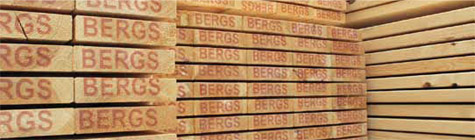
Bergs Timber has decided to expand production of its impregnated wood product Bitus produced at the company's plant in Nybro, Sweden. Bergs Timber applied for a new permit to extend capacity of the plant to 500,000 m3 per year.
"It feels great that we took this decision. We have a modern facility with a capacity exceeding 250, 000 m3 and with an infrastructure that allows us to expand capacity. In order to reach the new permit's level of production, only a minor investment is required. We have gradually increased production in recent years and now we think that we can further extend it ," says CEO Peter Nilsson.
The market for processed wood products is increasing steadily, which is the basis for Bergs Timber's decision. The company delivers wood processed products mainly to Scandinavia, UK and France, but several new markets arise for the company, for example in North Africa.
[gravityform id="1" title="true" description="true"]
UPM inaugurates the expansion of Kymi pulp mill

UPM inaugurated its newly revamped Kymi pulp mill in Kuusankoski following a EUR 160 million investment in production expansion. Finland's Prime Minister Juha Sipilä officiated the proceedings by signing the charter together with UPM President and CEO Jussi Pesonen.
UPM invested EUR 160 million in the Kymi pulp mill to strengthen its position in the growing end-use segments of the global pulp market. As the result of this investment, annual production capacity at the Kymi mill will increase by 170,000 tonnes to 700,000 tonnes of bleached northern softwood and birch pulp.
The Kymi project was started in February 2014 and completed by the end of 2015. The new debarking plant started operation in June and the modernised softwood fibre line was commissioned in August along with new pulp drying machine, which was the largest single investment in the project. Other improvements made last summer include the expansion of the wood yard and the introduction of a new railway and wagon-loading system.
In his speech, Jussi Pesonen thanked the project team and all of the Kymi personnel, suppliers and partners for an excellent achievement.
"The construction of a competitive forest industry mill complex requires perseverance, and Kymi has maintained its competitiveness through operational efficiency and investments. In the past ten years, UPM has invested approximately EUR 550 million in the Kymi pulp mill and so far in the 21st century over EUR 900 million in total in the Kymi mill region," said Jussi Pesonen.
Looking to the future competitiveness of the Finnish forest industry, Pesonen emphasised the significant impact of the operating environment and the role of the government. The government must keep its promise not to increase costs for the industry through political decisions, he said. The labour market furthermore needs to be able to negotiate local agreements in order to ensure operational efficiency and delivery reliability to customers in varying demand situations. In addition, Pesonen highlighted the importance of an efficient wood supply chain and measures to ensure a stable wood supply from private forest owners.
[gravityform id="1" title="true" description="true"]
Overproduction and Asia- problems for the N. American lumber market

In WOOD MARKETS’ new five-year forecast, the short-term outlook is that North American and global economies, as well as softwood lumber and panel markets, are all forecast to improve, but at a much slower pace than has been expected. What has also short-circuited the prospects of stronger demand is a slowdown in China and Japan, impacting export markets. And the new wildcard that caused U.S. dollar prices to plunge in 2015, especially in softwood lumber, was the rapid currency devaluations of almost all major lumber producers as compared to the U.S. dollar. All of these factors have changed the WOOD MARKETS outlook to one that expects more lacklustre demand and corresponding price growth through 2018. After that, it starts to look very good!
The supply-side dynamics feature eroding sustainable timber harvests in key provinces in Canada, resulting in dramatically lower lumber production than in the previous decade. Canada’s total lumber output will start to flatten out by 2018 with no further increases expected – just as U.S. and global demand are expected to gain momentum.

On the U.S. side, the U.S. West Coast region continues to watch log export prices in China and Japan, as many domestic log prices are correlated with export prices – this can quickly tighten the wood supply for sawmills and plywood mills as export prices rise. The U.S. South is forecast to be the only region where any significant lumber and panel production will occur, mainly due its ample, under-utilized timberland base of southern yellow pine. As lumber and panel demand increases, it is forecast that the current depressed log prices will start to move higher to feed incremental wood consumption of the expected additional panel and sawmill production.
On the demand-side, the key U.S. market has had some steady growth in the repair and remodeling and industrial sectors, but it has been the slow and steady pace of the new residential housing construction market segment that has underwhelmed lumber and OSB producers. U.S. housing starts have been growing annually at only 10-15% the last two years (reaching 1.12-1.14 million starts in 2015), but from very low levels. There is still a long way to go to get back to a more normal level of 1.5 million housing starts, so there is still some huge upside. It seems that a structural change has been occurring in the U.S. housing market that will take much of this decade before a “new normal” result emerges.
The potential of a “supply gap” in North America is still considered to be real and is forecast, but is pushed out towards 2019. WOOD MARKETS’s expects that rising wood products demand will trigger much higher lumber prices so as to attract more log and/or lumber supply to the market – this includes European lumber exports to the U.S. market. European exports are expected to increase as U.S. lumber prices eventually move higher as a result of stronger demand and tighter wood supplies starting about 2019 and they could reach at least half of their previous peak (achieved in 2005) by the end of the decade.
The five-year forecasts in WOOD MARKETS 2016 explore the evolving recovery of U.S. and Canadian lumber and wood panel markets, including international developments.
Trends in North American lumber market:
- Lumber output in the B.C. Interior will start to decline about 2017 after being relatively constant since 2011 at near 11 billion bf.
- Eastern Canada (Ontario, Quebec and the Maritimes) has seen lumber production increase by 2 billion bf since 2009 and output should expand by another 1.5 billion bf by 2020 before it flattens out.
- The U.S. West lumber output should increase slowly but steadily (2% per year) as log exports to China and Japan interfere with log supplies and prices.
- In the U.S. South, lumber production will see the fastest growth rate in North America, but there needs to be a lot more sawmill capacity added to this region to make up the slack from other regions.
- The role of lumber exports to China and Asia had pulled excess lumber from North America, but it is expected that China’s slowdown will now limit exports and cause an over-supply in the U.S. market.
- With U.S. housing starts set to rebound towards the long-term level of 1.5 million starts by the end of the decade, and Chinese construction and European markets expected to rebound slowly, steady increases in global log and lumber demand are expected with the prospects of much higher lumber prices by 2019.
- Five-year forecasts of OSB and plywood also see a prolonged period of demand growth, but without the sustained price increases forecast for lumber. Market volatility will continue, especially for OSB as previously curtailed mills gradually re-enter the market – this sequence of mill restarts will have much more impact on prices than overall demand.
- For the MDF and particleboard sector, steady demand is expected, but MDF prices are expected to be under steady pressure from lower price imports.
- In fact, the devaluation of all major currencies against the U.S. dollar is expected to limit any price increases from occurring in 2016 – not good news for U.S. mills!
While there is expected to be a steady tightening of the global softwood timber supply base, slow demand growth continues to prevent the potential of any shortages from appearing. However, there is still a very possible supply gap in timber and sawmill capacity that can occur, especially in North America, that could drive prices much higher. However, the pace of demand is still the limiting factor, but it is possible to see the first signs of a major supply imbalance by 2019 – still a long way out as a result of the conservative WOOD MARKETS demand forecast.
Source: Wood Markets
[gravityform id="1" title="true" description="true"]
Chinese efforts to resume logs trade with Myanmar, rejected
Myanmar has signed an MoU with China as to enable them the trading and cultivating of timber. Yet, the Myanmar government rejected China’s requests, which would have implied the purchase of timber in log form under a soft system and the building of a timber-based industrial zone in Myanmar, according to Khin Maung Yi, the permanent secretary of the Ministry of Environmental Conservation and Forestry.
Khin Maung Yi also added that “the Chinese government’s representative group came to us. We held a discussion with civic organisations. They requested the establishment of a timber-based industrial zone in Myanmar, perhaps in Lashi or Muse, for log trading. Our ministry replied that this would not be possible.”
As Eleven Myanmar states, the Myanmar officials made many visits to China as to restrain illegal timber smuggling perpetrated by Chinese nationals. The Chinese officials assured the Myanmar represenatives that they will cooperate: “Logs from Myanmar entering through any route and from any region will not be allowed.”
Between 2000 and 2014 China gained US$2.7 billion from the illegal log trade with Myanmar, alongside with the $4.6 billion earned in 2014 from the conversion of illegally-traded tamalan timber into finished industrial products, says Eleven Myanmar.
China has one of the highest rates of forest recovery, as an EIA statement from September 2015 states. Myanmar, on the other side, is one of the biggest countries with the highest deforestation rates. On January 12, Kihn Maung Yi said that the timber production in Myanmar was highly reduced by the by illegal trading and processing.
[gravityform id="1" title="true" description="true"]
Shell builds biofuel plant in India

Shell India Markets Pvt Ltd (SIMPL) announced that will use the site of its new Technology Centre in Bangalore, India, to install a 5 tonne/day IH2 Technology demonstration plant. The biofuel plant will be entirely built by SIMPL, which will also own the demonstration scale IH2 plant.
IH2 technology is a continuous catalytic thermo-chemical process which converts a broad range of forestry/agricultural residues and municipal wastes directly into renewable hydrocarbon transportation fuels and/or blend stocks.
Shell’s Catalyst business, CRI Catalyst Company, will further develop the IH2 technology which was originally developed by US-based Gas Technology Institute in 2009. While the Basic Engineering Package for the plant will be provided by Zeton, Inc. of Ontario, Canada, CRI will supply the proprietary catalysts for the unit.
The facility in Bangalore will be configured as to allow a variety of feedstock, since the IH2 technology converts a wide range of residual biomass, such as residual woody biomass and select agricultural and municipal residues. Still, regardless of the feedstock, the IH2 hydrocarbons produced span the gasoline, jet and diesel range.
The hydrocarbons produced by this technology, using lignocellulosic biomass feed, meet all the necessary criteria of the American Society for Testing and Materials (ASTM) for road transport fuel, , positioned for the US market as an E10 gasoline fully renewable product and as a 100% fully renewable on-road diesel.
Also, Testing of the neat kerosene (R100) cut indicates that the material meet specifications for global jet fuel specifications for Jet A-1/JP8 for those properties tested to date. Ongoing research indicates a high probability to achieve European Union (EN) specification fuels.
[gravityform id="1" title="true" description="true"]
Dropping European tropical plywood imports
 The EU imported 302,828cu.m of tropical plywood in the first nine months of 2015, 2% less than the same period in 2014. According to ITTO, EU demand for tropical plywood in 2015 has been negatively affected by the weakness of the euro relative to the US dollar, slow growth in the building sector in most European countries, as well as lower prices and short lead times for competing temperate plywood products from Europe, Russia and China.
Imports of tropical plywood into the UK were 109,093cu.m in the first nine months of 2015, 4% less than the same period in 2014. Imports also declined into Belgium (-6.7% to 53,569cu.m), France (-1.7% to 35,746 cu.m), Italy (-2.6% to 19,384cu.m) and Germany (-17.2% to 17,705cu.m) during this period.
Of the six main tropical plywood consuming countries in Europe, only the Netherlands increased imports during the first nine months of 2015, by 20% to 48,471cu.m. This aligns with the trend in imports of other tropical wood products into the Netherlands, including sawn wood, joinery and flooring, all of which have increased significantly in 2015. After several years of decline, the Netherlands market for tropical wood has bottomed out and appears to be on the way to sustained recovery.
EU plywood imports from Malaysia fall 10%
Much of the decline in EU imports of tropical plywood during the first nine months of 2015 was due to lower deliveries from Malaysia, which fell 10% to 78,148cu.m. Tropical plywood imports from Indonesia, at 82,053 cu.m,, were close to the level of the previous year (Chart 2).
Indonesia’s comparatively good performance is mainly due to recovery in the Netherlands and increasing sales in the UK. However Indonesian plywood has been losing market share in Germany this year, both to alternative European and Russian plywood and to wood plastic composites. Of the three remaining large suppliers of tropical plywood to the EU, imports in the first nine months of 2015 increased from China (+1,9% to 69,346cu.m) and Gabon (+4.8% to 30,627cu.m) and remained stable from Brazil (at 11.646cu.m).
[gravityform id="1" title="true" description="true"]
Södra’s investment in Värö sawmill brings huge sawn timber production

The Värö sawmill in Sweden seems to be Södra’s biggest investment, with a raw material consumption of 1.2 million cubic meters. Värö produced a sawn timber volume of approximately 600,000 cubic meters in 2015, according to the company. This is due to many upgrades made in recent years, that enlarged the sawmill’s production volumes. The sawmill at Värö has been functioning since 1974.
The sawmill supplies Germany, the Netherland, Belgium, Sweden, China and South Korea and it produces 80% spruce and 20% pine. Still, its full production capacity hasn’t been reached yet.
Anders Pålsson, Värö sawmill Manager, says that "The type of construction timber produced at Värö is used for housing construction, for example, and is in high demand. We have more capacity. Working in an industry with high demand, interested customers and strong regrowth of the raw material is positive. Wood has many advantages. It absorbs CO2 throughout its entire lifetime, for example, which makes a positive contribution to the climate."
The new facility of the sawmill was authorized in 2011 and expanded fully in 2014, being adapted many times as to increase the efficiency of the production.
Moreover, the increased production capacity is also due to the fact that the sawmill and the pulp mill at Värö work together in a combined plant, that is electrically self-sufficient. Thus, the handling of bark, sawdust and chips that are converted to green energy and district heating, are easier and more efficient.
Stora Enso to invest in pellet production in Sweden

Stora Enso plans to invest in the Ala sawmill’s pellet production in Sweden, as part of its strategy to improve the wood products and give them higher value, alongside with integrated production.
The investment will be made in renewing the boiler at Ala sawmill and to start pellet production during the second quarter of 2017. Stora Enso will invest around 16 million euros and it will allow the company to turn the sawdust, a by-product at the sawmill, into wood pellets.
Moreover, the Finnish group will invest another 10 million euros to renew the boiler they have at Honkalahti Sawmill, in Finland. This investment is planned to reduce costs and improve the performance the mill has on the environment.
[gravityform id="1" title="true" description="true"]

