Article archive

Central Africa: Sawnwood producers adjust production to current low global demand

West and Central African producers say they will continue to hold down sawnwood production to match the low global demand and will concentrate on the steady business with importers in the EU.
The main battle for market share is in the Middle East countries where African producers face tough competition from Malaysian exporters who are making an all-out effort to win a larger share of the market in the region.
The other market where the battle rages is South Africa. Importers there tend to favaour meranti over okoume but, in the current economic climate in South Africa, price is an all deciding factor.
Success in North America
Cameroon has been successful in building regular trade for sawnwood with the USA and at least one other producer in the region has begun marketing some high priced specialty species into US.
Exporters say the US import regulations and procedures are possibly more stringent than the EUTR but the market potential is very large. Canada imports very little tropical timber but the market in Canada offers potential.
Stock ‘top-ups’ dominate buying trends
As previously reported, there is some demand from buyers for the Chinese market for logs of specific species such as belli and okan however, the volumes being sought are small. Interest in okoume has not revived and prices are still under downward pressure.
For the period reported there have been some minor price increases for logs and sawnwood.
Business with China remains quiet as importers and merchants are more concerned with reducing existing log and sawnwood stocks to levels proportionate to the level of trade anticipated for the first half of the year.
For the time being most buying is for small volumes for stock ‘top up’ of selected species with no signs of mainstream bulk purchases.
Log Export Prices

West Africa logs, FOB € per m³
Asian market
LM
B
BC/C
Acajou/ Khaya/N'Gollon
230
230
160
Ayous/Obéché/Wawa
260
260
180
Azobe & Ekki
230
230
160
Belli
250
250
-
Bibolo/Dibétou
150
145
Iroko 330
290
260
Okoume (60% CI, 40% CE, 20% CS) (China only) 200 200 160
Moabi 335 305 225
Movingui 210
210
160
Niove
160
160
-
Okan
250
250
-
Padouk
310
285
225
Sapele 315 305 220
Sipo/Utile
345
340
265
Tali 320 320
-

                                                                                                                                              
Sawnwood Export Prices

West Africa sawnwood, FOB
€ per m³
Ayous FAS GMS 410
Bilinga FAS GMS 500
Okoumé FAS GMS
350
Merchantable 225
Std/Btr GMS 270
Sipo FAS GMS
610
FAS fixed sizes 610
FAS scantlings 640
Padouk FAS GMS 930
FAS scantlings 1020
Strips 680
Sapele FAS Spanish sizes 610
FAS scantlings 620
Iroko FAS GMS 625
Scantlings 700
Strips
440
Khaya FAS GMS
450
FAS fixed
460
Maobi FAS GMS
610
Scantlings
630
Movingui FAS GMS
420

 
[gravityform id="1" title="true" description="true"]
 
[gravityform id="2" title="true" description="true"]

Jörgen Lindquist replaces Håkan Svensson as President of Södra Wood

Södra's CFO, Jörgen Lindquist, is to become interim President of the Södra Wood business area after Håkan Svensson.
Södra's business area for sawn and planed timber plus interior wood, Södra Wood, has been suffering from weak profitability for some time. The extensive restructuring programme over the past few years has not yielded sufficient results.

"Despite intensive efforts with many major and significant changes in recent years, we have not achieved the profitability and strategic position expected of Södra Wood. It is only natural, therefore, that we are now seeking a new leader who can help the business area move forward," says President and CEO Lars Idermark.
"Håkan Svensson has served in a variety of roles at Södra since 2005, has made valuable contributions to the Group and will now be at my disposal," says Lars Idermark.

Jörgen Lindquist has served as Södra's CFO since September 2015 and was previously CFO and interim President of Swedspan, an industrial company in the IKEA Group. Jörgen Lindquist will assume his position immediately and will serve as the interim Business Area President in addition to his role as the CFO. A process to recruit a new President for Södra Wood has commenced.
 
[gravityform id="1" title="true" description="true"]
 
[gravityform id="2" title="true" description="true"]

Legal action against EU member states for EUTR noncompliance

As its latest review on the first two years of EUTR reveals, delays in national implementation of the EUTR, both in designating Competent Authorities and drawing up national legislation and penalties as well as in checks on operators have been identified as major shortcomings during the reporting period. All of these factors have hampered the creation of a “level playing field” for all operators.
Several Member states started implementing the EUTR “only late in the reporting period”, according to the report, that is almost two years after the Regulation entered into application.
Against this background, the European Commission started bilateral dialogue with eight member states, as a result of which several countries “were brought to compliance”. However, the Commission says it has started legal action due to noncompliance against Hungary, Greece, Romania and Spain.
Spain had not appointed a competent authority during the period under report. Moreover, all four affected countries are still in the process of working out sanctions for EUTR breaches.
Authorities understaffed and underfunded
The Commission also noted that the amount of financial and human resources dedicated to EUTR implementation by the Member states varies considerably. The numbers of staff assigned to the EUTR in the individual member states varies from 1 to 200, for example.
In many case, resources appear “disproportionately low compared to the number of operators in those countries, leaving the deterrent effect of the enforcement activities rather limited”.
The Commission also found that only a fraction of operators had been subject to checks by CAs; and several member states had not yet started carrying out checks at all.
Where financial resources are concerned, the Commission noted that some member states have not allocated any additional financial resources at all for the implementation and enforcement of the EUTR.
Unequal penalties, variations in speed of appointing Competent Authorities, and lack of staff and money for EUTR enforcement have prevented the creation of a level playing field throughout the EU.
Cooperation and communications more favourably assessed
Both the Commission and member states carried out awareness raising campaigns before the EUTR entered into application. On the part of the Commission, a Guidance Document was developed to help “align the interpretation of key provisions of the regulation”. Moreover, the Commission and member states cooperated in the form of expert meetings on implementation and enforcement.
The Commission also set up an electronic communication platform for information exchange between member states.
At the same time, the Commission conceded that guidance for small and medium-sized enterprises (SMEs) – both by the Commission and member states – was rather limited.
 
[gravityform id="1" title="true" description="true"]
 
[gravityform id="2" title="true" description="true"]


Framing lumber prices pick up in U.S.

Amid some mixed sentiment, framing lumber prices increased last week in U.S. Weather clouded the views of traders in some markets. But with warm temperatures across the East and a sense that the remainder of winter held little threat going forward, buyers stepped up purchases. Trading was especially active early on, as momentum from the previous week’s surge carried over through Tuesday. Activity eased at the mill level, as producers extended order files and raised prices — in some cases sharply.

This Week
Mar 11
Last Week
Mar 4
Year Ago
2015
Random Lengths Framing Lumber Composite Price* $322 $316 $341
KD Western S-P-F #2&Btr 2x4 R/L Mill Price 290 276 295
KD Eastern S-P-F #1&2 2x4 R/L, delivered Great Lakes 366 364 398
Green Douglas Fir Std&Btr 2x4 R/L (Portland) 322 322 305
Southern Pine (Westside) #2 2x4 R/L 373 367 400
KD Coast Hem-Fir #2&Btr 2x4 R/L 325 315 317
Ponderosa Pine (Inland) #2&Btr 1x12 R/L 675 675 665
* Weighted average of 15 key items

 
Random Lengths Panel Market Report
Plywood fared better than OSB in structural panel trading. Small price cracks emerged in many OSB markets, as a few producers developed prompt loadings. Most pushed order files into the week of March 21 or later by Friday. After a lackluster start, Southern Pine plywood trading picked up toward the end of the week. By Friday morning, several mills had moved order files into the week of March 28 and nudged quotes upward. Western Fir plywood sales picked up as the week progressed among all but a couple of producers. Prices posed modest gains.

(f.o.b. mill prices) This Week
Mar 11
Last Week
Mar 4
Year Ago
2015
Random Lengths Structural Panel Composite Price* $349 $348 $375
Southern (west-east) 15/32-inch 3-ply rated sheathing plywood 370-397 368-395 437-495
Southern (west-east) 15/32-inch 4-ply rated sheathing plywood 373-400 370-398 440-505
Western 1/2-inch 4-ply rated sheathing plywood 332 325 402
North Central 7/16-inch Oriented Strand Board 225 227 188
*Weighted average of 11 key items

 
Source: Random Lengths
 
[gravityform id="1" title="true" description="true"]
 
[gravityform id="2" title="true" description="true"]

Schweighofer expands production capacity at Kodersdorf sawmill

Holzindustrie Schweighofer wants to expand its production capacity at the German Kodersdorf sawmill after they bought from Klausner back in October 2015. 60 more employees will be added to the current extension plan, as operations at the sawmill will include 3 shifts, instead of only 2 and the planing mill will operate on four shifts.
About 5,000 to 6,000 m3 of lumber is exported every month to Romania from Kodersdorf, by Holzindustrie Schweighofer. In Romania, the lumber is used for glulam, laminated wood or blockboard, out of which the laminated wood is exported to Japan to be used in house construction.
Germany, Poland and the Czech Republic are sending spruce and pine for Kodersdorf sawmill, which has a 1.2 million cbm processing capacity of roundwood, a 700,000 cbm drying capacity and a 400,000 cbm of planing timber capacity.
 
[gravityform id="1" title="true" description="true"]
 
[gravityform id="2" title="true" description="true"]


Large spruce beetle infestation in B.C.

British Columbia now faces the largest infestation of spruce beetles since the 1980s, in the Price George area, according to Revelstoke Review.
The government is fighting to reduce the infestation from the affected area, which has spread from 7,653 hectares in 2013 to 156,000 hectares this spring. Spruce beetles are feeding on the inner bark of fallen and weakened trees, but they can also affect the healthy ones.

As the forests ministry said, "recent weather patterns, including warm springs, dry summers, warm winters and windstorms (resulting in more blowdowns), have contributed to the increase in spruce beetle populations in the region.”

Spruce beetles are normal for this BC area and the government has already set a fund of $1 million for controlling the activities in the area, alongside with the sanitization of logging in the affected areas (the eastern valleys of the Mackenzie timber supply area and the northern part of the Prince George timber supply areas).
The Omineca region holds both areas and has 9 million hectares, out of which 4.7 million are available for logging.
 
[gravityform id="1" title="true" description="true"]
 
[gravityform id="2" title="true" description="true"]


Trudeau-Obama meeting to solve lumber trade dispute; trade minister's opinion

Justin Trudeau’s visit to the Washington helped developing a closer connection in the solving of the ongoing Softwood Lumber Agreement negotiations, as Canada’s global trade minister, Chrystia Freeland, said.

“We have now handled to get the Americans to the table, we have actually handled to raise attention to this concern at the very greatest levels. We have the United States president announcing in the Rose Garden that he believes a deal can and should be done. That’s significant. I don’t want to downplay to any individual the complexity — the fiendish intricacy — of the softwood lumber issue [however] this was a genuine breakthrough,” Freeland added.

After the meeting, US President Barack Obama and Canada’s Prime Minister Justin Trudeau told Freeland and Michael Froman, her America equivalent, to consider all of the options of handling the trade conflict issues and fill a report within 100 days from last Thursday, according to Canadian Tribune.
The first SLA was signed in 2006 and renewed in 2012. Before the agreement was reached, as to prevent the US from imposing trade tariffs for Canada, there have been nearly 10,000 task losses for the Canadian Market. Thus, $ 4.5 billion in tariffs have gone to Canadian exporters finally.
The US lumber producers say that Canada has an unfair advantage because they have access to lands, where the stumpage fees are very low. Yet, Obama said that this “enduring, bipartisan irritant” will reach an end as some solution will be found. Also Trudeau said that he was confident that a resolution will came within the next months.
 
[gravityform id="1" title="true" description="true"]
 
[gravityform id="2" title="true" description="true"]


Trudeau-Obama meeting to solve lumber trade dispute; trade minister’s opinion

Justin Trudeau’s visit to the Washington helped developing a closer connection in the solving of the ongoing Softwood Lumber Agreement negotiations, as Canada’s global trade minister, Chrystia Freeland, said.

“We have now handled to get the Americans to the table, we have actually handled to raise attention to this concern at the very greatest levels. We have the United States president announcing in the Rose Garden that he believes a deal can and should be done. That’s significant. I don’t want to downplay to any individual the complexity — the fiendish intricacy — of the softwood lumber issue [however] this was a genuine breakthrough,” Freeland added.

After the meeting, US President Barack Obama and Canada’s Prime Minister Justin Trudeau told Freeland and Michael Froman, her America equivalent, to consider all of the options of handling the trade conflict issues and fill a report within 100 days from last Thursday, according to Canadian Tribune.

The first SLA was signed in 2006 and renewed in 2012. Before the agreement was reached, as to prevent the US from imposing trade tariffs for Canada, there have been nearly 10,000 task losses for the Canadian Market. Thus, $ 4.5 billion in tariffs have gone to Canadian exporters finally.

The US lumber producers say that Canada has an unfair advantage because they have access to lands, where the stumpage fees are very low. Yet, Obama said that this “enduring, bipartisan irritant” will reach an end as some solution will be found. Also Trudeau said that he was confident that a resolution will came within the next months.


[gravityform id="1" title="true" description="true"]


[gravityform id="2" title="true" description="true"]


Prices for imported sawn hardwood in China

Price information in Guangdong Shanghai Furen market

Imported sawn timber


Standard name
Local name
Specification
Grade
Origin
Prices range (Euro/m3) 
Against January 2015
January 2016 price in (RMB/m3)
Min
Max
Trend
Range
Okume
Okume
 
A(KD)
Africa
493.65
564.17
3600/4000
Ebiara
Ebiara
 
A(KD)
987.31
1198.87
7000/8500
Sapeli
Sapeli
 
A(KD)
677.01
874.47
5000/6500
Zingana
Zingana
 
A(KD)
733.43
1057.83
5500/7500
Bubinga
Bubinga
 
A(High mountains)
1974.61
2256.70
14000/16000
Bubinga
Bubinga
 
A(Zambia)
1297.60
1410.44
9200/10000
African Mahogany
African Mahogany
 
A
916.78
1198.87
6500/8500
Makore
Makore
 
A
1057.83
1269.39
7500/9000
Ayous Wawa
Wawa
 
FAS
479.55
564.17
3400/4000
 
Ayous
 
FAS
564.17
634.70
4000/4500
Beli
Beli
 
A(KD)
564.17
775.74
4000/5500
Oak
Red oak
2"
FAS
N.America
1100.14
1241.18
8000/8800
1"
FAS
733.43
959.10
5500/6800
2"
1 com
677.01
846.26
5800/6500
1"
1 com
592.38
733.43
5000/5800
White oak
2"
FAS
1480.96
1763.05
10500/12500
1"
FAS
1128.35
1269.39
8000/9000
2"
1 com
775.74
987.31
5500/7000
1"
1 com
761.64
916.78
5400/6500
White Ash
White Ash
2"
FAS
1057.83
1198.87
7500/8500
1"
FAS
916.78
1057.83
6500/7500
2"
1 com
775.74
860.37
5500/6100
1"
1 com
662.91
719.32
4700/5100
Hard Maple
Hard maple
2"
FAS
1339.92
1480.96
9500/10500
1"
FAS
1015.51
1100.14
7200/7800
Soft Maple
Soft Maple
1"
1 com
874.47
916.78
6200/6500
Cherry
Cherry
2"
FAS
1128.35
1438.65
8000/10500
1"
FAS
916.78
1128.35
6500/8000
Black Walnut
Black Walnut
2"
FAS
2045.13
2397.74
15000/17000
1"
FAS
1551.48
1974.61
11000/14000
Red Alder
Red Alder
 
JB
394.92
409.03
2800/2900
 
CUS
550.07
578.28
3900/4100
 
SUP
705.22
733.43
5000/5200
Yellow Poplar
Yellow Poplar
1"
FAS
564.17
592.38
4000/4200
2"
FAS
648.80
677.01
4600/4800
Yellow Meranti
Yellow Meranti
 
A
Southeast Asia
507.76
550.07
3600/3900
Red Meranti
Red Meranti
 
A
535.97
578.28
3800/4100
Champaka
Golden teak
 
Assorted
Yunnan/Mynmar
987.31
1198.87
7000/8500
Merbau
Merbau
2"
Assorted
Indonesia
987.31
1339.92
7000/9500
Beech
Beech
 
AA
Europe
564.17
634.70
4000/4500
 
heartwood
493.65
564.17
3500/4000
Ash
Ash
 
A
Russia
705.22
916.78
5000/6500
Elmwood
Elmwood
 
A
634.70
775.74
4500/5500
Myanmar
Teak
Wooden door timber
 
Myanmar
4442.88
5077.57
31500/36000
Decorative wood moulding timber
 
2538.79
2679.83
18000/19000
staircase timber
 
2510.58
2792.67
17800/19800
Kitchen cabinet timber
 
1904.09
2256.70
13500/16000
Outdoor furniture timber
 
1622.00
1833.57
11500/13000


Price information in Guangdong Yuzhu Timber Market

1.Imported sawn timber


Species
Grades
Prices range (Euro/m3) 
Against January 2015
January 2016 price
Origin
Min
Max
Trend
Range
North America
Cherry
FAS-2"
1267.61
1549.30
9000/11000
FAS-1"
1197.18
1408.45
8500/10000
White Ash
A
816.90
985.92
5800/7000
Black Walnut
FAS-2"
2112.68
2535.21
15000/18000
FAS-1"
1690.14
2042.25
12000/145000
AB(1"-2")
985.92
1126.76
7000/8000
Hard Maple
FAS
1267.61
1408.45
9000/10000
Soft Maple
FAS
1126.76
1197.18
8000/8500
White Oak
FAS
1056.34
1830.99
7500/13000
Red Oak
FAS
845.07
1126.76

6000/8000
SPF
B
253.52
267.61
1800/1900
Pine Finland
A
366.20
408.45
2600/2900
Africa
Makore
A (imported with original packing)
985.92
7000
Zingana
A
1126.76
1338.03
8000/9500
Awora
A
704.23
774.65
5000/5500
Mezali (big)
A
1690.14
2112.68
12000/15000
Keruing (Africa)
A
633.80
802.82
4500/5700
Sapelli
A(imported with original packing)
845.07
915.49
6000/6500
Okume
A
535.21
591.55
3800/4200
Ebiara
A
704.23
845.07
5000/6000
Bubinga
A
2112.68
2253.52
15000/16000
Acajou
A (imported with original packing)
845.07
957.75
6000/6800
Adouk d'afric
A
845.07
887.32
6000/6300
Samba
A
633.80
732.39
4500/5200
Europe
European Maple
A
1267.61
1338.03
9000/9500
Beech
Super class
732.39
5200
Southeast Asia
Nyatoh
No knot
535.21
563.38
3800/4000
Pontianak wood
Assorted
1338.03
1478.87
9500/10500
Merbau
Super class
957.75
1056.34
6800/7500
Lauan
Super class
605.63
633.80
4300/4500
Camphorwood
Super class
704.23
845.07
5000/6000
Camphorwood
A
633.80
704.23
4500/5000
 
Ramin
No knot
845.07
929.58
6000/6600
Yunnan/Myanmar
Golden Teak
Super class
816.90
845.07
5800/6000
Red Cherry
Super class
845.07
887.32
6000/6300
Toon
Super class
563.38
605.63
4000/4300
Teak
Super class
1971.83
2816.90
14000/20000
Keruing Super class 577.46 605.63 4100/4300

Price source: China Timber Information Magazine
 
[gravityform id="1" title="true" description="true"]
 
[gravityform id="2" title="true" description="true"]

German court declines self-managed bankruptcy for German Pellets

German Pellets GmbH was rejected a bankruptcy protection plan by the insolvency court in Schwerin in northern Germany. The plan was filed on Wednesday and consisted in a renewable energy project that would help the wood pellets producer to self-manage the bankruptcy process accordingly, as Handelsblatt reported.
The protection plan also included founder Peter Leibold to stay in charge of the company, with the help of a monitoring insolvency administrator. But the court chose a conventional bankruptcy, where Bettina Schmudde was named the insolvency administrator of German Pellets and the one to handle the proceedings.
Many bondholders disapproved the plan because of Peter Leibold’s continued head of the company role. Yet, Frank Günther, a consultant who advised Germen Pellets on the bankruptcy and has been named its interim head, said that the court’s decision went against seven major creditors.
Accoding to Handelsblatt, German Pellets bonds were bought by thousands of investor. Only $546 million came from the US, even if two US production sites may be affected by German Pellets’ insolvency. At the moment, €760 million were invested in the company by different investors.
Marc Gericke, a lawyer for investors from Kanzlei Göddecke, said that there a lot of issues going on behind the company’s bankruptcy, besides the missing liquidity.
 
[gravityform id="1" title="true" description="true"]
 
[gravityform id="2" title="true" description="true"]
 

Northern Europe forestry companies invest in birch and pine textiles

Pulp makers in Northern Europe are trying to develop new ways to use pine trees and birch for clothes or sofa covers making. This way, they are helping the industry to meet the demand from furniture firms, who ask for alternatives to cotton, according to The Hindu Business Line.
The man textile from timber, viscose, hasn’t been produced in the North because production stopped almost 10 years ago because of environmental issues. Yet, the cotton prices started to rise back in 2011, contributing to an increased demand for lyocell (made from wood pulp) and viscose.
Also, the forestry industry was affected by a lower newsprint demand and by the foreign competition.
The main producers of the mentioned clothes are Lenzing (Austria), Aditya Birla (India) and Sateri (South Africa). In Northern Europe, there are only 3 mills that export dissolving pulp, which can be turned into textile fiber. Thus, local firms as IKEA or Hennes & Mauritz want to develop a greener image and the industry will work on setting up factories to meet environmental rules, as HBL reports.

Markus Mannstrom, Chief Technical Officer of Finland’s Stora Enso, stated that “we have the forest here in the Nordics, we have our pulp mills. It would be better for us if more dissolving pulp was needed in our region.”

As Oliver Lansdell at forest products industry consultancy Hawkins Wright, predicts, the global output of pulp to be used for textiles is expected to reach a 30% increase by 2020. Also, Sodra, the Swedish association which owns 50,000 small forest owners, has already turned some pulp and papers machines into textile pulp machines, as to meet the growing demand.
 
[gravityform id="1" title="true" description="true"]
 
[gravityform id="2" title="true" description="true"]


Klabin starts production at its 1.5 million tons pulp mill in Brazil

Klabin announces the startup of its new pulp mill located in Ortigueira, Paraná. The company produced the first pulp bale at the Puma Unit, which already holds Chain of Custody certification from FSC® - Forest Stewardship Council® (FSC-C129105).

Klabin once again demonstrates its capacity to transform dreams into reality by fulfilling the delivery of a construction project that represents the largest investment ever made in its 117-year history. The commissioning of the Puma Unit is an important milestone in our ten-year growth cycle, launched in 2011, that we have planned for the company,” said Fabio Schvartsman, Klabin’s general director.
The Puma Unit is expected to create 1,400 direct and indirect jobs, considering both the industrial and forestry operations. The unit will have the capacity to produce 1.5 million tons of pulp, with 1.1 million tons of bleached hardwood pulp (eucalyptus) and 400,000 tons of bleached softwood pulp (pine), a portion of which will be converted into fluff pulp, making it the world’s only industrial unit designed to produce fluff pulp from the three fibers. More than 90% of the new mill’s pulp production has already been sold.
The new mill will also have two of the largest power generation turbines in the world ever manufactured for the pulp and paper industry. The unit will have generation capacity of 270 MW, of which 150 MW is surplus (sufficient to power a city with 500,000 people), which will make Klabin self-sufficient in power generation. The average supply distance between the forestry operation and the new mill is 72 kilometers, which will ensure the competitiveness and low-cost of wood transportation.
Klabin, Brazil's largest paper producer and exporter, is the leading manufacturer of paper and board for packaging, corrugated board packaging, industrial sacks and timber in logs.
[gravityform id="1" title="true" description="true"]
[gravityform id="2" title="true" description="true"]


 

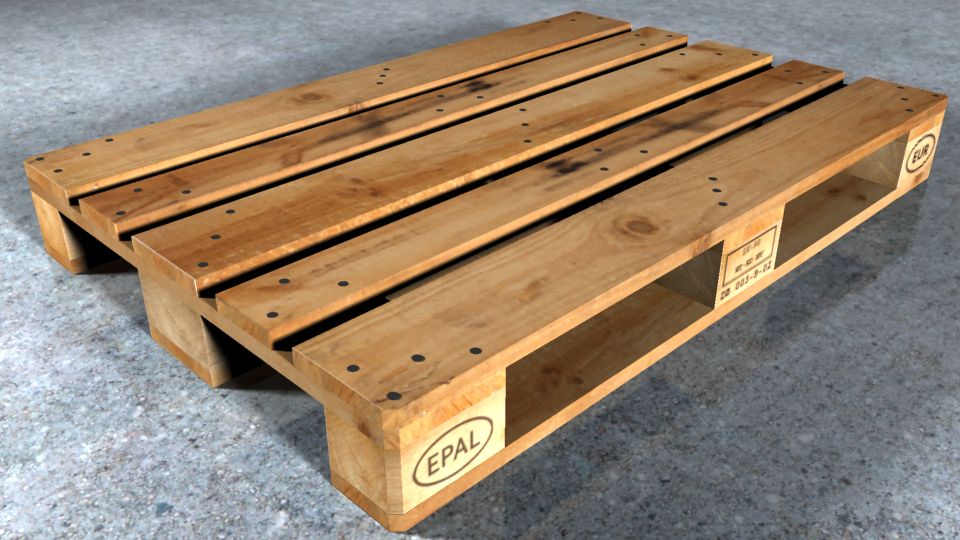
Record EPAL Euro pallets produced last year

With an increase of almost 11%, and a total of 73.6 million EPAL Euro pallets produced around the globe, a new record result was achieved in 2015.
At 23.9 million units, the 2015 repair figures were slightly but clearly above those of the previous year (2014: 22.4 million).
In 2014, with an increase of 3%, the development of the EPAL load carriers was on a par with the growth of the global logistics industry. In 2015, the production figures more than tripled and thus lay far above the annual growth rates in the logistics and packaging industry.

Martin Leibrandt, CEO of EPAL: “This exceptional result is thanks to the outstanding teamwork of all fifteen National Committees, the three EPAL representatives and the field managers. I’m very proud of EPAL’s positive development.”

EPAL's positive overall result was influenced by increased production in the following countries (in alphabetical order): Belgium, the Czech Republic, Germany, Hungary, Ireland, Italy, Lithuania, the Netherlands, Poland, Portugal, Romania and Ukraine. And in addition, the overall result was codetermined by increased repairs in the Czech Republic, France, Germany, Hungary, Italy, Lithuania, Poland, Romania, Spain and Ukraine. In Asia, EPAL recorded increased production figures in China and South Korea and increased repair figures in China.
 
[gravityform id="1" title="true" description="true"]
 
[gravityform id="2" title="true" description="true"]

Sustainable Innovative Mobilization of Wood project goes on

In November 2013, 28 organisations from 11 countries (Belgium, Finland, France, Germany, Ireland, Netherlands, Portugal, Slovenia, Spain, Sweden and United Kingdom) began the European collaboration FP7 project SIMWOOD (Sustainable Innovative Mobilisation of Wood), according to a press release from the European Organization of the Sawmill Industry (EOS).
The total forest area in the Region is 348,233 ha, which represents 9% of the area of the Region and 53% of total forest cover in the country.
This four-year project seeks to provide solutions on how to mobilise forest owners, promote collaborative forest management and ensure sustainable forest functions in order to mobilise the present unlocked wood resources in Europe.
SIMWOOD works in 16 regions across Europe, selected for their high relevance to Europe’s wood mobilisation challenge. In each the SIMWOOD model regions, a detailed analysis of the present situation and the barriers and challenges for wood mobilisation which currently exist, have been made. SIMWOOD is  working on identifying objectives, developing possible tailor-made solutions, and selecting some to be tested in a series of pilot projects.
According to EOS, in each region, SIMWOOD has a Regional Learning Laboratory (RLL) as an integral part of the research process. This is linked to existing initiatives in the region, and is collaborative: teaming up with regional stakeholders to obtain fresh findings on the region’s specific status quo, chances and proposed solutions.
                                                       Pilot Projects
Pilot Project 1
The first pilot project concerns mobilising additional wood fuel from conifer first thinning and consequently additional revenue. In many cases, first thinning is considered a loss making operation, especially in conjunction with road building. Therefore many forest owners cannot afford to thin their plantations. In forests located on well-drained sites that are typically found in the Region, there is the potential for more biomass to be removed during the thinning operations, which would lead to greater wood mobilisation and greater income for those forest owners.
Pilot Project 2
In this pilot project, the aim is to develop a sustainable producer group to engage private forest owners towards the mobilisation of timber in the Region.
A number of activities are form the basis to this project including:

  • engaging with private forest owners in collaborative initiatives; knowledge transfer through workshops, leaflet and training courses;
  • clustering forest activities for economy of scale, facilitating processing and delivery directly from site to increase forest owner profits;
  • standardising forest activities, timber processing and sales to provide transparency and promotion of established best practice using the ecosystem services framework;
  • developing market supports such as depots to collect timber from clusters of smaller sites to increase critical mass for processing, delivery and contracts.

More information on this project is available at the following link:
http://simwood.efi.int/
 
[gravityform id="1" title="true" description="true"]
 
[gravityform id="2" title="true" description="true"]
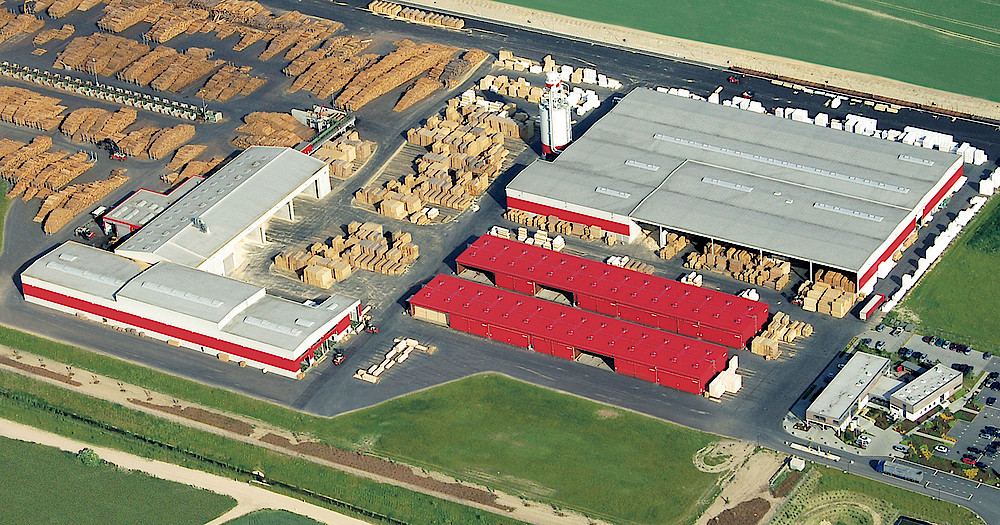
Declining MDF inventories in Japan

The MDF manufacturers in Japan have started working on maximum capacity as building material shipments started to grow since last December. Yet, the manufacturers’ inventory kept declining. Orders to manufacturers overseas are still limited because sales to condominiums remained even.
Building materials manufacturers want to stabilize the steady MDF supply before the consumption tax increase enters into force in April 2017. The volume for the domestic market is limited because two out of three domestic MDF manufacturers supply MDF for their own needs. Because of this, there is only one manufacturer in Japan to cope with the increasing demand.
Daiken Corporation, an MDF manufacturer from Osaka, will manage the MDF supply and demand. Techwood-A (ace) is one of the products made by Daiken, which is twice stronger than other similar products. The other MDF product is super light and has less than half of specific gravity. Both products have much more strength, water proof and processing performance than other MDF don’t have, making them perfect to be used not only for flooring, but also for walls and ceiling.
New MDF products from Daiken
In related news, Daiken has two manufacturing plants in Malaysia, which produces techwood, and another plant in New Zealand, which produces a lighter MDF product, known as Custom Wood.
The Techwood-A is stronger and has waterproof resistance, having more than 50N/square mm, while a normal MDF has 33-35N/square mm. The acacia raw material gives the techwood a better performance, being as strong as plywood, but standing a higher bending stress than it.
Daiken is now interested in the wall and ceiling market as they want to make a combination of MDF and sheet, which is now used for more than 60% of floor base. The smooth surface of MDF makes this composition better for decorative sheet and the Techwood-A has enough strength without using sheeting plywood as floor base.
The super light MDF product of Daiken is made with radiate pine from New Zealand, which reaches a low specific gravity of 0.35 with 9 mm thickness.
 
[gravityform id="1" title="true" description="true"]
 
[gravityform id="2" title="true" description="true"]


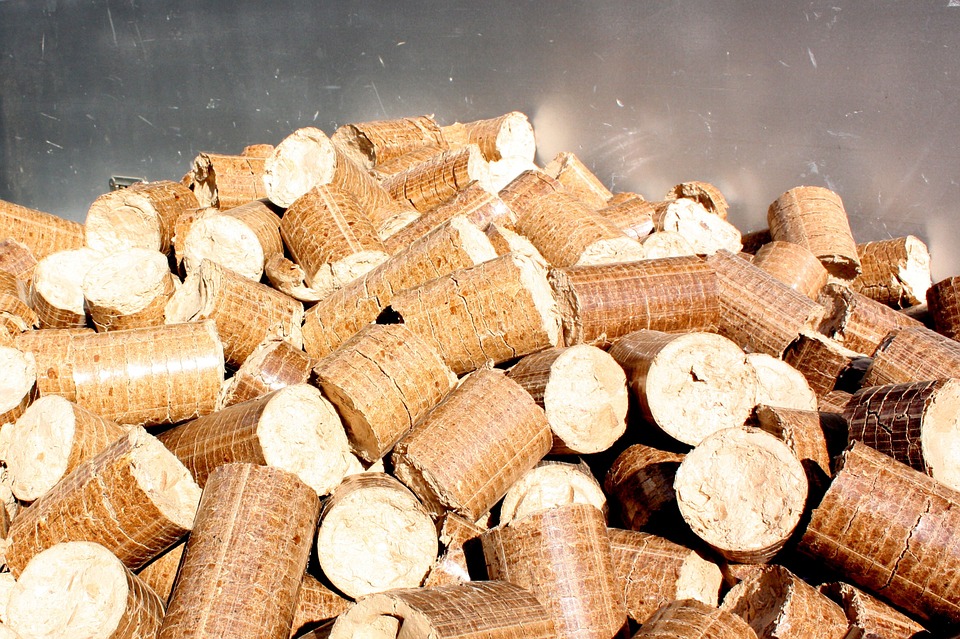
Paris to be heated with US wood pellets

Paris plans to improve the use of renewable energy in the urban heating system by importing thousands of tonnes of wood every year from the US, according to media reports.
The project belongs to the Parisian urban heating company CPCU, which plan includes burning 140,000 tonnes of wood pellets every year. The company, that provides more than a quarter Parisians with heat and hot water, will invest EUR 75 million in the plant in Saint-Ouen, which will use a 50-50 mix of wood and coal.

Celia Blauel, Paris deputy mayor for the environment, stated that "this is a good example of how the energy transition is put in place following the United Nations climate conference."

CPCU reported that the use of wood would reduce the CO2 emissions by 300,000 tonnes per year. Frederic Martin, President of the Compagnie Parisienne de Chauffage Urbain, said that buying the wood pellets from the US it was cheaper than using the ones in France. Thus, the US was given a contract for wood pellets valid for 5 years.
Yet, Saint-Ouen Mayor William Delannoy said that they hope for the French industry to be ready to deliver soon, as they is preferable to buy from home.
 
[gravityform id="1" title="true" description="true"]
 
[gravityform id="2" title="true" description="true"]


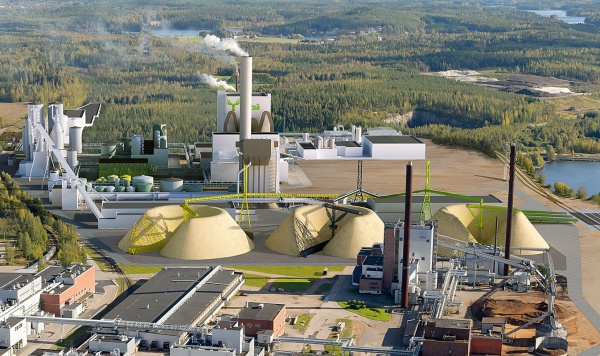
European Commission agrees state aid for Metsä giant bio-product pulp mill

The European Commission has concluded that Finnish investment aid for the Metsä Fibre bio-product pulp mill in Äänekoski, Finland is compatible with EU state aid rules.
The mill will manufacture softwood pulp for the paper industry, and also use by-products, largely left over from the pulping process, to generate and sell renewable electricity.
Finland plans to grant €32.1 million to the mill to partially cover an investment in state-of-the-art renewable energy and energy efficiency measures at the Äänekoski mill. The total investment costs of the mill are €1.2 billion. The project also benefits from a loan by the European Investment Bank (EIB) of up to €275 million, of which €75 million is guaranteed by the European Fund for Strategic Investments and was approved in June 2015.
The combined measures will allow the mill to operate without burning the heavy fuel oil usually used by pulp mills and to use less energy per unit of output compared to similar plants. The plant will be fully self-sufficient in terms of energy, and also feed renewable electricity into the Finnish grid. Furthermore, the project is expected to create 6000 jobs during the construction phase and sustain another estimated 2500 jobs in the forestry sector in the longer term.
The Commission assessed the measure under its 2014 Guidelines on State Aid for Environmental Protection and Energy. Under the rules Member States can grant state aid for renewable energy and energy efficiency purposes, subject to certain conditions. The Commission found that the Metsä project will significantly increase electricity production from renewable sources in Finland as well as achieve significant energy savings. Its analysis also showed that the aid does not lead to overcompensation and that the aid amount did not exceed the allowable compensation for the cost of the investment in renewable energy and energy efficiency.
The Commission therefore concluded that the project will contribute to the EU Energy Union goals without unduly distorting competition and that the support from Finland is compatible with EU state aid rules.
The bioproduct mill planned by Metsä Fibre will cost about Euro 12 billion, and it would be the forest industry's largest investment ever in Finland. The mill's pulp production capacity is 1.3 million tonnes per year. The goal is to build the mill in the existing pulp mill area and it would replace the mill currently operating in the area. The bioproduct mill could be operational in 2017.

[gravityform id="1" title="true" description="true"]
 
[gravityform id="2" title="true" description="true"]

Obama and Trudeau say that SLA issues will be solved very soon

Canada’s Prime Minister Justin Trudeau and US President Barack Obama met yesterday at the White House to discuss about the reduction of gas emissions and the renewal of the Softwood Lumber Agreement, which expired last year in October.
The two officials said that they expect to solve the issues regarding the SLA very soon and the negotiations are still on. They didn’t announce a new agreement to resolve the trade dispute over the exports of softwood lumber from Canada, but have been asked to consider the options and report their decision within 100 days from Thursday’s meeting, according to The Globe and Mail.
Obama told reporters at the joint press conference after the meeting that Canada and the US will solve the issues “in some fashion”, but the solution will be "undoubtedly to the dissatisfaction of all concerned."

On the other side, Trudeau said that he is “confident that we are on a track towards resolving this irritant in the coming weeks and month.”

At the moment, since the 2006 first agreement expired, the two countries have agreed on a one-year standstill, during which the US can’t impose new tariffs over the softwood imported from Canada. The US Lumber Coalition is pushing the government toward on imposing those tariffs as to offset the advantages that Canada has.
The issues over the softwood lumber exports from Canada to the US date back in 1982, when the US producers accused the Canadian over the timber prices to be artificially low, a thing that gave the Canadian producers an advantage that had to be met by tariffs imposed by the US, as reported by Bloomberg Business.
 
[gravityform id="1" title="true" description="true"]
 
[gravityform id="2" title="true" description="true"]
 

Switzerland: Seasonal price decrease for wood pellets in March

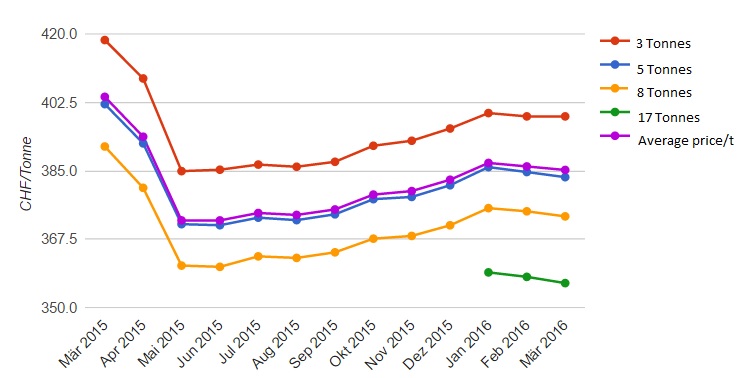
In March 2016, the price of wood pellets in Switzerland has started to decrease as usual for this month which marks debut of spring. Moreover, the price remains well below the level of last year. Compared to February 2016, the price dropped slightly by 0.4%, down to a current 385.2 CHF/t (350.87 EUR/t).
Compared to March 2015, the price difference is negative (-2.15%). A year ago, the cost for a tonne of pellets was 403.9 CHF. Due to currency fluctuations the price is now much lower in euro terms than in March 2015 (-7.44% yoy), when the price stood at 379,0 EUR/t.
In March 2016, depending on the delivery quantity, the price varies between 398.9 CHF (340.15 EUR) for 8 tonnes purchases and 398.9 CHF (363.45 EUR), for 3 tonnes.
Price of Swiss pellets (Graph+Table)
PriceofwoodpelletsinSwitzerland

Price of wood pellets in Switzerland (CHF/tonne) March 2015 February 2016 March 2016
3 tonnes purchase quantity 418.42 398.9 398.9
5 tonnes purchase quantity 402.4 384.67 383.36
8 tonnes purchase quantity 392.2 374.63 373.33
Average price 403.9 386.10 385.2

 
[gravityform id="1" title="true" description="true"]
 
[gravityform id="2" title="true" description="true"]
 

Ghana: Sharp drop in sawnwood export contract approvals

In the fourth quarter of 2015 the Timber Industry Development Division (TIDD) processed and approved export shipment contracts covering 120,642 cubic metres.
This was an almost 30% decline on the 172,124 cubic metres approved for shipment in the third quarter.
Secondary wood products (mainly sawnwood) topped the list of approved contracts in the fourth quarter followed by primary products and tertiary products as shown below.

Product Q3/2015 in m3 Q4/2015 in m3 Change in %
Primary 7,004 13,525 93.09%
Secondary 162,060 105,067 -35.17%
Tertiary 3,060 2,050 -33.01%
Total 172,124 120,642 -29,9%

Source: TIDD
Primary product shipment comprised mainly teak roundwood and fourth quarter shipments at 13,525 cu.m were 93% higher than in third quarter 2015.
In the fourth quarter there was a sharp drop in shipments of secondary products. This fall in approved contract volumes was mainly due to a big drop in contracts for sawnwood. However, export contracts for sliced veneer improved (+42%) to 5,090 cu.m compared to the third quarter.
Export contract volume approvals for shipment of tertiary products fell by 33% in the fourth quarter and this was put down to the difficulty mills had in securing sawnwood for further processing rather than weak demand.
Plywood dominates exports to regional markets
West African regional markets continued to be the major outlet for Ghana’s plywood. Out of the total volume of 19, 563 cu.m of plywood contracts approved, 98% in terms of volume were for exports to regional markets.
Most contracts for tertiary products, including sliced veneer and kiln dried sawnwood, were for European markets while shipments of air dry sawnwood, especially sawn rosewood and sawnwood of other high density species such as apa, ekki and denya, were for the Chinese market.
The United States market continued as the major destination for mahogany and cedrella sawnwood as well as for rotary veneer. Markets in the Middle East and Egypt emerged as a major destinations for backing grade veneer. India continued to be the sole market for teak and gmelina roundwood and sawnwood.
 
[gravityform id="1" title="true" description="true"]
 
[gravityform id="2" title="true" description="true"]

Newsletter

Subscribe to our digital newsletter for your daily digest of essential news, views and analysis from the international wood industry delivered directly to your inbox.


0