
Article archive

Central/West Africa: Global financial weakness but stable demand for timber

Log and lumber prices in Central West Africa are unchanged and this must be one of the longest periods of stable prices over the past 12 months. Modest purchases of logs for China continue and there is still ongoing business in sawnwood of selected, high value speciality species for the high end market.
Current demand is however, far from the market recovery that producers anticipated late last year but the level of business is sufficient for Central/West African producers to hold prices stable in hope of improved sales volumes in the second half of the year.
There are no signs of an improvement in demand for the Chinese market but neither has there been a sharp decline in orders. Analysts point out that the reality is that while financial markets are unstable the housing and construction sectors in many countries continue to advance.
While the housing market in China remains under pressure homes continue to be built and this drives demand for wood products. The sheer size of the housing market in China and the importance of the construction sector for the economy suggests the current steady demand will continue.
Apart from China the Indian government has ambitious plans for its housing sector which will create opportunities for timber exports. For producers in West and Central Africa the overall market situation has not deteriorated and with firm demand in Europe prices are holding firm.
Accelerating tertiary processing in Gabon
Markets in the Middle East countries continue to be active and very price conscious.
There is a steady demand for the lower grades of sawnwood but good business for high quality panel products and joinery quality and decorative species.
It has been learnt that proposals to accelerate tertiary level processing, kiln drying and eventual manufacture of components and furniture parts are being discussed in Gabon. Also mentioned are ideas on stimulating greater regional trade in wood products.
Such a major step forward in processing could be underpinned by incentives such as tax relief on advanced processing equipment and it would be necessary to raise the level of training to create a more highly skilled workforce. This will take time and but could be implemented in cooperation with industry.
Log Export Prices

West Africa logs, FOB € per m³
Asian market
LM
B
BC/C
Acajou/ Khaya/N'Gollon
230
230
160
Ayous/Obéché/Wawa
260
260
180
Azobe & Ekki
230
230
160
Belli
250
250
-
Bibolo/Dibétou
150
145
Iroko 330
290
260
Okoume (60% CI, 40% CE, 20% CS) (China only) 200 200 160
Moabi 335 305 225
Movingui 210
210
160
Niove
160
160
-
Okan
250
250
-
Padouk
310
285
225
Sapele 315 305 220
Sipo/Utile
345
340
265
Tali 320 320
-

Sawnwood Export Prices

West Africa sawnwood, FOB
€ per m³
Ayous FAS GMS 410
Bilinga FAS GMS 500
Okoumé FAS GMS
350
Merchantable 225
Std/Btr GMS 270
Sipo FAS GMS
610
FAS fixed sizes 610
FAS scantlings 640
Padouk FAS GMS 930
FAS scantlings 1020
Strips 680
Sapele FAS Spanish sizes 610
FAS scantlings 620
Iroko FAS GMS 625
Scantlings 700
Strips
440
Khaya FAS GMS
450
FAS fixed
460
Maobi FAS GMS
610
Scantlings
630
Movingui FAS GMS
420


[gravityform id="1" title="true" description="true"]
 
[gravityform id="2" title="true" description="true"]

German sawn pine lumber exports to China and Egypt collapse

Despite strong shipments to India, the Netherlands and Poland, Germany's sawn pine lumber exports are clearly ranging below the previous year. In January-December 2015, they were -10% lower than in 2014. If China and Egypt were Germany's main export partners in 2014, with shipments of 140 thousand cubic meters and 131 tsd respectively, now German sawn pine lumber exports to the two countries collapsed.
The much anticipated decline of the Chinese economy seems to have become a real problem for German sawyers. Volumes delivered in 2015 are -60% lower than in 2014, and as many analysists point out, this trend is set to continue in the upcoming period. The overall negative political context in Egypt has as well negatively impacted German exports. With a -90% decrease in exports (down to 13 tsd m3), Egypt has lost its place as a preferred destination for German sawn pine lumber exports.
Markets in Europe and India or the Middle East are now more attractive for the German sawmills. Volumes delivered to the Netherlands in January-December 2015 were +3% higher over 2014. Moreover, a much stronger demand can be noticed from Poland and Italy.
Above all, India is the winner in 2015: Germany shipped 166 thousand cubic meters more sawn pine lumber to India as compared to 2014. Also, exports to the Middle East are also on an upward trend: +50% more exports to the United Arab Emirates; +32% to Saudi Arabia and +226% to Bahrain.
The following sawn pine lumber average prices for the most important customer countries can be deduced from the January-December 2015 figures: India € 170/m³; Netherlands € 173/m³; Poland € 154/m³; Italy € 156/m³; China € 188 /m³ .

In volume (m3)
Germany: Pine Lumber; Sawn; Export; Top 10 Destinations Jan.-December 2014 Jan.-December 2015 Change in %; Jan.-December 2014/2015
India 103,715 166,259 +60%
Netherlands 98,038 101,108 +3%
Poland 80,154 86,605 +8%
Italy 61,183 71,825 +17%
China 140,093 56,057 -60%
Belgium 62,001 55,405 -11%
United Arab Emirates 30,419 45,506 +50%
Saudi Arabia 33,559 44,233 +32%
Czech Republic 33,612 39,937 +19%
France 32,773 36,713 +12%
Bahrain 9,890 32,208 +226%
Total 1,153,775 1,035,723 -10%

 
[gravityform id="1" title="true" description="true"]
 
[gravityform id="2" title="true" description="true"]

GD Holz responds to media attacks on EUTR efficiency

Reports issued in the German national newspaper Süddeutsche Zeitung stated that the EUTR isn’t effective enough. As a response, Thomas Goebel, managing director of the German timber trade federation GD Holz, issued a statement regarding the negative critics.
As GD Holz reported, some media channels also stated that most of the tropical timber is imported from illegal sources and that the tropical timber imports may be linked to organized crime.
Goebel explained that some of the critics were justified, because some member states of the EU haven’t been able to implement the EUTR successfully. But, he added that putting the tropical timber sector under general suspicion was wrong.

“We are strictly against illegal logging and illegal timber imports”, he said.

Goebel added that GD Holz has been supporting the imports of legal and sustainable timber products for many years now, thus rejecting the false documents which pretend the legality of timber.
Also, the 140 GD Holz timber importers are currently implementing the EUTR and have started to do this since March 2013, when the Regulation took action. As Goebel stated, the EUTR takes the right approach and GD Holz brings a great contribution on reaching the Regulation’s goal, to stop illegal timber exports.
About GD Holz
The German Timber Trade Federation (GD Holz) is the German timber trade’s neutral trade association and represents the interests of the German specialists in timber trade. GD Holz has around 900 member companies in Germany and is based in Berlin in close vicinity to the government district. GD Holz member companies are active in the wholesale, foreign trade, retail, veneer and roundwood trading sectors.
 
[gravityform id="1" title="true" description="true"]
 
[gravityform id="2" title="true" description="true"]


Europe fights climate change by planting 600,000 ha of forests

Around 600,000 ha of forests will be planted in Europe in the next 5 years. This investment will have a big impact on the environment, as reported by AgriLand following a statement of Dermot Ryan, Senior Advisor to European Commissioner Phil Hogan.
As Ryan said during the Coillte Climate Change and Irish Forestry Conference in Dublin, the plantation sustains Europe to step on towards a low carbon environment. The European Commission will offer forestry policy a certain degree of centrality to policy decisions regarding the climate change.
AgriLand reported that the Rural Development Envelope project will be offered €7 billion in public funds, as part of the multi-annual plan for forestry.

“Half of this spending will primarily aimed at ecosystem services. Around a third on targets promoting resource efficiency and supporting the shift towards a low-carbon and climate resilient economy. This is vital because three-fifths of European forests are privately owned and the sector employs over 3 million people.” Ryan stated.

The 600,000 ha of new forests are planned to contribute to the climate change mitigation and to the biodiversity promotion. Under thex, there is a €3.8 billion investment in projects regarding forestry, the bio-economy and agriculture. Another €9 billion is projected for research and development in energy efficiency and actions in the climate sector.
 
[gravityform id="1" title="true" description="true"]
 
[gravityform id="2" title="true" description="true"]


Finland: Log prices in February 2016

Roundwood prices in Finland have generally declined in February 2016 both as compared to January as well as compared to the same month of last year. Over January, pine sawlogs' price is lower by EUR -0.72/cbm, while birch sawlogs are cheaper by EUR -0.78/cbm. Spruce has registered only a slight price decline. Pulpwood assortments prices have also trended downwards, however only with insignificant changes.
On a yearly basis, Finnish roundwood prices show the same decreasing tendency. Spruce and pine sawlogs are both cheaper compared to February 2015, while pulpwood assortments have become slightly cheaper.

Roadside prices of roundwood in Finland EUR/m³ over bark

February 2015 January 2016 February 2016 Change
February/2015
to February/2016
LOGS
Pine 56.89 56.08 55.36 -2.68%
Spruce 55.43 55.55 55.27 -0.28%
Birch 47.19 46.97 46.21 -2.07%
PULPWOOD  
Pine 27.45 27.47 27.42 %
Spruce 30.13 29.85 29.83 -1%
Birch 29.31 28.73 28.56 -2.55%

Price source: Metla.fi
 
[gravityform id="1" title="true" description="true"]
 
[gravityform id="2" title="true" description="true"]

EU and Ghana met to review VPA

The European Union and the Government of Ghana have met recently to discuss the terms and progress for implementing the Voluntary Partnership Agreement (VPA), according to Ghana Web.
Representatives of stakeholders groups which form part of the Ghana-EU VPA Joint Monitoring and Review Mechanism (JMRM) will meet to discuss the implementation of the agreement. The VPA sustains the legal selling of timber products exported to the EU and the domestic market.
Nii Osa Mills, Minister of Lands and Natural Resources, said that the JMRM also met to inspect the progress of the legality assurance system in Ghana, regarding the timber products in the country, before the licensing could take action. They decided that the next joint assessment on the timber legality assurance system in Ghana to be scheduled in August 2016.
This licensing would allow timber products from Ghana to access the EU market without importers, because Ghana would be obliged to respect the European Timber Regulation (EUTR).

“We made progress in clarifying our forest management plans, transparency, commitment and other outstanding issues. Each of these steps for improvements in forest governance brings Ghana closer to licensing and easier access to the EU market. The further development of our timber legality assurance system is also helping Ghana resolve legality issues with our domestic market and regional trade,” Mills added.

As Ghana Web reported, Mr William Hanna, European Union Ambassador to Ghana and Co-Chair of the JMRM, stated that Ghana’s forest is very important for the right development of the country, alongside with its good governing, things which will contribute as to achieve the Sustainable Development Goals.
Also, the JMRM discussed about permits for logging issued under the provisions of the Timber Resource Management Act (Act 617) and about the conversion of leases to Timber Utilisation Contracts in line with the provision of Act 547.
 
[gravityform id="1" title="true" description="true"]
 
[gravityform id="2" title="true" description="true"]


North American lumber exports to Japan stable in 2015

The total lumber exports from North America to Japan summed to 2,339,457 m3 in 2015, declining only 1% compared to 2014. Despite the rise in Japanese housing starts, where most of the imported lumber is used, 2015 is the second consecutive year of decline in North American lumber deliveries to Japan.
Both North American and European lumber exports declined. Yet, lumber exports from North America didn’t go down as much as the logs exports, which registered a 18% drop in 2015, when compared to the peak volumes in 2013.
In 2015, North American log exports to Japan decreased by 17%, while lumber exports registered only a 1% drop. This is mostly due to SPF lumber shipments, which increased by 3.1%. SPF lumber covers more than a half market share in all North American lumber exports to Japan. 99.7% of SPF lumber came from Canada, totaling 1,346,291 m3, with an increase of 3.2%.
Hemlock lumber was the second largest product exported from Canada to Japan, with 291,090 m3, Exports of Douglas fir, dropped 3.6%, down to 234,660 m3.
 
[gravityform id="1" title="true" description="true"]
 
[gravityform id="2" title="true" description="true"]


US: Upgrades at the Seneca sawmill in Eugene are halfway done

The Seneca sawmill's upragde in Eugene, Oregon, is already half completed. The investment rises up to $60 million in equipment upgrade and should be ready this September, according to The Register Guard.
The investment in the complex off Highway 99 will prepare Seneca sawmill to be ready for the changing lumber market and it will also increase its efficiency. Builders of all around Oregon are investing in dry lumber, dried in a kiln, rather than in green lumber that hasn’t been dried.
Thus, as The Register Guard reports, the upgrades in Seneca sawmill will allow it to dry a larger lumber quantity.

“This is all designed for the future. Right now, we have certain segments of the market that we don’t sell to because we don’t have the dry dimension product,” said Chief Executive Todd Payne.

With the new upgrades, Seneca sawmill will be able to produce 2-by boards, from 4 to 14 inches and 8 to 28 feet in length. The complex in Eugene consists of 3 sawmills and all of them uses computerized information with laser scans. The Seneca one will also include scanners in the lumber mill dimension.

 “I think what a lot of people don’t understand is how much we have evolved as an industry, utilizing technology to improve efficiency,” Payne added.

All the sawmills’ annual capacity rises up to 430 million board feet.
 
[gravityform id="1" title="true" description="true"]
 
[gravityform id="2" title="true" description="true"]
 

Fensterbau Frontale & Holz-Handwerk 2016: record number of visitors

FFHHThe twin trade fair event comprising Fensterbau Frontale and Holz-Handwerk has reconfirmed its leading position in the participating industries, with a record number of visitors in 2016: the event held between 16 and 19 March brought 110,581 experts from the wood and window industries to Nuremberg, compared to 108,967 on the previous occasion in 2014. The second day of the event alone saw a record 38,568 visitors flow through the halls – a figure never previously achieved by the Exhibition Centre Nuremberg in a single day. The venue, fully booked for the event, hosted a total of 1,296 exhibitors*, about two-thirds of them from outside Germany, presenting new developments and innovations from the wood processing industry and the fields of window, door and façade construction.

796 exhibitors from 37 countries at Fensterbau Frontale, 500 exhibitors from 19 countries at Holz-Handwerk, and between them 110,581 international trade visitors – once again this two-yearly combined event managed to impress, in terms of both exhibitors and visitors, and the outstanding quality and volume of the top level products and information available. Current industry topics were carefully prepared to provide a wealth of information in the supporting programme: from promoting new talents in craft enterprises at the new Holz-Handwerk Campus to architectural questions in the Architecture-Window-Facade Forum, and special, subject-specific shows offered a broad range of choices for different target groups.

Exhibitors and visitors full of praise

Participants can look back positively on the four days of the combined fair event. Elke Harreiß and FFHH1Stefan Dittrich, Exhibition Directors for Fensterbau Frontale and Holz-Handwerk , respectively, are happy: “The atmosphere in the halls was excellent. The exhibitors were full of praise for the international nature of the public, their level of professionalism and their willingness to invest, while the visitors were very happy with the products on display.” Numbers of both exhibitors and visitors planning to return again next time are high. The two Exhibition Directors sum it up: “We’re proud of the fact that this combined trade fair event has again proved a success.”

International meeting point for the industry proves a winner

After Germany, the countries with the greatest number of exhibitors at Fensterbau Frontale were Italy, Poland and Turkey, with Austria and Italy the runners-up at Holz-Handwerk. One in three of the visitors in 2016 came from outside Germany, representing international growth in the order of more than 13 percent. Visitors to Fensterbau Frontale comprised window and exterior contractors, cabinet-makers, architects and the retail trade, all of whom had the opportunity to learn about the latest profile systems, hardware, structural elements, the use of glass in architecture, fitting technology, safety and shade technology, as well as machinery and plant. Meanwhile, at the Holz-Handwerk event, cabinet-makers, joiners and carpenters, furniture makers, mechanical engineers and interior designers discussed the latest trends relating to tools, machinery, hardware, materials and software.

The next combined Fensterbau Frontale and Holz-Handwerk trade fair will be held at the Exhibition Centre Nuremberg on 21-24 March 2018.


[gravityform id="1" title="true" description="true"]


[gravityform id="2" title="true" description="true"]

Finland: Softwood sawn timber production dips in 2015

The year 2015 was mixed for the Finnish forest industry production. Last year's greatest decrease in production was recorded for softwood sawn timber which fell 2.7% short of the volume produced in 2014. In all, some 10.6 million cubic metres of softwood sawn timber was produced in Finland.
For its part, paper production contracted 2.6% to 7.3 million tonnes. Pulp production nonetheless increased 1.7% to a total of 7.1 million tonnes. Paperboard production was up 3.6% to 3.1 million tonnes.
Paperboard production grew to 810,000 tonnes in the fourth quarter, which is no less than 6.6% more than in the corresponding period of 2014. Pulp production increased four per cent in the final quarter and came to 1.9 million tonnes.
Finland's softwood sawn timber production decreased 0.5% in October-December, however, and totalled 2.7 million cubic metres. Paper production in the last part of the year was 2.3% lower than in 2014, totalling 1.8 million tonnes in the fourth quarter.
Forest industry investments have started to grow in Finland. According to an investment survey conducted by the Confederation of Finnish Industries, an impressive 78% of the industry's investments will boost capacity.
 
[gravityform id="1" title="true" description="true"]
 
[gravityform id="2" title="true" description="true"]


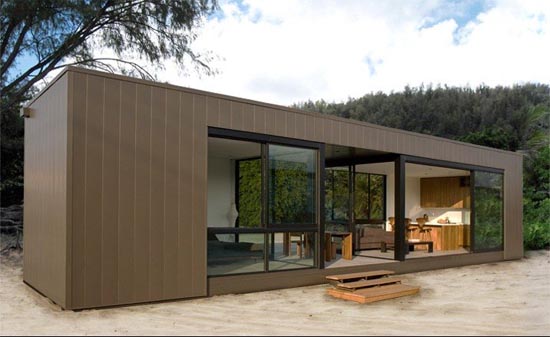
Forecast: Global demand for prefabricated housing expected to rise annually by 2.7%

Global demand for prefabricated housing is forecast to increase 2.7 percent per annum through 2019 to 3.4 million units, according to a new Freedonia study.  In the developing countries of the Asia/ Pacific region, Africa/Mideast region, and Central and South America, advances in overall housing activity as well as greater market penetration of prefabricated housing will drive gains demand going forward.
In these regions, prefabricated housing will find applications both as low cost units to reduce housing shortages (particularly in multifamily applications) and as high quality, well-insulated houses for more affluent consumers, says Freedonia in its study.
Most higher income countries (outside of the US and Japan) have low penetration levels for prefabricated housing, but its generally lower cost, shorter construction time, and greater energy efficiency will stimulate demand.

Asia/Pacific region will dominate global demand

The Asia/Pacific region accounts for the vast majority of prefabricated housing demand. China alone will account for approximately two-fifths of new global demand generated between 2014 and 2019, even though prefabricated housing has not gained wide public acceptance in China.
The majority of prefabricated houses in China are temporary units, which are used to house construction workers and for disaster relief housing. In contrast to China, prefabricated housing units in India tend to be “kit homes” used as low-cost housing options. Modular homes are also popular in that country, particularly those constructed from shipping containers.
Japan was a key market for prefabricated housing historically, but the country’s prefabricated housing industry will grow at a below global average pace through 2019 as the country’s overall residential construction market is not expected to perform well. However, prefabricated housing’s share of new housing units in Japan has risen since 2004, and is expected to do so going forward.
According to Freedonia, worldwide gains in prefabricated housing demand will be bolstered by an acceleration in the United States as that country’s housing market continues to recover. While US demand for prefabricated housing will advance at double digit annual rates through 2019, prefabricated housing’s share of new housing units will decline slightly during this time.
Demand for prefabricated housing in the Africa/Mideast region is forecast to grow at the most rapid rate of any region, but the level of activity will remain under 200,000 units in 2019. More traditional building methods are common throughout the region, particularly in the lower income countries.
Central and South America will also post above average gains in prefabricated housing demand through 2019, though it will continue to account for only a small share of the global market. In general, home buyers in the region continue to prefer site built homes, and prefabricated housing is seen as an inferior product. Product improvements for prefabricated housing will aid modest demand growth through 2019, says Freedonia.

Panelized & precut homes will lead volume gains

Panelized and precut homes will post the best growth in terms of units produced through 2019, realizing annual gains of 3.6 percent per year. These types of prefabricated housing are more readily transportable and will benefit from demand growth in lower income countries as well as in Japan -- where high costs of manufacturing will attract further imports of prefabricated homes.
Manufactured and modular housing production, the majority of which occurs in the US, will post the fastest gains through 2019 as demand in the US rebounds sharply.
 
[gravityform id="1" title="true" description="true"]
 
[gravityform id="2" title="true" description="true"]
Brazil: Growth of planted forest sector´s export

Despite the disappointing economic news from Brazil, the forest plantation sector had a good year in 2015.
Exports of pulp, wood panels and paper increased due to the depreciation of the Brazilian currency against the American dollar, ITTO reported. Revenue from Brazil's exports in 2015 totalled US$7.8 billion compared to US$ 7.4 billion in 2014.
According to the Brazilian Tree Industry Association (IBA), the sector’s trade balance in 2015 was US$6.5 billion, representing an increase of 17% compared to 2014. In 2016, the sector will continue to face the same challenges as in 2015. In January 2016 revenue from pulp, wood panels and paper exports totalled US$646 million, a 9.9% increase over the same period of last year.
In a web announcement, Moody's global paper and forest products industry outlook says ”the global paper and forest products industry is stable and operating earnings growth for publication producers in Latin America will remain as last year.”
The announcement continues to point out that “depreciated currencies will continue to mitigate weak international prices and support local operating margins but that weak economic expansion in Latin America will limit domestic paper demand.”
 
[gravityform id="1" title="true" description="true"]
 
[gravityform id="2" title="true" description="true"]



Import substitution changes the Russian OSB market

The Russian OSB market changed a lot during the second half of 2014-2015, as WhatWood agency reported in March 2016. Starting with the DOK Kalevala and Kronospan-Egoryevsk mills, which increased their capacities, also Kronospan-Mogilev mill started to receive material from Belarus.
According to WhatWood, once the ruble exchange rates fell, this ended the import possibility from far-abroad countries. The Russian imports of OSB during 2015 declined fivefold, to 107,000 m3, bringing down the import prices too. For example, the average price of deliveries from Romania fell from a maximum of $350 in October 2013, to $226 by December 2015.
Thus, the products from the Egger and Kronospan mills in Romania started to come on an irregular basis, while supplies from Canada and China ceased. At the same time, more deliveries started to come from Kronospan Belarus and out of the total 405,000 m3 produced, share of the Russian market in the sales amounted to 66%, WhatWood reported.
The Russian OSB market volume is of approximately 1.2 million m3. Even if about 20 projects are announced in the next 2 years, only one major production and one mill with low capacity will be launched in the mentioned period.
 
[gravityform id="1" title="true" description="true"]
 
[gravityform id="2" title="true" description="true"]
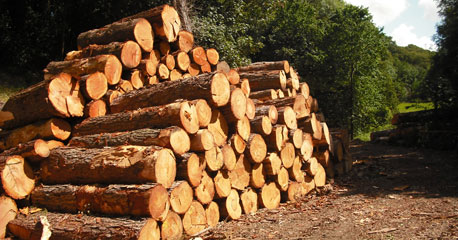


Ireland: Timber volumes estimated to double by 2035

Ireland’s roundwood supply is forecast to increase significantly in the next 20 years. All of the increase will come from private forests from the Republic of Ireland, according to the Independent.
Until 2035, the forecast volume will reach 7.87 million m3, from 3.95 million this year, with a small decrease expected in 2028. The thinning volume is thought to account for 22.04 million m3 over the mentioned period, with a 91.77 million m3 volume, balance from clearfells.
In line with the decrease in thinning volume, there is a comparable drop in the area for thinning over the forecast period. The estimated increase is from 21,600ha this year to a maximum of 34,100ha in 2023 and then shows an average decline to 22,400ha until 2035.
As the Independent reported following a report filed by COFORD, over the mentioned period, most of the wood will come from spruce (97.74 million m3, or 85.9 pc). Also, lodgepole pine and other conifers make for 4.8pc and 6.7pc of total volume respectively, while broadleaves account for 2.9pc.
Between 2016 and 2035, the wood fibre used for energy and other products will sum 58.2 million m3. Also, the small roundwood from the Coillte estate kept out of the forecast, as most of it is used at the panelboard mills.
 

For the full COFORD report here

 
[gravityform id="1" title="true" description="true"]
 
[gravityform id="2" title="true" description="true"]


Brazilian mahogany timber back on the market

One of the most beautiful and famous Amazon timbers, the Mahogany, will return to the market. Mahogany became a target of deforestation in the 1980s, after its beauty and strength attracted the attention of consumers. Due to intense exploitation, the extraction and trade of mahogany was prohibited from October 2001, according to FSC International.
Now limited trade is being allowed again. Currently, extraction is only authorized by the Brazilian Government in areas of sustainable forest management, following strict criteria established by the United Nations Convention on International Trade in Endangered Species of Wild Fauna and Flora (known as the CITES agreement).
In a report filed by Madeira Total this month it is stated that mahogany harvesting in the certified forests has started in the States of Acre and Amazonas and the first batch of mahogany logs will be transported for processing for export this month.
 
[gravityform id="1" title="true" description="true"]
 
[gravityform id="2" title="true" description="true"]
 

BC: Forest alarm regarding spruce beetle infestation

The northern BC forests are going through an eruption of spruce beetles that is destroying one of the most important timber species that remained after the mountain pine beetle disaster, according to Business in Vancouver.
The government and the forest industry are alarmed by a 20-fold increase of the area where the spruce has mushroomed. The recent survey on their area was found in the Omineca region, north of Prince George. In 2013, the spruce has covered a 76 square kilometers of timber, but today they reached 1,560 square kilometers.
Allan Caroll, professor of entomology at the University of British Columbia’s faculty of forestry, explained that the climate change is one of the main reasons for the spruce beetle eruption. The warmer winters complete the spruce beetles’ development over a one-year period, instead of two years.

“We certainly have been saying for quite some time that the next big one on the radar will be the spruce beetle after the mountain pine beetle fades from the spotlight, simply because of the amount of mature spruce that’s available on the landscape,” he said.

As Business in Vancouver reported, the mountain pine beetle infestation destroyed more than 50% of the pine inventory. Thus, to combat the infestation, the Ministry of Forests, Lands and Natural Resource Operations announced $1 million in new funding last week for an aggressive control program, as to combat them while they’re still at the beginning of the outbreak.
The most affected communities are Prince George, Vanderhoof, Mackenzie and Fort St. James, where forest companies have 15 sawmills, 2 pulp mills and 3 pellet plants.
 
[gravityform id="1" title="true" description="true"]
 
[gravityform id="2" title="true" description="true"]
 

US: Sierra Pacific Industries to build 500 mmbf/year sawmill in Shelton

Sierra Pacific Industries (SPI) might build a 500 mmbf/year sawmill in Shelton, Washington. Construction may begin in late spring or early summer this year with completion likely in early 2017, according to a report by KMAS Radio.
The new mill will replace the old Simpson Lumber Co. sawmill on the site, which was bought by SPI last year, along with other sawmilling assets of Simpson in the area. At the time SPI bought the mill, they announced that they wouldn’t operate it, but built a new one instead, a state-of-the-art sawmill and lumber planing operation on the Shelton waterfront site.
At the moment, existing structures are being removed to make way for the new facility, which SPI community relations representative Lisa Perry said would be among the highest-tech mills in the nation.
As Perry added, the mill will be tooled to produce 2x4, 2x6 and 4x4 studs. Also, the the 172,000 sq. ft. mill will employ up to 200 people, while SPI has applied for a shoreline substantial development permit and site plan review.
The plans of the new mill include buffer zones of vegetation and trees intended to complement an adjacent restoration project at Oakland Bay. Also, the company was planning the largest storm-water treatment facility he had ever seen, and proposed City of Shelton Senior Planner Jason Dose , to focus on rail shipments to keep trucks off the road.
 
[gravityform id="1" title="true" description="true"]
 
[gravityform id="2" title="true" description="true"]
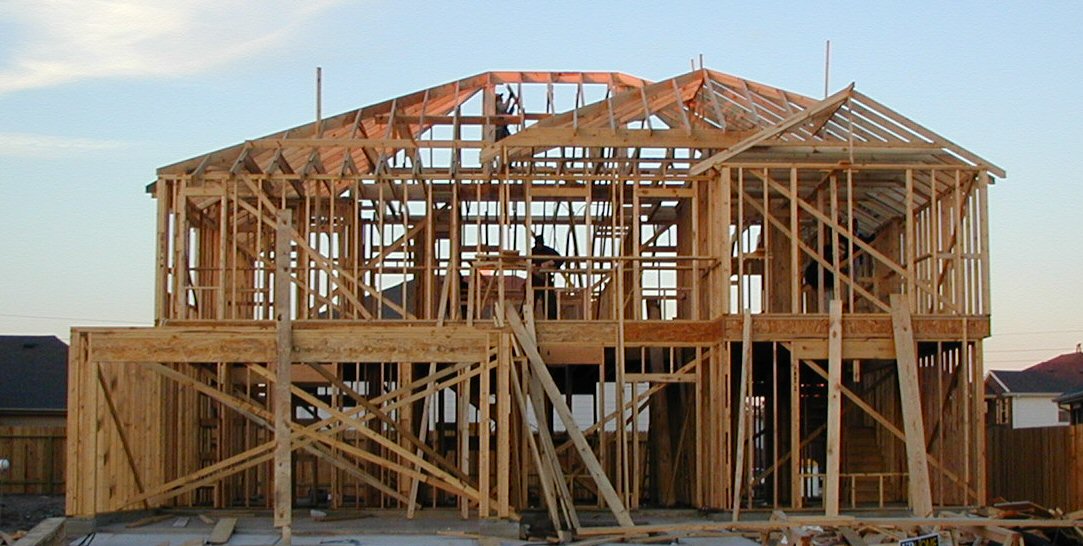
US housing construction expected to rise 13.4% this year

Economic recovery, a drop in unemployment figures as well as an increase in the number of private households are expected to lead to a rise in demand for housing in the USA over the course of the current year.

Against this background the US National Association of Home Builders (NAHB) expects an increase of 13.4% vis à vis last year to a total of 1.26m units in the number of new housing construction starts.

The number of detached house building starts is expected to increase by 18% to 840,000 units. Regarding multi-family houses, the association predicts an increase of 5% to 417,000 units.

In the case of housing renovation work, however, virtually no increase in building activity is expected.

In 2015, with 1.111m new construction units commenced, there was an increase of 10.8% vis à vis the preceding year. Approvals for housing construction increased by 12% last year to 1.178m units. The number of residential units completed last year increased by 9.3% to 965,700.
 

[gravityform id="1" title="true" description="true"]

 
[gravityform id="2" title="true" description="true"]

Production in construction increases in EU

In January 2016 compared with December 2015, seasonally adjusted production in the construction sector increased by 3.6% in the euro area (EA19) and by 1.6% in the EU28, according to first estimates from Eurostat, the statistical office of the European Union. In December 2015, production in construction fell by 0.7% in the euro area and by 0.1% in the EU28. In January 2016 compared with January 2015, production in construction grew by 6.0% in the euro area and by 4.4% in the EU28.
Production_in_constructionMonthly comparison by construction sector and by Member State
The increase of 3.6% in production in construction in the euro area in January 2016, compared with December 2015, is due to building construction rising by 4.1% and civil engineering by 1.7%.
In the EU28, the increase of 1.6% is due to building construction rising by 2.7%, while civil engineering fell by 2.5%.
Among Member States for which data are available, the highest increases in production in construction were recorded in France (+7.3%), Germany (+7.0%) and Spain (+2.6%), and the largest decreases in Hungary (-13.0%), Romania (-6.4%) and Slovakia (-6.2%).
Annual comparison by construction sector and by Member State
The increase of 6.0% in production in construction in the euro area in January 2016, compared with January 2015, is due to building construction rising by 7.1% and civil engineering by 1.4%.
In the EU28, the increase of 4.4% is due to building construction rising by 5.3%, while civil engineering fell by 0.8%.
Among Member States for which data are available, the highest increases in production in construction were recorded in Spain (+20.3%), Sweden (+18.0%) and Slovakia (+16.4%), and the largest decreases in Slovenia (-23.4%), Hungary (-20.2%) and Bulgaria (-10.7%).
 
[gravityform id="1" title="true" description="true"]
 
[gravityform id="2" title="true" description="true"]

New Zealand: Lower logs export prices

Export log prices for New Zealand decreased in March because the shipping rates on oil prices increased and the overseas market demand weakened. The average wharf-gate price for A-grade logs from New Zealand decreased to $119 a tonne from the $122 a tonne in February, according to Scoop Business.
Low oil prices have pushed shipping rates to record lows, underpinning export returns for New Zealand logs. However, oil prices edged up about $US8 a barrel in the past month, signalling shipping rates, while still low, may have reached their bottom.
As Scoop Business reported, the log inventories on Chinese ports remained at 2.9 million to 3.6 million m3, going up from 2.6 million to 2.8 million m3 in February. Compared to same period of 2015, the results were lower than the 4 million m3 from last year. Also, the kiwi dollar dropped 1% against the greenback over the month, and is down 11% over the year, making the country's exports more competitive.

"Wharf gate prices softened slightly as a result of the weaker overseas market, but both the New Zealand dollar and shipping rates continued to aid returns for exporters, keeping prices supported. Some of the bottom end has come out of shipping rates, largely due to lifting oil prices. However the mid-range for spot prices continues to be very low, and is on-par with what was seen the month prior," AgriHQ analysts Shaye Lee and Reece Brick stated, as quoted by Scoop Business.

There are reports of large quantities of wood going to China, so the market’s outcome might not be as positive in the next couple of months. Structural log price in New Zealand’s domestic market stayed at $109 a tonne, reaching the highest level since August 2014.
Nevertheless, pulp prices remained unchanged and more woodchips became available from the recently opened cubed lumber mill in the central North Island. Roundwood prices also reamined stable as the demand from the horticulture increased.
Forestry products are New Zealand's third-largest commodity export group behind dairy and meat products.
 
[gravityform id="1" title="true" description="true"]
 
[gravityform id="2" title="true" description="true"]



Newsletter

Subscribe to our digital newsletter for your daily digest of essential news, views and analysis from the international wood industry delivered directly to your inbox.


0