Article archive

Lumber prices in the US grew by $2 last week

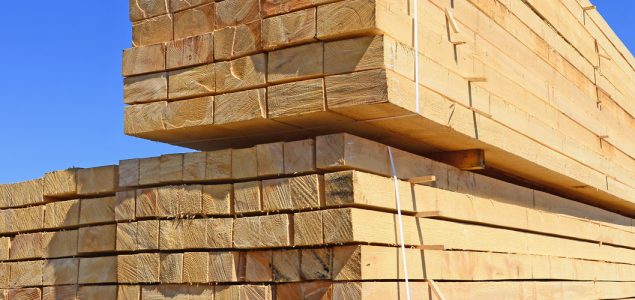
Framing lumber trading the US was affected by the holidays and Tuesday's 4th of July. This created plenty of absences throughout last week.
However, last week’s stronger finish in many species gave producers the impetus to hold to their quotes until traders filtered back into their offices. Sales picked up in many species starting Wednesday, and were generally more active on Thursday. This gave the overall market a firm to stronger tone, although Southern Pine remained a key exception.

Week
Jul 7
Week
Jun 30
Year Ago
2016
Random Lengths Framing Lumber Composite Price* $399 $397 $349
KD Western S-P-F #2&Btr 2x4 R/L Mill Price 379 374 320
KD Eastern S-P-F #1&2 2x4 R/L, delivered Great Lakes 475 470 420
Green Douglas Fir Std&Btr 2x4 R/L (Portland) 435 425 353
Southern Pine (Westside) #2 2x4 R/L 381 388 383
KD Coast Hem-Fir #2&Btr 2x4 R/L 400 400 357
Ponderosa Pine (Inland) #2&Btr 1x12 R/L 695 700 705
* Weighted average of 15 key items

Random Lengths Panel Market Report
Shipping delays and holiday-related interruptions distracted structural panel trading. Tight supplies of OSB supported firm to higher prices amid sparse trading throughout North America.
An uneven sales pace followed the Fourth of July holiday in Southern Pine plywood. A number of traders remained out of their offices after taking Monday and Tuesday off.
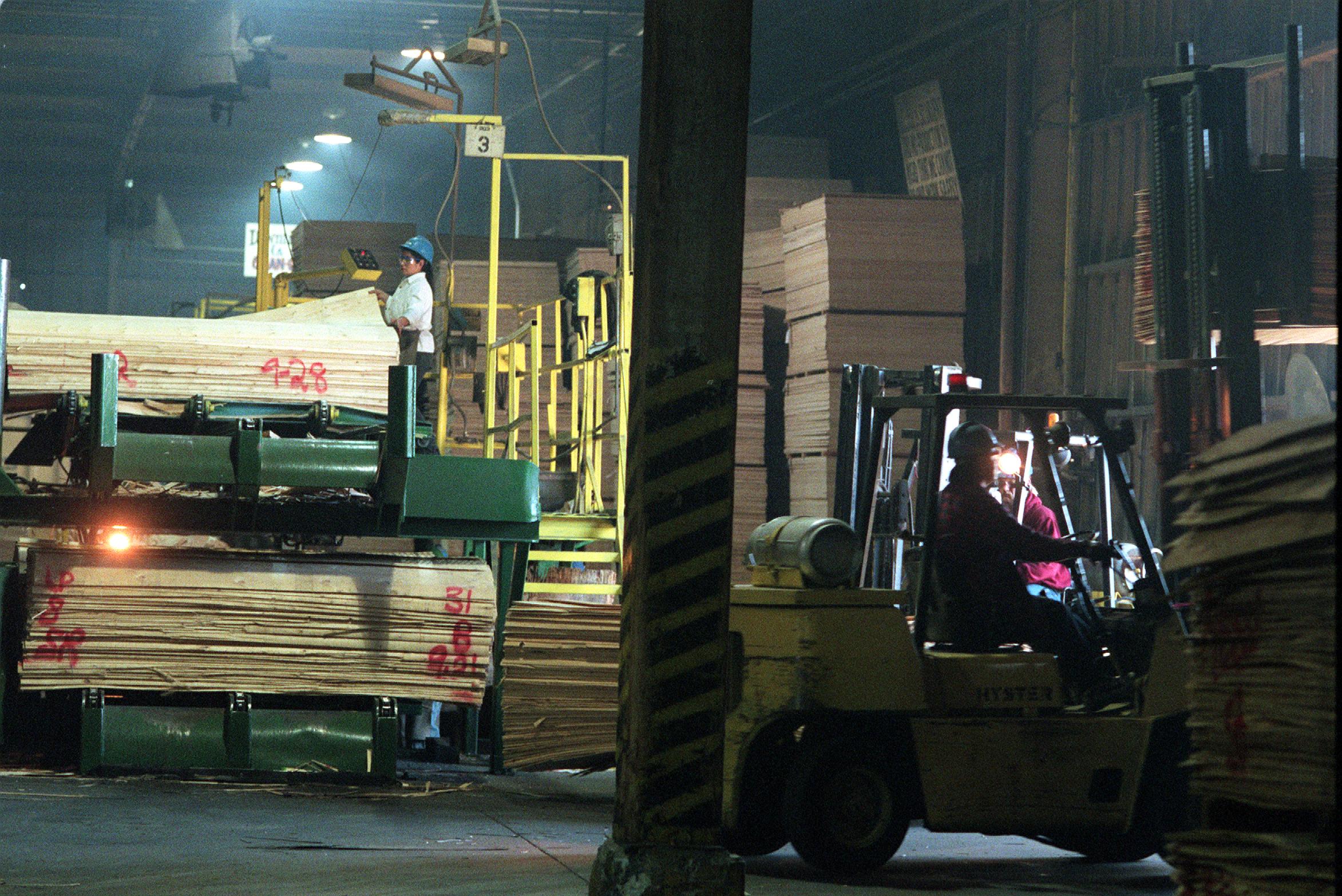
The trading pace in western Fir plywood backed off considerably compared to last week, owing to both the market calming down after the veneer plant dryer fire and the choppy holiday week.

(f.o.b. mill prices) Week
Jul 7
Week
Jun 30
Year Ago
2016
Random Lengths Structural Panel Composite Price* $422 $420 $383
Southern (west-east) 15/32-inch 3-ply rated sheathing plywood 360-385 355-380 375-397
Southern (west-east) 15/32-inch 4-ply rated sheathing plywood 365-390 360-385 380-410
Western 1/2-inch 4-ply rated sheathing plywood 463 460 412
North Central 7/16-inch Oriented Strand Board 347 345 285
*Weighted average of 11 key items

Malaysian plywood giant Shin Yang cuts down shipments to Japan

Shin Yang group in Malaysia will reduce the Japan-bound shipments of tropical plywood used in concrete formwork by nearly 30%, starting September 2017. The shortage comes as a result to the reduced timber supply. Continue reading "Malaysian plywood giant Shin Yang cuts down shipments to Japan"

Sharp rise in Brazil’s wood-based products exports

In May 2017 Brazilian exports of wood-based products (except pulp and paper) increased 23.3% in value compared to May 2016, from US$ 191.8 million to US$ 236.5 million.

Year on year, May pine sawnwood exports increased 41% in value to US$ 39.5 million. In volume terms, exports increased 29% over the same period from 152,300 cu.m to 196,000 cu.m.

May 2017 Brazilian tropical sawnwood exports increased 14% in volume, from 32,500 cu.m in May 2016 to 37,100 cu.m in May 2017 while the value of exports increased 6.5% from US$ 15.4 million to US$ 16.4 million, over the same period.

Brazil's pine plywood exports increased 28% in value in May 2017 compared to levels in May 2016, from US$ 34.5 million to US$ 43.7 million. In volume terms, exports increased 17% over the same period, from 131,700 cu.m to 154,000 cu.m.

Tropical plywood exports also increased in May rising 2.5% in volume terms year on year but the value of exports fell around 2% from 12,100 cu.m (US$ 5.0 million) in May 2016 to 12,400 cu.m (US$ 4.9 million) in May 2017.

US wooden furniture imports growing again

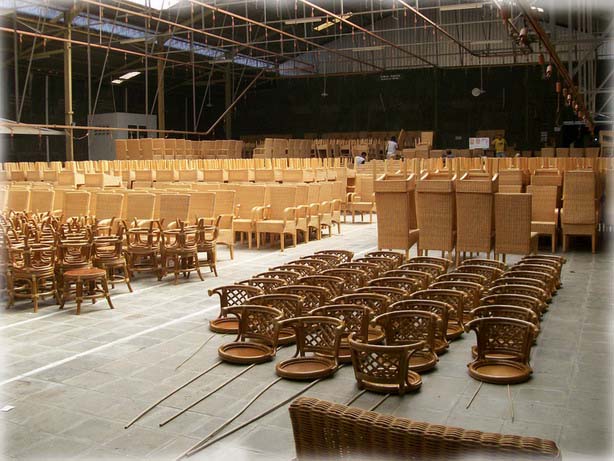
Following a decline in wooden furniture imports in March, US imports grew 18% in April to US$1.47 billion. Year to-date imports were 9% higher than in April 2016.

Imports from China, Vietnam, Canada and Europe increased in April, while Mexico, Malaysia, Indonesia and India exported less furniture to the US. Year-to-date imports from all were higher than in April last year.

China had a 45% import share in April with US$662 million’s worth of wooden furniture shipped to the US. Imports of all types of wooden furniture grew in April.

Imports of kitchen furniture increased the most, followed by office furniture.

Business expansion reported by US furniture manufacturers

GDP growth slowed to 1.2% in the first quarter of 2017, according to the second estimate by the US Department of Commerce. This is up from the first estimate of 0.7%. In the fourth quarter, real GDP increased 2.1%. Investment in non-residential construction and personal consumption were larger in the first quarter than previously estimated.

The unemployment rate was almost unchanged at 4.3% in May. The rate has declined 0.5 percentage points since January.

Economic activity in the manufacturing sector expanded in May, according to the latest survey by the Institute for Supply Management. Furniture manufacturing reported the second-highest output growth in May of all manufacturing industries. Raw material prices increased for furniture producers. Both furniture and wood products manufacturers reported higher new export orders in May.

Consumer confidence in the economy declined significantly in June, according to the University of Michigan’s survey of consumers. The loss in confidence was larger for Republican voters than for Democrats mainly because Republicans believe proposed economic policies are less likely to be passed.

Overall consumers are less optimistic about the future of the US economy despite higher household incomes and a strong job market. Personal consumption expenditures are still expected to grow 2.3% in 2017.

Pfeifer Group boosts wood pellet production at Kundl site to meet growing demand on the Italian market

The Tyrolean Pfeifer Group has invested EUR 5 million in pellet production at the Kundl site. The Austrian wood industry company wants to set the course for further expansion on the growing Italian pellet market. Continue reading "Pfeifer Group boosts wood pellet production at Kundl site to meet growing demand on the Italian market"

Chinese wood products companies urged to strengthen capacity to comply with US regulations

It has been reported that the USA Act of Formaldehyde Standard for Wood Composite Products had been introduced so that all composite wood products sold, supplied and manufactured in the USA must meet the new regulation.

Wood products are an important export product for China and the value of wood products exports exceeded US$30 billion in 2016. Of this total, the export value of composite wood products was US$7 billion.

The Chinese government’s Inspection and Quarantine Service has urged domestic wood products enterprises to pay more attention to satisfying the regulations in importing countries.

They have advised enterprises to utilize raw materials whose formaldehyde emission comply with the standard of wood composite products in the USA regulation.

Enterprises have been advised to establish a sound system to control the export of toxic and harmful substances in wood products to ensure that composite wood products enter the US without difficulty.

The government is working to transform and upgrade China's wood products industry to enhance added value production. The focus is on technical training, formaldehyde detection, improved self-inspection and control, strengthen product innovation and design as well as the creation of brands and image.

Swedish softwood lumber exports 21% yoy in April

During April 2016, the Swedish sawmills exported much less softwood lumber than in March or April 2016. Also, the export volume from January-April fell, as compared to the previous year.

The softwood exports in April summed 947,000 m2, 21% less than in April 2016. During the first 4 months of 2017, there were 4.3 million m2 of softwood lumber exported, which represents 3% less than in the same period last year.

Two-thirds of the exports remained in Europe, while exports to Africa and America declined sharply in the mentioned period.

April 2017 1.000 m3 % Apr'16 Jan-Apr'17 % Jan-Apr'16
Europa

617,6

-17%

2.684,0

-2%

Africa

148,5

-36%

642,5

-24%

Middle East

33,2

-35%

160,4

-12%

East Asia

133,8

-13%

690,2

14%

America

7,8

-56%

131,3

52%

Oceania

5,8

106%

15,5

-6%

Total

947,0

-21%

4.324,0

-3%

The UK remains, by far, the biggest Swedish softwood lumber importer, with almost a third of Sweden's total exports.

The second and third exporters are Egypt and the Netherlands, followed by Norway and Germany.

Exports to China and the USA have fallen sharply after high levels in March. Algeria has the strongest decline in deliveries in the top 10 countries. Only the deliveries to Japan and France rose in April.

April 2017 1.000 m3 % zu Apr'16 Jan-Apr'17 % Jan-Apr'16
UK

202,6

-17%

881,4

-1%

Egypt

87,5

-10%

333,1

-23%

Netherlands

74,3

-12%

323,0

2%

Norway

74,4

-16%

317,6

11%

Germany

71,2

-28%

309,7

-14%

China

43,5

-39%

302,3

12%

Denmark

64,0

-28%

288,1

-9%

Japan

67,6

7%

276,0

14%

Algeria

20,9

-65%

139,1

-27%

France

36,3

14%

132,6

-4%

The average price of the deliveries amounted to 1,998 SEK / cbm FOB in April. This is 7.8% more than in April of the previous year.

EOS general assembly talks about Croatia’s oak logs export ban

The government in Croatia has put a two-year ban on the export of oak logs, due to a bark beetle infestation in 14 Croatian counties. This has drawn awareness during the recent European Organisation of the Sawmilling Industry (EOS) general assembly in Vienna.

As reported by TTJ Online, regulations on limited log transport have been introduced to prevent spreading of the harmful organism (Corythucha arcuata), and it is expected to last for the next two years. Any transfer of wood which has completely or partially retained its natural surface (with or without bark) and plant material is restricted.

The discussion offered the opportunity to stress, one more time that the European Organisation of the Sawmill Industry (EOS) and its members condemn any practice aiming at creating an uneven playing field and distorting the competition in the internal market,” the EOS said.

The Directive 2004/37/EC on the protection of workers from the risks related to exposure to carcinogens or mutagens at work has also been revised by the EOS delegates. The different exposure limits at the national level were accompanied by different testing method and calculations all over Europe, which means results in one member state could not be comparable with the one in a different member stat, EOS concluded

Prior to any discussion on threshold limits, uniform way of calculations and testing methods should be adopted at European level,” it said.

Nevertheless, EOS said the new threshold limit proposed by the European Commission of 3 mg/m3 was a safe and adequate value for the protection of workers. But any further reduction would be a major concern for EOS member companies as it would require changes in manufacturing processes, TTJ Online reported.

During the general assembly, it was specified that the sawn softwood production across countries in Europe is rising at a steady pace. The growth is particularly driven by buoyant export markets, as Asia. Despite the raw material availability challenges, the sawn hardwood production is overall stable.

Also, Sampsa Auvinen, CEO of Norvik Timber Industries, has been re-elected as president of EOS for his second term, while Ernest Schilliger (Schilliger Holz) and Joël Lefebvre (Groupe Lefebvre) are both re-confirmed as vice-presidents respectively for softwood and for hardwood.


Germany: Wood products prices in June 2017

In June, producer prices for wood products in Germany are largely at the levels of May. Only for individual assortments we can observe a slight upward movement. These are battens, raw chipboards and HDH panels.

As compared to the same month last year we can notice almost an identical image as in May. Narrow boards, pellets, wood chips and beech blocks are below the level of 2016, while all the other products are above.

Producer Price Index Commercial Products
(2000=100)
June
2016
May
2017
June
2017
Change
June 2016
to 2017
Spruce and Fir lumber (Picea abies Karst.) 112.6 115.7 116.3 3,29%
Lumber according to DIN 4074/S10 115.5 117.7 117.2 1,47%
Finger-jointed squares and beams (KVH) 102.3 104.4 104.8 2,44%
Boards, width over 16 cm 115.9 122.9 122.9 6,04%
Boards, width from 8 to 16 cm, size from 15 to 24 mm 114.4 111.1 111.5 -2,53%
Roof battens according to DIN 4074/S10 113.9 119.4 120.8 6,06%
Reserve squared timber, A/B, 10X10 - 12X12 112.0 114.1 114.3 2,05%
Softwood, size>6mm, planed, sanded, finger-jointed 111.7 112.6 112.9 1,07%
Wood chips from softwood 109.2 99.5 99.0 -9,34%
Pellets and Briquets, compressed 121.7 119.2 118.1 -2,96%
Hardwood lumber 106.7 108.9 108.9 2,06%
Beech blocks, A/B, size 50-60 mm, length 3m, damped 104.8 102.3 102.3 -2,39%
Beech frames, size 26-32 mm, length  3m, undamped 106.9 109.3 109.6 2,53%
Particle boards, raw or sanded 102.6 110.7 112.3 9,45%
Particle boards, laminated with decor 114.4 114.8 114.8 0,35%
HDF panels, size > 800 kg/m³, raw/sanded 111.8 112.5 113.7 1,70%
Laminate floorings, density > 800 kg/m³ 109.2 109.7 109.2 0,00%

Brexit not impacting EU softwood lumber deliveries to the UK

UK's softwood lumber imports grew by 40% during January-March 2017, as compared to the same period last year.

The UK imported 2 million m3 of softwood lumber from the world and most of them came from the European Union countries. Thus, the EU countries exported 1,5 million m3 to the UK, 13% more than in the first quarter of 2016.

Sweden was still the top timber exporter for the UK, with a volume of 818,279 m3. This represented a 27% increase over January-March 2016. UK's lumber imports from Latvia grew too, by 15%, reaching 236,330 m3, while the imports from Finland ascended by 20%, to 218,182 m3.

Thus, UK's softwood lumber imports kept on rising despite the Brexit and its overall effects.

TOP 10 Origins

Softwood lumber imported by United Kingdom from... (in cbm )

Origin  Jan. - March 2016 Jan. - March 2017 Change in %
EUROPEAN UNION 1,367,005 1,539,670 13 %
Sweden
644,604 818,279 27 %
Latvia
206,331 236,330 15 %
Finland
181,856 218,182 20 %
Ireland
77,309 81,560 5 %
Germany
91,692 80,255 -12 %
OTHERS 165,213 105,0
64
-36 %

France: Oak and beech logs exports to China more than triple in Q1/2017

During the first quarter of 2017, the hardwood logs exports from Europe to China tripled and reached a total of 2,6 million m3, 263% more than in the same period last year.

The bulk of exports came from France. Deliveries to China grew by 560%, from 321,061 m3 in the Q1/2016, to 2,1 million m3 in 2017. Also, Germany sent 3% more hardwood logs to China, reaching a volume of 149,443 m3, followed by Belgium, which exported 88% more hardwood logs, to a volume of 145,673 m3.

TOP 10 Exporting Countries

Hardwood: Logs exported to China from... (in cbm )

Exporting Country Jan. - March 2016 Jan. - March 2017 Change in %
European Union 714,368 2,592,837 263 %
France
321,061 2,120,060 560 %
Germany
145,093 149,443 3 %
Belgium
77,508 145,673 88 %
Latvia
91,069 80,764 -11 %
Estonia
20,537 28,970 41 %
Others 59,100 67,927 15 %
Other European countries 163 1,496 818 %
Croatia
163 1,496 818 %
TOTAL 714,531 2,594,333 263 %
Oak logs exports

The oak logs exports to China grew by 313% during Q1/2017, with most of the volumes coming from France (1,38 million m3). The overall oak logs exports thus reached a volume of 1,48 million m3, while France increased its shipping volumes by 359%.

Belgium sent 119% more oak logs to China and reached a volume of 74,264, while Germany lowered its shipments by -2%, to 12,894 m3.

TOP 10 Exporting Countries

- Oak logs exported to China from... (in cbm )

Exporting Country 2016 2017 Change in %
European Union 358,528 1,481,909 313 %
France
301,742 1,383,904 359 %
Belgium
33,882 74,264 119 %
Germany
13,165 12,894 -2 %
Slovenia
2,025 5,375 165 %
Spain
538 1,665 209 %
Others 7,176 3,807 -47 %
Other European countries - 238 %
Croatia
- 238 %
TOTAL 358,528 1,482,147 313 %

Beech logs exports

The exports of beech logs increased by 25% during the first quarter of the year, up to a volume of 247,530 m3. Exports from Germany came in first place and increased by 2%, to 132,132 m3, while Belgium exported 43% more beech logs to China (50,276 m3). France also sent 284% more beech logs and reached an exporting volume of 30,930 m3, from 8,059 m3 last year.

TOP 10 Exporting Countries

- Beech logs exported to China from... (in cbm )

Exporting Country 2016 2017 Change in %
European Union 198,712 247,530 25 %
Germany
129,835 132,132 2 %
Belgium
35,207 50,276 43 %
France
8,059 30,930 284 %
Denmark
15,183 15,709 3 %
Czech Republic
5,688 9,952 75 %
Others 4,740 8,531 80 %
Other European countries 163 147 -10 %
Croatia
163 147 -10 %
TOTAL 198,875 247,677 25 %

Other hardwood logs exports

The EU sent 377% more other hardwood logs to China during January-March 2017, reaching a volume of 749,229 m3.

France exported 6,163% more other hardwood logs, which resulted in a volume of 705,226 m3, from 11,260 m3 last year in the same period. Belgium also increased other hardwood logs exports to China, by 99%, to 16,774 m3, followed by Romania, that increased the shipping volumes by 96%, to 9,309 m3.

TOP 10 Exporting Countries

- Other Hardwood Logs exported to China from... (in cbm )

Exporting Country 2016 2017 Change in %
European Union 157,128 749,229 377 %
France
11,260 705,226 6,163 %
Belgium
8,419 16,774 99 %
Romania
4,754 9,309 96 %
Estonia
20,537 4,618 -78 %
Germany
2,093 4,360 108 %
Others 110,065 8,942 -92 %
Other European countries - 1,111 %
Croatia
- 1,111 %
TOTAL 157,128 750,340 378 %

Harvard report – US home renovation and remodeling- the growth market fueled by baby-boomer spending

The Joint Center of Housing Studies of Harvard University has released the latest State of the Nation’s Housing report.

The recovery of the housing market in recent years has helped grow US wood product imports and domestic production, both of which collapsed with the Great Recession in the late 2000s.

The national housing market has on the whole returned to normal, but the supply of homes for sale and rent is extremely tight. Even after seven consecutive years of growth, new residential construction in 2016 was well below the annual average rates of the 1980s and 1990s.

In 2016 1.17 million new housing units were built, compared 1.4 to 1.5 million in the 1980s and 1990s. The low rate of construction shows in the lack of inventory of homes for sale. Inventory was at an 11-year low with homes for sale representing only 3.6 months of supply.

The rental market is also extremely tight despite higherthan-average construction of multi-family homes.

Several factors contribute to the relatively low construction rate, according to the National Association of Home Builders. Labour shortages, strict financing requirements and limited building lot supply are the main factors that raise the cost of home development and construction. Moderately priced homes, such as small houses, townhomes, and affordable rental apartments, are in extremely short supply.

The number of new households increased from just over half a million per year during the recession to 1.2 million by 2015. But the share of adults under 34 living with their parents was still at an all-time high in 2015. The Joint Center for Housing Studies projects household growth to reach 13.6 million between 2015 and 2025. After 2025 household growth is expected to slow.

These forecasts depend not only on US economic growth, but also on immigration policies. If immigration is curtailed, growth in housing construction would be lower in the near-term. More certain is the center’s projection about spending by baby-boomers on home renovation and remodeling.

In the coming years the baby-boom generation will modify their homes, driving more investment growth in renovation and remodeling.

Flat-lining EU imports of wood furniture from the tropics

The EU imported wood furniture with total value of €459.1 million from tropical countries in the first three months of 2017, 1% more than the same period in 2016. This follows a 1.3% fall in EU imports to €1.64 billion in 2016.

EU imports of wood furniture from Vietnam, by far the largest tropical supplier, were static at €232.3 million in the first quarter of 2017. Imports increased slightly from Indonesia (+1% to €87.3 million) and Malaysia (+4% to €50.0 million) during the same period.

There was a much larger 14% increase in imports from India to €48.9 million. Imports declined 12% from Thailand to €14.9 million.

The lack of any significant upturn in EU imports of wood furniture from Indonesia in the first quarter of 2017, immediately following issue of the first FLEGT licenses, will disappoint Indonesian manufacturers, particularly when considered against the rise in imports from India which is not engaged in the VPA process and has no ready access to certified wood material.

This suggests that there is still much work to be done both to increase awareness of FLEGT licensing and ensure more rigorous implementation of EU Timber Regulation in the EU furniture sector.

More positively for the FLEGT programme, the competitiveness of Indonesia in supply of wood furniture to the EU seems to have improved in relation to China.

The value of EU imports from China fell 2.3% to €766.1 million in the first quarter of 2017. This follows a 3.7% fall in EU imports from China to €3.04 billion in 2016.

Closer analysis of the trade data reveals a lot of flux in EU imports of wood furniture from tropical countries at national level during 2017. Imports of wood furniture from Viet Nam have fallen sharply into the UK and Germany this year, whereas Sweden, France, Denmark and the Netherlands have all imported more from Viet Nam.

Imports from Indonesia have risen into the Netherlands and Spain this year, but fallen into the UK and France. The rise in EU furniture imports from India this year is mainly concentrated in the Netherlands and Germany.

EU demand for wood furniture from tropical countries also needs to be considered in the light of wider consumption and production trends. As in other sectors, there are clear signs that while demand for wood furniture in the EU is rising, competition is also intensifying. EU manufacturers, particularly in Eastern Europe, are producing more at a time when domestic consumption is growing only slowly and exports to other parts of the world are weakening.

Wood furniture suppliers in the tropics face significant competition from domestic manufacturers and manufacturers in Eastern European countries outside the EU, as well as in China.

India: Industry calls for review of GST for wood-based panels as production could be seriously affected

The assigned rate of tax under the new Goods and Services Tax (GST) system has been released. Rates range from 5% to 28% with essential food items attracting zero tax.

For wood products falling within HS 44 a GST of 28% has been set and this has caused widespread dissatisfaction amongst manufacturers of which some 85% are SMEs.

Currently these SMEs enjoy exemption from excise duty on sales up to Rs.15 million but when the GST has been applied on 1 July this year the excise duty exemption will be withdrawn.

Panel manufacturers have made representations through their State Finance Ministries to the Central Government requesting a review of the rate from 28% to 12%.

Reconstituted panel makers are arguing that a 28% duty on particleboard and MDF is too high because these products are made mostly from plantation wood, wood residues and agri-residues.

The impact of the GST on plywood prices will be significant if the duty rates remain as proposed. At 28% duty the production of panels by SMEs will be severely curtailed as many are expected to go out of business.

The impact of the GST on the major plywood manufacturers will be less severe but with a sharp fall in production from the SMEs and demand could outstrip supply. Everyone in the industry is hoping for stability in the market and anticipates the government will review the GST on wood based panels.

US imposes anti-dumping duties of up to 114.72% on China hardwood plywood

The US Commerce Department announced that it had reached a preliminary determination that some Chinese companies are dumping hardwood plywood in the US. Continue reading "US imposes anti-dumping duties of up to 114.72% on China hardwood plywood"

Dutch timber importer Fibois BV fined for non-compliance with EUTR, after Greenpeace complaint

Following a complaint filed by Greenpeace against Dutch timber importer, Fibois BV, for involvement with questionable timber from Cameroon, a Dutch administrative court has upheld a 2016 Food and Consumer Product Safety Authority (NVWA) injunction against Fibois for non-compliance with the European Union Timber Regulation (EUTR).

Fibois BV was also declared negligent and not complying with EUTR in its transaction with Cameroonian firm, Compagnie de Commerce et de Transport (CCT), in a court ruling last Saturday, 24 June.

The court upheld a decision by NVWA to penalize Fibois by putting her timber products on a watchlist. Should they not comply with regulation, the timber importer will pay a fine of € 1 800 for every cubic meter of wood and / or wood products with a maximum of €90 000.

Greenpeace has followed the logging activities of CCT for many years and exposed illegal practices plaguing the forestry sector in Cameroon in 2016 [1]. However, the Cameroonian Minister of Forestry and Wildlife, Ngole Philip Ngwese, reacted to the Greenpeace report with a media offensive. In articles published in several Cameroonian newspapers, the Minister claimed the information in the report was false and that the activities of all timber suppliers to CCT that were cited in the report were fully in compliance with the Cameroonian forestry laws. The courts have spoken contrary to the Minister.

“Greenpeace is vindicated by the court ruling against Fibois BV by the Dutch Competent Authority. It shows that the court stood by our meticulous report,” said Eric Ini, Greenpeace Africa’s Forest Campaigner. “This ruling is a clear call to the Cameroonian Minister Ngwese to instil the rule of law in the Cameroon forestry sector and sanction the likes of CCT accordingly,” added Ini.

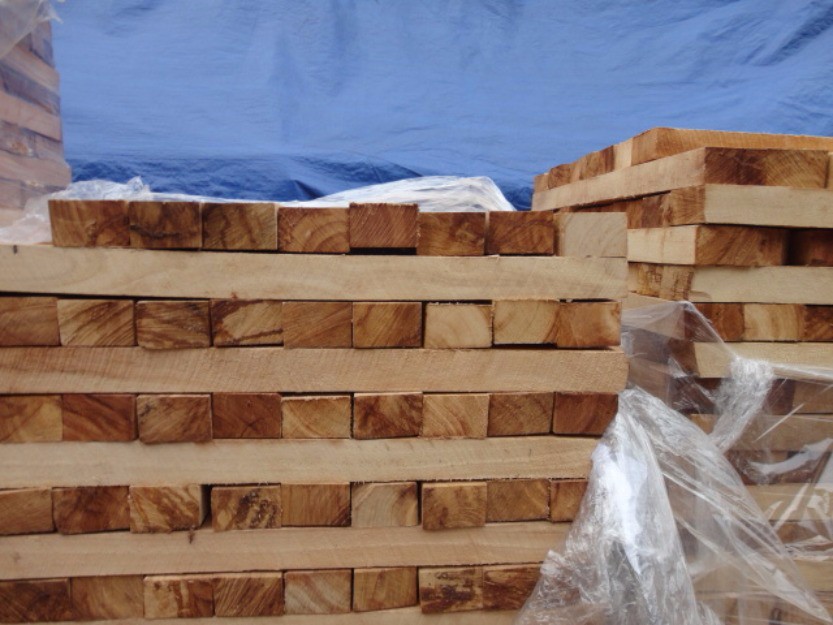
CCT has been supplying azombé timber from questionable sources in Cameroon to Fibois BV. Despite NVWA warning in March 2015 and conditional penalty in 2016 to Fibios BV, CCT and the Cameroonian Forestry and Wildlife Ministry remained indifferent to concerns from the international market. CCT is trading timber sourced from highly destructive logging operations, several of which were exposed to be involved in illegal logging according to a Greenpeace report published in 2015. Greenpeace traced the timber from CCT to many importers in Europe, including Fibois BV in Purmerend in the Netherlands.

“The Dutch court ruling against Fibios highlights lapses in credibility and control in supply chains that the Cameroonian government can no longer afford to ignore. We hope Forestry and Wildlife Ministry officials in Cameroon will implement laws to bring sanity around the forestry sector,” concluded Ini.

Japan-an emerging market for the Italian furniture

Designer furniture is one of the four “Made in Italy” industrial sectors, along with mechatronics, automotives and aerospace, which the Italian government aims to invest in to increase the volume of trade between Italy and Japan, as announced in the last institutional mission to Tokyo last November.

The conditions are good, starting from the recovery in the Japanese economy, which grew beyond expectations in the first quarter, up 2.2% on the year. According to the Italian daily Il Sole, exports of designer Italian furniture to Japan increased 37.4% between 2010 and 2016, reaching an overall value of almost €122 million last year. The 3.7% decline registered in 2016 is not a concern, said the president of wood and furniture association FederlegnoArredo (FLA) Emanuele Orsini, as quoted by Il Sole.

That is both because it came after strong growth in 2015 and because 2017 has already started with a an acceleration, registering an increase of 20.6% in January.

“We are looking at the medium to long term period, betting on the upswing of investments launched by the new government, which is also driving the real estate market and construction, and the Olympic Games in Tokyo in 2020, which will bring in numerous real estate investments.”

This will bring advantages not just for furniture and lighting, but also for the entire wood-furniture sector, which exports €133 million to Japan and can play the card of anti-earthquake security: it is not a coincidence that the wood construction industry has registered growth of 28.2% in the past year, an increase of 148% compared to six years earlier, Il Sole reported.

The volumes for now are relatively small. Despite the stylistic and cultural affinities between Italian and Japanese design (it is enough to think of the many Japanese designers that work for Italian furniture companies), the geographical distance and the diversity of rules and certifications between the two countries – with the subsequent logistical and distributive difficulties – have in part slowed down Italian exports to Japan, up to now. It is stuck at 22nd place in the rankings of end-markets for the sector. But the potential is there, explained Orsini: “Italy is the eighth supplier of Japan and the first for high-range furniture,” he said.

The interest from companies has been confirmed by the several private initiatives launched in recent months on the logistical and distribution front, and by those promoted by the FLA sector association, which last February took a business to business mission to Tokyo and is preparing to welcome a Japanese delegation to Italy in the fall.

“The volumes of the US or China are not there,” said the FLA president. “But it is a very interesting market, also to diversify markets, a fundamental approach for Italian companies,” he said. And Japan can function as a bridge to reach other emerging markets in Southeast Asia, such as Indonesia and Malaysia.

The most noted “Made in Italy” brands have been present for a while in the country. Others are arriving and others still are reviewing their distribution strategy, which increasingly passes through single brand stores or dedicated areas within multi-brand stores, the Il Sole report concludes.

DONG Energy to convert its Asnaes Power Station in Denmark to wood biomass

DONG Energy converts its Asnaes Power Station in Denmark from coal based production to sustainable wood biomass.

According to the announcement, the company placed around EUR 80 million order with Valmet for a 140 MWth biomass-fired HYBEX power boiler plant featuring bubbling fluidized bed (BFB) technology.

Kai Mäenpää, Vice President, Energy Sales and Services Operations of Valmet, commented: 

“Valmet is very pleased to be part of Denmark’s decarbonization program and selected technology partner for DONG Energy. DONG Energy has taken exemplary steps in converting its old coal fired power plants to modern, more sustainable power plants which are 100% powered by renewable fuels.”

DONG Energy is one of Northern Europe’s leading energy groups. It develops, constructs and operates offshore wind farms, generates power and heat from its power stations as well as supplies and trades in energy to wholesale, business and residential customers.

The group has approximately 5,800 employees and in 2016 generated revenue of DKK 61 billion (EUR 8.2 billion).

DONG Energy has decided that by 2023, coal will no longer be used as fuel at the company’s power stations.

The decision is a result of the company’s vision to lead the way in the transformation to a sustainable energy system and to create a leading green energy company. 

Since 2006, DONG Energy has reduced its coal consumption by 73 per cent, and the company has now decided to entirely phase out the use of coal. By 2023, the use of coal as fuel at DONG Energy’s power stations will have stopped completely. The power stations will be replacing coal with sustainable biomass. 

Coal is still one of the most commonly used fuels worldwide. Around 40 per cent of the world’s electricity is produced from coal, even though coal is the fuel emitting the most CO2. DONG Energy is the first among the large European energy companies to decide to phase out coal for the production of electricity and heating completely.

China’s forestry trade hits 70.97 billion US$ in the first half of the year

China's forestry trade volume reached 70.97 billion U.S. dollars in the first half of this year, up 10.8 percent year on year, official data showed Monday.

Total value of the forestry sector's output reached 2.77 trillion yuan, up 7.4 percent year on year, according to China's State Forestry Administration (SFA).

China's forest parks saw about 700 million visits in the first six months of this year, up 16.7 percent year on year and creating output value worth 550 billion yuan.

The SFA will allow some demonstration areas to develop forestry tourism and other sub-sectors as well as accelerating the establishment of industrial investment funds and private equity projects supporting emerging and strategic forestry sub-sectors.

China's forestry aims to see its total industrial output value reach 8.7 trillion yuan by 2020, according to the development plan for the period of 2016 to 2020.

Newsletter

Subscribe to our digital newsletter for your daily digest of essential news, views and analysis from the international wood industry delivered directly to your inbox.


0