
Article archive

European flooring market continues to recover

The European wood flooring industry continues to experience moderate growth, benefiting from encouraging economic developments, especially in construction activity.

Compared to the same period last year, provisional results for the first half of 2017 point to a continuation of the positive parquet consumption trends observed in 2016 and during the first quarter of 2017.

These are the main conclusions of the market discussion of the Board of Directors of the European Federation of the Parquet Industry (FEP) when they met in September 2017. The promising developments reported by FEP members were registered in all countries where FEP members are present, with no single country reporting a decline in consumption.

The following conclusions on the market for real wood flooring were drawn for each country:

Austrian sales increased 2% during the first half of 2017 compared to the same period last year despite intense competition from alternative flooring types. Belgian consumption increased 2.5% in the first three months of 2017.

Denmark's market is growing at an annual rate of around 1%-2% in line with growth in construction activity. Sales have been stable in Finland this year, an improvement after several years of decline. French demand grew by an estimated 3% in the first half of 2017.

In Germany sales increased by 2% in first half of 2017 reflecting good performance of the construction sector and despite shortages of craftsmen and harsh competition with other flooring solutions. Sales in Italy increased 1.5% in the first half of 2017 on the back of positive economic developments in the country.

Sales in the Netherlands continue to improve, rising an estimated 7% in the first half of 2017 due to good performance of the housing sector, but affordability of wood raw material and availability of some species is problematic. Parquet consumption in Switzerland was flat in the first half of 2017, a situation is expected to remain unchanged in the second half of the year.
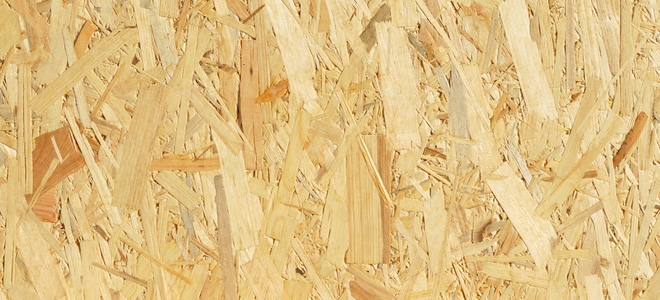
North American OSB prices increased by nearly 20% since September 2016

The price of OSB in North America increased by 4.4% in September and has risen 19% and 38% since September and January 2016, respectively.
The surge was in contrast with moderate increases in prices paid for gypsum products (+0.3%) and ready-mix concrete (+0.2%). The price of softwood lumber fell 0.9% in September, according to the latest Producer Price Index (PPI) release by the Bureau of Labor Statistics.
After declining by a total of 4.1% in June and July, the OSB price index has increased 7.5% over the past two months.
More recent data published by Random Lengths shows an even steeper increase over the past year in the price paid by end-consumers (e.g. builders and remodelers) for OSB.
Contrary to most builders’ experiences in September, the BLS report showed prices paid for softwood lumber declined over the month. Even so, the index is substantially higher than it was when litigation was initiated in the softwood lumber trade dispute in November 2016.
Two important factors drive the disparities between price changes builders have experienced and the PPI index changes:
1.The producer price index tracks prices paid by wholesalers, distributers, and retailers rather than what those businesses charge customers.
2.The index does not include prices paid for Canadian products as it does not include imports (just as the consumer price index does not reflect prices paid for exports).
The economy-wide PPI advanced 0.4% in September after a 0.2% increase in August. The increase was driven by 0.7% and 0.4% gains in prices paid for goods and services, respectively. Final demand prices for core goods (i.e. goods excluding food and energy) increased 0.3% and has increased in all but one of the last 11 months. Final demand prices less food, energy, and trade services rose 0.2% for the second consecutive month.
Over 60% of the increase in prices paid for services was due to a 0.8% advance in margins for final demand trade services (i.e. changes in margins received by wholesalers and retailers). In contrast, prices for residential real estate loans fell 2.6%.

SmartLam quadruples CLT production at former Weyerhaeuser site

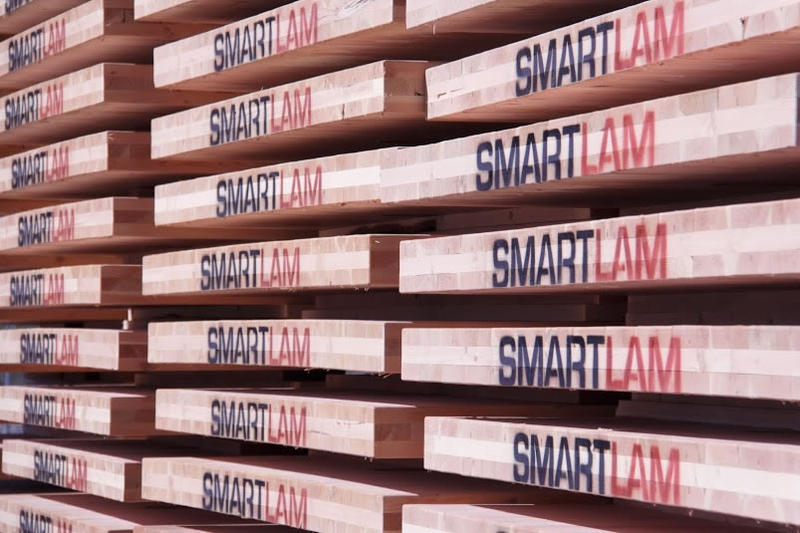
SmartLam, the first commercial manufacturers of cross-laminated timber (CLT) in the U.S., is expanding its operations and headquarters into a former Weyerhaeuser lumber mill property - quadrupling its production.

Going from 20,000 cubic meters of CLT annually to over 80,000 in the new facility, the company will also install a state-of-the-art equipment line and add 75 new employees. The expanded site will also help SmartLam develop new types of engineered wood.

As more architects and builders learn about the performance and efficiency of CLT, demand for our products has accelerated rapidly,” Casey Malmquist, president and general manager of SmartLam, said. “We have been looking for the right location to continue to grow our company as we launched it, mindful of the available resources, positioned optimally to receive locally-sourced raw materials, and accessible to multiple modes of transportation. This site is the right home for us.”

Cross-laminated timber is a solid, large scale, prefabricated, engineered wood panel typically made of multiple layers glued to form structural panels with enhanced strength, rigidity, and dimensional stability.

CLT advocates say it can be used to construct buildings of equal strength and fire-resistance as those made of steel and concrete. It has also fueled the passions of architects and environmentalists, who believe it to be a much greener method for housing the world's growing population.

Due to CLT's benefits for carbon capture and reduced CO2 emissions in construction, CLT has sparked interest worldwide. Proposals for new projects include a 100-story tower in London, a 40-story building in Stockholm, and a residential complex in Vancouver. The U.S. is even on board. High-tech engineering firm Katerra will open a giant CLT factory in Washington. A 12-story CLT highrise in the works in Portland.

The production of CLT has the potential to create significant job growth across the Pacific Northwest, according to a study published this summer in Oregon.

SmartLam sources wood for its manufacturing processes from regional forest vendors within 200 miles of its Columbia Falls plant and produces more than one million board feet of CLT each month, according to officials.

Southeast Asia forest protection will significantly affect Japanese construction sector

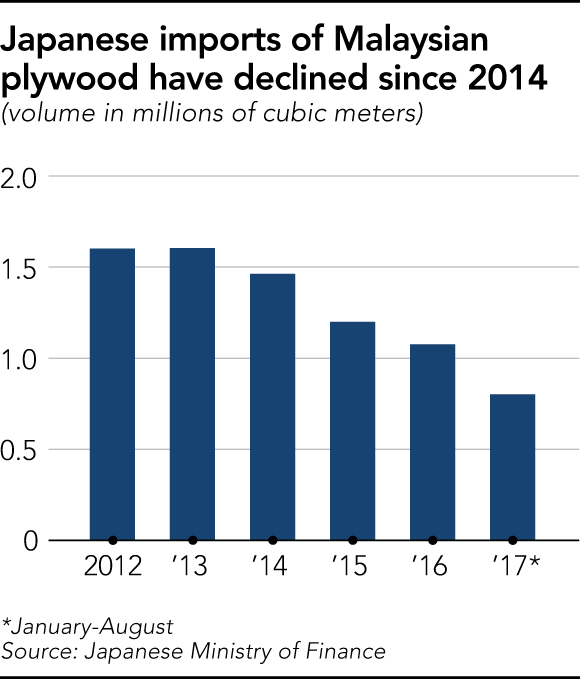
The construction sites in Japan depend a lot on the lumber from Southeast Asia countries, which are now cutting the exports due to deforestation concerns.

While there are hopes that Japan's own lumber industry can pick up the slack, that is unlikely. Plywood from Japanese trees lack the strength of the stuff from Southeast Asia, and there simply is not enough of it. Meanwhile, there are nascent moves to adopt a long-term solution -- using Japanese technology to help Southeast Asia's forestry industry gain sustainability, Nikkei Asian Review reported.

For now, the Japanese's concern is building over environmental regulations in Malaysia. The Sarawak state government has raised the "timber premium" that it levies on commercial logging back in July, in an effort to protect tropical forestland. A cubic meter of lumber is now taxed at a uniform $12, compared to a maximum of 70 cents previously.

Meanwhile, Malaysia has reduced its export quota to 20% of total logging volume. Previously, it was 30%. The country has also introduced a restriction on logging that fluctuates according to the size of the trees being felled. Due to the higher tax and tighter restrictions, prices of Malaysian plywood exports to Japan are on the rise, with the median price of October-November shipments reaching $560 per cubic meter, up over 20% from the June contract price, Nikkei Asian Review reported.

Moreover, a big Malaysian plywood maker says it will cut exports to the country by 30%.

Southeast Asian lumber has superior strength, and Japan has an especially heavy reliance on the region for the plywood boards used to shape concrete at construction sites. These boards are sawed from tall, nearly 50-year-old meranti and other trees that have few knots.

The amount of plywood that Japan uses every year for formwork is estimated at about 700,000 cu. meters, of which nearly 90% is from Southeast Asia, mainly Malaysia and Indonesia, according to the Japan Plywood Manufacturers' Association.

Also, Seihoku, the largest plywood board maker in Japan, plans to ship domestically produced plywood boards to compensate for the coming drop in Southeast Asian imports. But industry insiders say domestic alternatives can compensate for only 30% of the estimated shortfall in Southeast Asian imports.

As Nikkei Asian Review reported, Japanese products are typically made from relatively knotty coniferous trees. According to a construction company source, formwork material made of Southeast Asian products can be reused about 10 times -- twice that of molds made of Japanese wood. Even though there is a Japanese government policy to promote the country's lumber industry, Koki Shobayashi, the president of Tokyo lumber trader SIT, believes it would be difficult to make up for the entire shortfall in formwork-use plywood with domestic boards.

As for helping Southeast Asia's forestry industry gain sustainability, Japanese buyers should "take advantage of Japan's technology to support planting projects and product development efforts in Southeast Asia," said Yoichi Hosoya, who leads Sumitomo Forestry's Indonesia planting operation.

According to Hosoya, Japanese technology can come in handy in a number of ways. It could be used to help improve soil, to more efficiently log the innermost areas of a forest and in transportation.


At the moment, boards from these farmed trees comprise less than 10% of what Japan imports for formwork use. Perhaps this could change: Japanese trading house Mitsubishi Corp. and a Malaysian company are engaged in forest farming in Sarawak, and the Japanese government in May worked out a development support policy for Malaysia that includes assistance in protecting the environment.

Latvia: Roundwood prices on a negative trend

During the second half of 2016 in Latvia, the average purchase prices of roundwood kept declining, as compared to the first half of the year. Moreover, the price dropped for the third year in a row.
According to the latest data of the Central Statistical Bureau (CSB), within the softwood sector, the greatest reduction was observed in purchase prices of pine sawlogs in diameter under 14 cm, within hardwood sector – in purchase prices of birch sawlogs in diameter 18–24 cm.
Reduction still recorded in purchase prices of coniferous sawlogs
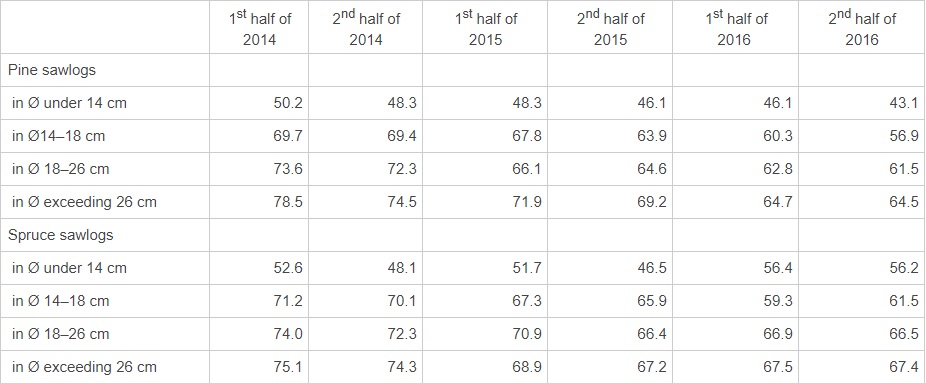
Compared to the 1st half of 2016, in the 2nd half the most notable decline within the softwood sector was observed in purchase prices of pine sawlogs in diameter under 14 cm (of 7 % or on average 3 euros/m3 (excluding VAT)) and of that in diameter 14–18 cm (6 % or on average 3 euros/m3 (excluding VAT)). The smallest reduction was recorded in purchase prices of pine sawlogs in diameter 18–26 cm (of 2 % or on average 1 euro/m3 (excluding VAT)) and in purchase prices of spruce sawlogs in diameter 18–26 cm (1 %). No changes were registered in purchase prices of pine sawlogs in diameter exceeding 26 cm (65 euros/m3 (excluding VAT)), spruce sawlogs in diameter under 14 cm (56 euros/m3 (excluding VAT)) and spruce sawlogs in diameter exceeding 26 cm (67 euros/m3 (excluding VAT)). The only increase was recorded in purchase prices of spruce sawlogs in diameter 14–18 cm (of 4 % or on average 2 euros/m3 (excluding VAT)).

Average purchase prices of softwood sawlogs, euros/m3 (excluding VAT)


Sharpest increase and decrease recorded in birch sawlog prices
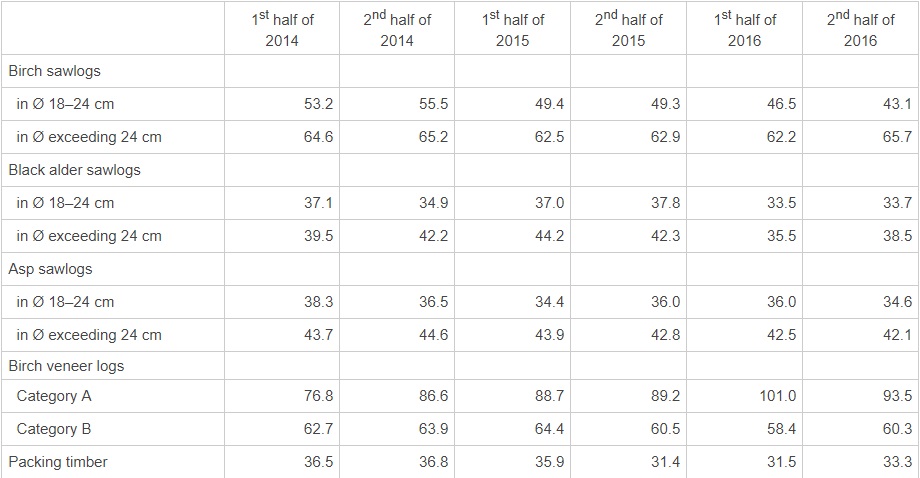
Compared to the 1st half of 2016, in the 2nd half the greatest drop within the softwood roundwood sector was registered in purchase prices of birch sawlogs in diameter 18–24 cm (of 7 % or on average 3 euros/m3 (excluding VAT)). The smallest decline was observed in purchase prices of asp sawlogs in diameter 18–24 cm and that in diameter exceeding 24 cm – of 4 % or 1 euro/m3 (excluding VAT) and 1 %, respectively. The average purchase prices of black alder in diameter 18–24 cm grew by 1 %, while that of black alder in diameter exceeding 24 cm by 9 % or 3 euros/m3(excluding VAT). Within the hardwood roundwood sector, the greatest rise was registered in purchase prices of birch sawlogs in diameter exceeding 24 cm – of 8 % or 5 euros/m3 (excluding VAT).
Compared to the 1st half of 2016, in the 2nd half the average purchase prices of birch veneer logs of category A fell by 8 euros/m3 (excluding VAT) or 7 %. The average purchase prices of birch veneer logs of category B rose by 3 % or on average 2 euros/m3 (excluding VAT). Compared to the 1st half of 2016, the average purchase prices of hardwood packing timber increased by 6 % or 2 euros/m3 (excluding VAT).

Average purchase prices of hardwood sawlogs, veneer logs and packing timber,euros/m3 (excluding VAT)

Compared to the 1st half of 2009 when due to the economic crisis timber purchase prices reached the lowest level, in the 2nd half of 2016 the greatest increase was recorded in the average purchase prices of spruce sawlogs in diameter under 14 cm – of 124 % or on average 31 euros/m3 (excluding VAT). Purchase prices of pine sawlogs have grown by 54–60 %, while that of other spruce sawlogs by 53–61 %.
Over the seven recent years, the average purchase prices of veneer logs of category A rose by 97 % or on average 46 euros/m3 (excluding VAT), and that of veneer logs of category B by 52 % or on average 21 euros/m3 (excluding VAT). Purchase prices of birch sawlogs in diameter exceeding 24 cm grew by 77 % or on average 29 euros/m3 (excluding VAT). Compared to the 1st half of 2009, in the 2nd half of 2016 the average purchase prices of hardwood packing timber increased by 51 % or 11 euros/m3 (excluding VAT). The average purchase prices of asp sawlogs went up by 36–38 %. Within the hardwood sector, the smallest rise was recorded in purchase prices of black alder sawlogs in diameter 18–24 cm (of 1 %), whereas purchase prices of black alder sawlogs in diameter exceeding 24 cm fell by 1 %

Myanmar pursues EU-led forest protection agreement

The Myanmar government has recently taken another step to join a EU-led agreement to combat illegal logging and forest management. The measure will help ease timber exports to the European market.

According to Myanmar Times, various stakeholders, from all states and regions, have established an executive committee that will negotiate to be part of the EU-led Forest Law, Enforcement, Governance and Trade, Voluntary Partnership Agreement (FLEGT-VPA).

The FLEGT-VPA facility helps members to combat illegal logging and strength forest governance while encouraging sustainable economic development in countries that produce or process timber and export to the EU, according to the EUFLEGT website.

The executive committee is expected to be formed by latest next January, as Ko Zaw Thura, from the Union Interim Working Group, announced.

Private businessmen are nearly ready and the government is also ready. If we manage to finish, the three-party committees will be ready by December or next January,” said Ko Zaw Thura.

In March 2014, the EU agreed to Myanmar’s invitation to officially partake in the FLEGT-VPA preparation phase. In January of the following year, an inception workshop on EU-Myanmar FLEGT-VPA preparation phase was held in Mandalay city.

The benefits of the FLEGT-VPA are threefold – it defines a framework to guarantee the authenticity of timber, allows for better cooperation by developing tracking system for timber trade, and improves forestry management, Myanmar Times reported.

The main thing is that we need to further educate the citizens. We deal with resource sharing, so it’s also intertwined with peace process. Indeed, the majority of trees and forests are located within borders and ethnic regions. Their cooperation is essential,” added Ko Zaw Thura.

Yet, there is a need for an insurance system to certify legal timbers, between the EU and Myanmar to become trade partners in the sector. Such a mechanism needs nearly two years to be developed.

If we create an insurance system, then we can engage trade not only with the EU but also with other nations. To ensure that the timber is legal, many points need to be discussed, Such as land use. Is home-grown timber legal or not? We also have to discuss license fees,” added Ko Zaw Thura.

It took Indonesia 10 years to get the official license. Their model is the best. They keep their people informed. People can also investigate and report on the matter. There is a right to sell timber even at district level,” he said.

Currently, Myanmar prohibits timber production across the country since the 2015-2016 financial years, albeit in Kyunhla township, Sagaing Region. Local people’s understanding of legal timber production is paramount and so is the government’s systematic verification of timber, according to Myanmar Times.

The forest coverage in Myanmar decreased from 61% in 1975 to 47% in 2010, at a depletion rate of 0.5% per year on average. Illegal timber production and related activities are much to blame.

US lumber prices at slower pace; demand drops

The recent drop in demand for framing lumber in the US gave way to a modestly slower sales pace. Even so, many dry framing prices continued to climb, although in smaller volumes.
Many producers maintained or extended solid order files, keeping them firmly in command of the market. There were exceptions, with some Southern Pine and green Douglas Fir prices softening and cracks developing in Western S-P-F 2x4 studs. The Random Lengths Framing Lumber Composite Price held at $440.

Week
Oct 13
Week
Oct 6
Year Ago
2016
Random Lengths Framing Lumber Composite Price* $440 $440 $358
KD Western S-P-F #2&Btr 2x4 R/L Mill Price 443 436 325
KD Eastern S-P-F #1&2 2x4 R/L, delivered Great Lakes 550 546 415
Green Douglas Fir Std&Btr 2x4 R/L (Portland) 470 472 332
Southern Pine (Westside) #2 2x4 R/L 427 427 434
KD Coast Hem-Fir #2&Btr 2x4 R/L 467 465 330
Ponderosa Pine (Inland) #2&Btr 1x12 R/L 700 690 665
* Weighted average of 15 key items

Random Lengths Panel Market Report
Structural panel sales slowed as buyers grew more cautious. Demand from the eastern half of the continent kept prices of OSB on a firm to higher track.
While activity in the West was quiet, sales to eastern markets were steady. Southern Pine plywood traders grinded out sales amid buyer reluctance to purchase any volume or replenish inventories. Sales overall were steady and prices held. Western Fir plywood sales were steady, but the pace dropped noticeably.

(f.o.b. mill prices) Week
Oct 13
Week
Oct 6
Year Ago
2016
Random Lengths Structural Panel Composite Price* $538 $536 $377
Southern (west-east) 15/32-inch 3-ply rated sheathing plywood 507-528 507-528 365-385
Southern (west-east) 15/32-inch 4-ply rated sheathing plywood 512-530 512-530 370-400
Western 1/2-inch 4-ply rated sheathing plywood 525 525 378
North Central 7/16-inch Oriented Strand Board 455 452 287
*Weighted average of 11 key items

FSC and global companies unveil the Vancouver Declaration

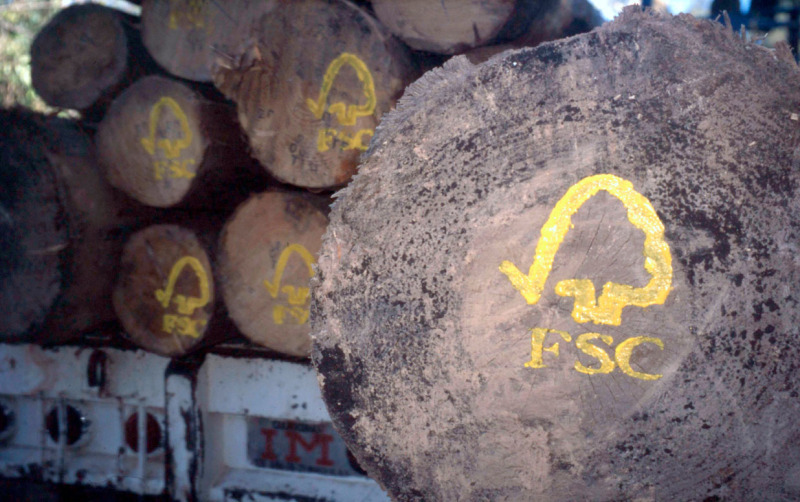
The Forest Stewardship Council (FSC) this week launched an ambitious new initiative to increase the use of materials from responsibly managed forests. The Vancouver Declaration allows businesses which use these natural products to pledge their commitment to increase responsible sourcing.

Global companies like IKEA, H&M, SIG, Marks and Spencer, Jysk, Mitsubishi Paper Mills or Fuji Xerox have pledged support to the initiative. The aim is to get more businesses across the entire supply chain on board.

Kim Carstensen, Director General of FSC, said: "It's fantastic to see so many great businesses supporting this declaration. Our forests are a wonderful yet delicate natural resource, and a lot of people's lives depend of their sustainable and responsible use. By committing to using FSC-certified wood and forest products, our partners are helping to protect our forests – and the planet – for future generations."

Mikhail Tarasov, Global Forestry Manager at IKEA, commented: "IKEA is committed to only use wood from more sustainable sources (currently FSC certified and recycled) by 2020 and promote sustainable forest management beyond our own needs to make it an industry norm. This is what we call 'forest positive.' So it was natural for us to support the Vancouver Declaration. We're proud to be part of this global initiative."

The Vancouver Declaration is part of FSC's wider ambition to help businesses meet the UN's Sustainable Development Goals, as Samuel Sigrist, SIG explained: "It has been a great honour for me to present the Vancouver Declaration at FSC's 2017 General Assembly. We believe that this initiative, with its commitment to FSC certification, is a key tool in achieving parts of the UN's Sustainable Development Goals. We are the first in our industry to be able to display the FSC label on 100% of our packs. This is a major milestone for SIG on its journey to become a 'net positive' business, helping to create more natural resources than we use."

Central/West Africa: short term drop adjustment in log FOB prices

Even if a downward trend has been registered in some log FOB prices in Central and West Africa, this hasn't brought changes for sawnwood prices yet.
The drop in log FOB prices has been reported for acajou, movingui, andoung and bomanga. Both sapelli and sipo log prices are a little weaker, as demand continues to be moderate. Yet, the current supply is steady.
Moreover, in mid-September there was a fall in FOB price for doussie sawnwood caused by sudden drop in demand, but the price has now stabilized. Most prices are stable, at levels previously reported. However, some exporters suggest stocks in China are trending higher and this may eventually affect the volumes in the short term demands.
The effect on prices of any short term drop in demand could be offset by tightening the existing supply, especially in Cameroon, where heavy rains are disrupting operations.
There are rumors regarding a government plan for a 4-6 month ban on felling and export of kevazingo, starting the end of October this year. The reason is that this will allow time for the government to consult with the private sector and plan how to best control and monitor trade in this valuable timber sector.
It is anticipated that the final plan will involve priority supplies of kevazingo for companies able to guarantee downstream processing for export. Demand for kevazingo slabs from China continues to be very strong.
Middle East markets continue to perform well, with growing demand directly from Iraq. Until recently, timber for Iraq was transported through another country and final deliveries were mainly overland. An initiative needed to reverse decline in EU imports and producers were very carefully monitoring the level of business with China.
Recent reports of the continued decline in European imports of tropical timber are of concern and once again point to the need for promotional and marking initiatives by African producer countries.

Log Export Prices

West Africa logs, FOB € per m³
Asian market
LM
B
BC/C
Acajou/ Khaya/N’Gollon
225⇓
220⇓
160
Ayous/Obéché/Wawa
245
240
190
Azobe & Ekki
230
230
160
Belli
250
250
Bibolo/Dibétou
180
170
Bilinga
230
230
-
Iroko 325
300
265
Okoume (60% CI, 40% CE, 20% CS) (China only) 240⇓ 240 190
Moabi 330 300 235
Movingui 210
200⇓
160
Niove
175
160
Okan
230
205
Padouk
300
275⇓
210⇓
Sapele 270⇓ 275⇓ 210⇓
Sipo/Utile
290⇓
270⇓
255
Tali 330 320

 
Sawnwood Export Prices

West Africa sawnwood, FOB
€ per m³
Ayous FAS GMS 430
Bilinga FAS GMS 530
Okoumé FAS GMS
430
Merchantable 300
Std/Btr GMS 350
Sipo FAS GMS
540
FAS fixed sizes 555
FAS scantlings 560
Padouk FAS GMS 870
FAS scantlings 990
Strips 645
Sapele FAS Spanish sizes 505
FAS scantlings 510
Iroko FAS GMS 630
Scantlings 710
Strips
410
Khaya FAS GMS
450
FAS fixed
470
Maobi FAS GMS
620
Scantlings
630
Movingui FAS GMS
430

Plywood market in Japan is finally stable; producers record profits

Japan’s plywood sector has a tumultuous history marked by price fluctuations and trade imbalance. Also, the price-sensitive commodity faces competition from imports, which used to account for over half of the market share.

Many of the competition comes from South Sea hardwood and Russian larch logs. Up until 2015, the industry was hit by oversupply, which local producers tried to resolve by curtailing production. The market has since stabilized, demand has recovered and for the past two years, it has been a sellers’ market with manufacturers enjoying profits.

Plywood production in Southeast Asia has been declining mainly due to the difficulty of acquiring raw material logs. Dwindling resources and environmental protection have since rendered mass production of South Sea hardwood plywood and prices of imported plywood have since been climbing steadily.

The market share for imported plywood has since fallen and domestic industries that have always relied on imports are now turning to domestic softwood plywood.

Cedar, cypress and larch are readily available and the prices are stable without the influence of exchange rate fluctuations.

In the first half of 2017, shipments of domestic softwood plywood were 1,447,000 cbm, 2.2 per cent more than the same period of last year. For a unit of house, 3.12 cbm of plywood is required, up from 2.83 cbm in 2014. Besides, panel products such as structural particleboard, MDF and gypsum board are also in demand.

Lithuania: Roundwood prices on the rise in July

Roundwood prices in Lithuania increased during July 2017, as compared to the same period in 2016.
All of the sawlogs prices developed positively during the mentioned period of time. Pine could be bought for EUR 58/m3, which is a 7.40% increase from July 2016. Also, spruce and birch  prices increased by 4.83% and 10.14%, respectively, while alder made a EUR 11/m3 jump, to EUR 62/m3, going up by 21.56%.
Among the pulpwood assortments, pine could be bought for EUR 26/m3, a 8.33% increase from its corresponding month in 2016, while spruce and birch have seen 12.5% and 7.69% increase in prices.

Roadside prices of roundwood in state forests of Lithuania EUR/m³ under bark

July 2016 June 2017 July 2017 Change
July/ 2016 to July/ 2017
SAWLOGS
Pine 54 55 58 +7.40%
Spruce 62 62 65 +4.83%
Birch 69 73 76 +10.14%
Alder 51 60 62 +21.56%
Small-sized softwood 36 37 37 +2.77%
PULPWOOD
Pine 24 25 26 +8.33%
Spruce 24 25 27 +12.5%
Birch 26 27 28 +7.69%

IKEA’s sales jump 3.8%

Furniture giant IKEA has recently reported increased full year sales and announced that it now owns more wind turbines than stores, as part of the company's plan to becoming energy independent.

Thus, the Swedish furniture retailer's sales for January-August 2017 grew by 3.8%, to EUR 34.1 billion. These sales came from 817 million customers than walked inside the stores and 2.1 billion online visitors.

IKEA also unveiled proposals to sell its wares on e-commerce websites such as Amazon to mitigate a decline in store visits and has recently acquired TaskRabbit, a startup that links freelance workers with jobs.

Jesper Brodin, the new CEO, said: "We will use our stable financial situation to invest in meeting the needs of our customers even better."

As part of "making a positive impact on the climate", Ikea said that following investments in France, Canada and Lithuania, its total number of wind turbines had risen to 415.

Ikea operates 355 stores in 29 countries and the Swedish furniture retailer also announced about its intention to focus on living room furniture.

"We want to share our deep knowledge on how people live and be an inspirational source for how home furnishing can improve life at home. This year, we are putting a spotlight on the living room and have improved the living room area in all our stores and are presenting a wider range of products and smart home furnishing solution," Brodin said.

Swiss wood pellets price slightly up in October

The price for wood pellets in Switzerland has slightly went up during October 2017 and amounted to CHF 365.4/t (EUR 317.36/t), as compared to the same period last year.
As compared to September 2017, the price for a tonne of wood pellets went up by 1.35%.
Prices vary depending on the delivery quantity between 353.29 CHF / t (306.85 EUR / t) for an 8-tonne purchase to 379.31 CHF / t (329.45 EUR / t) for a 3-tonne purchase.
Larger quantities for commercial customers currently cost 338.23 CHF / t (293.77 EUR / t) for a 17-tonne purchase.
Price of wood pellets in SwitzerlandCHF/tonne October 2016 September 2017 October 2017
3 tonnes purchase quantity 377.63 373.62 379.31
5 tonnes purchase quantity 363.69 358.6 363.68
8 tonnes purchase quantity 354.25 349.41 353.29
Average price 365.2 360.5 365.4

Egger formally begins operations in Argentina

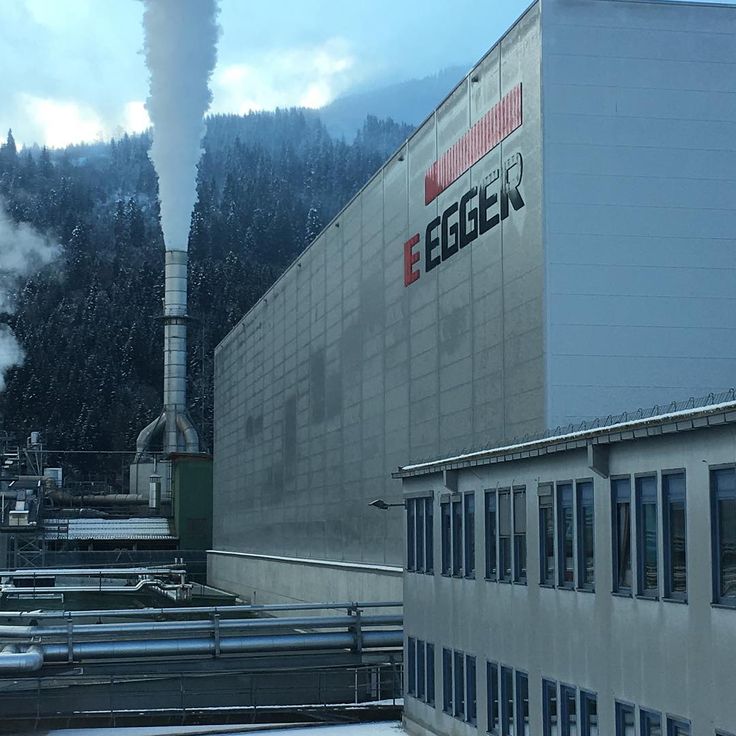
The acquisition of the Masisa industrial unit by the Egger Group took place on 29 September. This operation includes the industrial assets of the plant located in Concordia (Entre Ríos), the human resource composed of 500 employees and the management and development of the distribution network and its relationship program.

This investment is a milestone in the development and internationalization of the Egger Group, since it is the first production plant located outside Europe, from where it will continue to manufacture high added value products for the furniture and interior industry. This plant currently supplies Argentina, Uruguay and Paraguay, in addition to exporting mouldings to the US and Canada. Egger’s investment and growth plans are designed to increase production capacity to meet the demands of the South American market, thus expanding its presence in the region.

As a first action, the local management accompanied by Ulrich Bühler, member of the Management Group - Responsible for Sales and Marketing - and Hubert Höglauer, Marketing Manager of the Furniture and Interiors division, held on October 2 an event with 130 customers to share along with them the start of this new phase.

“The objective of this new phase is to continue to grow with the same force of all these years, and to continue betting on the development of the sector with new products and technologies,” said Luciano Tiburzi, General Manager of Egger Argentina.

As a next step, the Egger Argentina team will present to the different public the brand and will implement in the coming months the rebranding strategy for the distribution network and the brand in general. Egger is a leader in wood-based solutions and the incorporation of technologies to produce innovative textures and finishes. This strategy is the one that will continue developing in Argentina to offer products of excellence in the country and the region, expanding also the existing portfolio with other lines of products in wood and floors for the construction market that Egger manufactures in other plants of the world.

Economic stimulus in Italy behind rise in EU furniture consumption

According to the latest Eurostat data, EU wood furniture consumption increased 3% to Euro36.7 billion in 2016.

This compares to the preliminary estimate of Euro36.1 billion reported in May.

The latest Eurostat data reveals that wood furniture consumption in Italy increased by more than 10% in 2016, to Euro5.7 billion, recovering ground lost the previous year. This is a much larger increase than initially predicted given widespread reports of slow economic growth and weak consumer confidence in the country.

However, Italian furniture consumption last year was boosted by the Italian Stability law implemented in January 2016 to support the national economy. The law included tax credits for building renovation work, including a bonus for new furniture, and direct public support for the “Made in Italy” brand.

These gains offset a 4% decline in consumption in the UK, a trend widely forecast owing to the economic uncertainty and weakness of the British pound following the Brexit vote.

Intra-EU furniture trade continues to rise

Analysis of Eurostat trade data reveals that internal EU trade in wood furniture, which increased 4% to Euro16.2 billion in 2016, continued to rise in 2017. This trend is driven both by the slow rise in EU consumption and by rising dependence of the internal EU market on manufacturers located in lower cost member states of Eastern Europe, particularly Poland, Romania, and Lithuania.

The EU has maintained a trade surplus in wood furniture since 2011 when exports to non-EU countries overtook imports from outside the EU. This surplus remained broadly flat between the start of 2015 and the first quarter of 2016 (averaging close to Euro3 billion per annum), as both imports and exports were stable.

However, there were some early signs of a slight narrowing in the trade surplus in the second quarter of 2017 (to around Euro2.8 billion per annum) as imports began to pick up.

Germany: Wood prices for pallets and packaging at record levels

In the third quarter of 2017, prices of wood for pallets and packaging in Germany continued to rise, following a marked upturn in the second quarter, particularly in the wood materials sector. These are now also significantly more expensive compared to the previous year. 
Overall, however, prices for solid wood for pallets climbed to an all-time high in the third quarter, the German Federal Association for Wood Packaging HPE reported. 
Solid wood for pallets
Compared to the previous quarter, the index for solid wood for pallets rose by 2.2%, and as compared to the previous year by + 6.1%. With 160.7 points, the product range has reached an all-time high since the introduction of the HPE Index in 2005.
Solid wood for wooden packaging
The index for solid wood for wooden packagings rose to 145 points in the third quarter. This is 1.5% more than in the previous quarter and 1.8% more than last year. The previous record was reached in the first quarter of 2014 with 149.4 points.
Plywood for packaging
The index for plywood for packaging rose from the 2nd to the 3rd quarter of 2017. It now stands at 118 points. This is 5.1% more than in the same quarter of the previous year. 123.2 was the previous peak achieved in the second quarter of 2015.
OSB for packaging
The largest increases are shown by OSB for packaging. The index rose by 5.5%, after climbing by 3.3% in the second quarter. Compared to the third quarter of 2016, OSB is now 5.7% more expensive. However, the index still stands at a crippling 79.7 points.

100 = Qu.1 / 2005 Index value Q3 2017 Difference Q2 2017 Difference Q3 2016
Solid wood for pallets 160,7 2,20% 6,10%
Solid wood for wooden packaging 145 1,50% 1,80%
Plywood for packaging 118 3,40% 5,10%
OSB for packaging 79,7 5,50% 5,70%

FSC’s General Assembly undertakes global challenges

With growing momentum and urgency behind calls for forest conservation, the diverse membership of the Forest Stewardship Council will meet the week 9-13 October in its General Assembly.

Founded in 1994 by forward-thinking NGOs and companies, the Forest Stewardship Council uses markets to stop deforestation and forest degradation. Today it is the world's most trusted forest certification system, safeguarding nearly 500 million acres of forestland, with 32,000 companies in 120 countries marketing FSC-certified products.

"We are seeing companies step up to help protect forests, even as we all use forest products every day," said Corey Brinkema, president of the Forest Stewardship Council US. "This momentum comes not a moment too soon, as climate change puts the need for forest conservation front and center," he added.

According to the Intergovernmental Panel on Climate Change, all transportation accounts for 14 percent of global carbon emissions, while experts estimate deforestation and forest degradation to contribute up to 15 percent. Healthy forests currently offer the best way to pull carbon out of the atmosphere. Recent research in the US Pacific Northwest finds FSC-certified forest management stores at least 45 percent more carbon than standard forestry.

In the past year, companies such as Apple, HP, International Paper, Kimberly-Clark, McDonald's, Patagonia, Procter & Gamble, Target, Staples, Walmart and Williams-Sonoma have taken steps to grow demand for products from responsibly managed forests. Many of these businesses use FSC in their consumer marketing, creating a virtuous cycle driving forest conservation.

While FSC is experiencing dramatic growth in certified pulp and paper products, there remains a great opportunity to further develop markets for solid wood products – including building materials and furniture. This is a top priority for FSC US.

The FSC General Assembly is being held in North America for the first time since its inaugural gathering in 1994. FSC is the only forest certification system led by an open, diverse membership, with the General Assembly its top decision-making body. Members include Greenpeace, Sierra Club, The Home Depot, The Nature Conservancy, The Walt Disney Company, and WWF.

The Forest Stewardship Council helps consumers and companies purchase products from responsibly managed forests. FSC conserves wildlife habitat, protects clean water and respects the rights of Native people and local communities on 170 million acres of forestland in the US and Canada.

Finland: Exports of forest industry products moving from Europe to Asia

In 2016, the exports value of Finnish forest industry products totalled EUR 11.4 billion, covering 22 per cent of Finland’s exports of goods.

The real value of Finland’s exports of goods has decreased compared with the average value of the previous five years. At the same time, the proportion of forest industry products from all exports of goods has increased,” says researcher Eeva Vaahtera from the Natural Resources Institute Finland (Luke).

Majority of wood imported from Russia

According to Luke’s statistics of foreign trade in roundwood and forest industry products, 9.8 million solid cubic metres of roundwood and wood residues were imported to Finland in 2016. The value of imports was EUR 343 million. Birch pulpwood (4.6 million m3), chips (2.5 million m3) and spruce pulpwood (0.6 million m3) had the highest import volumes.

The most important import countries were Russia, Estonia and Latvia. The majority of imported wood came from Russia (roughly 85 per cent). Birch pulpwood and chips were mainly imported from Russia and Latvia. Chips and spruce pulpwood were imported from Estonia. Compared with the previous year, the volume of imported wood increased by two per cent. However, the volume of imported birch pulpwood decreased by 3.3 per cent, while the volumes of imported chips (0.9%) and spruce pulpwood (19.1%) increased.

The value of exported roundwood and wood residues totalled EUR 89 million in 2016. Softwood (0.9 million m3) and chips (0.2 million m3) had the highest export volumes. The most important export countries were Sweden (80% of the total export volume) and Egypt (6%).

Forest industry products accounted for 22 per cent of Finland’s total exports of goods

In 2016, the exports value of forest industry products totalled EUR 11.4 billion, covering 22 per cent of Finland’s exports of goods (EUR 51.9 billion).  The most significant exported products were paper (EUR 4.2 billion), paperboard (EUR 2.4 billion) and pulp (EUR 1.8 billion). The exports value of timber was EUR 1.6 billion.

In total, the real exports value of forest industry products decreased by 0.4 per cent from the year before. The exports value of pulp and paper industry products decreased by 2.1 per cent from 2015. Exports of the wood-products industry increased by 5.5 per cent.

Europe remains the main area, while the significance of Asia is increasing

Of all forest industry products, 66 per cent of exports income was from Europe. The most important export countries were Germany and the UK. Pulp and paper industry products were exported to Germany at a value of EUR 1.62 billion and wood product industry products at a value of EUR 0.24 billion. Pulp and paper industry products were exported to the UK at a value of EUR 0.70 billion.

Exports of the wood products industry to the UK (EUR 0.26 billion) were slightly higher than exports to Germany. The third most important trading partner was China, to which forest industry products were exported at a value of EUR 0.84 billion. The role of Europe in the exports of forest industry products has decreased, while that of Asia has increased over the past five years. In 2016, nearly one fifth of the total returns on forest industry products came from Asia.

The imports value of forest industry products was EUR 1.4 billion. Imported articles with the highest value were pulp (EUR 0.24 billion), paper and paperboard products (EUR 0.24 billion) and furniture (EUR 0.23 billion). The most important trading partners in the imports of forest industry products were Sweden, Estonia and Brazil.


Södra’s exports to China are on the rise

In 2017, Södra increased sales of paper pulp by more than 50 percent. At the same time, the company's sales of sawn timber in the country have increased steadily since 2010. Also, demand for products from the Swedish forest is on the increase in China.

Södra’s core markets for both paper pulp and sawn timber are located in Europe. However, China is currently one of the fastest expanding markets. In January–September this year, Södra’s sales of paper pulp increased by more than 50 percent to the country compared with the same period in 2016. Uses for paper pulp include cardboard packaging, and toilet and kitchen paper.

“Growth in China is robust. With the increased volumes provided by our investments we can tap into this growth. Demand for raw material from certified forest is on the increase with a clear focus on sustainability, and this is something we can contribute towards,” said Magnus Björkman, Vice President Marketing and Sales, Södra Cell International.

The market is showing no signs of slowing in the near future and there is also strong pressure for sawn timber to China. Södra began delivering sawn timber to the country in 2010 and sales have grown each year. Södra established a sales office for sawn timber in Shanghai in 2015. To meet rising demand in the region, an additional sales office was opened in Hong Kong on 1 October.

Starting in 2018, Södra’s position in China will be further strengthened when a new purchasing office is established in Shanghai, under the name of Södra International Trading. Focus will be on purchasing indirect materials, such as machinery and processing equipment.

Newsletter

Subscribe to our digital newsletter for your daily digest of essential news, views and analysis from the international wood industry delivered directly to your inbox.


0