Article archive

Lumber prices in the US continue to grow in November

Framing lumber prices in the US were mixed depending on the species, while the sales activity surpassed the norm of the season.
Demand was steady to brisk early in the week, especially in Western S-P-F and whitewood species in the Coast and Inland. Activity hit a lull from Wednesday on as the NAWLA Traders Market in Chicago drew a large number of traders away from their offices.
Steady demand in the early fall, along with voids in the distribution system left by Canada’s reduced shipments to the U.S. in the third quarter, kept buyers scrambling for coverage.

Week
Nov 10
Week
Nov 3
Year Ago
2016
Random Lengths Framing Lumber Composite Price* $436 $431 $344
KD Western S-P-F #2&Btr 2x4 R/L Mill Price 490 467 305
KD Eastern S-P-F #1&2 2x4 R/L, delivered Great Lakes 561 559 392
Green Douglas Fir Std&Btr 2x4 R/L (Portland) 455 457 318
Southern Pine (Westside) #2 2x4 R/L 416 405 425
KD Coast Hem-Fir #2&Btr 2x4 R/L 485 475 325
Ponderosa Pine (Inland) #2&Btr 1x12 R/L 725 725 635
* Weighted average of 15 key items

Random Lengths Panel Market Report
Structural panel prices plummeted further. Despite a third straight week of double-digit discounts, OSB producers continued to search for levels that would pull buyers off the sidelines and solidify order files.
Downward pressure on Southern Pine rated sheathing prices was unrelenting. Distributors and dealers confined purchases to absolute necessities. Prompt shipment was essential in most negotiations. Western Fir plywood sales were slow but steady, tapering off as the week progressed.

(f.o.b. mill prices) Week
Nov 10
Week
Nov 3
Year Ago
2016
Random Lengths Structural Panel Composite Price* $486 $509 $364
Southern (west-east) 15/32-inch 3-ply rated sheathing plywood 455-510 475-520 348-378
Southern (west-east) 15/32-inch 4-ply rated sheathing plywood 460-515 480-525 350-380
Western 1/2-inch 4-ply rated sheathing plywood 468 482 337
North Central 7/16-inch Oriented Strand Board 410 440 287
*Weighted average of 11 key items

UK sawmills grew lumber production by 5% during 2016

UK's sawmills produced a total volume of 3.624m m³ softwood lumber during 2016, 5% more than in the preceding year, when the production of home-grown timber amounted to 3.449m m³.

As shown in the latest Forestry Statistics published by Forestry Commission, the production in Scotland also went up by 5% to 1.871m m³. In Northern Ireland and England, the production volumes increased at a similar rate to 1.093m m³ and 294,000m³ respectively. Yet, production increased most significantly in Wales by 13% to 366,000m³.

The increase from 2016 partly balanced the 7% decline recorded in 2015, as compared to 2014. In 2014 British sawmills produced 3.716m m³ softwood lumber and thus reached the highest production volume ever recorded by the Forestry Commission.

Sawmills that had an annual production of over 100,000m³ produced a total of 2.296m m³ softwood lumber in 2016. As compared to UK's total production, this constitutes an increase by three percentage points to 63%. The companies with a production volume of 50,000-100,000m³ produced 597,000m³, which constitutes 16% of British production. Production by sawmills with annual production of 10,000-25,000m³ increased by 14% to 338,000m³.

Sawmills from the other size-classes, in comparison, produced less in 2016 than in 2015. For companies which reach an annual production of 25,000-50,000m³, production plummeted by 60% to 186,000m³. In the case of sawmills with an annual production of up to 10,000m³, the volume produced, at 208,000m³, fell short of the preceding year’s figure by 21%.

Recovery of the Brazilian wood-based panels market ongoing

The figures registered by the monthly IBA (Industria Brasileira de Árvores) bulletin, confirm that the Brazilian wood board market is advancing in the path to recovery. In the guild’s September report all the indicators were favorable, particularly those related to the performance of exports.

In the January-September 2017 (9M17) period, Brazil’s wood panel manufacturers managed to maintain an important growth of exports volume, specifically 27.7%, by dispatching 937 thousand cubic meters to external markets versus the 734 thousand cubic meters dispatched in the 9M16 period. In terms of value, growth in 9M17 was 19.8% totaling USD 212 million (9M16: USD 177 million). Latin America was the main regional export market for Brazilian wooden boards with USD 111 million (9M16: 95 million), followed by North America with USD 51 million (9M16: 45 million).

IBA’s monthly bulletin also reported that in September 2017 domestic sales of wood boards in Brazil reached 547 thousand m3, a strong increase of 9% over the September 2016 figure (502 thousand m3).

Furthermore, Brazil’s domestic sales consolidated in the January - September (9M) of 2017 period, reaching 4.77 million m3, an increase of 1.7% compared to the same period in 2016 (4.69 million m3). And the consolidated consumption of boards in the country also showed a slight increase of 1.7% in 9M17, compared to 9M16.

Chinese company to build huge sawmill complex in Russia

US$430 million to set up a new sawnwood production line in the economic and trade cooperation zone established in Tomsk, the first and the biggest development project under the framework of a Sino-Russian utilisation of forest resources initiative.

Under the Sino-Russian initiative a total of 10 factories will be built in Tomsk including plants for the manufacture of plywood, particleboard, laminated panels and furniture. Continue reading "Chinese company to build huge sawmill complex in Russia"

Siempelkamp to deliver longest 4’ ContiRoll to Thailand

The Thai Vanachai Panel Industries Company Limited placed its 12th order with Siempelkamp in October, Siempelkamp reported. The order includes a 4’ x 48.7 m forming and press line for particleboard production – the longest 4’ ContiRoll ever supplied by Siempelkamp.

The scope of supply also includes a cooling and stacking line, an automatic storage system as well as a sanding line.

The Thai manufacturer for wood-based panels placed the order directly with Siempelkamp Qingdao Machinery & Equipment Co. Ltd., the second Chinese-based Siempelkamp location in the South of the Shandong province. This location provides the best conditions to serve the Asian market quickly and reliably with press components according to Siempelkamp’s quality standard.

Vanachai, one of the leading wood-based materials manufacturers in Thailand, will produce standard products for the furniture industry in a cost-efficient way with the line. The company with roots reaching back to the 1940’s had already ordered an MDF plant made by Siempelkamp in late 2016. Same as the MDF Plant, this newly ordered particleboard plant will also be set up in the southern Thai province of Surat Thani. Vanachai operates the largest of its three board production locations in this area in Thailand.

“This order is not only the second order that Vanachai has placed with Siempelkamp within one year, but it also represents the 12th Line that the customer placed with the Siempelkamp Group since the 1980’s,” says Henning Gloede, Managing Director of Siempelkamp Pte. Ltd. Singapore.

Thus manifesting the longest and most successful customer relationship the machine manufacturing and engineering company from Krefeld has established in Southeast Asia since its first presence in this market dating back to the late 1970’s.

The start of installation is scheduled for the 4th quarter of 2018. Following the successful startup, this Vanachai location will be home to 6 lines for MDF and particleboard production, five of which will have been supplied by Siempelkamp and one by Metso.

US to impose final anti-dumping duties on Chinese hardwood plywood up to 195%

The U.S. Commerce Department on Monday said it had made final determinations that hardwood plywood from China was being subsidized and dumped in U.S. markets. It set an anti-dumping duty of 183.6 percent and anti-subsidy duties ranging up to 194.9 percent.

The United States imported around $1.12 billion of the products from China in 2016.

It was the latest move by the Commerce Department against Chinese goods it deems to have benefited from state subsidies, including fresh duties against aluminum foil unveiled last month.

President Donald Trump is returning from an 11-day tour of Asia, where he has said US interests have been ill-served by global trade, while his Chinese counterpart Xi Jinping defended the "irreversible" tide of globalisation, the same source reported.

Every year, the US runs a steep trade deficit in goods with China of about US$350 billion.

The US Commerce Department "determined that exporters from China sold hardwood plywood products in the United States at 183.36 per cent less than fair value," a statement said.

Also, China has been providing subsidies to producers ranging from 22.3 per cent to 195 per cent, and, thus, the Commerce Department said it would impose tariffs at corresponding rates.

"From January 20, 2017, through November 13, 2017, Commerce initiated 77 antidumping and countervailing duty investigations - a 61 per cent increase from 48 in the previous year," the statement said.

Interfor eyeing central US South for giant sawmill

As part of its effort to expand production capacity, Interfor is considering building a greenfield sawmill in a central region of the U.S. South.

Duncan Davies, CEO of Interfor Corp., spoke to investors Nov. 3, 2017, during the company’s Q3 earnings call and said that he expects a decision on the project in early 2018, and construction would likely begin in 2019.

Interfor completed a detailed feasibility study and business case for the mill, which would be able to produce more than 200 mmbf per year. The project would cost an estimated US$115 million, both for pre-startup and working capital, and potential returns on the greenfield mill “appear to be very attractive,” Davies said.

In addition to its greenfield announcement, Interfor is working to expand capacity through several projects, mostly in the U.S. South. Two projects have received approval and are scheduled to be complete in Q4 2018 and Q1 2019, respectively, Davies said. The projects should add about 150 million board feet of additional annual production to the company’s current capacity.

One project involves adding a new continuous kiln and automated grading system along with other planer upgrades. The second project involves a new primary breakdown system along with others sawmill upgrades and a new continuous kiln, an automatic grading system and other planer upgrades.

With respect to our current operating platform, the plan includes a number of major machine center upgrades designed to bring technology to current standards, as well as a number of smaller debottlenecking and optimization projects, all with very attractive paybacks, most of which, but not all, will be in the U.S. South," Davies added.

"Two of those projects have received specific approval, and they will be announced in the coming weeks. The two projects have a revolver of approximately USD 65 million in capital. One involves the addition of a new continuous kiln and automated grading system along with other planer upgrades. The second project involves a new primary breakdown system along with others sawmill upgrades and a new continuous kiln, an automatic grading system and other planer upgrades," he also said.

The two projects are scheduled for completion in the fourth quarter of 2018 and the first quarter of 2019, respectively, and should have something in the range of 150 million board feet of additional production through our portfolio on an annualized basis. Paybacks on the two projects using consumer to pricing assumptions is expected to be less than 3 years, which is pretty attractive relative to the returns available from other forms of discretionary investment.

Interfor is also looking actively at opportunities for a greenfield investment. In that regard, the company identified a potential location in the central region of the U.S. South. Estimated capital costs, including pre-startup and working capital is in the range of USD 115 million. Potential returns, obviously, are not as high as they would be for capital upgrades to existing facilities, but they appear to be very attractive on a risk adjusted basis relative to other alternatives. A decision regarding the project will be taken next year.

British Columbia biggest forestry trade mission headed to China and Japan

More than 30 executives from British Columbia forest companies are going to Asia to search for new ways to increase the value of the products that the province exports.

The group joins B.C. Forests, Lands, Natural Resource Operations and Rural Development Minister Doug Donaldson on the trip that starts Sunday. The delegation will meet with overseas clients and government officials in a trade mission that ends November 17, Chek News reported.

China and Japan are the second and third largest markets of softwood lumber products. In China, the executives group will attend the third annual Sino-Canada Wood Conference, which will emphasize opportunities for wood in prefabricated construction.

In 2016, China accounted for more than $1 billion dollars worth of softwood lumber exports of B.C., while exports to Japan totalled $725 million dollars last year.

Russian wooden construction materials producer to export LVL Beam to Europe

Russian wooden construction materials producer Modern Lumber Technologies Ltd ("Ultralam" TM) has agreed to supply LVL beam to FranceRomania, and Denmark in 2018.
Relevant agreements were signed on November 6, at the largest building exhibition BATIMAT 2017.
MLT Ltd. contracted with the following companies: ISB France (France, 4,000 m3 per year, €2 mln), Laprom Trading (Romania, 5,000 m3 per year, €2.5 mln), Wennerth Wood Trading ApS (Denmark, 6,000 m3 per year, €3 mln).  The total sum of the signed contracts equals to €7.5 mln. Within 2018 the Russian company will supply its partners with 15,000 m3 of LVL beam.
The largest building industry exhibition BATIMAT 2017 was inaugurated in Paris Nord Villepint Exhibition Center on November 6, 2017. The exhibition will last till November 10. The biggest market players will have an opportunity to demonstrate innovative technology and achievements in the building industry.
Scheduled events include: numerous special conferences and seminars, as well as awarding Best Innovation and Design Achievement winners. According to the specialists, the exhibition will be visited by more than 340,000 specialist-visitors of the industry
The Ministry of Industry and Trade of Russian Federation has organized the Russian companies' participation in the exhibition as a part of a range of measures aimed at improving Russian Timber Industry attractiveness investment-wise, and promoting building industry both in the domestic and international markets.
15 Russian producer companies are represented at the BATIMAT collaborative booth under a single brand of Russian Timber Industry: MLT Ltd., Segezha Group, Ilim Timber LLC, Soyuz Industrial Group, Sveza Les LLC, WPM Kalevala Co., Ltd., Olrich Production LLC, Svoboda CJSC, Cherepovets Plywood and Furniture Plant JSC, Furniture Concern Katyusha LLC, Volgodonsk Industrial Complex of Wood Boards LLC, Latat LLC,SKMD LLC, Kraslesinvest JSC.
Russian companies will exhibit wooden construction materials, such as glulam, LVL beam, and also board products: plywood, OSB, MDF, particle board, etc.

Over 1.4 million logs where illegally traded from Nigeria to China, EIA says

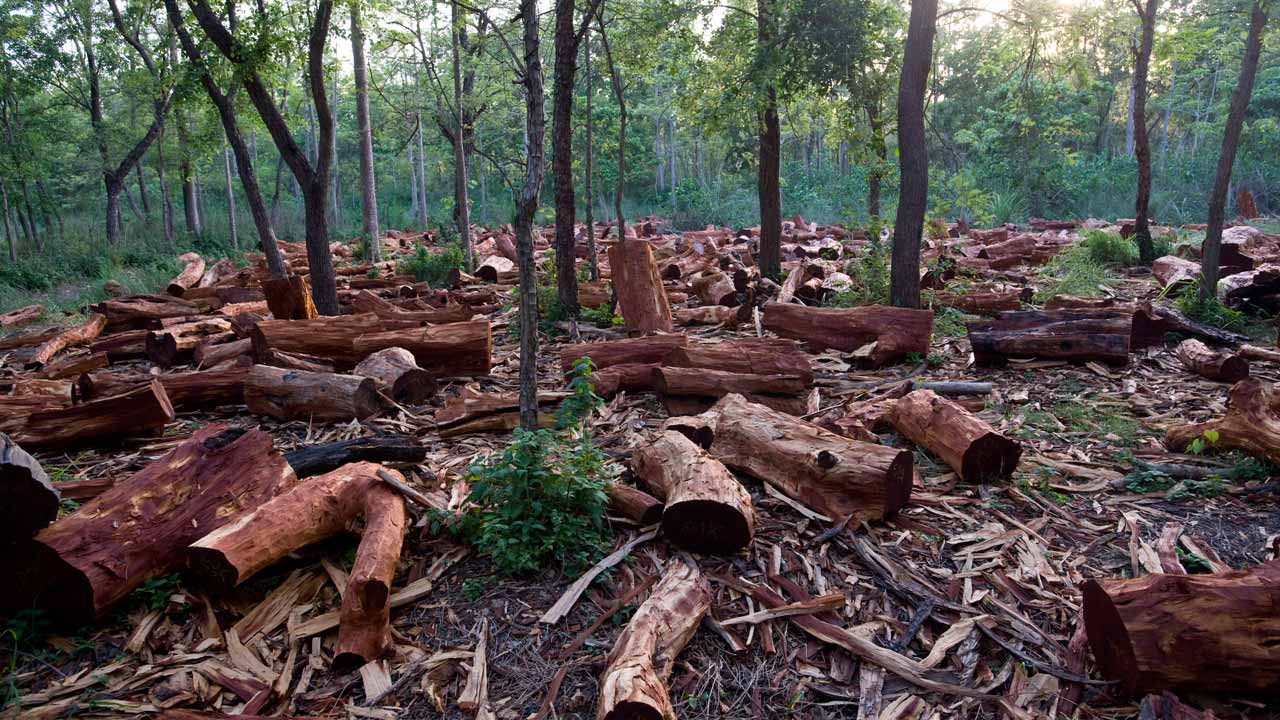
Over 1.4 million illegal rosewood logs from Nigeria, worth US$300 million, were illegally transported into China. According to the Environmental Investigation Agency (EIA), over US$1 million was paid to top Nigerian officials to release the wood stopped by Chinese authorities.

Thousands of permits were ultimately signed by the then Minister of Environment, Mrs. Amina J. Mohammed, who currently serves as Deputy Secretary-General of the United Nations (UN).

The results of a two-year investigation by EIA, The Rosewood Racket, details the journey of illegal African rosewood, also known as “kosso,” from the remote forests of Nigeria beset by illegal logging to luxury furniture boutiques in China, despite protections placed on this threatened tree species by the Convention on International Trade in Endangered Species of Wild Fauna and Flora (CITES).

Over the past five years, the exploding Chinese demand for kosso has triggered a series of “boom-and-bust” cycles that led to the depletion of forests across West African nations. In most of the countries, kosso has been illegally logged in violation of harvest and log export bans, including in protected areas.

The boom began in Gambia and Benin, but as the supply in those countries was exhausted in just a few short years, the Chinese traders rapidly moved on through other countries in the region before settling on the one offering the largest untapped resources – Nigeria.

Since 2013, Nigeria has been transformed from a net importer into the world’s largest exporter of rosewood logs, and is to date one of the top wood exporters on the continent.

Alexander von Bismarck, EIA Executive Director, explains “As a legally binding treaty ratified by nearly all members of the United Nations, CITES can play a critical role in protecting endangered trees and fragile forests. The international community needs to urgently bring transparency to the CITES permitting process in order to fight the organized criminals that profit from the extinction of endangered species.”

EIA investigators found that Mrs. Mohammed signed thousands of retroactive CITES permits in January 2017 as one of her last acts as Minister of Environment, and just before she was sworn in as the Deputy Secretary-General to the UN. The permits where used by Chinese importers to release over 1.4 million illegal logs that had been detained at the Chinese border for months, after having left Nigeria in violation of both Nigerian law and international CITES obligations.

Von Bismarck added that “The power and reach of organized timber criminals in forest rich countries is overwhelming if illegal wood is allowed to be sold overseas without consequences. This is why we urgently need regulatory changes in consuming countries to stop timber shipments based on evidence of being illegally logged, transported or traded. Such laws have already been passed in the US and the EU. This case shows that China has the ability to take action when it stopped thousands of containers of illegal rosewood. But the fact that the wood was ultimately released shows that China urgently needs domestic legislation to ban the import of illegally sourced wood.”


Changing competitive landscape of China’s wood market

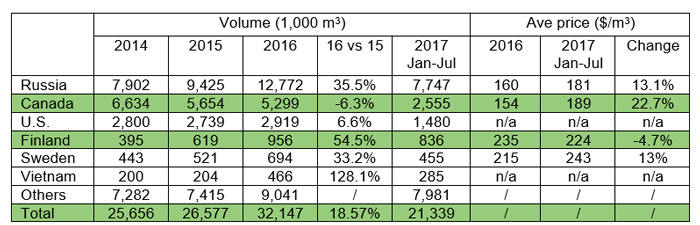
In 2016, China’s commercial timber trade volume (including logs and sawn lumber) was about 160 million m3, of which 93 million m3 or 58% was imported, representing an increase of 13.5% year-on-year (YOY).

The volume of China sawn lumber import continues to grow and reached 32 million m3 in 2016, increased by 18.57% YOY. Canada maintains its position of the second largest supplier to China although with a decrease of 6.28%, while Russia ran further apart as the largest supplier, with an increase of 35.53%. China’s sawn lumber imports from other suppliers such as Finland, Sweden and Vietnam have increased significantly by 54.48%, 33.23% and 128.11% respectively.

The development of China’s wood market has been stable but some new changes have taken place in the first half of 2017. Mr. Zhu Guangqian, the Chief Expert of China Timber and Wood Products Distribution Association summed up with three observations:

  • The increase of sawn lumber import is 8.2% higher than the increase of logs. Sawn lumber will be a mainstream trend for importing timber as the manufacturing cost in China is getting higher and higher.
  • The increase of coniferous timber imports is far greater than that of hardwood timber due to low inventory level of coniferous timber and the effect of logging ban.
  • Unit price rises generally.

Rising Finnish Sawn Lumber

Finland exported nearly one million m3 of sawn lumber to China in 2016, increased by 54.51% YOY. The strong growth continues in 2017 and reached 800 thousand m3 YTD July and has become China’s fifth largest softwood lumber supplier.

Back in 2015 Finland initiated “Wood from Finland” Program. It is a national promotion program for Finnish sawn timber operated by Finpro and Finnish Sawmills Association. The purpose is to expand opportunities for Finnish forest products to global emerging markets. The Program has achieved good results in last two years.

The main forest products promoted in China are sawn timber, planed timber, impregnated timber and glulam. They can be applied on construction and interior decoration.

Value proposition of Finnish Sawn Lumber

  • Highly automated wood manufacturing process
  • Sustainably managed forestry
  • Good industry development environment built by the government
  • Complete forest industry education to reserve personnel
  • Reliable lumber supply throughout the whole year
  • Focusing on furniture and interior decoration

Market Potential for Wood import in China

China is the biggest timber consumption country in the world. However, China’s forest resources are very limited and far from self-sufficiency and the huge gap has to be filled by importing timbers.

The commercial logging ban of natural forests effective from early 2017 has further increased the need of timber imports.

Other drivers for China’s wood demand includes the rising middle class and household income which will be reflected by demand for upgrading / renovating of apartments, décor items and furniture, etc. Increasing consumption in tourism and leisure will drive the demand of higher-quality and unique-designed resorts or holiday facilities.

Extending urbanization in central and west China including Government’s drive of developing small township in suburb areas generates continuous demand for general construction as well as wood buildings which aligns with policies of green development, energy efficiency and industrialized construction.

The market potential in China has obviously attracted various lumber exporting countries who are expanding export to China. Following further development in China’s construction’s “go green” and development of mass timber and CLT buildings in China, further dynamics and changes in competitive landscape are expected.

Chinese hardwood chips imports to hit new record

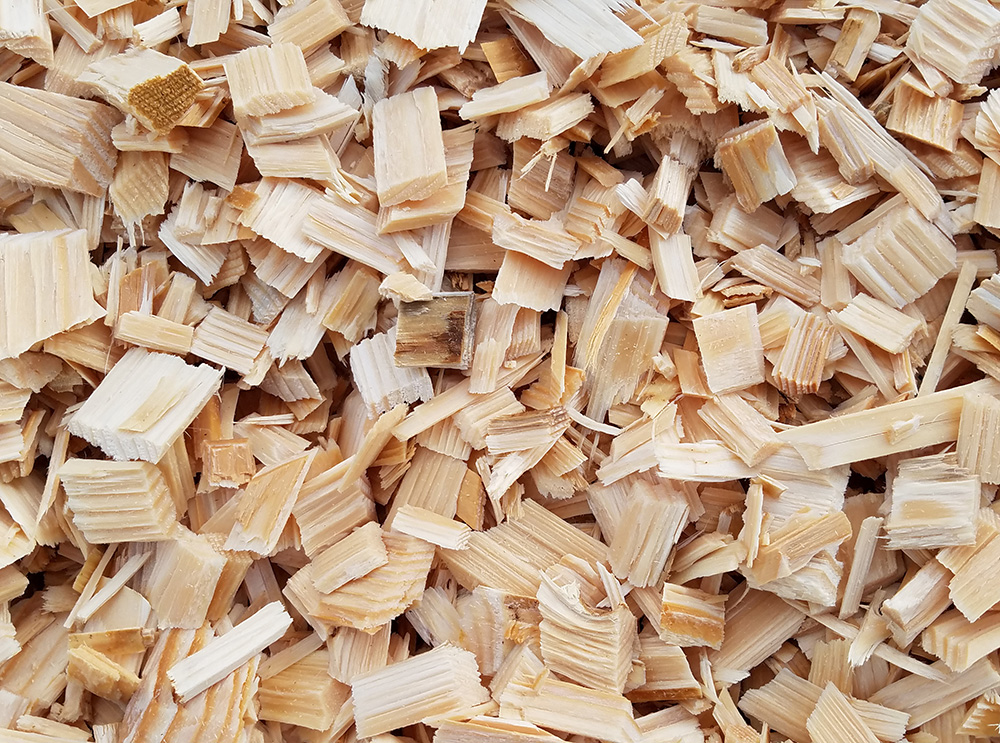
Roughly half of all hardwood chips traded in the Pacific Rim have been destined for Chinese ports in the 1H/17, with Vietnam and Australia being the major suppliers.

As reported by Wood Resource Quarterly, pulpmills in China and Japan continue to rely on large volumes of imported hardwood wood chips from a number of countries around the Pacific Rim. The biggest changes in trade over the past five years have been the increase in chip exports from Vietnam, record import volumes to China and a shift in Australian export shipments from Japan to China.

Shipments of hardwood chips in the Pacific Rim have increased for six consecutive years and reached a record-high of 22.9 million odmt in 2016. Last year was also the year when China took over Japan’s role as the world’s largest importer of hardwood chips - roughly half of all hardwood chips traded in the Pacific Rim were destined for Chinese ports in 2016. Based on import volumes to China in the first nine months of 2017, it is likely that Chinese imports will hit a new record high of over 11.5 million odmt in 2017, according to the Wood Resource Quarterly (WRQ).

There have been a number of alterations in the trade flows of hardwood chips in the Pacific Rim over the past decade based on price fluctuations, chip quality preferences and changes in business relationships. In the latest issues of the WRQ we have chosen to highlight how the chip trade has evolved from 2012 to 2016 as an example of the shifting market that exists in this part of the world.

The major changes over the past five years have been Vietnam’s expansion in exports to both China and Japan, Australia’s increase in shipments to China (equal to Vietnam’s volumes in the 2Q/17), Chile’s diversion of volumes from Japan to China, and Japan’s increasing reliance on hardwood chips from Vietnam and South Africa, at the expense of Australia and Chile.

The top-five trade flows of hardwood chips in 2016 were:

1. Vietnam – China 2. Australia – China 3. Vietnam – Japan 4. Chile – Japan 5. Australia – Japan

During the first half of 2017, hardwood chip shipments from most of the major supplying countries in the Pacific Rim have gone up with the notable exceptions of Australia, Thailand, Brazil and Uruguay, which reduced their export volumes by between four and twenty-one percent as compared to the first half of 2016. The biggest increases in chip supply to Japan and China year-over-year have been from Chile and Indonesia. Chilean chip exports are likely to reach a new all-time high in 2017 and the country will remain the third largest chip exporter in the world.

Germany: Wood pellets exports crash due to German Pellets bankruptcy

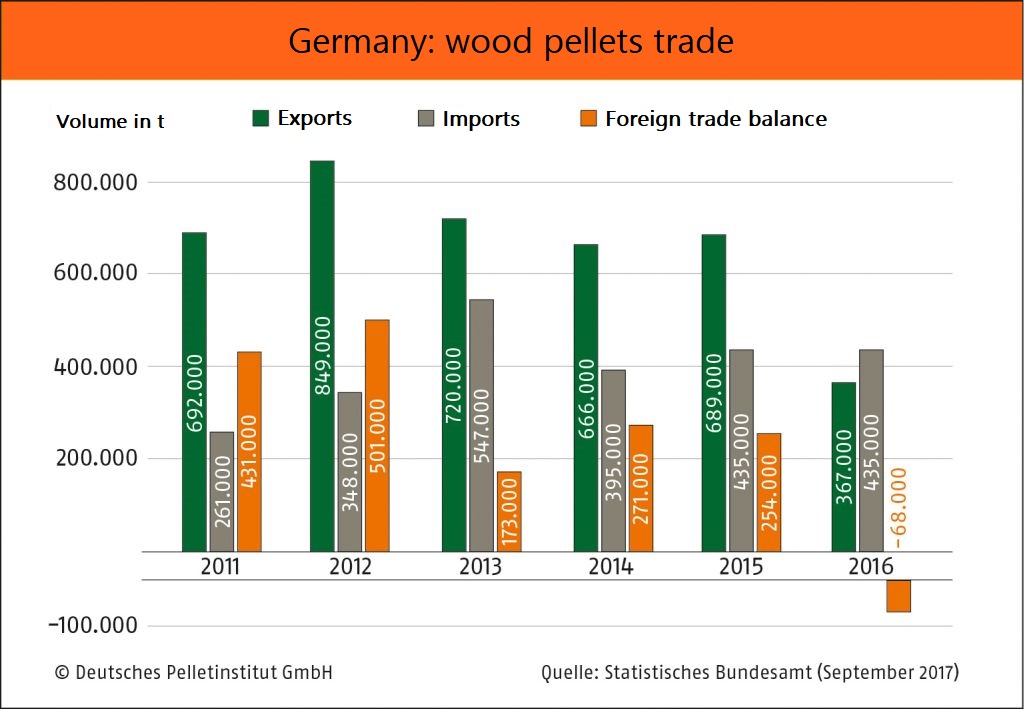
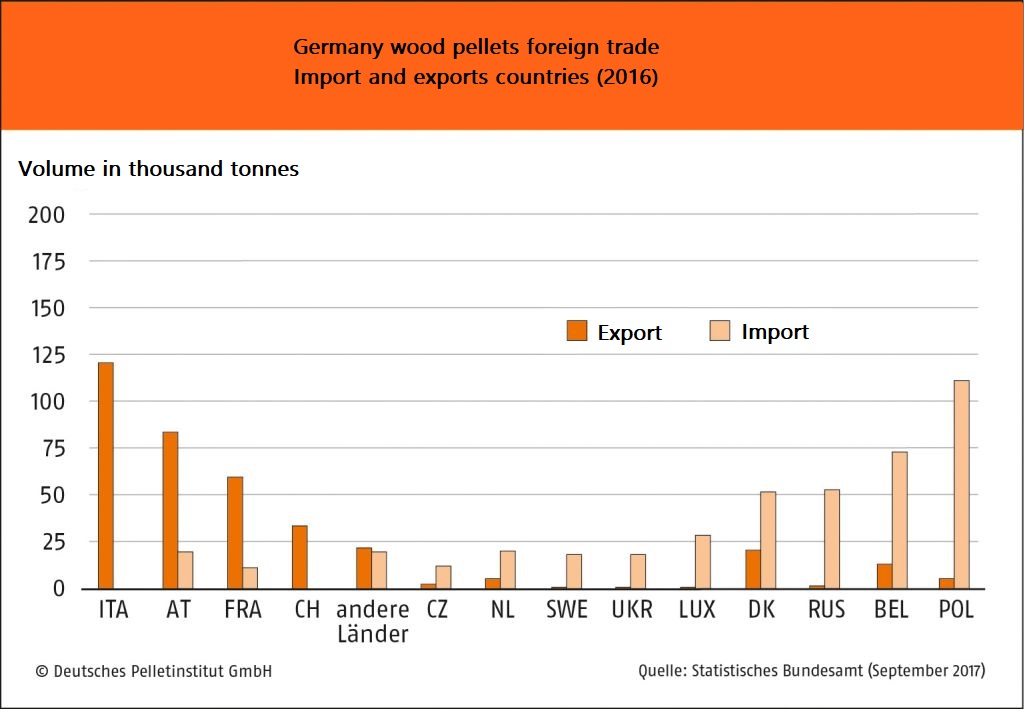
German pellet manufacturers exported 367,000 tonnes of pellets in 2016, representing only about half of the amount exported in the previous year.

Imports have kept their constant level of 435,000 tonnes and, thus, the foreign trade balance of the German pellet industry is negative for the first time, with a minus of 68,000 tonnes.

The background to this development, according to the German Energy Wood and Pellet Association e.V. (DEPV), is the insolvency-related plant shutdowns of the former largest German pellet producer German Pellets, which was very export-oriented. German Pellets filed for bankruptcy in early 2016.

The largest quantities of wood pellets came from Poland, with around 110,000 tonnes, Belgium with 70,000 tonnes, and Russia and Denmark, each with 50,000 tonnes.

The main recipients of German pellets were Italy, with about 120,000 tonnes, Austria with about 80,000 tonnes and France with about 60,000 tonnes.

Under the new owners, the former German Pellets factories started to produce again. Therefore, for the current year 2017, and comparing to the previous figures, a balanced trade balance is apparent, according to DEPV.

Brazilian wood-based products exports up 25.0% in September

In September 2017, Brazilian exports of wood-based products (except pulp and paper) increased 25.0% in value compared to September 2016, from US$201.2 million to US$251.5 million.

Pine sawnwood exports in value increased 19% from September 2016 (US$ 35.3 million) and September 2017 (US$ 41.9 million). In volume terms, exports rose 12% over the same period from 181,100 cu.m to 202,500 cu.m. Tropical sawnwood exports expanded 41% in September 2017 from 30,200 cu.m in September 2016 to 42,500 cu.m this year. The value of September tropical sawnwood exports jumped 38% from US$14.1 million to US$ 19.5 million this year.

The good news continued with the value of pine plywood exports which expanded 36% in September 2017 from US$ 35.8 million a year earlier to US$ 48.7 million this September. In volume terms September 2017 exports were up 24%.

As for tropical plywood, Brazilian exports were 23.5% higher in volume and 17% higher in value, from 13,200 cu.m (US$ 5.4 million) in September 2016 to 16,300 cu.m (US$ 6.3 million) in September 2017.

Exports of wooden furniture from Brazil increased from US$ 35.7 million in September 2016 to US$ 40.4 million in September 2017, a 13% increase.

Dutch certification mark to link FSC and PEFC

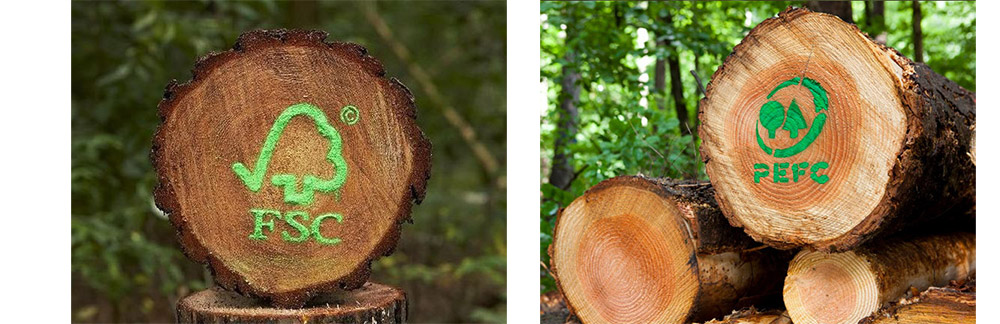
Independent Netherlands timber research institute Stichting Hout Research (SHR) has unveiled a new business certification mark, guaranteeing to their customers all their timber is 100% sourced from sustainably managed forest, regardless of sustainability certification scheme.

The STIP (Sustainable Timber in Product) scheme has been approved by the Dutch Timber Procurement Assessment Committee, TPAC. SHR Director, Oscar van Doorn, said it also aligns with the objective of supporters of the Netherlands’ multi-sector-backed Green Deal and new Wood Covenant to remove logistical barriers to use of sustainable timber.

“It’s a breakthrough,” he said. “Removing uncertainties about mixing woods with different chain of custody (CoC) certificates and facilitating achievement of the broadbased goal that 100% of timber is from responsibly managed forestry.”

The STIP is not itself a CoC, he explained, but a business mark, confirming that a business only sells timber from sustainable sources, for example FSC or PEFC forests.

“It entails fewer administrative and logistical obligations and less paperwork for woodworking companies and their customers,” said Mr Van Doorn.

He explained that to become a STIP company, a business submits to exhaustive evaluation by experts from an accredited certification body to ensure all their timber is sourced from responsibly and sustainably managed forest. Once approved, they are periodically audited to ensure maintenance of STIP standards.

UPM and the Government of Uruguay have signed investment agreement for a new pulp mill

UPM and the Government of Uruguay have signed an investment agreement, which outlines the local prerequisites for a potential pulp mill investment.

The agreement details the roles, commitments and time-line for both parties as well as the relevant items to be agreed prior to the final investment decision.

The agreement defines the requirements for the operating environment of a world-class pulp mill project. The site of the mill would be close to the city of Paso de los Toros, in central Uruguay.

A long-term industrial operation requires stable and predictable operational environment. This will be supported by several measures in the areas of regional development, environment, forestry and land planning as well as labour and energy conditions.

The Government will develop the rail and road network by tendering the construction and long-term maintenance of the network. The total investment by the Government has been reported to be approximately $1 billion. This investment is necessary to enable the establishment of efficient logistic infrastructure in the Uruguayan inland. The Government will also promote concession for a terminal specializing in pulp in the Montevideo port with rail access in order to secure reliable and competitive outlet to export markets.

Once the permitting requirements are fulfilled, the Government will grant the mill a free trade zone status, which is necessary to ensure competitiveness on international markets.

UPM will carry out an engineering study and permitting process for a pulp mill with an annual capacity of about 2 million tonnes of eucalyptus market pulp. The preliminary estimate for a pulp mill investment on site is approximately Euro 2 billion.

UPM's operations in Uruguay include the Fray Bentos pulp mill, the UPM Forestal Oriental forestry and wood sourcing company with its two nurseries, as well as the UPM Foundation.

Kastamonu Entegre appointed Dieffenbacher to relocate plant from France to Bulgaria

Turkish wood-based materials manufacturer Kastamonu Entegre commissioned Dieffenbacher to relocate plant from France to Bulgaria.

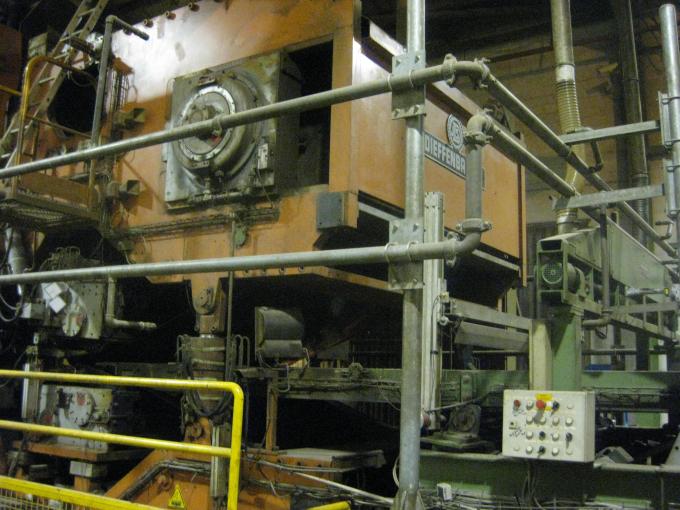
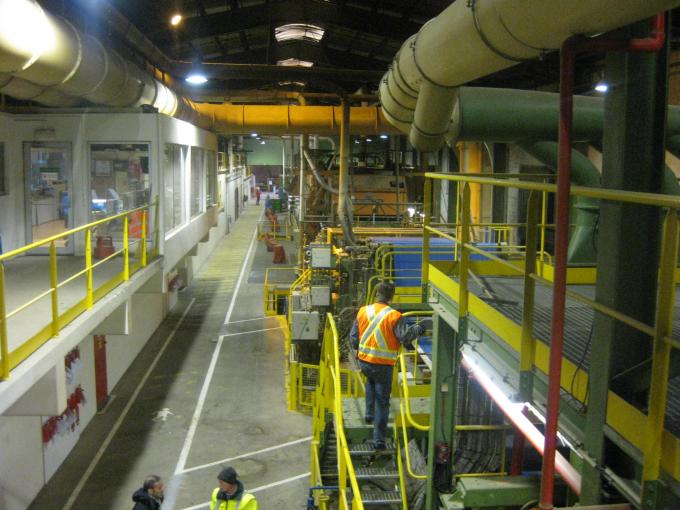
In March 2017, the Kastamonu Entegre purchased a particleboard plant from the insolvent estate of the French company Darbo. The plant will be relocated to the Kastamonu site in Gorno Sahrane, where it will replace a multi-daylight plant that is more than 30 years old. Dieffenbacher will undertake the relocation of the plant, consisting of forming station, forming line, pre-press and a 42.4 m long CPS.

The contract also includes a modernization and optimization package as well as a completely new plant control system. The plant was commissioned in 1996 and received a press extension in 2000. Its production of about 580,000 m³ of particleboard per year will significantly expand Kastamonu’s production capacity in Bulgaria and strengthen its presence in the Eastern European market.

The plant in France has already been dismantled. Re-commissioning at the new site is scheduled for the beginning of 2019. With the plant in Gorno Sahrane, Kastamonu Entegre now operates a total of four plants with continuous presses from Dieffenbacher.

Press infeed of the CPS, which was commissioned in 1996

View from the forming station to the CPS at the former Darbo site near Bordeaux

China is currently moving shipping containers to US logging sites

China is currently moving shipping containers directly to logging sites in the United States. This might be detrimental as they will be removing logs from an already tight log market.

According to sources confirmed by Gene Wengert, the Wood Doctor, Chinese buyers are paying 50 percent more than the typical sawmill price for logs. They are paying the equivalent of $900 per 1000 bf, which means the wood will be very expensive when they saw it. The species they want are red oak, white oak, hickory and cherry. They have markets that will pay this high price.

This, overall, will increase lumber prices within our country due to the shortage of logs, Wengert said. Already, sawmills are running very low in log inventory; this will make it even tighter. Wengert’s speculation is that cabinet and furniture operations will have to buy standing timber, or work closely with sawmills that buy standing timber if they want to control their supply and costs.

It will also make U.S. exports more expensive and imports from China of non-U.S. woods more competitive.

The prices for roundwood in Estonia have mostly increased in September

The prices for roundwood in Estonia have mostly increased during September 2017. As compared to the same period last year and the previous month, both the prices for logs and pulpwood went up from 1% to 20%.
Pine sawlogs could be bought for EUR 68.17/m3 in September, which is a 8.05% increase when compared to September 2016 and 3% more than August 2017. Also, the price for spruce sawlogs increased to EUR 67/06/m3, 6.27% more than last year.
Birch plywood and birch veneer were also worth more in September. While the price for birch plywood went up to EUR 60.17/m3, birch veneer could be bought for EUR 109.97/m3.
Among the pulpwood types of wood, the price for pine increased the most when compared to September 2017, reaching EUR 28.08/m3 (+20.87%). On the other hand, the price for aspen decreased both compared to last year and to August 2017 (-2.72% and -4.16%, respectively).

  September 2016 €/m3 August 2017 €/m3 September 2017 €/m3 Change% September 2016-September 2017 Change% August/September 2017
Pine sawlogs

63.09

66.18

68.17

+8.05%

+3%

Pine sawlogs d<18cm

50.95

52.94

53.56

+5.12%

+1.17%

Spruce sawlogs

63.10

65.82

67.06

+6.27%

+1.88%

Spruce sawlogs d<18cm

48.80

50.91

52.91

+8.42%

+3.92%

Birch plywood

57.41

59.16

60.17

+4.8%

+1.7%

Birch veneer

102.67

110.98

109.97

+7.11%

-0.91%

Pulpwood          
Pine pulpwood

23.23

27.12

28.08

+20.87%

+3.53%

Spruce pulpwood

23.05

25.64

25.56

+10.88%

-0.31%

Birch pulpwood

23.74

24.21

24.28

+2.27%

.+0.28%

Aspen pulpwood

19.42

19.71

18.89

-2.72%

-4.16%

Firewood

18.88

20.12

19.94

+5.61%

-0.89%

Sarawak government plans to enforce mandatory certification for timber concessions by 2022

Sarawak's government has announced that it will be mandatory for all timber companies to obtain sustainable forest management (SFM) certification by 2022.

Sarawak Deputy Chief Minister Datuk Amar Awang Tengah Ali Hasan said that the requirement had only been implemented on a select few previously. He added that the state government has received many applications from timber operators to have their concession areas certified before the deadline, but asserted that the conditions are now stricter and must be fully met before certification will be issued, The Malayamail Online reported.

We recognise the importance of SFM to address the issues of forest degradation and deforestation which have plagued some countries undergoing rapid development.

We are also very much aware of the need to channel, through SFM, direct benefits to the people as well as to safeguard the environmental well-being of our forest areas,” Ali Hasan added.

Awang Tengah, Sarawak’s second minister of urban development and natural resources, said the state government has also strengthened the Sarawak Timber Legality Verification System (STLVS), by developing a formal standard to include independent third party verification to ensure compliance of the legality requirements in accordance with the laws and regulations of Sarawak.

He added the full implementation of STLVS will effectively address issues raised by environmental groups, especially from the European Union, pertaining to the legality of timber and timber products sourced from the state, The Malayamail Online reported.

Awang Tengah also said that Sarawak has always been open to external scrutiny of its forest management policies and practices and added that the exports of timber and timber products from Sarawak stood at RM5.9 billion in 2016 and provided direct and indirect employment to about 150,000 people.

The Ministry of Urban Development and Natural Resources is currently working on setting new directions to strengthening the enforcement to combat and eliminate logging activities.

Newsletter

Subscribe to our digital newsletter for your daily digest of essential news, views and analysis from the international wood industry delivered directly to your inbox.


0