Article archive

Swedish softwood lumber exports grow 13% in September

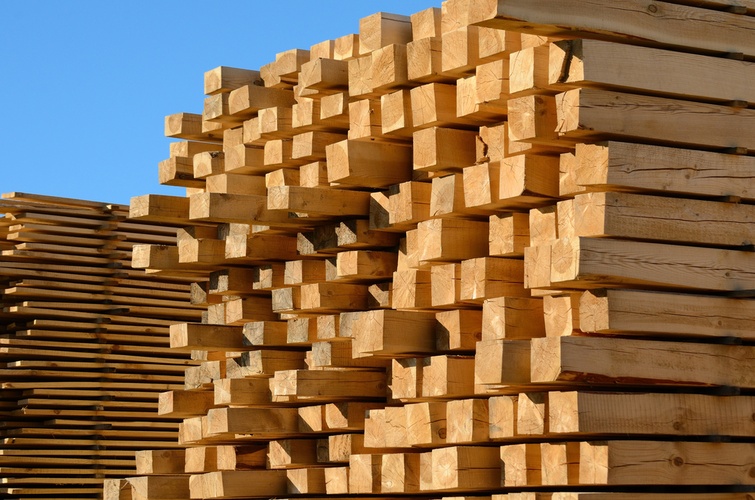
In September, the Swedish sawmills exported 13% more sawn and planed softwood lumber than in September 2016.
During the period from January to August, exports have remained at the same level as last year. The average price for the exported timber in August was SEK 2,030/m3, the equivalent of EUR 207.70/m3, 5.1% more than in August 2016.
The prices for planed softwood have increased only by 1.4%, while those for sawn softwood declined by 6.7% and for sawnwood by 5.4%.
The largest quantities went to Europe, East Asia and Africa. The volumes for Europe have hardly changed as compared to the previous year and, while the exports to Africa were significantly lower, the volumes to East Asia have risen sharply. Also, on the American continent, even at a low level, there was considerably more softwood exported.

1.000m3 September '17 % September '16 Jan-September '17 % Jan-September '16
Europa 563,2 5% 5.352,10 -1%
Africa 112,4 -5% 1.254,50 -17%
Middle East 36,5 10% 316,5 -12%
East Asia 155,7 72% 1.358,40 18%
North America 26,7 102% 269,6 57%
Oceania 1,8 -14% 30,1 -5%
Total 897 13% 8.581 0%

20% of the Swedish softwood exports went to Great Britain, followed by Egypt, Norway, the Netherlands and in fifth place Germany, with 611,500 cbm. Exports to Germany fell by 8% year-on-year.
The US is back in the top 10 of the largest buyers of Swedish softwood lumber with a volume of 265,600 cbm until the end of September. Practically the complete export to North America goes to the USA.

1.000m3 September  '17 % September  '16 Jan-September  '17 % Jan-September '16
UK 182,1 2% 1.772,50 -2%
Egypt 71,1 65% 742,8 -2%
Norway 88,4 3% 697,9 6%
Netherlands 59 25% 620,7 6%
Germany 60,5 -6% 611,5 -8%
China 58,1 97% 595,1 21%
Denmark 63,7 -1% 571,2 -10%
Japan 73,7 61% 539 12%
US 26,7 102% 265,6 58%
France 17,9 -2% 240,2 1%

German authorities approve Binderholz’s takeover of Klenk Holz

Austrian Binderholz Group has recently closed the transaction for the German sawmill- and wood processing company Klenk Holz AG located in Oberrot.

The contract was signed on 28 September 2017 and Binderholz plans to expand and modernize the three Klenk locations Oberrot, Baruth and Wolfegg in the short term.

Through the acquisition, the steadily growing demand for sawn timber of the further processing sites of Binderholz shall be ensured.

The German Federal Office has approved for the takeover on October 25th. Now, 94.79% of Klenk Holz AG's shares are taken over by Binderholz, while the remaining 5.21% will be taken over by Franz Binder Private Foundation


The sale was closed on the 6th of November and thus, Binderholz becomes one of the biggest sawmill companies in Europe. Seven sawmills in Austria, Germany and Finland process about 5 million cubic metres of logs. Of the 3 million cubic metres sawn timber 2 million cubic metres massive wood products are manufactured.

The Austrain Group now has 12 locations. 5 in Austria: Fügen, Jenbach, St. Georgen, Hallein and Unternberg - five in Germany: Kösching, Burgbernheim, Oberrot, Baruth and Wolfegg and 2 in Finland: Lieksa and Nurmes. Over all around 2,530 people work in the company.

Helsinki District Court dismisses underpricing accussations for Metsä, Stora Enso and UPM

Metsä Group informed that on October 31, 2017, the Helsinki District Court has ruled on 30 cases in which certain cities and municipalities have claimed compensation for damages from Metsäliitto Cooperative, Stora Enso Oyj and UPM-Kymmene Corporation.

Back in June 2016, the same court rejected the Metsähallitus’ claim for damages against Stora Enso Oyj, Metsäliitto Cooperative and UPM-Kymmene Oyj. Metsähallitus claimed that the three companies were involved in a competition infringement found on the raw wood market competition by the Finnish Market Court in its decision on 3 December 2009. The claim stated that Metsähallitus suffered damages due to the restriction of competition.

As the court file specified and according to Metsähallitus, the companies had purchased roundwood from Metsähallitus below market prices during 1997–2005.

The Helsinki District Court dismissed unanimously the plaintiffs’ claims and ordered the plaintiffs to compensate the defendants’ legal costs in full. The rendered judgements are not final.

The plaintiffs have asserted that the defendants’ conduct on the raw timber market in Finland during 1997–2004 has caused damages to the plaintiffs in the form of underpriced raw timber.

According to the announcement, the claims brought by the cities and municipalities were heard by Helsinki District Court in a joint hearing held during the winter of 2016–2017. The capital value of the damages claimed jointly and severally from the defendant companies at the joint hearing was in total EUR 5.687.491. In addition to damages, the plaintiffs claimed interest and compensation for legal costs.

Metsä Group is a forest industry group whose core business consists of tissue and cooking papers, paperboard, pulp, wood products, and wood supply and forest services. It has operations in almost 30 countries and production in 9 of them.

Development and transformation of China’s timber industries

The structure of China’s forestry and timber industry sectors has altered considerably over the past five years. The scale of the industry has expanded and there has been a consolidation in several sectors of industry.

According to government’s 13th Five Year Plan for Forest Industry Development, the total value of China’s timber industry output will be RMB8.7 trillion. Further, the plan projects a transformation of China’s timber industry from resource orientation to innovation and that management will shift from ‘extensive’ to ‘intensive’ through technology upgrading. The plan also envisages the emergence of a core of leading enterprises. Continue reading "Development and transformation of China’s timber industries"

US wooden furniture imports down except office furniture

US wooden furniture imports were worth US$1.57 billion in August, down 3% from July. Year-to-date imports increased 10% compared to August 2016.

Furniture imports from most countries declined monthover-month in August, but the strongest dip was in imports from Canada and Indonesia. Imports from Indonesia fell by almost a quarter to US$37.1 million.

Of the major furniture supplying countries only Mexico increased exports to the US in August. However, year-todate wooden furniture imports were up for all suppliers compared to August last year.

Wooden office furniture imports grew 11% in August, while imports of all other wooden furniture types declined.

Strong economy but furniture manufacturing down

The latest economic indicators were very positive. GDP grew at an annual rate of 3.1% in the second quarter of 2017, according to the third estimate by the Bureau of Economic Analysis. In the first quarter, real GDP increased 1.2%. The unemployment rate declined to 4.2% in September.

Consumer confidence in the economy surged in early October despite the large-scale destruction by hurricanes in the US south, according to the University of Michigan’s survey of consumers. The university’s confidence index reached its highest level since the start of 2004.

Consumers are expected to increase spending to at least mid-2018.

Almost all manufacturing industries including wood products reported growth in September, according to the Institute for Supply Management. Only the furniture industry reported contraction in September from the previous month.

EU sawn tropical hardwood imports continue to slide

The latest trade data shows that EU imports of sawn tropical hardwood have continued to slide this year, despite on-going economic recovery in the region. The decline is not restricted to tropical products. EU imports of sawn temperate hardwood have also declined in 2017, although at a slower rate than for tropical hardwood.EU sawn tropical hardwood imports continue to slide Continue reading "EU sawn tropical hardwood imports continue to slide"

Vietnam’s wood industry still underdeveloped

The woodworking industry in Vietnam is still very low, as compared to other regional markets, such as Indonesia, Malaysia and Thailand, Ingo Bette, a representative from German Woodworking Machinery Manufacturers (GWMM), said.

Today, the country has gone through very impressive development. Vietnam has surpassed its regional peers to become the largest buyer of wood processing technology in Southeast Asia, despite its scarce wood resources, Vietnam Net reported.

Also, the wood manufacturers in Vietnam have shifted from producing solid wood to indoor furniture. They have also improved their design competency to sell their own products on the global market. Thanks to the transition to more value-added products, GWMM companies have achieved sturdy sales performances in Vietnam compared to neighbouring countries. The association is looking to raise its market share in the country in the coming time.

In addition, the American Hardwood Export Council (AHEC) ranked Vietnam as the second fastest growing global market for US-sourced hardwood lumber, following China in the number one position. Since it started its recovery from 2015's lows, the wood market from Vietnam received very good demand for American hardwood in 2017.

During the first half of the year, US hardwood lumber exports to Vietnam were up 18 per cent, led by a strong surge in the popularity of yellow poplar.

AHEC’s international programme manager Tripp Pryor said, “Back in 2012, Vietnam’s market share in Southeast Asia was 67%. But in just five years, this market now purchases nearly three-fourths of all US hardwood lumber exported to the region. Vietnam’s purchasing decisions affect the rest of the region and truly lead the way for American hardwood exports.

Through the first half of 2017, US hardwood lumber shipments to Vietnam averaged an additional two million board-feet shipped every month compared to last year. This growth added up to a significant increase this year, which will likely make 2017 the biggest trade year ever between the US and Vietnamese lumber and furniture industries, Vietnam Net reported.

Deputy chairman of the Vietnam Timber and Forest Products Association, Ngo Sy Hoai, said, “As Vietnam opened up the wood production and processing industry, a large number of foreign companies  relocated their production to Vietnam to manufacture and export wood products. The total export turnover of wood products is projected to reach US$8 billion in 2017, half of which will come from foreign companies.

According to Hoai, Vietnam’s wood production and processing sector has achieved a double-digit annual growth of approximately 10% throughout the past decade.

The sector slowed down some last year – with full-year exports valued at US$7 billion – but rebounded in the first 10 months of 2017 with a growth rate of more than 10%. Exports of wood products are expected to increase once the EU-Vietnam Free Trade Agreement comes into effect next year.

Major Dutch company found sourcing illegal teak from Myanmar

A major Dutch company was found to having placed illegally sourced teak from Myanmar on the European market, as a recent investigation made by the Environmental Investigation Agency (EIA) revealed.

The Dutch Food and Safety Authority ruled the company in breach of the EU Timber Regulation (EUTR). Also, another company, whose name wasn't released yet, was found guilty too, of violating EUTR requirements.

Boogaerdt Houta was given two months by the Dutch government, as to clear its supply chain of Burmese teak. If after that time the company has still not complied, it will be fined 20,000 euros ($23,000) per cubic meter of illegal timber, Mongabay reported.

Under the EUTR, companies must conduct due diligence to ensure they don’t allow illegally sourced timber into their supply chains and onto the market. The Dutch Food and Safety Authority found Boogaerdt Hout violated these due diligence requirements when bringing Burmese teak into the European market.

Teak (Tectona grandis) is native to South and Southeast Asia, and its wood is prized for use in high-end furniture and boats. While most teak on the market today comes from plantations, some is still illegally sourced from Myanmar. The extraction of this Burmese teak has been denounced by conservationists, who say its trade is helping fuel rampant illegal logging in the country.

According to the EIA, Boogaerdt Hout joins the ranks of at least 17 companies that have been found guilty of violating EUTR requirements by trading in Burmese teak. Boogaerdt Hout did not respond to requests for comment.

The EUTR is part of the EU’s Forest Law Enforcement Governance and Trade (FLEGT) action plan and aims to reduce illegal logging by banning the sale of illicitly sourced timber and timber products in the EU. But while the EUTR is applied EU-wide, member countries are responsible for defining what timber is and isn’t legal. With this ruling, the Netherlands joins Germany, Belgium, Sweden, Denmark and the U.K. in defining teak imported from Myanmar as an illegal wood.

However, the status of Burmese teak in Italy and Spain remains in limbo.

Myanmar’s forests are in crisis, with a timber industry that has long been plagued by corruption and overharvesting,” said Faith Doherty, head of EIA’s Forests Campaign. “Two EU member states, Italy and Spain, are dragging their feet on enforcement and continue to allow clearly non-compliant timber to enter their markets. This is undermining support for reform in Myanmar and providing an uneven playing field for companies in EU countries that are enforcing the law.”

As Mongabay reported, the EIA commended the Myanmar Forest Department for gains made in recent years, including enacting national and regional logging bans, as well as new timber laws.

Yet, the organization claims that there is more that needs to be done to reform the country’s timber industry and reduce illegal logging, specifically calling for greater transparency. This, the NGO says, would go a long way toward independent monitoring and assurance that any teak entering the EU market did not come from a Myanmar rainforest.

NGOs throughout Louisiana sue EPA over formaldehyde rule extensions

Various non-profit organizations and NGOs throughout Louisiana are suing the Environmental Protection Agency (EPA) for its stalling of formaldehyde rule enforcement.

Through the lawsuit, the groups are demanding the EPA be prevented from extending compliance with new regulation.

Many of the suing groups are survivors of Hurricane Katrina. Formaldehyde was used to treat wood products in FEMA trailers deployed shortly after the hurricane struck in 2005.

"It is outrageous that people recovering from this year's hurricanes might have to deal with the same health issues in their emergency housing that the EPA has known about -- and was supposed to address -- years ago," attorney Patti Goldman said in a statement.

Small amounts of formaldehyde have been found irritate the eyes, skin and airways, while larger doses have been linked to nose and throat cancers.

The EPA said it would enforce higher standards beginning in December, but in September it announced compliance would be moved to December of next year.

The group to file the lawsuit, Earthjustice, filed it on October 31 on behalf of the Sierra Club and A Community Voice, both Louisiana-based organizations. The petition argues that the EPA was already in violation of a statutory deadline and had no authority to further delay implementation of the formaldehyde rules.

The agency defended the extension when it was first announced.

US DoC announces final antidumping and countervailing duties on Canadian softwood lumber

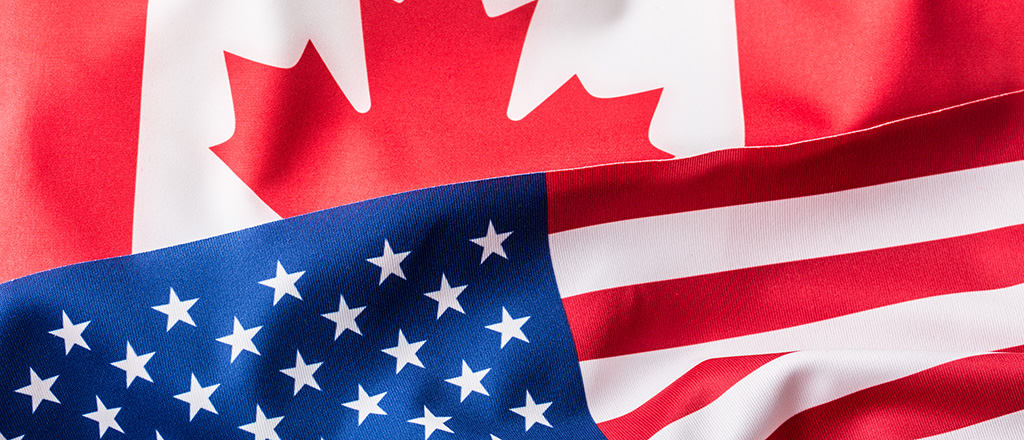
The U.S. Department of Commerce announced on the 2nd of November the affirmative final determinations of the antidumping duty (AD) and countervailing duty (CVD) investigations of imports of softwood lumber from Canada.

While significant efforts were made by the United States and Canada, and the respective softwood lumber industries, to reach a long-term settlement to this on-going trade dispute, the parties were unable to agree upon terms that were mutually acceptable.  As a result, the investigations were continued and Commerce reached its final determinations.

While I am disappointed that a negotiated agreement could not be made between domestic and Canadian softwood producers, the United States is committed to free, fair and reciprocal trade with Canada,” said Secretary Ross. “This decision is based on a full and unbiased review of the facts in an open and transparent process that defends American workers and businesses from unfair trade practices.”

The Commerce Department determined that exporters from Canada have sold softwood lumber the United States at 3.20 percent to 8.89 percent less than fair value.  Commerce also determined that Canada is providing unfair subsidies to its producers of softwood lumber at rates from 3.34 percent to 18.19 percent.

As a result of today’s decision, Commerce will instruct U.S. Customs and Border Protection (CBP) to collect cash deposits from importers of softwood lumber from Canada based on the final rates.

In 2016, imports of softwood lumber from Canada were valued at an estimated $5.66 billion.

The petition was filed on behalf of the Committee Overseeing Action for Lumber International Trade Investigations or Negotiations (COALITION), which is an ad hoc association whose members filed the case on behalf of its individual members:  U.S. Lumber Coalition, Inc. (DC), Collum’s Lumber Products, L.L.C. (SC), Hankins, Inc. (MS), Potlatch Corporation (WA), Rex Lumber Company (FL), Seneca Sawmill Company (OR), Sierra Pacific Industries (CA), Stimson Lumber Company (OR), Swanson Group (OR), Weyerhaeuser Company (WA), Carpenters Industrial Council (OR), Giustina Land and Timber Company (OR), and Sullivan Forestry Consultants, Inc. (GA).

The antidumping duty and countervailing duty laws provide U.S. businesses and workers with an internationally accepted mechanism to seek relief from the harmful effects of dumping unfairly priced and unfairly subsidized imports into the United States.

Enforcement of U.S. trade law is a prime focus of the Trump administration. From January 20, 2017, through November 1, 2017, Commerce has initiated 77 antidumping and countervailing duty investigations – a 61 percent increase from 48 in the previous year.

AD and CVD laws provide U.S. businesses and workers with an internationally accepted mechanism to seek relief from the harmful effects of dumping unfairly priced and unfairly subsidized imports into the United States.  Commerce currently maintains 412 AD and CVD orders which provide relief to American companies and industries impacted by unfair trade.

If the U.S. International Trade Commission (ITC) makes affirmative final injury determinations, Commerce will issue AD and CVD orders. If the ITC makes a negative final determination of injury, the investigation will be terminated and no order will be issued.

The U.S. Department of Commerce’s Enforcement and Compliance unit within the International Trade Administration is responsible for vigorously enforcing U.S. trade laws and does so through an impartial, transparent process that abides by international law and is based solely on factual evidence.

Foreign companies that price their products in the U.S. market below the cost of production or below prices in their home markets are subject to AD duties.  Foreign companies that receive financial assistance from foreign governments that benefits the production of goods from foreign companies and is limited to specific enterprises or industries, or is contingent either upon export performance or upon the use of domestic goods over imported goods, are subject to CVD duties.

Sweden gets ready to send more softwood lumber to Vietnam

The Swedish sawmill industry, gathered under the name Swedish Wood, participated in the Vietnam Wood fair in Ho Chi Minh City, and organized a seminar together with three Vietnamese wood and furniture industry associations.

At the event, Swedish Wood presented special features of Swedish wood and its application in modern design and architecture, including the benefits of using Swedish wood as an innovative material to support the Vietnamese wood processing industry.

Vietnam is a fast-growing furniture exporter, with an average annual growth rate of 15% since 2009. Currently, Vietnam ranks as the fifth largest exporter worldwide, the second largest in Asia and the largest in Southeast Asia.

Key export destinations are the U.S. (39%), China (15%), Japan (14%) and EU (14%). Exports were estimated at USD 7 billion in 2016 and USD 8 billion this year and are expected to increase to 10 billion by 2020. With rapid growth and increased production of furniture, the demand for high quality sustainable wood materials that follow international regulations on forest management is on the rise. In 2016, Vietnam imported USD 1.7 billion of wood materials to fulfill its production needs.

Mr. Huynh Van Hanh, Vice President of the Vietnamese Handicraft and Wood Industry Association (HAWA), and one of the speakers at Swedish Wood’s seminar says: "Vietnam's furniture industry is growing steadily, resulting in increasing demand for materials. Sweden, with its coniferous forest grown and managed according to sustainable criteria, will be a potential source of additional materials for Vietnam. Vietnam’s import value is currently increasing, even though it has not reached its full potential.

The total Swedish production of sawn and planed timber is 18 million cubic metres, whereof 13 million cubic metres are exported, making Sweden the third largest exporter of sawn and planed wood in the world. Sweden exports sawn timber mainly to Europe, North Africa, the Middle East and East Asia.

15 percent of the Swedish sawn timber is exported to East Asia every year, at a value of 500 million USD," says Charlotte Dedye Apelgren, Director Interior & Design at Swedish Wood. “East Asia is also the region to which timber exports from Sweden are growing the most. Vietnam is still a rather new market for Swedish sawn timber, but the Swedish sawmill industry experiences an increased interest for sawn timber from Sweden from the Vietnamese wood processing industry. And last year, sales of sawn timber from Sweden to Vietnam rose by 86%."

The biggest export markets for the Swedish sawmill industry in East Asia today are Japan and China, markets to which the Swedish sawmill industry has been exporting for many years.

The Swedish Ambassador in Vietnam, Pereric Högberg, keynote speaker at Swedish Wood’s seminar, says: “Sweden ranks as one of the most sustainable nations in the world. We are strongly committed to sustainable forest management in which our priority is not only preserving the quantity of forests, but also respecting the biological diversity of the forests. Sustainable forest management will maintain the balance between economic wood production and respecting wildlife, outdoor recreation, employment and local interests. I am very impressed by Vietnam’s fast-growing wood processing industry, and I think that there is a large potential for Swedish wood suppliers to supply to Vietnamese manufacturers so that high quality and sustainable raw material is used for production.”

About Swedish Wood’s participation in Vietnam Wood

The fair Vietnam Wood took place from the 18th to the 21st of October 2017. The following nine Swedish sawmill companies were represented in Swedish Wood’s booth at the fair: Holmen Timber, Martinsons, Moelven, Norra Timber, Norrskog Wood Products, SCA Timber, Setra Group, Siljan Timber and Södra.

Swedish Wood’s seminar was held on the 19th of October and was conducted in cooperation with three Vietnamese association: the Handicraft and Wood Industry Association (HAWA), the Binh Duong Furniture Association (BIFA) and the Forest Product Association of Binh Dinh (FPA). The topics for the seminar included inspiration about the usage of Swedish wood in design and architecture, and technical information about the characteristics of the Swedish wood species pine and spruce.

US lumber prices remained stable during last week

The demand for framing lumber in the US remained steady to active during last week, even if traders usually experience seasonal slowdown during this period.
The lower duty levels announced Thursday on Canadian exports to the U.S. sent the futures market plummeting through the day. But the announcement had little if any impact on the cash market. While not necessarily related to the trade issue, many prices finished the week on more solid footing.

Week
Nov 3
Week
Oct 27
Year Ago
2016
Random Lengths Framing Lumber Composite Price* $431 $433 $345
KD Western S-P-F #2&Btr 2x4 R/L Mill Price 467 457 302
KD Eastern S-P-F #1&2 2x4 R/L, delivered Great Lakes 559 555 395
Green Douglas Fir Std&Btr 2x4 R/L (Portland) 457 462 318
Southern Pine (Westside) #2 2x4 R/L 405 410 428
KD Coast Hem-Fir #2&Btr 2x4 R/L 475 470 327
Ponderosa Pine (Inland) #2&Btr 1x12 R/L 725 720 640
* Weighted average of 15 key items

Random Lengths Panel Market Report
Structural panel prices slowed down. The price softness that began in earnest last week gained momentum in OSB, and deep cuts were reported in some regions.
The sharpest discounts were reported in the South. Lean inventories and immediate needs kept a number of Southern Pine plywood buyers in the market, but most mills had to accept counters on rated sheathing to secure orders.
Western Fir plywood sales slowed at the mill level. Delayed shipments caused havoc, as business in the field remained solid.

(f.o.b. mill prices) Week
Nov 3
Week
Oct 27
Year Ago
2016
Random Lengths Structural Panel Composite Price* $509 $527 $366
Southern (west-east) 15/32-inch 3-ply rated sheathing plywood 475-520 495-520 350-380
Southern (west-east) 15/32-inch 4-ply rated sheathing plywood 480-525 500-525 355-383
Western 1/2-inch 4-ply rated sheathing plywood 482 500 344
North Central 7/16-inch Oriented Strand Board 440 455 287
*Weighted average of 11 key items

US plywood imports from China bottom out

US hardwood plywood imports fell 19% in August to 168,059 cu.m., but year-to-date imports were unchanged from August 2016. The value of plywood imported in August was down by approximately the same rate.

Plywood imports from China held steady in August at 49,660 cu.m., following two consecutive months of decline when the US introduced preliminary antidumping duties on Chinese hardwood plywood.

Hardwood plywood imports from Indonesia fell 60% in August to 19,890 cu.m., but the decline was from an exceptionally high import volume in July. Imports from Malaysia declined even more in August to just 1,523 cu.m. Russia and Cambodia were the only countries that increased hardwood plywood exports to the US in August.

Cambodia shipped 10,623 cu.m. of plywood to the US market in August, worth US$8.7 million. The value per cubic metre of plywood imported from Cambodia was below Vietnamese and Chinese plywood, but higher than the unit value of Indonesian plywood.

Lower US housing starts because of hurricanes

Housing starts in September were at a seasonally adjusted annual rate of 1,127,000, according to the US Department of Housing and Urban Development and the Commerce Department.

This is a decline of 5% from August, but is 6% above the September 2016 rate.

The overall decline was due to a drop in single-family construction in the US South where many communities are affected by damage from hurricanes.

In all other regions of the country single-family housing starts were up in September. Building permits increased nation-wide by more than 2% in September.

Builders’ confidence in the market for new single-family homes grew in October to the highest level since May, according to the National Association of Home Builders.

While this summer’s hurricanes have a negative effect on the cost of building materials and labour, builders expect the housing market to strengthen in the coming months.

The Sustainable Tropical Timber Coalition calls for greater focus on marketing and promotion

The Sustainable Tropical Timber Coalition (STTC) conference held in Aarhus, Denmark, in September highlighted that work by European governments, trade and NGOs to encourage certification in tropical producing countries must be linked to concerted efforts to increase certified tropical timber market demand.

The conference focused on promotion and marketing of tropical timber in the EU under the headline theme “sustainably sourced tropical timber: selling a positive story”.

To tackle the topic, speakers came not only from across the EU timber sector, but also from NGOs and marketing agencies, with a keynote delivered by brands expert and marketeer Nigel Hollis, Executive Vice President of international consultancy Kantar Millward Brown.

A view shared by speakers and the international audience of over 100, was that, besides its environmental story, key to marketing sustainable tropical timber was to present exemplars of its use. These could demonstrate its durability, aesthetics, technical performance and overall sustainability in use, with construction and design professionals among principal targets.

Mr Hollis effectively summed this up with his comment ‘great [marketing] content is more than a great advertisement’.

The conference itself did this by including a tour of tropical timber applications and installations across the host city. These ranged from decking and seating in new pedestrian zones, to interior uses in Aarhus’s Aros modern art gallery and the striking Kulbroen (Coalbridge).

The latter is a derelict concrete coal conveyor in the reviving harbour area, set to be restored as a public walkway using FSC tropical timber decking in an STTCbacked FSC Denmark project. Conference delegates climbed to the demonstration platform where various species are being tested on outdoor perfomance.

Aarhus City Architect Stephen Willacy underlined the potential of such projects by highlighting the latent appetite of the modern construction sector to build sustainably with wood. He described the significant role timber-based housing was set to play in Aarhus as it grew from a city of 325,000 people to 450,000 by 2050.

Among the sales and marketing-related projects which the STTC has supported, Iván Bermejo Barbier of Copade presented the joint marketing project the sustainable development NGO had undertaken with the Spanish arm of home improvement retail giant Leroy Merlin. This included creating a database of the company’s tropical timber suppliers and supporting those still uncertified towards achieving certification.

Leroy Merlin staff were trained in certification issues and new in-store point of sale material and a website advert on sustainable tropical timber were developed. The project partners also held meetings with public procurement officers in Madrid and elsewhere to deliver sustainable tropical timber messaging.

Alberto Romero of Spanish timber trade federation AEIM described its ambitious marketing led plan for the next three years. The goal is to increase Spain’s percentage of verified legally sourced tropical imports from 86% to 95% of the total, and sustainably sourced from 4% to 12%.

Delegates at the STTC conference were also invited to join three half hour presentations from a choice of twelve on themes ranging from using sustainable development goals in timber sales, to positioning FLEGT when selling timber, marketing lesser known species and the importance of market intelligence in boosting sustainably sourced timber demand.

The Value and Impact Analysis Initiative (VIA), which is led by the ISEAL Alliance (IA), in partnership with Kingfisher, IKEA and Tetra Pak, also shared independent research-backed marketing messages that businesses can now use in their efforts to communicate the sustainability benefits of certified tropical timber.

In his keynote, Mr Hollis underlined the importance in marketing any product of building a strong and coherent identity.

“The vast bulk of buying decisions are influenced by brands,” he said. “They are ultimately determined by emotions and ideas already in your head, but what a strong brand does is short cut the decision-making process through building trust and confidence.”

It was also important the industry has confidence and pride in its identity and was not afraid to be unique, pioneering and to challenge market perceptions. “It’s been shown that meaningfully different brands grow fastest,” said Mr Hollis.

Following his presentation, he used exercises to guide delegates, divided into groups, through the process of developing a potential marketing approach and identity for sustainable tropical timber. Besides sustainability, climate change and saving the forest, promotional themes also emerged from the ‘teams’ around ‘pride’, ‘protection’ and ‘beauty’.

The Conference closed with a call from IDH for ideas for the future development of the STTC since its funding programme in its current form finishes at the end of 2018.

A poll of delegates showed nearly all favouring STTC’s continuation and put communication at the top of its priorities.

Nienke Sleurink of IDH said they will continue to be involved in STTC and provide some support, perhaps as a secretariat, but their future role will be more in an enabling capacity.

The most likely option for the STTC going forward seems to be a membership structure, but funding needs to be found for a coordinator. IDH would like to hear from the industry on how and in what form the STTC should continue.

Chinese rattan furniture makers eye move to Indonesia

The future of the rattan craft industry in Cirebon, West Java, is threatened according to Zaenal Arifin from the Advisory Council of the Indonesian Furniture and Craft Association (HIMKI).

It has been reported that a number of enterprises have had to suspend production and decline orders from overseas buyers because they were unable to secure raw rattan that comes from Kalimantan, Sulawesi and Sumatra.

Rattan furniture is popular in China and with Indonesia being the main source of raw rattan the restrictions on raw rattan exports has worried Chinese rattan enterprises prompting them to consider shifting production to Indonesia.

The Indonesian and Chinese governments have been exploring the feasibility inviting Chinese companies to locate to Indonesia. Cirebon is known as the centre of the rattan furniture industry in Indonesia and would be an obvious place for foreign enterprises to establish production capacity.

ATIBT launches tropical timber branding initiative

A new tropical timber branding initiative is being launched by the ATIBT (International Tropical Timber Technical Association) focused on encouraging ‘qualitative and participatory’ consumption that is ‘respectful of mankind and the environment’.

The promotional campaign will focus on the brand ‘Fair & Precious’, which will be available for use by companies which “affirm their adherence to strict environmental standards and allocate significant budgets to ensure compliance as verified by audits conducted by independent bodies”.

These, at least initially, will be ATIBT’s core African tropical timber producer members, and their customers among timber processors, traders and distributors in Europe and around the world. It’s hoped that businesses that will use and promote the brand will include public and private sector tropical timber procurers, specifiers, retailers and end-users large and small.

As well as the importance of sustainable procurement and the environment, a strong focus of the campaign will also be on social and corporate responsibility.

“Fair & Precious companies will participate in solidaritybased economic and social growth that is conducive to the well-being of people living in [tropical timber] production areas, providing them services such as education, health care and housing,” states the ATIBT.

“The brand will be administered from France, where ATIBT is based, but it is intended to be a European and even global promotional initiative,” said ATIBT Marketing Programme Coordinator Christine Le Paire.

“Besides companies in African countries and France, our members include Dutch, German, Spanish, Italian, English, and American companies.”

Fair & Precious will be officially launched on November 8 by ATIBT President Robert Hunink at Paris’s Garden of Tropical Agriculture in Nogent-sur-Marne.

Forest fire-season in British Columbia got lumber exports down by 14%

Trade statistics in British Columbia show overall exports down by 14% at the end of August, due to the damage made by the forest-fire season.

The fires that raged across B.C.'s Interior and consumed 12,158 square kilometres of forests, pushed timber companies out of the woods, diverting their employees to fight forest fires instead of harvesting logs for processing, 24H Vancouver reported.

"This is almost unprecedented," said Peter Hall, vice-president and chief economist for Export Development Canada. "When something like that happens, clearly, you're not going to be able to ship as much, "you're not going to be able to work those woodlots."

Though, Hall considers that the damage is only a temporary hit on B.C.'s trade and that, barring a damaging resolution to the Canada-U.S. softwood trade dispute, the province's exports will rebound in line with a recovering U.S. housing-construction market.

According to 24H Vancouver, B.C. Stats crunches Statistics Canada figures, and showed that B.C. exported 17 million cubic metres of lumber to the end of August, down considerably from almost 20 million cubic metres over the same period in 2016, with the biggest declines accumulating over the fire-ravage months of May through August.

The US exports suffered the most, with the 10.6 million cubic metres of exports south of the border to the end of August, which was a 20% decline from the same period in 2016. Also, the exports to China were down by 6%, to 3.7 million cubic metres of lumber.

"In my conversations with forest companies, they're saying, 'We have skilled workers, but we can't deploy them at this time (because) we can't get a guaranteed income for them," said Hall.

Hall said the short-term dent in B.C. lumber exports will be one impact on the horizon for the province's trade, which he also expects to take hits from lower levels of natural-gas exports, after somewhat of a boom in 2017, and stagnant trade figures for coal.

As 24H Vancouver reported, B.C. agricultural producers will see gains from increasing trade opportunities in Asia, as will manufacturers that will benefit from increasing investments in machinery and equipment south of the border. On balance, however, Export Development Canada sees zero growth in exports from B.C. in 2018 after experiencing a robust eight-per-cent increase in export trade by the end of this year.

Susan Yurkovich, CEO of the Council of Forest Industries, said there were other factors affecting lumber exports besides the fires, such as punitive duties by the U.S. Commerce Department in the softwood-lumber dispute and a slowdown in American construction due to hurricanes and floods in the southern states.

"This is obviously a lot of stuff happening all at once, so the fact that (B.C.) lumber production is down a bit should be expected," Yurkovich said.

Also, Yurkovich added that the lumber prices are strong, which will push lumber companies to ramp up the production that they can, and the industry expects the trend of increasing U.S. housing starts to spark rising lumber sales to the benefit of B.C. sawmills.

Century Ply acquires majority stake in Huesoulin Wood Processing Factory

Century Plyboards’ subsidiary, Century Ply (Singapore) Pte, has acquired a majority (51%) stake in Laos-based Huesoulin Wood Processing Factory.

The move comes as Century Plyboards looks to leverage the Laos unit for plywood production. With this, Century Huesoulin Plywood Lao Co has now become a step-down subsidiary of Century Plyboards.

The move is positive for Century Plyboards, as securing a steady source for Face Veneer supply is a key competitive advantage for Plywood companies. Face Veneer derived from hardwoods like Myanmar Gurjan, which contributes around 10% to plywood making, is the most value-added component with high aesthetic appeal and costs more. It is largely imported from countries like Myanmar, Laos etc. where the wood quality is among the finest in the world.

The GST reforms would have a structural impact leading to a shift in demand for wood panel industry products from unorganized to organized players, benefiting CPBI which has a leading market share profile and strong brand recall. Further, its upcoming high margin MDF product and expansion in laminates & particleboard capacity will improve its market share & earnings.

Ikea plans to enter housing market in Europe

Ikea plans to enter the housing market in Europe by building around 10,000 units a year of hybrid multi-family houses.

The materials used will be wood, steel, and concrete. The project will be developed by the Italian enterprise WoodBeton, one of the Italian leaders in prefabricated housing.

WoodBeton is already collaborating with Ikea as it is building wood hotels for Moxy (Marriott International's new millennial-focused boutique hotel concept). The first hotel, which has 180 rooms, has already been finalized and it is located at the Terminal 2 of Malpensa, one of the airports of Milan. Fifteen more hotels have already been built, ten of which have already been opened.

The CEO of WoodBeton, Giovanni Spatti, has declared that the new houses may have different materials for the same wall so as to take advantage of the characteristics of the materials utilized.

Newsletter

Subscribe to our digital newsletter for your daily digest of essential news, views and analysis from the international wood industry delivered directly to your inbox.


0