
Article archive

China’s national standards committee revises redwood standards; recognized species down to 29 from 33

A revised national standard, (GB/T 18107-2017 effective 1 July 2018), for Chinese redwood has been released by the National Standard Committee replacing GB/T 18107- 2000.

The number of recognised redwood species has been reduced to 29 from 33. The following have now been excluded: Vietnamese padauk (Pterocarpus cambodianus Pierre), maidu (Pterocarpus pedatus Pierre.), black rosewood (Dalbergia fusca Pierre) and ponce’s kamagong (Diospyros poncei Merr.).

According to analysts these changes only reflect rearrangement of species with different names. For example Vietnamese padauk (Pterocarpus cambodianus Pierre) and maidu (Pterocarpus pedatus Pierre.) are regarded as the same as Myanmar padauk (Pterocarpus macarocarpus Kurz), black rosewood (Dalbergia fusca Pierre) is another name for Myanmar blackwood (Dalbergia cultrate Grah.).

In addition to changes in nomenclature, information on 6 redwoods in 8 categories have been modified with new data on wood characteristics.

These changes, say analysts, are aimed at making it more convenient for consumers and for market promotion. The changes also are a reminder to redwood enterprises that the ‘redwoods’ are becoming scarce.

The revision of the national standard for redwoods has disappointed many in the private sector who hoped the revision would add more species in particular mukula (Pterocarpus chrysothrix), from Zambia and bubinga/kevazingo (Guibourtia demeusei).

Source: ITTO
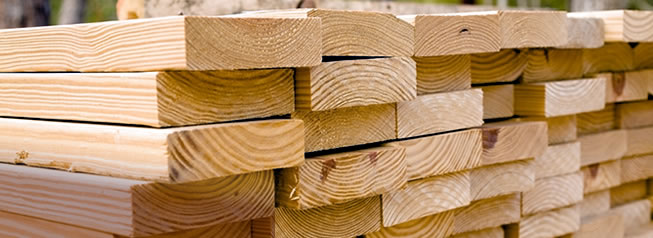
Canadian softwood lumber demand is forecast to remain high in the US

The ascending US housing starts and the tight softwood lumber supply from the Canadian lumber producers is expected to maintain the prices high in 2018.

As CBC News reported, the number of US housing starts beat expectations by surpassing 1.33 million in January on a seasonally adjusted basis, with single family starts increasing 7.6 per cent. Housing permits approached 1.4 million, and Conifex Timber Inc. chairman and CEO Kenneth Shields said that he also expects repair and remodeling markets will remain robust.

"With this favourable demand backdrop coupled with duties on Canadian lumber exports to the U.S., we expect lumber prices to remain strong in 2018," he explained, adding that the company's earnings per share doubled in 2017, posting record revenues that rose 15%.

The demand growth is going to surpass the lumber supply increase for the next 18 to 36 months in the US and so the trends "will be pointing upwards, not down," Shields added.

Prices have been creeping up annually and stood at $528 US per thousand board feet for Western SPF lumber shipped from Canada, up from an average of $278 in 2015 and $401 last year. At these prices, harvest reductions in British Columbia will likely be deferred while production will accelerate, CBC News reported.

Paul Quinn of RBC Capital Markets said the thinking among Canadian producers has changed over the past year. They originally expected to absorb half the duties with the other half being passed on to consumers. What happened was that producers pushed all of the duty to consumers and more.

Quinn added that the lumber prices, which reached a nominal high last year, will abate once a new softwood lumber agreement is negotiated in a year or so after the U.S. government is forced by an administrative review panel to drop the duty rate. Other large western Canadian producers are equally positive about the year.

West Fraser Timber Co. Ltd. CEO Ted Seraphim said North American lumber demand should grow by two billion board feet per year, while US production will only modestly increase by the 750 million to one billion board foot range annually.

In 2017 the volatility over the uncertainty about duties made buyers reluctant to buy lumber, but Seraphim explained that the supply-demand fundamentals are improving.


Also, Don Demens, CEO of Western Forest Products Inc., said record lumber prices largely offset the impact of U.S. duties as lumber revenues fell six per cent last year despite a 13 per cent decline in shipments. The company has reversed plans to cut back on capital investments because of uncertainty in the softwood dispute.

"Our view is there's not very much uncertainty anymore. We know the duties we have and we know the process ahead of us," Demens added.

Timber exports from Malaysia will increase by 5% in 2018

Timber exports from Malaysia are forecast to increase by 5% in 2018, from RM 23.22 billion in 2017, due to the high demand for the country’s timber products from developed countries such as Japan, the United States, European Union members and Australia, as well as India.

As the Malaysian Timber Industry Board (MTIB) director-general Datuk Dr Jalaluddin Harun said, the timber products from Malaysia have a high quality, which meets market specifications, The Sun Daily reported.

"We are currently exporting our products to more than 160 countries, but after this we will focus on countries that we have free-trade agreements with, like New Zealand, Turkey and Pakistan," he said after opening MRSZ Two Enterprise Sdn Bhd's showroom here today.

The country will face shortages of raw materials and skilled workers, so it will be difficult to meet the export demand as to achieve the export target of RM28 billion by 2020.

"Eighty per cent of our furniture is made up of rubber woods besides other tropical timbers. As demand from developed countries is high, sometimes we have to ban the exports (of rubber furniture) due to shortages of rubber materials," he said.

On the involvement of bumiputra companies in the national timber industry, Jalaluddin Harun added that it is still very low and lagging as it made up only 0.7% or RM161 million of total exports last year. In fact, currently only 341 bumiputra companies are active in the industry, of which 46% are micro-status companies with total revenue of RM500,000 and below each year and only one medium-sized company with income ranging from RM15 million and RM50 million a year, The Sun Daily reported.

This is a sorry state of affairs as most of them are bogged down by low technology, manual work, lack of promotion and imprudent financial management," he said, adding that the situation will not change if entrepreneurs are still not progressive in expanding their business.

MRSZ Two Enterprise, a bumiputra timber-based company which received an MTIB raw material grant of RM20,000 in 2010, earned RM1.09 million in revenue last year.

SCA Wood timber sales recorded slight drop in the Q4/2017

Swedish Svenska Cellulosa (SCA) has delivered 602,000 m³ of softwood timber during the Q4/2017,which is 2% less than in the same period of 2016 and 12% less than in the Q3/2017.

Though, the lower delivery volume was repaid by higher selling prices in the mentioned period, a thing that led to a 5% increase in sales revenue to 1.426bn SEK. Also, the higher prices combined with a good capacity utilization, that made a 14% increase in EBITDA adjusted for non-recurring items to 184m SEK and the growth of 19% in the adjusted operating result to 128m SEK.

The margin of EBITDA increased by 12.9% during the Q4/2017 and this led to an overall positive development of the three preceding quarters in which the growth rates recorded for the adjusted operating result were 6-40% higher than the respective quarter of 2016.

Chinese accreditation body recognised by US EPA

According to the China Daily website China’s National Accreditation Service for Conformity Assessment (CNAS) has been recognised by the United States Environment Protection Agency (EPA).

The CNAS has authority to offer accreditation services internationally which will benefit China’s wood product traders who will be able to provide certificates issued by CNAS without the need for repeated certification and testing. Continue reading "Chinese accreditation body recognised by US EPA"

Egger is considering relocating production in Germany from Marienmünster to Bevern

After reports in several local media, the Egger Group has published an opinion regarding a possible transfer of production from Marienmünster-Vörden to Bevern.

Accordingly, the EGGER Group is considering relocating the production plants from the Marienmünster coating plant to Bevern in the medium to long term. The reason is based on technological and investment strategy considerations. However, there are no concrete decisions for this at the moment.

The potentially affected employees were already informed in 2016 about the corresponding considerations. In the event of a relocation to Bevern, none of the currently around 180 employees in Marienmünster is to be released, but may continue to be employed at the Bevern location 26 km away.

In Bevern, Egger produces thin MDF boards, in Marienmünster coated and refined for furniture back walls. Both plants have been managed since 2013 under central management and administration. Egger declares that it will continue to produce thin MDF furniture back walls in the Weserbergland.

Finland: Half a million cubic metres more sawn softwood produced in 2017

In 2017, the Finnish forest industry production increased in the majority of the main product categories. However, the production of mechanical pulp and paper decreased in comparison with the previous year.

The production volumes of sawn softwood goods increased by half a million cubic metres to 11.9 million cubic metres. The proportion of spruce has increased in recent years and, in 2017, a total of 6.2 million cubic metres of spruce sawn goods were produced, says Natural Resources Institute Finland (Luke) in a report.

The Finnish domestic consumption of sawn goods increased to 3.8 million cubic metres (0.70 m3 per capita), showing an increase by 20% over 2016.

The production of chemical pulp totalled 7.7 million tonnes, i.e. 3% more than in the previous year. Similar figures were last reached in 2007 before the economic recession.

Paper production in Finland has decreased since 2011. In 2017, the production volume of 6.7 million tonnes was 2% lower than in the previous year. Currently, around 20% less paper is manufactured than on average during the preceding ten-year period.

The Finnish paperboard reached a new production record at 3.6 million tonnes, showing an increase of 9% from the previous year and 25% in terms of the long-term average.

Enviva completes acquisition of wood pellet plant from Portuguese company

Enviva Holdings announced that it has completed the acquisition of a wood pellet production plant in Greenwood, South Carolina and related assets from The Navigator Company, S.A., a Portuguese paper and pulp company.

The Greenwood plant, which is located in a deep natural resource basin, employs nearly 80 full-time employees. Enviva intends to make investments in the Greenwood plant to improve its operational efficiency and add additional emissions control equipment that the company expects will increase its production capacity to 600,000 metric tons of wood pellets per year by 2019, subject to receiving the necessary permits.

“Enviva is very excited to formally welcome the Greenwood team to the Enviva family,” said Royal Smith, Enviva’s Executive Vice President of Operations. “Together, we look forward to growing this facility in partnership with the Greenwood community and our sustainable supply chain that includes forest landowners, loggers, truckers and the mechanical, and other service providers essential to keeping a world-class manufacturing operation running smoothly.”

Enviva’s combined plant operations now include seven manufacturing sites in Virginia, North Carolina, South Carolina, Mississippi, and Florida, with an eighth under construction in Richmond County, North Carolina. In total, these facilities will represent more than 4 million metric tons of wood pellet production capacity on an annual basis.

IKEA’s first store in India to be opened by mid-2018

IKEA has invested nearly Rs 1,000 crore during the last 2 years in the creation of infrastructure, including land and distribution centres in India, preceding the opening of their first store in the area in 2018.

The investment is nearly 10% of its Rs 10,500-crore investment proposal that was cleared by the Foreign Investment Promotion Board to open 25 stores — each large enough to fit about four football fields — in the country by 2025, according to The Economic Times of India.

The largest furniture retailer in the world has spent Rs 984 crore so far in the construction of fixed assets, during the last 2 years until March 2017. Also, the company incurred a net loss of Rs 303 crore since its entry 3 years ago, that includes staff cost and training expense.

So far, we have invested in four land sites — Hyderabad, Mumbai, Bengaluru and Gurugram — and also looking at sites in other cities. We will focus on physical stores, complemented by a multichannel approach to create many offline and online touch points for customers. Ecommerce in India will be rolled out in 2019,” said Patrik Antoni, deputy country manager, IKEA India.

As The Economic Times of India reported, last week, the company opened a distribution centre in Pune, Maharashtra, to service its first Indian store scheduled to be opened in Hyderabad by the middle of the year, followed by the second store in Mumbai in 2019. Moreover, IKEA raised Rs 1,370 crore through debenture allotment to its parent company, as per the filing. IKEA started sourcing from India more than three decades ago and has more than three dozen suppliers that accounts for nearly 3% of its global products sourcing.

We have our first distribution centre open in Pune now that will serve the IKEA stores in the country, and will invest close to Rs 750 crore in the future to develop more capacity,” said Antoni.

IKEA hopes that, by 2025, to open 3 distribution centers which would employ 50,000 people in India, sourcing 30% of IKEA India’s requirements from within the country.

Rising demand for high-ticket items that offer big margins is driving foreign interest towards India’s furniture industry. But IKEA has built its fortunes globally by selling ready-to-assemble products, a concept that is still alien to Indian consumers.

Over three years ago, Japanese housing and building materials trading firm Sumitomo Forestry bought a 26% stake in Indian modular furniture manufacturer Spacewood for about $14 million (Rs 91 crore), that made it the first foreign direct investment in an existing furniture business venture in the country.

France: Lumber prices for the 4th quarter of 2017

FRANCE LUMBER PRICES for the 4th quarter 2017

Prices 2017-Q4 Prices2016-Q4 € Prices2017-Q3€ Prices2017-Q4€ Index Change 2017-Q4/2017-Q3 Change 2017 Q4-2016-Q4
OAK Lumber                                                                       Index base 100 : Oct 2006 S20
UNEDGED LOGS  - QBA - Logs, joinery, (KD), length 3 m +
Diameter 40 to 49cm (thickness 34mm)    m3 1104 1124 1 156 133,5 2,9% 4,7%
Diameter 50cm et + (thickness 50mm)    m3 1251 1 263 1 314 135,5 4,0% 5,0%
LOGS  - QB1 - High-value joinery work, 6 months open air drying, length 3 m +
Diameter 40 to 49cm (thickness 27/34mm)    m3 848 875 895 128,0 2,3% 5,6%
Diameter 50 to 80cm (thickness 54mm)      m3 950 997 1029 133,1 3,2% 8,3%
SELECTED LOGS  - QSA/QS1-  (KD)
Thickness 27 to 54mm - length 2m +
Bare 18cm (tolerance 10cm +)     m3 886 890 930 139,4 4,5% 4,9%
SELECTED LOGS  - QS2 - 6 months open air drying
Thickness 27 to 54mm - length 2m +
Bare 18cm (tolerance 10cm +)     m3 624 642 674 149,2 5,0% 8,1%
STRIPS (80x27) OR EDGED (100x27) QF1a - 3 months AD
Length 30 to 50cm     m3 618 632 753 128,4 19,1% 21,8%
Length 60 to 90cm     m3 872 937 1006 145,4 7,4% 15,5%
Length 1m + m3 1019 1049 1124 142,0 7,1% 10,2%
STRIPS (80x27) OR EDGED (100x27) QF1b  - 3 months open air drying
Length 1,50m +    m3 737 728 735 118,3 0,9% -0,3%
EDGED QF2- Thickness 27 mm - length 1,50 m +
Width 100 to 150mm     m3 771 789 824 138,1 0,4% 4,9%
Width 160mm +     m3 888 915 992 162,9 8,4% 11,7%
EDGED QF2/QF3 X – Thickness 27 mm, length 1,50 m +, 3 months AD
Width 160mm +     m3 666 696 699 138,1 0,4% 4,9%
EDGED BEAMS QP1 - Standard beams (fresh)
Camber to max. two edges, red core and sap tolerance
Measure 15x15 - length 4 to 5m     m3 553 544 552 135,6 1,4% -0,2%
Measure 25x25 - length 4 to 5m     m3 605 574 593 129,9 3,2% -2,1%
SPRUCE Lumber (fresh)                                                        Index base 100 : July 1990 S30
Quality 0 - Edged, in all widths
Thickness 27mm     m3 308 293 289 102,7 -1,6% -6,2%
Quality 1 - Edged, in all widths
Boards 2 to 5,50m - thickness 27mm     m3 258 252 248 112,1 -1,5% -3,9%
Quality 2
Scantlings
75x225 or 63x160 - length 3 to 5m     m3
188 192 193 165,3 0,8% 2,9%
Beams 63x75 or 50x75 - length 3 to 4,50m     m3 197 201 204 109,5 1,4% 3,3%
Mouldings 27x27 - length 2 to 5m m3 224 230 234 114,7 1,7% 4,4%
Quality 3 - Boards edged timber all width
Unedged beams
Thickness 18/27mm     m3
140 144 150 108,2 4,3% 7,7%
Quality 4
Scantlings     m3 137 144 144 105,9 0,1% 4,9%
Boards any widths    Thickness 27mm     m3 120 132 146 116,9 10,9% 21,8%
Value added for extra-lengths 5 to 8 m 10 10 11 - 4,6% 2,0%
€/m
MARITIME PINE Lumber (fresh)                                            Index base 100 : July 1990 S50
Quality 0A - edged, in all widths, lengths 2 to 2,70m
3/4 Sidings     Thickness 27/32mm    m3 335 333 340 112,2 2,1% 1,6%
Quality 0 - edged, in all widths, lengths 2 to 2,70m
Thickness 27mm     m3 245 247 248 119,8 0,4% 1,2%
Thickness 32mm     m3 266 269 270 127,4 0,4% 1,5%
Quality 1 - edged, in all widths, lengths 2 to 2,70m
Thickness 27mm     m3 196 196 200 128,2 1,9% 2,0%
Thickness 32mm     m3 244 245 248 149,4 1,2% 1,6%
Quality 2
Scantlings - length 3 to 5m m3 239 239 238 143,4 -0,4% -0,4%
Quality 3 - Boards thickness 27 mm - all widths
length 2 to 5m m3 159 153 155 126,0 1,5% -2,8%
Beams     m3 144 142 144 113,1 0,9% -0,3%
Quality 4
Boards 27mm     m3 120 116 116 123,8 0,2% -3,0%
PINE Lumber(fresh)                                                              Index base 100 : July 1990 S40
Quality 0A
Logs All thicknesss     m3 322 332 334 127,5 0,6% 3,8%
Quality OB
Logs All thicknesss     m3 287 287 289 125,7 0,7% 0,8%
Quality OA
Edged Thickness 18, 27mm +, Width 100mm + m3 290 293 302 101,7 3,1% 4,1%
Quality 0
Edged Thickness 18, 27mm +, Width 100mm +   m3 291 296 286 124,7 0,7% 2,4%
Quality 1
Edged
Thickness 18, 27mm +, Width 100mm + m3
252 257 258 130,3 0,4% 2,3%
Quality 2
Scantlings 63x163 or 175, 65x175 or 180, 75x165, 80x230 Length 3 to 5m     m3 200 203 213 123,8 4,9% 6,4%
Beams : 76x76, 80x80 Length 3 to 5m m3 204 212 220 123,6 3,9% 8,0%
Wood frame construction and glulam Price for drying and planning not included, length 2 to 4m m3 220 219 230 115,0 5,0% 4,6%
Quality 3
Boards - Thickness 27 mm - length up to 3 m All widths     m3 127 134 136 103,8 1,2% 7,1%
Scantlings : 65x165 or 80x230 m3 143 157 160 111,9 2,0% 11,6%
Quality 4
Boards 27mm     m3 138 138 138 112,2 0,0% -0,1%
Scantlings     m3 145 145 145 112,4 0,0% 0,0%
BEECH Lumber                                                                    Index base 100 : July 1990 S70
Logs (3 months drying)
Thickness 27/54mm , diameter 40cm +, length 3m + Quality FB1     m3 309 301 306 105,4 1,6% -1,1%
Quality FB2     m3 209 207 211 97,4 2,1% 1,4%
POPLAR Lumber                                                                  Index base 100 : July 1990 S80
Edged
Thickness : 18, 22, 27mm, length : 1 to 2,67m (10% de 1 to 1,33m), Width : 10 to 25cm (average 17/18cm)
Grade 1 (choice and wood quality) open air drying m3 296 299 300 131,6 0,3% 1,3%
Grade 2 (bedding quality) open air drying     m3 217 264 266 116,2 0,8% 22,6%
Grade 3 (packaging-pallets quality) fresh m3 161 161 168 117,8 4,6% 4,7%
DOUGLAS FIR Lumber (fresh)                                                Index base 100 : Jan. 2005 S60
Grade 1 - Edged - length 3 to 5m
42 or 52x150 to 230 m3 257 253 262 139,1 3,5% 1,7%
Grade 2 - Scantlings - length 3 to 5m
63x150 or 63x175     m3 207 211 211 129,4 -0,1% 2,0%
63 or 75x200 to 225 m3 222 224 224 133,3 0,0% 0,7%
63 or 75x250 to 300 m3 249 251 251 130,7 0,0% 1,0%
Value added for extra-lengths 5 to 8 m 17 13 15 - 16,8% -8,4%
€/m
PALLET LUMBER (fresh)                                                        Index base 100 : Jan. 2005
All hard- and softwood species - all quality grades
Boards in fixed width – solid wood Frame timber – longitudinally sawn All thicknesss 18/27mm     m3 125,1 3,5% 5,9%
except for maritime pine     m3 - 3,4% 5,1%

Forte invests in new particleboard line in Poland

One of the largest European furniture manufacturers Fabryki Mebli “Forte” S.A. started-up prodution at its new particleboard line in Suwalki, Poland on February 3, 2018. The new line expands the production capacity by 1500 m³ of particleboard per day.

The equipment, supplied by Siempelkamp, included a ContiRoll® press as well as the entire finishing line was placed in May 2016. The Siempelkamp subsidiary Büttner installed its turnkey systems consisting of a 49.9 MW energy plant and a drum dryer with a drying capacity of 42.4 t/h bone dry.

Earlier Siempelkamp increased shareholding in Pallmann Maschinenfabrik.

Forte is one of the largest European manufacturers of furniture for self-assembly. It manufactures a wide range of furniture for the dining rooms, living rooms, kitchens, bedrooms and youth rooms.

US lumber prices near the all-time high

Framing lumber prices in the US picked up after a midweek drop, while many key prices continued for forge higher. Moreover, many price records fell, while many other prices having already far surpassed previous highs moved higher still.
Despite a growing sense of angst among customers, many secondaries extended their long positions, seeing little downside risk in the near term. The Random Lengths Framing Lumber Composite Price hit the $500 mark, closing in on its all-time high of $510.

Week
Feb 16
Week
Feb 9
Year Ago
2017
Random Lengths Framing Lumber Composite Price* $500 $492 $405
KD Western S-P-F #2&Btr 2x4 R/L Mill Price 527 516 389
KD Eastern S-P-F #1&2 2x4 R/L, delivered Great Lakes 609 601 447
Green Douglas Fir Std&Btr 2x4 R/L (Portland) 595 580 370
Southern Pine (Westside) #2 2x4 R/L 553 541 476
KD Coast Hem-Fir #2&Btr 2x4 R/L 550 545 400
Ponderosa Pine (Inland) #2&Btr 1x12 R/L 740 735 570
* Weighted average of 15 key items

Random Lengths Panel Market Report
Structural panel trading eased compared to the pace evident in recent weeks. Prices, however, continued to climb on tight supplies.
Mill sales of OSB remained limited due to a number of producers staying off the market with extended order files. Southern Pine plywood trading was steady for much of the week, but lagged the pace of late.
Mills, however, noted sales picked up Friday morning, which led some to bump quotes. Western Fir plywood trading was steady but unspectacular for much of the week before finding another gear Thursday.

(f.o.b. mill prices) Week
Feb 16
Week
Feb 9
Year Ago
2017
Random Lengths Structural Panel Composite Price* $523 $512 $401
Southern (west-east) 15/32-inch 3-ply rated sheathing plywood 520-565 510-555 395-410
Southern (west-east) 15/32-inch 4-ply rated sheathing plywood 525-570 515-560 395-410
Western 1/2-inch 4-ply rated sheathing plywood 544 540 409
North Central 7/16-inch Oriented Strand Board 385 375 302
*Weighted average of 11 key items

EUTR deterring tropical suppliers say EU importers

Some EU importers maintain that the EU Timber Regulation (EUTR) has also played a part in an international hardwood trade shift. They may welcome the EUTR as a tool to combat the illegal timber trade.

However, they say the due diligence requirements it imposes on suppliers can deter them from the European market and make Chinese customers especially appear easier to do business with.

This is even more the case as the latter are also reported now to be buying a wider range of wood, from logs and lower quality sawn timber, to top end lumber.

Rising global demand, combined with supply constraints, has also led to generally firming prices and tighter margins.

That, say some EU buyers, has increased customer caution in forward ordering, reinforcing a longer term underlying trend towards buying little and often, or just-in-time, where customers expect importers increasingly to act as their stockholders, from which they can draw timber as required.

Analysis of trends in US hardwood markets

A recently published article explores US market developments that affect hardwood demand. Some industrial markets, such as pallets, packaging and railway ties, concern only temperate hardwoods, but most trends apply to tropical species as well.

Up until the housing market crash in 2007/2008, residential construction had become an increasingly important market for hardwoods in the US. Hardwood use in domestic furniture manufacturing steadily declined as furniture imports captured an increasing share in the US market. About one third of all sawn hardwood was used in housing before the financial crisis.

Not only did the housing market crash and recession reduce demand for hardwoods, but per capita sawn hardwood consumption decreased due to increasing imports of finished products. US sawn hardwood consumption fell from 104 cu.m. per person in 1995 to 49 cu.m. in 2013.

Housing construction, renovation and remodeling, and furniture manufacturing accounted for 36% of US sawn hardwood consumption in 2014, down from 50% in 2002.

While wood demand in construction will increase again as the recovery in housing starts continues, the report authors expect the types of hardwood products to change.

New hardwood products for US housing and construction markets include thermally-modified wood and crosslaminated timber (CLT).

Thermally-modified temperate hardwoods and softwoods have ideal properties for siding, decking, flooring, millwork and other applications that are also typical end uses for tropical hardwoods. Much of the US production of thermally-modified wood is currently exported to Europe, but domestic demand could grow when builders and homeowners become more aware of the products.

CLT panels are a fast growing product for structural use in larger and taller wood buildings, including non-residential construction. CLT is primarily manufactured from softwoods, but it can also be made from hardwoods. The US is at the forefront of research and production of hardwood CLT. Yellow poplar is the primary species used for hardwood CLT at this time.

Stable spruce prices in Austria; sawmills in short supply due to bad weather

Against the background of a persistently strong overall economy, the Austrian forestry and sawmill industry is struggling with the winter weather. Due to weather conditions, harvesting, transport and removal of roundwood are only possible to a very limited extent regionally.
Accordingly, the Austrian sawmills are stored differently with softwood roundwood. Demand is still brisk, storage and takeover capacity is sufficient.
The prices for the spruce, 2b quality are stable and range by between € 86, - and € 95, - throughout Austria, with the lowest prices in Upper Austria and the highest in Styria. At the annual Tyrolean softwood submission, spruce prices achieved an average of € 166, pine € 132, larch € 259, - and Swiss stone pine € 503. The storm damages of the last months are processed differently depending on the trafficability of the soil and accessibility. The storm Friederike which occured ono18 January 2018 has caused no significant damage to the forests of Austria, in contrast to Germany.
On the Austrian hardwood timber market, the oak is still in high demand at attractive prices. Beech is stable in price and demand. The marketing of poplar wood is difficult. The hardwood timber auctions of the forest associations were successfully completed. Approximately 7,500 bids at 1,600 m3, 68% of which oak, gave an average price of 457, - € per cubic meter. This is an increase of 7% compared to the previous year.
The Austrian pulp, paper and board industries are differently well stocked with industrial roundwood. The prices are stable. Demand for beechwood is very good at stable prices in the south of Austria and normal in the rest of Germany.
There is no change on the previous month in the energy wood market. Stocks are well filled. The prices are stable. Demand for high quality firewood is continuing to be brisk.

USDA decided the dates for referendum on softwood lumber research and promotion program

The US Department of Agriculture’s (USDA) Agricultural Marketing Service (AMS) announced on the 15th of February that it will conduct a referendum for eligible US manufacturers and importers of softwood lumber to vote on whether to continue the Softwood Lumber Research, Promotion, Consumer Education and Industry Information Order.

The referendum will be held from April 17 through May 14, 2018.

The research and promotion program will continue if it is favored by a majority of domestic manufacturers and importers voting in the referendum, who also represent a majority of the volume of softwood lumber represented in the referendum.

To vote in the referendum, manufacturers and importers must have domestically manufactured and shipped or imported 15 million board feet or more of softwood lumber from Jan. 1 through Dec. 31, 2017, to have been subject to assessments during that period and currently be subject to assessment under the program.

AMS will conduct the referendum by mail. AMS staff will mail ballots and voting instructions to all known eligible manufacturers and importers before the voting period. More information about referendum procedures is in Subpart B of the Softwood Lumber Research, Promotion, Consumer Education and Industry Information Order.

The softwood lumber program is authorized under the Commodity Promotion, Research and Information Act of 1996. The program was developed to strengthen the position of softwood lumber in the marketplace, maintain and expand markets for softwood lumber, and develop new uses for softwood lumber within the United States.

LignaTerra announced $30 million investment in cross-laminated timber plant in Maine

LignaTerra will build a $30 million Cross-laminated timber (CLT) and other mass timber products plant in Millinocket (ME, United States).

The company will open its new facility at the mill site owned by Our Katahdin, Inc. The move is slated to bring over 100 direct jobs. Company plans to start production within 12 months and the plant will generate 10 million board feet of the timber the first year, 2019, and 50 million feet by the fifth.

We made the decision to come to Maine for several reasons,” said Nick Holgorsen, CEO and co-founding partner of LignaTerra Global, LLC, the Charlotte, North Carolina. “First, the types of trees that are important to the cross laminated timber production process are plentiful here in Maine. Second, we know that Maine has a dedicated, productive workforce with timber industry experience. We see this as an opportunity to provide jobs and help communities thrive. Our organizational culture is dedicated to making a positive social impact in the communities we serve.

Sales for Metsä Group increased by 8% in 2017

Metsä Group’s sales in 2017 totalled EUR 5,040.0 million, compared to Euro 4,657.9 in 2016. Also, sales grew by 8% from 2016.

The growth was mainly due to higher delivery volumes and the higher sales price of pulp.

FY 2017 comparable operating result grew by 29% from the previous year and was Euro 566.1 million, or 11.2% of sales. The operating result improved compared to the corresponding period in the previous year due to the positive development in the pulp and paperboard operations. Higher sales volumes improved the operating result in tissue and cooking papers. Exchange rate fluctuations including hedges had a positive effect of approximately Euro 15 million on the operating result for the financial period.

President and CEO Kari Jordan: “Metsä Group’ profitability in 2017 was good. Our result compared to the previous year improved particularly due to an increase in the price of pulp and positive development in the paperboard business. Our growth phase achieved many important milestones in 2017.”

Metsä Group is a forerunner in sustainable bioeconomy utilising renewable wood from sustainably managed northern forests. Metsä Group focuses on wood supply and forest services, wood products, pulp, fresh fibre paperboards and tissue and cooking papers.

Weather brightens in Latvia; logging returns to normal

Timber producers in Latvia might still have the chance to achieve this year's turnover target as weather conditions have become more favorable for logging in recent weeks.

Kristaps Klauss, CEO of the Latvian Forest Industry Federation said that the projected turnover growth is still possible as the improved weather conditions mean that the industry, which was practically idle-standing because of adverse weather in December and the beginning of January, can now get to work.

Klauss said that the weather in Latvia is now typical of winter, which is good from the timber industry's standpoint. "The conditions are not perfect, it's not very easy, but compared with the situation in November, December and the beginning of January, we can't complain now," Klauss said.

As reported, Klauss projected earlier the Latvian timber industry's turnover to grow by 3 to 4 percent this year thanks to factors like rising prices for nearly all forestry products in key export markets.

The Latvian Forest Industry Federation was founded in 2000.

UK minister of environment assures EUTR continues after Brexit

The EU Timber Regulation and FLEGT will continue after Brexit, in the UK, the country's  environment minister Dr Therese Coffey has assured the timber sector on the 7th of February.

The Confederation of Timber Industries (CTI) led the campaign to ensure that EU timber regulations are incorporated into domestic law after the UK leaves the EU in 2019.

When we leave the EU, the Withdrawal Bill will make sure the whole body of European environmental law continues to have effect in UK law," Dr Coffey said. "This means bringing into UK law two regulations that the UK timber sector played a great role in shaping: the European Union Timber Regulation and the Forest Law Environment Governance and Trade Regulation. I want to thank your industry for your continued commitment to a responsible and sustainable trade in timber.”

David Hopkins, director of the CTI, welcomed the pledge of continuity for the EUTR and FLEGT. “The timber industries have worked closely with the Government to lead the development of these EU regulations, which have enabled the UK to become a global champion for responsibly-sourced timber. Incorporating the principles underpinning the EUTR and FLEGT into domestic law will enable the UK timber industries to continue to flourish.”

These EU regulations prohibit the selling of illegally logged timber in the EU, including within the UK.

Newsletter

Subscribe to our digital newsletter for your daily digest of essential news, views and analysis from the international wood industry delivered directly to your inbox.


0