Article archive

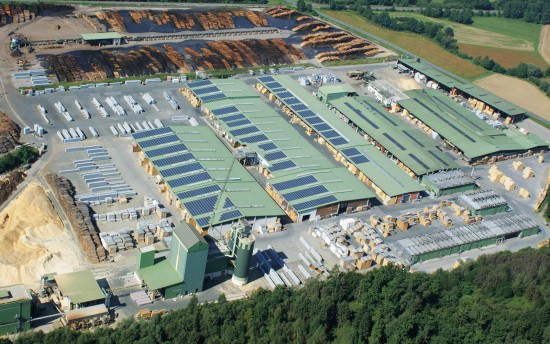
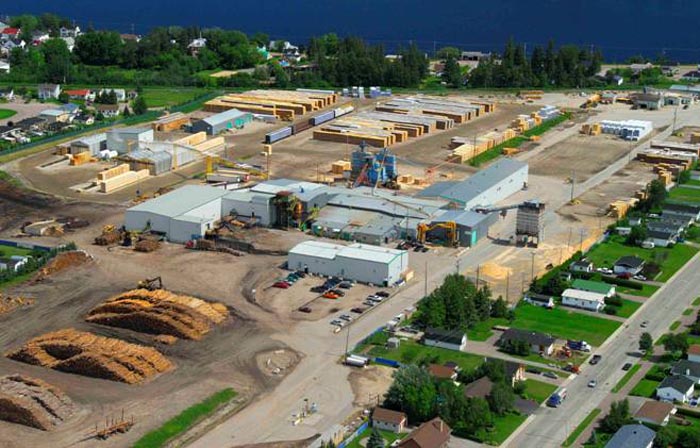
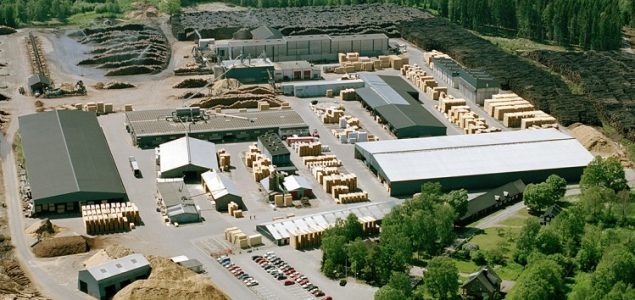
Bergs Timber completes acquisition of Norvik Timber Industries’ in the Baltics; almost doubles sawmill capacity

Bergs Timber announces that all conditions for the company’s acquisition of Norvik’s wood products in the Baltic countries and the UK are met.

The acquisition was mainly conditional on:

  • resolution of the Extraordinary General Meeting of shareholders
  • final approval from the relevant banks for the acquisition and its financing.

Through the acquisition Bergs Timber is expected to become a major player in the sawmill market, increasing sawmilling capacity from about 530,000 m³ per year to approximately 920,000 m³ per year.

The acquisition is also expected to increase Bergs Timber’s degree of processing and devote to limiting Berg’s Timber’s sensitivity to fluctuations in the business cycle.

Through the target company’s concentration to the Baltics, the new group’s raw material base is broadened while risk spreading is due to the fact that parts of production are based on costs in euros.
Potential exists for coordination benefits in areas such as commodity procurement, distribution and sales.
India: Trade in some dalbergia species resumes

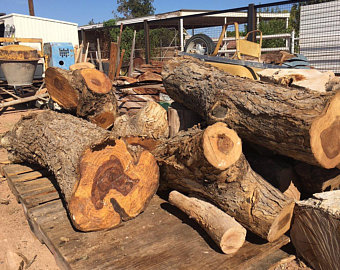
As a result of active intervention by the Indian Ministry of Commerce and the Forest Department a resumption of trade in of some dalbergia species has become possible.

CITES notification No. 2018/031 dated 26 March 2018 details the extent of the changes agreed.

1. The Management Authority of India has informed the Secretariat that the Government of India has banned the export for commercial purposes of all wild-taken specimens of species included in Appendices I, II and III, subject to paragraph 2 below.

2. India permits the export of cultivated varieties of plant species included in Appendices I and II and has indicated that all products, other than the wood and wood products in the form of logs, timber, stumps, roots, bark, chips, powder, flakes, dust and charcoal, produced from wild sourced (W) Dalbergia sissoo and Dalbergia latifolia and authorized for export by a CITES Comparable Certificate issued by the competent authorities of India are exempted from the general ban.

Such Dalbergia sissoo and Dalbergia latifolia specimens are harvested legally as per the regional and national laws of India and as per the prescribed management (working) plans, which are based on silvicultural principles and all are covered under Legal Procurement Certificate; all the material are sold from the Government timber depots through auction or are legally procured and can be exported legally.

3. Starting on the date of this Notification, all the CITES Comparable Certificates will be issued with a footnote, stating that the wild (W) source specimens are covered under Legal Procurement Certificate as per regional and national laws in India.

4. Parties are urged to inform the Indian Management Authority and the Secretariat of any attempted violations.

5. This Notification replaces Notification to the Parties No. 1999/39 of 31 May 1999.

Analysts say that exporters are buying the logs legally from various Forest Departments and that they are delighted to see a resumption of trade.

One positive result of the dalbergia ban has been growing market acceptance of Terminalia tomentosa (Indian laurel) for musical instrument manufacture.

As a follow-up to the easing of restrictions on domestic dalbergia, the local industry has requested government inventory all dalbergia standing trees across the country to make show that India has an abundance of this species and there is no risk of extinction. It seems that a survey will be conducted through the Botanical Survey of India.

Protests in Europe against oak exports

One prized timber has been the object of protests on the Champs Élysées, a free trade legal challenge by the EU to the Ukraine and at a recent European conference in London. That commodity is European oak!

The species must currently rank as one of the most sought after hardwoods. Alongside US white oak, it has become the European consumers’ timber of choice for furniture, flooring and joinery.

In fact, demand is such that one of the EU’s fastest growing retailers, solid oak furniture specialists and now USA-based ‘Oak Furniture Land’, is predicting its sales will hit £1 billion in five years, up from £300 million in 2016.

Europe’s oak is also in strong demand elsewhere, principally in Asia and most notably China. Much of the material is still processed by Asian producers, particularly in Vietnam and China, and made into manufactured product for export to Europe, the US and elsewhere.

But increasing volumes are used for goods destined for expanding domestic Asian consumption, led once more by the Chinese market.

China has been importing more European oak lumber, but its imports of logs have been growing faster, to the point it is seriously concerning the European processing sector, fearing for its raw material supply. The result has been calls for export controls, notably in the sawmillers’ protests in Paris.

France is Europe’s biggest oak source and believes it has been most affected by the Asian log drain. Some say it even threatens to reduce the scale of French sawmilling, with the repercussions for downstream businesses and jobs.

French mills acknowledged steps have been taken to alleviate the situation, including a government measure stipulating that 300,000 cu.m of timber from state forests had to be further processed in the EU. Some companies were reported to be bypassing this by trucking logs to Belgium for simple squaring for export to China and elsewhere, but the policy is thought to have had some impact.

New phytosanitary regulations, curbing timber treatment in the forest and stipulating it is undertaken in notified premises was also said to have put an added administrative brake on log exports.

At the same time the French have been actively marketing their oak lumber in Asia, with some success.

“We’re selling more sawn timber to China and at least 10 other Asian countries, with fastest growth now in Vietnam and India,” said Florence Perrucaud, export manager at sawmillers Ducerf. Guillaume Maniere, export sales manager at Monniot reported a similar experience. “Asian flooring and furniture producers are now our main industrial qualities customer and we’re supplying them beams for lamellas and cutting to their specified thicknesses.”

But despite rising export demand for sawnwood and the log export restraints, French mills say the flow out of the country remains considerable and there is currently no reason to think it won’t rise further.

China: Sawnwood imports rise by 5% in Q1/2018

China’s sawnwood imports reached 8.29 million cubic metres in the first three months of 2018, up five per cent over the same period of 2017.

Sawn hardwood imports rose 15 per cent to 2.91 million cubic metres.

Of total sawn hardwood imports, sawnwood imports from tropical countries were 1.67 million cubic metres valued at US$662 million, up 25 per cent in volume and 32 per cent in value and accounted for 20 per cent of the national total.

The average price for sawnwood imported from tropical countries was US$395 per cubic metre, down seven per cent from the same period of 2017.

Six tropical countries supplied just over 90 per cent of China’s ‘tropical’ sawnwood requirements in the first three months of 2018 namely, Thailand (72%), Gabon (7%), Indonesia (5%), the Philippines (4%), Malaysia (4%) and Cameroon (2%).

Canadian wood pellets promoted in Italy

The Wood Pellet Association of Canada has participated on a wood pellet trade mission to Italy during 19-23 of February. There were 16 participants, including representatives of wood pellet producers from British Columbia and Ontario.

The WPAC visited the wood pellet trading companies Woodtech and Agrifor, along with Savichem, a major distributor of stoves and fuels, who imports ENplus wood pellets, mainly from Austria. They also toured Italy’s largest wood pellet importer, Adriacoke, who is planning to install its own pelletizer to process fines generated from the handling of bulk wood pellets.

The group ended the tour with a two-day visit to the Progetto Fuoco (Project Fire) exhibition where participants met with numerous pellet buyers. Progetto Fuoco is a huge event held every second year in Verona. It features seven large exhibition halls with hundreds of pellet producers, traders, and manufacturers of stoves, boilers, pellet barbeques, pizza ovens, and every other kind of wood pellet appliance imaginable. As reported by the Canadian Biomass Magazine, there were several key takeaways from the Italian mission:

• Italy experienced three warm winters in a row from 2014–2016, which temporarily slowed pellet demand in the country. For the past two winters, temperatures have normalized, enabling pellet demand to recover.

• Industry participants were not able to give a precise figure for the size of Italian wood pellet market. Annual consumption is estimated to be between 2.5 and 3 million tonnes and is expected to double over the next five years. Presently about 90 per cent of wood pellets are imported.

• The Italian wood pellet market is extremely fragmented. There are hundreds of brands available. Adriacoke, who is the largest distributor, handles only 140 thousand tonnes annually, which is only about five per cent market share.

• There is significant concern about the size of the wood pellet black market, which is estimated to be between 200,000 and 300,000 tonnes per year. Participants use the black market to avoid a punishing 22 per cent value-added tax on wood pellets.

• The 22 per cent value-added tax was imposed in 2014, decreasing the advantage of wood pellets over natural gas. Nevertheless, wood pellets continue to be cheaper than gas.

• Wood pellet demand has grown in other parts of Europe, making it more difficult for Italy to import wood pellets from countries that have grown their own domestic markets. This has led to increased interest in residential-quality pellets from Canada.

• Wood pellet traders realize that they must purchase pellets year-round in order to maintain reliable supply. Traders indicate that they are willing to set prices annually to match the practice of the large supermarket chains that sell wood pellets to end consumers.

• ENplus quality certification is essential. Supermarkets in particular, want certified wood pellets so as to avoid consumer quality claims. Italian consumers also prefer light-coloured pellets, which they associate with pellets imported from Austria.

• Although Italian traders purchase wood pellets in bulk and in bags, they prefer bagged product because logistics are easier and because bulk pellets result in significant quantities of fine dust that must be disposed of.

• There are around 3.1 million installed wood pellet stoves in Italy and 12,000 boilers, a ratio of nearly 200:1. Pellets are predominantly sold in 15-kilogram bags while bulk pellet sales are practically non-existent. Even many boilers used bagged wood pellets. Pellet stove sales are growing at a rate of 5-10 per cent annually. The average pellet stove uses less than one tonne of wood pellets each year, compared to about four tonnes per year in Canada.

• The Italian government has introduced a program that enables taxpayers to recover 65 per cent of the cost of a pellet stove installation through their income tax returns. v• Inbound logistics: (1) bagged pellets are received by truck from Austria, Germany, France, Czech Republic, Croatia, Slovenia, Poland; (2) bagged pellets are received by train from Romania, Belarus, Ukraine, Netherlands, and Lithuania; (3) bagged pellets are received in shipping containers from Estonia, Latvia, Lithuania, Tunisia, U.S., and Canada; and (4) bulk pellets are received in ocean vessels from Portugal, Estonia, Latvia, Lithuania, Russia, U.S. and Canada.

• Ballpark per tonne wholesale pricing, ex works (transportation paid by buyer): (1) bagged pellets received by truck is 133 euros; (2) bagged pellets received by train is 144 euros; (3) bagged pellets received by container is 121 euros; and (4) bulk pellets received by ocean vessel is 91 euros.

• Canadian wood pellets are regarded to be of the highest quality, but expensive. Consequently many unscrupulous Italian distributors are branding pellets as “Canadian”, even if the pellets are imported from elsewhere. Our only protection is to use the CANplus pellet certification brand in addition to ENplus. No pellet producer outside Canada is allowed to use the CANplus trademark.

• Air pollution from wood burning has become a political issue in Italy. The natural gas lobby has campaigned against wood pellets, saying the emissions from pellet stoves are the same as from the many old inefficient wood stoves that are still in service in Italy. Fortunately, Italy has passed a new “National Law for the Quality Classification of Biomass Heating Systems” which rates stoves on the basis of emissions performance for particulates, organic gases, nitrous oxides, and carbon monoxide. Pellet stoves have been found to be highly rated under the new law.

Italy remains the best option for those wishing to export residential quality pellets to Europe. Winter temperatures have returned to normal after three consecutive warmer than normal years. Pellet demand in other European countries has depressed their exports to Italy. Pricing remains somewhat challenging. Nevertheless, Canadian exporters should consider shipping at least a portion of their production to Italy as a means of diversifying their global market risk.

US lumber prices head to record-highs, due to tight supply and trade tariffs

The US lumber market is ready to boom, with futures rising to another record on the 14th of May, due to various factors, as: import tariffs, transport bottlenecks and strong housing demand.
As Bloomberg reported, the futures rose 1 percent to close at $619 per 1,000 board feet on the Chicago Board of Trade. They’ve surged 66 percent in the past 12 months, which is a bigger gain than any of the raw materials tracked by the Bloomberg Commodity Index.
Moreover, the prices are most likely to keep on growing, as many US homebuyers confirmed.
Still, the market is supported by:
US tariffs
Lumber prices started to increase after the US imposed average imposed duties of 21% on Canadian softwood lumber shipments in November. While this move supports the US producers, it’s bad news for domestic builders, who get more than a quarter of their needs from north of the border.
For house construction in particular, the US simply doesn’t have enough supply to meet demand. The National Association of Home Builders, an American industry group, estimates the tariffs will increase the price of an average single-family home built in 2018 by $1,360, Bloomberg reported.

Transport Woes

Lumber producers such as Canfor Corp. and West Fraser Timber Co. have piles of inventory stacked at their sawmills because of a lack of transport capacity. Canada is the biggest softwood lumber exporter to the US, and the disruption is contributing to price gains.
Producers may work through the backlog this year -- Interfor Corp. said this month it plans to catch up on shipments in the second quarter.
Tight Supplies
Single-family housing starts, which use about three times as much wood as multifamily construction, continue to increase, and orders are expected to rise now that spring building season has arrived.
The US housing recovery and demand for residential repairs may lift lumber consumption in 2018, according to RISI. They also cite "razor-thin” inventories, owning to the duties and transportation delays, as well as a seasonal uptick in demand. The framing-lumber composite price probably will rise 20 percent in 2018 to a record.

Austrian Hasslacher Group invests EUR 30 million in Preding sawmill expansion

The Hasslacher Group plans to invest EUR 30 million in the expansion of its site in Preding, Austria. The company has already invested EUR 30 million in its production sites in Saxonyburg, Hermagor and Stall in Mölltal in January 2018.

Hasslacher Norica Timber has grown into one of the largest wood industry groups in Europe over the past 20 years and has been one of Europe's largest glulam manufacturers since its acquisition of Nordlam in Magdeburg in July 2017.

With the planned investment volume, the sawmill in Preding will be modernized and the cutting capacity expanded to up to 600,000 solid meters of roundwood. The necessary drying capacity will be extended by the drying chambers from Wiesenau, which were acquired last year.

The next step is the construction of a heating plant that will supply 7 MW of additional energy. In 2019, the expansion of the log yard, the saw and another lumber sorting plant will take place. The investments of around € 30 million are expected to be completed by the beginning of 2020.

"The Hasslacher Group has developed from a net sawn timber producer to a net consumer of sawn timber, which made the expansion necessary," explains Christoph Kulterer, CEO of the Hasslacher Group. "Preding is the ideal location as the finishing capacity already exists and the infrastructure fits. In the future, the saw will also be able to process thick wood, which will allow us to take over the entire roundwood produced in the region. In addition, Slovenia has established itself as a reliable timber supplier and we will get around half of the timber from there."

The Hasslacher Preding Holzindustrie operates a sawmill in Preding with an sawing capacity of 250,000 cubic meters, produces 115,000 m³ of finger-jointed structural wood, 90,000 m³ of planed timber, 70,000 t of pellets and more than 1.3 million special pallets and packaging solutions.

More than 7 million euros have already been invested in modernization, plant expansion and infrastructure in the last two years, creating over 40 new jobs.

World bank expects rising wood logs prices in Africa and SE Asia

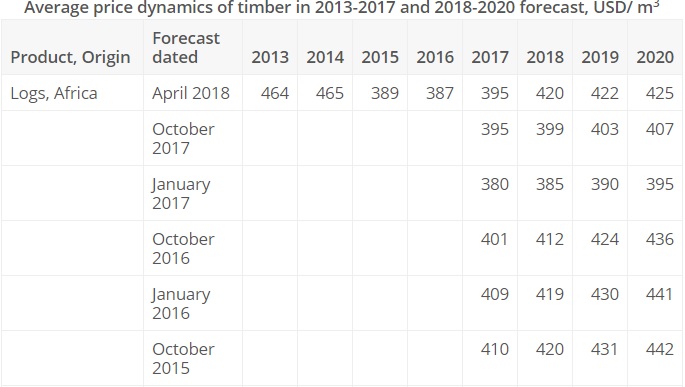
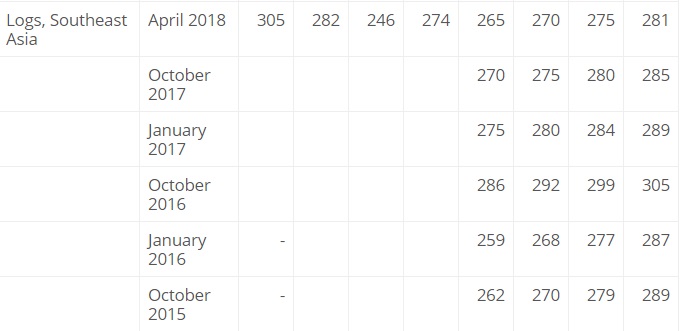
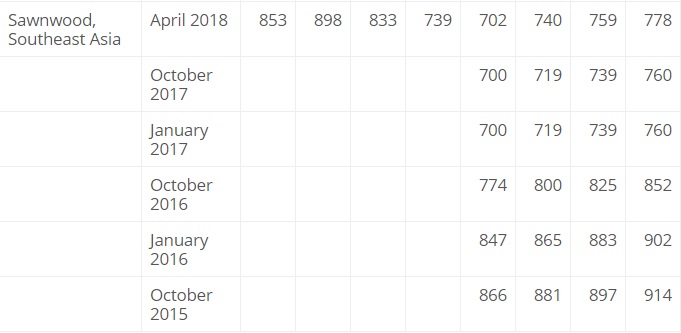
The World Bank reconsidered forecast for logs and sawnwood in the recently updated Commodity Markets Outlook.
The organization expects increase of logs price from Africa from average 395 USD/ mto 420 USD/ m3 in 2018 with a minor increase in 2020 horizon.
The same positive trend is expected in 2018 for logs and sawnwood export prices from South East Asia.


Source: Worldbank
Notes:
Logs (West Africa). Sapele, high quality (loyal and marchand), 80 centimeter or more, f.o.b. Douala, Cameroon.
Logs (Southeast Asia). Meranti, Sarawak, Malaysia, sale price charged by importers, Tokyo.
Sawnwood (Southeast Asia). Malaysian dark red seraya/meranti, selectand better quality, average 7 to 8 inches; length average 12 to 14 inches; thickness 1 to 2 inches; kiln dry, c. & f. UK ports, with 5% agents commission including premium for products of certified sustainable forest.

China and Eastern European countries boost cooperation in forestry

China, together with the Central and Eastern European (CEE) countries, have decided to invest even more in their cooperation regarding the prevention of negative effects from climate change.

During the 2nd High Level Meeting of the Coordination Mechanism for Cooperation in Forestry, China and 16 CEE countries gathered at the biennial event to access the progress achieved within the mechanism in the past two years since it was established, lay plans for the upcoming two years, and exchange views about climate change and forestry in 21st century, Xinhuanet reported.

Liu Dongsheng, deputy head of China's State Forestry and Grassland Administration, said that China and 16 CEE countries have common views on climate change, and need to cope together against its negative effects, especially through foresting.

He added that China, which has become a global leader in foresting over the past years, wishes to exchange experiences with CEE countries through the 16+1 cooperation mechanism.

"The emission of CO2 should be decreased, while surface under forests should be increased, and this is an honorable task for which we also have the support of our people," he said.

He suggested establishment of forestry-related multilateral or bilateral platforms among the members of the 16+1 cooperation mechanism in order to boost cooperation among universities and academic bodies, and promote exchange in science and research.

Liu mentioned forest tourism and medicinal forest tourism as some promising industrial branches that require joint cooperation to secure progress, and he concluded that China supports the establishment of "smart forests" across the world aiming to achieve better efficiency in managing forests as well as protection of animals and plants.

Branislav Nedimovic, Minister of Agriculture, Forestry and Water Management of Serbia revealed that the participants of the meeting adopted a joint declaration and a plan of the China-CEE cooperation from 2018 to 2020.

"Our aim is both to boost international trade and to increase production." he said

Nedimovic added that a new online platform was launched Monday where all countries within the 16+1 forestry cooperation will form a database of their potentials in the area of forestry in order to engage companies and businessman. It also highlighted the importance of scientific research and academic exchange, according to Xinhuanet.

Södra and KLM plan to produce green jet fuel

Södra signed a letter of intent with KLM to conduct a joint feasibility study to examine the possibility of producing green jet fuel. In parallel, Södra will become the first company in Sweden to join KLM’s Corporate Biofuel Programme, with the aim of supporting growth in demand for fossil-fuel-free alternatives in the aviation sector.

According to the announcement, the collaboration contains a feasibility study to examine the prerequisites for producing biojet fuel from forest biomass. While Södra and KLM are the main partners in the collaboration, many other players are also participating.

Maria Baldin, Director of Communications and Sustainability at Södra, commented: "Air travel accounts for some 2% of global CO₂ emissions. We are now taking two key steps forward to create sustainable alternatives to fossil-based jet fuel. The current supply of biofuel is too low and this is something we want to change."

Helping to reduce CO₂ emissions is in line with our sustainability targets. Our goal is to be fossil-fuel free by 2030. We will now shoulder an even greater responsibility for our air travel.”

Earlier, Södra increased share of renewable fuels for powering its processes to 99.3%.

The company is the economic association that unites more than 50,000 forest owners in southern Sweden. Södra’s three business areas are production of sawn and planed timber goods, interior products, paper pulp and biofuel.

In recent years Södra has also become such a large producer of electricity. It employs 3,500 people in areas that range from forestry management and environmental conservation to accounting, sales and product development.

EU market for glulam challenging for external suppliers

Anecdotal reports indicate that the glulam sector in Europe struggled with over-supply and low margins in the 2013 to 2016 period. Taken together these trends suggest relatively poor prospects for external suppliers to expand glulam sales in the EU market.

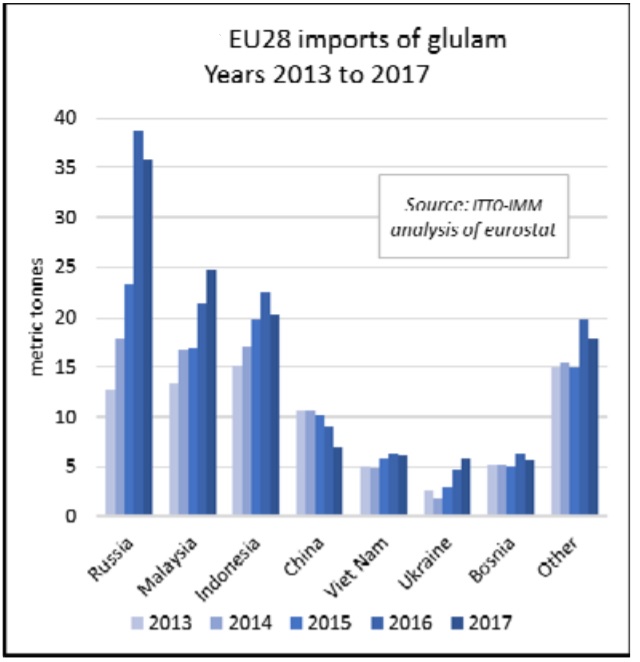
Nevertheless, EU imports of glulam were increasing between 2013 and 2016 when they reached a peak of 128,700 MT. Last year total imports fell back 4% to 123,300 MT, but Malaysia, the leading tropical supplier, continued to make gains. Imports from Malaysia increased 16% to 24,800 MT in 2017.

In contrast to Malaysia, in 2017 imports from Indonesia declined by nearly 10% to 20,300 MT and imports from Viet Nam fell nearly 4% 6,100 MT. Imports also fell 8% from Russia to 35,800 MT and 24% from China to 6,900 MT.

The relative strength of tropical glulam imports at a time of intense competition in the wider EU glulam market is partly due to the specific mix of products involved.

Whereas much of the EU internal market comprises large beams and other structural elements, a large proportion of imports are more specialised small dimension products for non-structural applications.

Imports of tropical glulam have remained reasonably buoyant in response to improved demand in specific niche sectors, notably for durable laminated window scantlings in the Netherlands and Belgium.

Canadian Skeena Sawmills builds 96,000t capacity pellet plant in British Columbia

Skeena Sawmills plans to commence construction work for a pellet plant at its sawmill site in Terrace, British Columbia, Canada. The plant will have an annual capacity of 96,000t industrial pellets .

Nearly 20 million Canadian dollars will be invested in the construction of the plant, as the operations vice president Roger Keery announced.

The plant will operate under the name Skeena Biofuels and its essential equipment components have already been ordered from Spanish Prodesa Medioambiente. One of the pieces of the equipment is a low-temperature belt dryer with a capacity of 12t per hour, while the heat supply is to be arranged via two gas burners, each with a capacity of 5.5MW.

The raw materials, wood chips and sawdust, will be supplied from an adjacent sawmill which has a current capacity of some 200m bdft per year.

No further details about the launch of production have been disclosed yet.

Enviva sold partner interests in its units as to revive wood pellet projects

Enviva Holdings LP discharged certain limited partner interests in its unit Enviva Partners so as to finance projects, as the US wood pellets supplier announced on the 10th of March.

Through two of its subsidiaries, Enviva Holdings has sold 1,265,453 common units representing limited partner interests in Enviva Partners to accounts managed by ValueAct Spring Fund, HITE Hedge Asset Management LLC and Kayne Anderson Capital Advisors LP for an undisclosed amount. Proceeds from the sale will be used to support the construction of its Hamlet wood pellet production plant in North Carolina’s Richmond County and the expansion of an existing facility in Greenwood, South Carolina.

We expect one plant to be made available as a drop-down transaction to Enviva Partners in 2019 and the other in 2020,” said John Keppler, Enviva’s chairman and CEO. He added that the deal indicates the “growing interest in renewable energy and infrastructure investments.”

Enviva has wood pellet manufacturing bases at several locations across the US, including Virginia, North Carolina, South Carolina, Mississippi and Florida.

Harvard University plans to sell a part of its South American timberlands

Harvard University is currently trying to sell a part of its timberland investments in South America to investors that would share management of the portfolio.

The management of the university has already approached investors to buy minority or majority stakes in as much as $700mn of property in Brazil, Uruguay and Argentina, MENAFN reported. The university also wants the investors to become strategic partners at the same time in an effort to reduce the endowment's risk.

The $37bn endowment hired investment banker Jonathan Prather from Perella Weinberg Partners Group in February, according to the people, who asked not to be identified because the information is private. Perella Weinberg declined to comment.

Hardvard's endowment began in 2016, when the vy League school hired Narv Narvekar from Columbia University as investing chief. He cut the headcount of the organization by half, shuttered internal hedge funds, spun out money managers and sold more than $2bn of buyout and real estate funds.

As MENAFN reported, Narvekar is trying to revamp the natural resources strategy after predecessors made a big wager on the asset class that initially produced solid returns but later backfired. Last year, Harvard wrote down the portfolio by $1.1bn to $2.9bn, a loss that included a decision to exit from one of its farm projects in Brazil where it invested at least $150mn.

The portfolio 'will take multiple years to reposition, Narvekar wrote in a September report, adding that 'while most assets remain attractive, a few have significant challenges."

He began unloading properties last year, agreeing to sell a dairy farm in New Zealand with 5,500 cows to private equity firm KKR & Co for $70mn and a eucalyptus plantation in Uruguay to insurer Liberty Mutual for $120mn.

The portfolio is still vast, including farms in Australia, South Africa and Brazil, as well as vineyards in California and timberland in Eastern Europe and throughout Central and South America, according to tax documents and other filings.

Like other parts of the endowment Narvekar inherited, the investments were made directly instead of through external money managers, a more common approach among peers. Harvard still has a team overseeing the portfolio. It's led by Colin Butterfield, who was hired in 2016 from Radar, a fund investing in agriculture in Brazil backed by retirement money manager TIAA.

"To best serve Harvard, HMC will take a level of risk appropriate for Harvard," Narvekar wrote in a January 2017 report. "Our returns will ultimately follow in our chosen path rather than in the path of any other specific endowment, which might have a different risk tolerance and a different mandate."

The timberland holdings up for grabs in Brazil, Argentina and Uruguay consist of eucalyptus, teak and pine plantations, according to tax filings and other documents. The properties are owned through shell companies and managed by independent firms. The most valuable properties are in Uruguay and Brazil.

Harvard owns timberland in Chile, Colombia, Ecuador, Nicaragua, Panama and Peru as well, according to documents. These properties aren't currently being shopped in the proposed deal, the people said. Investment returns on timberland cooled in the last decade as emerging markets such as Brazil faltered and growth in China moderated. An index for US timberland shows uneven gains since the recession ended in 2009, preceded by years of double digit returns driven by the housing boom.
Still, some investors see opportunity.

The Rohatyn Group last year acquired control of a $2.1bn portfolio from Boston-based money manager GMO, whose co-founder Jeremy Grantham was an influential champion of investing in emerging market agriculture. Nicolas Rohatyn, the company's CEO, said last week at a timberland investing conference in New York he was looking to acquire more assets.

Liberty Mutual has also been active in the sector. The insurer hired Qinhai Xia from Harvard Management last year as a director of agriculture and timberland investments. Xia reports to Avtar Vasu, another Harvard Management veteran hired by Liberty Mutual in 2016. A Liberty Mutual spokesman declined to comment on the company's investment activities.

Another entrant is Folium Capital, launched last year by Andrew Wiltshire, Alvaro Aguirre and Oliver Grantham to invest in farms and forests. The three left Harvard Management in 2015 after spearheading the natural resources strategy that is now under scrutiny. Grantham is Jeremy Grantham's son.

US lumber prices soared as pressing needs increased

Lumber prices in the US went higher during last week, as buyers tried to cover pressing needs. Extended mill order files, rail and truck shortages, and pent-up seasonal demand generated a frenzied market tone.
Heavy substitution for limited supplies of Canadian S-P-F helped generate a surge of orders in western species and Southern Pine. Buyers often paid little heed to prices, and put the priority on finding the quickest shipments possible.
The Random Lengths Framing Lumber Composite Price skyrocketed to a record $543.

Week
May 11
Week
May 4
Year Ago
2017
Random Lengths Framing Lumber Composite Price* $543 $525 $420
KD Western S-P-F #2&Btr 2x4 R/L Mill Price 619 598 392
KD Eastern S-P-F #1&2 2x4 R/L, delivered Great Lakes 676 654 477
Green Douglas Fir Std&Btr 2x4 R/L (Portland) 563 543 395
Southern Pine (Westside) #2 2x4 R/L 581 570 460
KD Coast Hem-Fir #2&Btr 2x4 R/L 615 590 425
Ponderosa Pine (Inland) #2&Btr 1x12 R/L 760 755 685
* Weighted average of 15 key items

Random Lengths Panel Market Report
Structural panel trading gained momentum as the week progressed, and prices increased. OSB sales kicked into high gear in late trading.
Distributors and dealers jumped into the market with increased urgency. Reported prices of Southern Pine rated sheathing edged upward amid steady demand from buyers addressing just-in-time needs.
In western Fir plywood, steady trading emerged after a sluggish start, and the market finished the week with a solid tone.

(f.o.b. mill prices) Week
May 11
Week
May 4
Year Ago
2017
Random Lengths Structural Panel Composite Price* $545 $536 $419
Southern (west-east) 15/32-inch 3-ply rated sheathing plywood 530-570 520-560 370-395
Southern (west-east) 15/32-inch 4-ply rated sheathing plywood 535-575 525-565 375-400
Western 1/2-inch 4-ply rated sheathing plywood 538 527 418
North Central 7/16-inch Oriented Strand Board 415 410 333
*Weighted average of 11 key items

Resolute Forest Products invests nearly $52 million for Saint-Félicien pulp mill in Canada

Resolute Forest Products Inc. announced a $52.3 million strategic investment plan for its Saint-Félicien pulp mill, located in the Lac-Saint-Jean region of Quebec, Canada.

"The significant investments at Saint-Félicien are expected to improve several areas of the operation, increasing the average daily production capacity by 76 metric tons and reducing greenhouse gas emissions from the use of fossil fuels by 20%," said Yves Laflamme, president and CEO.

Resolute employs close to 240 workers at the pulp mill, and more than 2,000 in the Saguenay–Lac-Saint-Jean region. The upgrades are expected to be completed by the end of 2019.

Resolute Forest Products is a global leader in the forest products industry with a diverse range of products, including market pulp, tissue, wood products, newsprint and specialty papers.

China is planning a giant new SEZ around Beijing

China is planning a new special economic zone (SEZ) that will effectively extend the sprawling metropolis of Beijing, transforming the area around the Chinese capital into a “mega-region” that could also see Tianjin and Hebei province come under its sphere of influence.

The 100sq km Xiong’an New Area has been earmarked for a green and low-carbon city with small townships built around it, according to a circular issued by the government.

In the future, it could also be a launch pad for high-tech industries manufacturing 5G communications, bio-medical science, artificial intelligence and Fintech, according to state-owned Chinese media Xinhua News Agency.

The zone is expected to eventually expand to 2,000sq km, nearly three times the size of New York City.

Xiong’an is also home to one of China’s largest wetlands, which the government said it would protect.

Riga will be the host for the 66th International Softwood Conference

The 66th International Softwood Conference will be held on 10-12 October 2018 in the largest city in the Baltics – Riga, Latvia.

The event is hosted by the Latvian Timber Traders & Producers Association, the European Timber Trade Federation (ETTF) and the European Organization of the Sawmill Industry (EOS).

As per tradition, the conference will open with a cocktail reception, followed by the conference the next morning at the Radisson Blu Latvija. This year, there will also be opportunities to visit sawmills before the conference officially commences.

The conference will provide market analysis from the perspective of international speakers. The presentations will be focused on facts and figures showing softwood production as well as consumption in the most relevant timber markets such as USA, UK, Canada, North Africa and Egypt, Russia, France, Japan and China.

The event will include insights from the Confederation of European forest owners on resources with participation of PEFC and FSC certification system representatives.

Veneer production potential in Gabon

Gabon is the 6th largest producer of tropical veneer. Its production of 270,000 cubic metes in 2016 represented 6% of global tropical veneer production according to the International Tropical Timber Organization.

150,000 cubic metres of veneer is currently produced in Gabon outside Gabon’s Special Economic Zone according to Dr. Bernard Cassagne, CEO of the FRM Group which recently undertook a study of veneer production in Gabon.

He says, with the expected increase in its industrial capacity, Gabon would be able to produce around 500,000 cubic metres of veneer annually or nearly 1.7 times its current production thus becoming the second largest exporter of tropical veneer after Vietnam.

Species under sustainable development for veneer production in Gabon

Approximately one million cubic metres of logs will be required annually to achieve the potential and Cassagne says there are adequate logs resources of the main species for this level of veneer production.

The report from the FRM Group saya “if Gabon continues its industrialisation, new markets emerge and infrastructure improves then the harvests of species such as okoumé, ilomba, ahmad, aiélé and faro could reach 2 to 3 million of cubic metres annually.

Log Export Prices

West Africa logs, FOB € per m³
Asian market
LM
B
BC/C
Acajou/ Khaya/N’Gollon
260
255
170
Ayous/Obéché/Wawa
270
260
180
Azobe & Ekki
270
270
180
Belli
295
295
Bibolo/Dibétou
195
175
Bilinga
265
265
-
Iroko 370
350
270
Okoume (60% CI, 40% CE, 20% CS) (China only) 250 250 190
Moabi 355 345 275
Movingui 230
230
170
Niove
175
160
Okan
240
240
Padouk
335
275
210
Sapele 310 300 245
Sipo/Utile
335
315
245
Tali 380 370


Sawnwood Export Prices

West Africa sawnwood, FOB
€ per m³
Ayous FAS GMS 425
Bilinga FAS GMS 530
Okoumé FAS GMS
430
Merchantable 320
Std/Btr GMS 350
Sipo FAS GMS
540
FAS fixed sizes 560
FAS scantlings 560
Padouk FAS GMS 880
FAS scantlings 1020
Strips 645
Sapele FAS Spanish sizes 505
FAS scantlings 510
Iroko FAS GMS 630
Scantlings 710
Strips
410
Khaya FAS GMS
450
FAS fixed
470
Maobi FAS GMS
620
Scantlings
630
Movingui FAS GMS
430

Source: ITTO

Newsletter

Subscribe to our digital newsletter for your daily digest of essential news, views and analysis from the international wood industry delivered directly to your inbox.


0