

Prices for Ghana's exported wood products are the following between 1-15 May 2018. Continue reading "Latest prices for Ghana's exported wood products"
Article archive
Latest prices for Ghana’s exported wood products
Prices for Ghana's exported wood products are the following between 1-15 May 2018. Continue reading "Latest prices for Ghana’s exported wood products"
Latvian roundwood purchase price grew during the 2H/2017
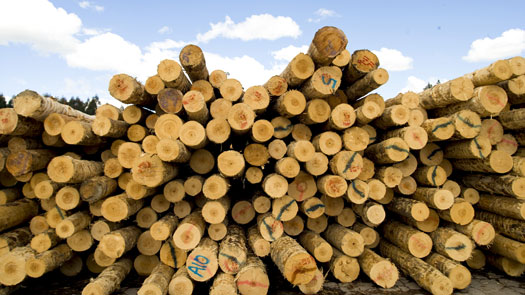
The average purchase prices of roundwood in Latvia increased in the 2nd half of the year, as compared to the 1st half of 2017.
According to data from the Central Statistical Bureau (CSB), within the coniferous tree sector, the greatest rise was observed in purchase prices of pine sawlogs in diameter under 14 cm, while within deciduous tree sector – in purchase prices of birch veneer logs of category A.
Compared to the 1st half, in the 2nd half of 2017 the most notable rise within the coniferous tree sector was observed in purchase prices of black alder sawlogs in diameter over 24 cm (of 11% or 5 Euro/m3) and asp sawlogs in diameter 18–24 cm (10%, or 3 Euro/m3).
Smaller increase was observed in purchase prices of birch sawlogs in diameter 18–24 cm (of 5%, or 2 Euro /m3) and asp sawlogs in diameter over 24 cm (4%, or 2 Euro /m3). Slight reduction was recorded in purchase prices of birch sawlogs in diameter over 24 cm (of 1%) and black alder sawlogs in diameter 18–24 cm (1%).
Rise in prices of roundwood of all assortments might be related to the rainy summer and autumn of 2017 when weather conditions hindered logging and transportation of sawlogs from forest. This resulted in difficulties of logging enterprises to fulfil their contractual obligations to deliver the timber. The high demand for raw materials by timber processing enterprises in local and global timber market contributed to the roundwood purchase price increase in Latvia.
US Senators sign urging letter for supporting the Timber Innovation Act
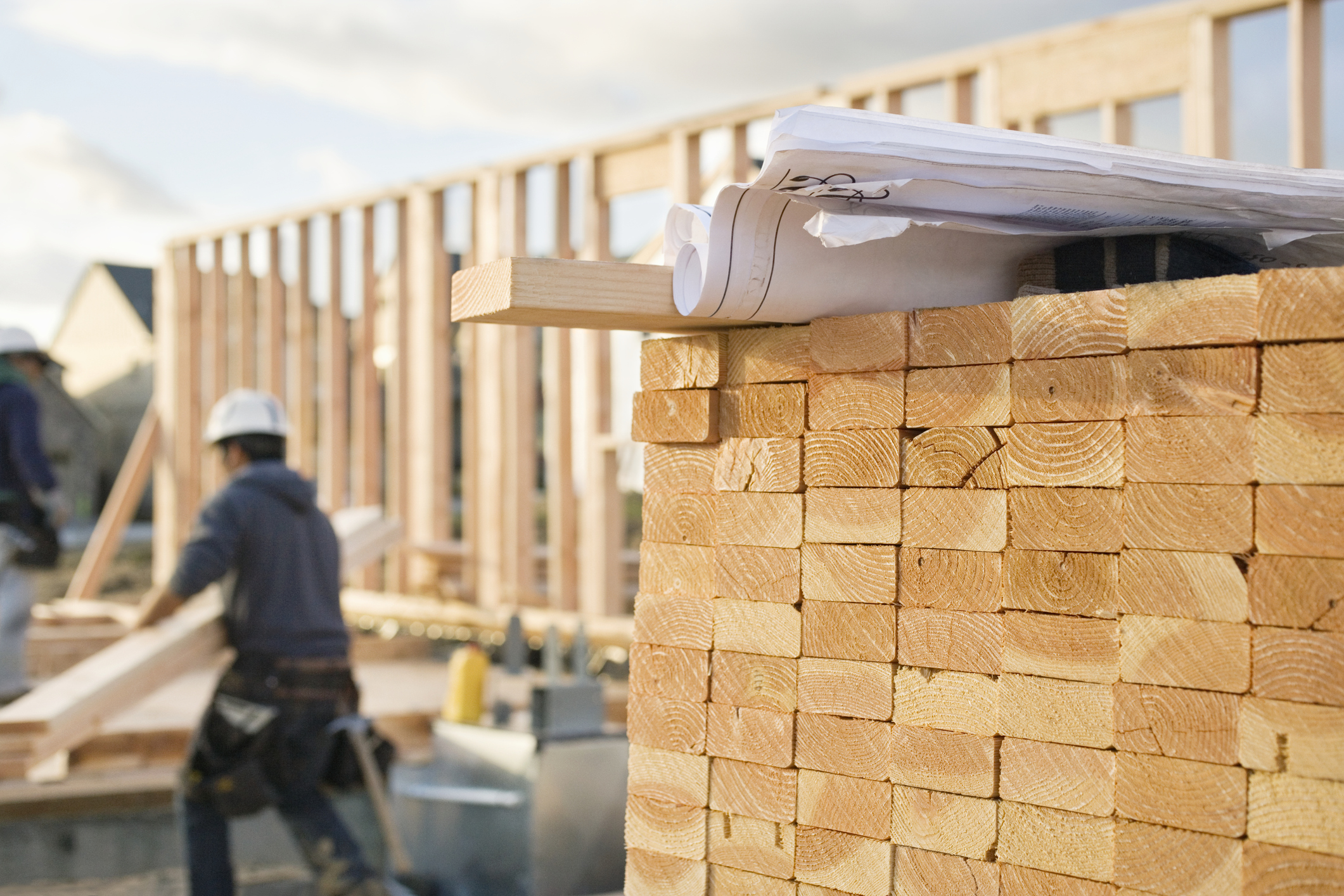
U.S. Senators Ron Wyden and Jeff Merkley, both Democrats, have signed their names to a letter urging the Committee on Agriculture, Nutrition and Forestry to include the Timber Innovation Act, which would streamline and incentivize the development of mass timber products, in the upcoming farm bill.
The bill reportedly has bipartisan support, including from Republicans in Idaho, Montana and Mississippi.
The Timber Innovation Act would effectively establish a performance driven research and development program for advancing tall wood building construction in the United States, authorize the Tall Wood Building Prize Competition through the U.S. Department of Agriculture (USDA) annually for the next five years, while also creating federal grants to support state, local, university and private sector education, outreach, research and development, including education and assistance for architects and builders, that will accelerate the use of wood in tall buildings.
Moreover, it would authorize technical assistance from USDA, in cooperation with state foresters and state extension directors (or equivalent state officials), to implement a program of education and technical assistance for mass timber applications; and will incentivize the retrofitting of existing facilities located in areas with high unemployment rates, to spur job creation in rural areas.
The act also has support from industry firms like cross-laminated timber pioneer D.R. Johnson.
“We applaud the members of Congress who co-sponsored the Timber Innovation Act bill and encourage others to sign on," said Valerie Johnson, president and CEO of D.R. Johnson Wood Innovations.
As of 2017, D.R. Johnson is one of only three North American companies certified by the Engineered Wood Association to construct CLT for use in buildings. The company employs 125 at a traditional sawmill and laminating plant, which was recently expanded by 13,000 square feet for increased CLT production. They're currently fielding calls from hopeful builders, and manufacturing samples to be tested for fire safety and structural quality.
D.R. Johnson says the system for constructing CLT involves assembling prefabricated parts, speeding construction, and paring labor costs. The company partnered with wood processor manufacturer USNR to build a custom panel press for CLT.
Advocates of CLT say it can be used to construct buildings of equal strength and fire-resistance as those made of steel and concrete. It has also fueled the passions of architects and environmentalists, who believe it to be a much greener method for housing the world's growing population.
Other organizations and firms, including the AWC, AFF, BSLC, NAFO, and South Carolina-based Elliot Sawmilling have also voiced support for the bill.
Source: Woodworking Network
Latest prices of logs and sawnwood in China

The report below contains the latest prices of logs and sawnwood from main timber markets in China, between 1-15 May 2018.
1 Yuan=0.13 EUR
1 Yuan=0.16 US$
Guangzhou Yuzhu International Timber Market
1 Yuan=0.13 EUR
1 Yuan=0.16 US$
Guangzhou Yuzhu International Timber Market
| Logs | yuan/cu.m. | |
| Merbau | Dia. 100 cm+ | 4-6000 |
| Bangkirai | Dia. 100 cm+ | 3200-4200 |
| Kapur | Dia. 80 cm+ | 2700-3000 |
| Ulin | All grades | 6500 |
| Lauan | Dia. 60 cm+ | - |
| Kempas | Dia. 60 cm+ | 2000-3000 |
| Teak | Dia. 30-60 cm+ | 8500-8600 |
| Logs | yuan/cu.m. | |
| Greenheart | Dia. 40 cm+ | 2300-2400 |
| Purpleheart | Dia. 60 cm+ | 3000-4500 |
| Pau Rosa | Dia. 60 cm+ | 2800-3000 |
| Ipe | Dia. 40 cm+ | 2800-3000 |
| Yuan per tonne | ||
| Cocobolo | All grades | 40-70000 |
Sawnwood
| Sawnwood | yuan/cu.m | |
| Makore | Grade A | 9800-11800 |
| Zebrano | Grade A | 9500-12500 |
| Walnut | Grade A | 9500-15000 |
| Sapelli | Grade A | 5000-7500 |
| Okoume | Grade A | 3700-4700 |
| Padauk | Grade A | 15000-18000 |
| Mahogany | Grade A | 6500-7500 |
| Sawnwood | yuan/cu.m | |
| Ulin | All grade | 9000-10000 |
| Merbau | Special grade | 7500-9500 |
| Lauan | Special grade | 4300-4700 |
| Kapur | Special grade | 5000-6000 |
| Teak | Special grade | 14000-22000 |
| Sawnwood | yuan/cu.m | |
| Maple | Grade A | 9000-9500 |
| Beech | no knot | 9000-9500 |
| Ash | no knot | 5600-6300 |
| Basswood | no knot | 2800-3300 |
| Oak | no knot | 5300-5700 |
| Scots pine | no knot | 2100 |
| Sawnwood | yuan/cu.m | |
| Cherry | Fas 2 inch | 9000-11000 |
| Black walnut | Fas 2 inch | 15000-18000 |
| Maple | Fas | 8200-10000 |
| White Oak | Fas | 7500-13000 |
| Red Oak | Fas | 6500-8300 |
| Finnish pine | Grade A | 2600-2900 |
Zhangjiagang Timber Market Wholesale Prices
| Logs, all grades | yuan/tonne |
| Sapelli | 3000-4000 |
| Kevazingo | 8000-32000 |
| Padouk de africa | 2400-3100 |
| Okoume | 1400-1800 |
| Okan | 2400-2800 |
| Dibetou | 2200-2500 |
| Afrormosia | 5500-6500 |
| Wenge | 4700-5500 |
| Zingana | 3400-4800 |
| Acajou de Africa | 3000-3500 |
| Ovengkol | 3100-3600 |
| Pao rosa | 5900-6600 |
| Logs, all grades | yuan/tonne |
| Merbau | 3500-5800 |
| Lauan | 1800-2020 |
| Kapur | 2020-2500 |
| Keruing | 1700-2200 |
| Geronggang | 1600 |
| Kauri | 1700-1850 |
| Logs, all grades | yuan/tonne |
| Amoora | 1900-2080 |
| Calophyllum | 2150-2350 |
| Red Ganarium | 1300-1400 |
(Source: ITTO)
Russia and Japan to collaborate on the construction of a new wood pellet plant

As part of the Russia-Japan Investment Fund (RJIF), the Russian Direct Investment Fund (RDIF) and JBICIG Partners (a subsidiary of the Japan Bank for International Cooperation) have agreed to 'collaborate and consider' potential investments in Russia’s bioenergy industry.
The forestry company RFP Group from Russia and investment company Prospect from Japan have also signed onto the agreement.
The group plans to work on a facility to process waste from the timber industry into wood pellets. The plant is to have a total production capacity up to 135,000 tonnes per year. Construction is expected to start in the summer of 2018, with operation in 2019. There is scope to expand the capacity of the plant and construct of additional facilities with a capacity around 500,000 tonnes per year.
A ‘significant’ volume of the pellets is to be exported to Japan, which supports the use of biomass for energy production through a feed-in tariff.
The Russia-Japan Investment Fund was established to promote economic, trade and investment cooperation between Japan and Russia. Focuses for the fund include healthcare, smart cities, sustainable technologies and energy. Activity also supports cutting-edge technologies, developing industries and export in the Russian Far Eastern District.
European prefab housing market growing steady
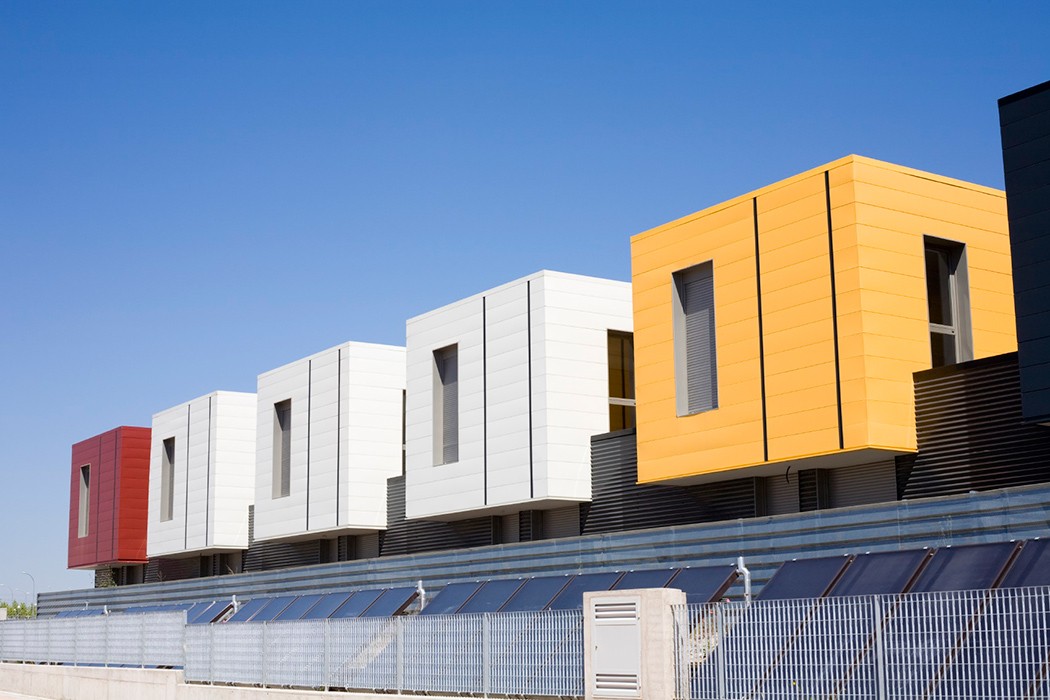
From 2007 to 2016, the EU prefabricated buildings market showed a mixed trend pattern. A significant drop in 2008 (79% Y-o-Y) was followed by a gradual increase over the next three years until it plunged again in 2013 (91% Y-o-Y). During 2014-2016, the market of prefabricated buildings in Europe showed steady growth. In 2016, the prefabricated buildings market grew by 4% to 25.8 billion EUR.
Italy, Germany and the UK were key consumers of prefabricated buildings
The countries with the highest consumption were Italy (29%, based on EUR), Germany (15%) and the UK (13%), together comprising near 58% of EU prefabricated buildings consumption. Among the leading consuming countries high levels of per capita consumption levels were recorded in Italy (123.4 EUR/year). It was significantly higher than the EU average of 49.9 EUR/year. Germany (48.0 EUR/year) and the UK (52.1 EUR/year) had the per capita consumption at a level close to the average European per capita consumption.
The EU prefabricated buildings market to increase steadily
EU growth in prefabricated building consumption is expected to accelerate to +2.0% (currently +0.0%) in the medium term, driven by the economic recovery in Europe, strong employment, and disposable incomes growth. Moderate economic growth will increase the demand for prefabricated buildings from the business sector, as such buildings have a number of advantages in terms of production technology, build quality, design and style. These advantages are significant when used for the rapid opening of new outlets, service enterprises and other facilities. However, this engine of growth is under pressure from weak pace of economy growth, combined with the uncertainty with regard to further increase in investment and the effects of Brexit.
Prefabricated buildings production increased by 4% to 27.1 billion EUR
Production of prefabricated buildings amounted to approx. 27.1 billion EUR in 2016, indicating mixed trend patterns over the last few years. Production dynamics went hand in hand with that of consumption from 2007 to 2016. After a decline in production of 8% in 2013, output increased by 16%, and during 2015-2016 European production of prefabricated buildings grew by 4% annually.
Iron or steel prefabricated buildings accounted for the highest share (58% in 2016, in value terms) of the EU total prefabricated buildings manufacturing, followed by wooden prefabricated buildings (29%) and plastics, concrete or aluminium prefabricated buildings (13%).
Italy comprised one third of the prefabricated buildings output
Italy was the key EU prefabricated buildings producing country with an output of about 7,379 million EUR, which accounted for 27% of total EU output. It was followed by Germany (14%), the UK (13%), France (8%), Sweden (7%), the Netherlands (4%), Spain (4%) and Austria (4%). Most of the major producing countries showed growth in prefabricated buildings output in value terms from 2007 to 2016: in Germany (+4.5% per year), Sweden (+3.8% per year), the Netherlands (2.6% per year) and the UK (+1.6% per year). Austria (-1.2%) and Spain (-6.5%) were major producing countries with an annual decline of prefabricated buildings output.
The Netherlands, Germany, the Czech Republic and Italy were the major exporting countries
In 2016, the total exports value for prefabricated buildings was 4,132 million EUR, which was 9% more than the year before.
About 42% of total exports were sent outside the Union. In 2016 the value of extra-EU exports for prefabricated buildings was 1.7 billion EUR, 5% more than the year before. In 2016, the Netherlands (10% of total export value in 2016), Germany (1%), the Czech Republic (10%) and Italy (9%) were the main suppliers of prefabricated buildings in the EU, comprising 39% of total exports.
Among main exporting countries in EU, the fastest growing supplier was the Netherlands (+4.7% per year) and Italy (+4.6% per year), followed by the Czech Republic (+2.2%), while and German export value remained relatively stable from 2007 to 2016.
Germany was the main importer of prefabricated buildings in the EU
In 2016, the total imports value stood at 2,215 million EUR, 12% more than the year before. Near 19% of imports came from outside the Union. In 2016, the value of extra-EU imports for prefabricated buildings was 418 million EUR, 23% more than the year before.
In 2016, the main import destination for prefabricated buildings was Germany (32% based on EUR). It was followed by France (11%), the U.K. (10%), Sweden (7%) and Austria (6%), Germany (+10.7%) had the highest annual growth rate of total imports, while imports into France declined with a CAGR of -1.4%.
Dieffenbacher to deliver THDF plant to China’s Guangxi Lelin
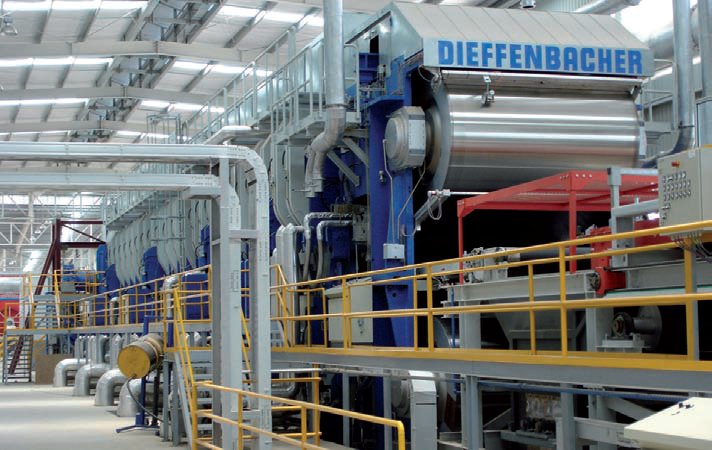
Dieffenbacher will build a state-of-the-art THDF plant for Guangxi Lelin Forestry Development Co. Ltd. near Nanning in Guangxi province of China by June 2019, the company announced.
The plant will produce the ultrathin boards ranging from 1 to 5 mm in thickness for use by furniture makers. Eucalyptus wood will be the main raw material.
“Dieffenbacher is the clear market leader in China and offers superior technologies, especially in the field of thin board production,” said Wei Mingkuai, President of Guangxi Lelin.
The THDF plant will include a wide range of Dieffenbacher equipment, including a PROjet system that uses up to 15% less glue than conventional blow-line gluing systems, a CPS+ continuous press, sifter, forming station, forming line and finishing line.
Sweden: Roundwood prices on the rise in the 1Q/2018
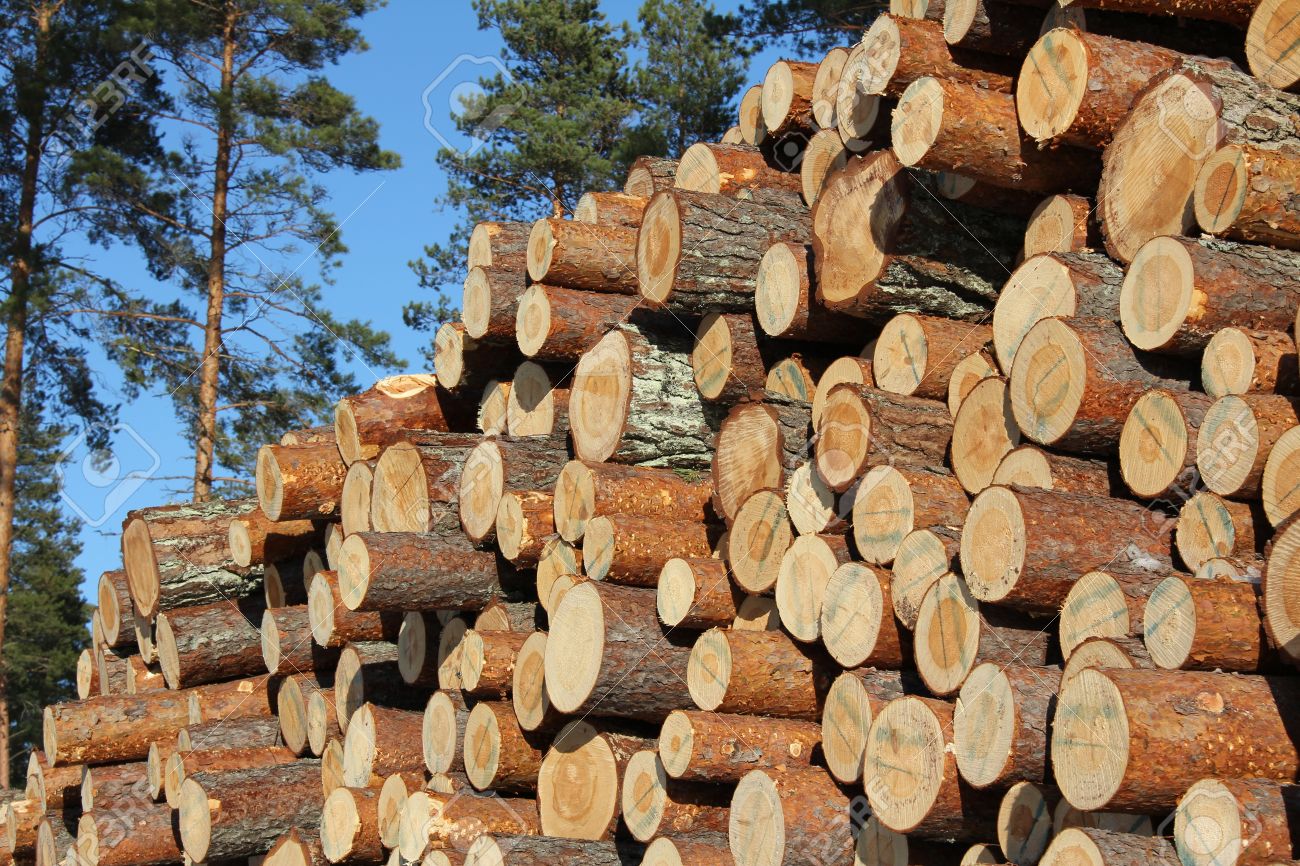
Roundwood prices in Sweden have decline last year in the second and third quarter. However, in the 4Q/2017 and 1Q/2018 prices have recovered and are above the levels of last year: on average sawlog prices are higher by 5,19% compared to 1Q/2017. Pulpwood assortments gained only a minor increase and are more or less stable.
On a quarterly comparison, sawlog prices are more expensive by SEK 26/m3 in 1Q/2018, with pine logs gaining SEK 27/m3 compared to the last quarter of 2017. Pulpwood prices surged slightly by SEK 3/m3.
In 2017, the total stocks of coniferous sawlogs, pulpwood and wood chips in Sweden was estimated to amount 8.8 million m³ (cubic metres solid volume excluding bark). An increase by 27 percent compared with the same time frames as last year.
According to the Swedish Forest agency, Swedish stock volumes of coniferous sawlogs is estimated to amount 3.3 million m³. Compared with same time frame as last year this is a rise by 43 percent.
Roadside prices of roundwood in Sweden SEK/m³ u.b. (1.00 SEK = 0.11 EUR) |
Q1 2017 | Q4 2018 | Q1 2018 | Change Q1/2017 to Q1/2018 |
| LOGS | ||||
| Pine | 454 | 500 | 481 | +5,41% |
| Spruce | 477 | 510 | 496 | +4,60% |
| Pine&Spruce Average | 480 | 523 | 506 | +5,19% |
| PULPWOOD | ||||
| Pine | 262 | 276 | 277 | +1,90% |
| Spruce | 276 | 276 | 277 | +0,36% |
| Birch | 297 | 289 | 290 | -2,35% |
| Pulpwood Average | 274 | 272 | 275 | +0,36 |
Romanian prosecutors investigate Holzindustrie Schweighofer’s headquarters
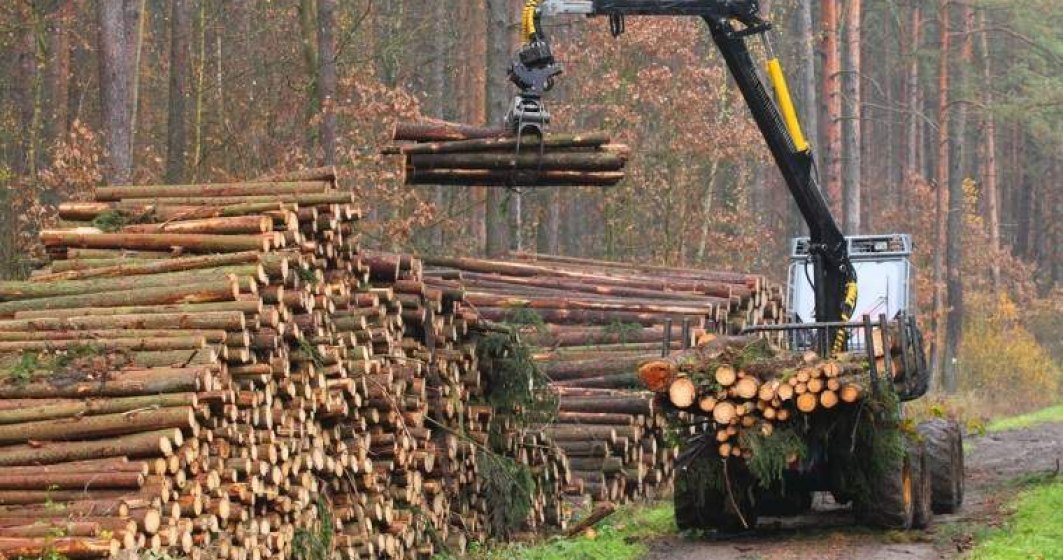
Romanian DIICOT prosecutors and police administration are currently making investigations at the largest wood exporter in Romania - Schweighofer Holzindustrie. The company's headquarters, as well as 23 other locations across the country, are being searched at the moment.
Investigators have estimated a damage of about 25 million euros as the Austrian company was accused of having bought wood without any endorsements or with fake records from 2011 until now, and exported it.
The investigation takes place in Bucharest and in the counties of Brasov, Alba, Suceava, Hunedoara and Bihor. The DIICOT investigation concerns the destruction of an organized criminal group, specialized in committing offenses of misappropriation of public auctions, tax evasion, unfair competition, tree-cutting and other offenses under the jurisdiction of this Prosecutor's Office.
"There is a reasonable suspicion that since 2011 to date, more people have constituted an organized criminal group, acting for the diversion of the public auctions organized at the level of the forestry directions, in order to ensure considerable additional volumes of wood logs for processing them in specialized factories, "DIICOT prosecutors show.
"For the same purpose, some economic agents were removed from the auctions. At the same time, it was determined from the researches in question that part of the quantity of wood received was not evidenced in accounting documents. Also, there is a reasonable suspicion that part of the received wood was derived from tree-cutting offenses," the investigators emphasize.
According to them, the members of the organized crime group also benefited from the support of civil servants in these crimes.
India: Current prices for imported wood products

The price list for teak, sawnwood and plywood between 1-15 May, 2018.
Plantation teak prices
| US$ per cu.m C&F | |
| Angola logs | 389-574 |
| Belize logs | 350-400 |
| Benin logs | 290-714 |
| Benin sawn | 530-872 |
| Brazil logs | 344-540 |
| Brazil squares | 333-556 |
| Cameroon logs | 405-616 |
| Colombia logs | 478-743 |
| Congo D. R. logs | 450-761 |
| Costa Rica logs | 357-780 |
| Côte d'Ivoire logs | 289-756 |
| Ecuador squares | 333-454 |
| El-Salvador logs | 320-732 |
| Ghana logs | 294-452 |
| Guatemala logs | 324-646 |
| Guyana logs | 300-450 |
| Kenya logs | 515-876 |
| Laos logs | 300-605 |
| Liberia logs | 265-460 |
| Malaysian logs | 225-516 |
| Mexican logs | 295-808 |
| Nicaragua logs | 402-505 |
| Panama logs | 335-475 |
| PNG logs | 443-575 |
| Sudan logs | 358-556 |
| Tanzania, teak, sawn | 307-613 |
| Thailand logs | 511-700 |
| Togo logs | 334-590 |
| Trinidad and Tobago logs | 603-753 |
| Uganda logs | 411-623 |
| Uganda Teak sawn | 680-900 |
Continue reading "India: Current prices for imported wood products"
World’s tallest and largest timber office tower to be build in Queensland, Australia

Queensland will be the host for the world's tallest and largest all-timber office tower. The building is currently under construction and is fully protected against fire and termites.
As the Daily Mail reported, the ten-storey building uses cross laminated timber, layers of wood glued together under high pressure, for its structure, which has a strength comparable to that of traditional concrete and steel methods but with a lighter weight.
The building is currently steaming ahead with construction scheduled to finish later this year as part of the $2.9 billion redevelopment of Brisbane's showgrounds.
Developer Lendlease says the new method is faster and more environmentally sustainable compared to other methods with a lower carbon footprint and zero less waste and the wood being sourced from certified sustainably managed forests.
'Modules are pre-assembled at ground height and then lifted into place to form what looks like a wooden lego structure,' said General Manager for Lendlease building Tony Orazio.
The ten storey building uses cross laminated timber for its structure, which has a strength comparable to that of traditional concrete and steel. Also, the building has been fire tested with the help of the CSIRO and protected from termites by sitting on a concrete podium.
Lendlease managing director Mark Menhinnit said they had extensively tested the materials for fire risk with the CSIRO.
'The building just gets a char on the outside, the structural integrity is maintained through an intense fire event,' Mr Menhinnit said, adding that the 45 metre building is protected from termites eating away at the structure as it rests on a concrete podium so that it is separated from the ground.
The building, located in Brisbane's inner north, is currently steaming ahead with construction scheduled to finish later this year as part of the $2.9 billion redevelopment of Brisbane's showgrounds.
Arup and AHEC build modular CLT pavilion for London Design Festival

A modular cross-laminated tulipwood pavilion will be built by Arup, together with the American Hardwood Export Council (AHEC) and Waugh Thistleton Architects.
The building is set to be displayed in the Sackler courtyard of the V&A from 15 September, the MultiPly will be one of the London Design Festival’s Landmark projects. Made of 17 modules with digitally fabricated joints, the maze-like structure will be assembled like an item of flat-packed furniture, New Civil Engineer reported.
Designed to “encourage visitors to re-think the way we design and build our homes and cities”, Arup’s project director Carolina Bartram said that despite looking simple the project is a “complex engineering challenge”.
“Continuing our exploration of hardwood CLT on installations such as The Timberwave, The Smile and Endless Stair, MultiPly provides a playful opportunity to experiment and innovate with this tactile and adaptable material,” Bartram said.
“The seemingly simple series of stacked boxes are a complex engineering challenge, made more interesting by the fact the sculpture sits on the newly completed, elegant Sackler Courtyard at the V&A. It is a privilege that as engineers for the Sackler Courtyard, we are also contributing engineering designs for Multiply.”
The photo above: The Smile, made by AHEC and ABA Arup Complete at the London Design Festival in 2016
Vietnamese wooden furniture manufacturers worry about raw material shortages

Vietnam's export turnover of all woodwork products during the first four months of 2018 increased significantly.
According to a report released by the General Department of Customs (GDC), Vietnam exported $680 million worth of products in April and $2.6 billion in the first four months of 2018, an increase of 9 percent over the same period last year.
Also, wooden furniture manufacturers expect another prosperous year in 2018 as demand is predicted to continue to increase globally. Most large manufacturers have enough orders to keep them busy until mid-year. Some of them even have orders for the entire year, especially from Europe and the US, Vietnam Net reported.
Importers from Europe and the US have shifted orders to Vietnamese enterprises instead of Chinese firms, so the number of customers from the two regions grew significantly. Moreover, South Korean exports increased a lot due to the fact that Vietnam’s products have become more and more favored in the country. This was also possible due to the bilateral FTA (free trade agreement) between Vietnam and South Korea.
According to Nguyen Ton Quyen, deputy chair of the Vietnam Timber and Forest Product Association (Vifores), the target of $9 billion turnover this year is within reach. However, to obtain such high export turnover, Vietnam would need a large amount of materials. At the end of April 2018, the Ministry of Agriculture in Vietnam reported that the country imported $698 million worth of timber materials, up by 2.5 percent compared with the same period last year.
According to Vietnam Net, it is estimated that for every $1 billion worth of increased export turnover, the material needed would be 3.5 million cubic meters. Meanwhile, domestic sources (planted forests) can only satisfy 10-15 percent of demand. Also, every year, Vietnam collects 18-19 million cubic meters of timber, but only 2-3 million cubic meters can be used to make wooden furniture, while the rest are chips for artificial boards.
To solve the material shortage, Vifores has proposed the state restrict material exports, especially chips which can be used for other work. It has also suggested fully exploiting domestic materials such as rubber wood and fruit tree wood.
“To do this, the support by the State will be very important,” Quyen said. “The state should not make too deep intervention into businesses’ transport and examination over timber origin.”
According to Nguyen Quoc Tri, general director of the Forestry Department, in the long term, Vietnam needs to develop domestic material sources, which will allow to both reduce production costs and trace the origin of timber.
World furniture production grows 3% in 2017

According figures presented at the recent CSIL World Furniture Outlook seminar, world furniture production amounted to over USD 400 billion in 2017, up 3% on the previous year and cumulatively growing by 25% in the last decade.
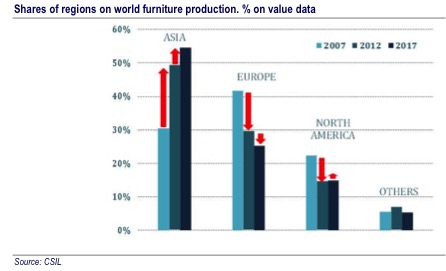 Asia Pacific stands out in a global comparison, with over half of world production taking place in the region with China being the main producer with over 70% of the regional production. Within Asia, Vietnam is an important player. According to CSIL data, it is the 5th largest furniture exporter in the world and a fast growing producer in Asia, Vietnam production growth is higher than the Chinese growth.
Europe is the second largest producing region in the world. According to CSIL estimates presented at the seminar, the region accounts for around 25% of the total sector world output down from around 40% a decade ago.
North America emerged in CSIL world picture for its recent positive performance. Furniture production has been increasing in the last five year period which was the object of CSIL analysis (growing faster than in Europe). The U.S. was the driving force of the area, driven by the positive performance of this market. Local sources seem to be optimistic for the coming years, even if issues related to trade policy of the U.S. administration constitute an important element of uncertainty weighting on the scenario.
Furniture and furniture components are increasingly traded on a world scale. Presently, international trade is worth around USD 140 billion according to CSIL estimates and is set to grow in the coming years up to 2020. This is an important engine for sector growth. The main drivers are: the presence of international value chains, the global sourcing strategy operated by leading retailers and manufacturers and the increasing import penetration in several markets. On the other side, the uncertainty of trade policies and the presence of tariffs and technical barriers are seen as the main obstacles.
Russian lumber exports on the rise in Q1/2018
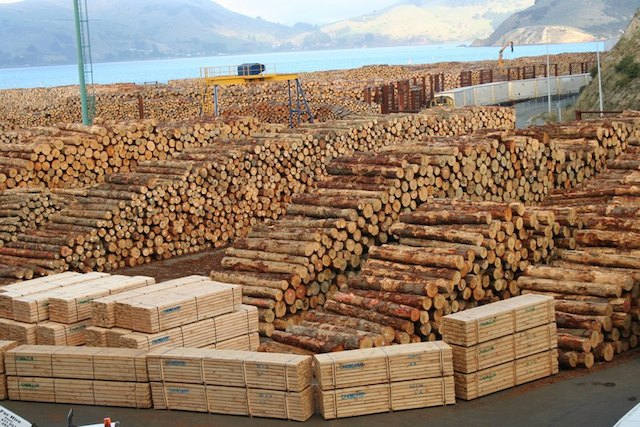
In January-March 2018, Russia increased its lumber exports, both in value and in volume terms, indicate the statistics published by the Russian Federal Customs Office.
Thus, during the first three months of the current year Russia exported 4.037 million tonnes of lumber. That is 1.3% more than during the respective period of the last year.
The total value of the exported Russian lumber increased as well. In January-March 2018 it came up to $975.5 million having gone up by 17.9%.
In their turn, Russian logs exports went down in volume terms, but increased in value terms. In January-March 2018, the Russian log exports came up to 4.44 million m3, having gone down by 5.8% year-on-year.
The total value of the Russian logs exported in January-March 2018 came up to $399.8 million, that is 10.6% more than during the respective period of 2017.
France: Lumber prices for the 1Q/2018
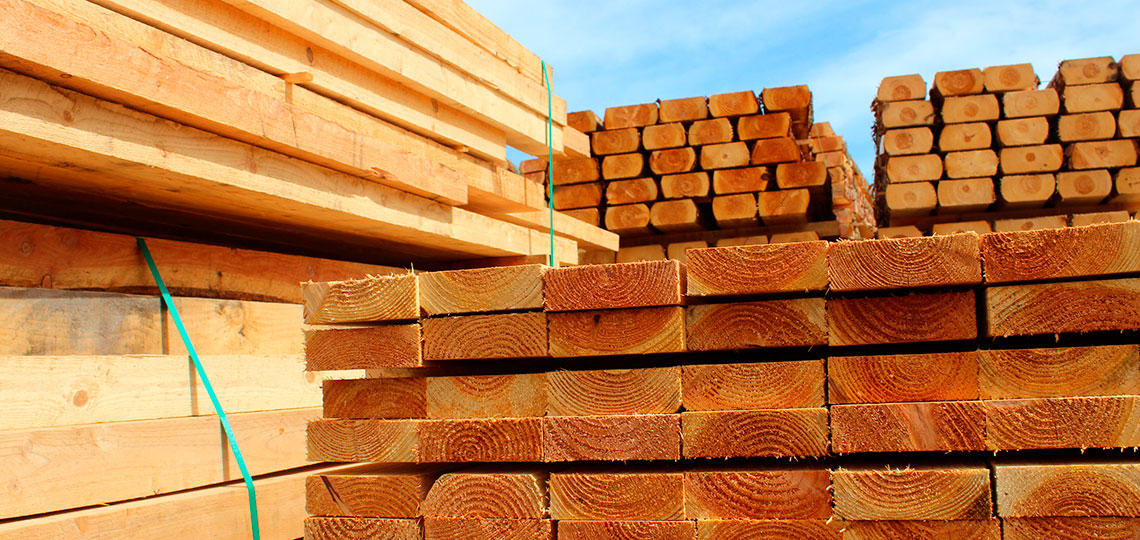
FRANCE LUMBER PRICES for the 1st quarter 2018
| Prices 2018-Q1 | Prices2017-Q1 € | Prices2017-Q4€ | Prices2018-Q1€ | Index | Change 2018-Q1/2017-Q4 | Change 2018 Q1-2017-Q1 |
| OAK Lumber Index base 100 : Oct 2006 S20 | ||||||
| UNEDGED LOGS - QBA - Logs, joinery, (KD), length 3 m + | ||||||
| Diameter 40 to 49cm (thickness 34mm) m3 | 1112 | 1156 | 1 205 | 139,2 | 4,3% | 8,4% |
| Diameter 50cm et + (thickness 50mm) m3 | 1244 | 1 314 | 1 342 | 138,4 | 2,1% | 7,9% |
| LOGS - QB1 - High-value joinery work, 6 months open air drying, length 3 m + | ||||||
| Diameter 40 to 49cm (thickness 27/34mm) m3 | 843 | 895 | 930 | 133,1 | 3,9% | 10,3% |
| Diameter 50 to 80cm (thickness 54mm) m3 | 1021 | 1029 | 1024 | 132,5 | -0,5% | 0,3% |
| SELECTED LOGS - QSA/QS1- (KD) | ||||||
| Thickness 27 to 54mm - length 2m + | ||||||
| Bare 18cm (tolerance 10cm +) m3 | 878 | 930 | 956 | 143,3 | 2,8% | 8,9% |
| SELECTED LOGS - QS2 - 6 months open air drying | ||||||
| Thickness 27 to 54mm - length 2m + | ||||||
| Bare 18cm (tolerance 10cm +) m3 | 624 | 674 | 722 | 159,7 | 7,1% | 15,6% |
| STRIPS (80x27) OR EDGED (100x27) QF1a - 3 months AD | ||||||
| Length 30 to 50cm m3 | 631 | 753 | 752 | 128,4 | 0,0% | 19,2% |
| Length 60 to 90cm m3 | 892 | 1006 | 999 | 144,4 | -0,7% | 12,0% |
| Length 1m + m3 | 1027 | 1124 | 1124 | 142,1 | 0,0% | 9,5% |
| STRIPS (80x27) OR EDGED (100x27) QF1b - 3 months open air drying | ||||||
| Length 1,50m + m3 | 723 | 735 | 742 | 119,5 | 1,0% | 2,7% |
| EDGED QF2- Thickness 27 mm - length 1,50 m + | ||||||
| Width 100 to 150mm m3 | 770 | 824 | 823 | 137,8 | -0,2% | 6,9% |
| Width 160mm + m3 | 892 | 992 | 1010 | 165,8 | 1,8% | 13,2% |
| EDGED QF2/QF3 X – Thickness 27 mm, length 1,50 m +, 3 months AD | ||||||
| Width 160mm + m3 | 689 | 699 | 720 | 142,2 | 3,0% | 4,4% |
| EDGED BEAMS QP1 - Standard beams (fresh) | ||||||
| Camber to max. two edges, red core and sap tolerance | ||||||
| Measure 15x15 - length 4 to 5m m3 | 541 | 552 | 579 | 142,3 | 5,0% | 7,0% |
| Measure 25x25 - length 4 to 5m m3 | 588 | 593 | 659 | 144,5 | 11,2% | 12,2% |
| SPRUCE Lumber (fresh) Index base 100 : July 1990 S30 | ||||||
| Quality 0 - Edged, in all widths | ||||||
| Thickness 27mm m3 | 294 | 289 | 300 | 106,8 | 3,9% | 2,0% |
| Quality 1 - Edged, in all widths | ||||||
| Boards 2 to 5,50m - thickness 27mm m3 | 251 | 248 | 278 | 125,7 | 12,1% | 10,8% |
| Quality 2 | ||||||
| Scantlings 75x225 or 63x160 - length 3 to 5m m3 |
188 | 193 | 195 | 166,4 | 0,6% | 3,3% |
| Beams 63x75 or 50x75 - length 3 to 4,50m m3 | 197 | 204 | 205 | 110,2 | 0,6% | 3,9% |
| Mouldings 27x27 - length 2 to 5m m3 | 224 | 234 | 239 | 117,1 | 2,2% | 6,7% |
| Quality 3 - Boards edged timber all width | ||||||
| Unedged beams Thickness 18/27mm m3 |
147 | 150 | 150 | 108,0 | -0,2% | 2,4% |
| Quality 4 | ||||||
| Scantlings m3 | 138 | 144 | 149 | 109,3 | 3,3% | 7,9% |
| Boards any widths Thickness 27mm m3 | 124 | 146 | 144 | 115,5 | -1,2% | 16,8% |
| Value added for extra-lengths 5 to 8 m | 10 | 11 | 10 | - | -4,9% | -2,5% |
| €/m | ||||||
| MARITIME PINE Lumber (fresh) Index base 100 : July 1990 S50 | ||||||
| Quality 0A - edged, in all widths, lengths 2 to 2,70m | ||||||
| 3/4 Sidings Thickness 27/32mm m3 | 338 | 340 | 347 | 114,6 | 2,1% | 2,8% |
| Quality 0 - edged, in all widths, lengths 2 to 2,70m | ||||||
| Thickness 27mm m3 | 246 | 248 | 257 | 124,1 | 3,6% | 4,5% |
| Thickness 32mm m3 | 267 | 270 | 270 | 127,4 | 0,0% | 1,1% |
| Quality 1 - edged, in all widths, lengths 2 to 2,70m | ||||||
| Thickness 27mm m3 | 197 | 200 | 202 | 129,5 | 1,0% | 2,5% |
| Thickness 32mm m3 | 244 | 248 | 240 | 144,6 | -3,2% | -1,6% |
| Quality 2 | ||||||
| Scantlings - length 3 to 5m m3 | 238 | 238 | 240 | 144,6 | 0,8% | 0,8% |
| Quality 3 - Boards thickness 27 mm - all widths | ||||||
| length 2 to 5m m3 | 154 | 155 | 158 | 128,3 | 1,8% | 2,4% |
| Beams m3 | 142 | 144 | 150 | 118,5 | 4,8% | 5,8% |
| Quality 4 | ||||||
| Boards 27mm m3 | 119 | 116 | 115 | 122,3 | -1,2% | -3,2% |
| PINE Lumber(fresh) Index base 100 : July 1990 S40 | ||||||
| Quality 0A | ||||||
| Logs All thicknesss m3 | 322 | 334 | 353 | 134,7 | 5,7% | 9,6% |
| Quality OB | ||||||
| Logs All thicknesss m3 | 287 | 289 | 290 | 126,1 | 0,3% | 1,0% |
| Quality OA | ||||||
| Edged Thickness 18, 27mm +, Width 100mm + m3 | 290 | 302 | 304 | 102,4 | 0,7% | 4,8% |
| Quality 0 | ||||||
| Edged Thickness 18, 27mm +, Width 100mm + m3 | 295 | 298 | 300 | 125,5 | 0,7% | 1,7% |
| Quality 1 | ||||||
| Edged Thickness 18, 27mm +, Width 100mm + m3 |
255 | 258 | 259 | 130,8 | 0,4% | 1,6% |
| Quality 2 | ||||||
| Scantlings 63x163 or 175, 65x175 or 180, 75x165, 80x230 Length 3 to 5m m3 | 199 | 213 | 215 | 125,0 | 0,9% | 7,9% |
| Beams : 76x76, 80x80 Length 3 to 5m m3 | 204 | 220 | 226 | 127,1 | 2,8% | 10,9% |
| Wood frame construction and glulam Price for drying and planning not included, length 2 to 4m m3 | 220 | 230 | 233 | 116,5 | 1,3% | 5,9% |
| Quality 3 | ||||||
| Boards - Thickness 27 mm - length up to 3 m All widths m3 | 126 | 136 | 136 | 104,1 | 0,3% | 8,4% |
| Scantlings : 65x165 or 80x230 m3 | 145 | 160 | 165 | 115,4 | 3,1% | 14,1% |
| Quality 4 | ||||||
| Boards 27mm m3 | 138 | 138 | 138 | 112,2 | 0,0% | 0,0% |
| Scantlings m3 | 145 | 145 | 145 | 112,4 | 0,0% | 0,0% |
| BEECH Lumber Index base 100 : July 1990 S70 | ||||||
| Logs (3 months drying) | ||||||
| Thickness 27/54mm , diameter 40cm +, length 3m + Quality FB1 m3 | 300 | 306 | 310 | 106,9 | 1,4% | 3,3% |
| Quality FB2 m3 | 200 | 211 | 215 | 99,0 | 1,6% | 7,5% |
| POPLAR Lumber Index base 100 : July 1990 S80 | ||||||
| Edged | ||||||
| Thickness : 18, 22, 27mm, length : 1 to 2,67m (10% de 1 to 1,33m), Width : 10 to 25cm (average 17/18cm) | ||||||
| Grade 1 (choice and wood quality) open air drying m3 | 289 | 300 | 319 | 139,7 | 6,2% | 10,2% |
| Grade 2 (bedding quality) open air drying m3 | 250 | 266 | 266 | 116,2 | 0,0% | 6,4% |
| Grade 3 (packaging-pallets quality) fresh m3 | 163 | 168 | 170 | 118,6 | 0,7% | 4,1% |
| DOUGLAS FIR Lumber (fresh) Index base 100 : Jan. 2005 S60 | ||||||
| Grade 1 - Edged - length 3 to 5m | ||||||
| 42 or 52x150 to 230 m3 | 252 | 262 | 269 | 143,3 | 3,0% | 6,8% |
| Grade 2 - Scantlings - length 3 to 5m | ||||||
| 63x150 or 63x175 m3 | 209 | 211 | 217 | 132,9 | 2,7% | 3,8% |
| 63 or 75x200 to 225 m3 | 217 | 224 | 231 | 137,3 | 3,0% | 6,2% |
| 63 or 75x250 to 300 m3 | 254 | 251 | 253 | 131,7 | 0,7% | -0,3% |
| Value added for extra-lengths 5 to 8 m | 13 | 15 | 14 | - | -6,9% | 12,7% |
| €/m | ||||||
| PALLET LUMBER (fresh) Index base 100 : Jan. 2005 | ||||||
| All hard- and softwood species - all quality grades | ||||||
| Boards in fixed width – solid wood Frame timber – longitudinally sawn All thicknesss 18/27mm m3 | 127,3 | 1,7% | 6,4% | |||
| except for maritime pine m3 | - | 1,1% | 5,2% | |||
Wood pellets prices in Austria go down in May

Prices for Austrian wood pellets went on a descending path during May, as it was also the case for Germany, Switzerland and Austria.
The average retail price for wood pellets ENplus A1 quality (6t) is currently 23.20 cents/kg or 4.73 cents/kWh. This is 2.0% less than in April, but 3.1% more than in May 2017.
The most expensive pellets are, as usual, in Western Austria, averaging over 24 cents/kg. In the rest of the country the price is around 23 cents/kg. When sold by the sack, a 15kg bag costs 3.3% less with an average of 3.92 EUR/15 kg bag, as compared to April. The price is only 0.4% above the level of the same month of the previous year.
Larger quantities of commercial pellets (17 t) can be bought for 200.06 EUR/t, which is 1.9% below the April price and 3.1% above the previous year's levels.
New Zealand softwood logs exports reach record-highs in March
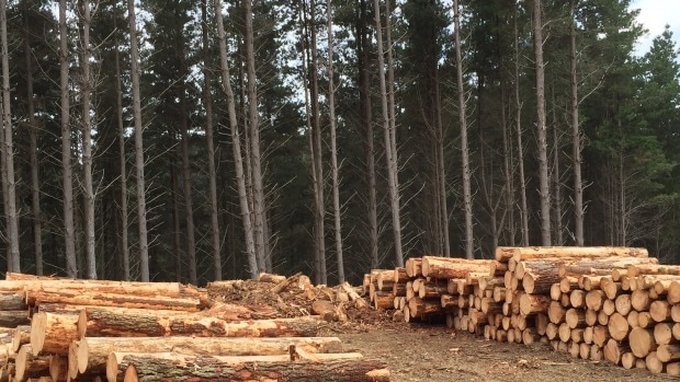
New Zealand's exports of softwood logs reached record volumes during March 2018. The shipments to most of the markets went up, while positive outcome is expected forward into the year.
According to AgriHQ, NZX's agricultural analysis business, the country shipped a record 1.975 million cubic metres of softwood logs overseas in March, up 22 percent from both the February level and from March last year. That beat the previous monthly record set in October last year and puts first quarter log exports 22 percent above last year's levels.
New Zealand exported more logs to all its destinations during March, expect for Japan, India and South Korea.
"A stellar March for exports of NZ softwood logs broke previous records," AgriHQ analyst Reece Brick said. "Expectations are for the strength in this market to continue throughout 2018, with demand expected to pick up from India in the second half of the year."
The latest gains come after New Zealand shipped a record 18.8 million cubic metres of softwood logs overseas last year, up 18 percent on 2016, with exports to China jumping 29 percent and accounting for three-quarters of the total.
AgriHQ said exports to China continued to grow in March, up 20 percent on year-earlier levels and marking 14 straight months of gains. He noted China's log imports in March were "incredibly strong" this year as Chinese New Year celebrations, which typically lead to a slowdown, occurred in February.
"Any worries around a post-Chinese New Year log slump have been put to bed," Brick said. "In fact the past few weeks have been among the most encouraging in at least the past twelve months, arguably longer."
Log offtake levels at Chinese ports have rushed above previous record rates, with periods where more than 100,000 cubic metres a day has come off, with the average rate sitting around 90,000-95,000 cubic metres a day, he said. That has pulled port-level inventories down to 3.8-4.2 million cubic metres and it’s very likely these figures will be even lower by this time next month.
"The combination of higher in-market pricing and the falling value of the New Zealand dollar against the greenback had pushed log export returns further towards record territory, although rising shipping rates had held back values a little," Brick said.
The average price for New Zealand A-grade export logs over the past month had lifted to US$144/JAS from US$143/JAS, and was ahead of US$130/JAS a year ago, and US$113/JAS two years ago, according to AgriHQ's monthly survey of exporters, forest owners and saw millers.
The rates for shipping were firmer through April and there were mixed views on where shipping rates will track with some saying elevated oil prices pointed towards a lift while others believed there was enough spare shipping capacity across the globe to keep a lid on rates in the medium term.
In the domestic market, the price for S1 logs lifted to $134 a tonne from $133 a tonne last month, according to AgriHQ's survey.
"As a whole, it is still one of the strongest periods ever to be a log trader," Brick said. "Export markets continue to keep domestic mills on their toes, making them pay near to what can be achieved overseas or simply miss out on supplies."
Softwood lumber and logs imports to China tripled during the last 10 years
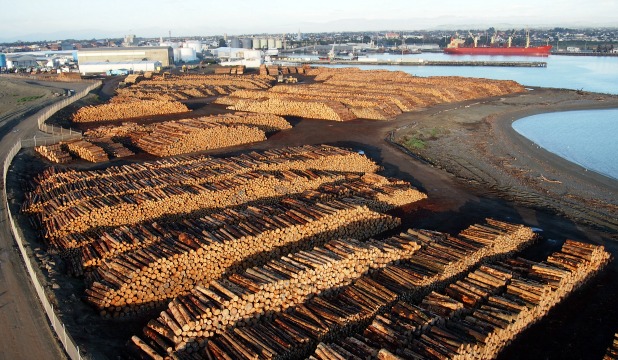
Softwood logs and softwood lumber imports to China have more than tripled in ten years with lumber volumes surpassing logs by 36% in 2017.
As reported by the Wood Resource Quarterly, China imported record high volumes of softwood logs and lumber in 2017, making the country the largest log importer in the world and the second largest lumber importer after the US. Over the past two years, there has been a sharp shift towards importing lumber rather than logs, with lumber volumes in 2017 exceeding logs by 36%.
With limited domestic forest resources, China continues to be a major importer of forest products in order to meet its growing domestic demand for logs, lumber, chips, pulp and paper. In 2017, import volumes of both softwood logs and softwood lumber reached all-time highs despite a slowing of activities in the house construction sector. Over the past ten years, the total importation of softwood logs and softwood lumber has gone up 3.5 times in roundwood equivalents (RWE), according to the Wood Resource Quarterly (WRQ).
Over the past two years, importation of lumber has grown much faster than has importation of logs, with lumber import volumes in 2017 surpassing log import volumes by 36% (in RWE). This is a shift from the past, when there were substantially more shipments of logs than lumber entering Chinese ports. Today, China is the world’s largest importer of logs and the second largest importer of lumber after the US. With these large volumes being shipped to this growing dynamic market, there have been a number of changes in supply sources based on availability and costs over the years.
On the lumber side, the biggest changes over the past five years include a more than doubling of shipments from Russia, declining imports from North America, and higher shipments from the Nordic countries, reports the WRQ. In the short to mid-term, it is likely that European lumber producers will increase shipments to China, while lumber producers in Western Canada may choose to ship their products to the hot US lumber market where lumber prices are at record high levels.
The changes in log suppliers over the past five years have been more dramatic than those for lumber, and there are also fewer countries shipping logs to China as compared to the number shipping lumber. Five supplying countries, New Zealand, Russia, the US, Australia and Canada together accounted for 92% of total log imports in 2017. The biggest change from 2013 to 2017 was that Australia became a major source of logs, with volumes increasing from 1.6 million m3 in 2013 to 4.2 million m3 in 2017.

