Article archive

Lumber prices in the US set new highs; sales on decline

Framing lumber sales in the US started to descend, as compared to the last two weeks. Yet, prices continued to post gains and set new highs.
Buyers turned cautious amid the volatility in futures, with the board plunging four straight trading days before bouncing on Thursday. Buyers of Western and Eastern S-P-F turned particularly cautious with futures falling to a major discount to the cash market.

Week
May 25
Week
May 18
Year Ago
2017
Random Lengths Framing Lumber Composite Price* $578 $568 $406
KD Western S-P-F #2&Btr 2x4 R/L Mill Price 653 647 376
KD Eastern S-P-F #1&2 2x4 R/L, delivered Great Lakes 722 716 466
Green Douglas Fir Std&Btr 2x4 R/L (Portland) 605 595 390
Southern Pine (Westside) #2 2x4 R/L 600 593 442
KD Coast Hem-Fir #2&Btr 2x4 R/L 655 645 400
Ponderosa Pine (Inland) #2&Btr 1x12 R/L 765 760 695
* Weighted average of 15 key items

Random Lengths Panel Market Report
Structural panel trading faded as the Memorial Day weekend approached. Sales of OSB slowed, especially late in the week. Prices were firm to higher, however, with mill order files typically extending into mid- to late June.
Southern Pine plywood sales tapered moderately ahead of the holiday weekend and amid increased buyer resistance to prices. Even so, steady demand persisted, and mills extended order files. Activity in western Fir plywood was steady early, but most traders reported an ebbing pace by Thursday as offices cleared for the long holiday weekend.

(f.o.b. mill prices) Week
May 25
Week
May 18
Year Ago
2017
Random Lengths Structural Panel Composite Price* $566 $557 $404
Southern (west-east) 15/32-inch 3-ply rated sheathing plywood 545-575 540-575 345-375
Southern (west-east) 15/32-inch 4-ply rated sheathing plywood 550-585 545-580 350-380
Western 1/2-inch 4-ply rated sheathing plywood 557 547 406
North Central 7/16-inch Oriented Strand Board 440 430 323
*Weighted average of 11 key items

Ilim Timber invests in the modernization of 3 kilns at its mill in Russia

Ilim Timber chose Valutec to modernize three of its progressive kilns. Valutec will convert three of Ilim’s existing 1-zone kilns to modern 2-zone progressive kilns.

"We need to increase our capacity and quality. Valutec came up with an impressive solution. By converting existing 1-zone kilns to modern 2-zone kilns we will gain significantly more capacity and major increase in our drying quality in a very cost-effective way,”says Viktor Melnik from Ilim Timber.

Ilim Timber has several 1-zone Valmet progressive kilns at their sawmill UST-ILIMSK located in eastern Siberia. As a first step to modernize the sawmill, increase capacity and gain better quality, Ilim has decided to convert three of the existing kilns to 2-zone OTC kilns.

The new kilns will be equipped with pressure frames for minimal deformation of the top lumber layers, Valutec's air/air heat recovery system and Valmatics control system, which enables the customer to have full control throughout the entire drying process.

Ilim Timber is the most important producer of larch and pine sawn timber and biggest exporter of sawn timber in Russia. The company has production facilities in north-west Russia, eastern Siberia and Germany and the total production capacity amounts to over 2,6 million cubic meters (1,1 million MBF) of sawn timber.

High potential for growth in U.S. wood product exports to Egypt

Aiming to throw the spotlight on the potential and importance of Egypt as a market for U.S. softwoods, the Southern Forest Products Association (SFPA) and Southeastern Lumber Manufacturer's Association (SLMA) recently concluded a market study - Emerging Markets Program Assessment: The Egyptian Market for U.S. Softwoods.

This is one of several Emerging Market Program (EMP) projects that the U.S. forest products industry undertakes to reach potentially new emerging markets. Each project is led by a team of experienced researchers backed by the organizational and administrative support of forest products co-operators with decades of experience administering FAS-funded market development programs.

Numerous indicators show strong potential for growth in U.S. wood product exports to Egypt, including overall economic growth, and strong demand in the country’s furniture manufacturing industry. According to American Softwoods (AMSO), the promotional partnership formed by three major U.S. softwood trade associations, American softwood lumber exports to Egypt nearly doubled to USD 8.3 million, yet the United States holds a very small share of this market, estimated at less than 1 percent.

Commenting on the growth potential, Charles Trevor, Consultant to American Softwood, said: “One of the sectors which shows potential for U.S. exports is the furniture industry centred around the triangle of Damietta, Alexandria, and Cairo. The furniture industry consumes huge volumes of solid wood, importing substantial volumes of beech and Spruce-Pine-Fir from Romania as well as oak from the Balkan states. The U.S. industry is convinced that American softwoods could rapidly gain a share of Egypt’s furniture production industry, as well as in the construction sector, given the large construction projects being planned over the coming years.”Egypt is the largest market for softwood lumber in the Middle East and North Africa. Lumber demand is set to rise sharply over the coming years as its economy improves and several large-scale urban development projects are planned in the near future.

The country relies entirely on imported softwoods and buyers are seeking alternative sources owing to the rising cost of imported hardwoods. U.S. softwoods are the ideal alternative and interest among buyers is rising. However, the timber trade and furniture and joinery manufacturers are accustomed to working with European and Russian material and are unfamiliar with U.S. lumber species, grades and sizes.

While economic problems remain, the long-term outlook for Egypt - and demand for imported softwood lumber - is bright. Egypt’s growing, young population will bolster economic growth over the coming years, the construction market is recovering from the floatation of the Egyptian Pound, tourism is slowly recovering, and the Egyptian government is investing heavily in infrastructure. A government initiative to build one million housing units as well as a multi-billion-dollar initiative for a new administrative capital to seat the national government is expected to drive growing demand for softwood lumber.Egypt imported 4.4 million cubic meters of softwood lumber in 2016, but imports fell in 2017 owing to the devaluation of the Egyptian Pound, which has lost nearly 50 percent of its value against the dollar since 2011. Imports are expected to climb to 4 million cubic meters in 2018. U.S. softwood lumber exports to Egypt grew steadily in value over the past five years - rising from USD 4.3 million in 2012 to USD 8.3 million in 2016, but declined sharply 2017 in line with the country’s overall imports. While wood is rarely used structurally in Egypt, wood demand is expected to rise sharply for interior applications such as flooring, doors and windows.

Demand in the furniture production sector is also expected to rise over the coming years as the country seeks to become more competitive in that sector. Low-priced European redwood is used for construction - primarily for concrete forming - while U.S. Southern Yellow Pine (SYP) is used for interior joinery, panelling, doors, windows, and flooring. Interviews with a major importer holds that SYP from the United States is viewed as a hardwood owing to its density, and increasingly a less expensive substitute for oak. SYP is also priced between hardwoods (especially oak) and European and Russian pine, and is preferred for its grain pattern and is typically lightly stained to expose the grain.

Looking ahead, importers believe that the market is ripe for development and technical assistance is needed as buyers turn to alternative material imported from Europe. U.S. softwoods are priced competitively and we have an excellent opportunity to grow imports if we can provide importers and end users with the technical assistance and training that will enable them to specify U.S. softwoods with confidence. Overall, interest in U.S. softwoods is increasing but much work is needed to accustom buyers to working with U.S. grades, sizes, and characteristics in a market used to buying European and Russian material,” concluded Trevor.

Scottish BSW Timber to build Slovenia’s largest sawmill

BSW Timber announced on the 22nd of May that it will invest EUR 40 million in a new sawmill, CHP plant and pellet manufacturing facility in Slovenia.

As reported by bne IntelliNews, the new sawmill will have the capacity to process an annual input in excess of 300,000m3 of sawlogs, making it the largest mill in Slovenia. However, BSW’s plans face strong opposition from local sawmill operators who fear the arrival of the Scottish company in the northern Slovenian village Gomilsko will bring an end to the businesses of many small companies in this sector.

The investment will include construction on three sites, among which a modern sawmill in Gomilsko with state-of-the-art wood processing technology, along with the development of pellet production and wood biomass cogeneration at the Sostanj site, and a final site in Letus will focus on the production of value added products, the company announced.

Its products will be available for the Slovenian market, however BSW plans to build on its Latvian marketing model and predominantly export to international markets, such as UK, Southern Europe, North Africa, North America and Asia.

Slovenia is famous as a land of forests, which cover 58% of the country’s territory, according to a 2004 report of from the Forest Service of Slovenia cited by the government. For Tony Hackney, chief executive at BSW Timber, Slovenia is a very attractive country to invest in as the Slovenian government has agreed a 15-year term contract for 120,000 cubic metres of roundwood which will be backed up by supply from a very supportive private sector while working with domestic sawmills, bne IntelliNews.

Slovenia has some of the best forests in the EU and a largely undeveloped processing sector. We are delighted to be working alongside the Slovenian government to increase the competitiveness of the country’s timber supply chain, in line with their ‘Wood is Beautiful’ strategy,” Hackney said.

BSW Timber is set to begin construction in September 2018, with the aim of starting production in early 2020, the company announced on May 22.

Branko Meh, president of the Chamber of Trade Crafts and Small Business (OZS), in which sawmill operators have their own section, said that sawmill operators do not oppose the arrival of foreign investors, but they do stand for the limitation of round wood exports.

“The concentration of sawmilling into two or three big centres would destroy the smaller operators, who are dispersed across the country,” Meh explained.


Sabah to ban timber exports

Sabah's chief minister, Shafie Apdal, announced that he will instruct the state Forestry Department to immediately impose a ban on the export of logs. This is a temporary measure designed to safeguard the resources in Sabah.

The purpose of this ban is to ensure that logging activities will benefit Sabahans first. We want to make sure our wealthm  is fully managed and maximised by Sabahans before it is exported,” he said.

As reported by Free Malaysia Today, regarding the future of the foundation, Shafie said the foundation would try not to venture into activities that it was not familiar with.

There are some grey areas that we are not experts in. We will decrease these high risk activities,” he said.


Chinese Qumei made $630m cash bid for Norwegian furniture maker Ekornes

China’s Qumei Home Furnishing Group on the 22nd of May made an all-cash bid for Norway’s Ekornes, valuing the Oslo-listed furniture maker at 5.1 billion Norwegian crowns ($630.75 million).

The board of Ekornes unanimously recommended the bid of 139 Norwegian crowns per share, a premium of 18 percent above Wednesday’s close.

After the first approach from Qumei more than a year ago, the board and management have spent significant time and efforts to assess this strategic opportunity,” Ekornes said. “We have been impressed by Qumei’s ability to develop successful products and marketing concepts and we see great potential for Ekornes to continue its success under this new ownership,” it added.

Shareholders owning 25.7 percent of Ekornes have given pre-acceptance, Ekornes said. Best known for its “Stressless” furniture brand, Ekornes’ revenues fell by 2 percent to 3.08 billion Norwegian crowns in 2017, while its net profit, hit by a negative currency effects, fell by 38 percent to 200.5 million crowns.

By 0711 GMT, shares of Ekornes traded 16 percent higher for the day at 137 Norwegian crowns, just shy of the 139 crowns offer price.

Norbord reaches 60% production capacity at its OSB mill in Inverness

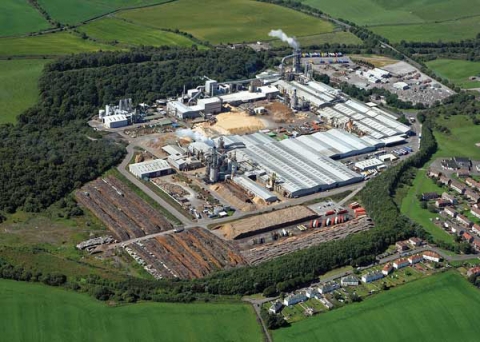
Norbord Europe has recently installed a continuous production line as to replace two multi-opening lines at its OSB mill in Inverness, Scotland, that has now reached about 60% of its capacity.

This new line has a designed annual capacity of about 640,000 m³ and started production at the end of September 2017.

The two multi-opening lines had a combined annual capacity of nearly 350,000 m³.

At the same time, work to assemble the new final assembly systems is continuing, with start-up slated to happen by the year’s end.

EU hardwood log export hike continues

EU hardwood log export hike continues In 2017, total EU hardwood log exports were 2.8 million tonnes, up 15% on 2016 and 53% on 2012. In 2004, the EU exported just 7000 tonnes of hardwood logs to Vietnam.

By 2017 that figure had risen to 377,000 tonnes. The growth in imports continued to accelerate throughout the period, with the biggest jump of 577% coming in the five years from 2012.

While it may have outstripped it in terms of growth rate, however, Vietnam still has some way to go to catch up with China as the EU’s biggest hardwood Continue reading "EU hardwood log export hike continues"

European oak market under intense pressure

EU countries hit hardest by the Ukrainian ban, says the European Organisation of Sawmill Industries (EOS), are Romania, Slovakia, Poland and Austria, which between them in 2014 imported 1.4 million cu.m of Ukrainian roundwood.
At the same time, the European industry has faced temporary oak log and green lumber transit and export controls in Croatia. These were introduced last summer, ostensibly to prevent the spread of oak lace beetle (corythucha arcuata).
Raw timber was estimated to have accounted for a third of Croatia’s total €1.09 billion wood exports in 2016 and the export ban is reported to have left sawmill customers in the rest of the EU, notably Italy, short of material. It is also said to be causing green timber bottlenecks as, despite increased investment in kilning, including from Italian sawmillers, the Croatian industry does not have enough drying capacity to handle previously exported material.
Increasing wider EU concern about Croatia’s move have been reports in its press that the ban will assist its domestic processing and manufacturing sectors by reducing competition for raw materials, implying this was part of the original motivation.
The result of this combination of factors has been oak price rises, especially for logs. Continue reading "European oak market under intense pressure"

Declining wood products trade between China and the USA

According to the data from China’s Customs the value of wood products trade between China and the USA fell 16% to US$1,90 million in March 2018. China’s imports dropped 5% to US$840 million while exports declined 23% to US$1,050 million.

However, the value of wood products trade between China and the USA in the first three months of 2018 rose about 9% to US$6.26 billion, China’s imports increased about 6% to US$2.28 billion while exports value grew 10% to US$3.98 billion.

Log and sawnwood imports

China’s log imports from the USA in the first three months of 2018 totalled 1.41 million cubic metres, a year on year increase of 7% over the same period of 2017.

China’s sawnwood imports from the USA in the first three months of 2018 rose 5% to 709,600 cubic metres.

Exports fibreboard and plywood

China’s fibreboard exports to the USA fell 11% to 71,200 cubic metres and plywood exports to the USA dropped 31% to 360,000 cubic metres in the first three months of 2018.

As exports to the USA decline there has been a rise in exports of panel products to Nigeria, Kenya and the UK.

In the first quarter of 2018 export volumes to these three markets were Nigeria; 78,900 cubic metres, Kenya; 9,800 cubic metres and UK; 6,000 cubic metres..

The direction of trade of China’s plywood exports has also altered with the UK, Thailand and Nigeria becoming more prominent. China’s plywood exports to the UK, Thailand and Nigeria rose 28%, 74% and 270% respectively.

New opportunities for the wood pellets market in the Netherlands

The Dutch Government is currently subsidizing the co-firing of biomass. To support small landowners, the Dutch legislation provides some flexibility that will still be in compliance with the requirements. Currently one of the most feasible opportunities is the supply of wood pellets made from saw dust.

On September 6, 2013, the Dutch Government signed the Dutch Energy Accord, which set a national
goal of 14 percent sustainable energy generation in 2020 and a goal of 16 percent in 2023. In the
agreement subsidized, co-firing of biomass is capped annually at about 3.5 million tons of wood pellets.

These funds, called Sustainable Energy Production (SDE+) subsidies, pay for the price difference
between the cost of renewable and conventional energy. In the Accord, it was also decided that biomass will have to be subject to sustainability requirements such as forest level certification, information on greenhouse gas (GHG) emissions, carbon debt and indirect land use changes (ILUC). The main barrier for exports of wood pellets to the Netherlands from the United States is the lack of incentives for small landowners in the Southeast to certify their land for wood pellet production. Forest level certification is a requirement for larger Forest Management Unit (FMUs >500 ha) and is phased in for smaller FMUs (<500 ha) over the next four years. As of 2022, forest level certification is mandatory for all FMUs.

However, the Dutch legislation provides some additional options for small landowners to be eligible to
supply biomass for subsidized co-firing in the Netherlands:

1. Group Certification
The Dutch energy sector reached a Covenant with the NGOs. This Covenant includes a fund for
supporting group certification. Certification programs such as the Sustainable Biomass Program (SBP), the American Tree Farm System (ATFS), the Sustainable Forest Initiative (SFI), and the Green Gold Label reportedly include the option of group certification.

2. Controlled Wood
As an alternative to certified wood, controlled wood is permitted in programs such as the Forest
Stewardship Council (FSC) or the Program for Endorsement of Forest Certification Schemes (PEFC).
Controlled Wood is sourced from “sustainable sources” with a minimum risk of unacceptable
harvesting. Compliance can be proven by the pellet mill through certification or verification with a
regional risk-based approach. It is permitted up to 30 percent of annual forest biomass upon delivery at the energy producer.

3. Residues from Saw Mills
Residues from saw mills are not required to demonstrate compliance at the forest level, in addition only the requirements of GHG calculation and Chain of Custody (COC) are applicable. During the last
months of 2017 and first months of 2018, mainly pellets made from saw dust were being imported by
Dutch buyers. These are sourced from the Baltics and other European sources. As this supply is
limited, the United States could be an alternative source.

4. FMU Verification
The Dutch Government offered the option of verification as an alternative to certification. Verification
compliance is provided at the delivery of the biomass to the import market. Certification is a statement
of compliance in advance of the delivery of the biomass, which generally lays less risk upon the buyer.
Similar to certification, verification at the forest level is a requirement for larger FMUs and is phased in
for the smaller FMUs. This can be covered by a forest management plan, which can be drafted by the
landowner or an independent auditor.

The biomass according to the above four options can be supplied through mass balancing. In addition,
supply can start with pellet mill certification for the smaller FMUs and with expiration of the growth
path, phase in applying certification or verification for demonstrating compliance at the forest level.

Segezha Group’s Ksilotek-Siberia started new pellet plant construction in Russia

Segezha Group’s subsidiary Ksilotek-Siberia  launched the first stage of a new pellet plant construction in Russia.

According to the announcement, the preparatory earthwork operations and stripping began on an area of more than 2 hectares before the assembling of piles and casing.

The pellet plant construction planned to be launched in November 2018, will let to combine forest raw material resources as well as to ensure the waste disposal through converting them to biofuel pellets and heat energy. The capacity of the future production is 100 thousand tons of finished products per year.

To ensure the project implementation, SORB LLC (the representative of the Estonian company AS Hekotek in Russia) signed the contract for supply of processing facilities for the wood pellets production plant. The equipment at the cost of more than EUR 6 million will be delivered to the site from the second decade of May to June 2018.

Management Company Segezha Group appointed Mikhail Shamolin as President and Chairman of the Board on March 13, 2018.

Earlier, Segezha Group partnered with EUROCEMENT Group to introduce a new eco-friendly packaging to the cement industry.

Segezha Group is one of the largest Russian forest industry holdings with the vertically integrated structure and a full cycle of logging and added-value wood processing. The holding comprises Russian and European enterprises in the forest, wood processing and pulp and paper industries, as well as paper packaging.

Uniboard announced $13 million investment in TFL business expansion

Uniboard recently announced a CAD$17 million (US$13.21 million) investment in a new state-of-the-art TFL press line at its Sayabec, Quebec, Canada mill.  

The new press line will feature the same advanced technologies as TFL 6 with an increased capacity for its signature EIR/synchronised and deep-embossed textures, in addition to all of its melamine texture offerings. This new investment reaffirms Uniboard’s leadership in engineered wood products.

Rapidly increasing demand for Uniboard’s textured finishes will be supported by this investment. Our investment into TFL 7 underlines Uniboard’s strategy and vision for design, differentiation and growth in thermally fused laminate,” James N. Hogg, President and CEO of Uniboard, said. “TFL 7, as a testament to our success and to our commitment to be the North American leader in TFL design and technology, allows our customers to take the lead with North American sourced TFL.”

Uniboard will preview its new 2019-2020 TFL collection at the International Woodworking Fair from the 22nd to the 25th of August, 2018 as well as at launch events in Montréal and Quebec in September and October 2018.

There will be 18 new designs and two new textures shown, making Uniboard’s TFL collection the most innovative, diversified and comprehensive line of TFL colours and textures available in the North American market. The new launch will bring Uniboard’s TFL offerings to more than 135 leading edge designs available in 14 texture options, most of which have been launched in the last five years.

UK standing timber prices go 30% up during March 2017-March 2018

The price of standing timber (trees not yet harvested) surged by 28.2% from March 2017 to March 2018. Also, the price for softwood sawlogs ascended by 20.8% in the 6 months to March 2018.
As reported by TTJ Online,  Confor, which represents 1,500 forestry and wood-using businesses, said the price spikes reflected a booming wood processing industry and highlighted the need to increase tree planting significantly - to deliver more timber into markets and avoid reliance on imports.
It also said there were real opportunities for farmers to diversify and plant a portion of their land with trees to create a more sustainable business model after Brexit.
"We are already the world's second largest net importer of timber after China but the UK Government is still missing its modest tree planting targets," said Andrew Heald, Confor’s technical director.
"Confor is working with members and with governments across the UK to identify ways to bring more timber to market. It is vital that the major growers, including the Forestry Commission and Natural Resources Wales, maximise all opportunities to do this."
Mr Heald said prices were even higher in some regional hotspots, including Wales and Dumfries & Galloway in southern Scotland - and called for a long-term approach to forestry to secure future supply, TTJ Online reported.
This is a complex issue for the industry,” he said. “While high timber prices are good news for the UK’s forest owners, these are tough times for sawmillers who are also having to compete with cheap imports of sawn timber.
A steady supply of round timber is essential for sawmillers and processors to plan their operations and to have the confidence to continue to invest in their mills and factories."

Lumber prices in the US go further into record-highs

Framing lumber prices in the US reached further record-highs during last week, as robust seasonal demand overwhelmed supplies.
Steep double-digit price hikes were the rule in all species, with buyers and sellers acknowledging that this run was unprecedented. Producers’ attempts to dissuade buyers with sharply higher quotes typically failed, as buyers stepped up and readily paid those asking levels.
The Random Lengths Framing Lumber Composite Price skyrocketed $25 for the week to a record $568.

Week
May 18
Week
May 11
Year Ago
2017
Random Lengths Framing Lumber Composite Price* $568 $543 $409
KD Western S-P-F #2&Btr 2x4 R/L Mill Price 647 619 380
KD Eastern S-P-F #1&2 2x4 R/L, delivered Great Lakes 716 676 472
Green Douglas Fir Std&Btr 2x4 R/L (Portland) 595 563 392
Southern Pine (Westside) #2 2x4 R/L 593 581 442
KD Coast Hem-Fir #2&Btr 2x4 R/L 645 615 415
Ponderosa Pine (Inland) #2&Btr 1x12 R/L 760 760 690
* Weighted average of 15 key items

Random Lengths Panel Market Report
Structural panel prices climbed higher amid steady trading and tight supplies. Sparse mill offerings pushed OSB sheathing prices up by double digits across North America.
Producers raised quotes throughout the week, while extending order files primarily into the week of June 11. Moderate upward price momentum persisted in Southern Pine plywood amid steady demand from buyers addressing immediate needs.
Steady trading with an uptick on Wednesday gave the western Fir plywood market a buoyant tone.

(f.o.b. mill prices) Week
May 18
Week
May 11
Year Ago
2017
Random Lengths Structural Panel Composite Price* $557 $545 $412
Southern (west-east) 15/32-inch 3-ply rated sheathing plywood 540-575 530-570 360-385
Southern (west-east) 15/32-inch 4-ply rated sheathing plywood 545-580 535-575 365-390
Western 1/2-inch 4-ply rated sheathing plywood 547 538 411
North Central 7/16-inch Oriented Strand Board 430 415 330
*Weighted average of 11 key items

Boise Cascade to cease lumber operation in Elgin, US

Boise Cascade Company announced the curtailment of its lumber operation in Elgin, Oregon. The 60-day notice includes the sawmill, planer and shipping department; the powerhouse and log utilization center will remain operational.

“Boise Cascade has operated the Elgin lumber mill since 1960. This portion of the Elgin complex is not cost competitive in the marketplace given its age, size and technology,” stated John White, Regional Manager, Wood Products. “Even with significant new capital investments, it is not clear the lumber mill can be positioned to be cost competitive. We have announced an indefinite curtailment as we assess the future of the Elgin lumber operation.”

“The hourly workers and management staff have been notified,” said Steve Lyon, Northeast Oregon Human Resources Manager. “We understand the effect of this announcement on our employees and their families, and we are providing information and resources to help them as best we can.”

The company anticipates ceasing operations at the lumber mill by mid-July. A phased shutdown approach will be deployed, starting first with the sawmill, followed by the planer, concluding with the shipping department once existing inventory has been exhausted.

Boise Cascade continues to employ more than 500 people at the Elgin Plywood Mill and its facilities in nearby La Grande, Island City and Pilot Rock.

About Boise Cascade

Boise Cascade is one of the largest producers of engineered wood products and plywood in North America and a leading U.S. wholesale distributor of building products.

Dieffenbacher to supply the first CPS+ to China

For the fourth time in four years, Chinese straw-based particleboard specialist Wanhua Ecoboard has ordered a straw-based particleboard plant from Dieffenbacher.

The Greenfield project at the Tonglin site in the Anhui province is scheduled to start production in December.

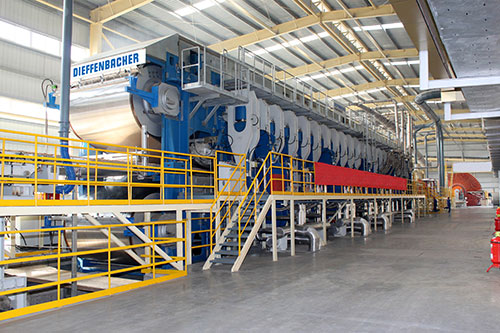
Highlighting the order is a 28 m long CPS+, the first of Dieffenbacher’s new generation of continuous press to be delivered in China. Equipment for flaking, including three MRZ 1500 knife ring flakers with the FlowOptmizer material feeder, were also ordered along with a dryer, forming station and forming line.

“To meet our commitment to produce environmentally friendly, formaldehyde-free panels made of wood and straw, we continue to rely on Dieffenbacher as one of our most important partners,” said Wanhua CEO Zhao Zhimei. “With the CPS+ providing the gold standard for efficient continuous press systems, our fourth joint project will be the most resource-friendly and most powerful so far.”

Dieffenbacher and Wanhua have also agreed on the delivery of two additional plants, numbers five and six. Again, a CPS+ will be used for both projects. Commissioning of these plants is planned for 2019.

The price for wood pellets in Germany fell significantly in May

In May 2018, the price for wood pellets in Germany fell significantly. The national average price reached the value of EUR 239.05/tonne, which is 5.2% less than in April, but 2.3% more than in May 2017.
As reported by the German Energy Wood and Pellet Association e.V. (DEPV), during the mentioned period, one kilogram of wood pellets costs 23.91 cents and one kilowatt hour (kWh) of heat from pellets costs 4.78 cents. Pellets currently have a price advantage of about 30% for heating oil and about 15% for natural gas.
"In view of the current global political uncertainties, it becomes clear once again how much the prices of fossil fuels are exposed to geopolitical and speculative influences. The price of pellets, on the other hand, is determined solely by the availability of the domestic wood supply", said the DEPV Managing Director, Martin Bentele. "Therefore, wood pellets are very cheap for the current season. Many traders offer attractive prices in early summer with warehousing campaigns. In addition to the price, pellet customers should also pay attention to the quality of the pellets and the competence of the dealer."
Regional prices (for 6 tonnes purchases) in May 2018: Southern Germany: EUR 238.44/t, Northern and Eastern Germany: EUR 241.88 per tonne, Central Germany: EUR 238.67/ t.
Larger quantities (26 t) could be bought for the following prices: South: 223.60 EUR / t, Middle: 220.50 EUR / t, North / East: 221.11 EUR / t (all incl. VAT).

Conifex buys $258 million sawmills in the US to increase capacity by 50%

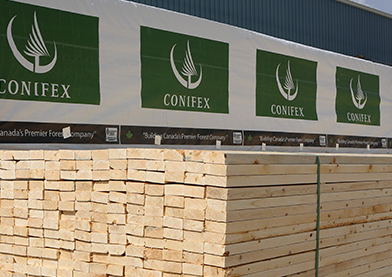
Conifex Timber Inc. says it has reached an agreement with Blue Wolf Capital Partners to buy sawmills in Florida and Arkansas that will increase its lumber production capacity by about 50 per cent to 1.1 billion board feet.

The Vancouver-based company says it will pay about $193.1 million in cash for the Suwannee sawmill in Cross City, Fla., and Caddo River sawmill in Glenwood, Ark., plus $64.4 million in shares, the net working capital of the current operator, and warrants.

The company says the two mills have a combined dimension lumber capacity of 370 million board feet and will triple its U.S. southeast capacity.

Conifex says the mills have seen recent upgrades and modernization, and are complimentary to its sawmill in El Dorado, Ark.

The purchase comes as lumber producers benefit from elevated prices buoyed by rising U.S. housing starts, tight supply and softwood lumber duties applied by the United States government.

Canfor Corp. announced in February that it was also expanding capacity in the U.S. southeast with the construction of a $155-million sawmill in Washington, Ga.

Newsletter

Subscribe to our digital newsletter for your daily digest of essential news, views and analysis from the international wood industry delivered directly to your inbox.


0