
Article archive

French government studies the possibility of converting coal power plants to wood pellets

The government of France recently announced it is working in conjunction with Électricité de France (EDF), a French electric utility, to study the possibility of converting the 1,200 MW Cordemais power plant from coal to biomass.

The French Ministry of the Ecological and Solidary Transition made the announcement Jan. 23.

According to information released by the ministry, France intends to cease electricity production from coal power plants by 2022 as part of its effort to reduce carbon dioxide emissions and respond to global warming. Converting the Cordemais power station to biomass could help guarantee the country’s energy supply, the ministry said.

The study being conducted by the ministry and EDF will consider the impact of biomass conversion on air quality. It will also address the economic viability of fueling the plant with biomass and include additional analysis related to the security of the electric network in western France.

According to EDF, the Cordemais power plant has two coal production units, each with a 600 MW capacity. The plant was commissioned in 1970. Information published to EDF’s websites indicates the facility currently employs 378 permanent workers and supports 250 jobs associated with services companies.

As part of the Ecocombust project, EDF said biomass fuel is currently being tested at the Cordemais plant. The test is employing locally manufactured fuel made from the woody portion of plant residues. That material is densified on site using steam produced by the plant. According to EDF, the project is also studying the production of pellets from Class B wood. If the testing has a positive outcome, EDF said the facility could initially cofire approximately 50 percent biomass. In the medium term, the company aims to reach 80 percent cofiring or fire the plant with 100 percent biomass.
Malaysian timber exports projected to contract by 4% in 2018

The Malaysian Timber Industry Board (MTIB) is projecting a 4% decline in exports of timber and timber products for 2018 — falling short of the National Timber Industry Policy (NATIP) target of RM23 billion — before picking up again this year.

Speaking to reporters at a timber market performance outlook event, MTIB deputy director general Norchahaya Hashim said the value of the exports of timber and timber products is projected to contract 4% to RM22.30 billion in 2018, from RM23.21 billion in in 2017.

The projected decline in 2018, she said, is due to slower demand from key markets resulted from the global economic slowdown, US-China trade war, the US economic sanctions on key medium-density fibreboard importer Iran, political instability in the Middle East, as well as slower domestic construction growth.

"We have a two-prong strategy. We will capitalise on free-trade agreements (FTAs) Malaysia signed with the 13 countries to make our products more competitive, and try to diversify our [export] markets such as India and other Oceania countries," she said, when asked about efforts made to boost demand for Malaysian timber going forward.

There is also ongoing effort to push for the use of alternative raw materials such as oil palm trunk in addressing the issue of an inadequate supply of raw materials, among others, she added.

Between January and November last year, Malaysian timber exports totalled at RM20.45 billion. Of this, RM11.07 billion were commodity products and RM9.37 billion were value-added.

The NATIP has projected Malaysia to export RM25 billion worth of timber and timber products by 2020.

Germany: Price overview for wood products at the end of 2018

German producer prices for wood products tended to be mixed in November and December. Although prices are still above the previous year's level, the short-term price trend is showing increasingly negative signs, especially in December.
In November, virtually all index values ​​for construction softwood products were down on the previous month. Otherwise, with the exception of raw chipboard and pallets, there is a positive to stable short-term development.
In December, the picture has reversed. Only five values ​​are pointing upwards. The rest is negative or stagnant compared to the previous month. MDF, HDF and raw chipboard show the clearest downward trend in November.
In both months practically all values ​​are on a positive trend compared to the previous year. The ranking is led by OSB boards, followed by pallets and narrow boards. The only exception is laminate flooring, where the negative trend intensifies from November to December. 
November German producer prices

Producer price indices of industrial products (2015 = 100) Nov-17 Oct-18 Nov-18 Change% Nov.17-Nov.18 Change% Oct.18-Nov.18
Softwood, Thickness> 6mm, planed, ground, finger-jointed (m3) 102.2 106.9 106.6 4.31% -0.28%
Spruce, fir cut, Picea abies karst. (M3) 103.6 108 107.5 3.76% -0.46%
Construction timber, according to DIN 4074 / S10 103.1 104.8 105.3 2.13% 0.48%
Boards, width 8 to 16 cm 103.3 110.1 109.6 6.10% -0.45%
Boards, width over 16 cm 100.6 106.1 105.9 5.27% -0.19%
Roof battens, according to DIN 4074 / S10 105.6 108.6 108.4 2.65% -0.18%
Standard beams wood A / B 101.5 105 104.5 2.96% -0.48%
KVH 106.8 108.7 107.7 0.84% -0.92%
Mouldings from softwood, all edges profiled (m) 102 103.7 104.2 2.16% 0.48%
Hardwood sawn timber 103.7 106.4 107.2 3.38% 0.75%
Beech sawn timber 102.8 105.5 106.1 3.21% 0.57%
Oak sawn timber 107.3 110 111.6 4.01% 1.45%
Wood in form of plateletsor chips from softwood 91.4 94.9 95 3.94% 0.11%
Pellets, briquettes, logs or similar forms from sawdust. 97.6 99.4 101.7 4.20% 2.31%
Particle board from wood, untreated or ground (m3) 98.6 103.6 101.9 3.35% -1.64%
Particle board, high pressure laminate surface(m3) 99.2 100.5 100.8 1.61% 0.30%
Particle board, melamine paper surface (m3) 98.8 101.4 102.2 3.44% 0.79%
OSB, waferboard and similar boards, made of wood 110.5 125.4 125.7 13.76% 0.24%
MDF furniture panels, thickness> 9mm, density 650-800 kg / m3 103.5 106.4 106.5 2.90% 0.09%
HDF board, density> 800kg / m3, raw / ground (m3) 99.8 103.2 103.8 4.01% 0.58%
Laminate flooring, density> 800kg / m3 (m2) 101.7 101 101 -0.69% 0.00%
Parquet panels for mosaic floors 104.8 105.6 105.6 0.76% 0.00%
Windows, doors, frames, cladding of wood 101.5 105.1 105.8 4.24% 0.67%
Doors and frames, door panels 104 105.4 105.4 1.35% 0.00%
Flat pallets, pallet tower walls 100.9 111.5 110.4 9.42% -0.99%
Boxes, crates, drums, etc., made of plywood (m3) 100.5 103.6 103.6 3.08% 0.00%

 
German producer prices December 2018

Producer price indices of industrial products (2015 = 100) Dec-17 Nov-18 Dec-18 Change% Dec.17-Dec.18 Change% Nov.18-Dec. 18
Softwood, Thickness> 6mm, planed, ground, finger-jointed (m3) 102.2 106.6 105.9 3.62% -0.66%
Spruce, fir cut, Picea abies karst. (M3) 103.6 107.5 107.4 3.67% -0.09%
Construction timber, according to DIN 4074 / S10 103.6 105.3 104.5 0.87% -0.76%
Boards, width 8 to 16 cm 103.6 109.6 109.7 5.89% 0.09%
Boards, width over 16 cm 100.9 105.9 104.5 3.57% -1.32%
Roof battens, according to DIN 4074 / S10 105.5 108.4 107.4 1.80% -0.92%
Standard beams wood A / B 101.2 104.5 105.4 4.15% 0.86%
KVH 106.4 107.7 107.1 0.66% -0.56%
Mouldings from softwood, all edges profiled (m) 102.1 104.2 104.2 2.06% 0.00%
Hardwood sawn timber 103.7 107.2 107.3 3.47% 0.09%
Beech sawn timber 102.8 106.1 106.2 3.31% 0.09%
Oak sawn timber 107.3 111.6 111.6 4.01% 0.00%
Wood in form of plateletsor chips from softwood 91.4 95 94.7 3.61% -0.32%
Pellets, briquettes, logs or similar forms from sawdust. 98.7 101.7 103.3 4.66% 1.57%
Particle board from wood, untreated or ground (m3) 98.6 101.9 100.2 1.62% -1.67%
Particle board, high pressure laminate surface(m3) 99.2 100.8 100.8 1.61% 0.00%
Particle board, melamine paper surface (m3) 99.8 102.2 102 2.20% -0.20%
OSB, waferboard and similar boards, made of wood 111.4 125.7 124.9 12.12% -0.64%
MDF furniture panels, thickness> 9mm, density 650-800 kg / m3 103.4 106.5 104.1 0.68% -2.25%
HDF board, density> 800kg / m3, raw / ground (m3) 100 103.8 102.1 2.10% -1.64%
Laminate flooring, density> 800kg / m3 (m2) 101.7 101 100.2 -1.47% -0.79%
Parquet panels for mosaic floors 104.8 105.6 105.6 0.76% 0.00%
Windows, doors, frames, cladding of wood 101.5 105.8 105.8 4.24% 0.00%
Doors and frames, door panels 104 105.4 105.4 1.35% 0.00%
Flat pallets, pallet tower walls 102.2 110.4 110.3 7.93% -0.09%
Boxes, crates, drums, etc., made of plywood (m3) 100.5 103.6 103.6 3.08% 0.00%

Finland: Roundwood prices started to drop in December after months of continuous growth

In December 2018, the stumpage prices of roundwood in Finland started to decline. The stumpage price level was a little less than 0,5% lower than a month earlier. 
The stumpage price for pine logs came up to EUR 62.0 per cubic metre Continue reading "Finland: Roundwood prices started to drop in December after months of continuous growth"

Swedish dockers’ strike affects lumber exports, as ports shut down

Lumber exporters in Sweden were hit by a strike of over 1,000 dockers across eight ports in the country. Members of the Swedish Dockworkers Union went on strike at ports across the country, including Malmo in the south, for 2 to 3 hours on the 23rd of January.

In retaliation, the employers organisation Ports of Sweden declared a lockout. Failing an agreement, the strike will be expanded to a total of 15 ports, including the country's biggest in Stockholm and Gothenburg, in the coming days, AFP World News reported.

"It is clear that the conflict is going to hurt Swedish companies hard and soon," the head of the Swedish Confederation of Transport Enterprises, Mattias Dahl, said in a statement.

The forestry sector, one of Sweden's biggest industries, looked set to be particularly affected. Moreover, forestry group Stora Enso said it was concerned its deliveries would be delayed, especially at Gothenburg's roll-on roll-off terminal.

"It's too early to tell how much this strike will affect us. We will try to take steps to minimise the consequences, as much as we can," spokesman Carl Norell said. But if the strike were to drag on, "it could hurt confidence in Sweden as a trading partner," he added.

Swedish companies are busy trying to prepare for the effects of Brexit, as Britain is a large export market.

According to AFP World News, the strike comes after years of conflict between Ports of Sweden and the dockworkers' union, which wants to set up its own collective bargaining agreement instead of belonging to the larger transport workers' agreement. The union -- which has around 1,300 members, or about half of Swedish dockworkers -- argues the current agreement does not enable it to negotiate on working conditions specific to their trade.

Mediators were called in but the union rejected their proposal. The union said it was willing to meet the employers' organisation directly, but the latter said it would only agree to talks once the strike was called off.

Lumber prices in the US pick up through the end of January

Wintry weather held back trading in some lumber markets in the US, but sellers of framing lumber turned in their strongest week of the new year.
All species, including green Douglas Fir, were more active, as buyers covered immediate, if not late winter and early spring, needs. Not all sectors were hitting on all cylinders amid the winter season, but demand helped fortify mill order files, pushing shipments well into February.
The Random Lengths Framing Lumber Composite Price posted its second-straight weekly gain.

Week
Jan 25
Week
Jan 18
Year Ago
2018
Random Lengths Framing Lumber Composite Price* $336 $330 $471
KD Western S-P-F #2&Btr 2x4 R/L Mill Price 349 339 510
KD Eastern S-P-F #1&2 2x4 R/L, delivered Great Lakes 415 408 589
Green Douglas Fir Std&Btr 2x4 R/L (Portland) 245 235 545
Southern Pine (Westside) #2 2x4 R/L 376 368 508
KD Coast Hem-Fir #2&Btr 2x4 R/L 355 350 525
Ponderosa Pine (Inland) #2&Btr 1x12 R/L 805 800 735
* Weighted average of 15 key items

Random Lengths Panel Market Report
A perception of tightening supplies underpinned structural panel prices amid lukewarm demand. A firmer tone emerged in most OSB markets, as unconfirmed reports circulated that two producers were slowing output of commodity sheathing.
In Southern Pine plywood markets, concerns about supply and upward momentum in other wood products spurred a steadier pace. Western Fir plywood trading was steady, but quieter than in recent weeks. Last weekend’s winter storm and heavy rain later in the week hampered carload demand along the East Coast.

(f.o.b. mill prices) Week
Jan 25
Week
Jan 18
Year Ago
2018
Random Lengths Structural Panel Composite Price* $369 $367 $474
Southern (west-east) 15/32-inch 3-ply rated sheathing plywood 365-398 360-395 485-525
Southern (west-east) 15/32-inch 4-ply rated sheathing plywood 370-408 365-405 490-530
Western 1/2-inch 4-ply rated sheathing plywood 370 370 518
North Central 7/16-inch Oriented Strand Board 210 210 340
*Weighted average of 11 key items

No deal Brexit advice: changes for UK timber importers and exporters

UK's timber importers and exporters are being asked to consider requirements for their businesses in the event of a no deal Brexit, according to the UK Government.

Delivering a deal with the EU remains the government’s top priority. This has not changed. However, the government must prepare for every eventuality, including a no deal scenario.

In a no deal scenario, businesses importing timber and timber products from the European Union (EU) and European Economic Area (EEA) and placing it on the UK market will have to carry out checks (known as ‘due diligence’) from day one of EU Exit. These checks demonstrate they are importing legally harvested timber, helping to protect against illegal deforestation.

Due diligence checks would involve:

  • gathering information on the timber, including its species, quantity, supplier, country of harvest and compliance with applicable legislation
  • assessing the risk of timber being illegal, applying set criteria in the regulations
  • obtaining additional information or taking further steps to verify legality (for example testing or assessment of the supply chain)

Businesses can either develop their own systems for these checks or use one provided by an approved monitoring organisation. This is what businesses currently have to do when they import timber from the rest of the world.

There will be no changes to the current process for businesses importing from outside the EU, UK producers first placing on the market, and internal UK trade. As before, they will need to conduct checks to confirm their timber is legally harvested.

The Office for Product Safety and Standards (OPSS) – the body responsible for enforcement – has been working with companies involved in the timber trade to keep them informed about what they will need to do in a no deal scenario and how to minimise impacts to their business.

Read further guidance on trading timber: imports and exports if there’s no brexit deal.

Growth in the European construction sector to slow down by 2021

Euroconstruct sees its growth forecast for the European construction industry from 2019 to 2021 as falling. The growth peak for Europe as a whole was already achieved in 2017 with a 4.1% increase in production. In 2018, growth had already shrunk to 2.8% for the first time. 

By 2021, according to Euroconstruct, construction volume growth will continue to decline by around 1.6% per year. Compared to the pre-crisis year 2007, the market volume of the 19 Euroconstruct countries (EC19) will be still down by 15% in 2021. But if you exclude the extreme situations in Ireland, Spain and Portugal, the rest of the countries will have reached the level of 2007 again.

Due to slower growth in new construction, Euroconstruct expects the renovation to pick up in the coming years. In addition, the construction of multi-family homes will overtake those of individual buildings. For 2021, the share of multi-family homes in total housing construction is forecast at 58%.

For non-residential construction, Euroconstruct estimates 1.5% growth for the years to come by 2021. In 14 of 19 countries, this segment will continue to grow. In Germany and Great Britain, non-residential construction will be negatively affected by public construction, emphasizes Euroconstruct. In Germany, the reason for this is the shift in budget funds, in the UK Brexit and its consequences. An abrupt halt to the construction of public offices is expected here. Nevertheless, according to Euroconstruct, construction activity in the United Kingdom will be developing overall better than in Germany by 2021.

In Germany, Euroconstruct expects construction activity in 2019 to be at a similar level to 2018, after which a declining movement sets in. This will start in 2019 in Sweden and Finland. By contrast, in Austria and Switzerland, Euroconstruct expects a further increase until 2021, which will be stronger in Austria.

With the exception of Slovakia, the four Eastern European countries in the Euroconstruct group Poland, Hungary, the Czech Republic and Slovakia (EC4) will show a significant growth until 2021.

At the top of the index ranking list are Hungary, Poland and Portugal. At the bottom are Slovakia, Germany and Switzerland.

Swiss Krono to invest in a new OSB plant in Sharya, Russia

Swiss Krono Group, based in Lucerne, Switzerland, increased its consolidated gross revenue by more than 11% to reach CHF 2 billion ($$ 2 billion) in the financial year ended September 30, 2018. This represents more than 7% revenue growth in local currency compared with the previous year.

A buoyant construction industry brought more than 18% revenue growth (in local currency) for OSB panels in the Building Materials division (revenue share 32%). The Interiors division (furniture panels, revenue share 27%) also generated, gratifyingly, 11% growth, thanks to the launch of two new chipboard lines in the Group’s Swiss and Russian plants.

Given the stagnant nature of the global market for laminate flooring, revenues in the Flooring division (revenue share 41%) were more or less unchanged from the previous year. In this challenging market environment, Swiss Krono retained a European market share of around 30%, confirming its position as the world’s largest laminate flooring manufacturer.

In addition to investment projects that are currently underway or recently completed (including the chipboard plants in Switzerland and Russia, and the HDF plant in the USA), which, together, account for an overall volume of around Euro 550 million, Swiss Krono agreed further substantial growth investments totaling Euro 340 million.

A key focus of these plans is the targeted increase in OSB capacities, including an OSB plant in Sharya, Russia, which is scheduled to go into operation in 2021, with an annual production volume of 600,000 cubic meters.

Max von Tippelskirch, Chief Strategy and Communication Officer, explains: “This investment decision represents a significant acceleration in the Group’s investment activity and underscores its ambitious goals in the Building Materials division.”

Swiss Krono Group is one of the world's leading manufacturers of engineered wood.

2018 was a bad year for Scandinavian sawmills’ softwood lumber exports to China

After years of steady growth, the European softwood lumber exports to China had a bad year in 2018. Throughout the year exports European exports were way lower as compared to 2017. 

According to the latest Eurostat statistics, softwood lumber delivered to China by the European Union countries were -28% lower in January-November 2018 as compared to the same period of last year. The sharp drop can be mainly attributed to lower exports of the Scandinavian countries, which are China's main European trading partners.

Exports from Finland dropped by -40%, down to 1,960,125 m3, while exports from Sweden decreased by -26%, to only 545,745 m3. Netherlands managed to almost triple deliveries to China, while German exports were down by -21%.

Softwood lumber exported to China from... (in cbm ) January-November 2017 January-November 2018 Change in %
EUROPEAN Union
2,719,160 1,960,125 -28 %
Finland
1,469,123 885,118 -40 %
Sweden
735,074 545,745 -26 %
Netherlands
46,065 121,494 164 %
Germany
123,776 97,404 -21 %
Czech Republic
9,988 70,564 606 %
Others
335,134 239,800 -28 %
OTHER European Countries
739 490 -34 %
Croatia
739 490 -34 %
TOTAL 2,719,899 1,960,615 -28 %

Latest prices for Indian domestic and imported wood products

Latest prices for Indian teak, plywood and sawnwood - 1-15 January 2019
Plantation teak prices
The Rupee/US dollar exchange rate has held steady at Rs.70 to the US dollar and traders are anticipating that the Rupee will stay at around this level bringing some relief after the period of exchange rate volatility at the end of 2018.
CIF prices for imported plantation teak remain at levels reported at the end of November. Continue reading "Latest prices for Indian domestic and imported wood products"

Prices of softwood lumber in Austria stable in December

Prices of softwood lumber in Austria were at a stable level in December 2018. Only the price of reserve square timber moved slightly up at the end of the year. Otherwise, the prices are on a par from November.
For boards' assortments the price range has increased. The lower limit price has fallen, while the upper has surged.
Compared to December 2017, mainly rough boards are cheaper. Also edged boards' price declined slightly. Reserve square timber and boards registered minimal price movements.

Softwood Lumber Spruce/Fir Dec. '17 Nov. '18 Dec. '18 Change Dec. '17 zu '18
€ / cbm EXW
Edged Boards, 0-IIIa, 23 mm + 231-243 231-241 231-241 - / -2
Rough boards in fixed dimensions, 18-22 mm 231-243 228-240 228-239 -3 / -4
Squared timber, standard dimensions, I/II, 4-6 m 209-216 206-215 208-216 -1 / -
Reserve squared timber, II/III 153-160 154-160 154-161 +1 / +1
Boards, III-IV, 8-16 cm, 4-6 m 146-152 147-154 146-154 - / +2
Boards, III-IV, 8-16 cm, just 4 m 147-154 148-154 147-155 - / +1
Boards, III/IV, 23 mm, 4-6 m 149-154 149-155 148-156 -1 / +2
Boards, III/IV, 28 mm +, 3-6 m 157-164 157-164 157-165 - / +1

European parquet market drops in 2018 after three consecutive years of growth

The overall consumption figures of the European Parquet Industry for the year 2018 have moderately contracted by a bit less than 2%. This percentage should be seen as a preliminary forecast and is a result of best estimates discussed with member country representatives at the recent European Federation of the Parquet Industry (FEP) Board meeting held at the BAU fair in Munich.

FEP wishes to stress that this is a first prognosis subject to variations, in anticipation of the complete data to be communicated at FEP’s annual General Assembly mid-June in Lisbon, Portugal.

After three years of moderate growth or stabilisation, and despite a generally good start of the year, the consumption figures of parquet in Europe downturned in 2018. A drop close to 2% is forecasted for the whole year.

As was witnessed in the past, the results show some variation from country to country. The market contraction is mainly due to decreases of parquet consumption observed in Germany, Switzerland and the Nordic market (Denmark, Finland and Norway) as a whole. The Nordic market remains volatile with regional differences reflecting the evolution of residential building activity. Finally, France and Benelux are also reporting declines in consumption.

On the contrary, parquet market continues to improve in Austria, Italy and Poland, while it is stable in Spain and Sweden.

The FEP Board of Directors fears that the negative trends will continue in the concerned countries at the beginning of 2019. The captains of the industry also underline the still harsh competition from “wood like” flooring solutions, especially from LVT.

On the other hand, FEP welcomes the increasing recognition by the EU authorities of the positive contribution of wood products, including parquet, to fight Climate Change and to support Circular Economy, Circular Bioeconomy & sustainability. Parquet is and remains the only Real Wood flooring which allows bringing nature in home and building a better future!

General Assembly 2019

As announced at last year’s annual meeting in Sorrento, FEP’s 63 rd General Assembly and 44 th Parquet Congress will be held on 13 & 14 June 2019 in the captivating city of Lisbon, Portugal. FEP is looking forward to welcoming all members, international guests and press representatives at this unique annual gathering of the parquet industry.

Investigation reveals how illegally harvested timber is ‘greenwashed’ in China

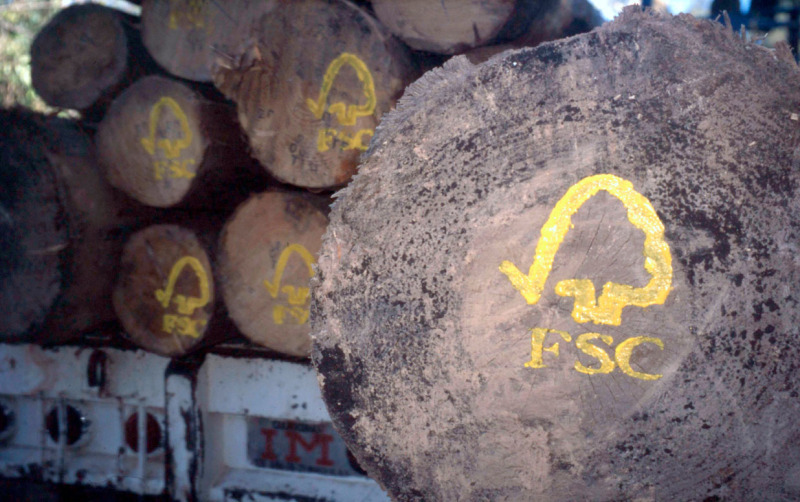
An investigation conducted by Sixth Tone, a group of Chinese researchers and journalists linked to the Shanghai United Media Group, tried to check if the FSC certified products in China are following procedures. 

The investigation, conducted in 2018 and recently published, took into consideration 9 timber factories in different parts of China, with inspections and interviews. According to Sixth Tone, in 7 cases, it was possible to verify and confirm illegal timber lots, for example belonging to types at risk of extinction, with an uncertified provenance.

China imports timber from countries considered at risk such as Congo and Papua New Guinea. In those low-level contexts, high levels of corruption, worrying track record with regard to violations of human rights and workers, low level of governance and implementation of environmental regulations, deforestation and illegal trade are on the order of the day and any large-scale forest controls are unthinkable.

Once arrived in China, the loads are "cleaned up" and given the stamp and the documents that attest their compliance with the strict standards set by the Forest Stewardship Council, Sixth Tone reported.

According to Sixth Tone, the practice of 'greenwashing' is ordinary. "It's a habitual practice," commented the interviewees.

However, this would not be a fraud against final customers but a practice conducted in agreement with them. "European customers are interested in having FSC certified wood but they are not willing to pay the mark up that this implies," explained one of the interviewees. It is estimated that the certification involves an additional cost of 15-20%.

China, as a hub of international trade, is a country without rules and clear legislation on transparency and traceability of the value chain, where practices such as due diligence are still the exception, making it the ideal context for this kind of situations.

For the full report here

Estonia: Roundwood prices in November 2018 way higher over a year ago; pulpwood prices nearly double

The prices for all rounwood assortments in Estonia have increased in November 2018. Above all, small diameter pine and spruce sawlogs are considerably more expensive in November 2018 than in the same month of the previous year. 
While most prices stagnated from October to November 2018, all prices are well above November 2017. Pine logs are +11.36% more expensive compared to November 2017, while spruce logs price are higher by +11.89%. Continue reading "Estonia: Roundwood prices in November 2018 way higher over a year ago; pulpwood prices nearly double"

China’s economic growth falls to a three-decade low in 2018

As a result of the tariff dispute with the Trump administration, China's economic growth fell to a three-decade low in 2018. The country's economy increased only by 6.6% over 2017. Also, the growth of the last three months of 2018 stopped at 6.4% from the Q3's 6.5% increase.

As reported by The Economic Times, communist leaders are trying to steer China to slower, more self-sustaining growth based on consumer spending instead of trade and investment. But the slowdown has been sharper than expected, prompting Beijing to step up government spending and order banks to lend more to shore up growth and avoid politically dangerous job losses.

"Growth will remain under pressure in the coming months," Louis Kuijs of Oxford Economics said in a report. "Key risks are the ongoing trade tension with the U.S. and that credit growth does not recover."

Economic activity held up through most of 2018 despite President Donald Trump's tariff hikes on Chinese imports in a fight over Beijing's technology ambitions. But exports contracted more sharply than forecast in December as the penalties began to depress demand. Growth in 2018 was the lowest since 1990's 3.9 percent in the aftermath of the violent crackdown on pro-democracy protests centered on Beijing's Tiananmen Square the year before.

Growth in investment, retail spending and factory activity all declined, the National Bureau of Statistics reported. The slowdown is adding to pressure on President Xi Jinping's government to settle its dispute with Washington. The two sides have imposed tariff hikes of up to 25 percent on tens of billions of dollars of each other's goods in the fight over U.S. complaints Beijing steals or pressures companies to hand over technology. Washington is pressing China to roll back plans for state-led industry development that its trading partners say violate its market-opening obligations, according to The Economic Times.

Trump stated that trade relations with China were "going very well" and "a deal could very well happen."

Forecasters expect growth to decline further this year to 6.3 percent or lower. They predict the decline will bottom out this year as Beijing's stimulus efforts gain traction. However, they have pushed back the time frame for that due to weakening exports.

Chinese leaders warned earlier any recovery would be "L-shaped," meaning companies and investors shouldn't expect growth to rebound to the previous decade's double-digit levels.

"A key downside risk to the Chinese growth outlook will be if the U.S.-China trade war escalates, should the temporary truce expire without any trade deal being struck," Rajiv Biswas of IHS Markit stated.

Prices for Austrian wood pellets well above last year's level

The January 2019 wood pellets price in Austria continued to rise, both as compared to December 2018, as well as compared to January 2018.
The average price of pellets reached in January €249/tonne, + 1.6% over December and + 3.3% higher compared to the same month of 2018.
Fossil fuels in Austria are currently significantly more expensive than pellets:
• Extra light heating oil by 47.4%;
• Natural gas by 57.7%.
In January, pellets in bags cost an average of € 4.18 per 15 kg bag (when ordering by pallet) or 27.88 cents / kg. This represents a  +1.3% increase over December 2018, and higher by + 2.7% as compared to January 2018.

Prices for Austrian wood pellets well above last year’s level

The January 2019 wood pellets price in Austria continued to rise, both as compared to December 2018, as well as compared to January 2018.

The average price of pellets reached in January €249/tonne, + 1.6% over December and + 3.3% higher compared to the same month of 2018.

Fossil fuels in Austria are currently significantly more expensive than pellets:

• Extra light heating oil by 47.4%;
• Natural gas by 57.7%.

In January, pellets in bags cost an average of € 4.18 per 15 kg bag (when ordering by pallet) or 27.88 cents / kg. This represents a  +1.3% increase over December 2018, and higher by + 2.7% as compared to January 2018.

Domestic EU wood furniture trade on the rise

The latest Eurostat trade data for EU wood furniture trade indicates that internal EU trade is rising, whereas external trade is broadly flat, both on the import and export side.

Internal EU trade in wood furniture, which increased 4% to €19.3 billion in 2017, increased a further 6% in the first nine months of 2018. The rise in internal EU trade is driven mainly by exports from Poland, particularly to Germany, and from the Netherlands to several neighbouring countries including Germany, France and Belgium.

Wood furniture production is rising in Poland, while more imports into the EU from outside the region are now being funnelled via the Netherlands.

Meanwhile the pace of EU wood furniture exports to nonEU countries, which were flat at €8.7 billion in 2016 and 2017, continued at the same rate in the first nine months of 2018. EU exports to the USA, China and Russia have increased slightly this year but these gains have been offset by declining exports to Switzerland, Norway, Canada and UAE.

Wood furniture imports into the EU from outside the region increased 9% to €6.3 billion in 2017. Import value in the first nine months of 2018 was €4.7 billion, 1.6% less than the same period in 2017. After a strong start last year, imports slowed a little from May 2018 onwards.

China and the European countries cooperate to promote wood products trade through railway express

A China-Europe Wood Industry Cooperation Summit was recently hosted by the China National Forest Products Industry Association (CNFPIA). A China-Europe Wood Industry Committee was established at the Summit in order to promote wood products trade along Belt and Road countries and the development of the China railway express. Continue reading "China and the European countries cooperate to promote wood products trade through railway express"

Newsletter

Subscribe to our digital newsletter for your daily digest of essential news, views and analysis from the international wood industry delivered directly to your inbox.


0