

The IKEA Group will conduct at the Polish mills of the Austrian company Kronospan, which is a supplier of the Swedish company. The reason seems to be the numerous complaints about the environmental pollution reported by residents where Kronospan operates its mills in Poland, namely in Szczecinek and Mielec, the Polish media reported. Kronospan intends to join IKEA audits, which are supposed to take place in the following weeks. Continue reading "IKEA to conduct an audit at Kronospan’s Polish mills"
Article archive
European laminate flooring market experiences downturn in 2018
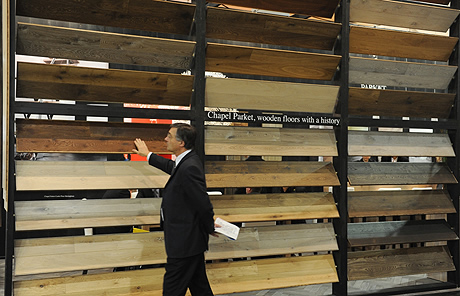
In 2018, manufacturing members of the Association of European Producers of Laminate Flooring (EPLF) achieved worldwide sales of European-produced laminate flooring totalling 455 million m² (2017: 477 million m², which corresponds to -4.6%). This indicates that even with a downward trend in some regions, the global laminate market remains at a high level. In Western Europe, the “home market” of the EPLF, sales declined further in 2018, whilst Latin America and Asia once again recorded the biggest increases. North America saw a reduction in sales, whereas Eastern Europe remained stable.
In Western Europe (including Turkey), total sales reached 225 million m² in 2018 (Previous Year 243 million m²). This represents a drop of -7.3% compared to the previous year. Germany was still by far the most important individual market in Central Europe with 52 million m2 (PY 57 million m²) – albeit with a -8.3% reduction caused by the continuing trend towards substitution with alternative flooring types.
France continues to occupy second place in Europe, declining slightly in 2018 with 36 million m² (PY 37.6 million m²). Unfortunately, the positive trend for EPLF members did not continue in the United Kingdom: at 29.8 million m² for 2018 (PY 33.8 million m2), a further reduction of -11.8% was recorded. This puts the UK in third place again for sales in Western Europe – ahead of Turkey, where laminate revenues for the Association continued to decline in 2018, falling -18.2% down to 20.4 million m² (PY 24.9 million m²). The Netherlands stands firmly in fifth place with sales figures of 18.3 million m² (PY 19.7 million m²). Once again, Spain follows on behind with a stable outcome of just under 16.5 million m² (PY 17 million m²).
In Eastern Europe, although the upward trend of the previous years cannot continue, its stable result means this region will nevertheless continue to be an important market for EPLF producers in future. Sales within the area reached around 128 million m² (PY 128 million m²) in 2018 ‒ another good result for European laminate floor producers. The EPLF is aware that in 2017 just under 28 million m² of laminate produced by Russian members was not covered by the statistics for various reasons. In 2018, EPLF members in Russia reported sales of 39 million m² (PY 36 million m²), which corresponds to a growth rate of 10.6%. Poland achieved a consistent result in 2018 at over 29 million m² (PY more than 30 million m²). Romania exhibited a slightly weaker outcome, however, with 11 million m2 (PY 13.2 million m²). Behind Romania, in the same order as before, are: Ukraine with 7.6 million m² (PY 7.4 million m²) i.e. +4% growth, Hungary at 7 million m² (PY 6.5 million m²) and Bulgaria with 4.4 million m² (PY 5 million m²).
North America continues to be a profitable sales region for the European laminate flooring sector, although weaker figures from Canada have had a somewhat dampening effect on the result. At 44.3 million m² (PY 49 million m²), total sales for North America in 2018 stand at around -10.4% down against the previous year. With around 30.7 million m² sold in 2018 (PY 32 million m2), the USA exhibited a slight reduction of -2.4%, whilst Canada recorded just under 13.6 million m² for 2018 (PY 18 million m²), representing a drop of -24.5%.
The biggest increase in 2018 was 7.8%, gained in Africa, although total sales there only amounted to 5 million m². The region of Latin America again recorded an increase in EPLF sales statistics, achieving a growth rate of +4.7% for 2018 with 18.5 million m² (PY 17.7 million m²). Sales figures for Chile, the largest individual market, rose by +5% compared with the previous year, standing at 8.1 million m² (PY 7.7 million m²). Mexico recorded 3.9 million m² (PY 4.3 million m²), Columbia registered 2.1 million m² (PY 1.6 million m²), and the poor economic situation in Argentina led to a downturn to 1.5 million m² (PY 2.1 million m²).
In the Asia region, EPLF producers achieved total sales of around 30 million m² (PY 29 million m²) in 2018, representing a rise of around +2.8% over the previous year. The uncontested number one position for Asia in 2018 was again held by China (including Hong Kong), although figures were down -7.2% compared to the previous year: sales there reached 8.9 million m2 (PY 9.6 million m²). The EPLF is encouraged to see ongoing growth in Kazakhstan, where market data has been gathered since 2016: 4 million m² sold (PY 3.6 million m²), an increase of +11%. Israel attained 2.3 million m² (PY 2.2 million m²), Saudi Arabia rose slightly with 2.9 million m² (PY 2.7 million m2); behind this lies Uzbekistan with nearly 2.1 million m² (previous year 0.8 million m²) followed by Taiwan with 1.7 million m² (PY just under 1.8 million m2) and Azerbaijan with 1.6 million m² (PY 0.9 million m2). Meanwhile, it appears laminate has also gained a foothold in the huge Indian market: in 2018, EPLF members achieved sales there of 1.6 million m² (PY 1.4 million m²).
Booming prices for logs in Finland
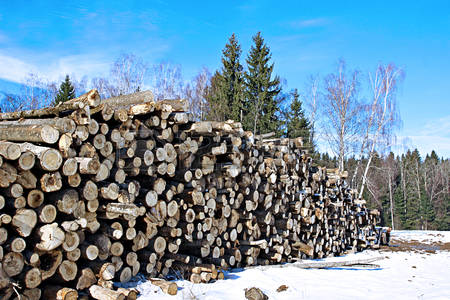
Roundwood prices in Finland have increased sharply in November 2018, as compared to the same month of 2017. Sawlog prices have increased, with the price for pine recording the highest increase, at 9.21% over the same month of 2017. Spruce and birch prices recorded increases of 8.66% and 4.58%, respectively. Continue reading "Booming prices for logs in Finland"
China’s forestry sector output reached US$1.1 trillion in 2018
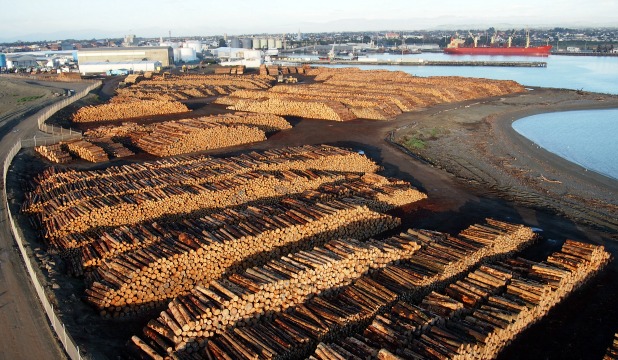
China's forestry sector output reached 7.33 trillion yuan (about 1.1 trillion U.S. dollars) in 2018, 2.88 percent up from than in 2017, according to China's National Forestry and Grassland Administration.
The growth came amid the country's ongoing drive for environmentally-friendly development, as the government banned grazing on degraded grasslands, increased financial input and stepped up law enforcement in the sector.
China's desertified land has shrunk by 10 million hectares since 2012, while nearly 34 million hectares of forest has been planted, bringing the national forest coverage to 21.66 percent.
China unveiled a plan last November to enhance land greening and boost domestic ecological resources.
Under the plan, China will increase its forest coverage to 23.04 percent by 2020, while the volume of forest resources will expand to 16.5 billion cubic meters.
IKEA plans entry in the Vietnamese market

Swedish furniture giant IKEA plans to invest an estimated $450 million to set up a retail system and warehouses in Hanoi.
They will serve the entire Southeast Asian market. Moreover, IKEA is in negotiations to set up shop in Vietnam.
IKEA has eyed entry into Vietnam since 2015, when its executives revealed their intention to do so within five years.
IKEA is the largest furniture retailer in the world with more than 400 stores in 49 countries. In Southeast Asia, it has stores in Singapore, Malaysia and Thailand.
Foreign home interior brands and designers are present in force and dominating the increasingly affluent Vietnamese market.
According to the Vietnam Chamber of Commerce and Industry (VCCI), some 80 percent of luxury woodwork and interior decoration items is imported from Europe, with local players making up the small remaining portion. The market is valued at $2.5 billion.
Global lumber market affected by slowing Chinese economy and trade disputes
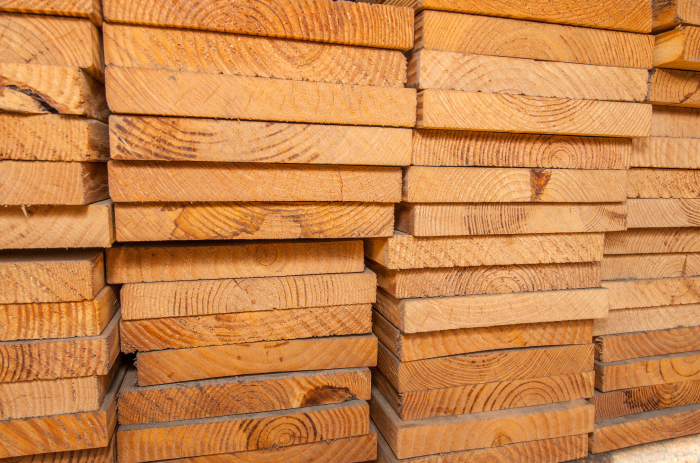
As a result of the Chinese economy going down and the trade disputes the country has with the U.S., the global lumber market slowed down significantly during the 2nd half of 2018.
As reported by Benzinga Lightning Feed, the United States has cultivated a strong export market for lumber products in China. The American Hardwood Export Council (AHEC) predicted that in the near future 60 percent of American hardwood goods will be exported from the U.S., with 54 percent of exports bound for China.
In 2017, China imported $8.83 billion of total lumber products from the U.S., according to the World Bank. However, 2018 saw China impose a 10 percent retaliatory tariff on U.S. lumber products and threatened a larger 25 percent tariff on $60 billion of total U.S. goods.
As China's credit shortage and consumer confidence worsens, so has the demand for forest products. The volume of imported softwood products during the first three quarters of 2018 dropped 11 percent compared to the same period in 2017.
As Benzinga Lightning Feed reported, during 2017, the U.S. forest products exports rose 9 percent, compared to only a 1 percent increase in 2016 and a sharp 16 percent drop in 2015. Exports to China, the largest U.S. trade partner for forest products, were up 21 percent from 2016. The import value of U.S. hardwood products to China reached a record high of $323 million in 2017. In the first quarter of 2018, the export value hit $138 million, an increase of 36.7 percent year on year, according to AHEC statistics. But there is little doubt that when all of 2018 is compared with 2017, the numbers will trend downward.
Russia is China's only trading partner to have increased lumber exports to the country in 2018, while all other trading partners, including the United States, saw their lumber exports to China decline during the year. While the U.S. is a major exporter of lumber and wood products, it also imports them. Those imports into the United States reached a 10-year high of roughly 9.78 million cubic meters in the second quarter of 2018 before shrinking by 3.5 percent in 2018's third quarter.
Lumber prices in the US pick up in mid-January
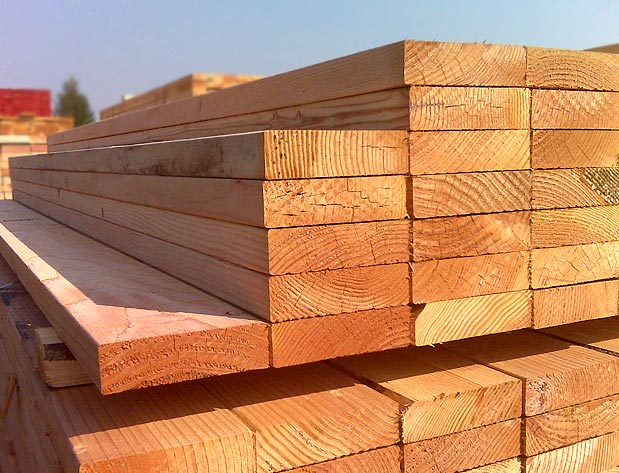
Trading in dry framing lumber picked up amid more curtailment news in British Columbia, and a sense that downside risk was minimal while upside potential was on the rise.
Wholesalers were among the most bullish of buyers, while some distributors and many dealers maintained a more cautious approach. Green Douglas Fir provided one contrast to the overall strengthened tone, as heavy rain continued to hammer the key California market.
Gains in dry, however, helped the Random Lengths Framing Lumber Composite post its first weekly increase of the new year.
| Week Jan 18 |
Week Jan 11 |
Year Ago 2018 |
|
| Random Lengths Framing Lumber Composite Price* | $330 | $327 | $458 |
| KD Western S-P-F #2&Btr 2x4 R/L Mill Price | 339 | 324 | 502 |
| KD Eastern S-P-F #1&2 2x4 R/L, delivered Great Lakes | 408 | 403 | 582 |
| Green Douglas Fir Std&Btr 2x4 R/L (Portland) | 235 | 240 | 520 |
| Southern Pine (Westside) #2 2x4 R/L | 368 | 374 | 495 |
| KD Coast Hem-Fir #2&Btr 2x4 R/L | 350 | 343 | 515 |
| Ponderosa Pine (Inland) #2&Btr 1x12 R/L | 800 | 795 | 735 |
| * Weighted average of 15 key items | |||
Random Lengths Panel Market Report
Structural panel prices stayed flat amid mixed trends in trading. Prices of OSB bumped along at multiyear lows, even though sales in the South kicked into gear on Wednesday.
Dealers and distributors in that region replenished inventories and covered job orders more readily. In Southern Pine plywood markets, sales of rated sheathing strengthened in all zones. Producers reported waning fear of downside risk among buyers.
Follow-through from last week’s active pace fizzled in western Fir plywood markets.
| (f.o.b. mill prices) | Week Jan 18 |
Week Jan 11 |
Year Ago 2018 |
| Random Lengths Structural Panel Composite Price* | $367 | $366 | $454 |
| Southern (west-east) 15/32-inch 3-ply rated sheathing plywood | 360-395 | 360-395 | 470-510 |
| Southern (west-east) 15/32-inch 4-ply rated sheathing plywood | 365-405 | 365-400 | 475-515 |
| Western 1/2-inch 4-ply rated sheathing plywood | 370 | 365 | 498 |
| North Central 7/16-inch Oriented Strand Board | 210 | 210 | 320 |
| *Weighted average of 11 key items | |||
ISO publishes chain of custody standard for wood products
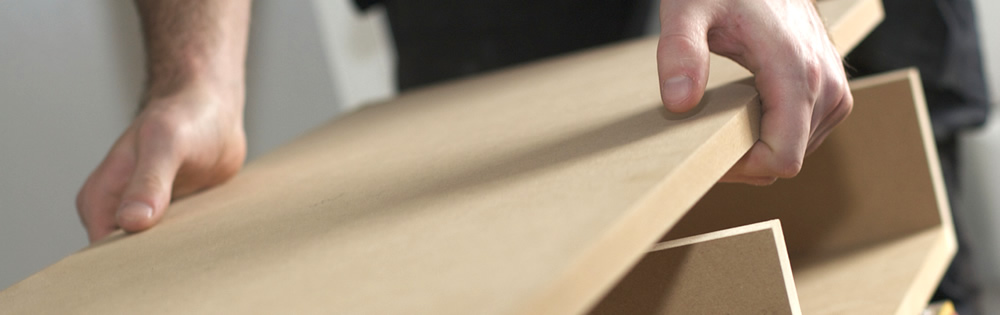
ISO (the International Organization for Standardization) has published a new, voluntary standard for chain of custody (CoC) of wood and wood-based products (together with cork and lignified materials other than wood, such as bamboo, and their products).
While the standard does not cover forest management, it can be used to transfer information about the source of the wood-based product.
According to ISO, the standard is intended to enable tracking of material from different categories of source to finished products and has several purposes. It can facilitate business-to-business communications by providing a common framework that allows businesses to “speak the same language” when describing their chain of custody system.
Purchasers can use the standard document to evaluate the information they receive from suppliers to help identify suitable input material.
This information can then be used together with a set of specified criteria to determine whether a product/input material fulfils the conditions for the intended use. Other standards and certification schemes can use the standard as a reference regarding chain of custody systems.
Weaker demand for high value ‘redwoods’ in China

Many timber suppliers in the Shanghai Furen timber market are complaining that demand for timber for furniture making has suddenly become very quiet. In fact, some have noted that furniture factories are closing early for the New Year celebrations with workers already heading home.
Redwood (rosewood) furniture has a high status in China and is favored by middle-class consumers but, say analysts, demand has slowed over the past two years because of the slowdown in the economy. This slowdown has affected young generation middle class consumers who are now facing growing financial challenges.
Analysts write “the Chinese redwood furniture consumption power is now not strong.”
Oversupply of low quality and alternatives to rosewood has undermined demand and even furniture made from the top species has fallen such that demand for Myanmar padauk, blackwood and rosewood in the Furen market has dropped by more than 30% compared to last year.
Also, from the beginning of 2018 shipments of sandalwood have steadily falling. There have been only a few sandalwood shipments per month seen at the Furen market. Most of the material which can be sold is short and small diameter logs at price RMB80-90,000 yuan per ton. The long logs with diameter above 30cm priced at about RMB300,000 per ton are not moving because manufacturers cannot pay such high prices while demand is weak.
Some affordable redwood substitute species have performed better such as tulipwood (Dalbergia frutescens) (also Dalbergia decipularis)). Some merchants have reported that the price for tulipwood is generally around RMB10,000 per ton.
Tulipwood is recognised in China as one of the 29 national standard redwood species and has the unique characteristics of a true redwood say importers. Analysts say that given the current weak demand for redwood furniture it is the low priced tulipwood which is attracting consumers.
Germany: Price of wood pellets continues to grow in January

As is usual in winter, the price of German wood pellets rose in January compared to the previous month, by 1.7 percent. This is an increase of 5.5 percent compared to the same month last year.
According to data of the German Energy Wood and Pellet Association e. V. (DEPV) the cost for 6 tons (t) purchases amounted to € 265.25 / t.
Pellets confirm their price advantage for heating oil of just under 21 percent and over natural gas by approx. 10 percent.
In the case of wood pellets, the following regional differences arise in January 2019 (6 t purchase volume): at 261.23 EUR / t, pellets are the cheapest in Central Germany as in recent months. In northern and eastern Germany one ton of pellets costs 265,10 EUR, while in southern Germany 267,22 EUR.
Larger quantities (26 t) were traded in January 2019 under the following conditions: South: 252.32 EUR / t, Central: 242.67 EUR / t, North / East: 246.31 EUR / t (all incl. VAT).
Latvian forestry products exports up sharply in 2018

In the first 11 months of the year, Latvia exported EUR 2.414 billion worth of forestry products, up 15.1 percent against the same period last year, according to information released by the Latvian Agriculture Ministry.
Timber and timber products made up the bulk or 85.9 percent (84 percent a year ago) of total forestry product exports in the first 11 months of 2018, accounting for EUR 2.073 billion and rising 17.8 percent year-on-year.
Timber exports in January-November 2018 included EUR 644.191 million worth of sawn timber, up 8.4 percent year-on-year. Firewood exports increased 13.2 percent year-on-year to EUR 298.718 million, round timber exports doubled to EUR 259.742 million, plywood exports dropped 1 percent to EUR 220.494 million, and exports of woodchip plates rose 12.5 percent to EUR 199.285.
According to the Agriculture Ministry's data, exports of wooden furniture declined 0.4 percent from January-November 2017 to EUR 152.485 million, or 6.3 percent (7.3 percent a year ago) of total forestry product exports, and exports of paper, cardboard and their products grew 6.7 percent to EUR 111.177 million, or 4.6 percent (5 percent a year ago) of total forestry product exports.
In January-November 2018, Latvia supplied forestry products mainly to the UK (18.2 percent), Sweden (12.3 percent) and Estonia (10.4 percent). In comparison with January-November 2017, exports of forestry products to the UK grew 21.7 percent to EUR 438.368 million, exports to Sweden rose 44.3 percent to EUR 296.279 million, and exports to Estonia picked up 15 percent to EUR 251.772 million.
In the first 11 months of 2017, Latvia's forestry exports reached EUR 2.096 billion.
West Fraser curtails production at 3 sawmills

West Fraser announced temporary curtailments of approximately three weeks of production throughout the first quarter of 2019 at each of three British Columbia sawmills: Chasm, 100 Mile House, and Chetwynd.
In addition, the Williams Lake Sawmill will be shut down for approximately a week to complete certain capital upgrades. The decision to temporarily reduce production at Chasm, 100 Mile House, and Chetwynd is a result of price declines in lumber markets, high log costs and log supply constraints.
Total production curtailed in the first quarter of the year is expected to reduce SPF lumber production by approximately 50 million board feet, in addition to previously announced measures.
Chinese traders concerned on rising prices for US hardwoods
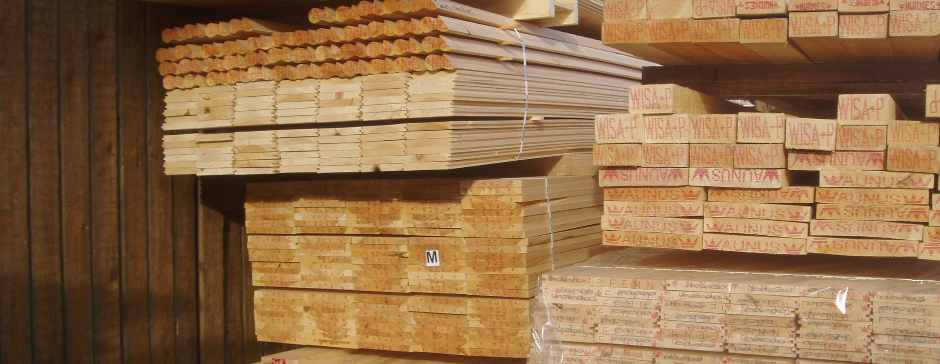
The trade friction between China and the United States has been on everyone’s mind in 2018, especially manufacturers which rely on US hardwoods as raw material for their production.
The immediate impact of the trade conflict has been the decision in China to raise import duties on US timber which has pushed up landed costs. Also, importers complain that Customs clearance is taking much longer than before which results in higher container demurrage which adds to the landed cost. Continue reading "Chinese traders concerned on rising prices for US hardwoods"
Fall in EU wood furniture imports from China in 2018
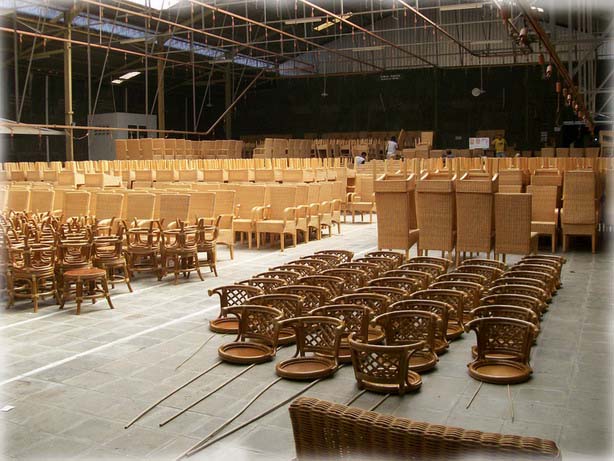
After making gains in 2017, EU wood furniture imports from China, by far the largest external supplier, fell 5% to €2.55 billion in the first 10 months of 2018.
During the same period, EU imports of wood furniture continued to rise from other temperate countries, mainly those bordering the EU. EU imports from these countries increased 11% to €1.25 billion in the first 10 months of 2018, building on a 28% gain recorded the previous year.
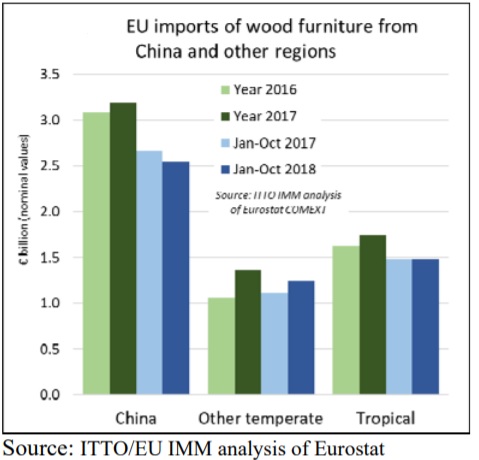 The biggest gains in 2018 were made by Ukraine, Belarus, Russia, USA, Bosnia, and Turkey.
After a slow start to the year, EU imports of wood furniture from tropical countries picked up pace in the second half of 2018, and totalled €1.49 billion between January and October 2018, slightly exceeding the 2017 level.
In recent years China’s competitiveness in the EU wood furniture market has been impeded as prices have risen on the back of growing Chinese domestic demand and new laws for pollution control pollution in China.
EU furniture importers also continue to question the variable quality of product imported from China and some have struggled to obtain the legality assurances required for EUTR conformance when dealing with complex wood supply chains in China.
The main South East Asian supply countries have all followed a similar trajectory in the EU wood furniture market in the last two years. A rise in EU imports in 2017 was followed by a decline in 2018.
After increasing 1% to €730 million in 2017, EU imports from Viet Nam fell 3% to €599 million in the first ten months of 2018. Imports from Indonesia increased 4% to €311 million in 2017 but fell back 4% to €257 million in the first ten months of 2018. Imports from Malaysia increased 10% to €203 million in 2017 and were 4% down at €163 million in the first ten months of 2018.
In contrast, EU wood furniture imports from India have continued to rise, up 15% to €199 million in the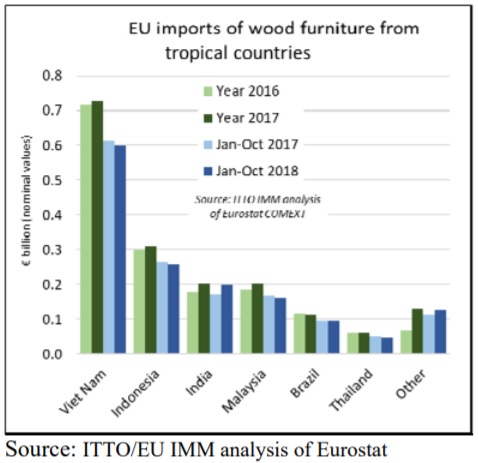 first ten months of 2018 after a 12% increase to €202 million for the whole of 2017. Imports from Brazil were €57 million in the first ten months of 2018, matching the 2017 level.
There were also shifts in the destinations for wood furniture imported into the EU from tropical countries in the first ten months of 2018. Imports in the UK, the largest market, were €577 million between January and October 2018, 1% more than the same period in 2017. There were also rising imports in France (+8% to €219 million) and Netherlands (+6% to €163 million).
However, in the first ten months of 2018 these gains were offset by falling imports of tropical wood furniture in Germany (-9% to €182 million), Belgium (-3% to €61 million), Spain (-7% to €57 million), and Italy (-2% to €44 million).
Södra decreases the price of spruce and pine logs due to poor market conditions
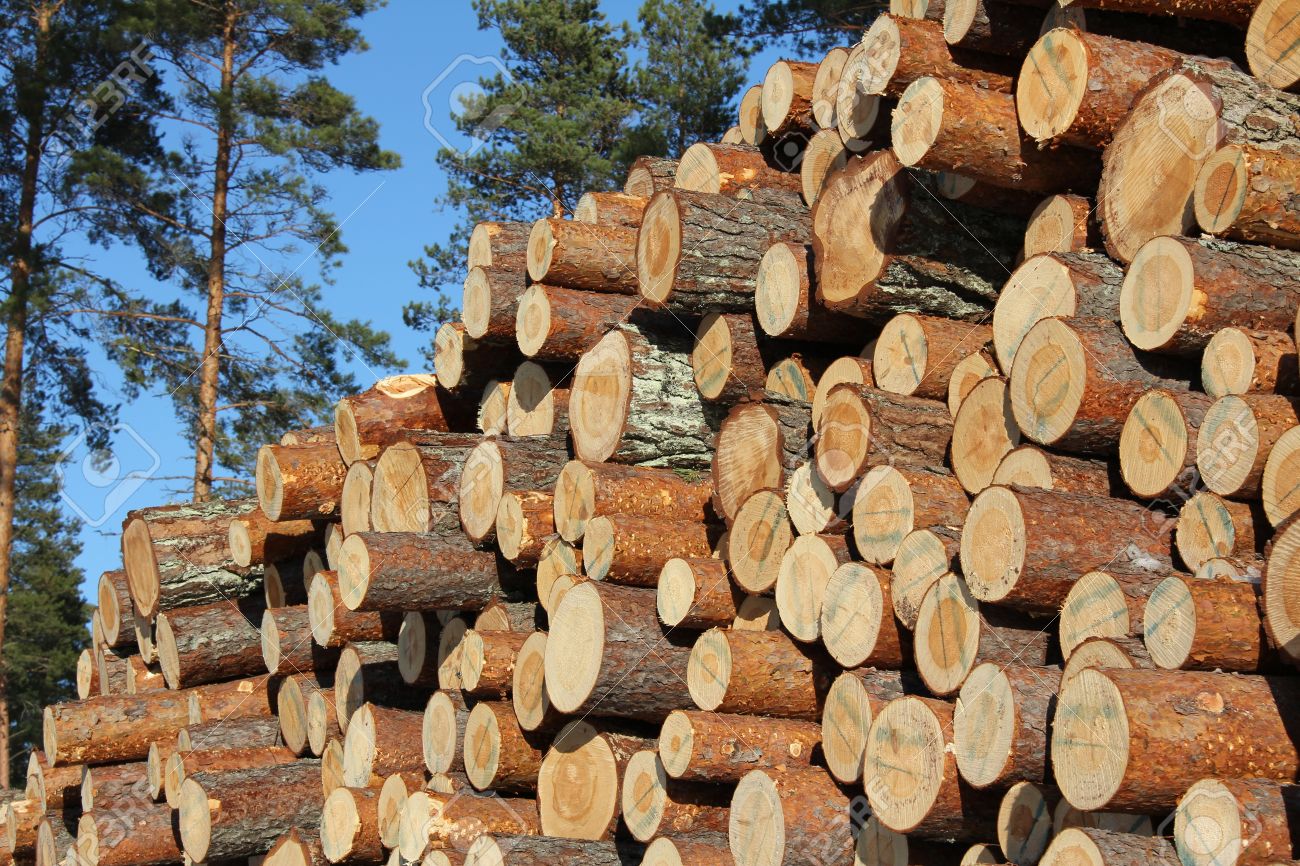
Södra is adjusting the purchase price for spruce and pine logs as well as fuel wood. Södra is seeing a slowdown in the economy at the same time as wood supplies are high and forestry activity is intense. As a result, the market price of sawlogs is declining.
“Our operating environment is more unsettled, and we are entering a situation marked by greater uncertainty in the markets,” said Olof Hansson, President of the Södra Skog business area.
At the same time, demand for biofuel remains high.
“We are currently experiencing increased demand primarily for fuel wood, driven by the energy transition we are seeing in society,” continued Olof.
The following price adjustments are being made:
- SEK -15/mᶾsub for pine logs
- SEK -25/mᶾsub for spruce logs
- SEK +30/mᶾsub for fuel wood
The new prices will apply for contracts signed as of 18 January.
New pattern of demand impacting the Indian plywood market
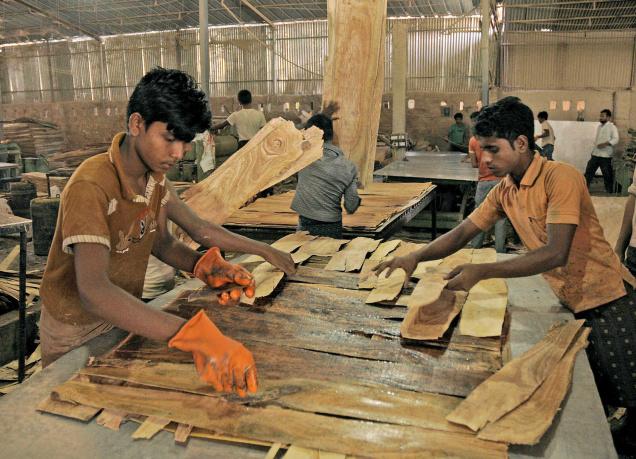
The plywood market in India has absorbed an earlier price rise but supplies are still increasing faster than demand. Analysts and manufacturers remain confident that plywood supply and demand will eventually balance out.
The housing sector is adjusting to a new pattern of demand, including trends towards houses of a smaller size, studio houses, weekend houses and the Indian Government’s ‘Houses for All’ (Pradhan Mantri Awas Yojana) scheme.
The latter includes, most recently, approval of a project to build 205,000 urban houses for poorer segments of the population.
As of 26 November 2018, the Government of India had sanctioned the construction of a total of 63 lakh (6.3 million) houses under the ‘Houses for All’ scheme, of which 12 lakh (1.2 million) had been constructed and 23 lakh (2.3 million) were under construction, according to the Financial Express.
Uttar Pradesh, Andhra Pradesh, Madhya Pradesh, Maharashtra and Tamil Nadu together accounted for 55% of the sanctioned houses.
Prices for WBP marine grade manufactured by domestic mills
| Plywood, | Rs per sq.ft |
| Ex-warehouse. (MR Quality) | |
| 4 mm | 63 |
| 6 mm | 84 |
| 9 mm | 105 |
| 12 mm | 130 |
| 15 mm | 175 |
| 18 mm | 183 |
Domestic ex-warehouse prices for locally manufactured MR plywood
| Locally Manufactured Plywood “Commercial Grade” |
Rs per sq.ft | |
| Rubberwood | Hardwood | |
| 4mm | Rs.31.5 | Rs.46 |
| 6mm | Rs.47 | Rs.60 |
| 8mm | Rs.60 | Rs.73.5 |
| 12mm | Rs.73.5 | Rs.86 |
| 15mm | Rs.87 | Rs.105 |
| 19mm | RS.101 | Rs.120 |
| 5mm Flexible ply | Rs.63 | |
Source: ITTO
Kronospan seeks to expand in Ukraine with the acquisition of a MDF company
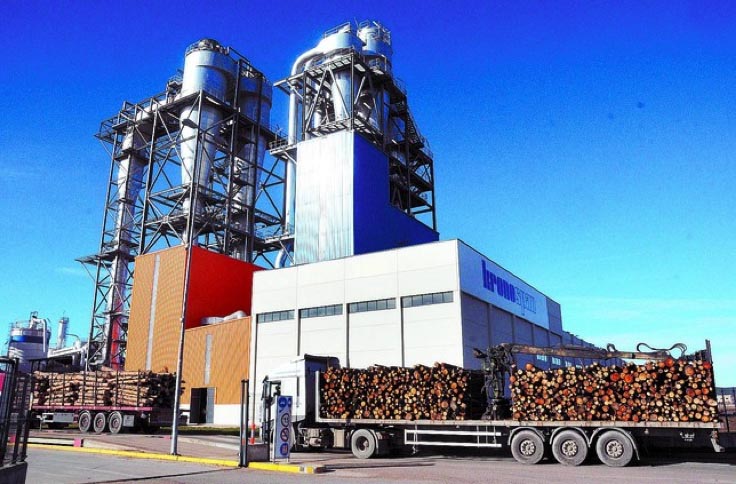
Wood panels producers worldwide consider speeding up the expansion on the market in Ukraine, through building their own production facilities within the country, or the acquisition of existing players.
As reported by Wood-based Panels International (WBPI), panel makers from around the world are eyeing the Ukraine as a possible country for expansion of their panel making capacities. For example, Austrian-headquartered Kronospan aims to become a leading player in the Ukrainian market for panels, which could be achieved by the acquisition of MDF maker Korosten, one of Ukraine’s leading MDF producers, which is owned by a well-known Ukrainian businessman, Leonid Yurushev.
Currently the Korosten factory, which is based in the Zhytomyr region, remains one of the most attractive assets in the Ukrainian panel industry, mainly due to its specialisation in the production of MDF; and its status as a single large-scale producer in Ukraine.
In the middle of last year, the Ukrainian anti-trust regulator The State Anti-Monopoly Committee gave Kronospan permission to acquire the Korosten factory. However, according to some Ukrainian media reports, due to unspecified reasons, the deal has not yet been completed, WBPI reported.
Currently Kronospan, which has been working in Ukraine since the beginning of the 2000s, already operates a plant for the production of particleboard in Volyn Oblast, which is a province in north-western Ukraine. The acquisition of the Korosten factory would have provided an opportunity for the company to significantly diversify its local range and strengthen its position in the Ukrainian panel market, which currently remains largely fragmented. In 2015 the profits of the Kronospan Volyn factory amounted to UAH 1 billion (US$36m), but more recent data is currently unavailable.
Analysts at the Ukrainian Ministry of Infrastructure, which is a state agency of the Ukrainian government responsible for the development of the panel and timber industry, believe that a second asset in Ukraine will provide a big competitive advantage to Kronospan over the other major competitors in the Ukrainian panel market. That could be mainly explained by the fact, that, unlike particleboard, which is currently produced by about five or six factories in Ukraine, the Korosten factory mainly specialises in operations in the MDF segment of the industry, which is a relatively new niche in the Ukrainian panel market.
Currently the Korosten plant, which was built during 2009-10, specializes in the production of MDF and has the capacity to produce about 300,000m3 annually. It also produces laminate with a capacity of six million m3 per year. The factory’s flagship brand is Rezult. In addition to Kronospan, the acquisition of the Korosten factory is being considered by some other panel majors operating in Ukraine.
According to WBPI, prior to 2010, the majority of MDF was imported to Ukraine from Poland, Turkey and Russia. However, the commissioning of the Korosten plant in 2010 resulted in the the first supplies of local products to the major Ukrainian MDF consumers, at prices significantly lower when compared to those imported from abroad.
Among the other advantages of the Korosten plant is its location within the boundaries of the Zhytomyr region in western Ukraine, which is known for its forests and rich raw material base. In addition, the factory is located close to the Korosten Junction railway station, which is important in terms of logistics, ensuring regular supplies of the factory’s products to various regions of Ukraine; and outside the country.
There is a possibility, after the acquisition, that in addition to panels, the factory will be used for the manufacture of high-value added products, particularly furniture. As part of these plans, the establishment of the Zhytomir Furniture factory, based on Korosten, has been completed.
In the case of Kronospan, to date, the scale of its activities in Ukraine has been significantly smaller than in neighbouring Russia and Belarus.
This is mainly due to the recent political and economic turmoil in Ukraine, which made further investments in the Ukrainian panel and timber industries too risky for foreign businesses.
However, in recent years, the situation in the Ukrainian economy has significantly improved.
According to analysts at the Ukrainian Ministry of Infrastructrure, since 2012 the investment climate in the country’s panel industry has changed for the better. In fact, the majority of investment projects in panels have been suspended in Ukraine as far back as 2012-13 and have not resumed yet.
Ukraine has good conditions for the development of its domestic panel production as the country is fully provided with a forest to European standards and has rich reserves of hardwoods (primarily beech and oak), WBPI reported.
From its side, the government has already promised investors in panels that it will provide all the necessary support for the implementation of their projects. That could be in the form of exemption from taxes and other mandatory payments.
In the case of particleboard, currently about 80% of production imported to Ukraine is purchased by furniture makers, while the remaining 20% is mostly used in construction (most often in the manufacture of partitions and the roofs of houses).
In recent years, the production of OSB has also grown in Ukraine, despite the fact that the volume of local consumption continues to be relatively small.
Trump administration's lumber tariffs forces Canadian producers to idle sawmills
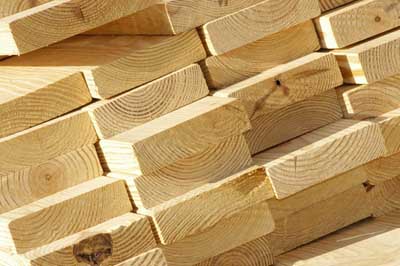
U.S. lumber prices reached record prices during the first half of 2018, but have come to plunge 47% starting May 2018. Moreover, prices could fall another 15% in 2019, amid weak housing starts.
Meanwhile, Canadian producers are paying average tariffs of more than 20% tariffs on timber shipments to the U.S., their biggest customer. Thus, Interfor Corp slashed output by 20% at its sawmills in British Columbia in the fourth quarter, Canfor Corp curtailed output by about 10% and West Fraser Timber Co. said it will permanently shut 300 million board feet of capacity at two sawmills. Analysts say more cuts could be ahead, Bloomberg reported.
“The bite is significant,” said Susan Yurkovich, chief executive officer of the B.C. Council of Forest Industries, a Vancouver-based industry group. “When you’re in a very low price environment and you’re paying duties you get to a point where you can’t continue to operate.”
While disputes over softwood lumber have caused intermittent friction between the two nations for years, the spat was reignited in 2016 when the U.S. lumber industry filed a petition asking for duties, arguing that Canadian wood is heavily subsidized and that imports from there were harming U.S. mills and workers. In 2017, the Trump administration obliged.
Concerns that the growing friction between the two countries could end up limiting supplies sent prices surging and, in early 2018, lumber became among the best performing commodities. Since then, demand dropped significantly, sending prices in October to the lowest in more than two years.
In 2018, the volatility reached the highest in 25 years, causing lumber prices to fall about 10% to 15% in 2019. Rising mortgage rates and higher home prices are affecting demand, Bloomberg analysts forecast.
“This has become a little bit more important for Canadian producers because now the tariffs are having a real financial bite,” said Kevin Mason, managing director of Vancouver-based ERA Forest Products Research. “They’re trying to keep communication lines open, but from a priority perspective it’s fallen down the list," Mason said. “The U.S. is otherwise engaged with the big China thing.”
Canada has launched dispute proceedings through the World Trade Organization and hearings will be held at the end of February in Geneva. Still, these trade cases take a long time to be heard by dispute bodies and cost the industry “an insane amount” to fight while the U.S. producers reap the benefits of not paying duties, Susan Yurkovich explained.
So far, Canada hasn’t responded by exporting more to other destinations, such as China.
Trump administration’s lumber tariffs forces Canadian producers to idle sawmills
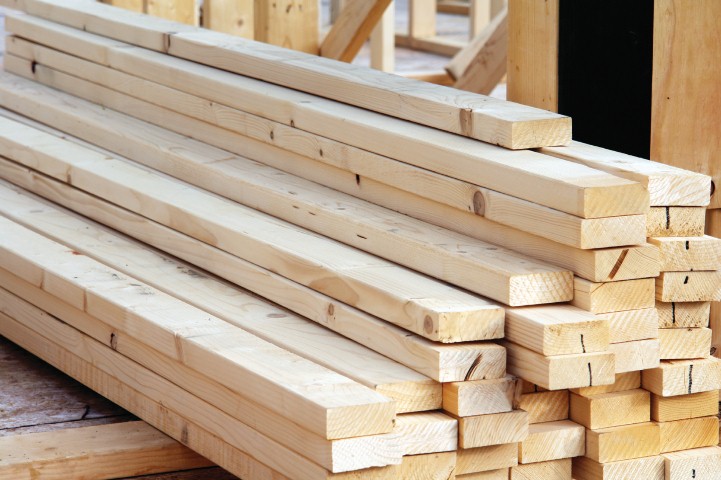
U.S. lumber prices reached record prices during the first half of 2018, but have come to plunge 47% starting May 2018. Moreover, prices could fall another 15% in 2019, amid weak housing starts.
Meanwhile, Canadian producers are paying average tariffs of more than 20% tariffs on timber shipments to the U.S., their biggest customer. Thus, Interfor Corp slashed output by 20% at its sawmills in British Columbia in the fourth quarter, Canfor Corp curtailed output by about 10% and West Fraser Timber Co. said it will permanently shut 300 million board feet of capacity at two sawmills. Analysts say more cuts could be ahead, Bloomberg reported.
“The bite is significant,” said Susan Yurkovich, chief executive officer of the B.C. Council of Forest Industries, a Vancouver-based industry group. “When you’re in a very low price environment and you’re paying duties you get to a point where you can’t continue to operate.”
While disputes over softwood lumber have caused intermittent friction between the two nations for years, the spat was reignited in 2016 when the U.S. lumber industry filed a petition asking for duties, arguing that Canadian wood is heavily subsidized and that imports from there were harming U.S. mills and workers. In 2017, the Trump administration obliged.
Concerns that the growing friction between the two countries could end up limiting supplies sent prices surging and, in early 2018, lumber became among the best performing commodities. Since then, demand dropped significantly, sending prices in October to the lowest in more than two years.
In 2018, the volatility reached the highest in 25 years, causing lumber prices to fall about 10% to 15% in 2019. Rising mortgage rates and higher home prices are affecting demand, Bloomberg analysts forecast.
“This has become a little bit more important for Canadian producers because now the tariffs are having a real financial bite,” said Kevin Mason, managing director of Vancouver-based ERA Forest Products Research. “They’re trying to keep communication lines open, but from a priority perspective it’s fallen down the list," Mason said. “The U.S. is otherwise engaged with the big China thing.”
Canada has launched dispute proceedings through the World Trade Organization and hearings will be held at the end of February in Geneva. Still, these trade cases take a long time to be heard by dispute bodies and cost the industry “an insane amount” to fight while the U.S. producers reap the benefits of not paying duties, Susan Yurkovich explained.
So far, Canada hasn’t responded by exporting more to other destinations, such as China.
Global softwood lumber trade impacted by slowing demand in China and dropping US prices

Declining trade of softwood lumber, plummeting lumber prices in the US and slowing wood demand in China were some of the biggest international lumber developments in the 3Q/18. Global trade of softwood lumber from January through September 2018 was down 2.5% as compared to the same period last year. China, Japan, the United Kingdom and the MENA region reduced their imports, while the US and continental Europe have imported more lumber this year than in 2017. Continue reading "Global softwood lumber trade impacted by slowing demand in China and dropping US prices"

