Article archive

Double-digit drop for US lumber prices at the end of May

Mills idled by wildfires in Western Canada and expectations that more market- or resource-related shutdowns were coming in the region generated stronger sales and stemmed a steep downward slide in prices of Western S-P-F.
Even so, prices in all US framing lumber species faltered in the holiday-shortened week, leaving traders frustrated with a messy and oversupplied market. Prices of various random dimension and studs posted double-digit drops, and the Random Lengths Framing Lumber Composite Price slumped $10.

Week
May 31
Last Week
May 24
Year Ago
2018
Random Lengths Framing Lumber Composite Price* $325 $335 $582
KD Western S-P-F #2&Btr 2x4 R/L Mill Price 286 302 655
KD Eastern S-P-F #1&2 2x4 R/L, delivered Great Lakes 387 395 725
Green Douglas Fir Std&Btr 2x4 R/L (Portland) 310 317 605
Southern Pine (Westside) #2 2x4 R/L 347 362 602
KD Coast Hem-Fir #2&Btr 2x4 R/L 355 360 660
Ponderosa Pine (Inland) #2&Btr 1x12 R/L 860 860 770
* Weighted average of 15 key items

Random Lengths Panel Market Report

Lethargic sales weighed on structural panel prices in the holiday-shortened week. Prices of OSB softened, with mills in the South most vulnerable to discounts. Producers in that region sought trading levels to clear accumulations. Subdued demand coupled with a perception of an oversupplied market left some Southern Pine plywood prices soft. Western Fir plywood trading remained stuck in a rut. Availability of sheathing continued to outpace demand. Following the prior week’s declines, Canadian plywood prices rebounded in response to a wildfire in Slave Lake, Alberta.

(f.o.b. mill prices) Week
May 31
Last Week
May 24
Year Ago
2018
Random Lengths Structural Panel Composite Price* $348 $350 $570
Southern (west-east) 15/32-inch 3-ply rated sheathing plywood 360-395 360-395 547-580
Southern (west-east) 15/32-inch 4-ply rated sheathing plywood 365-400 365-400 552-590
Western 1/2-inch 4-ply rated sheathing plywood 355 358 563
North Central 7/16-inch Oriented Strand Board 190 190 445
*Weighted average of 11 key items


Ligna 2019 attracted more than 90,000 visitors

The five-day LIGNA 2019 closed on an impressive note. The world's leading trade fair for woodworking and wood processing plant, machinery and tools gave a considerable boost to the wood industry, paving the way for future investment. Smart, futureproof solutions were at the top of the agenda, and LIGNA 2019 made it amply clear that technology users are now "getting smart" with regard to digitization and automation.

Major emphasis was placed on integrated solutions enabling companies of all sizes – from niche woodworking firms to large-scale manufacturers – to meet current market demands and prepare for future challenges. And digitization featured prominently for the primary wood industry, as well.

"LIGNA has clearly underscored its reputation as the global woodworking and wood processing industry's definitive event, and the place of choice for unveiling the latest innovations," remarked Deutsche Messe Managing Board member Dr. Andreas Gruchow. "A total of 1,500 exhibitors from 50 nations presented their impressive solutions for the future, making innovations tangible and easy to grasp for users from every sector of the industry, on a scale unrivalled throughout the world. By focusing on digitization, automation, robotics and revolutionary surface technology applications, LIGNA's exhibitors played a major role in driving technological advancement. Technologies considered to be visionary at the previous LIGNA have now become reality," he added.

"LIGNA 2019 demonstrated that we have taken a big leap forward in the direction of digital wood processing, and that interest in advanced technology is running high throughout the world," commented Pekka Paasivaara, President of the German Woodworking Machinery Manufacturers' Association, CEO of HOMAG Group AG and member of the Board of Management of Dürr AG. "It is truly amazing to meet up with so many customers from around the world interesting in making specific capital investments. The new solutions on display are relevant to small firms and large industrial processors, alike. This gives us all good cause for optimism."

"More than 90,000 visitors from over 100 countries came to Hannover to check out the industry's latest advances and find exactly the right technologies and approaches to help them stay competitive and grow their businesses. Well over 40,000 trade visitors came from abroad – an indication of the show's international appeal, and an achievement unmatched by any competing tradeshow worldwide. We were also particularly pleased to note increases in the number of attendees from North America and Southeast Asia."

Over 50 percent of LIGNA visitors rated the importance of Industry 4.0 as being high to very high. Some 40 percent of them were either upgrading their existing machinery or considering the purchase of new machines to reap the benefits of Industry 4.0 technology. The Scandinavian firm Moelven Industrier AB was a case in point: "We've been preparing for our visit to LIGNA for weeks," reported Moelven CTO Peter Rockedahl, in a joint statement with Petri Luomala from Research & Development. "For Moelven, LIGNA is the most important event for learning about what's currently available on the woodworking machinery market. We took advantage of this year's LIGNA primarily to draw inspiration for new work processes and as a springboard for getting into digitized manufacturing."

China: Railway deliveries expected to sharply reduce timber imports through ports

How will the competition between railway transported timber and port timber affect the market structure in China? Some market participants say that the future wood processing of timber coming to China through ports will be reduced by at least 50%! And that's not an alarmist point of view. This is the general trend noticed in the past years.

First, the global timber major suppliers are changing their national policies regarding exports of logs. Russia, Ukraine and other countries plan to ban large-scale log exports and promote domestic wood processing!

Second, the Russian wood exports which rely on the Belt and Road policy directly reach domestic mainstream cities. Currently, there is direct access to Heilongjiang Harbin, Shaanxi Xi'an, Shanxi Yuci, Henan Zhengzhou, Jiangsu Xuzhou, Shandong Zibo, Gansu Lanzhou, Wuwei, Qinghai Xining, Inner Mongolia Wulanchabu, Hunan Changsha, Hubei Wuhan, Guangdong Dongguan, Fujian Xiamen, Jiangxi Ganzhou, Zhejiang Hangzhou, Jiangsu Xuzhou, Sichuan Chengdu, Chongqing, etc., almost directly covering most of China! Continue reading "China: Railway deliveries expected to sharply reduce timber imports through ports"

Interfor curtails production in BC Interior due to low lumber prices and high log costs

Interfor announced plans to temporarily reduce production across its operating platform in the BC Interior during the month of June 2019 due to a combination of weak lumber prices and continuing high log costs.

The curtailment is expected to reduce production in the region by approximately 20 million board feet for the month of June and will be taken by way of reduced operating days at each of the three BC Interior mills.

Interfor has three sawmills in the BC Interior, with total annual capacity of approximately 750 million board feet.

Metsä Fibre progresses plans for 750,000 m3/year pine sawmill in Rauma, Finland

Metsä Fibre, part of Metsä Group, has awarded ÅF Pöyry with the pre-engineering assignment for new bioproduct mill, Kemi.

The target for the ongoing pre-engineering project is to create conditions for building a bioproduct mill with an annual production capacity of approximately 1.5 million tonnes of softwood and hardwood pulp to Metsä Group’s current mill site in Kemi.

In addition to pulp, the mill would produce various other bioproducts. This mill would be the biggest wood processing unit in the Northern hemisphere. The new mill would replace the current Kemi pulp mill with an annual capacity of approximately 620,000 tonnes. The total investment would amount to approximately EUR 1.5 billion. The final investment decision related to the Kemi bioproduct mill is expected to be made earliest in summer 2020.

Metsä Fibre has also awarded ÅF Pöyry with the pre-engineering assignment for a pine sawmill at its mill site in Rauma. The estimated annual production of this sawmill would be approximately 750,000 cubic meters. The new sawmill would be the most modern and efficient unit in its field in the world. The level of technology and utilisation of data will be clearly raised higher, compared to current sawmills. The total investment would amount to approximately EUR 200 million. The final investment decision related to the Rauma sawmill is expected to be made in early 2020.

These pre-engineering assignments are part of project planning phase that include, among other things, EIA (Environmental Impact Assessment) and environmental permit processes, main equipment contracts and investment proposals.

Stora Enso inaugurates new cross laminated timber production unit

Stora Enso’s investment in a new production unit for cross laminated timber (CLT) at Gruvön sawmill in Sweden was inaugurated yesterday by Stora Enso’s CEO Karl-Henrik Sundström, Joakim Sveder, Mill Director, Gruvön sawmill and Leif Haraldsson, Municipal Commissioner of Grums.

The investment in Gruvön sawmill amounts to EUR 45 million. The project has proceeded according to plan from the investment decision made in July 2017 to the start of commercial deliveries in the first quarter of 2019. The investment has had a total employment impact of 60 new employees for the mill.

This is Stora Enso’s third production unit for cross laminated timber as the company already has two production units in Austria. The production capacity of the new unit at Gruvön sawmill will be 100 000 m3 annually, equalling enough material for approximately 4 500 normal sized apartments. The CLT elements are made of spruce.

”I am delighted to be present and inaugurate one of the world’s largest and most modern production units for cross laminated timber. With this investment we substitute fossil-based materials with renewable materials for use in the construction industry. We see great potential in timber becoming the building material of the future,” says Karl-Henrik Sundström, CEO, Stora Enso.

Over one hundred customers, suppliers, employees and representatives from local trade and industry participated in the celebration of the new production unit for CLT.

Stora Enso decided to invest in Gruvön sawmill as there is a good local supply of raw materials and an industrial infrastructure for efficient logistics due to the presence of a harbour and railway in the mill area, not to mention the nearby European route E18 and highly qualified employees.

China: Higher prices for imported softwood lumber since the beginning of the year

Average price for imported softwood lumber in China in April was $180 per m3, a decline of 6.1% since January 2019 and 11.8% down compared to April 2018, according to China Customs data.
In April 2019 the average price for softwood lumber supplied from Russia was down 9.0% y-o-y to $170 per m3 and that from Canada decreased 13.2% to $184 per m3.
From January through April, softwood lumber exports to China from Russia increased 23.2% y-o-y to 5.4 million m3 with export value expanded 11.7% to $921.0 million, and those from Canada soared 56.4% to 1.8 million m3 with export value jumped 42.7% to $350.8 million. The Russia’s share in Chinese softwood lumber imports in the first four months of 2019 gained 1.56 pp to 60.4% while that of Canada’s increased 4.81 pp to 20.6%.
Exports from Finland and Sweden in January-April dropped 26.0% and 35.9% with volumes of 381.3 thousand m3 and 196.7 thousand m3, respectively. The average price for softwood lumber supplied from Finland in China was $225 per m3 in April, and that from Sweden was $222 per m3.
Lumber exports from Ukraine to China increased significantly in the first four months. Exports volume soared 177.3% to 248.4 thousand m3 with average price of $184 per m3.

Many sawmills in BC are expected to close in the next decade

British Columbia’s shrinking timber supply will attract approximately 12 sawmills to be closed in the next decade, following Tolko Industries’ decision to close its Quest sawmill in Quesnel.

According to Vancouver Sun, the sawmill in Quesnel was “the next mill on our list”, as Russ Taylor, president of the consulting firm Wood Markets Group, said. Moreover, Tolko CEO Brad Thorlakson cited a lack of “economic fibre to keep all our (B.C.) mills running efficiently” in making the decision to close the mill and cut one of two shifts from its Kelowna mill.

A report which predicted the closure of another 12 mills in the next ten years also showed that B.C.’s Interior forests have been significantly affected by massive mountain pine-beetle infestation and the successive years of forest fires.

The province’s Interior forests have also been compromised by the requirements to set aside forest habitat for the protection of endangered mountain caribou. As reported by Vancouver Sun, B.C.’s central regions will be left without enough timber for all sawmills operating in the region, where the province counted 51 as of 2017.

Jim Girvan, who wrote the report, said that “in the worst-case scenario, 13 mills will close. In the best-case scenario, 26 mills will reduce (one shift each). Either way, the impact on lumber production, residual chip production, the impact on employment is the same.”

Girvan’s 2019 report is a followup to a forecast he released in 2010, which estimated that by 2018, 16 mills would have to close in response to the mountain pine-beetle epidemic. And by last year, the equivalent of 15 did (12 mills were shuttered, another six reduced shifts), Vancouver Sun reported.

The hard conditions on the market, together with slow orders from some US countries led to a crash in lumber prices, making it less profitable for any sawmill in B.C.

The government has been trying to focus on promoting the use of value-added engineered, mass timber components such as cross-laminated timber panels and glue-laminated beams that turn dimension lumber into products that can be used in large commercial construction projects.

B.C. Premier John Horgan announced the initiative at the Council of Forest Industries convention in April and approximately 3 offers are expected to arise.

Susan Yurkovich, CEO of the Council of Forest Industries, said whatever government does, the key thing industry needs is certainty around the eventual timber supply.

The industry wants to reinvest, so does government,” Susan Yurkovich, CEO of the Council of Forest Industries, said. “We’re on the same page there, (but) what we need is to have secure access to fibre, we need a robust regulatory environment, but it has to be stable, certain and transparent.”

US importers paying for Trump’s trade war, says IMF

Companies in the U.S. are paying almost all the costs from Donald Trump's tariffs on Chinese imports, IMF researchers said in findings that dispute the president's assertions that China is footing the bill.

IMF researchers found "tariff revenue collected has been borne almost entirely by U.S. importers," according to the International Monetary Fund's blog post released Thursday.

"Some of these tariffs have been passed on to U.S. consumers, like those on washing machines, while others have been absorbed by importing firms through lower profit margins."

The report concludes what most private economists have argued for months: that China doesn't pay U.S. tariffs, American consumers and companies do. "Consumers in the U.S. and China are unequivocally the losers from trade tensions," the IMF paper said.

More on this topic (for registered users):

U.S. hardwood industry hit hard by trade war with China

New phase in the US-China trade war: Consequences on the wood products industry

Trump, China trade war: list of wood products hit with new 25% tariff

China to impose tariffs of up to 25% on US products; See list of wood products affected

Trump, China trade war: list of wood products hit with new 25% tariff

It's rare for the IMF to disagree with its largest shareholder, and the paper was released just as the rhetoric in Trump's trade war with China reaches a boiling point.

"For 10 months, China has been paying tariffs to the USA of 25% on 50 Billion Dollars of High Tech, and 10% on 200 Billion Dollars of other goods," Trump tweeted May 5.

Trade talks between Beijing and Washington stalled this month as Trump accused China of backing out of a deal that was taking shape. In response, Trump increased levies on $200 billion in Chinese imports to 25% from 10%, prompting retaliation from Beijing.

The U.S. has also released a list of about $300 billion in Chinese goods that could face additional tariffs, including clothing, toys and mobile phones. Those levies, if imposed, would cover essentially all Chinese imports and hit a broader swath of American households.

Vietnam’s wood products exports up 18.3% in the first four months

Export turnover of Vietnam's wood and wooden products reached nearly US$3.12 billion in the first four months of the year, a year-on-year increase of 18.3 percent, according to the Vietnamese General Department of Customs.

The 10 largest import markets were the US, Japan, China, South Korea, the UK, Germany, Canada, Australia, France and the Netherlands.

Exports to some markets increased strongly compared to the same period last year. Vietnamese xports to Austria were up by 181.6 percent to reach $706,081; Portugal up by 56.3 percent to $1.84 million; Mexico up by 53.4 percent to $4.9 million; Saudi Arabia up by 43 percent to $12.42 million; and the US up by 34.6 percent to $1.42 billion, the department said.

But exports to some markets fell significantly, such as Turkey, down by 81.5 percent, reaching $1.1 million; Cambodia down by 49.6 percent, to $1.92 million; Hong Kong down by 45.9 percent, to $1.32 million; and Finland down by 41 percent, to $0.48 million.

Also read on this topic (for registered users):

  1. Vietnam: Investments in production capacity needed for boosting wood products exports
  2. EU and Vietnam ratify VPA on FLEGT
  3. Vietnam doubles share in Japanese wood pellet imports
  4. Vietnam expected to surpass China as largest supplier of wooden products to the US
  5. Booming Vietnamese economy as Chinese companies flee out of China to avoid trade war
  6. Chinese wood products companies shift to Vietnam
  7. Vietnam: Dropping wood pellet export prices

The strong rise in demand from Vietnam’s key import markets such as the US and Japan increased export revenue in the period, the department said.

In addition, the improvement of the domestic business and investment environment helped boost manufacturing and export activities of enterprises involved in the wood processing industry.

The General Department of Customs forecasts that Vietnam’s wood and wooden products exports in the first half of 2019 will increase by 16-18 percent over the same period in 2018, given that many wood processing firms have export orders until the end of the year.

According to the Handicraft and Wood Industry Association of HCM City (Hawa), last year the revenue from wood and wooden products reached nearly $9.4 billion, accounting for over 23 percent of the agriculture sector’s total export turnover.

The wood processing sector also enjoyed a trade surplus of over $7 billion.

Hawa chairman Nguyễn Quốc Khanh quoted Prime Minister Nguyễn Xuân Phúc as saying at a recent conference that Việt Nam should become the world’s quality furniture production hub.

The global furniture market is worth nearly $200 billion a year, so there is still more room for the country to enhance exports, according to Khanh.

“The Government has set a target to achieve furniture export revenue of $20-30 billion in the next five to 10 years, and it is not an unrealistic target,” he said.

Khanh said domestic wood processing companies had overtaken foreign direct investment enterprises in terms of export revenue, and could compete fairly with foreign rivals to provide products to large corporations.

However, local wood enterprises were weak in design and distribution, with only 5 percent of the exported products designed locally.

The association over the years had organised activities to develop local furniture design teams and help local firms expand their distribution systems, he said.

Italian Fantoni Group has ceased MDF production at Novolegno plant

At the end of February, the Italian wood-based panels manufacturer Fantoni discontinued MDF production at its Avellino site, which operates under the name Novolegno.

The industrial initiative of Novolegno Spa (owned by Fantoni Group), which arose 39 years ago and currently employs 117 people, specializes in the production of MDF panels for fruit and vegetable packaging but currently no longer has the economic and market conditions to continue the business.

After a gradual but inexorable change in distribution methods, in particular by the large-scale retail trade, the economic conditions that had led to the decision to settle in Irpinia have been missing for years, in a phase in which the availability of local raw materials constituted the fundamental prerequisite for the production of MDF panels, a condition that had already disappeared in the mid-1990s, Fantoni Group said in a press release. The local timber was in fact diverted to biomass energy plants.

According to Fantoni, the important investments made to differentiate production and to use more competitive raw materials such as recycled wood have not given the desired results due to the progressive deterioration of the packaging market, where other materials, such as cardboard and plastic, have been privileged. While understanding the gravity of the impact that this decision determines for its employees, their families and the many external collaborators, during the meeting it was expressed the impossibility of further delaying this decision in the light of the irreversibility of the situation of market.

About Fantoni Group 

The Fantoni Group (a company founded by Achille Fantoni in 1882) is a leader in the production of office furniture, partition walls and equipped, MDF and chipboard panels, laminate floors and sound-absorbing panels. All phases of the production process are carried out by the network of companies that make up the Group and work synergistically for product development: from the production of materials and semi-finished products, to the design of innovative office furniture systems inspired by the most current principles of wellness and design. The Fantoni Group independently produces resins, impregnates paper for its panels Melamine Faced Chipboard and, thanks to hydroelectric power plants and cogeneration plants, contributes significantly to its energy needs.

Arauco’s sales of wood products impacted by US-China trade war

Net income for Arauco, one of the world’s largest forestry companies, reached USD 126.1 million in 1Q-2019, a 36.2% or USD 71.6 million decrease compared to the first quarter of 2018.

Sales revenues totaled USD 1,388.2 million during the first quarter (1Q) of 2019, a 5.2% drop compared to 1Q-2018 (USD 1,464.7) while adjusted EBITDA reached USD 354.9 million, a 22.3% or USD 102.1 million decrease compared to the 1Q-2018.

As it was expected for the 1Q-2019, sales of pulp and wood products were influenced by some residual uncertainty surrounding the trade war between China and the US. However, a slight increase was seen in demand of particleboard and re-manufactured wood products in the Northern Hemisphere, resulting from positive seasonal effects.

Composite panel sales decreased slightly compared to the previous quarter, with sales volume falling by 1.3% (including both MDF and PBO products) and average prices increasing by 1.6% compared to the fourth quarter of 2018.

The Latin-American market showed healthy demand levels during the first quarter of 2019, particularly in MDF consumption, highlighting countries such as Peru and Colombia. In Brazil, the year started lower than expected with higher MDF supply and with a slowed down economy affecting negatively the demand. In Argentina, demand stopped declining, but prices in dollars remained low due to the uncertainty that affects the economy and therefore the local currency. In the United States and Canada, sales showed an increase compared to the last quarter.

Leading Russian timber companies plan to increase exports to North America

Leading Russian timber companies plan to significantly increase exports of their unprocessed timber and pulp to Canada and the U.S. during the next several years, according to recent statements made by an official spokesperson of Russia’s minister of industry and trade.

Due to the current economic crisis in Russia and devaluation of the national currency – the ruble – caused by Western sanctions, timber and pulp exports to the domestic Russian market in recent months have become no longer profitable for local producers. Many have re-directed their supplies to North America, and especially Canada, in recent years.

Suppliers are currently carried out directly, as well as through third-party countries, such as China, whose government imposed a ban on the felling of forest about 10 years ago due to ecology issues.

The range of exports includes plywood along with lumber produced from Russian hardwood. A significant part of the exports also accounts for pine, as well as pulp as a separate item.

According to Denis Manturov, the Russian minister of industry and trade, the devaluation of the Russian ruble has led to prices for Russian wood products becoming very attractive for major customers from both Canada and the U.S. This, according to the minister, provides a competitive advantage to local producers in North American market.

Manturov also added that Russia plans to gain significant benefits from the exports of its timber and pulp to both the U.S. and Canada due to the ever-growing local demand for these products, caused by increasing volumes of their local consumption as well as the reduction of competitors from China observed in recent years.

In the meantime, in order to ensure large-scale export volumes, the Russian government is providing subsidies for the exports of Russian wood products to the North American region. In addition, the government may reduce the existing duties on the exports of domestic range of wood products to the North American region, despite the fact that such measures will be contrary to Russia’s WTO obligations.

According to data of the Russian Ministry of Industry and Trade, total exports of Russian timber to the U.S. in 2018 reached about US$150 million, and there is a possibility that these figures may significantly grow this year. In the case of pulp, these figures are varied in the range of US$80-100 million.

Overal, the annual exports of timber from Russia is estimated at 30 million cubic metres, the majority of which so far have been exported to the EU states. However, due to the deterioration of relations between Russia and the European Union and the current weakness of the euro caused by the stagnation of EU economy, the majority of Russian timber producers will consider the North American region as one of the priorities for their further development in the years to come.

U.S. hardwood industry hit hard by trade war with China

The U.S. hardwood lumber industry has a heavy reliance on export markets for its survival, and is being devastated by the ongoing trade dispute with China. Domestic mills have suffered sharp declines in export sales. Operations have been shuttered. Jobs lost. Communities, reliant on good paying hardwood jobs, ruined.

“The hardwood industry is a fully integrated industry, from logging to manufacturing finished consumer goods like flooring, cabinetry, moldings, railway ties and many other products,” says Hardwood Federation Executive Director, Dana Lee Cole. “The ongoing trade dispute with China and the declared tariffs on U.S. hardwood products are serious threats to the viability of the industry, and the people it employs.”

In 2018, U.S. hardwood producers shipped products worth $3.9 billion to global markets; $1.9 billion to Greater China, including Hong Kong and Macau. As a result of the impacts of tariffs imposed in the fall of 2018, the U.S. had a trade surplus of $1.293 billion in hardwood lumber, down from $1.475 billion in 2017.

Over the last three quarters, hardwood exporters lost $153 million per quarter, as a result of the 10 percent tariffs imposed by China. When the current tariffs increase to 25 percent, a steep acceleration of loses is expected. Clearly, dependable, long-term export markets are essential to the sustainability of the hardwood industry.

According to a recent economic impact study conducted by the Washington D.C.-based Hardwood Federation, the U.S. hardwood products industry is an important contributor to the U.S. economy, adding $348 billion to the economy, overall. Additionally, hardwood producers and manufacturers directly support more than 685,000 jobs in 25,000 facilities, generating $35 billion in annual income.

Related industries, including transportation, retail, forest ownership and logging, support more than 1.1 million jobs, generate an additional $67 billion in income, and add another $212 billion to the economy.

“If these tariffs continue in this current application,” says Cole, “our logging and sawmill production will disappear as an industry sector, and the secondary jobs and manufacturing companies depending on loggers and sawmill operations will quickly follow.”

Tolko announces downtime at Armstrong and Soda Creek lumber operations, citing high log costs, weak market conditions

Tolko Industries announced its Armstrong and Soda Creek lumber operations would take downtime during the weeks of May 27 and June 3.

“High log costs and weak market conditions continue to impact our lumber operating footprint in British Columbia,” says Vice President of Solid Wood, Troy Connolly. “While we prefer to remain operational, we must manage the business responsibly and ensure we are sustainable for the long run.”

Connolly says employees were informed of the decision earlier today and local HR representatives are available to assist them with any questions they may have.

“We do not make these decisions lightly,” says Connolly. “We know we have great people working at these operations and this is in no way a reflection on them or their commitment. However, industry conditions in B.C. are challenging right now and could be for some time.”

Pino Pucci, Vice President, Tolko Marketing and Sales assured customers that Tolko’s Marketing and Sales team “will continue to support our customers and do our best to minimize any impacts as a result of these operations taking downtime.”

US/China dispute undermining confidence of African wood products traders

The likely impact of a prolonged trade dispute between China and the US is undermining the confidence of producers.
Over the past 12 months, even as China’s GDP growth slowed, demand for West African logs and sawnwood held up but the combined effect of tariff increases in the US and the expanding of anti-dumping tariffs is hitting China’s wood product exports to the US and this will inevitably lead to a slowing of orders for West African producers.
Shipments to European markets are beginning to slow as the usual holiday season lull in demand starts. Producers had respectable business levels in the EU market in 2018 and in the early part of this year demand was steady.
Last year there were increased exports of sawnwood to the EU with Gabon seeing a 15% rise in shipments, a 13% rise from Congo, a 15% rise from Ghana and a 5% rise in shipments from the DRC. However, sawnwood shipments from Ivory Coast fell 10%.
There was also a rise in log exports to the EU last year except for the 6% decline in shipments from Cameroon and the 21% drop from Equatorial Guinea. Most of the gains in EU imports of tropical logs last year were in France and Belgium.
Log Export Prices

West Africa logs, FOB € per m³
Asian market
LM
B
BC/C
Acajou/ Khaya/N’Gollon
265
265
175
Ayous/Obéché/Wawa
250
250
225
Azobe & Ekki
275
275
175
Belli
300
300
Bibolo/Dibétou
215
215
Bilinga
275
275
-
Iroko 350
350
250
Okoume (60% CI, 40% CE, 20% CS) (China only) 220 220 200
Moabi 365 365 -
Movingui 210
210
-
Niove
160
160
Okan
220
200
Padouk
340
290
245
Sapele 310 310 265
Sipo/Utile
325
300
265
Tali 370 370

 
Sawnwood Export Prices

West Africa sawnwood, FOB
€ per m³
Ayous FAS GMS 440
Bilinga FAS GMS 540
Okoumé FAS GMS
460
Merchantable 310
Std/Btr GMS 340
Sipo FAS GMS
520
FAS fixed sizes 560
FAS scantlings 560
Padouk FAS GMS 750
FAS scantlings 850
Strips 650
Sapele FAS Spanish sizes 500
FAS scantlings 520
Iroko FAS GMS 640
Scantlings 640
Strips
720
Khaya FAS GMS
400
FAS fixed
480
Maobi FAS GMS
540
Scantlings
640
Movingui FAS GMS
420

EPAL to license CP pallets production in India

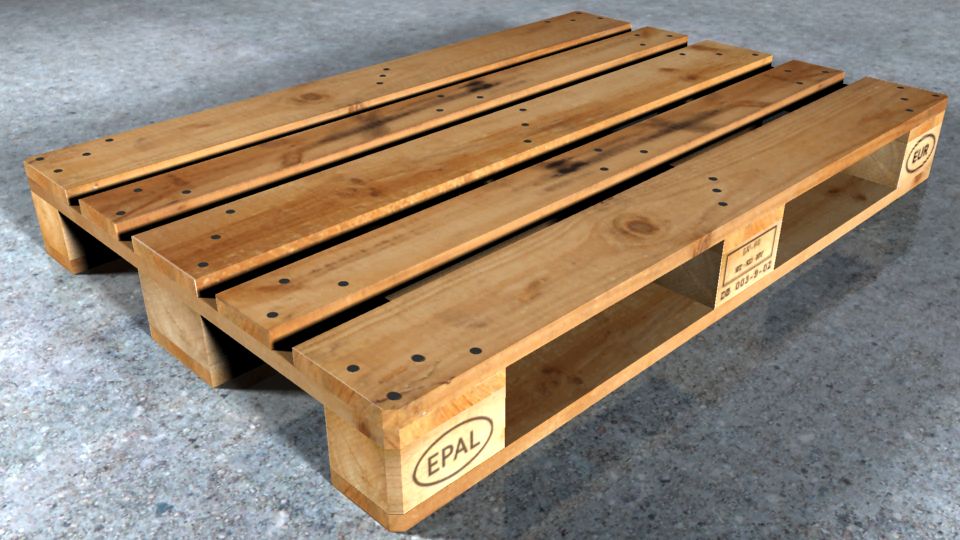
The European Pallet Association e.V. (EPAL) informed that since May 1, 2019 it has had its first licensee for producing CP pallets on the Indian subcontinent.

According to the announcement, the producer of wooden pallets and box pallets applied to also assemble CP pallets as well as to produce and repair EPAL Euro pallets.

EPAL’s newest licensee is located in the state of Maharashtra, in the Taloja region, not far from the cities of Mumbai and Navi Mumbai. Both of these are important economic centres for the chemicals and petrochemicals industries, for the production of pharmaceuticals and for engineering.

“The demand for EPAL pallets has grown enormously in the past few years, so it was a logical extension for us to include EPAL products in our range ‘We believe in quality’, is the company’s motto, which EPAL approves wholeheartedly.”In 2019, EPAL pallets production increased to 93.9 million.

The first EPAL licence in India was awarded in 1999 to produce Box pallets, followed in 2017 by licences to produce EPAL Euro pallets and the EPAL 3 pallet.

Vietnam: Investments in production capacity needed for boosting wood products exports

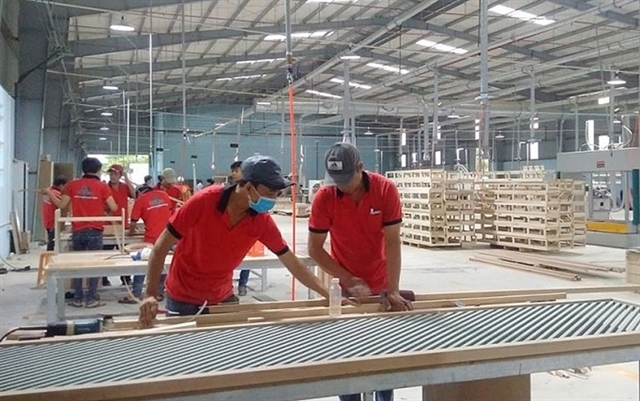
Vietnam's wood and forestry product export turnover reached over US$9.3 billion in 2018, accounting for more than 23 per cent of the agricultural sector's export value. Vietnamese enterprises have exported furniture directly to more than 120 countries and territories worldwide, topping Southeast Asia, ranking second in Asia and fifth in the world’s furniture market. It can be affirmed that the Vietnamese wood industry, after a specific period of development, has built a strong foundation for their production capacity and technological innovation, helping to gradually improve the corporate governance and earn them prestige in the international market.

Up to now, there are about 4,500 wood processing enterprises across the country, of which 95 percent are private. Strongly applied science and technology have become an important development resource in the wood processing industry, generating new products with new designs, meeting the increasingly selective demand, especially for products requiring high quality and fine art values. Continue reading "Vietnam: Investments in production capacity needed for boosting wood products exports"

US lumber prices fell sharply last week

Trading remained a grind, as sellers stepped up efforts to move prompt loadings while buyers limited purchases to must-have needs. Many traders anticipated the long holiday weekend, maintaining a cautious approach to see what develops next week.
Prices trended downward in most all framing lumber species, and the Random Lengths Framing Lumber Composite Price sank $10, to $335. Traders widely cited an imbalance in supply and demand, with many needs easily covered in local distribution or from secondaries working down their own inventories.

Week
May 24
Week
May 17
Year Ago
2018
Random Lengths Framing Lumber Composite Price* $335 $345 $578
KD Western S-P-F #2&Btr 2x4 R/L Mill Price 302 314 653
KD Eastern S-P-F #1&2 2x4 R/L, delivered Great Lakes 395 405 722
Green Douglas Fir Std&Btr 2x4 R/L (Portland) 317 317 605
Southern Pine (Westside) #2 2x4 R/L 362 379 600
KD Coast Hem-Fir #2&Btr 2x4 R/L 360 360 655
Ponderosa Pine (Inland) #2&Btr 1x12 R/L 860 860 765
* Weighted average of 15 key items

Random Lengths Panel Market Report

Structural panel trading was stagnant as the long holiday weekend approached in the U.S. OSB buyers throughout North America lacked urgency, and filled in sparsely. Discounts surfaced in the South. Southern Pine plywood trading was muted amid a lack of urgency among buyers. Rated sheathing traded on either side of previously established levels. Trading in western Fir plywood remained dull. Producers tried to match output with demand levels by reducing production. Light sales left prices of Canadian plywood prone to significant discounts.

(f.o.b. mill prices) Week
May 24
Last Week
May 17
Year Ago
2018
Random Lengths Structural Panel Composite Price* $350 $352 $566
Southern (west-east) 15/32-inch 3-ply rated sheathing plywood 360-395 360-395 545-575
Southern (west-east) 15/32-inch 4-ply rated sheathing plywood 365-400 365-400 550-585
Western 1/2-inch 4-ply rated sheathing plywood 358 358 557
North Central 7/16-inch Oriented Strand Board 190 190 440
*Weighted average of 11 key items


US turning to Vietnamese plywood, as trade with China slows

While U.S. imports of hardwood plywood are flat, imports from Vietnam are growing rapidly amid declines in the China trade.

Total plywood imports rose 3% in March to 189,486 cu. metres, while imports from China fell by 39% from February and are less than half that of March 2018.

Imports from China are down 39% year to date.

Imports from Vietnam in the first quarter 2019 are at levels three times that of 2018 and are surpassing that of any other country. Imports from the other largest suppliers, Indonesia and Russia, were down 25% and 2%, respectively in the first three months of the year.

China’s plywood exports in 2018 were 11.34 million cubic metres valued at US$5.55 billion, a year on year increase of 4% in volume and 9% in value. China’s plywood is exported to more than 200 countries and markets have become more diverse. The proportion of China’s plywood exports to the top 9 countries made up just 51% of the national total in 2018. China’s plywood exports to US fell in 2018 as did exports to S. Korea.

Newsletter

Subscribe to our digital newsletter for your daily digest of essential news, views and analysis from the international wood industry delivered directly to your inbox.


0