

Grafton, the builders’ merchant and DIY company has bought T Brewer, a London-based specialist timber business. No official data on the amount that has been invested in the new business has been disclosed, according to The Irish Times.
T Brewer had £14 million earnings in 2015 and it supplies London and home counties with timber products. The company, established in 1988, trades from from three branches in Clapham, Enfield and Amersham. This acquisition of Grafton will provide the company with great opportunities, since Grafton is now facing a disadvantaged balance sheet. Thus, the company wants to expand and make profitable growth.
Grafton also owns a number of existing operations in the UK and Belgium and runs the Woodie’s chain across Ireland. They have recently bought Isero, the Dutch tool distributor, for €91.5 million. On March 8th, the company will present their final trading update for the year that ended in December 2015.
[gravityform id="1" title="true" description="true"]
[gravityform id="2" title="true" description="true"]
Article archive
Scottish BSW Timber increases profits despite shaky markets
BSW Timber, the Scottish sawmill business based at Earlston in the Borders, defeated the effect of the log prices increase as to get its profits higher in this last financial year, according to The Press and Journal.
The company made an important progress over three rivals and increased its pre-tax profits by 80%. Thus, BSW gained £9.2million for the year ended March 2015.
The company owns 7 sawmills in the UK and the Southampton-based RF Giddings is the last one they bought, last summer, with a £13.8million investment.
Their sales in 2015 rose by approximately 14%, to £210million, mostly from the activities in the UK, which rose £30million to £190million, as accounts lodge with Companies House show. The EU actions brought them £12.2million.
The board of directors paid a dividend of 4% per share for 2015, and their salaries increased from £236,000 to £339,000. Still, 2016 might not be so certain regarding a rise in gains, because of the fluctuations in currency and global timber demand.
“The strength of the pound versus the euro and related currencies (particularly the Swedish crown) has made imported timber more competitive. Additionally, due to the reduced demand for Scandinavian and Baltic sawn timber in other markets, increased quantities are being exported to Britain. The sawlog price remains unbalanced against the significant reduction in sawn softwood timber prices and consequently has put pressure on BSW margins. Management have this as a priority and are acting accordingly,” said Chairman Martin Gale CBE.
Thus, BSW will invest in processing efficiency, new products, and research and development, as the PAJ stated. In September 2015 they announced the purchase of Stirling-based Tilhill Forestry from UPM, with revenues up to £120million.
[gravityform id="1" title="true" description="true"]
[gravityform id="2" title="true" description="true"]
Vietnam's wood exports expected to rise in 2016

Vietnam gained $7.1 billion from exports of wooden and forestry products in 2015, increasing the sales by 8% compared to 2014, according to VietNam News. This year, the country is expected to achieve US $7.7 billion, as seen in reports presented by the Ministry of Agriculture and Rural Development. ASEAN Economic Community (AEC) and the Trans Pacific Partnership (TPP) deal will help Vietnam export wood and forestry products, as the Vietnam Wood and Forestry Products Association (Viforest) states.
AEC will help Vietnam’s exports by creating convenient conditions to develop their business. TPP will offer the country great opportunities in the domestic wooden producers, by giving them more legal wooden material for export. The member countries of TPP have easier access to legal wooden materials, which provide greater quality, as Nguyen Ton Quyen, chairman of Viforest, stated.
The EU and US have a high demand in licensed wood products, so they will represent an important market for the Vietnamese manufacturers. At the moment, US, Japan and China are Vietnam’s largest export markets and make up for 67% of the export value. Last year, India rose its export value to Vietnam by 64.45%. Hong Kong, the US and Germany also rose their demand, reaching 41.95% rate, 17.9% rate and 10% rate.
These rates grew due to the high demand in the wood market in 2015. The US has to import $27 billion year worth of wooden products, while Vietnam exported these products between $1 billion and $2 billion per year. Also, the EU has to reach a $85 billion year worth of wooden products, but the value that Vietnam exports to the EU is only between $700 million and $800 million per year, as Viet Nam News informs.
[gravityform id="1" title="true" description="true"]
[gravityform id="2" title="true" description="true"]
Vietnam’s wood exports expected to rise in 2016
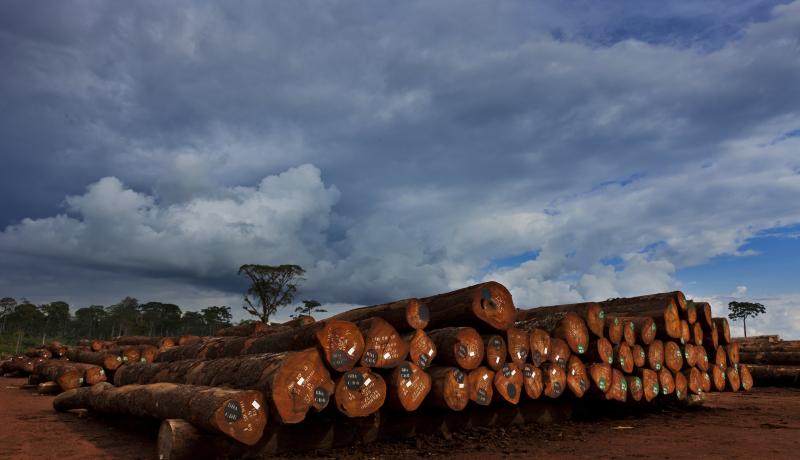
Vietnam gained $7.1 billion from exports of wooden and forestry products in 2015, increasing the sales by 8% compared to 2014, according to VietNam News. This year, the country is expected to achieve US $7.7 billion, as seen in reports presented by the Ministry of Agriculture and Rural Development. ASEAN Economic Community (AEC) and the Trans Pacific Partnership (TPP) deal will help Vietnam export wood and forestry products, as the Vietnam Wood and Forestry Products Association (Viforest) states.
AEC will help Vietnam’s exports by creating convenient conditions to develop their business. TPP will offer the country great opportunities in the domestic wooden producers, by giving them more legal wooden material for export. The member countries of TPP have easier access to legal wooden materials, which provide greater quality, as Nguyen Ton Quyen, chairman of Viforest, stated.
The EU and US have a high demand in licensed wood products, so they will represent an important market for the Vietnamese manufacturers. At the moment, US, Japan and China are Vietnam’s largest export markets and make up for 67% of the export value. Last year, India rose its export value to Vietnam by 64.45%. Hong Kong, the US and Germany also rose their demand, reaching 41.95% rate, 17.9% rate and 10% rate.
These rates grew due to the high demand in the wood market in 2015. The US has to import $27 billion year worth of wooden products, while Vietnam exported these products between $1 billion and $2 billion per year. Also, the EU has to reach a $85 billion year worth of wooden products, but the value that Vietnam exports to the EU is only between $700 million and $800 million per year, as Viet Nam News informs.
[gravityform id="1" title="true" description="true"]
[gravityform id="2" title="true" description="true"]
Veolia aquires UK RDF producer
Veolia, the French environmental services giant, recently bought Gloucestershire, UK based waste wood processer and Refuse Derived Fuel (RDF) producer, located in Avonmouth, Bristol.
The Boomeco site uses a procedure to transform a mixture of grades of wood into wood chips. These wood chips are used in combined heat and power plants, that later produce RDF from residual household waste, according to Waste Management World (WMW).
Veolia bought the UK producer as to increase its strategy to save resources by using green products and low carbon energy.
Gavin Graveson, Veolia’s chief operating officer public and commercial in the UK, stated that with the help of Veolia’s plans in ongoing expansion in biomass and RDF production, the UK will complete its targets of carbon emissions by 2020, alongside with reducing reliance on fossil fuels and enhancing domestic energy security.
“We are making significant progress in our drive to increase the quality of energy we are delivering from renewable sources,” he added.
Graveson also said that the aquistion of Boomeco will meet the support for sustainable circular economy.
[gravityform id="1" title="true" description="true"]
[gravityform id="2" title="true" description="true"]
China: Logs and lumber imports crashed in 2015

Log exporters to China are facing a hard year because of the slowing economy and lower US-dollar prices. Also, the slowdown in the construction market caused by the heavy building is affecting China in the same direction, according to Wood Markets.
The statistics released in December 2015 for forest products imports, including logs and lumber, by China Customs showed that 2015 was a tough year for exporters to China. A lower consumption of logs and lumber in the building construction market were the results for working against importers.
The building construction slowdown in China was caused by the lower real estate prices alongside with rising inventories of unsold residential and office units. This also had a great impact on exporters to China. Statistics presented by Wood Markets showed that the demand on the furniture and decoration markets remained stable, but the net effect has impacted log exporters more negatively than lumber ones.
The USA faced the biggest reduction in softwood log exports to China, with a minus of 2.0 million m3. New Zealand and Russia have also lowered their exports by 1.2 million m3 and 1.0 million m3. All in all, China’s log exports were lower by 13.3%, with a minus of 6.8 million m3 in 2015.
Though, the lumber imports were a bit higher, rising by 9,8 thousands m3 in 2015, amounting to 26.62 million m3. While Canada declined in imports by 1.0 million m3, Russia had the biggest lumber imports, rising by 1.6 million m3.
Compared to 2014, the softwood logs imports decreased in 2015 to 29.74 million m3 (16.7% lower than the previous year). New Zealand was the leading supplier, rising to 10.39 million m3 in imports, while Japan had the largest percentage increase (37%, to 433.000 m3). The Eastern Europe countries decreased by 47%, recording the largest percentage decline.
Also the hardwood logs imports decreased to 14.83 million m3, 5.5% lower than in 2014. Papua New Guinea was the leading supplier in 2015 and the largest percentage increase came from Equatorial Guinea (31.7% increase). The biggest decrease was recorded in Malaysia, dropping 66%, to 197.000 m3.
China’s total softwood lumber imports in 2015 decreased to 17.46 million m3, or 1.0% lower than in 2014, making Russia the leading supplier (16.5% increase). The largest percentage increase came from Finalnd (57.4%) and the biggest decrease came from Germany (-37%).
Also the hardwood lumber imports increased in 2015, to 9.16 million m3 (14.4% higher than the previous year). Thailand was the leading supplier (36.9% over 2014, to 3.05 million m3). Russia had the largest percentage increase (54.8%) and Mozambique had the biggest decrease, by 79%, to 29.000 m3.
[gravityform id="1" title="false" description="true"]
Ghana: 3Q wood product export approvals up 65%
During the third quarter period of 2015 the Timber Industry Development Division (TIDD) of the Ghana Forestry Commission (GFC) vetted and approved export contracts totalling 172,124 cubic metres. Compared to second quarter contract volumes this represented an increase of over 65 percent, ITTO reported. The table below shows the volumes of approved contracts for the second and third quarters of 2015.
| Product category | Q2/2015 m3 | % | Q3/2015 m3 | % |
| Primary | 14,531 | 14 | 7,004 | 4 |
| Secondary | 87,230 | 84 | 162,060 | 94 |
| Tertiary | 2,126 | 2 | 3,060 | 2 |
| Total | 103,887 | 172,124 |
Source:TIDD, Ghana
In the third quarter of 2015 the volume of approved sawnwood contracts increased to 162,000 cubic metres, an increase of 86% over second quarter volumes. This increase was mainly due to the lifting of the export ban on rosewood sawnwood during the third quarter.
Sawn rosewood accounted for 39% of the total volume of the contracts approved in the third quarter. In addition, compared to the second quarter, there was a 37% increase in approvals for teak exports and a 12% increase approvals of other sawnwood contracts.
In the third quarter there was only a minor change in tertiary product exports approvals.
Approvals for primary product exports fell in the third quarter of 2015. The volume of contracts for gmelina log exports submitted in the third quarter fell almost 75% (2,000 cu.m) compared to the second quarter. Similarly, exporters submitted very few contracts for teak poles/billets export. Logs go mainly to the India market and in the third quarter contract volumes were down over 26%.
Contract submissions for the export of plywood to neighbouring countries (overland export) fell to 19,282 cubic metres, an almost 6% decline.
Sawnwood export contracts in the third quarter accounted for almost 80% of the total volume of contracts approved during the third quarter (136,461 cu.m), a sharp increase compared to the previous quarter.
The market structure for Ghana’s wood product remained unchanged in the third quarter. The regional West African market continued to be the major destination for Ghana’s plywood.
Sliced veneer and kiln dried sawnwood exports are mainly destined for European markets while air dry sawnwood, especially rosewood and other high density species such as apa, ekki and denya are for the Chinese market.
The US market continued as the major destination for mahogany/cedrela sawnwood and rotary veneer. The Middle East and Egyptian markets are emerging as a major destination for backing grade rotary veneer.
Setra cuts redwood production do the uncertainty in Egypt
Swedish wood products company Setra is making production cutbacks at three redwood sawmills during the fourth quarter to guard against the uncertain market development in North Africa.
“In the current more turbulent situation, in the North African markets in particular, our assessment is that a market adjustment of the production level is necessary,” says Olle Berg, Market & Business Development Director at Setra.
“Our biggest concern is the present shortage of foreign exchange in Egypt and in the current situation we do not see any immediate solution to the problems this causes. It mainly affects our redwood production and the sawmills that are most exposed to the North African markets. We believe that it is better for Setra to respond to the changed market situation and in this way keep good control of our stocks, in terms of both balance and levels,” says Berg.
In order to guard against the uncertain market situation, Setra has decided to cut production in the fourth quarter by about 20% at the three redwood sawmills in Vimmerby, Skinnskatteberg and Malå. Production at these sawmills is mainly focused on sales to markets in North Africa and the Middle East. The units will carry out maintenance and investments during the production downtime.
The markets in North Africa and the Middle East account for just over 20% of Setra’s total sales. Sales mainly comprise sawn redwood products with Egypt and Algeria as the largest individual markets in the region.
Setra Group includes a total of nine sawmills, three specialised processing units and two modular building factories.
imm Cologne: A successful event for the furniture industry

From 18 to 24 January 2016 at imm cologne and LivingInteriors, a total of 1,185 companies from 50 countries presented the trends in furniture and furnishings for the coming year. Buyers from the trade with decision-making authority made for a dynamic trade fair during the first five days.
With around 80,000 trade visitors from 128 countries, the event recorded a slight increase (4.8 percent) in trade fair visitor numbers compared to 2014. The proportion of visitors from abroad was 46 percent (based on the trade visitor days).
The development in the number of visitors from overseas was positive, while the trade fair duo recorded an especially significant increase in the number of visitors from Europe.
"This outcome shows that imm cologne is unmatched as a business event for the global furniture and furnishings industry", said Gerald Böse, President and Chief Executive Officer of Koelnmesse, summing up the event.
"imm cologne was a wonderful furniture show and has got us off to a very successful start to the 2016 furniture year. With so many new products and ideas, innovations and great models in all price ranges, we are confident that the German furniture industry will achieve another increase in sales this year", added Dirk-Uwe Klaas, Managing Director of the Federal Association of the German Furniture Industry (VDM).
This was confirmed by Hans Strothoff, President of the Federal Association of German Furniture, Kitchens and Furnishing Retailers (BVDM): "This year's imm cologne really stimulated a keen interest in furniture. Rarely has the mood in industry and trade been so positive as at this fair. Wherever you looked, only smiling faces and great optimism. imm cologne has really catapulted the industry into the new business year with a swing."


The atmosphere among visitors was characterised by business, networking and the search for trends. In the past few years, imm cologne has raised its international profile, not just among exhibitors, but also among visitors. 2016 saw a significant increase in buyers from Europe, primarily from the Netherlands, the United Kingdom, Spain and Austria.
The event also registered a clear increase in the number of visitors from overseas, especially from the USA, China and India. Including estimated figures for the last fair day, a total of 120.000 visitors were inspired by the interior design worlds.
In addition to the products on show, the highlights of the 2016 trade fair once again included "Das Haus - Interiors on Stage", a walk-through simulation of a home, which was designed this year by Sebastian Herkner, and the "Smart Home" special exhibition at LivingInteriors, where numerous companies showcased solutions for a cleverly networked home that are already available today.
Trends at imm cologne/LivingInteriors 2016
Homes are becoming homier once again
Cosiness and a feeling of security are increasingly important in the home. There is also a clear enthusiasm for new combinations. Along with furniture and decorations, accessories and home textiles that suit people's preferences when used individually are combined freely. The result is homes that are as unique as their inhabitants.
Mid-century design is booming
Across all product sectors, a striking number of furniture designs are reminiscent of those from the 1940s through the 1960s. These designs make efficient use of materials, have delicate features and are lightweight and above all smaller. The trend can be explained by the smaller living spaces available in city homes, though also by a general sense of nostalgia. Like an old friend, sleek mid-century furniture proves its value in uncertain times.
Natural materials are on the rise
Wood, glass, stone and metal: natural materials are particularly popular. In addition to the large proportion of wood used, for example in tabletops, chair and table frames, valuable natural stone is an increasingly common material in tabletops. Popular varieties include the European classic "marble" as well as exotic South American stone with particularly unique veining. The use of tree bark in wall decoration is another trend on the horizon.
The next imm cologne will be held from 16 through 22 January 2017 in Cologne - together with LivingKitchen, the international event for all topics related to the kitchen.
EU-Indonesia: No progress on timber licensing
Indonesia is at risk of missing the opportunity to become the first country in the world to achieve full implementation of its timber legality system, called SVLK, as the Trade Ministry insists on relaxing certification for timber products, Jakarta Post reported.
Indonesia had agreed to fully implement the SVLK by the end of 2015, a deadline laid down by the EU for the country to meet if it wanted free access for its timber products into the EU market.
During the National Development Planning Board (Bappenas) on Monday, the chief negotiator of FLEGT VPA, Agus Sarsito, said that they had the SVLK, but missed it a small step.
“This has put us at risk of not becoming the champion of timber legality certification [in the world],” he added.
The 2015 deadline was part of the Voluntary Partnership Agreement (VPA) on forest law enforcement, governance and trade (FLEGT), which Indonesia ratified in 2014.
Trade Minister Thomas Lembong issued Regulation No. 89/2015 in August last year, when he allowed 15 downstream timber products, including furniture to go for export without having the SVLK certificate. A new deadline was established, for April 1, 2016, by the EU.
“The EU has told me that it is ready to implement the FLEGT VPA only if the ministerial regulation is revoked or annulled,” Agus said.
Vincent Guerend, EU Ambassador to Indonesia, assured the country that the EU would fully implement the agreement by April 1 and said that Indonesia now has a 40% market share in the EU tropical timber market, so the FLEGT implementation would benefit the country.
Still, Okan Norwan, the Trade Ministry’s trade security director, is doubtful regarding the EU’s promise.
“They only check [timber products entering the EU] randomly. Because it’s random, illegal timber products from other countries can also enter the market. This is a disincentive for us. There are also six EU countries that haven’t been able to implement [the FLEGT] yet. Those which have been able to do so also can’t do it optimally,” he added.
Agus said that such critics bring Indonesia to an unsure proceeding of the full implementation of SVLK.
[gravityform id="1" title="true" description="true"]
[gravityform id="2" title="true" description="true"]
Lentex acquires wood flooring manufacturer Baltic Wood
Through its subisidiary Lentex, the Polish construction materlials producer Gamrat has acquired the wood flooring manufacturer Baltic Wood.
Gamrat has signed a definitive agreement to acquire 100 percent shares of Baltic Wood. The seller is Nowy Styl Group, one of the world's largest furniture manufacturers. Gamrat will pay 23 million Polish zloty, the equivalent of 5,1 million euro.
Baltic Wood annually generates revenues of approximately 120 million zloty (26,8 million euro) and a few million zlotys in net profit. More than 80 percent of its production is exported, mainly to Western countries. Baltic Wood floors reach customers in 44 countries in the world. The company's production plant and headquarters are located in Jasło (Poland), whereas its sales offices are located in Cracow and Jasło (Poland) and in Newark (USA).
Krzysztof Moska, one of the main shareholders Lentex and until recently president of Gamrat, commented on the transaction: ''With the acquisition we will complement our offer. We are already present in different segments of the area: in Lenteksie, our coverings are made of PVC, in Gamracie we produce sport products and decking out of WPC (wood-plastic composites). We had a choice: to supplement our offer with cheap laminate flooring, or MDF or floors of a higher quality. We chose the second solution. Baltic Wood is one of the world's top producers of engineered wood flooring in the world.''
[gravityform id="1" title="true" description="true"]
[gravityform id="2" title="true" description="true"]
World Bank forecasts price rise in African and SE Asian logs&sawnwood

The World Bank lowered the forecast for timber prices in Asia and Africa in the recently updated Commodity Markets Outlook.
Logs export prices have a minor reconsideration – the new 2016 forecasts the average annual prices for logs in Africa down by USD2/m3 – to USD 398/m3.
The price of Southeast Asian logs will decrease by USD3/m3– to USD 250, according to the World Bank. At the same time, the expected decrease for Southeast Asian sawnwood prices is of USD 20/m3, from USD 850 to USD 830/ m3.
Still, the institution expects a turn-around of the price dynamics in 2016 for logs and starting with 2017 for sawnwood.
| Product, Origin | Forecast date | 2013 | 2014 | 2015 | 2016 | 2017 | 2018 | 2019 | 2020 |
|---|---|---|---|---|---|---|---|---|---|
| Logs, Africa | January, 2016 | 464 | 465 | 389 | 398 | 409 | 419 | 430 | 441 |
| October, 2015 | - | - | 390 | 400 | 410 | 420 | 431 | 442 | |
| Logs, Southeast Asia | January, 2016 | 305 | 282 | 246 | 250 | 259 | 268 | 277 | 287 |
| October, 2015 | - | - | 245 | 253 | 262 | 270 | 279 | 289 | |
| Sawnwood, Southeast Asia | January, 2016 | 853 | 898 | 833 | 830 | 847 | 865 | 883 | 902 |
| October, 2015 | - | - | 835 | 850 | 866 | 881 | 897 | 914 |
Source: Worldbank
World Bank forecasts price rise in African and SE Asian logs&sawnwood
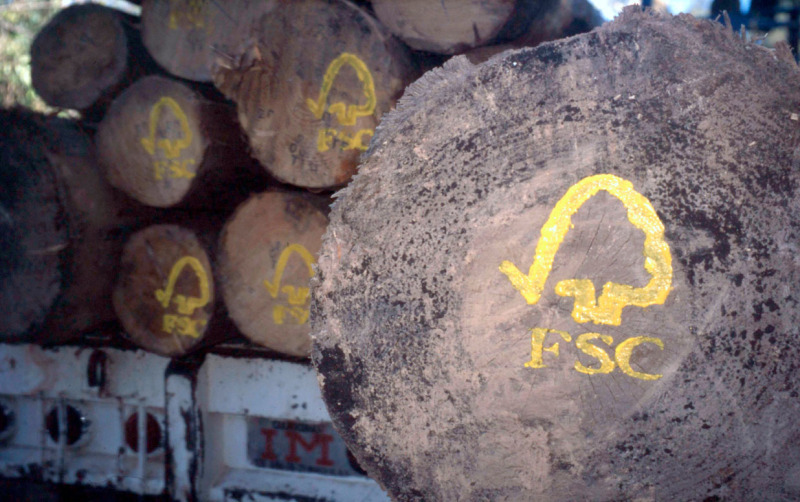
The World Bank lowered the forecast for timber prices in Asia and Africa in the recently updated Commodity Markets Outlook.
Logs export prices have a minor reconsideration – the new 2016 forecasts the average annual prices for logs in Africa down by USD2/m3 – to USD 398/m3.
The price of Southeast Asian logs will decrease by USD3/m3– to USD 250, according to the World Bank. At the same time, the expected decrease for Southeast Asian sawnwood prices is of USD 20/m3, from USD 850 to USD 830/ m3.
Still, the institution expects a turn-around of the price dynamics in 2016 for logs and starting with 2017 for sawnwood.
| Product, Origin | Forecast date | 2013 | 2014 | 2015 | 2016 | 2017 | 2018 | 2019 | 2020 |
|---|---|---|---|---|---|---|---|---|---|
| Logs, Africa | January, 2016 | 464 | 465 | 389 | 398 | 409 | 419 | 430 | 441 |
| October, 2015 | - | - | 390 | 400 | 410 | 420 | 431 | 442 | |
| Logs, Southeast Asia | January, 2016 | 305 | 282 | 246 | 250 | 259 | 268 | 277 | 287 |
| October, 2015 | - | - | 245 | 253 | 262 | 270 | 279 | 289 | |
| Sawnwood, Southeast Asia | January, 2016 | 853 | 898 | 833 | 830 | 847 | 865 | 883 | 902 |
| October, 2015 | - | - | 835 | 850 | 866 | 881 | 897 | 914 |
Source: Worldbank
SLA under discussion; lumber exports affected by Canadian dollar drop

Canada is faced to a compromise in the next Softwood Lumber Agreement (SLA) with the United States because of the Canadian dollar’s drop. This decline messed up the lumber markets in the US, so Canada has to give a solution to the currency pressure, according to a Business in Vancouver (BiV) report. Still, the effect of currency changes might not influence any negotiations, according to Henry Spelter, a leading analyst at the U.S. consulting firm Forest Economic Advisors. He added that sawmillers in the US face a decrease in their own market, caused by the Canadian dollar drop.
“This world we are living in – this nightmarish world where you have to focus on every nuance and accent on the part of central bankers and how they are going to control the exchange rate – is having a huge impact on business profitability. It obviously has disadvantaged the U.S. producers of lumber and greatly advantaged Canadian producers of lumber. This development is totally independent from everything else,” said Spelter.
The SLA expired on October 12, 2015 and continued with a standstill for a one year period. During this period, the US said that it would not put any kind of pressure on the lumber exports coming from Canada. After 3 months, informal discussions have begun, according to BiV.
B.C. Forests Minister Steve Thomson and Council of Forest Industries president Susan Yurkovich have met this week to discuss about the new SLA. Thomson said that the Canadian industry already knows that the terms of the old agreement will be changed, but they need to negotiate.
“The key point is the agreement will have to be one that works for the Canadian and B.C. industry. It won’t be an agreement at any cost. And that will have to be part of the negotiations,” he added.
Factors like caps, interest in trigger mechanisms, rates and surge protection will be part of the discussions, which represent a development of the principles for negotiation, says BiV.
Closing the agreement caused the end of the opportunity for a straight rollover into a new one, Yurkovich said. She added that they are now discussing possible things to modify in the new SLA. There is no proof that Canada benefits from more cost-effective exports in the US, due to the dollar fluctuations.
Brisith Columbia increased lumber shipments to the US with 7% per year, making BC the largest softwood lumber producer in Canada.
David Elstone, executive director of the Truck Loggers Association, said that the 7% increase comes once with the US housing market recovery and that BC continues to export large volumes to China, but the mills can’t increase these shipments to the US because of the mountain pine beetle’s effect on the timber supply.
[gravityform id="1" title="true" description="true"]
[gravityform id="2" title="true" description="true"]
Belarus has banned exports of logs, venner and pulpwood

Belarus has banned the export of sawlogs, venner and pulpwood starting 1 January 2016. According to the Presidential decree of the Republic of Belarus No. 211, the Council of Ministers of the Republic of Belarus has decided that “export sales of pulpwood, veneer and sawlogs are prohibited ”unless otherwise stated by the President of Belarus Republic”.
The decree in question has a loophole, which may be beneficial for the national concern "Bellesbumprom". About a month ago the concern was actively lobbying putting the export ban off for several years, trying to give its enterprises time to finalize the modernization process. Such a deferral would give enterprises an opportunity to stay commercially viable at least by means of log export sales.
In such a way, under the decree №211, the woodworking enterprises taking part in investment projects which contemplate construction, modernization, or reconstruction of the woodworking production sites, are allowed to trade unprocessed wood beyond the framework of the Belarusian Commodity Exchange.
[gravityform id="1" title="true" description="true"]
[gravityform id="2" title="true" description="true"]
Metsä Wood moves wooden elements production in Finland

The manufacture of Metsä Wood's Kerto-Ripa® wooden elements is moving from Heinola to Pälkäne in February. The new premises are about one and a half times bigger and are better suited for the increase in production of intermediate floor elements. Metsä Wood is renting the premises from Kallioinen Yhtiöt Oy.
"The demand for Kerto® LVL based wood elements has been good and these new, more spacious premises will allow us to grow our production of Kerto-Ripa intermediate floors in particular. The improved floor elements which were launched at the end of last year are a good example of how active our product development is. We are testing the functionality of different structures in our element production, and we are continually looking for totally new kinds of solutions to meet the requirements of modern construction," says Jari Tikkanen, SVP, Building and Industry.
"We needed new premises that were better suited to the production of intermediate floor elements, and we found them in Pälkäne. The manufacture of intermediate floor elements set certain demands on our premises and in the new hall there is more space not only for production, but also for the storage of materials and ready products," says Marko Kellberg, Director, Building Projects.
Metsä Wood's element factory manufactures Kerto-Ripa® intermediate floor and ceiling elements from Kerto® LVL wood products. The element factory uses about 3,000 m3 of Kerto products every year, and annual production of elements is around 70,000 m2. Of the wooden elements produced in Finland, only 10 per cent are for export.
Sierra Pacific closes its sawmill in Arcata, CA
Sierra Pacific Industries (SPI) will close its sawmill in Arcata, CA, the company announced. According to SPI, reduced harvests of suitable timber and regulatory burdens are the primary reason for the closure. That, combined with a difficult lumber market have profoundly impacted operations in Arcata. About 123 jobs will be affected by the closure.
“This is a particularly sad day for Sierra Pacific and for my family” said A.A. “Red” Emmerson, Chairman and President Emeritus of SPI.
“Our company started in the Arcata area when my father and I leased our first mill there in 1949 near Jacoby Creek.” “We went on to build the Arcata mill on the Samoa Peninsula, which we’ve run steady since 1951” he noted.
“A fall-off in the amount of suitable timber for sale in this area, coupled with flat home construction in the U.S., and increased lumber imports from Canada have all played a role in our decision to close the mill” said SPI spokesman Mark Pawlicki.
“But, make no mistake, the largest factor was that the type and size of logs that this mill cuts are simply not available in ample supply to continue to run the mill” he added. “When combined, these factors leave us no choice but to close the plant” said Pawlicki.
In an effort to keep the Arcata mill running, SPI has been transporting logs from the interior of California, and has barged logs from British Columbia and Washington. However, those efforts proved to be uneconomical.
Sierra Pacific Industries is a third-generation family-owned forest products company based in Anderson, California employing over 4,500 crew members. The company owns and manages 1.9 million acres of timberland in California and Washington, and is among largest lumber producers in the U.S.
Sierra Pacific has 13 other sawmills operating in California and Washington, and has started construction of a new mill in Shelton, WA. The company also has window, renewable power, sales, and lumber remanufacturing facilities in operation in multiple states.
US tropical sawnwood imports rise in October 2015
US tropical sawnwood imports recovered in October 2015 from the decline in the previous month. 21,425 cu.m. of tropical species were imported in October, up 11% from September, ITTO reported.
Year-to-date imports were 14% higher than at the same time in 2014. The strongest month-over-month growth in imports was in sapelli (3,245 cu.m.), keruing (2,169 cu.m.) and mahogany (2,787 cu.m.).
Ipe sawnwood imports fell 60% to 1,370 cu.m. in October, this was from exceptionally high imports in September.
As a result overall imports from Brazil decreased by almost half in October. Tropical hardwood imports from all other major suppliers increased in October, in particular from Malaysia (+50%) and Cameroon (+27%).
Austria: Price of wood pellets up by €7/t

The price of wood pellets in Austria dropped 4.6% since last year, but recorded a 2.5% growth since December 2015. The average price is now €236.7 per tonne of wood pellets, according to Propellets Austria. In December 2015, the price stood at 230.9/t.
Wood pellets in bags cost an average of 3.99 € per 15 kg sack (when ordered by the pallet). This represents an increase of 2.5% as compared to December 2015 and a decrease of 2.9% as compared to the whole year.
As Propellets Austria calculates, the annual average price advantage of pellets over fuel oil is about 11.6% as opposed to extra light heating oil and 43.3% as opposed to natural gas.
[gravityform id="1" title="false" description="true"]
Swedish softwood lumber exports on an upward trend

In the first ten months of 2015, Sweden has exported about 10,7 million cubic meters of sawn and planed softwood lumber, according to Eurostat's latest statistics. This represents a 17% increase over the same period of 2014. The main export markets for the Swedish lumber were the United Kingdom and Egypt, followed by Germany and Norway.
In particular, exports to Egypt dropped by -10% over the same period of last year, down to a volume of 1,09 million cbm. Exports to all other major destinations increased considerably. Shipments to the United States increased almost three times up to 210,860 cubic meters.
Overall, the increase in Swedish exports was supported by larger deliveries to Great Britain, Germany, China, Saudi Arabia and U.S. But even to Denmark, Algeria, Morocco and Belgium considerably more was exported.
Swedish lumber shipments to the EU countries have increased by 19% with over 5,7 million cubic meters delivered.
Despite the dowturn in Egypt, exports to North Africa rose by 2% to nearly 2,09 million cbm. More Swedish lumber was delivered to Algeria, Morocco and Tunisia.
Deliveries to Asia increased significantly, due to a boom in shipments to China (+23% higher as compared to the first ten months of 2014). Exports to Japan recovered well, despite the 2014 downward trend, and surged by 14%, up to 530,447 cbm.
| Country (Top 15 destinations) | I-X/2014 |
I-X/2015 | Change in % |
| United Kingdom | 1,981,391 | 2,308,997 | +17% |
| Egypt | 1,209,755 | 1,091,436 | -10% |
| Germany | 714,170 | 865,348 | +21% |
| Norway | 711,922 | 790,957 | +11% |
| Denmark | 623,590 | 716,828 | +15% |
| Japan | 465,646 | 530,447 | +14% |
| Algeria | 434,196 | 478,663 | +10% |
| China | 354,393 | 435,499 | +23% |
| Morocco | 298,951 | 383,679 | +28% |
| Saudi Arabia | 249,019 | 352,473 | +42% |
| Belgium | 234,077 | 274,139 | +17% |
| France | 238,437 | 260,723 | +9% |
| USA | 80,999 | 210,860 | +160% |
| Poland | 114,841 | 173,283 | +51% |
| Spain | 96,970 | 127,300 | +31% |
| Total | 9,186,354 | 10,717,668 | +17% |
Source: Eurostat; HS code: 440710
[gravityform id="1" title="true" description="true"]
[gravityform id="2" title="true" description="true"]

